Our very own Bureau of Meteorology are very keen on the anthropogenic global warming. They have been the guardians of Australia’s temperature records. It is a dataset that could help us sort it all out. Scientists could access it, or if we were actually inclined to think for ourselves, we could. It is presumably what the BoM’s own pronouncements are based on.
Is the dataset any good?
To quote the bureau itself …
Creating a modern homogenised Australian temperature record requires extensive scientific knowledge – such as understanding how changes in technology and station moves affect data consistency over time.
The Bureau of Meteorology’s climate data experts have carefully analysed the digitised data to create a consistent – or homogeneous – record of daily temperatures over the last 100 years.
The current dataset is the ACORN-SAT …
a complete re-analysis of the Australian homogenised temperature database. It replaces two homogenised datasets – an annual dataset dating back to 1910 and a daily dataset dating back to 1950.
It also, rather hastily, replaces the so-called High Quality dataset that a team of skeptical scientists called into question leading to a formal parliamentary request with the Australian National Audit Office (ANAO) to have it audited.
The new set is under scrutiny. One of the most obvious quality control checks to apply is to see if the maximum temperature of any day exceeds the minimum. In about one thousand instances it doesn’t, whoops.
How do datasets go wrong. The short answer is in three ways :-
- Operator error.
- Bias
- Manipulation
The first one largely speaks for itself, it can lead to increased or decreased values but tends to cancel itself out in trend terms. Bias will affect the trend, a good example is the heat island effect. Many weather records are from places that have become more densely settled, more surrounded by bitumen and heat sources. Urban records show a greater upward temperature trend than country records. The ACORN data is corrected for these problems in a way that outsiders are not able to reproduce. What you see is not what the meteorologist wrote down, it’s what the BoM think they should have written down even where that changes highest and lowest record temperatures.
Here’s a couple of examples of what good data fixing can achieve. Click on the graph, click on the back arrow to return to the blog …
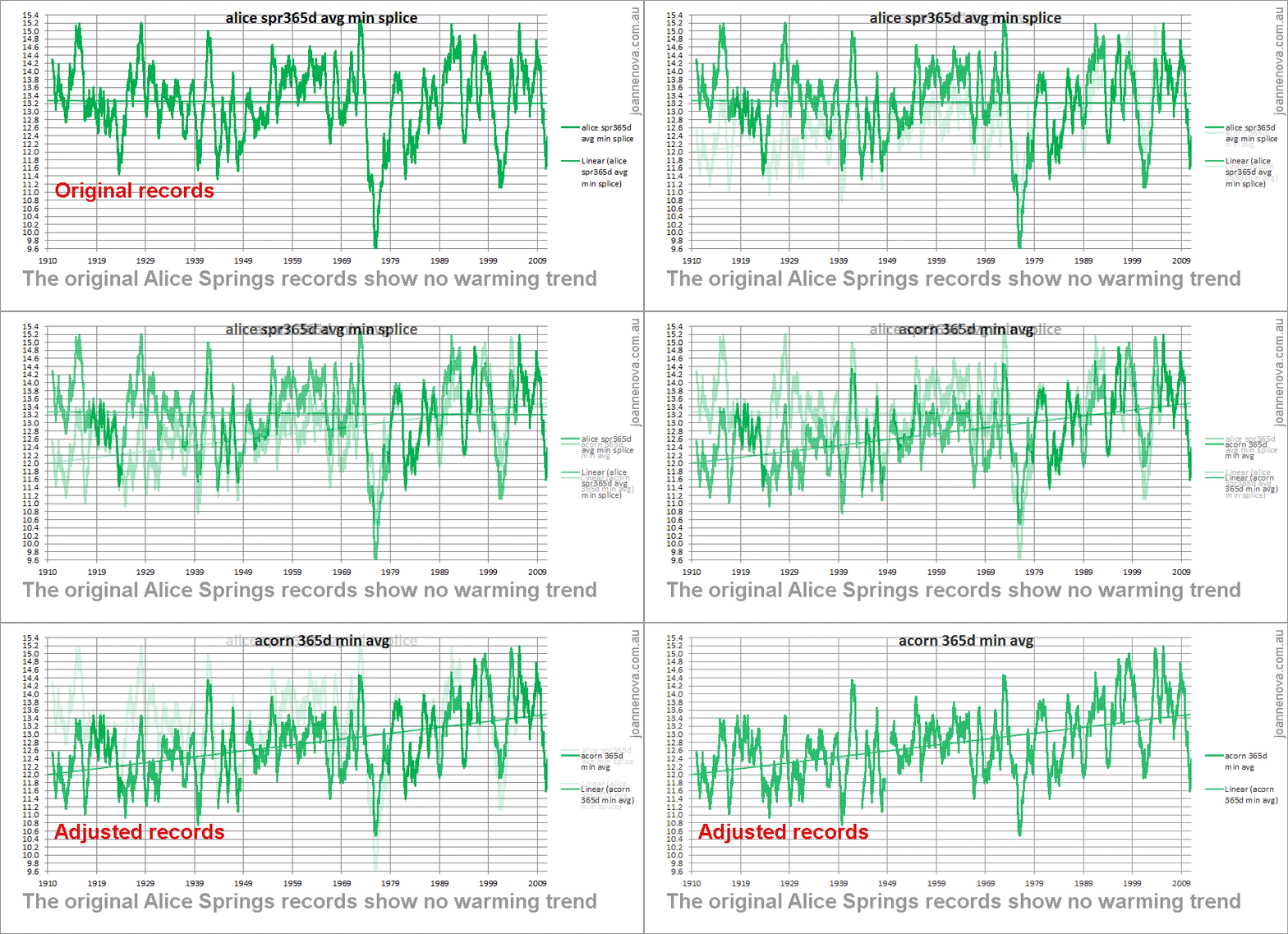
It is quite possible to show a warming trend by reducing records as well as by increasing them. Lower early minimum temperatures and voila a warming trend. The other example, once again click on the graph …

This dataset is the starting point for our climate modelers! The expenditure of a great deal of money hinges on the output of the models. Garbage in, garbage out …
I hope this whets the appetite. Jo Nova covers it in detail <HERE>
 bobmcgee