I’m into photography. If I had to say what sort I would say wildlife and landscape. I had better insert the word amateur somewhere although I did once swap some of my photos for some art work. Since I live in a part of the world that is almost devoid of large, day active mammals the wildlife I shoot is mostly birds. I photograph birds almost every day. Landscapes, too, are determined by what’s available, mountains and snow are absent from my neighbourhood but I have seascapes facing both east and west and dark night skies. These are the regular subjects for my landscape shots.

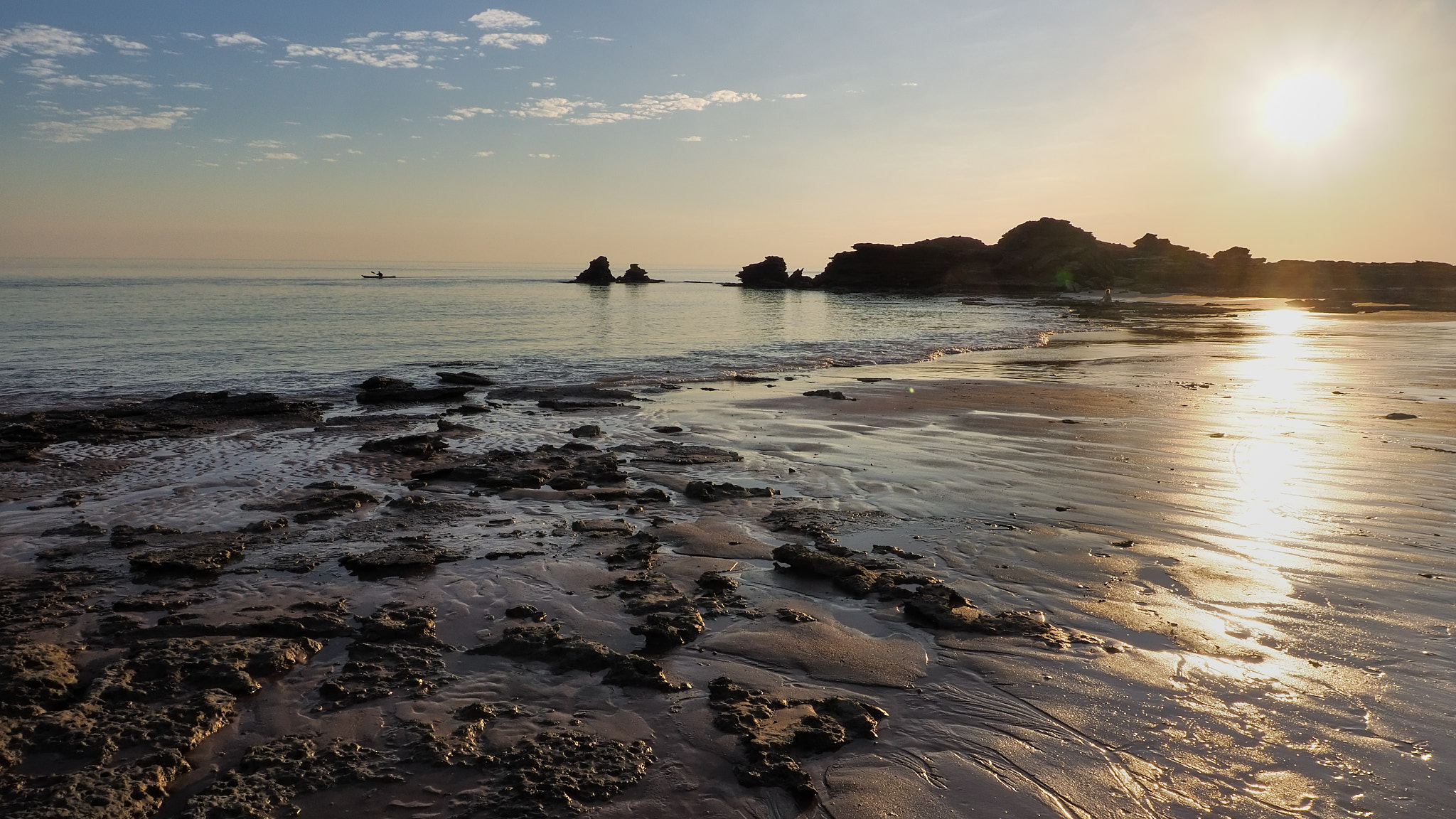

It’s in your day to day photography that you learn your way around your camera and how to solve the problems of lack of light, harsh light, black eyes in black faces, finding focus in the grass or foliage and, above all, composition. Practise, practise, practise. Photography on safari is very much like photography at home. You will make the same mistakes, your photography on safari will be just as bad as your photography at home.
But some of your photographs on safari will also be much better than your photographs at home. Ansel Adams is often credited with saying that the art of landscape photography is “knowing where to stand”, to which you could add “and when to stand there”. It’s just as true for wildlife. Go stand in front of a lion, a hyena or a leopard, carefully, of course. You will come home with some gems.
Rule number one – take lots of photos, only ever show the best ones.
What will be different on safari? You will only be there for a short while. You will want to get the most out of it even when the sun is overhead.
You will fly there. There will be weight restrictions. If it involves light aircraft the restrictions will be severe. My camera kit is a challenge for hand luggage regulations at the best of times.
You will be shooting from a vehicle. So, often a higher view point than you’d like and limited as to choice of position.
There will be dust. Changing lenses in the field should be avoided. A woman’s head scarf in your lap is a good way to keep the dust off the outside of your camera while traveling.
You will be a long way from the camera store. Whatever you didn’t take will not be found by magic in the pocket of your camera bag.
So what should be in your bag? A camera that you know and love is essential. A second body that will accept the same lenses is desirable – I have twice had cameras die while traveling. (If traveling with a companion three bodies between two should be enough.)
Which lenses? Doing research for this piece I came across a glowing endorsement of a 400mm f/1.8 prime as the ideal safari lens. Makes your mouth water. Imagine shooting wide open in the predawn light, creamy bokeh, low ISO therefore low noise, subject razor sharp. The affiliate link was, of course, at the bottom of the page. The sun comes up and most of the advantage the lens had is gone but it still weighs the same and it will be a 400mm lens all day.
Your driver/guide will do their best to put you and the other occupants of the vehicle in a good position. This will vary from perfect with the sun just where you’d like it to bloody awful. You won’t be able to fine tune it by stepping forward, back or a little off to the side. A zoom lens will give you some control over your composition. If 400 mm is what you want Sony shooters will find that in the 200 to 600 along with a lot more flexibility.
You will face similar restrictions with regard to landscapes. You will not be walking about in search of a low viewpoint framing a nice foreground subject leading through an interesting mid ground to a fascinating baobab. Even in camp at night you will be limited in your freedom to wander. So a very wide angle lens is not likely to get much use (But they do weigh a lot less than a 400mm prime). You might be comfortable filling in the short end with your phone. A small herd in its habitat or the classic silhouette in the sunset can be achieved with a 70 to 200.
What about going really long? On a full frame camera an 800+ mm lens traditionally meant ridiculous size and weight, image softness due to camera movement and noisy images in low light. This is the suite of problems that every bird photographer has had to confront, so home turf for me. My solution is the OM Systems OM1 mark ii and the Zuiko 150 to 400mm zoom with built in 1.25X teleconverter. It is a micro four thirdscamera with a small sensor and a mere 20 megapixels. In full frame terms it has the equivalent reach of a 300 to 1000 mm lens at a fraction of the weight (and also cost). Image stabilisation and autofocus are excellent. If 400mm is the sweet spot this lens does it comfortably and then you can turn around and zoom in on a bird.


So that was my long lens. Plus I had the 70 to 200 mm mounted on a Sony full frame camera and switched that for a 14mm wide angle prime for night shots. My companion also had an OM1 with a couple of zoom lenses giving her coverage from about 25mm to 300mm in full frame terms.
I anticipated switching frequently from one camera to the other but in practice I hardly used the 70 to 200. I really could have left it at home. Nor did I find 400mm to be the sweet spot. When the sun gets high in the sky the shadows really mess up the image. Cats tend to find a spot in the shade. With the lens at 400mm half the scene is likely to be in shade and the other half over cooked in the sun. With a bit of extra reach it’s often possible to compose a more intimate scene in even light. I made a lot of use of the 700 to 800 mm range.


Camera settings seem to get a lot of attention. I like to be ready so as not to miss an important moment so make full use of the custom settings. The OM1 has 4 available. I use C1 for birds on a perch or animals at ease at 1/800th of second. C2 for birds in flight at 1/2500th of a second, both are Manual with auto ISO at f/5.6 as a starting aperture. C4 is set for daytime landscape, aperture priority f/11, ISO 200. Which I use on a tripod with a 2 second delay.
An image that is not sharp is useless. Let the ISO go where it must, a noisy image can be cleaned up.
I shoot in raw, edit in Capture 1, use Affinity Photo where I need to combine layers and clean up noisy images with Topaz.
That’s how I went about it. The results are there for you to see. Well some of them are. If you want to look good never forget rule number 1.
 bobmcgee