In the dry and dusty prose of taxonomy it reads “Gallinago hardwickii (Gray, JE 1831)”. The specimen described by Mr Gray was collected by Captain Charles Browne Hardwick (1788–1880) who may have had an e on the end of his surname. He shot the unfortunate snipe somewhere in Tasmania. Today we know it as Latham’s Snipe. The Latham in question seems to have had no connection whatsoever with the snipe (or to have ever been rude about conga lines). He was John Latham an English physician and ornithologist back in the day. Getting rid of eponymous bird names is something of a trend in modern taxonomy. By and large I think that’s a shame but finding a more appropriate name for this bird wouldn’t offend me at all.
G. hardwickii breeds in Hokkaido and highland areas of Honshu in Japan, and in Sakhalin and the nearby Kuril Islands. It escapes the northern winter by migrating through New Guinea and northern Australia arriving in South-eastern Oz in October. It can be found, if you look very carefully, in marshy habitats until departing in February or March on the return journey.
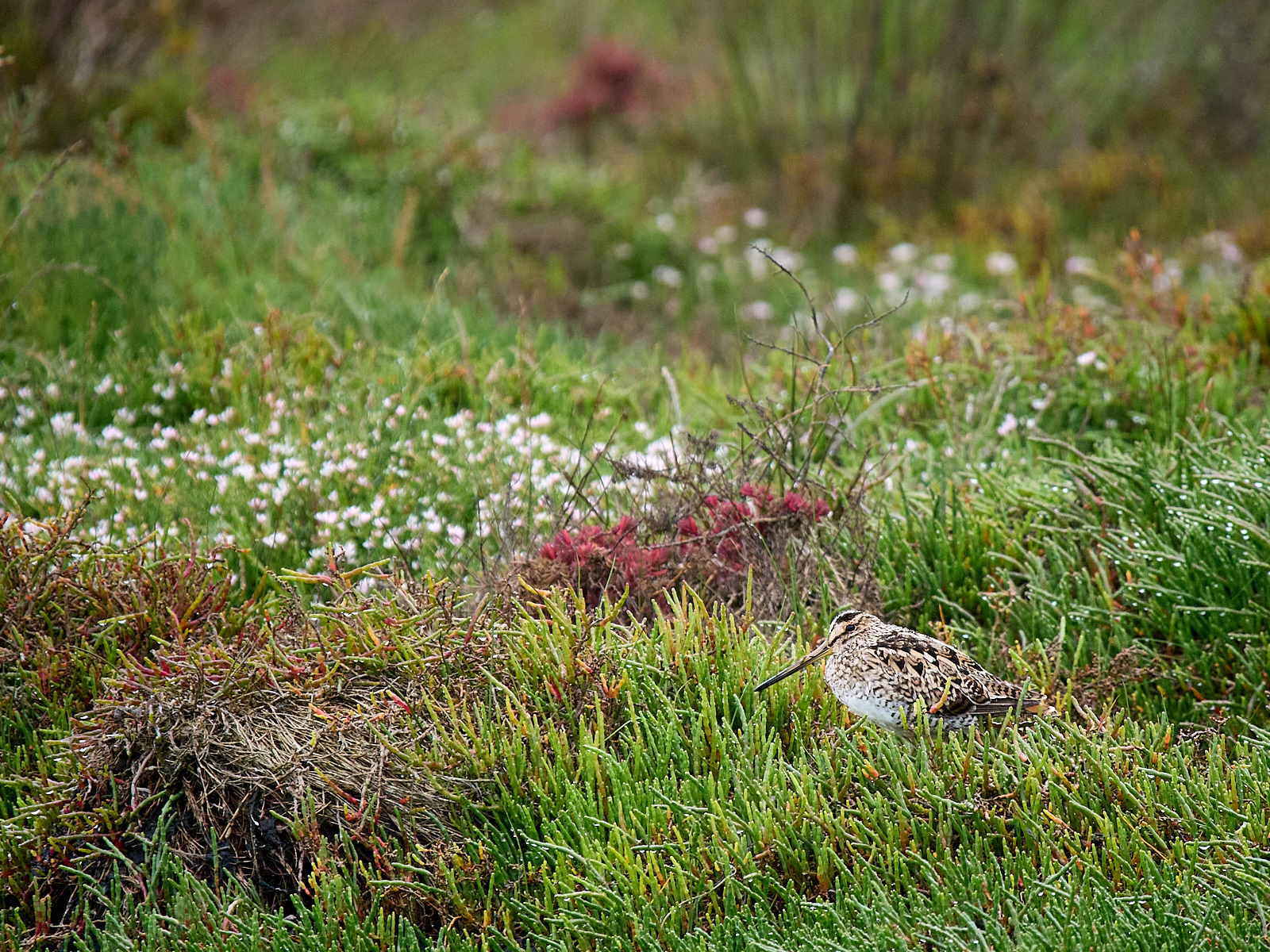
They feed dusk to dawn and hunker down through the day in places where not a lot of people choose to walk. Add to that their beautiful camouflage and you can easily miss them.
Migration is a strategy that comes with certain risks, problems on the breeding ground, the wintering ground or on the journey between them. For Latham’s Snipe the main hazards are here in Australia. Their population falls after major bush fires and droughts and they are further squeezed by urban development.
They are not easy to photograph. If they are out in the open they won’t let you get close. If they are in good cover the first you know of them as you wade through their territory is an explosive “chack” as they fly rapidly away.


 bobmcgee