Your word of the day is Fuliginous. You’ll never guess what it means. I suspect that trying to broaden your vocabulary by a word a day type strategy will only lead to a collection of words that no one has ever heard spoken and are too unwieldy for Scrabble. But yes, fuliginous means sooty. The root is Latin.


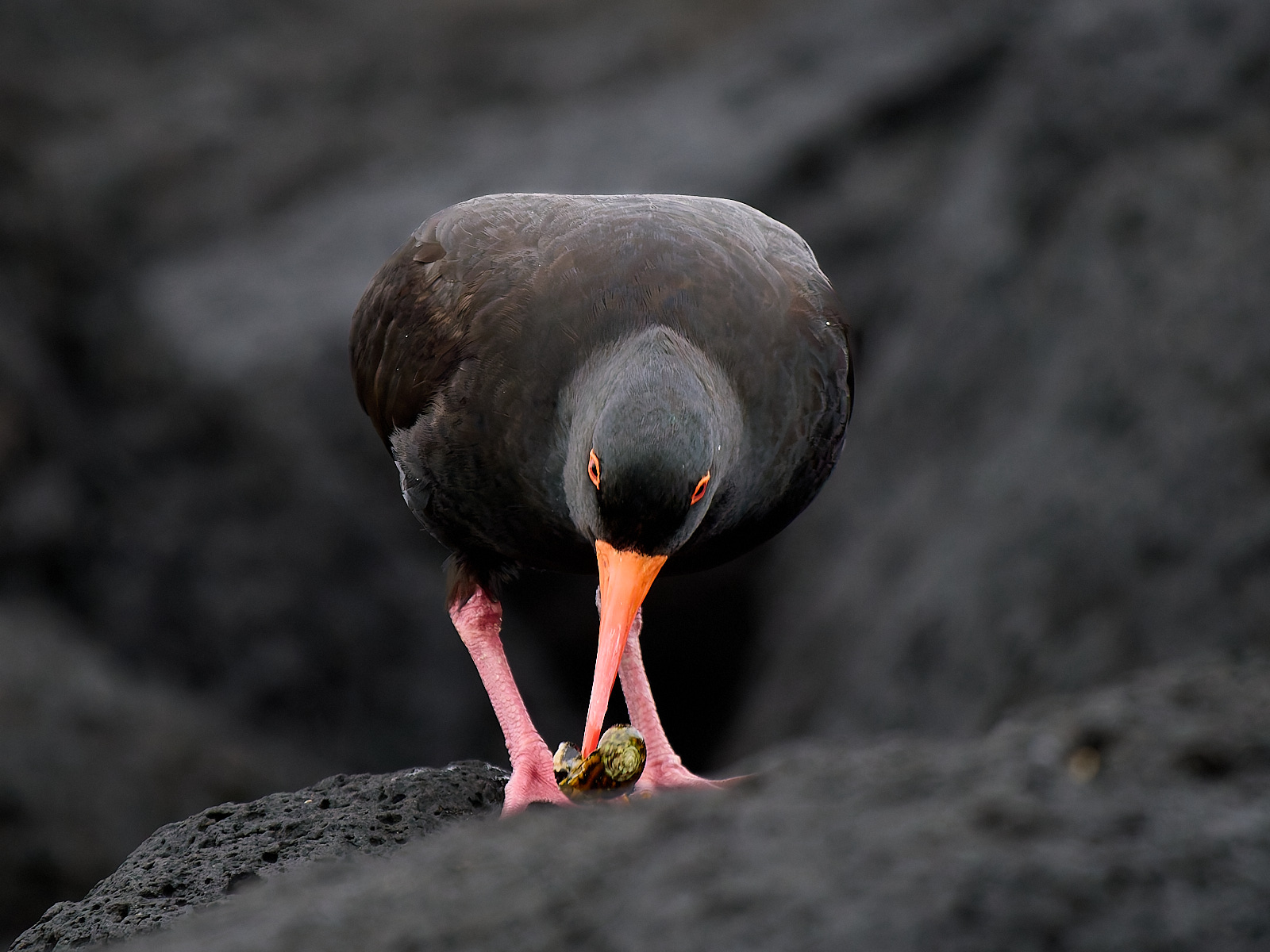
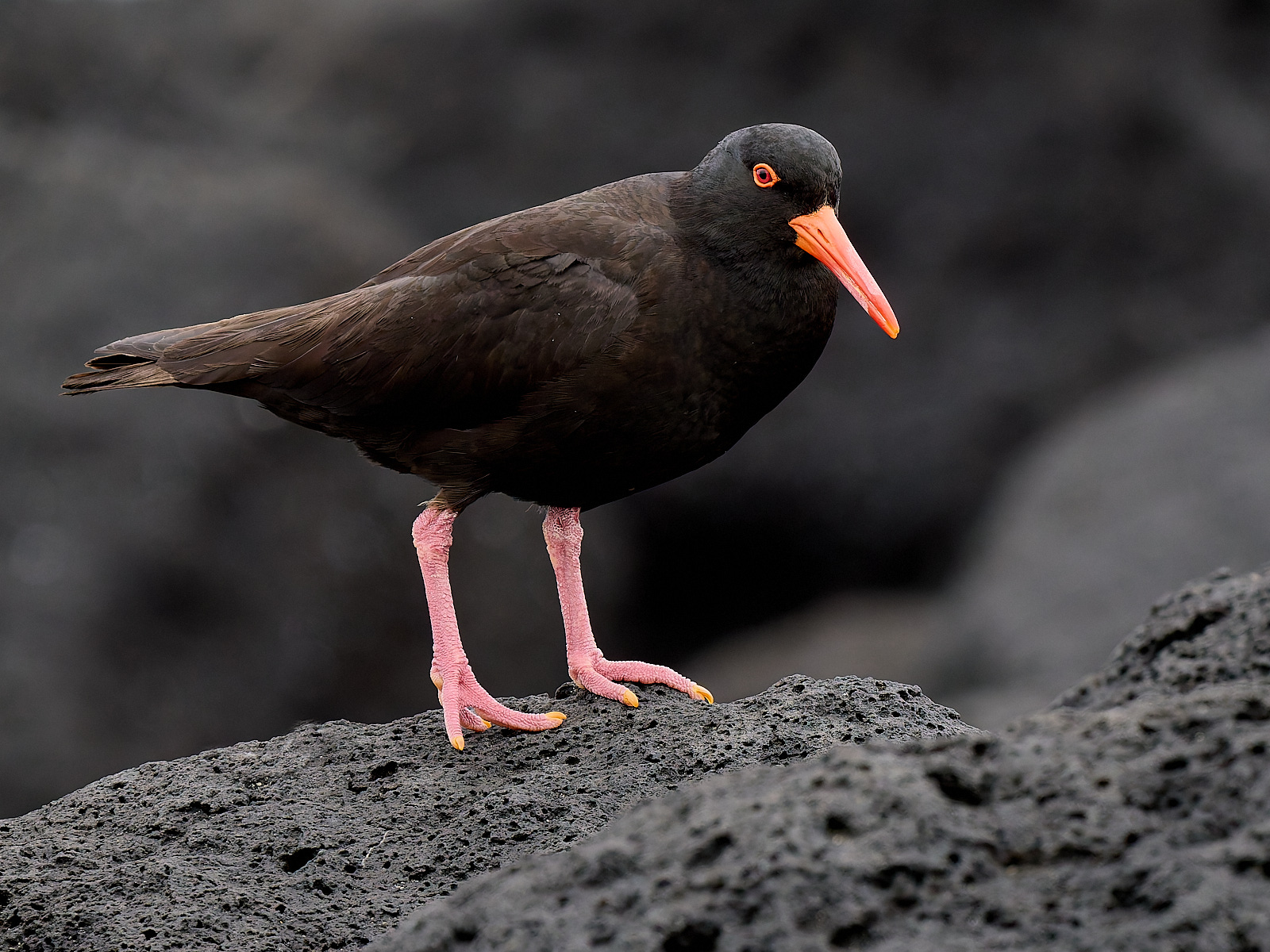
The rocks are fuliginous and the bird is fuliginous. What better way to show off the red bits? It’s the Sooty Oystercatcher. The first of its group to be described was the Eurasian Oystercatcher, Linnaeus 1758. It was the red bits that inspired the genus he created for it, Heamatopus, from the Greek, blood and foot. No surprise then that the Sooty Oystercatcher is Haematopus fuliginosus.
Currently there are eleven species of Oystercatcher, a twelfth, from the Canary Islands, was last collected in 1913 (ain’t science wonderful). Any survivors were gone by the 1940’s. Not to worry I’m sure there’s a committee somewhere on the verge of splitting an existing species. And indeed the Sooty is a candidate. There is a northern subspecies, Haematopus fuliginosus ophthalmicus which is a little smaller than the southern subspecies and has a yellow/orange eye ring. Here is a pair photographed in Broome, WA.

The Sooty can be distinguished from the Australian Pied Oystercatcher by its all black plumage. It prefers rocky coasts but I have seen them probing sand on beaches. The girls are heavier and have longer and more slender bills. The boys, with shorter stouter bills, have a higher proportion of shelled creatures in their diet. Parents help feed their young. This is unusual in shorebirds and is likely due to the difficulty involved in prizing molluscs off rocks and breaking open their shells with immature bills.
 bobmcgee