Thick head …

Tigers to the left, Possums to the right. The distance between Bali and Lombok is just 25 km but Asia’s woodpeckers, barbets and trogons are on one side, Australasia’s honeyeaters and cockatoos on the other. Huxley’s modification to the line tidies up a few problems, an excellent example being the genus Pachycephala, a literal translation – thick heads, more flatteringly known these days as the Whistlers. There are 32 species (following the Handbook of Birds of the World in this instance) and all of them are found to the east of Huxley’s version of Wallace’s Line.

When an Australians go birding in Asia they are confronted with not just with new species but whole new families. It can get confusing.

I’d been in Thailand for three weeks. New species were raining down the whole time. It was possible that I was missing the derisive laughter of the Kookaburra or my wife, or maybe the scent of eucalyptus. We were birding in the mangroves when I saw it, a little Aussie expat. It warmed the cockles of my heart springs …

Mangrove Whistler

I’ve seen Golden Whistler and Rufous Whistler in my own back yard and six other species in Australia. Some Whistlers have made it way out into the Pacific to the islands of New Caledonia, Tonga and Samoa but only one species straddles the mere 25 km that separate Lombok and Bali, the Mangrove Whistler. And it didn’t stop there, it can be found all the way up the Malayan Peninsula and then along the Asian coast from Vietnam to India.
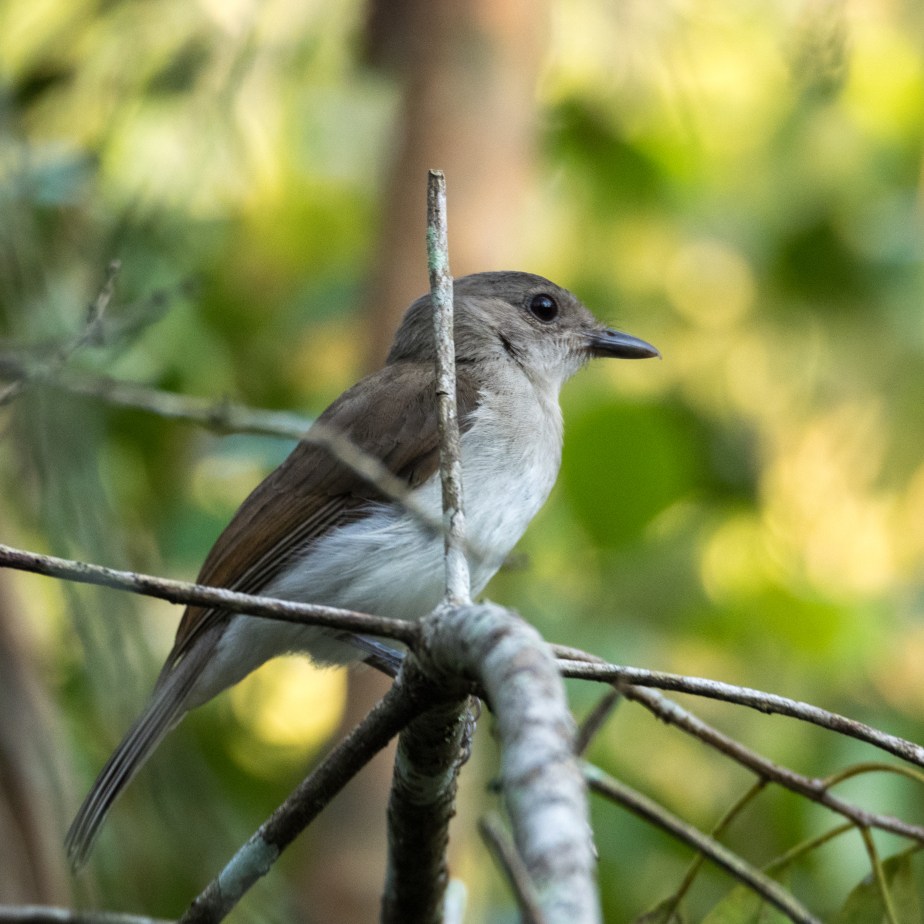
Mangrove Whistler

It was then that I knew it was time to come home.
 

Sri Phang Nga …

Our last patch of lowland forest, Sri Phang Nga National Park spans 246 square kilometres along a range of hills parallel to the Andaman Sea coast. It is just part of a larger forest which is big enough to sustain Great Hornbill, White-handed Gibbon and Dusky Langur. The forest is on a grand scale but access is limited , it is worth an extended visit but be prepared to cover the same ground repeatedly, although the nature of tropical birding is such that your encounters will be varied because of the high diversity of species and low density of most individuals.

Let me whet your appetite …

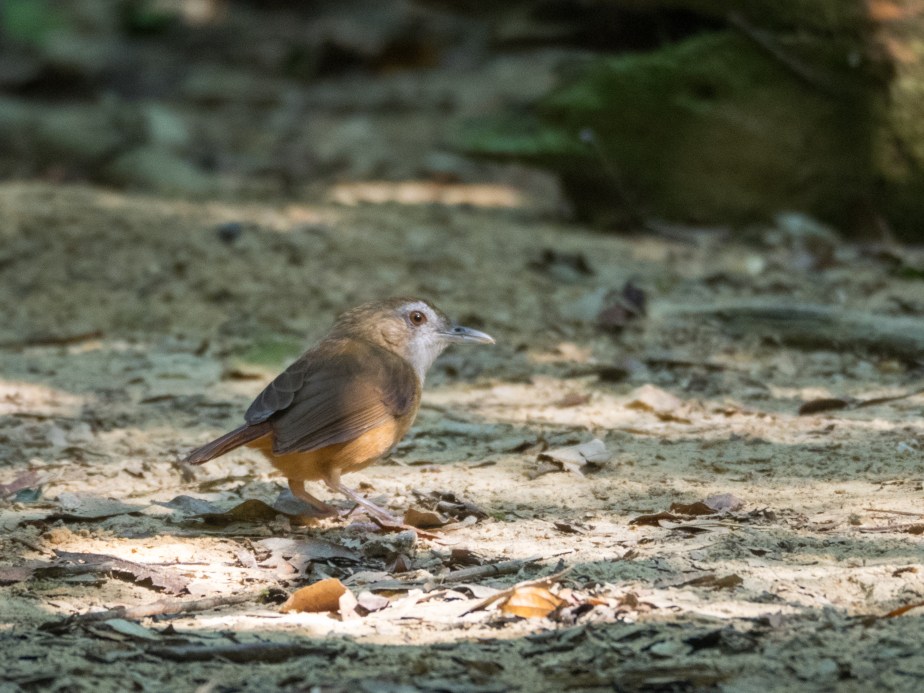
Abbott’s Babbler
White-rumped Shama
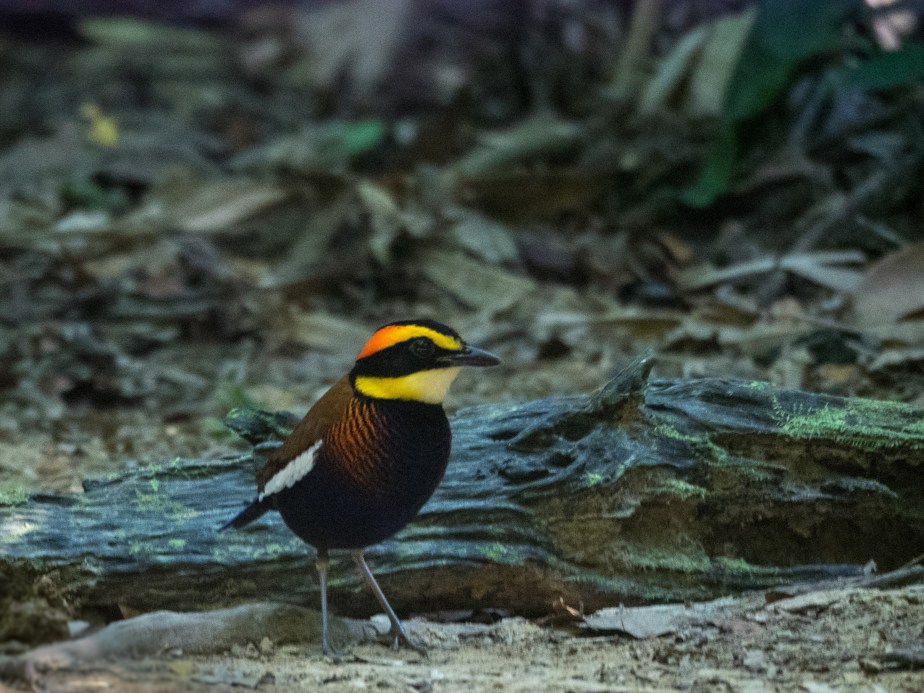
Malayan Banded Pitta

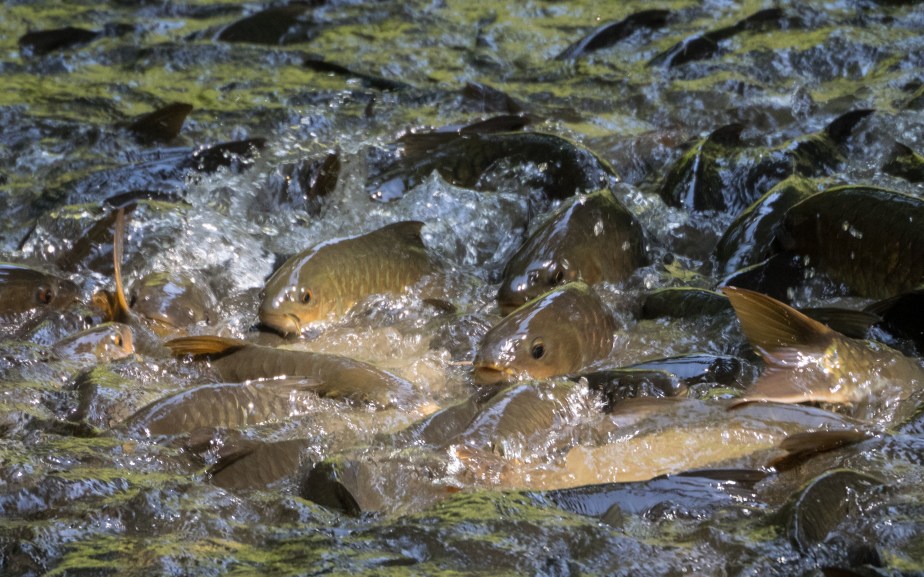
Streams in the park hold a diverse range of fish, tossing in a little food can bring a spectacular response.

Similan …

This is Thap Lamu, not far from Khao Lak, where we caught the ferry. As you can see the sun is already up so we are somewhat behind our regular schedule but we do have an hour’s head start on the tourists …

Similan  means Nine Islands in Yawi, which is the native tongue of the area. There are 11 of them. But then one of Victoria’s tourist destinations is called the Twelve Apostles …

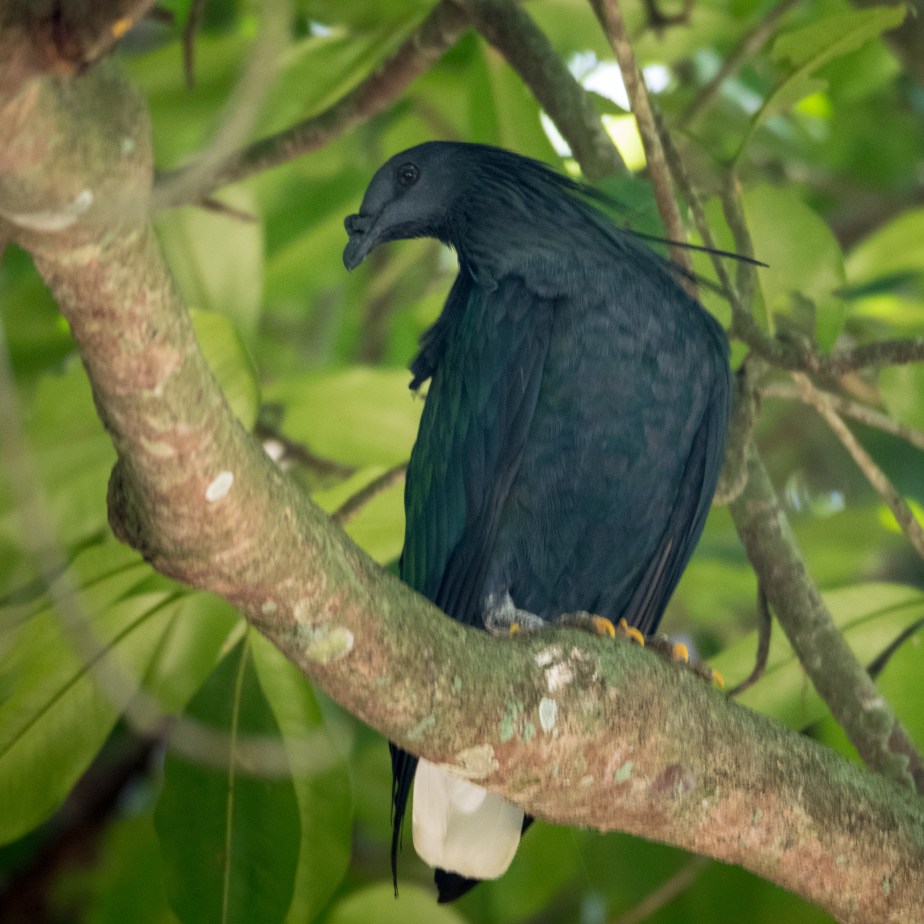
The trip out takes about a 90 minute on the faster boats. The target birds were Pied Imperial and Nicobar Pigeons, they can take a while to find, I’m told. We found them very quickly. An unexpected Black Bittern also put in an appearance. Squirrels and Flying Foxes were present to represent the mammals.

Nicobar Pigeon

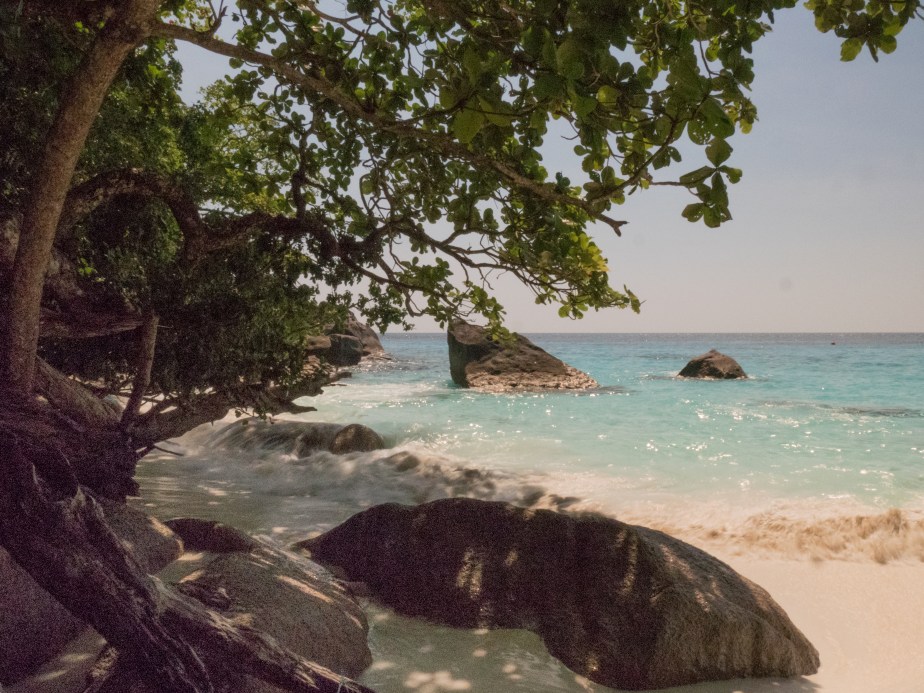
The islands are absolutely gorgeous, sea, sky, rocks, beaches, Sea Eagles cruising by. Like the tour guide says, Paradise.


The tour guide doesn’t mention that paradise is a victim of its own success. By 11 o’clock it was an absolute zoo. We were the animals and the cage was getting pretty crowded and still the boats were disgorging more. We bailed at midday.

If you are tempted to go either stay on the island and make the most of the early mornings (making sure you are self sufficient so far as food goes) or stay on a boat. The diving and snorkeling look very tempting.

Creatures of the Night …

Day time birding in Khao Nor Chuchi was fairly good but it was the night birds that quickened the pulse.

One way or another birds had provided the locals with a small income for a long time. Initially it was by trapping for the cage bird trade, still quite big in Thailand, and when that became unfashionable money could be made taking the punters to see Gurney’s Pitta. That no longer pays but there is still a wealth of local knowledge that can be put to good use. The compulsive twitcher wants to come back from their trip with the biggest possible list and owls are among the hardest birds to find. They tend to use day time roosts repeatedly so if you know where they are you’re in business.
It meant that we were in the forest from before dawn to well after dark. One evening our targets were well beyond the reach of our minibuses so we transferred to a couple of 4WDs, one a nice new Prado, the other a ute. There were 12 paying passengers, two guides plus the local talent who would show us the birds. The Prado seated five, the ute seated two, the remaining nine traveled some very rough terrain in or almost in the tray. There are people who imagine that bird watching is dull.

In the space of a couple of nights we had good views of Brown Wood Owl and Blyth’s Frogmouth. The highlight for me was an encounter with a Colugo. Something collided with a tree close by. Playing the spotlight on the source of the noise revealed a mammal climbing the trunk. It would move both fore feet then both hind feet, it was quite quick but not particularly graceful because its progress was hindered by folds of membrane that were too large to fit completely  beneath it …

The commentator calls them little but they can weigh up to 1.3 kg. The ability to glide has emerged independently in several distinct groups of mammals, the Colugos are the most accomplished of them and also the most closely related to ourselves. They are in the Euarchonta as are the primates.

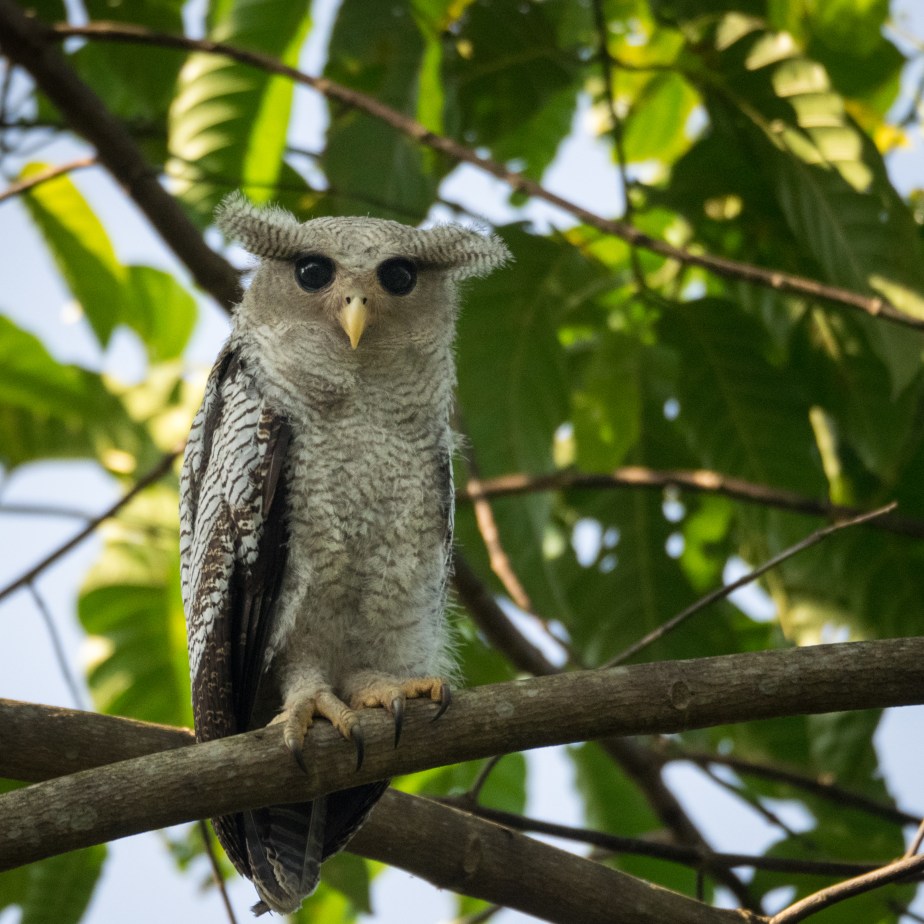
As well as night birds by night we also saw a couple at their daytime roost, the Spotted Wood Owl and Barred Eagle Owl. They are both very shy and will bolt readily. We were conducted singly and with great stealth to see them half obscured in dense foliage. When everybody had taken a look the guides gave a sigh of relief and we all relaxed. At that point a youngster that had clearly not read the manual presented itself for a photo …

Barred Eagle-Owl

Peninsular Thailand …

At the end of the regular Thailand tour we said our goodbyes to just one of the participants and hello to one newby. I think the high retention rate had something to do with the high proportion of repeat clients. They knew what to expect from Rockjumper and wanted it all.

We flew to Krabi and transferred to Khao Nor Chuchi. Down at sea level and closer to the equator it was noticeably warmer and perhaps more humid. Over the next few days we would be exploring lowland rainforest, mangroves, tidal flats and taking a trip to the Similan Islands.

The southern extension would add a considerable number of species to our list especially some highly desirable nocturnal birds but Khao Nor Chuchi is famous for a bird that we would not be seeing, Gurney’s Pitta.

The Pitta’s are a group of birds found in Africa, Asia and Australasia. They are passerines, a group that is often loosely referred to as perching birds or  songbirds but the Pittas are suboscines, that is they lack the syrinx which is the avian equivalent of the larynx, and aren’t great singers. They tend to be colourful and shy. We had already ticked off Eared Pitta, Blue Pitta and Rusty-naped Pitta. We had stopped for a few minutes on the drive that day to find the Mangrove Pitta and we would go on to find the Malayan Banded Pitta.

Gurney’s Pitta was brought to the scientific world’s attention in the standard way, it was shot, by William Ruxton Davison in 1875 in Burma. It was, perhaps, quite rare even then, by the middle of the 20th century it was considered quite possibly extinct, it had been completely off the radar since 1936. It made its reappearance in a Bangkok pet shop. Rumours reached the US, word was sent to an ornitholigist, Philip D. Round, who then visited pet shops until he found a pair and discovered that they had been trapped at Khao Nor Chuchi. Round and a colleague headed for the area where a few days later they found a pair in the wild. That colleague was Uthai Treesucon, one of our guides on this tour.

The definitive reference is Round, P. D. and U. Treesucon. 1986. The rediscovery of Gurney’s Pitta. Forktail 2: 53–66.

The Thai government declared a reserve to protect its new star species, but the boundaries did not include the most important habitat nor was policing adequate to prevent illegal land clearance for rubber and palm oil plantations. The population of Gurney’s Pitta dwindled and was extinguished by about 2014. The forest persists on ridges and steep slopes but is fragmentary on the flats which has become a mosaic of plantations. Uthai’s long experience of this place has been marked by loss, not only of the Pitta but numerous other birds that require larger expanses of forest.

On the other side of the hill in Myanmar (formerly Burma) there is still a population of Gurney’s Pitta, the area where they are found is currently off limits to tourists because of its military importance. Is their future secure? I doubt it.


The Rockjumper Thailand Tour …

Early morning, Doi Angkhang, just as we were getting dangerously close to the title Another Doi in Paradise the tour comes to an end.

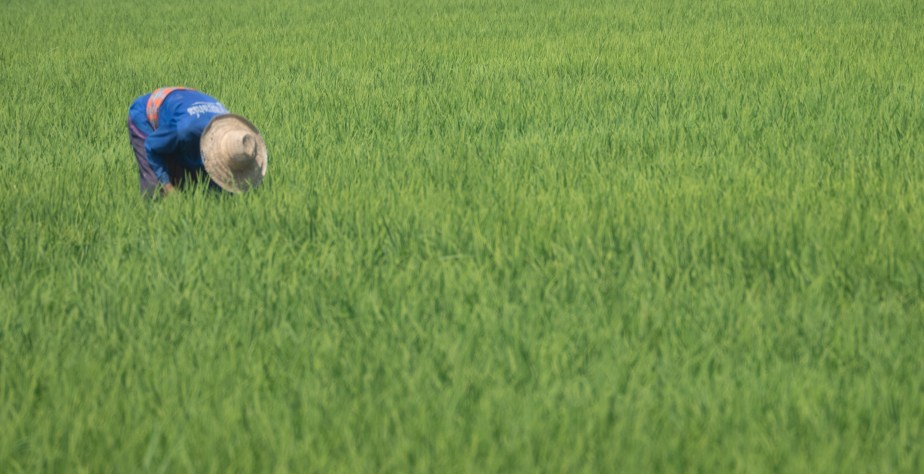
We can squeeze in one more paddy field on the way to Chiangmai …

and then it’s back in the air to Bangkok where we are greeted by advertisements for Snail White facial cream and Ronald McDonald.

Snail White, believe it or not, contains …

Snail secretion filtrate, Bytyrospermum Parkii, Niacinamide (Vitamin B3), Fragaria Vesca (Strawberry) Fruit extract, Morus Nigra Fruit extract, Rubus Idaeus (Raspberry) extract, Prunus Avium (Sweet Cherry) extract, Zingiber Officinate (Ginger) root extract, Bisabolol, Allantoin, Lavendula Stoechas extract, Centella Asiatica extract, Hydrolyzed Hyaluronic acid, Panax Ginseng Callus Culture extract, Dicaprylyl Carbonate, Pentanediol

… and you put it on your face.

With your softer smoother skin you are ready to head to McDonalds where Ronald will greet you in the traditional Thai fashion, with a Wai. If he could only talk he might well say “Sawatdi” but I doubt that he would kiss you on the cheek.

สวัสดี

Another night in the Maruay Gardens Hotel and then …

But wait, there’s more … The Southern Extension.

Another Doi …

This one, Doi Angkhang where we would spend two and a half days.

For two countries with so much in common they seem surprisingly distrustful of each other …

It is otherwise a very pleasant mountain resort as well as a home for four different hill tribes. One of the King’s Projects is situated here and is a splendid botanical garden, both a wonderful tourist destination and a research facility trialing exotic crops that will thrive at altitude and offer something other than opium and illegal logging as sources of income for the local people.

The very first night there we were led on a quest for the Mountain Scops Owl by the indomitable Uthai. Clinging to a cliff side in the depths of the jungle in pitch darkness and guided only by its call Uthai, against all odds, was able to bring a spotlight to bear on this elusive and desirable creature. I would have brought you a photograph but I was clinging to a tree with one hand and fending off the snakes with the other.

But the following morning I had a much easier time taking photographs of more confiding birds …

Silver-eared Mesia
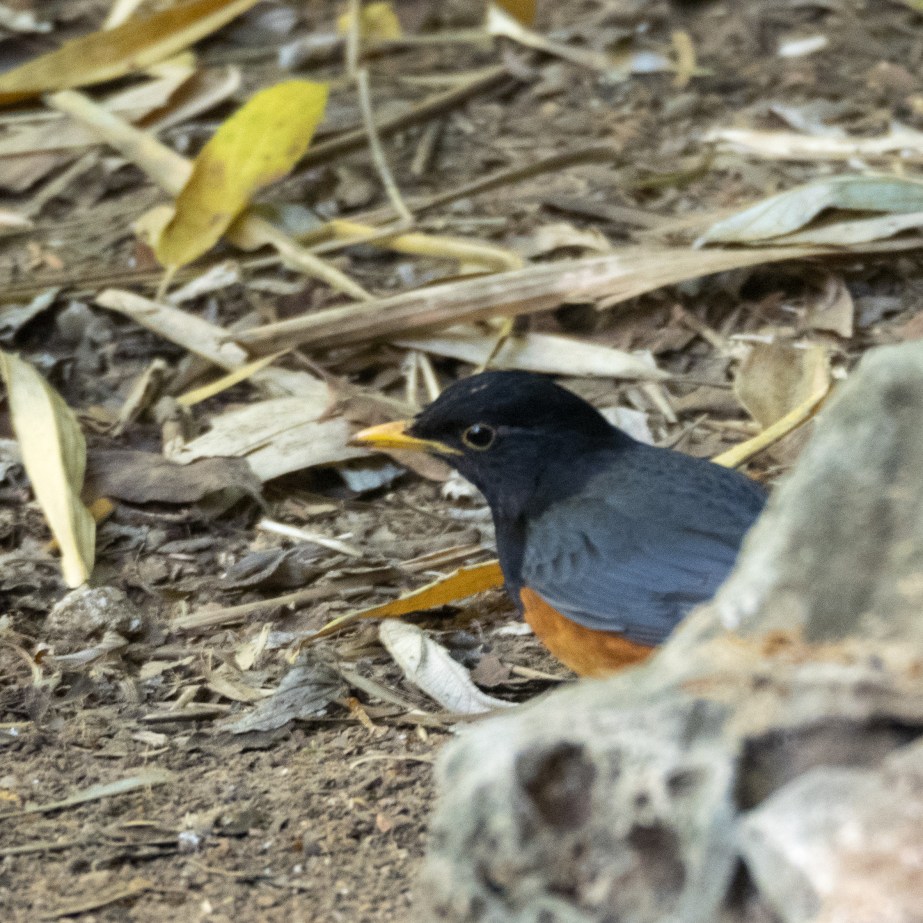
Black-breasted Thrush
Hill Blue Flycatcher

Doi Lang …

We arrived at Doi Lang during the World Bird Photography Congress, or so it seemed. There were little encampments of portable bird hides at every turn, each containing a photographer possibly seated on a porta potty with a packed lunch by their side, they certainly demonstrated considerable patience …

Mine is on order.

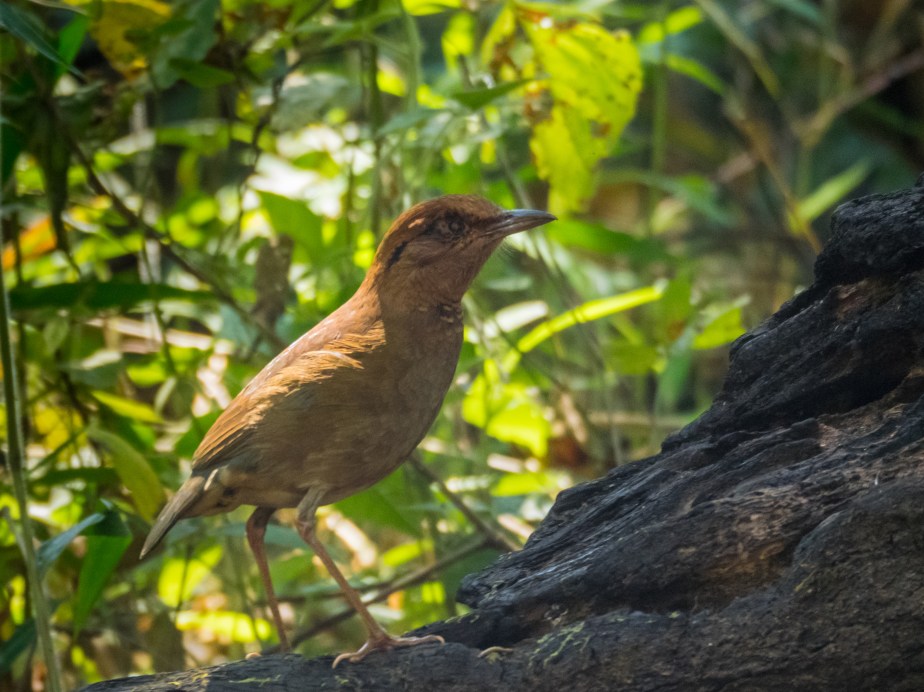
Doi Lang is actually one ridge in Doi Pha Hom Pok National park and the home of some eminently photogenic birds, beauties like Mrs Gould’s Pheasant, Mountain Bamboo Partridge and the rare and sexy Rusty-naped Pitta, none of which are overly confiding. The ridge looks across the valley at similar ridges in Myanmar and there is a considerable military presence on both sides of the border. The top of the hill is currently off limits.

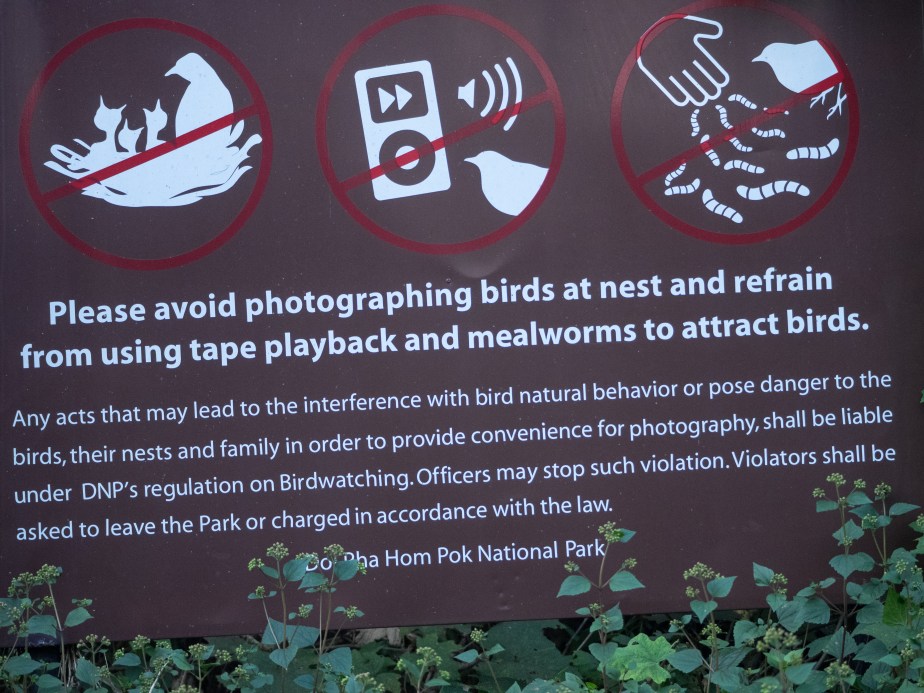
This limits the available birding space to just a few meters either side of part of the ridge road where the birds have become so depixelated that extraordinary measures have become necessary …

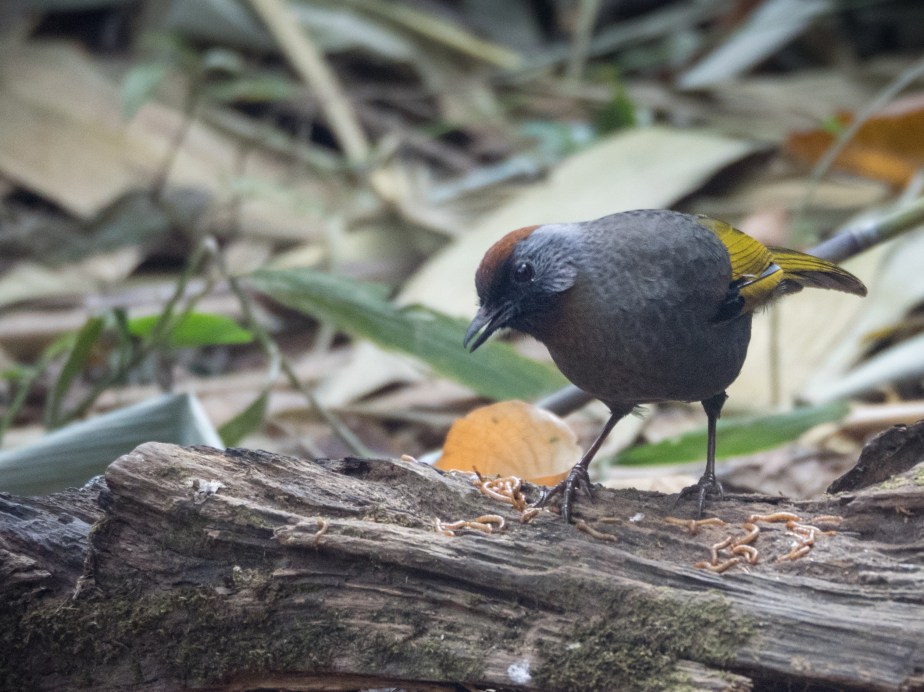
So, if you do happen to see any mealworms in my photos they were left by the porta potty brigade, right …

Rusty-naped Pitta
Red-gorgeted Flycatcher
Silver-eared Laughingthrush
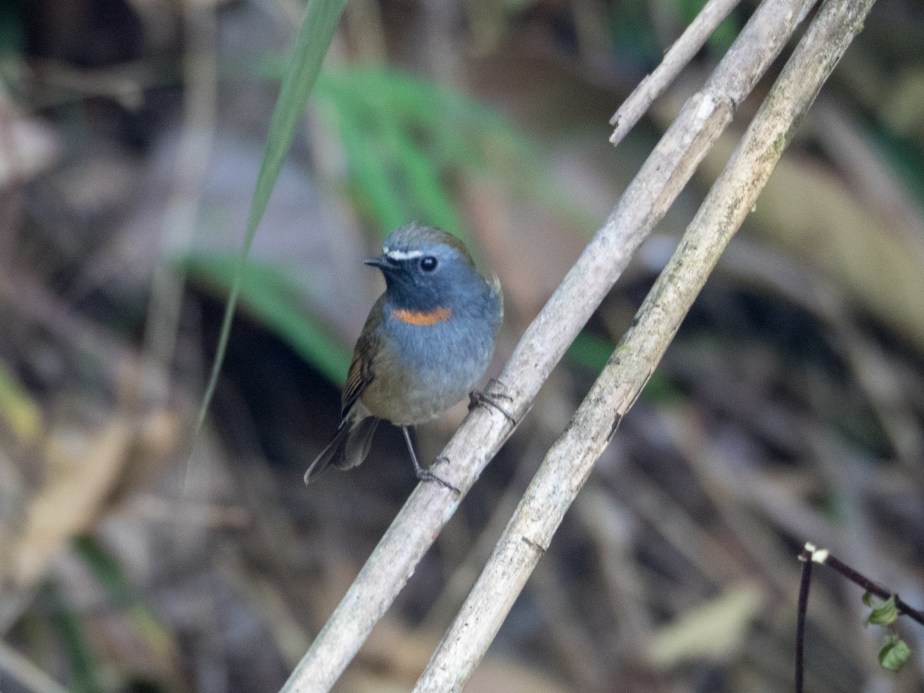
Siberian Rubythroat
Spot-breasted Parrotbill
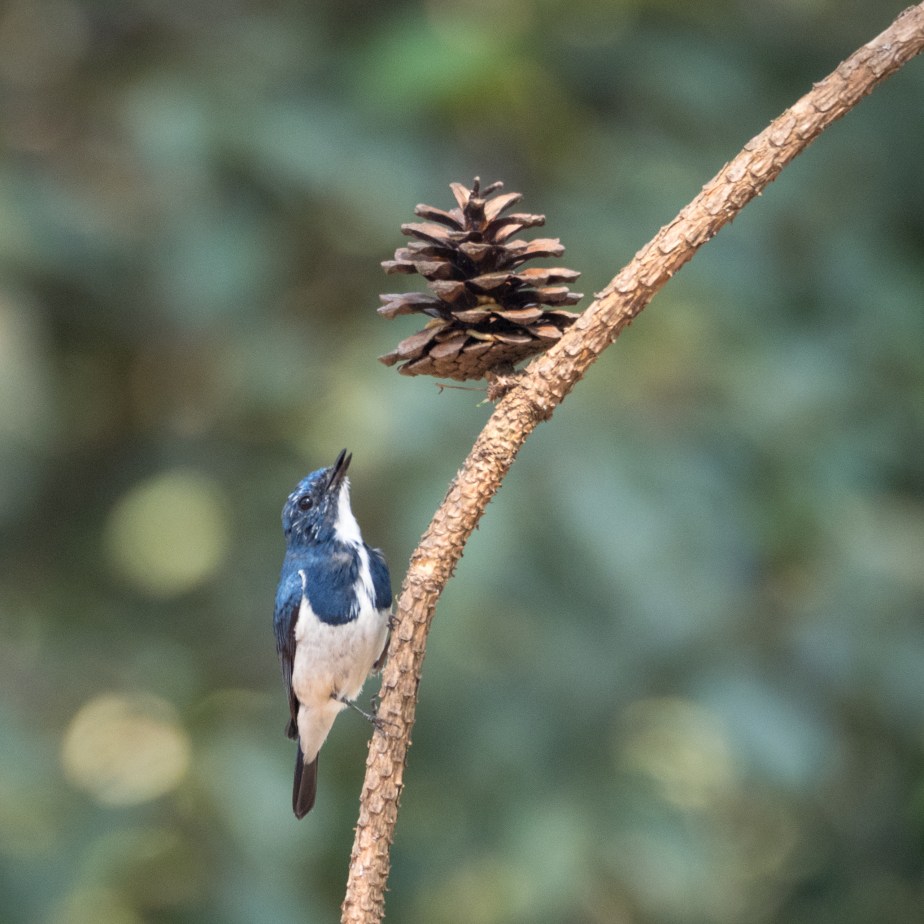
Ultramarine Flycatcher
Crested Finchbill
Mrs Gould’s Pheasant


Doi to doi …

It was about this time in the trip that I cottoned on to the fact that Doi means mountain.

Subsequent research reveals that Chiang means town, just as in English there are other words for town that convey subtleties that reflect the distinctions between City, Capital, Village, Hamlet and so forth. Mai translates as new thus Chiangmai equals Newtown. Not to be confused with Mae which means River.

Thai script manages to convey the consonants with 44 symbols and uses diacritical marks to convey 25 vowel sounds, 6 diphthongs and 5 tones. Learning all that as an adult might take a while. It was invented by good King Ramkhamhaeng (พ่อขุนรามคำแหงมหาราช) in 1283 or so tradition has it. When I look at Thai script I find it hard to see where one word finishes and the next starts and when it is translated for the benefit of tourists there doesn’t seem to be a great deal of consistency whether something is rendered as one word or more, you might see Chiang Mai or Chiangmai for example.

Anyway, we were on the road again and our next Doi would be Doi Lang, and once again travel time would not be wasted we stopped to take in some more paddy fields and another Buddhist Temple.

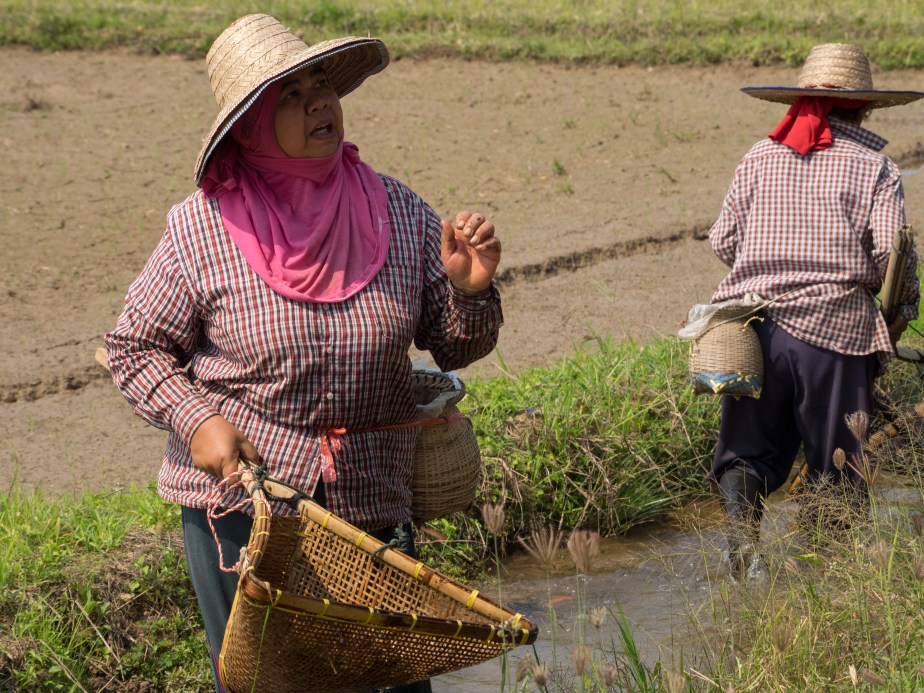
Rice isn’t the only crop from the paddy fields, there were a couple of women at work with nets …

… a fine crop of dragonfly larvae and she was kind enough to share the recipe …

We also had success, a nice little bird list including flight views of the beautiful Greater Painted Snipe.

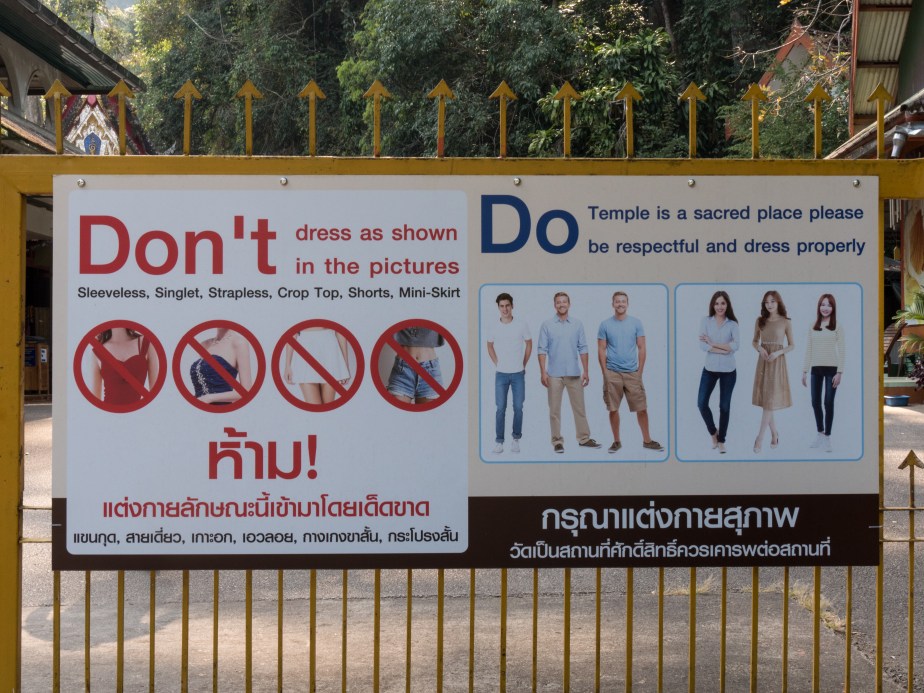
In the vicinity of Chiang Dao we visited a temple. There is a dress code …

… but if you should fail it admission is still possible …

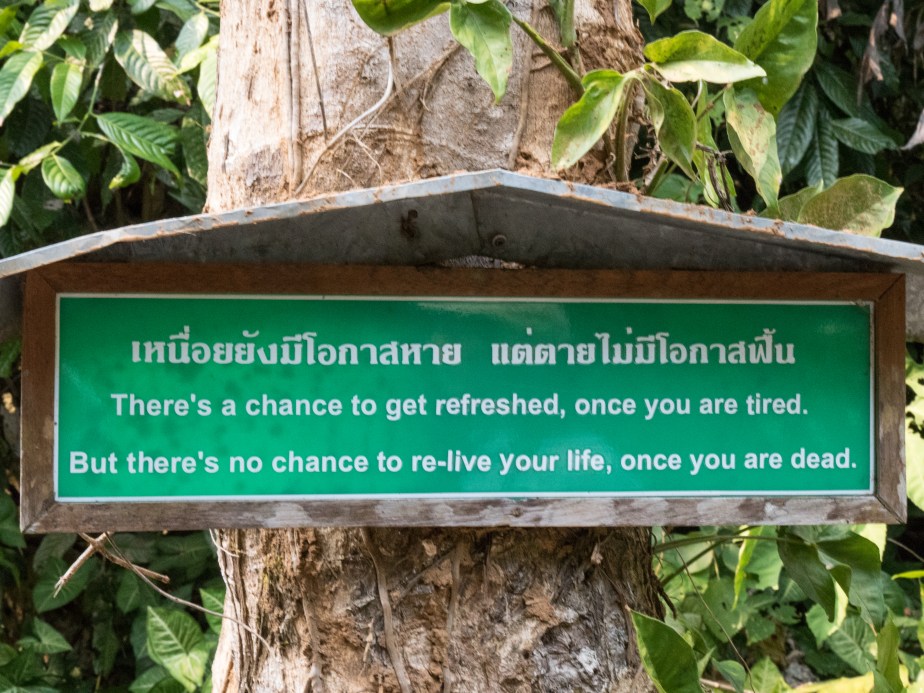
The  Wat Tham Pha Plong is situated at the top of a flight of steps, 500 or so. The walk leads to greater wisdom and takes in a very nice forest in the process. Along the way there are some little gems …

another of my favorites read …

Abandon anger – don’t raise it.

Having anger in our hearts

is like raising a tiger as a pet.

One day it will bite us and everyone else.

Your reward will be …

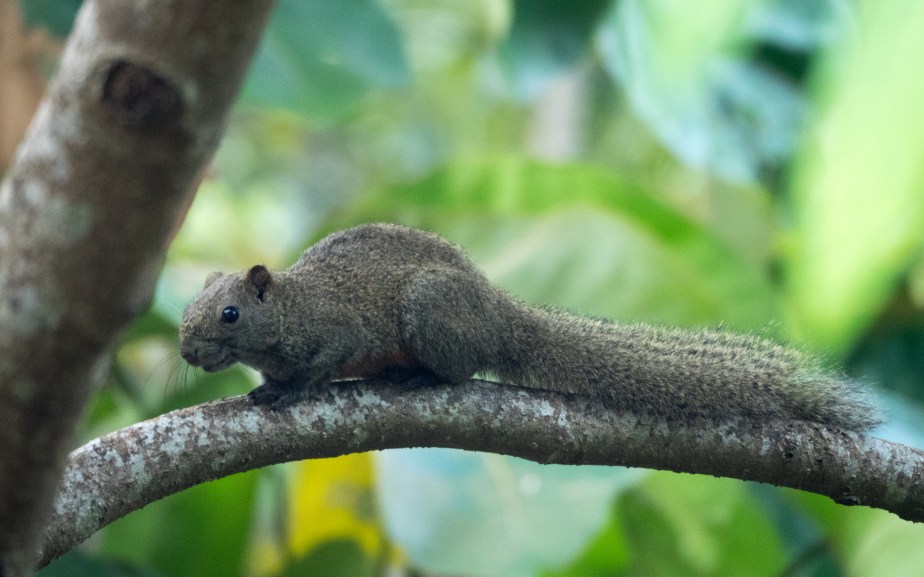
Pallas’s Squirrel

and a better reincarnation.

Doi Inthanon …

Time flies when you’re having fun. Days 11 and 12 of the Thailand Rockjumper birding tour were spent on Doi Inthanon. It is Thailand’s highest peak at 2565 meters (8,415 ft) and is protected by a National Park covering 482 km². A hill tribe village is included within the park consequently there has been hunting within the park and significant loss of forest, now mainly put to cut flower cultivation. Larger mammals, elephants, tigers and gaurs, have been lost but gibbons, deer and serow are still present, though not necessarily easy to find.

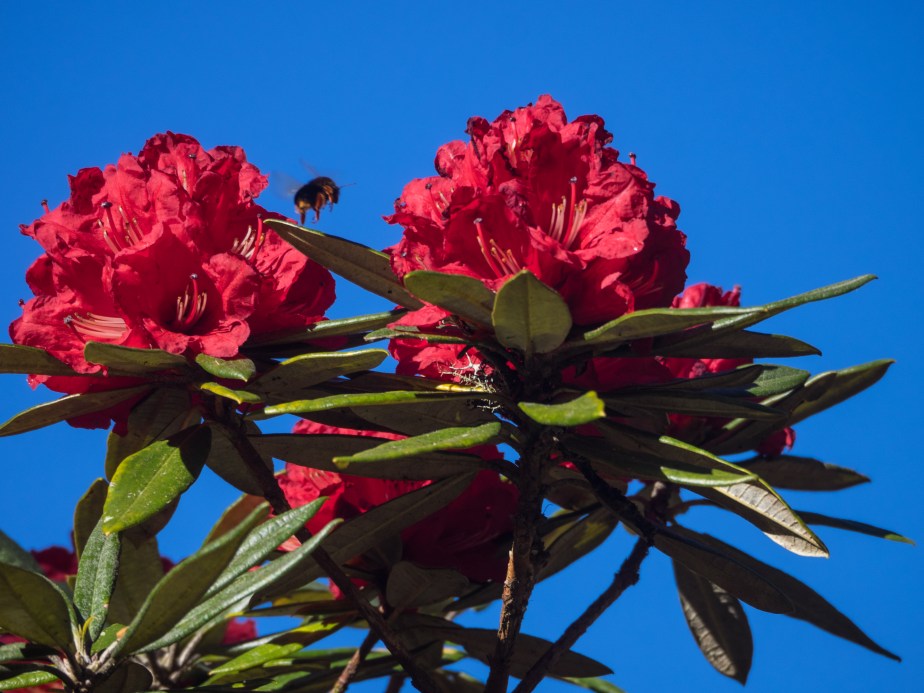
The summit is 300 meters higher than anywhere else in Thailand which makes it cool enough to boast the country’s only sphagnum bog, it’s surrounded by rhododendrons, and makes it a little outpost for a more himalayan avifauna such as the Bar-throated Minla. This is where you look for White-browed Shortwing, Pygmy Wren Babbler and Dark-sided Thrush.

Bar-throated Minla

The forest on the lower slopes is also productive for the birdwatcher.

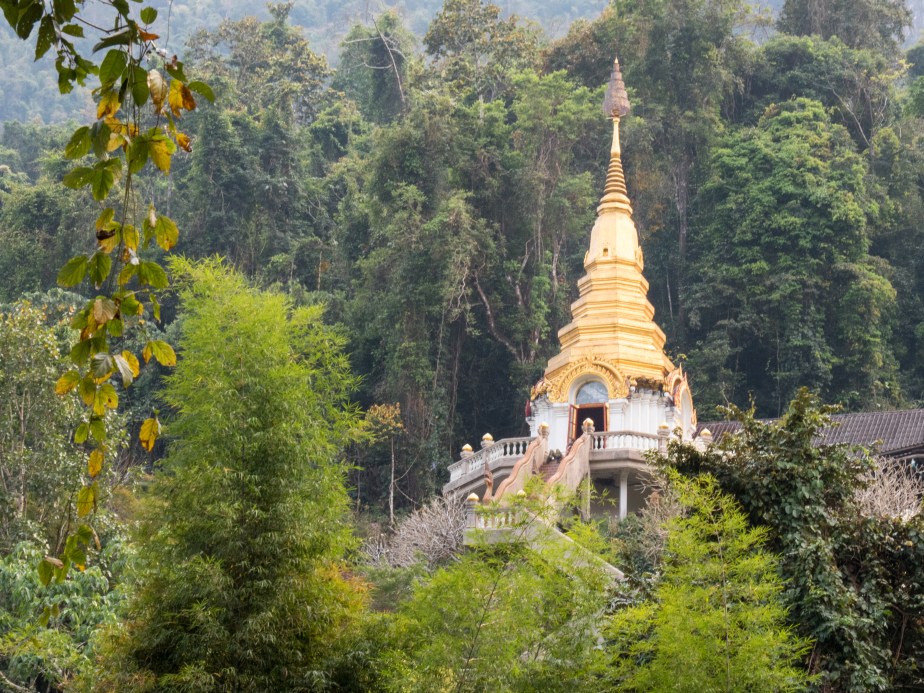
As befits the highest mountain in the land royalty has had a long association, King Inthawichayanon, one of the last kings of Chiangmai, ordered that his bones be placed on the mountain and that its name be changed from Doi Luang to Doi Inthanon. There are also a couple of stupas on the mountain that commemorate the 60th birthdays of the recently deceased king and queen.

The park has some attractive waterfalls, best from May to November but worth a look all year. This is Wachirathan Falls …

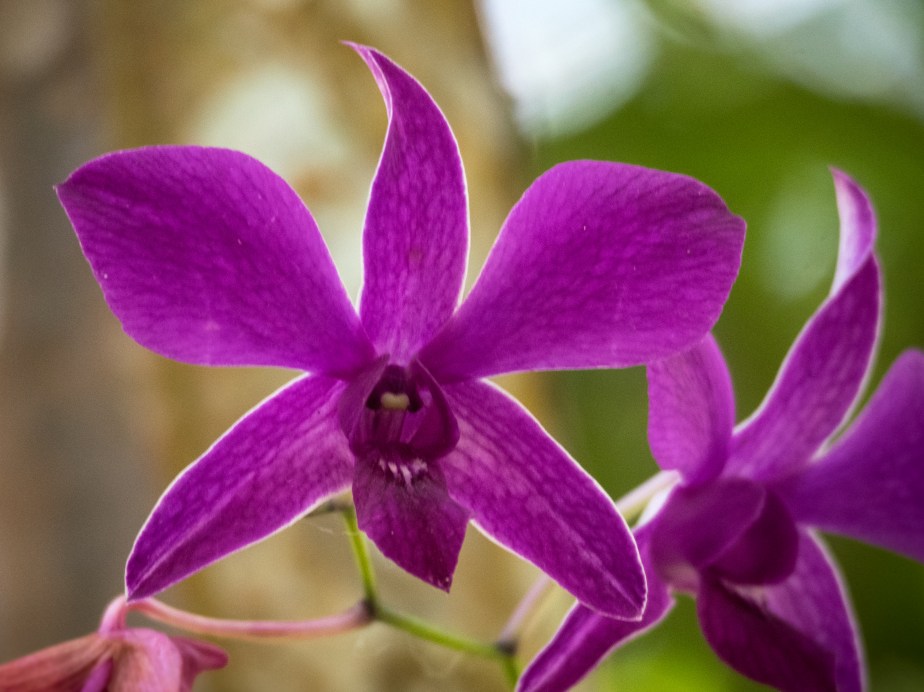
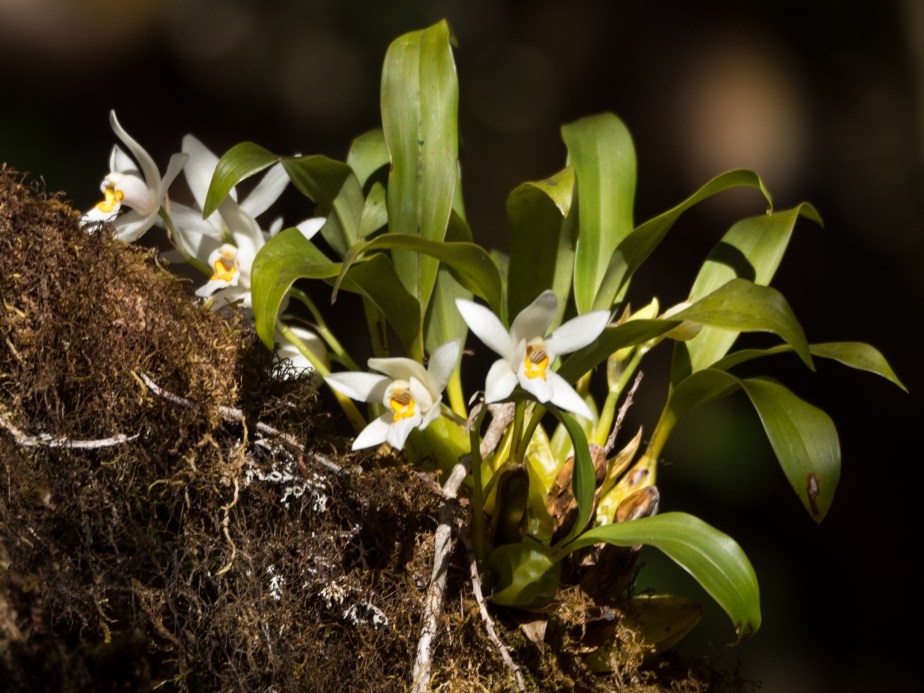
The orchids that I encountered were enough to make me think of going on an orchid watching trip one day …

The serious birdwatcher will once again visit Nick Upton’s web page which is excellent value especially if planning an independent trip.