Oslo …

Just one last day and what better way to spend it than birding with Simon Rix around Oslo.

Off we went to the county of Hedmark and we put together a nice list of birds. I caught up with some old friends and met some brand new ones. It was nice to see the Yellow Hammer, “A little bit of bread and no cheese” which used to be common in England but is now in serious decline. I’ve not seen it at all during recent visits. It was also nice to see the colourful Common Teal and Goldeneye. A distant Black-throated Diver also turned up.

A Red Squirrel and a Red Fox made separate and very welcome appearances. You could put your foot in plenty of evidence of Moose but you are lucky to see them during the day.

A lifer is always a big thrill. Black Woodpecker and Slavonian Grebe made their very first appearance in my binoculars but the star of the show was the Great Grey Owl.

Great Grey Owl

Simon showed me this female nesting in an abandoned Common Buzzard nest. They are not hole nesters like most other owls. Old raptor nests are not numerous and some success has been had with artificial nesting platforms.

These owls feed mostly on rodents and only breed successfully when rodents are abundant.

Her behaviour suggested that her eggs had just hatched.

Norway has extensive forest cover. Most of it is commercially harvested. Forestry practice has become a bit more bird friendly in recent years, instead of clear felling a few habitat trees are being left. This has helped some species considerably including the Great Grey Owl. Other beneficiaries are the many small birds that breed in woodpecker holes.

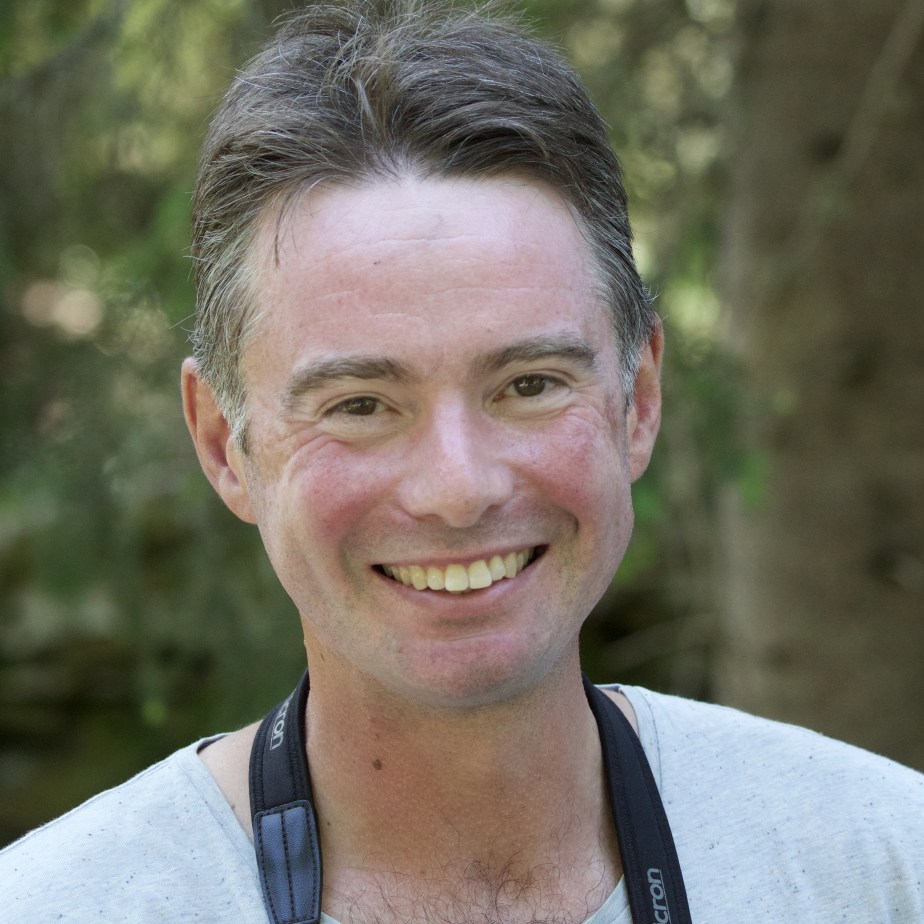
Simon is a real pro. If you are passing through Oslo a day out with him should be first item on the agenda. You can contact him through his website … Oslobirder. Just click it.

Simon Rix

Longyearbyen …

After Barentz put Svaalbard on the map in 1596 hunting of whales, seals and walrus soon followed. Because of over-exploitation populations and profitability soon declined. From about 1715 the Russians began trapping for the fur trade. Norwegians soon followed. Coal mining began soon after 1900, one mine is still in operation. Tourism is now the main driver of the economy.

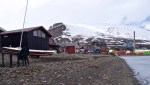
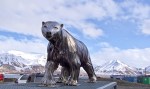
As you walk around Longyearbyen the various threads of its history are still apparent. Old mine buildings are dotted about, you can buy furs or even a stuffed polar bear. If you are going off the beaten track you should take a rifle but please don’ take it into the post office …

The buildings are modern, there are several hotels, some restaurants, a small but fairly busy port. There is a supermarket, tourist shops and sporting goods stores. It is snowing heavily at the moment but in the valley the ground is mostly free of snow, the snow mobiles are parked now and unlikely to be used until summer is over. It’s after 10.30pm but it’s as light as it was at midday.

It is a very strange mix of a place, it’s the furthest north that people live and work but it doesn’t remind me of Greenland, Iceland, Alaska or northern Canada. It’s polar frontier meets Europe. I feel about as far from Australia as it is possible to get.

Click on any of the pictures to enter a little gallery put together over the last few days …

Arctic Wildlife …

High mountains and high latitudes are harsh places. There are not a lot of creatures that can make a living.

I have arrived in Longyearbyen a few days early for a cruise that will take me further north in the archipelago and have been wandering around the outskirts of town with my camera. It isn’t wise to go too far because one of the animals around here is quite happy to eat the adventurous.

Whilst I have seen only a small number of species I have had the time to get some photos …

Black Guillemot
Barnacle Goose
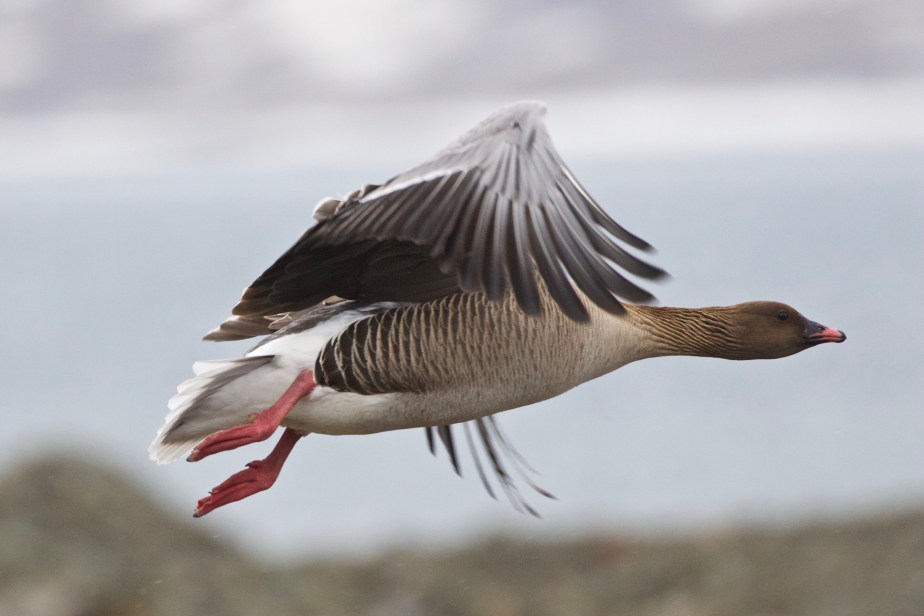
Pink-footed Goose
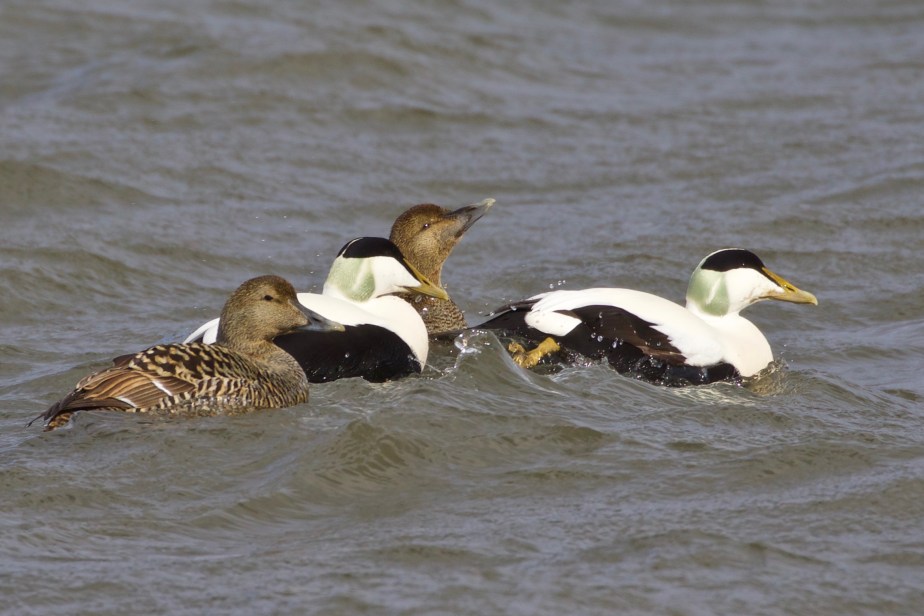
Common Eider
King Eider
Reindeer
Snow Bunting
Rock Ptarmigan

Nasjonaldagen …

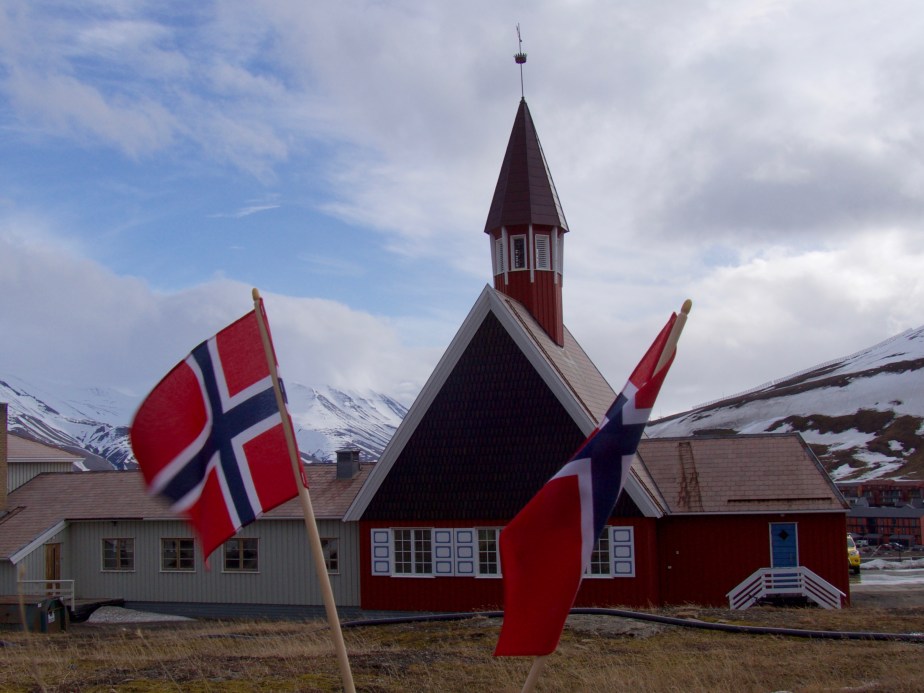
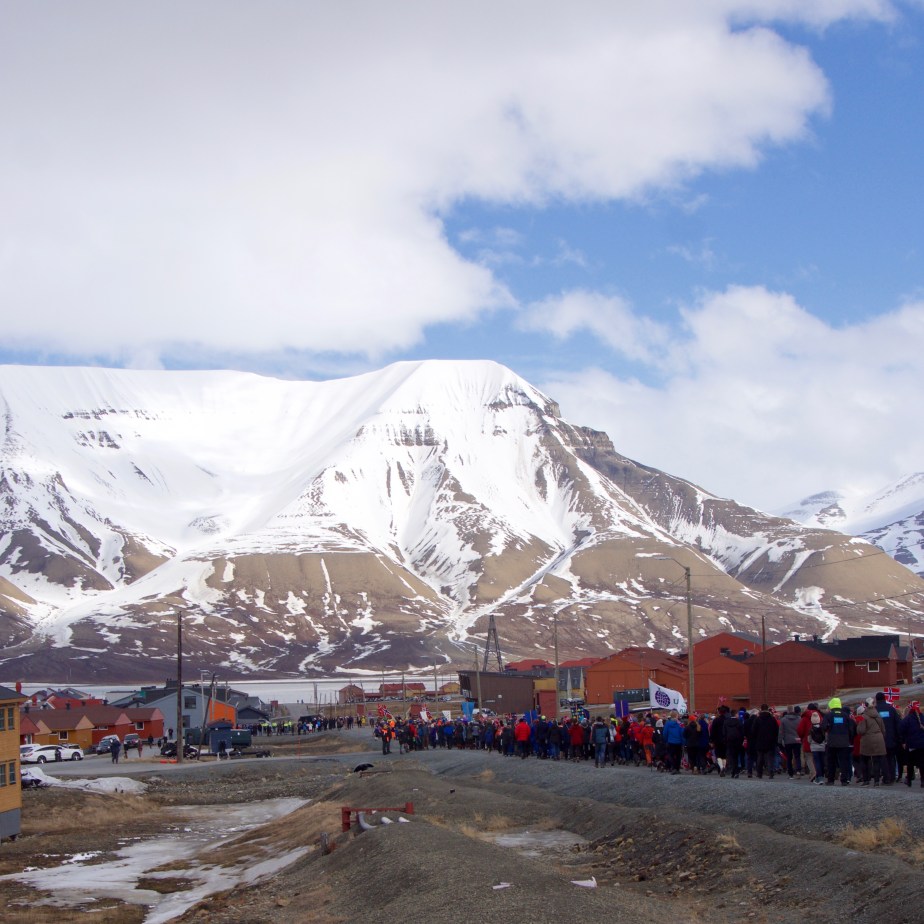
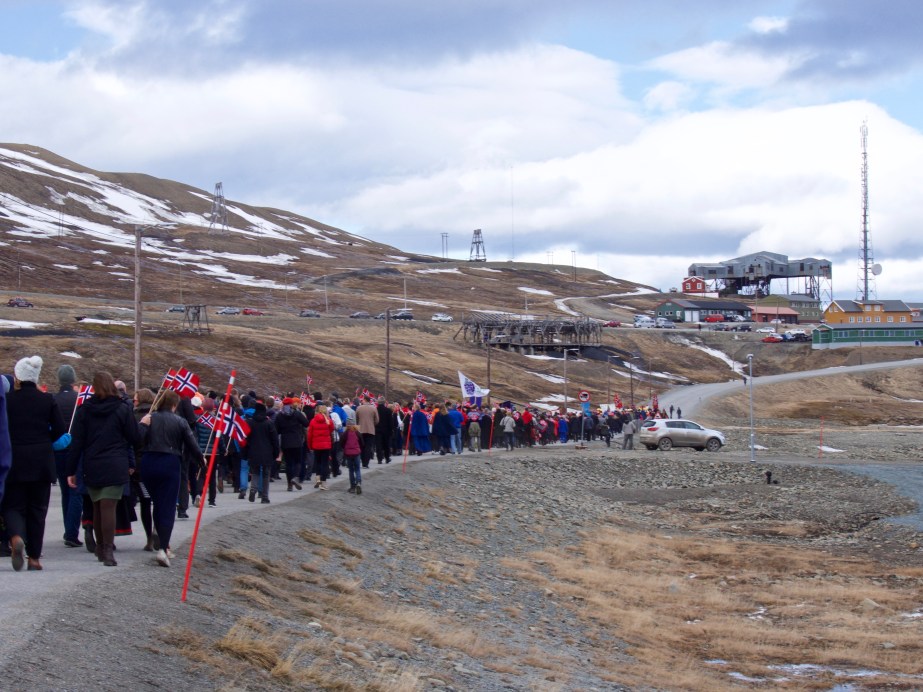
17th of May is the day that Norwegians celebrate the signing of their constitution in 1814. In Svaalbard the celebration kicked off with a service at the Kirk …

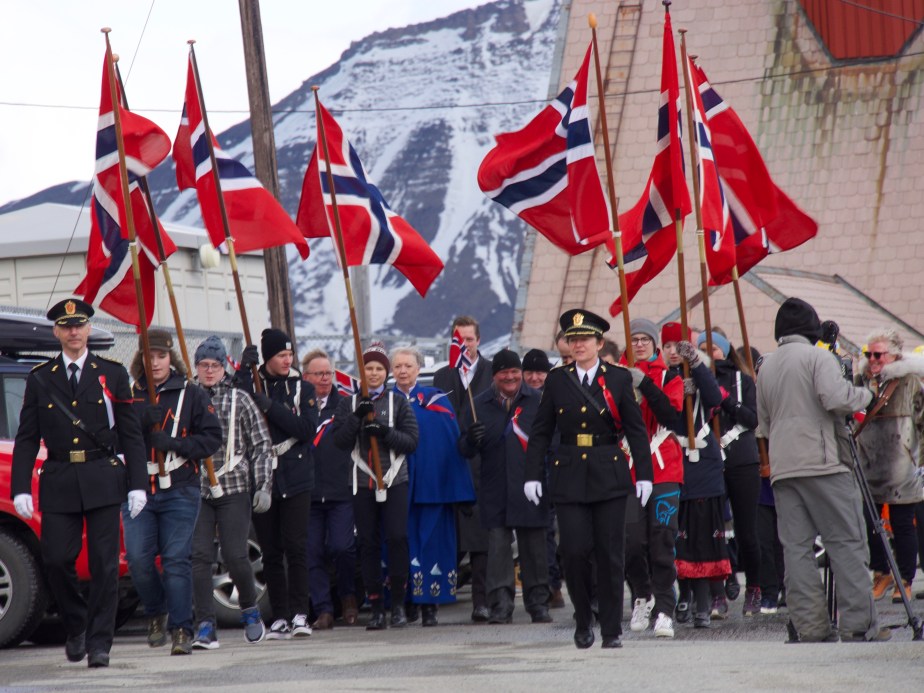
and then continued with a march around town.

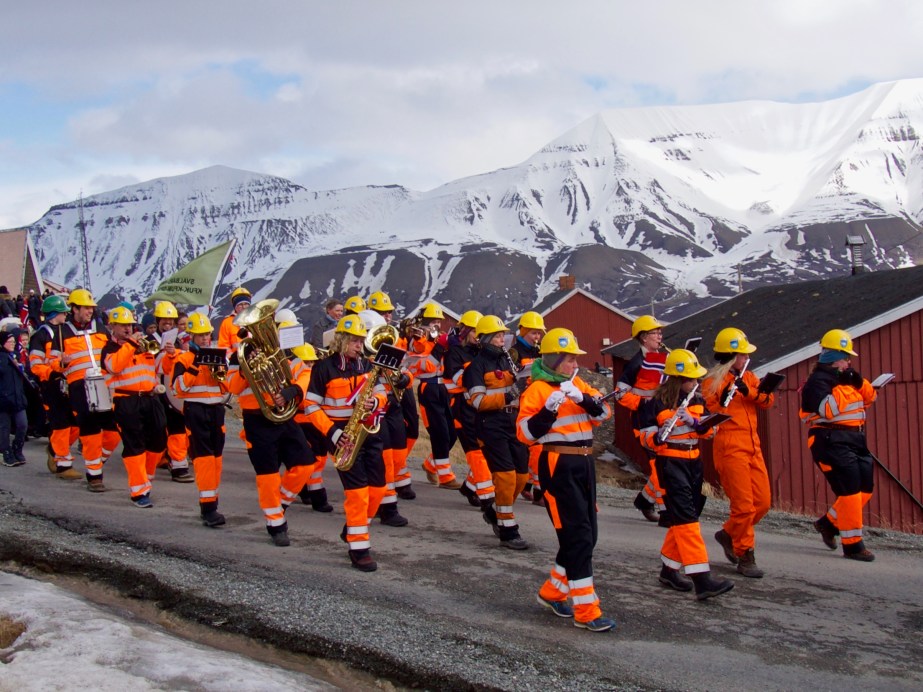
The band was resplendent, some wearing gloves …

Considerably more people marched than attended the church service.

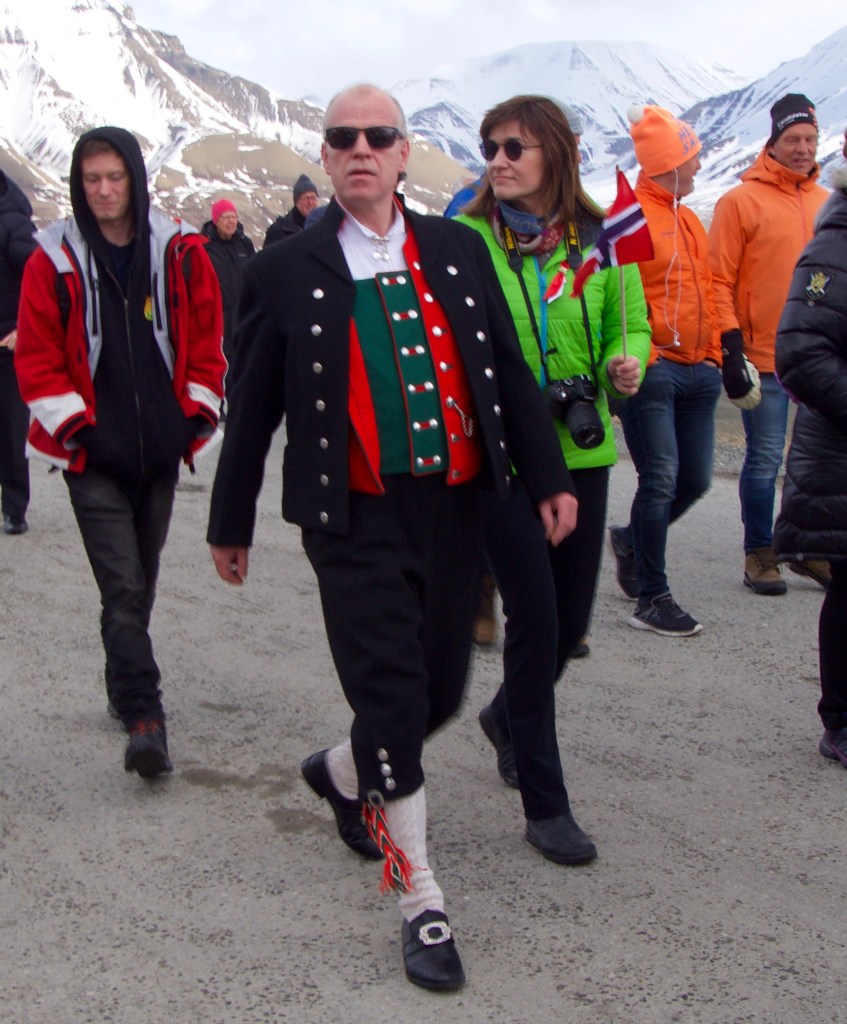
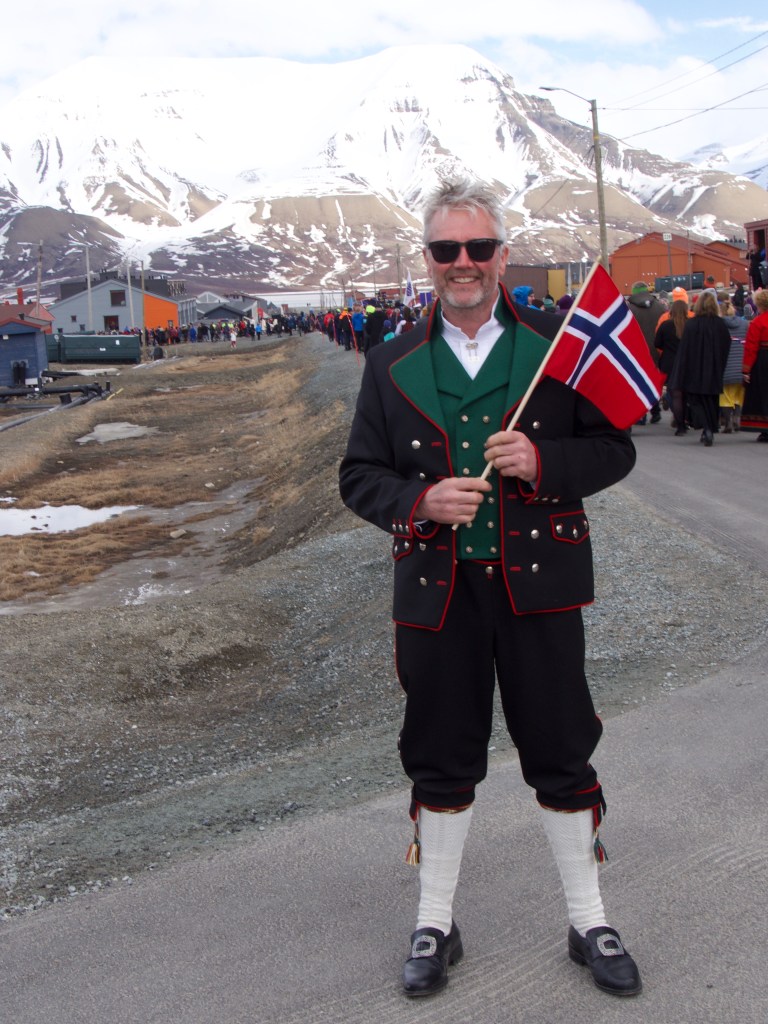
National costume proudly on display.


The parade finished with speeches and cannon fire. Then the celebrations really started. There will be some sore heads tomorrow.

Cold Shores …

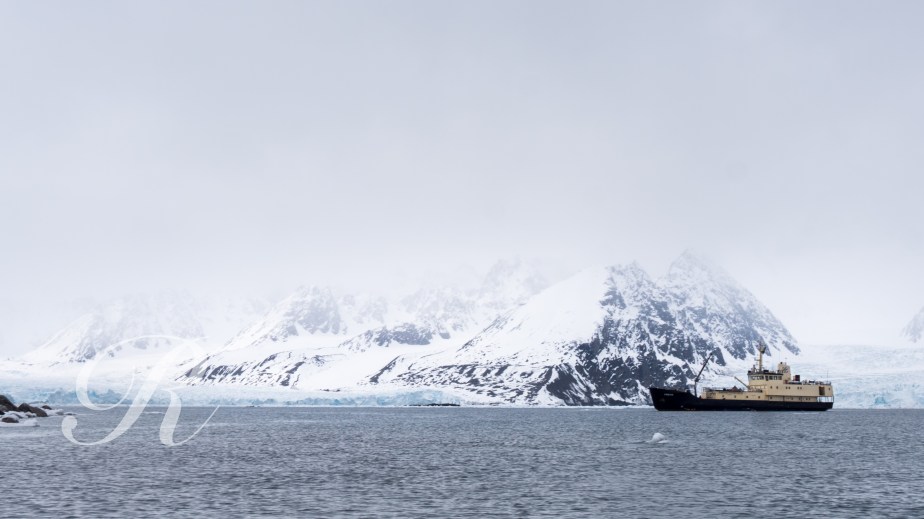
Half way between Norway and the north pole and well inside the arctic circle there is an archipelago  discovered and named Spitsbergen by the Dutchman Willem Barentsz in 1596. He failed to recognise that it was a group of islands. Since the 1920s Spitsbergen has been  the name of the largest island, the archipelago as a whole is known as Svaalbard and is politically part of Norway.

It was a true terra nullius when Barentsz found it but it is now the world’s most northerly full time settlement. There is some mining, tourism and it is the home of the world famous seed bank. Wikipedia tells us that soccer is the most popular sport and that there are three football pitches. It’s not surprising then to find that the population is only small. In July 2017 it was estimated to be 2,583. The population growth rate is -0.03%, they won’t be needing an extra soccer pitch any time soon. The largest town and administrative centre is Longyearbyen. It is a free trade and demilitarised zone.

The climate is described as

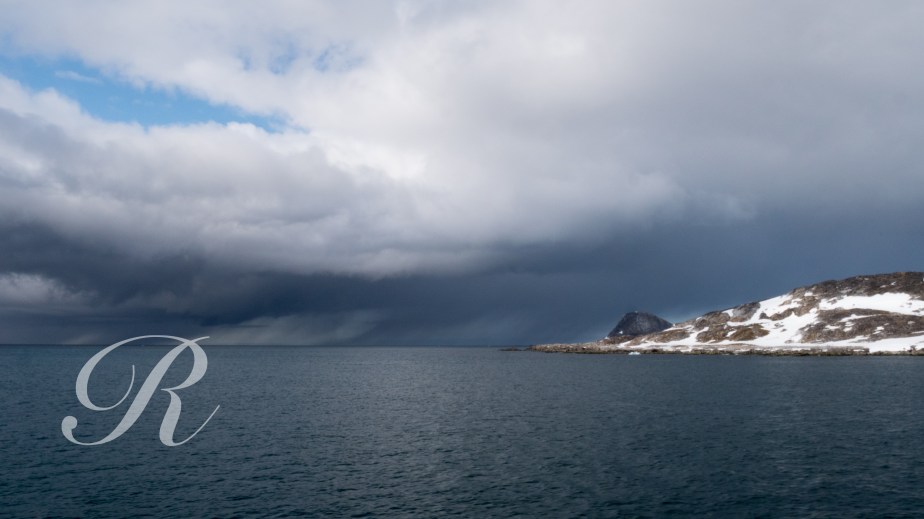
arctic, tempered by warm North Atlantic Current; cool summers, cold winters; North Atlantic Current flows along west and north coasts of Spitsbergen, keeping water open and navigable most of the year.

About 60% of the land surface is glaciated.

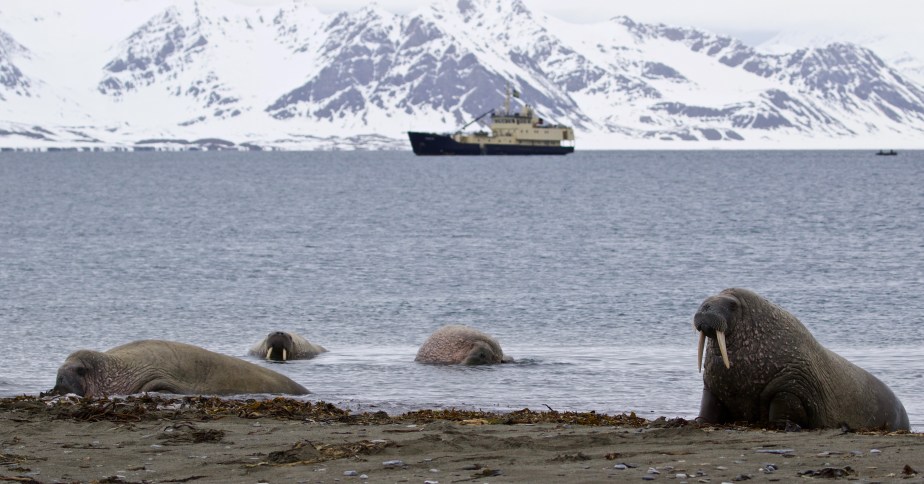
Tourists obviously don’t come to buy ice cream and football boots. Mostly they come to see polar bears, whales, walruses and sea birds, reindeer and the northern lights. The latter will not be in evidence until the sun sets next …

The Knowledge …

And that wraps up my Spanish sojourn.

I only scratched the surface. In Extremadura the pseudo steppe country around Trujillo turned up such delights as Great and Little Bustards, Stone Curlew and the Great Spotted Cuckoo. Monfrague was gorgeous and Vulture heaven. Villuercas delivered some very nice birds of prey. The countryside in Extremadura was awash with wild flowers and in the towns history dripped from every stone.

It was the perfect time to visit Doñana in Andalucia, the water birds were abundant and El Rocio was becoming lively in the run up to the fiesta.

You can’t beat local knowledge and that came in the form of Peter Warham. He is a longtime resident in Spain. He organised our accommodation, drove us around and helped at every step of the way with translation. He is a very amiable guy, he knows his birds and knows how to find them. We thought his rates very reasonable. He puts in from dawn to dusk. He can be contacted at pwarham@hotmail.co.uk.

I’m writing this in a hotel room in Oslo. Tomorrow I head for Svalbard where the sun will not set until 11.58pm on Saturday August 25th although I won’t be there quite that long.

Eucalyptus …

Our trees have conquered the world. On my travels I occasionally crush a few leaves to transport me to home and I’m always amused to see alien creatures nestled in Aussie foliage. White Storks for example …

But if this next tree really belongs in Oz then the bird clearly belongs in Sub-Saharan Africa …

and the photograph was taken by the side of an irrigation channel in Andalucia!

A colony of Black-headed Weavers has established itself here. The earliest records are from Portugal and presumed to be aviary escapees, they seem to have spread from there.


The Price …

I spent some time watching a pair of Great Spotted Cuckoos. The male was very adept at catching caterpillars, every sortie seemed to be successful. The female would then start begging in a way very reminiscent of a young bird. The first few times he simply ignored her and ate his caterpillar.

Courtship feeding is fairly common in birds. Given the significant investment a female makes in the reproductive process it’s a good idea to check that the male is capable of delivering the goods to the nest. Most cuckoos don’t bother to feed their own young. These particular cuckoos lay their eggs in the nest of Eurasian Magpies and leave the feeding to foster parents.

So I was very interested to see what would transpire and in due course he made her an offer …

… and she accepted.