We enjoyed a leisurely drive back to Entebbe. The three Aussie Earthwatchers would be staying at the Boma and then continuing our African sojourn. Sadly, Cristina and Silvana would be flying home.
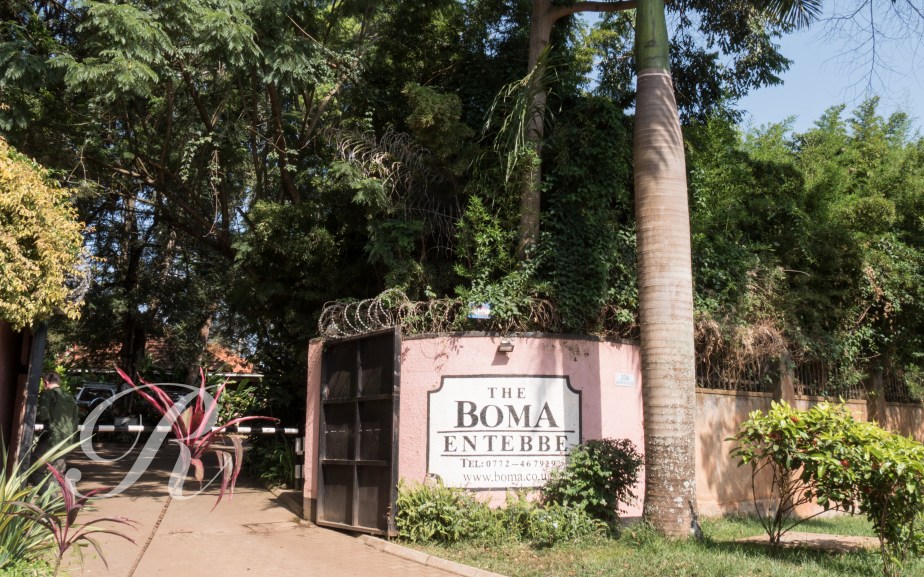
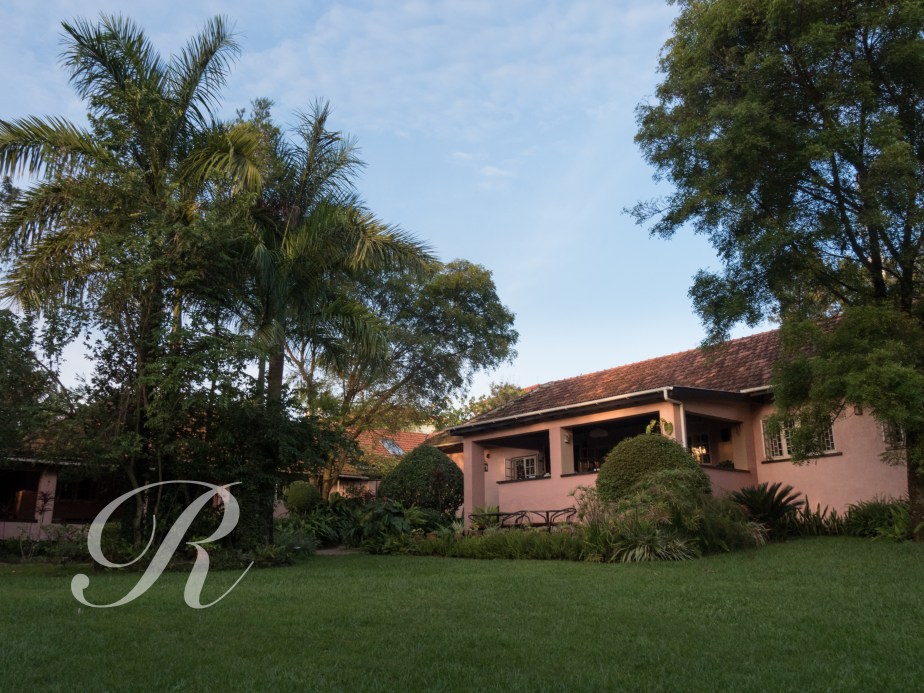
The first impression of the Boma is discouraging but beyond the razor wire and security post is a hotel of old world charm. It looks good by day …
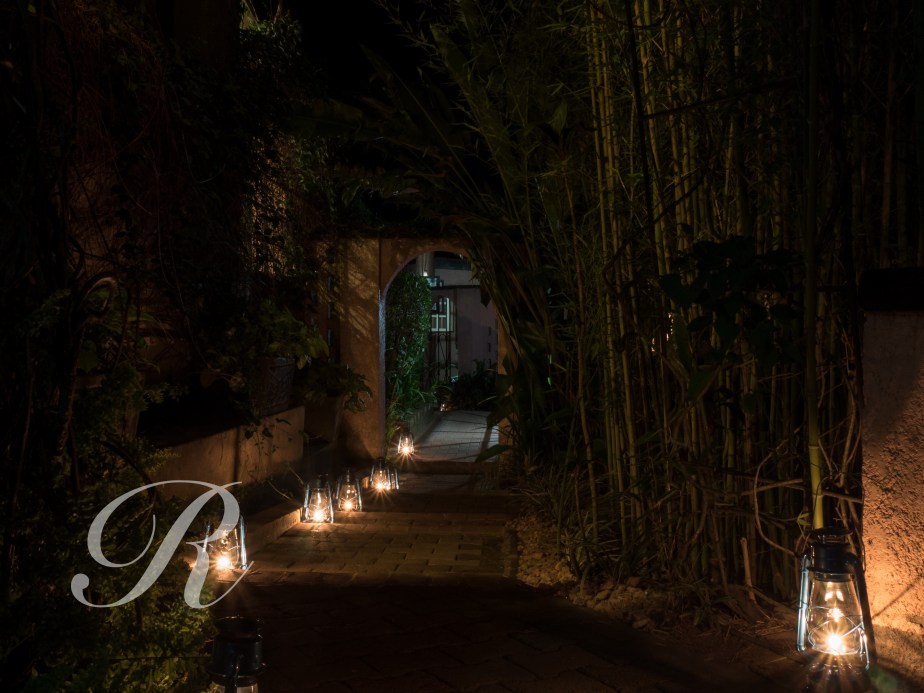
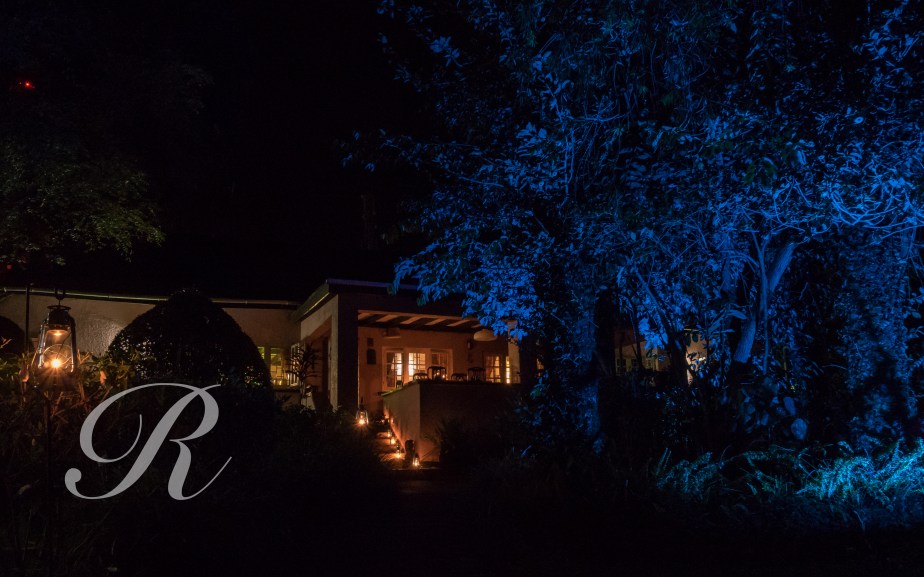
If you have been following my African adventure this far it may have crossed your mind that an Earthwatch expedition may be a good idea. It is not merely a good idea – it is a great idea. Put yourself in the picture above, surround yourself with beauty …
and meet interesting people.
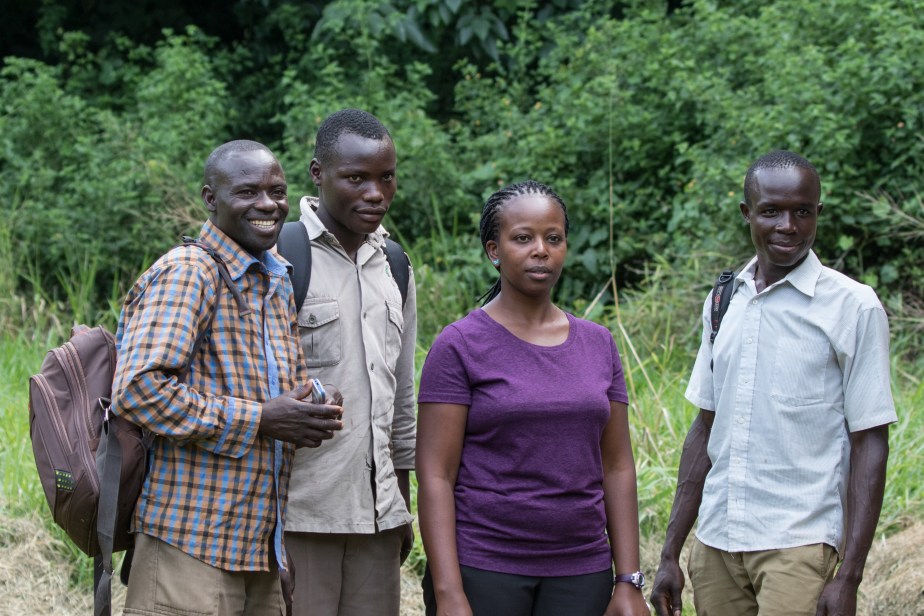
There were five of us at Budongo. Two were PhD qualified professional biologists, one was a keen amateur with postgraduate qualifications in ornithology, one was a zoo keeper with a wealth of knowledge about primates in captivity and one was a banker.
Four out of five brought a great deal of biological knowledge with us, but it was the odd one out that proved you needed none of that to make a contribution. Five out of five took a great deal away with us.
The program was top class. It started with the trees themselves, from buds to ripe fruit. It moved on to the birds, the monkeys and the apes, the wildlife that depend on the forest. It reached into the surrounding farms to provide the human context that will determine the future of the forest.
Huge thank yous needs to go to Geoffrey Muhanguzi, the director, a quiet man of enormous authority and depth, to the effervescent Zephyr, facility manager, to Dr Caroline Asiimwe, Conservation Coordinator, to Moreen Uwimbabazi, bird bander extraordinaire and to all the field assistants and station staff that made our stay so rewarding.
What of the flagship research?
As food supplies decline, chimps in the Budongo Forest are raiding farmers’ crops. What is causing the decline in food? How can the area support both farmers and primate foragers?
The phenologists are keeping a close eye on forest productivity. We must take their word for it that, for now, productivity is declining. Our observations will do nothing to explain why that is the case.
Chimpanzees are raiding farmers’ crops. Well, it was probably always thus. More frequently now because of declining fruiting? The research model will not answer that, largely because the people asking the question have done a lot to improve conditions for the chimpanzees, numbers have increased and so has their health. As they tend towards the carrying capacity of their habitat they will look to take advantage of the crops next door, regardless of forest productivity.
Do the farmers care? Regarding chimpanzees – no. Their concern is the enormous amount of human time taken in guarding their fields. Losses are tolerable if the animals are promptly driven away. Losses are total if the crops are not guarded. So long as baboons, bush pigs and monkeys raid crops those crops must be guarded. Full time. Partial reduction of raiding will not reduce the time spent guarding by the farmer and their family.
So if our efforts as researchers did not break any new boundaries in science did we make any contribution at all?
Yes we did. If you want to maintain a research facility focused on chimpanzees that is available to undergraduate and postgraduate students you need people in the field to maintain habituation of the animals, you need accommodation and you need expertise. In other words you need money.
One way to get the money is to build a five star hotel and fill it with rubberneckers. That requires considerable capital input and entails a large commercial risk. If successful it might bring a host of new problems in its wake.
Alternatively a steady stream of interested and motivated visitors who will take one star accommodation in their stride and pay their way will bring in some of that much needed income. That was us … quiet and intelligent tourists who paid our money and in exchange were given an experience way more valuable than our meagre contribution.
We helped to support a facility that is doing a great job.
Could it be you?
It can and it should be you. There is almost certainly an Earthwatch expedition that will appeal. If it’s to be Budongo you need to be sure that:-
Our last full day as Earthwatch Researchers at Budongo would be spent on patrol looking for signs of illegal activity in the forest.
Hunting in the forest was once the legitimate pursuit of some families. They could eat or sell what they caught. What they have done honourably for many generations is now poaching.
There are six former hunters employed to police the forest. The leader of the group I went with was Ofen.
The other experienced set of eyes belonged to Dr Caroline Asiimwe, the Conservation Coordinator at Budongo.
Then there were three beginners.
Ofen has worked for Budongo for 18 years. He has a wealth of knowledge.
Traditionally a hunter had a patch to himself, he would set as many as 200 snares and walk around them every couple of days. In order to find them efficiently he made marks on the trees near where the snares were placed.
The main target animals were Duiker and Giant Rats. He would look for the regular trails that Duiker used, determine whether it was Red or Blue Duiker, find a place where the trail was narrow and a snare could be concealed and then set up his trap. The snare would be smaller and set a little lower for Blue Duiker than for Red.
For the rats the technique was different, a noose, a trigger mechanism and a bent sapling. Set at the entrance to its burrow. The unfortunate rodent would put its head through the noose as it released the trigger, the sapling straightens tightening the noose and hoisting the rat into the air.
If a hunter found an animal in someone else’s snare he took a leg. To take the whole animal would, according to tradition, cause the thief to die.
We started out by visiting an area which had recently been illegally logged. The loggers typically bring only beans and their logging equipment. They set traps to supplement their diet, mainly with Giant Rats. The pit sawing equipment had been destroyed by the Forest Authority and the area thoroughly searched by the Snare Patrollers. Our follow up visit found no evidence of renewed activity.
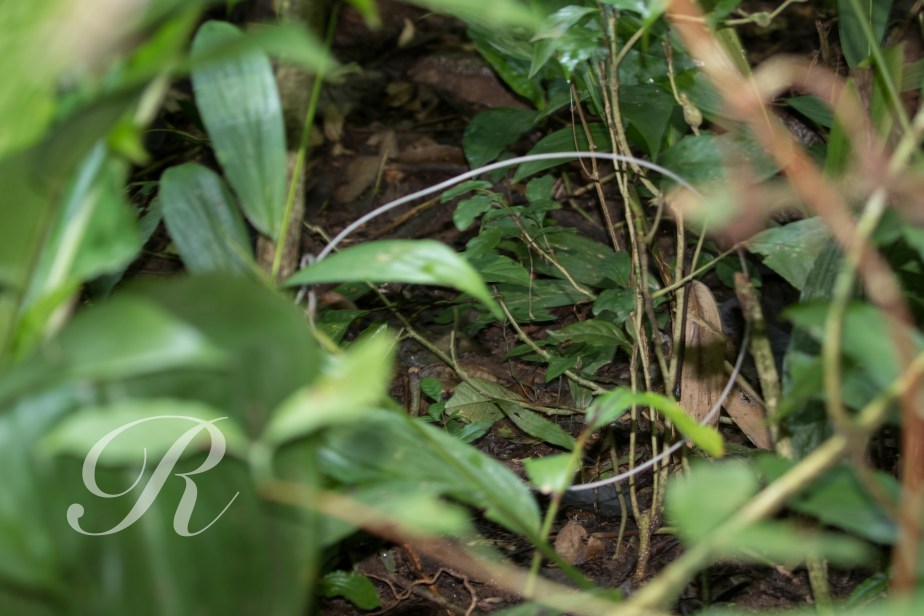
We then turned our attention to an area closer to the edge of the forest and Ofen found the first snare. To sharpen our eyes the rest of us were invited to find it as well. It took a while but helped develop a search pattern. Find the Duiker trail, look where it narrows, look very carefully in the foliage. Also look for a cut stick about two metres long, there isn’t always a sapling or tree conveniently placed where the snare is to be set. Even if the stick comes free from the ground it will soon get caught in a narrow place on the trail. No point these days looking for the traditional marks, the poachers know that the patrollers will find them all too easily.
I’m especially proud of this one …
because I found it all by myself.
By day’s end we had found 6 wire snares (these days made out of motorbike throttle cabling) and an old sapling and liana spring trap. None contained any animals.
Ofen spoke with pride about the work the team had done for their chimpanzees. When he started work around 2000 the team were finding 200 traps a day, sometimes as many as 300, the chimpanzees were fewer in number and many had limb injuries from snares.
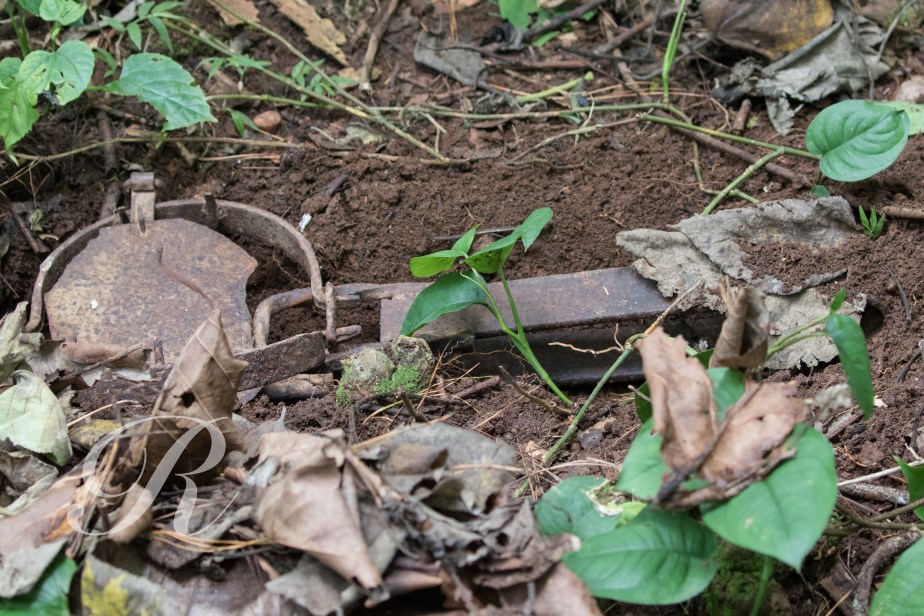
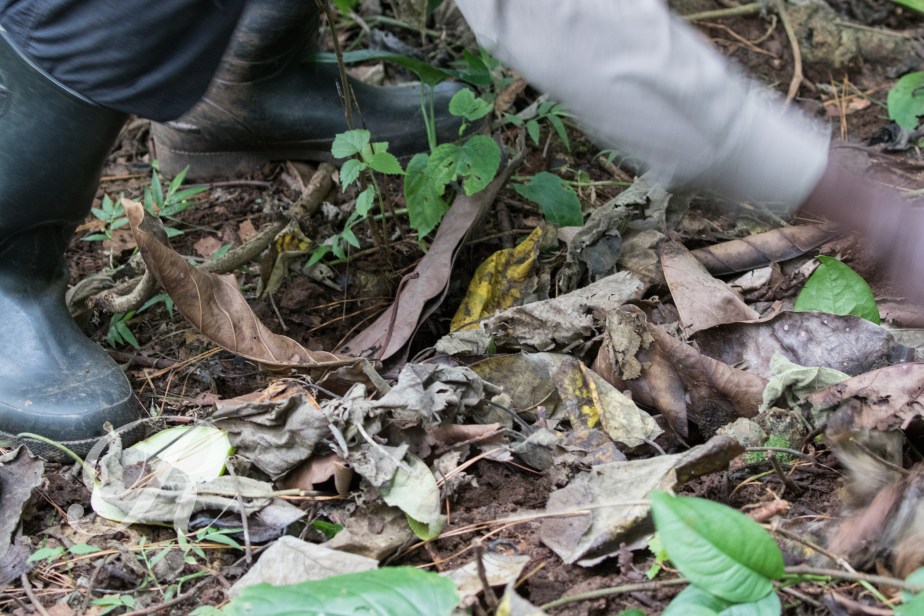
Back at camp we were shown a shed full of “man traps”. These are very spiteful devices using car springs to close a pair of spiked jaws. One was set up for us. It took a man’s weight applied to the end of a stout lever to open the jaws which were then held open by a trigger mechanism …
dig enough of a hole to set it flush with the ground and cover with leaves…
An animal or human stepping on the plate seen to the left of the upper photo is in for a very nasty surprise.
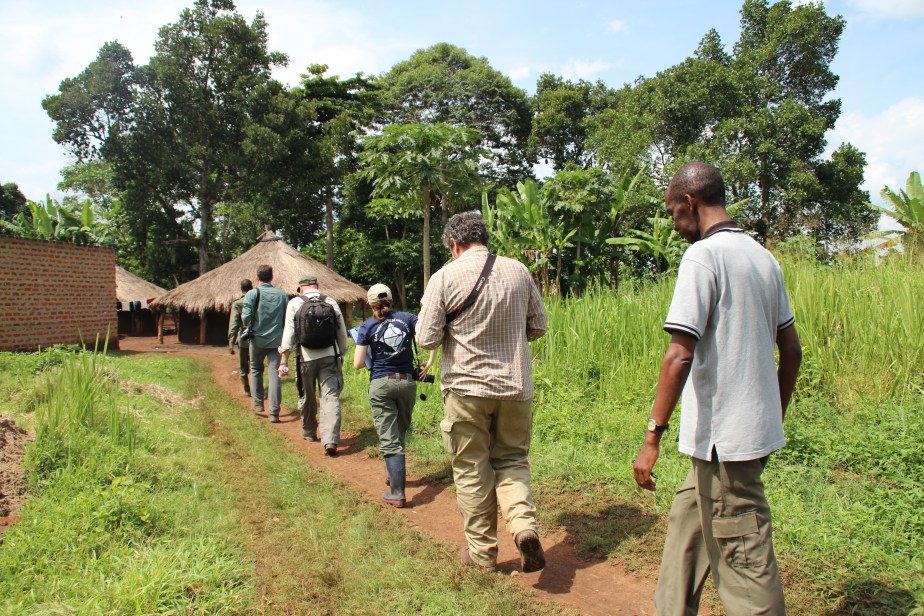
With a local in the lead and Geoffrey bringing up the rear the mzungus trooped into the village. Some of the Research Station staff live here so we are not a total novelty. These young ladies are certainly very relaxed with Silvana …
photo – Silvana
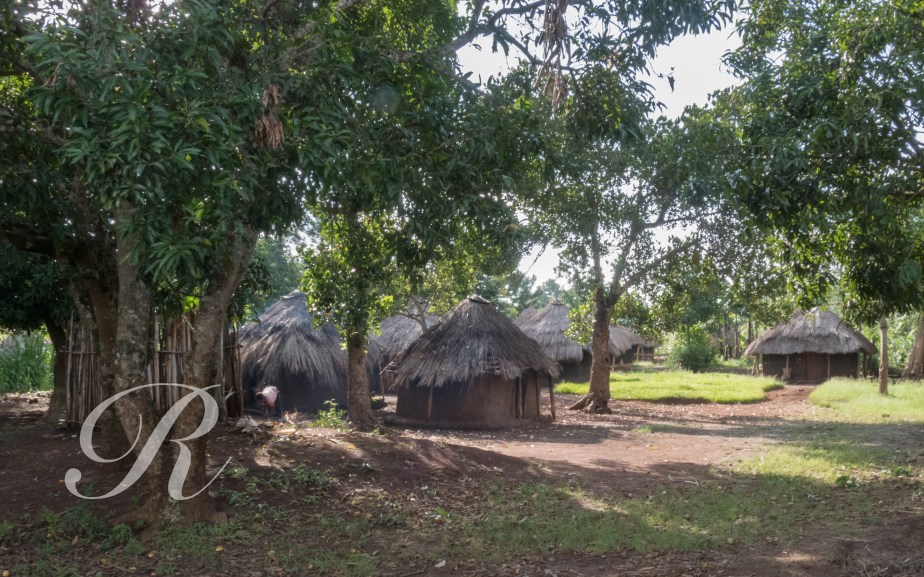
The village is mainly wattle and daub huts spread out through the gardens. The odd solar panel adorns a roof here and there.
There are kids playing and women at work. Geoffrey expressed some sensitivity about publishing photos of the children so in deference I will not. Let me say that they were having a ball.
My destination is the plot of a 77 year old farmer at the forest edge. I have a clipboard, a questionnaire and an interpreter. I read a sentence, the interpreter talks for a paragraph, the farmer answers very succinctly, the interpreter takes a paragraph to tell me what he said. This is home turf in many ways having practised in Melbourne public hospitals where quite a few patients have no English.
I encourage the interpreter to stick strictly to the script and check the answers with follow up questions. We make much better progress.
I learn that this farmer grows sunflowers, sweet potatoes and beans on 1 acre right at the forest edge. The sunflowers are a cash crop, the family will eat the beans and sweet potatoes. He has no cassava but others around and about do, if he had more land that would be his next choice.
Crop raiding is an ever present threat. Baboons are the main problem, monkeys and bush pigs are also regular pirates. Chimpanzees don’t get a mention until I specifically ask, yes they come to a Mango tree in the village but otherwise not much.
The raiders eat the sweet potatoes and beans. Nothing eats the sunflowers although baboons do a little damage in passing through. Unless the crops are guarded day and night every day there will be nothing to eat. Guarding falls to all including the kids who miss some school as a consequence. Small shelters provide some protection from the elements for the guardians.
I thank him and shake hands. He is tall, slender, dignified. He has considerable ulnar deviation of his fingers which suggests rheumatoid arthritis. I think of the physical effort to prepare an acre by hand.
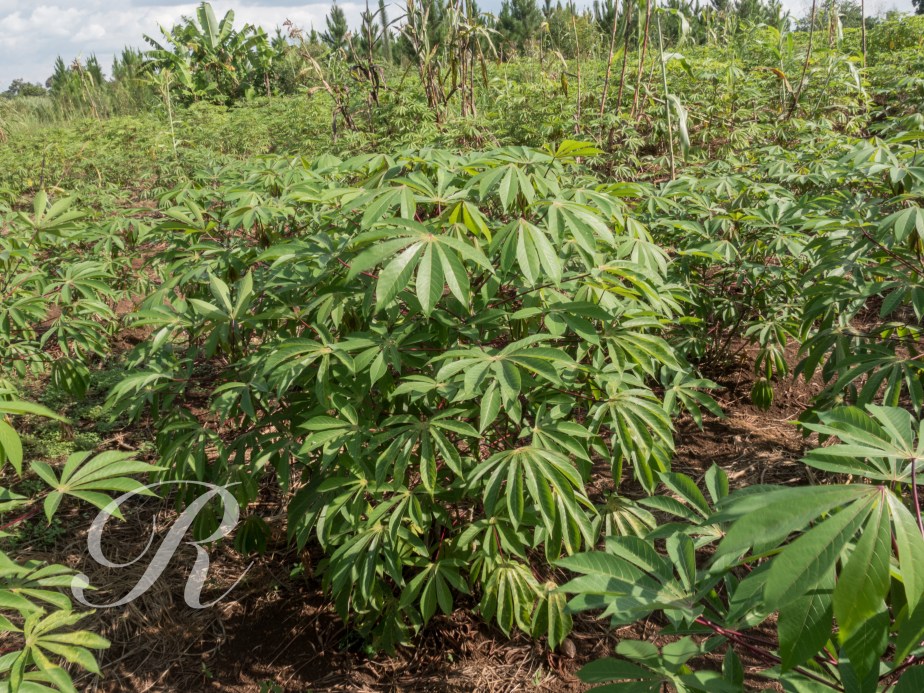
Sweet potatoCassava
The forest is on the right and also behind me as I took the photograph, sunflowers are a good buffer crop, to the left the gardens likely to be raided and at top left a shelter for the watchers.
Through the Research Centre a lot of effort has gone into promoting buffer crops like sunflower and cabbage that are unattractive to the raiders. To deter poaching in the forest domestic animals have been promoted as protein sources and there are pigs, chickens and goats around. Goats have been given to the villagers and some free vet care is available to keep them worm free and thriving.
The field assistants in Budongo are mainly from this or other nearby villages. I often heard them talk about “our chimpanzees”. At our very first briefing it was obvious that the scientific staff, whilst attracted to working with chimpanzees, had realised and embraced the fact that success for the chimpanzees meant working with the people.
By that evening we were home again, and it really did seem like home. What could be more natural than encountering chimpanzees or a troop of baboons between the house and the dunny?
By this stage we had also found the hang outs of some of our nocturnal neighbours and could walk around after dark and say hi to the Civet, the Servaline Genet and the Bushbuck., whilst listening to the Tree Hyrax – to get the full effect turn the volume up as high as it will go …
and they look exactly as you see them in the video!
We would have two more full days at Budongo.
In times past the forests of tropical Africa were far more extensive, the human population far smaller.
The monthly household income in rural Uganda, including the value of goods received in kind, is (2009/10, Uganda Bureau of Statistics ) 142,700 Ugandan Shillings or $40 US. Put another way, two parents will have an annual income of $480 to support themselves plus perhaps three children and a grandparent.
Subsistence agriculture is the main activity for rural people. An increasing population requires an increasing area of land.
The biggest threat to wildlife in Uganda and many other places is habitat loss. The biggest threat to subsistence farming is the wildlife.
Hunting was an honourable pursuit in the past, it provided much needed protein and a little cash income. In Budongo it is now illegal, timber getting likewise.
I and the folk working at Budongo, and I’m sure, all my first world readers want to see chimpanzees and all that surrounds them secure in a living forest. But none of us want a child to starve.
Tomorrow after a morning on primate watch we would visit the adjacent village. The day after that would be snare patrol.
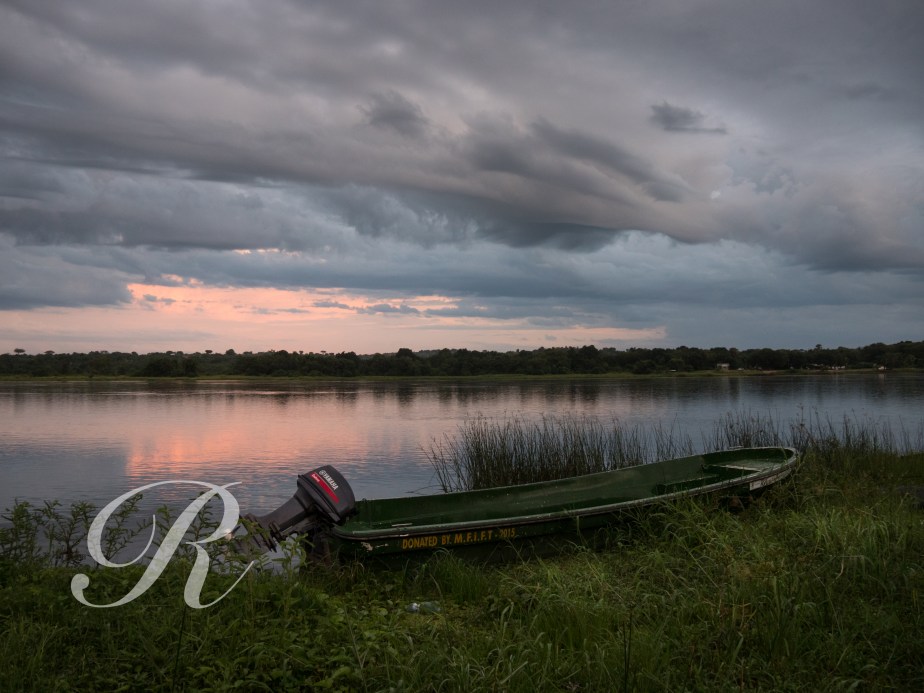
What about that sky, the light was magical, and surprisingly not a drop of rain fell.
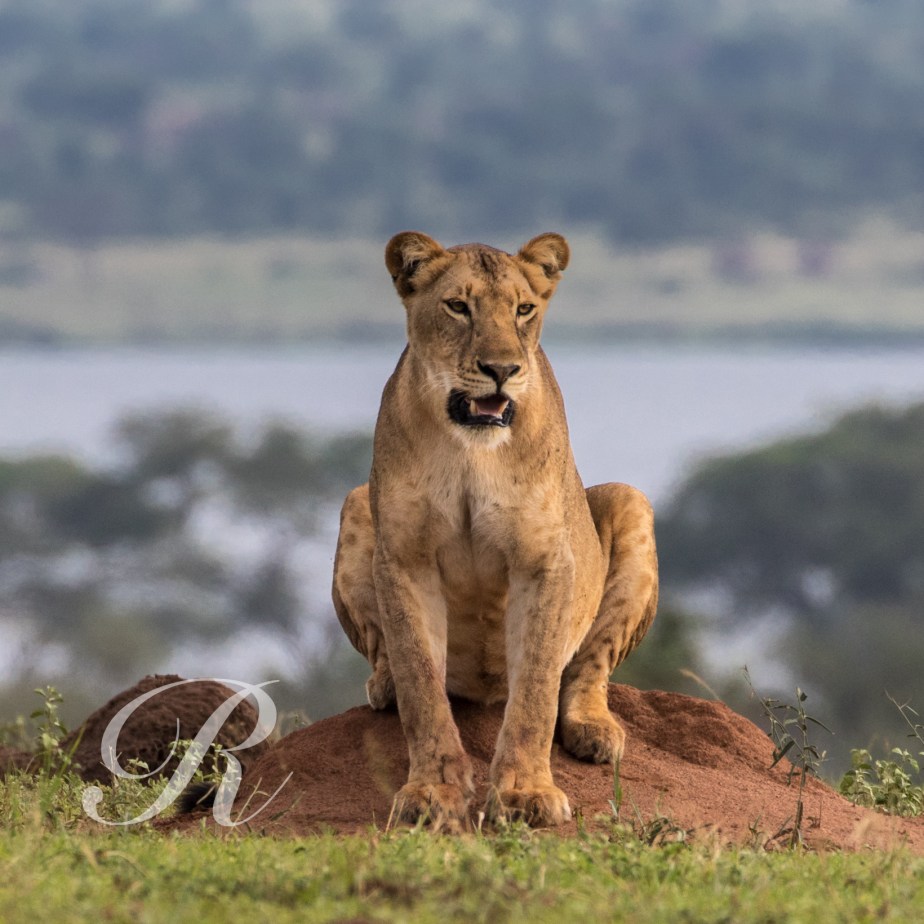
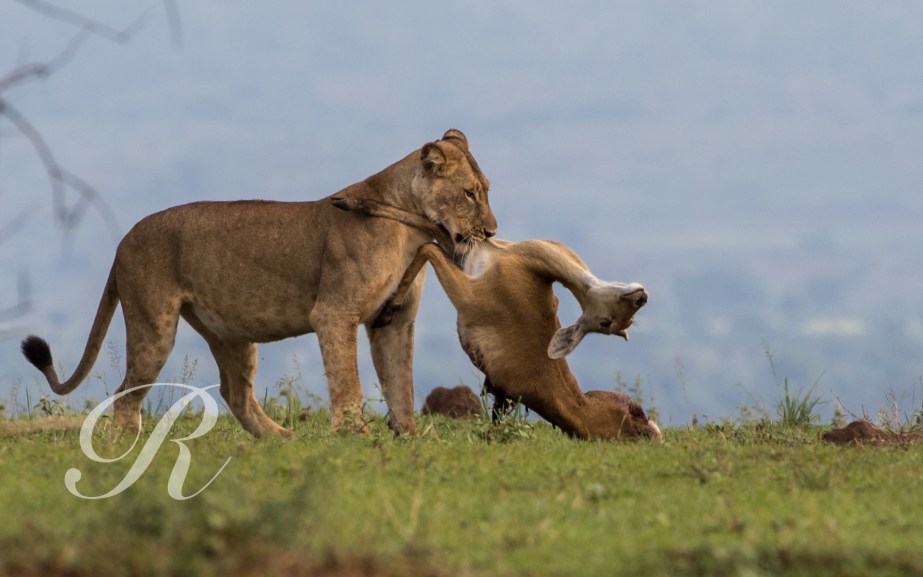
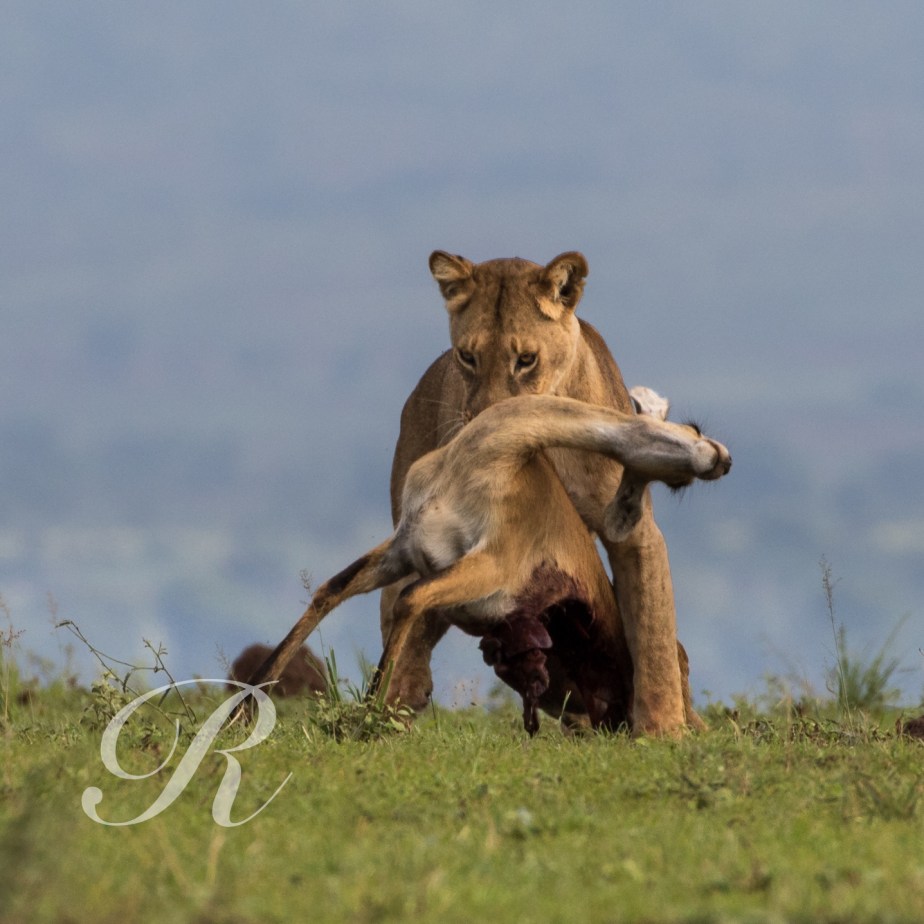
And then we encountered the lions …
The some very sharp eyes found these for us.
the Leopard is a very secretive animal. And if you delve into his secrets it could be quite dangerous for you…
Geoffrey Muhanguzi.
Leopard
This is just a fraction of what we saw, and we racked up quite a bird list to go with the mammals. Choosing which photos to include here has been very hard. If I went through the exercise again there might not be too much of an overlap.
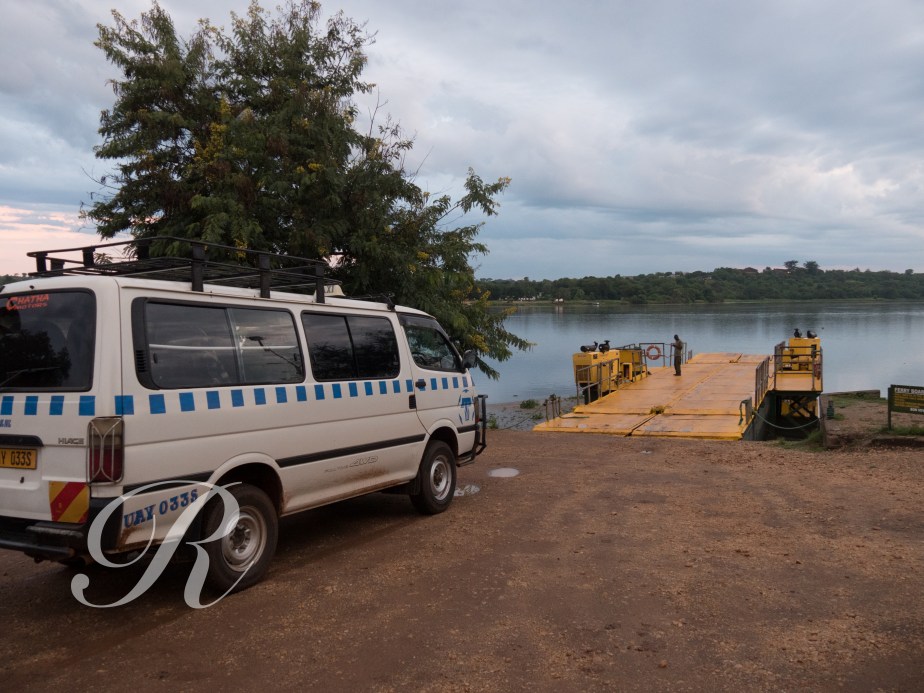
All too soon it was over, we had to make the 11 am ferry in order to be out of the park before our 24 hours were up and we all became liable for another 50 bucks.
My advice, if you are visiting Murchison Falls National Park, stay longer and explore the possibility of staying in the northern section of the park.
After all our hard work it was time for a weekend off.
The Budongo forest is adjacent to the Murchison Falls National Park. The quintet of Earthwatchers were very keen to make a visit there and the director of the research centre, Geoffrey Muhanguzi, very kindly offered to arrange our transport and accommodation.
Saturday morning came and Godfrey was waiting for us in his van. Geoffrey, in his quiet way, made it plain to Godfrey that, although we would only be doing this trip once, he would be organising similar trips in the future and would be keen to hear our opinion on our return.
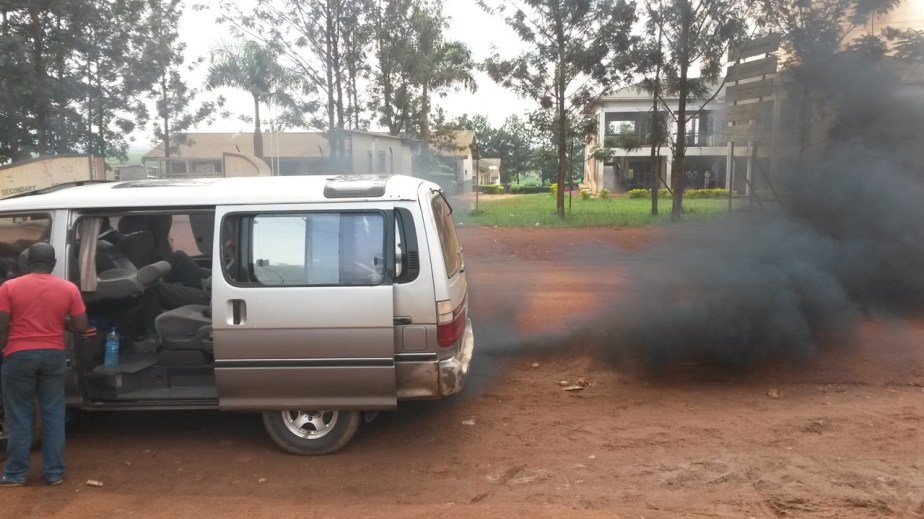
Godfrey was very keen to impress and I’m sure he would have if his van hadn’t broken down 20 km up the road.
He rang a mechanic who arrived on a motorbike. And after about 45 minutes was able to get the van going … after a fashion.
photo – Will Steele
But not for very long. A taxi was sent for. We reached the park shortly after midday. $50 US each buys 24 hours in the park. We could have spent a week there.
First stop was the Nile cruise. Disembarking at the foot of the falls and then climbing to the top where our new driver and his taxi would be waiting.
The Victoria Nile flows northwards from Lake Victoria into Lake Kyoga. Then from the western extremity of Lake Kyoga it takes an arc through the national park into lake Albert dividing the park into a larger southern and smaller northern section. Along the way a lot of water tumbles 140 metres through a 6 metre gap, Murchison Falls.
The falls were put on Europe’s map by Sir Samuel Baker and his dearly beloved, Florence, in the mid 1860’s. They named the falls after Sir Roderick Murchison, president of the Royal Geographical Society.
The White Nile flows north out of Lake Albert.
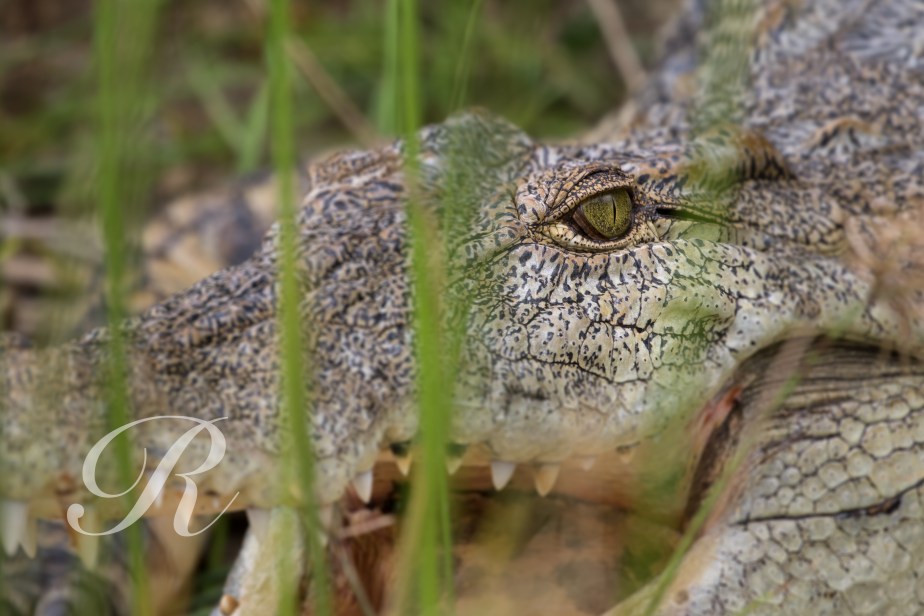
If you take the cruise remember the action is on the north bank, try to get a seat on the left side of the boat. Where better to see Nile Crocodiles and Sacred Ibis than on the Nile?
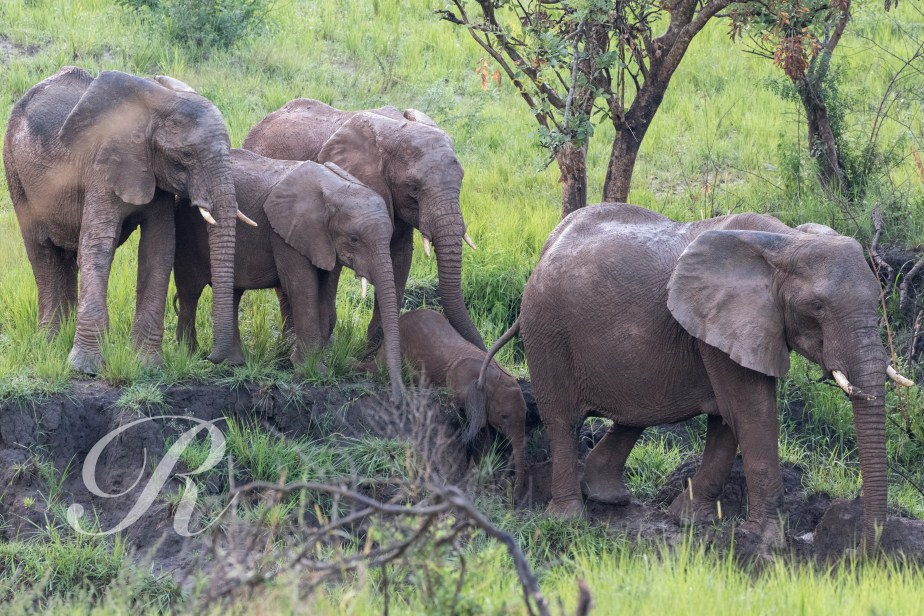
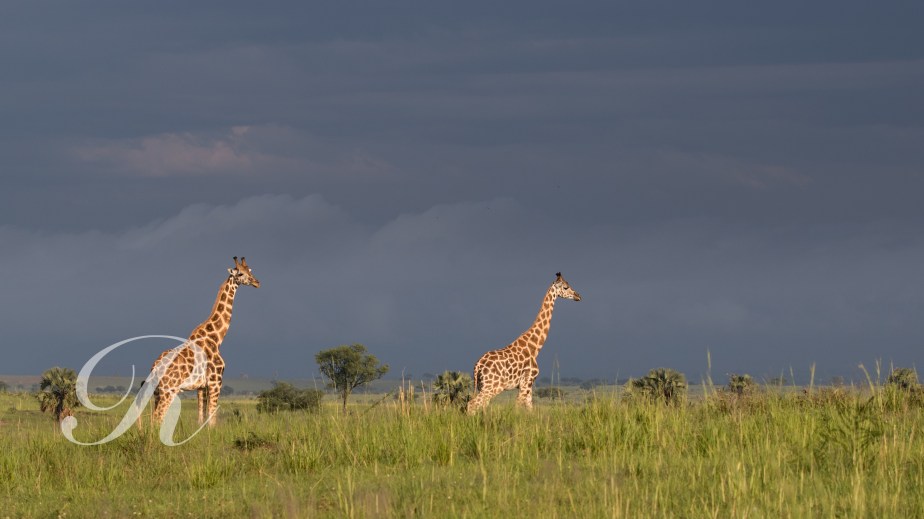
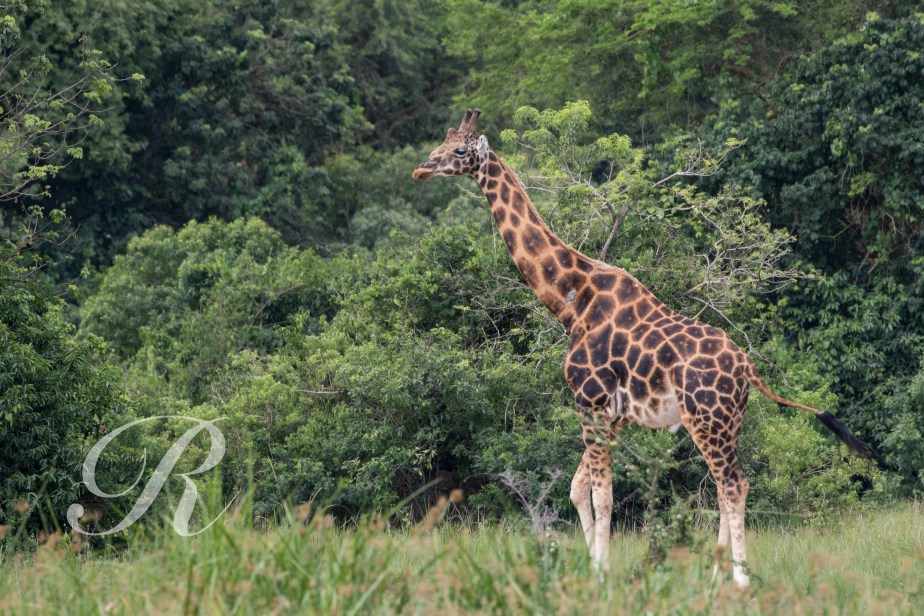
Nile CrocodileGoliath HeronHippopotamusRothschild’s GiraffeAfrican ElephantMurchison Falls
The hike up the falls was hot and steep, but worth the effort although the best view is from the boat just before it docks.
Our accommodation for the night was at the Yebo Safari camp. The authentic Africa, dirt floor, thatched roof but with flush toilet and shower en suite. The shower even had a hot tap, but just for decoration. I guess they come as a set and it would have seemed a waste not to put it on the wall.
I shared the room with a scorpion. I understand that if the pincers are small the sting in the tail is potent. It had very small pincers.
The sheets were clean, the food was excellent, the staff very pleasant.
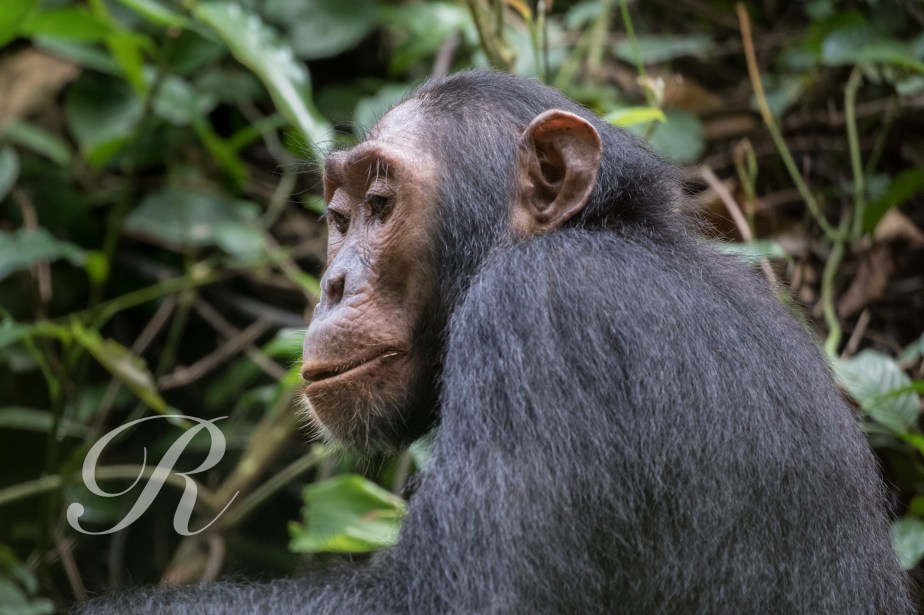
1738, from a Bantu language of Angola (compare Tshiluba kivili-chimpenze “ape”). Short form chimp first attested 1877.
There was a fruiting mango tree in the camp. Chimpanzees had wandered through for a feast every day. We had kept a respectful distance so as to keep our germs to ourselves, now that we had passed our quarantine period we could follow them more closely.
My first full day with them was with the Sonso group, named for the river than ran close to the camp. This was the first group to be habituated and could usually be found without too long a hike.
The aim was to spend long periods with a target individual recording their every activity in ten minute blocks. Their daily life can be summarised in a list of eating, traveling, resting, grooming and sorting out their social life – just like ours.
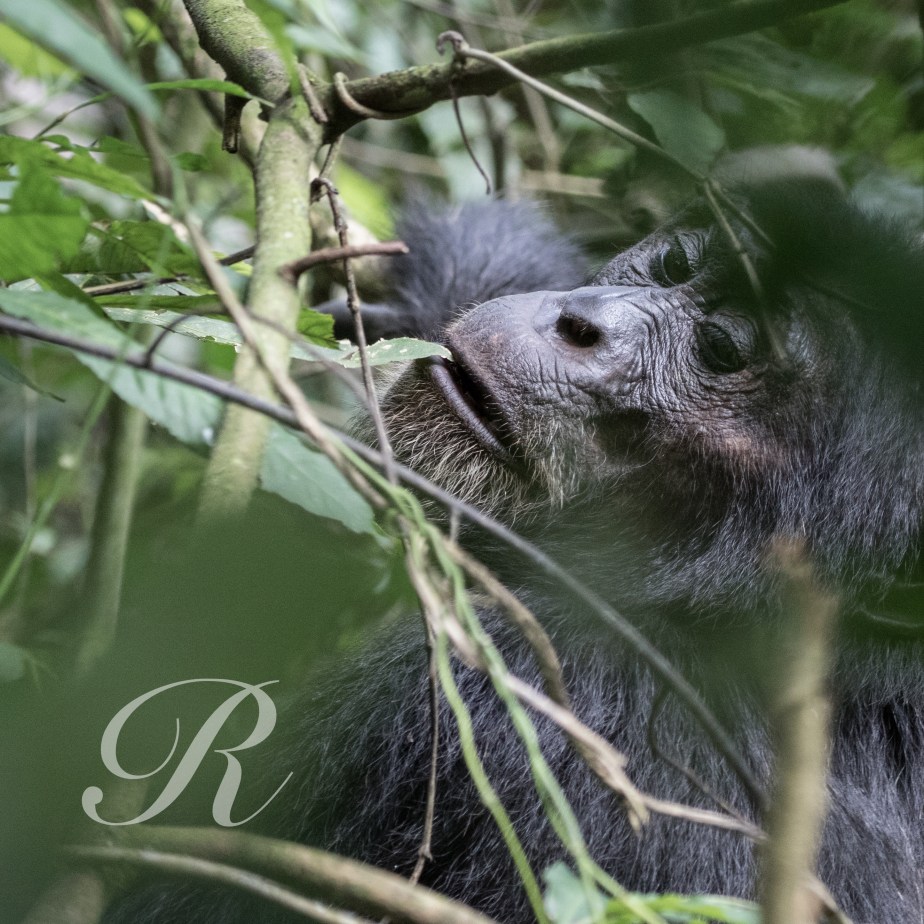
So far as eating goes, chimps like ripe fruit. They supplement this with young leaves and will also eat flowers. They will ingest clay occasionally. They drink mainly from puddles in tree hollows but we saw a few drink from a stream which is where they found their clay. They also like to eat monkeys.
They travel with ease along the ground or through the trees. They climb by putting their hands beyond the tree trunk, their feet go on the near side. They are expert at making the more slender trees sway until they can make a transition from one tree to the next. And they make frequent use of outer branches to slow their rate of descent towards the ground or a more rigid branch. Their internal map is in 3D, we have given up a dimension.
When they are having a break from eating they are often involved with grooming, usually in pairs or groups of pairs.
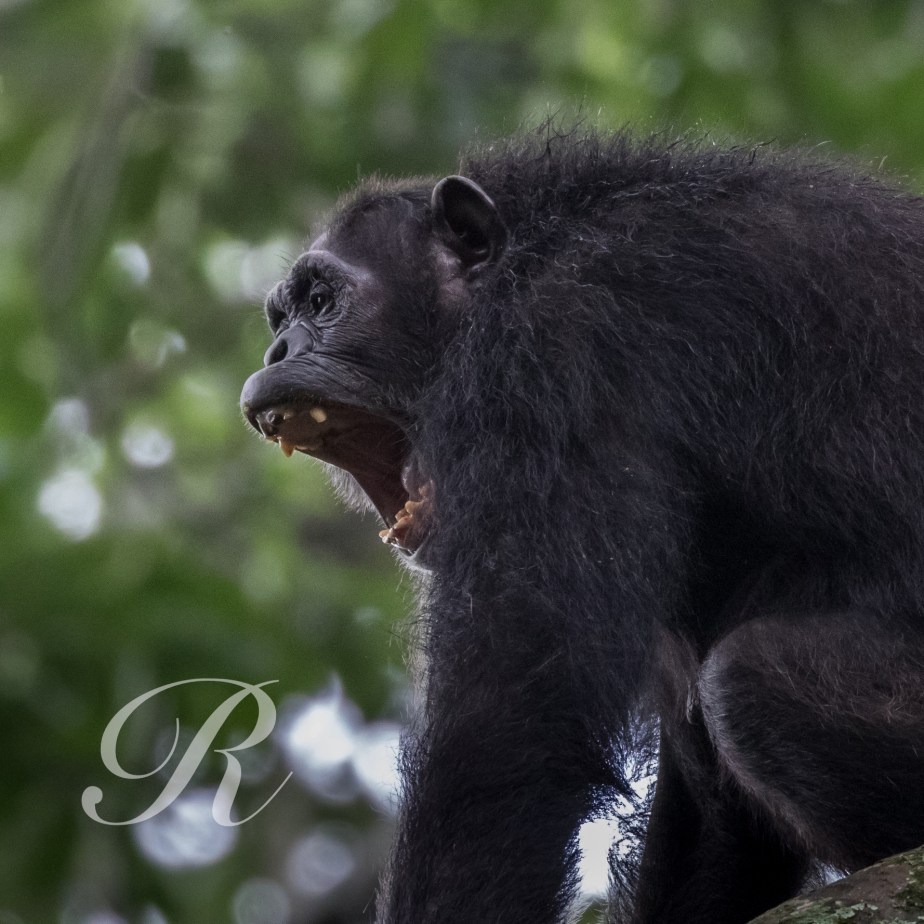
Their social life seems to be all about status and sex. It involves a lot of noise and showing off. Human parallels might be bikie gangs or drug cartels, big males capable of forming useful alliances will rise to the top. And stay there ruthlessly until toppled from power.
The Sonso group hunted Colobus twice on the day I was with them and were successful the second time. The field assistants were very quick to recognise their intentions. The group spread out around the Colobus troop, some on the ground, some at mid level and some high in the trees, all making some attempt to conceal themselves. Then a couple of individuals go after the monkeys. Colobus tend to all rush in the one direction which may be the reason they are the preferred target … you can stay concealed until the first one goes past then grab the next.
The successful chimpanzee will then rip open the monkey’s abdomen and start eating the entrails, the monkey might still be screaming at this stage.
Whilst the hunting is communal the eating is definitely selfish. A lucky few will get some meat. They will ignore the most pitiful begging of subordinate individuals. Why then take part? It doesn’t take that much effort and you may win the lottery.
The next day it was off to the more recently habituated group. We found them after about two hours roughly 8 km from camp. They passed the morning slowly moving towards camp. Then the afternoon moving away!
They had a female in estrus with them, the alpha male was guarding her very carefully. For all his efforts though it was a subordinate that got lucky whilst the boss was chasing off the number two male. There was a fair bit more hooting and drumming on trees than the day before, tensions were raised, it seemed.
They didn’t hunt and the field assistants told us that they had not hunted in recent weeks.
Our trial run at primate tracking and data collection was with the monkeys.
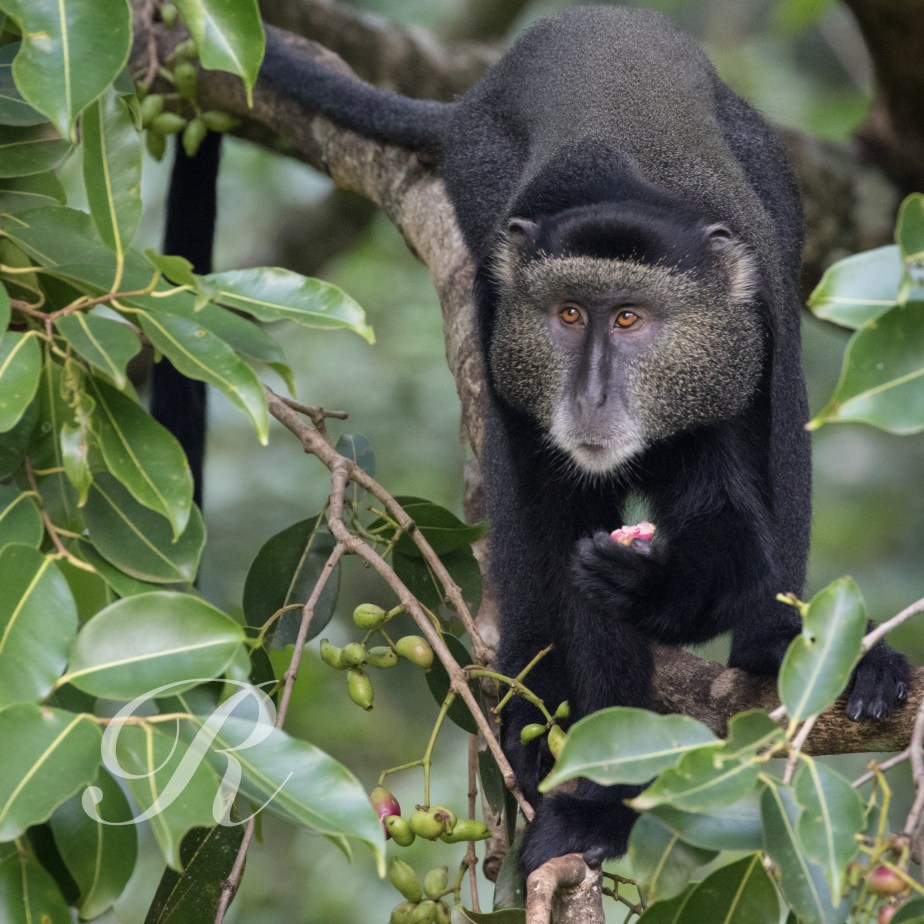
Specifically Blue Monkeys and Red-tailed Monkeys.
Blue MonkeyRed-tailed Monkey
Their big cousin, the Chimpanzee, is a ripe fruit specialist although they are not averse to eating monkeys, too. One way to coexist with them is to get in early and eat unripe fruit. We watched them do exactly that, feeding in trees where most of the fruit was green but taking such ripe fruit as was available and some young leaves for variety.
We also got to see them grooming each other, and hear some of their vocabulary.
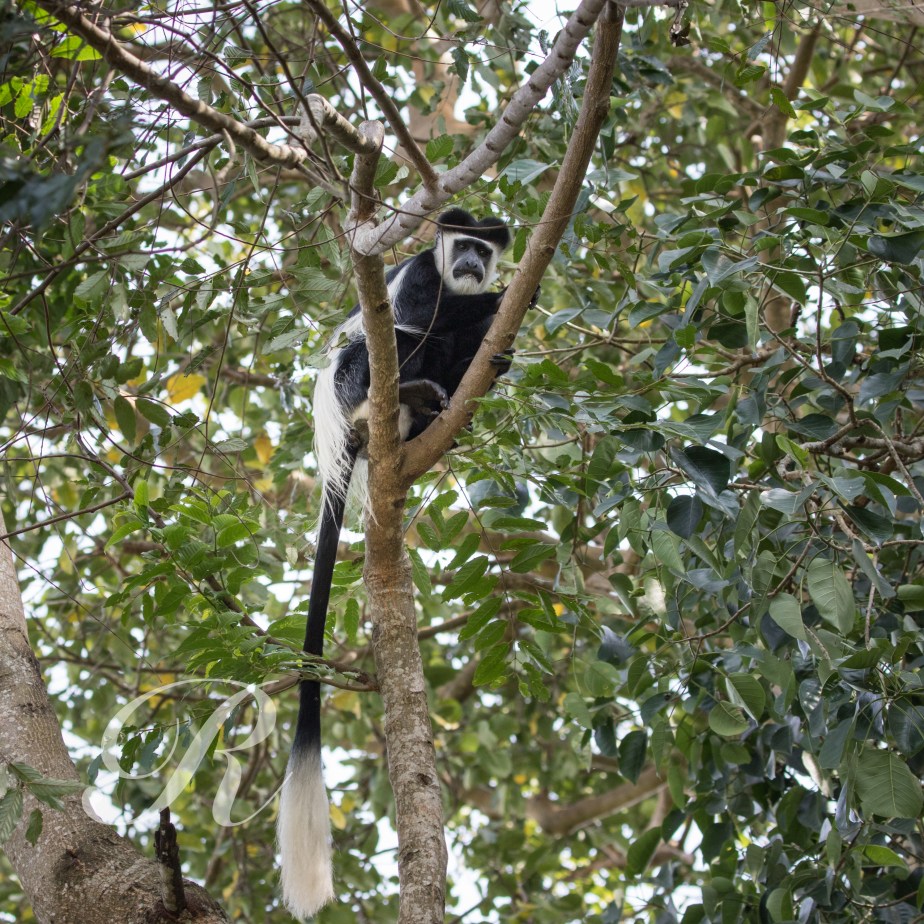
The other monkeys present in the Budongo forest are the Olive Baboon and the Guereza Colobus.
Olive Baboon
The Baboon seems the odd one out. It has a much more terrestrial way of life and a rather ape-like demeanour, however it is a monkey and is more closely related to the previous two than it is to the Colobus.
They are extremely inquisitive and extremely smart. They are always hanging around the Research station accommodation and would be in in a flash if they got the chance. If that happens no one is game to throw them out … you just wait until they leave and then clean up the mess. Some of the staff on campus have their small children live with them, baboons are a threat to their safety. A baboon control officer is always on patrol near the staff quarters. Most of the time his weaponry is for show, most of the time …
Baboon control officer at work …
This is the real odd one out. Look carefully at its thumb, well actually, look carefully for its thumb. It doesn’t have one, an odd feature for a creature that picks leaves and fruit and climbs trees. You’d think a thumb would come in handy.
Moreen Uwimbabazi started the banding project as her honours research. Raymond on the left is a red hot local bird guide who was drafted for our benefit. If you need a bird guide in northern Uganda he is your man. You can contact him on 0777 319 865 or 0752 930 065.
The process is fairly straight forward. You set a mist net between poles, keeping it very taut from one end to the other and endeavouring to keep it out of the branches of the adjacent trees. In the shade it is almost invisible which is why I chose to photograph the end in the sunlight.
Mist net
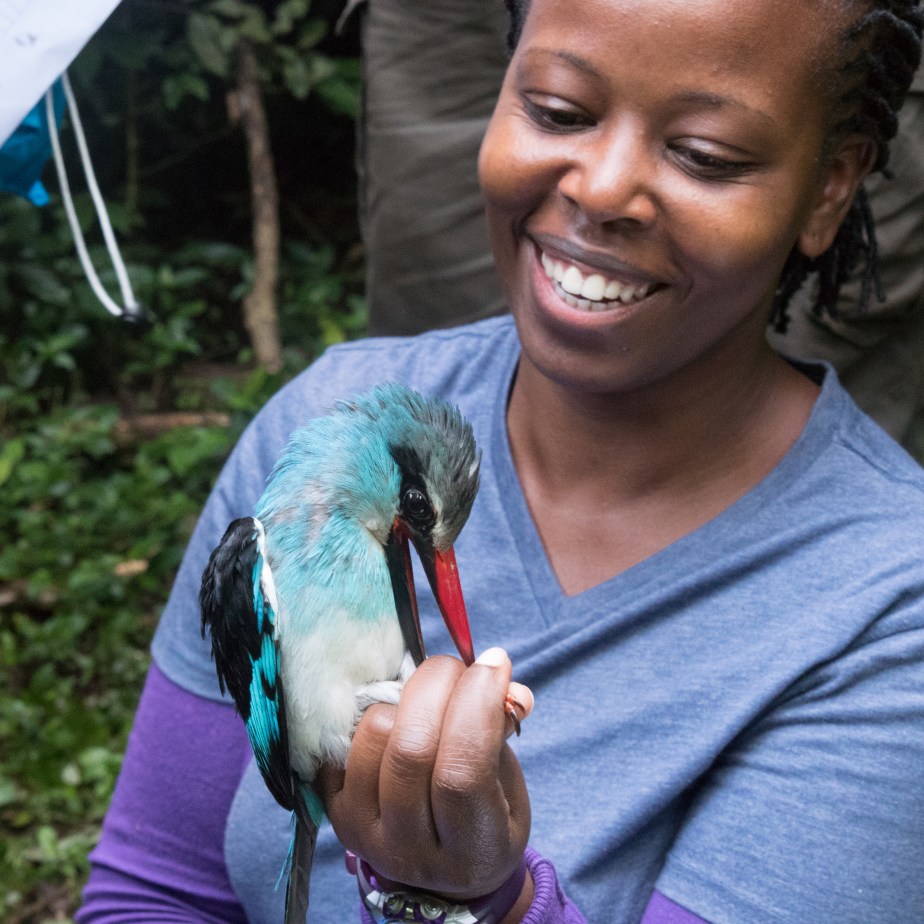
Visit regularly, carefully extracting any birds that have found their way in. Identify the birds, measure them (wing length, head and bill, tail length), weigh them, band and release.
Andrua and Patrick were just learning the ropes so we were able to ensure their technique improved. In exchange they were able to ensure we made our identifications correctly as we encountered birds that were completely new to us.
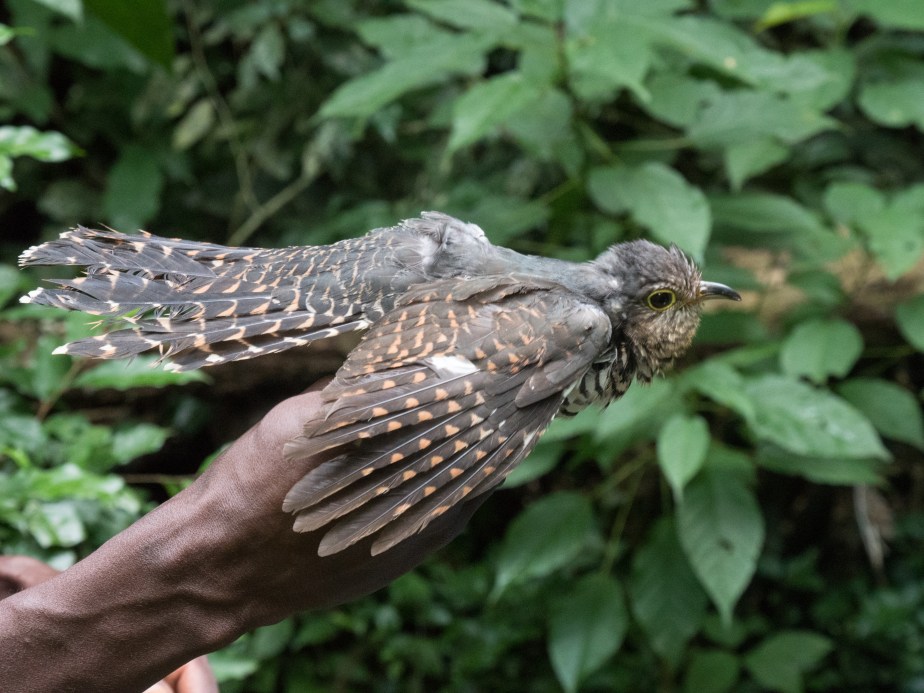
Forest RobinDusky Long-tailed CuckooDoesn’t hurt a bit …























 bobmcgee