It’s time to wind up the account of my trip to Botswana and Zimbabwe, say thanks to Pete Oxford and Renee Bish, the organisers and leaders, and say farewell and thanks to my traveling companions. It was indeed a pleasure to meet you all. I hope to travel with you all again one day.
The African Queen, what a classic, was shot on the Nile in Uganda and the Congo. I’ve been on both rivers but never felt more like Charlie Allnut than on the Zambezi in a boat like this …
photo Gayle McGee
The Zambezi is the fourth longest river in Africa draining slightly less than half the area that the Nile draws from. Its source is in Zambia, it flows through Angola, is the boundary of Namibia, Botswana, Zambia and Zimbabwe before traversing Mozambique to the Indian Ocean. Its most notable feature is the spectacular Victoria Falls. The Kariba dam is a major hydro plant providing electricity to Zambia and Zimbabwe. Frequent rapids prevent it being a major transport route.
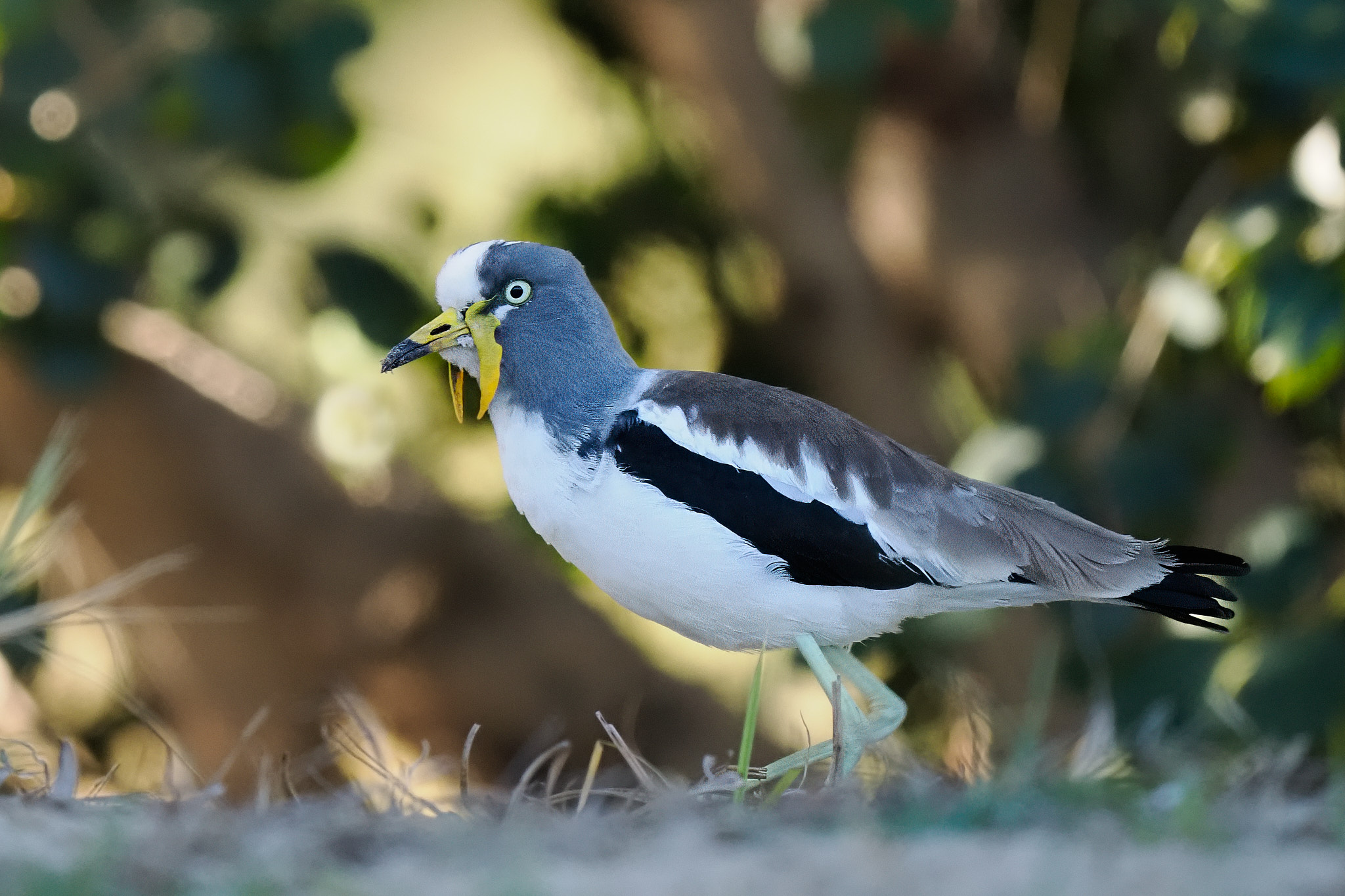
It was a very pleasant afternoon cruise. Even more enjoyable because our skipper was into the birds. He made a point of finding us Finfoot and White-crowned Lapwing, two of the local specialities.
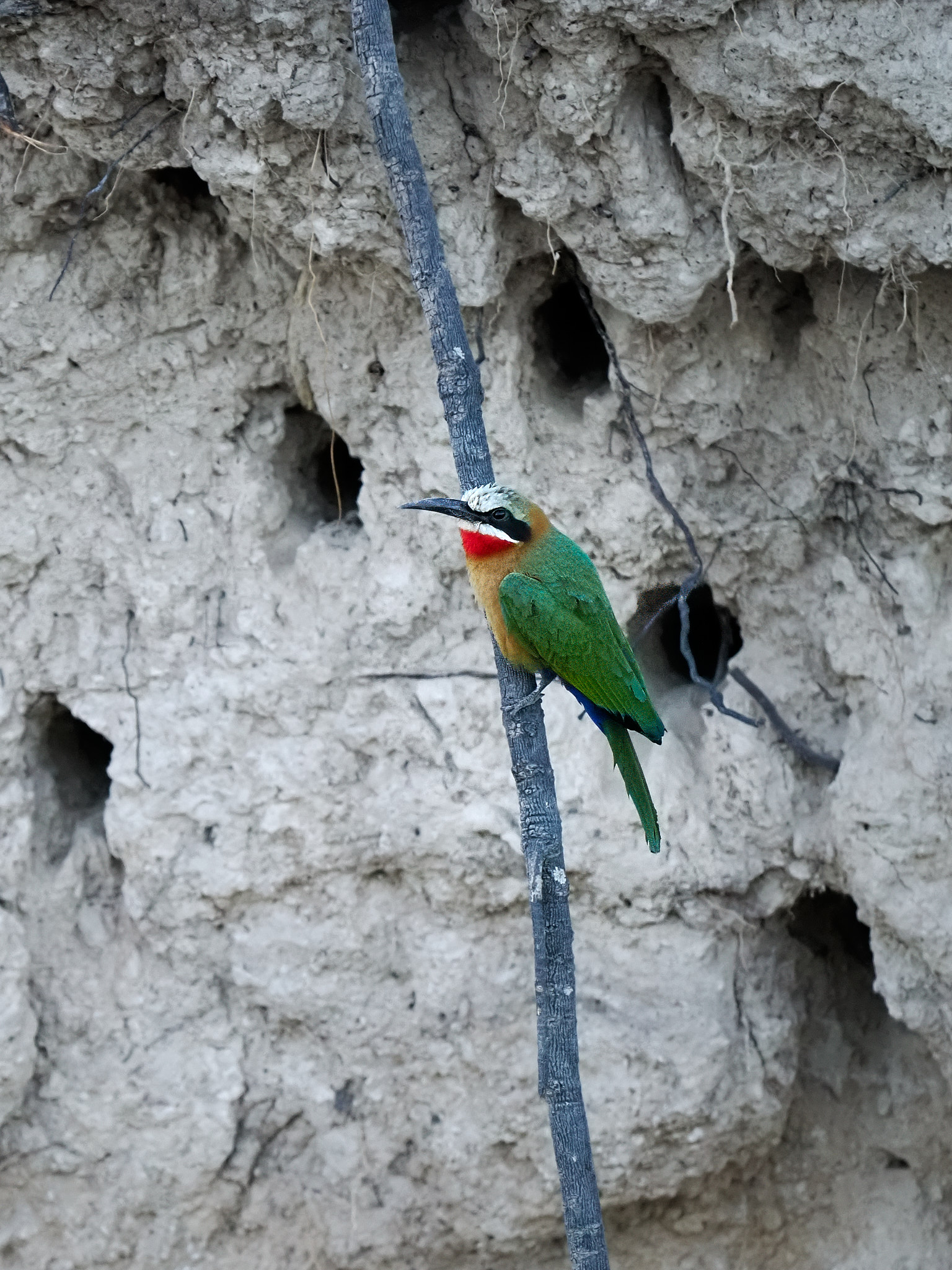
Nile CrocodileNile CrocodileWhite-crowned LapwingWhite-fronted Bee-eaterBrown-hooded KingfisherWhite-backed VultureLong-tailed CormorantAfrican Finfoot
We flew from Chitabe Lediba to Kasane in the far north-east of Botswana, transferred to a small bus and headed for the border. Our destination was the magnificent old colonial style Victoria Falls Hotel.
At breakfast the next morning we got our first glimpse of Vic Falls, or at least the spray …
That’s not cloud, it’s not smoke, it’s airborne water that supports a little rain forest in what is an otherwise quite arid landscape.
I first visited the Falls in 2014. You can read all about it <HERE> and <HERE> and, of course, there are some photos. The price of admission has gone up. The standard of living of the locals hasn’t. Plenty of water was going over the falls. The assertion that they were easier to photograph when the flow was less proved true. A few of the birds posed nicely.
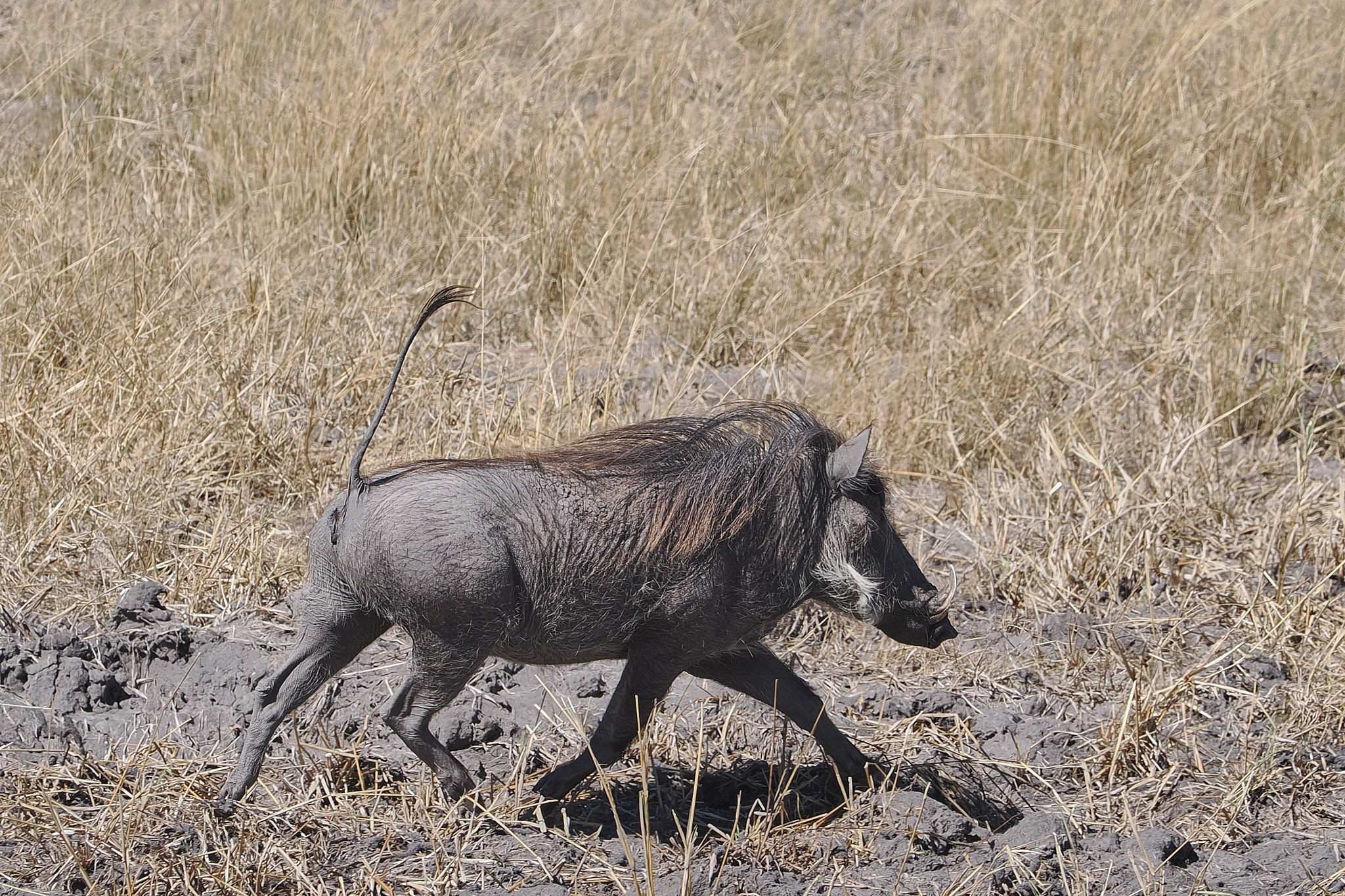
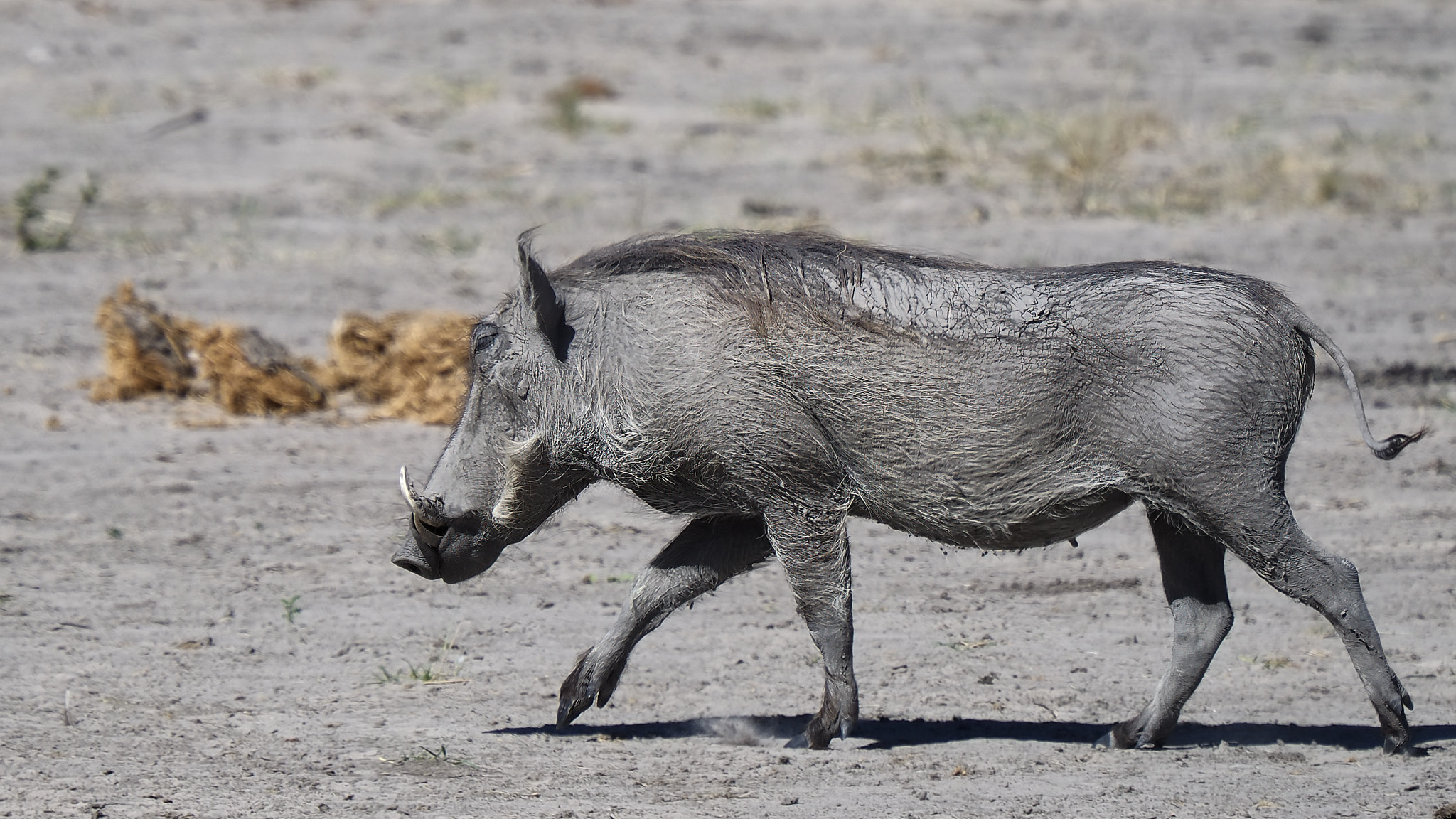
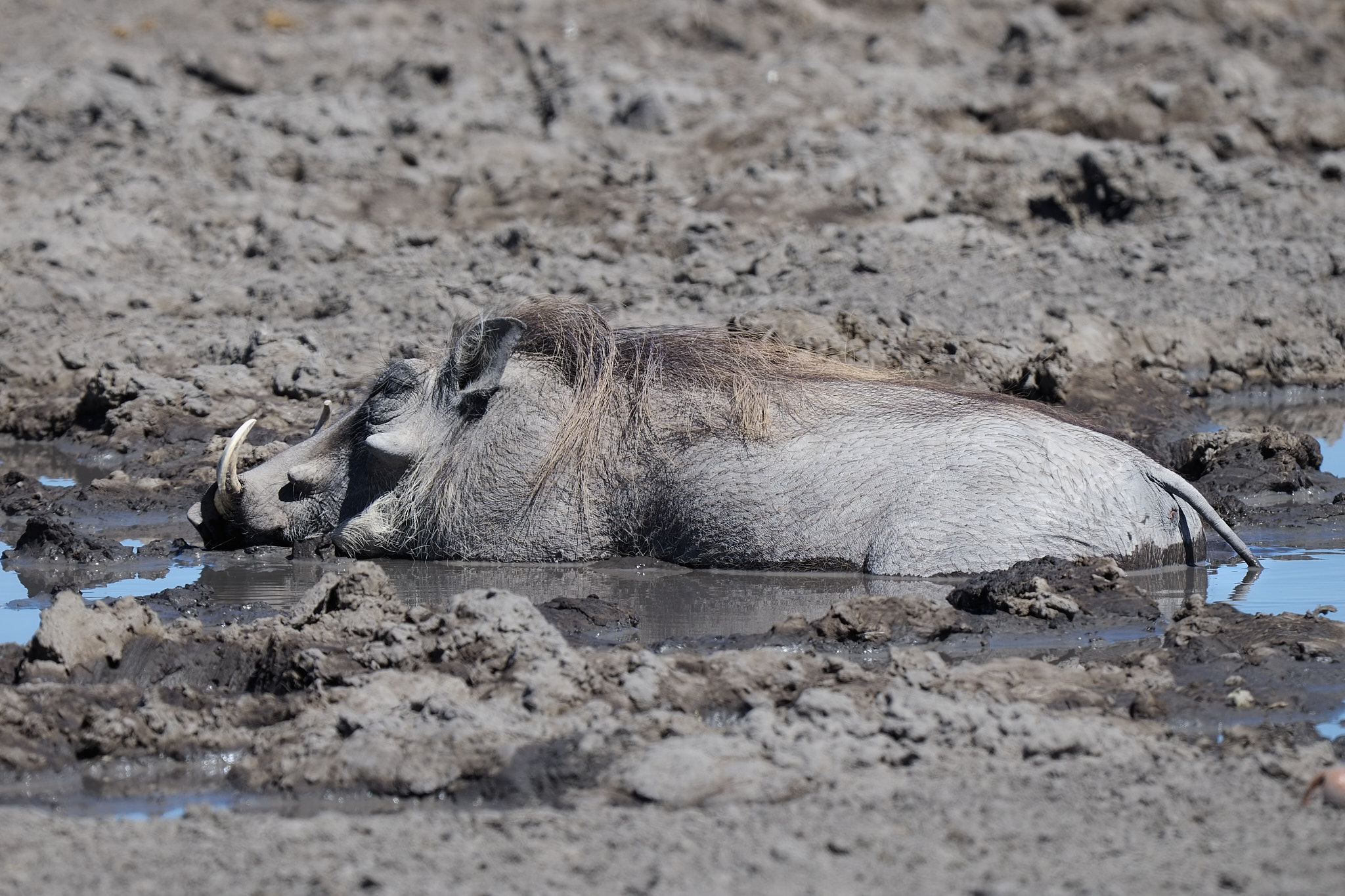
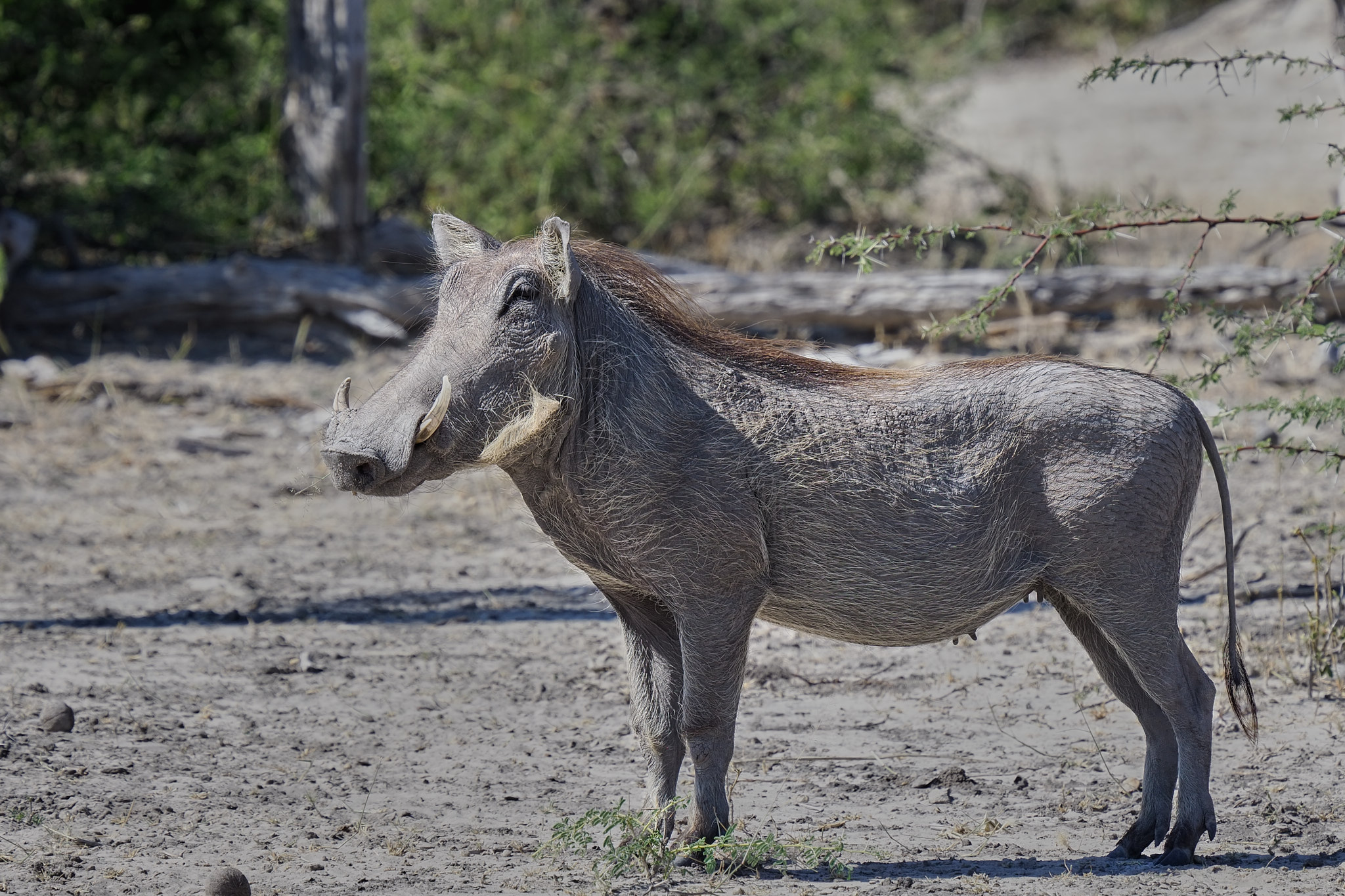
On the day that God made the Warthog there was a shortage of skin. As a result the body of the Warthog is a very tight fit. When it runs through the grass it closes its eyes to keep the seeds out. So tight is its skin that just closing its eyes is enough to make its tail stand up.
photo Gayle McGee
There are other tales to explain why it feeds on its knees and why its hair is so patchy. It seems to be a popular figure in African folklore.
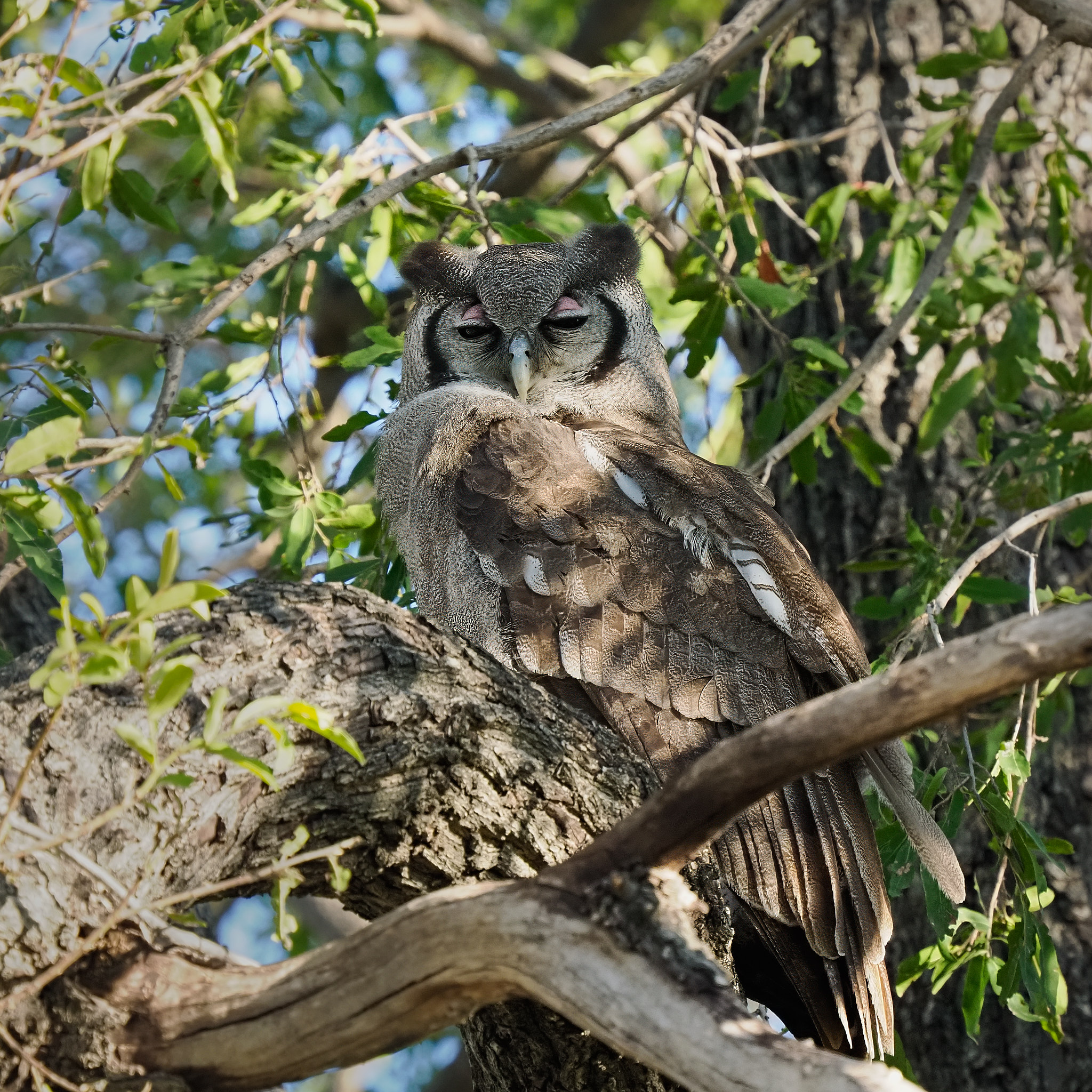
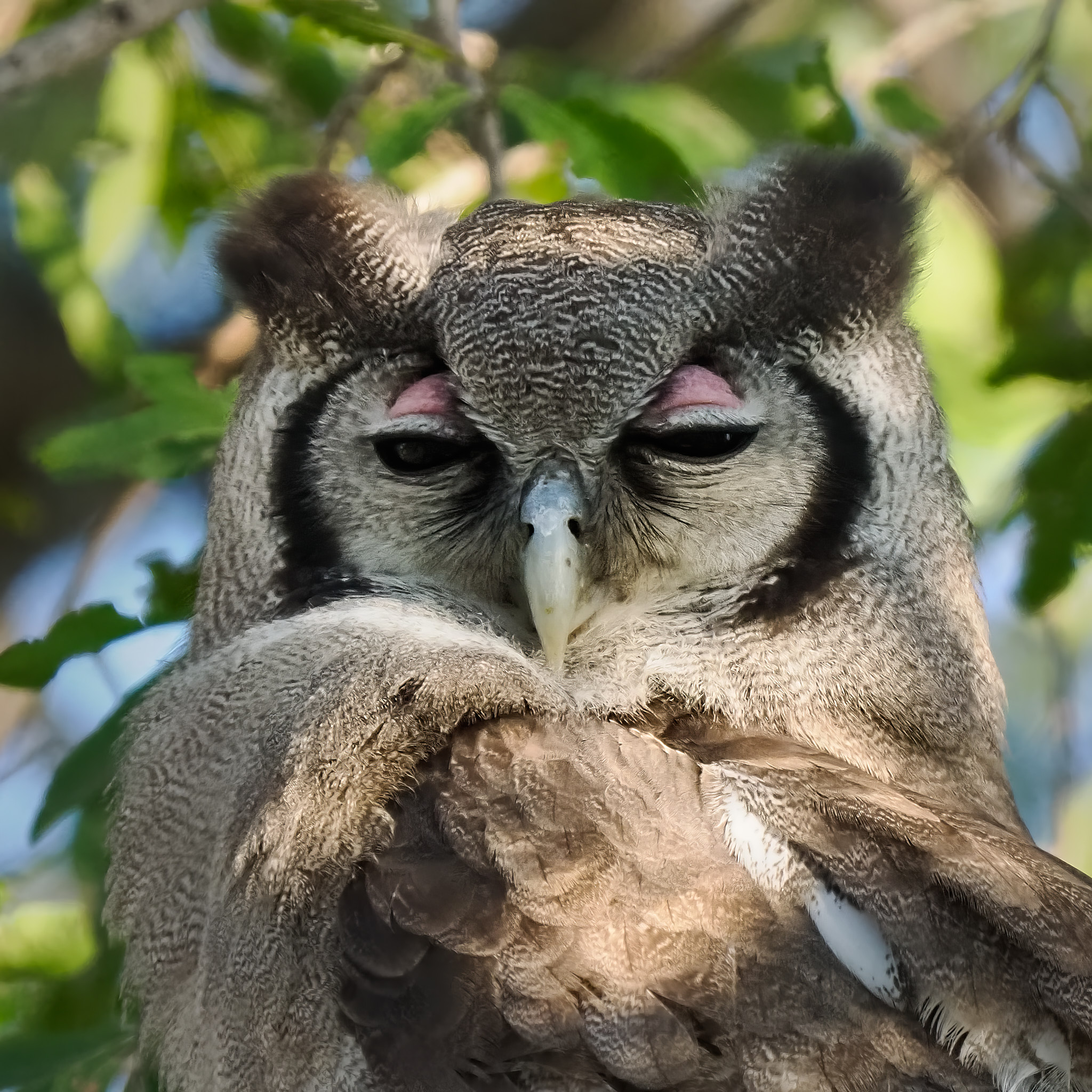
One of our local driver/guides found us a large owl, Verreaux’s Eagle-Owl. He recalled that as a child the call of the owl would strike fear in his heart and send him running home. To his family the owl was a bad omen. For other African people it was the wise owl or even the nocturnal protector of the village.
In the fairy tales I grew up with the owl was wise but in European folklore it has also figured as the harbinger of death, an associate of witches or the protector of barns from lightning although to fulfill that duty it first had to be nailed to the barn door.
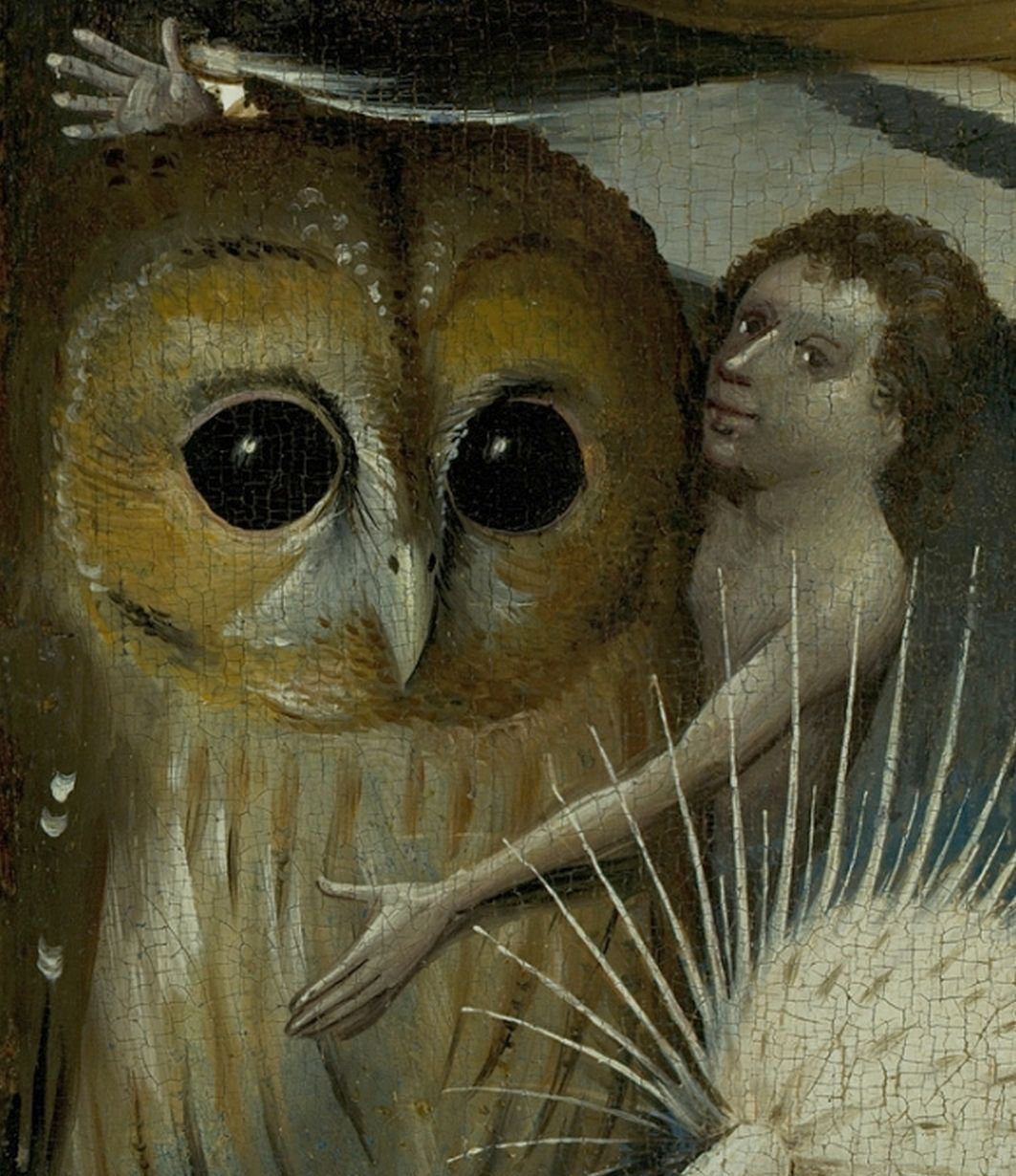
The Dutch painter Hieronymus Bosch ((c. 1450 – 1516) depicted owls in many of his works. He was either a deeply religious man seeking to demonstrate the dreadfulness of sin (the orthodox view) or someone who’d found a neat loophole in the censorship laws. He may have seen owls as wise in that knowing too much, cynical sort of way, having eaten from the tree of knowledge etc or he just had a fetish. A detail from The Garden of Earthly Delights …
Verreaux of the Eagle-Owl and also the Eagle, Coua and Sifaca (and also celebrated in the scientific names of a dove, a parrotbill, a skink, a gecko and an eel) is Jules Pierre Verreaux (1807 – 1873) a French botanist, ornithologist and professional collector and trader in natural history specimens. He earns a mention in the Biographical Notes of the Australian National Herbarium for his plant collecting activities in New South Wales and Tasmania. They don’t go into much detail about his exploits in Africa.
Whilst in Botswana in 1830 Verreaux observed the burial of a Tswana Warrior. He returned that night , dug up the corpse, took the skin, skull and a few other bones, crated it all up with a few other specimens and sent them off to Paris. I wonder if the owl was part of the same shipment.
A national government has the responsibility for making the most of a country’s resources and sharing the benefits among its peoples. In Zimbabwe during the Mugarbage era the national wealth went down whilst the personal wealth of Mugabe and his cronies went up. A kleptocracy working just the way its rulers wanted. Across the border in Botswana things seem to have gone very much better. Botswana is considered the least corrupt country in Africa, the economy is growing healthily and per capita purchasing power is above the world average.
Botswana is essentially a dry country but with a water supply from beyond its borders. The Kalahari Desert is in the centre and south west, The Okavango Delta is in the northwest. The country is about the same size as France.
The population is about 2.7 million people, population density being 5 people per Km2. They are not evenly spread, about 69% live in a town, the largest being Gaborone, the capital in the southeast of the country, with a population of a little over 208,000. The population of Botswana is slowly increasing.
Diamond mining is the mainstay of Botswana’s economy, about half of government revenue comes from diamonds. A lot of pretty eggs, one basket. Tourism, number two in importance, accounts for a little over 10% of GDP. A large proportion of the rural population depend on subsistence cropping and cattle farming.
The tourists go mainly to the Delta because it’s beautiful, wildlife is abundant and the facilities are first class. Flying in adds to the sense of space and wilderness as does the absence of power lines and fences. The set up depends on concessions. The Government holds on to the dirt. Business leases the opportunity to build and run lodges. Do a good job, upgrade facilities and you may be granted the opportunity to renew when the lease runs out.
A World Bank Technical Report, An introduction to tourism concessioning: 14 characteristics of successful programs cites as an example …
“Okavango Wilderness Safaris has a concession for Mombo Camp in Moremi Game Reserve, in the heart of the Okavango Delta World Heritage Site.
The lodge is highly profitable, achieving an average occupancy of 70% between 2009 and 2013, with a rack rate of US$2,413 per person, per night in the high season. During this period, the lease fees and taxes paid generated US$6 million to government, and over US$3.7 million was spent on staff costs (of whom 75% are local Batswana).”
Kudos to the government. So why is this post entitled Balancing Act? In part because of the fences that you didn’t see. Cattle was culturally and economically numero uno prior to diamonds and tourists and it still is to the rural population. The market for beef is the EU. To satisfy the EU on health grounds Botswana has to keep the cattle and the wildlife apart especially the buffalo. That means Veterinary Fences. Over 10,000km of veterinary fences. Namibia next door to the west also has its share of veterinary fences. The fences cut migration routes that have existed for millennia. Water floods into the Delta in the dry season. Animals migrate to the periphery in search of pasture. As the land dries out they move back into the heart of the Delta. Unless they died against the fences.
Over all wildlife numbers have declined since the first fence was erected in 1958. On the other side of the coin, if the fences come down will the cattle move in, elephants and buffalo move out, conflict with farmers increase?
What about the water? The rain falls in Angola. They have first dibs. If it leaves there it has to cross the Caprivi Strip of Namibia, a colonial oddity that enabled the German overlords access to the Zambese. If it is diverted there to the extent that there is too little to flood the Delta then the Kalahari increases in size and the Delta dies.
And power! Botswana purchases electricity from South Africa and presently all they have to sell is rolling blackouts. That is an issue that the government of Botswana has already begun to address.
Botswana has done a great job. They need to keep it up. There’s a tricky road ahead.
I have heard it argued that the best camera is the one you have with you. Your phone is always handy. The photograph you take is always superior to the one you didn’t take. I have a friend who has an excellent eye for composition who has embraced this absolutely and doesn’t own a real camera. His instagram page has some very nice photographs of fungi. And, not only fungi … but well … mainly fungi.
If you use your photos on social media the image quality is good enough most of the time and getting better. I use my phone sometimes (more often to take photos than to make phone calls in fact) and I have published some of them on this blog. It’s a Samsung. It does an OK job of macro (flowers, corals, dinosaur footprints. Not insects) and a pretty good daytime landscape. It fills in the short end when I’m wandering far and wide with a bloody great telephoto. It wouldn’t meet my requirements for night photography or for birds.
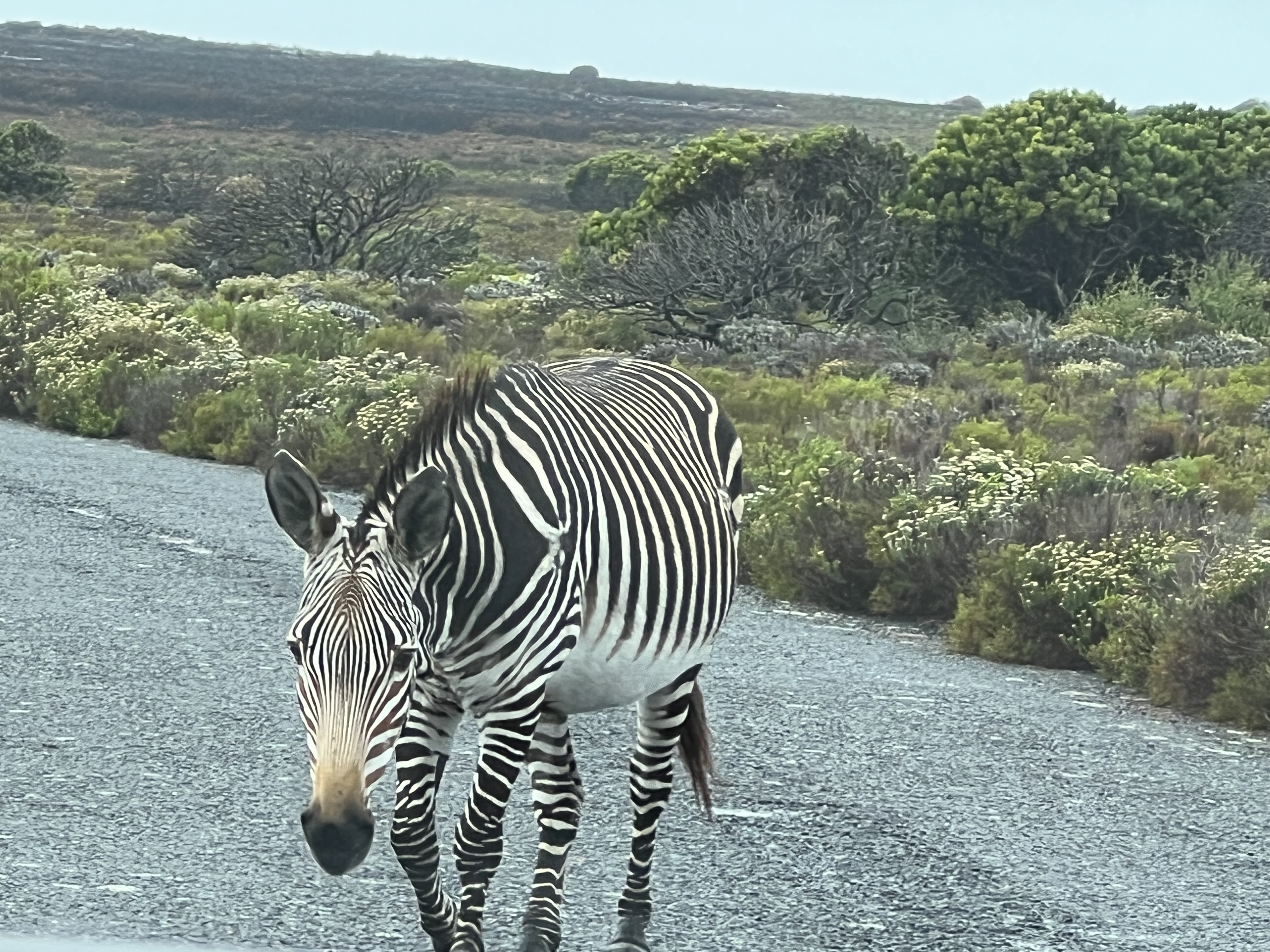
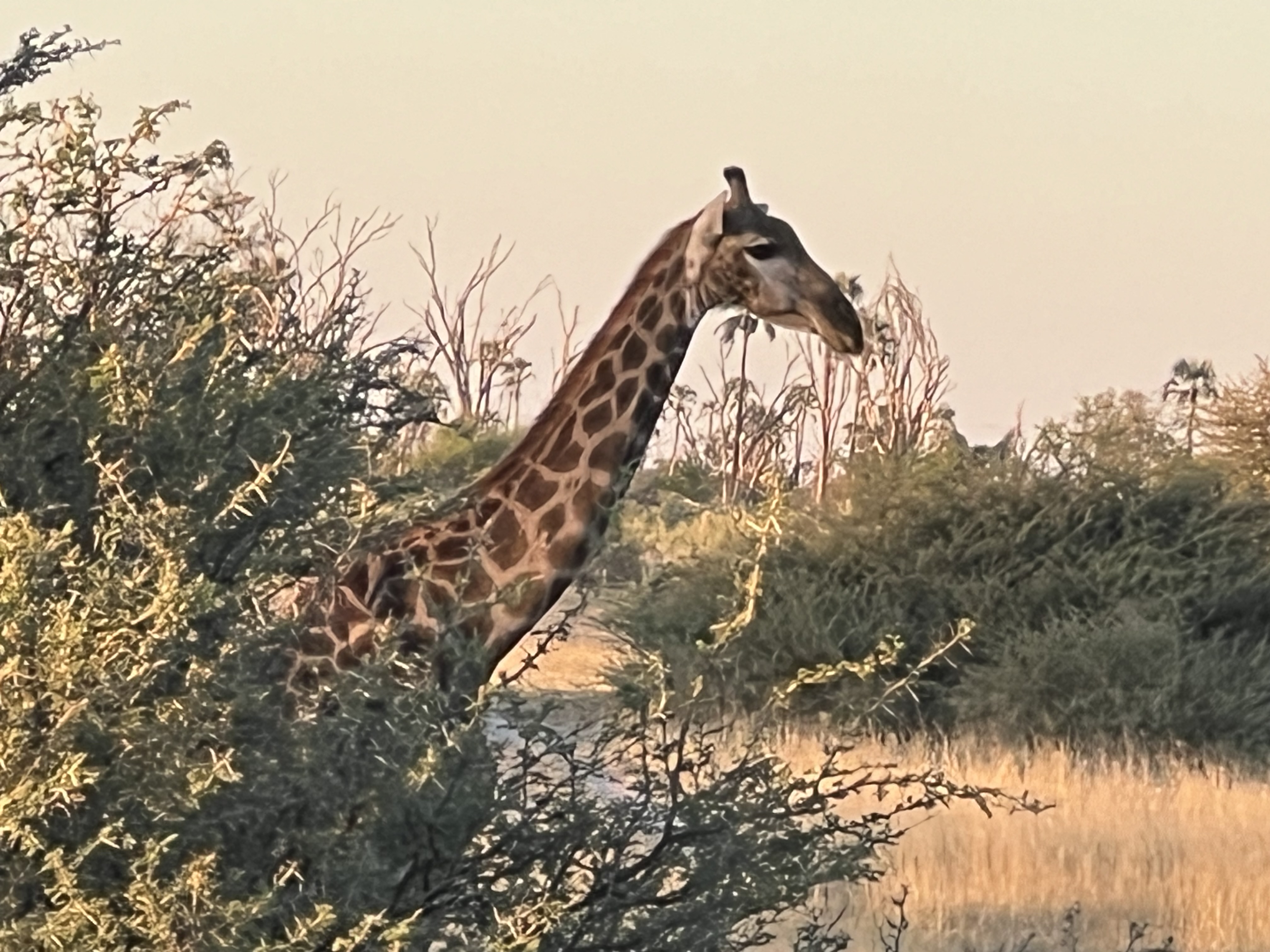
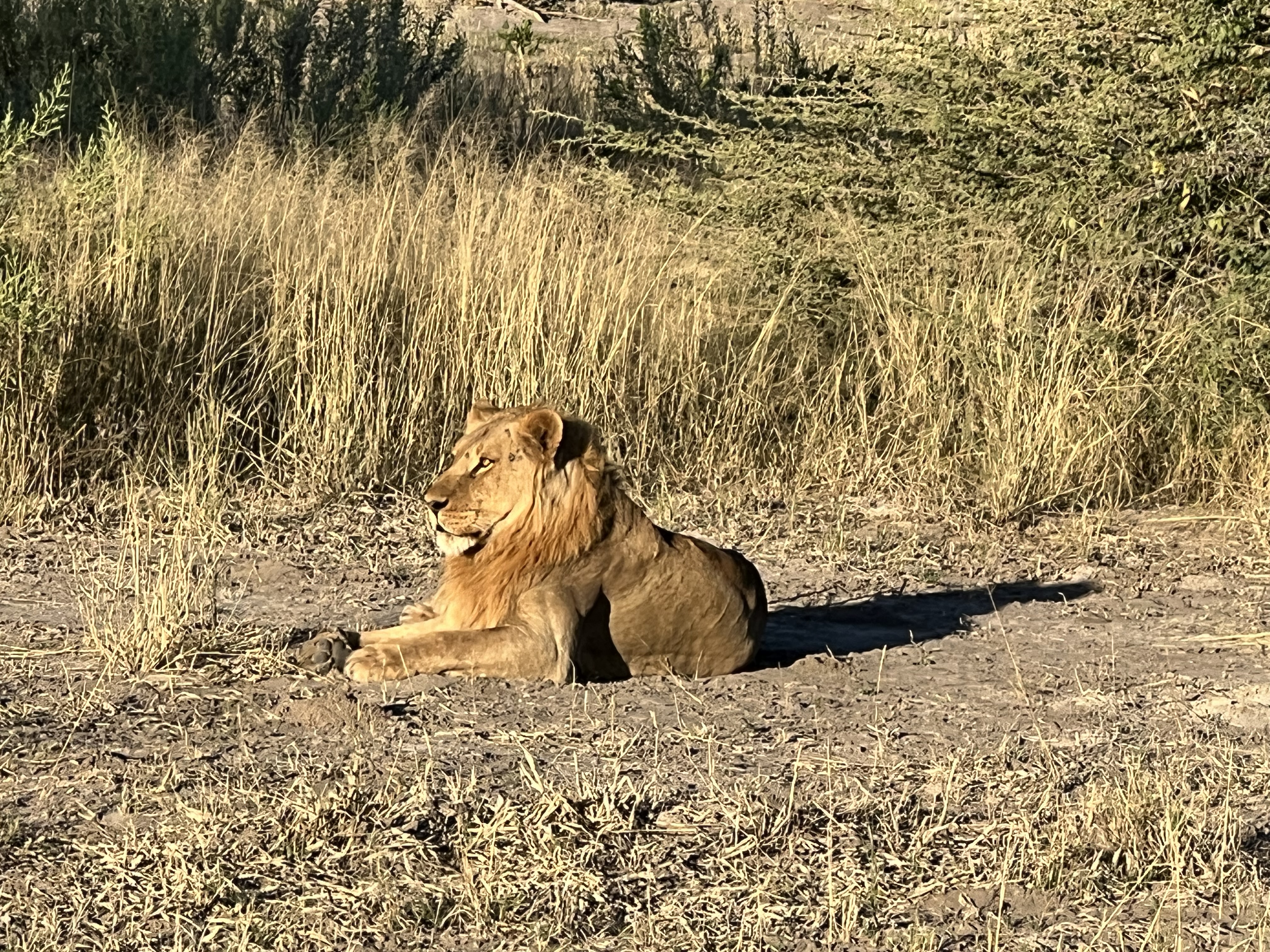
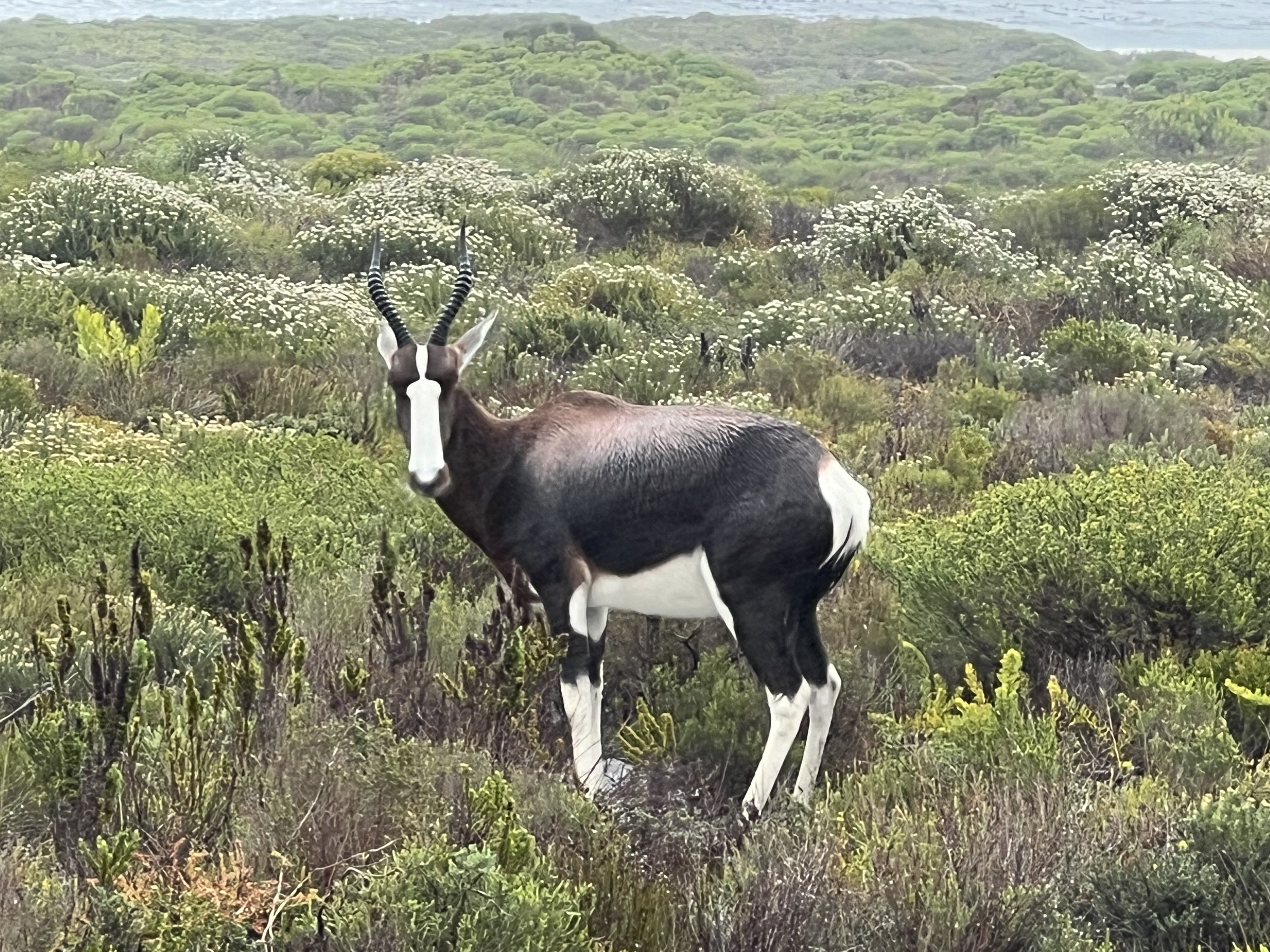
Could you take a phone as your safari camera? Professor Mo (Honeybadger) Donelly did and was kind enough to share. These are some of her photos (all rights reserved) …
These are nice photos, certainly good enough when they pop up in her Facebook feed next year to bring back a flood of good memories. They were shot on an iPhone 13 pro.
A palindromic acronym that I just made up. Perhaps unlikely to attract many hits but who knows … curiosity. So WTF does it stand for (I tried not to do that but I couldn’t resist). What about black and white? My first experience of photography was watching the magic of black and white appear in a dish. My Uncle Ron was a professional photographer back in the day. I went on to have my own wet dark room for some years. Film, enlarger, paper. Oh the nostalgia. I’m still a sucker for B&W.
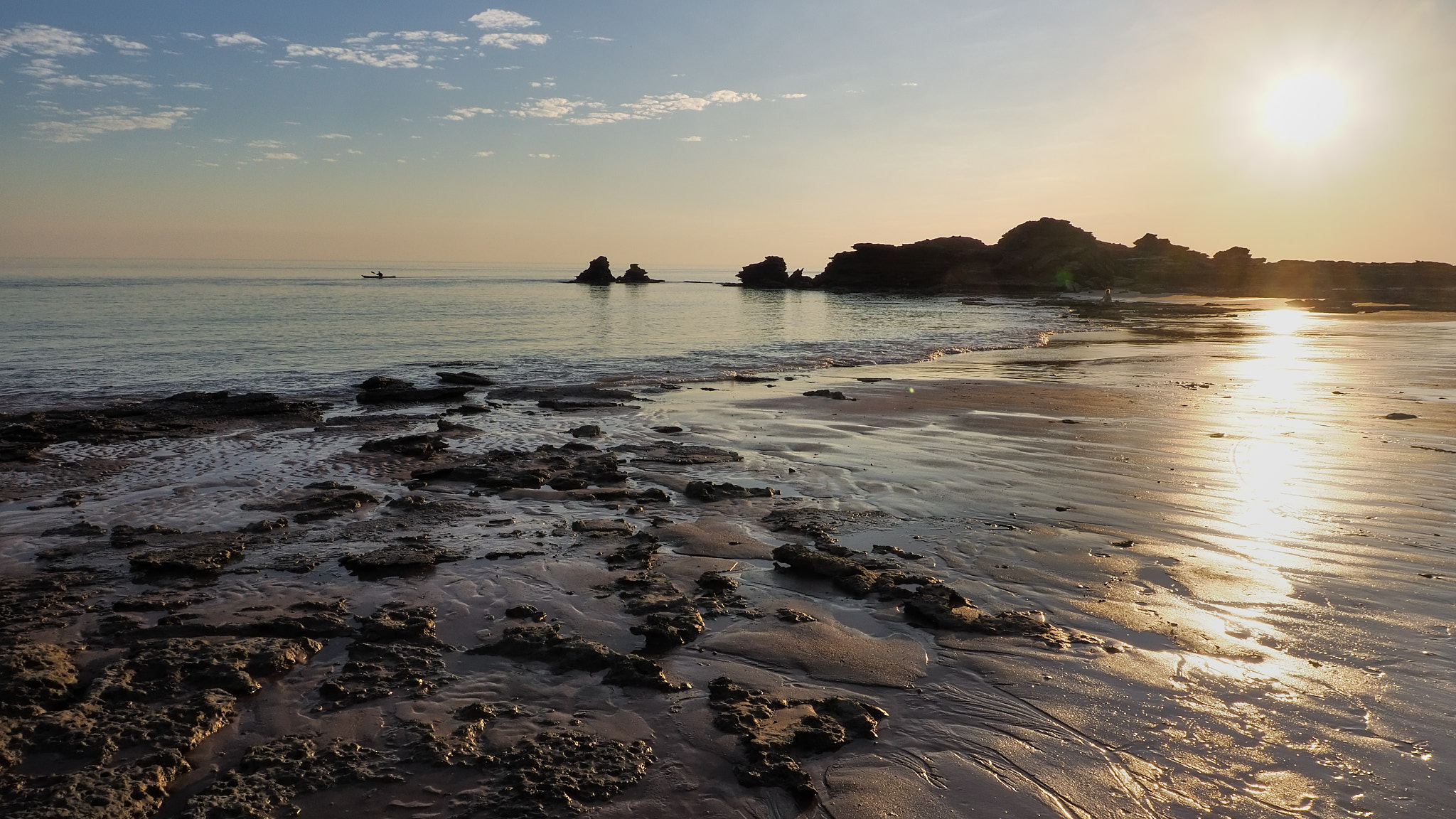
I’m into photography. If I had to say what sort I would say wildlife and landscape. I had better insert the word amateur somewhere although I did once swap some of my photos for some art work. Since I live in a part of the world that is almost devoid of large, day active mammals the wildlife I shoot is mostly birds. I photograph birds almost every day. Landscapes, too, are determined by what’s available, mountains and snow are absent from my neighbourhood but I have seascapes facing both east and west and dark night skies. These are the regular subjects for my landscape shots.
It’s in your day to day photography that you learn your way around your camera and how to solve the problems of lack of light, harsh light, black eyes in black faces, finding focus in the grass or foliage and, above all, composition. Practise, practise, practise. Photography on safari is very much like photography at home. You will make the same mistakes, your photography on safari will be just as bad as your photography at home.
But some of your photographs on safari will also be much better than your photographs at home. Ansel Adams is often credited with saying that the art of landscape photography is “knowing where to stand”, to which you could add “and when to stand there”. It’s just as true for wildlife. Go stand in front of a lion, a hyena or a leopard, carefully, of course. You will come home with some gems.
Rule number one – take lots of photos, only ever show the best ones.
What will be different on safari? You will only be there for a short while. You will want to get the most out of it even when the sun is overhead.
You will fly there. There will be weight restrictions. If it involves light aircraft the restrictions will be severe. My camera kit is a challenge for hand luggage regulations at the best of times.
You will be shooting from a vehicle. So, often a higher view point than you’d like and limited as to choice of position.
There will be dust. Changing lenses in the field should be avoided. A woman’s head scarf in your lap is a good way to keep the dust off the outside of your camera while traveling.
You will be a long way from the camera store. Whatever you didn’t take will not be found by magic in the pocket of your camera bag.
So what should be in your bag? A camera that you know and love is essential. A second body that will accept the same lenses is desirable – I have twice had cameras die while traveling. (If traveling with a companion three bodies between two should be enough.)
Which lenses? Doing research for this piece I came across a glowing endorsement of a 400mm f/1.8 prime as the ideal safari lens. Makes your mouth water. Imagine shooting wide open in the predawn light, creamy bokeh, low ISO therefore low noise, subject razor sharp. The affiliate link was, of course, at the bottom of the page. The sun comes up and most of the advantage the lens had is gone but it still weighs the same and it will be a 400mm lens all day.
Your driver/guide will do their best to put you and the other occupants of the vehicle in a good position. This will vary from perfect with the sun just where you’d like it to bloody awful. You won’t be able to fine tune it by stepping forward, back or a little off to the side. A zoom lens will give you some control over your composition. If 400 mm is what you want Sony shooters will find that in the 200 to 600 along with a lot more flexibility.
You will face similar restrictions with regard to landscapes. You will not be walking about in search of a low viewpoint framing a nice foreground subject leading through an interesting mid ground to a fascinating baobab. Even in camp at night you will be limited in your freedom to wander. So a very wide angle lens is not likely to get much use (But they do weigh a lot less than a 400mm prime). You might be comfortable filling in the short end with your phone. A small herd in its habitat or the classic silhouette in the sunset can be achieved with a 70 to 200.
What about going really long? On a full frame camera an 800+ mm lens traditionally meant ridiculous size and weight, image softness due to camera movement and noisy images in low light. This is the suite of problems that every bird photographer has had to confront, so home turf for me. My solution is the OM Systems OM1 mark ii and the Zuiko 150 to 400mm zoom with built in 1.25X teleconverter. It is a micro four thirdscamera with a small sensor and a mere 20 megapixels. In full frame terms it has the equivalent reach of a 300 to 1000 mm lens at a fraction of the weight (and also cost). Image stabilisation and autofocus are excellent. If 400mm is the sweet spot this lens does it comfortably and then you can turn around and zoom in on a bird.
So that was my long lens. Plus I had the 70 to 200 mm mounted on a Sony full frame camera and switched that for a 14mm wide angle prime for night shots. My companion also had an OM1 with a couple of zoom lenses giving her coverage from about 25mm to 300mm in full frame terms.
I anticipated switching frequently from one camera to the other but in practice I hardly used the 70 to 200. I really could have left it at home. Nor did I find 400mm to be the sweet spot. When the sun gets high in the sky the shadows really mess up the image. Cats tend to find a spot in the shade. With the lens at 400mm half the scene is likely to be in shade and the other half over cooked in the sun. With a bit of extra reach it’s often possible to compose a more intimate scene in even light. I made a lot of use of the 700 to 800 mm range.
Camera settings seem to get a lot of attention. I like to be ready so as not to miss an important moment so make full use of the custom settings. The OM1 has 4 available. I use C1 for birds on a perch or animals at ease at 1/800th of second. C2 for birds in flight at 1/2500th of a second, both are Manual with auto ISO at f/5.6 as a starting aperture. C4 is set for daytime landscape, aperture priority f/11, ISO 200. Which I use on a tripod with a 2 second delay.
An image that is not sharp is useless. Let the ISO go where it must, a noisy image can be cleaned up.
I shoot in raw, edit in Capture 1, use Affinity Photo where I need to combine layers and clean up noisy images with Topaz.
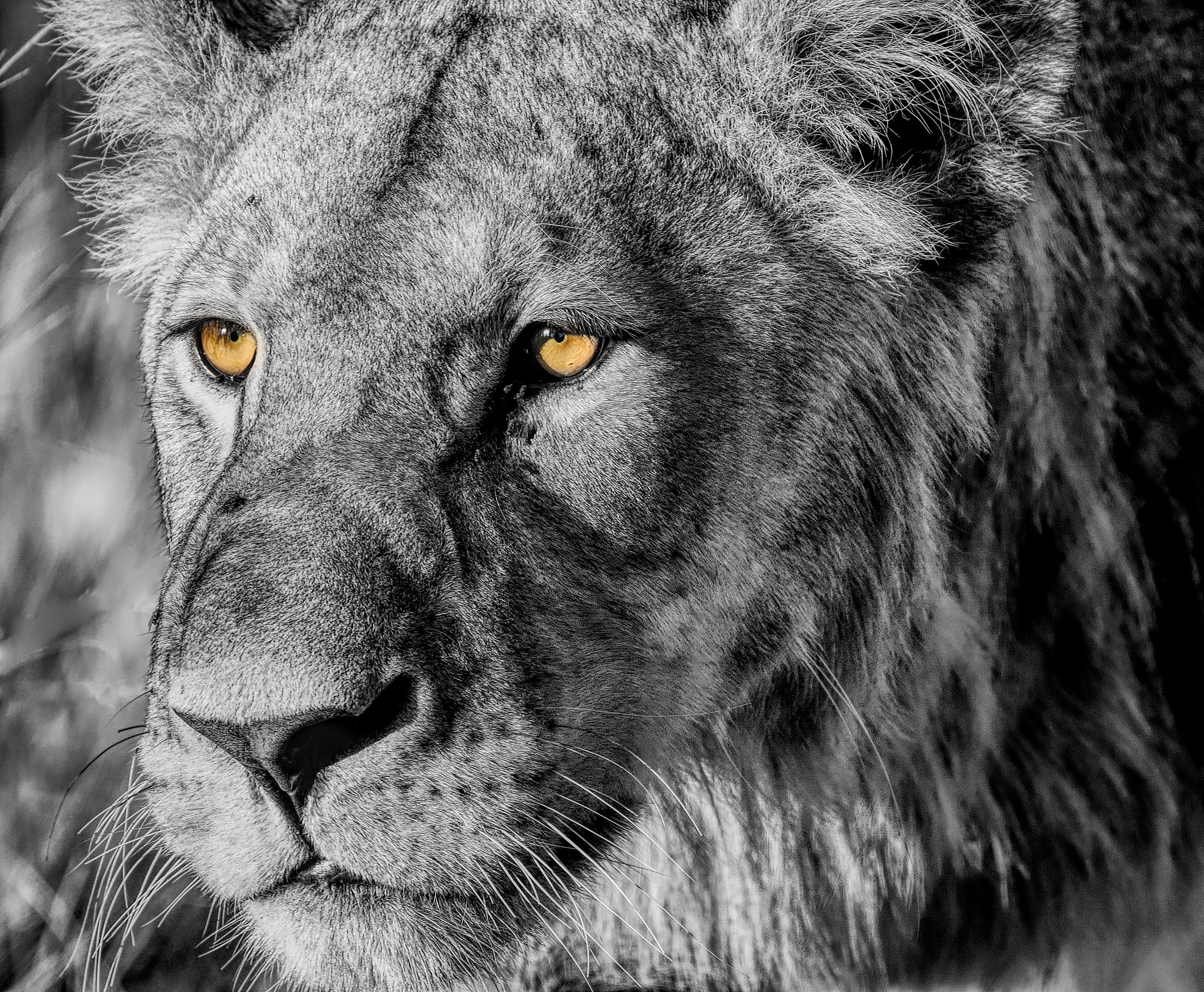
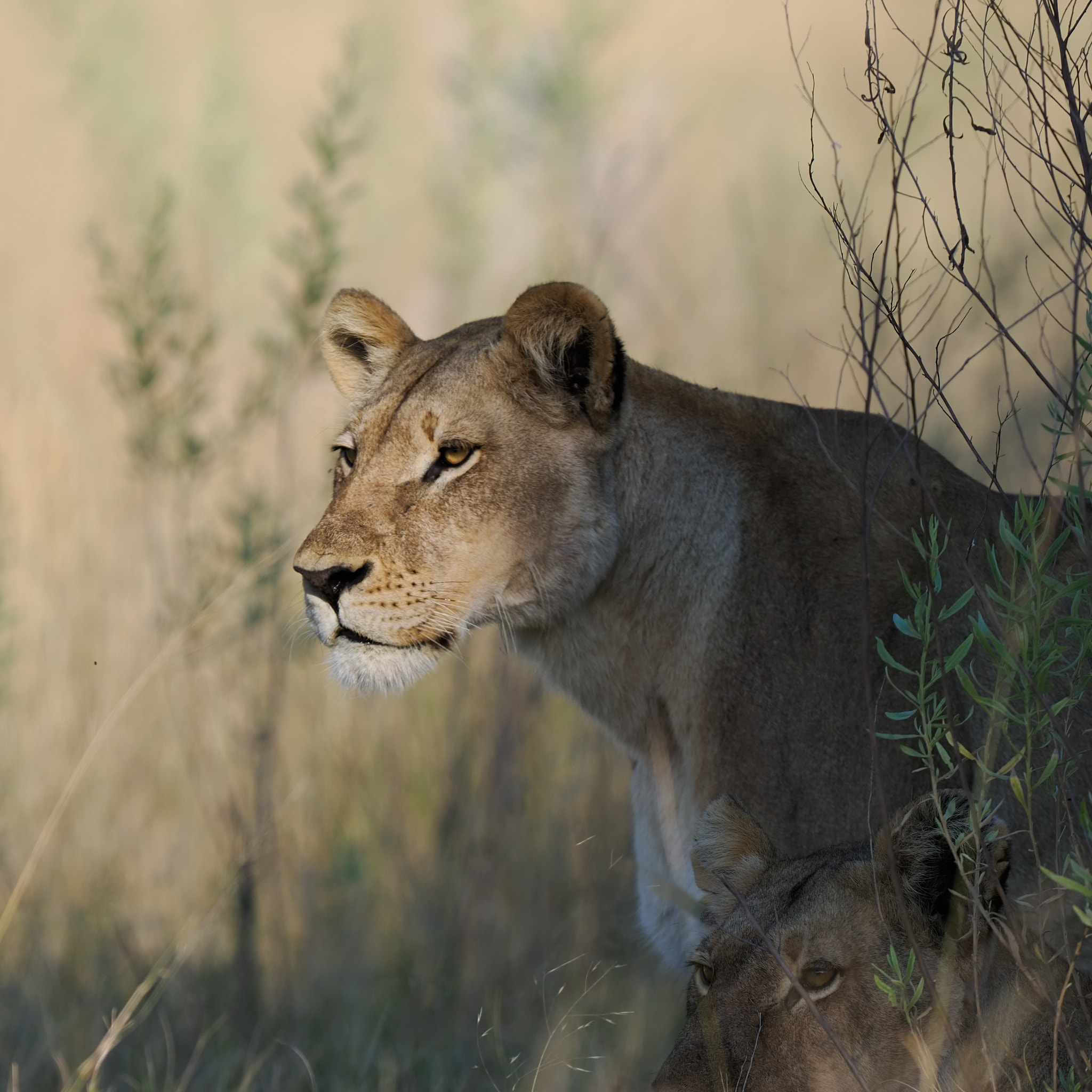
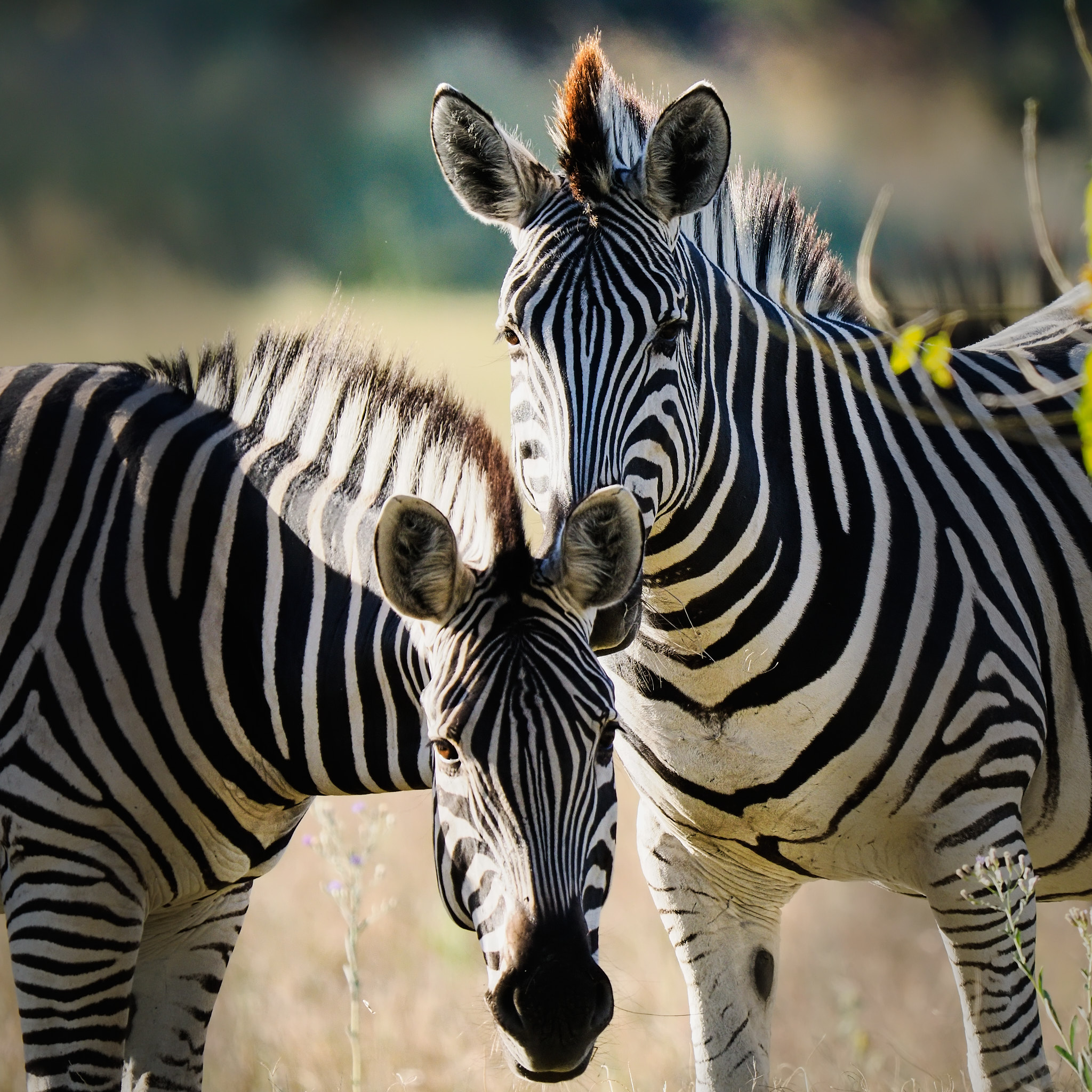
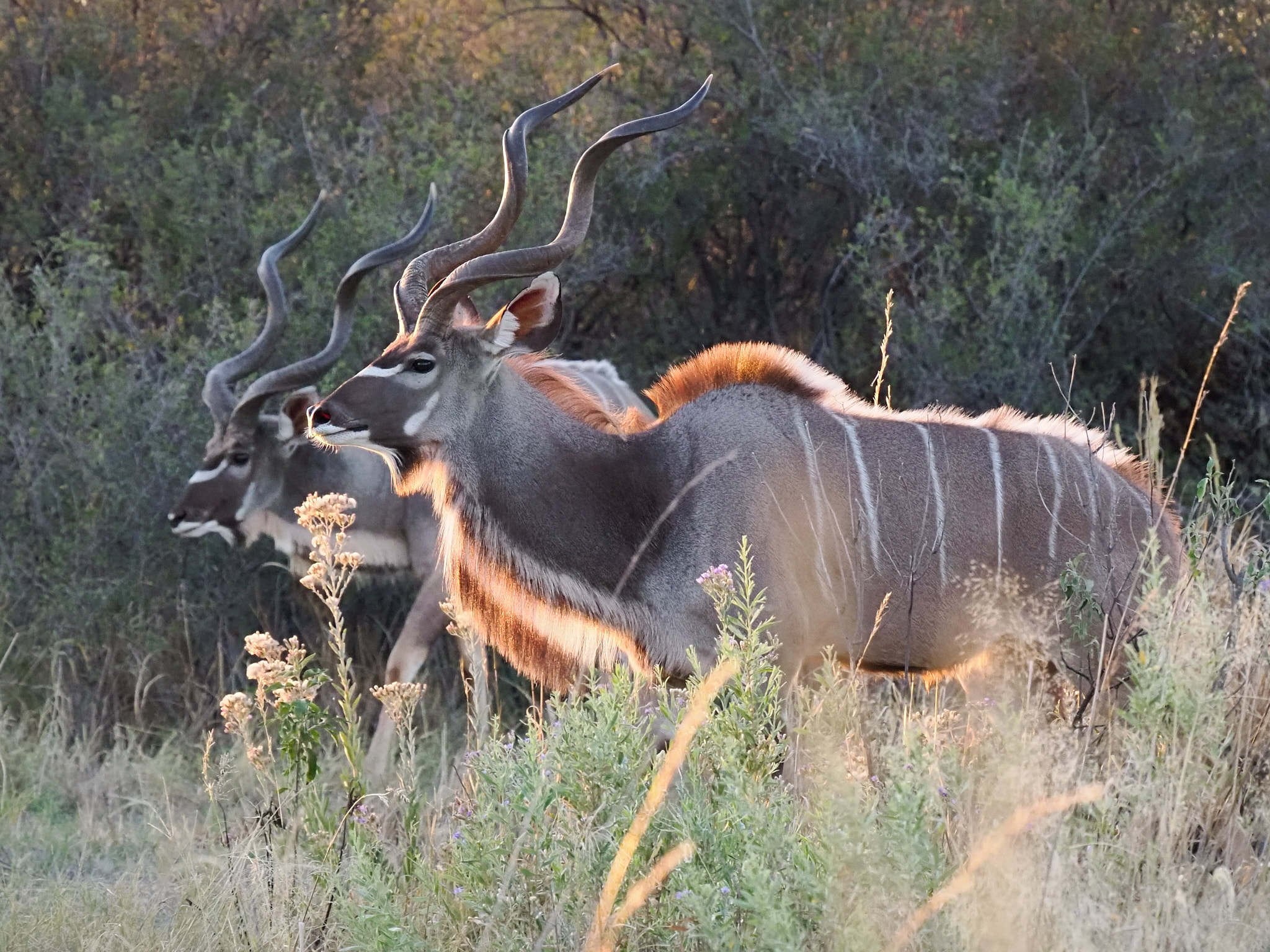
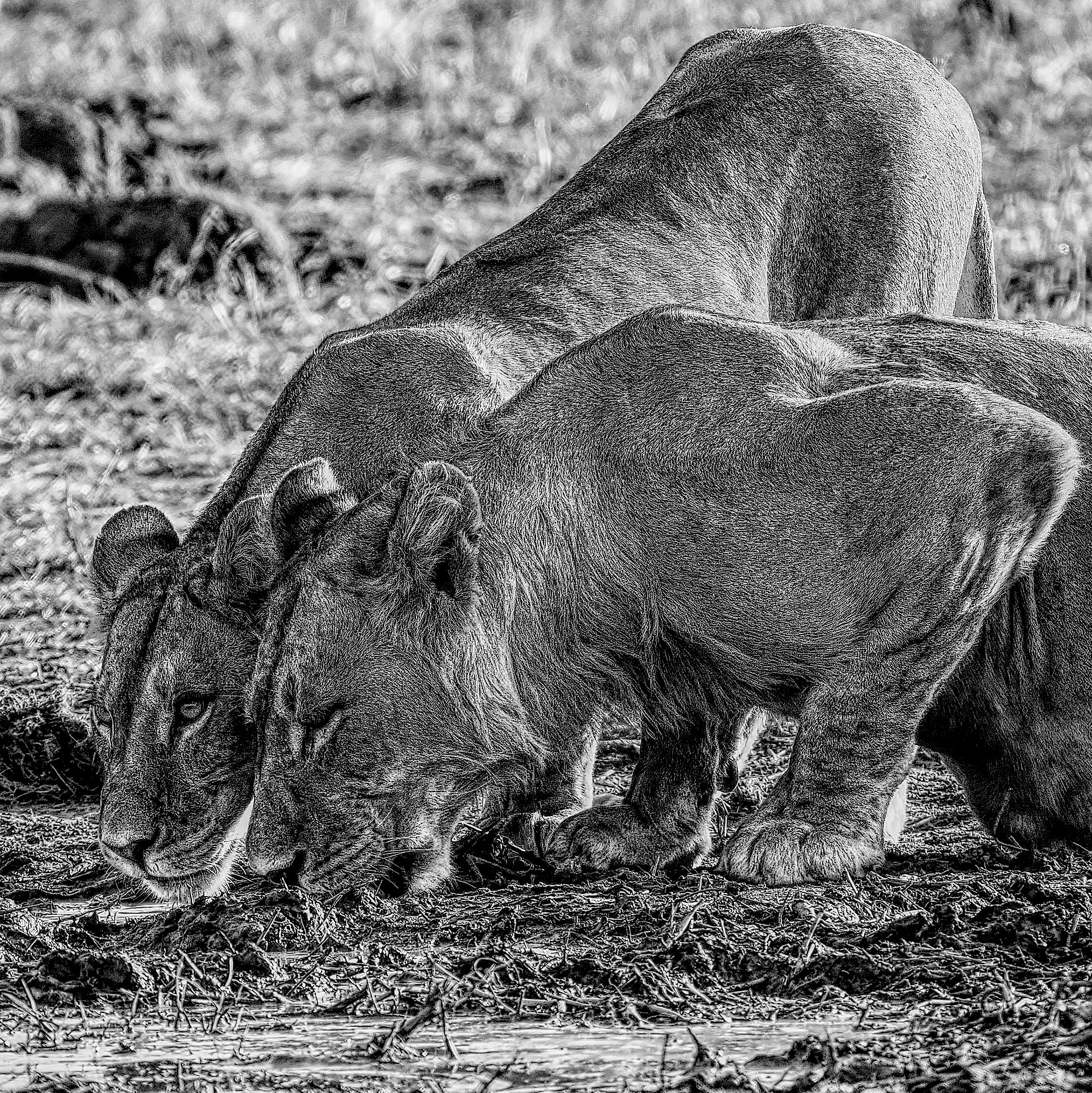
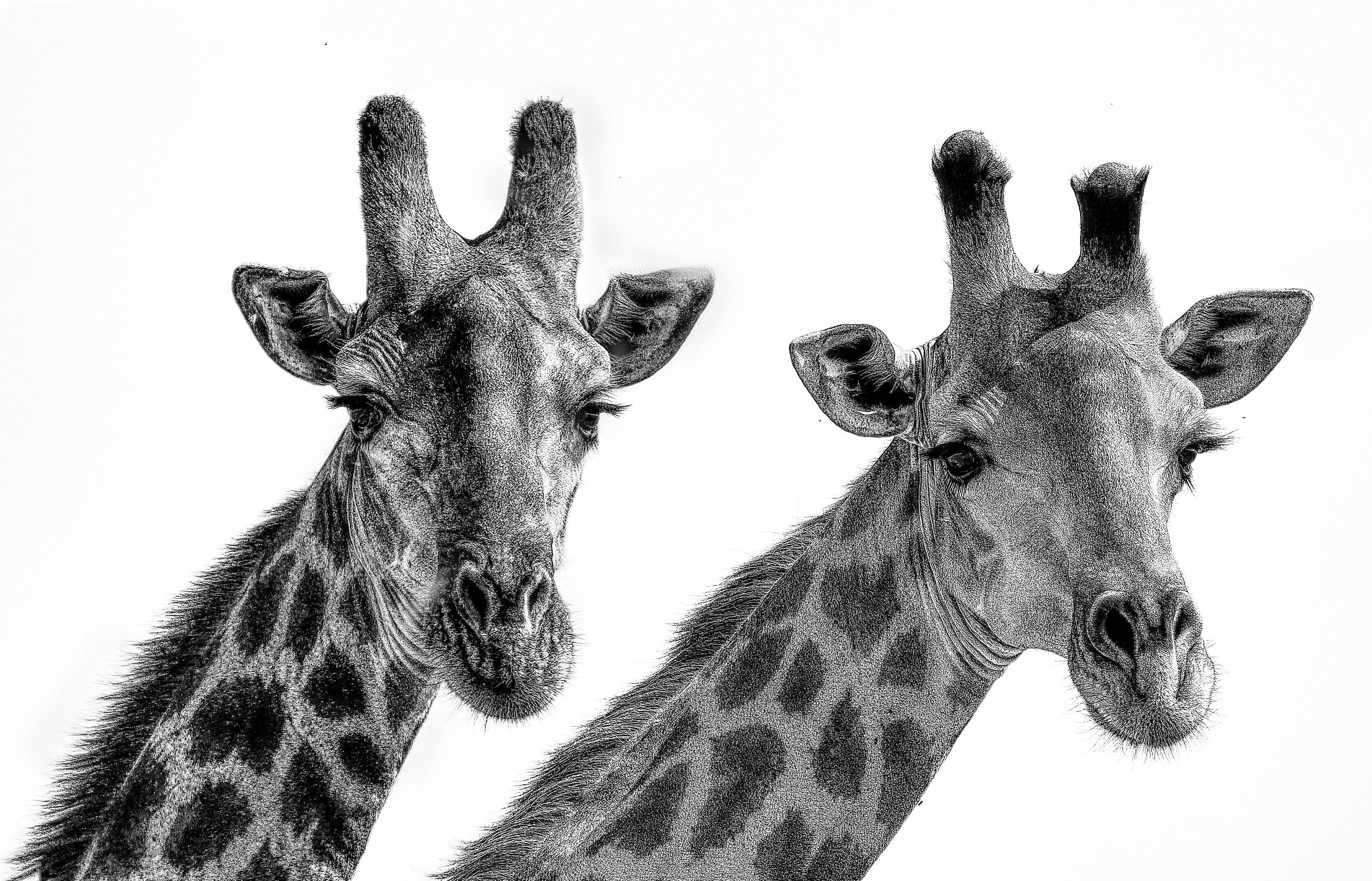
That’s how I went about it. The results are there for you to see. Well some of them are. If you want to look good never forget rule number 1.
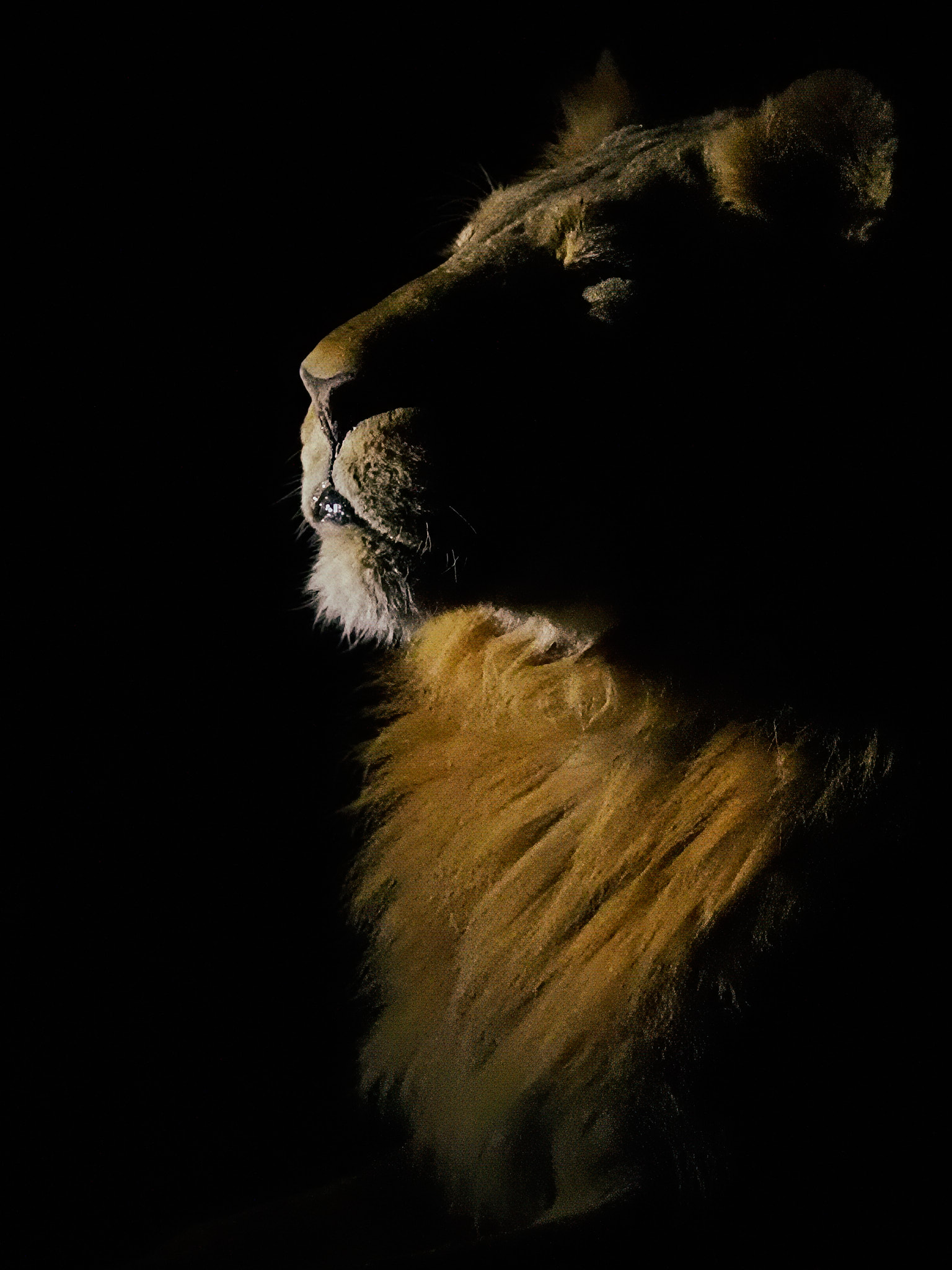




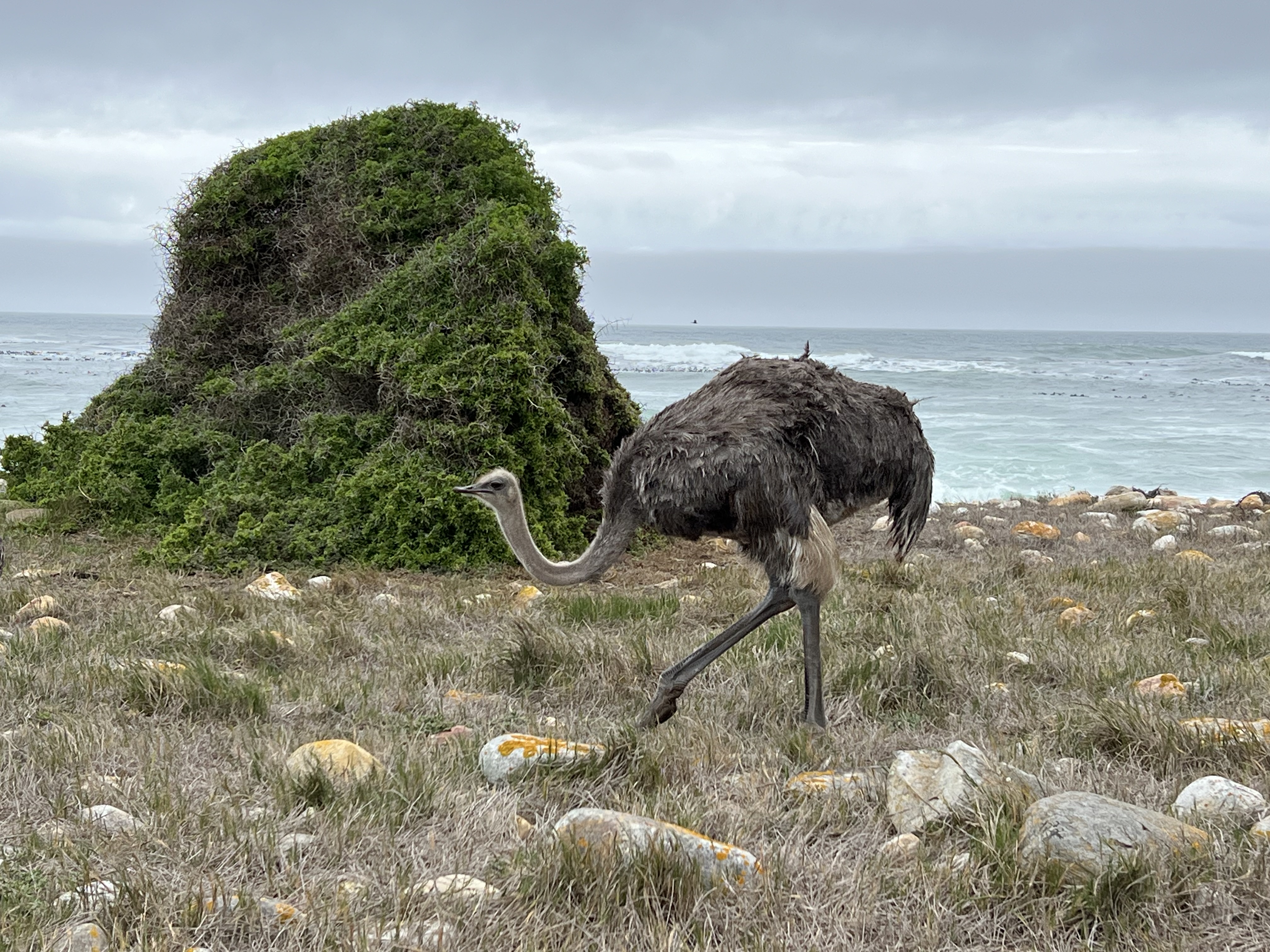
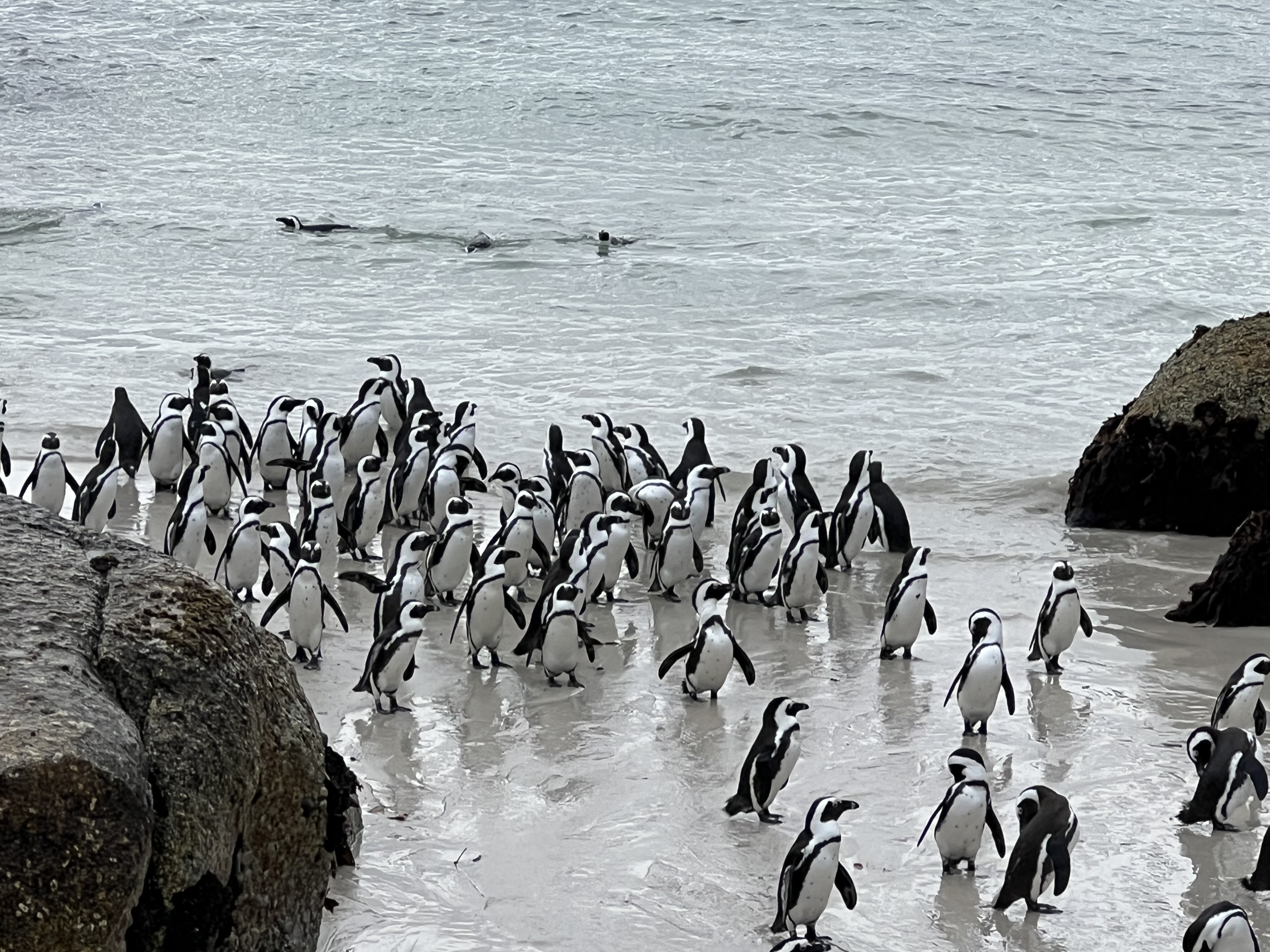
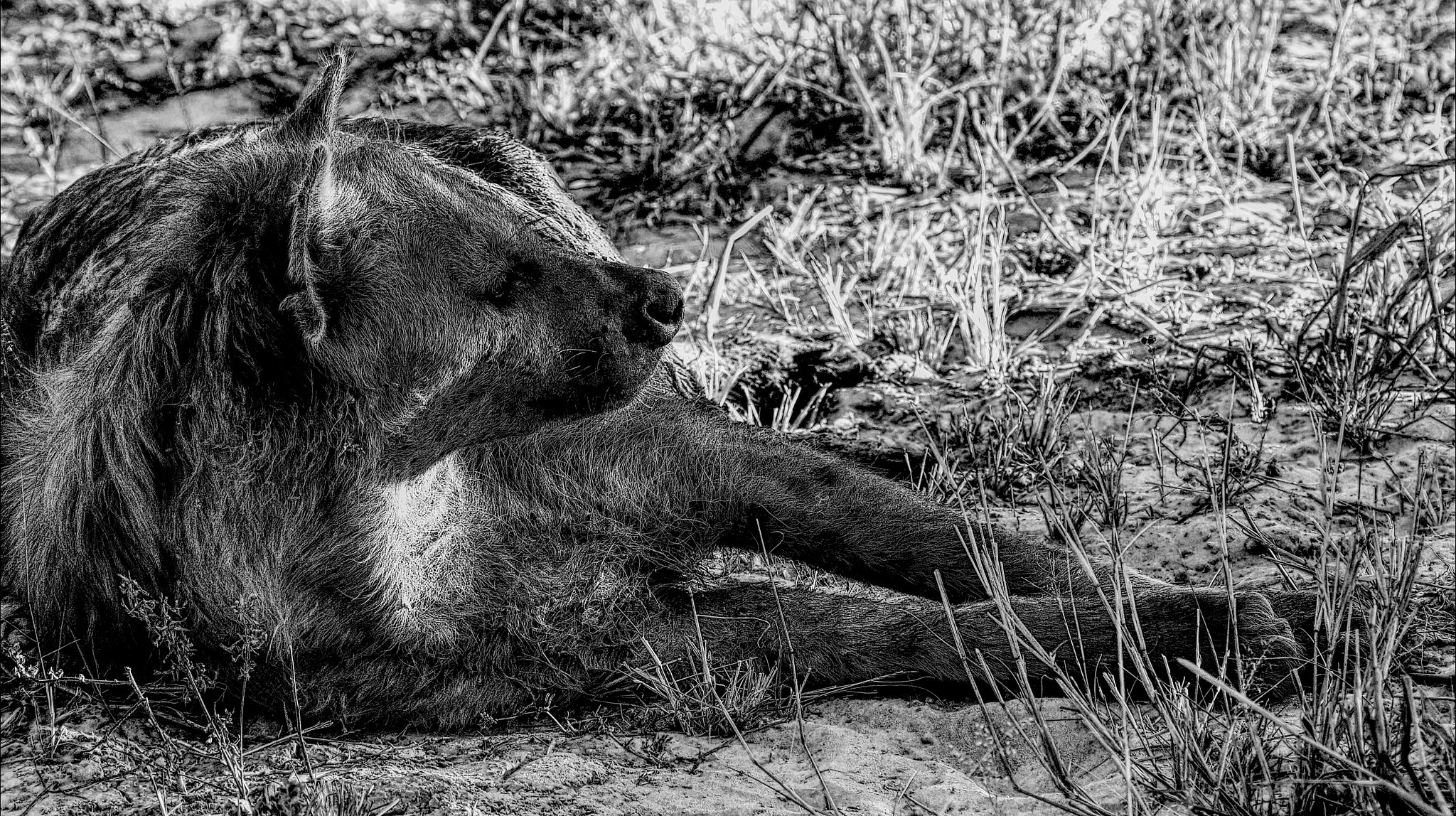
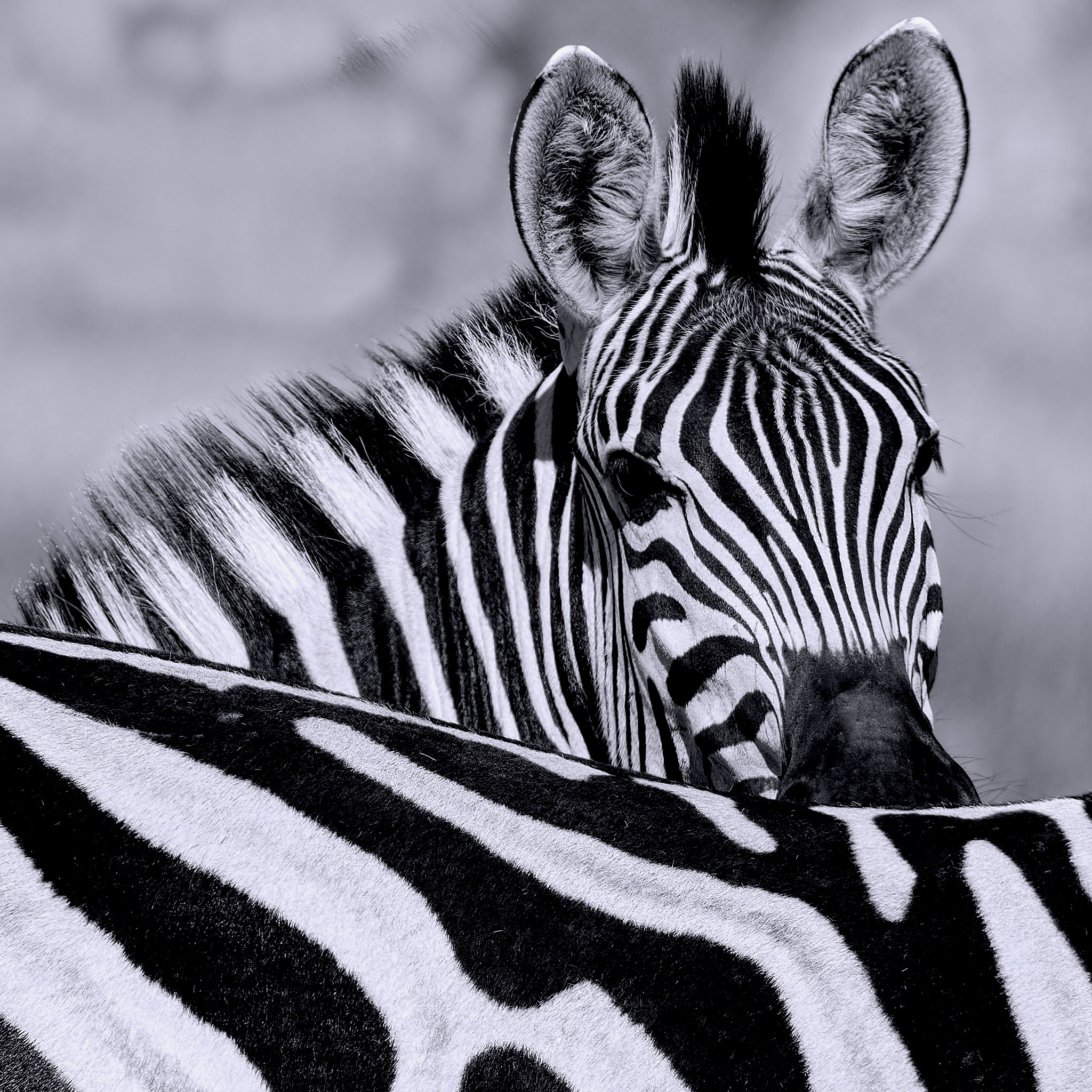



 bobmcgee