Rules 5 And 9 …

I rode this morning.

This despite the fact that the weather was execrable. I took note of the wind direction and headed straight into it. I generally like to do a circuit but today it was there and back. Go hard. Go home. I couldn’t see any reason to have the rain blowing in from the side of my glasses. When I cleaned up after the ride I had to wash the mud spots off my helmet as well as the bike!

I was so impressed with myself that I mentioned my heroism in an email to a knowledgeable person and got this rather cryptic reply …

When considering whether to ride or not in weather like todays, I typically refer to rules 5 and 9:
https://volerfactoryteam.com/2010/12/28/the-rules-from-velominati/

Naturally I followed the link.

RULE 5:
Harden The Fuck Up.

RULE 9:
If you are out riding in bad weather, it means you are a badass. Period.

There are 82 rules in all and some are very funny. Well worth a look. Rule 12 is especially pertinent at the moment …

RULE 12:
The minimum number of bikes one should own is three. The correct number is n+1, where n is the number of bikes currently owned. This equation may also be re-written as s-1, where s is the number of bikes owned that would result in separation from your partner.

In other news the pedals have caught me out at last. The other day whilst riding with Gayle I was obliged to wait for her to catch up. Since my bladder was uncomfortably stretched I thought I would put the time to good use and headed off road to a suitable looking tree against which I expected to lean. It wasn’t that I’d forgotten to unclip, I just didn’t intend to. Unfortunately I underestimated the resistance from the ground adjacent to the road and ended up a bike length short of my objective. Gayle arrived just in time to see me and bike describe a quarter circle until my left shoulder the ground. No harm done.

And remember …

RULE 10:
It never gets easier, you just go faster. To put it another way, “Training is like fighting with a gorilla. You don’t stop when you’re tired. You stop when the gorilla is tired.”

The Secret Weapon …

Now assembled in one corner of the machinery shed …

One of the Youtubers I follow is Dylan Johnson a cycling competitor and coach. He is a big fan of strength training to help you go faster on your bike.

But he’s just a whipper snapper. Joe Friel in Fast After Fifty is another advocate for the weights. But then from my perspective fifty year olds are also whipper snappers. This guy though seems qualified …

Weight training is one area where researchers have been keen to take older couch potatoes and put them to work. Strength training has major benefits in daily life activities, mood and cognitive abilities and reduction in falls. All of which serve to extend healthy life. But we are aiming higher than that – we want to ride fast.

Dylan has told us why. In the next video he tells us how. I’ll get started as soon as I recover from putting the bloody thing together.

The Shoes …

I have been riding in some old sneakers. Real cycling shoes have very stiff soles so that the force you put on the shoe is in turn put on the pedal with no losses in the process. They also have the means to fix the shoe to the pedal until such times as you want to put your foot on the floor.

That is ideal. Unless you want to walk in them, which you might want to do when you’re mountain biking or taking part in cyclo-cross style activities. In those cases you’d like some flexibility and some grip for a steep muddy surface.

The last time I used real bike shoes the toes were strapped into contraptions that we fondly referred to as rat traps. You don’t see those any more. These days shoes are married to pedals by a system derived from ski bindings. Cleats fixed on the shoe click into place in the pedals and stay there until you swing your heel laterally to unclip. Forgetting to unclip leads to your shoulder heading towards the ground at 9.80665 m/s2 (32.1740 ft/s2).

In ideal circumstances the furthest you walk in your road bike shoes is from your bike to the barista. Cleats and pedals are broad, shoes are stiff and flat. Mountain bike shoes range from stiff to flexible and have a bit of a heel. Cleats are narrow so that they can be recessed into the sole. Mountain bike shoes are incompatible with road bike pedals and vice versa.

Does this mean that the well-rounded cyclist with both a mountain bike and a road bike must have two sets of shoes? Do I need even more trouble with the wife? Fortunately not. Pedals are unconcerned whether they are attached to road bikes or mountain bikes so a reasonable compromise is within reach.

The terrain I tackle on the mountain bike doesn’t normally require me to walk therefore a stiff mountain bike shoe is the go. It has the added benefit of protecting the cleats from the cafe floor when I buy the road bike and venture into town.

I toured the bike shops of Ballarat and settled on the Bont Riots.They are made of carbon composite  and can be heat molded. The retention is by a velcro strap and the Boa quick fastening quick releasing system.

Bont is a little Aussie company. I feel good about that and I don’t need to feel like I’ve made a sacrifice. So far the company trophy cabinet holds :-

59 World Track Championship titles.
3 UCI World Road/ TT champions.
12 x Olympic Gold Medals.
A TDF title (Sir Bradley Wiggins).
1 x Paris-Roubaix win.
2 x Tour of Swiss.
3 x Ironman World Championships.
3 x 70.3 World Championships.
2 x UCI BMX World Championships (Caroline Buchanan).
Numerous Grand Tour Stage wins, classics and countless stage races.
If you add silver and bronze you could probably triple those figures.

I’m sure they can barely wait for me to add a top 1000 finish in next year’s R3R.

One quibble with the design. As you insert your foot the tongue tends to recede into the nether reaches of the shoe. A tag on the front of the tongue would make that easy to prevent.

They have now made approximately 63,680 revolutions on my pedals and are as comfortable as my old sneakers.

Buying Speed …

Being old enough to know better must be something that comes to different people at different ages. I doubt that my life expectancy is so great that it will ever come to me.

As a saxophone player I know the temptation to buy a better sound. I also know, from experience, that having made the investment you sound just like you. The horn that you’re trading in can, in the hands of a better player, sound better than you will on the horn you’ve just bought. A well maintained instrument and a great deal of practice is the starting point. Once there the law of diminishing returns will deliver small gains for large outlays.

So, I’m a cyclist now. I really must buy some speed!

What for? Will I race again? Maybe. Will I win? No. Come on, McGee, why is it that your money is burning a hole in your pocket?

It’s that bloody charity ride., the R3R. Maryborough has a 108 km ride that tours the three local reservoirs. I completed the training wheels version (R1R) recently at 22 kph on my shiny new mountain bike. Given a year to prepare how much better can I do?

I could certainly do it quicker on a recumbent bicycle or even slower on a unicycle but either of those would seem eccentric. Five hours in the saddle of my mountain bike is an option but if I chose the right tool for the job it could be considerably less.

Choose the right tool. That is an excellent choice of language. Gayle is well in tune with the notion that you must have the right tool to get the right result. I’ll work on that.

Fat tyres and forgiving forks are certainly the right tools for our local riding. We live on a gravel road and the corrugations round here are cruel. We are nicely placed to ride through some very pretty forest tracks and listen to the birds.

But the race, sorry, charity ride is on bitumen. If I’m going to take a chunk out of that five hours there are a number of places I might find it …

  • More training
  • More weight loss
  • A lighter and …
  • more aerodynamic bike
  • appropriate gear ratios
  • bike shoes
  • road craft

The road bike is on the shopping list. The things to take into consideration are endless. In order to keep some sense of proportion I’ve decided that it will not cost more than our last car! Somewhere on the curve of diminishing returns is the Goldilocks bike. The choice is delicious and totally immune to buyer’s regret … That doesn’t happen until after you’ve parted with the money.

Durability …

I have a buddy who lives in Queensland. We had taken a little time off our regular careers to study something totally unrelated and met at Charles Sturt University. Roy and I have a lot in common including a passion for birds and live music. It was not in the least surprising that we enjoyed a yarn and a beer.

When I signed up to the cycling app Strava up popped Roy’s visage and we have followed and encouraged each other since. Roy has clocked up more than 35,000 km since he started using the app. I am most impressed.

It got me thinking about the sort of distance Grand Tour professionals accumulate over their careers. Or what about a single big year?

When Strava got started the bench mark to aim at belonged to Tommy Godwin a native of Stoke on Trent, UK and a professional cyclist. Back in 1939 he rode a staggering 120,805 km (75,065 miles) in a year. Since 100,000 miles was a good round number and not far off he carried on to nail that landmark in 500 days!

The record stood until 2016 when the American Kurt Searvogel edged him out with 122,432 km (76,076 miles). The Ultramarathon Cycling Association logged his efforts on its website and vouched for his achievement to the satisfaction of the Guiness Book of World Records. His Strava trophy case is stacked with badges although it seems that he is not currently active.

Nor is his record. That was eclipsed by another American, Amanda Coker, the very next year. She blew it away with 139,326 km (86,573 miles) about 382 km a day. By then she was in the groove so she took the opportunity to knock off Tommy’s 100,000 mile record in just 423 days.

Bird watchers like to go for a big year so what about a cycling big year? I think there is a great opportunity there for you Roy.

Stretch …

This article does not concern itself with my impact on Lycra. The world is not yet ready for that experience, getting there though. No, today’s analysis concerns the enormous benefit the cyclist can expect from stretching.

Athletes stretch for a number of reasons principally

  • to enhance athletic performance
  • prevent injury
  • prevent muscle soreness
  • improve flexibility

Let’s deal with the last first because this is purely an opinion. If you search for bike fit on Youtube you will be able to occupy hours of your time, hear the word flexibility frequently, learn the importance of a professional bike fit and learn virtually nothing about how to do it for yourself.

How much flexibility does a cyclist need? If you can bend at the waist, stretch your arms out in front and send your feet once round the pedals you’ve got it. What’s more repeating it will not increase it. Strength and stamina will help you keep at it longer but that comes from training not stretching.

So flexibility is not high on my list of concerns but I would definitely like to perform better whilst avoiding injury and muscle soreness.

Esposito and Limonta investigated the effect of passive stretching on performance. Nine males exercised at 85% of VO2max until exhaustion with and without pre-exercise stretching. A good stretch prior to exercise decreased endurance by 26%,  increased the oxygen needed by 4% and decreased efficiency by 4%. No, I haven’t reported the results round the wrong way …

These results are suggestive of an impairment in cycling efficiency due to changes in muscle neural activation and viscoelastic characteristics induced by stretching.

It’s not an isolated finding. Here’s another Wilson et al. It also goes for sprinting but here’s some good news – dynamic stretching doesn’t hinder athletic performance as much!

It might be worth sacrificing some performance for insurance against injury. Pope et al

investigated the effect of muscle stretching during warm-up on the risk of exercise-related injury. 1538 male army recruits were randomly allocated to stretch or control groups. During the ensuing 12 wk of training, both groups performed active warm-up exercises before physical training sessions. In addition, the stretch group performed one 20-s static stretch under supervision for each of six major leg muscle groups during every warm-up. The control group did not stretch.

The protective benefit? Nil.

Muscle soreness has been investigated sufficiently often for there to be a Cochrane meta-analysis on the subject. Twelve studies including over 12,000 participants were included in the review. The conclusions …

The evidence from randomised studies suggests that muscle stretching, whether conducted before, after, or before and after exercise, does not produce clinically important reductions in delayed‐onset muscle soreness in healthy adults.

So there you have it. If you see people stretching before your next race or charity ride give them a a few words of encouragement and a big smile.

Volume vs Intensity …

Cycling does you good. Does more cycling do you even more good?

Given my advanced age the effect of cycling on all cause mortality is of urgent concern. Research on older folk getting off the couch and onto their bikes is scant. The obvious advantage of such studies would be the relatively short time the researchers would need to wait for the endpoints. In the absence of old folk as guinea pigs  we can look to wise coaches for opinion or extrapolate from studies that draw their participants from a wider spectrum.

Joe Friel is wise and famous and a prolific author. In Fast After Fifty he tells us that long slow distance will set you apart from the guy next door. It will also set you apart from the guys on the podium. In other words he damns it with faint praise. His prescription is to go for the intensity.

This is borne out by findings from the Copenhagen City Heart Study (Schnohr et al)

Relative intensity and duration of cycling were recorded in 5106 apparently healthy men and women aged 21-90 years drawn from the general population of Copenhagen, and followed for an average of 18 years. Total number of deaths during follow-up was 1172, of these 146 were coronary heart disease deaths. For both sexes we found a significant inverse association between cycling intensity and risk of all-cause and coronary heart disease death, but only a weak association with cycling duration.

If you want to live longer ride faster not further. QED.

Charity rides are a fun way to spice up your riding program. They’re better than races because they are races really but a large proportion of the riders don’t realise it and are therefore easier to beat. These events have succumbed to the Corona virus for the moment but they will return one day. The one I’m looking forward to is Maryborough’s R3R. I did the short course last time. Next time my goal is the full 109 km.

Can I prepare for 109 km by doing interval sprints? Well not on their own. Volume is vital, the effort though must be at a certain intensity. The “fat burn” zone doesn’t cut it. Joe again …

Very low heart rate training is often referred to as the “fat-burning” zone. This is another case of a myth that refuses to go away. Low intensity, slow exercise does not burn more calories or more fat than does high-intensity, fast paced exercise.

In fact high intensity exercise will have a greater impact on body fat than low intensity junk miles even if the calories consumed during the exercise is less because of the impact on metabolic rate during the rest of the day.

Which leads us to the real point. Volume is a fairly meaningless metric. What matters is effort versus recovery, training versus over-training.

Introducing Intervals …

The pundits all seem to agree that High Intensity Interval Training or HIIT for short will improve your fitness and speed. Some see it as the way to get the greatest training effect for the least investment of time others see it as one arm of a more rounded exercise program.

It has been my intention to introduce intervals to my cycling program once I felt ready. That then means two days where I’m pushing the boundaries, one long ride for stamina and one HIIT leg burner for speed each week.

High intensity brings with it higher risk. Careful management is needed to avoid injury, over-training and burn out. According to Joe Friel it boils down to dose and density. The dose is the number of repetitions and the length of the rest between and the density is the number of HIIT sessions per week. His advice is to start with low dose and maybe a density of once every nine days. Then slowly increase the dose.

Then it’s a matter of putting it into practice. If we aim to chart our progress the doses need to be reproducible. How do we ensure that we are consistent in our effort through each interval? For the sophisticate it’s simple – an interval timer and a power meter. I’ll save up. Sadly the heart rate monitor is a poor guide because there is a lag at the start of the interval and that accounts for most of a short interval. You could mark out a distance and cover it at a set pace. That’s one interval, time your rest then repeat in the opposite direction. It works if the terrain is flat.

Even less sophisticated is to choose a hill. The interval starts at the bottom and ends at the top. The effort is flat out. The rest in between is the time it takes to cruise down to the start. This is the method I tried out the other day.

This is a screenshot of information harvested from the Elemnt Bolt. Heart rate is a poor way to gauge effort during the interval but it’s quite revealing for post ride (post mortem?) analysis. You should have no trouble finding three intervals. Maximum heart rate is around 150 bpm which is just about my predicted maximum from the formula 220 – age. This formula is well known to be inaccurate. By the time I reached the start point it was down to about 110.

The rest of the ride went smoothly.

One of the possible downsides to interval training is that the exhausted athlete will stagger home and curl up for the rest of the day. This was investigated by Bruseghini et al with men between the ages of 65 and 75 years. Their conclusion was …

HIIT does not adversely affect the lifestyle of active older adults, since it neither reduces daily energy expenditure nor increases sedentary time.

I Love it When She’s Mad at Me …

The eBike goes a long way to equalising Gayle’s and my performance but it doesn’t make it identical. Hills arouse some combative spirit in Gayle, she attacks them with vigour. Add to that a better power to weight ratio and an electric motor and on hills I’m at a disadvantage.

We don’t live in a particularly hilly area, mere undulations really. It was early in our ride, the first undulation perhaps and I was riding right on her back wheel. A glance behind revealed a car. I called out to alert her that we would be overtaken – she hit the brakes. It earned her a sharp rebuke.

I’m sure you will agree it was well deserved. As I explained to her much later the duty of the drafter is to be consistent and predictable. If the draftee isn’t lightning quick with their reflexes putting on the breaks will result in a collision, or the draftee running off the road into the trees or swerving to the right under the wheels of the passing car. She explained to me that she was under no obligation to tow me along. How inconsiderate.

There then ensued one hell of a workout. Most of the traffic we see on the ride are local farmers moving feed for their sheep, there is precious little grass in the paddocks this time of year. They usually give us a wave as we pass. On this ride we seemed to see many more than normal and they all seemed to be laughing at the sight of me three lengths behind one fit woman and desperately trying not to be dropped.

Fartlek …

lek (v.)

of certain animals, “to engage in courtship displays,” 1871, probably from Swedish leka “to play,” cognate of English dialectal verb lake (see lark (n.2)). Related: Lekking.

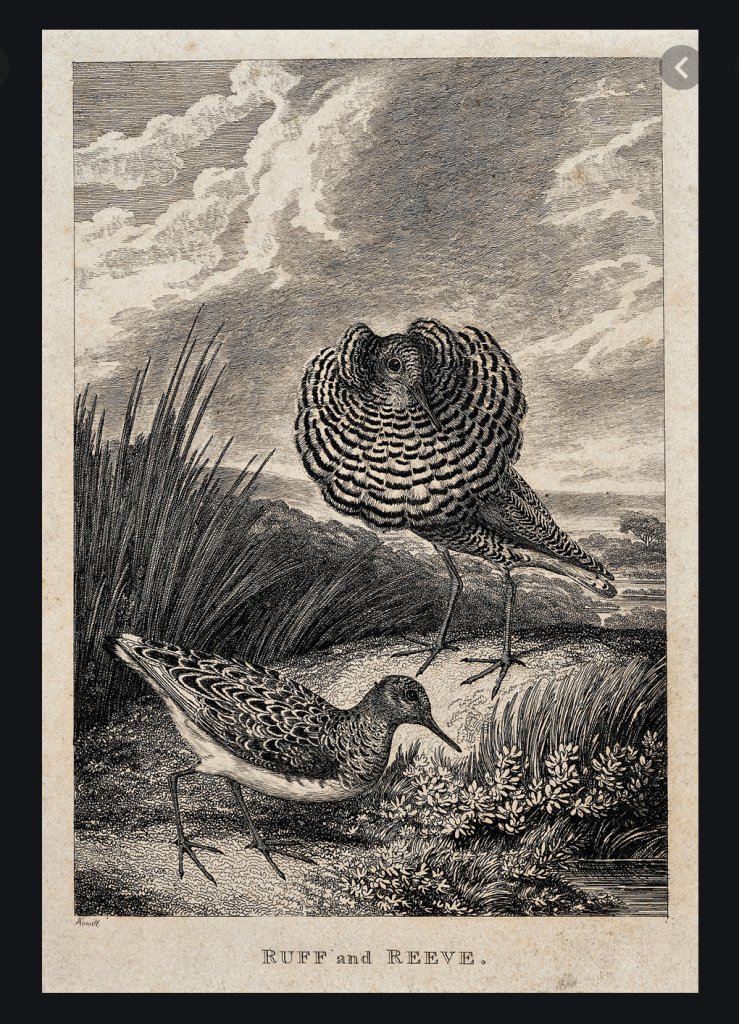
In some birds such as grouse, birds of paradise and the Ruff the males congregate in some hallowed spot and put on a display. Females visit and make their choice. The most beautiful or vigorous or otherwise appealing males get the vast majority of the copulations, most males miss out. Larks incidentally lark about in individual displays, strictly speaking they are not lekking species.

Fartlek shares some of the etymology and I hope that by introducing the topic this way I have caused a momentary image of male athletes gathered together farting loudly in order to entice female athletes to have sex with them. But no, fart is the Swedish for speed. Fartlek is speed play. It’s a form of training that introduces bursts of high intensity exercise into long slow distance sessions, an informal means of pushing the heart rate up without the regimentation of interval training.

My training objectives are to increase endurance and increase my average pace. It means that there has to be sessions when I take a bit more out of myself than is comfortable so the plan is

  • One long ride a week
  • One interval session
  • One or two rest days
  • Three or four other rides.

Riding on my own I tend to go into a meditative state and set my pace by perceived effort. I hammer away at a pace just short of my lactate threshold. a habit formed in the remote past. When riding with others the convoy moves at the speed of the slowest ship (or breaks up). Someone is getting less of a workout than they would really like. If that’s me I like to inject the occasional burst of speed, get the heart into at least the cardio zone and then slow down to let my training partner catch up. Fartlek.

Not every ride has to be flat out, indeed going too hard too often will lead to a lethargy that leaves you too tired to undertake the next planned ride or declining performance. Fartlek is a good way to break up the other rides into small periods of effort and longer periods of recovery. It provides an opportunity to take in the scenery and keep the activity fresh.

Set aside the fart for the moment lekking is fascinating behaviour and the most fascinating of all is the Ruff Calidris ( formerly Philomachus) pugnax. Lekking males develop a neck collar whilst the Reeves, the females even have a different name, remain their usual plain selves.

The video shows the boys showing off and occasionally fighting …

… but most fascinating of all are the game players, the satellite males. The females gather to watch the spectacle and among them are some males that do not don their finery and join the competition. They simply take advantage of the odd excited female. Whilst the hottest Ruffs get to father the most offspring the sneaky copulaters also get to pass on their genes sufficiently often to account for a percentage of satellite males in the subsequent generation.