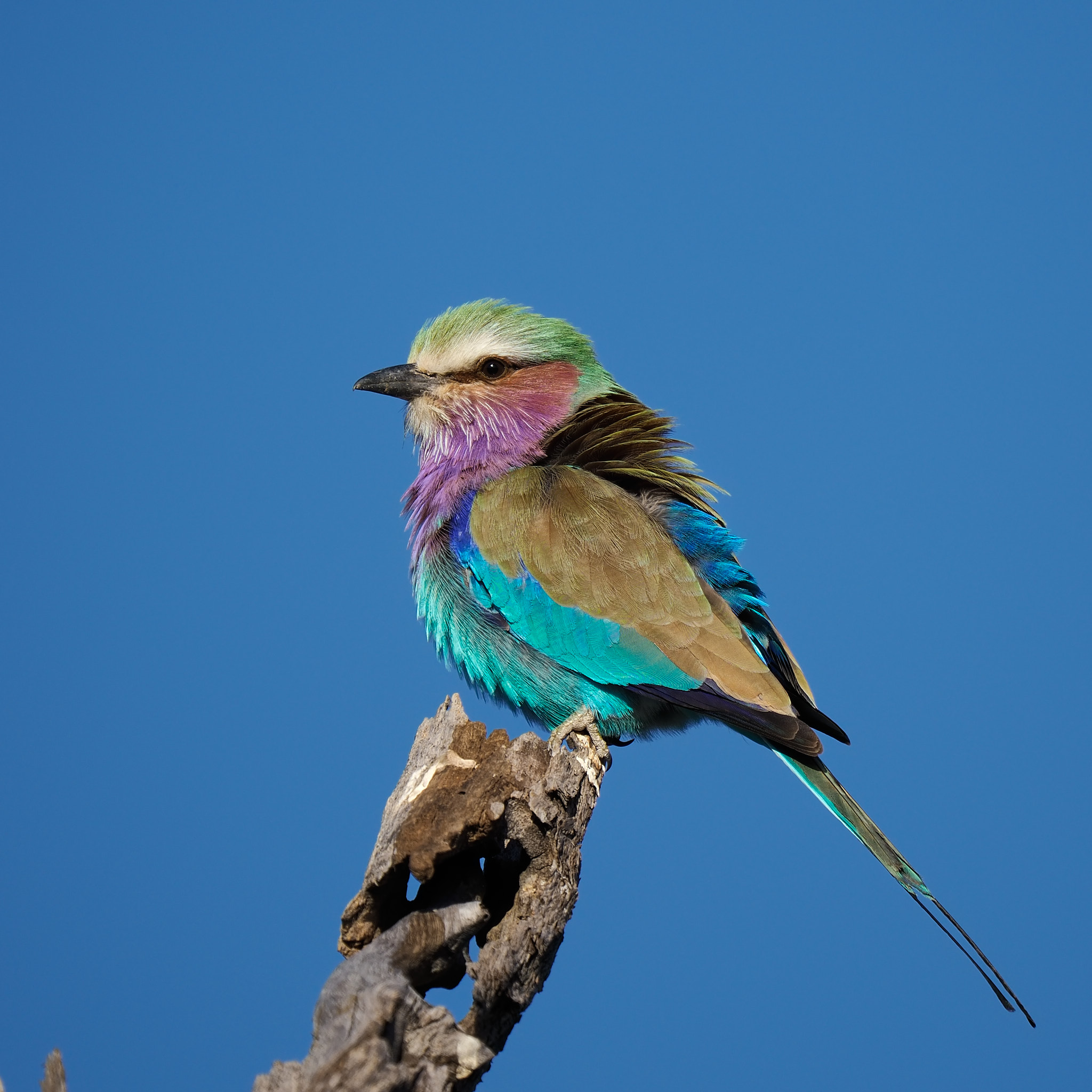
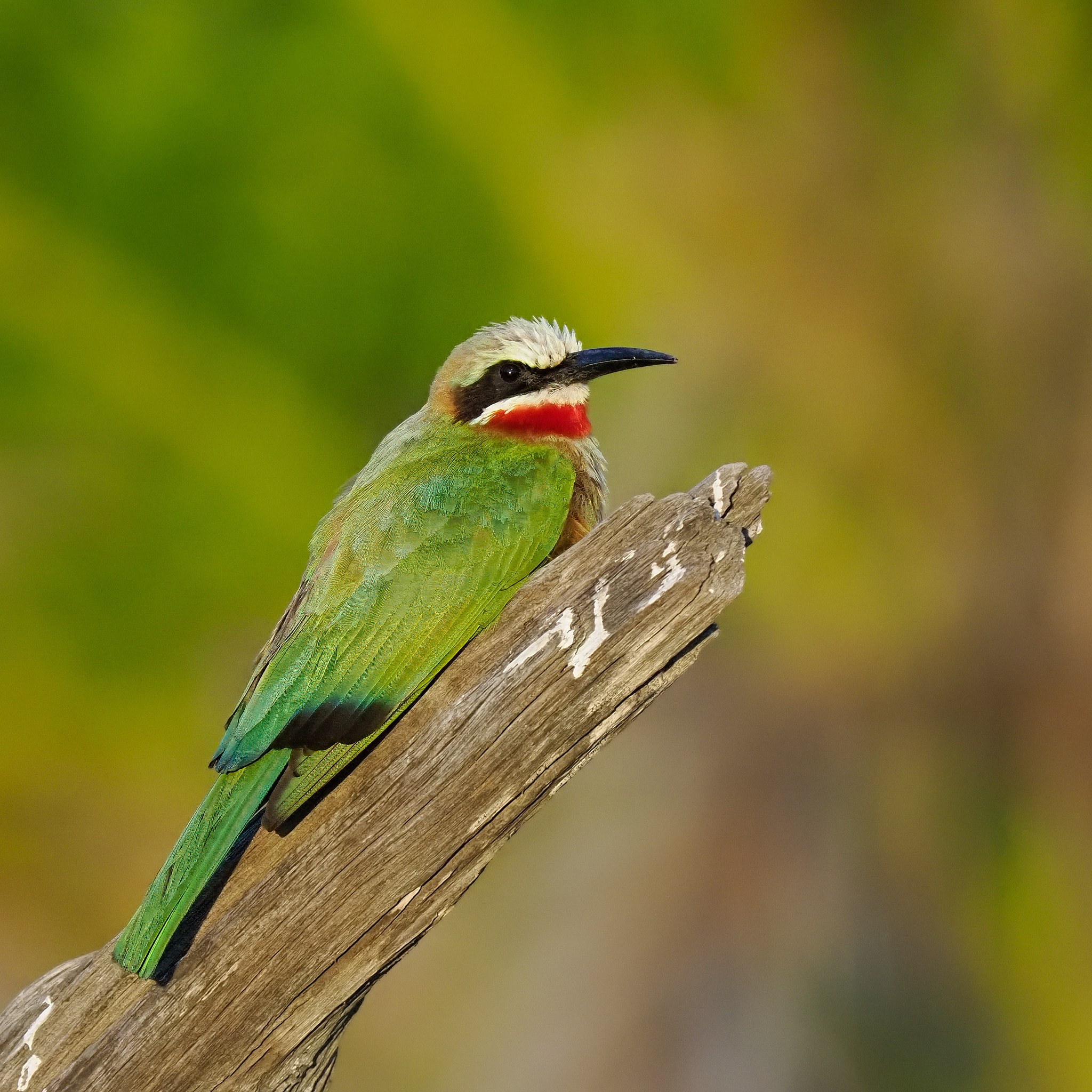
Another bloody Roller …
and pray that there's intelligent life somewhere out in space
Another bloody Roller …
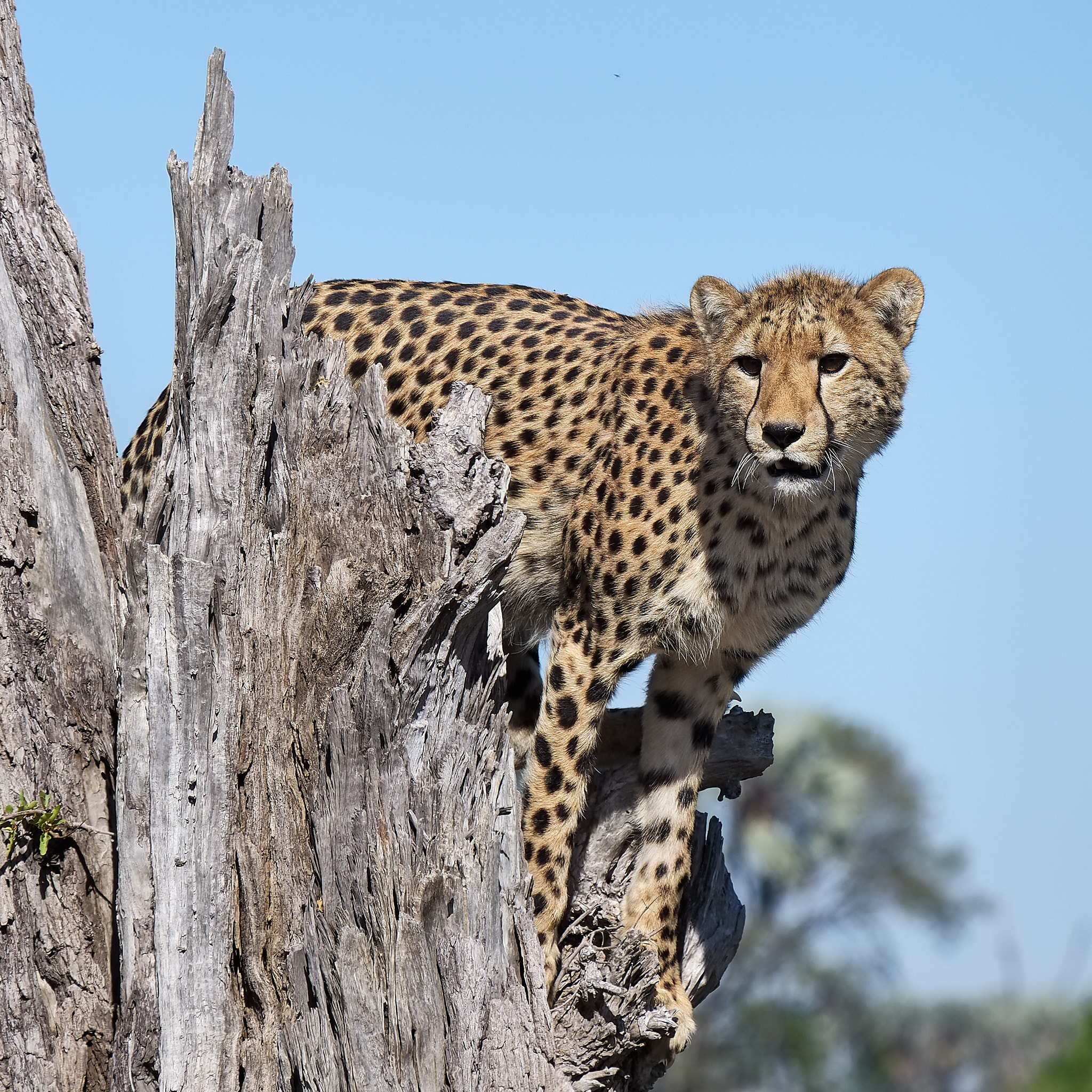
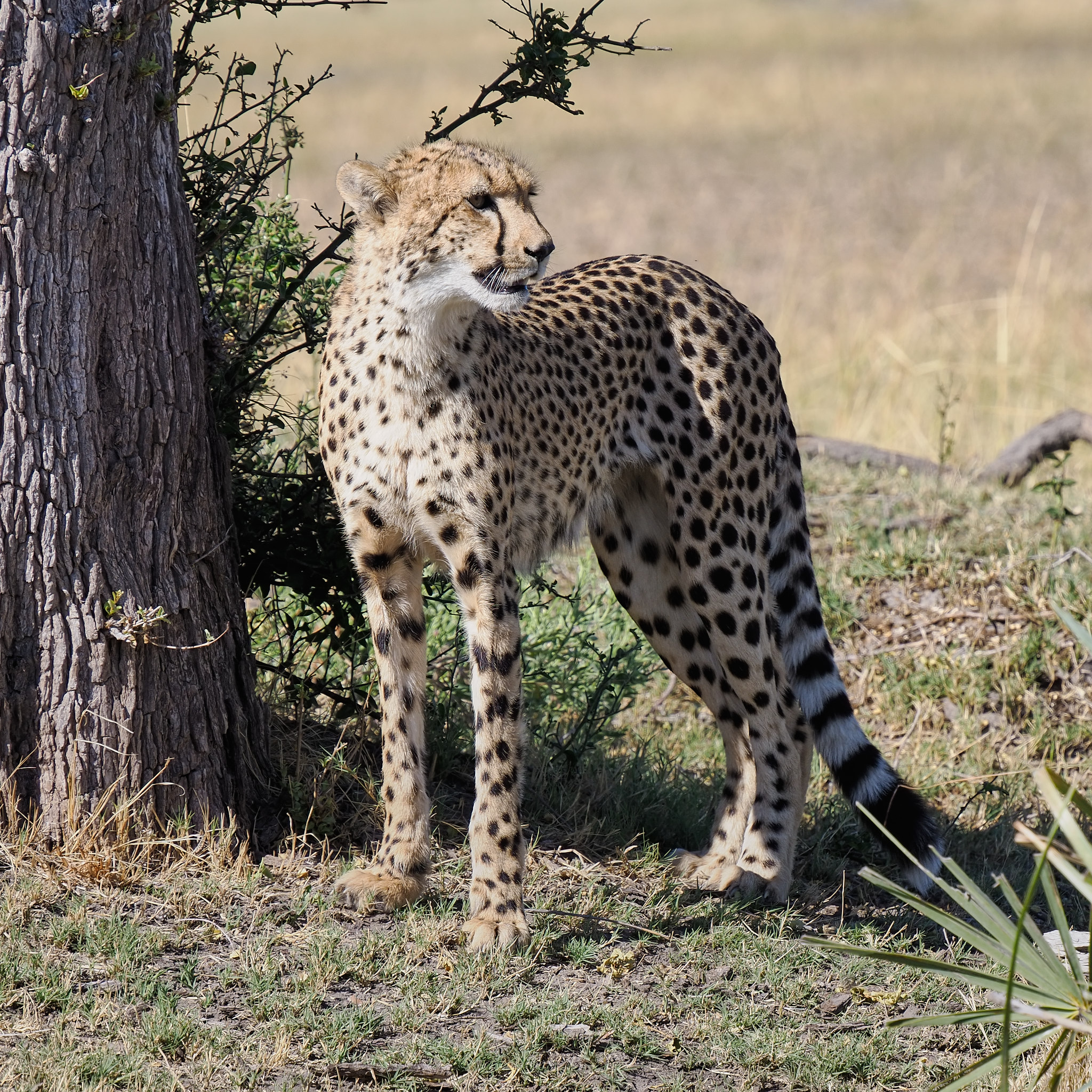
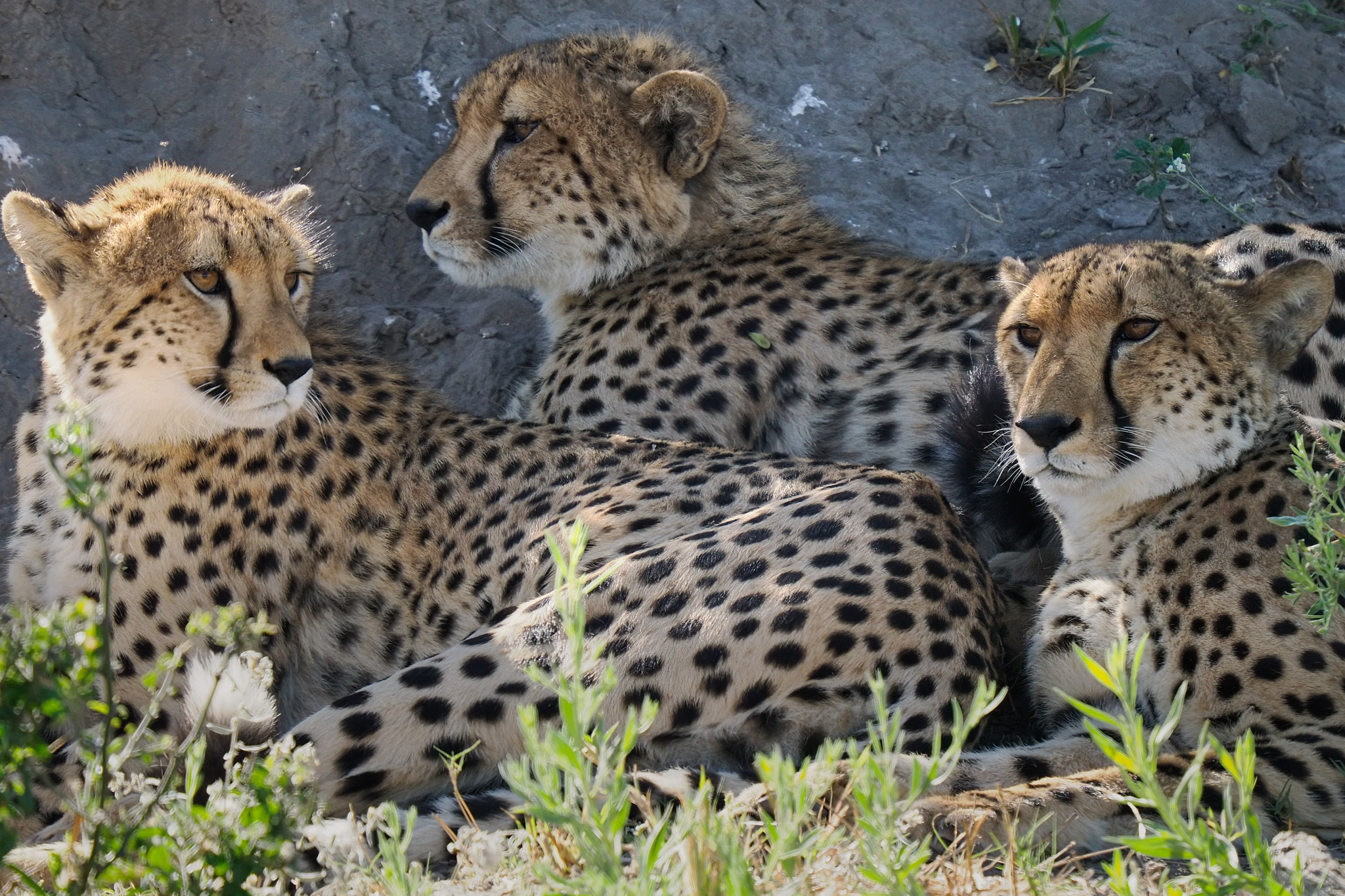
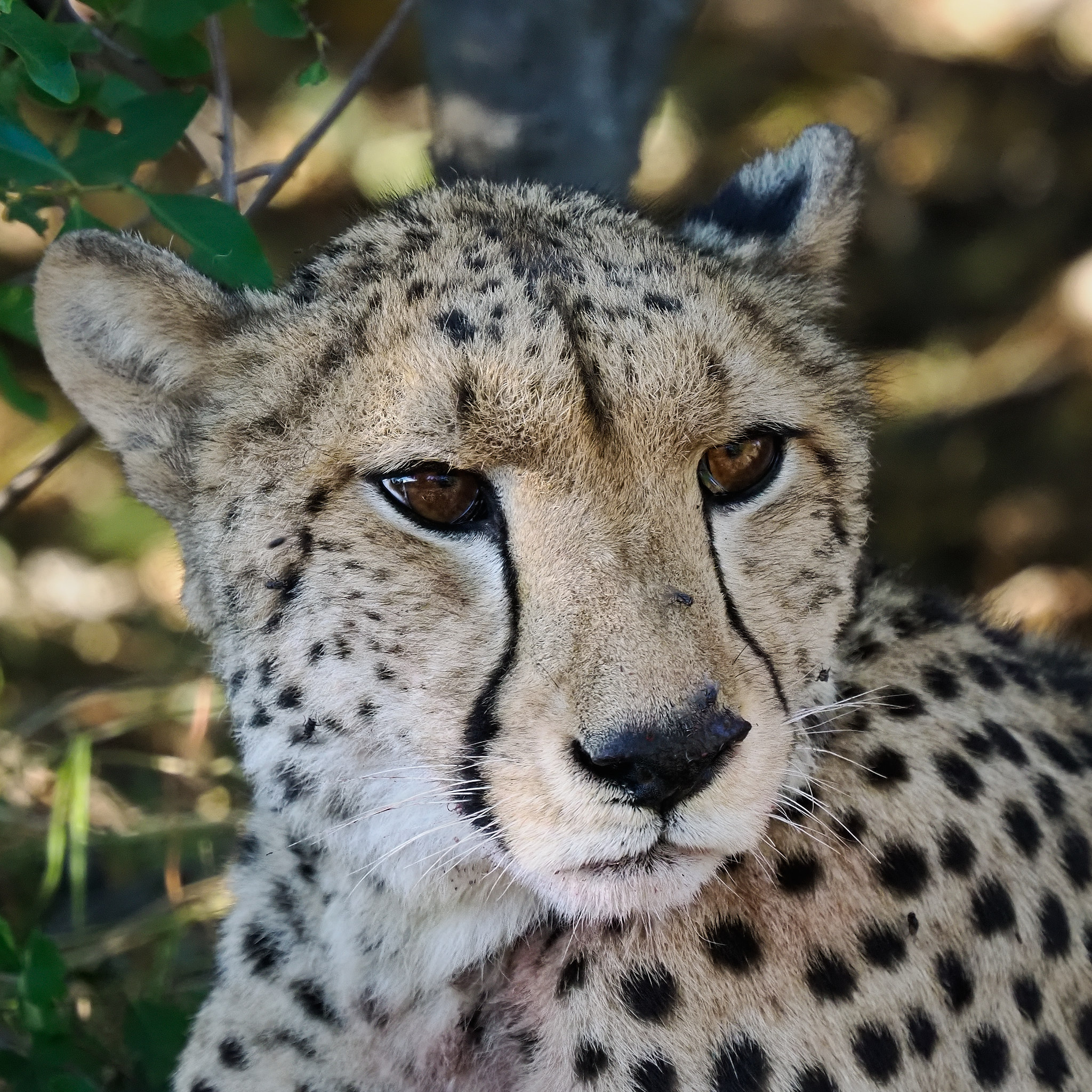
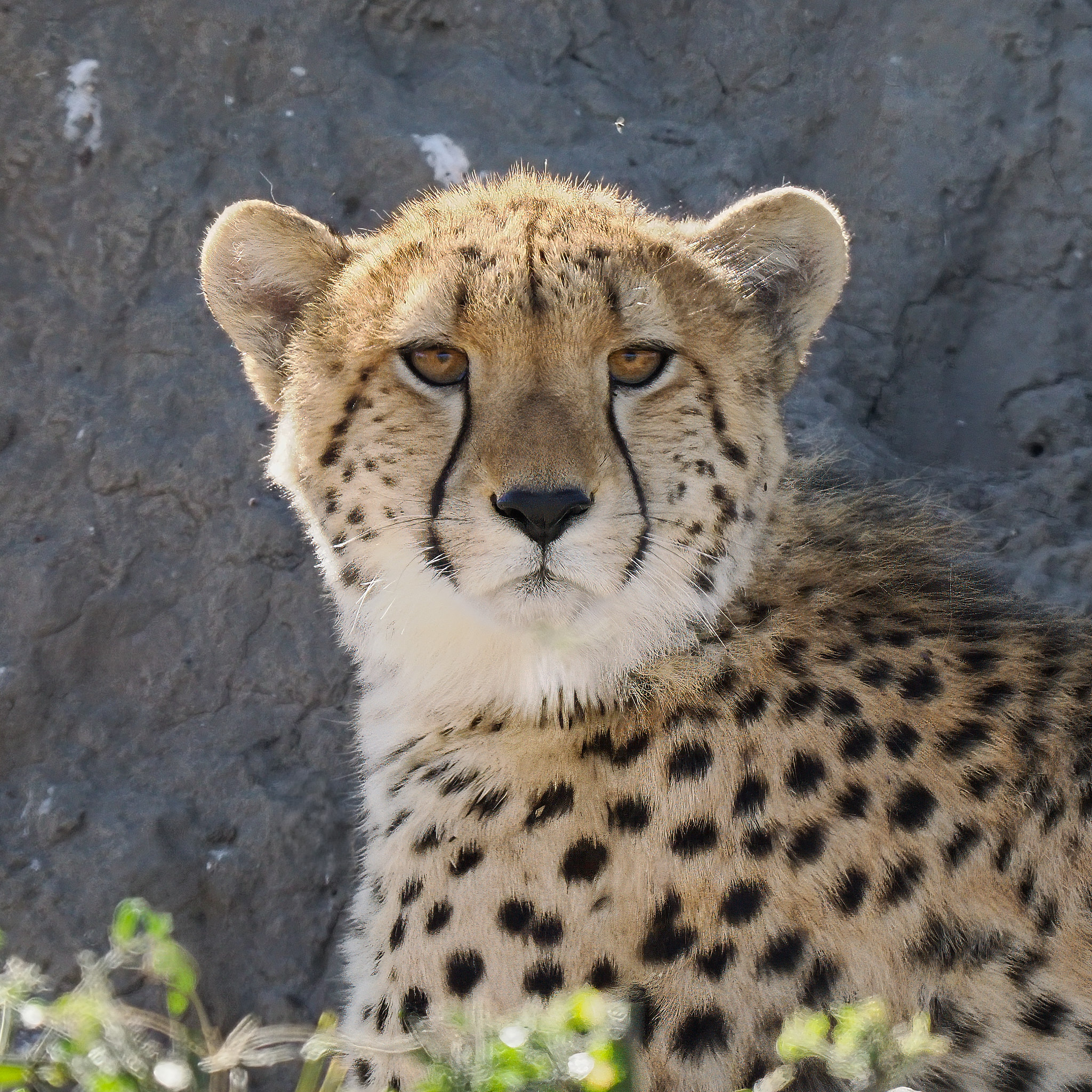
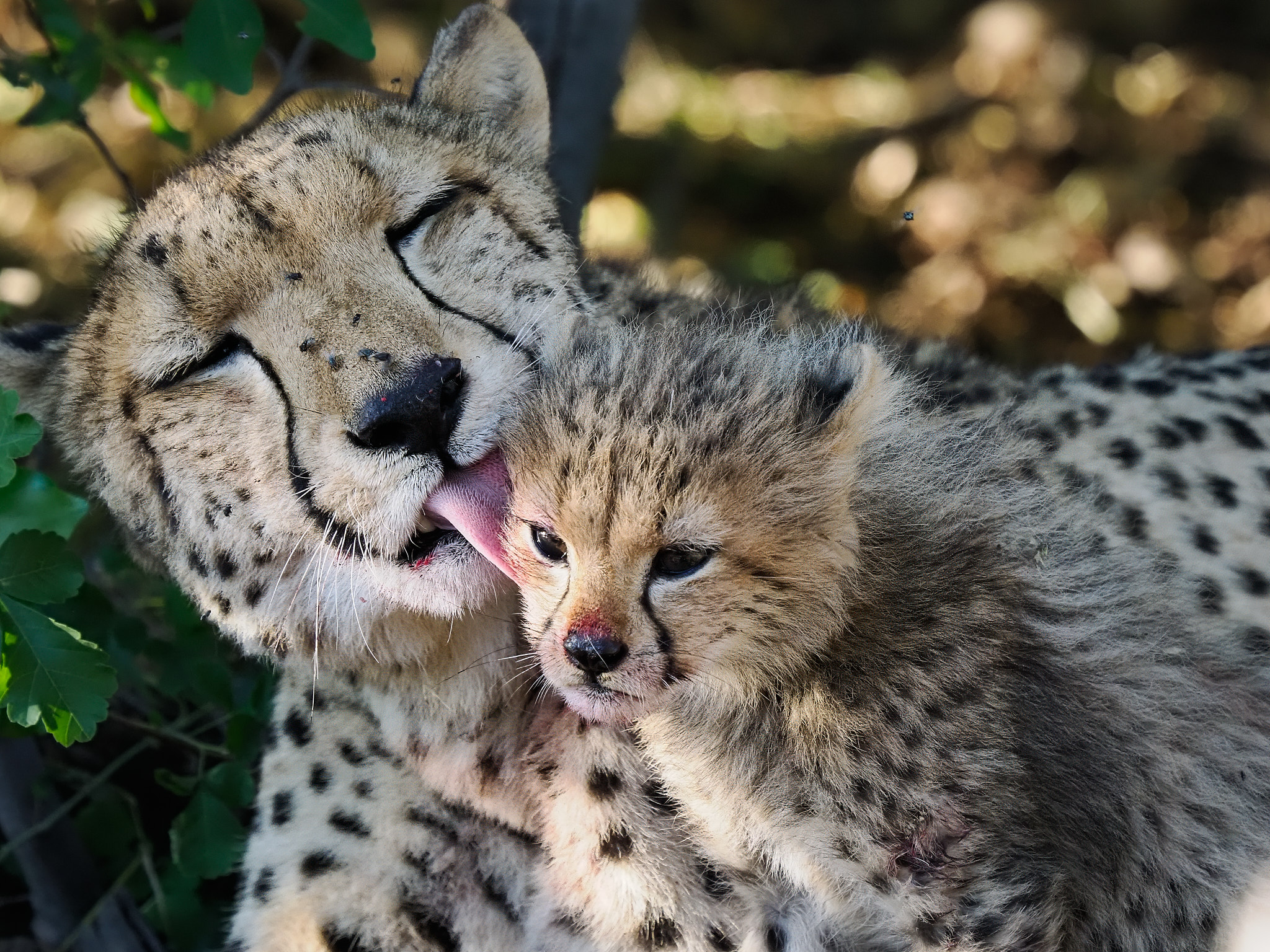
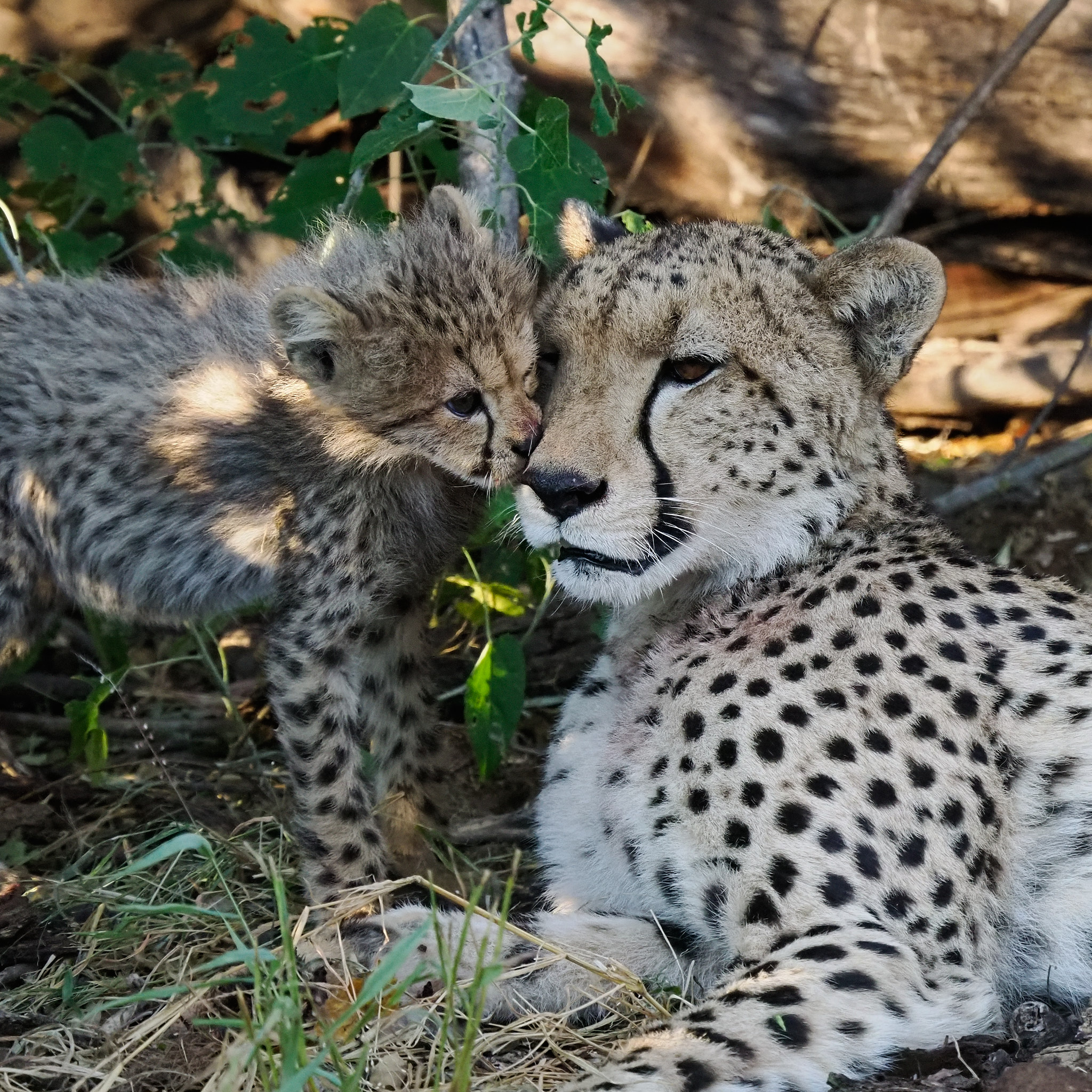
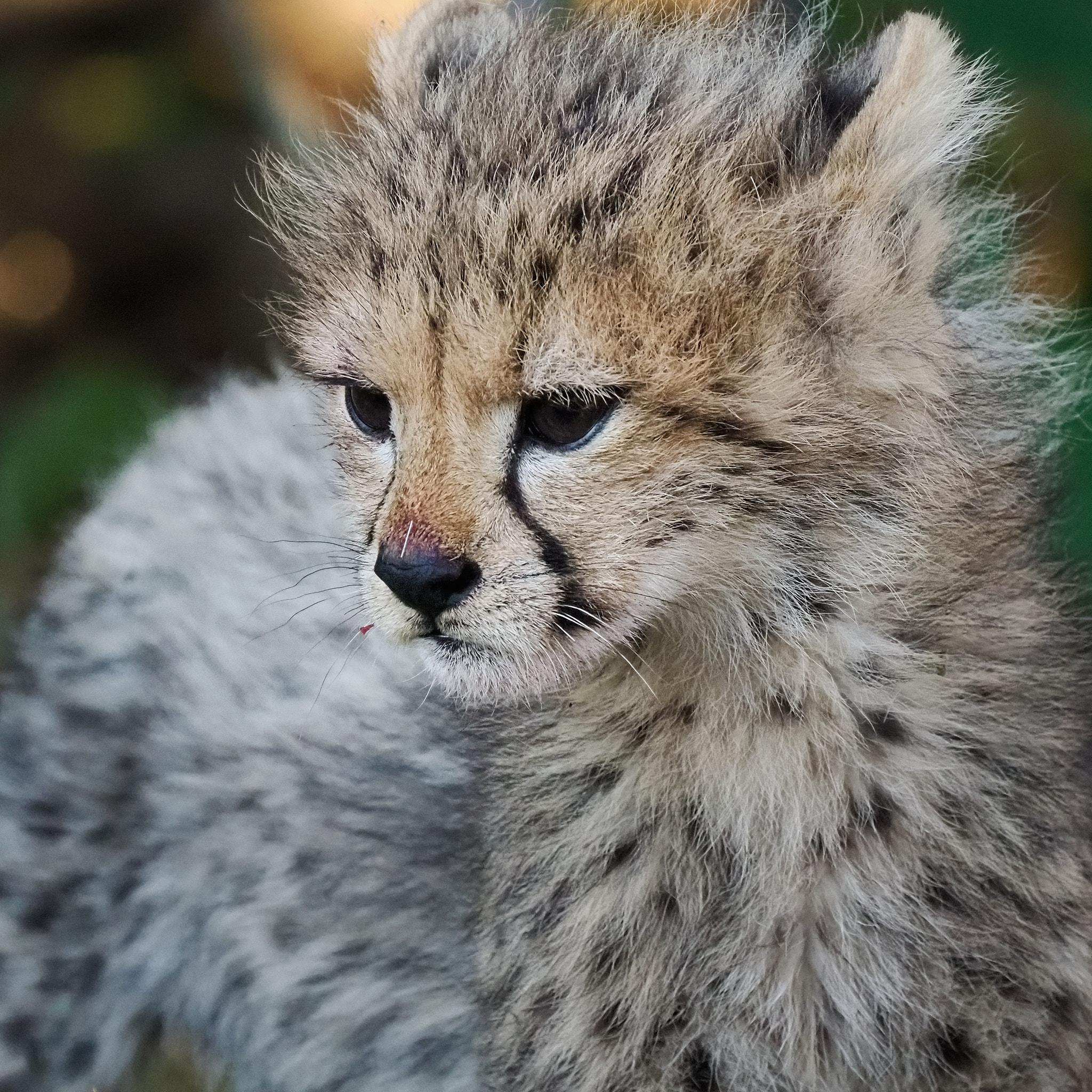
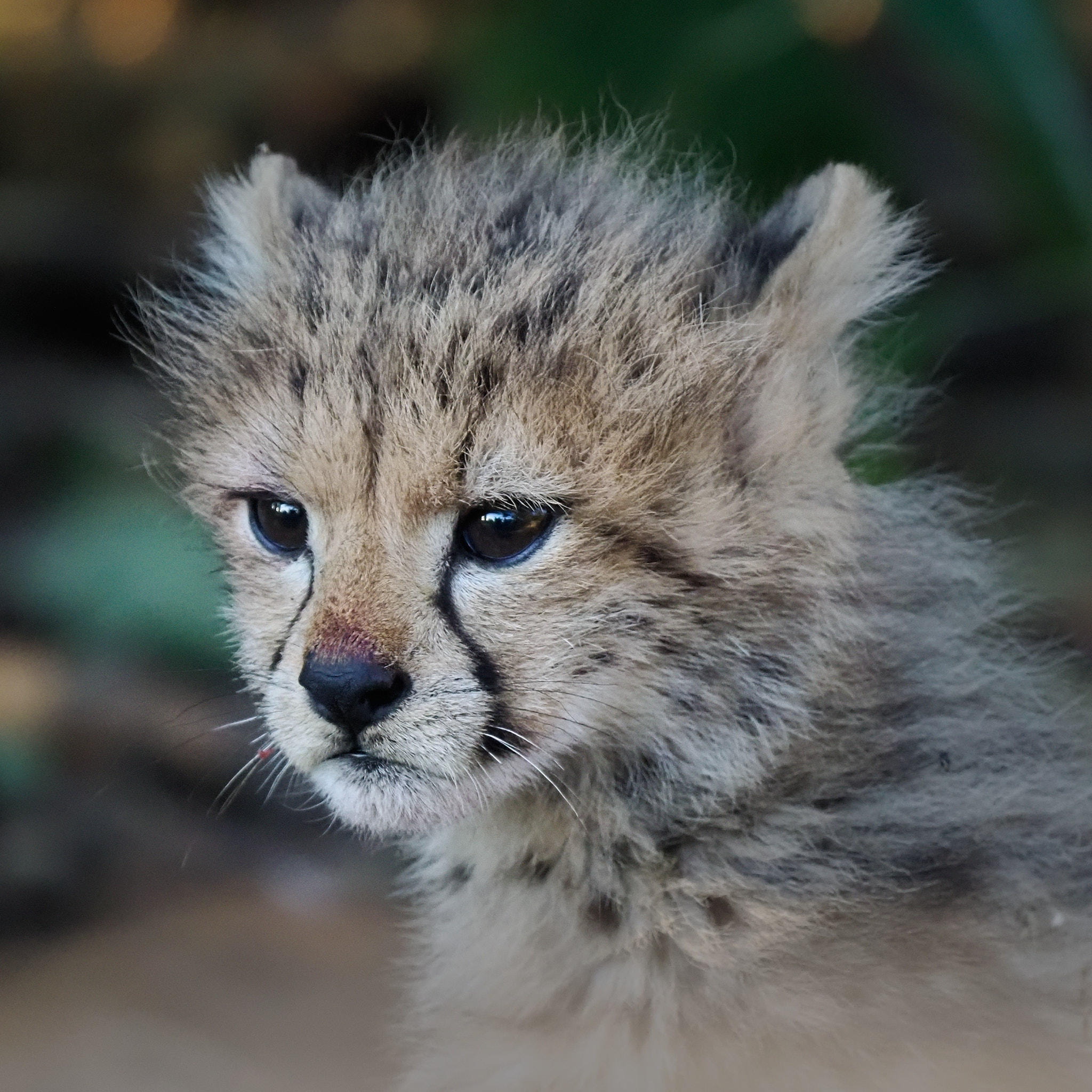
Nought to 70 in two and a half seconds, a top speed of 100 kph plus, 7 meters per stride. Impact. Choke hold. Suffocation. Consumption. No time wasted. The chase occurs over a maximum of about 200 meters and has a success rate of about 50%. The Cheetah is the obvious choice as the falconer’s cat and has been tamed and used for hunting for perhaps 5000 years, probably in ancient Sumer, certainly in early Egypt.
Today the Cheetah, Acinonyx jubatus, is confined to Africa plus a small isolated population in Iran. It was once far more widely distributed disappearing from North America at the end of the last ice age. Then dwindling in Asia in the last few centuries. There appears to have been a couple of population bottlenecks along the way indicated by a very high level of homozygosity.
Males tend to live territorial lives in small coalitions usually of brothers. Females roam more widely on their own or with their youngsters. Males and females come together only to mate.
Hunting usually takes place in the morning or evening. Loss of their kill to other predators is common. They usually eat immediately, don’t return to a carcass and don’t scavenge.
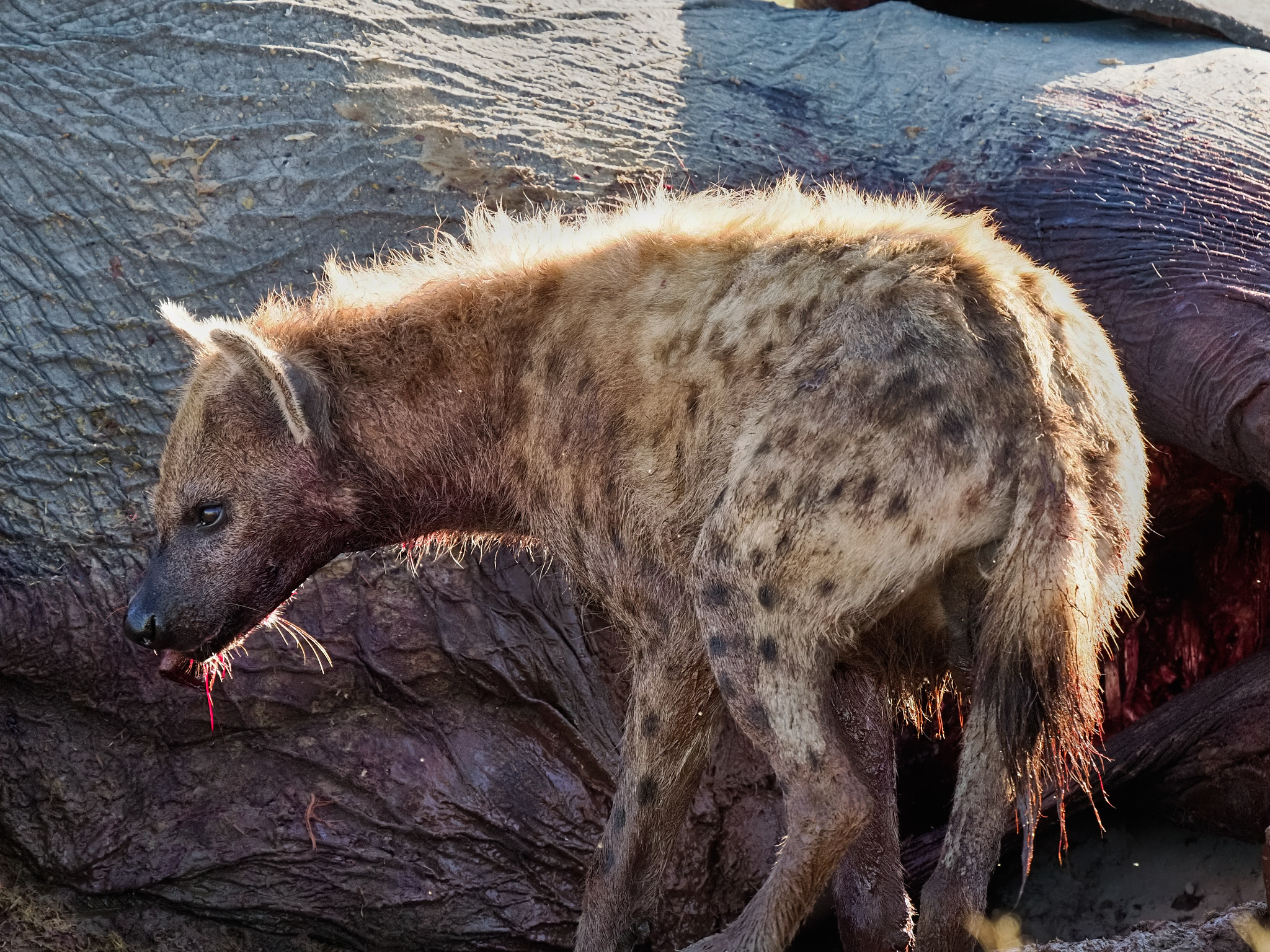
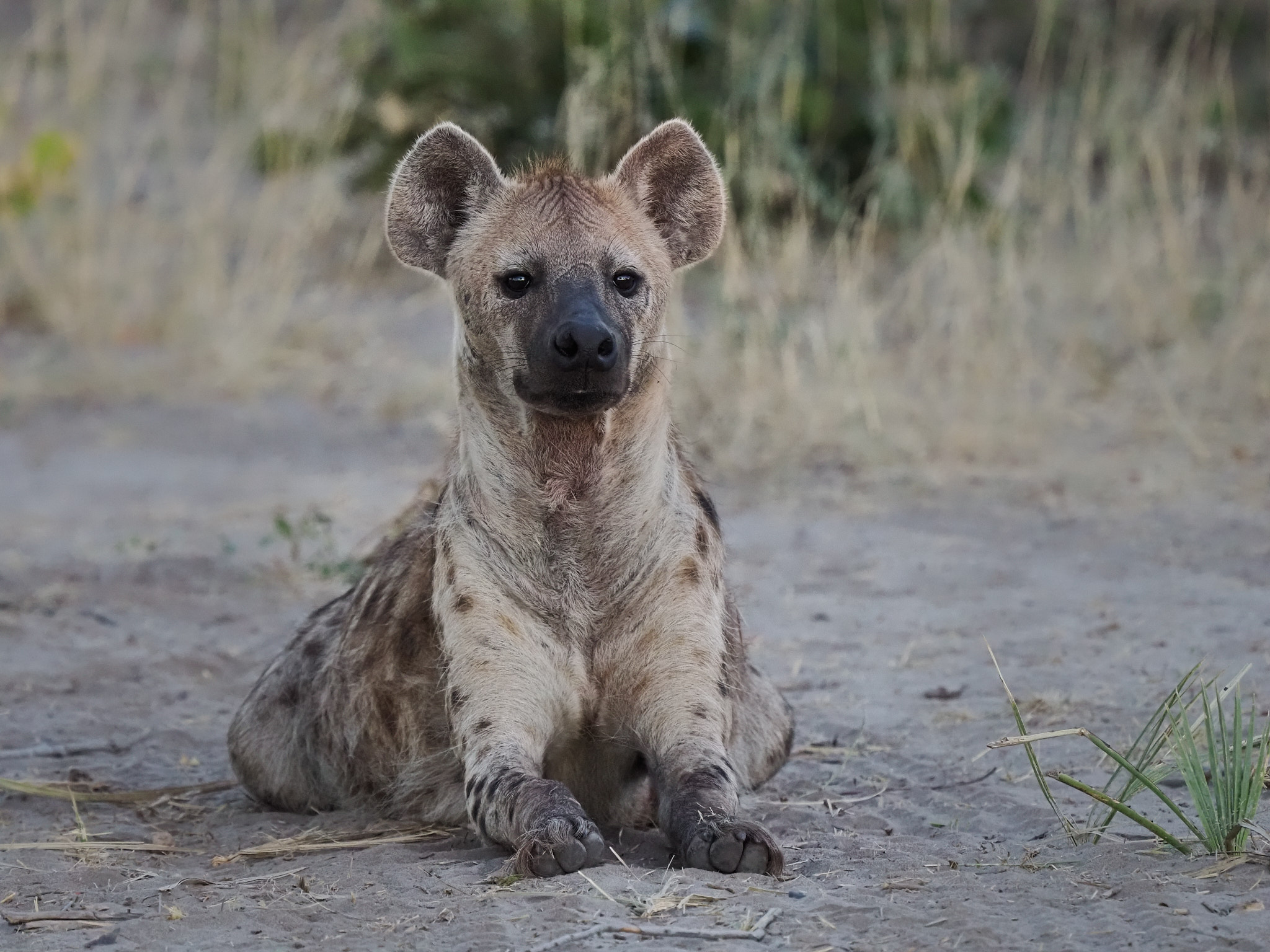
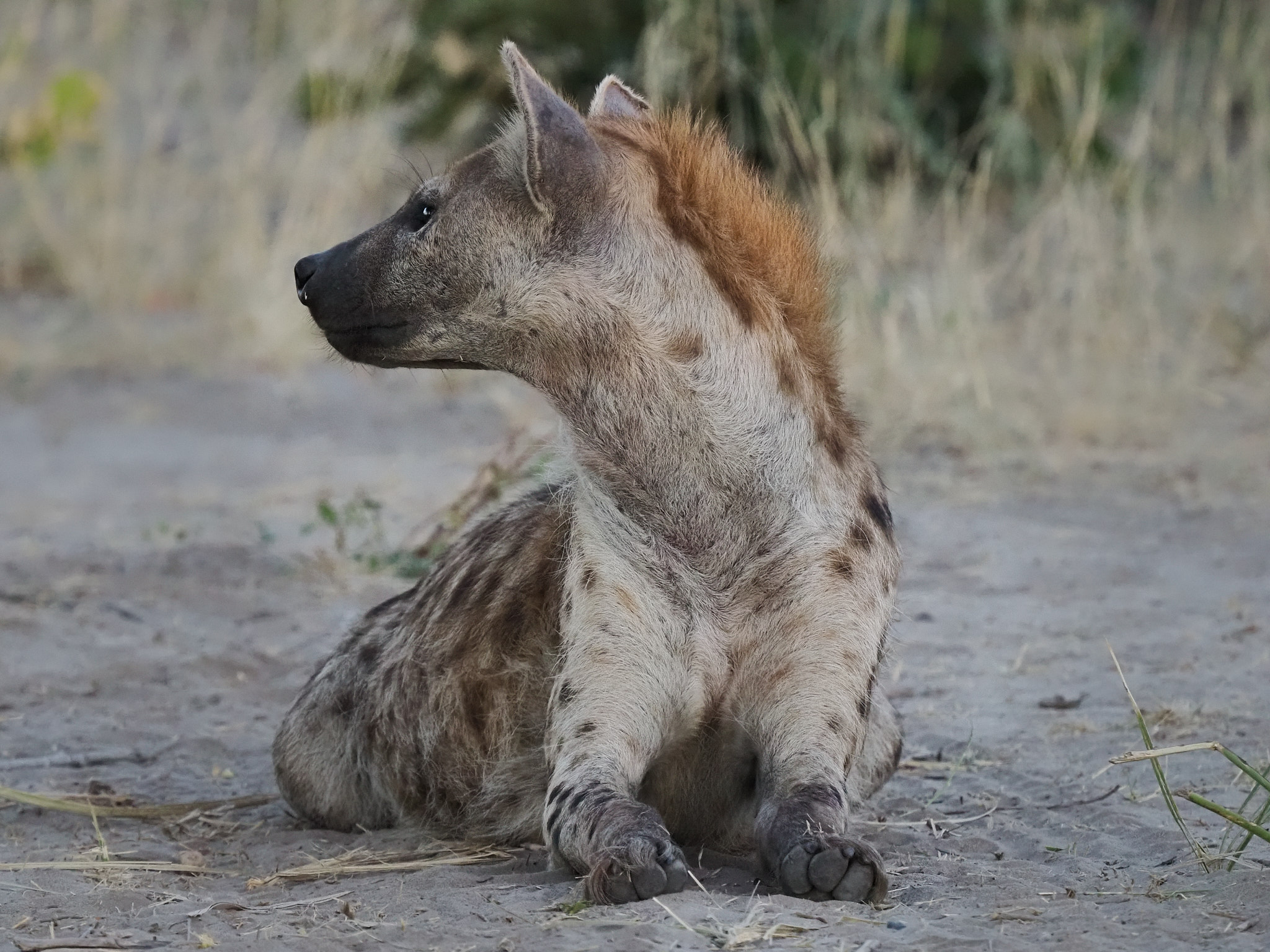
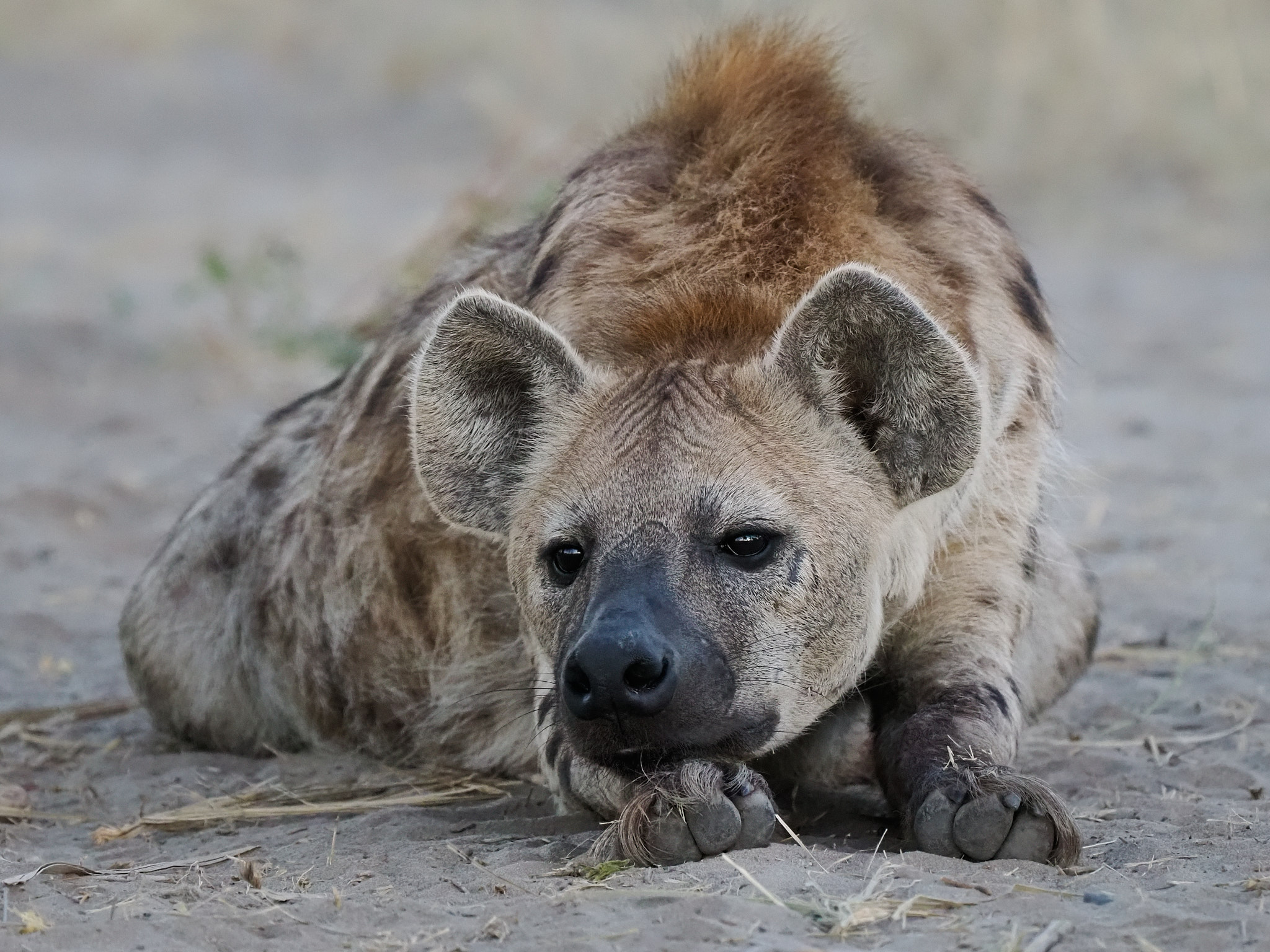
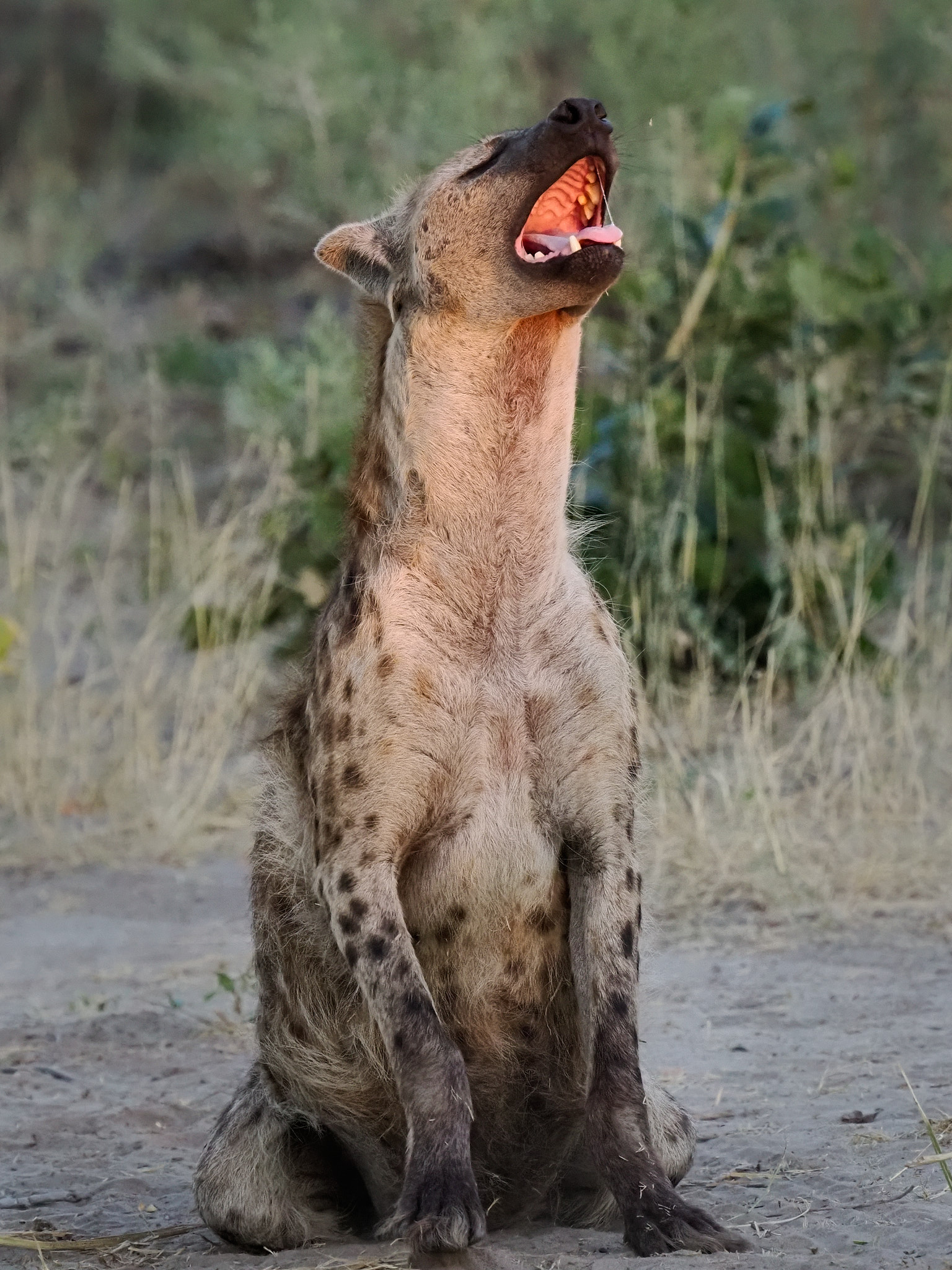
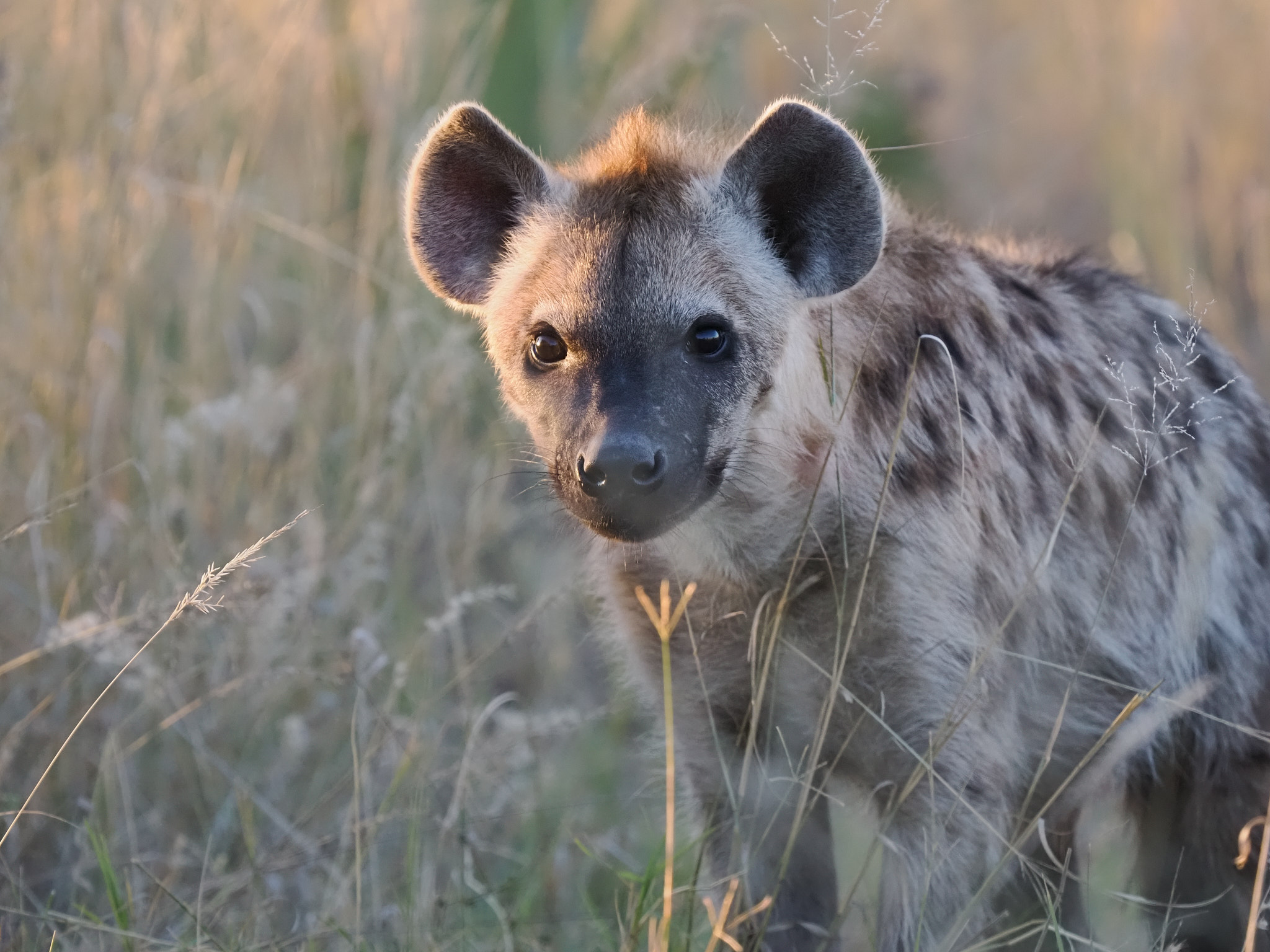
Bold, beautiful, smart and really really weird. Very capable hunters, social, ferocious and, did I mention, really really weird. Crocuta crocuta, the Spotted Hyena. For a very interesting account of just how weird go <HERE>.
But briefly, the girls are bigger and stronger and have bigger dicks than the boys. The alpha female rules the clan. Their genitalia mimic the male genitalia so well that to be sure you need to squeeze the scrotum (presumably the boys then burst into tears).
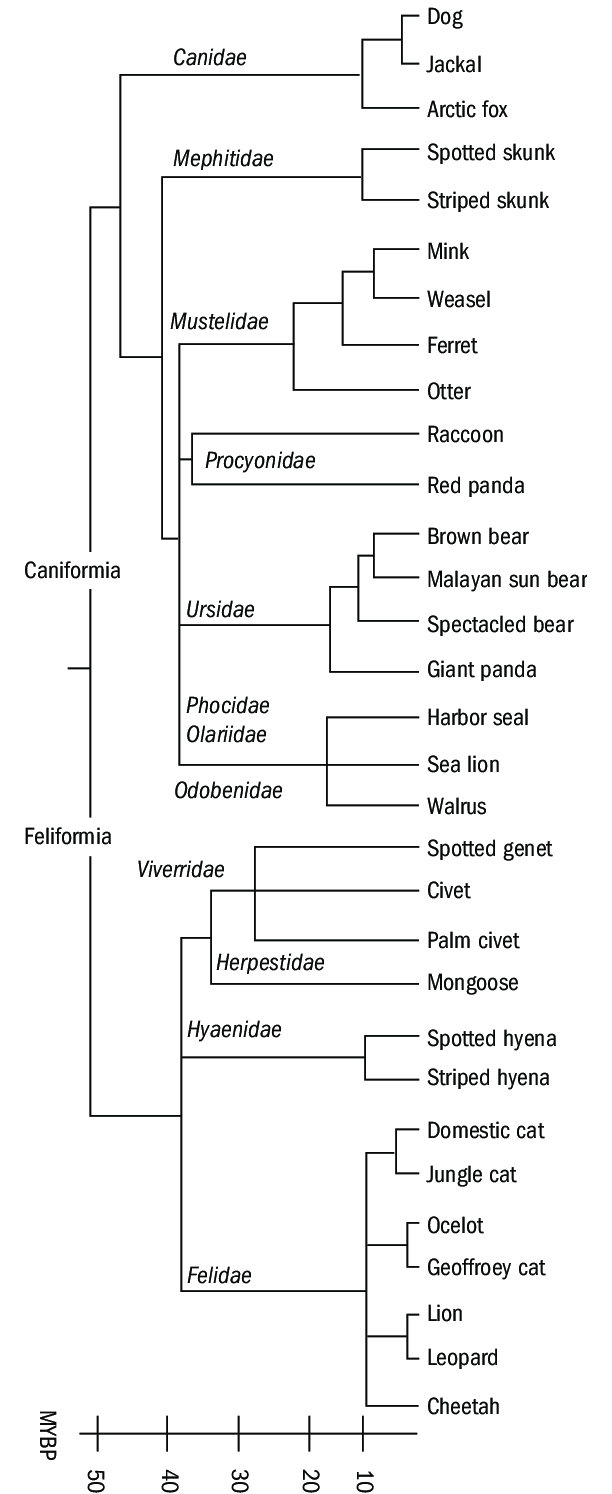
It looks like a dog, hunts like a dog, and very successfully too, taking down Zebra and Buffalo and killing far more than scavenging. But the last time it shared a common ancestor with the dogs was 50 million years ago when the feliforms and the caniforms went their separate ways.
Lilac-breasted Roller.

Just kidding about the wildflowers. Although my camera was easily distracted my focus was on carnivora.
God tossed a meteor at the dinosaurs about 64 million years ago clearing the way for the mammals. The carnivora emerged in the next 10 million years or so and soon diverged into two main groups, the feliformia and the caniformia. A few more mutations later and we had the house cat and a state on the west coast of America.
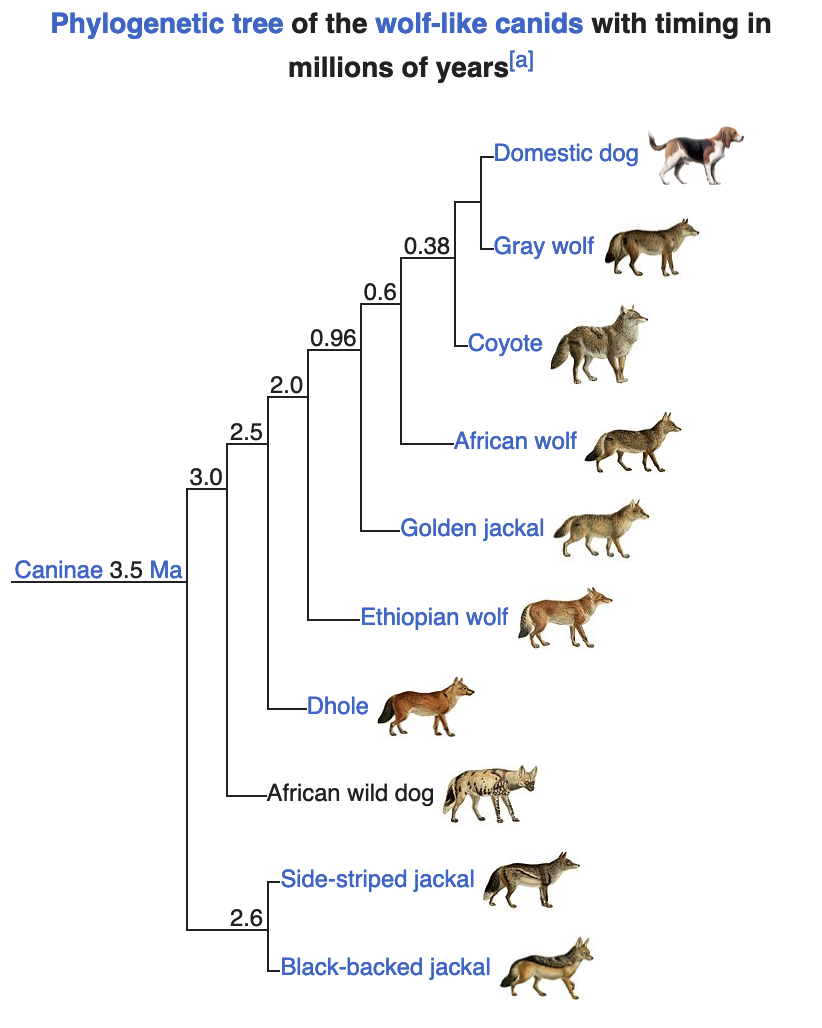
Actually we can be a bit more precise than that. A recurring question on the expedition was which group belongs where. I have appended a diagram showing the broad outline of relationships to the bottom of this post. Hopefully whoever holds the copyright won’t notice.
Meanwhile, dogs.
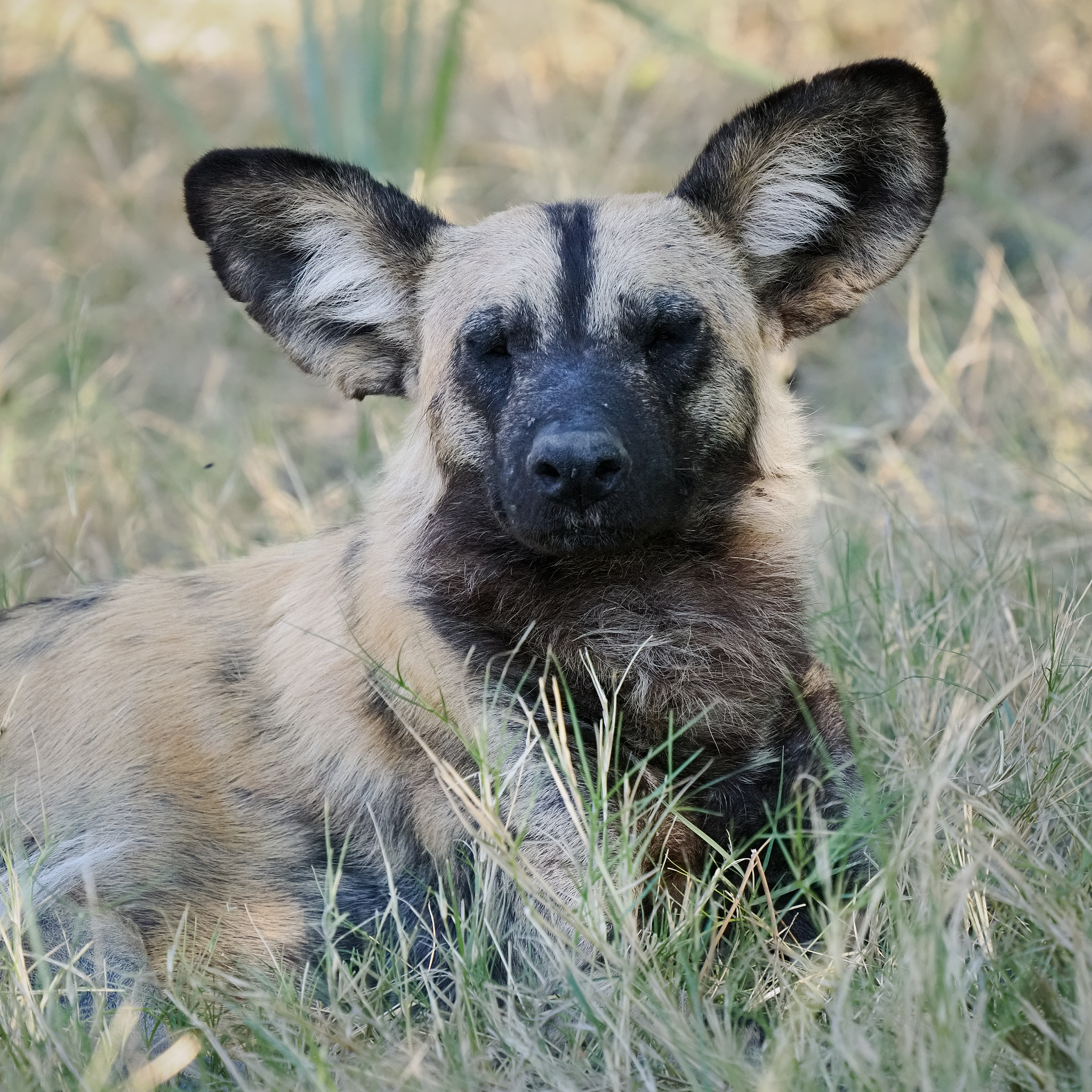
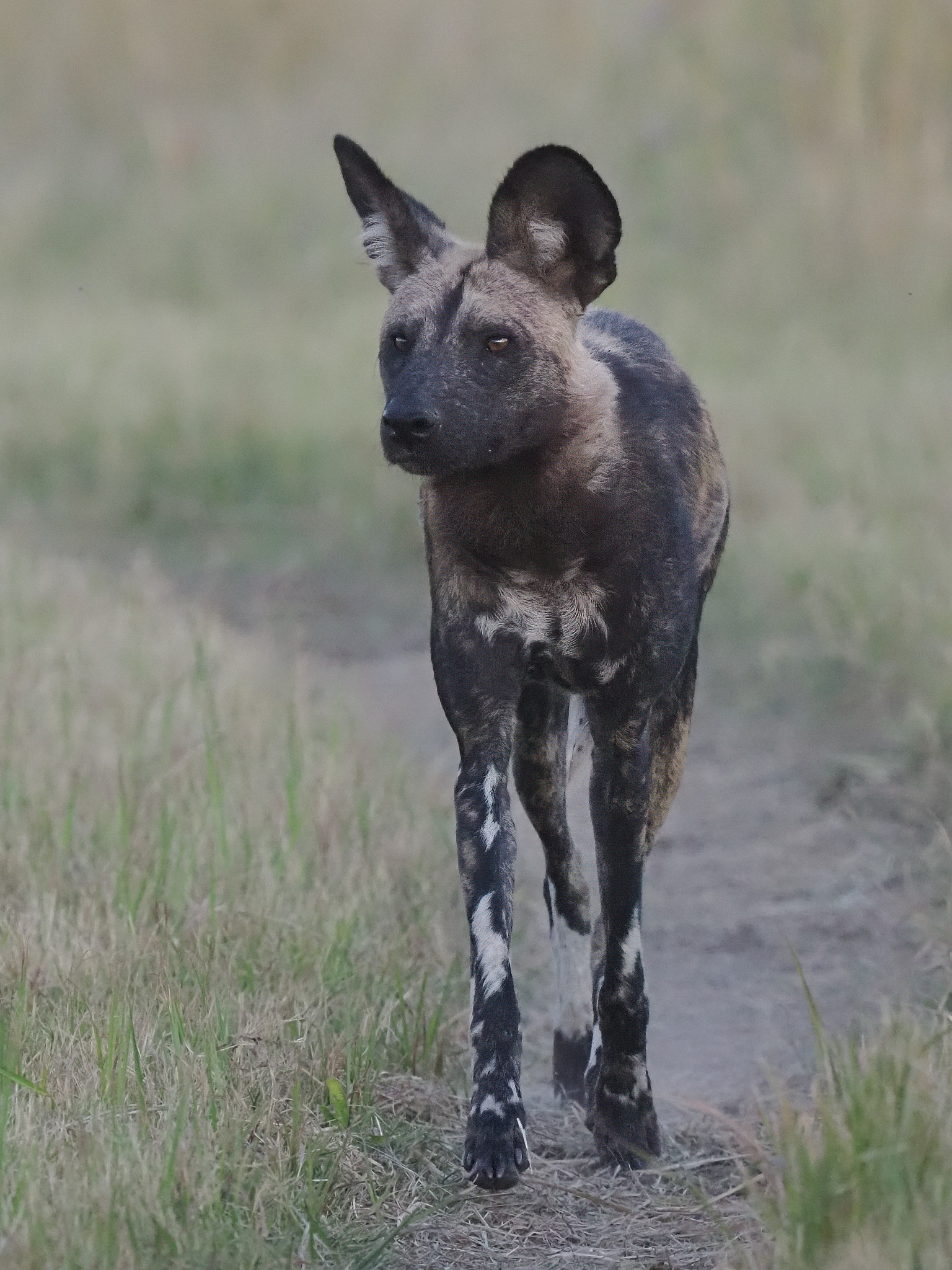
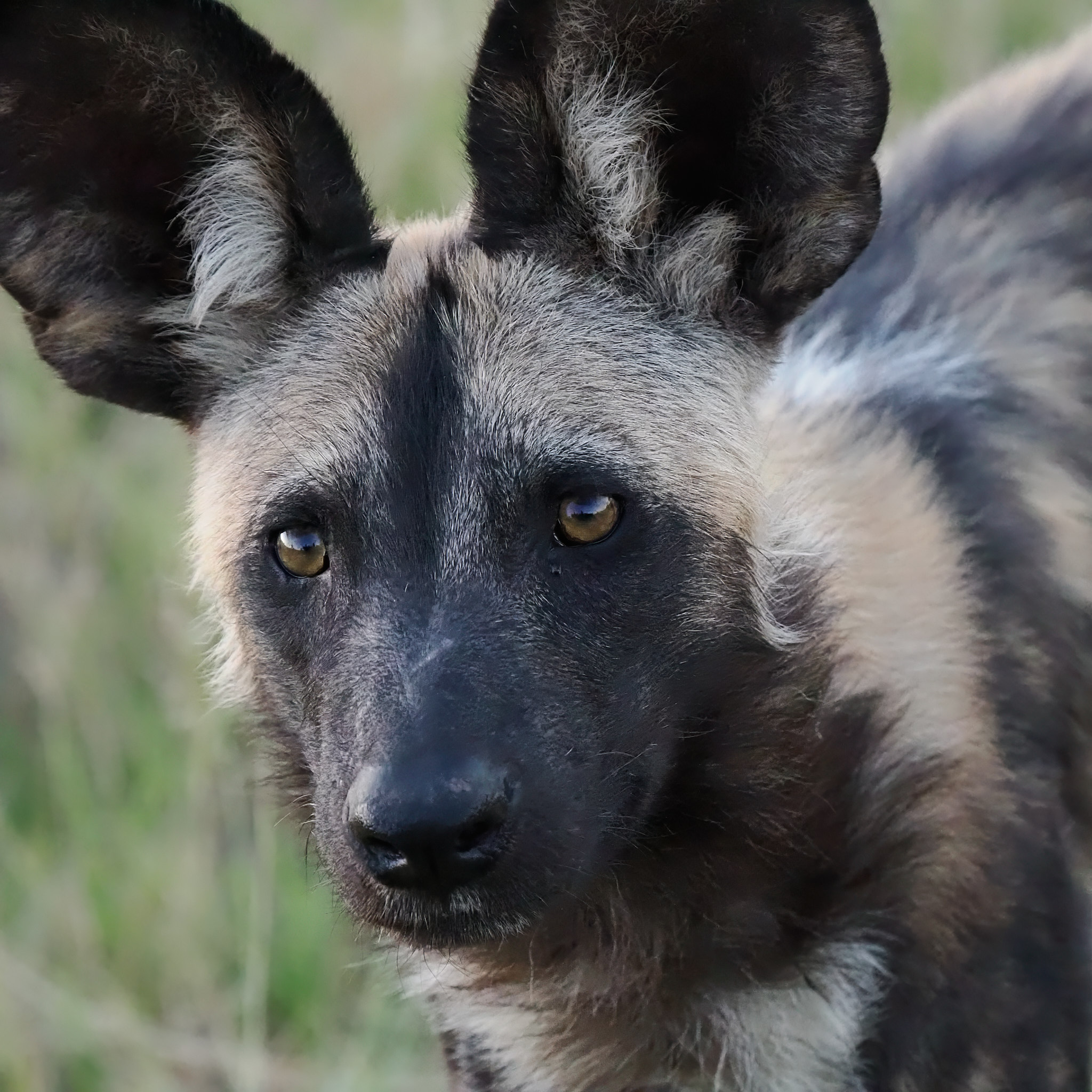
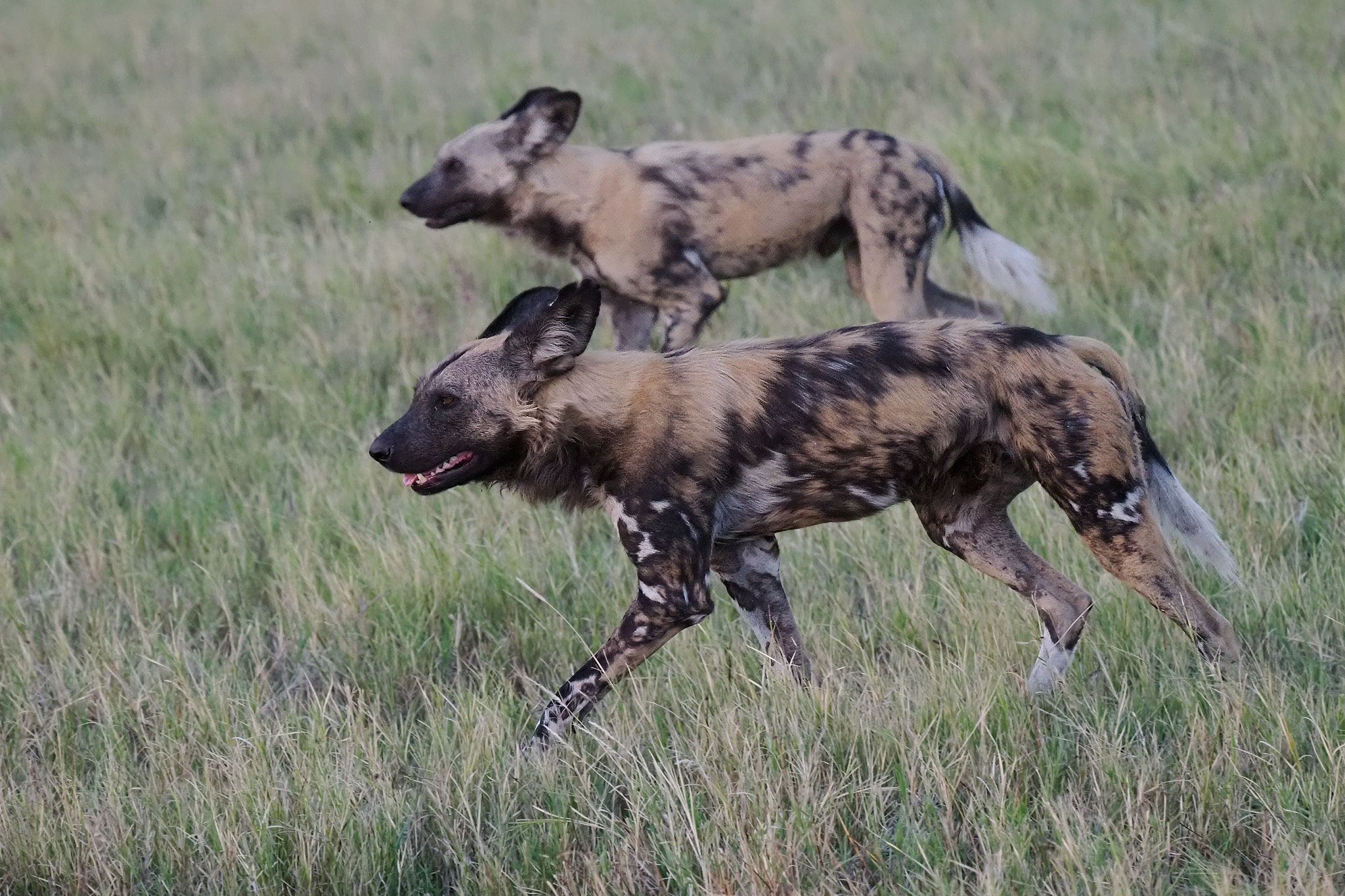
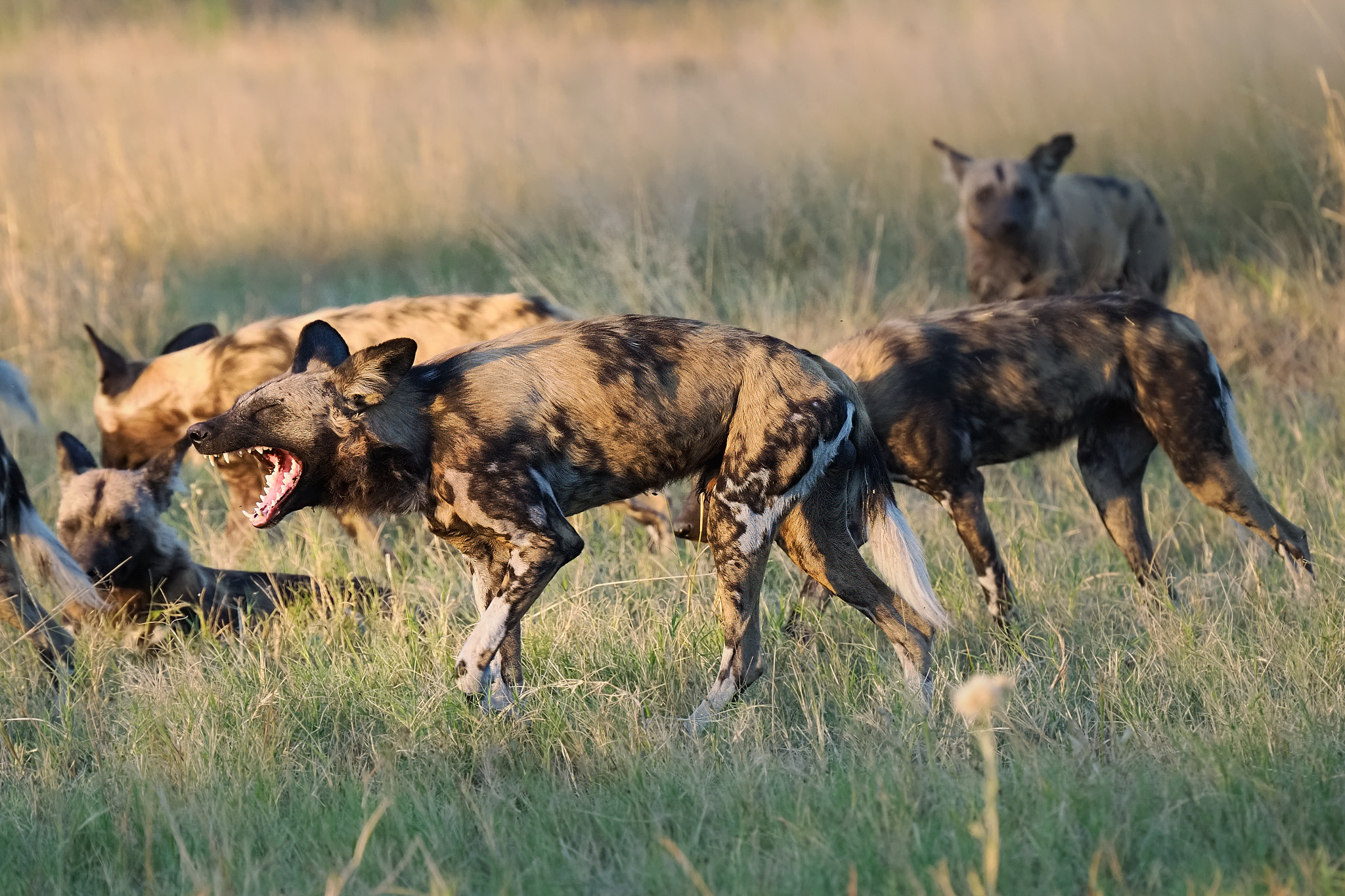
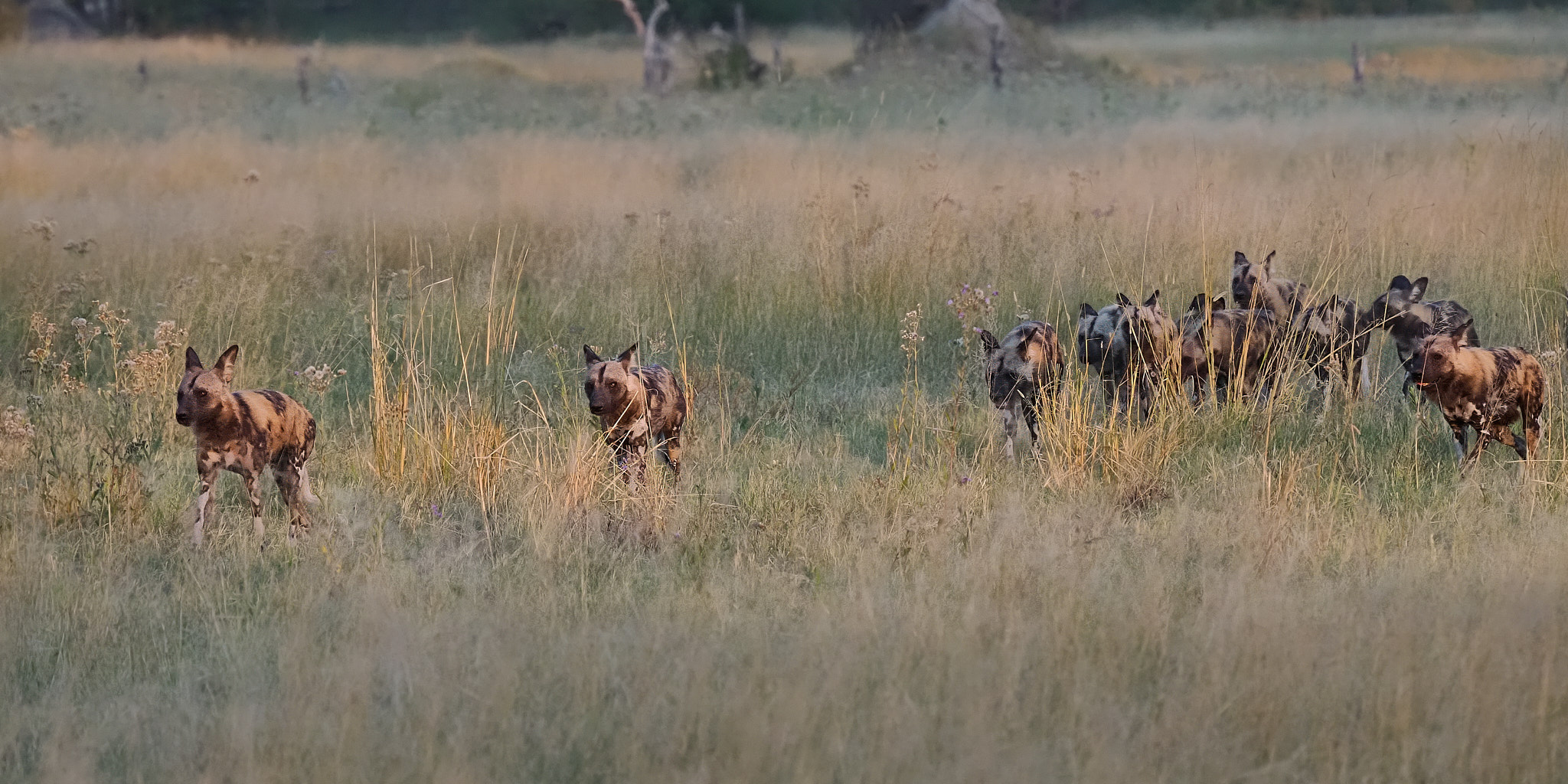
Lycaon pictus from the Greek meaning Wolf-like and Latin painted. Some conservation minded groups prefer the name Painted Dog to the traditional Wild Dog. Gives it a better spin. The local people often nominate it as their favorite animal. It’s social, shares food, hunts cooperatively and very successfully relying on stamina and persistence rather than speed and power. So a lot of characteristics that we admire in people.
Now, as promised, an overview of the carnivora.
Relationship of carnivores based on DNA hybridization data (Wayne et al. 1989). Family and suborder groupings are indicated. Time scale in millions of year before present (MYBP) is based on comparisons of DNA sequence divergence to first appearance times in the fossil record.
Our Pete Oxford Expedition rolled on like a well-oiled machine. We were eight guests, six unusually pleasant Americans, two unusually sober Aussies, shepherded by the inimitable Pete and Renee. Although Pete occasionally compared the task to herding octopus it all worked well. Journeys between camps were by Cessna Caravan. Very civilised.

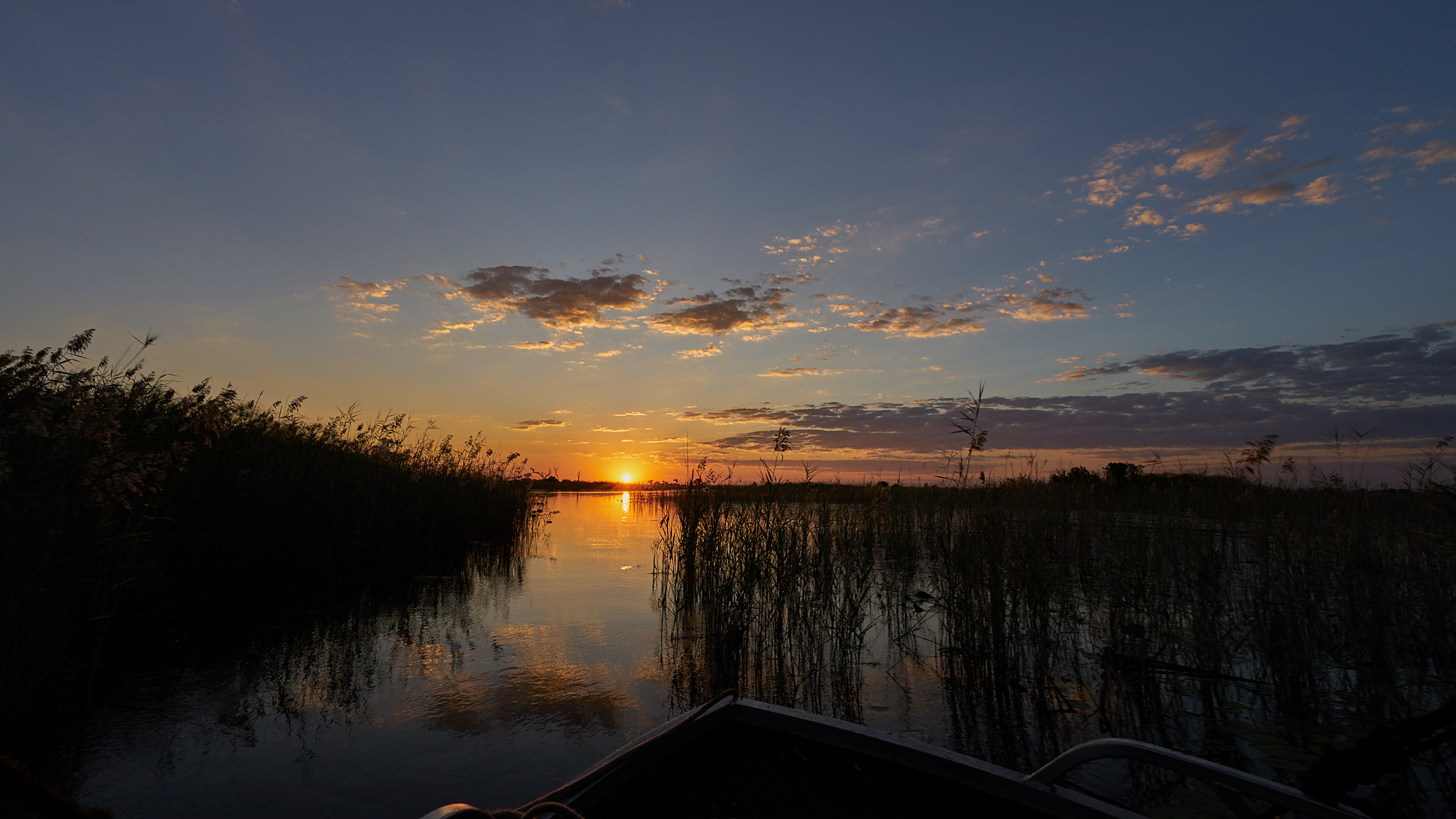
Which brought us to our second camp – Little Vumbura. This is a water camp. Water is life. Life is precious. Never more so than when you’re in a small boat in the company of Africa’s deadliest vegetarians. Not to mention the crocodiles.

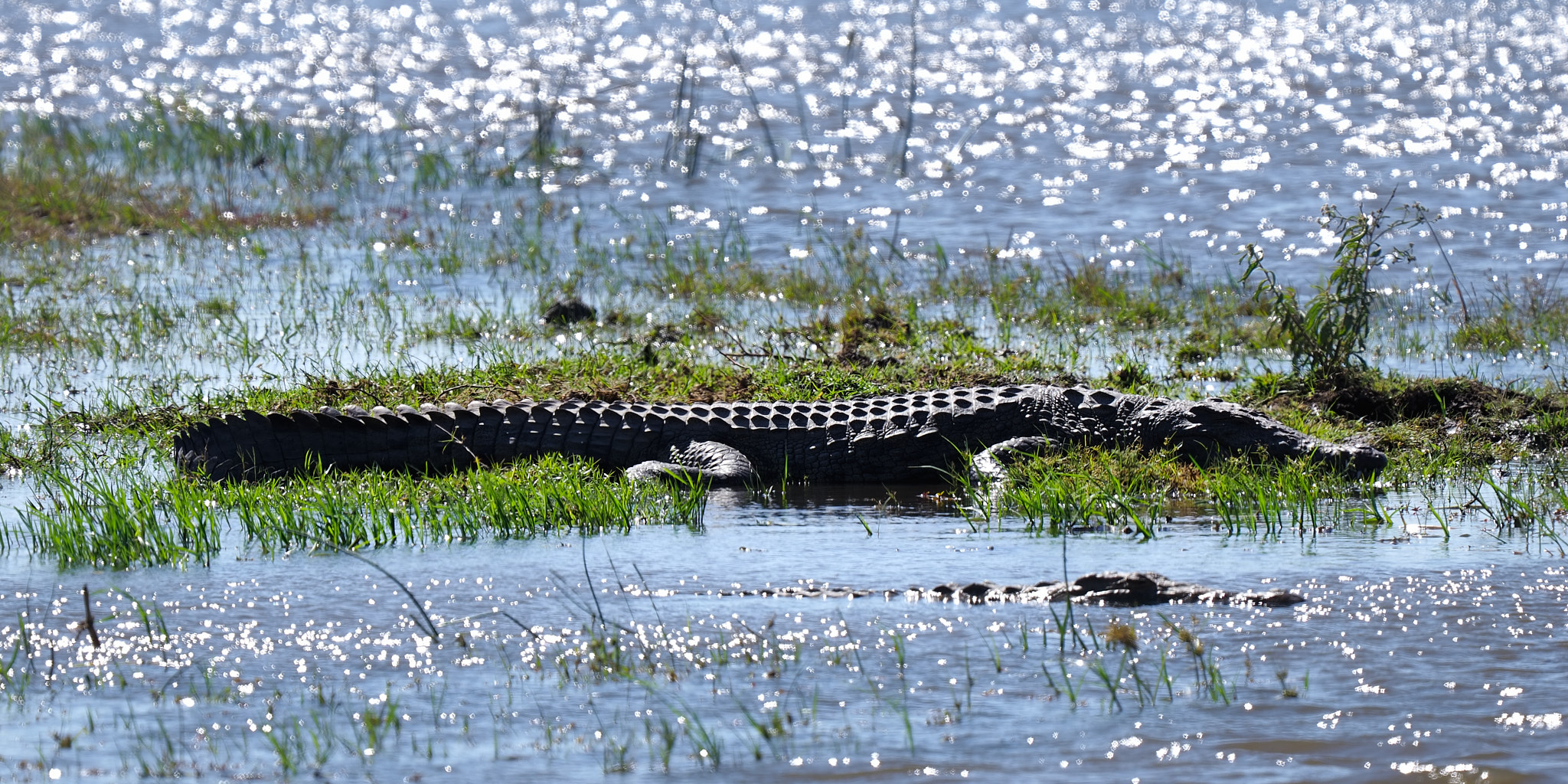
One afternoon we traded a game drive for a boat ride. On other occasions it was difficult to tell the difference. And once off the island there was still plenty of savanna to explore. The best of both worlds.


The camp had charm and the environs were scenically splendid.



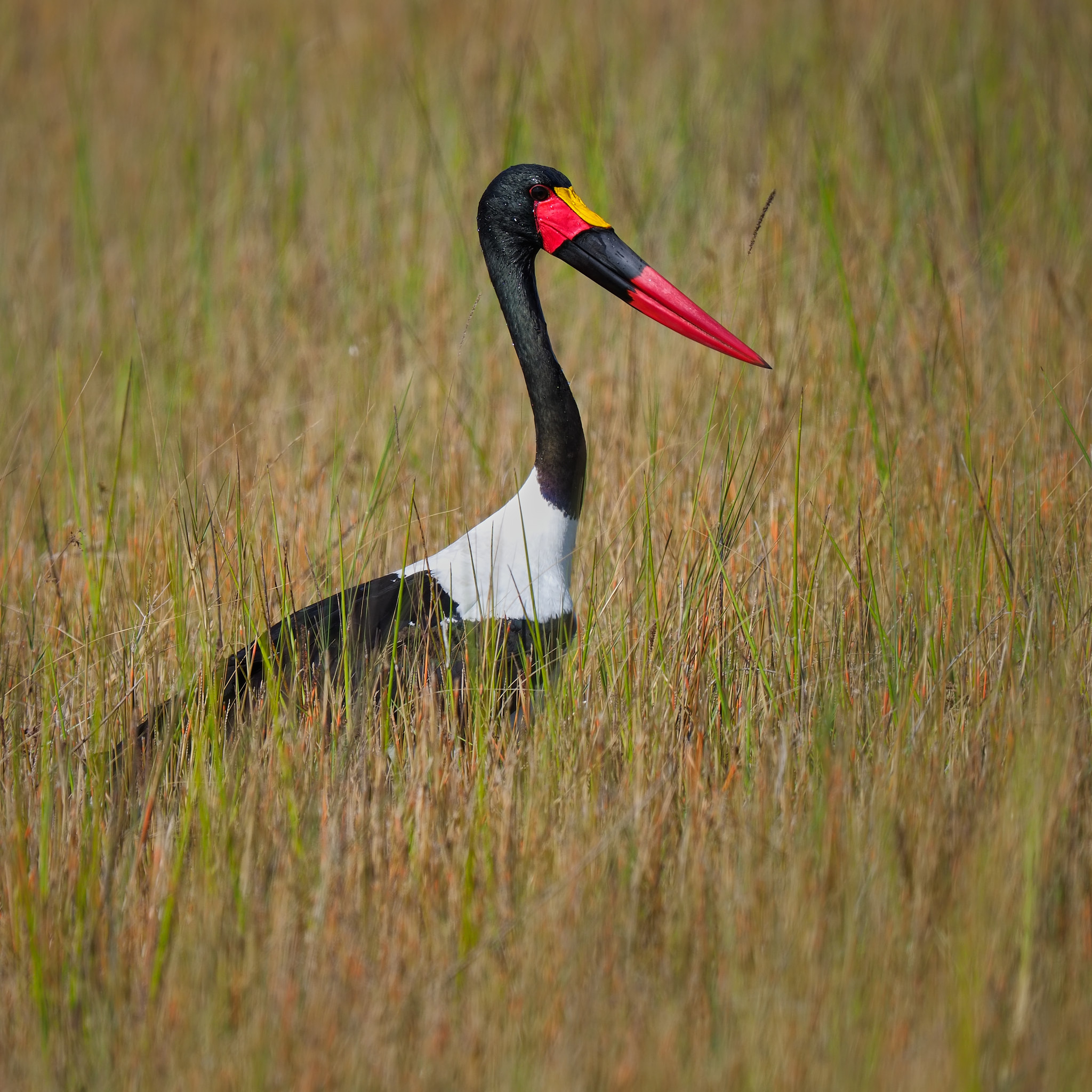


I took a tripod. It was heavy and awkward to pack. It had to go in the checked luggage, of course. Gayle’s checked luggage.
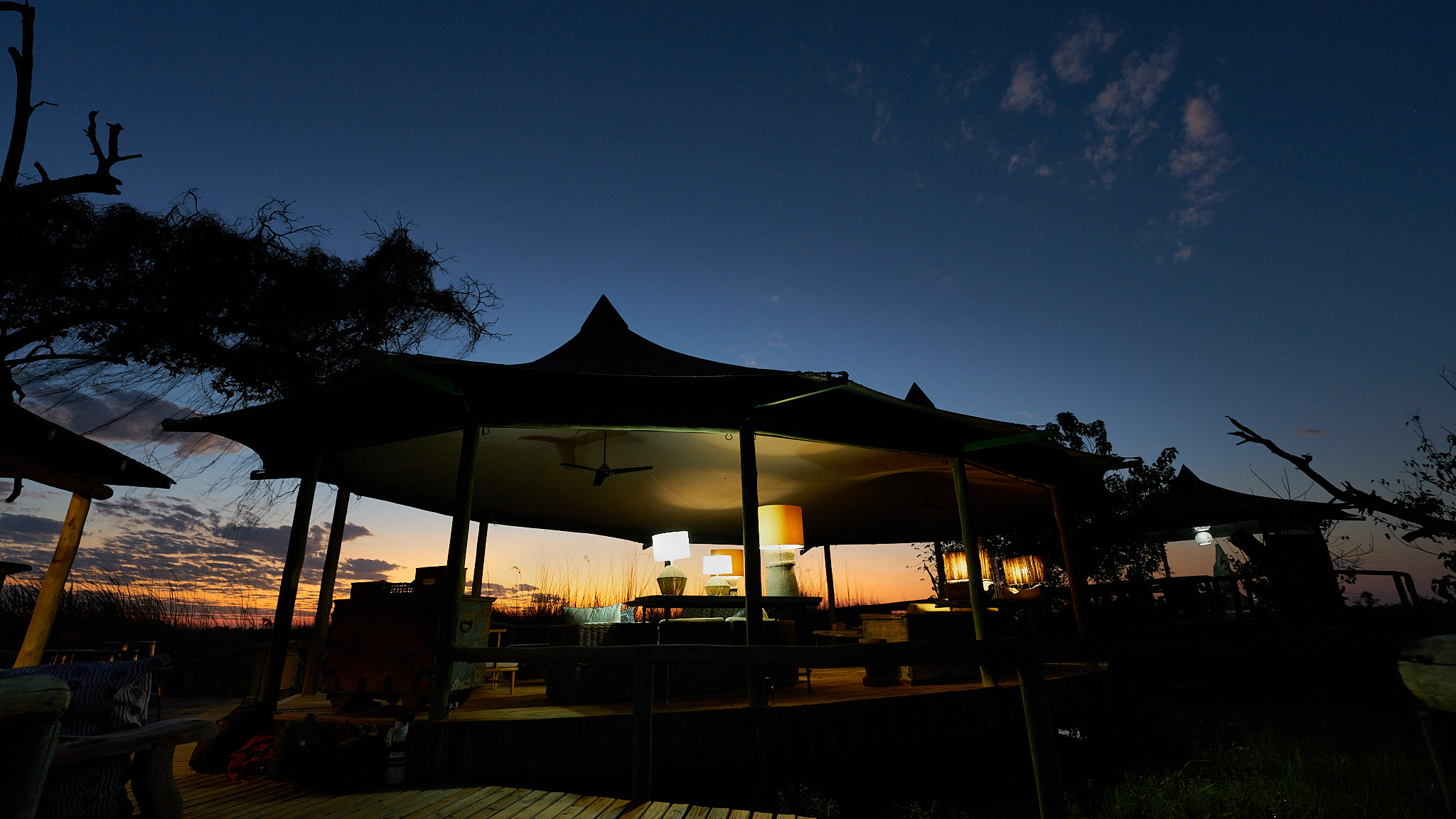
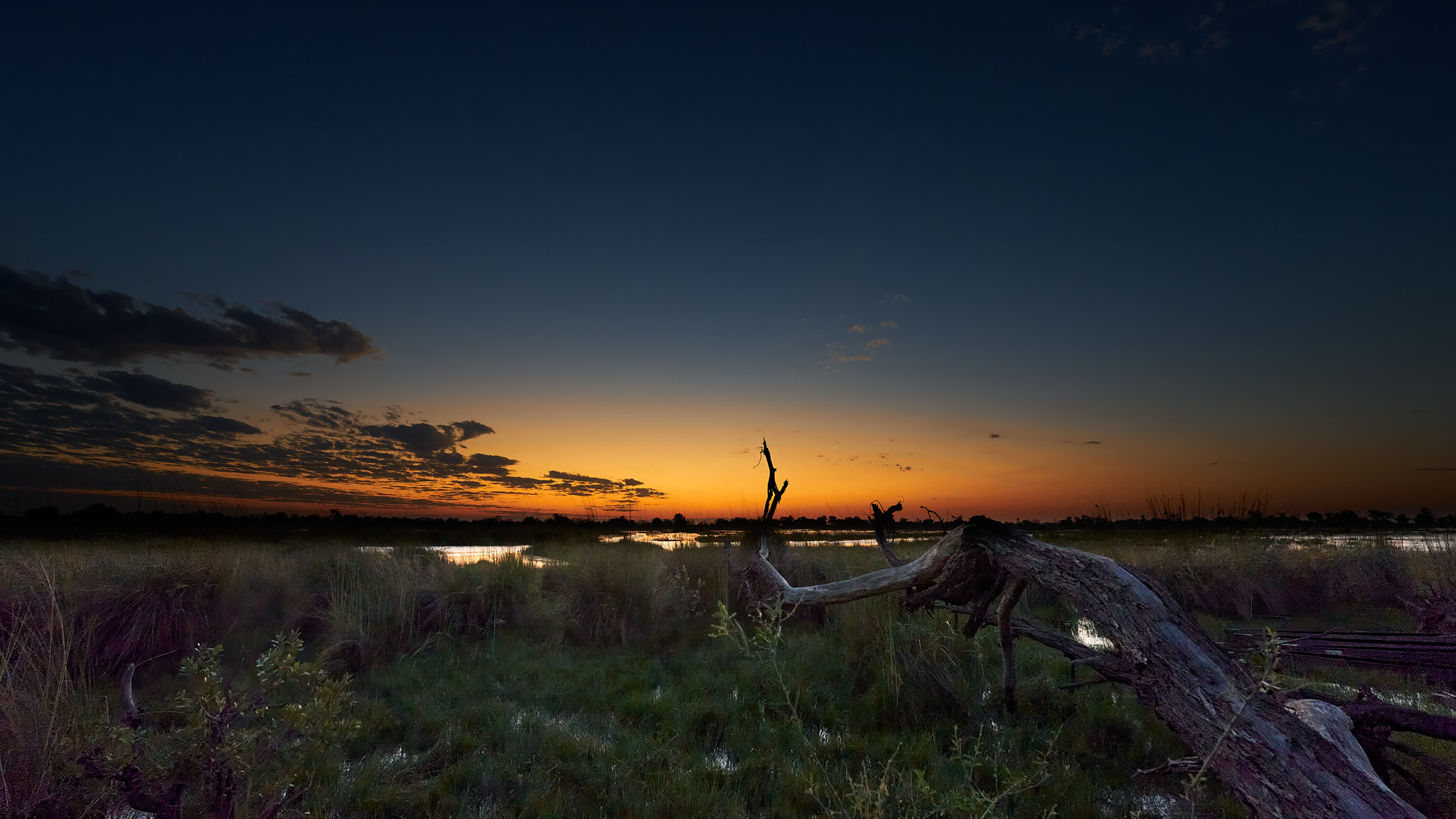

Stay tuned for the next exciting episode – wildflowers …

Redressing the balance …
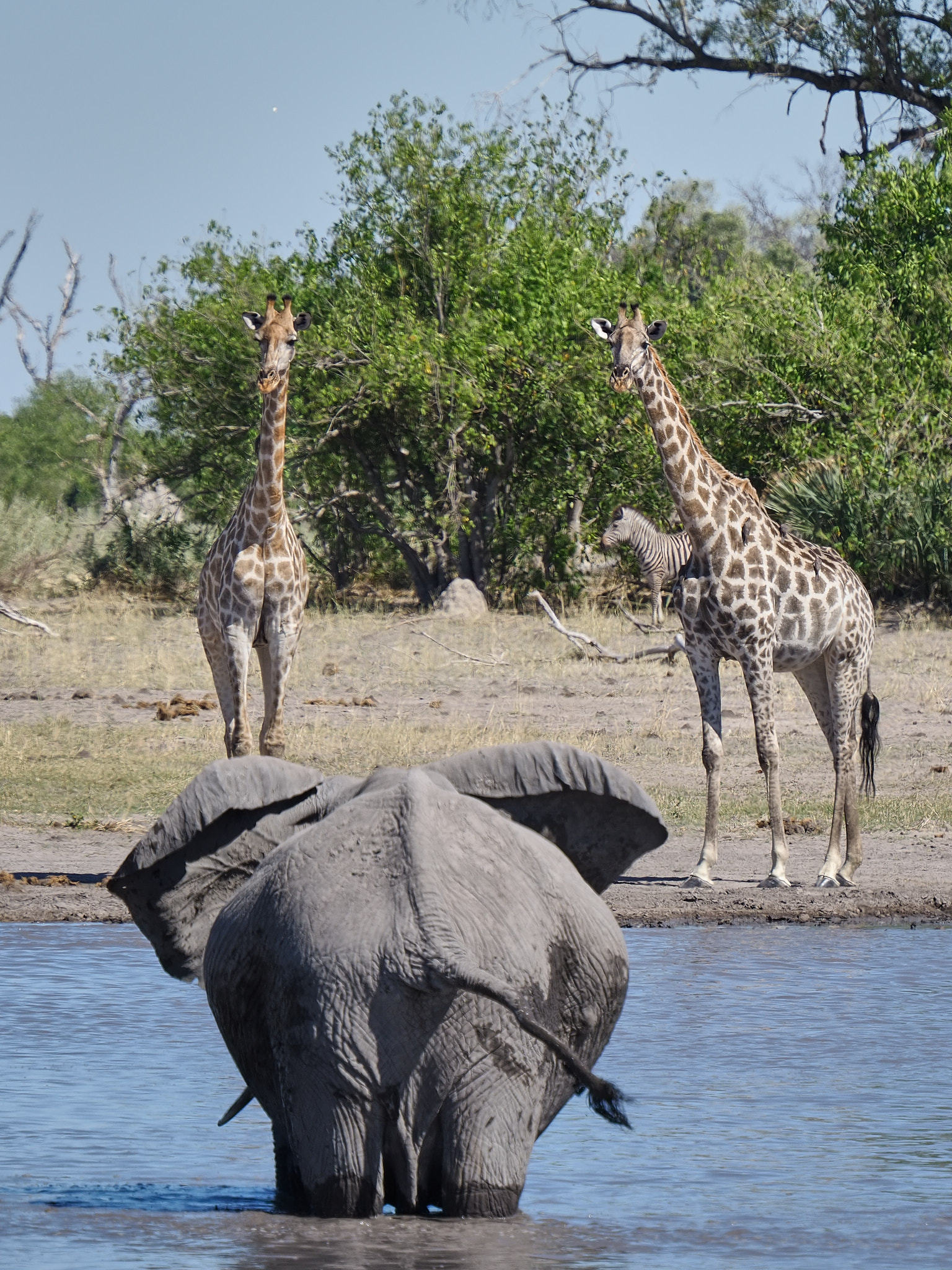
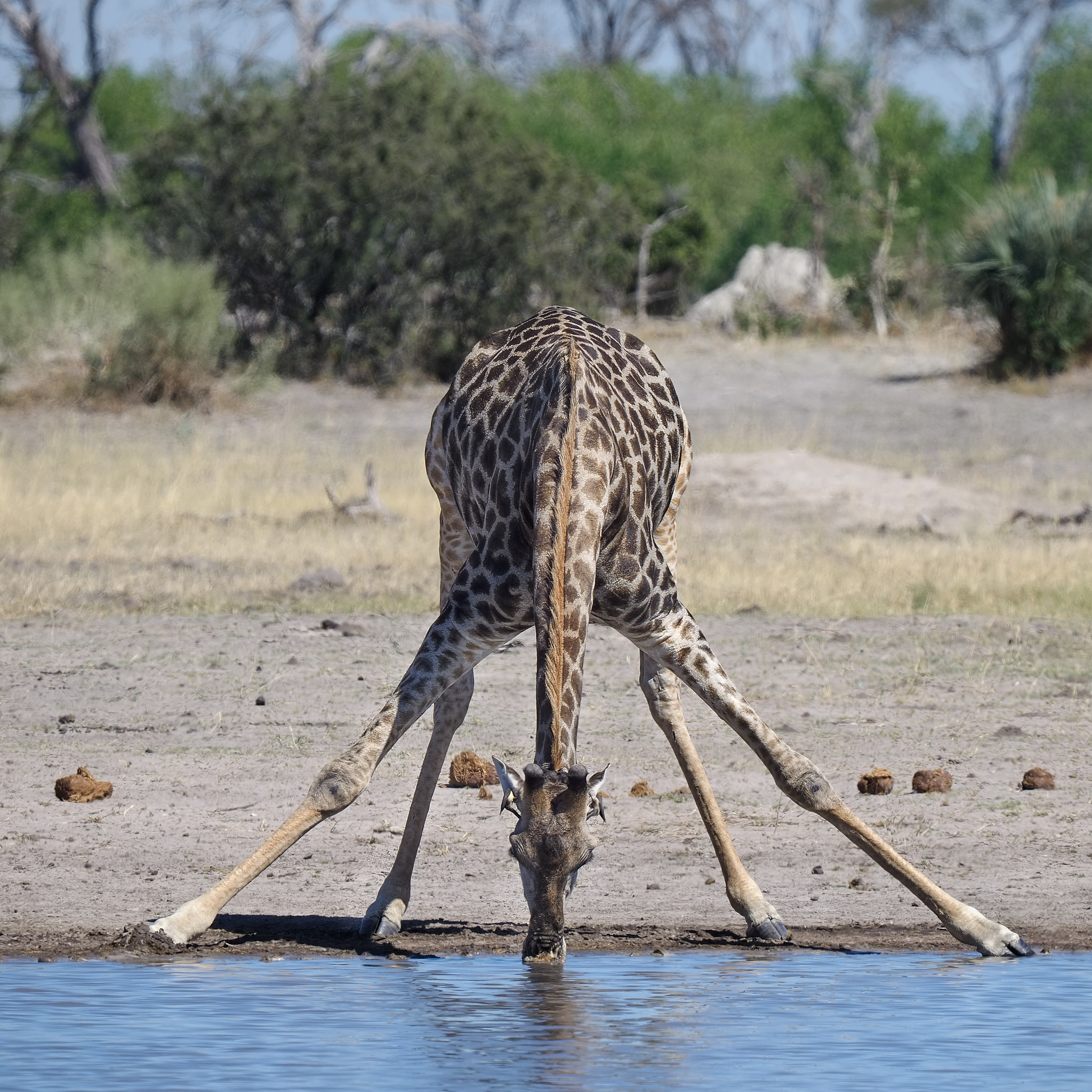

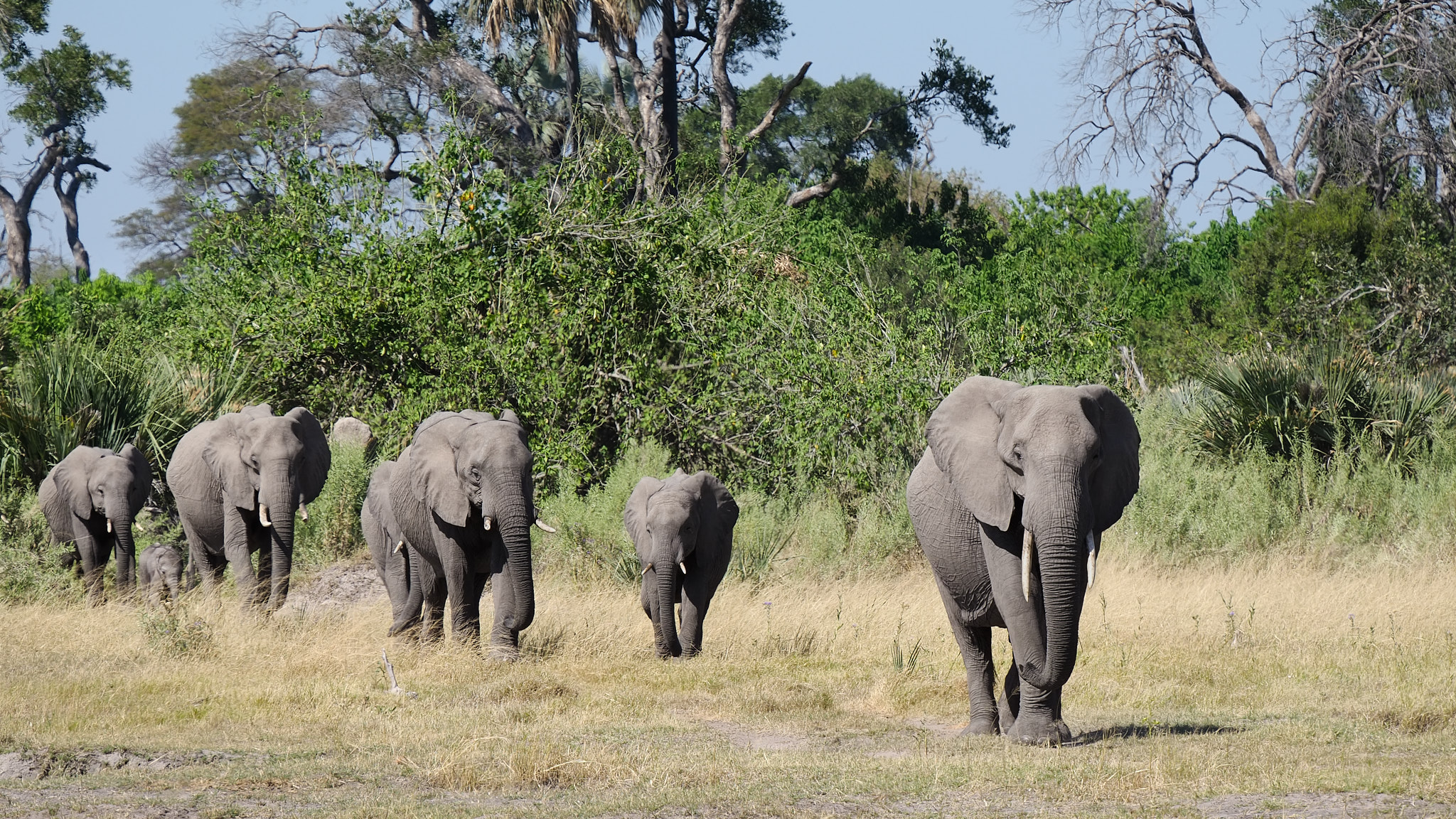

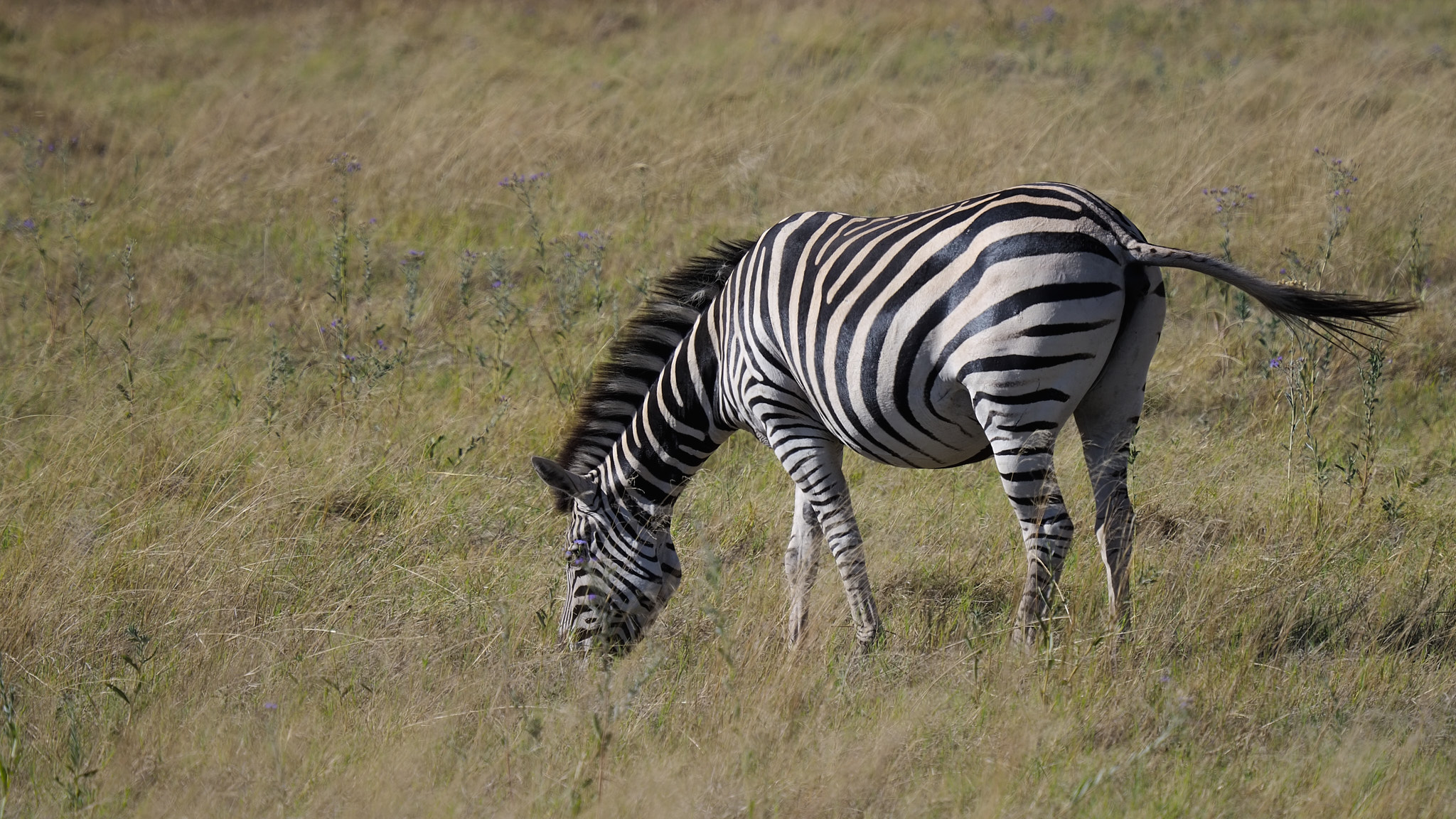
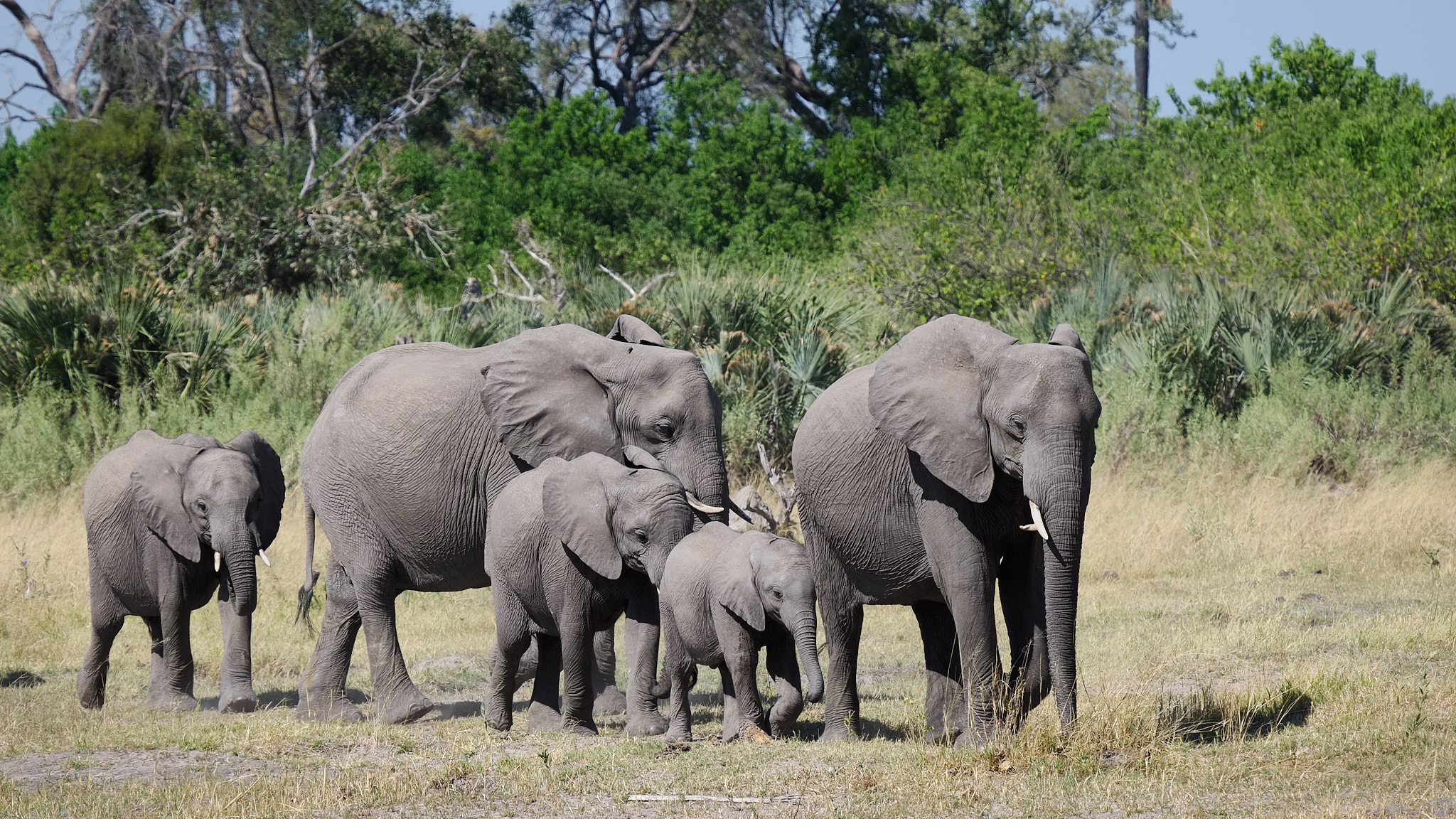
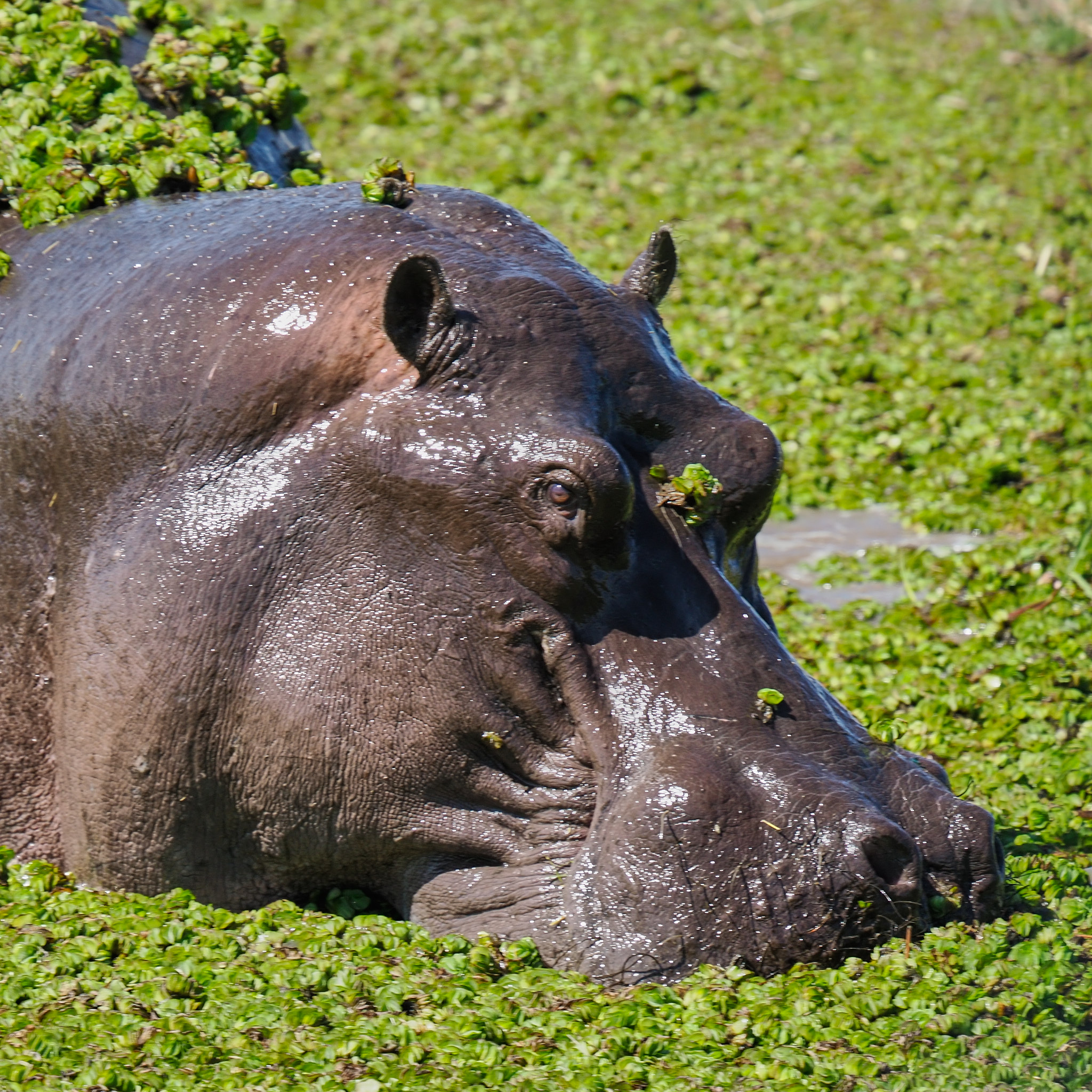
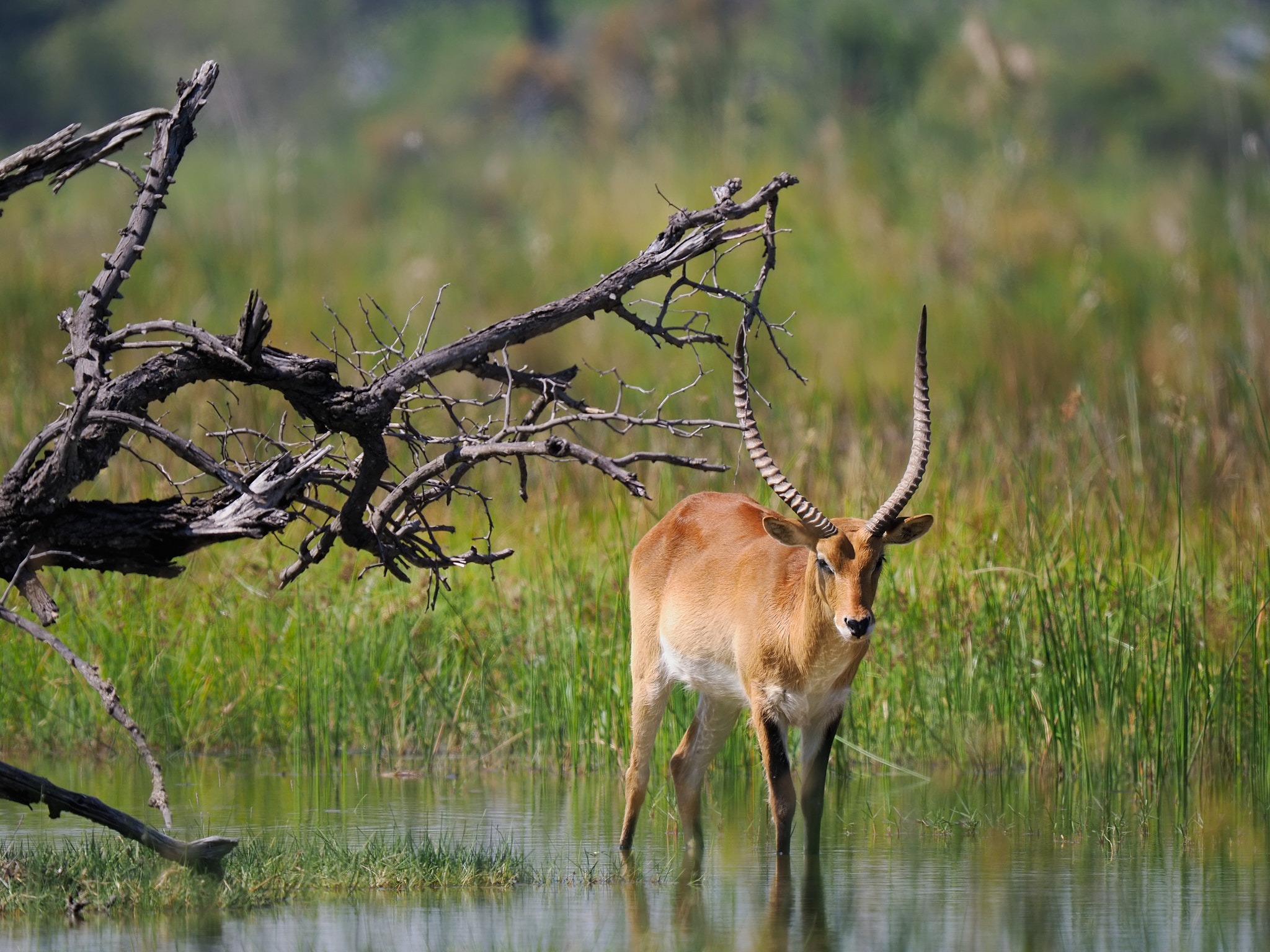
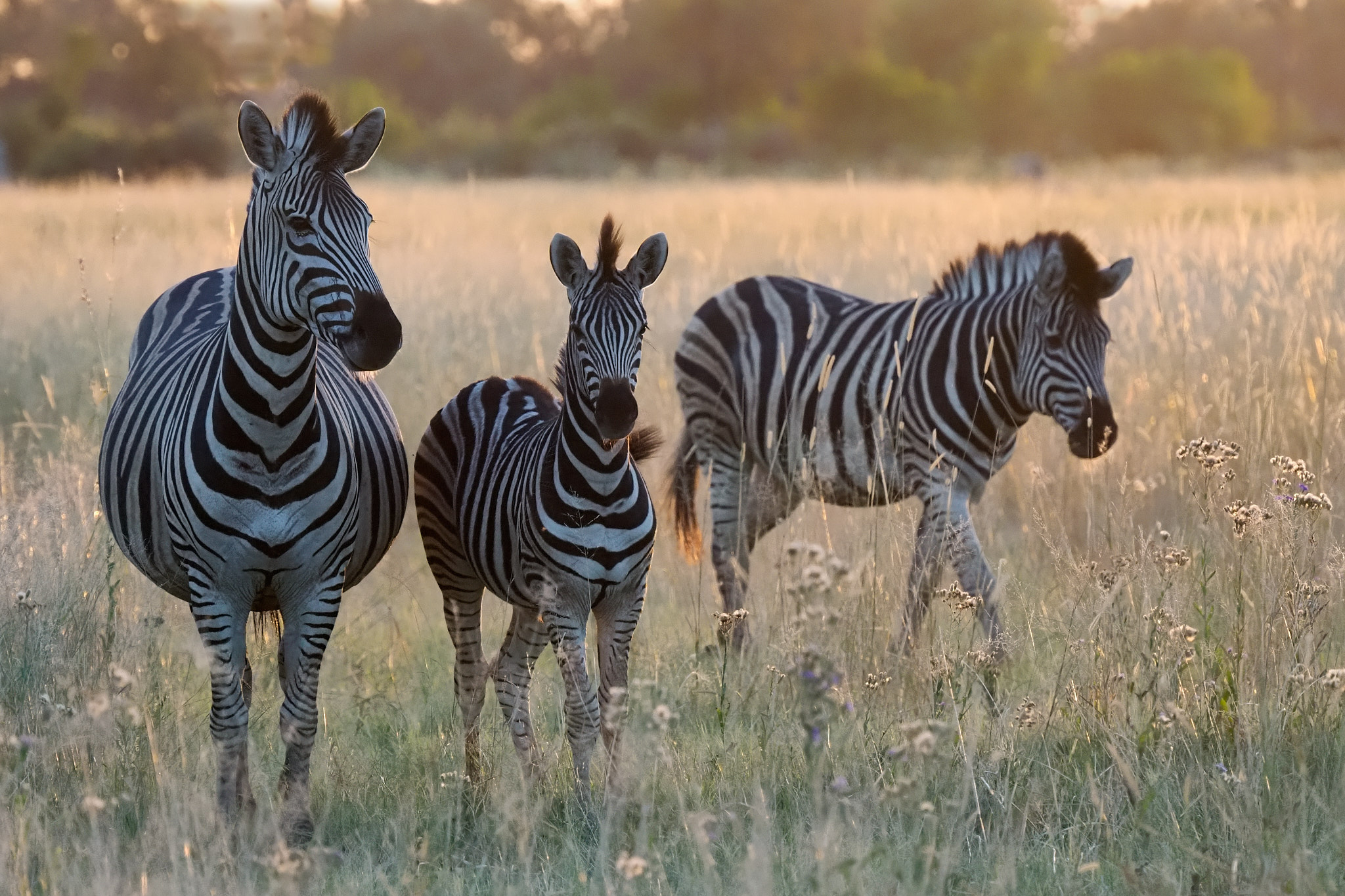
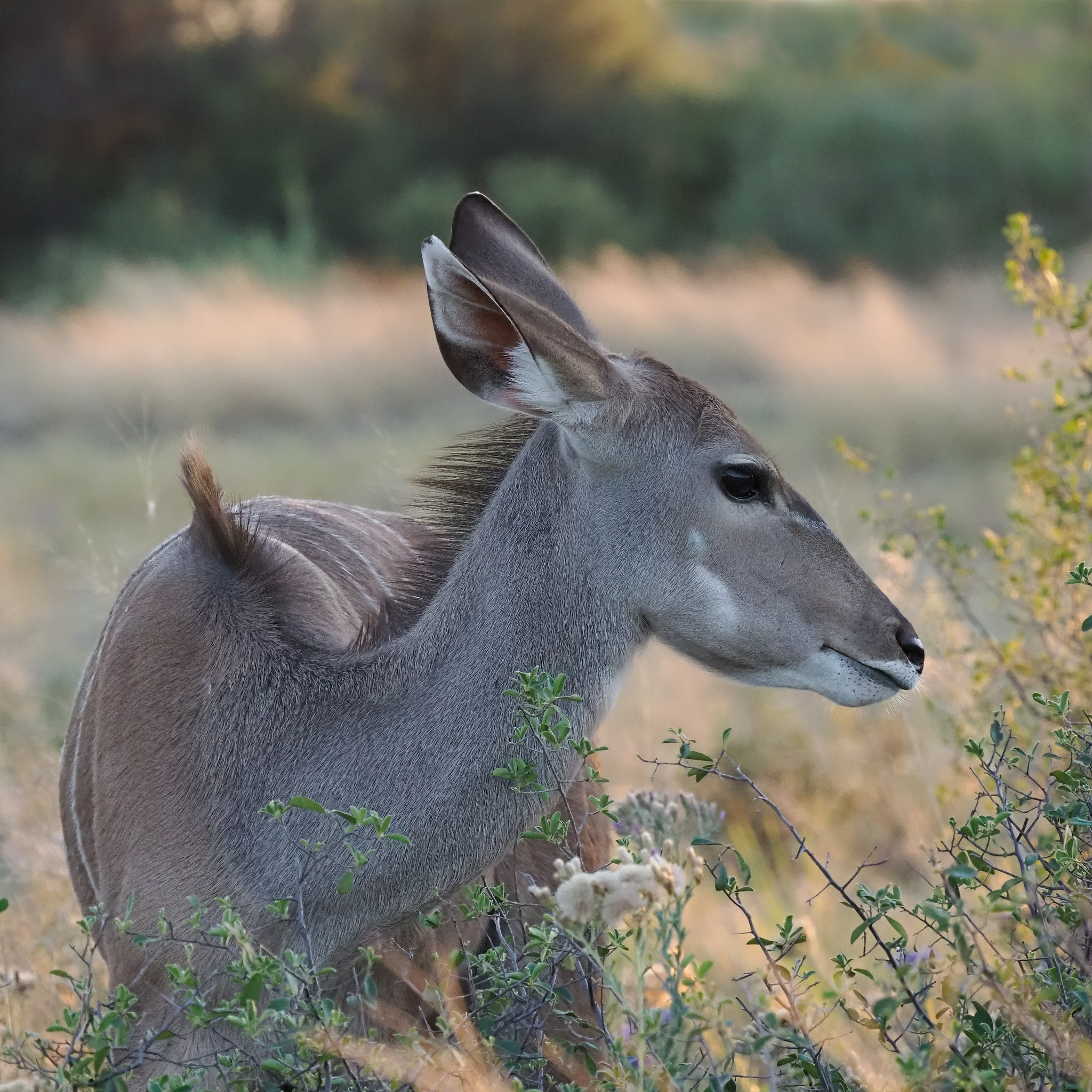
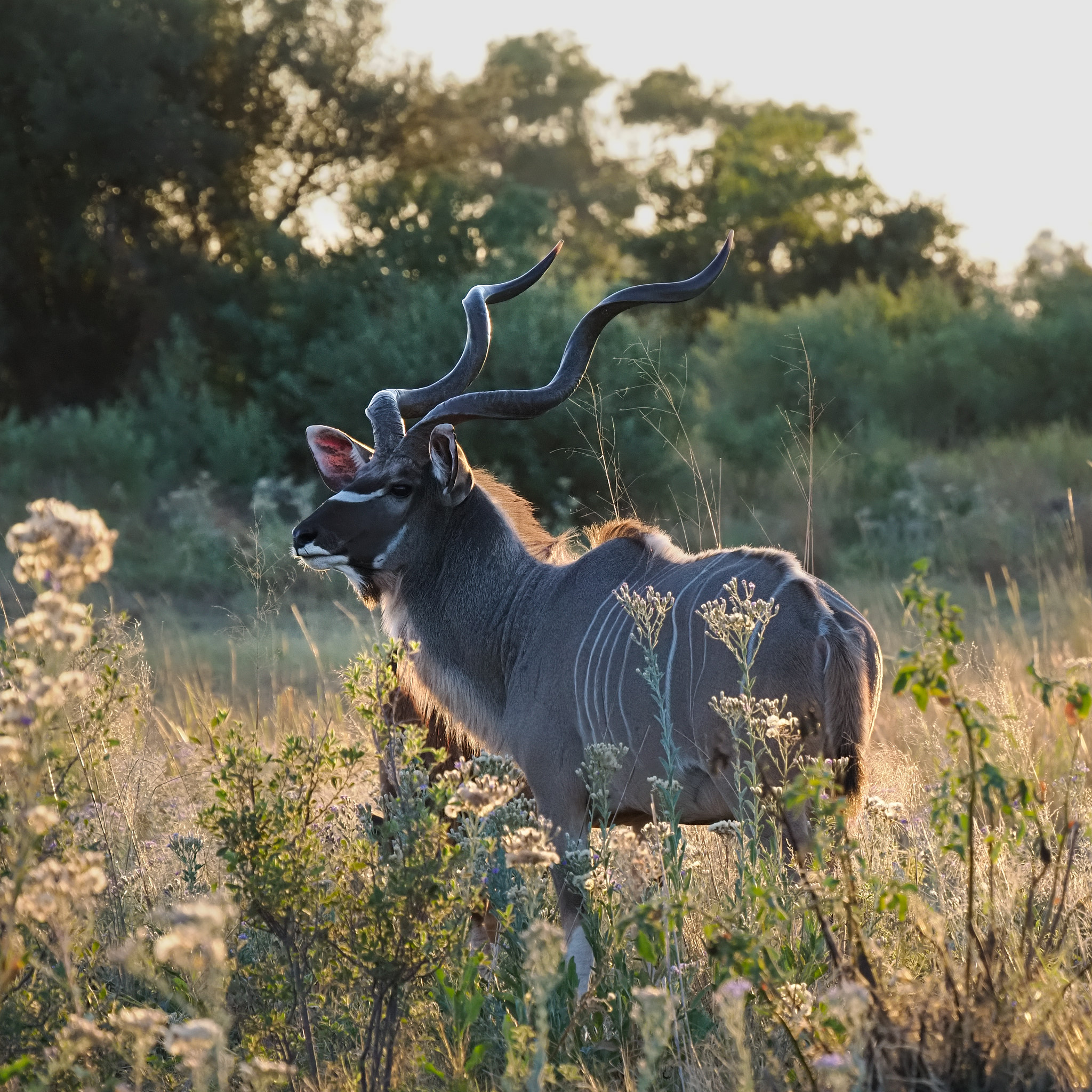
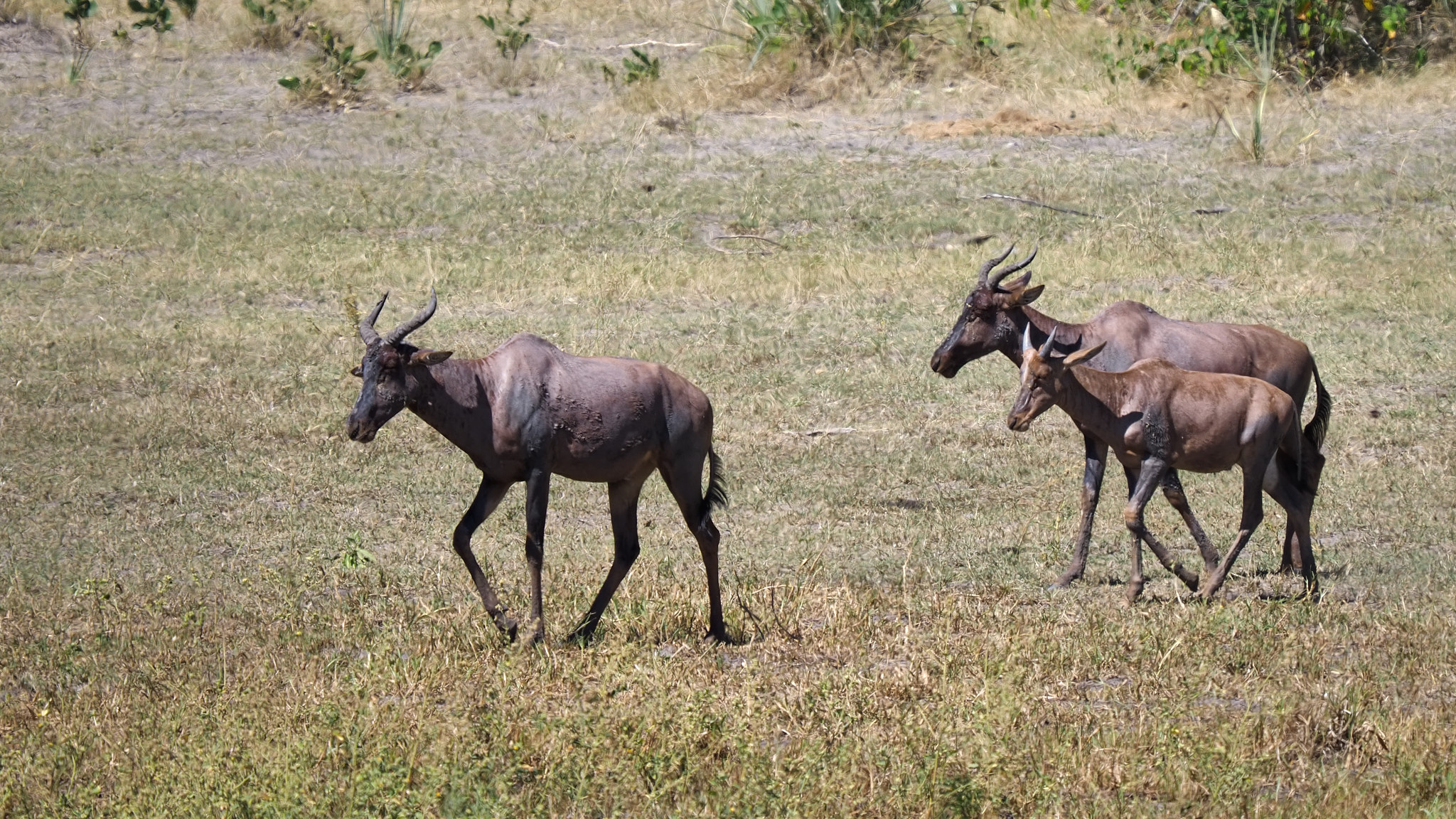
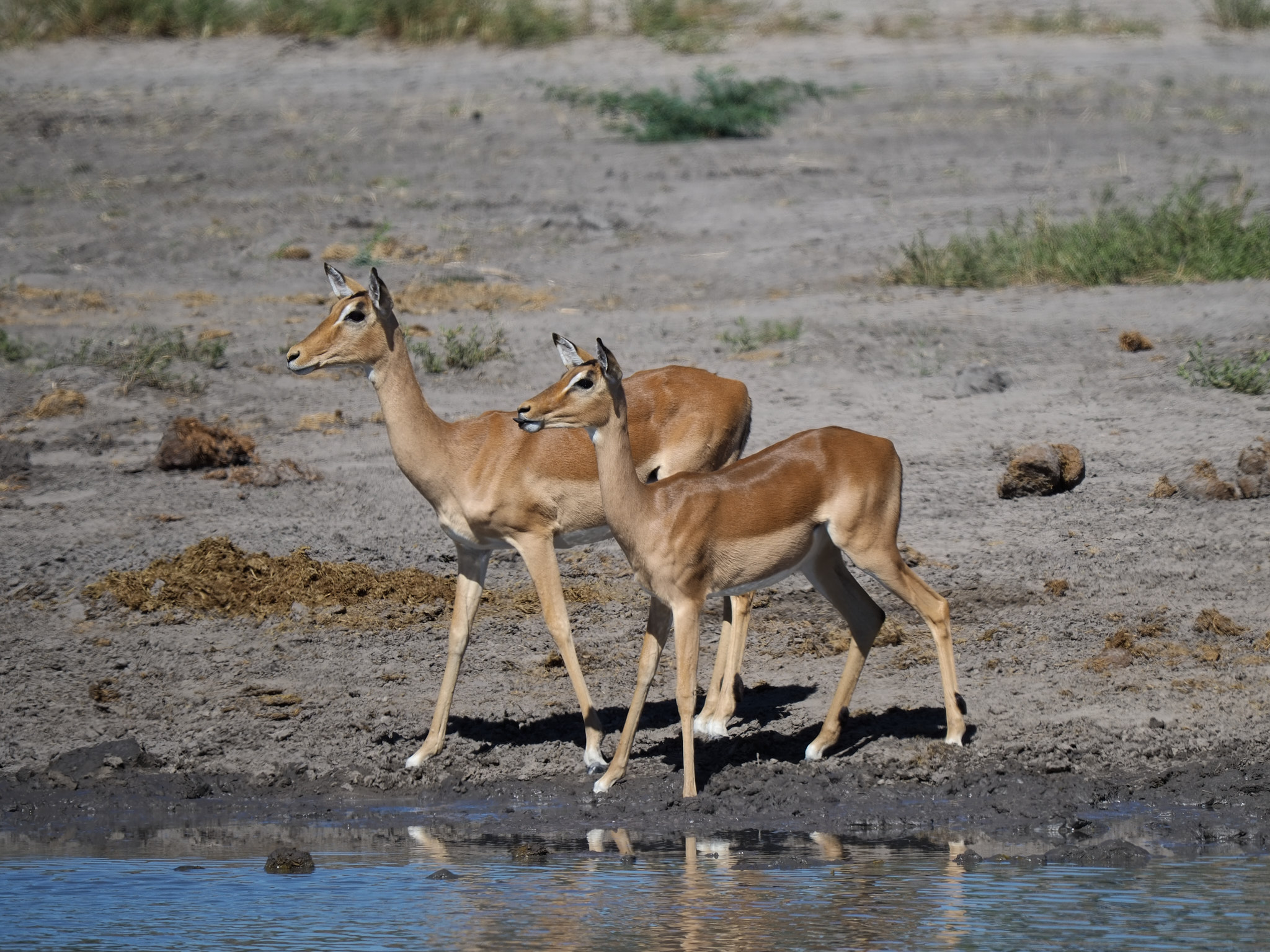
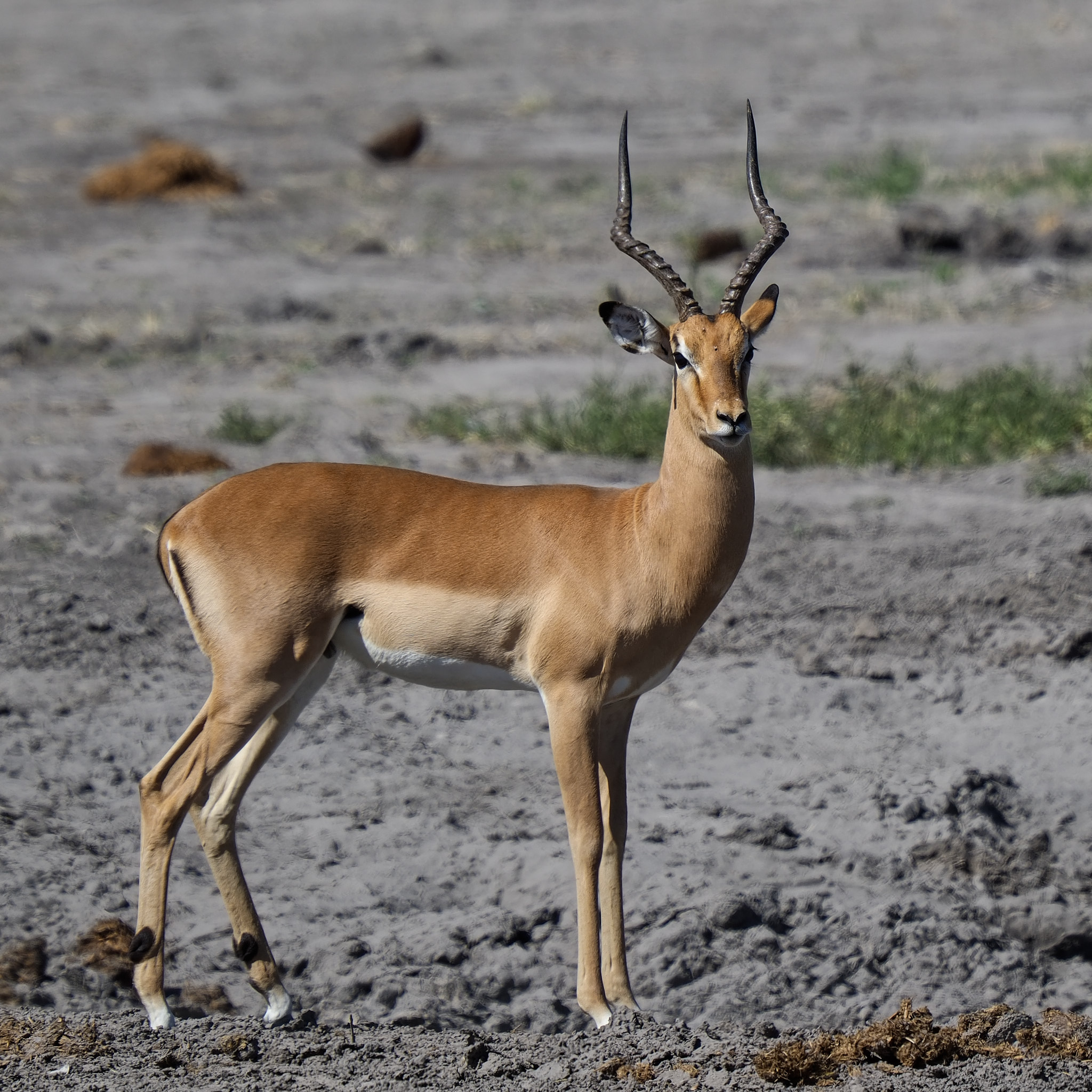
Would Lions find the elephant? We would not know the answer because we would move to our next camp before they showed up but there was no shortage of lions.
We had the opportunity to see them at work and at rest, adults and young, hunting, feeding, copulating, suckling, grooming. We were not present at a kill but witnessed close escapes by Impala and Warthog and a standoff with a herd of Buffalo.
How much do they hunt and how much do they scavenge? The world wide web suggests that they might scavenge somewhere between 10 and 50 per cent of their food varying with pride size, season, territory and gender. Male Lions are said to be lazier than the females as well as bigger. If they have a lioness to do the work they just eat, if not then they take the easy option and scavenge when they can, hunt when they can’t.
For every kilogram of carnivore there needs to be about 10kg of herbivore. For every 10kg of herbivore there needs to be about 100kg of herbs. And providing all the energy for the herbs is the sun.


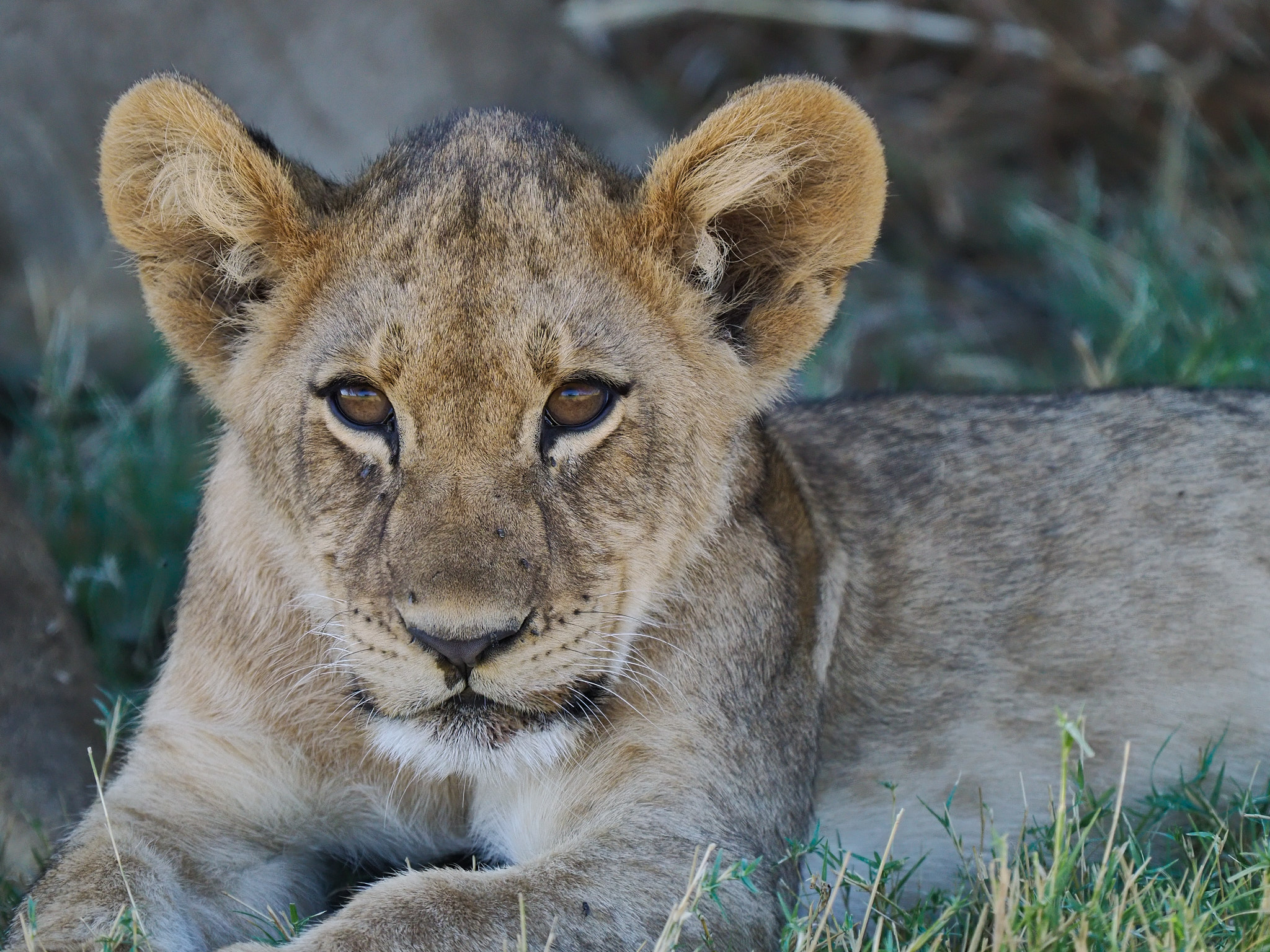


Corollary. For every photograph of a carnivore there should be ten photographs of herbivores. That’s not the way it works though, the carnivores get the lion’s share even in a figure of speech. There will be more …
… had arrived by the next day.

A chaotic horde of them clambering and quarreling over the remains of the elephant. By now the belly was open, the lower jaw bone was visible. But there were still plenty more calories to be had.
Hyenas and jackals were still around but seemed to have had their fill for the time being. There wasn’t much interaction away from the carcass but there were hundreds of vultures in the trees and on the ground. A few Marabou Storks were also waiting about.
There seemed less of a smell than the day before. Perhaps because the surface was nibbled away as fast as it was uncovered.
The vast majority of the vultures were White-backed. There were a few Hooded and just a couple of Lappet-faced. Each has its own specialisation. The White-backed Vultures were clearly the primary demolition experts. Hooded Vultures are smaller, have proportionally longer, finer, sharper looking bills. Good for cleaning up the hard to get at left overs. Lappet-faced are more powerful looking outfits that I imagine could deal with the tougher materials.


Birds have a third eyelid, the nictitating membrane, that runs fore and aft protecting and lubricating the eye. It can be seen clearly in the next photo. A powerful hooked bill is useful for tearing flesh. A naked face is easy to keep clean and a pompom-like collar helps keep blood from running down and soiling the wing feathers.
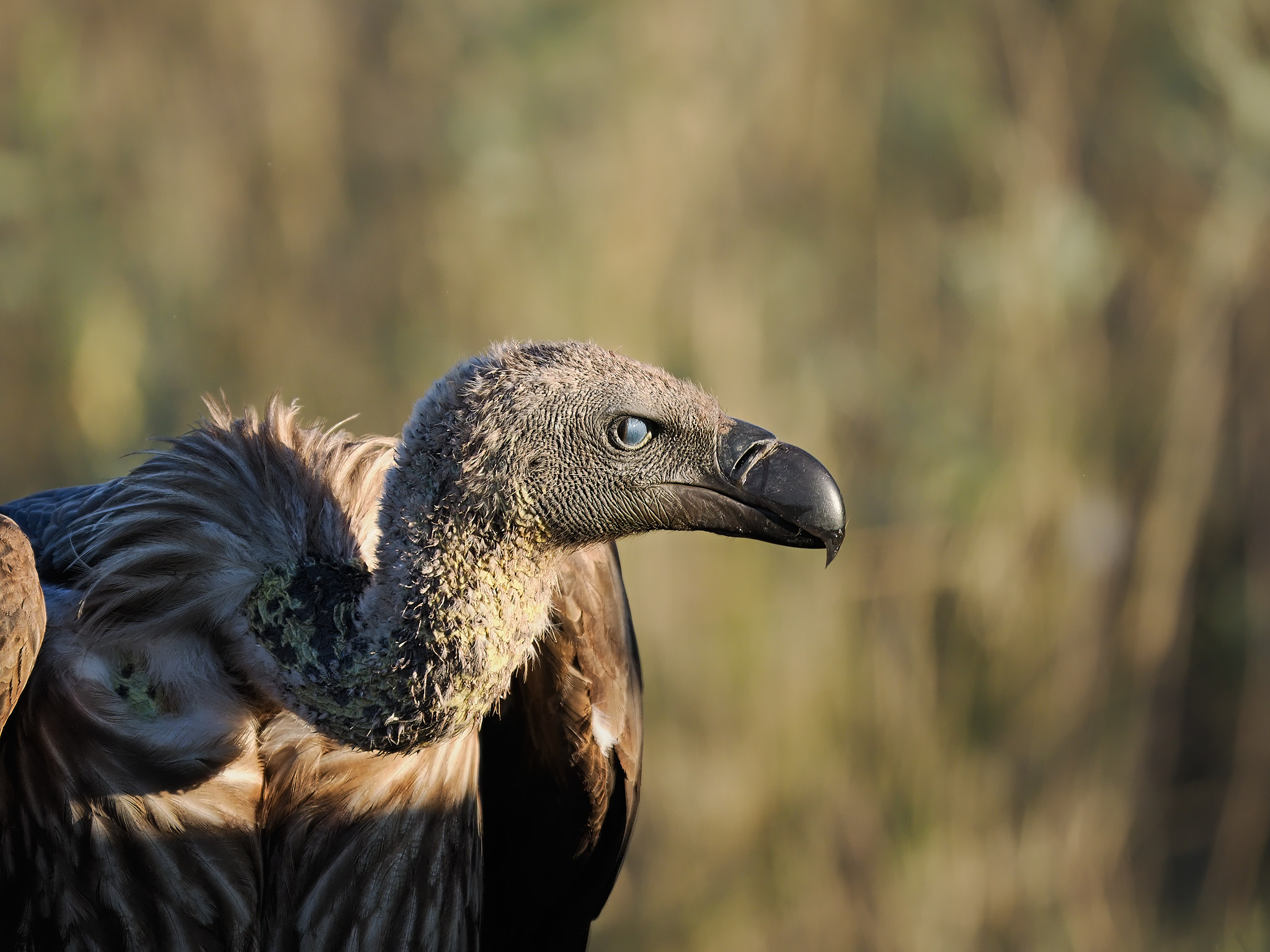

So far all the illustrations have been of White-backed Vultures. Time to have a look at all the cast …
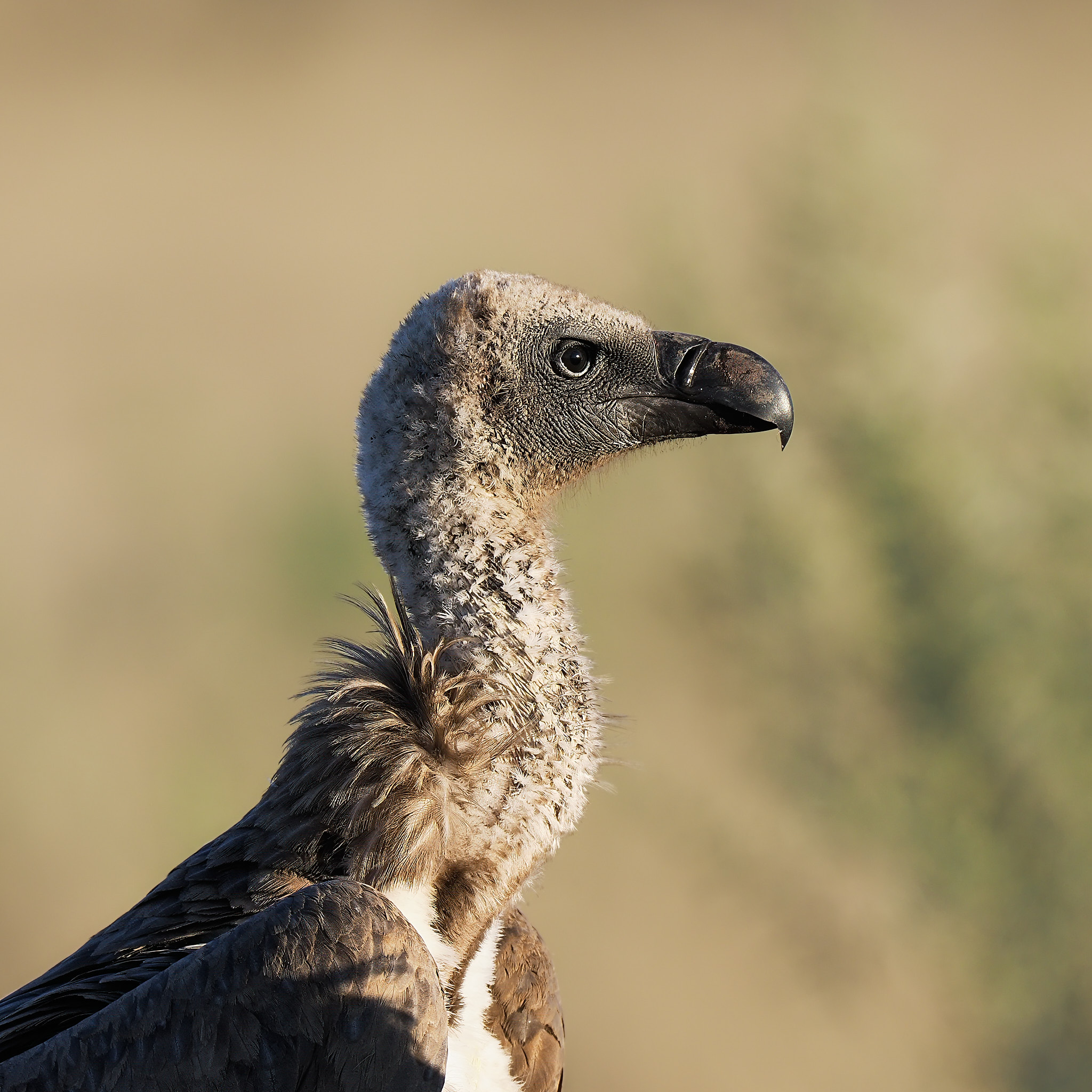
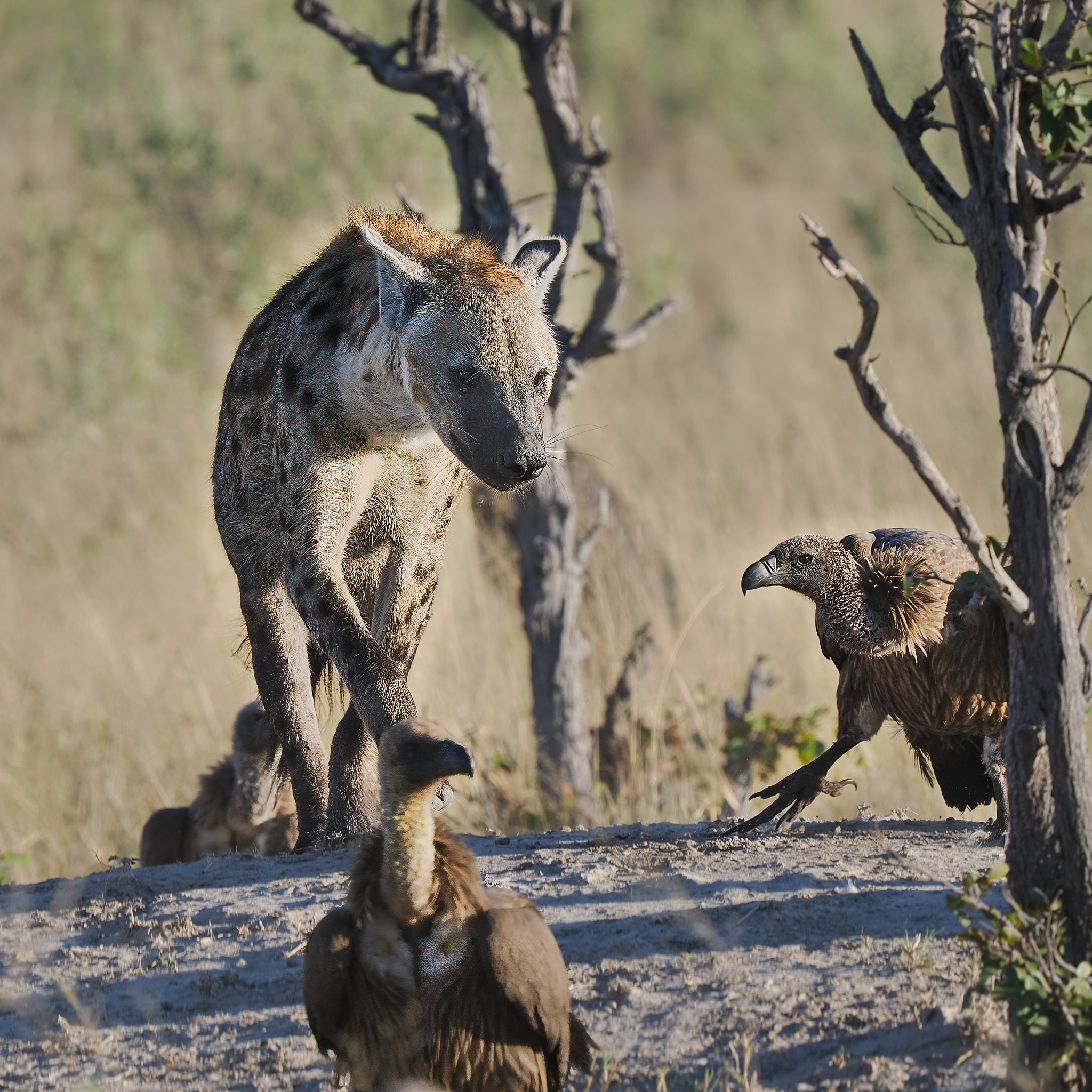
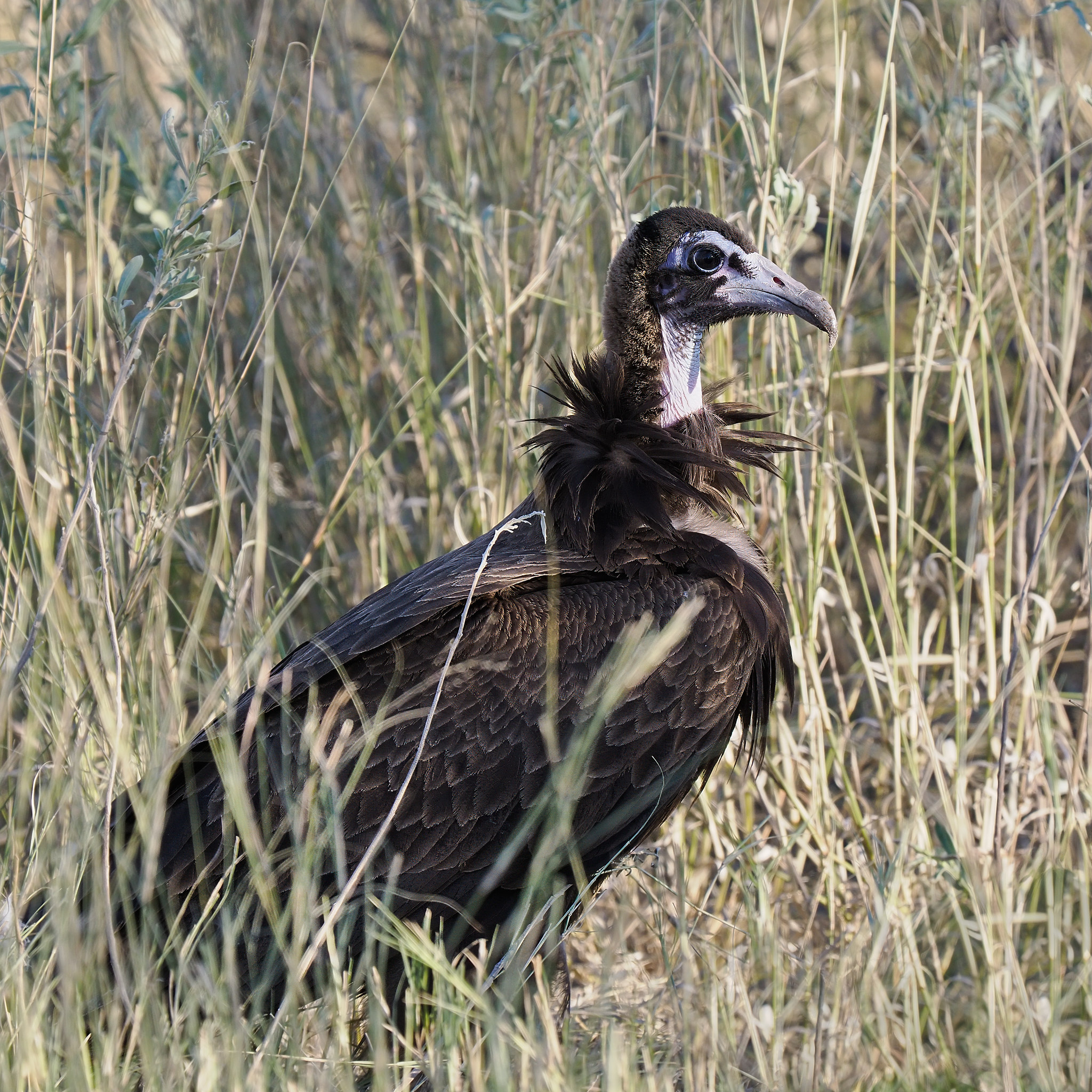


Lions had still not turned up. It was not because there were none around.
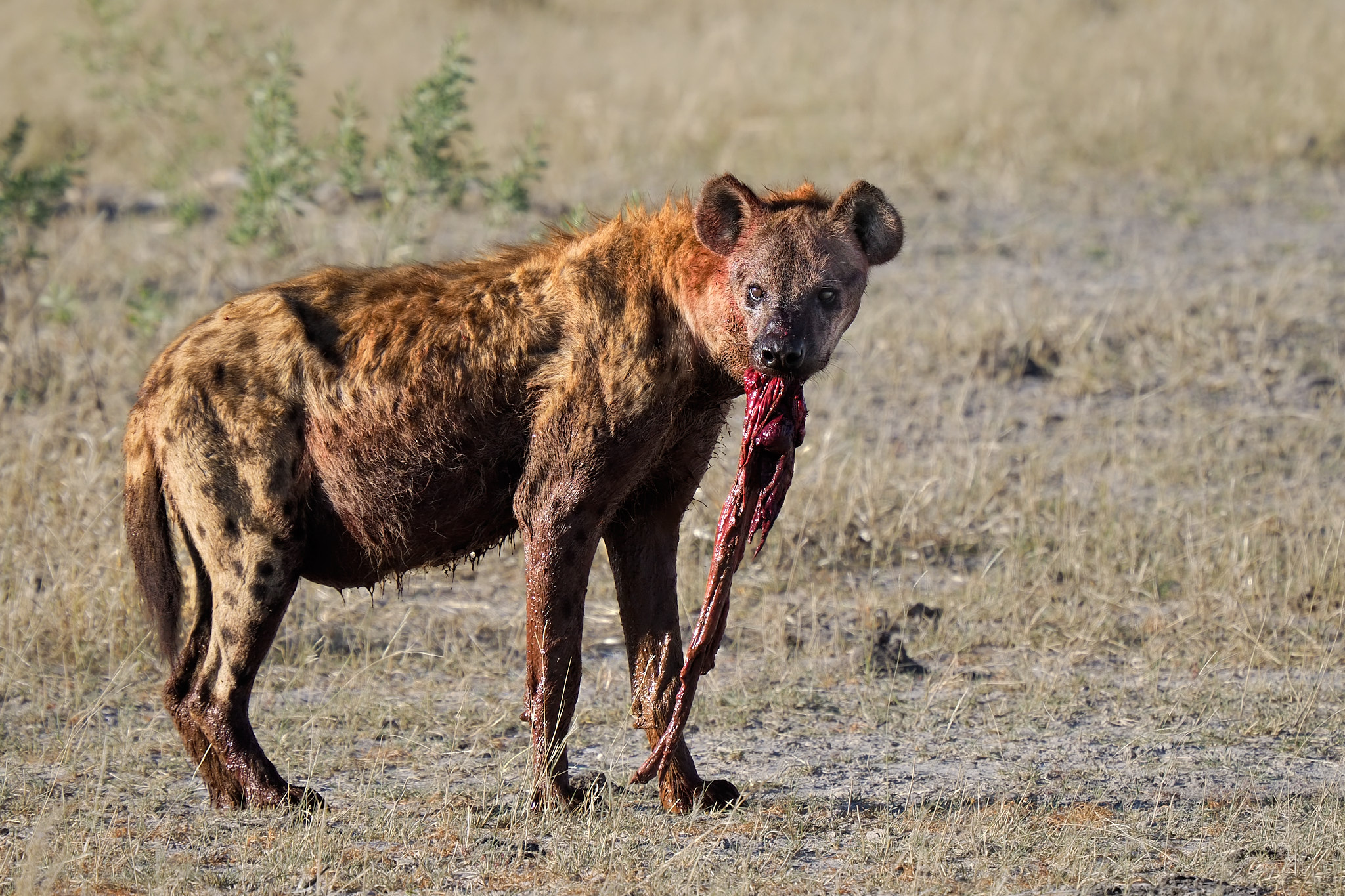
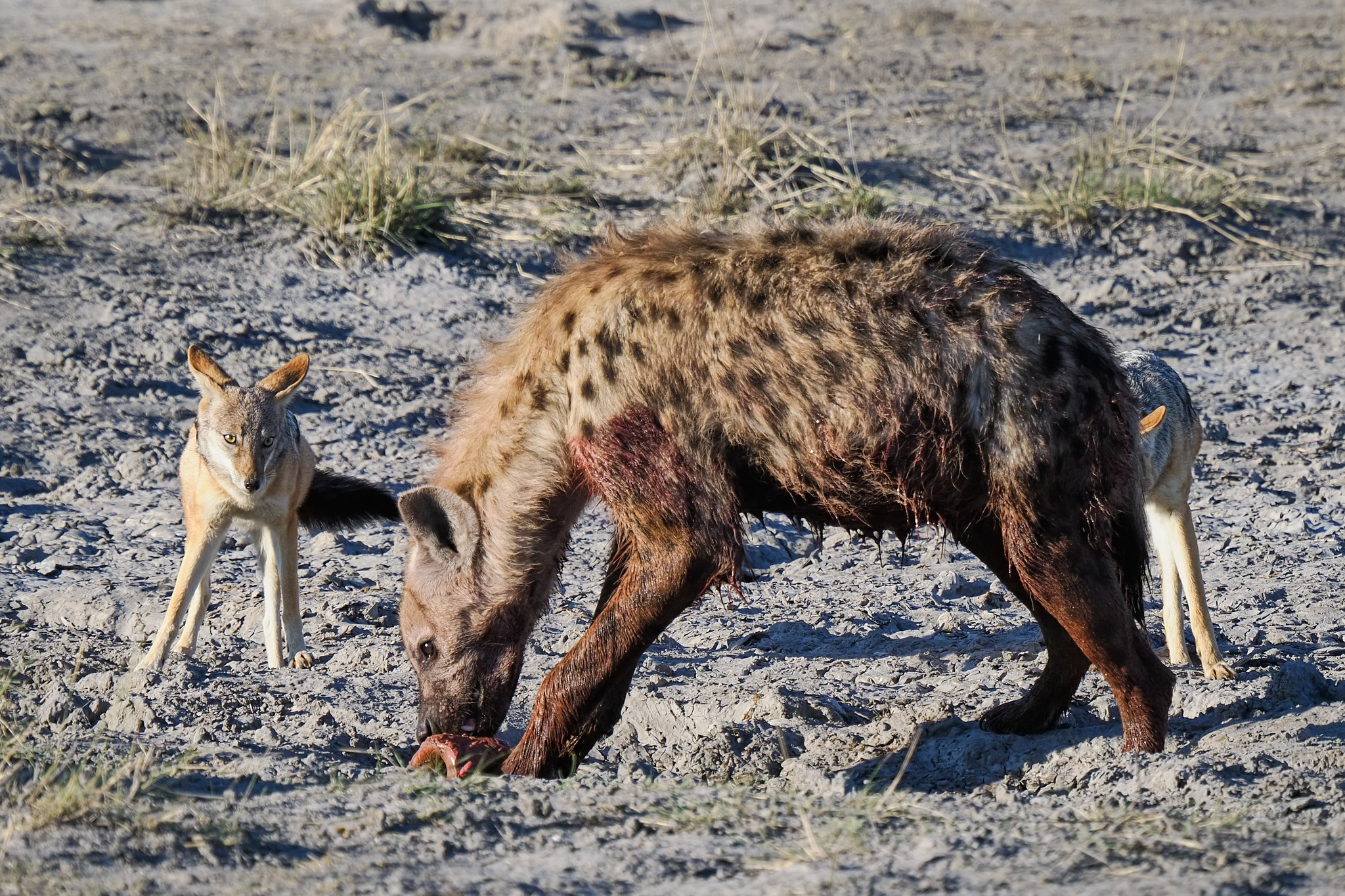
We came across a happy Hyena, caked in blood and carrying food. A couple of Black-backed Jackals were keen to share. The Hyena was not. It was a sign. So was an aroma carried on the wind. It wasn’t long before we found the mother lode, a dead Elephant.
Cause of death was unclear, probably old age. It was about the size one would expect of an adult female so likely represented three to four thousand kilograms (7,000 lbs) of meat.
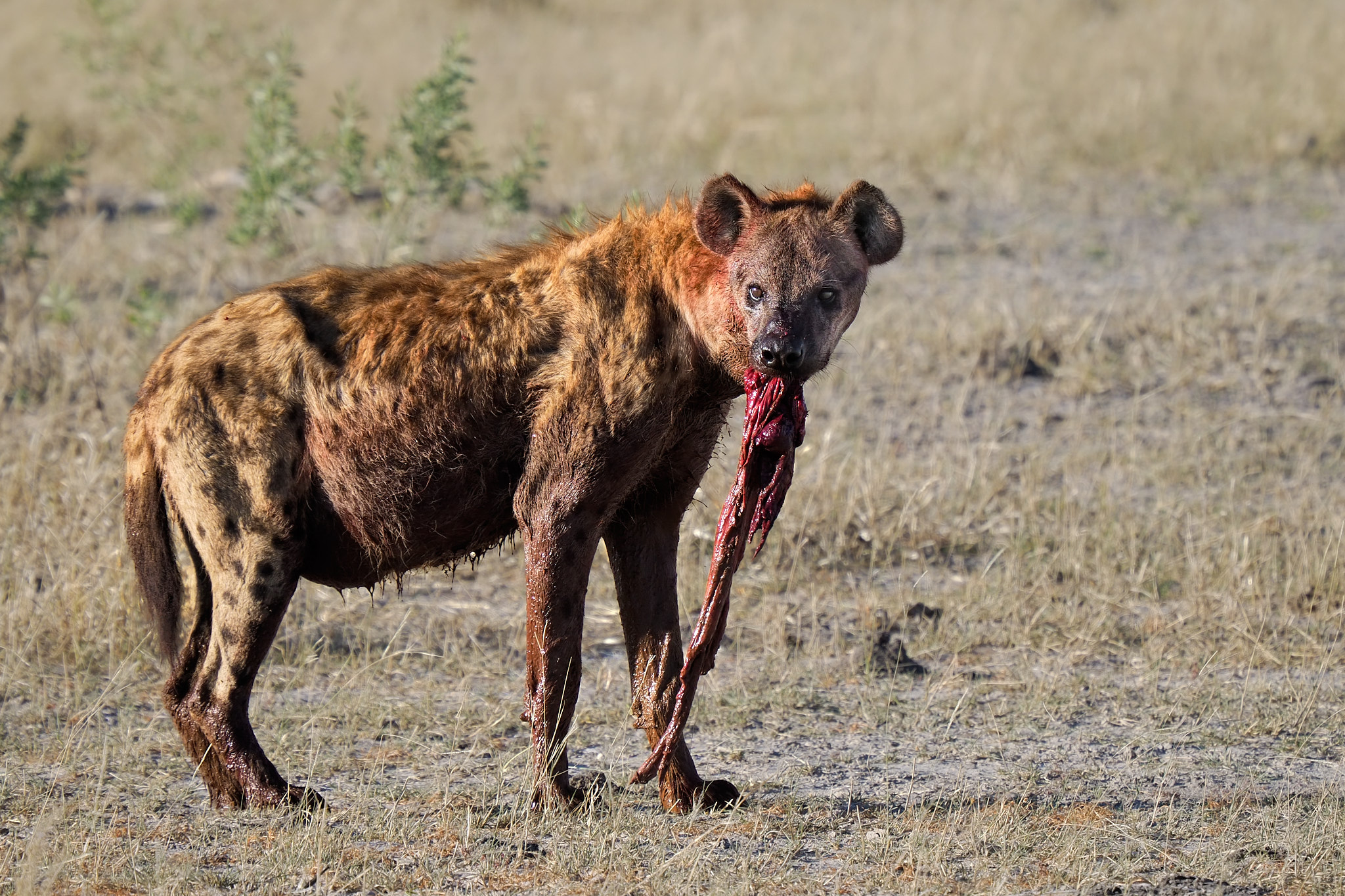
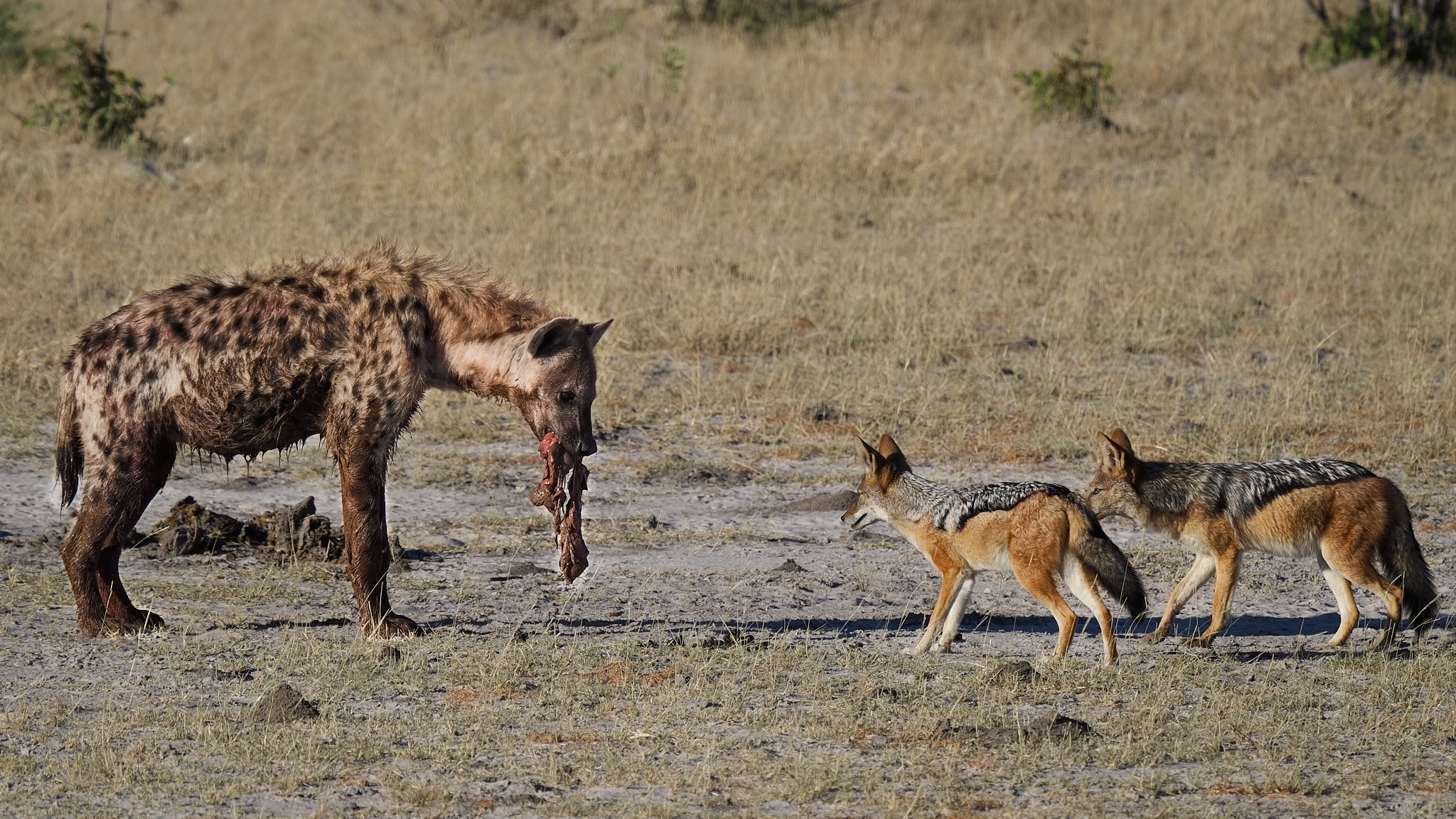
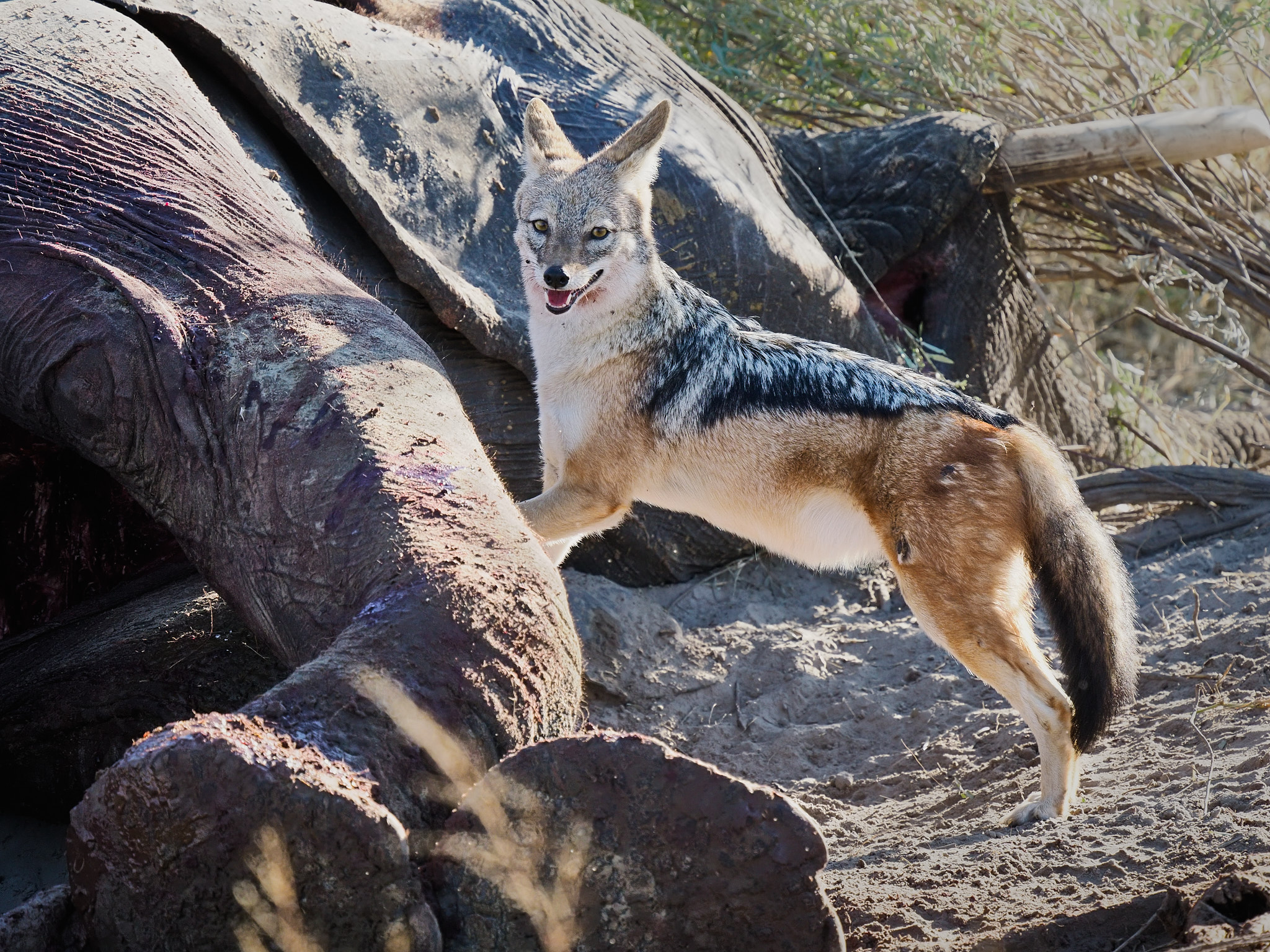
As a young child I remember hearing an old music hall song on the radio. My mother was horrified – which may be why it was so memorable. The version I heard started like this …
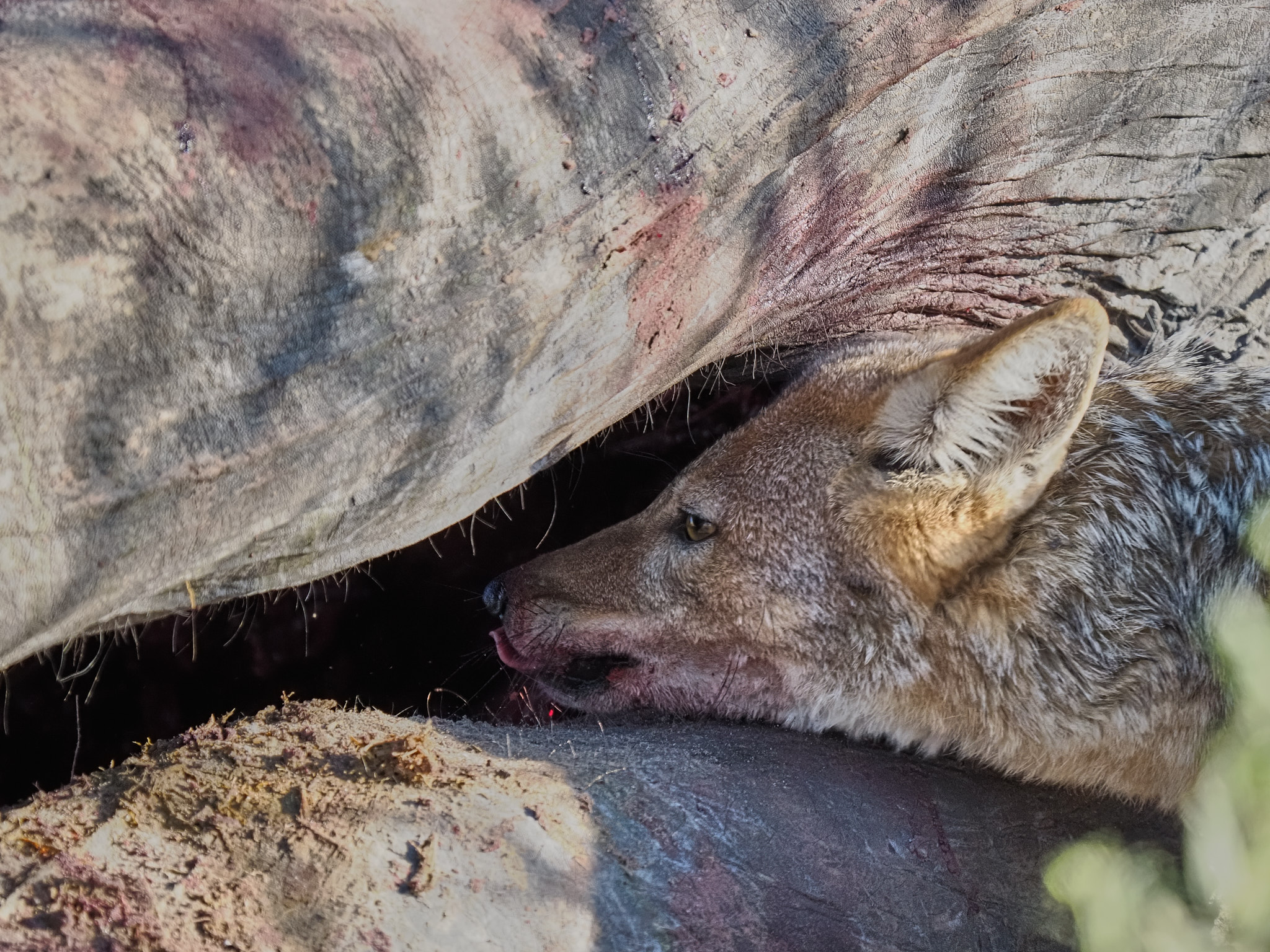
It was popular in its time . There are many verses and many versions. Be that as it may, Elephant skin is very tough. Access to the resource within is a problem. The hole in the elephant’s bottom was the solution and had been enlarged considerably by the time we found it. Not an enviable job that.




From time to time I remind my readers to click on the galleries to get the full picture (especially when the thumbnails are missing body parts).
Jackals and Hyenas were disappearing inside the carcass for a feast but were always vigilant. To be trapped inside by a larger predator would have dire consequences. At this stage some of the actors are missing from the stage. No vultures, no Lions.
 bobmcgee