If you fly into Singapore at night you cannot help but be impressed by the lights of hundreds, perhaps thousands, of ships at anchor off the south coast. Singapore became what it is because of where it is. It sits at the bottom of the Malay peninsula at the mouth of the Strait of Malacca which connects the Indian Ocean to the South China Sea and the mighty Pacific. It has been important to seafaring folk since ancient times.
In more recent times the Portuguese and then the Dutch dominated trade around the Malay peninsula giving the Brits a rather hard time. The Brits of course had India and a rather lively trade with China. In 1819 Stamford Raffles by great acts of statesmanship (shorthand for bribery, corruption and threats of violence) founded a free port on the Singapore River. It got off to a flying start. And it’s still flying high.
When I first came here it was a city in transition. Modern high rise along side colonial architecture, shanties along the river bank, junks and bumboats on the water, roadside hawkers. The hawkers are now nicely accommodated in Hawker Centres, the shanties are gone. No one has lived on the river since the Clean up the river campaign of 1983. Now it is a very clean, very modern Asian melting pot reflecting rapid and recent immigration. 75.9% of the citizens and permanent resident visa holders are ethnic Chinese, with ethnic Malay and Indians comprising 15.0% and 7.5% respectively. There are no tent cities of the homeless. You will not be offered a baggy on your way into the park. Crime is remarkably rare. If you stand outside the metro station looking at your phone someone will soon ask you where it is you want to go and point out the way. Children give up their seats to adults on the train. Adults give up their seats to the elderly. English is the language of public communication and, the very pinnacle of civilisation – they drive on the left.
The total area of Singapore is considerably less than either Melbourne or Sidney and at ~6 million the population is considerably more than either. It is densely populated.
Most people live in high rise apartments. 90% of apartments are privately owned on a 99 year lease basis. A compulsory savings program akin to Australia’s Superannuation scheme exists and can be applied to purchasing an apartment. Hence the high level of home ownership.
To buy a car you must first purchase a Certificate of Entitlement. They are sold at auction every two weeks, with the government controlling the number of certificates for sale. Set aside at least $100,000 for a small car $150k for a luxury vehicle. Then you must purchase the vehicle.
For a typical income earner on about $70k the Singapore Mass Rapid Transit, henceforth the MRT, is looking like an excellent option. And it is indeed quick, clean and cheap. It is hard to travel more than 40km in any direction without falling off the edge in any case.
I hope to avoid living in a big city for the rest of my life but if I had to I’d choose Singapore over London, New York or Paris (especially Paris).
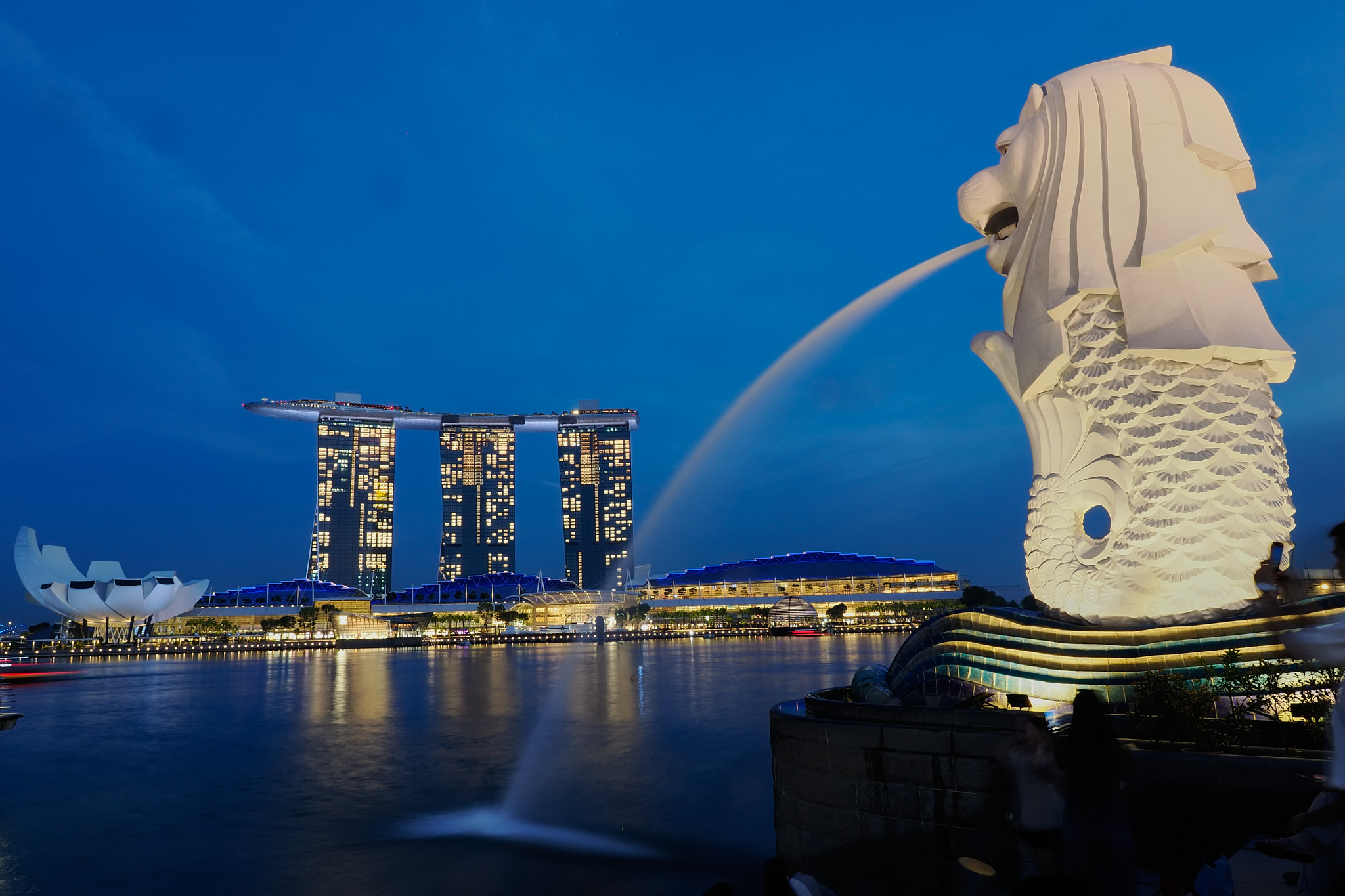
What I do like about cities, though, are the lights …


 bobmcgee