According to Pliny the Elder Cleopatra was keen to impress Mark Antony …
“At this moment she was wearing in her ears those choicest and most rare and unique productions of Nature; and while Antony was waiting to see what she was going to do, taking one of them from out of her ear, she threw it into the vinegar, and directly it was melted, swallowed it
In other versions it is wine. Vinegar is sufficiently acid to dissolve a pearl (eventually) wine is not, Coke would certainly have tasted better. The story is probably untrue but there are two things we can say for certain … Cleopatra was cultured, the pearls of the time were not. Nor were the pearls from prewar Australia. Indeed the WA Pearling Act of 1912 prohibited the production, sale and possession of cultured pearls. That section of the Act remained in force until 1947.
It was buttons and pearl shell inlays that sustained the industry. Pearls were a welcome bonus but a master pearler of the time could not have put together a finely matched necklace in an entire career. The war stopped the industry in its tracks. The ports and airports of Northern Australia were of stategic importance pearl shell was not. The fleet was dispersed.
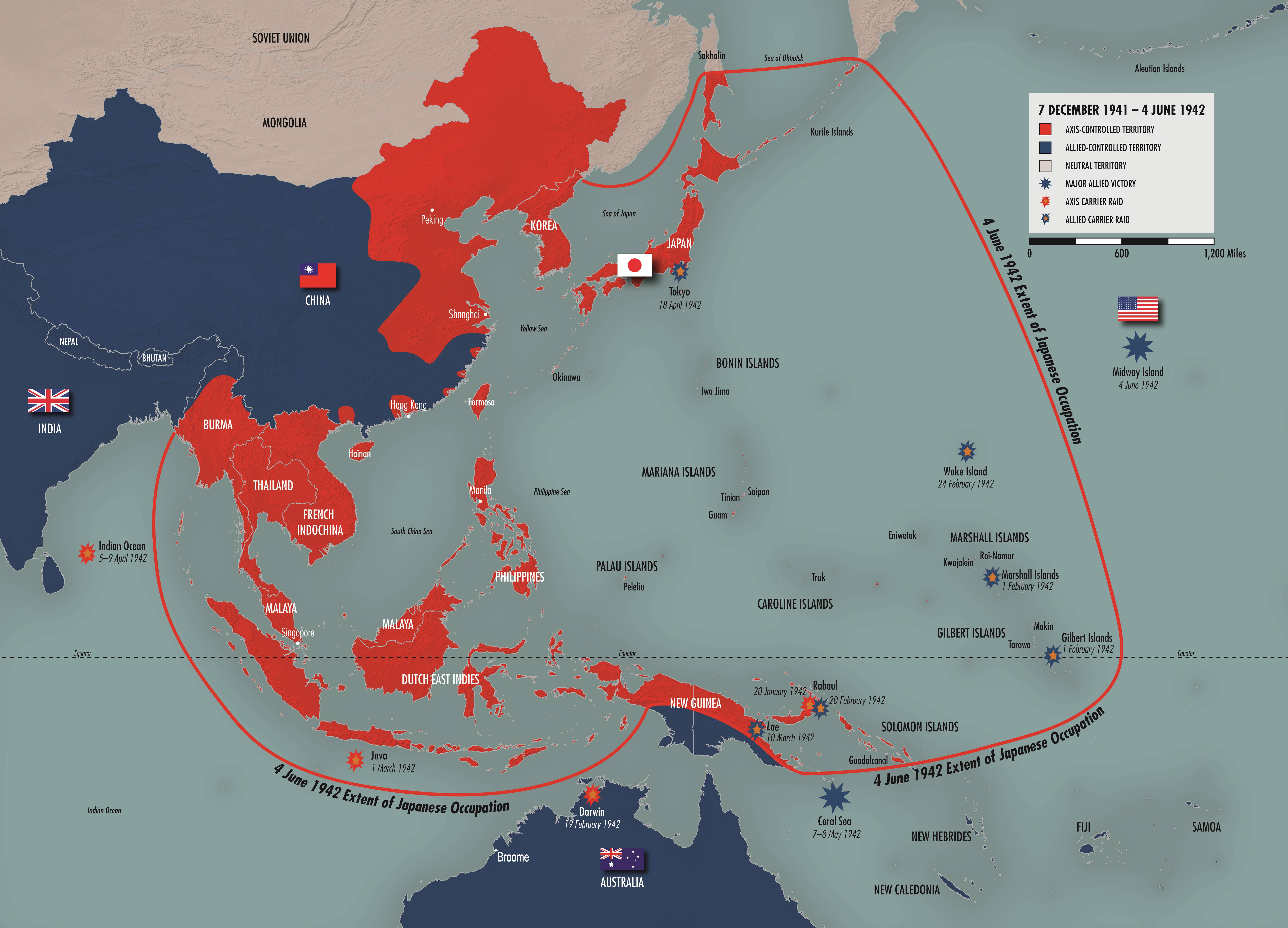
The map, filched shamelessly from The National WW2 Museum New Orleans, to which I’ve added Broome, shows the maximum extent of Japanese expansion and how close the war came to Australia.
Pearling resumed in 1946. The work force was about a quarter the prewar figure. There were no Japanese represented, nor would there be until 1953. A shortage of Luggers hindered production but the fishery had been rested for four years and buttons were in short supply. The industry picked up quickly in a world that was changing rapidly.
As a kid, if I lost a button, my mother would sort through her sewing box to find a matching replacement. Would it be a pearl one or one of the new and cheaper plastic ones?
Hard hat diving gave way to hookah diving, air was still delivered by hose from the surface but to a mouthpiece giving the diver greater freedom of movement. He was now looking for small specimens of the same species of oyster to take home live for cultivated pearl production.
The end product was no longer high volumes of low value shell. Pearling was now truly about the pearl, little balls of calcium carbonate but with a lustre and size that would have so shamed Cleopatra she’d have shoved a snake down her cleavage.
 bobmcgee