The Flinders was as dry as a chip. We took the scenic route through the Parachilna Gorge – not as scenic as Glass Gorge but gentler on the trailer. Then north up the Outback Highway. There was some green pick after Leigh Creek, then some surface water and by the time we pulled into Farina actual grass and even some mud. And by all accounts there’s a lot more of that ahead of us.
This route north brings you face to face with history, John McDouall Stuart followed by the Overland Telegraph, then the Ghan, the birth and death of little towns like Farina. How could you not love this country?
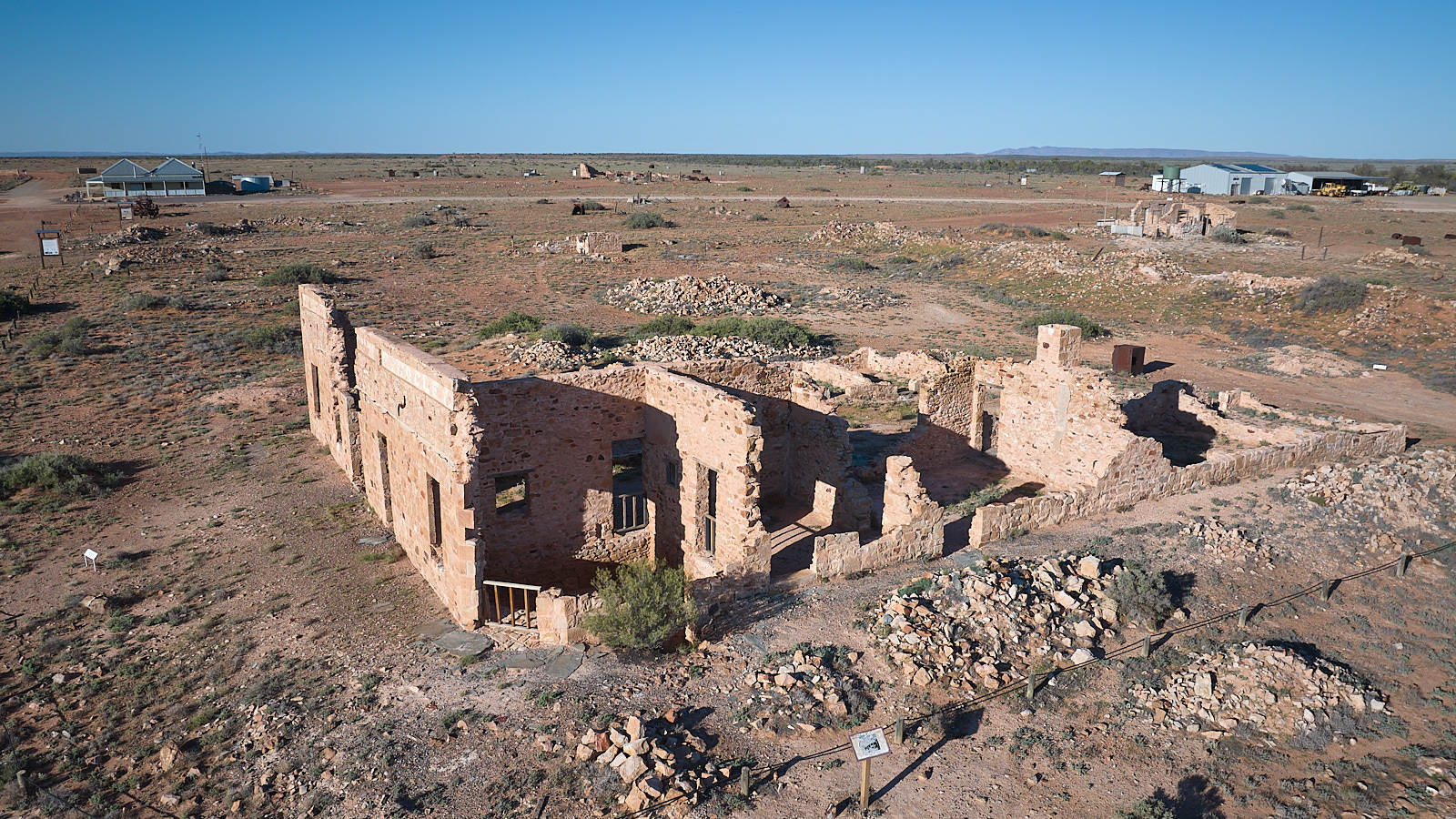
A number of things had conspired to draw people north from Adelaide. As dry as it is, cattle and sheep can be grazed in the hinterland. The railway provided a good way to transport them to market. The telegraph and the railway provided employment. And of course, at the time it was thought that the rain would follow the plough. Plant your crops and the rain would come, a theory promoted by scientists of the day such as the noted American climatologist Cyrus Thomas. The settlement here was founded in 1878 as Government Gums. Its name was changed to Farina to reflect the intention to grow wheat. It grew to reach a peak population of approximately 600 in the late 1800s. It was the rail head for a time. In its heyday, the town had two hotels (the Transcontinental and the Exchange) and an underground bakery, a bank, two breweries, a general store, an Anglican church, five blacksmiths, a school and a brothel. Wild oats were sewn but no wheat was grown. All that remains today are the ruins and the cemetery.
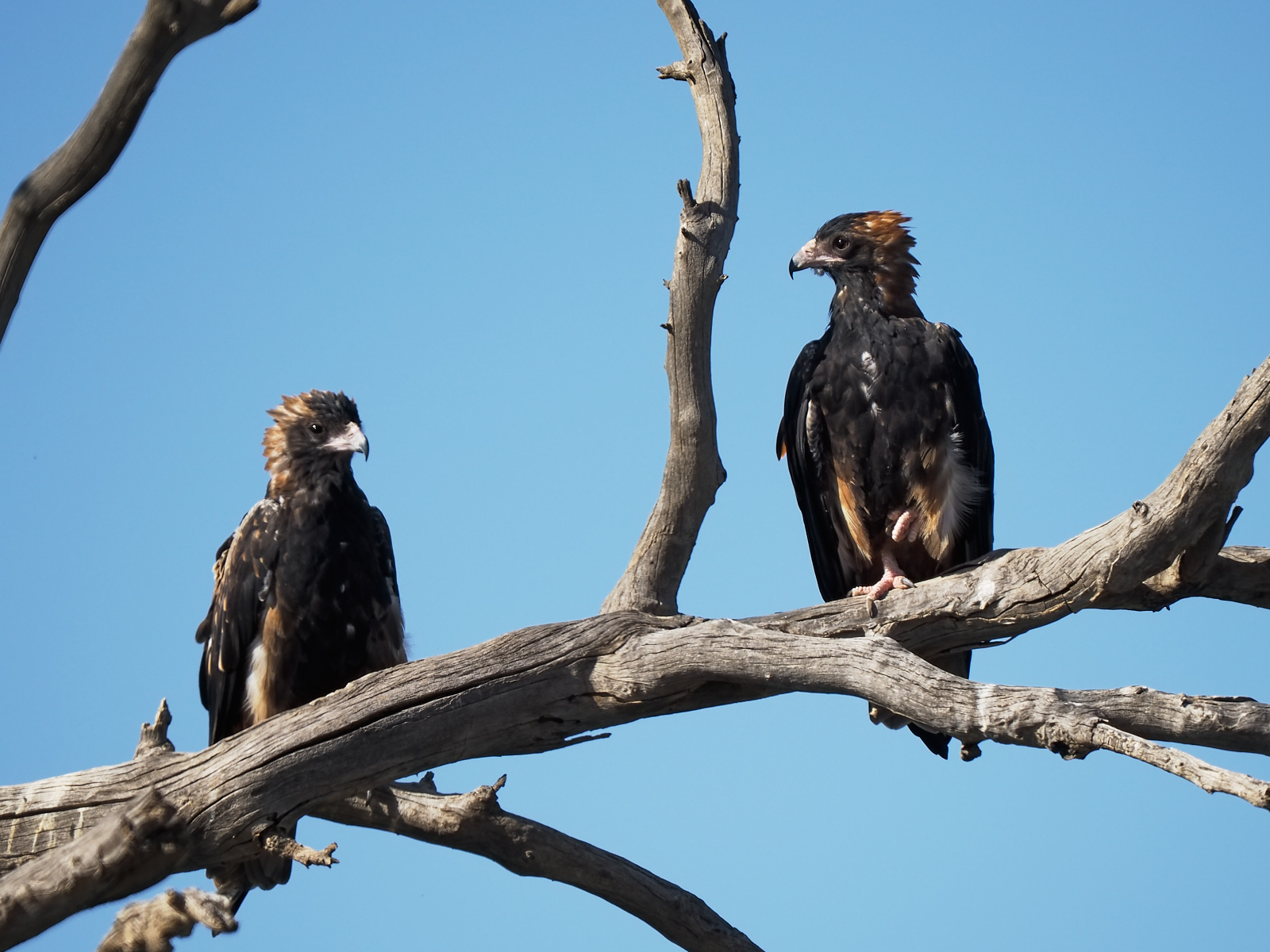
It’s a great camp site and an excellent spot for birding. Inflation has hit, the fee is now $10 per person per night, a 100% increase in 9 years. The bakery has been restored and is in action during the winter months when the camp is busy. At the moment we have it almost to ourselves.



 bobmcgee