Izumi Fumoto …

Matsudaira Takechiyo (1543-1616) was born at a time of great turbulence. He was the son of the daimyo (feudal lord) of Mikawa of the Matsudaira clan. The great clans were in intense rivalry, intrigue and murder were the order of the day with open warfare from time to time.

In 1548 the Oda clan invaded Mikawa. Help was sought from the Imagawa clan. And granted on condition that the 5 year old Takechiyo was sent as a hostage. The Oda clan got wind of this arrangement and kidnapped the boy en route. His father was called on to switch sides but declined.

This could easily have been a premature end for the man who would come to be known as Tokugawa Ieyasu, the shogun. But his life was spared, the Oda found another way of dealing with his father who was dead within the year.

Ieyasu spent the next few years as hostage to the Oda, who were defeated in time by the Imagawa. From age nine to thirteen he was a hostage of the Imagawa. Released he slowly rose to prominence. By 1600 there were two great groups in contention for overarching power in Japan. At the battle of Sekigahara 160,000 men faced each other. Ieyasu, leader of the Tokugawa defeated the Western Bloc to become the military ruler of all Japan.

The Emperor named him Shogun in 1603, he retired from the title in 1605 in favour of his son, Hidetada, but effectively retained power until his death. He set in place a system that would endure until 1867, the Tokugawa Shogunate. A period of internal peace, political stability, and economic growth but also a period of rigid social control and isolation from the rest of the world. The capital was moved to Edo which we now know as Tokyo hence an alternative name for the Shogunate, the Edo Period.

There were four social classes, samurai, farmers, artisans, and merchants. Whichever class you were born into set the boundaries for your entire life. Eighty percent of the populace were farmers. The samurai became the bureaucracy and were supported by a levy on agricultural production. As the economy flourished it was the artisans and merchants that moved ahead. Eventually the internal inequalities combined with external forces to bring about the disorder that led to the Meiji restoration.

So here we are in samurai quarter of Izumi in the south of Kyushu on a rainy winter day …
P1050001

P1040990

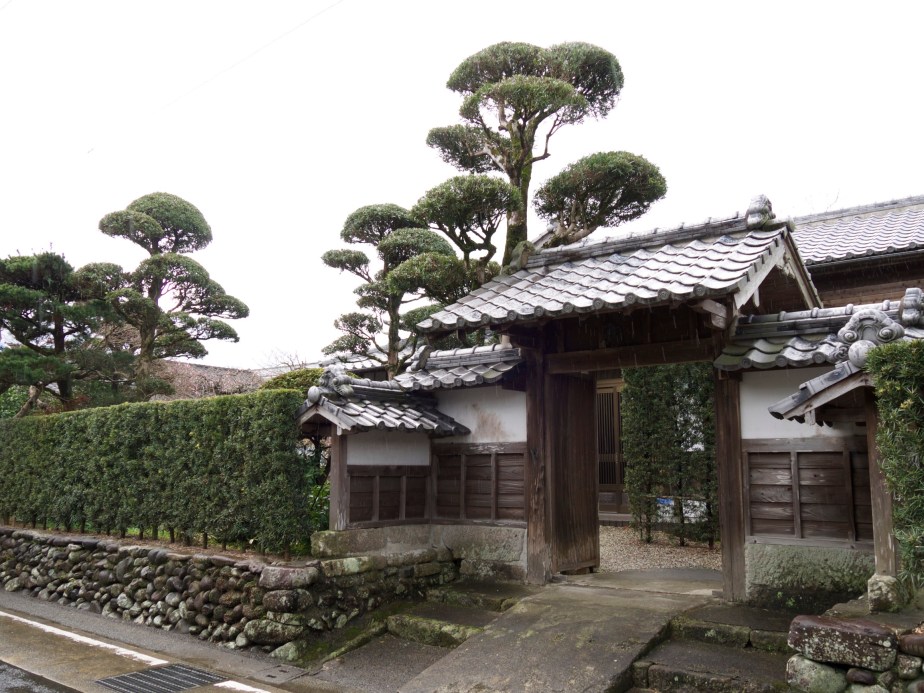
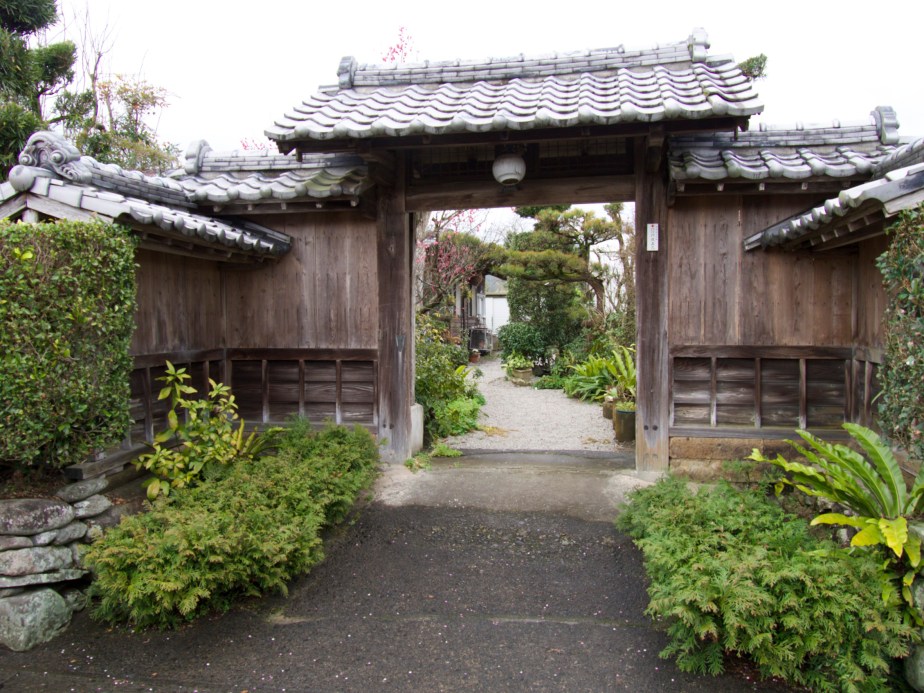
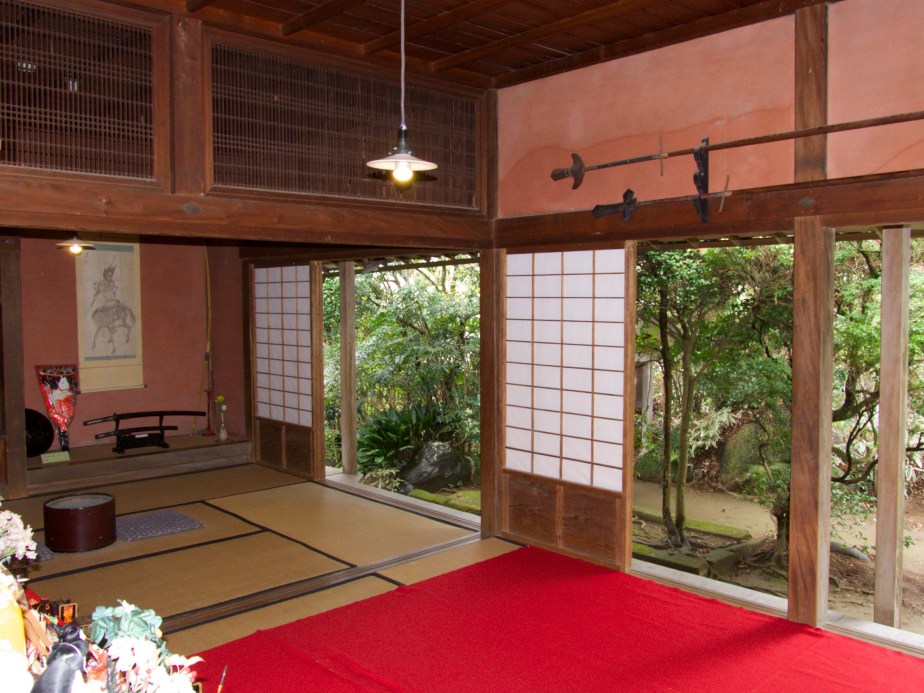
During the Shogunate this place was of strategic importance to the Satsuma domain.  For administrative purposes the domain was divided into blocks called tojo and at the centre of each tojo was an administrative area called fumoto. The Izumi Fumoto was built about four hundred years ago and has changed little in outward appearance. Neat streets lined with river stone walls, samurai gates and manicured gardens are preserved but this is still a residential neighbourhood. A few of the houses are open to visitors. This is inside the Takezoe Residence …

Samurai

P1050124

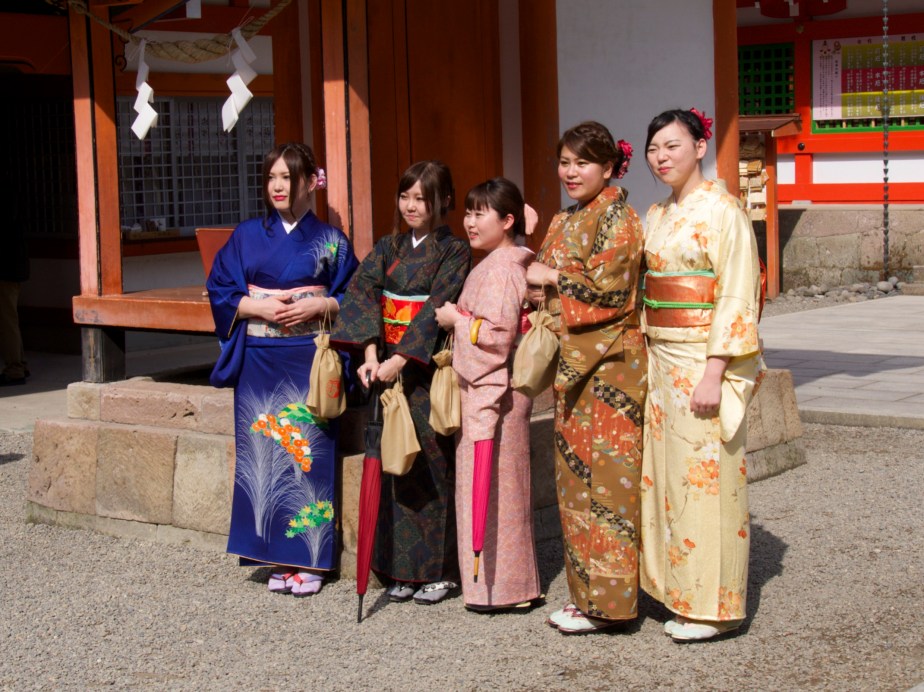
On the street we encountered this young lady on her way to a ceremony to celebrate her twentieth birthday. She was only to pleased to pose for us …
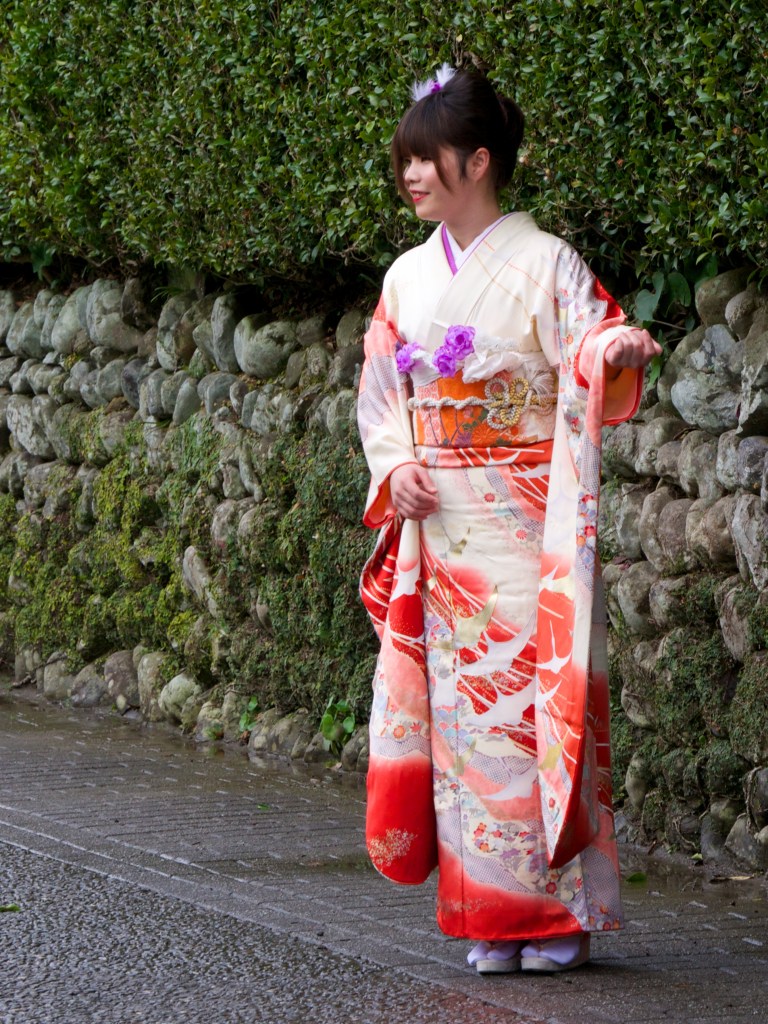
Kimono (1)

and on her kimono – cranes. May her wish be granted.


One Thousand Cranes …

P1040868

In Japanese folk tradition, the crane is a symbol of fidelity, honesty, health and longevity. A crane will live a thousand years and if you fold a thousand paper cranes one will carry a wish to heaven for you. That wish may well be for a long and happy marriage.

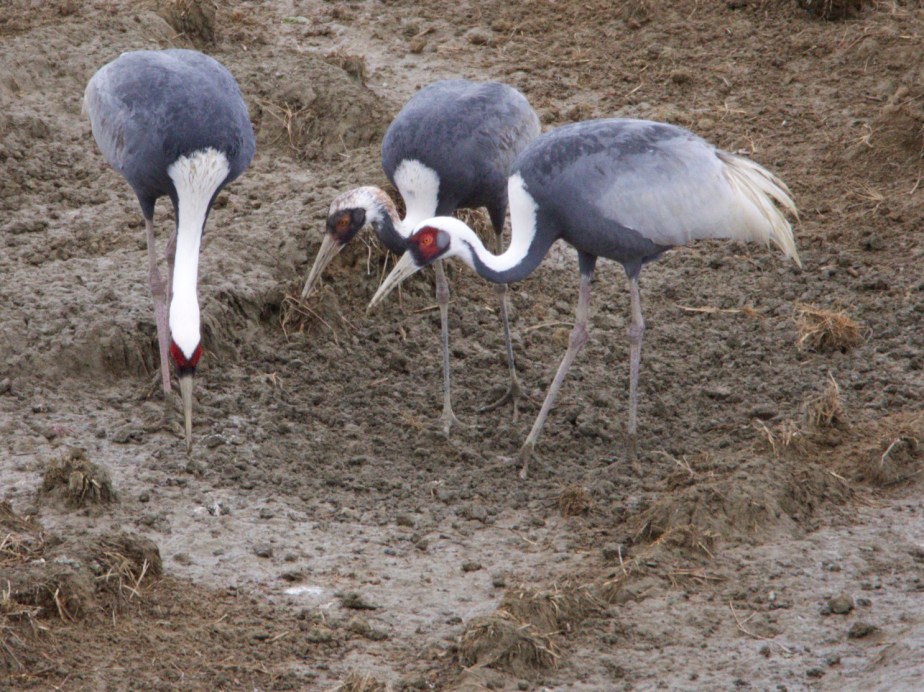
At Arasaki in Kagoshima prefecture you have every chance of finding just the right crane to entrust your wish to. It is the wintering place for perhaps as many as 17,000 of them. The majority are Hooded Cranes, almost all the rest are White-naped Cranes. Both these species fly north via the Korean peninsula to nest in swamps in continental Asia.

Hooded Crane
Hooded Crane
Hooded Crane
Hooded Crane
White-naped Crane
White-naped Crane
White-naped Crane
White-naped Crane

At Arasaki there is a visitor centre with an outdoor observation deck. Grain and fish are put out for the cranes. They are quite a tourist attraction but the birds are assured of a little peace by fences that keep out the people. Some fields are kept flooded, the cranes always spend the night standing in water.

They start to arrive in mid October, start to leave in February and are gone by March. Numbers have risen over time from less than 300 in the late 1940’s to 17,005 (an unlikely degree of precision) in 2015. That is very likely good news for cranes although there are now fewer of them wintering in other locations.

The pair bond is maintained during the winter and last year’s young stay with their parents until it’s time to go north again, so as you watch what can seem like an amorphous mass of birds you soon start to pick out adult pairs that may have one or two youngsters with them.

At times they are a fairly noisy bunch and as spring approaches they start to dance and display.

P1050186

Just occasionally you can find a Sandhill Crane or two. Their breeding ground is further north and most cross the Bering Strait to winter in North America but a few come south to Kyushu. I was also lucky enough to see a Common Crane that had wandered east from its normal range. It was keeping company with a Hooded Crane, the two species do occasionally hybridise.

The donation of free food attracts a few other birds as well. Black-eared Kites, Grey Herons, Eastern Rooks, Daurian Jackdaws and Common Starlings (not at all common in Japan) all drop in for a feed.

In the marshes not far away we encountered nine distant spoonbills. Seven were Eurasian Spoonbills, two were Black-faced. This was indeed a treat, the Black-faced Spoonbill is rare and endangered (and new to my list).

… only 999 to go.

Itadaki masu …

I am so relaxed after soaking in the hot spring bath that I am almost unconcerned about the cultural minefield of public dining. I did say almost.

It could be worse, I could be going to a funeral. Just imagine a dumb foreigner in an emotion charged situation of extreme personal importance tripping over every tradition encrusted cultural artefact in sight. Eating is surely a piece of cake.

By comparison, yes, but knowing a little about a Japanese funeral will get you some way towards the attainment of good manners. Most Japanese depart on their final pilgrimage with Buddhist ritual. The proceedings fall into three phases over a couple of days and are quite intricate. For the moment, though, let’s extract just a few details.

After death the spirit will make a journey to another place. The body is dressed in a white garment (kyōkatabira) which resembles the clothes of travelers and pilgrims of past times. It is folded over the chest in the reverse of the normal way, left side under right. Some further accessories complete the outfit, the full shinishozoku. The body is made a gift of food with the chopsticks standing in the rice. After cremation relatives of the deceased use chopsticks to remove the residual bones from the ashes. They are transferred from the head of the family to other family members from chopsticks to chopsticks and then placed in the funerary urn.

It follows, little grasshopper, that in donning your yukata the right side goes across your chest first then the left goes on top, you are, after all alive. You never leave your chopsticks standing in your rice and you never pass food from chopsticks to chopsticks.

Traditionally a meal is taken kneeling at a low table. In informal situations girls may slip their bottoms off their heals to a more comfortable position, boys may sit cross legged. I can hold any of these positions for several seconds.

Westerners and older Japanese can be accommodated at low table by having a well for their legs. This is a splendidly comfortable alternative that doesn’t spoil the photos. It works well until, having drunk too much sake, the westerner stands up and his foot slips into the hole.

If you are used to western style tables and chairs and are given the choice, play it safe.

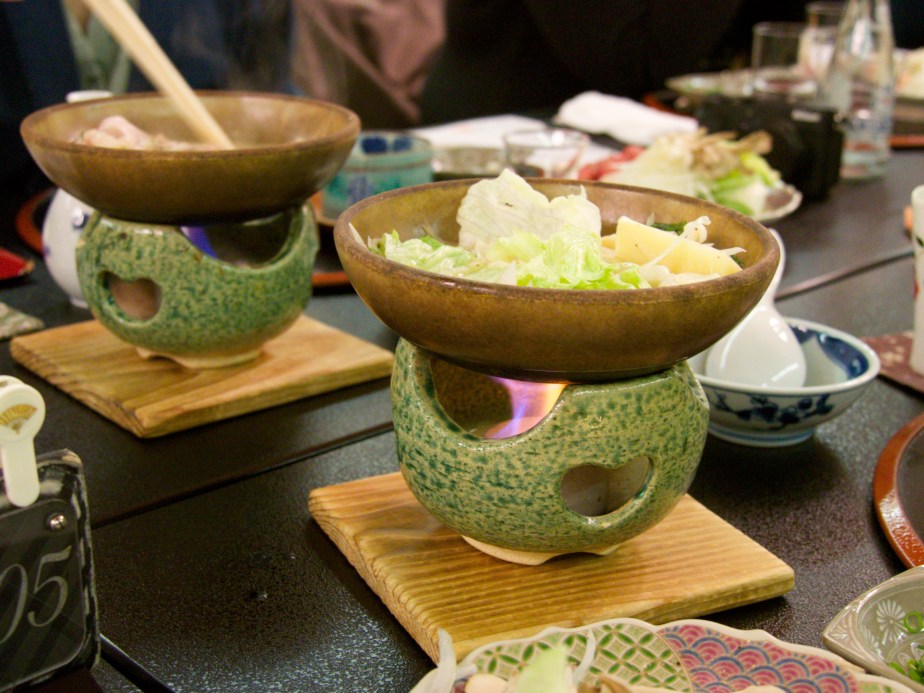
Japanese food is exquisite. It is one of only two cuisines to be given World Heritage listing by UNESCO. (The fact that the other one is French does take the gloss off a bit). Plain boiled rice, miso soup, pickles, a variety of mushrooms, lots of fresh ingredients, art, skill and thought. That’s all it takes. You could do it at home, an evening meal shouldn’t take more than about eight hours to prepare.

P1050664

P1050666

Before starting a meal a Japanese family would say “Itadaki masu“, that final u is silent, whilst making a slight bow to the food with palms together. The words translate as little more than “eat” or “receive” but enclosed within the words and gesture is a statement of thanks to everyone and everything concerned, to the animals and plants, the farmer and the chef.

After the meal it is polite to say “Go-chisou sama”

Bath time …

According to legend, Queen Elizabeth took a bath once a month whether she needed it or not. That’s Queen Elizabeth the first by the way. Even into quite modern times the English have been reluctant to immerse themselves in water, it has given rise to a number of Australian sayings. The Japanese are the opposite. And in a country that has hot running water coming out of the ground they have married the hot spring with hygiene and come up with a short cut to heaven, the onsen.

The bath towel is a tiny rectangle about twice as long as it is wide. I take it from my room. There is also a plastic bag in which I can bring back my dirty underwear. I am wearing my yukata, I slipped on my slippers as I stepped off the tatami. The signs in this hotel come with English subtitles but if they didn’t I’d be looking for this 温泉.

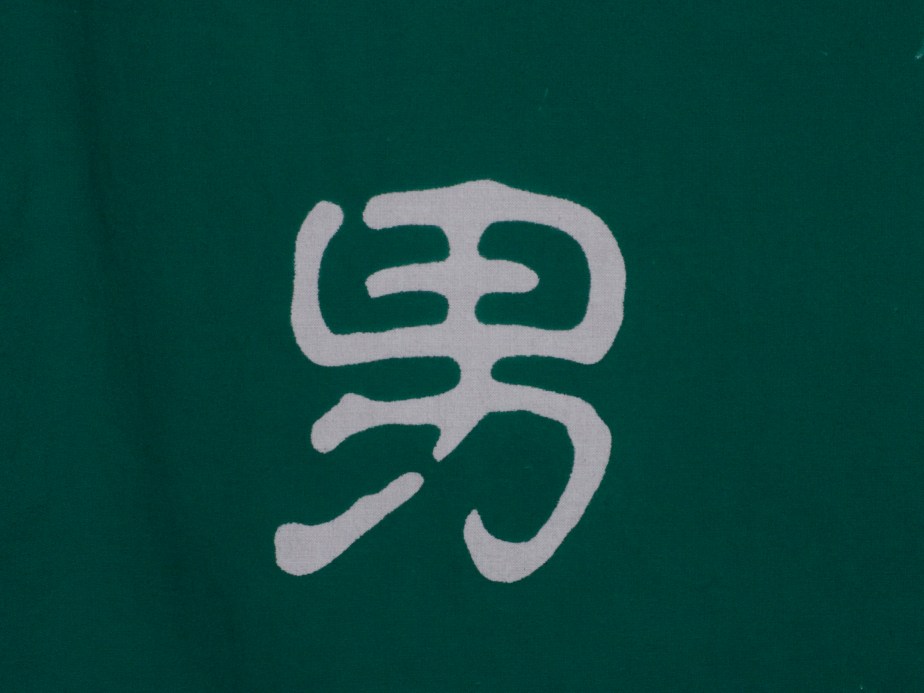
There comes a moment when the boys go one way and the girls go another. Subtitles may help but, even if these are the only kanji you learn, know these …

Men
Men
Women
Women

Beyond the curtained entrance it’s time to part with the slippers. A few steps later you are in a room that could be a gym change room. There are racks of baskets (or lockers). Get your gear off, all of it. There is likely a drinking fountain, have a cup of water. You and your towel head through the next door. Look for the showers, usually in a row, with stools and a bowl at each. Sit on the stool and shower, wash yourself thoroughly with soap from head to toe, especially between the toes. The towel is just the right length to wash your own back with. When you think you’ve finished sneak a look around. The Japanese person that was washing their toes when you came in is still washing the same toe. This is a competition to see who can wash for the longest possible time, so do it all again. Then accept that the Japanese person is going to win, he or she may still be there when you finish in the hot spring. There is always one like that.

Thoroughly wash off all the soap and make sure the towel is also rinsed clean of soap. Then demonstrate your superior manners by rinsing the stool and the bowl and leaving the stool with the bowl inverted on top. Wring out the towel, you may fold it over your horizontal lower arm so that it provides an artfully contrived appearance of unconscious modesty and stride purposefully in the direction of the hot pool, or at least in the direction you hope it is.

You enter the water, the towel does not. It goes on your head, fold it neatly first.

You haven’t come here to get clean, you did that in the shower, you’ve come here to relax. With a little practice that takes about a nanosecond.

There are indoor baths and outdoor baths and some places have both. Most are single gender affairs some are mixed. There is something beyond special about sitting in hot silky spring water, surrounded by snow with more coming down around you, discussing the meaning of life with a friend.

When your body says it’s time to get out, get out. Some people will shower again as they leave, it’s not compulsory, it is acceptable to get your razor from your basket and head back in to have a shave sitting on one of the stools, well it is in the men’s.

Have a drink of water, relax, wring out your towel, wipe down. Your inner warmth will have you dry in next to no time, I never bothered with a big towel.

Tattoos are generally forbidden in the onsen. In Japan they signify membership of the yakuza.

Your swim wear is just as unpopular as your tattoo and therefore of no use in covering your tattoo.

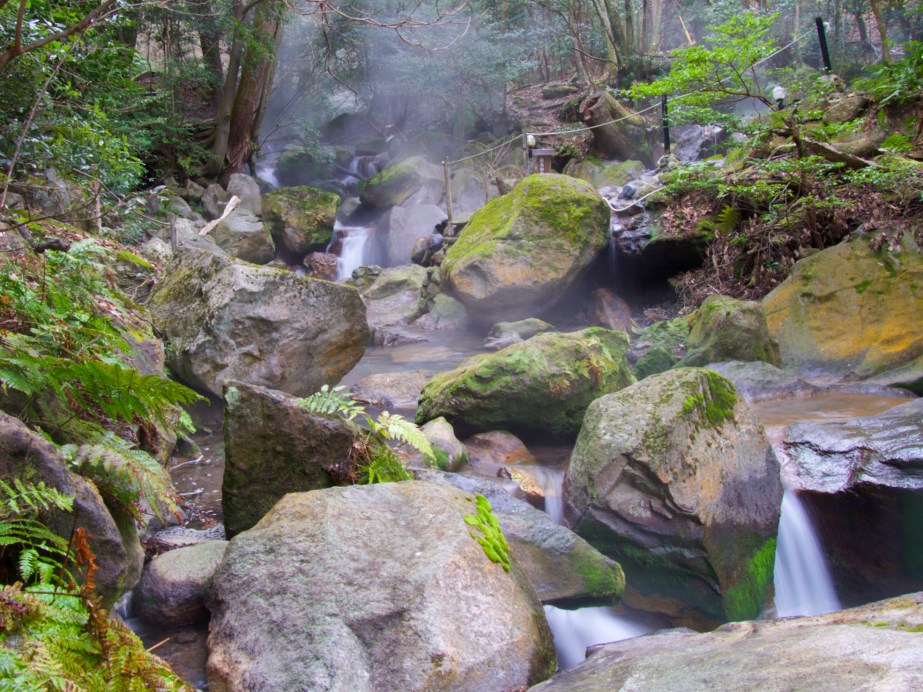
Your camera is also not allowed which would have made it impossible for me to show you a hot tub were it not for the fact that I came across this one on a lake shore where the sole occupant was happy to give me permission …

P1070465

A small onsen in the woods may not come complete with showers. In that case you wash with water dipped from the pool and soap may not be used.

Once you have undertaken this ritual, it is very likely that you will want to do it again tomorrow. If you are staying at the same hotel do not assume that everything will be in the same place and bowl thoughtlessly in. Some hotels switch boys and girls everyday so that everyone gets to enjoy a particular view or a special garden setting.

Good manners …

It is already apparent that Japan is a land of good order and good manners.

Thus far I have stayed at a big city hotel and eaten in a private room with other foreigners. Tonight it would be a different matter, a country hotel with onsen. The opportunities to give unintended offence or simply make a fool of myself would be endless. How do you mind your “p”s and “q”s when suddenly you can’t even read?

The first place one could trip up is at the entrance. Here there may or may not be a kind of shoe exchange. The visual cues are usually in the form of a step reinforced by the presence of slippers. If confronted with these cues you are in the genkan. The protocol will seem familiar to anyone who has worked as a neurosurgeon. Before you reach the step the floor is part of the outside world and therefore contaminated. Undo your shoes. The slippers are likely placed ready to step into at the edge of the step, if not they will be in reach, place them on the step. Step up from your shoe into a slipper. Do not contaminate your sock on the floor below the step. Repeat the process with the other foot. If there are little shoe racks pick up your shoes and place them in the rack, sometimes they just stay on the floor. To touch the contaminated world with your sock or the sole of your slipper will have much the same effect as stepping on the cracks between paving stones, and to walk on the inside world in your outside shoes would be even more disastrous.

Your new found slippers will not fit. Because you have been careful not to contaminate your socks this will trouble no one, take small steps and try to look at ease.

You will meet a genkan at any private house you visit, smaller restaurants , perhaps at the doctor’s clinic. Be ready.

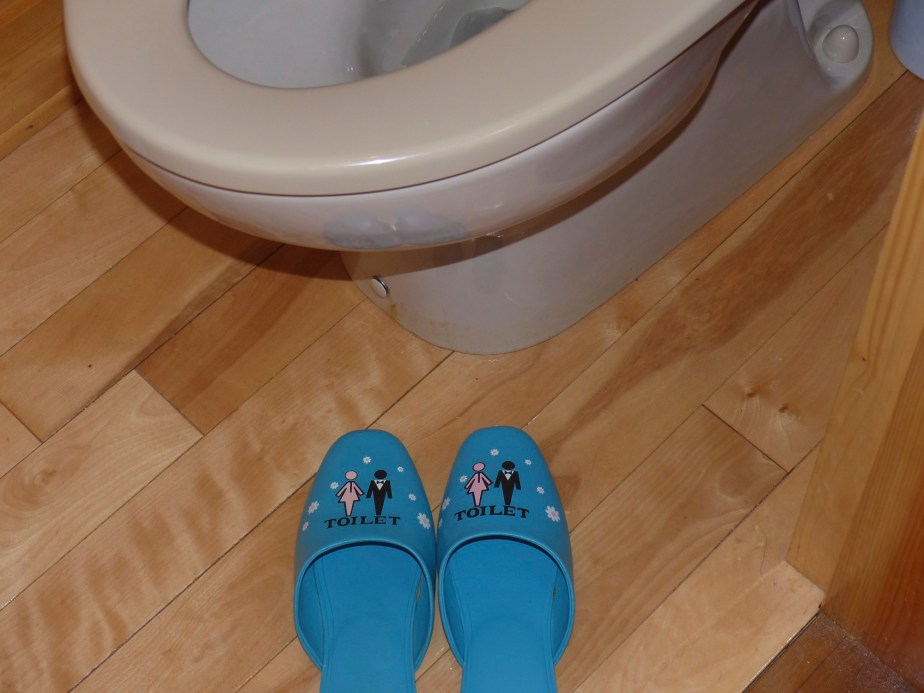
Having crossed that threshold your feet are now are now safely ensconced and you can relax, right? Wrong, there are at least two more slipper change places to be aware of. Tatami floors are elegant and luxurious and easily damaged. When entering a tatami room the slippers come off, socks may stay on. The other consideration is the toilet. It would not do to walk on the contaminated toilet floor in either your socks or your nice clean slippers. So just inside the toilet you may find a pair of toilet slippers. These are worn only in the toilet.

In the privacy of your hotel room it will matter little whether you change into your toilet slippers but, sooner or later you will enter a toilet that is in public view. To be seen not changing your slippers would be a faux pas. Far worse would be to come walking out in the toilet slippers. They are distinctive, the further you’ve travelled the more you will blush. Following the rules in private will help you remember them in public.

P1080259

At the traditional country inn or ryokan you can expect to find your yukata in your room, and sleep on a futon on a tatami floor. The yukata can be worn to the bath and to the restaurant. It is elegant and casual and greatly reduces the need to pack evening clothing.

Here I am in my room, standing on the tatami floor next to my futon, dressed in the yukata.

Yukata

When you do up the yukata, no matter your gender, the right side goes across your chest first, the left side goes over that. Just do it, little grasshopper, I shall explain later.

All I need to do now is find my bath towel and head to the onsen.

Satsuma-imo …

Kyushu, being the most southerly of the main islands of Japan has the mildest climate. This is where the Japanese sweet potato, satsuma-imo, grows to perfection.

At a view point overlooking Lake Miike we came across this guy.

P1040270

I like to ask permission before taking photos of people in the street. Not only was he happy to oblige, the sweet potato man gave me some to try. As a kid I really liked to eat chestnuts roasted on the coals of an open fire. The satsuma-imo brought those memories flooding back. The texture is similar and the taste is delicious. My face must have lit up.

Good karma. Within minutes he had sold a bagful to our little band of tourists.

Kirishima …

It is said that Amaterasu, goddess of the sun, sent her grandson, Ninigi no Mikoto, to the island of Kyushu where he governed the region around Kirishima. He was equipped with three celestial gifts to assist in his ascendency to power, the sword, the mirror and the jewel. Perhaps more importantly, he brought the rice that would feed Japan for ever after.

One of his sons married Princess Toyotama. She was also of divine descent being the daughter of Owatatsumi, the Japanese sea god and brother of Amaterasu. Together they had a single son called Hikonagisa Takeugaya Fukiaezu no Mikoto. The boy was abandoned by his parents at birth (perhaps because it was too much trouble to say his name – “Hikonagisa Takeugaya Fukiaezu no Mikoto will you stop making all that noise, you little shit”) and subsequently raised by Princess Tamayori, his mother’s younger sister. They eventually married and had a total of four sons. On February 11, 660 BC the last son became Emperor Jimmu, the first Emperor of Japan.

The shrine at Kirishima is thus closely associated with the foundation of Japan. Foundation day is a holiday celebrated on February 11. So on February 11 where better to be?

P1040234

The approaches to a Shinto shrine are marked by the torii. Not far beyond the main one there will be a fountain (temizuya) where the visitor washes hands and mouth. Mineko-san instructs a guest on the way …

P1060743

first the left hand then the right. Then water is poured into the left hand and transferred to the mouth. Rinse and spit out. Finally rinse the left hand and the dipper. Thus cleansed you are ready to approach the shrine. You mount the steps to the barrier where you may make an offering of some coins, bow twice, clap your hands twice and bow once again. It’s OK to ask for a little in return, like first prize in the lottery.

Kirishima shrine

Other features to look out for are the lanterns (toro), plaited ropes (shimenawa) and strips of white paper in the form of lightning bolts (shime). The latter two may be hung at gates to deter evil spirits or around trees and rocks where the revered spirits (kami) dwell.

I took an immediate liking to the guardian lion-dogs (shishi). They come in almost identical pairs, but one has the mouth open, the other closed. The open mouth is pronouncing the first letter of the sanskrit alphabet (“a”), the closed one the last letter (“um”), representing the beginning and the end of all things.

At the shrine you may buy a votive plaque to help you pass your exams or bring on some other self indulgence or simply buy a slip of paper that will tell you your future, a fortune cooky with no calories as it were. If things are looking good keep your slip of paper, if it’s bad luck then leave it at the shrine fastened beside all the other little slips that people didn’t want.

A helpful web site can be found at The Shinto Shrine Guide.

The kami care not whether you are faithful to their religion, a stroll through their grounds will be good for your soul no matter what you believe. And if it happens to be your national day why not do it in your national dress?

P1040258


Snow Monkeys and Cranes …

Back at the Haneda Excel Tokyu Hotel it was time to meet up with my companions for the Zegrahm Expeditions Snow Monkeys and Cranes tour of Japan. It is a very popular tour that I have been hearing about for years and was obliged to book about three years ago. You can find the brochure <HERE>. The itinerary is summarised on their map.

SnoMosand Derick

Japan is a country of marked seasonality. This is a winter tour which will give access to some spectacular wintering migrant birds and it will also show the Japanese Macaques at their most photogenic. It is not the best time to see the smaller birds but you can’t have it all.

As well, one expects, from Zegrahm, excellence in tour leaders, great accommodation, at least two kilos weight gain from the good food and a stream of cultural insights. In short, the bird watcher can take his wife without laying himself open to criticism. In fact, you don’t even have to be a bird watcher at all.

The leaders on this occasion are Mark Brazil and Mineko Dohata.

Dr Brazil is an ornithologist and a prolific writer. He was once a professor at Rakuno Gakuen University in Hokkaido. Although that is no longer the case, any thought that he is no longer an educator has to be dispelled, he just can’t help sharing his extraordinary knowledge. He writes a nature column for the Japan Times and he has written the book on Asian birds. Originally a pom, despite which he is a lovely bloke, he has lived in Japan for much of his adult life. Mark has made major contributions to the understanding of speciation in Japanese convenience stores, not all of which seems to be allopatric.

Mineko-san is a nationally certified guide. She lives in Kyoto. Her English is impeccable. She manages to convey the impression of the archetypal Japanese woman, polite, deferential, shy whilst at the same time bursting with humour and personality. She, also, will educate us over the next few weeks. And she will translate for us, keep us out of trouble and ensure that we have our seatbelts on whilst travelling. Oh so modest, but oh so influential, by the end of the trip we were all wondering why she has not yet been listed as a living national treasure.

That evening we wined and dined. Next morning we flew to Kagoshima Airport on the island of Kyushu.


The Meiji Shrine …

The big city is not my cup of tea. The conurbation of Greater Tokyo is the biggest of them all, 37.8 million people in 13,500 km².

I have a day adrift here. The options …

  • Sit in room, suck thumb. Ultra safe.
  • Go for a walk unravelling a ball of twine behind me (or taking good notes). Adventurous.
  • Take rush hour public transport across Tokyo and hope to get back. Verging on insanity.

Really, where can a boy go bird watching in Tokyo. Mayumi, a friend, had suggested the Meiji Shrine.

Haneda Airport has an information desk. The staff speak good English and are keen to help. To get to the Meiji shrine take the train. There is a stop at the airport (Keikyu line). Why didn’t Melbourne think of that? Change to the JR Yamanote line at Shinagawa get off at Harajuku. You’re at the gate. Entry is free. Reverse the process to get home. They were kind enough to write it all down for me.

You can buy a single trip ticket at the station (why didn’t Melbourne think of that?) from a machine that can be switched to English. It didn’t, however, list stations individually, the missing part of the jigsaw was knowing which cost zone Harajuku would be in. Puzzled foreigner stares stupidly at machine. When dealing with foreign machines stare slowly and clearly.

A smartly dressed mid-career type man coming from the platform volunteers to help. He enquires at the information office and comes back with the missing piece, supervises the administration of the money and points me in the right direction. I thank him. He bows.

Tokyo Metro

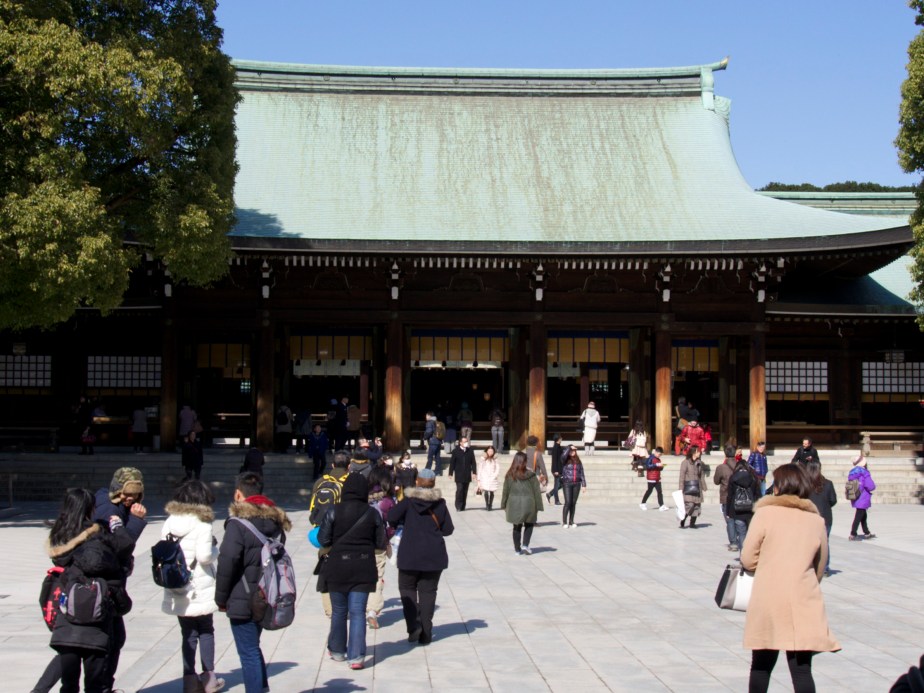
The Meiji Shrine commemorates the divine souls of Emperor Meiji and Empress Shoken, central figures in the Meiji Restoration of the 1860’s. This period saw the end of the Tokugawa Shogunate and an opening up of Japan to western influences.

The Emperor died in 1912 and the Empress two years later. Their tombs are in Kyoto. An area was set aside in Tokyo and trees planted in their honour. Established in 1920, it is now a mature forest that includes a couple of lakes providing excellent habitat for birds such as Oriental Turtle Dove, Japanese Pygmy Woodpecker, Mandarin Duck, thrushes, redstarts, waxwings … and the shrine.


P1040036

And surprisingly, it’s the shrine that gets all the attention. It happens to be the number one (of 228 attractions) on TripAdvisor.

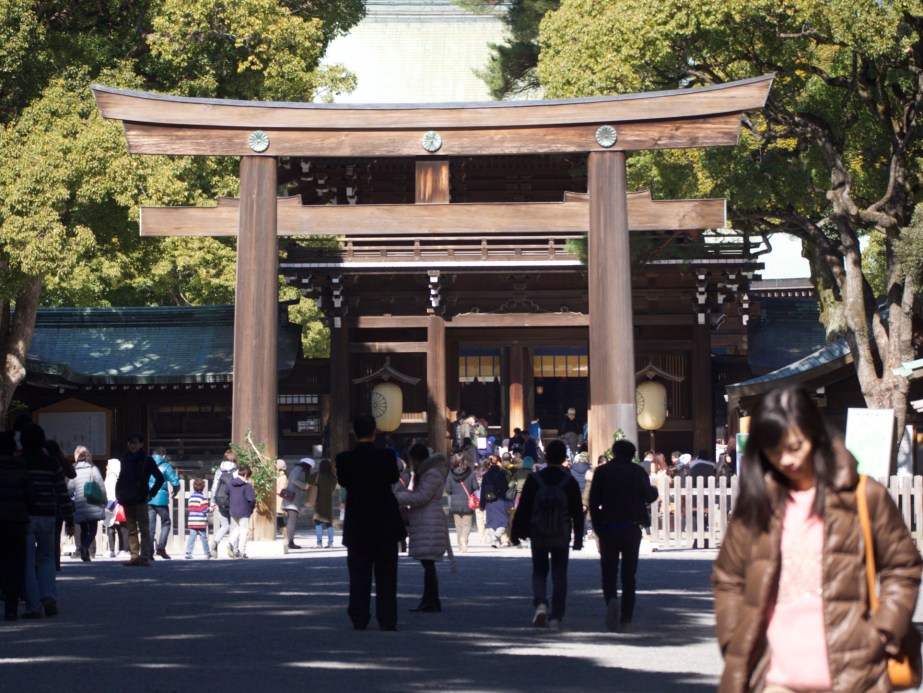
Below is one of the splendid torii gates that mark the various approaches to the shrine …

P1040006

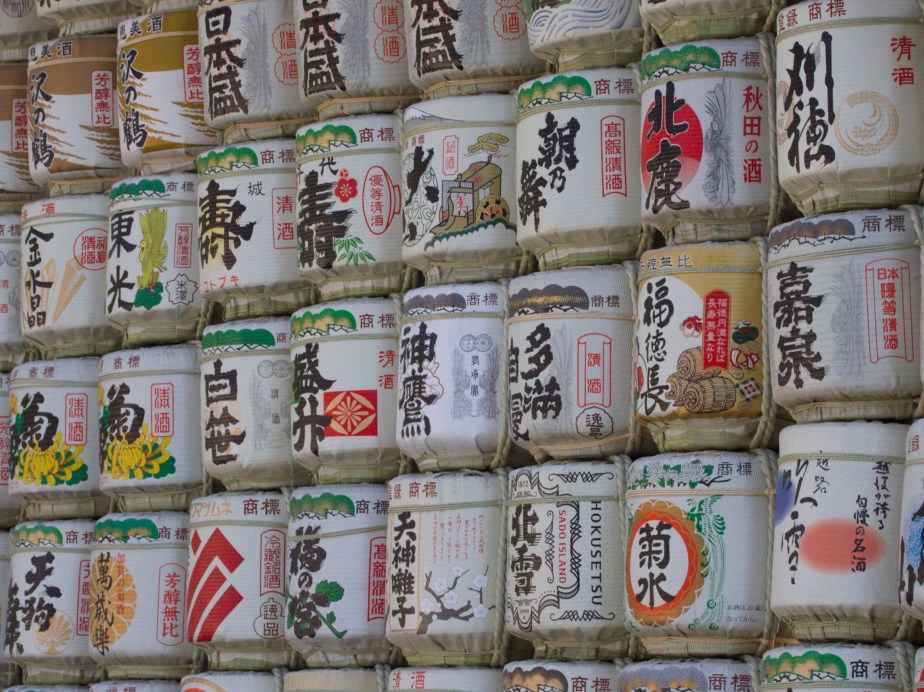
Sake brewers donate barrels of sake wrapped in straw and paper to the shrine.

Sake barrels

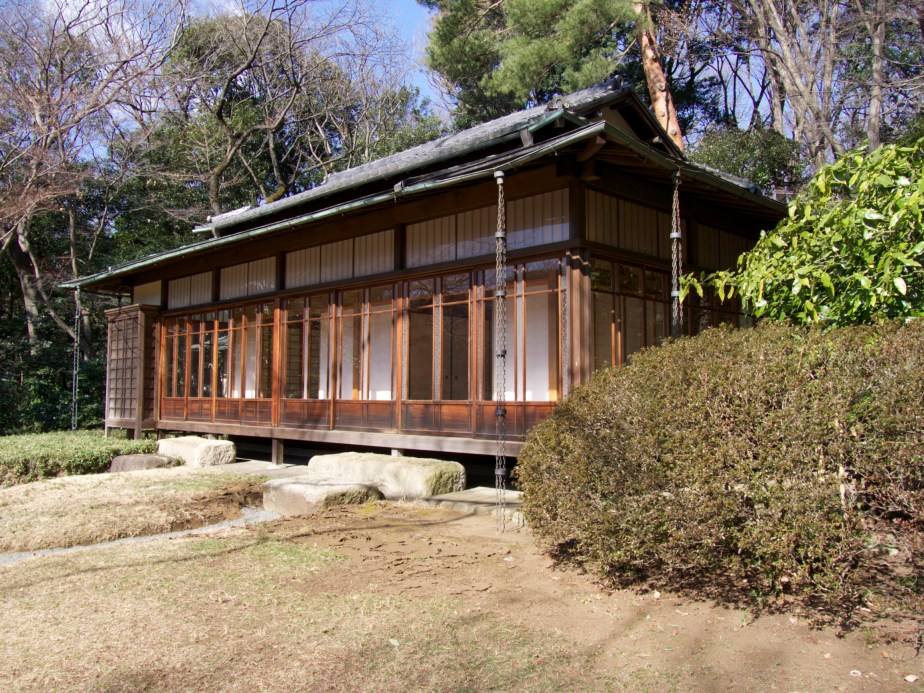
A small payment is required to enter the beautiful inner garden (¥500). This garden existed prior to the Meiji Shrine and the Emperor hand a hand in its design. Here you can find this tea house. It is probably the most photographed garden shed in all of Japan.

Teahouse

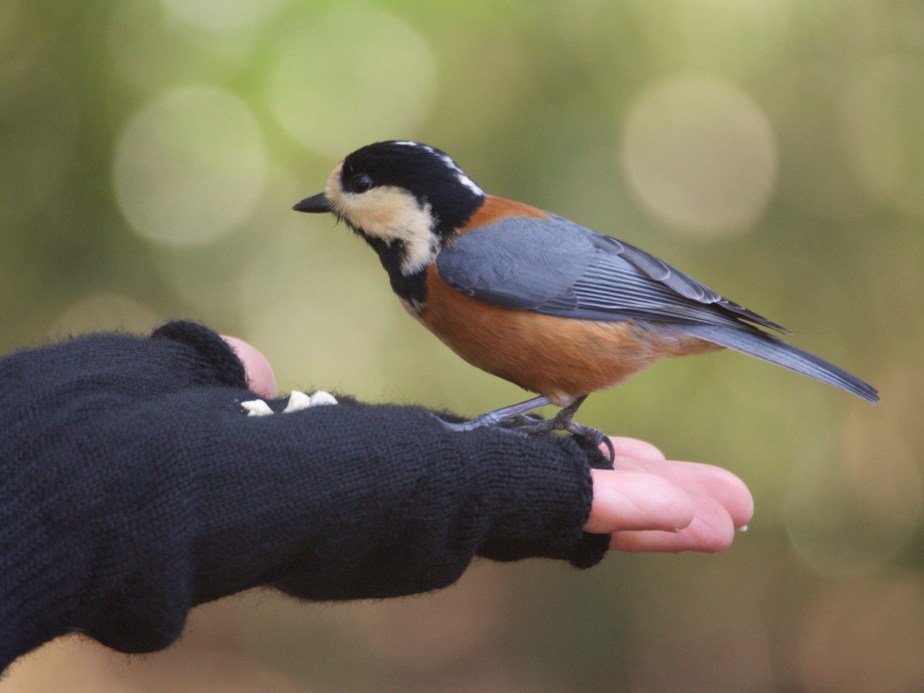
There is also a small pond in the inner garden, crafted to raise the spirits of Empress Shoken, there where I came across a very attractive Kingfisher and various small birds were coming for a handout.

Varied Tit
Varied Tit
Black-faced Bunting
Black-faced Bunting

It was a great place to spend the day. Now to get back to the Haneda Excel Tokyu Hotel.

Stupid foreigner stares slowly and clearly at ticket machine trying to remember how much money to contribute. Slender, young, attractive Japanese woman volunteers to help. She makes a quick trip to the enquiry desk, supervises the donation and points me in the right direction. Her English is impeccable. I thank her. She bows. Helplessness has its rewards.

You can download a map of the Tokyo Metro <HERE>.