Next stop on the Brazil foray was Caratinga, specifically to see the Northern Muriqui.
These are the largest South American (non-human) primates. There are fewer than 1000, they are restricted to the Atlantic Forest region of Brazil and because of fragmentation of the forests the remaining Muriqui are languishing in small isolated groups. The best studied group are to be found on a private reserve – Reserva Particular do Patrimônio Natural Feliciano Miguel Abdala, in the state of Minas Gerais. All praise to its owner.
The Muriqui has long limbs and a long prehensile tail. They swing through the trees with great agility eating mainly young leaves and fruit They live mixed-sex groups of between 8 and 80 individual which are not particularly territorial or aggressive. Females tend to give birth to a single offspring during the May – September dry season. Male offspring remain with their natal group. Females disperse to join other groups once they have reached adolescence at 5 – 7 years.
We found a female with a baby and an older sibling almost immediately and later a group of twenty or so.

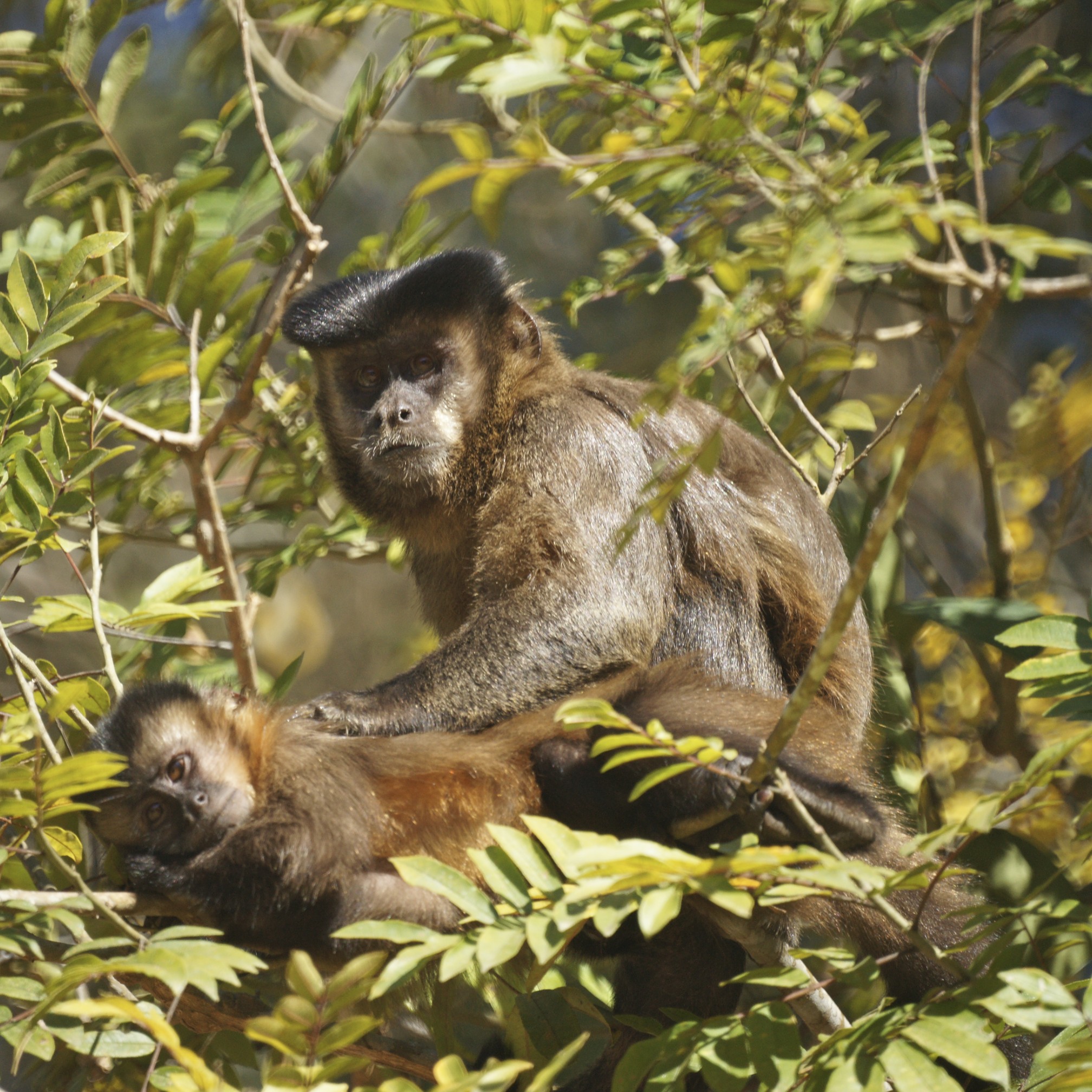
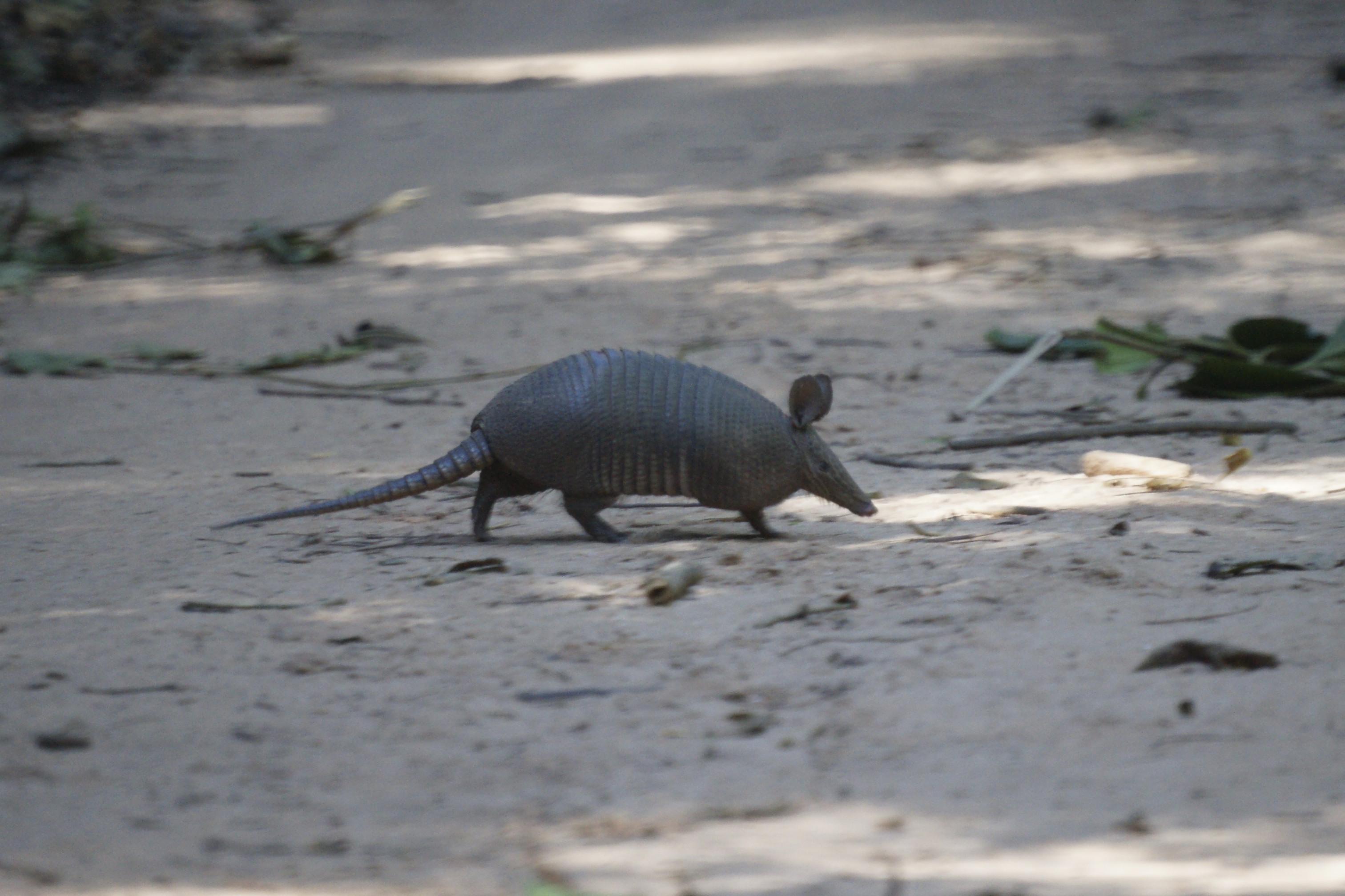
We spent a long time with the Muriqui, but as is always the case, time in the field is always rewarded. The day yielded 44 species of bird and three more primates … Buffy-headed Marmoset, Brown Howler and Black Capuchin. Plus a Nine-banded Armadillo made a brief appearance, it’s rare to see these at all and most sightings are at night.
 bobmcgee