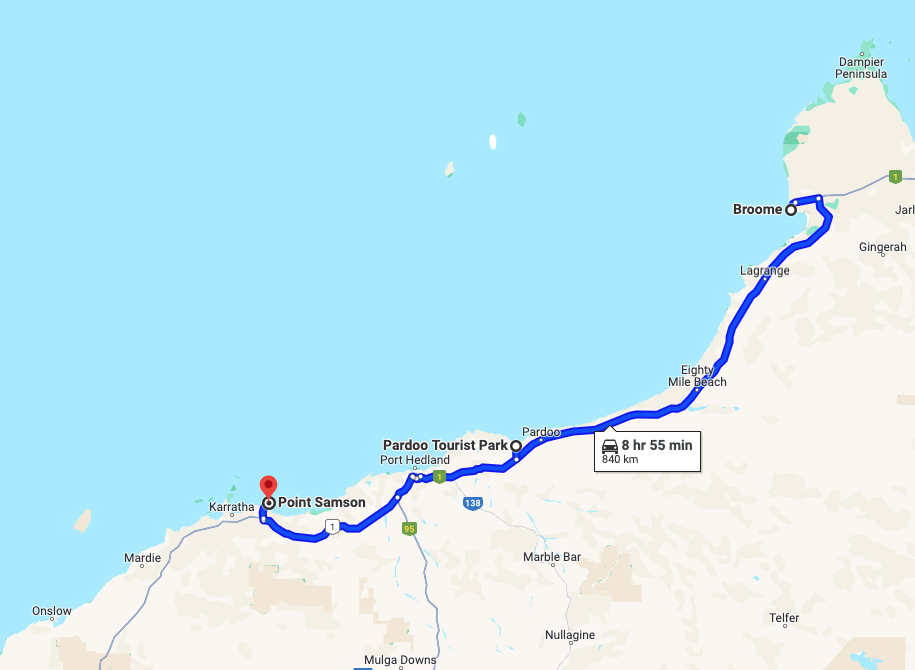
Heading south. The first day’s drive took us from Broome to Pardoo Station. We left with clear blue skies but soon were traveling through a very smoky atmosphere. The Pindan scrub was on fire in many places. Smoke was everywhere but we only saw flames by the highway in a couple of spots.
Just north of the road house at Sandfire the scrub gives way to more open country and the atmosphere cleared up considerably. The next road house is at Pardoo. This was knocked over by cyclone Ilsa in April earlier this year. It didn’t look as though rebuilding had made any progress since we passed it last. There will be no fuel at Pardoo for a while yet. Our first night was at Pardoo Station. Ilsa seems to have snapped the tops off most of the gum trees but they are sprouting nicely.

Top temperature for the day was 45°C (113 in the old money).
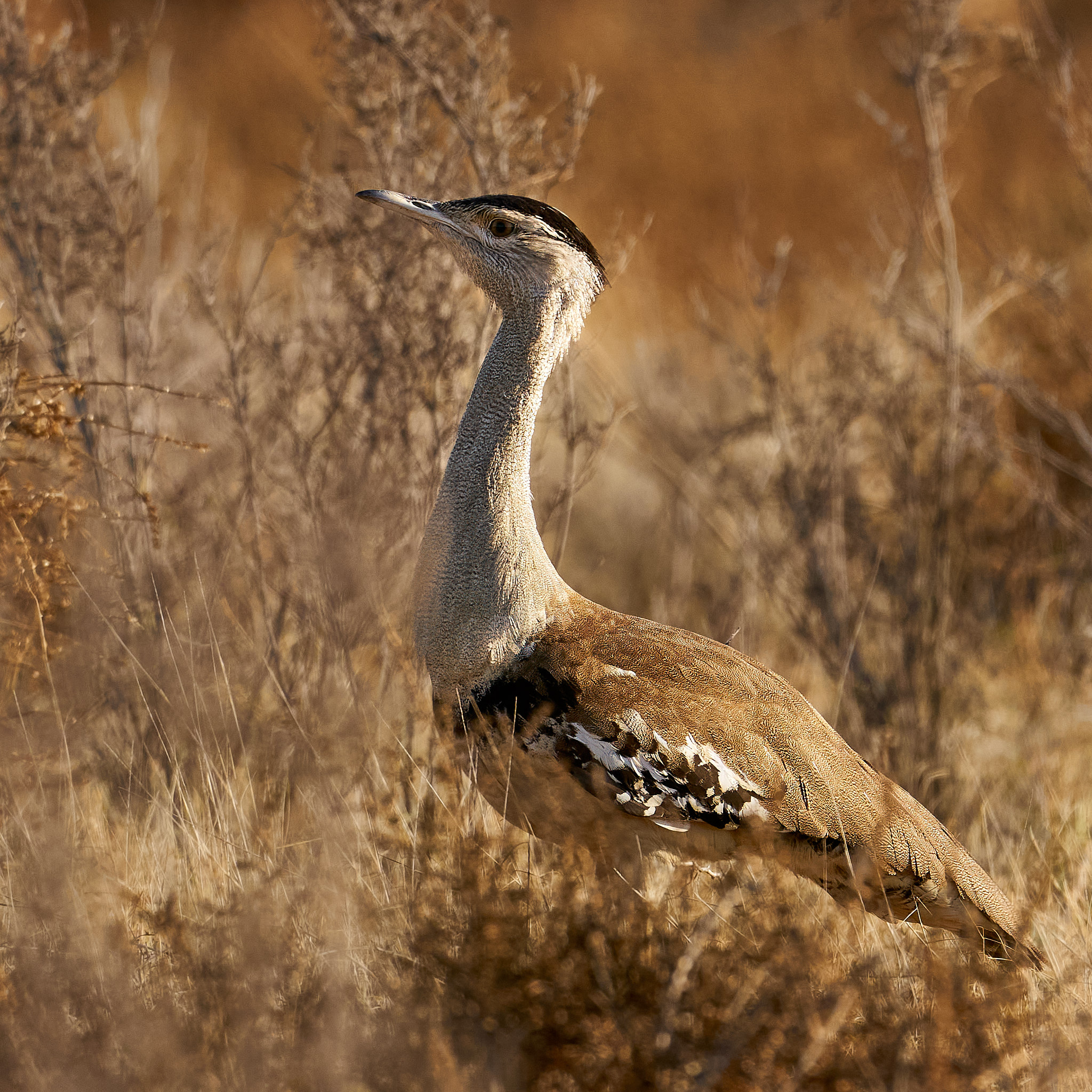
There is some nice country to explore beyond the caravan park. Birding was good. Australian Bustards were the star of the show …
Day two took us on to Point Samson where there are two caravan parks. I am typing this in a shady corner of the boutique one. We stopped for fuel at Roebourne where the lady taking our money declared that it wasn’t hot til it hit fifty.
Western Australian pearling began at Shark Bay in the 1850’s. The Pinctada albina oyster was collected by dredging and as well as pearl shell yielded some small straw coloured pearls. Cossack followed and it was the where commercial exploitation of Pinctada maxima began. That is the oyster that later made Broome famous.
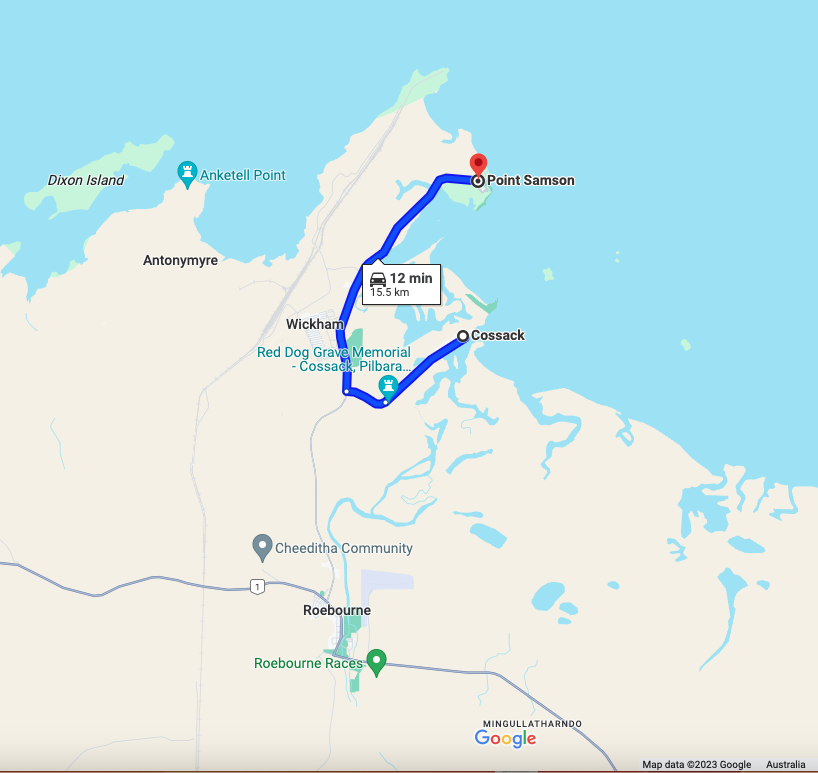
White settlers arrived in what became Cossack with their stock in 1863 after favorable reports of the area by the F T Gregory expedition a couple of years earlier. In the early days the settlement enjoyed various names probably because there wasn’t enough there for anyone to notice until pearling commenced in 1866. The name Cossack was adopted in 1871 and by 1875 there were 57 licensed vessels operating out of the town. The next few years were about pearl shell, wool, a gold rush and cyclones. In 1886 most of the pearling fleet sailed off to Broome. After that Cossack entered a slow decline. In 1910 the town was dissolved and was eventually abandoned.
The National Trust rode to the rescue, Cossack was classified in 1970. Some restoration was carried out over the next couple of decades. Today it’s on the WA Heritage Register. There is a court house, the old school, a museum, some accommodation, a cafe and a couple of store houses. It can be seen well from the Tien Tsin lookout.

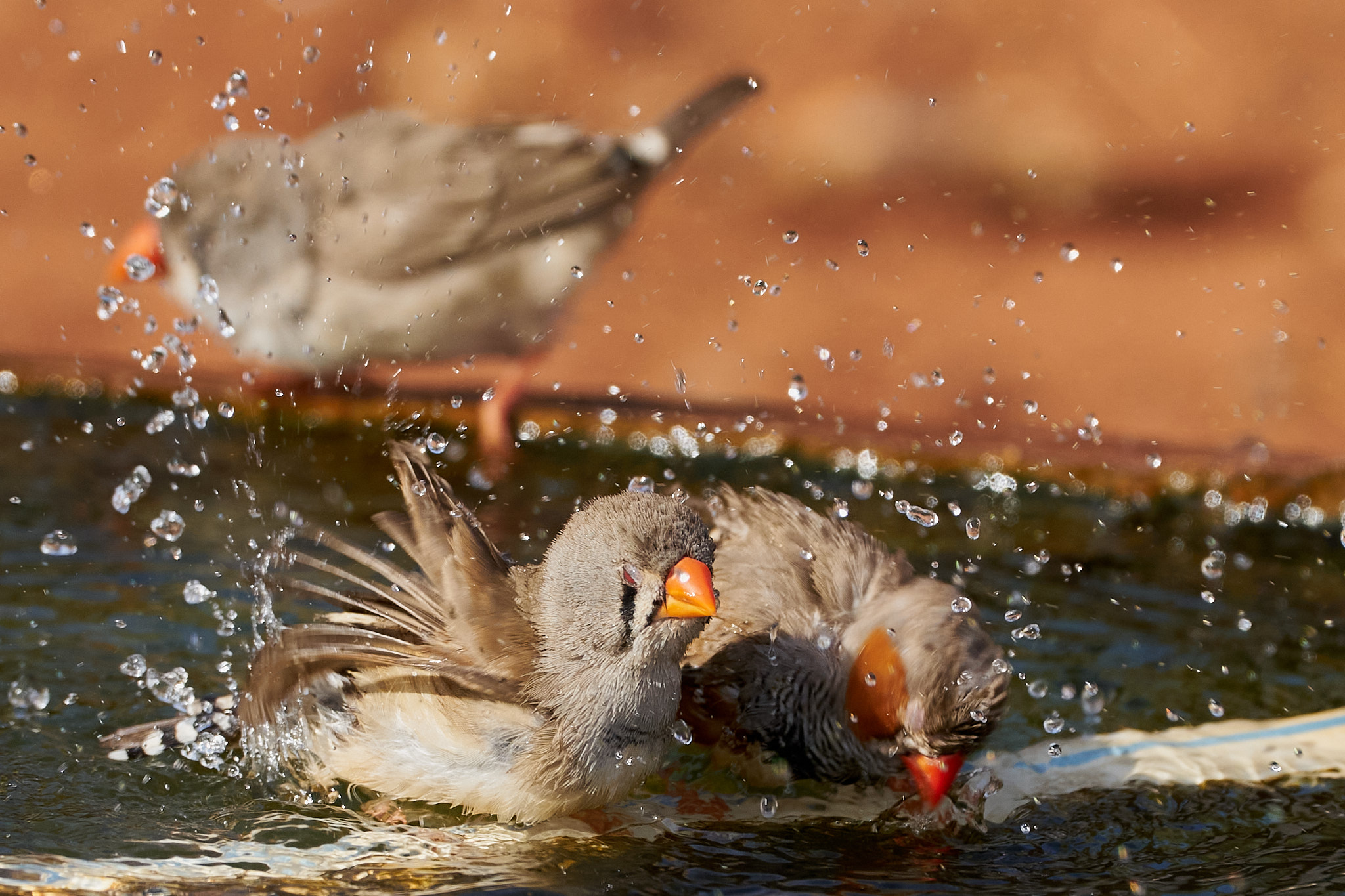
Outside the court house there is a horse trough. Not a lot of horses these days but the birds approve …


If you head north east from the court house the road takes you to the cemetery and to Settlers Beach.
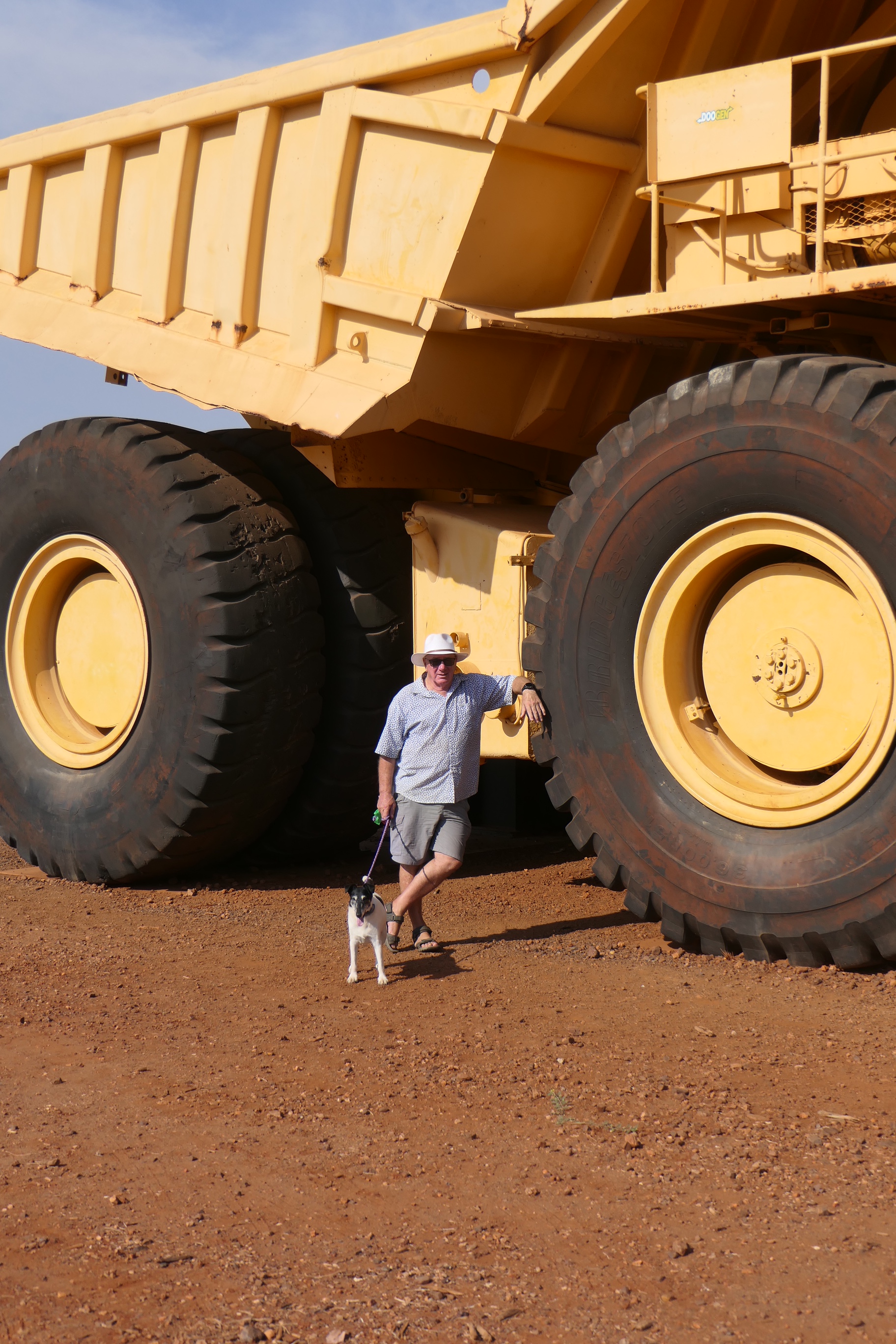
These days it’s mining that brings the big bucks to the Pilbara. Rio Tinto’s Lambert Project (iron ore)is close by Point Samson. At Wickham you can star in Honey I shrank the Kids with a Tonka Truck or play with a train.

In Sams Creek road there is an oyster hatchery that you are told not to enter so there may still be a little pearl farming going on.
 bobmcgee