R and R …

After all our hard work it was time for a weekend off.

The Budongo forest is adjacent to the Murchison Falls National Park. The quintet of Earthwatchers were very keen to make a visit there and the director of the research centre, Geoffrey Muhanguzi, very kindly offered to arrange our transport and accommodation.

Saturday morning came and Godfrey was waiting for us in his van. Geoffrey, in his quiet way, made it plain to Godfrey that, although we would only be doing this trip once, he would be organising similar trips in the future and would be keen to hear our opinion on our return.

Godfrey was very keen to impress and I’m sure he would have if his van hadn’t broken down 20 km up the road.

He rang a mechanic who arrived on a motorbike. And after about 45 minutes was able to get the van going … after a fashion.
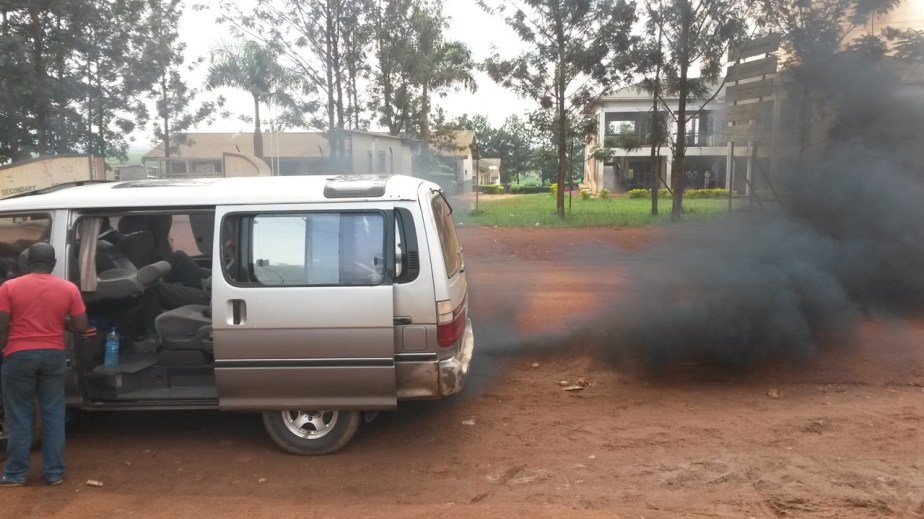
photo – Will Steele

But not for very long. A taxi was sent for. We reached the park shortly after midday. $50 US each buys 24 hours in the park. We could have spent a week there.

First stop was the Nile cruise. Disembarking at the foot of the falls and then climbing to the top where our new driver and his taxi would be waiting.

The Victoria Nile flows northwards from Lake Victoria into Lake Kyoga. Then from the western extremity of Lake Kyoga it takes an arc through the national park into lake Albert dividing the park into a larger southern and smaller northern section. Along the way a lot of water tumbles 140 metres through a 6 metre gap, Murchison Falls.

The falls were put on Europe’s map by Sir Samuel Baker and his dearly beloved, Florence, in the mid 1860’s. They named the falls after Sir Roderick Murchison, president of the Royal Geographical Society.

The White Nile flows north out of Lake Albert.

If you take the cruise remember the action is on the north bank, try to get a seat on the left side of the boat. Where better to see Nile Crocodiles and Sacred Ibis than on the Nile?
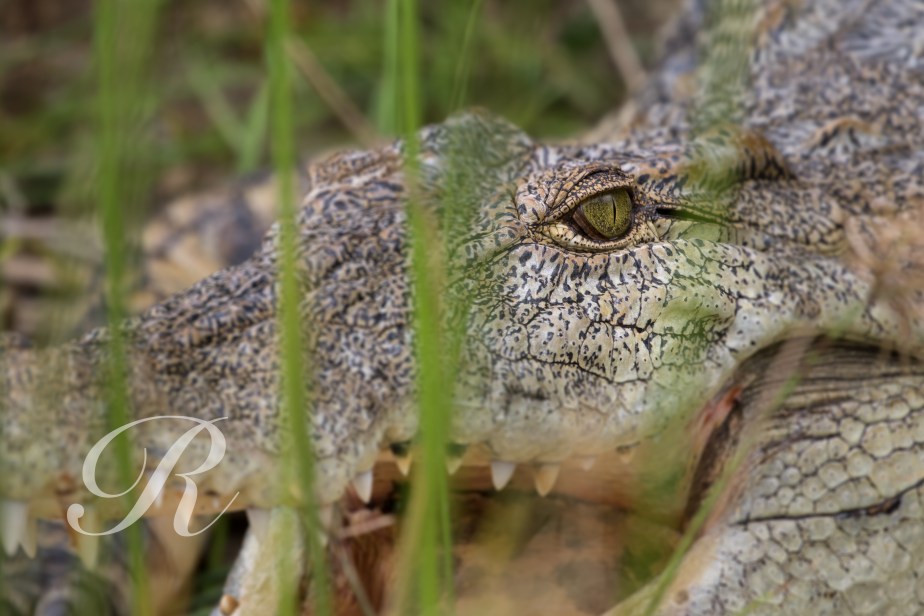
Nile Crocodile
Goliath Heron
Hippopotamus
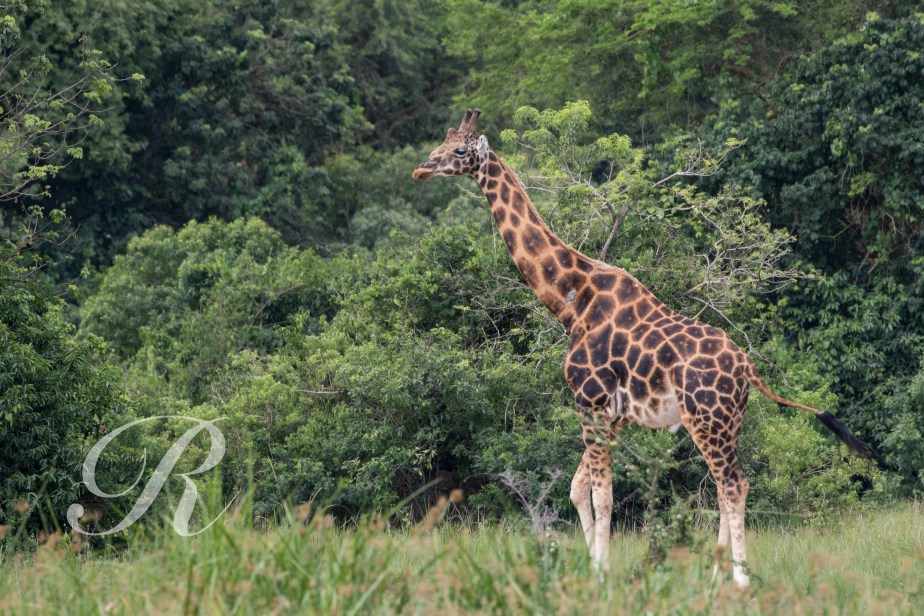
Rothschild’s Giraffe
African Elephant
Murchison Falls

The hike up the falls was hot and steep, but worth the effort although the best view is from the boat just before it docks.

Our accommodation for the night was at the Yebo Safari camp. The authentic Africa, dirt floor, thatched roof but with flush toilet and shower en suite. The shower even had a hot tap, but just for decoration. I guess they come as a set and it would have seemed a waste not to put it on the wall.

I shared the room with a scorpion. I understand that if the pincers are small the sting in the tail is potent. It had very small pincers.

The sheets were clean, the food was excellent, the staff very pleasant.
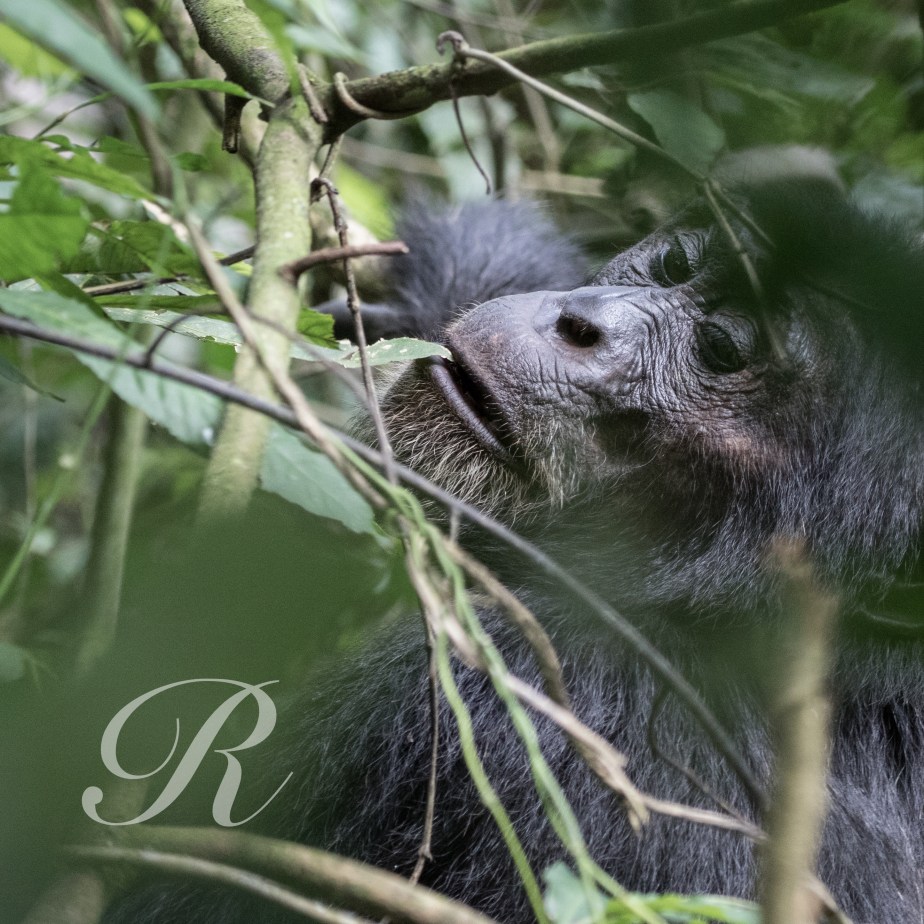
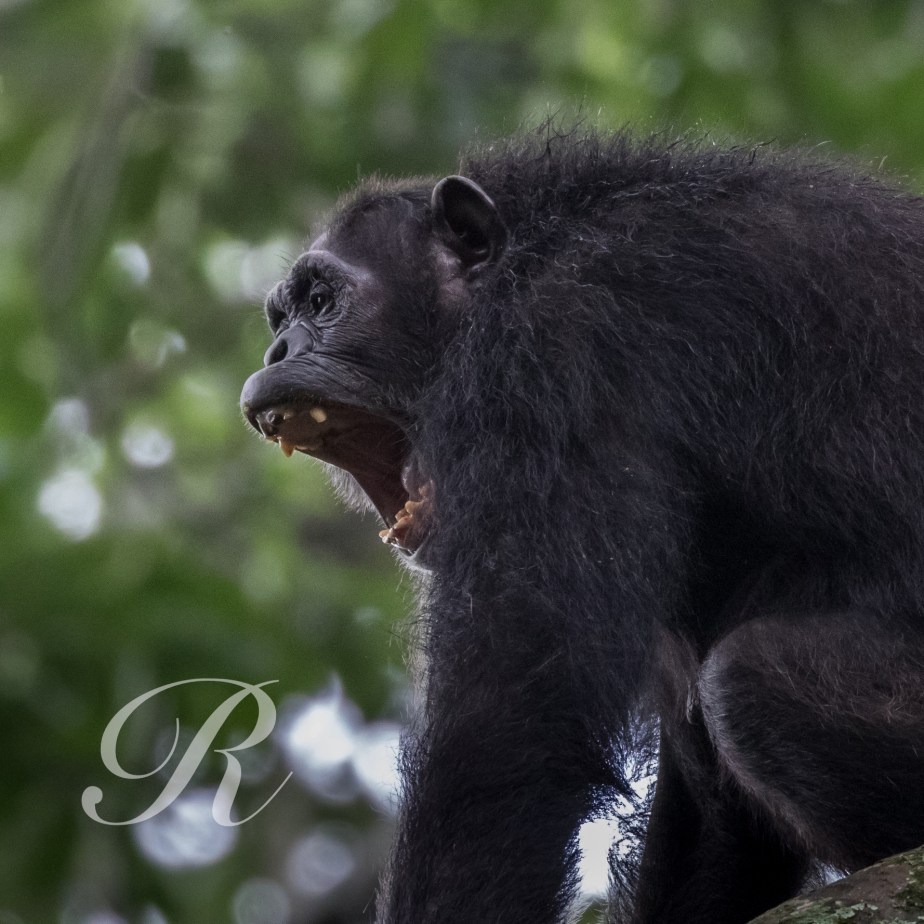
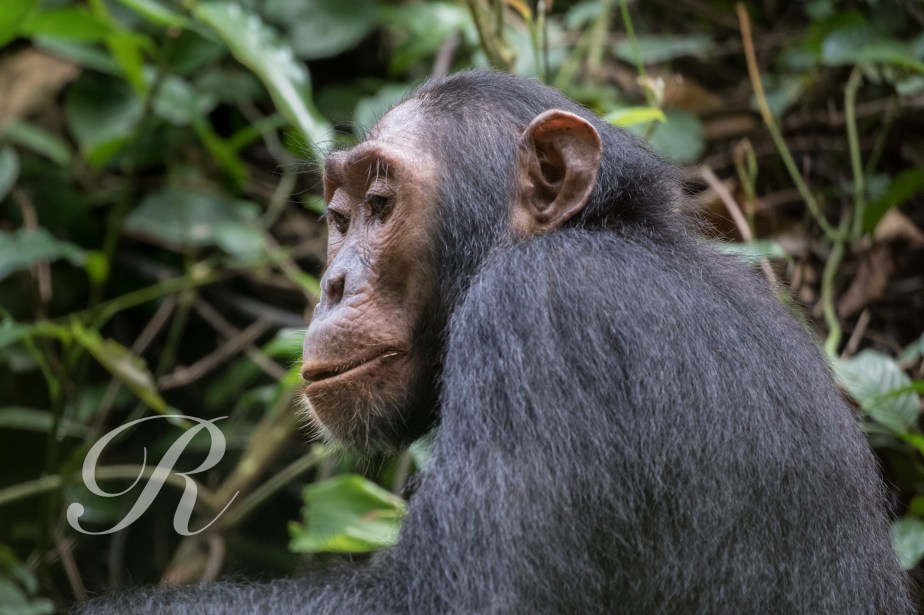
Chimpanzee …

chimpanzee (n.)

1738, from a Bantu language of Angola (compare Tshiluba kivili-chimpenze “ape”). Short form chimp first attested 1877.

There was a fruiting mango tree in the camp. Chimpanzees had wandered through for a feast every day. We had kept a respectful distance so as to keep our germs to ourselves, now that we had passed our quarantine period we could follow them more closely.

My first full day with them was with the Sonso group, named for the river than ran close to the camp. This was the first group to be habituated and could usually be found without too long a hike.

The aim was to spend long periods with a target individual recording their every activity in ten minute blocks. Their daily life can be summarised in a list of eating, traveling, resting, grooming and sorting out their social life – just like ours.

So far as eating goes, chimps like ripe fruit. They supplement this with young leaves and will also eat flowers. They will ingest clay occasionally. They drink mainly from puddles in tree hollows but we saw a few drink from a stream which is where they found their clay. They also like to eat monkeys.

They travel with ease along the ground or through the trees. They climb by putting their hands beyond the tree trunk, their feet go on the near side. They are expert at making the more slender trees sway until they can make a transition from one tree to the next. And they make frequent use of outer branches to slow their rate of descent towards the ground or a more rigid branch. Their internal map is in 3D, we have given up a dimension.

When they are having a break from eating they are often involved with grooming, usually in pairs or groups of pairs.

Their social life seems to be all about status and sex. It involves a lot of noise and showing off. Human parallels might be bikie gangs or drug cartels, big males capable of forming useful alliances will rise to the top. And stay there ruthlessly until toppled from power.

The Sonso group hunted Colobus twice on the day I was with them and were successful the second time. The field assistants were very quick to recognise their intentions. The group spread out around the Colobus troop, some on the ground, some at mid level and some high in the trees, all making some attempt to conceal themselves. Then a couple of individuals go after the monkeys. Colobus tend to all rush in the one direction which may be the reason they are the preferred target … you can stay concealed until the first one goes past then grab the next.

The successful chimpanzee will then rip open the monkey’s abdomen and start eating the entrails, the monkey might still be screaming at this stage.

Whilst the hunting is communal the eating is definitely selfish. A lucky few will get some meat. They will ignore the most pitiful begging of subordinate individuals. Why then take part? It doesn’t take that much effort and you may win the lottery.

The next day it was off to the more recently habituated group. We found them after about two hours roughly 8 km from camp. They passed the morning slowly moving towards camp. Then the afternoon moving away!

They had a female in estrus with them, the alpha male was guarding her very carefully. For all his efforts though it was a subordinate that got lucky whilst the boss was chasing off the number two male. There was a fair bit more hooting and drumming on trees than the day before, tensions were raised, it seemed.

They didn’t hunt and the field assistants told us that they had not hunted in recent weeks.

Meet the monkeys …

Our trial run at primate tracking and data collection was with the monkeys.

Specifically Blue Monkeys and Red-tailed Monkeys.

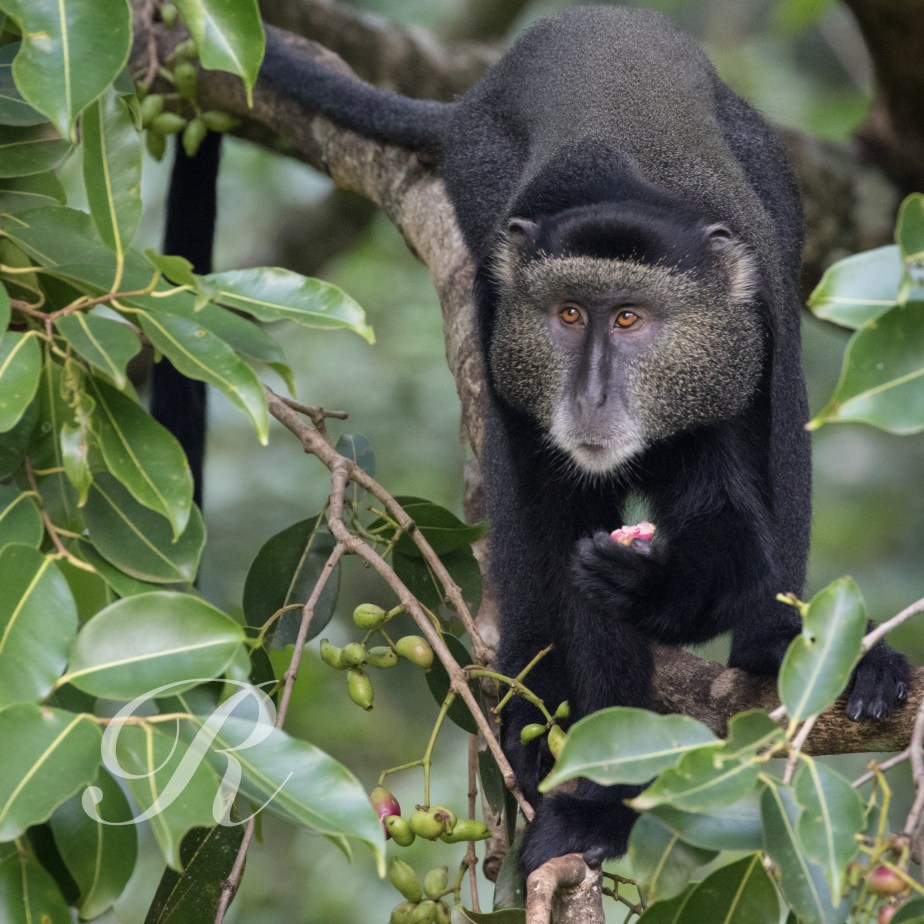
Blue Monkey
Red-tailed Monkey

Their big cousin, the Chimpanzee, is a ripe fruit specialist although they are not averse to eating monkeys, too. One way to coexist with them is to get in early and eat unripe fruit. We watched them do exactly that, feeding in trees where most of the fruit was green but taking such ripe fruit as was available and some young leaves for variety.

We also got to see them grooming each other, and hear some of their vocabulary.

The other monkeys present in the Budongo forest are the Olive Baboon and the Guereza Colobus.

Olive Baboon

The Baboon seems the odd one out. It has a much more terrestrial way of life and a rather ape-like demeanour, however it is a monkey and is more closely related to the previous two than it is to the Colobus.

They are extremely inquisitive and extremely smart. They are always hanging around the Research station accommodation and would be in in a flash if they got the chance. If that happens no one is game to throw them out … you just wait until they leave and then clean up the mess. Some of the staff on campus have their small children live with them, baboons are a threat to their safety. A baboon control officer is always on patrol near the staff quarters. Most of the time his weaponry is for show, most of the time …

Baboon control officer at work …

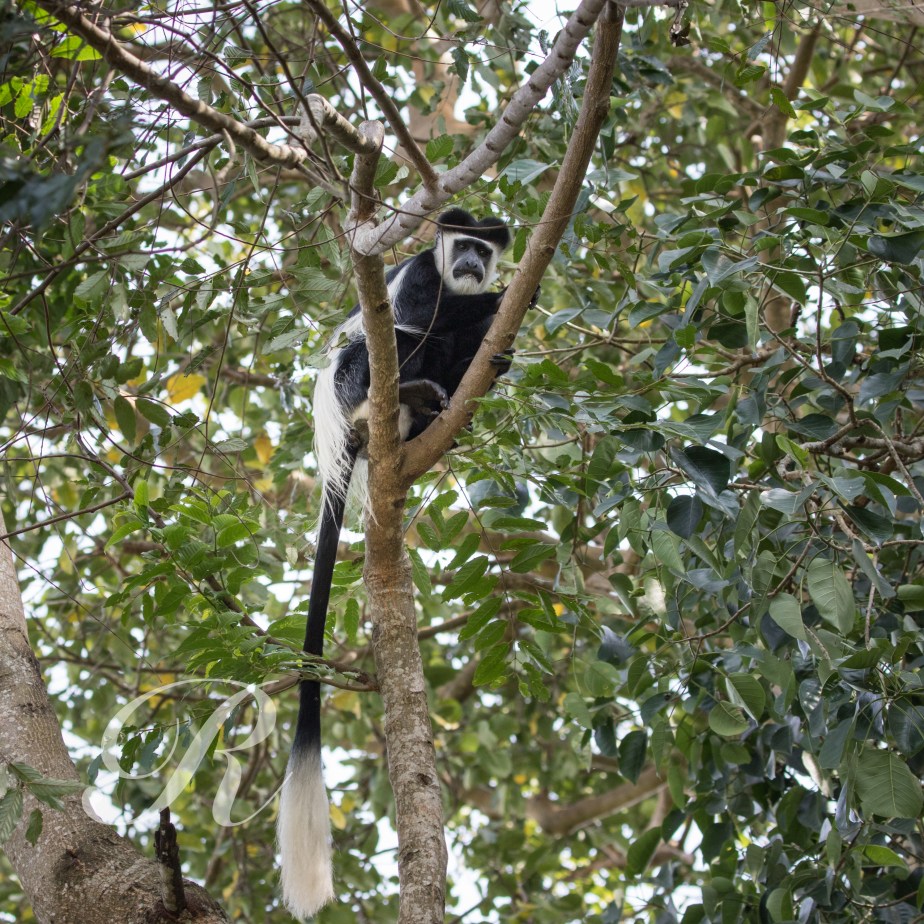
This is the real odd one out. Look carefully at its thumb, well actually, look carefully for its thumb. It doesn’t have one, an odd feature for a creature that picks leaves and fruit and climbs trees. You’d think a thumb would come in handy.

Guereza Colobus


Banding Birds in Budongo …

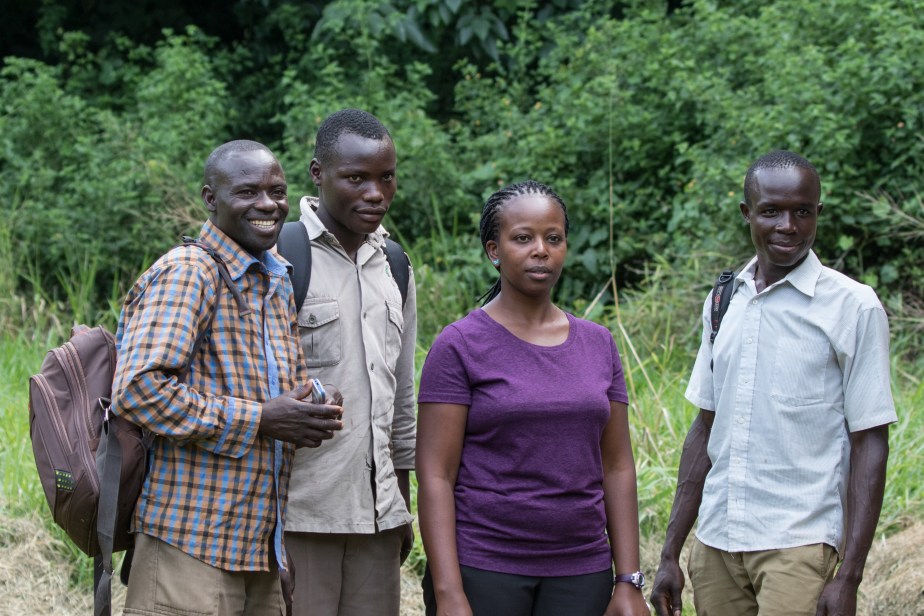
The local birding team …

Raymond, Andrua, Moreen, Patrick.

Moreen Uwimbabazi started the banding project as her honours research. Raymond on the left is a red hot local bird guide who was drafted for our benefit. If you need a bird guide in northern Uganda he is your man. You can contact him on 0777 319 865 or 0752 930 065.

The process is fairly straight forward. You set a mist net between poles, keeping it very taut from one end to the other and endeavouring to keep it out of the branches of the adjacent trees. In the shade it is almost invisible which is why I chose to photograph the end in the sunlight.

Mist net

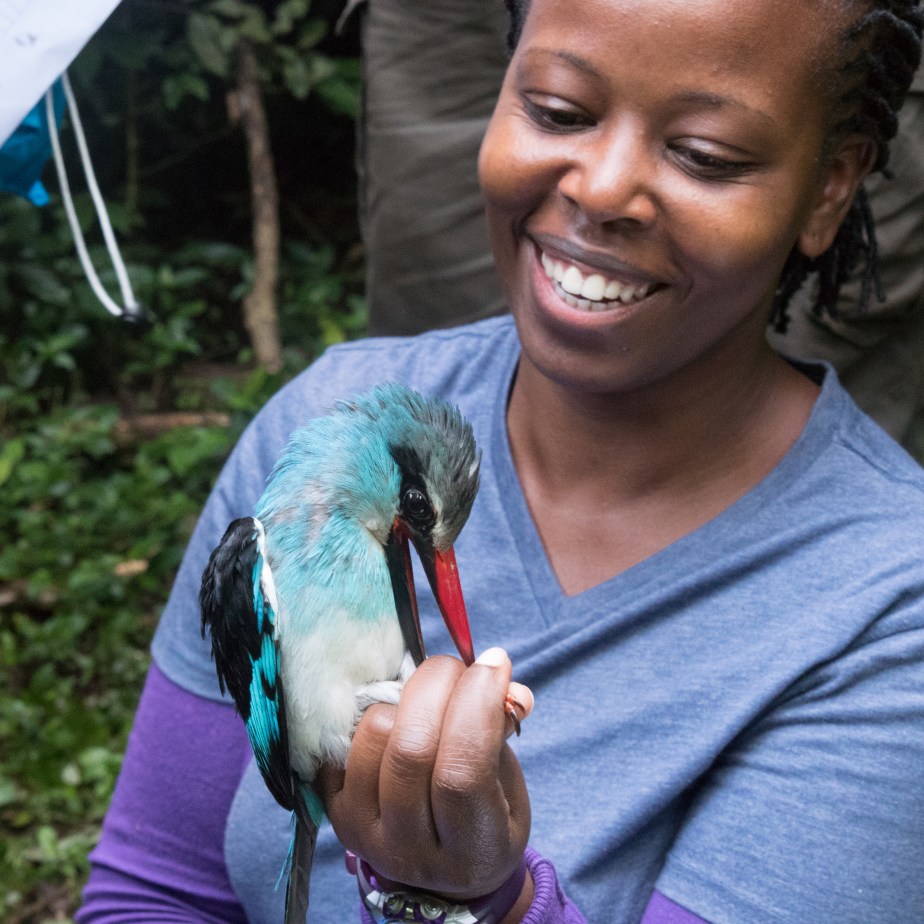
Visit regularly, carefully extracting any birds that have found their way in. Identify the birds, measure them (wing length, head and bill, tail length), weigh them, band and release.

Andrua and Patrick were just learning the ropes so we were able to ensure their technique improved. In exchange they were able to ensure we made our identifications correctly as we encountered birds that were completely new to us.

Forest Robin
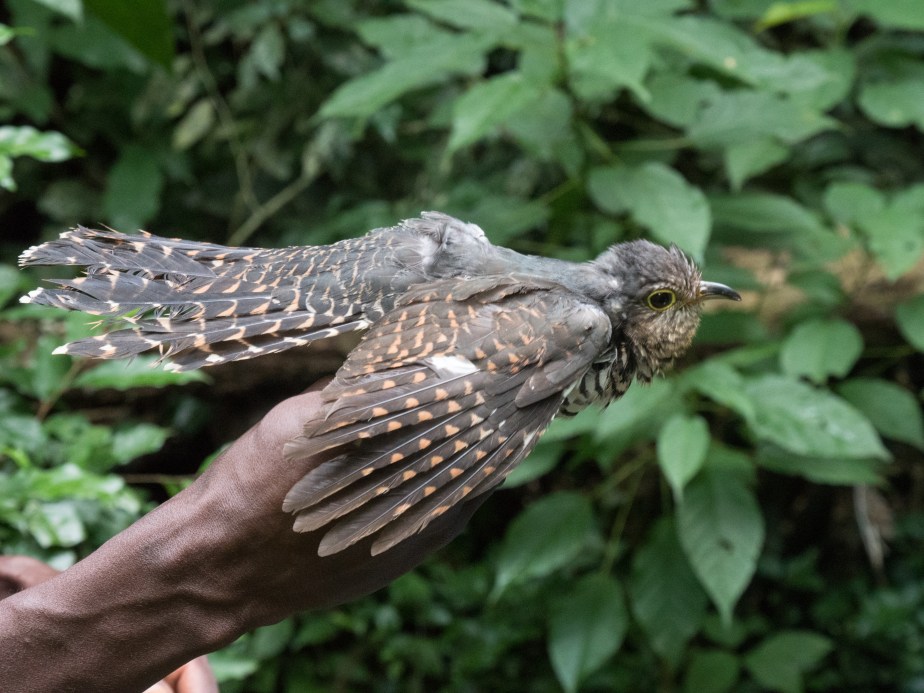
Dusky Long-tailed Cuckoo
Doesn’t hurt a bit …

Budongo …

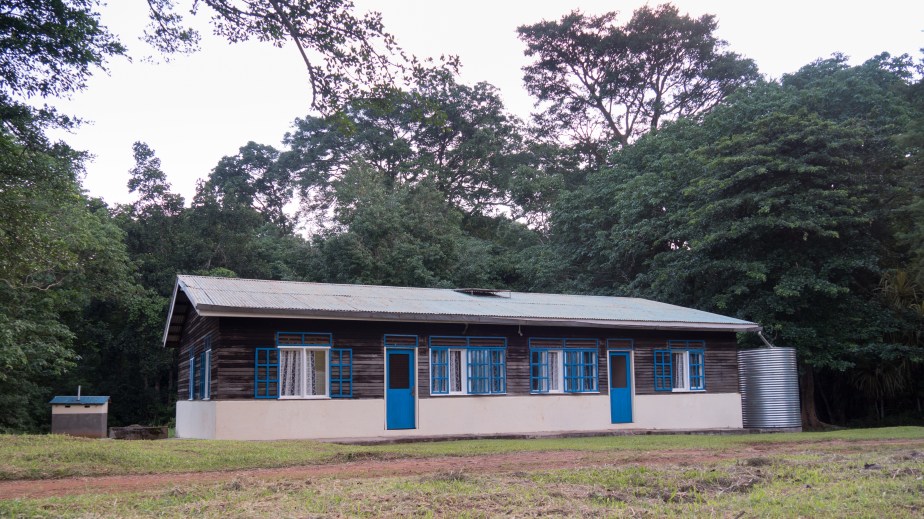
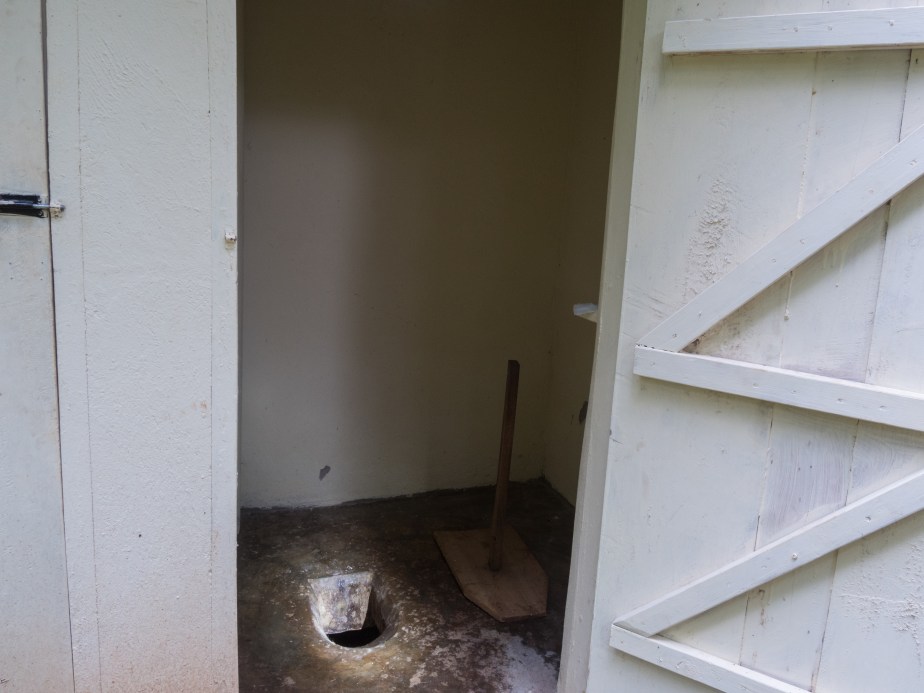
After arriving at the Budongo Research Station we were each assigned to a single room in one large house. The toilet was in the back yard and consisted of a concrete slab with a hole in it. Beneath that  was very deep hole in the ground. Zephyr, the always genial manager of the accommodation showed us where to put our feet if we were to be successful with our aim. Very useful advice. And for the novice squatter it’s a bit further forward than you think.

Our house
The dunny

The showers were about 150 meters away. The fire would be lit at 4.00 pm every day, if you wanted to shower before that it would be cold.

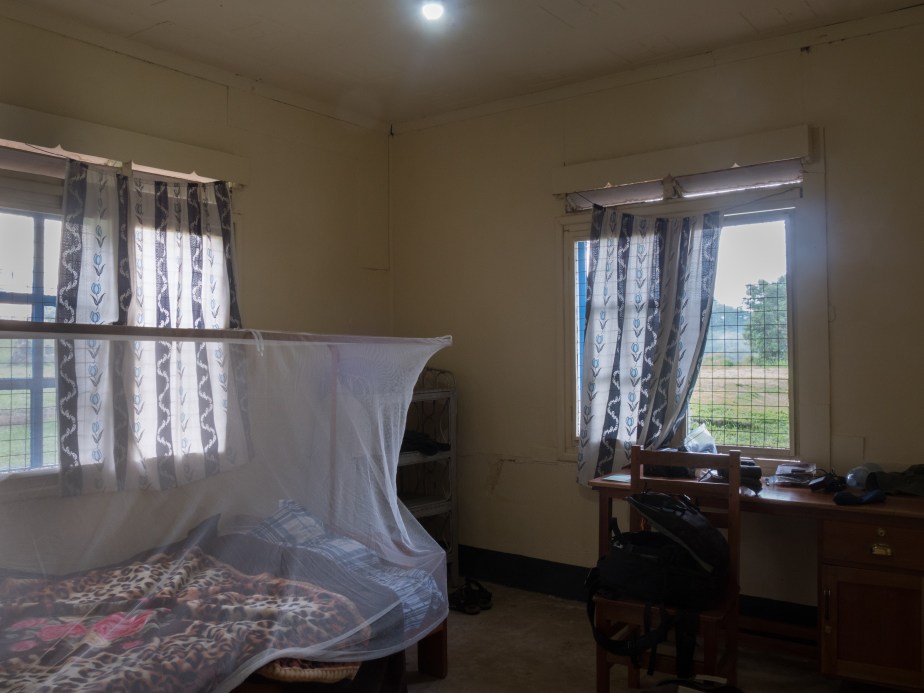
It was  basic, a bare bulb in a bare concrete room, but a comfortable bed with a mosquito net, a bolt on the bedroom door and on the outside door to keep the baboons out.

My room

Tomorrow would start with a comprehensive briefing followed by a lecture on chimp health. Since chimps are prone to many human diseases, especially upper respiratory tract infections new humans are kept away from them for five days. There is plenty to do, however, in the afternoon we wandered down the Royal Mile for some bird watching.

There are about 700 chimps in the Budongo forest. Two groups, about 150 individuals, have been habituated and are tolerant of human proximity. These are followed, quietly, on a daily basis by visiting researchers and field assistants. The researchers may be doing undergraduate honours research or more advanced studies. The field assistants are the real experts, most have been working at the station for years and all can recognise and name all the chimps by sight or even sound.

Days three, four and five are occupied with phenology, bird banding and then following monkeys.

Phenology (my spell checker hasn’t heard of it either) is the study of the progression of plants, in this case food trees, from budding through leaf formation to fruiting. We followed transects scoring marked trees essentially for their usefulness as primate food sources at that instant. Not the most exciting component of our stay but a 12 km walk in a tropical forest has to be good for you.
The bird banding was our chance to shine. Stay tuned.

Monkeys are definitely more exciting. They don’t come close enough to catch the flu and are excellent practice for following the chimps. With clipboard in hand we watched a target monkey for ten minutes at a time, recording their behaviour and if they ate, their food.

For instance , they might eat young leaves and unripe fruit, move trees, call, groom and resume eating. Or they might spend ten minutes resting. Or they might disappear into foliage and not be seen again in which case you choose a new one to follow.


Blue Monkey

If we’d had to wait five days for our first glimpse of a chimpanzee we would, by this stage, be at fever pitch. In fact we’d seen chimps every day, we had just had to be well behaved humans and keep a safe distance away to safeguard their health.

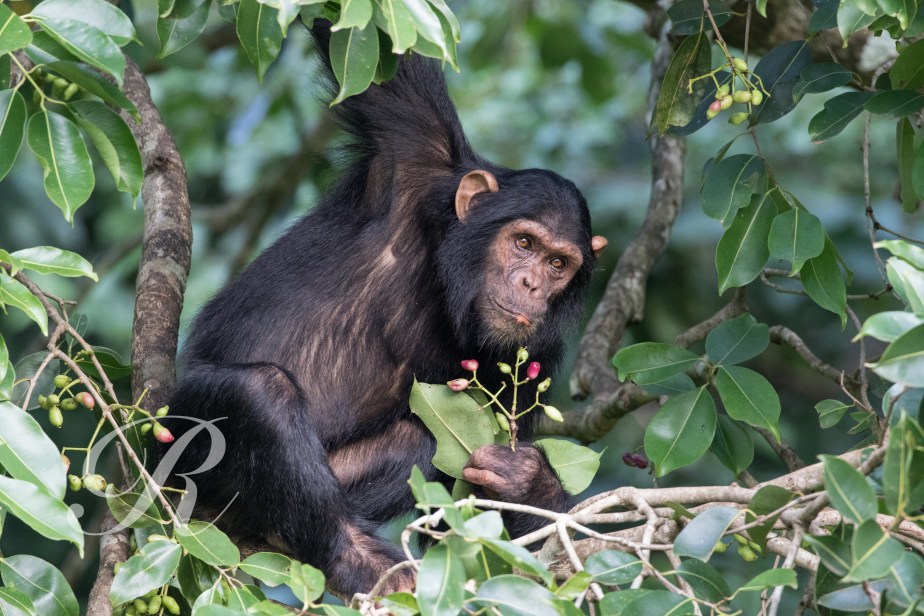
Note the presence of mature leaves, ripe and unripe fruit. For the moment please ignore the chimpanzee …


Meet the Team …

I started bird watching at about eight years of age. A book that my parents had and a keen classmate got me going, after that it was self sustaining. It usually consisted of a long walk making a list of what I found, I loved doing it then and I still love doing it 60 years later.

Along the way I took the time to study ornithology and earn a Graduate Diploma. I got involved in some research projects and have a Licence to Band Birds. While banding migratory waders I met Dr Will Steele who got his PhD studying sea birds on Marion Island. I met Dr Mark Antos whilst banding bush birds, he earned his PhD studying foraging in forest passerines. They are both professional biologists. We have been friends for many years.

We were in Uganda to join an Earthwatch Project investigating threats to Chimpanzees but we would also get the chance to share our knowledge of bird banding with a local team.

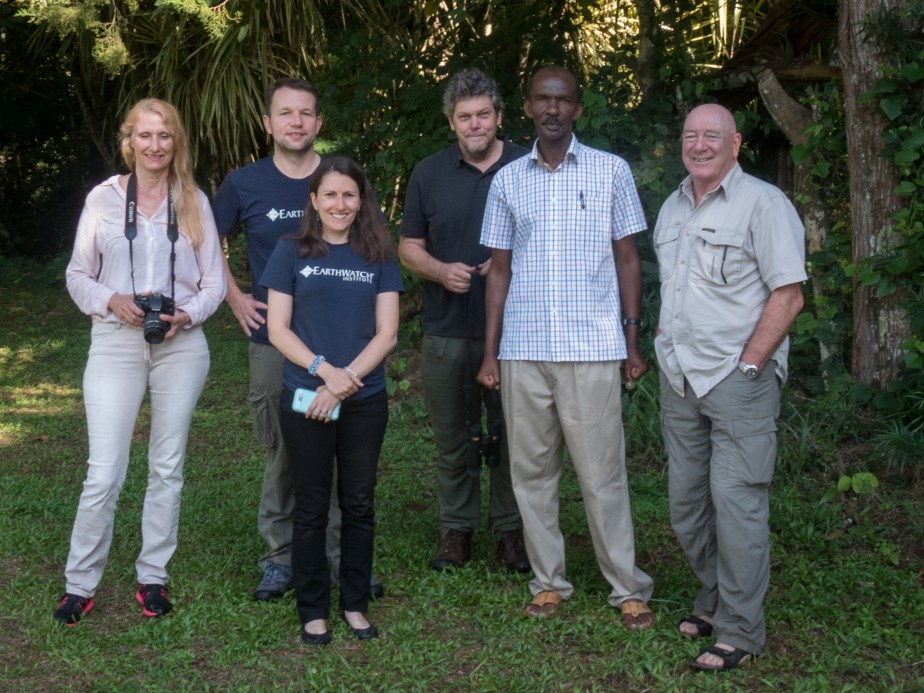
At breakfast the next morning the group of three Aussies were joined by Cristina and Silvana. Cristina, originally from Brazil, is a zoo keeper at Dallas Zoo looking after Chimpanzees, Gorillas and Baboons. Silvana is a banker from Switzerland.

l to r – Silvana, Mark, Cristina, Will, Geoffrey, McGee

At 8.00 am two vehicles pulled up, Geoffrey Muhanguzi, director of the Budongo Research Centre, was driving one. We were soon on our way. Our route took us north through the outskirts of Kampala then on to Masindi where we had lunch. After lunch we left the main road and slowly bumped our way north-west to the Budongo Forest arriving late afternoon. The journey was a shade under 300 km, it took about 5 hours actual driving. The traffic around Kampala was chaotic, the main road was fairly poor, beyond Masindi it was really poor.

Along the way we got to see life on the streets.

And almost everything you could imagine being transported on a motorbike from building materials to furniture. Mum Dad and three kids, no problem, four adults likewise. To transport a few planks lay them across the saddle and sit on them, just don’t try going through a narrow gap, the same technique will work for a dining table.

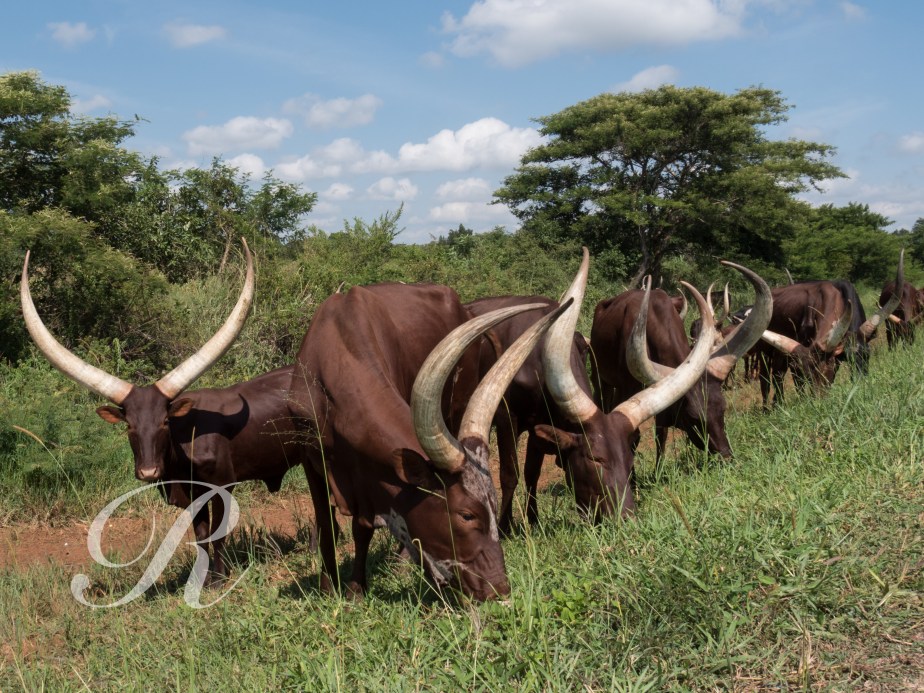
In the country side we passed the odd herd of extremely well horned cattle …

And eventually we reached our destination …

Entebbe …

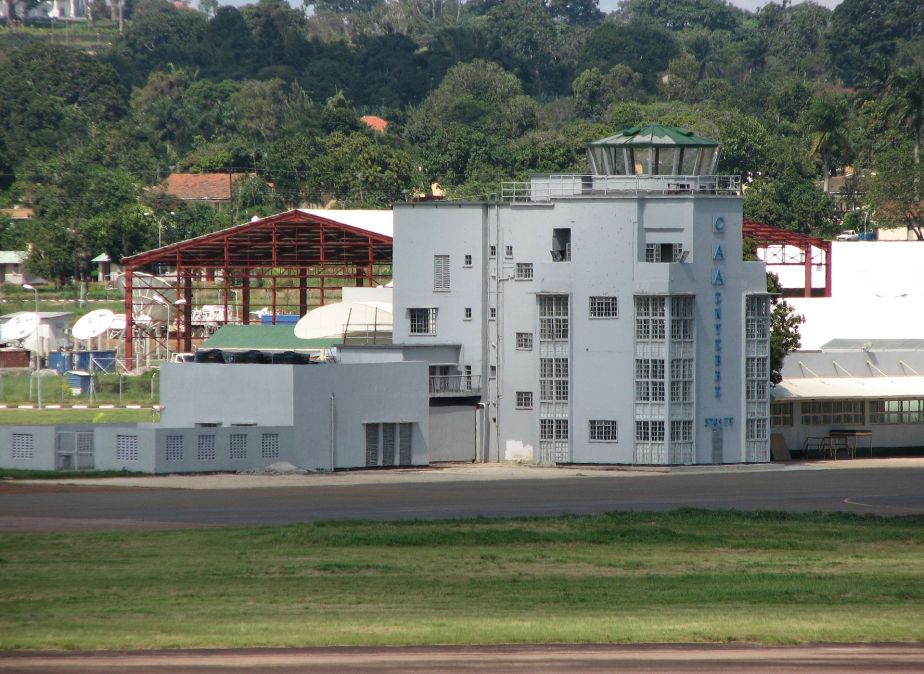
From the plane window we could see part of the old terminal as we taxied in. When the Israelis made a brief visit in 1976 it looked like this …

photo Micha Sender (Wikipedia)

Once we were parked it was obscured by the new building added to the front. New is a relative term, the new terminal is looking pretty shabby.

The taxi ride to the Airport View Hotel took about 10 minutes. The streetscape was typical Africa, concrete terraced shops, razor ribbon on the walls, a security guard armed with a rifle outside a corner store, people walking, in fact lots of people walking. We turned left off the main road onto a deeply rutted dirt road. The places on either side were large with impressive fences and gates, a stark contrast to the road. A nice neighbourhood and a nice comfortable hotel.

We wasted no time getting out into the surrounds. The hotel gardens offered up African Grey Parrots, Sunbirds, Weavers, Storks, the gorgeous Ross’s Turaco and this beautiful Double-toothed Barbet …

Double-toothed Barbet

A promising beginning.

In the course of the evening meal we sampled a couple of the local beers and agreed that the Nile Special got the blue ribbon.

A little guide book in my room informs me that Uganda has a population of about 38 million, the capital is Kampala (about 1.8 million), the President is Yoweri Kaguta Museveni (since 1986) and the currency is Ugandan Shillings ($1 Au will currently buy you 2,700 Shillings, $100 and it will be hard to close your wallet).  The local languages fall into five groups. Within each group people can understand other dialects but there is too great a difference between the groups for any of them to be the lingua franca, for that reason the official languages are English and Swahili. The power plugs are 3 pin English style, 240 volts.

Perhaps not everything you need to know about Uganda but a handy start.


Africa …

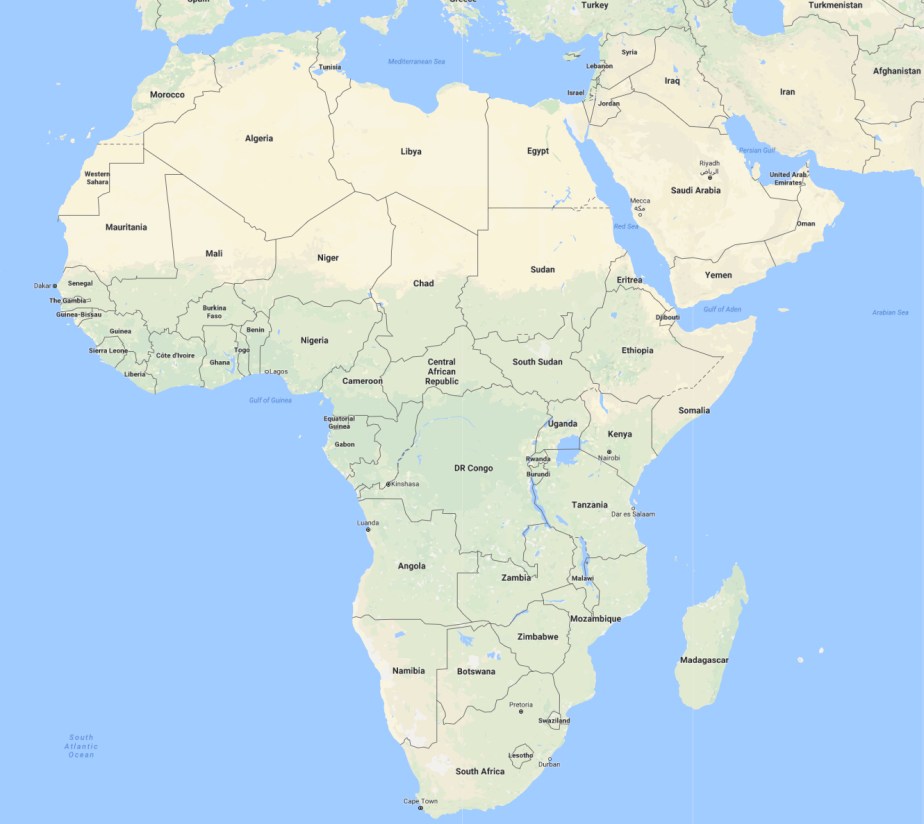
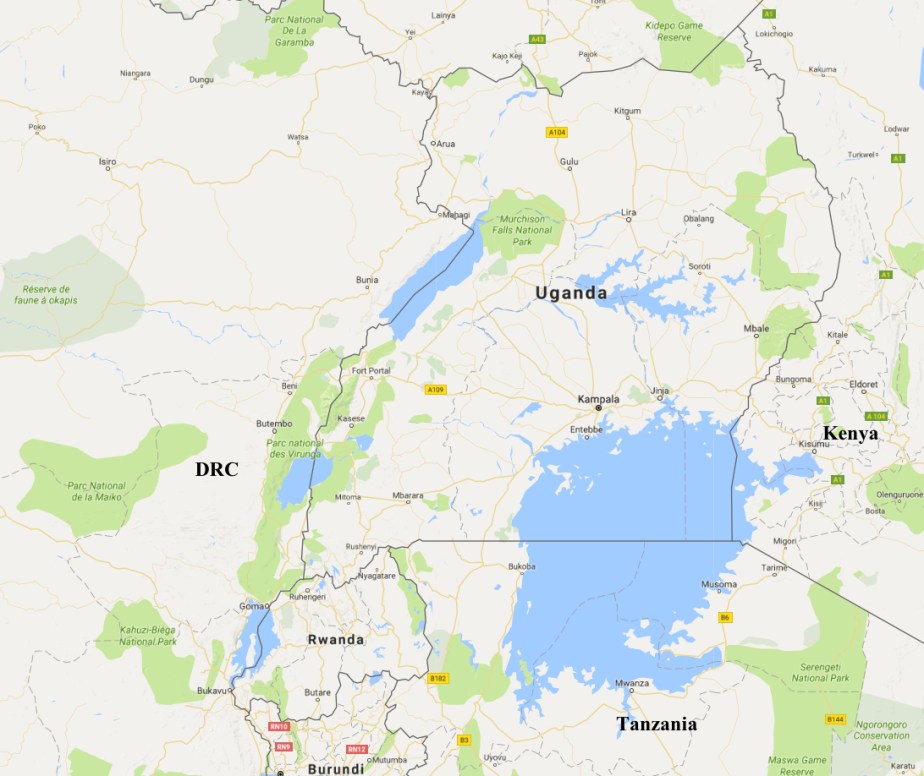
and here’s a map just to prove it …

If you drop a line from the Libyan/Egyptian border and come down about half way to the Cape of Good Hope, cast your eyes a little to the right you’re here …

and in a few days so will I be.

The largest lake, at the intersection of Uganda, Kenya and Tanzania is Lake Victoria. The chain of lakes to the west of it lie in the western branch of the East African Rift Sytem. The most northerly lake in the chain is Lake Albert and this part of the rift system is often called the Albertine Rift. The rift system is not only of great interest to the geologist, there are 41 species of bird found only along the Albertine rift.

Uganda made its first real impact on my life in 1972. I was studying at Sheffield University when Idi Amin expelled Uganda’s Asian community.

We are determined to make the ordinary Ugandan master of his own destiny, and above all to see that he enjoys the wealth of his country. Our deliberate policy is to transfer the economic control of Uganda into the hands of Ugandans, for the first time in our country’s history.

Said Idi, accompanied by the veiled threat that any remaining Asians would face a Hitlerian final solution. About 80,000 people, more than a quarter of whom were Ugandan citizens, had 90 days to leave the country. Most of those displaced came to England. I played basketball with a young man who had played for the Ugandan national team. The enterprises and personal goods left behind were distributed among ethnic Ugandans. The economy nose-dived (and basketball languished – it wasn’t until 2015 that Uganda took part in the African Championships finishing 15th.)

Rwanda provided even greater drama in 1994 as the news of the genocide slowly percolated into the consciousness of western nations. In about 100 days the majority Hutu population fell upon the Tutsi minority and the even smaller population of Batwa people resulting in the death of about 750,000 people (perhaps more). The United Nations distinguished itself by standing idly by  just as it would in Srebenica.

At the time everyone carried an ID card with their ethnic affiliation on it. Checking IDs at roadblocks followed by summary execution with a machete was just one of the strategies utilised in the carnage.

Just something to ponder in Australia as we consider inserting ethnicity into our constitution. In post conflict Rwanda it is illegal to talk about one’s ethnic affiliation.

I shall also be visiting the Democratic Republic of the Congo, often called Congo Kinshasa to distinguish it from the Republic of the Congo or Congo Brazzaville. The DRC was formerly called Zaire.

I hope to come back with photos of Chimpanzees and Gorillas, Shoebills and many other birds and even some of a seething red-hot lake of volcanic lava. I hope to share the experience with you … see you in about five weeks.