For most of my life I’ve lived not far from Victoria’s Port Phillip Bay. It is tidal but the range is small and variation in atmospheric pressure is enough to make a liar of the tide tables. Then I lived many miles from the sea for a decade. High tide, low tide, who cares.
In north west Australia you need to care. Whether you are a boatie, a birder or a photographer the tides are part of your planning because they are absolutely massive up here. Tidal range can be as much as ten and a half metres in Broome and even more in Derby. At spring high tide you could be paddling on the beach in Roebuck Bay. About six hours later the water’s edge may be as much as 12km away with 175km² of mud that was covered by the sea now available for shorebirds to feed on.
Why is it so?
The main engine is the moon. The sun also has its gravitational pull but it is a long way away. Depending on the spatial arrangement it may add to the moon’s effect (spring tide) or subtract (neap tide). The tide is a very long period wave moving around the earth. There is a corresponding bulge on the opposite side. Thus generally there are two tides a day. Big at full and new moon, smaller in between. The spring in spring tide has nothing to do with the season that follows winter.
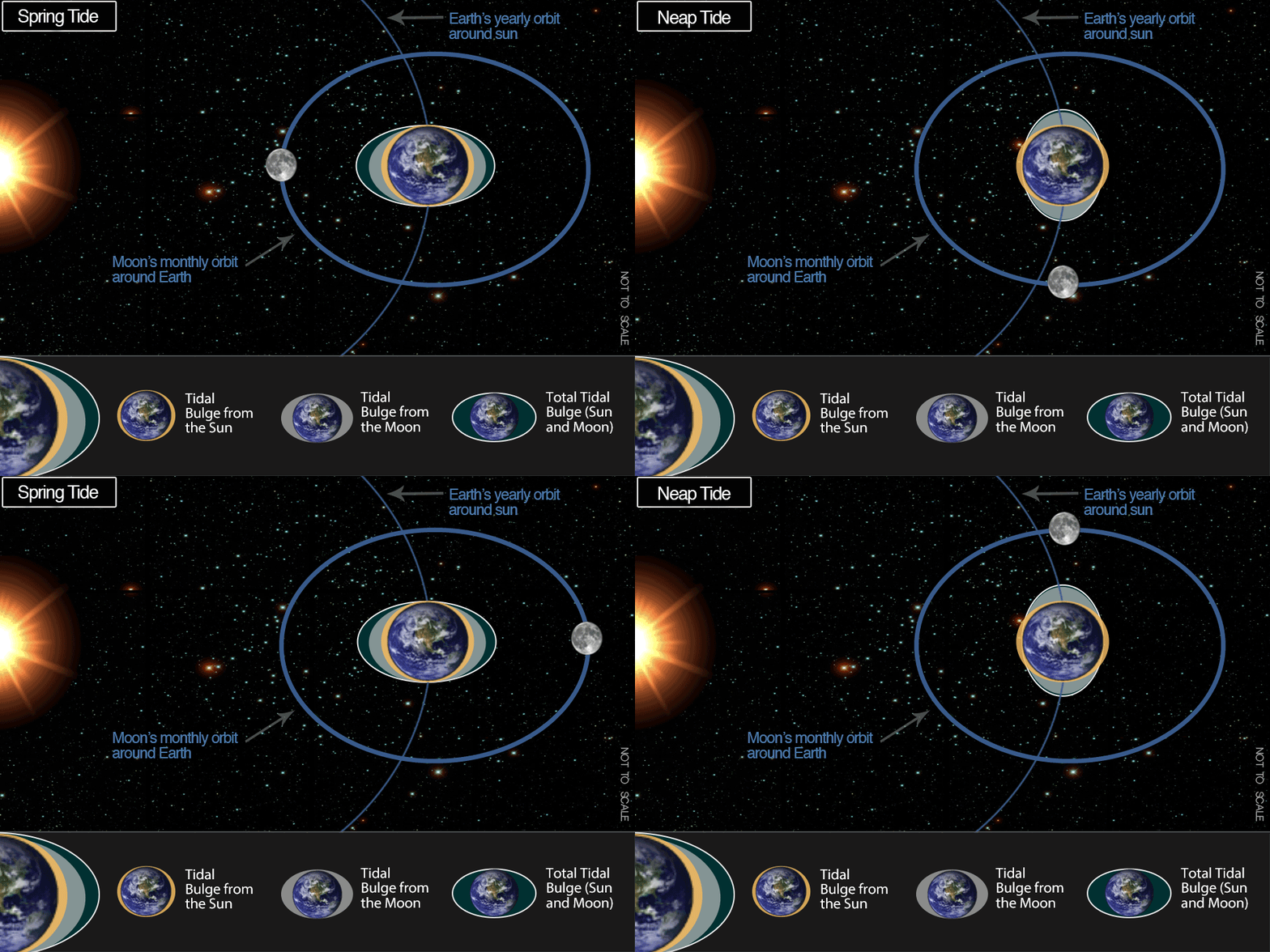
We all share the one moon and we all share the one sun so why is my tide bigger than yours (excluding those of you who live by the Bay of Fundy ou habitent près de Mont St Michel)? Well, there are local factors at play. Out in the middle of the ideal ocean the tidal range is about 18cm. Just as waves reaching the beach rise up for the benefit of surfers so the long period wave that is the tide rises as it reaches the continental shelf. North west Oz has has an enormous continental shelf that stretches almost to Indonesia. Derby trumps Broome because it is situated at the narrow end of the funnel otherwise known as King Sound.
 bobmcgee