Many years ago I made myself a kayak. Dangerous things kayaks. Combine them with swiftly flowing water and a fallen tree and it’s very easy to drown yourself. I came close.
That experience fits in the scope of Murphy’s Law but there is another inescapable law regarding canoes. If you want a fast canoe it will be long. It will not be manouverable. If you want a manouverable canoe it will be short. It will not be fast. You must choose your canoe to suit your intended purpose. The law of canoes has general application.
To make a photograph you need a lightproof box with a hole in the front and a surface at the back that reacts to light. You point the box at the subject, open the hole for a while, store the reaction and transform it into an image. Simple.
There are, however, some technical challenges. Too much light and your image will be white, too little and it will be dark. Getting the correct exposure depends on three things. Each of those things has to obey the law of canoes. A is for Aperture, the size of the hole. S is for Shutter Speed, the length of time that the hole is open and ISO is for the Sensitivity of the reactive surface to light. Balancing these three things will lead to a satisfactory image. Under most circumstances the modern camera can do that for you. It will trip up when the subject is dark and against a bright background, or white against a dark background or at night when light is at a premium. And on that brief and very expensive trip to Antarctica.
The bigger the aperture the more light gets in. Excellent. What’s the trade off? Depth of field. F/2 is a large aperture giving shallow depth of field, half your landscape will be fuzzy. F/16 is a tiny aperture your landscape will be in focus from somewhere near the front all the way to the back.
The longer the shutter is open the more light gets in. The trade off? For a crisp image the camera and the subject must stay still.
ISO represents the sensitivity of the sensor. The higher the number the greater the reaction to the light. The higher the number the greater the noise in the resultant image.
You’d like a sharp image, in focus from front to back and with no noise in the shadows? Sir, can I interest you in this very fast and extremely manouverable canoe?
If you’re taking control of the image you will have to decide what to sacrifice. To photograph birds I choose a high shutter speed. This guards against movement of the lens or the bird. To get in the light I have to open up the aperture. This sacrifices the depth of field. On a telephoto lens you soon bump into the limit regarding aperture so ISO will also have to increase …
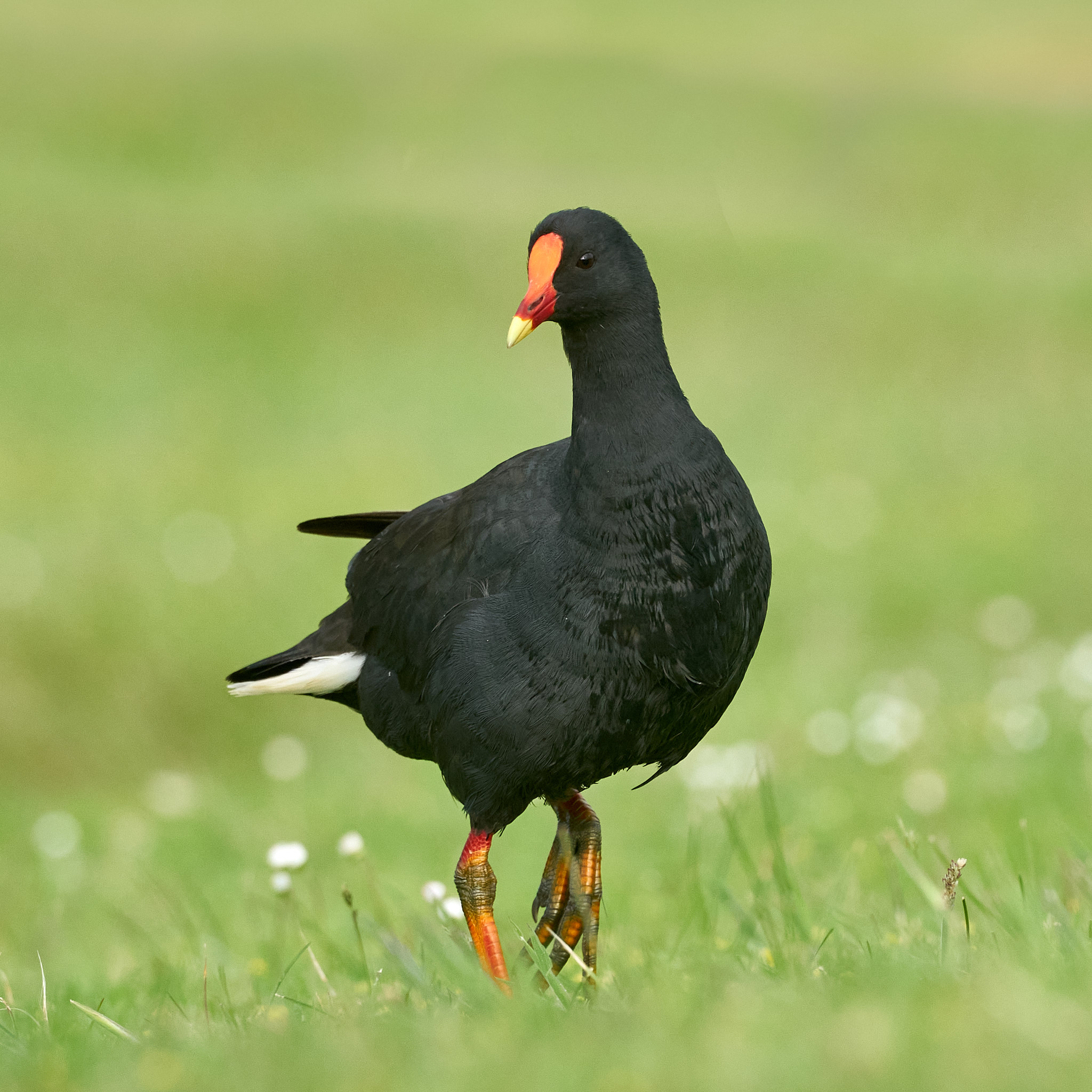
The sacrifice here is depth of field but it’s no sacrifice at all. The out of focus background helps the Dusky Moorhen to stand out. The eye and bill are sharp. A slow shutter speed would likely have resulted in a soft unusable image.
For landscapes I usually keep the ISO low, the aperture small and put the camera on a tripod. The shutter may be open for several seconds. Sharp focus from front to back and low noise are the result. On the other hand the wind in the trees may make the foliage blurry and the sheep and cows will not look too good. Long exposures are the source of dreamy seascapes and creamy waterfalls. As long as the camera and a good proportion of the picture stays still movement in the scene can be put to creative use.

The 30 second exposure flattens the sea and on a still day you can get away with the foliage. A tripod is essential.
The point of all this is about getting a handle on the compromises made for this next image …
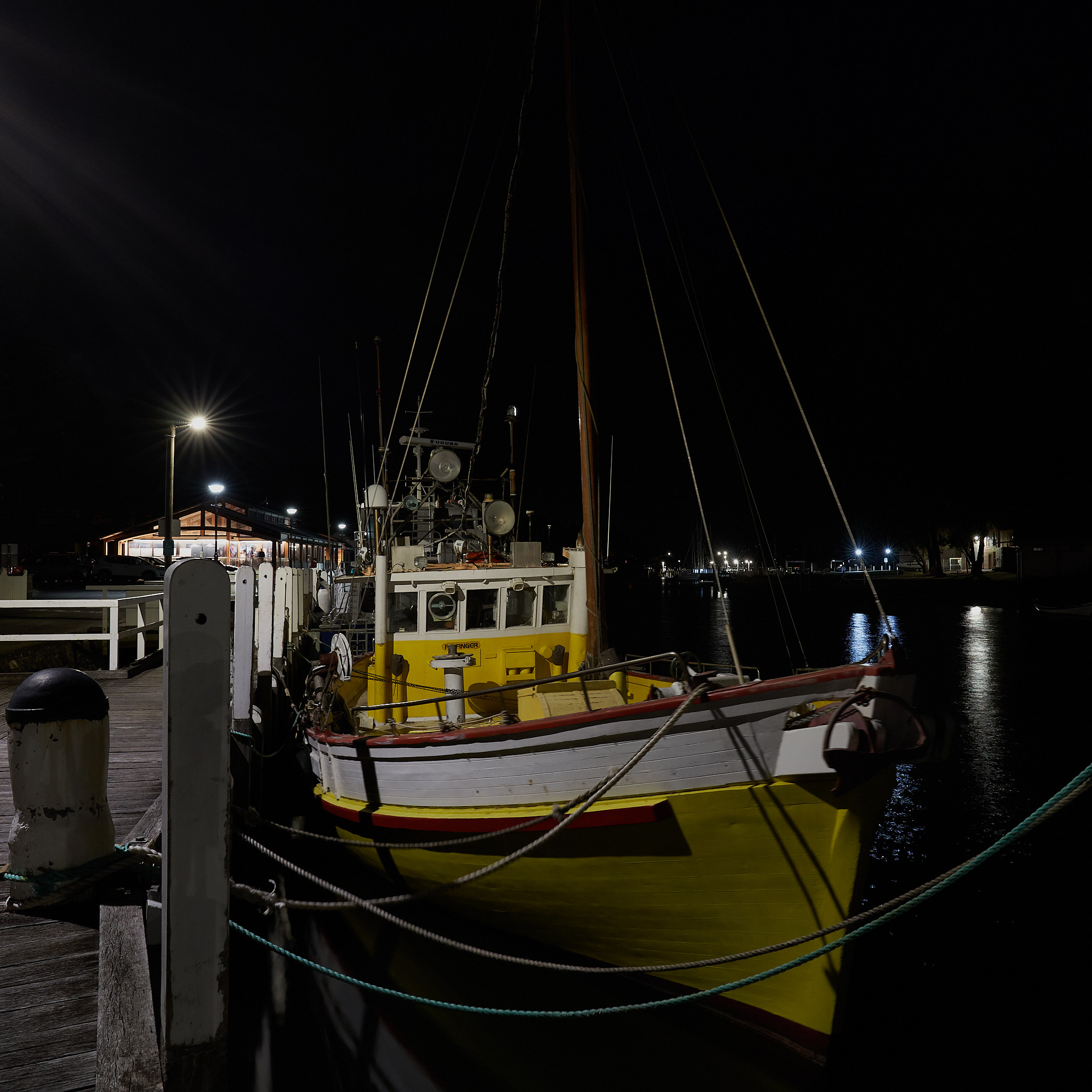
Boats are a nightmare for long exposure photography. They move. Usually just enough to ruin the image without moving enough to get an “artistic” effect. So a short shutter speed is highly desirable. We have a light source, the dockside lights. The sun flare effect from the lights only happens if the aperture is small f/16 is nice, f/11 works. I was lucky to get it at f/8. The tide wasn’t running hard, boat movement spoilt a couple of attempts but this one is sharp despite a 2 second exposure. ISO 640 doesn’t cause too much noise on the modern sensor especially if you resist the temptation to raise the shadows. I underexposed by a full stop to avoid blowing the highlights.
The subject is a beautiful wooden fishing boat called Putty’s Pride. It’s moored at Port Fairy. Keeping it in good nick must be a labour of love. Its owner has every reason to be proud.
 bobmcgee