The Pixaim River …

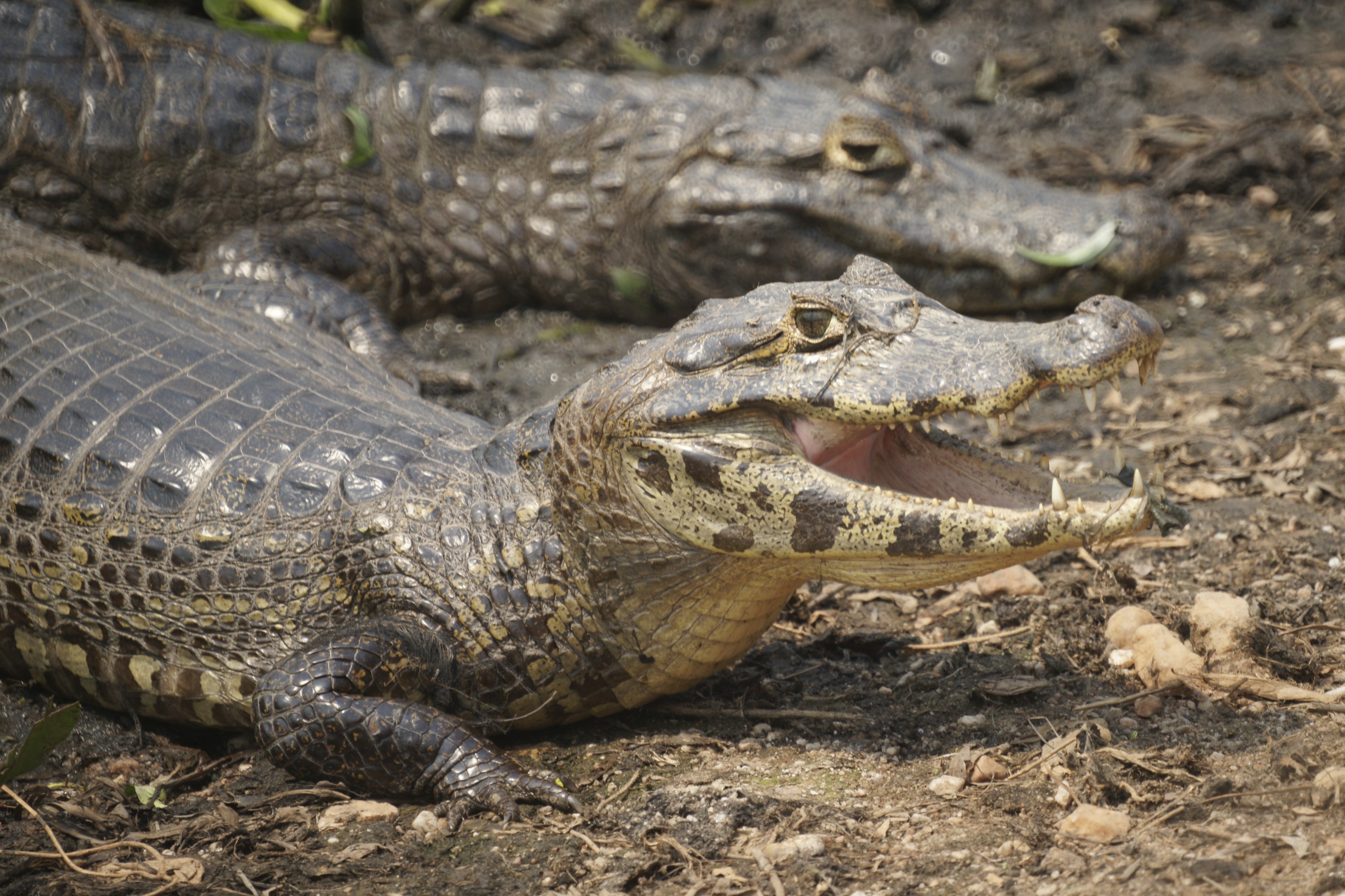
We spent two nights at the Pantanal Mato Grosso Hotel, right on the riverbank. A sizeable Caiman had found its way onto the verandah in front of one of the rooms. The polished concrete was too slippery for it to gain a purchase with its feet. Before the lucky guest could access their room the caiman had to be carefully assisted back onto the grass.

The days were spent on the river, after dark we went spotlighting in the back of a truck.

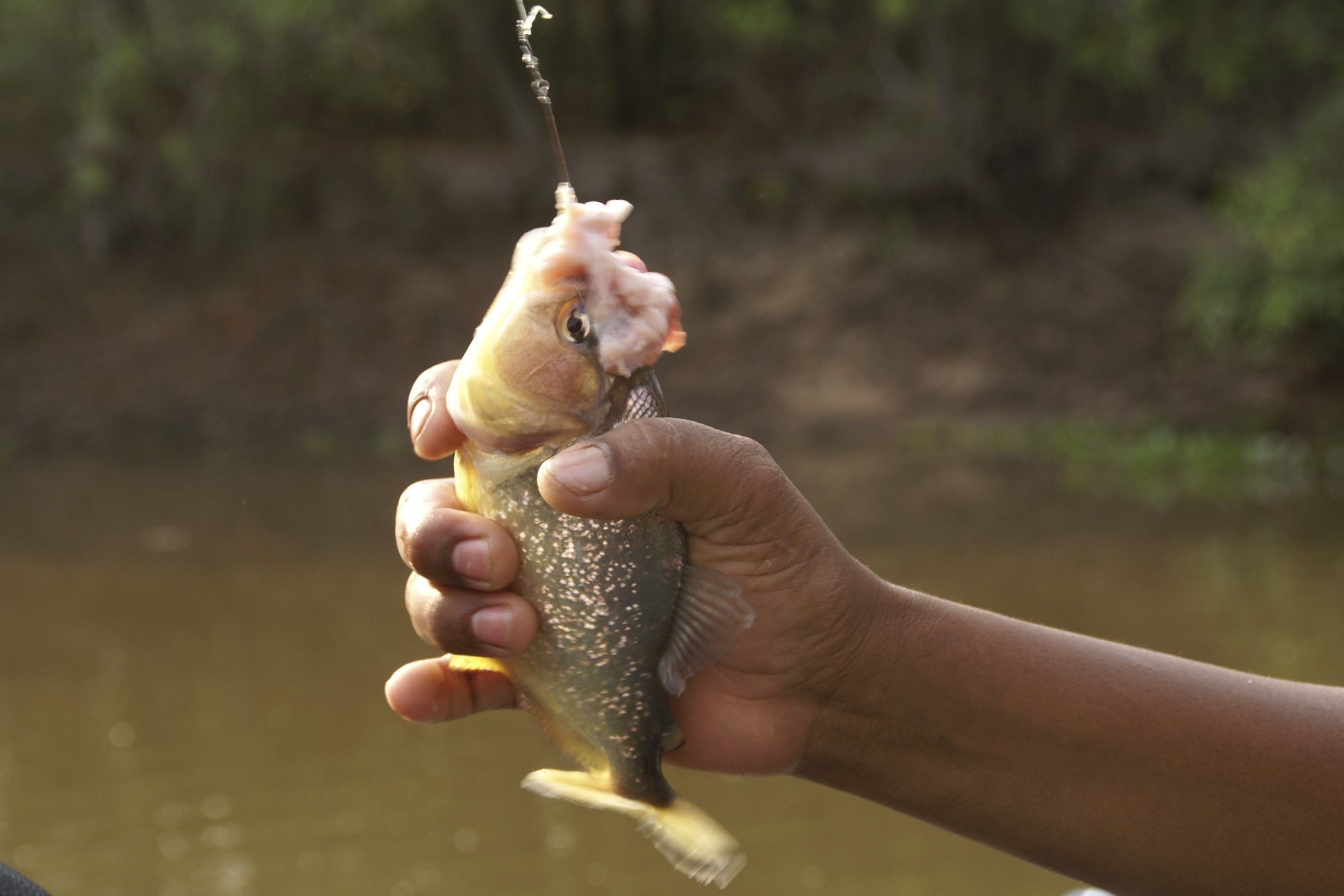
After a while the boatman dropped in a line. Within seconds he had a Yellow Piranha.

What with them and the caimans the life jackets may not have been a lot of use.

The poor fish was banged on the head and then thrown out. Well educated birds were waiting. First in was a Black-collared Hawk.

Subsequent fish were claimed by Great Black-Hawks and by Cormorants.

Jabiru …

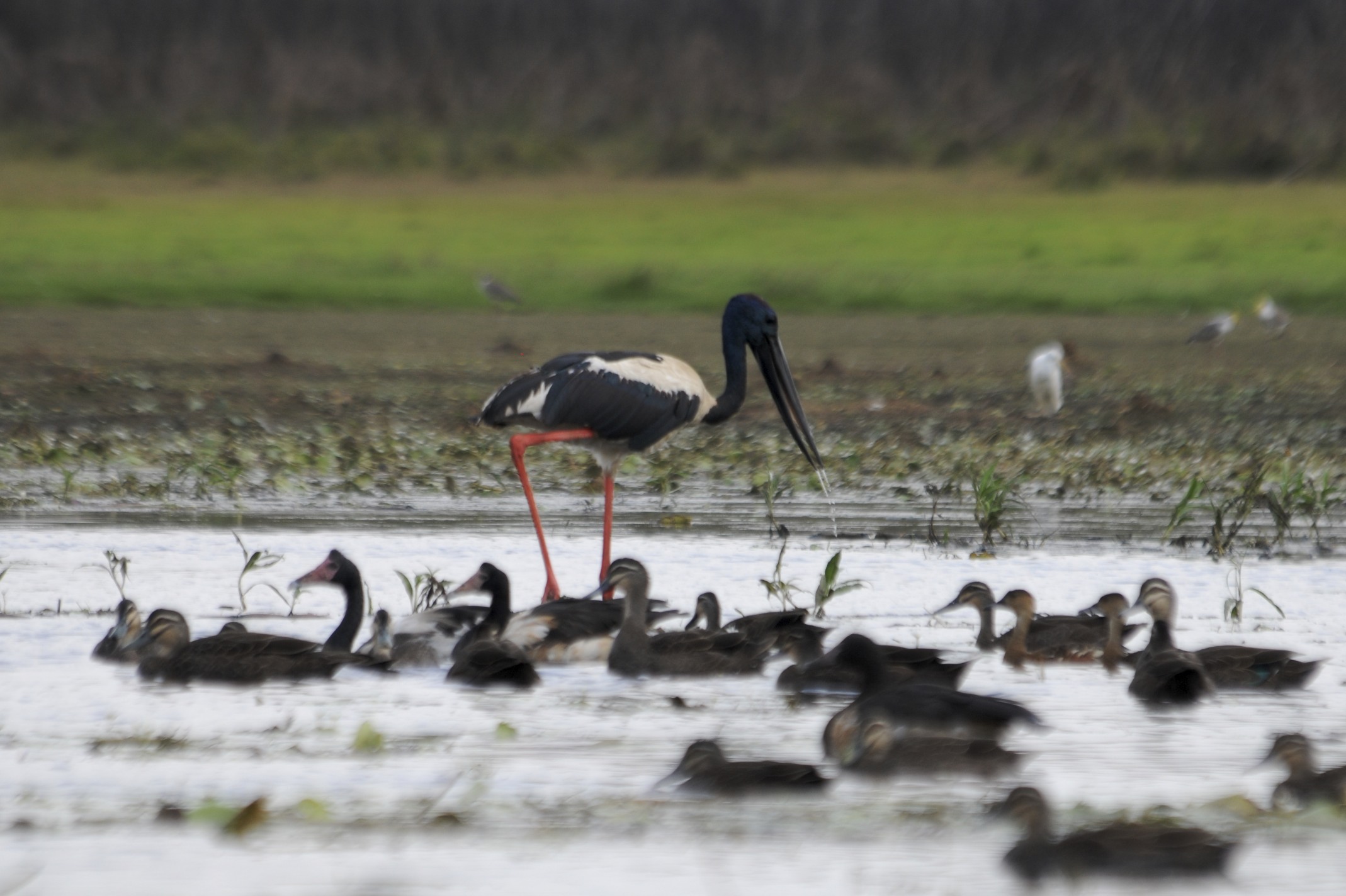
In the north of Australia we are lucky to have the beautiful Black-necked Stork …

Many Australians call this the Jabiru, indeed just outside Kakadu National Park there is a town named after this popular mistake. Kakadu, of course, is Crocodile Dundee country. Mick Dundee might well have said, “Call that a Jabiru? This is a Jabiru.”

The South American claim on the word is undeniable, Jabiru is from Tupí–Guaraní for swollen neck. Other Tupí–Guaraní words that are likely to be familiar are jaguar, tapioca, jacaranda and anhinga. Jabirus are found through a broad swathe of Central and South America east of the Andes. They are at their most abundant in the Pantanal. They look fairly gruesome on foot but are the picture of grace once airborne.

The Pantanal …

65 million years ago a huge inland sea, the Xaraés, began to dry out. As it did it became a huge lake and then the seasonally flooded basin called the Pantanal.

Touted as the largest wetland on earth it extends into two Brazilian states, Paraguay and Bolivia covering upwards of 150,000 square kilometres. One to one and a half metres of rain falls each year, mostly between November and March. The water level rises as much as three metres as a consequence. The rains stop, the level falls and by the end of the dry season the roads are dusty and the water birds and caimans are struggling for the remaining ponds. Ranching is the principal human activity but the problems that extensive flooding brings keep the human population fairly low and give the wildlife a space in which to survive.

The Transpantaneira is a highway into the northern Pantanal, in Brazil’s Mato Grosso. It is an unsealed road with numerous wooden bridges. It was the route that took me to the Pixaim river last month.

Coatis cross the Transpantaneira


Every puddle held something …

Say hi to the Yacare Caiman. Spotlighting at night reveals the density of these creatures to be astounding, and by the end of the dry some will be encountered going cross country, maybe even on the balcony outside your door! They mainly eat fish. The Capybaras don’t seem to show them a great deal of concern …

Click on the pictures to see them in better detail. More to come soon …

Good to see Mr Williamson back in the news

In July, the Temby report, an internal investigation into allegations of corruption within the union, found that nepotism and cronyism resulted in Mr Williamson, his family and friends reaping millions of dollars from the troubled HSU during his 15-year reign.

The report found that companies controlled by Mr Williamson and his family had received $5 million from the union over the past four years.

He was arrested this morning and charged with twenty offences. At first glance it seems they are mostly in relation to possible attempts to cover up his previous actions. Investigations are continuing. Will we see charges of embezzlement?

Santuário do Caraça …

The continuing saga of my recent trip to Brazil …

Leaving the not quite visited Serra da Canastra National Park in flames behind us it’s another six hour road trip to the Santuário do Caraça. This is a beautiful 17th century seminary set in a stunning mountain setting. The sanctuary covers a little over 11,000 hectares and is home to the Maned Wolf and Masked Titi monkey as well as birds of the Atlantic forest. It’s about two hours drive here from Belo Horizonte, capital of Minas Gerais and Brazil’s sixth largest city, getting on for 2.4 million people, weekends and holidays are best avoided.

The accommodation is simple but comfortable, meals are provided in the refectories, alcohol can be purchased. The church is fully functional and a place of pilgrimage.

Walking paths quickly get you to lush forest or up to heathy scrub. If you are a birdwatcher preparing for a visit don’t miss this post.

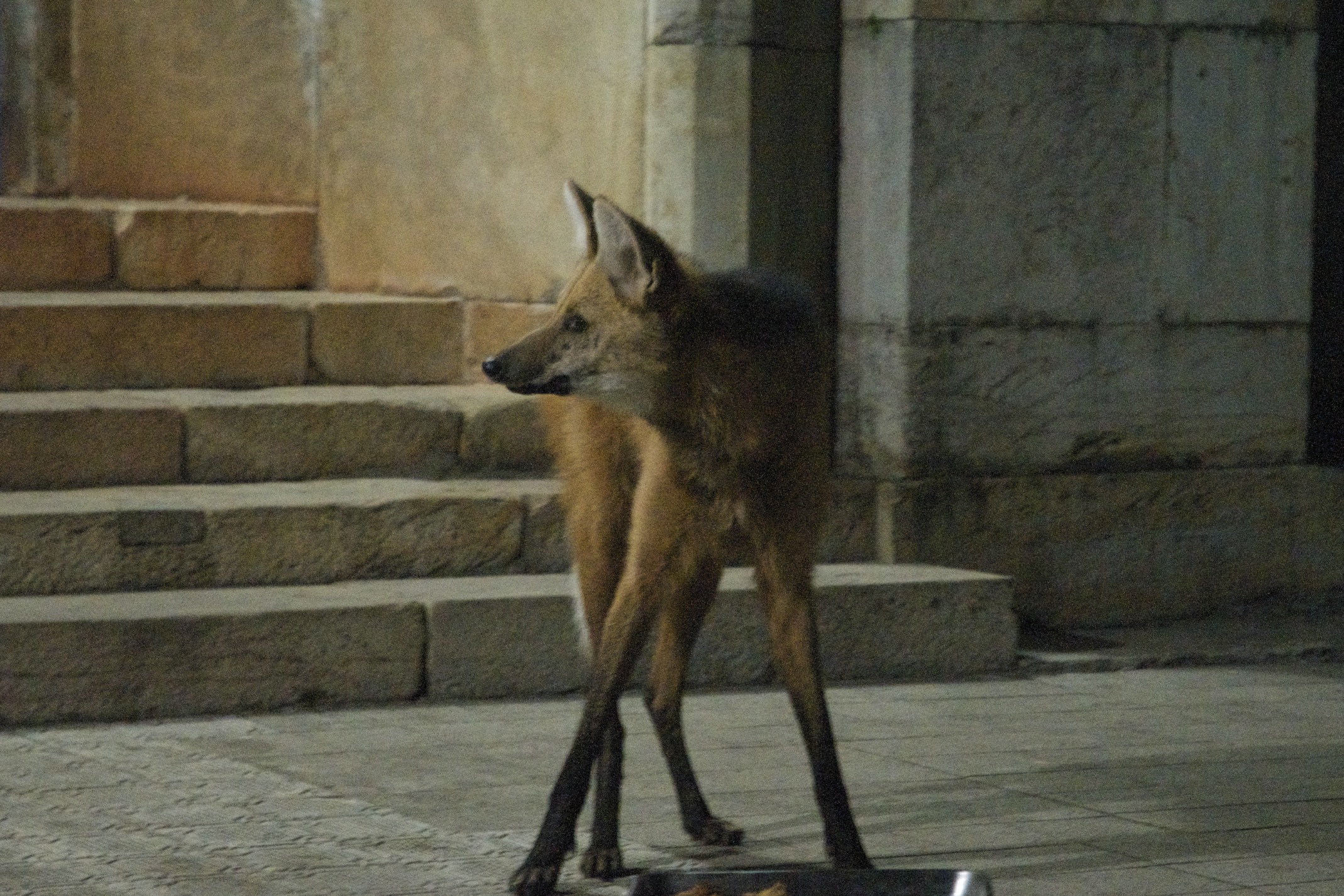
Another regular guest is the Maned Wolf, or lobo-guará because of its reddish fur. After dinner a tray of food is set out for it in front of the church doors, a priest calls “Guará” and in it comes … within an hour or three if you’re lucky. They are solitary beasts not pack animals, they come one at a time and they are quite unconcerned about the tourists and their flash photography but maintain a sharp lookout for other wolves. The food tray has fruit and meat on it. Interestingly the fruit was the first to go on the evenings I was there.

The birding was fabulous, the list included Velvety Black-Tyrant, Cliff Flycatcher, Blackish Rail, Serra Antwren, Biscutate Swift, Swallow-tailed Cotinga, Red-ruffed Fruitcrow, Hyacinth Visor-bearer and Large-tailed Antshrike. Dusky-legged Guan and the Rufous Gnatcatcher posed for their photos.

Guianan Squirrel and Masked Titi Monkey presented themselves for inclusion on the mammal list.

It’s hard to predict the highlight of a trip. This Brazil trip provided many and lived up to expectation in every respect. Caraça, though, was really special. I could go there for many reasons, I don’t believe in god but I do believe he commissioned some wonderful works, the setting is magnificent and the other creatures on hand to share it with … splendid.


The $97 shirt revisited …

Let’s revisit the problem …

You saw a shirt for $97.

Having no cash, you borrowed $50 from your mum and $50 from your dad.

$50 + $50 = $100.

You bought the shirt, and had $3 change.

You gave your dad $1 and your mum $1. You have a dollar in your pocket.

You now owe your mum $49 and your dad $49.

$49 + $49 = $98. Add the $1 you still have = $99.

Where is the missing dollar?

This is apparently hurtling around the internet to the puzzlement of many in their late teens to early twenties.

The first point to be made is that if you have no money, what you need from your shirt is that it make a good impression at your next job interview … $25 at target.

Secondly, if you have $3 in your pocket, no matter how it came to be there, and you give $1 to your Mum and $1 to your Dad you will have $1 left … the world does not owe you an extra dollar.

So let’s take it from the beginning …

You borrow $50 each from Mum and Dad. You have $100 in your hand.

You spend a ridiculous amount on a shirt and now you have a shirt in one hand and $3 in the other.

You give two dollars away, you are left with $1, a shirt and, because you reduced your $100 debt by $2, a debt of $98 … what else did you expect?

The puzzle evaporates in the face of logic but on first reading it has a certain pull … because it invites you to do a sum that simply isn’t itself logical and leads to a wrong answer.

If you saw straight through the puzzle congratulations.

If you didn’t you may need to temper your expectations at the job interview.

If you wrote the puzzle there’s a guy in Canberra named Wayne Swan who needs a hand finding a few missing dollars.

From Kate, our European correspondent …

Dummies’ guide to what went wrong in Europe.

Helga is the proprietor of a bar. She realizes that virtually all her customers are unemployed alcoholics and, as such, can no longer afford to patronize her bar. To solve this problem she comes up with a new marketing plan that allows her customers to drink now, but pay later.

Helga keeps track, in a ledger, of the drinks consumed (thereby granting loans to the customers).

Word gets around about Helga’s “drink now, pay later” marketing strategy and, as a result, increasing numbers of customers flood into Helga’s bar. Soon she has the largest sales volume for any bar in town.

By providing her customers freedom from immediate payment demands Helga gets no resistance when, at regular intervals, she substantially increases her prices for wine and beer – the most consumed beverages.

Consequently, Helga’s gross sales volumes and paper profits increase massively. A young and dynamic vice-president at the local bank recognises that these customer debts constitute valuable future assets and increases Helga’s borrowing limit. He sees no reason for any undue concern, since he has the debts of the unemployed alcoholics as collateral.

He is rewarded with a six figure bonus.

At the bank’s corporate headquarters, expert traders figure a way to make huge commissions, and transform these customer loans into DRINKBONDS. These “securities” are then bundled and traded on international securities markets.

Naive investors don’t really understand that the securities being sold to them as “AA Secured Bonds” are really debts of unemployed alcoholics. Nevertheless, the bond prices continuously climb and the securities soon become the hottest-selling items for some of the nation’s leading brokerage houses.

The traders all receive a six figure bonus.

One day, even though the bond prices are still climbing, a risk manager at the original local bank decides that the time has come to demand payment on the debts incurred by the drinkers at Helga’s bar. He so informs Helga. Helga then demands payment from her alcoholic patrons but, being unemployed alcoholics, they cannot pay back their drinking debts. Since Helga cannot fulfil her loan obligations she is forced into bankruptcy. The bar closes and Helga’s 11 employees lose their jobs.

Overnight, DRINKBOND prices drop by 90%. The collapsed bond asset value destroys the bank’s liquidity and prevents it from issuing new loans, thus freezing credit and economic activity in the community.

The suppliers of Helga’s bar had granted her generous payment extensions and had invested their firms’ pension funds in the BOND securities. They find they are now faced with having to write off her bad debt, losing over 90% of the presumed value of the bonds. Her wine supplier also claims bankruptcy, closing the doors on a family business that had endured for three generations.Her beer supplier is taken over by a competitor, who immediately closes the local plant and lays off 150 workers.

Fortunately though, the bank, the brokerage houses and their respective executives are saved and bailed out by a multibillion dollar ”no-strings-attached” cash infusion from the government.

They all receive a six figure bonus.

The funds required for this bailout are obtained by new taxes levied on employed, middle-class, non-drinkers who’ve never been in Helga’s bar.
Now do you understand?