Kings, monks and soldiers …

Having completed our time at Khao Yai our next big name destination would be Doi Inthanon way up north. To get there entailed a drive back to Bangkok and a flight to Chiangmai where we would spend the night before driving on towards Thailand’s highest peak.

Rockjumper birding tours are, above all else, birding tours, travel days were never dull. En route we stopped at wetlands, paddy fields, a temple and one of the former king’s many projects. Not to become all cultural, mind you, to find more birds.

Wat Pa Put Ta No home of the Limestone Wren Babbler, to find it take the noble threefold path and make an offering of mealworms …

Limestone Wren-Babbler

Temples and the king’s image are everywhere in Thailand.

King Bhumibol Adulyade, the name translates as Strength of the Land, Incomparable Power, reigned from 9 June 1946 until his death on 13 October 2016. Thailand is often described as a constitutional monarchy but during that 70 years His Royal Highness was far more of a constant than the frequently changing constitution. His popularity lies, in part, in the many King’s Projects that were created with his name attached. These were usually aimed at social and economic developments at a grass roots level. Thais that I spoke to were warm in their praise of their former king. In his spare time the king was a jazz fan who played the saxophone and a keen photographer, no wonder he was popular!

The new king, Vajiralongkorn, does not enjoy the same reverence as his father although no one was in a hurry to criticise him, Thailand has lèse majesté laws that can lead the talkative to prison. His image is displayed on public buildings and may become more widespread after the period of mourning for his father is over.

Whilst I was in Thailand there was a ceremony to mark the start of construction of the funeral pyre that will take the king back to heaven.

Prime Minister Prayut Chan-o-cha, a former army chief who seized power in 2014, led the ceremony, which saw a crane erect the first of a series of giant steel pillars that will form the cornerstones of what will be a largely wooden pyre next to Bangkok’s sprawling Grand Palace.

The ceremony was infused with the religious ritual that permeates palace life with Buddhist monks chanting mantras and Hindu Brahmin priests blowing conches as workers in hard hats fixed the pillar to a concrete plinth. The Straits Times.

The ceremony encapsulates Thailand as the outsider sees it, it was all about the monarchy, overseen by the military, under the supervision of the Sangha with construction workers hard at work.

The pyre will be more than 50 metres high. The king’s embalmed body, tied in a foetal position, will be consumed by fire, to be lit I believe, by his successor. The date is yet to be announced but is expected to be in October.

According to Wikipedia some 93.6% of Thais are Buddhist (getting very close to the 98% required for a scientific consensus and therefore making it very likely that Bhuddism is the one true religion). Wikipedia also tells us that Thailand …

inherited a strong Southeast Asian tradition of Buddhist kingship that tied the legitimacy of the state to its protection and support for Buddhist institutions. This connection has been maintained into the modern era, with Buddhist institutions and clergy being granted special benefits by the government, as well as being subjected to a certain amount of government oversight.

But the relationship between the Government and the Sangha is not always cosy. Whilst I was there the military were busy searching the Dhammakaya Temple for one of its founders, Phra Dhammachayo, who is accused of embezzlement and appropriation of public land. Was this a case of the military cracking down on an influential opposition figure or is the guy a crook?

The verdict of the man in the street, and it was only one man, was that he is indeed a crook. The Dhammakaya movement, I was told, has been selling a better reincarnation for large sums of money, the more you pay the better your next life will be. His followers would disagree and there was at least passive resistance to the searching of the temple complex. The missing monk is missing still. The emergency powers that were invoked to enable the search have been terminated.

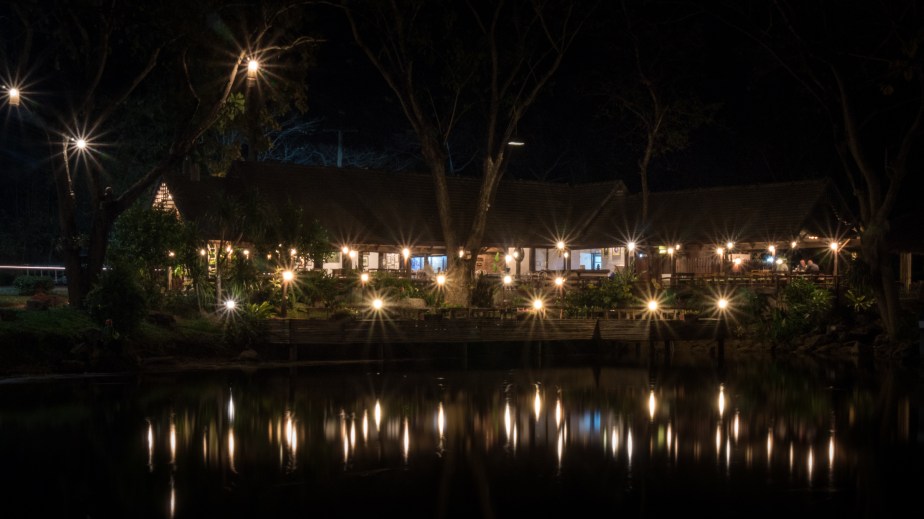
We arrived at the Inthanon Highland Resort as the light faded. As I said earlier, we rarely saw our accommodation in daylight. On this occasion it looked pretty good in the dark, it would be our home for the next three nights.
Khao Yai …

Khao Yai was the first National Park created in Thailand. It covers an area of 2,168 square kilometres of forest and grassland and together with some surrounding protected areas form the Dong Phayayen-Khao Yai Forest Complex World Heritage Site which provides habitat for another impressive array of wild creatures.

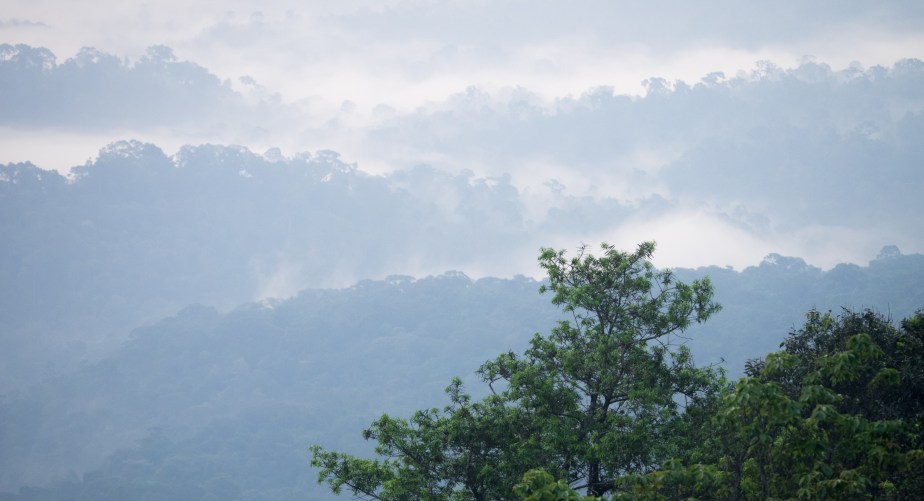
The morning mist, the splendour of the scenery, the certainty of seeing at least some of the wildlife and the fact that it’s just a three hour drive from the outskirts of Bangkok ensure that it is a well visited park. Weekends and holidays are best avoided, but if you have an interest in wildlife a visit at some stage is an absolute must. The Rockjumper birding tour I was on spent two full days in the park. Longer would be better, wouldn’t it always. If you are visiting independently here are a couple of resources that might help, thainationalparks.com and thaibirding.com.

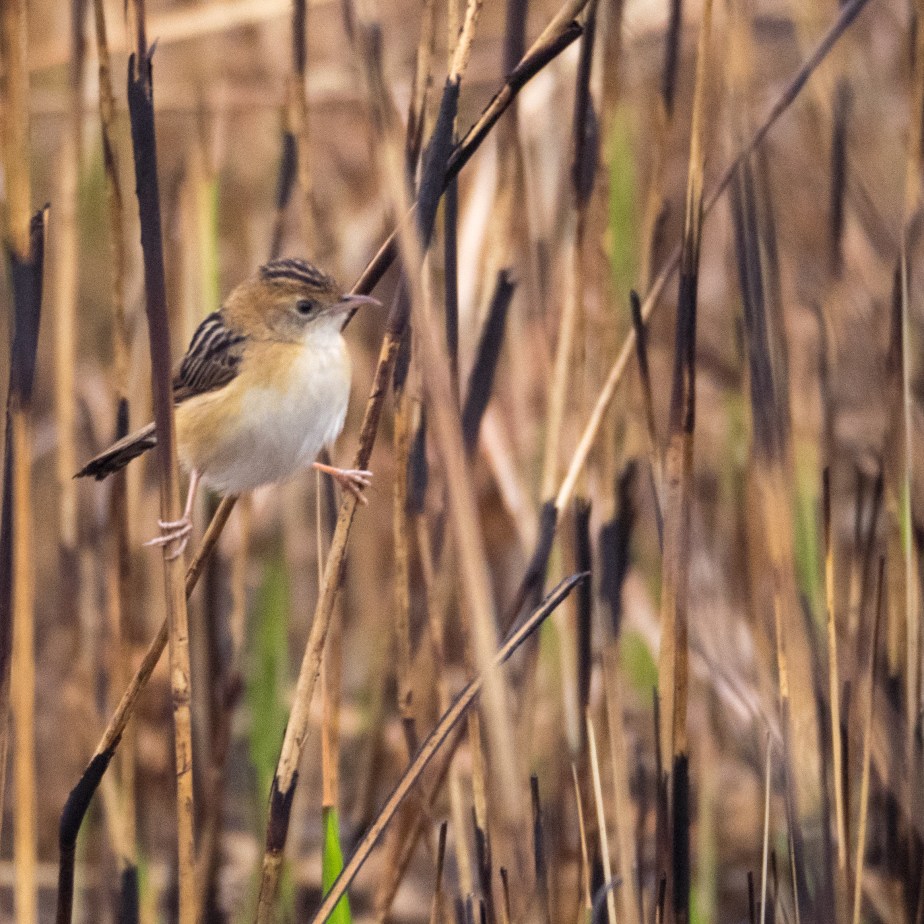
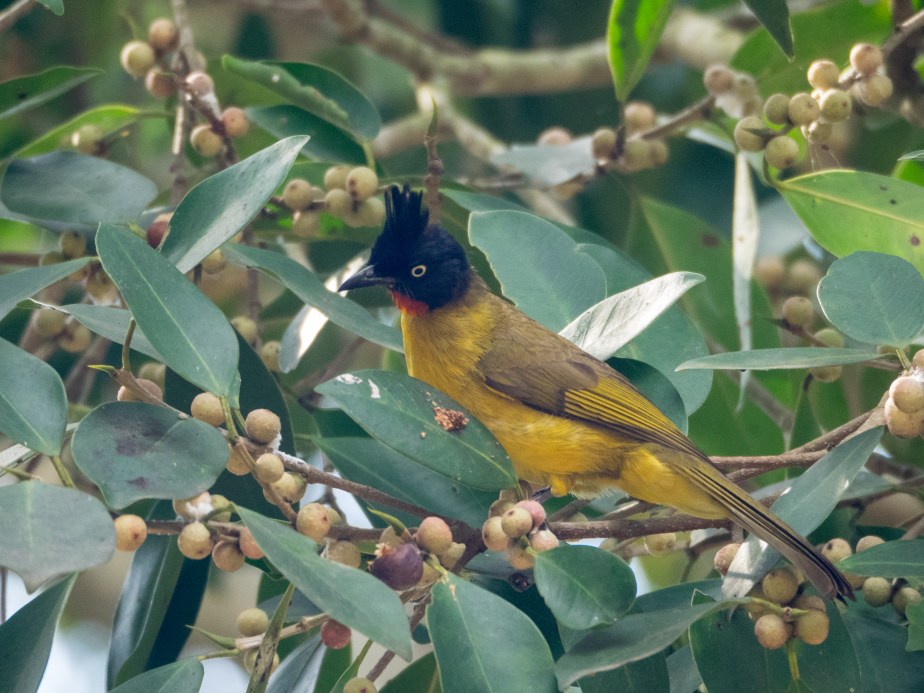
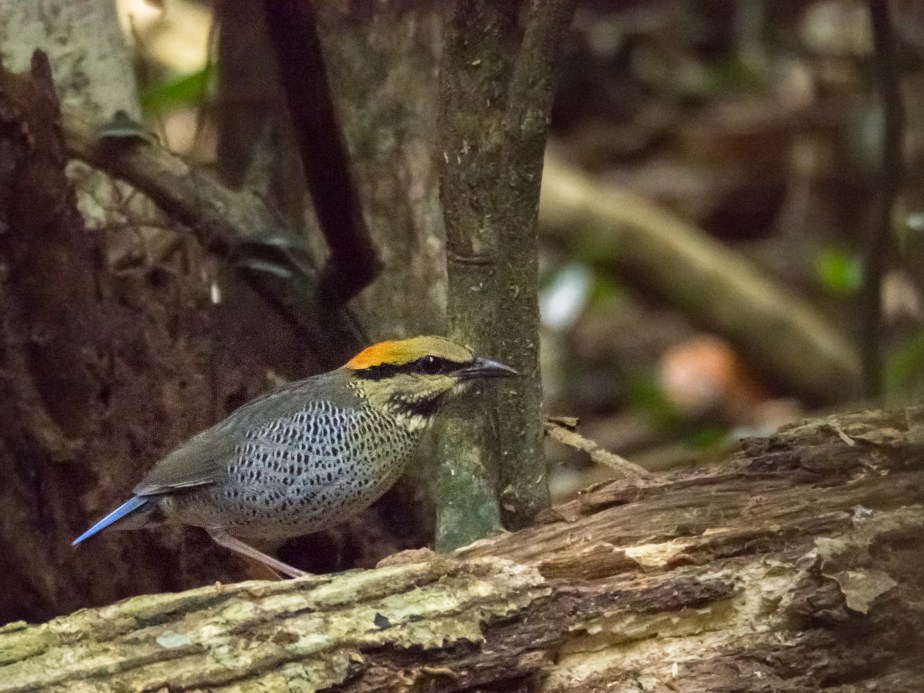
Birding highlights included Silver Pheasant, Blue and Eared Pitta, Vernal Hanging Parrot, various Barbets, Woodpeckers, nightjars and the Collared Owlet. A few birds were happy to pose …

Golden-headed Cisticola
Mountain Imperial Pigeon
Moustached Barbet
Black-crested Bulbul
Blue Pitta

Mammals that we encountered included Black Giant and Variable Squirrels, Muntjac  and Sambar Deer. The Sambar are unphased by the photographer’s close approach.

Sambar

Pig-tailed Macaques are a certainty, Gibbons much less so. There are two species present – Pileated, which we heard and White-handed which we were lucky enough to see.

White-handed Gibbon

This guy was accompanied by his wife and baby. The females are brown, the babies, of course, are adorable.

No matter how big you are a few metres into the forest and you’re virtually invisible. Last time I was on foot this close to an elephant I was running for my life (and Asian Elephants deserve the same respect that African ones do). However half a dozen people had already walked past it without it showing any sign of irritation and, in the forest, I was virtually invisible too … I hoped.

Asian Elephant

Cross country to Khao Yai …

A long day in the bus. The Thais drive on the left, just like we do in Oz, how sensible of them.

Our transport consisted of two absolutely luxurious minibuses. More importantly, they were driven by the nicest chauffeurs you could ever hope to meet. Tiang and June, as well as getting us efficiently around the place, twice a day they would set up a circle of chairs and provide us with our 11 am little lunch and afternoon tea. Served with a big smile, sometimes even with chocolate. Nice people.

We took a little detour back to the salt flats, the Nordmann’s Greenshank was unfinished business. It took two stops to find a flock of them. The Spoonbilled Sandpiper is a super sexy bird, I have even seen it featured on tee-shirts, I doubt that the greenshank will ever be so honoured. To be sure that you are looking at one, not a Common Greenshank, you need to observe its two tone bill, and note that its legs are slightly shorter. It has but one saving grace – it’s rare! Tick.

Next stop was a duck pond at Bangtaboom. Here we found a plain white stork and a few other water birds. Quite a drab stork really. If it wasn’t so hideously rare it would hardly be worth looking for. Milky Stork, tick.

We skirted Bangkok, stop start, stop start and continued eastwards. As dusk approached we made a very brief stop at Sabkaret Reseach Station to say hi to the Siamese Fireback. It’s a very attractive Pheasant. It could grace a tee-shirt, no trouble.

We arrived at our accommodation after dark.

The best birding is early morning. Breakfast was early, we would be on our way before dawn. It was a feature of the entire tour that we almost never saw our accommodation in daylight.

We saw the sunrise in Sab Sadao. This is an area of dry deciduous woodland a habitat that is uncommon in Thailand and more like parts of Cambodia which isn’t all that far away. And that explains why we were there, a different habitat brings a new suite of birds. Memorable among them was the Red-breasted Parakeet.

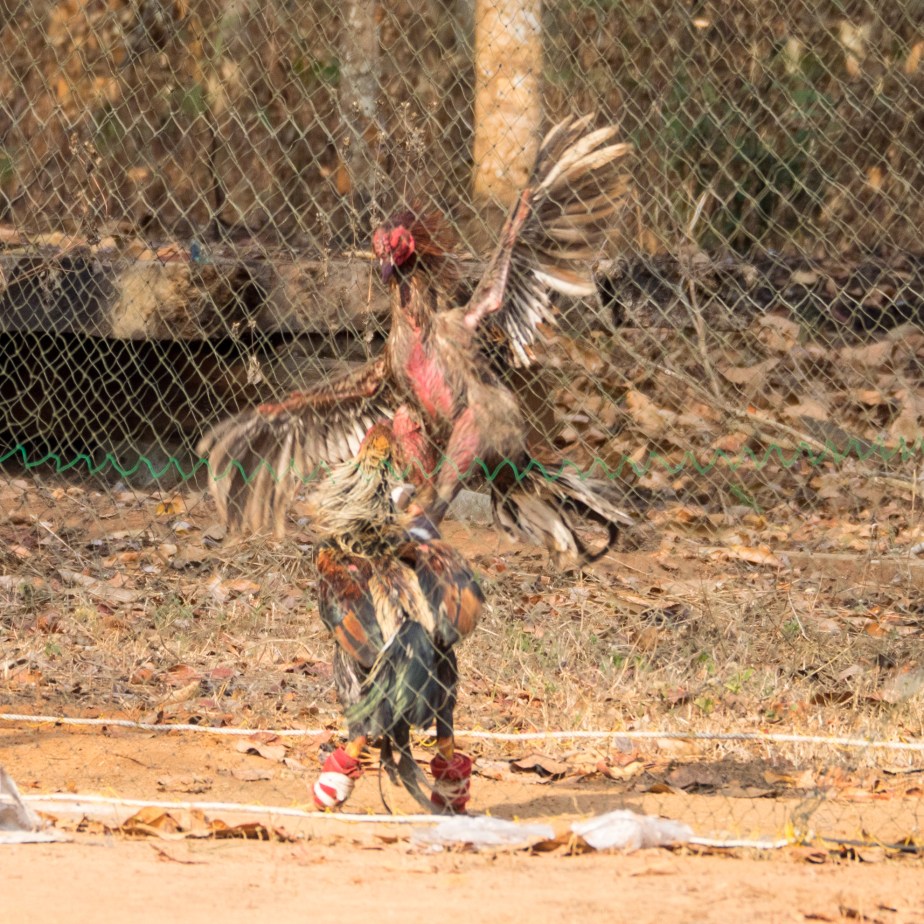
We also saw a couple of other sights that stick in the memory. A ute came past taking some kids to school. There were half a dozen girls in the tray. There was a canopy over that and half a dozen boys perched on top of that. And then there was this …

Cock fighting is legal in Thailand. Good fighting birds change hands for huge sums of money and fortunes are gambled on the outcomes of contests. These birds are merely training, the spurs on their legs are bandaged to prevent injury. In fact, the spurs are often covered in competition as well. In Thailand it is not the custom to fit blades on the feet.

Next stop was a wetland at Lam Pra Elerng. Whilst we were watching the water birds some Brown-backed Needletails swept through. I was commenting that in Oz, Needletails, in our case White-throated Needletails, generally travel with storm fronts when the rain started. Moments later I was wetter than the ducks in front of me.

Kaeng Krachan …

Thailand’s largest national park covering an area of 2914 km² and just part of an even larger forest that extends west into Myanmar and north and south in Thailand. According to the Thai National Parks web page it is home to at least 420 species of bird, 57 mammals and about 300 species of butterfly.

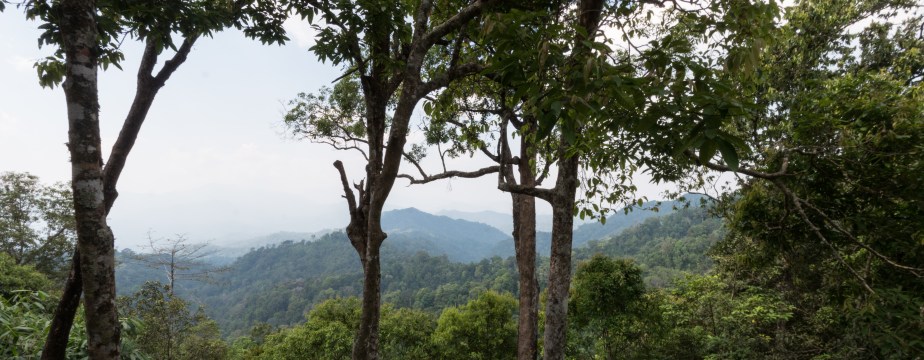
Looking west into Myanmar

Just to conjure with some delicious possibilities, Tiger, Leopard, Asian Elephant, White-handed Gibbon and Great Hornbill are all here, although you might not want to meet all of them on a dark road. The possibility exists … there are three campsites!

The Great Hornbill has to be the signature bird, it may measure as much as 122 cm from tip of bill to tip of tail, that’s almost exactly 4 feet in the old money. Its wing beats can often be heard before the bird is seen. It’s a hole nester and therefore needs a lot of forest with a lot of very big, very old trees. It’s why places like Kaeng Krachan are so very precious.

That’s right, my photo was lousy but it inspired me to have a go with the crayons.

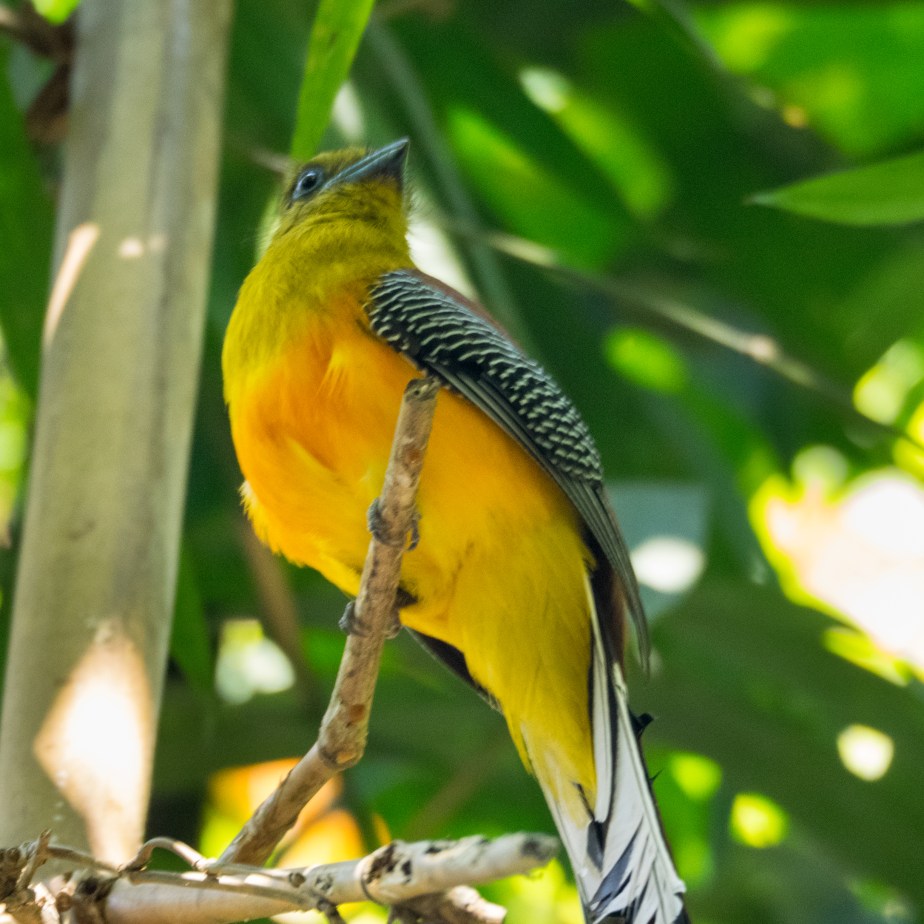
Spent three days here and divided the time between different elevations. The birding was excellent.For me the hornbills were the stars of the show, besides Great there were also Oriental Pied, Wreathed and Tickell’s Brown. Hanging Parrots, Barbets and especially the odd Trogon threw in some colour …

Orange-breasted Trogon

Occasionally the watchers were themselves under scrutiny …

Dusky Langur

Other primates we encountered were Banded Langurs and Stump-tailed Macaques. White-handed Gibbons were often heard calling but stayed out of sight.

Some of the 300 butterflies were about. I would be grateful to anyone who can identify this one, just drop me a comment …

Even large creatures can be hard to find in a dense forest, there was plenty of evidence of elephant but neither they or the tigers put in an appearance. But I am not prejudiced against smaller things …

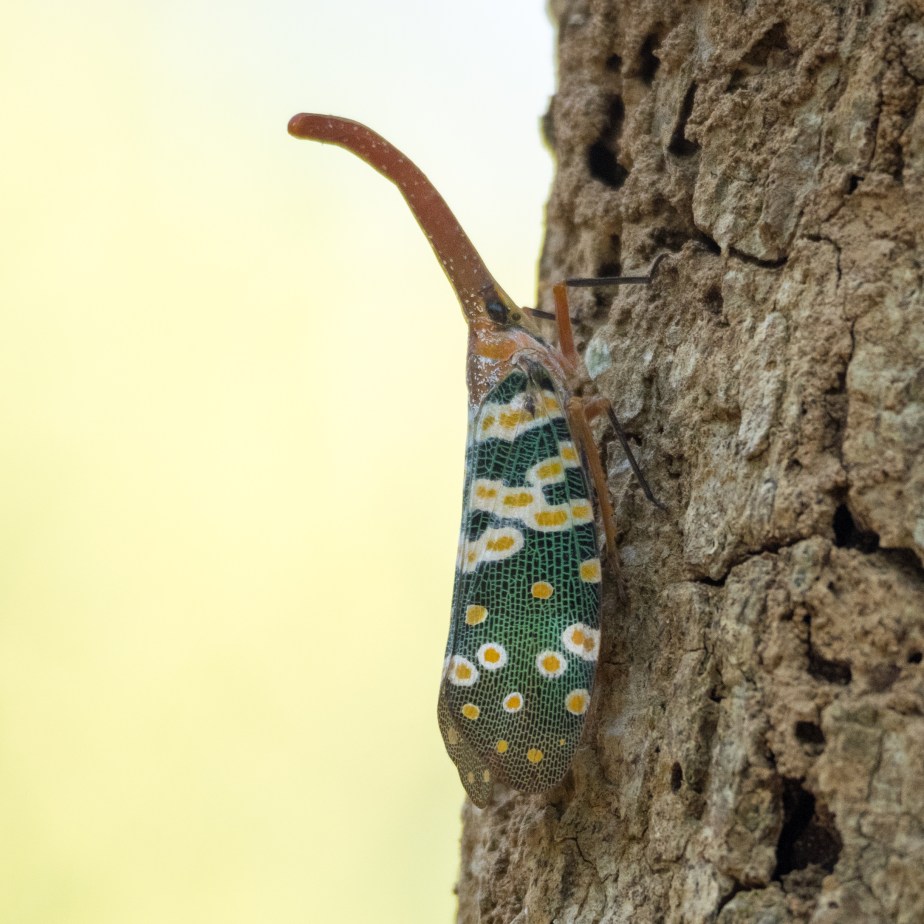
Lantern bug

I have a reasonable faith in my identification of this little beauty as Pyrops candelaria. In the distant past it was thought that they emitted light from their proboscis. Sadly, this is not true.

And my chances of identifying a Skink aren’t especially great but this is probably Dasia olivacea in a confiding mood …

Olive Dasia

Three days amassed a good bird list but in many ways just scratched the surface. I would love to go back.

The serious birdwatcher should check out Nick Upton’s page for some great information on how to get the best from their visit or book through Rockjumper.

Pak Thale and Laem Phak Bia …

Following my walk in the park it was back to the Maruay Gardens Hotel to meet the group I would be traveling with and our guides Uthai Treesucon, Thai ornithologist extraordinaire, and Keith Valentine, managing director of Rockjumper Birding Tours. I will mark their report cards later.

The tour began on the morrow with a drive to Pak Thale and its world famous salt works. This is located about 125 km southwest of Bangkok on the shores of the Gulf of Thailand.

Serious birdwatchers will want to visit norththailandbirding.com and hbw.com.

This area is one of the best places anywhere to see the shorebirds of the Asian Flyway. They mostly breed way to the north and escape the winter by long migration to warmer climes. Top of our list of desirable species were Spoon-billed Sandpiper and Nordmann’s Greenshank.

We amassed a list of 43 species (not all shorebirds) including the Spoonie but not including the Greenshank.

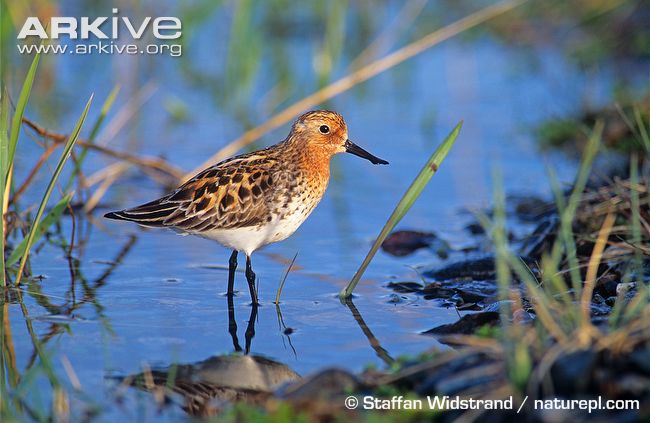
Fair views were had of  the Spoon-billed Sandpiper but I got nowhere near close enough to get a good photo. I pinched this one from arkive.org who are keen to conserve the creature and would be pleased if you dropped by their website, especially if you made a donation. The one in the picture is in breeding plumage, in winter they lack the colour. The easiest way to pick them out of a hoard of little waders is to look for the characteristic side to side feeding motion of their heads, very similar to the much bigger and not closely related Spoonbills, convergence of form and function, I suspect.

The upside of group travel is that accommodation, transport and local knowledge are all in the package. The downside is the little time available to sit and wait for that magic photo. Snatch what you can …

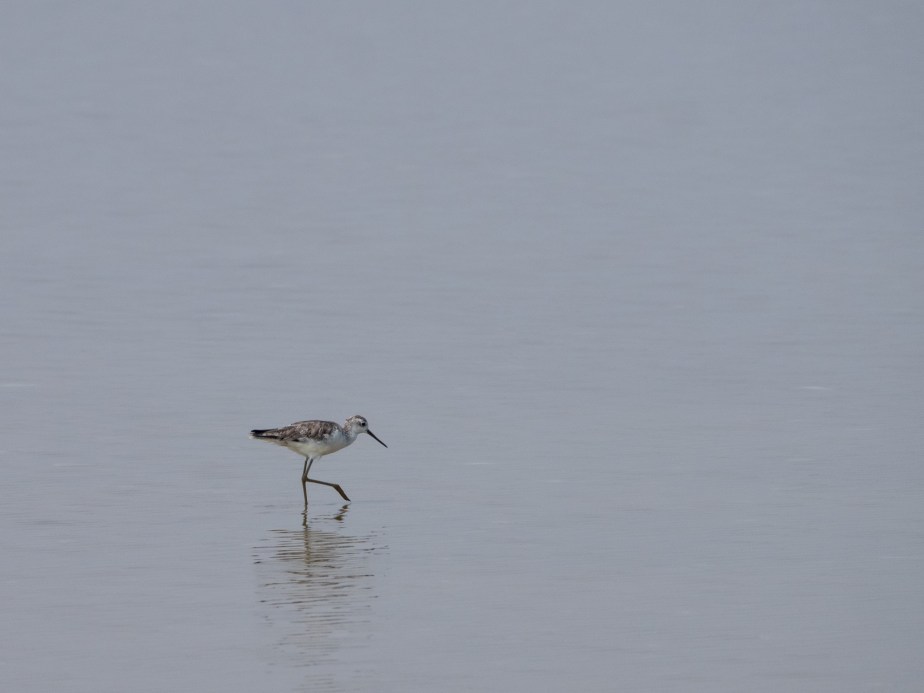
Marsh Sandpiper

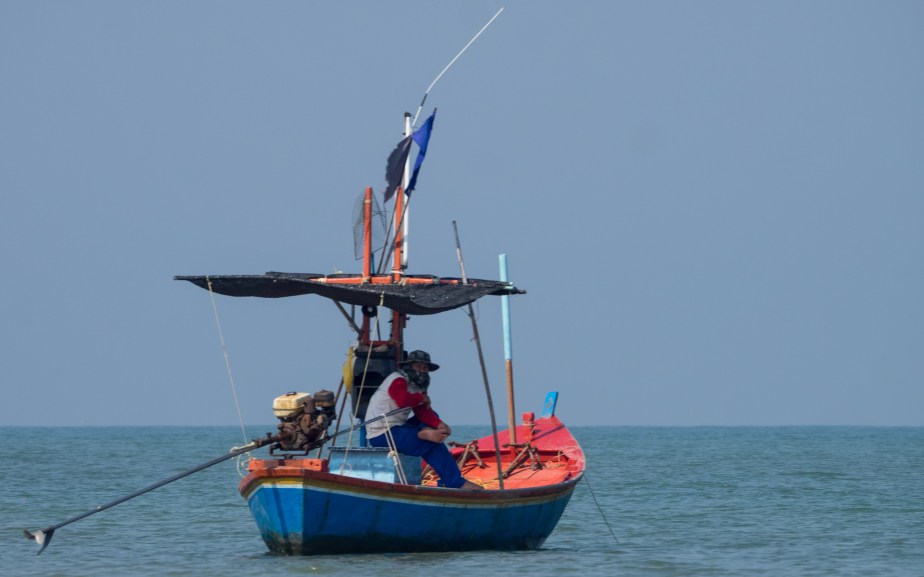
Once finished in the salt pans it was on to the Laem Phak Bia sandspit. To get there we took a boat not unlike the one below down a mangrove lined creek out to the sea, making a wet landing on the spit.

Note the engine mounted onboard with the propeller on a long shaft. This seems to be the standard arrangement in Thailand. It enables operation in shallow water and provides good maneuverability.

Our main objectives were Chinese Egret, Malaysian Plover and the enigmatic White-faced Plover, currently a distinctive subspecies of Kentish Plover but may one day be elevated to full species status. We found them all and a few terns and shorebirds as well.

From there it was back into the minibus and on to Kaeng Krachan, Thailand’s largest national park.

A Day in Bangkok …

My Rockjumper cap had arrived in the mail before leaving Australia. I put it on as I stepped into the outside world from the sequestered realm of Customs and Immigration. This, I hoped would improve my chances of finding my limo driver.

Bangkok is a sprawling traffic jam imprisoning some 11 million souls. Skyscrapers of concrete and glass reach up, entwined by tollways, overpasses and bridges. New roads are being built on stilts over old roads desperately trying to keep up with the needs of a populace who all just bought a nice new car. As the Rough Guide puts it …

… under the shadow of the skyscrapers you’ll find a heady mix of chaos and refinement, of frenetic markets, snail’s-pace traffic jams and hushed golden temples, of dispiriting, zombie-like sex shows and early-morning alms-giving ceremonies.

It was early morning when I arrived at the Maruay Gardens Hotel. Way too early to check in but they were kind enough to store my luggage and let me use the wifi. Good old Google Maps showed a park not too far away although the receptionist thought my chances of finding a whole load of birds there were pretty low. I took a taxi to Chatuchak Park, joggerland.

There were a lot of people but I felt really, really special as the only one carrying binoculars …

but, hey, it was worth it. There were birds, mammals, reptiles, trees, grass and a lake. It was a gentle introduction to the birds of Thailand with all day to figure out what they were …

Black-collared Starling
Small Minivet
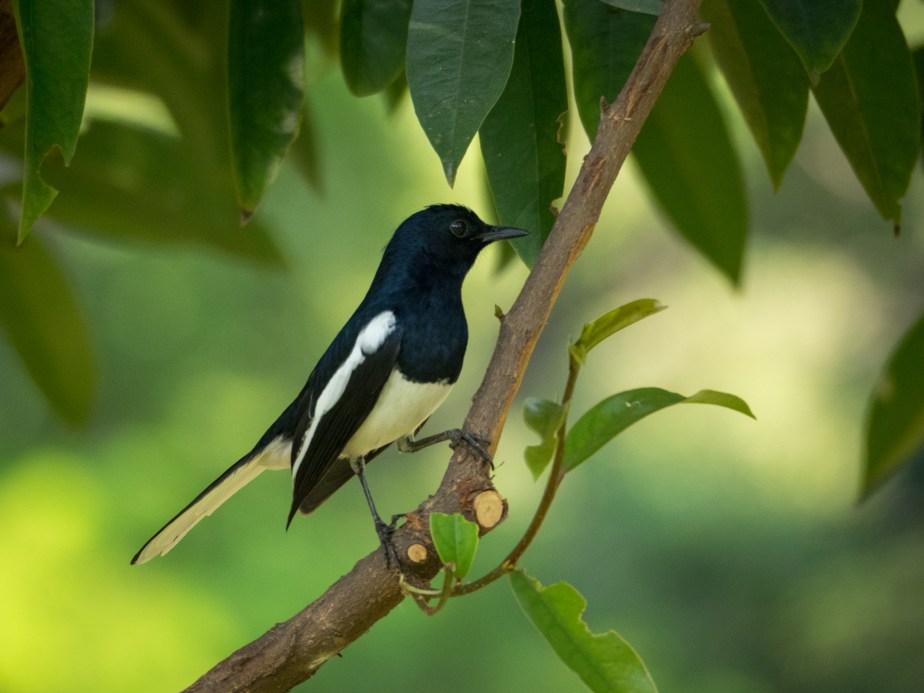
Oriental Magpie Robin

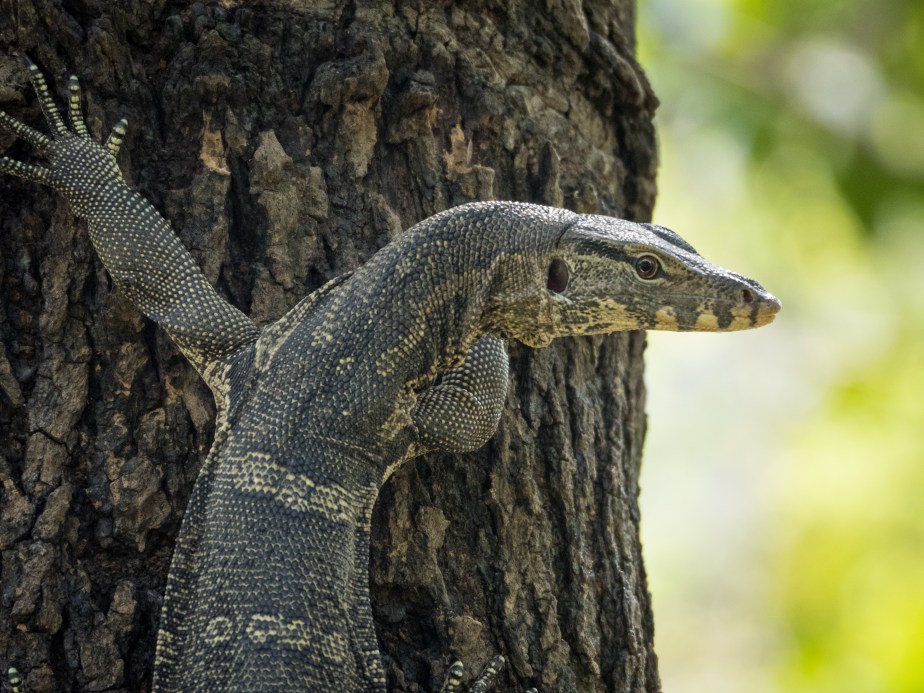
I managed to identify 18 species of bird, a couple more slipped through to the wicket keeper. Some Squirrels were happy to pose and a couple of reptiles were about although one was the introduced Red-eared Slider. I was far more impressed with this one, especially when it began stalking some pigeons …

Water Monitor
Variable Squirrel

Birding Thailand …

I’ve been back about a month.

It was a Rock Jumper birding tour and therefore a pretty hardcore, monomaniacal trip but if your eyes are open for birds and your mind isn’t closed to all else you get to see quite a lot.

Thailand sits in the centre of the Indochinese peninsula, it is in the northern hemisphere and entirely within the tropics. It has a land area of 513,120 square kilometres (198,120 sq mi), and a population of about 66 million people. The landform is essentially that of a large bowl, a central fertile and mainly flat region embraced by mountains to the west, north and east. The Malay peninsula juts out to the south separating the Gulf of Thailand from the Andaman Sea.

You can find an interactive map and regional information at Rough Guides, not a bad place to start if your interests are more main stream than mine!

In broad outline there are three seasons to the year. Mid May to mid October is rainy because of the south-west monsoon. This is followed by the north-east monsoon, allegedly this is winter, characterised by milder temperatures and, for most of the country, less rainfall. This lasts until mid February when summer begins. The result for most of the country is a Tropical Savanna climate, the Malay peninsula is considerably wetter and warmer, the mountains considerably cooler. Summer temperatures commonly range up to 40°C, outbreaks of cold air from China can bring winter temperatures down to zero.

My visit lasted three weeks and took me to all points of the compass, to the top of Doi Inthanon at 2,565 metres (8,415 ft) and the Pakthale saltworks at sea level. I got to look a wild Asian Elephant in the eye, see Gibbons swing past at close range and encounter 490 species of bird. It was a very successful trip.

Thailand is a very complex place, presently a military dictatorship with a constitutional style monarchy. As you drive around it has some of the look and feel of other parts of tropical Asia but it is clearly more affluent than say Vietnam. Modern industrial buildings sit alongside beautiful Buddhist temples, apartment blocks and modern houses alongside bamboo shelters and market stalls. Pictures of the former king are everywhere, on billboards, public offices and private enterprises large and small. The present king not quite so much but that may change once the period of mourning for his father ends in October.

The other day in Bangkok someone detonated a pipe bomb causing several people to suffer ringing in the ears. It’s not that long ago that tear gas was required to keep the Red Shirts and Yellow Shirts apart, but as a visitor the impression is of a modern, orderly and safe society.

To be continued …

Summer slips over the horizon …

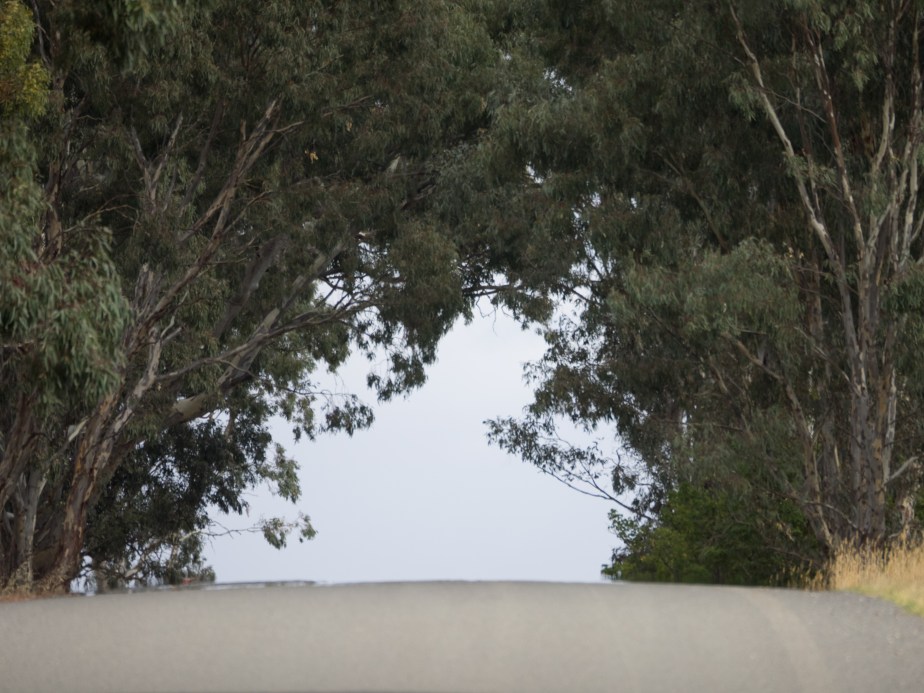
As I’ve been driving home of an evening in recent weeks I have been aware that the sun has been setting a little further north on the western horizon each day. One day, in the not too distant future, it would set right at the end of a local road framed at the end of  an avenue of trees. Imagine it right in here …

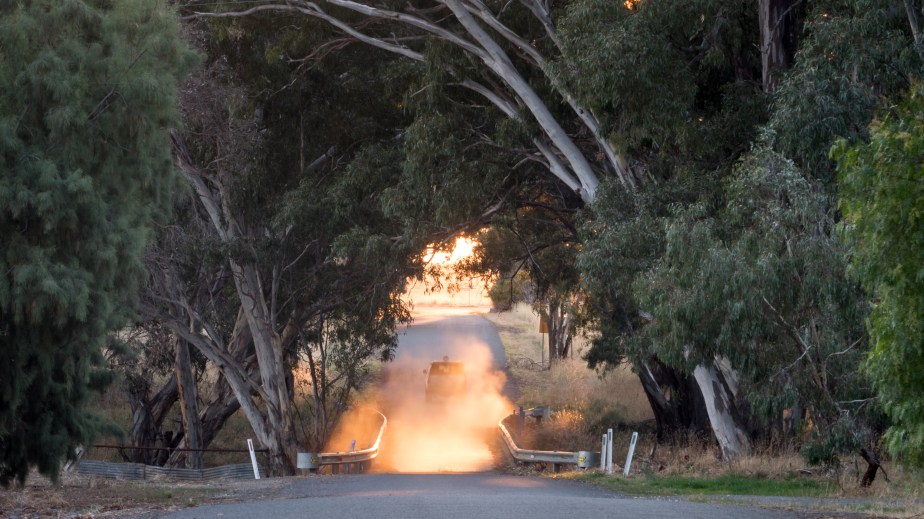
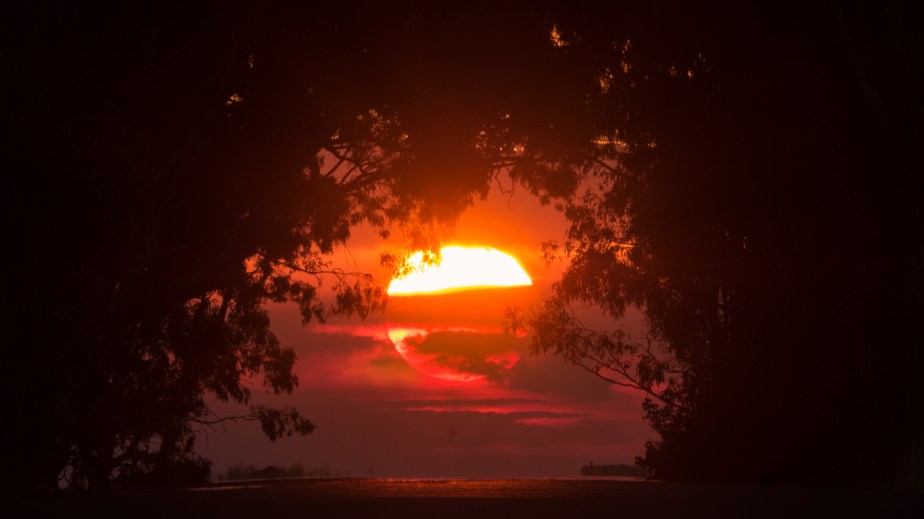
I pulled up The Photographer’s Ephemeris and wound on the clock until April 5 at 6:15 pm. I use this photographer’s aid with some trepidation. Just as certainly as the sun and moon will rise and set at a certain place and time so it is certain that clouds will obscure the event. At least it seems that way. None the less I was there. The sky was partly cloudy. I had chosen my camera position in advance but a couple of hundred metres east of that I saw that the sun was spotlighting a bridge quite beautifully and thought that, even if I got nothing else, this would be a photo. Just to put the icing on the cake a car drove past at a very convenient moment …

Having captured that it was time to see if my plan would come to fruition …


The Old Art …

Mr Speaker, yesterday an act of terrorism tried to silence our democracy. But today we meet as normal – as generations have done before us, and as future generations will continue to do – to deliver a simple message: we are not afraid. And our resolve will never waiver in the face of terrorism. And we meet here, in the oldest of all Parliaments, because we know that democracy, and the values it entails, will always prevail. Those values – free speech, liberty, human rights and the rule of law – are embodied here in this place, but they are shared by free people around the world. A terrorist came to the place where people of all nationalities and cultures gather to celebrate what it means to be free. And he took out his rage indiscriminately against innocent men, women and children. Mr Speaker, this was an attack on free people everywhere – and on behalf of the British people, I would like to thank our friends and allies around the world who have made it clear that they stand with us at this time.

                   Prime Minister Theresa May, House of Commons, 23 March 2017