The Lions of Gir …

Map_Guj_Nat_Parks_Sanctuary

My first contact with the Asiatic Lion came on my way to Gir. With about 20km to go, traveling through an agricultural landscape on a two lane highway we came to an enormous traffic jam, gridlock.

A lion had fallen into a well. It could not get out. The rescue unit from the national park were in attendance, they had sedated the lion, lifted it out of the well and caged it. The world had come to watch. There is no such thing as a small gathering in India. A small group is simply a coincidence, if they decide to gather expect a lac if not a crore*.

Once the mission was completed the crowd began to disperse and the traffic snarl slowly sorted itself out. My first sighting of an Asiatic Lion was a fleeting glimpse of a caged animal on the back of a truck awaiting resettlement.

The Asiatic Lion Panthera leo persica was well-known to the ancients, Christians were once an important part of their diet though Daniel was not, their former range spread from Bihar, northeast India, all the way to Turkey …

PM-Distribution_Map-Barbary_Lion

Given the chance lions eat livestock. This brings them into conflict with herders. They will return to their kill which means that revenge is easily visited upon them by poisoning the carcass. They are magisterial, they have been symbols of power and nationhood. It makes them excellent trophies, all the more excellent because they’re large, don’t hide during the day and can be easily approached on an elephant or in a vehicle. They will sit there for you while you load, have a cup of tea, discuss which room to display it in, aim and fire. Sport it never was, nor was courage ever required and someone who could actually shoot could always be next to you to make sure of success.

By the late 19th century, lions had been eradicated in Turkey. The last sighting of a wild living lion in Iran was in 1941 although it didn’t disappear from the national flag until 1980. By the advent of the twentieth century, they were confined to the Gir Forest protected by the Nawab of Junagadh in his private hunting grounds. There are said to have been only a dozen. This is likely to have been an underestimate, the first organised census was in 1936 which showed a population of 287 lions. Still a significant population bottleneck with genetic implications.

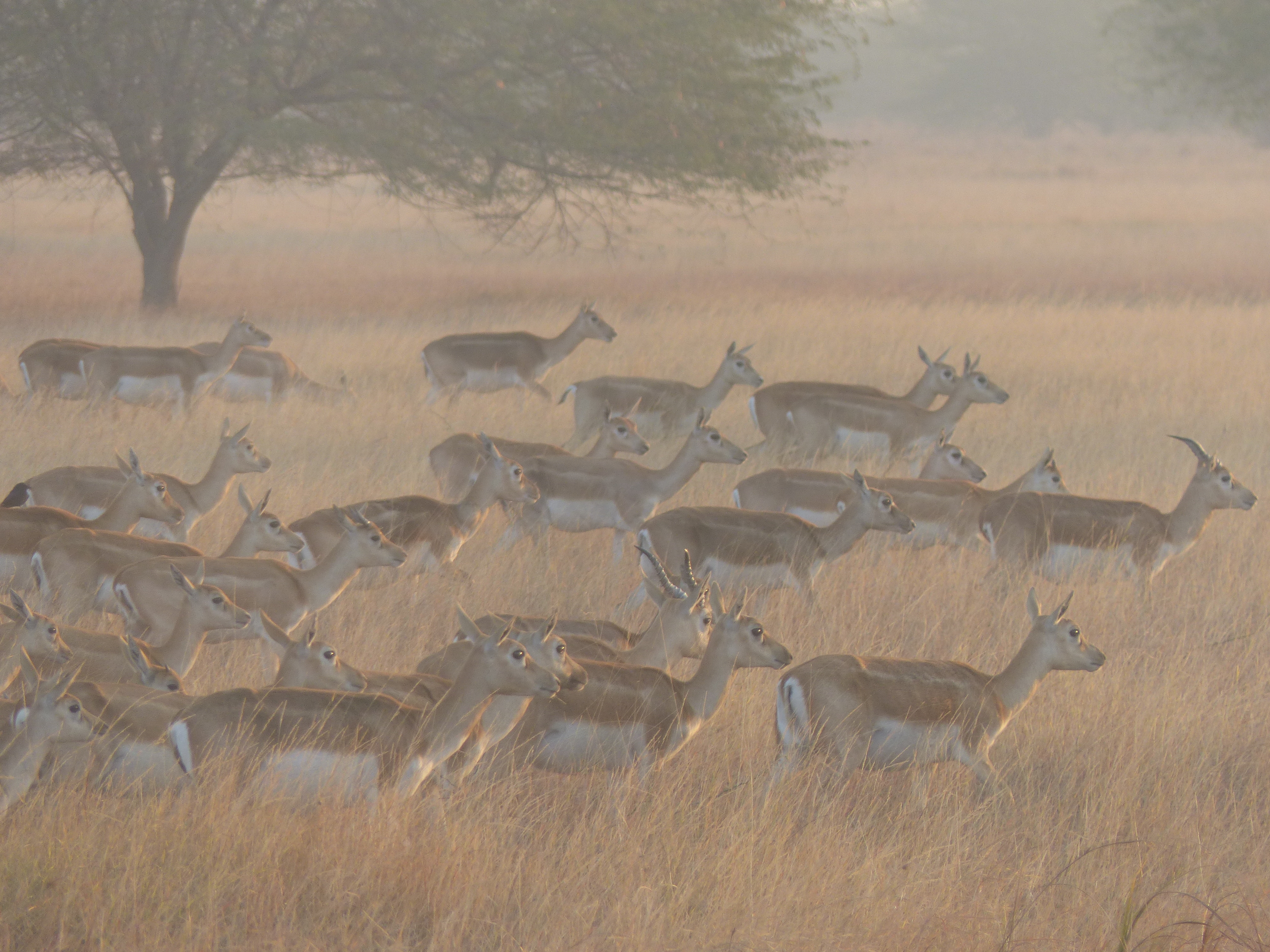
The Gir Forest holds the only population of wild Asiatic Lion. An area of 1,412.1 km2 was declared as a sanctuary for their conservation in 1965. There are now more than 400 lions which live in the park and the surrounding agricultural area. Conflict with people is not unknown but by and large the local people are very tolerant and well disposed to them, stock losses are compensated for by the government and tourism is a good little earner.

Tourism, however, is not something the Indian Forest Service does particularly well. The rules for access to National Parks vary from place to place and change frequently. At Gir there are three safari sessions per day, early morning, morning and afternoon, sixty vehicle permits are sold per session. Every vehicle is assigned a route to follow and must be out of the park by the end of the session. You will need your passport to establish your identity before being allowed in, you will not be allowed out of the vehicle. Visitors are not allowed in at night. Book an organised tour in advance. Always get to the gates early and complete the formalities otherwise they will bite into your time.

Once through the gate you are on a dusty road, probably in an open jeep known locally as a Gypsy. The forest is composed mainly of Teak trees but because the region is so dry these are not the huge trees you may expect. They have large leaves which were dry and dropping from the branches when I was there. It pays to cover your binoculars and camera whilst on the move to keep the dust at bay, and remember it will be cold in the early morning.

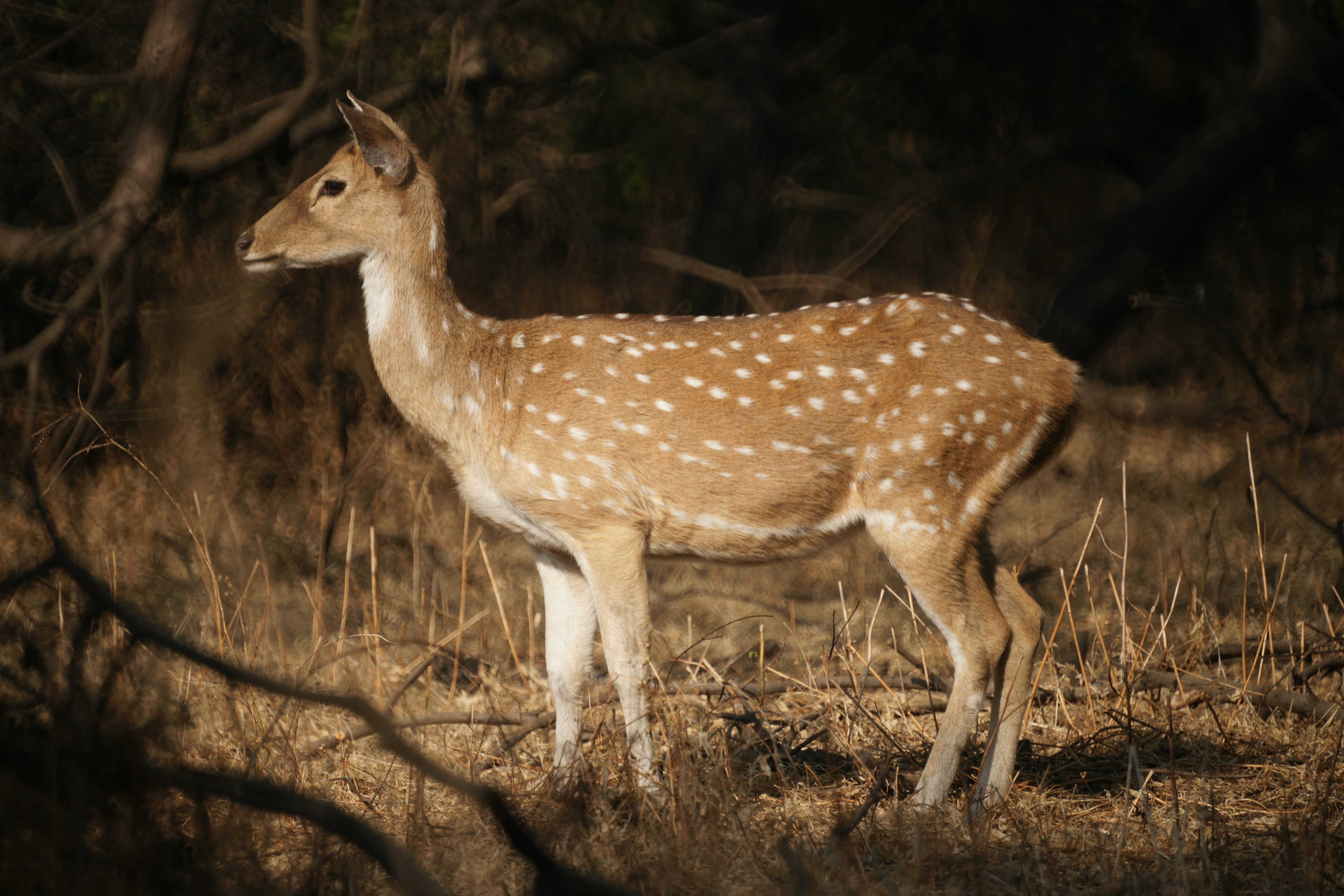
There are plenty of Sambar and Spotted Deer (Chital) and plenty of birds although chances are the other occupants of your vehicle are only interested in the Lion or even better a Leopard.

Spotted Deer
Spotted Deer

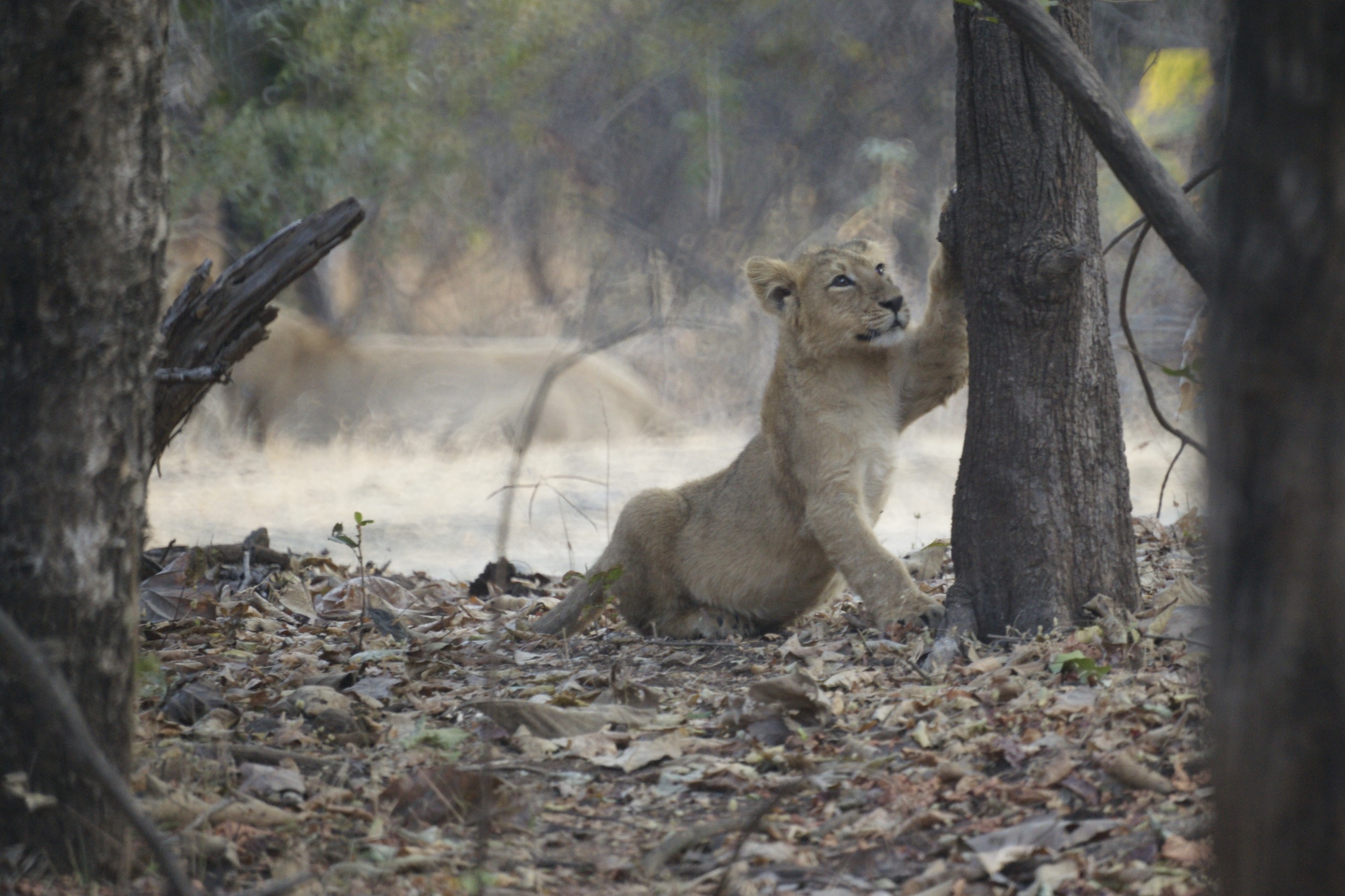
I went on seven consecutive safaris and saw lion every time, it’s not impossible to miss out but you would be very unlucky to fail if you took three or more.

SONY DSC

SONY DSC

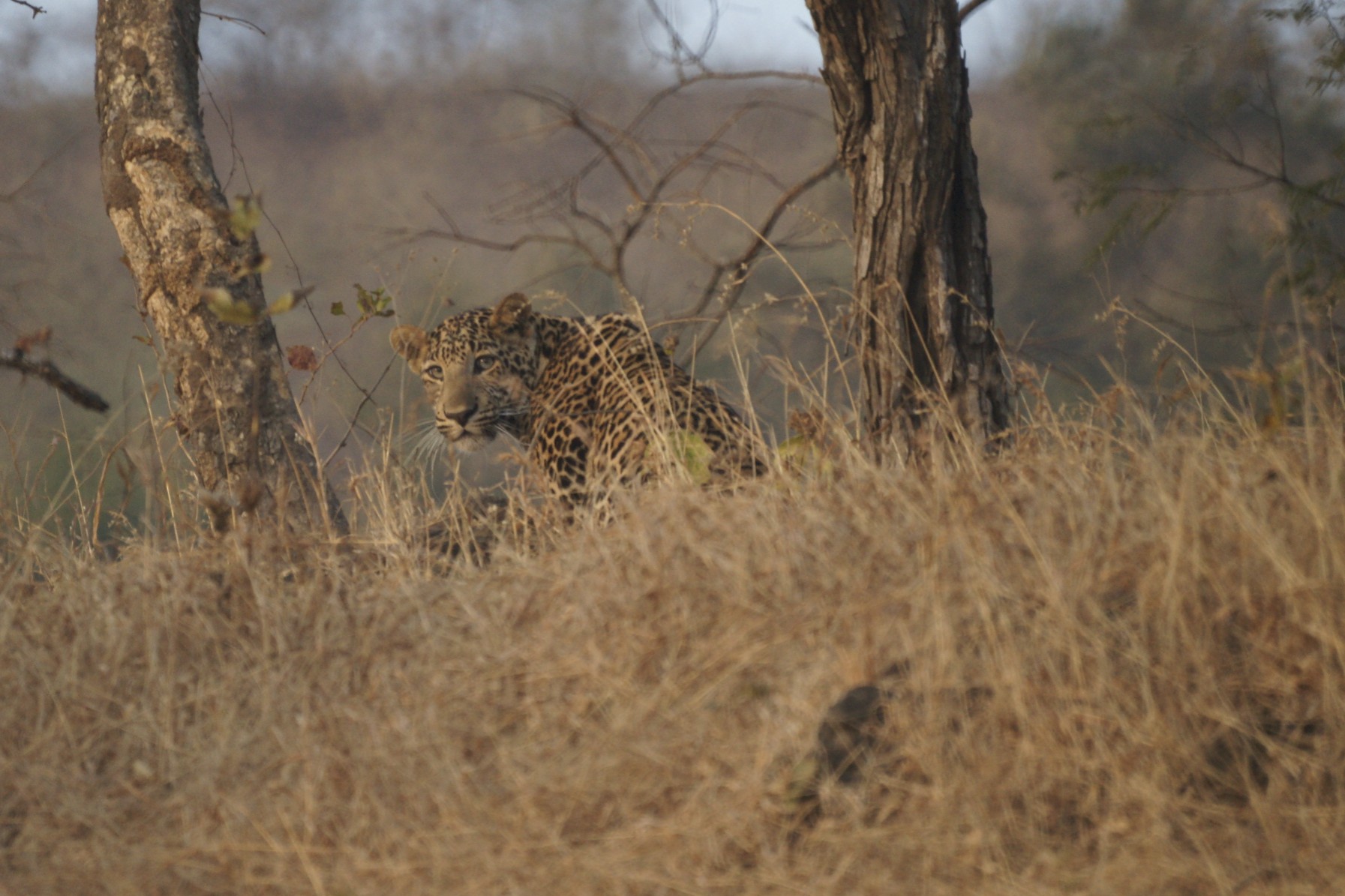
Leopard are widespread in India but are much harder to see than lion. Count yourself lucky if you get so much as a glimpse. Count yourself blessed if you get a shot like this …

SONY DSC

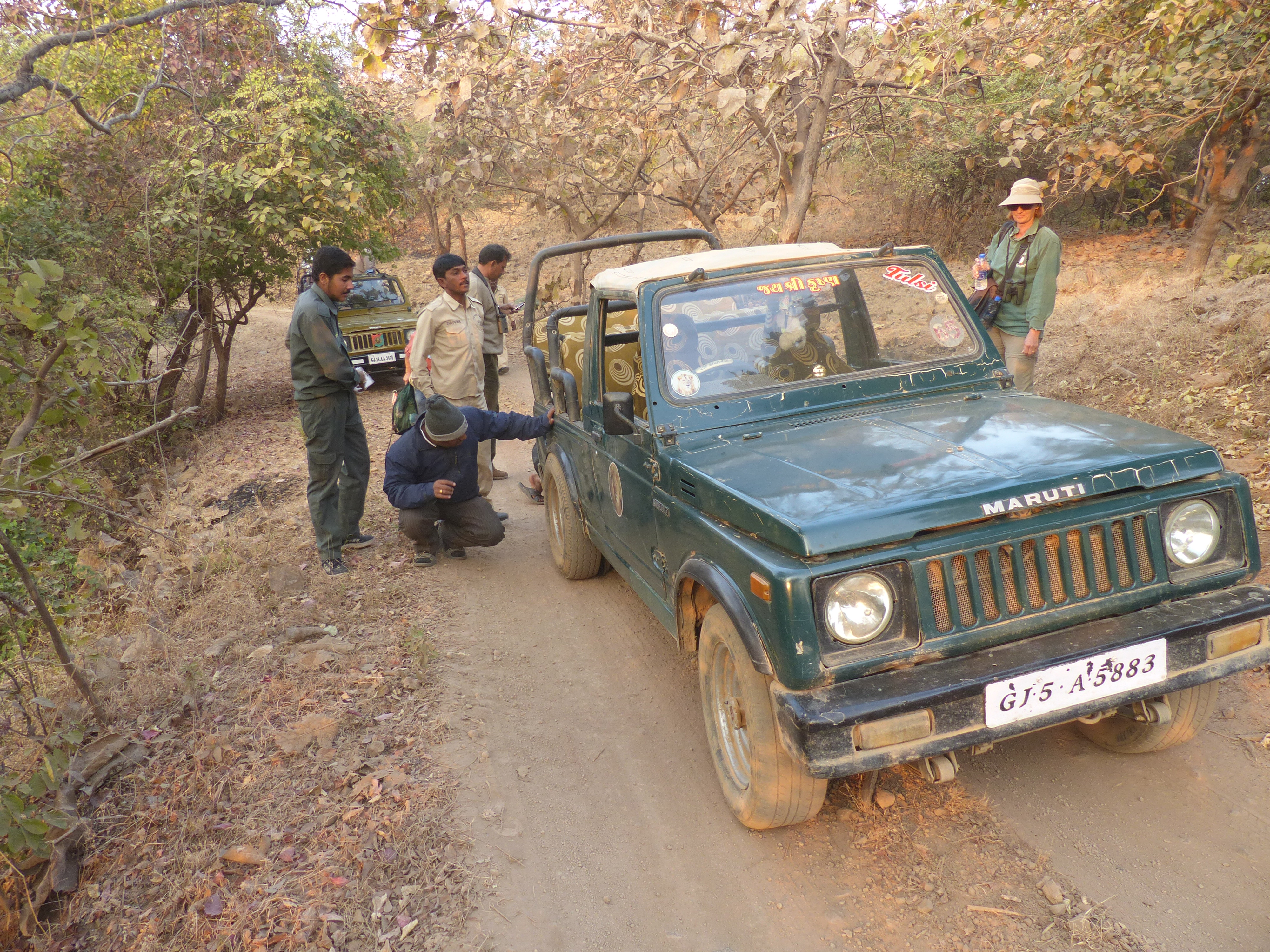
Regular readers will be aware that I do not have an unblemished record with four-wheel driving in wild places. This is the one time we were allowed out of the vehicle and for once it was not me at the wheel, although I was sitting in the corner that collapsed …

P1000972

We were rescued by the jeep behind, the occupants scrunched up and we scrunched up and off we went. All with a gentle good humour and really that was what we received almost all the time.

*Notes …

The maps above were shamelessly filched from wildanimalelite.yuku.com which is worth a visit for its beautiful photographs.

The Indian system of numbering things is a little different from the West’s. As with our system, digits are separated by commas for ease of reading. The first comma goes before the last three digits, just where we would put it (1,000). After that, though, it separates every two digits (10,00,00,00,000). So after one thousand the next big one something is 1,00,000 which just cries out for a name of its own which it has. It is a Lac. The plural of Lac is Lakh. Two lakh = two hunded thousand.

Similarly, a Crore is 1,00,00,000 which we would render 10,000,000 and call ten million. You will need to know this if you wish to make sense of the Times of India.

A single small population has a precarious hold on existence. Smart mammal scientists in India would like to see more populations of Asiatic Lion (re)established elsewhere in suitable habitat. A sanctuary has been created in the state of Madhya Pradesh. It is almost as large as the Gir reserve and is said to hold good numbers of prey animals. State politics is the principle hurdle. Madhya Pradesh has tourism aplenty because of its tigers, Gujarat is unique in its lions but has no tigers. The matter has been to the Indian Supreme Court and was found for the reintroduction, the hearing of an appeal by the Gujerati Government is pending. Good luck lions.

Gir …

From Mumbai to Gir.

Security is tight at Indian airports. To get into the departure terminal you must show a printed itinerary showing your name, destination, flight number, date and time, accompanied by your ID, which for foreigners means your passport. Your friends say their goodbyes on the pavement.

My destination was Gir which is in the state of Gujarat immediately north of Maharashta of which Mumbai is the capital. The nearest airport is Diu, the flight takes about an hour.

India is composed of 28 states and seven union territories. Daman and Diu together make up one of the territories. Along with Goa, Daman and Diu were excised from India by the Portuguese. When India gained control the trio were governed as a single territory, Goa was given statehood in 1987 leaving the two small enclaves of Daman and Diu, 198 kilometers apart, each surrounded by Gujarat. This has enormous practical importance, Diu is a small but busy seaside resort, Gujarat is a dry state. Lunch was accompanied by a couple of refreshing beers.

Then the drive to Gir, as a passenger of course.

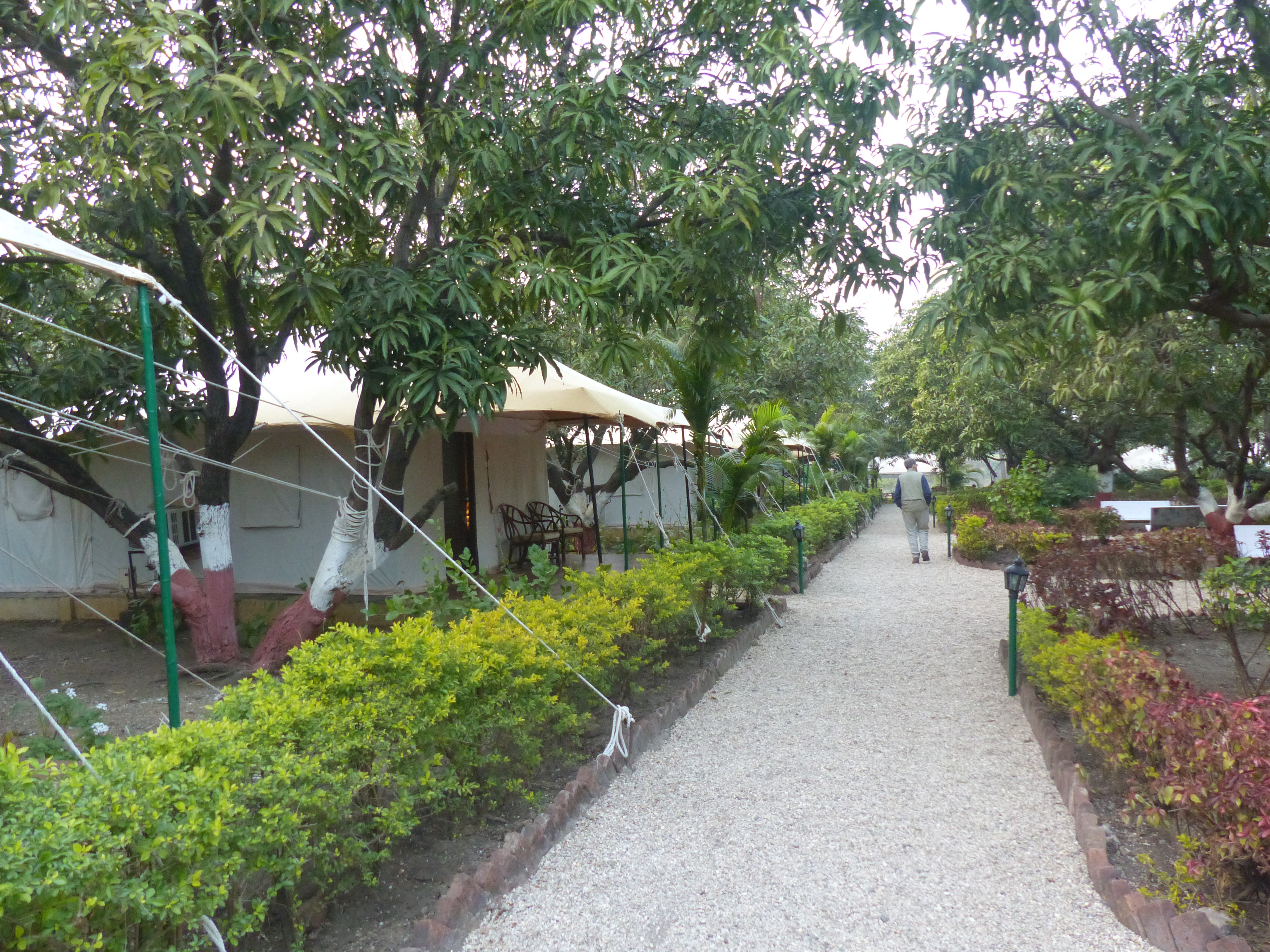
No palatial accommodation for me here, although that isn’t to say that good hotels aren’t available. For me one of these tents …

P1000785

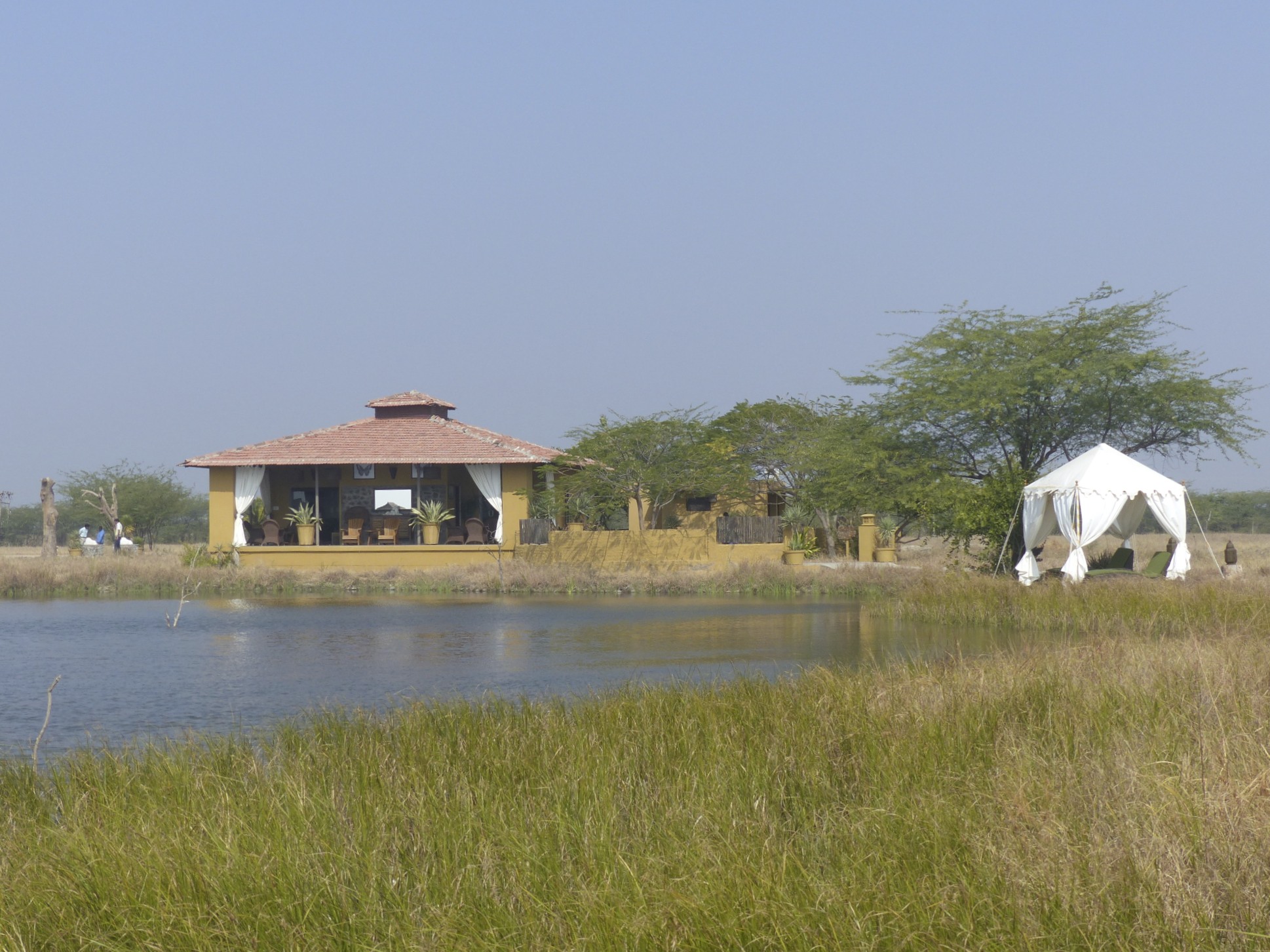
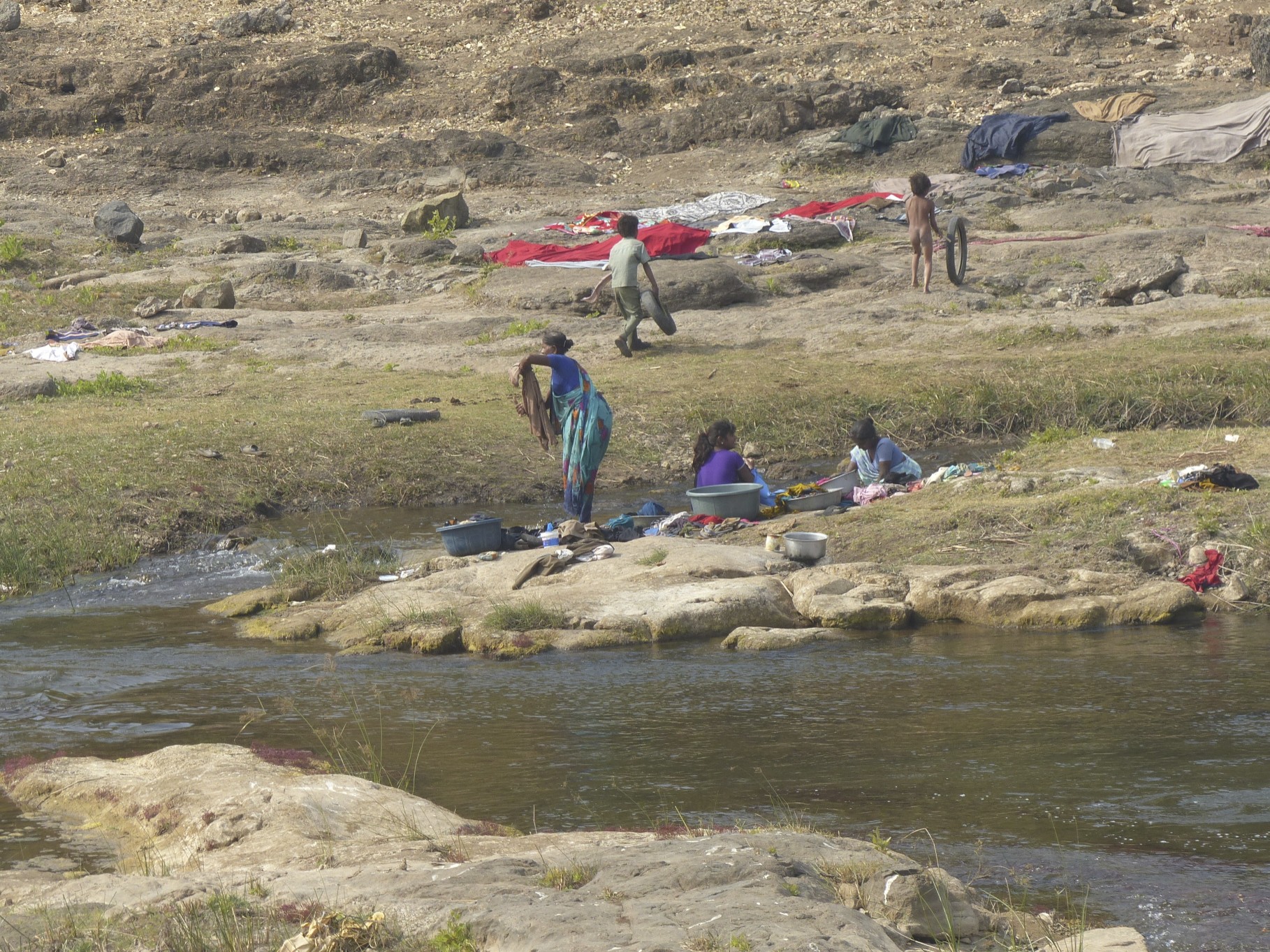
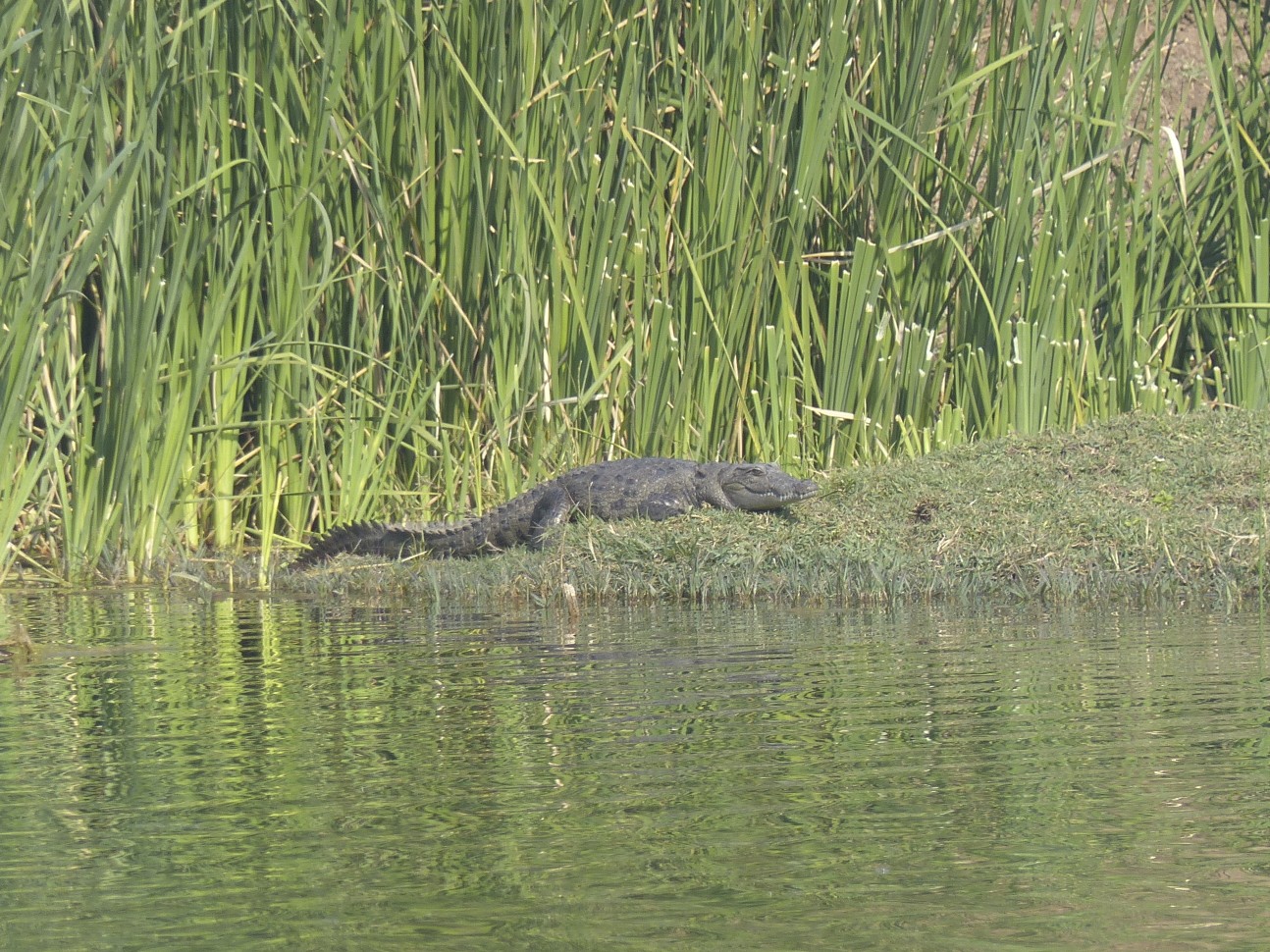
This is the Lion Safari Camp near the small town of Sasan Gir. The lions are a respectable distance away and the tents come with en suite facilities, hot and cold water and plenty of headroom. The camp is situated on the banks of a river, you don’t have to go far to find plenty of birds, the laundry, swimming pool and the odd Mugger Crocodile.

P1000935

P1000921

P1010122

It’s reported that the Mugger is more famous for its tool use than it is for eating people. It is known to balance sticks on its head, birds, especially in the breeding season are tempted to take the sticks … swirl of water, snap, lunch.

I spent the next three nights at the camp making seven forays into Gir National Park and any spare daylight time birding around the river.

Coming soon … the lions of Gir National Park.

Elephanta …

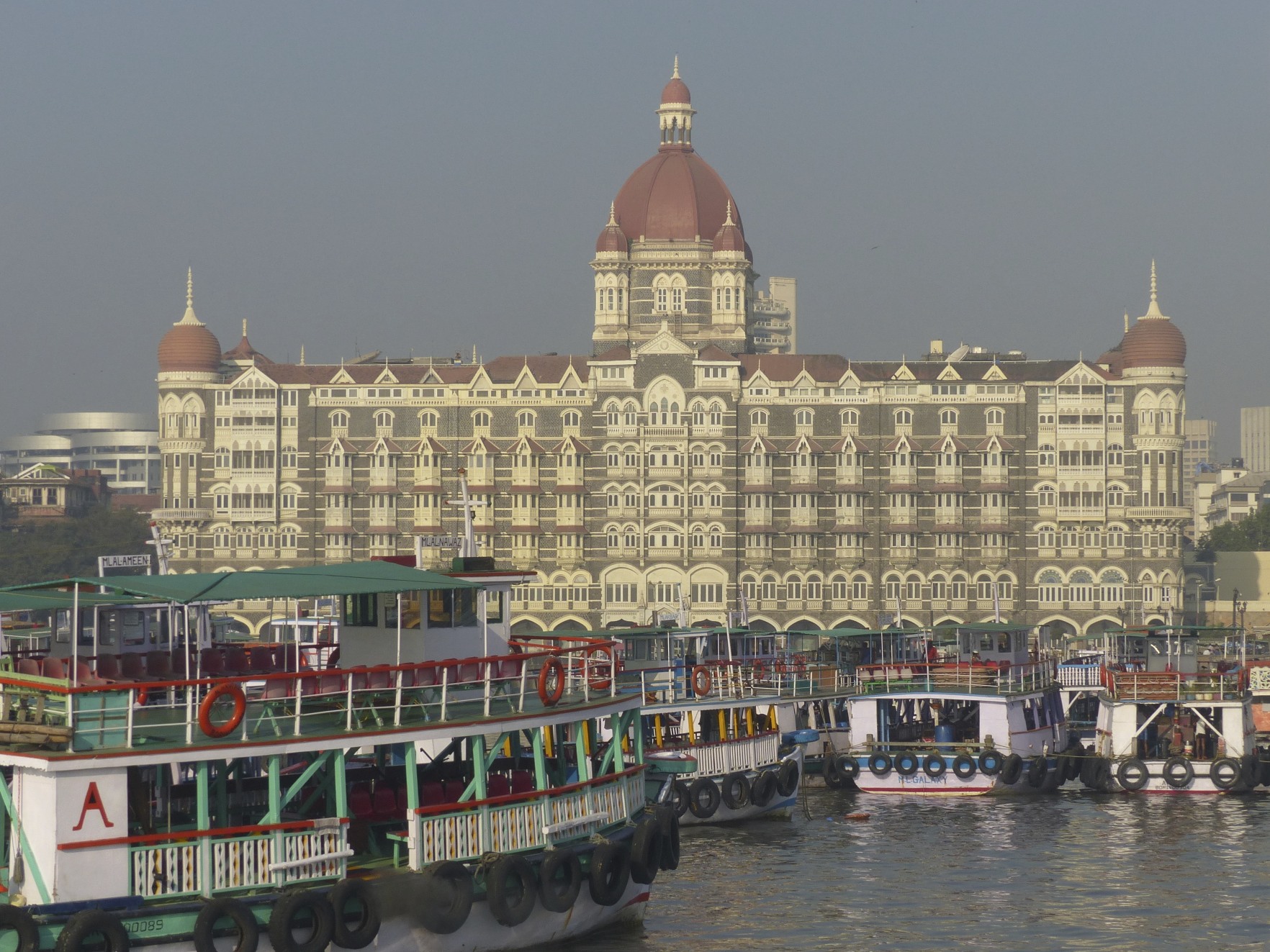
I caught the boat to Elephanta from just across the road from the Taj Mahal Palace Hotel. It’s a 10km trip. Photography is forbidden on the boat because the journey takes you past the naval docks. The navy was in town in a big way in readiness for the national day celebrations on the 26th of January, by a strange coincidence the same date as Australia’s.

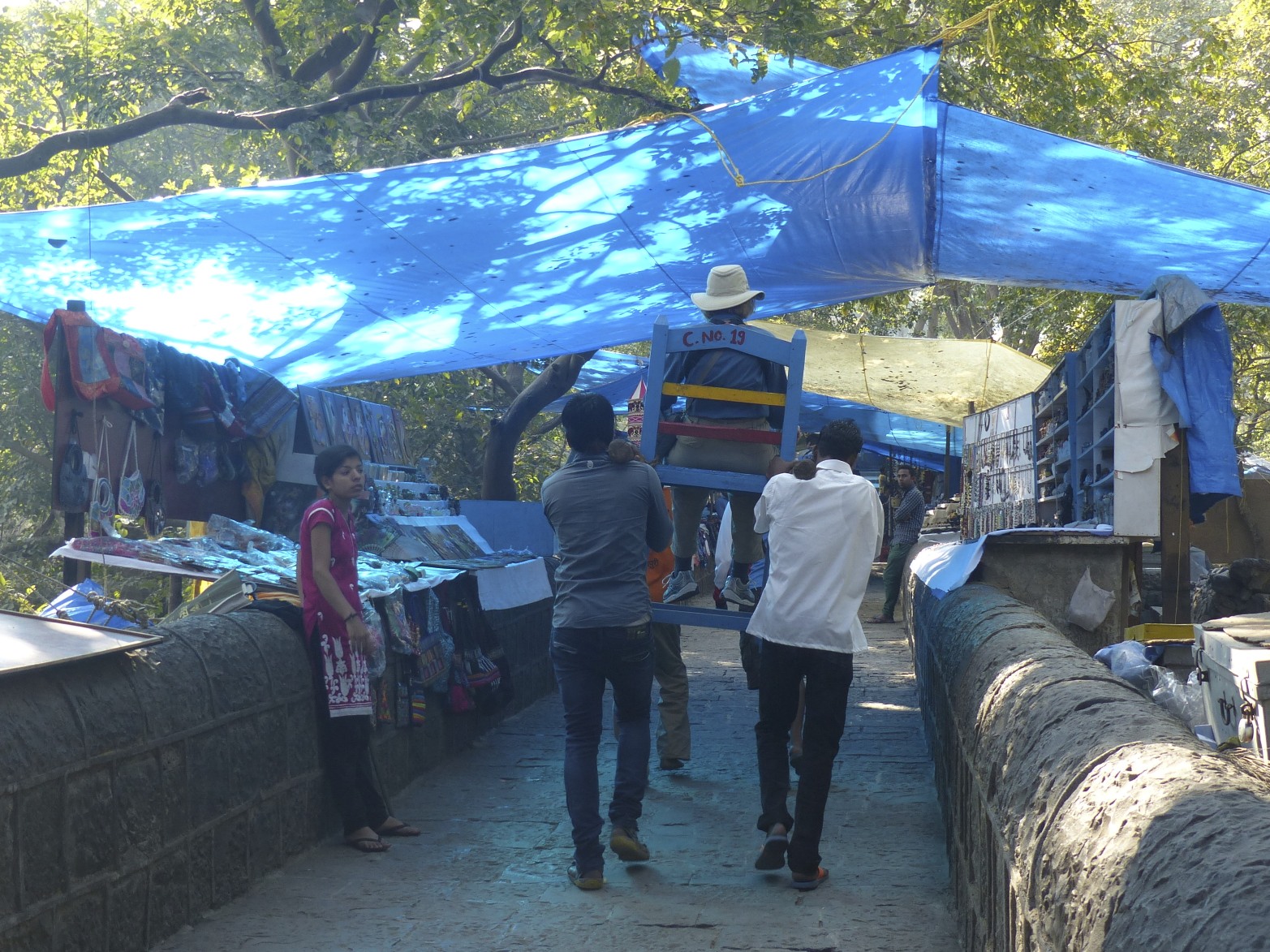
The island is the site of seven caves that were carved out of the basalt rocks probably between the fifth and eighth centuries. There is a cluster of five Hindu caves and away from them there are two Buddhist caves. The journey from the pier to the caves takes you up a fairly steep stepped slope between stalls. The weary traveller is shaded from the sun by tarpaulins. For those that are too weary to walk there are sedan chairs …

P1000637

Chadstone Shopping Centre may not have Beware of the Monkeys signs or sedan chairs but there is at least one thing in common – just as Chadstone boasts 500 shops which really equates to five shops 100 times over, so too with the stalls, the same few themes again and again.

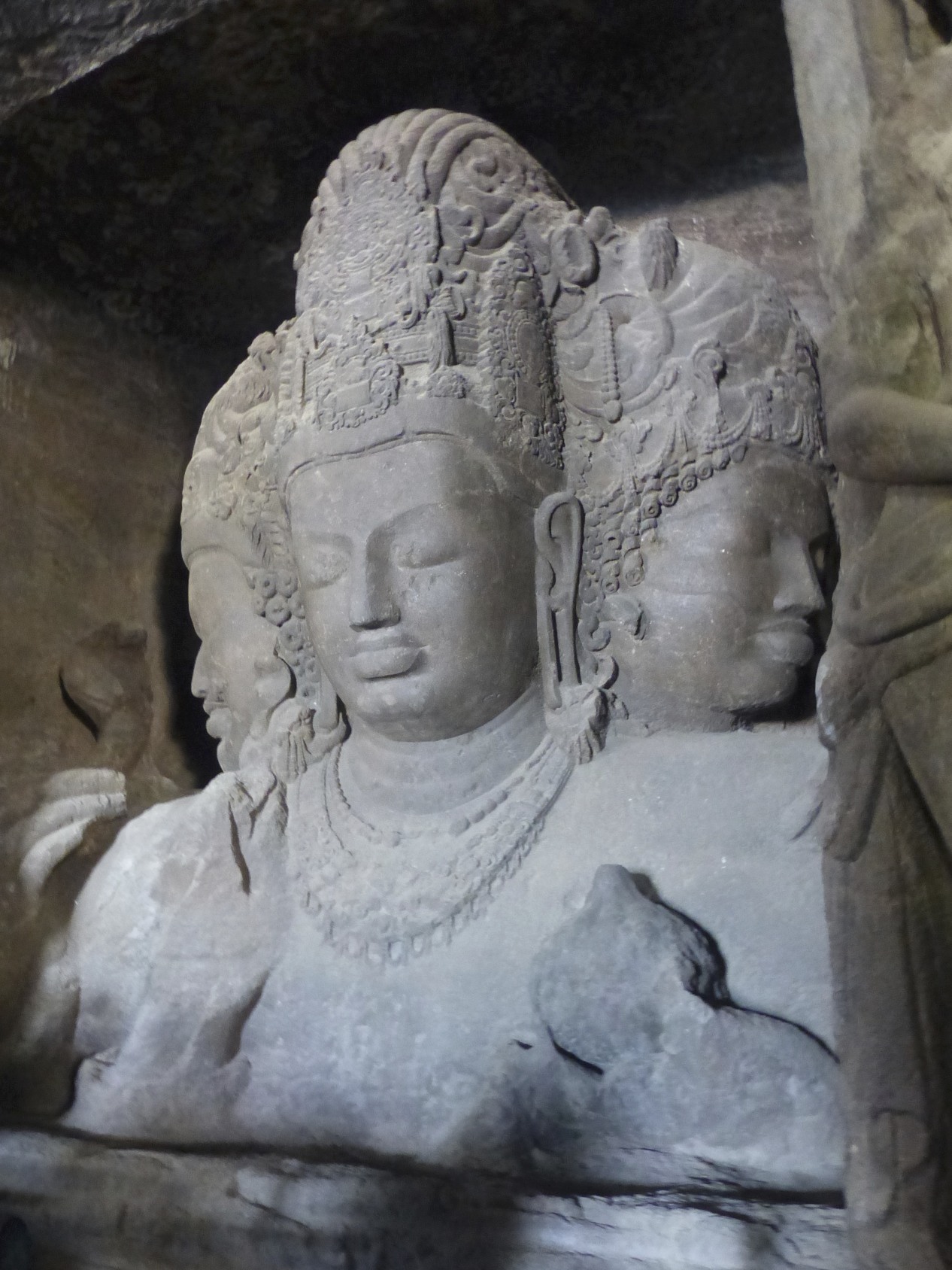
The main cave is a Hindu cave dedicated to Shiva. The central hall is a little over 25 metres by 25 metres, containing carvings and shrines. You can find more detail and a map <HERE>. The carvings have suffered over the centuries but are still very impressive …

P1000647

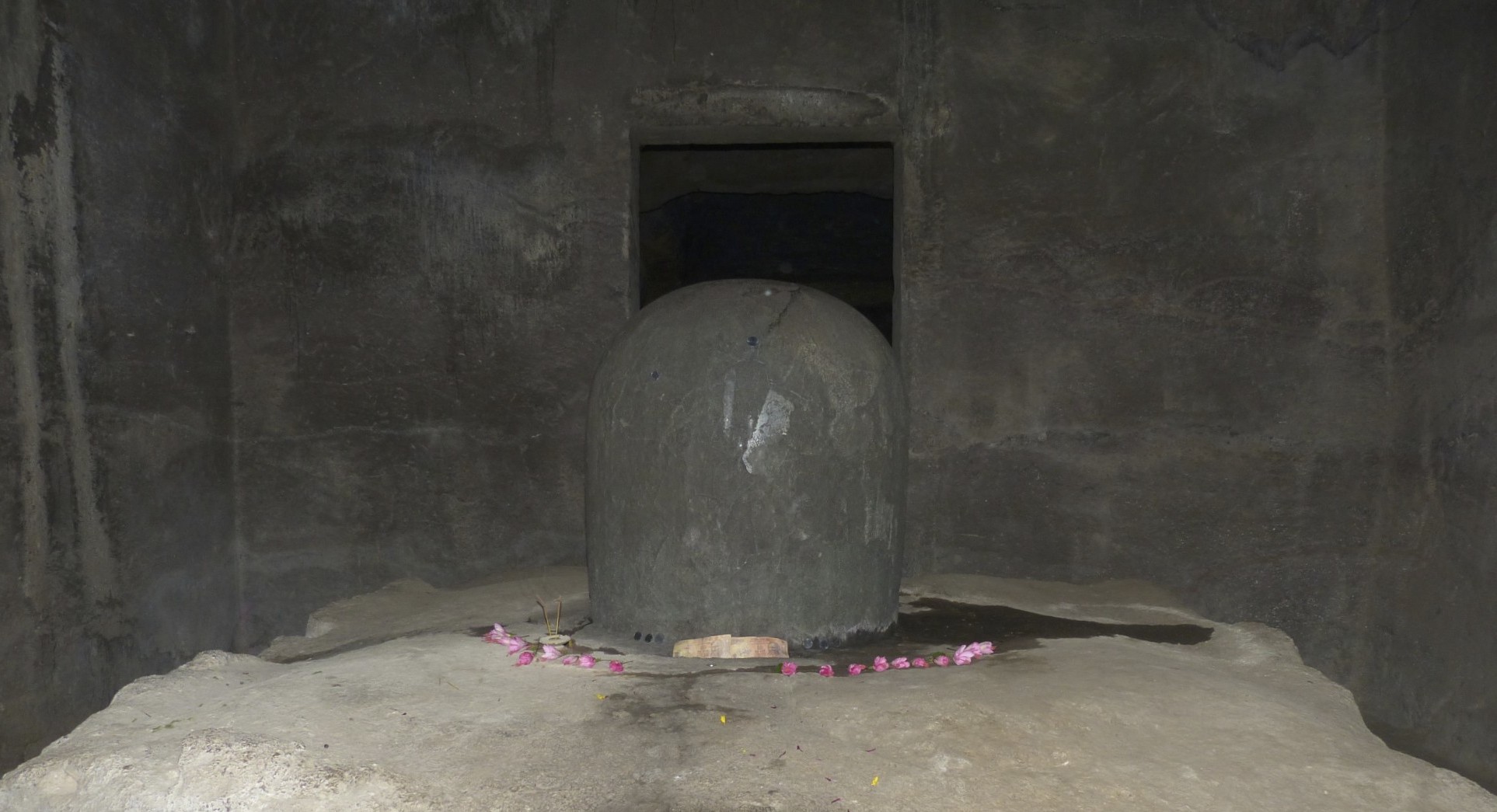
Above is the Trimurti, to be found on the rear wall. Below is the Linga which is set on a raised platform in a shrine …

P1000639

It is of striking size, much bigger than mine although I do think mine has more pleasing proportions.

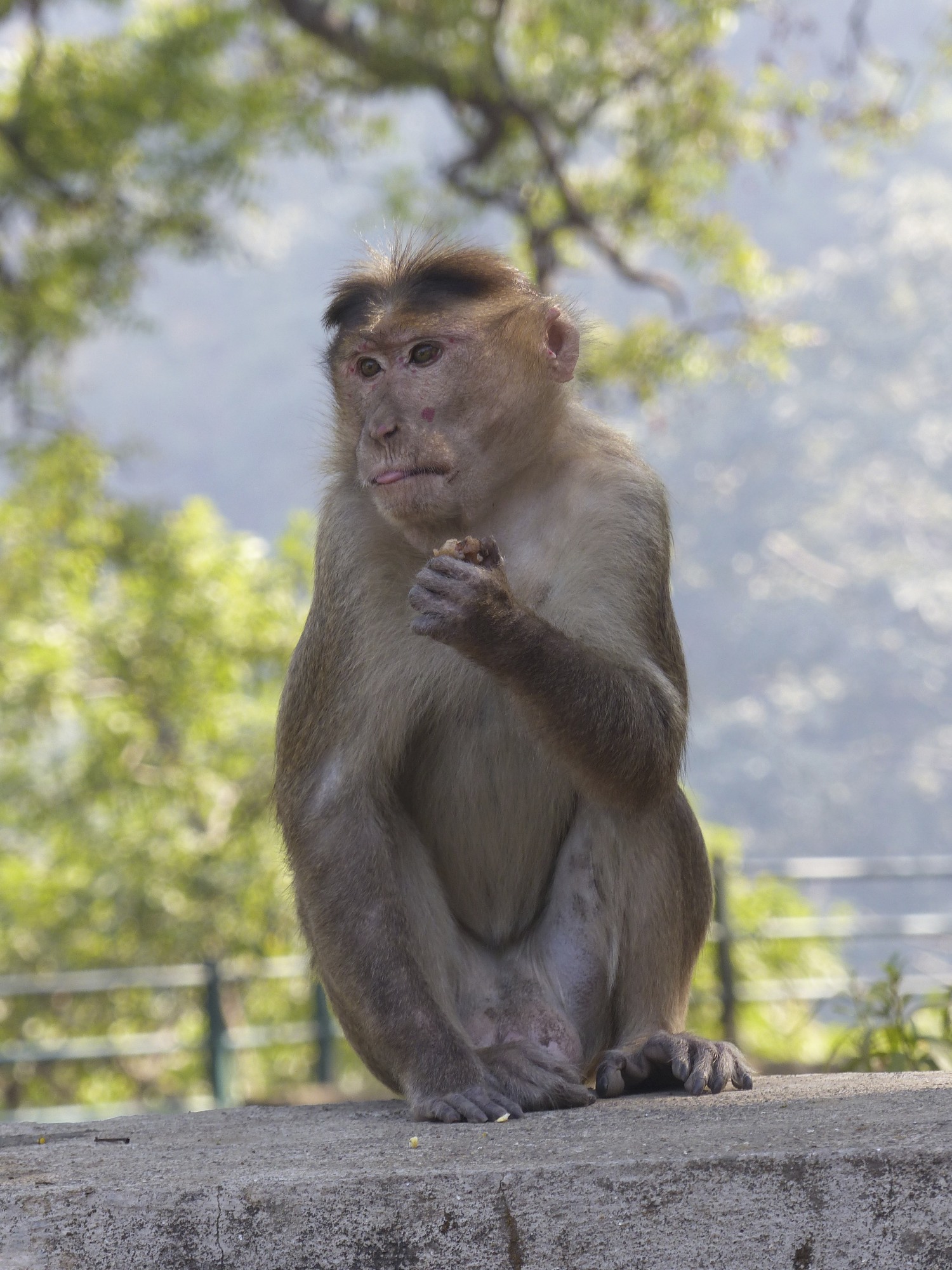
Outside the cave one can make the acquaintance of the local Bonnet macaques, Macaca radiata. These guys are serious snatch and grab artists, it is unwise to be holding food or even bottled water. They unscrew bottle tops in exactly the same way as we do, drink the contents and then toss the empty aside.

P1000660

Travelling with a group you may be pushed through here at a faster pace than the island deserves. Travelling independently the bird watcher would be well rewarded by spending some time at the fringing mangroves where there are some waders, egrets and kingfishers to see. The odd Brahminy Kite passes over and Flamingoes are occasional visitors.


मुंबई …

I pinched the heading from Wikipedia and I hope that it reads as Mumbai to the initiated. Please accept my apologies if it means anything unintended.

I emerged from the airport there late at night, the hotel transfer got me to the Taj Mahal Palace Hotel in the wee hours of the following morning. The very first impression was the number of people on the streets, many working, some walking but the majority seemed to be eating, at midnight, in little restaurants and cafes opening onto the street.

Security was fairly tight at the hotel. This was one of the buildings attacked by a group of Pakistani terrorists in November 2008. Retractable bollards now prevent vehicles from reaching the main entrance until the underneath has been scanned using mirrors and the bonnet, boot and interior have been given the once over. To get into the lobby you must pass through a metal detector whilst your hand luggage is x-rayed. Your suitcase will also be x-rayed before it is delivered to your room. No worse than airport security and although a sad reflection on the modern world, worth it. That attack on Mumbai was carried out by 10 men and lasted three days. They killed 164, of those about 30 died in the Taj.

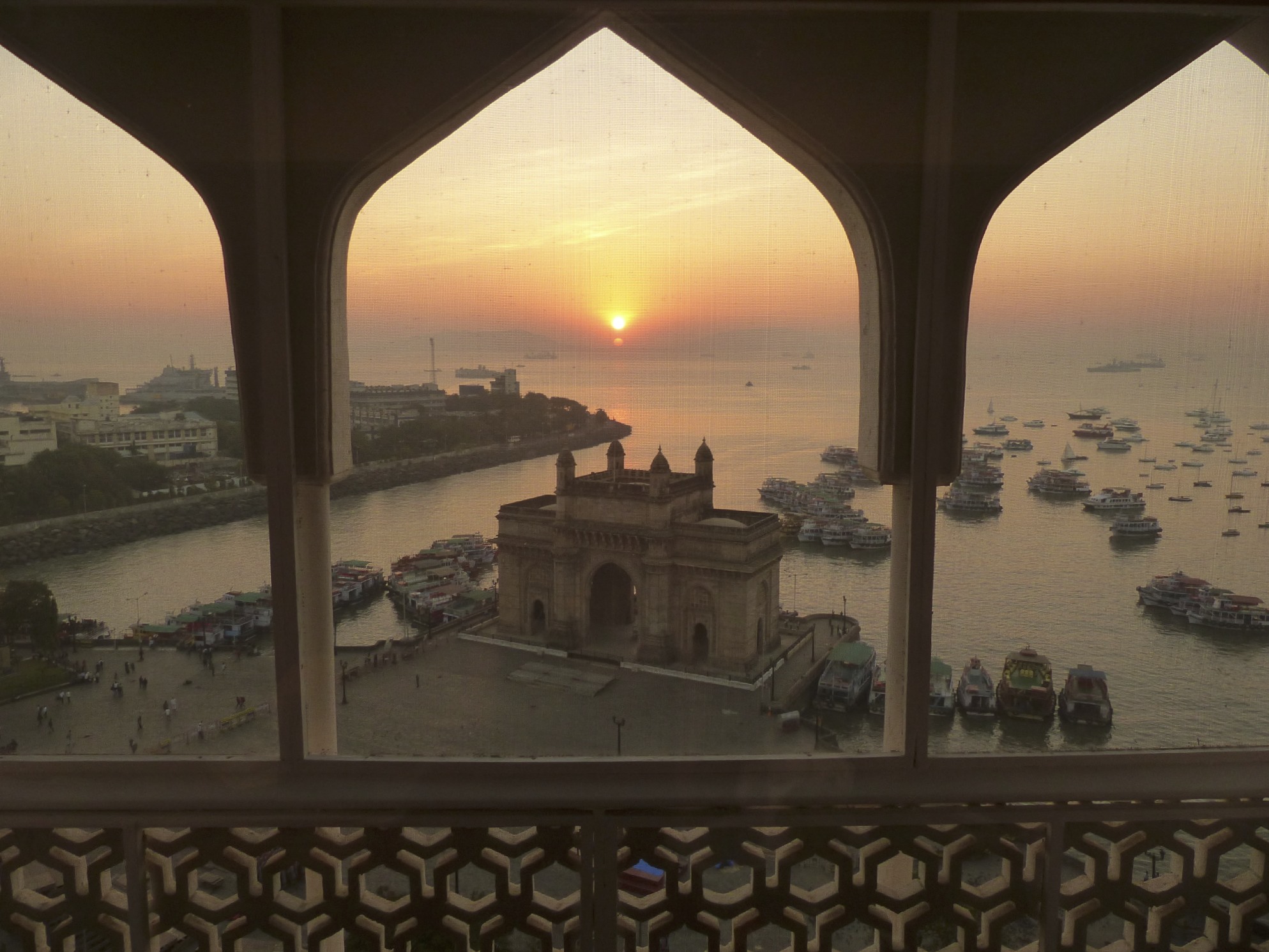
The welcome is very gracious. The arriving guest is draped with a garland of flowers, a small red dot is placed on the forehead. The room looked out over the Gates of India onto the sea. A luxurious start to my trip, and since I was going bush after two nights, I thought it likely to be the only real luxury to expect.

P1000612

Mumbai previously known as Bombay, is the capital city of the state of Maharashtra. It is the most populous city in India, and the fourth most populous city in the world, with a total metropolitan area population of approximately 20.5 million. The conurbation is one of the most populous urban regions in the world. Situated on the west coast of India Mumbai has a deep natural harbour. It is also the wealthiest city in India, and has the highest GDP of any city in South, West or Central Asia. Mumbai is, of course, Bollywood.

Mumbai is built on what was once an archipelago of seven islands that have been inhabited since the Stone Age initially by fisher folk. From 1782 to 1784, the city was reshaped with large-scale civil engineering projects aimed at merging all the seven islands into a single amalgamated mass. The problems of getting around the place continue to be solved, the Western Express highway runs across a long causeway, road building and flyover construction continue apace.

The Portuguese ruled the city from about 1534, the British from about 1661 until independence in 1947. Depending on which newspaper you read, it is now ruled by the Mafia or corrupt politicians or a combination of both.

Mumbai has a tropical climate with seven months of dryness and a monsoon that peaks in July. December to February is the cool season. In January the mean high temperature is 30.6°C, the mean low is 16.4°C. Rain is unlikely. Air quality is not real flash.

The Mumbai Mafia reach the peak of their notoriety in the building industry, little different from Australia really. Building collapses made the news whilst I was in India but by Mumbai standards they were relatively small-scale events. One of the collapses in 2013 killed 72. Mumbai’s slums are said to provide housing for approximately 60% of the city’s population.

Some how I survived the night and I wasn’t thinking about any of Mumbai’s problems as I watched the sunrise from my hotel balcony …

P1000754

Next up … Elephanta.

Myna detail …

News that a South Pacific island is aiming to eliminate the introduced Common Myna …

Early last century, the myna was introduced to Atiu Island in Cook Islands as a way of controlling insects and other pests in crops and gardens.

But within a few short years, its aggressive behaviour destroyed the local bird populations.

In 2000, the myna was declared to be among the world’s 100 worst invasive species …

By the end of 2012, over 20,000 mynas had been killed, and in their latest update, it was estimated there may be just 62 adult birds left on the island.

62 is enough to reestablish the population so there is a way to go but Common Mynas do have the obliging habit of roosting communally in the non-breeding season.

Dragon breaks free …

China Daily reports

The stranded Chinese icebreaker, Xuelong, or Snow Dragon, broke through the Antarctic’s heavy ice floes at about 6 pm on Tuesday and was headed for open water, according to Xinhua News Agency.

After being stranded in heavy ice for five days, the ship had broken free by Tuesday evening and was making its way through lighter ice, China Central Television reported on Tuesday.

The vessel, which had been conducting China’s 30th Antarctic expedition before going to the aid of the Russian ship Akademik Shokalskiy, will now continue with its scheduled activities.

The Akademik S remains fast …

mawson_irony