Pantanal at night …

When darkness falls there is a changing of the shifts. The same habitats are exploited by a different suite of animals, sometimes in a different way.

Over a few nights of spotlighting we compiled quite a list of night birds and mammals.

Birds included the Pauraque, Spot-tailed Nightjar, Nacunda and Band-tailed Nighthawks, Great and Common Potoos, Boat-billed Heron and Great Horned Owl.

Mammals included Crab-eating Fox, Crab-eating Racoon, White-lipped Peccary, Red Brocket and Marsh Deer, Tapir and Fishing bats.

Of particular note was the Brazilian Rabbit. How do you tell a Brazilian Rabbit from a common rabbit? By careful inspection of its pubic region, of course.

The most spectacular find was on our last evening when we had excellent views of an Ocelot.

Unfortunately, I have no photos taken at night to share but I did come across a Great Horned Owl at its day time roost …

Now with crystal ball …

Gypsy women once formed part of the Mercedes slave labour contingent.

Presumably the technology that Mercedes used to discover that Alan Jones would say something very crass about Julia’s dad a few days later came from them.

Otherwise, how else could Mercedes give notice that they would terminate their sponsorship deal because of his offensive comments three days before he made them?

Columbus Day …

On October 12, 1492 Columbus landed somewhere in the Bahamas, thus becoming the first person to see the Americas, apart, that is, from those who’d lived there for more than 10,000 years and Leif Erikson and his crew.

In the USA this event is celebrated on the 2nd Monday of October, thus today most states are celebrating the day that Christopher Columbus got fairly close to almost discovering America.

What better day, therefore to acknowledge Eratosthenes of Cyrene, born around 276 BC, died around 195 BC. He rose to prominence as the third chief librarian of the Great Library of Alexandria, the centre of scholarship of the world at that time. An edited brief biography filched shamelessly from Wikipedia has it thus …

He was a mathematician, geographer, poet, athlete, astronomer and music theorist. He invented the discipline of geography as we understand it. He invented a system of latitude and longitude.
He was the first person to calculate the circumference of the earth (with remarkable accuracy), the first to calculate the tilt of the earth’s axis (also with remarkable accuracy). He may also have accurately calculated the distance from the earth to the sun and invented the leap day  In addition, Eratosthenes was the founder of scientific chronology; he endeavored to fix the dates of the chief literary and political events from the conquest of Troy.

He calculated the circumference of the earth over 2,200 years ago and this is how he did it.

Eratosthenes had been told that the shadow of someone looking down a deep well would block the reflection of the Sun at noon on the summer solstice in the Ancient Egyptian city of Swenet (which happens to be on the Tropic of Cancer). This put  the sun directly overhead. He also knew, from measurement, that in his hometown of Alexandria, the angle of elevation of the sun was 1/50th of a circle (7°12′) south of directly overhead at noon on the same day. Assuming that the Earth was spherical (360°), and that Alexandria was due north of Swenet, he concluded that the distance from Alexandria to Swenet must therefore be 1/50th  of the total circumference of the Earth. Egypt had been sufficiently well surveyed for the distance between the two cities to be known to be 5000 stadia. He rounded the result to a final value of 700 stadia per degree giving a circumference of 252,000 stadia.

The stadion, like the British Standard Handful, is not a precisely fixed quantity but if we  assume that Eratosthenes used the “Egyptian stadion” of about 157.5 m, his measurement turns out to be 39,690 km, an error of less than 2%.

By comparison Columbus set sail 1,700 years later believing the earth to be about 25% smaller than it really is.
Creatures of the Pixaim River …

A couple of days of river cruising turned up Marmosets, Capuchin and Howler Monkeys. Capybara were common, Marsh and Red Brocket Deer were seen occasionally. The Giant Otter chose to spend a little time watching us each day …

Yacare Caiman and Green Iguana represented the reptiles, and so did the Common Tegu. At first glance this appears to be a Varanid, a family that is well represented in Australia, in fact it’s not that closely related … another case of convergent evolution.

Snakes were mainly absent. Where was my Anaconda? This one let us have a good look, I’d be delighted if anyone can identify it for me …

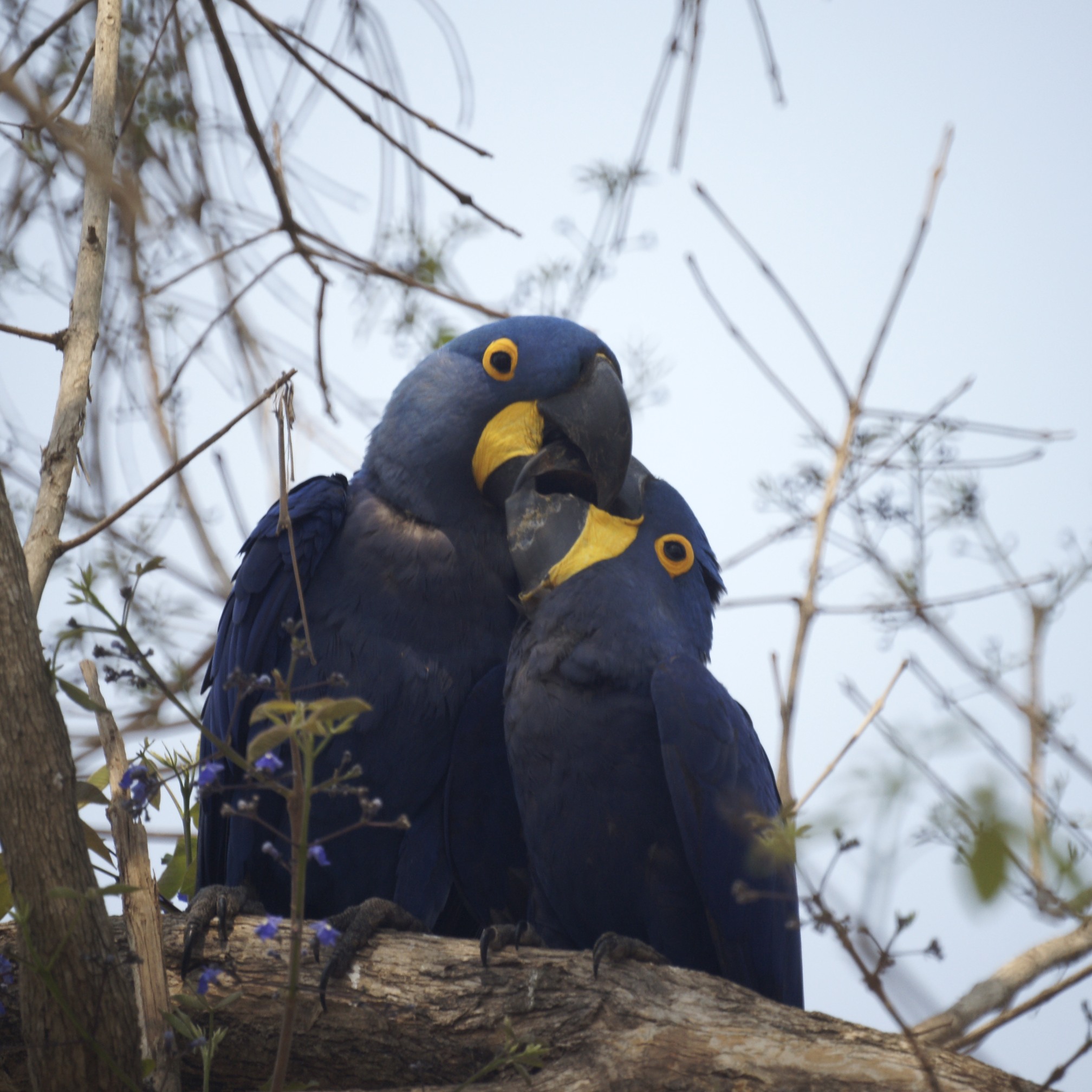
Birds are plentiful along the river, they included Black-capped Donacobius, Undulated Tinamou, Bare-faced Curassow, Blue-throated and Red-throated Piping-Guan, Hyacinth and Yellow-collared Macaw and Sungrebe.

Star of the show … Sunbittern.

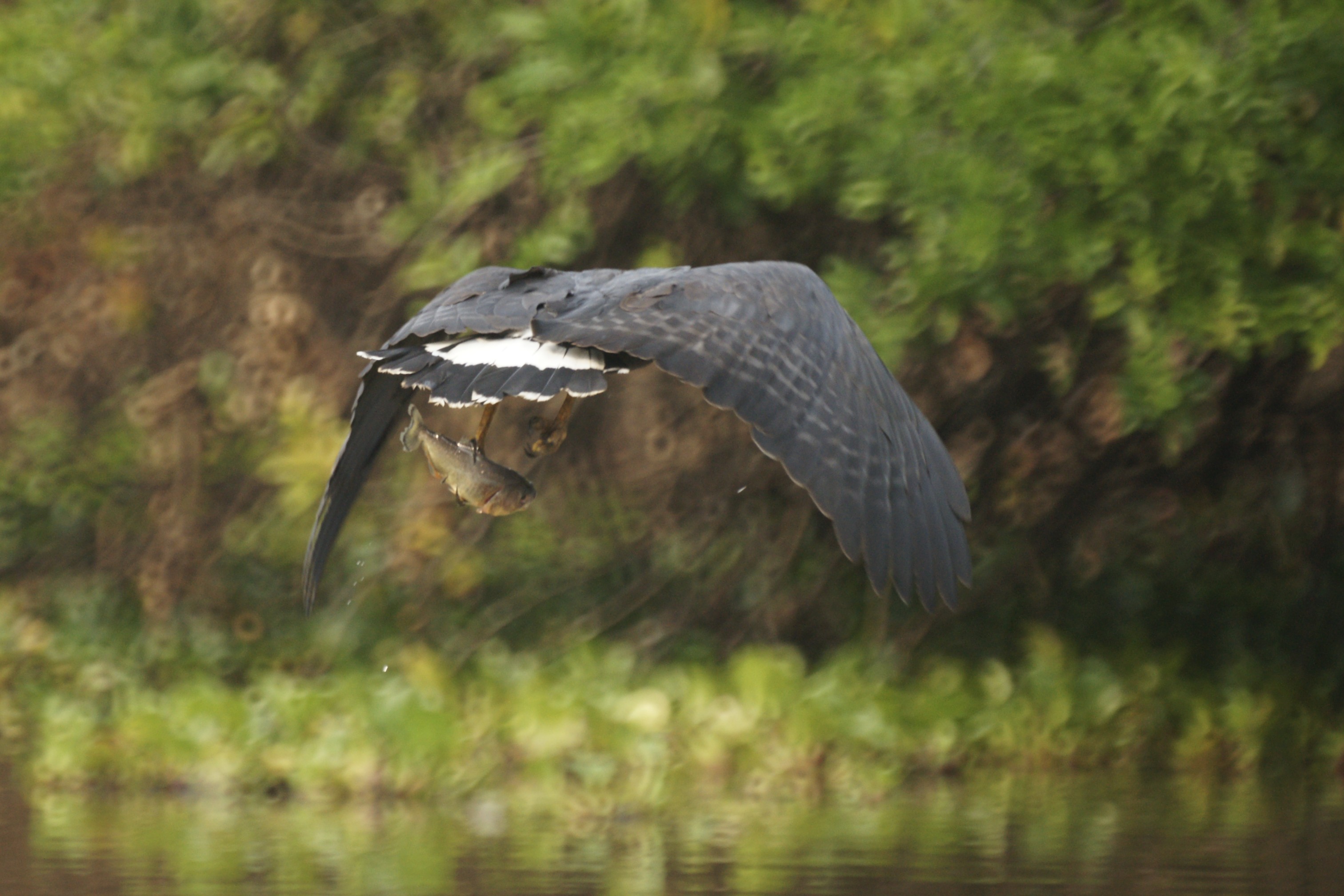
Oh, and there goes another Piranha, this time in the talons of a Great Black-Hawk …

Bunyip blows the Mercedes …

In its drive to promote only the politest of speech,Mercedes has announced that it is about to reclaim Professor Bunyip’s luxury car for this outrageous piece published recently.

It would be impolite of me to ask Mercedes to comment on this …

Daimler-Benz … avidly supported Nazism and in return received arms contracts and tax breaks that enabled it to become one of the world’s leading industrial concerns. (Between 1932 and 1940 production grew by 830 percent.) During the war the company used thousands of slaves and forced laborers including Jews, foreigners, and POWs. According to historian Bernard Bellon (Mercedes in Peace and War, 1990), at least eight Jews were murdered by DB managers or SS men at a plant in occupied Poland.

Doubtless an unconscionable slur, isn’t it actually the case that they took Hitler’s car off him for suggesting six million Jews died of gas or something?

Zen and the science of demography …

“Master, Alan Jones has said a rude thing”.

“Oh, little grasshopper”, said the Zen master glancing up from his Google News page of bushfires, plane crashes,  terrorism, mayhem and murder, “What will you do?”.

“I shall take away his Mercedes“.

“Well, I’m sure that will please the Labor party. Do they purchase a lot of Mercedes, I mean, other than those that are milking their union members for all they’re worth?”

The Pixaim River …

We spent two nights at the Pantanal Mato Grosso Hotel, right on the riverbank. A sizeable Caiman had found its way onto the verandah in front of one of the rooms. The polished concrete was too slippery for it to gain a purchase with its feet. Before the lucky guest could access their room the caiman had to be carefully assisted back onto the grass.

The days were spent on the river, after dark we went spotlighting in the back of a truck.

After a while the boatman dropped in a line. Within seconds he had a Yellow Piranha.

What with them and the caimans the life jackets may not have been a lot of use.

The poor fish was banged on the head and then thrown out. Well educated birds were waiting. First in was a Black-collared Hawk.

Subsequent fish were claimed by Great Black-Hawks and by Cormorants.

Jabiru …

In the north of Australia we are lucky to have the beautiful Black-necked Stork …

Many Australians call this the Jabiru, indeed just outside Kakadu National Park there is a town named after this popular mistake. Kakadu, of course, is Crocodile Dundee country. Mick Dundee might well have said, “Call that a Jabiru? This is a Jabiru.”

The South American claim on the word is undeniable, Jabiru is from Tupí–Guaraní for swollen neck. Other Tupí–Guaraní words that are likely to be familiar are jaguar, tapioca, jacaranda and anhinga. Jabirus are found through a broad swathe of Central and South America east of the Andes. They are at their most abundant in the Pantanal. They look fairly gruesome on foot but are the picture of grace once airborne.

The Pantanal …

65 million years ago a huge inland sea, the Xaraés, began to dry out. As it did it became a huge lake and then the seasonally flooded basin called the Pantanal.

Touted as the largest wetland on earth it extends into two Brazilian states, Paraguay and Bolivia covering upwards of 150,000 square kilometres. One to one and a half metres of rain falls each year, mostly between November and March. The water level rises as much as three metres as a consequence. The rains stop, the level falls and by the end of the dry season the roads are dusty and the water birds and caimans are struggling for the remaining ponds. Ranching is the principal human activity but the problems that extensive flooding brings keep the human population fairly low and give the wildlife a space in which to survive.

The Transpantaneira is a highway into the northern Pantanal, in Brazil’s Mato Grosso. It is an unsealed road with numerous wooden bridges. It was the route that took me to the Pixaim river last month.

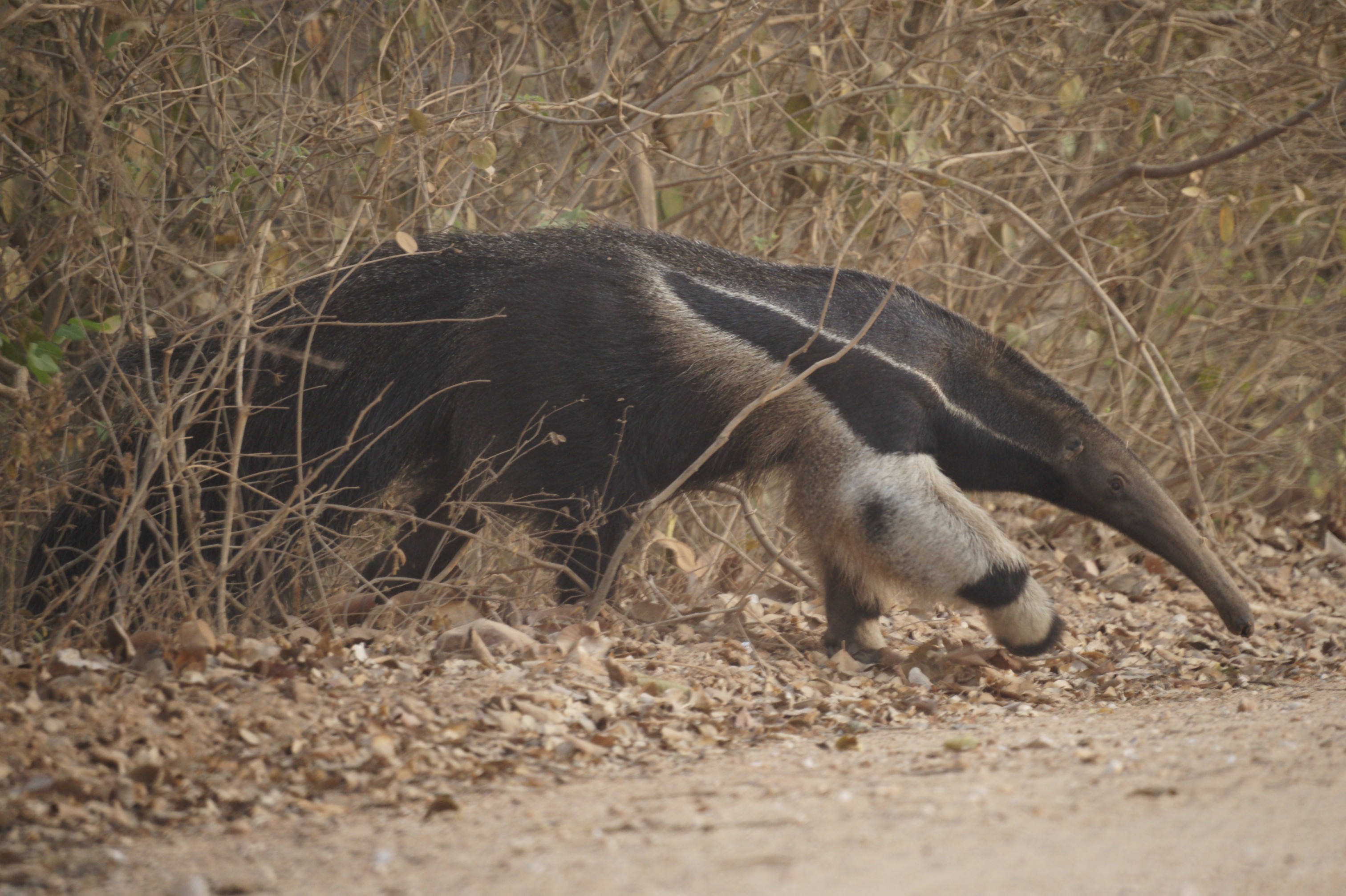
Coatis cross the Transpantaneira


Every puddle held something …

Say hi to the Yacare Caiman. Spotlighting at night reveals the density of these creatures to be astounding, and by the end of the dry some will be encountered going cross country, maybe even on the balcony outside your door! They mainly eat fish. The Capybaras don’t seem to show them a great deal of concern …

Click on the pictures to see them in better detail. More to come soon …

Good to see Mr Williamson back in the news

In July, the Temby report, an internal investigation into allegations of corruption within the union, found that nepotism and cronyism resulted in Mr Williamson, his family and friends reaping millions of dollars from the troubled HSU during his 15-year reign.

The report found that companies controlled by Mr Williamson and his family had received $5 million from the union over the past four years.

He was arrested this morning and charged with twenty offences. At first glance it seems they are mostly in relation to possible attempts to cover up his previous actions. Investigations are continuing. Will we see charges of embezzlement?