The time had come, we said farewell to our St Simon’s friends and picked up the Chevy in Jacksonville. They packed up and took themselves to safety. We headed north, initially in heavy traffic out of Florida.
Our route largely followed Interstate 75, the modern version of the old Dixie Highway. We were in no great hurry. You don’t see the place at its best from the Interstate so we took other paths from time to time.
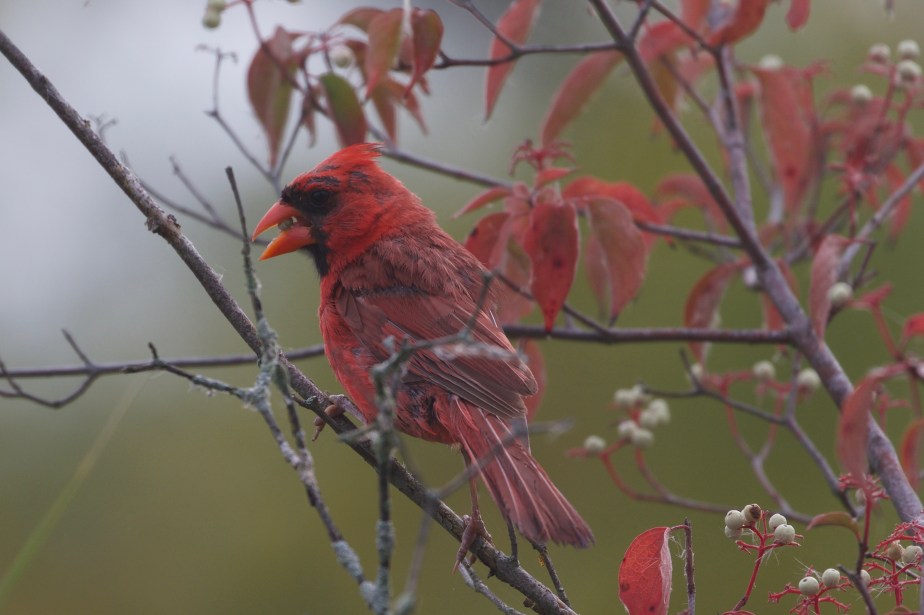
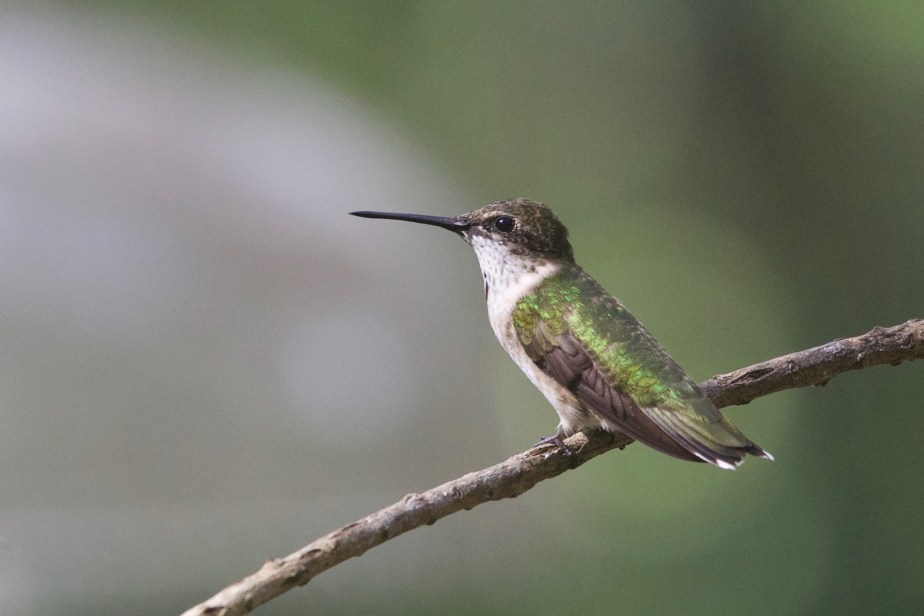
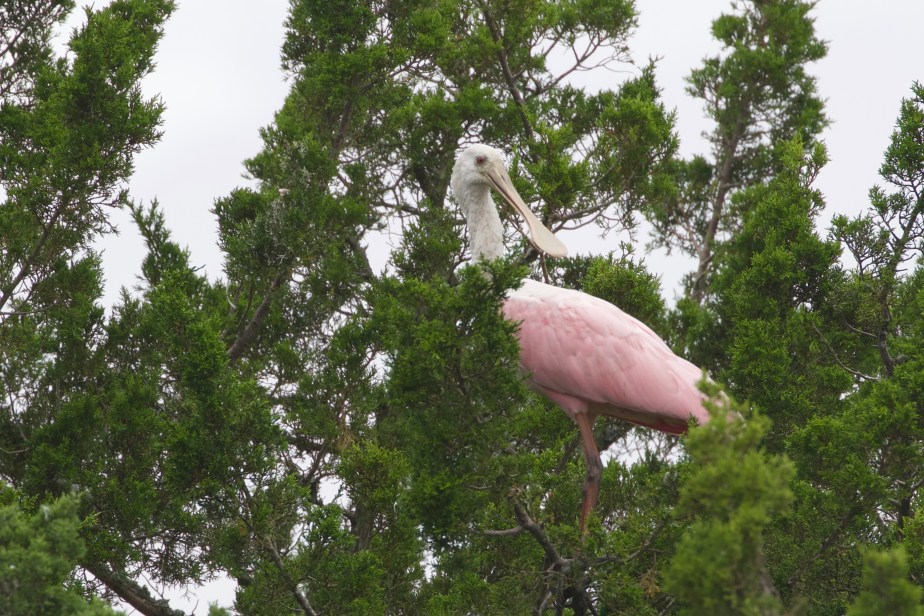
The journey was more than 1,300 miles (2,100 km) and visited six states. The road system and signage are excellent and the navigatrix was perfect. At one end of the journey it was summer plumage and green leaves …
… at the other end it’s faded feathers and autumn leaves.
This last week we have been staying with friends in Boyne City. Our furthest north was Mackinac Bridge and Mackinaw City in Michigan.
Tomorrow we fly to London, England. We will be taking the tube from Heathrow, light a candle for us.
Before I relate our adventures in the Old Art I will post a few more of the highlights here in the US of A.
At the start of the year I had no intention of pursuing a big year. However an unusually busy travel schedule has provided an interesting opportunity. My bird tally will break no records except my own but I arrived in Georgia having seen about 900 species so far this year.
Glynn County, Georgia includes St Simon’s Island, Jekyll Island and nearby Brunswick. I birded with the local A team, Eugene Keferl, Bob Sattelmeyer and Sterling Blanchard. A hundred more birds? No problem. In fact I don’t think I could have left the county until we’d got them.
Sterling Blanchard made sure that we got out to the outer limits of the barrier islands with Brooks Good of Coastal Outdoor Adventures. Brooks knows his birds and where they hang out. We went around Little St Simon’s to Egg island picking up shore birds and more …
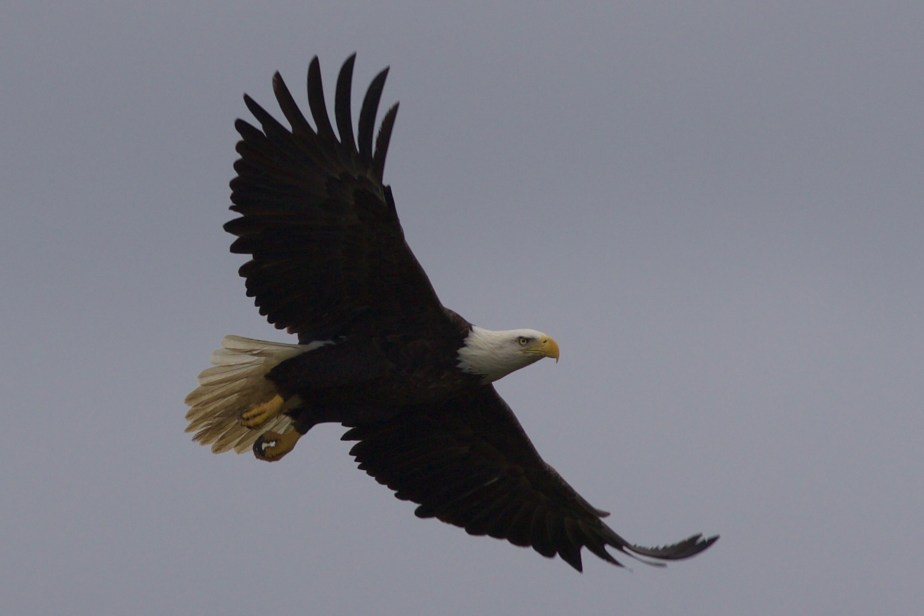
Black SkimmerForster’s TernRoyal TernLong-billed CurlewBald Eagle
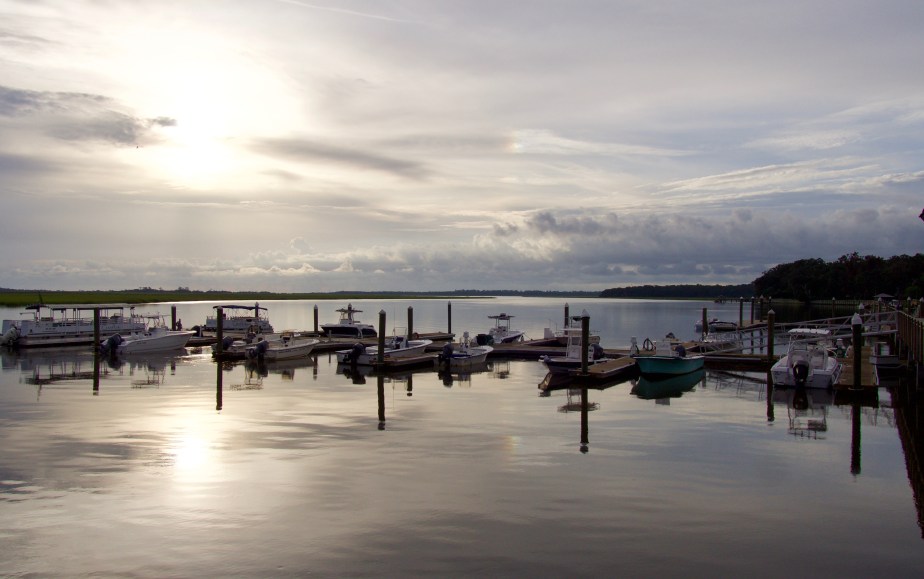
We had beautiful morning on the water. Brooks was taking his boats out of the water right after he finished with us and putting them under cover until Irma passes.
Irma has taken out the jetty. I hope Brooks can get back to business quickly.
Not far from St Simon’s Island is another spot where I can indulge my interest in history and my passion for birding.
Darien in McIntosh County was originally founded by by Scottish Highlanders recruited by James Oglethorpe. They arrived in January 1736 and wasted no time building a town and fortifications. This was during the period when many Scots were moved off their traditional lands to make way for sheep farming – the highland clearances. Most of the settlers spoke no other language than Gaelic.
They had a tough time of it during the period when Britain and Spain were battling for domination in the south-east.
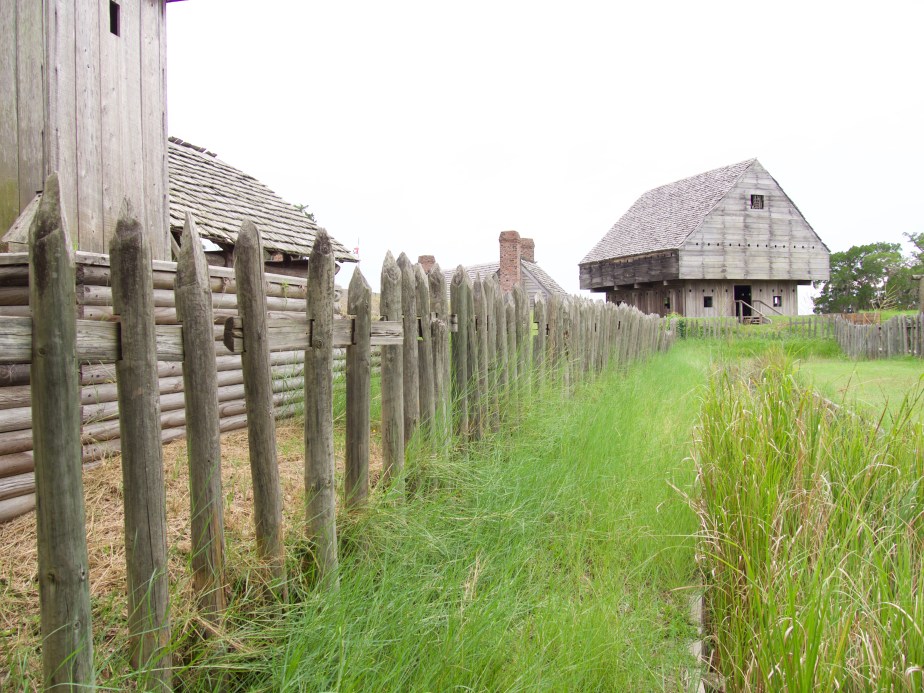
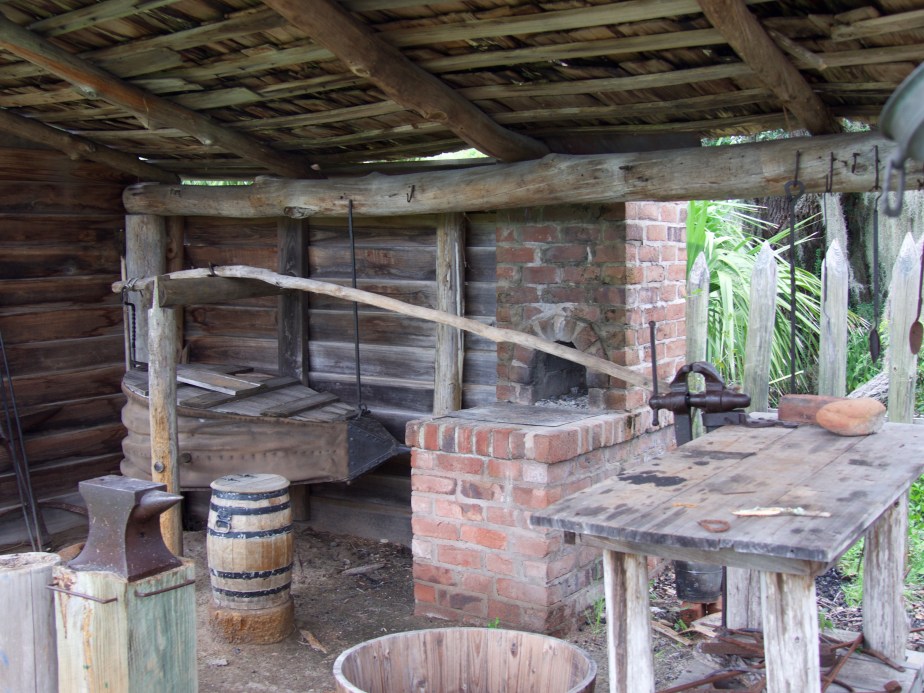
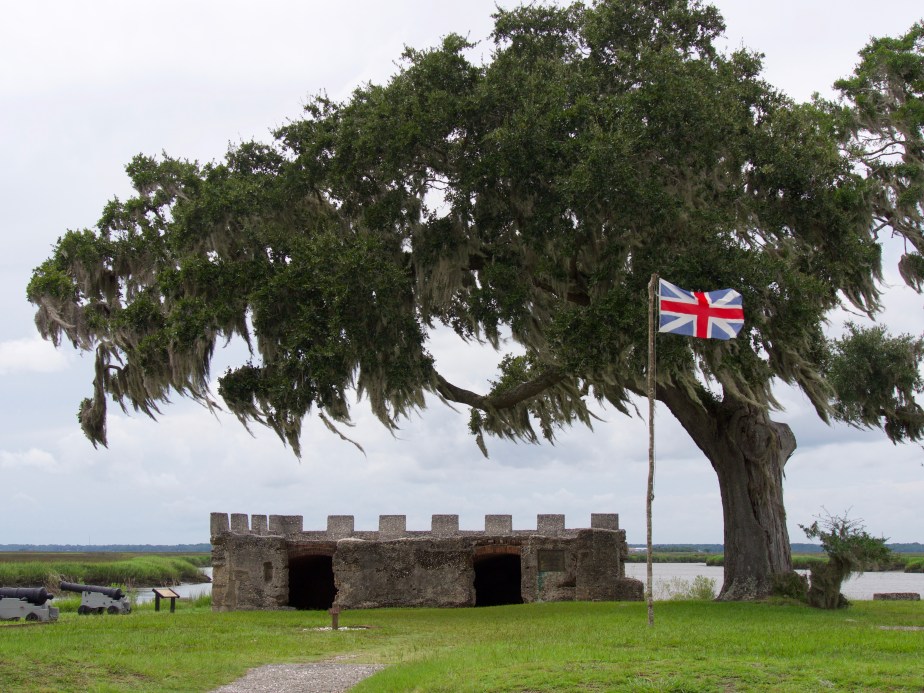
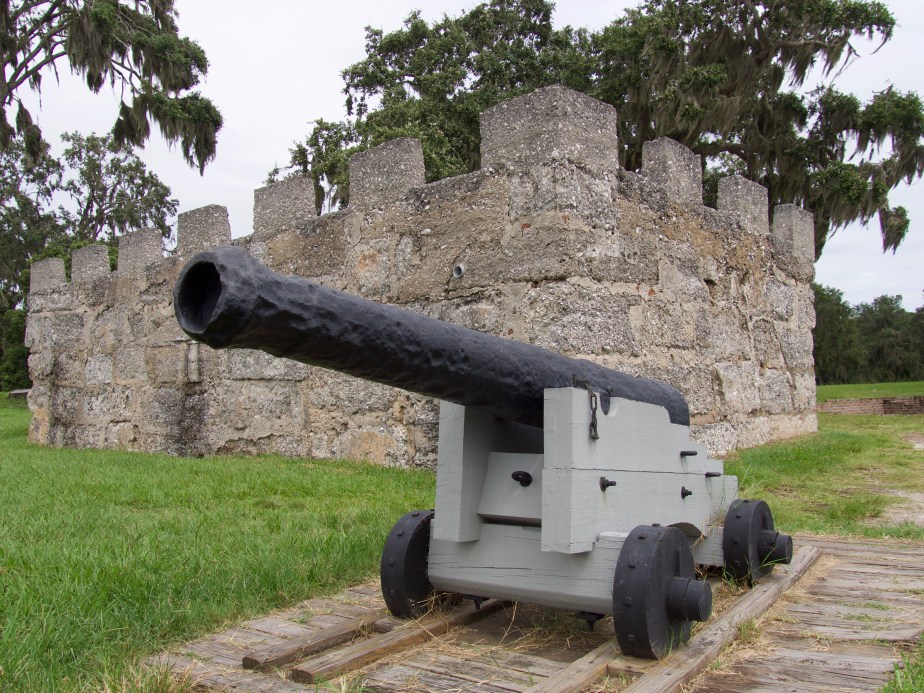
The city was built adjacent to the site of Fort King George which had been built in 1721, the earliest British fort on the Georgia coast. It has been rebuilt from old plans and is an interesting place to visit.
Fort King George – blockhouseFort King George – smithyFort King George – barracks
Darien also suffered badly in the Civil War. In 1863 it was burnt and looted by Union soldiers in order to deny supply to the Confederate forces.
When rebuilt after the Civil War it enjoyed great prosperity as a timber exporter … until they ran out of trees.
Just south of the town is the Altamaha Wildlife Management Area, which attracts thousands of wintering and migrating ducks and provides excellent habitat for migrating shorebirds and resident wetland birds. There are a number of observation towers. Take your telescope.
The lovely Gayle and myself are safely in Ohio looking out onto Lake Erie.
Until a few days ago we were staying on St Simon’s Island in Georgia, guests in the house that you can see in the video below. This was shot by a neighbour, our friends evacuated to South Carolina and are also safe but have a lot to do when they are eventually allowed home.
Currently residents are not allowed to return, a curfew is in force for those who chose not to leave. 90% of Glynn County is without power, trees are down, roads and bridges are being checked for damage.
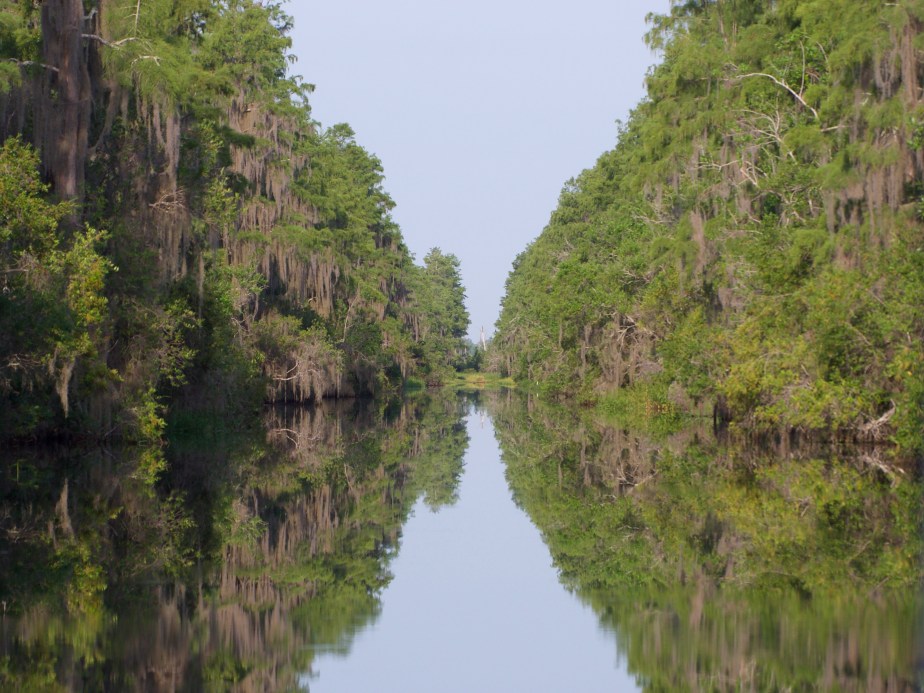
Down in the south-west corner of Georgia you can find the largest swamp in the USA, the Okefenokee. It covers about 700 square miles (1,800 square kilometres). It is the source of the Swanee River. Fifty inches (127cm) of rain a year provide the water. Shallow waterways wind through cypress trees and peat bogs, canoes are the simplest means of getting about. We settled for a motorised pontoon boat.
It’s a great place for Alligators …
… and interestingly, a great place for Black Bears who like to raid Alligator nests and plunder the eggs. Female Alligators guard their nests, large ones can fight off a bear, smaller ones are likely to come off second best. Since the swamp has been protected the bear population is recovering from past persecutions. None volunteered to be photographed.
It’s also a great place for birds, especially those with long legs …
Little Blue Heron
We got a glimpse, as well, of a pair of Sandhill Cranes.
The trees and shrubs in the swamp provide opportunities for a different suite of birds.
Barred Owl
The waters are acidic and nutrient poor, ideal for pitcher plants …
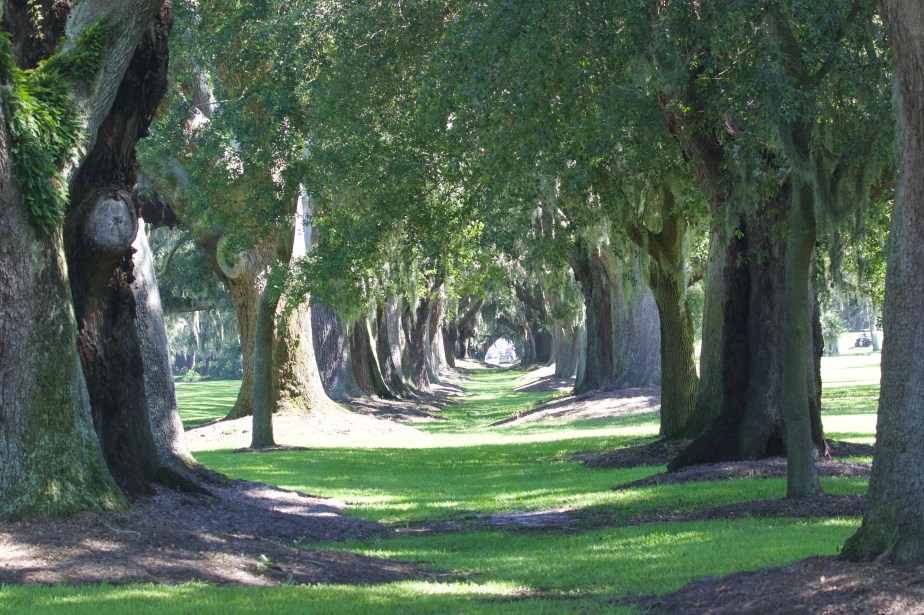
Is one of a string of sand barrier islands along the coast of Georgia. It is quite densely settled but the homes and businesses are tucked away amongst a forest of Live Oaks (Quercus virginiana) draped in Spanish Moss (Tillandsia usneoides). Add extensive marshes, numerous golf courses and land set aside as green space by the island’s Land Trust and you have a community that merges comfortably into nature … Except, perhaps, when a hurricane bears down on it. The highest ground on the island is about five metres above sea level.
White-tailed DeerEastern Grey Squirrel
It was home to Creek Indians for millenia. After the Americas were put on the European map by Mr Columbus the Spanish were quick to explore Florida and Georgia but the French were the first to found a colony. In 1564 René Goulaine de Laudonnière built Fort Caroline in what is now Jacksonville, Florida. It was short-lived. The Spanish founded their own colony at St. Augustine a little further south. Before long they attacked Fort Caroline and slaughtered most of the garrison.
The Spanish spread their influence northwards founding missions to convert the native inhabitants. The missionaries were accompanied by soldiers to establish Spanish authority and ensure the safety of the priests.
After 1600 the pace of colonisation picked up considerably. The French, the English, the Scots and the Dutch all founded colonies in North America.
A century later St Simon’s Island lay at a strategic position between Spanish Florida centred in St Augustine and the British in Virginia. A Spanish mission on the island had fallen into disuse. Spain and Britain were not getting along all that comfortably. James Oglethorpe was sent to erect a fort on the island. In 1736 he founded Fort Frederica with a small town adjacent. Not far away on the mainland Fort King George was built and the town of Darien grew up adjacent to it, settled mainly by Scots.
In 1713 the British had wrung from the Spanish the right to sell slaves and some goods into South America. In 1731 the brig Rebecca was boarded by the Spanish off Florida. The captain, Robert Jenkins was accused of smuggling and suffered the indignity of having his left ear cut off. It was but one of a number of irritants that led to war, again, with Spain, a war that came to be called the War of Jenkins Ear.
It began in 1739 and ran on into the broader War of the Austrian Succession which finished in 1748. It was largely a naval affair fought in the Spanish colonies in the Caribbean and South America.
In 1742 the Spanish landed 2000 troops on St Simon’s Island in an attempt to push Britain out of its colony in Georgia. Oglethorpe’s men from Fort Frederica fought off the Spanish in two engagements, the Battle of Gully Hole Creek and the Battle of Bloody Marsh. The Spanish withdrew from the island, probably unaware that they had a numerically superior force.
The Glynn County Board of Commissioners has called for a mandatory evacuation for ALL OF GLYNN COUNTY effective at 8:00 a.m., Friday, September 8, 2017, in anticipation of Hurricane Irma. Residents should evacuate immediately.
Following Governor Deal’s declaration of a State of Emergency, the Glynn County Board of Commissioners and the City of Brunswick have issued a State of Emergency for Glynn County. During the period of the State of Emergency, a curfew will be in effect from midnight to 6:00 a.m. until Tuesday, September 12, 2017. County offices and courts will be closed starting 12:00 noon on Friday, September 8, and will remain closed on Monday, September 11 and Tuesday, September 12.
Glynn County includes the beautiful St Simons Island. Good friends will be hitting the road.
May everyone have a safe journey.
It would be nice if the storm could track away into the Atlantic.
After a fabulous week on St. Simons Island, which I will get around to sharing, it was time to leave. And by coincidence a very good time to leave. Irma, the strongest hurricane to form in the Atlantic has been meandering north over recent days, has ravaged some of the Caribbean Islands and is bearing down on Cuba. It is tipped to hit Florida on Sunday.
A mandatory evacuation order has been issued for the Florida Keys. Police and outreach workers will begin taking those of Miami’s homeless that refuse to go into refuges into custody for their own protection tomorrow. The conurbation centred on Miami is home to 6 million people.
St Simons Island and the nearby city of Brunswick in southern Georgia are on high alert, it is likely that they will be severely impacted in the coming days but no mandatory evacuation has been ordered yet.
Gayle and I picked up our Chevy in Jacksonville this morning and we have been part of a procession of Florida number plates up the I-75. We are safely ensconced in Atlanta.
Our thoughts are with all of you who are in the firing line.
The lovely Gayle and I flew into Jacksonville, the largest city in the contiguous United States. By area that is, and of course, that depends on where the lines are drawn on the map. The metropolitan area has a population of about 1.6 million people. That’s considerably more than Miami proper with a mere 400,000 but if you throw in the rest of the conurbation – Miami-Dade, Broward and Palm Beach you’ve drawn a line around 5.5 million people. So which gets to be state capital, Jacksonville or Miami? Neither, it’s Tallahassee with a smaller population than either.
Anyway you will be pleased to know that Jacksonville has recovered well from the Great Fire of 1901 which started as a kitchen fire , spread to Spanish Moss in a mattress factory. In just eight hours, it swept through 146 city blocks, destroyed over 2,000 buildings, left about 10,000 homeless and killed seven.
During the silent movie era it was the centre of the film industry but then Hollywood came along.
Hurricane Matthew made itself felt in 2016.
We didn’t stay long in case something bad happened. It seems ill-fated.
The truth is we were picked up by friends and whisked away to the beautiful St Simons Island over the border in Georgia. They have a really fabulous house backing on to a lake.
Whilst having breakfast the next morning we could see this guy without getting up from the table!
I guess a swim is not on the agenda.
As beautiful as the house is all the light switches are up side down. How odd.
‘He didn’t discover America he invaded it’: Protesters now rally to REMOVE statue of Christopher Columbus from Manhattan after NYC Mayor Bill de Blasio said it was under review as a ‘symbol of hate’ The Daily Mail.
As an Australian heading for the New World one of the first things to strike me is that it’s not all that new. By the time Captain James Cook found the east coast of Australia in 1770 Columbus had found an island near the east coast of America (1492), the Mayflower had deposited the Pilgrim Fathers in Massachusetts (1620) (an event that captured the American imagination far more successfully than the first English Colony at Jamestown, Virginia founded 13 years earlier) and about 2 million colonists had followed them. The struggle for independence was underway.
On the 4th of July six years after Cook named Point Hicks America declared its independence. The loss of America may well have been the catalyst for British settlement of Australia in 1788.
Indeed, so ancient is the New World that the Scots were founding colonies in North America prior to Union with England in 1707.
Australia, as a country rather than a bunch of colonies, dates from just 1901. It’s brand new.
Although I must point out that both continents were inhabited long before our European explorers put them on Europe’s map. Wouldn’t want the blog to be considered a symbol of hate. And just for completeness let’s add that neither of these great explorers were the first Europeans to reach the respective land masses. History can be so fickle.
Just imagine those heady days of pride and optimism. Days when we could celebrate the 4th of July or the 26th of January or erect statues to our heroes.
Obliterating history doesn’t change it – just makes it harder to learn from. Civic pride seems so much more constructive than communal self loathing.












 bobmcgee