Hardwick’s Snipe …

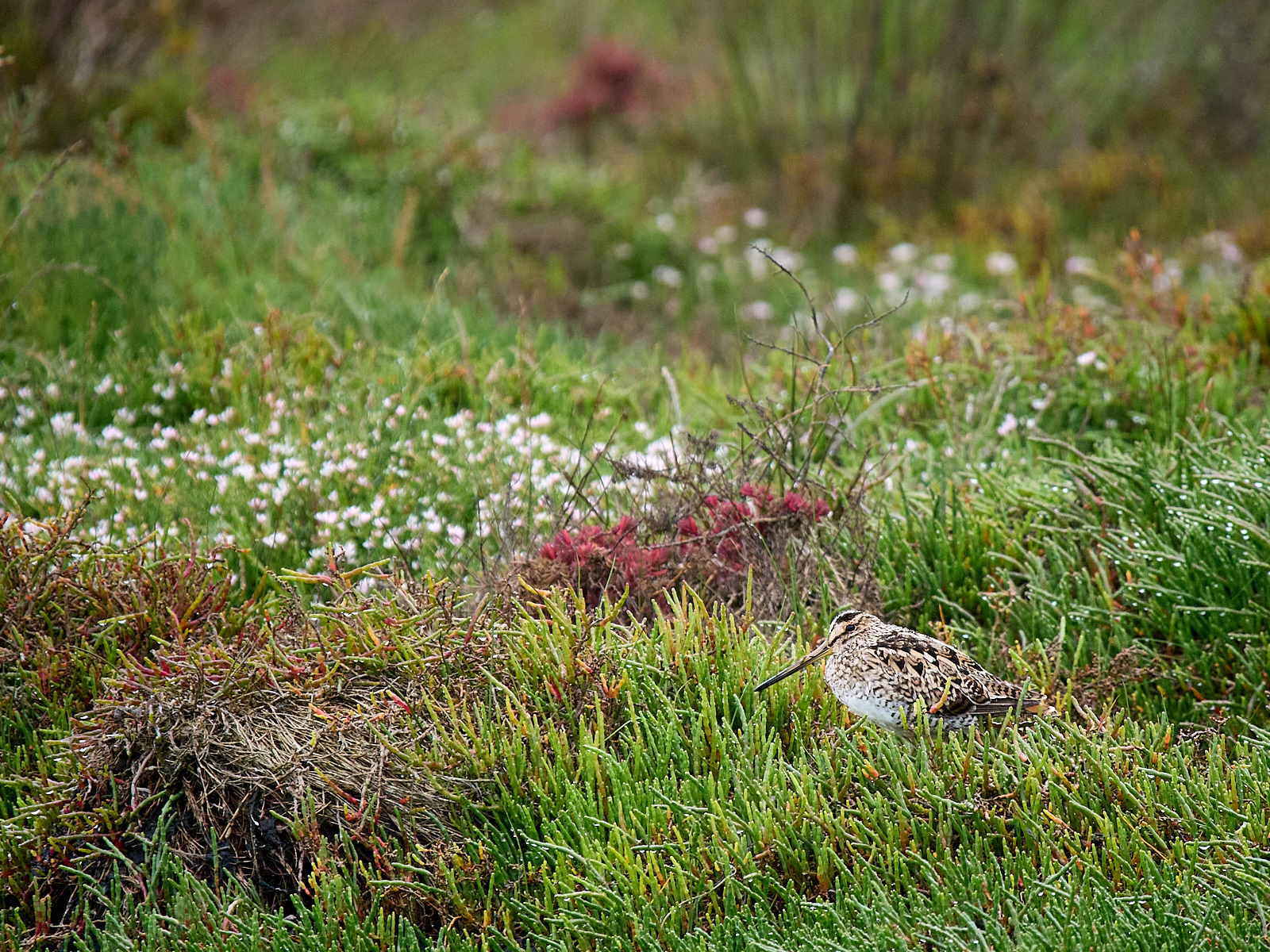
In the dry and dusty prose of taxonomy it reads “Gallinago hardwickii (Gray, JE 1831)”. The specimen described by Mr Gray was collected by Captain Charles Browne Hardwick (1788–1880) who may have had an e on the end of his surname. He shot the unfortunate snipe somewhere in Tasmania. Today we know it as Latham’s Snipe. The Latham in question seems to have had no connection whatsoever with the snipe (or to have ever been rude about conga lines). He was John Latham an English physician and ornithologist back in the day. Getting rid of eponymous bird names is something of a trend in modern taxonomy. By and large I think that’s a shame but finding a more appropriate name for this bird wouldn’t offend me at all.

G. hardwickii breeds in Hokkaido and highland areas of Honshu in Japan, and in Sakhalin and the nearby Kuril Islands. It escapes the northern winter by migrating through New Guinea and northern Australia arriving in South-eastern Oz in October. It can be found, if you look very carefully, in marshy habitats until departing in February or March on the return journey.

They feed dusk to dawn and hunker down through the day in places where not a lot of people choose to walk. Add to that their beautiful camouflage and you can easily miss them.

Migration is a strategy that comes with certain risks, problems on the breeding ground, the wintering ground or on the journey between them. For Latham’s Snipe the main hazards are here in Australia. Their population falls after major bush fires and droughts and they are further squeezed by urban development.

They are not easy to photograph. If they are out in the open they won’t let you get close. If they are in good cover the first you know of them as you wade through their territory is an explosive “chack” as they fly rapidly away.

Mixed Messages …

The morning rides have been a bit on the chilly side. I had a close brush with frostbite just the other day, well cold fingers anyway. Flame Robins have deserted the high country for the winter and have been moving through this district in recent days, always a welcome sight. Winter is also the time when we see more Crimson Rosellas and Grey Currawongs.

But here we are only just past the winter solstice and some of the birds are singing from a different hymn book entirely. Just west of Dunolly in recent days I have encountered a Fan-tailed Cuckoo emitting its mournful whistle and yesterday I was swooped by a couple of Magpies, one in desultory fashion and one with great enthusiasm. The latter made contact with my bike helmet a couple of times. I knew there was a good reason to wear one.

We are, of course, talking about the Australian Magpie Gymnorhina tibicen not the original Eurasian Pica pica.

HO7 the Curlew …

I met this individual on my recent travels.

He or she is a Eurasian Curlew, Numenius arquata, and I encountered it in the Odiel Marshes, Huelva, Spain just across the river from where Christopher Columbus set off on his first voyage to the new world.

I say individual for a reason. One Curlew looks a lot like another, if you’re interested in life span or movements of birds from a particular area you need to mark individuals. The common method to do this in the past was with a metal ring. This guy (in the non-gendered sense) has one on the left leg. To read it though one has to catch the bird. The advent of coloured flags has meant that anyone with binoculars or a camera can identify the bird easily in the field.

In recent years a Eurasian Curlew was seen on Eighty Mile Beach in Western Australia. The Australian Wader Study Group are active there, in fact I have banded birds with them there myself. Ever the optimist I entertained the hope that this one might be it.

I reported my sighting through the International Wader Study Group (sightings@waderstudygroup.org) and in the fullness of time received the information that this particular Curlew was banded as a first year bird at Poscien, Mazowieckie, Poland 10 months earlier. It was reported 50 days after banding in Irun on Spain’s north coast where it stayed for at least a month. It was first reported in Huelva on the south coast six months prior to my seeing it. In all seven sightings had been submitted. This is a much more efficient means of following a bird than relying on recapture.

So far in its short life it had flown at least 2,800 km. May it fly many more.

Paradise …

Breakfast on the front verandah. A glorious day. We have been in the grip of a heat wave and it has finally broken. Last night I slept under the covers. This morning the world is made new.

Fifi McGee, the foxiest Fox Terrier in the world, is racing around like a puppy. Every Galah, Cockatoo and Corella is celebrating raucously.

SONY DSC

The view from my breakfast table.

As I ate breakfast a family of Black-faced Cuckoo-shrikes worked their way along that avenue of trees having their breakfast too. They are very fond of caterpillars. Red-rumped Parrots have been flashing past, the males like flying jewels. Welcome Swallows have been passing in large flocks, their migration must be just getting underway.

If I walk around the house, the view to the east is across the vineyard, across a permanent creek where I have seen platypus the last couple of days, to a reserve. The trees there are River Red Gums and Grey Box, a little further up the slope there are some beautiful Yellow Gums. White-browed Woodswallows have been hanging around there all summer and you can always find the resident Brown Treecreepers and their friends. The regular Swamp Wallabies have been joined this year by a mob of Eastern Grey Kangaroos.

Finally it feels like autumn, at last a day to pick grapes …

SONY DSC

Just one problem, no grapes.

It has been very dry this summer. I have ground water but it is too salty for irrigation. Last week there was a small crop, not quite ready. This week there is no crop at all. The birds have stripped the lot.