Flying the Flag …

Some more life histories …

Australian Pied Oystercatcher 5B was in its first year when it was banded in 2013 so is now coming up to its 12th birthday. It has moved 286km from where it was banded and it is in a relationship!

Australian Pied Oystercatcher DV was in its second year when it was banded in 2011 so is now in its 16th year of life. It was foraging by itself 343km from where it was banded.

Sanderling LAX was banded just metres from where I found it 3 years later but far from being lazy it has probably flown further than either of the Oystercatchers because it hatched in the high Arctic and may have been to and from the breeding ground in the interim. That’s more than 11,000 km each way. They run a marathon every day as well. Their foraging style is to chase the waves out, snatch some invertebrates from the sand and run back in front of the next wave.

I found and photographed this trio within a few days of each other on the beaches around Port Fairy. They show the value of using flags that are readable in the field without catching the birds. I just fire away with the long lens as they continue about their business. Clearly the flags are not an impediment. Occasionally you can even read the numbers on the metal band for large birds.

I report the sightings with or without photos to the Australian Bird and Bat Banding Scheme. If you give them your email address they will get back to you and to the bander with the whens and the wheres. Here’s the link ABBBS. If you come across a dead bird with a band you can let them know the number on the band at the same link. It doesn’t matter if you can’t identify the bird – the band will. If you’re not in Australia there will almost certainly be another authority that you can track down on the internet.

The flags do kind of ruin the photos, they are not going to end up on the wall, but when it comes to arguing the case for conservation pretty pictures are trumped by hard data (except maybe for koalas, pandas and polar bears.)
Let’s get to work …

Moreen was keen to get as much from our visit as possible. There would be no slacking off.

Her field assistants were just back from Kenya where they had undergone some additional training provided by the Nairobi National Museum. She was keen that they put their new skills to use under supervision to really consolidate what they had learnt.

Much progress had been made. Patrick and Godfrey had been very efficient at the mechanics of catching and handling birds but had struggled a bit with measurements, partly because of poor equipment and partly because of inexperience. Experience had been gained in the last 18 months and we’d brought some first class equipment which would be theirs to keep.

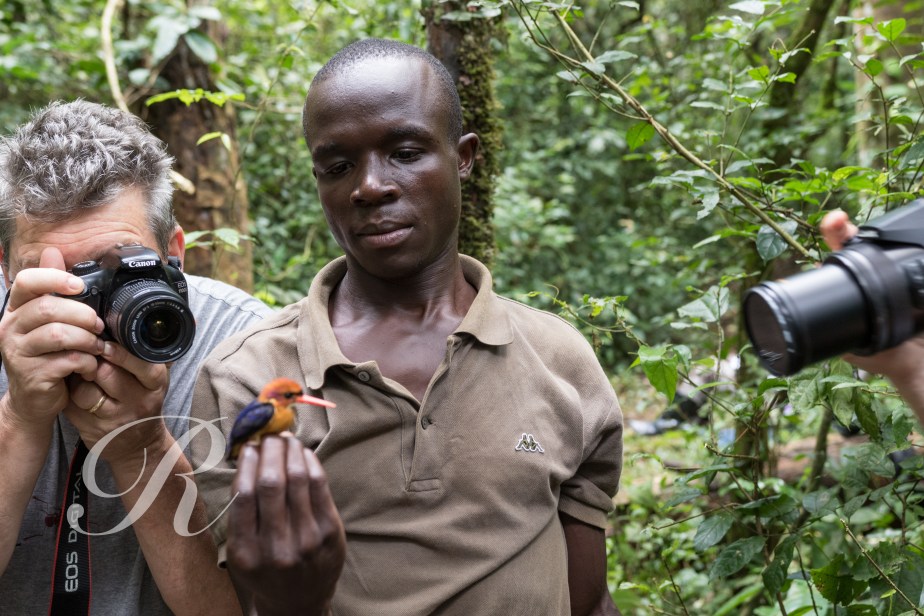
Field Assistant Patrick Arua surrounded by paparazzi

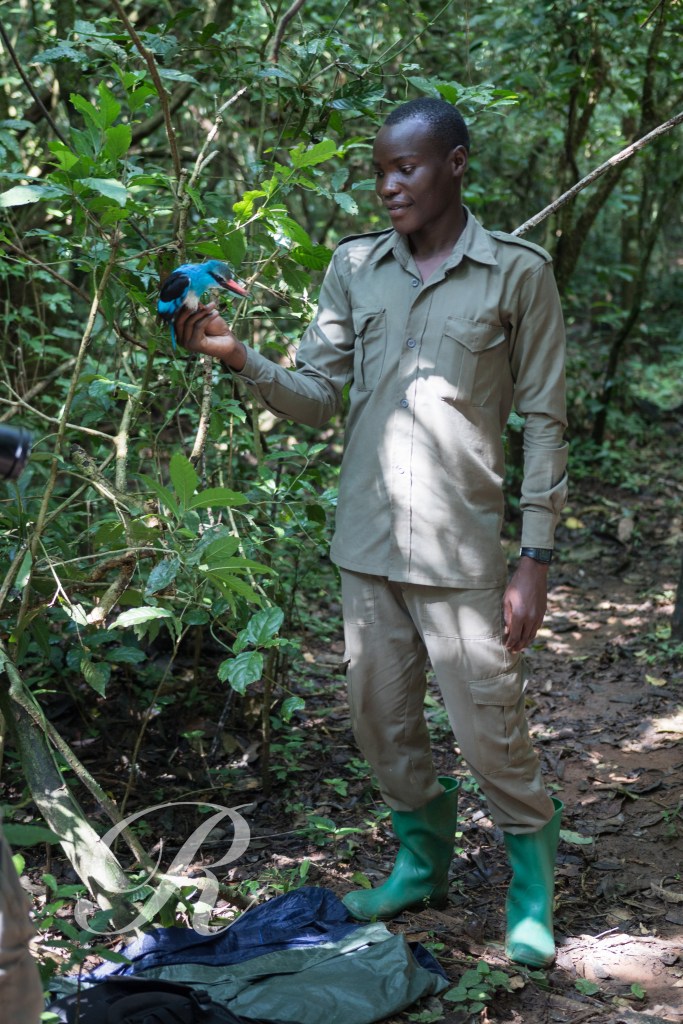
Field Assistant Godfrey Andrua with a Blue-breasted Kingfisher

The routine was simple. Nets were set in the afternoon and closed for the night. Where possible they were set in one continuous line … 228 metres long. Which is way more net than a small team would attempt to handle in Australia, but some of the hazards we face are absent in Uganda – no Butcherbirds, Kookaburras or birds of prey to start eating your catch; the cool shade of the forest interior rather than a dessicating sun and on average larger more robust birds. Not a bird was lost.

The nets would be opened at first light, birds caught, processed and released until about 1pm when the nets would be packed up. After lunch they would be carried to the next day’s catch site.

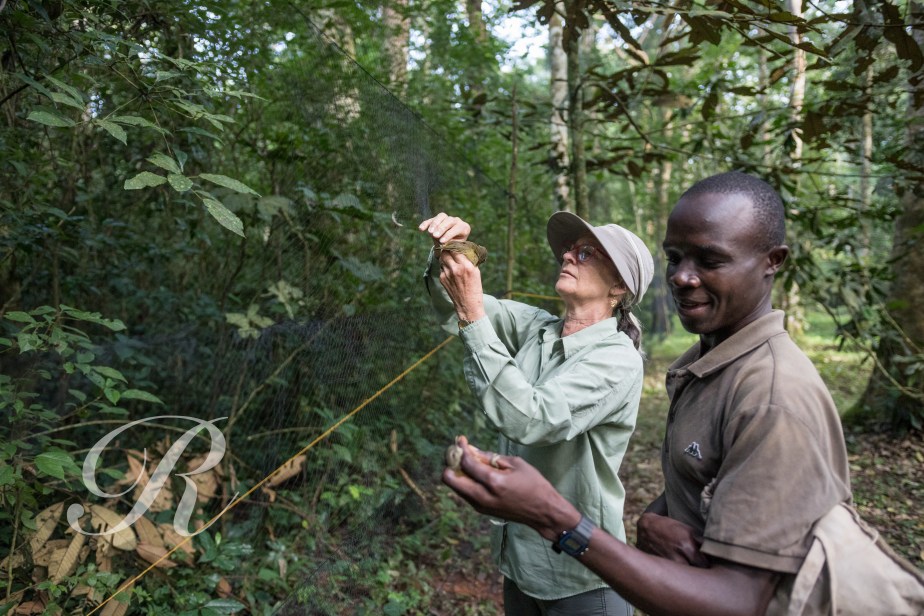
Gayle and Patrick taking birds from the net

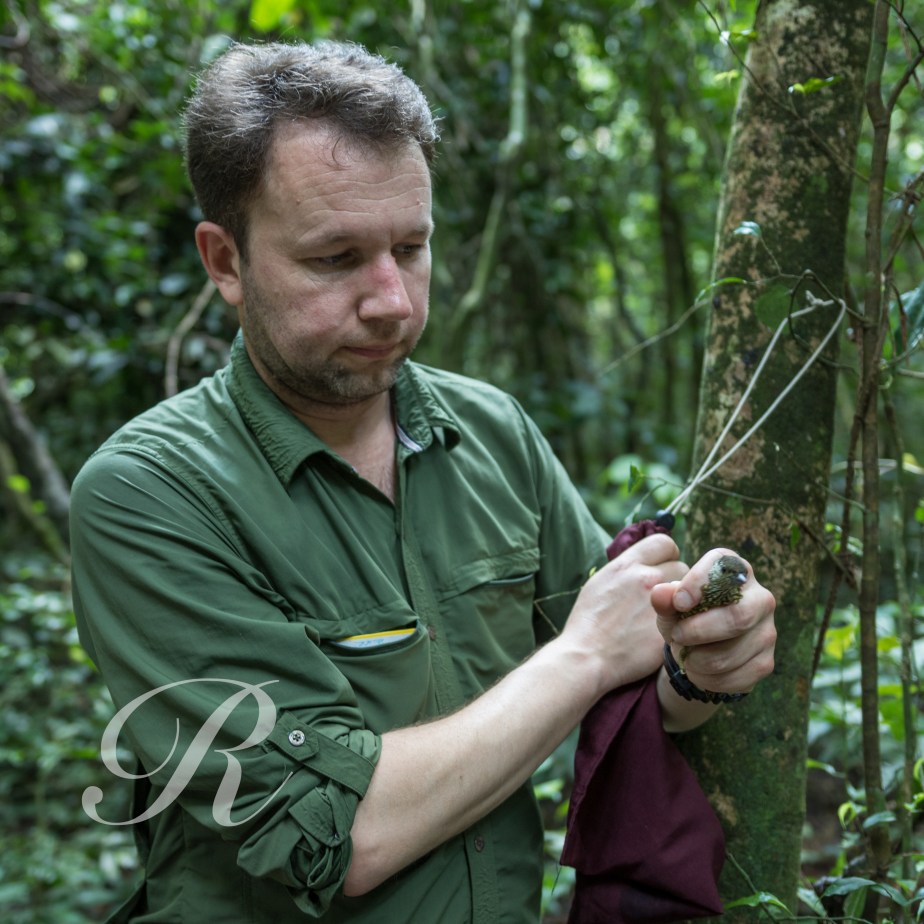
Mark with a Speckled Tinkerbird

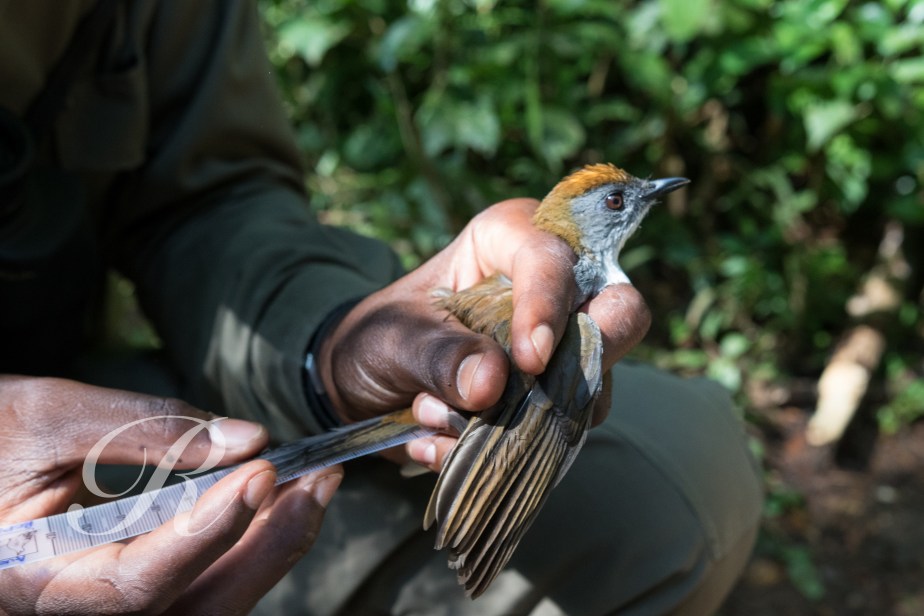
Measuring tail length of a Fire-crested Alethe

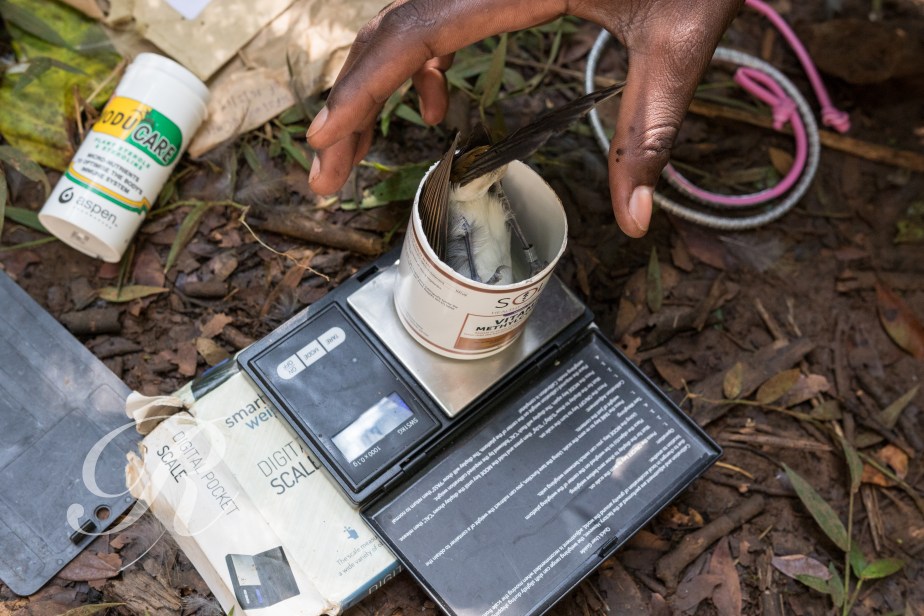
Digital scales – what luxury

African Dwarf Kingfisher


Fishers Green …

I was born in Hackney and lived in Wick Road until the entire neighbourhood was razed as part of the slum clearance program. Then it was Leyton until I left London to go to university.

My father was a policeman and a keen angler. The police had fishing rights to a stretch of the River Lea not far from Waltham Abbey. The opposite bank of the river was a gunpowder factory. It was the ideal place surrounded by farms and tucked away between the River Lea and the Lea Canal. It could be flooded in the event of an emergency simply by opening some sluice gates. The fishery may have been a means of ensuring a police presence. This was where I was introduced to the gentle art of turning fishing line into insoluble tangles. It was also where I learnt to avoid stinging nettles.

The factory became redundant. Gravel extraction followed. It must have been quite a sad transformation for my father. But when the gravel was gone the scene was transformed again. It is now a series of lakes, waterbirds abound and if you are very lucky you might even see an otter.

I was there yesterday, it was a glorious spring day. A cuckoo gave away its position by incessant calling and I notched up a good list of birds.

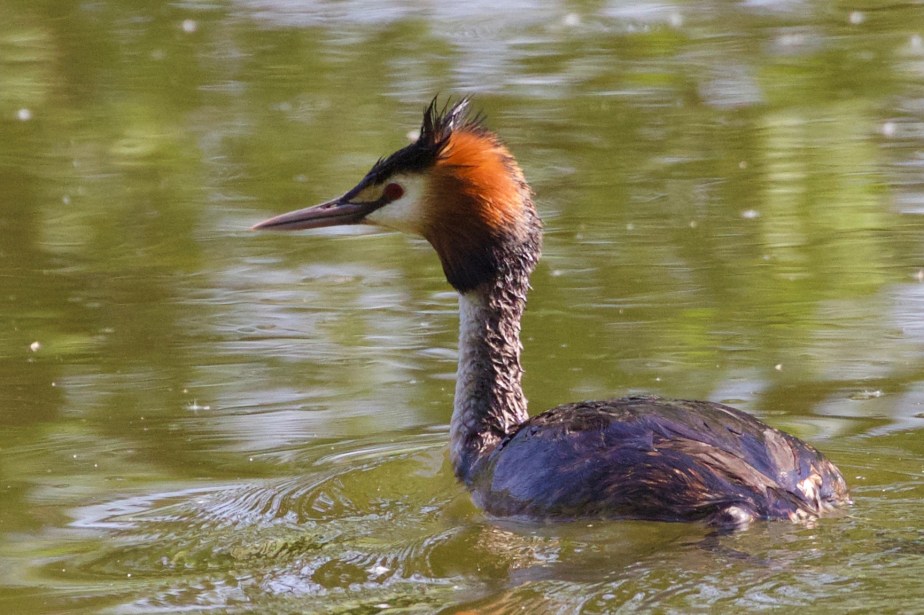
Great Crested Grebe

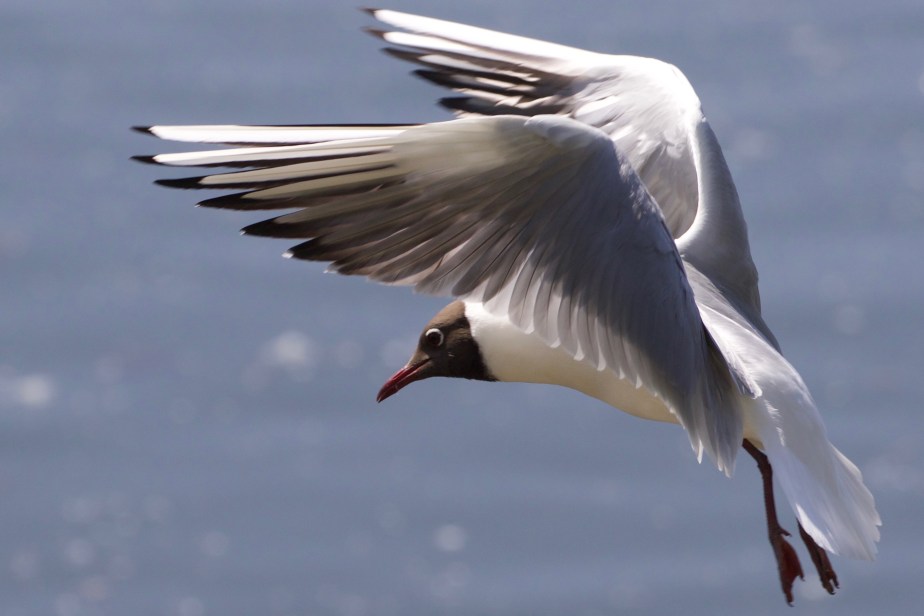
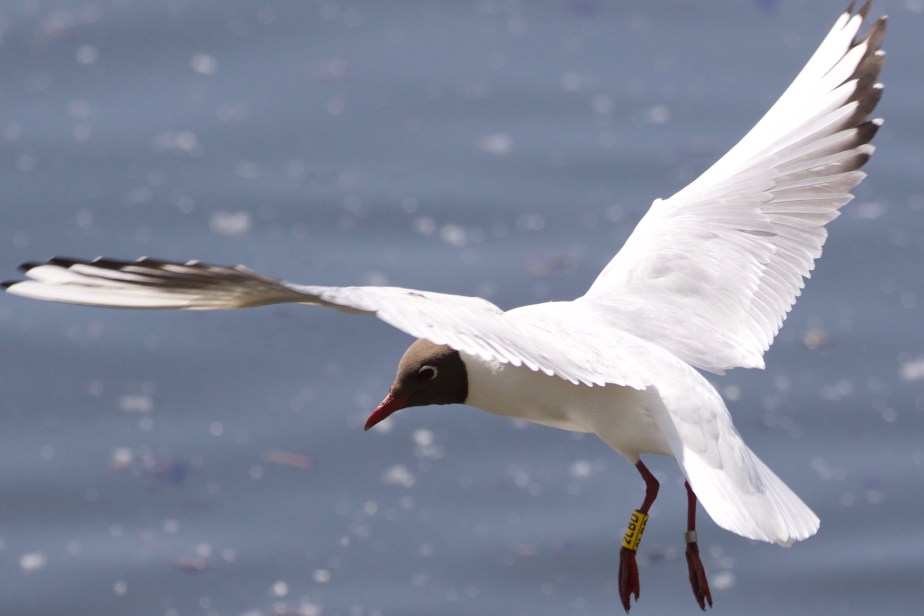
Black-headed Gull

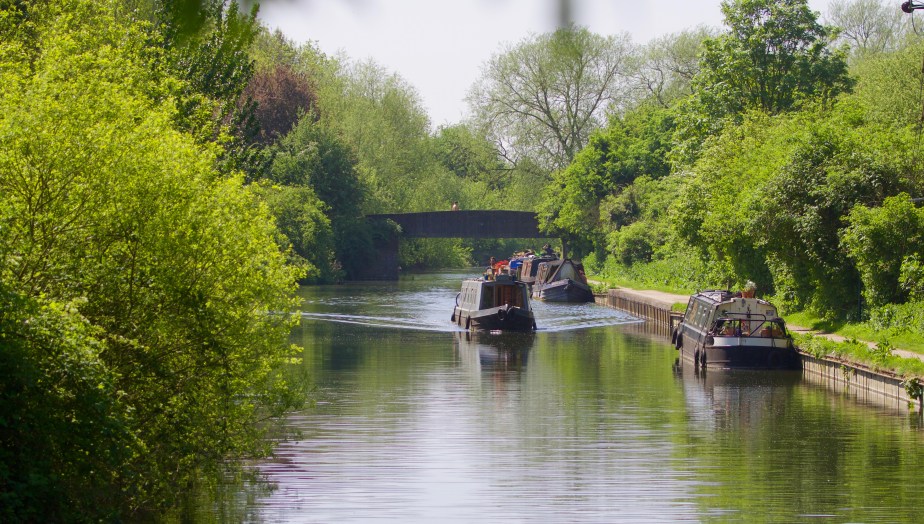
A network of paths takes you around the lakes and to the Lea Canal …

Barges on the Lea Canal

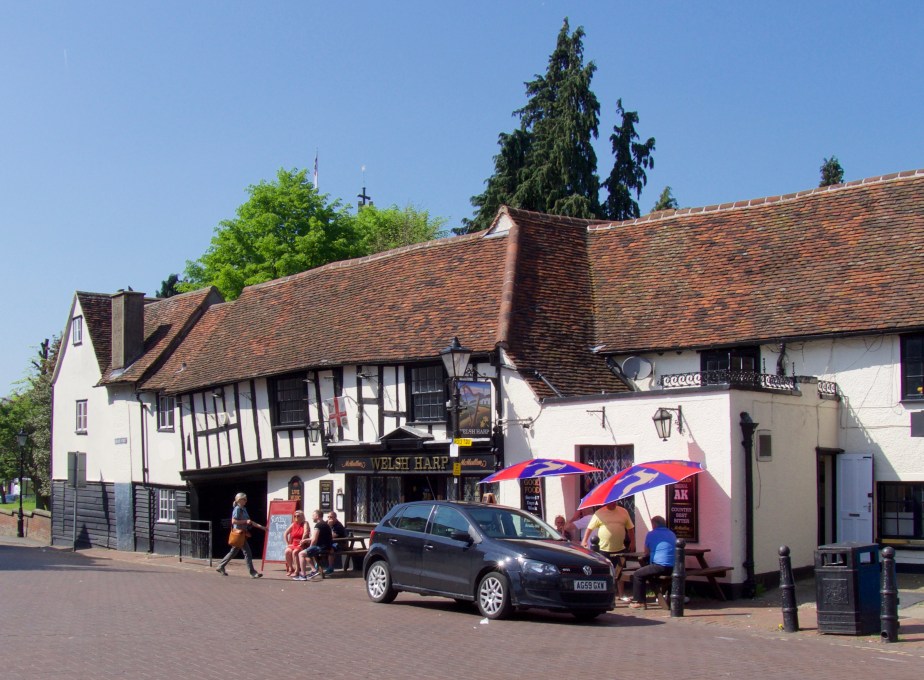
Then it was time for a late lunch at the Welsh Harp in Waltham Abbey. The pub dates back to the fifteenth century. The food was outstandingly good.

The Welsh Harp

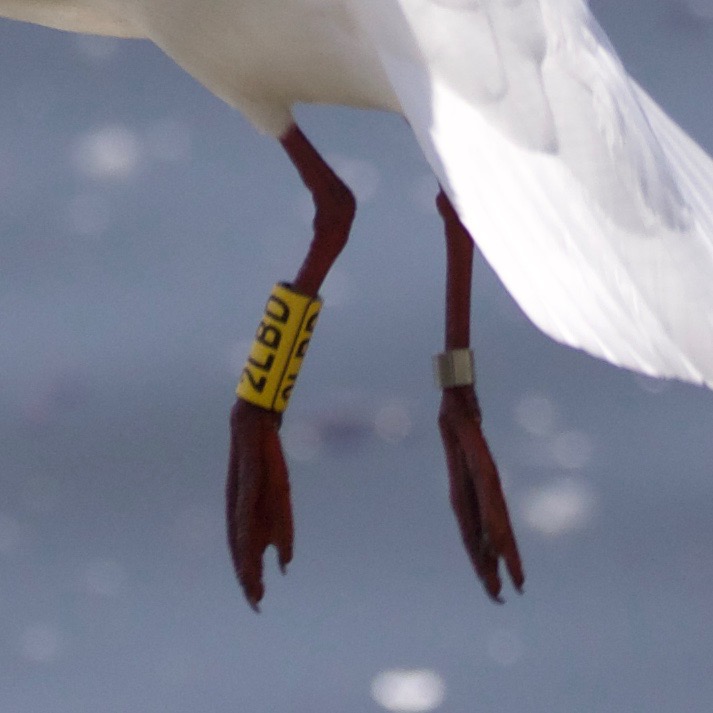
In the evening I went through my photos and found that one of the gulls was ringed …

Black-headed Gull 2LBD

Bird banding in Britain is coordinated by the British Trust for Ornithology. It was a simple matter to find the BTO website and track down the research group that banded the bird. I submitted my observation and this morning I received a thank you note and some life history.

2LBD was banded at the place where I saw it as a chick in 2015. It was seen in Kent last year. This is the first time it’s been seen back at this colony this year.

Banding Birds in Budongo …

The local birding team …

Raymond, Andrua, Moreen, Patrick.

Moreen Uwimbabazi started the banding project as her honours research. Raymond on the left is a red hot local bird guide who was drafted for our benefit. If you need a bird guide in northern Uganda he is your man. You can contact him on 0777 319 865 or 0752 930 065.

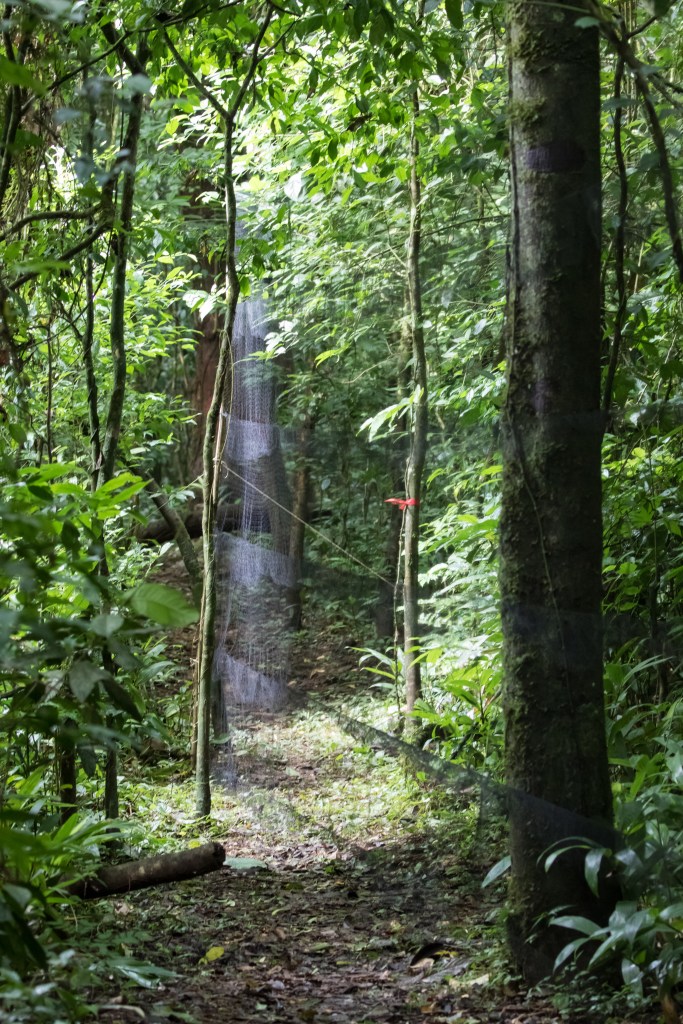
The process is fairly straight forward. You set a mist net between poles, keeping it very taut from one end to the other and endeavouring to keep it out of the branches of the adjacent trees. In the shade it is almost invisible which is why I chose to photograph the end in the sunlight.

Mist net

Visit regularly, carefully extracting any birds that have found their way in. Identify the birds, measure them (wing length, head and bill, tail length), weigh them, band and release.

Andrua and Patrick were just learning the ropes so we were able to ensure their technique improved. In exchange they were able to ensure we made our identifications correctly as we encountered birds that were completely new to us.

Forest Robin

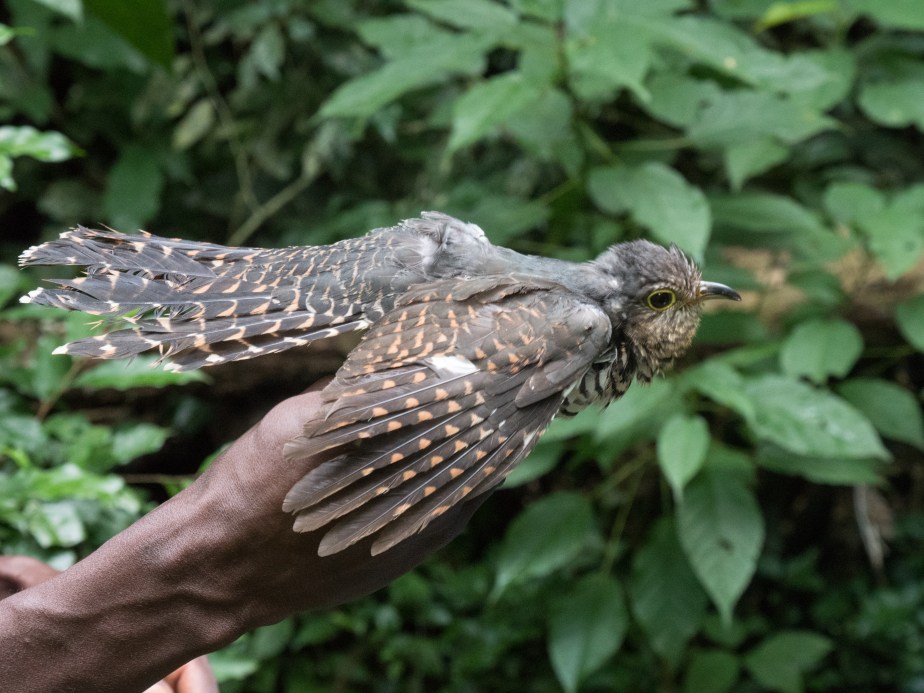
Dusky Long-tailed Cuckoo

Doesn’t hurt a bit …