The tour ran from February 19, 2017 until March 7. The southern extension kicked off the next day and finished on the 13th.
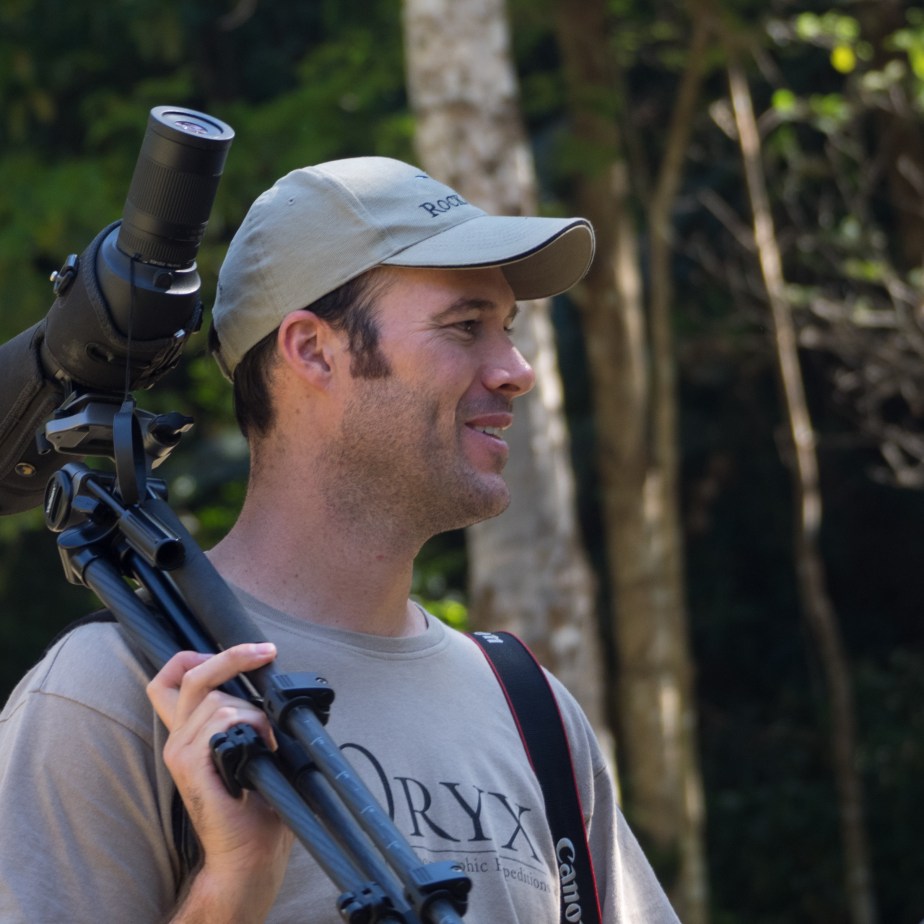
The leaders were Uthai Treesucon and Keith Valentine and they were excellent.
Uthai TreesuconKeith Valentine
The itinerary and accommodation were well chosen, transport was handled well. The food was good.
A group size of twelve could present problems but Rockjumper briefs participants on etiquette and on this occasion things ran very smoothly. How the organisation might have handled a crisis was never put to the test.
It is a hardcore birding tour, if your spouse is not a keen birder it would be tough for them. There is no associates program, days are long, the focus is intense. And for the birder very productive. The final tally for the tour was over 500 species, I saw 471 different birds and some good mammals. If you carry a camera you will bring back some very nice photos but it’s not the tour for the dedicated bird photographer the tempo is quite different from their requirements. One of the group has put a very large collection of their photos up <HERE>. If you’re preparing for a trip you could test your diagnostic skills on them.
So to mark Rockjumper’s report card … A+. I’ve already booked another tour. The next one is to Bhutan. What about the participants?
Most were repeat Rockjumper clients which says something about the company. The guys were gentlemen bird watchers, always polite, tolerant and cooperative. The girls on the other hand … I don’t know how many times I found myself examining the backs of their head through my binoculars. No, I exaggerate the group was remarkably congenial. There were tales of other trips and a lot of good humour. We were occasionally entertained by the sayings of Polly’s Mum one of which was …
If you’re looking for sympathy you’ll find it in the dictionary between shit and syphilis …
which is well worth remembering.
It is axiomatic that …
There is an arsehole in every group and
They are totally unconscious of the fact.
So it follows that if you can’t identify the arsehole it must be you.
I therefore tender my apologies to the fine men and women that I traveled with. I enjoyed it.
Krabi just before sunrise (it’s worth clicking on this photo) …
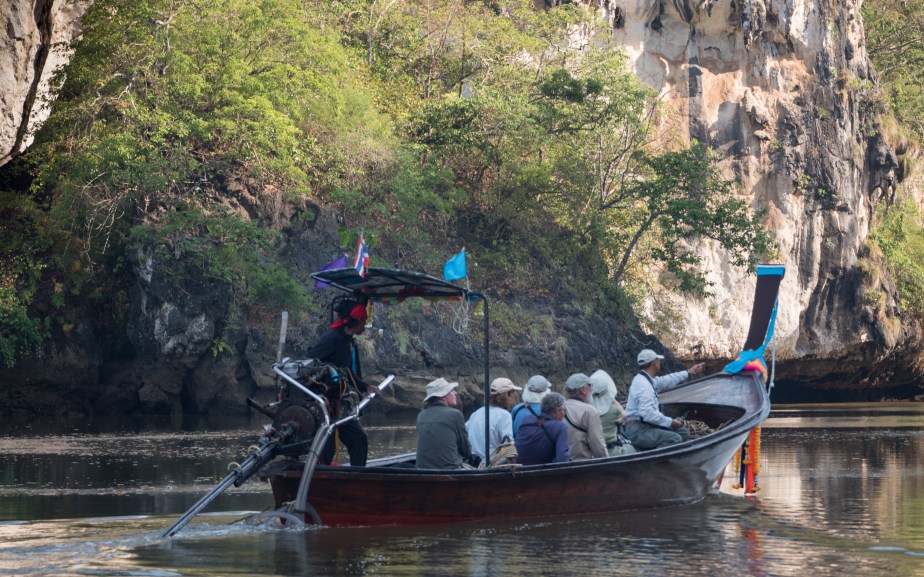
More time in the mangroves, first on foot and then by boat.
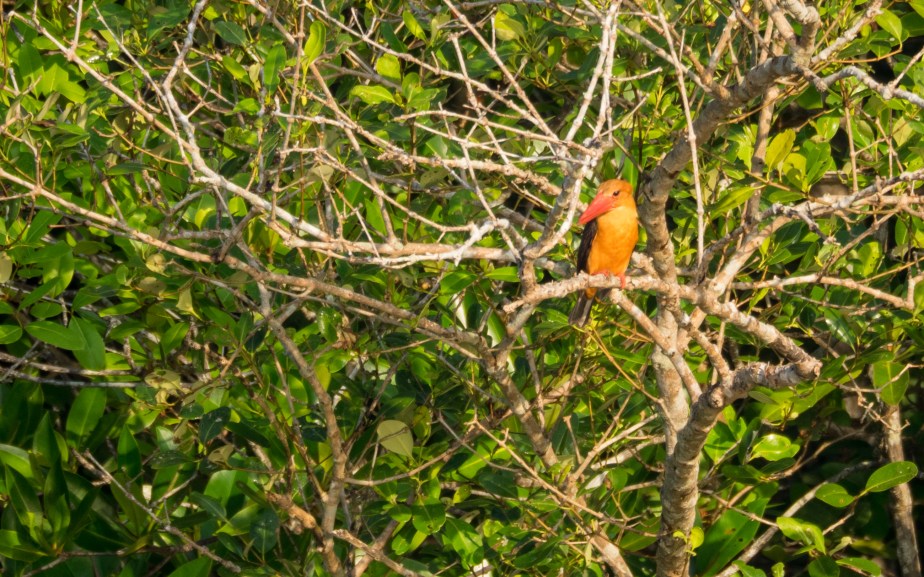
Two of the group, Polly and Paul, celebrated their 4,000th species on this little voyage, and even on this last day I was still adding lifers to my list including this one …
Tigers to the left, Possums to the right. The distance between Bali and Lombok is just 25 km but Asia’s woodpeckers, barbets and trogons are on one side, Australasia’s honeyeaters and cockatoos on the other. Huxley’s modification to the line tidies up a few problems, an excellent example being the genus Pachycephala, a literal translation – thick heads, more flatteringly known these days as the Whistlers. There are 32 species (following the Handbook of Birds of the World in this instance) and all of them are found to the east of Huxley’s version of Wallace’s Line.
When an Australians go birding in Asia they are confronted with not just with new species but whole new families. It can get confusing.
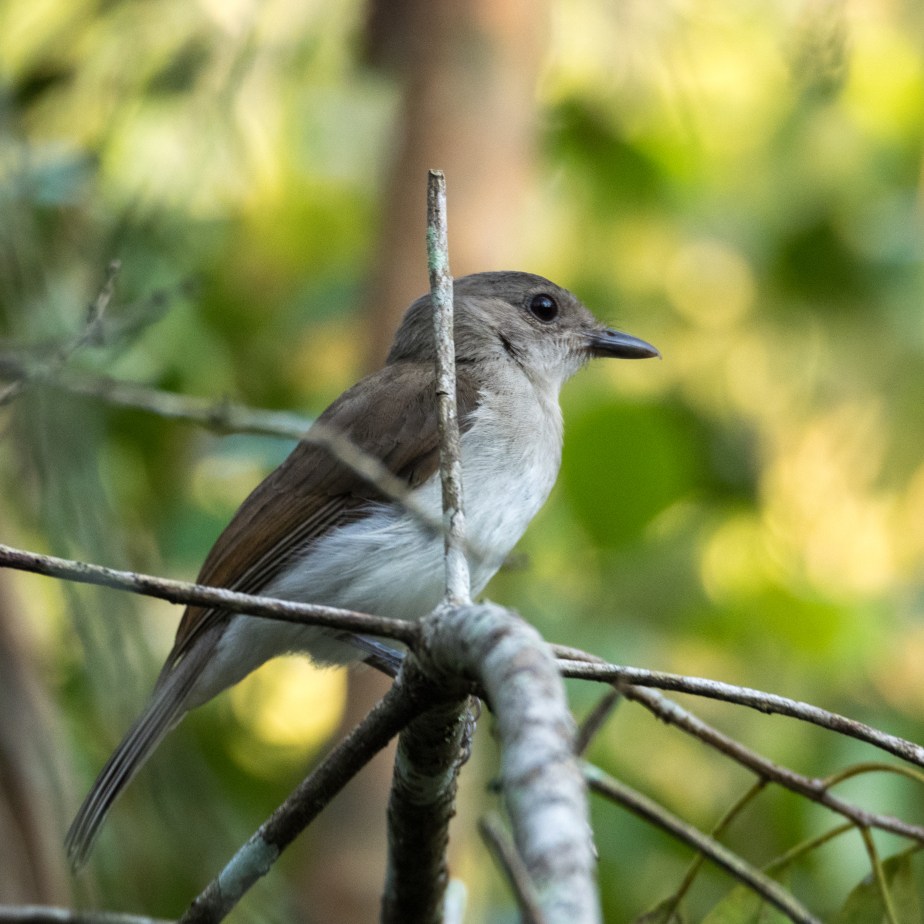
I’d been in Thailand for three weeks. New species were raining down the whole time. It was possible that I was missing the derisive laughter of the Kookaburra or my wife, or maybe the scent of eucalyptus. We were birding in the mangroves when I saw it, a little Aussie expat. It warmed the cockles of my heart springs …
Mangrove Whistler
I’ve seen Golden Whistler and Rufous Whistler in my own back yard and six other species in Australia. Some Whistlers have made it way out into the Pacific to the islands of New Caledonia, Tonga and Samoa but only one species straddles the mere 25 km that separate Lombok and Bali, the Mangrove Whistler. And it didn’t stop there, it can be found all the way up the Malayan Peninsula and then along the Asian coast from Vietnam to India.
Our last patch of lowland forest, Sri Phang Nga National Park spans 246 square kilometres along a range of hills parallel to the Andaman Sea coast. It is just part of a larger forest which is big enough to sustain Great Hornbill, White-handed Gibbon and Dusky Langur. The forest is on a grand scale but access is limited , it is worth an extended visit but be prepared to cover the same ground repeatedly, although the nature of tropical birding is such that your encounters will be varied because of the high diversity of species and low density of most individuals.
Day time birding in Khao Nor Chuchi was fairly good but it was the night birds that quickened the pulse.
One way or another birds had provided the locals with a small income for a long time. Initially it was by trapping for the cage bird trade, still quite big in Thailand, and when that became unfashionable money could be made taking the punters to see Gurney’s Pitta. That no longer pays but there is still a wealth of local knowledge that can be put to good use. The compulsive twitcher wants to come back from their trip with the biggest possible list and owls are among the hardest birds to find. They tend to use day time roosts repeatedly so if you know where they are you’re in business.
It meant that we were in the forest from before dawn to well after dark. One evening our targets were well beyond the reach of our minibuses so we transferred to a couple of 4WDs, one a nice new Prado, the other a ute. There were 12 paying passengers, two guides plus the local talent who would show us the birds. The Prado seated five, the ute seated two, the remaining nine traveled some very rough terrain in or almost in the tray. There are people who imagine that bird watching is dull.
In the space of a couple of nights we had good views of Brown Wood Owl and Blyth’s Frogmouth. The highlight for me was an encounter with a Colugo. Something collided with a tree close by. Playing the spotlight on the source of the noise revealed a mammal climbing the trunk. It would move both fore feet then both hind feet, it was quite quick but not particularly graceful because its progress was hindered by folds of membrane that were too large to fit completely beneath it …
The commentator calls them little but they can weigh up to 1.3 kg. The ability to glide has emerged independently in several distinct groups of mammals, the Colugos are the most accomplished of them and also the most closely related to ourselves. They are in the Euarchonta as are the primates.
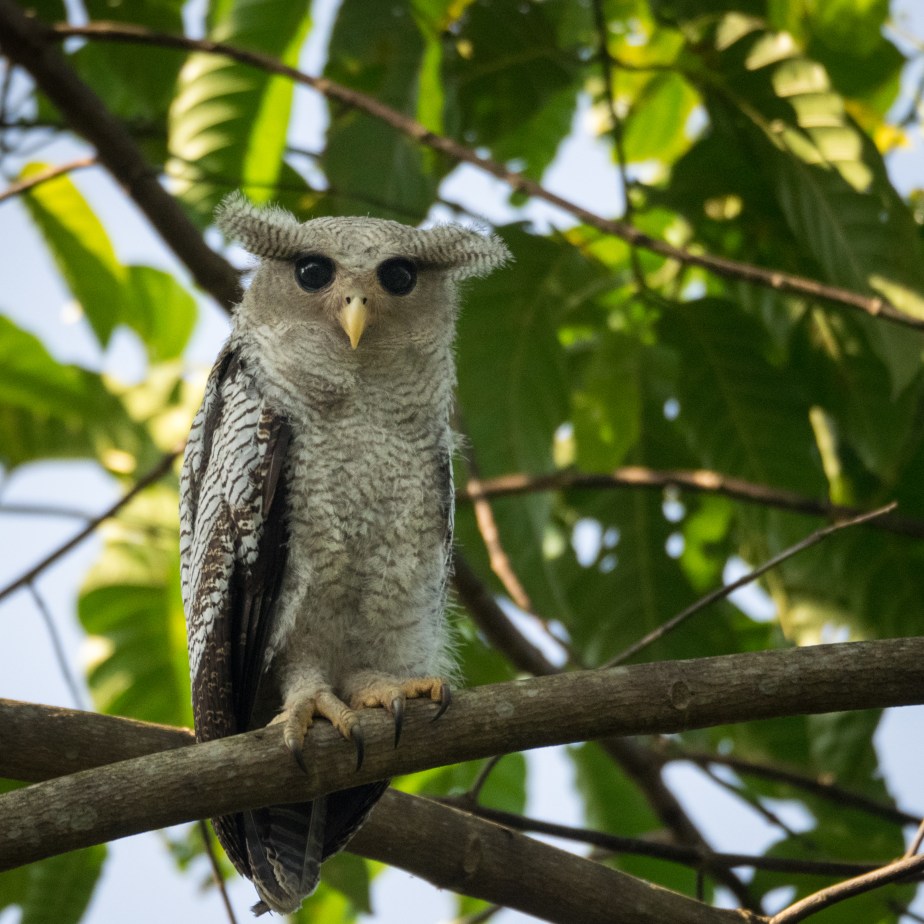
As well as night birds by night we also saw a couple at their daytime roost, the Spotted Wood Owl and Barred Eagle Owl. They are both very shy and will bolt readily. We were conducted singly and with great stealth to see them half obscured in dense foliage. When everybody had taken a look the guides gave a sigh of relief and we all relaxed. At that point a youngster that had clearly not read the manual presented itself for a photo …
This one, Doi Angkhang where we would spend two and a half days.
For two countries with so much in common they seem surprisingly distrustful of each other …
It is otherwise a very pleasant mountain resort as well as a home for four different hill tribes. One of the King’s Projects is situated here and is a splendid botanical garden, both a wonderful tourist destination and a research facility trialing exotic crops that will thrive at altitude and offer something other than opium and illegal logging as sources of income for the local people.
The very first night there we were led on a quest for the Mountain Scops Owl by the indomitable Uthai. Clinging to a cliff side in the depths of the jungle in pitch darkness and guided only by its call Uthai, against all odds, was able to bring a spotlight to bear on this elusive and desirable creature. I would have brought you a photograph but I was clinging to a tree with one hand and fending off the snakes with the other.
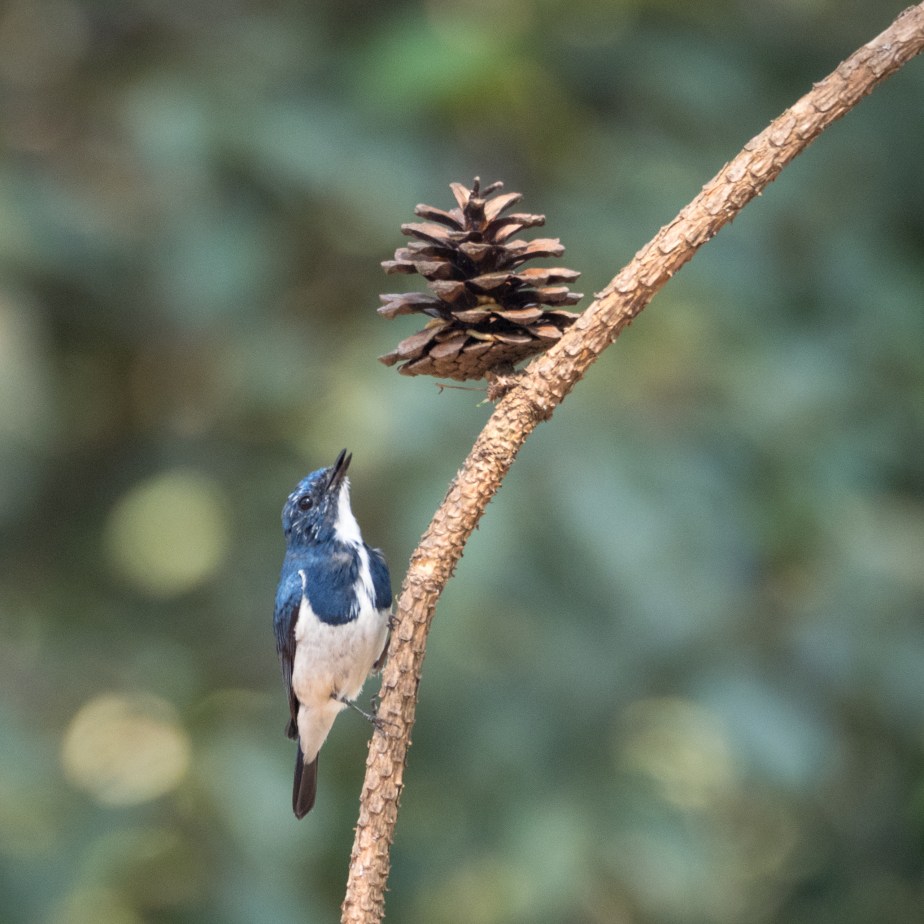
But the following morning I had a much easier time taking photographs of more confiding birds …
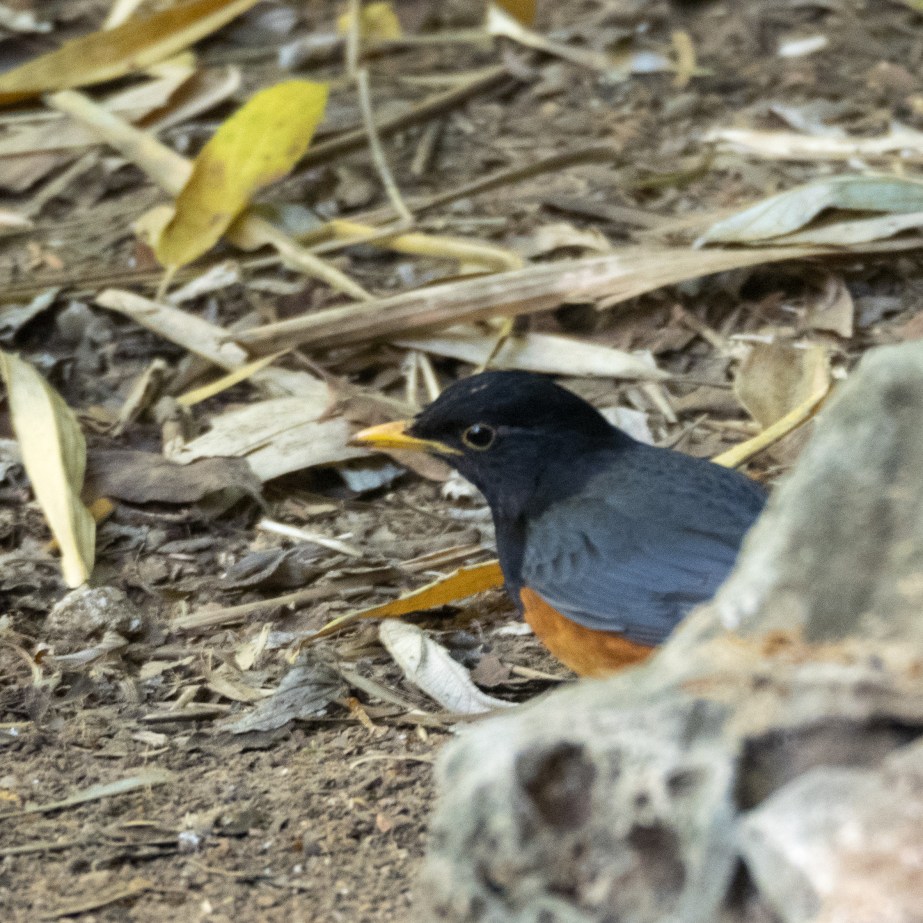
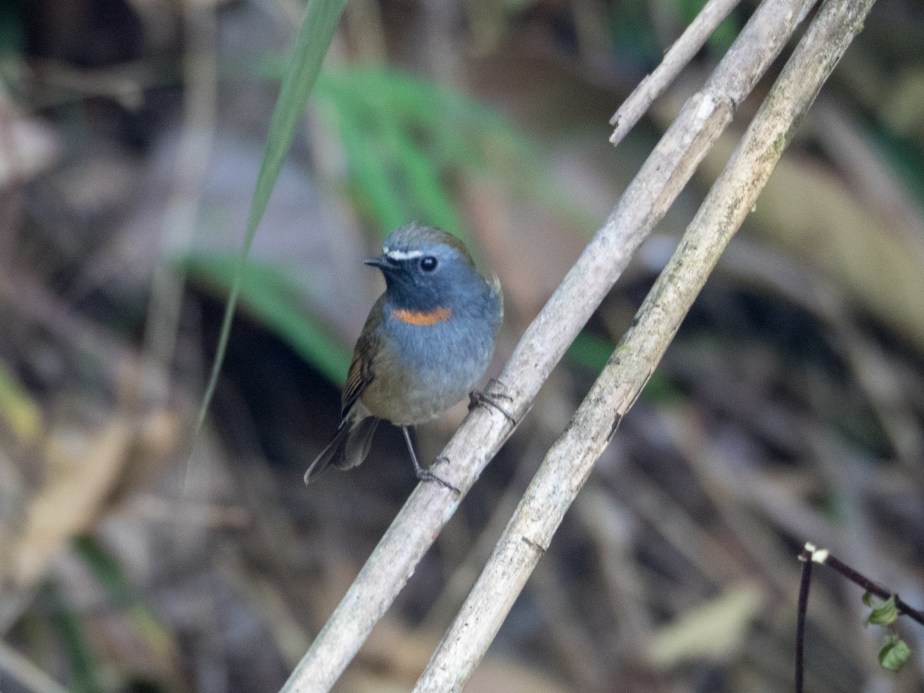
Silver-eared MesiaBlack-breasted ThrushHill Blue Flycatcher
We arrived at Doi Lang during the World Bird Photography Congress, or so it seemed. There were little encampments of portable bird hides at every turn, each containing a photographer possibly seated on a porta potty with a packed lunch by their side, they certainly demonstrated considerable patience …
Mine is on order.
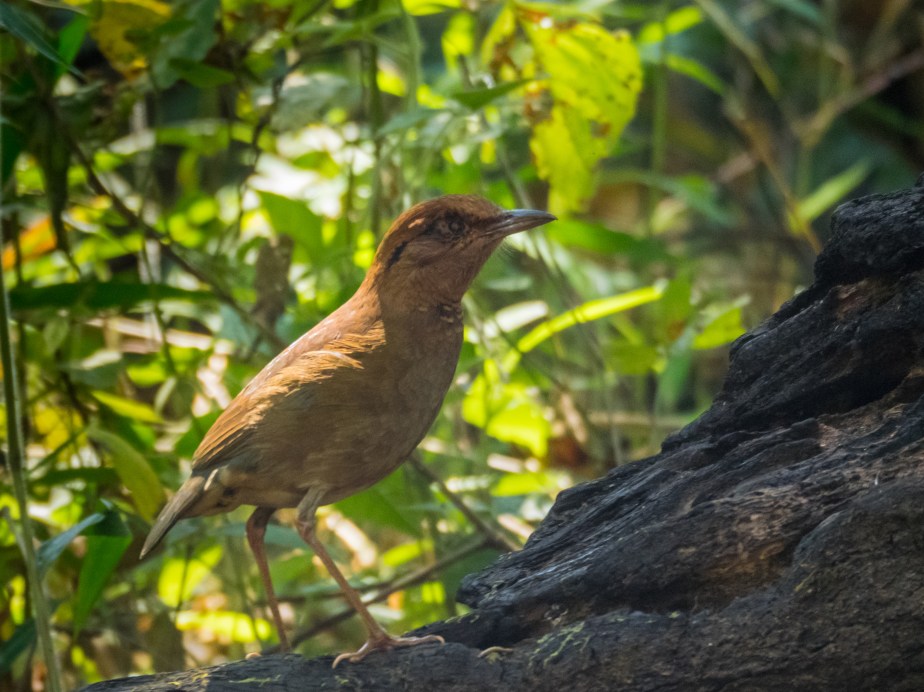
Doi Lang is actually one ridge in Doi Pha Hom Pok National park and the home of some eminently photogenic birds, beauties like Mrs Gould’s Pheasant, Mountain Bamboo Partridge and the rare and sexy Rusty-naped Pitta, none of which are overly confiding. The ridge looks across the valley at similar ridges in Myanmar and there is a considerable military presence on both sides of the border. The top of the hill is currently off limits.
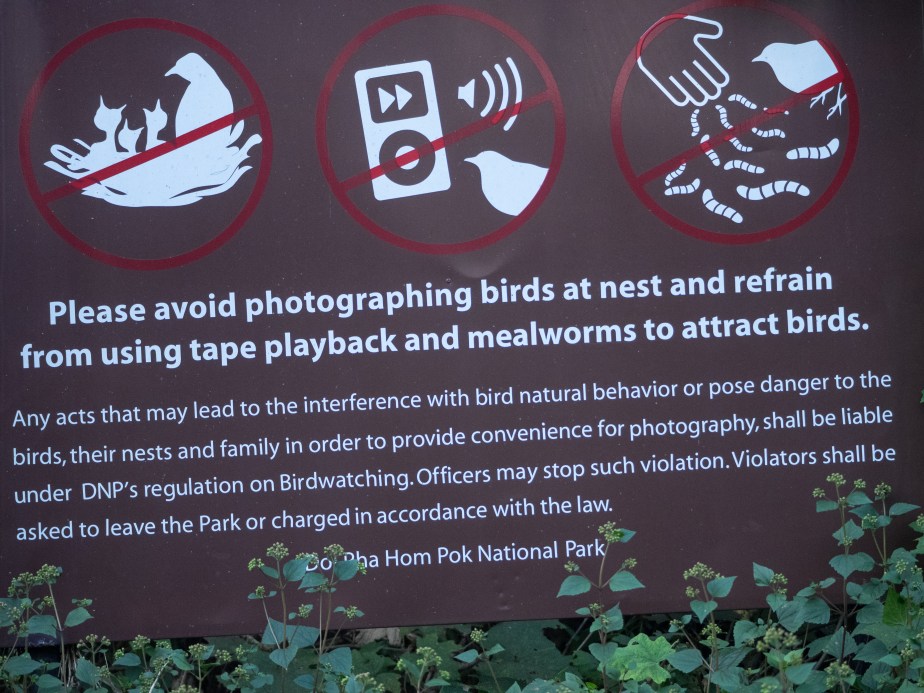
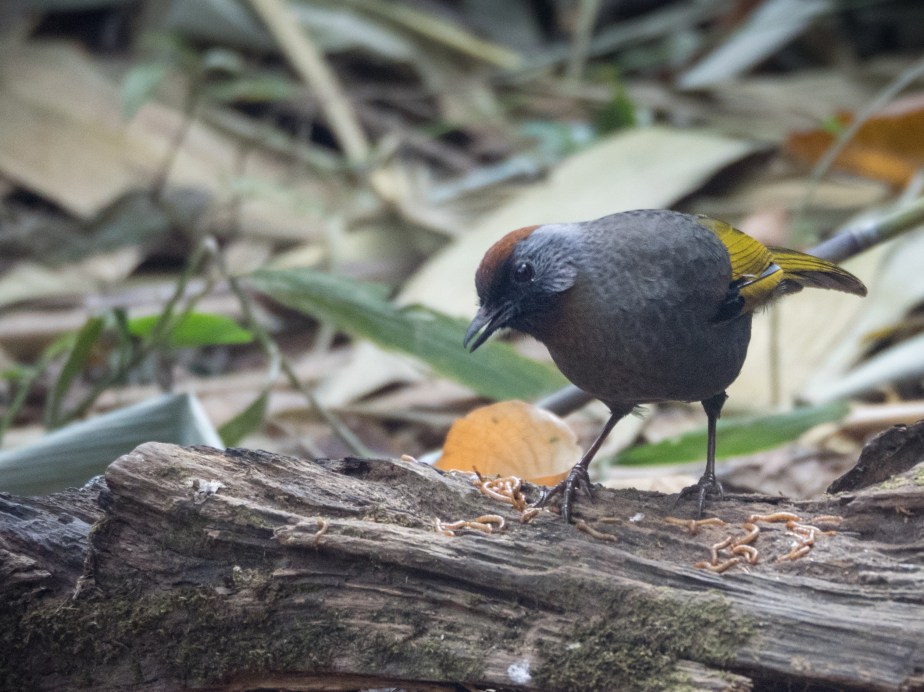
This limits the available birding space to just a few meters either side of part of the ridge road where the birds have become so depixelated that extraordinary measures have become necessary …
So, if you do happen to see any mealworms in my photos they were left by the porta potty brigade, right …
It was about this time in the trip that I cottoned on to the fact that Doi means mountain.
Subsequent research reveals that Chiang means town, just as in English there are other words for town that convey subtleties that reflect the distinctions between City, Capital, Village, Hamlet and so forth. Mai translates as new thus Chiangmai equals Newtown. Not to be confused with Mae which means River.
Thai script manages to convey the consonants with 44 symbols and uses diacritical marks to convey 25 vowel sounds, 6 diphthongs and 5 tones. Learning all that as an adult might take a while. It was invented by good King Ramkhamhaeng (พ่อขุนรามคำแหงมหาราช) in 1283 or so tradition has it. When I look at Thai script I find it hard to see where one word finishes and the next starts and when it is translated for the benefit of tourists there doesn’t seem to be a great deal of consistency whether something is rendered as one word or more, you might see Chiang Mai or Chiangmai for example.
Anyway, we were on the road again and our next Doi would be Doi Lang, and once again travel time would not be wasted we stopped to take in some more paddy fields and another Buddhist Temple.
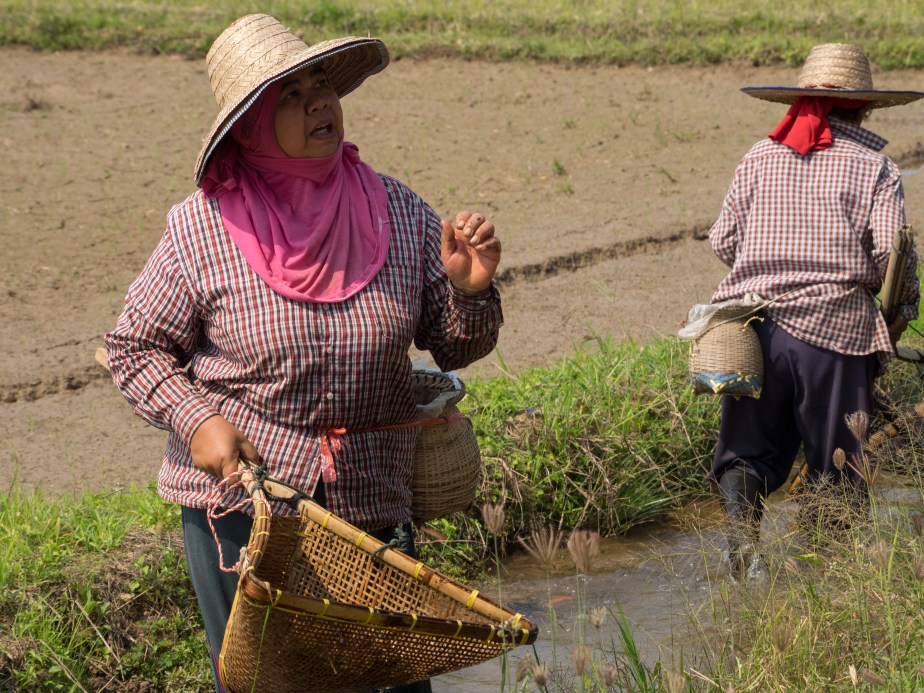
Rice isn’t the only crop from the paddy fields, there were a couple of women at work with nets …
… a fine crop of dragonfly larvae and she was kind enough to share the recipe …
We also had success, a nice little bird list including flight views of the beautiful Greater Painted Snipe.
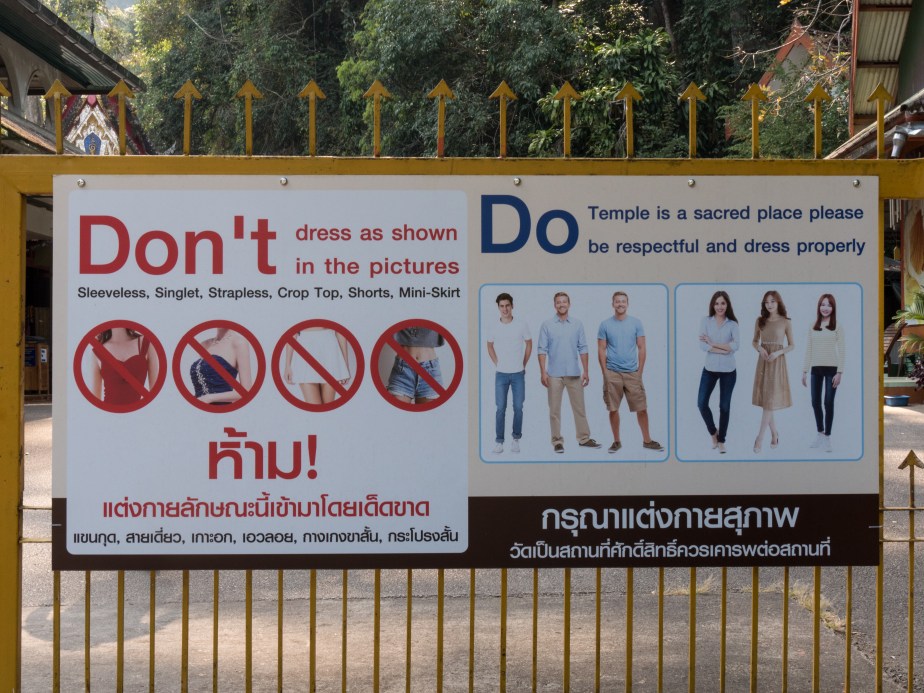
In the vicinity of Chiang Dao we visited a temple. There is a dress code …
… but if you should fail it admission is still possible …
The Wat Tham Pha Plong is situated at the top of a flight of steps, 500 or so. The walk leads to greater wisdom and takes in a very nice forest in the process. Along the way there are some little gems …
Time flies when you’re having fun. Days 11 and 12 of the Thailand Rockjumper birding tour were spent on Doi Inthanon. It is Thailand’s highest peak at 2565 meters (8,415 ft) and is protected by a National Park covering 482 km². A hill tribe village is included within the park consequently there has been hunting within the park and significant loss of forest, now mainly put to cut flower cultivation. Larger mammals, elephants, tigers and gaurs, have been lost but gibbons, deer and serow are still present, though not necessarily easy to find.
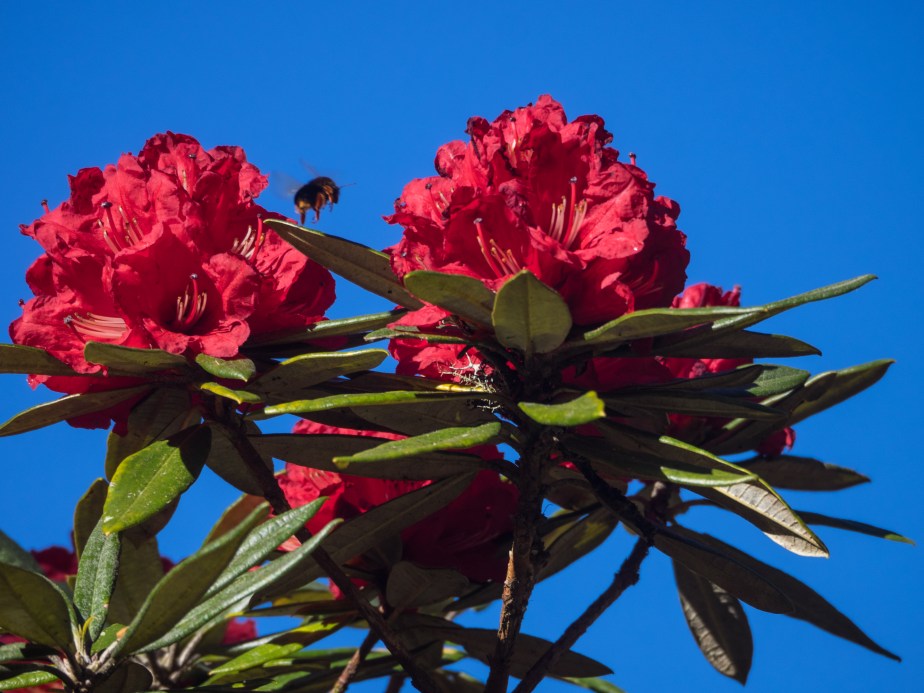
The summit is 300 meters higher than anywhere else in Thailand which makes it cool enough to boast the country’s only sphagnum bog, it’s surrounded by rhododendrons, and makes it a little outpost for a more himalayan avifauna such as the Bar-throated Minla. This is where you look for White-browed Shortwing, Pygmy Wren Babbler and Dark-sided Thrush.
Bar-throated Minla
The forest on the lower slopes is also productive for the birdwatcher.
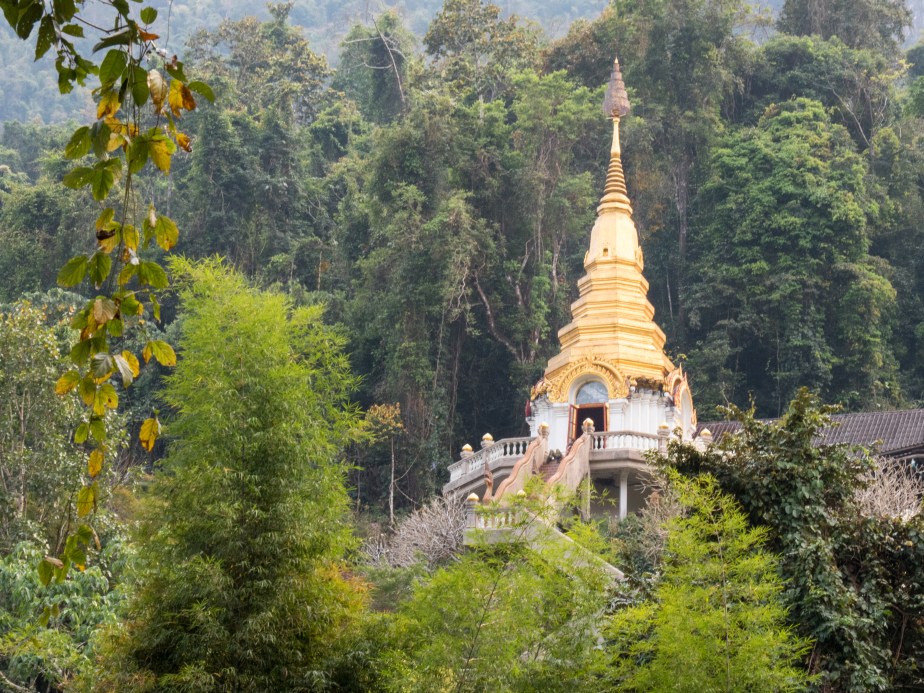
As befits the highest mountain in the land royalty has had a long association, King Inthawichayanon, one of the last kings of Chiangmai, ordered that his bones be placed on the mountain and that its name be changed from Doi Luang to Doi Inthanon. There are also a couple of stupas on the mountain that commemorate the 60th birthdays of the recently deceased king and queen.
The park has some attractive waterfalls, best from May to November but worth a look all year. This is Wachirathan Falls …
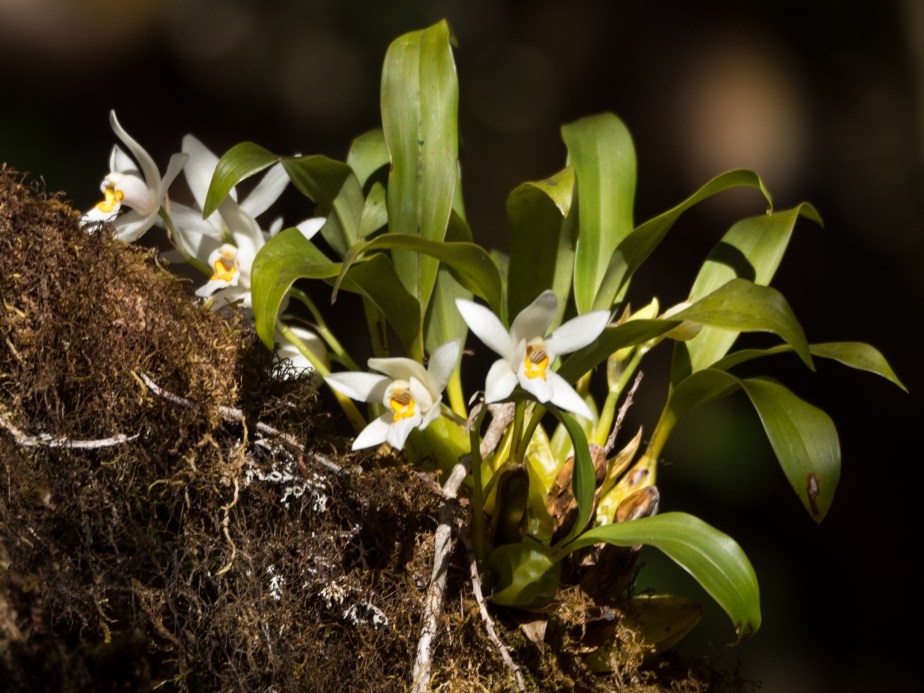
The orchids that I encountered were enough to make me think of going on an orchid watching trip one day …
The serious birdwatcher will once again visit Nick Upton’s web page which is excellent value especially if planning an independent trip.
Having completed our time at Khao Yai our next big name destination would be Doi Inthanon way up north. To get there entailed a drive back to Bangkok and a flight to Chiangmai where we would spend the night before driving on towards Thailand’s highest peak.
Rockjumper birding tours are, above all else, birding tours, travel days were never dull. En route we stopped at wetlands, paddy fields, a temple and one of the former king’s many projects. Not to become all cultural, mind you, to find more birds.
Wat Pa Put Ta No home of the Limestone Wren Babbler, to find it take the noble threefold path and make an offering of mealworms …
Limestone Wren-Babbler
Temples and the king’s image are everywhere in Thailand.
King Bhumibol Adulyade, the name translates as Strength of the Land, Incomparable Power, reigned from 9 June 1946 until his death on 13 October 2016. Thailand is often described as a constitutional monarchy but during that 70 years His Royal Highness was far more of a constant than the frequently changing constitution. His popularity lies, in part, in the many King’s Projects that were created with his name attached. These were usually aimed at social and economic developments at a grass roots level. Thais that I spoke to were warm in their praise of their former king. In his spare time the king was a jazz fan who played the saxophone and a keen photographer, no wonder he was popular!
The new king, Vajiralongkorn, does not enjoy the same reverence as his father although no one was in a hurry to criticise him, Thailand has lèse majesté laws that can lead the talkative to prison. His image is displayed on public buildings and may become more widespread after the period of mourning for his father is over.
Whilst I was in Thailand there was a ceremony to mark the start of construction of the funeral pyre that will take the king back to heaven.
Prime Minister Prayut Chan-o-cha, a former army chief who seized power in 2014, led the ceremony, which saw a crane erect the first of a series of giant steel pillars that will form the cornerstones of what will be a largely wooden pyre next to Bangkok’s sprawling Grand Palace.
The ceremony was infused with the religious ritual that permeates palace life with Buddhist monks chanting mantras and Hindu Brahmin priests blowing conches as workers in hard hats fixed the pillar to a concrete plinth. The Straits Times.
The ceremony encapsulates Thailand as the outsider sees it, it was all about the monarchy, overseen by the military, under the supervision of the Sangha with construction workers hard at work.
The pyre will be more than 50 metres high. The king’s embalmed body, tied in a foetal position, will be consumed by fire, to be lit I believe, by his successor. The date is yet to be announced but is expected to be in October.
According to Wikipedia some 93.6% of Thais are Buddhist (getting very close to the 98% required for a scientific consensus and therefore making it very likely that Bhuddism is the one true religion). Wikipedia also tells us that Thailand …
inherited a strong Southeast Asian tradition of Buddhist kingship that tied the legitimacy of the state to its protection and support for Buddhist institutions. This connection has been maintained into the modern era, with Buddhist institutions and clergy being granted special benefits by the government, as well as being subjected to a certain amount of government oversight.
But the relationship between the Government and the Sangha is not always cosy. Whilst I was there the military were busy searching the Dhammakaya Temple for one of its founders, Phra Dhammachayo, who is accused of embezzlement and appropriation of public land. Was this a case of the military cracking down on an influential opposition figure or is the guy a crook?
The verdict of the man in the street, and it was only one man, was that he is indeed a crook. The Dhammakaya movement, I was told, has been selling a better reincarnation for large sums of money, the more you pay the better your next life will be. His followers would disagree and there was at least passive resistance to the searching of the temple complex. The missing monk is missing still. The emergency powers that were invoked to enable the search have been terminated.
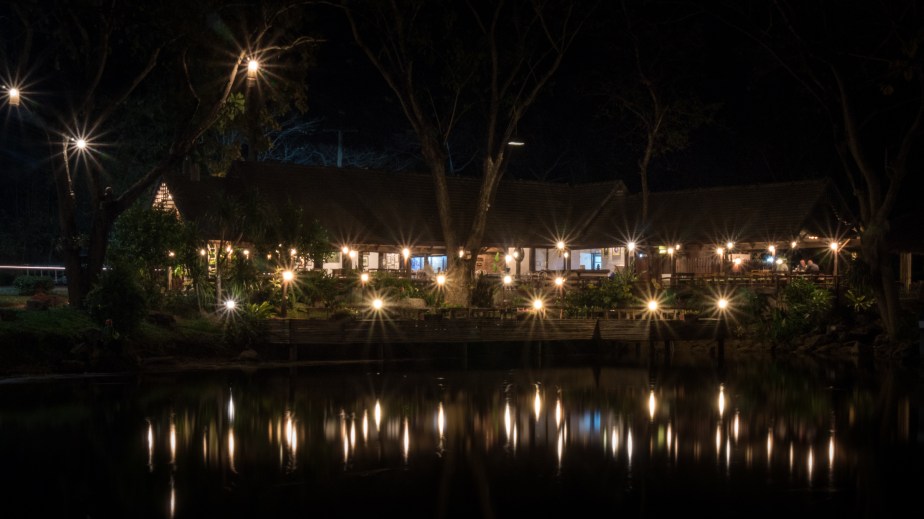
We arrived at the Inthanon Highland Resort as the light faded. As I said earlier, we rarely saw our accommodation in daylight. On this occasion it looked pretty good in the dark, it would be our home for the next three nights.

















 bobmcgee