We made good progress on the Eyre Highway. Kimba is very much a wheat growing area. The next sizable town is Ceduna on the coast. It has a more mixed economy. Going west from there you encounter a few more small wheat growing towns until at Penong you find a store that declares that it’s the last shop for a thousand kilometers.
The mallee woodland slowly peters out until you’re on the treeless plain that is the Nullarbor. There is practically no surface water out there partly because not a lot of rain falls but also because the limestone lets it all run straight through. In the summer of 1841 Edward John Eyre set out to walk from Fowlers Bay to King George Sound – the modern day Albany which is just down the road from where we are camped on the bank of the Kalgan River. He covered the 1368 km trip in about 5 months, five men set out, two arrived.
Eyre found water at Eucla. The modern day traveler finds a quarantine inspection site. The rules are complicated but basically fruit, vegetables, honey and soil can’t go with you into Western Australia.
From there west the landscape changes back into patchy woodland, then the trees become taller and more continuous and, once you’re off the Eyre Highway you enter wheat country again.
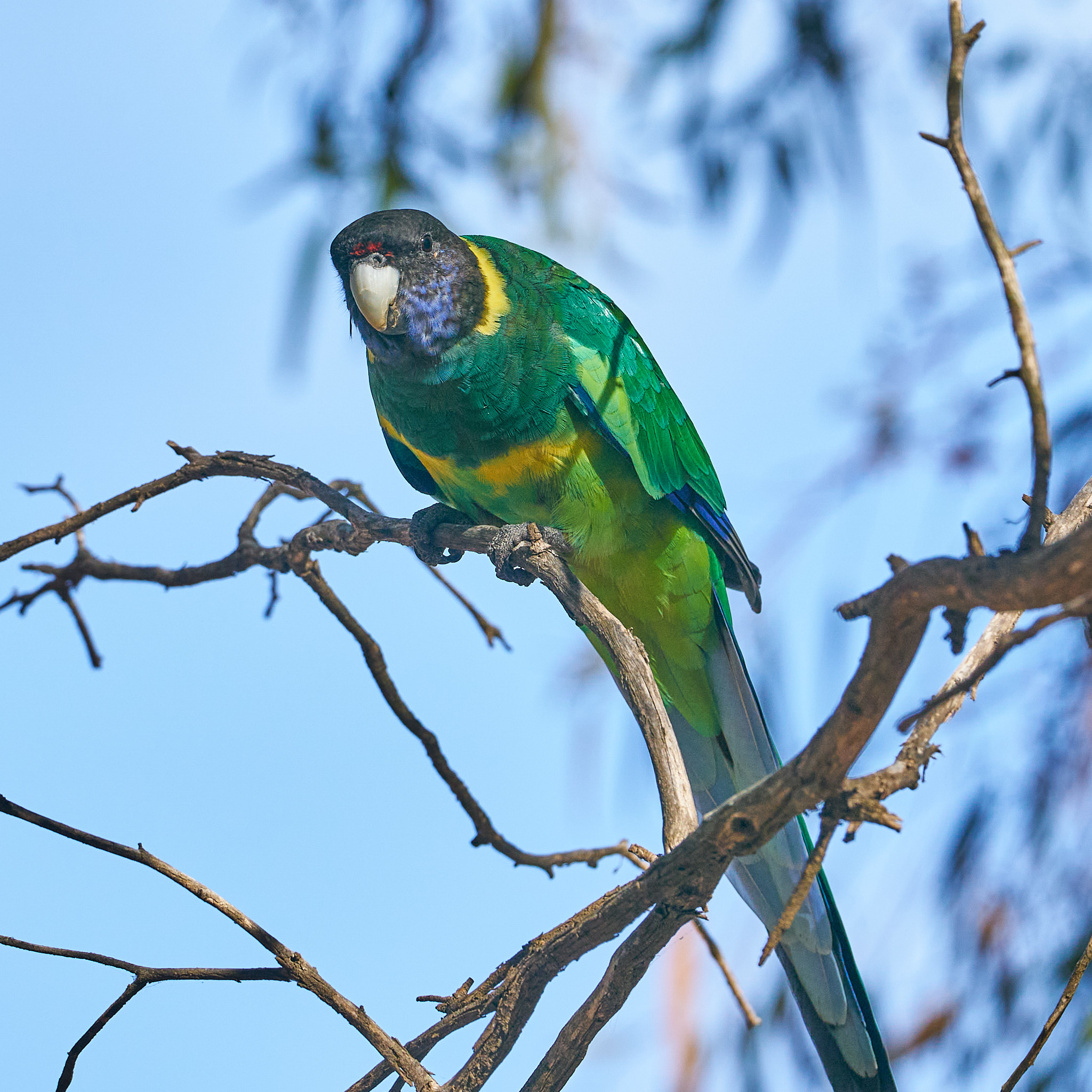
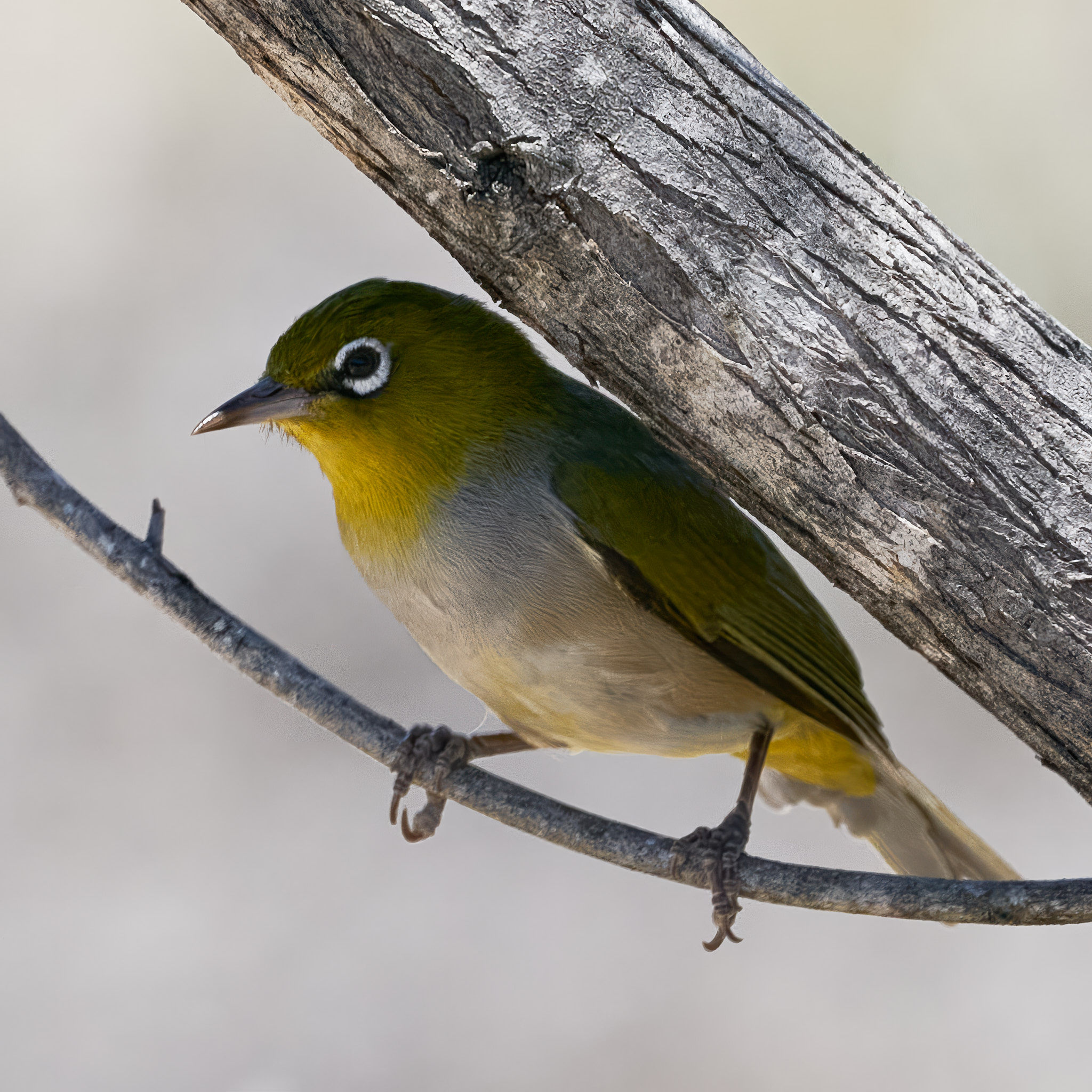
Australian RingneckCaspian TernSilvereyeAustralian Ringneck
A number of rare birds have shown up in Broome since I went wandering. “How come they only show up when I’m not there?”, I asked. A good friend replied that “They’re there all the time but we only tell you about them when you’re not around.”
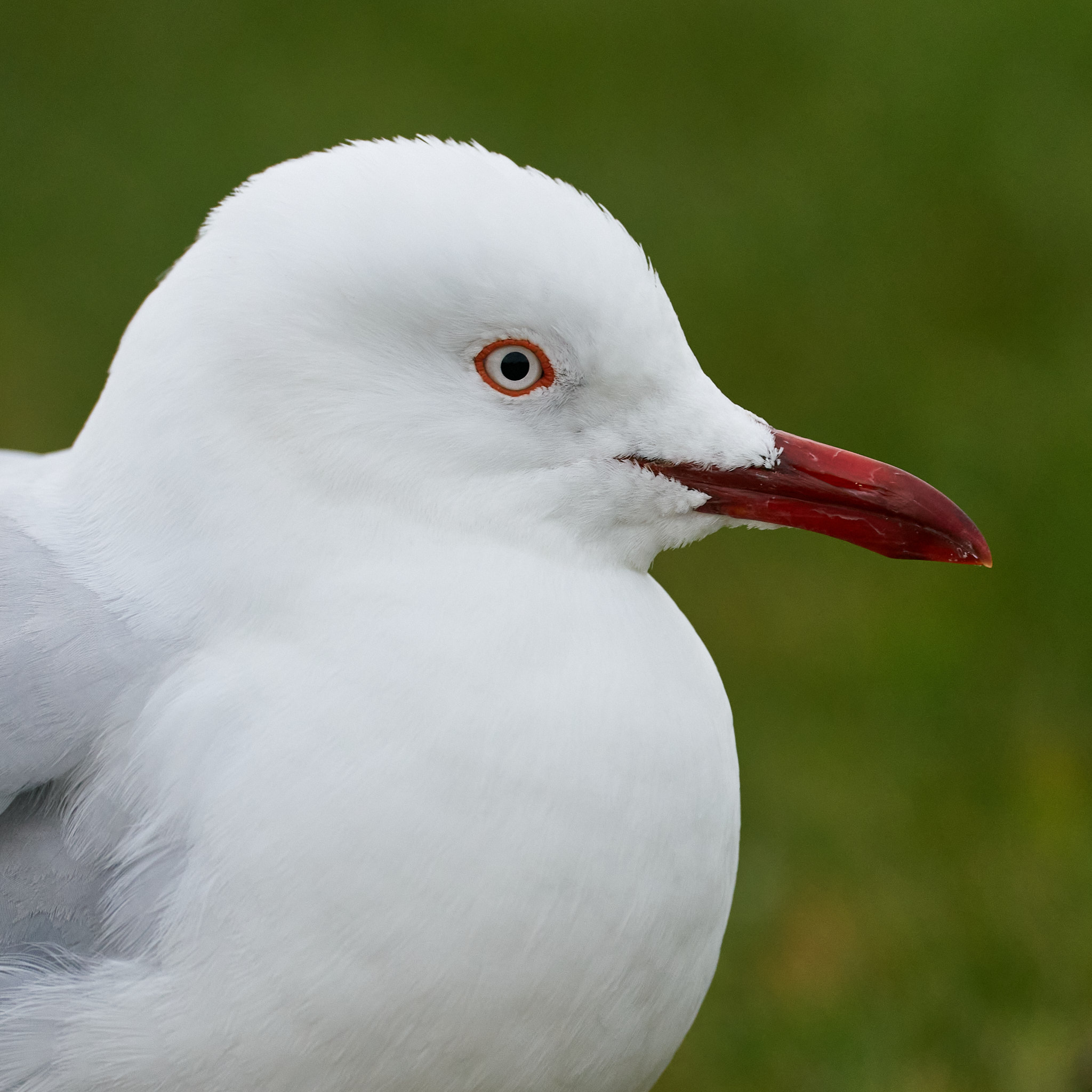
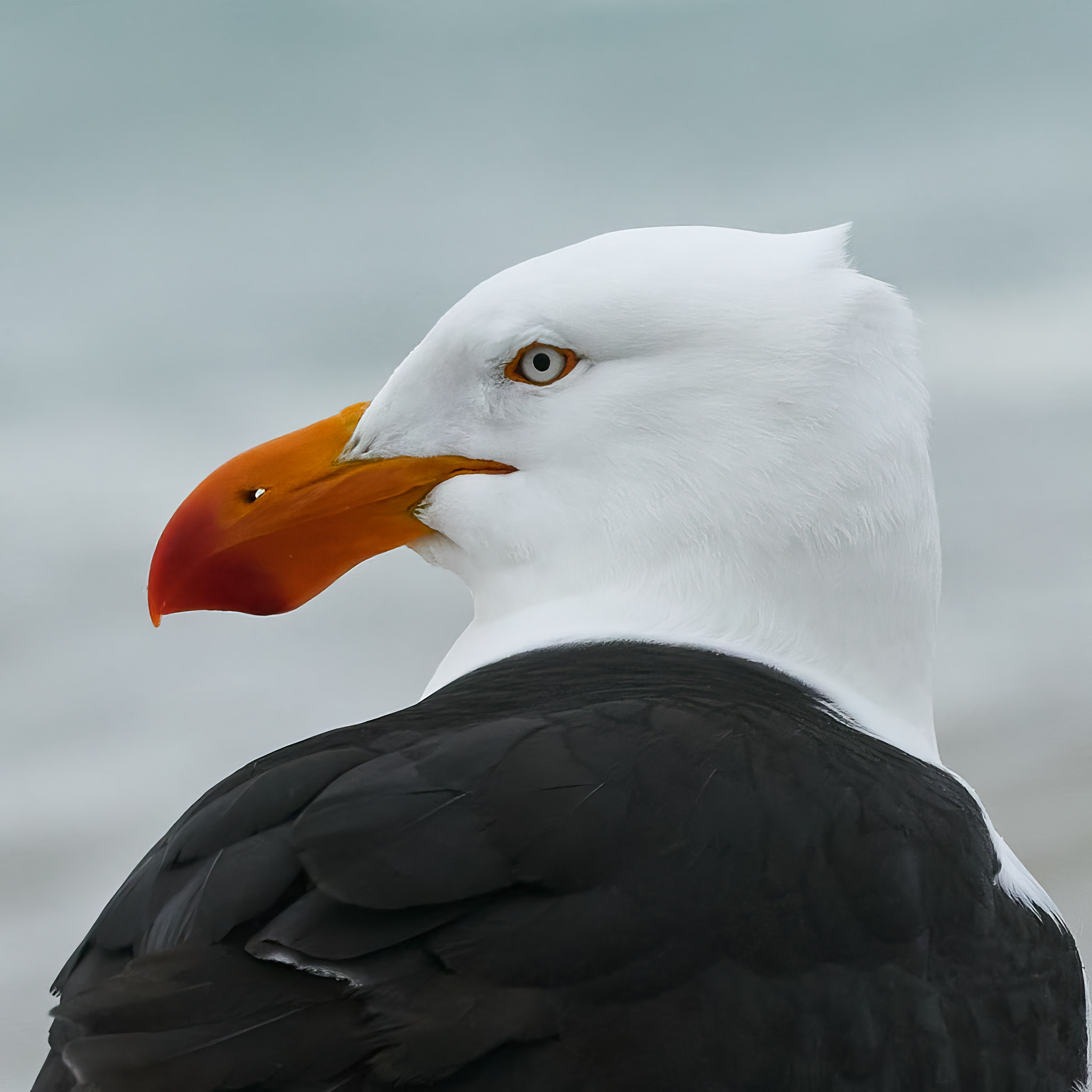
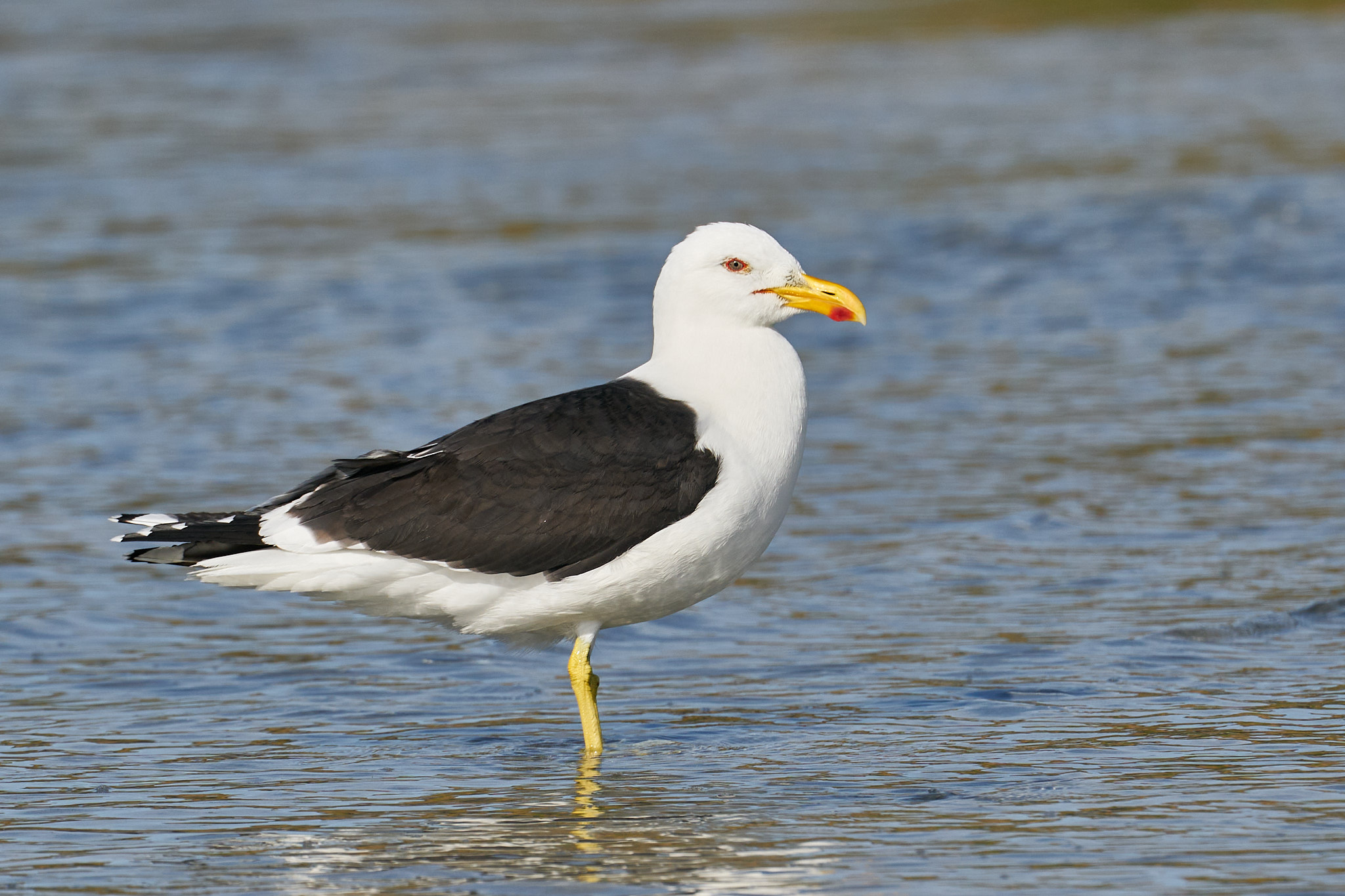
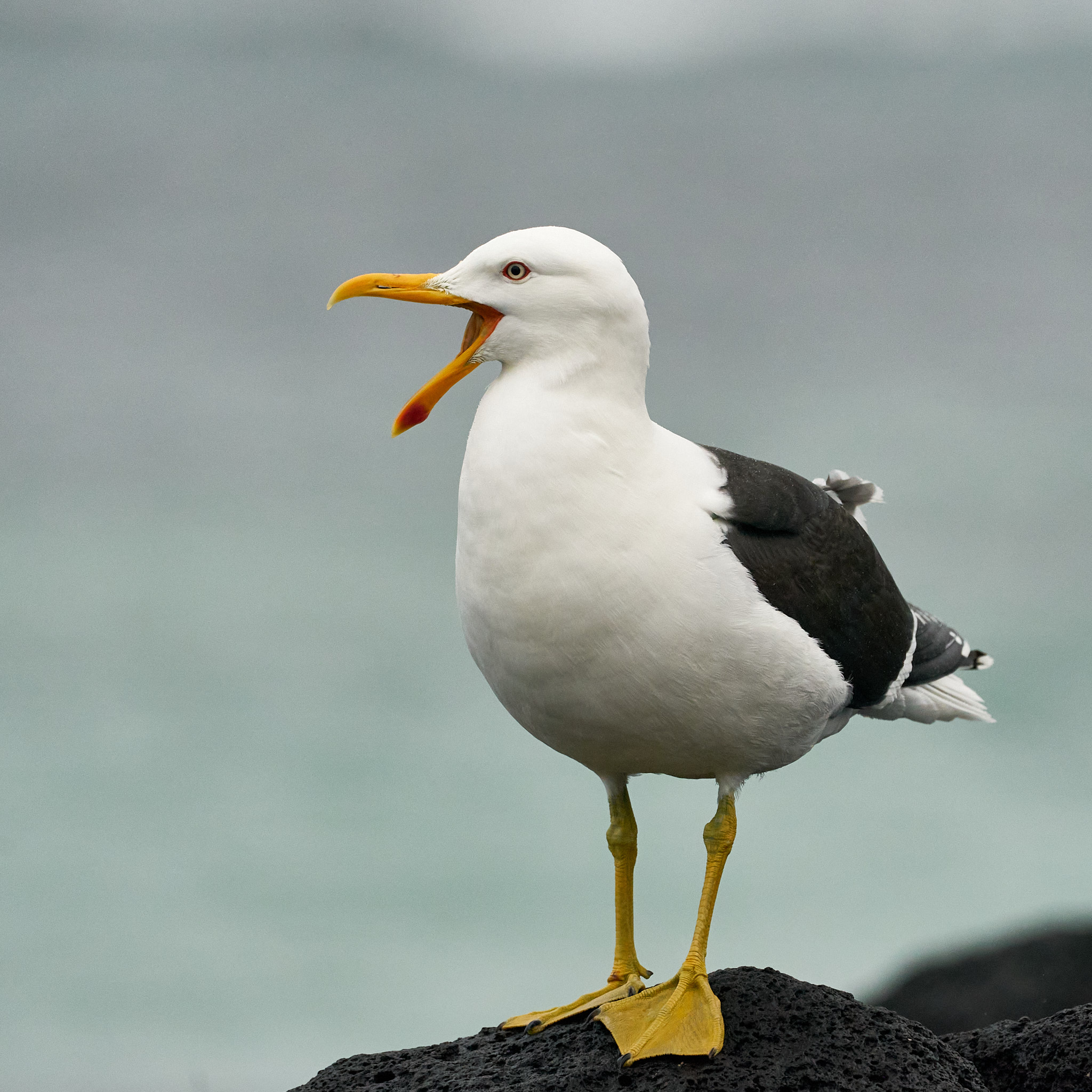
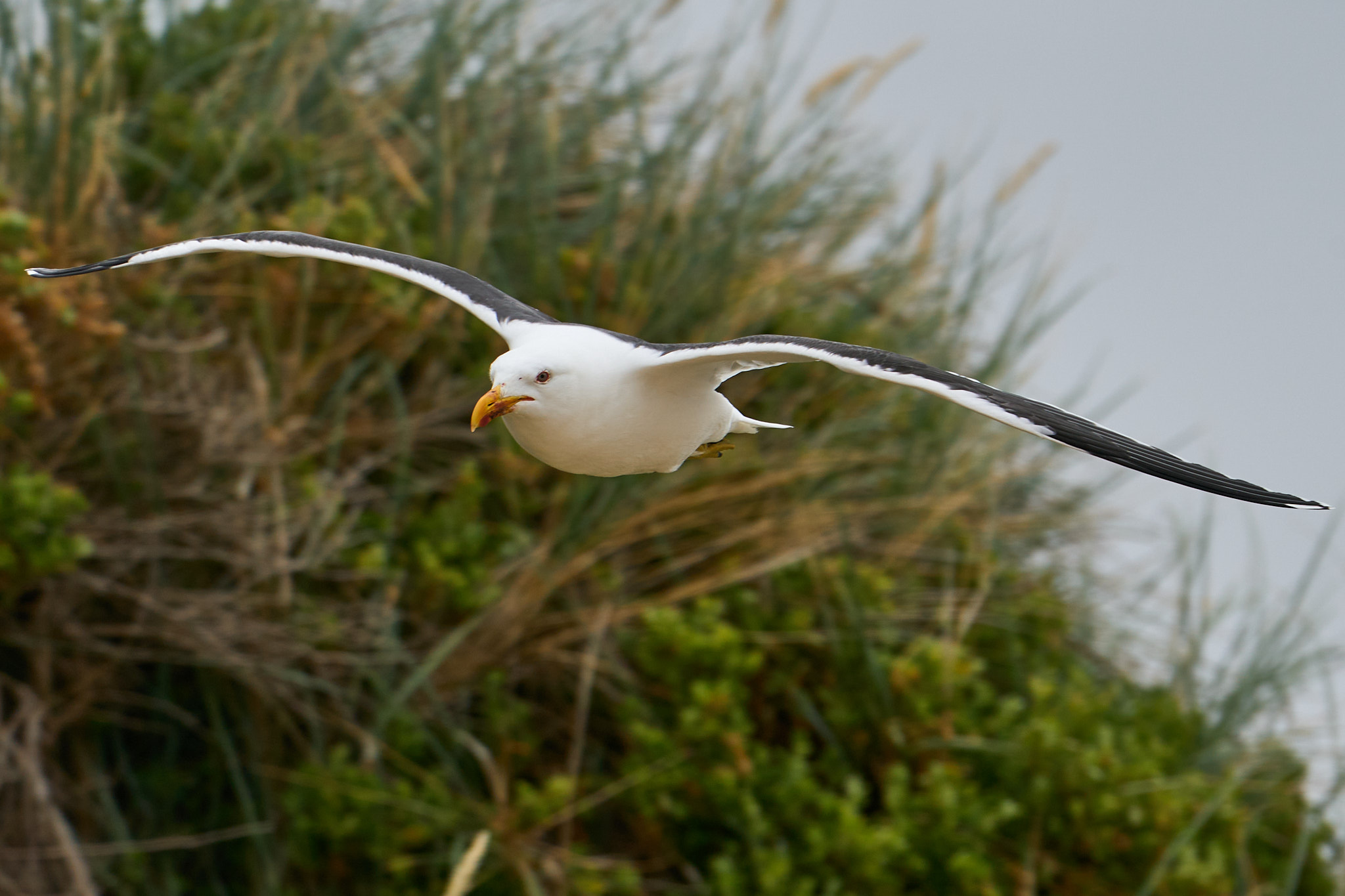
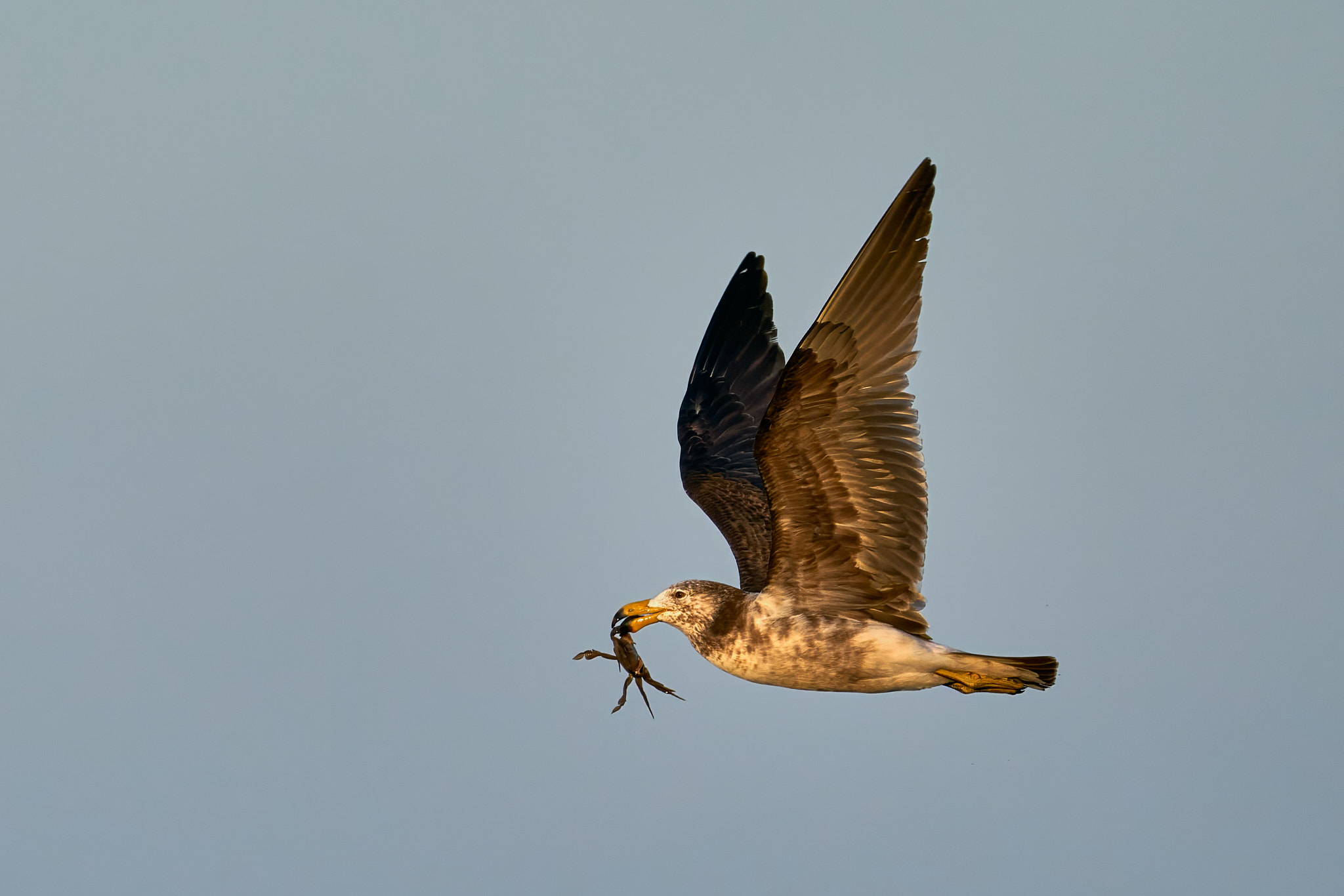
One of the current blow-ins is a Black-tailed Gull more at home in coastal China and Japan. It wanders south in the northern winter but rarely as far as Australia. Some parts of the globe are richly endowed with gulls. They are often challenging to identify and some take three years to reach full adult plumage. Their appearance can vary between seasons. In gull rich parts of the world there are keen birders that specialise in gulls. You couldn’t really make a hobby out of them in Oz. We only have three regular species and identifying them is reasonably straight forward. Kelp and Pacific Gulls are large, have black backs and take three years to reach maturity and can be aged reasonably accurately by their plumage as they make that journey. Silver Gulls are smaller, have light grey backs and reach adulthood in one year.
Silver Gulls …
Pacific Gulls …
the red tip to the massive bill extends to the upper mandible, there is a black bar in the tail. The adult legs are a richer yellow colour than Kelp Gulls.
Kelp Gulls …
The bill is less impressive than the Pacific Gull and the red spot is confined to the lower mandible. There is no black in the adult tail. The legs are a washed out yellow.
The bill is the best starting point when deciding which large juvenile gull you’re looking at.
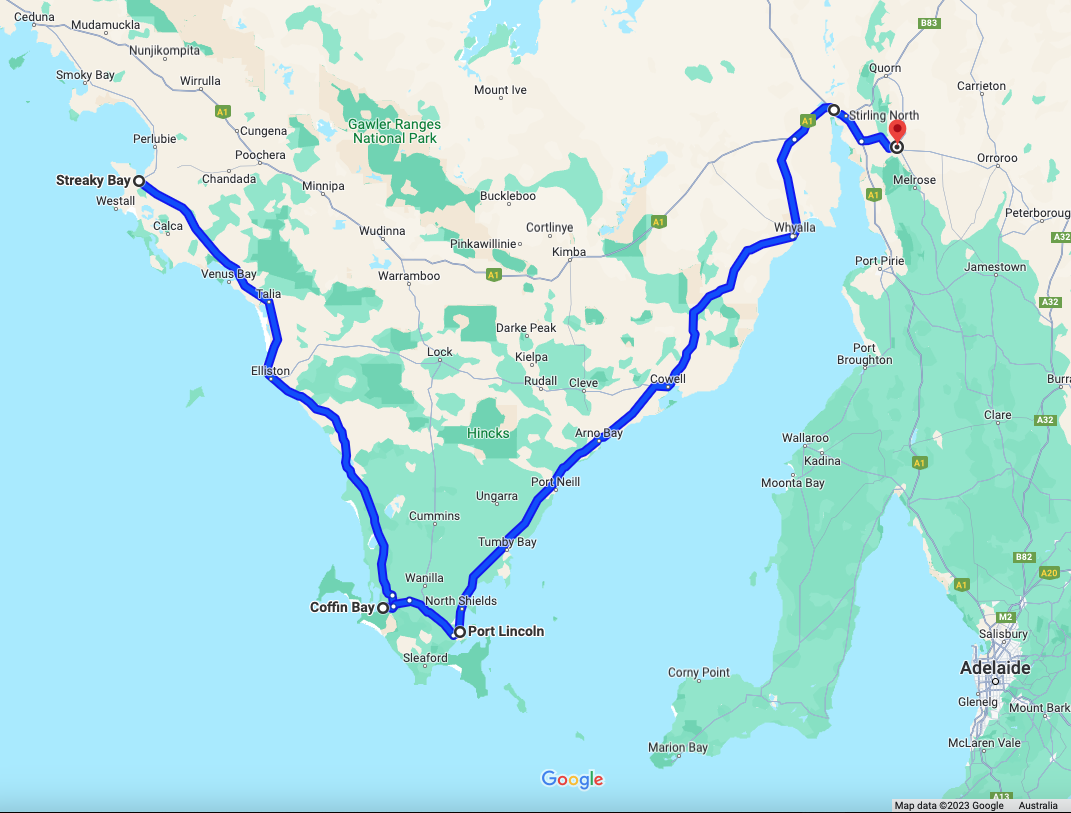
Arid scrub and rich farmland, amazing coastal scenery, mineral wealth, seafood, fascinating ornithology and the occasional ferocious bushfire. It’s interesting. On this occasion our journey took us around the triangle. If we weren’t traveling with a dog it would have included the Lake Gillies conservation park. We spent two nights at Streaky Bay and two at Coffin Bay. Port Lincoln has a population between 16 and 17 thousand, Whyalla is a mining town, the rest of the place is lovely!
No trip to Streaky Bay would be complete without driving the Cape Bauer Loop and another trip to the Sealion colony at Cape Labatt. You could throw in Murphy’s Haystacks if you’re geologically inclined.
White-fronted Chat
A short diversion at Elliston takes you on the Elliston Clifftop loop. If you are impressed by Victoria’s Great Ocean Road prepare yourself for something even more splendid. There are also some sculptures that can be seen along the way … they don’t stand a chance against the scenery.
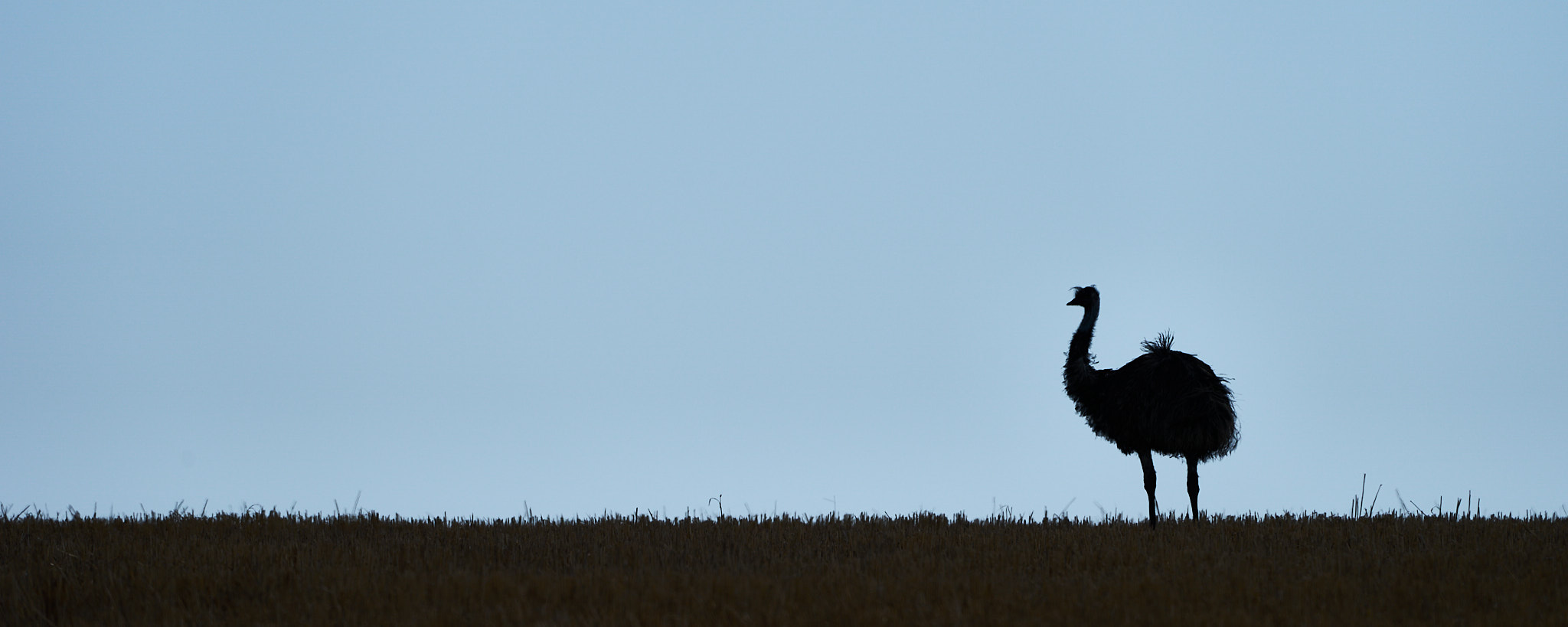
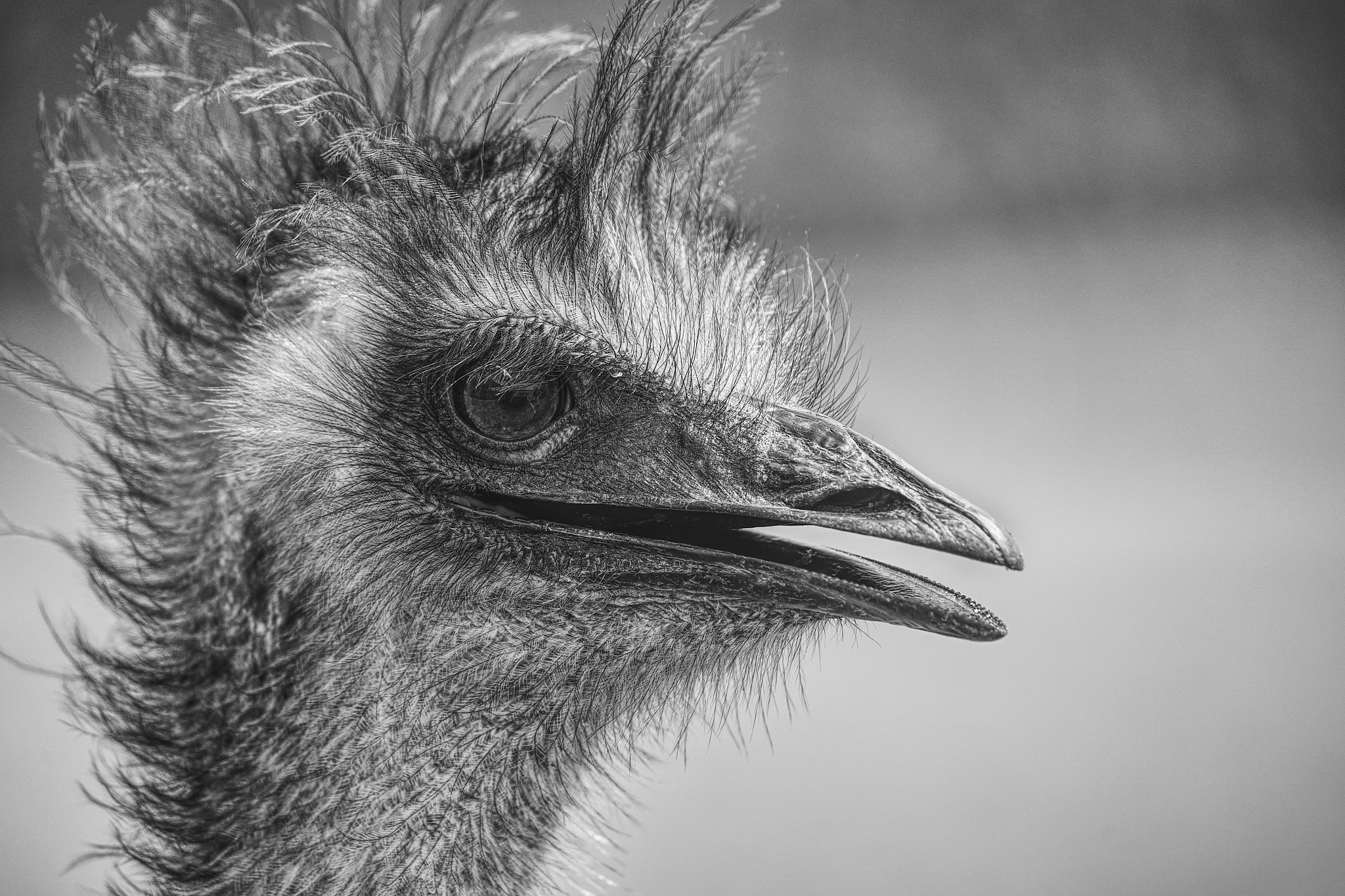
Coffin Bay sounds like a place with a story attached and there is one, but it’s very tame. Matthew Flinders put the bay on the map in 1802 and named it after his friend Sir Isaac Coffin, later a rear admiral. It is famous for its oysters and a wonderful national park. Emus roam the streets and remarkably photogenic they are.
The Eyre Peninsula is very interesting ornithologically. It is a thousand kilometers around the Great Australian Byte to Esperance in Western Australia and there is some very inhospitable country in between yet there are a number of birds that are found in southwest WA and the Eyre Peninsula and not further east. They include birds from quite different genera, the Blue-breasted Fairywren,Rufous Treecreeper and Western Yellow Robin. The Western Whipbird, Western Whistler, Rock Parrot and Elegant Parrot almost qualify but their ranges stretch a little further east. There must have been a time when Australia’s climate permitted suitable habitat for these birds to extend right across the Nullarbor. Somehow the Laughing Kookaburra failed to make that journey. They are common in southwest WA now but were introduced deliberately about 120 years ago. It’s a similar story for Rainbow Lorikeets but they are much more recent aviary escapees.
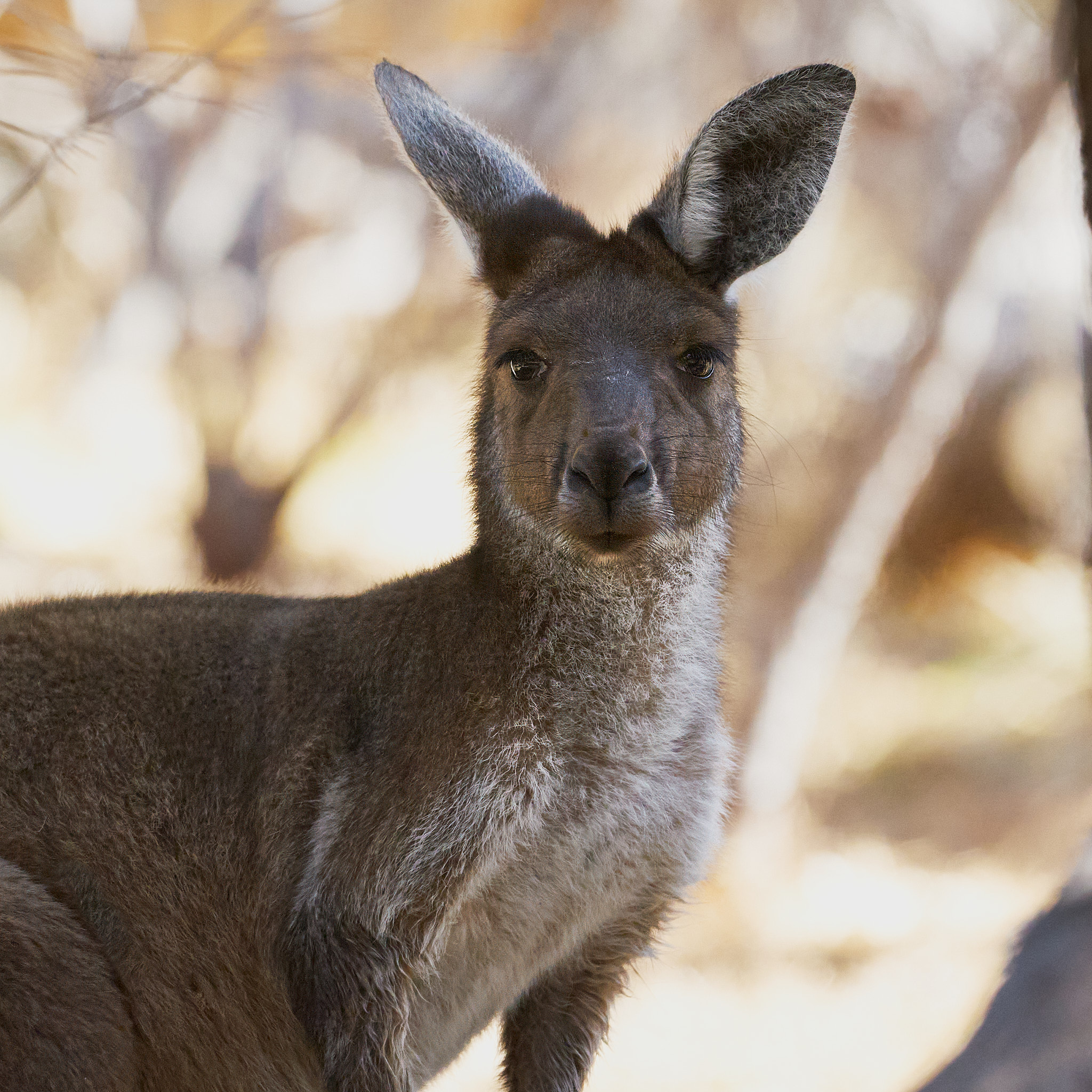
Birding around Coffin Bay was most productive and some of the wildlife even posed for a photo.
Grey FantailWestern Grey KangarooPacific GullSpotted ScrubwrenPort Lincoln ParrotSouthern Scrubrobin
We left Coffin Bay on a hot and windy day, 43°C, gale force winds, extreme fire danger.
We passed a couple of silo masterpieces on the way north.
Tumby BayCowell (photo G H D’A)
Tonight we are at Wilmington. It was originally called Beautiful Valley. I can understand why they changed the name.
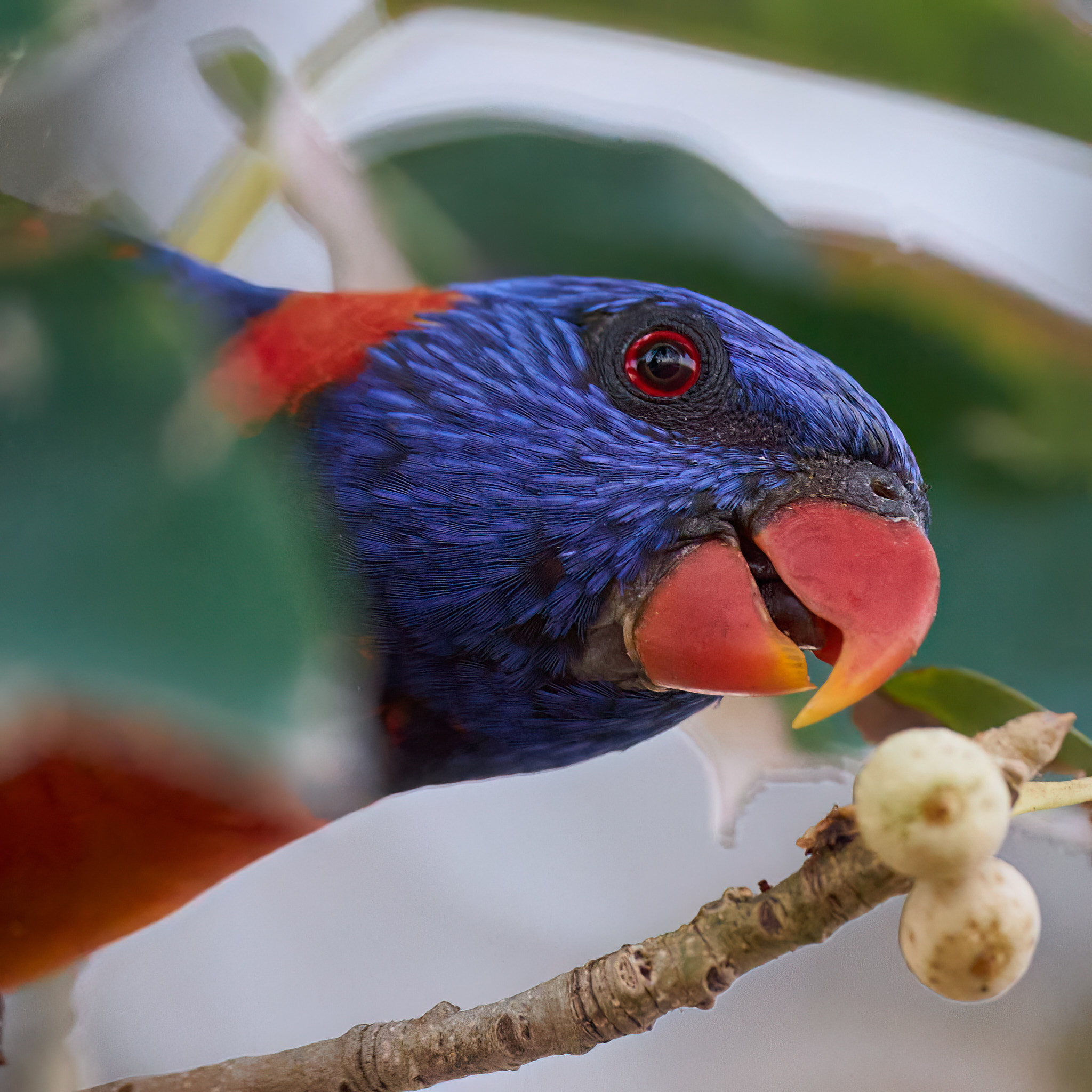
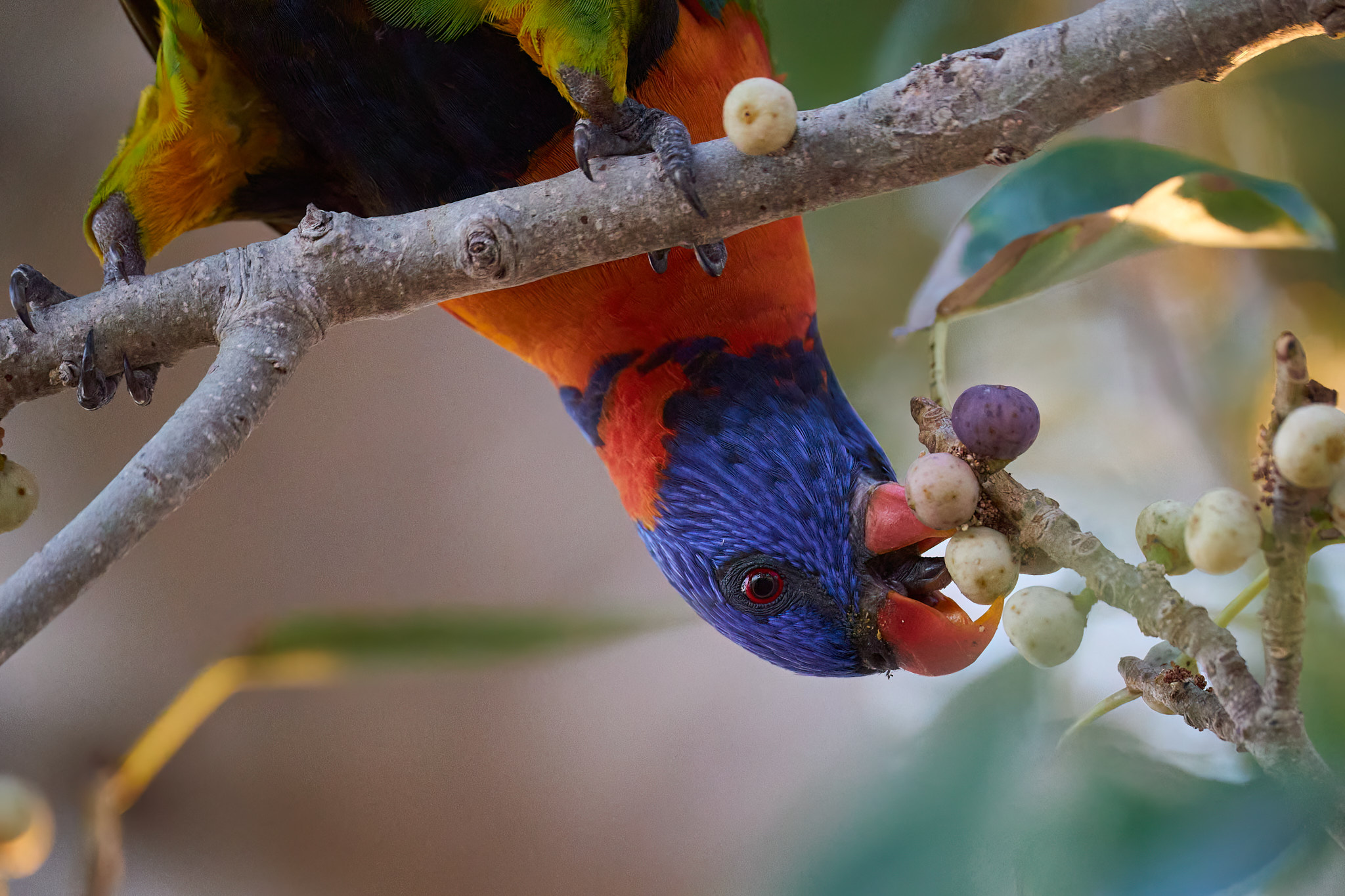
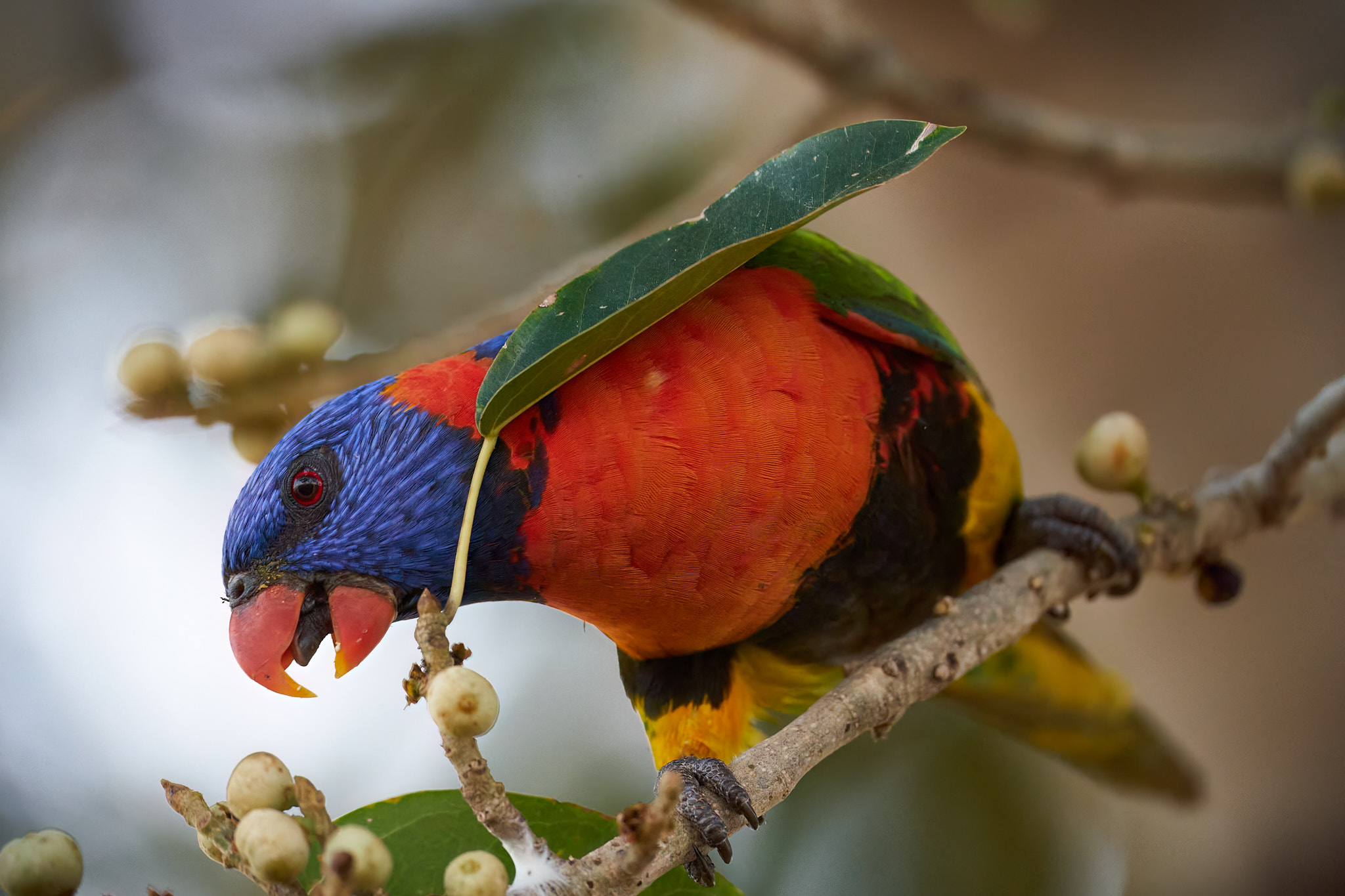
It amazes me when Australian advertisers choose to use images of Mallard Ducks or Bald Eagles when we have any number of iconic native birds that they could use. Well it happens overseas as well. One time in Brazil I came across a Rainbow Lorikeet used in an advert when they had any number of beautiful natives they could have chosen. Nice to know that our Rainbow Lorikeet can mix it with Toucans, Macaws and Hummingbirds.
The Red-collared Lorikeet is its sister species and even more colourful. Rainbows are found along the east and south east coast from Cape York to mid South Australia (and Perth where they have been introduced). The Red-collareds are found across Northern Australia from Broome to the Gulf of Carpentaria. The two species have been lumped and split at various times, currently accepted as separate species.
They are fast flying often in small noisy flocks which coalesce towards sunset as they head for communal roosts. The photos are of one of a small flock attracted to a fruiting fig. Click on a photo to open the gallery.
In recent years the road from Broome to the tip of the Dampier Peninsula has been sealed. About 16km off the highway about half way up the peninsula there is a quiet camping spot called Banana Well. It’s where I spent the last few days.
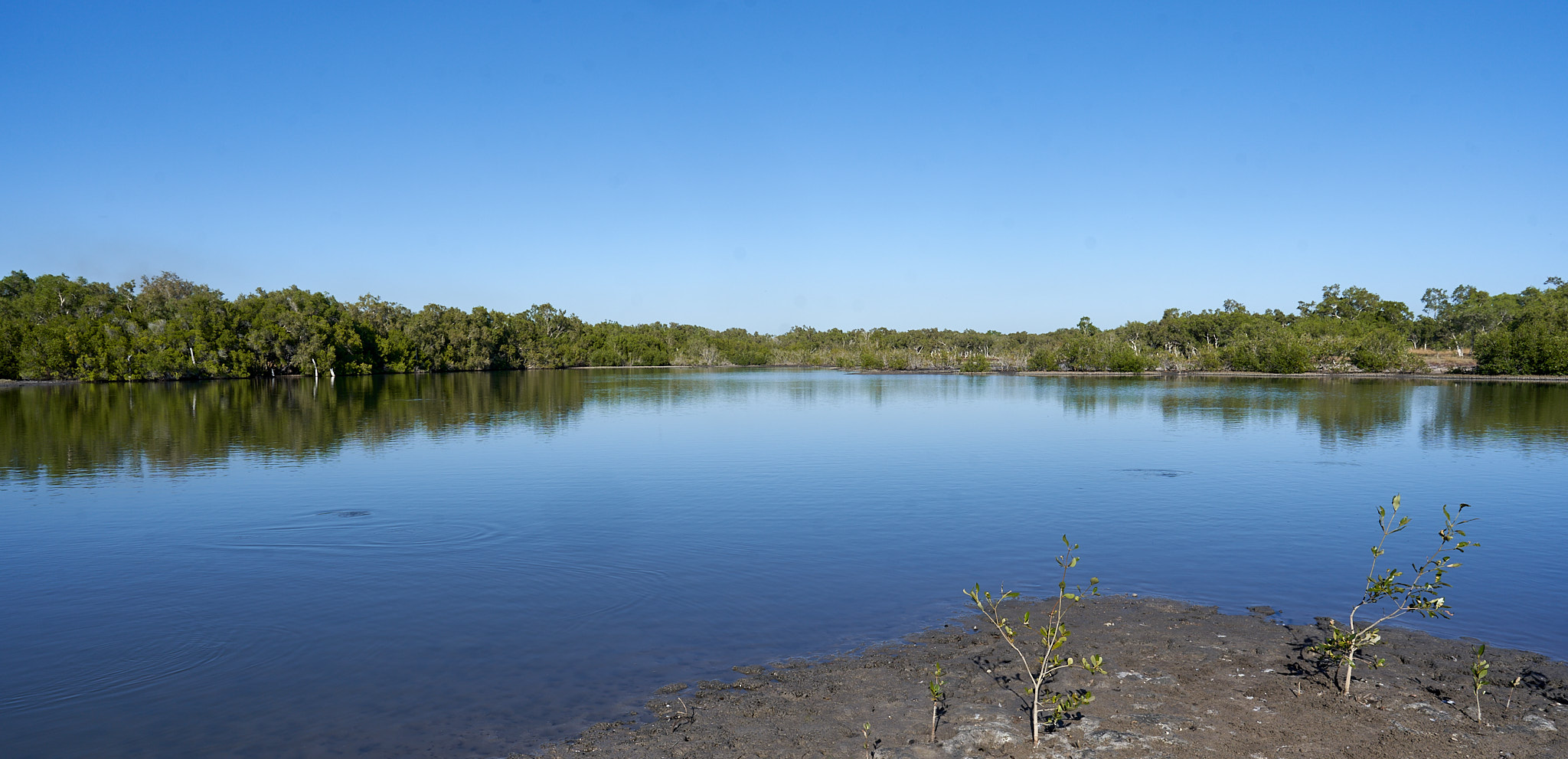
The campsite itself is in open woodland adjacent to some ponds fed from underground. From there to the sea is about a two and a half kilometre drive, 4wd only on a sandy track and across some mud flats. The adventurous can also visit the Burrguk Creek, keep your dog away from the crocodile and your wheels away from soft mud.
The facilities are somewhat run down but certainly not overcrowded. It’s a great spot for the birder and it also attracts some fishing enthusiasts. Other than that maybe hermits might like it. Mosquitos and Sandflys abound. I discussed the fishing prospects with some other campers. They had launched a boat the day before, a process they described as “Not for the faint-hearted”, caught nothing and got bogged retrieving their vessel. Fortunately they had gone with two vehicles and one was able to tow the other out. They had no intention of doing that again.
Burrguk Creek
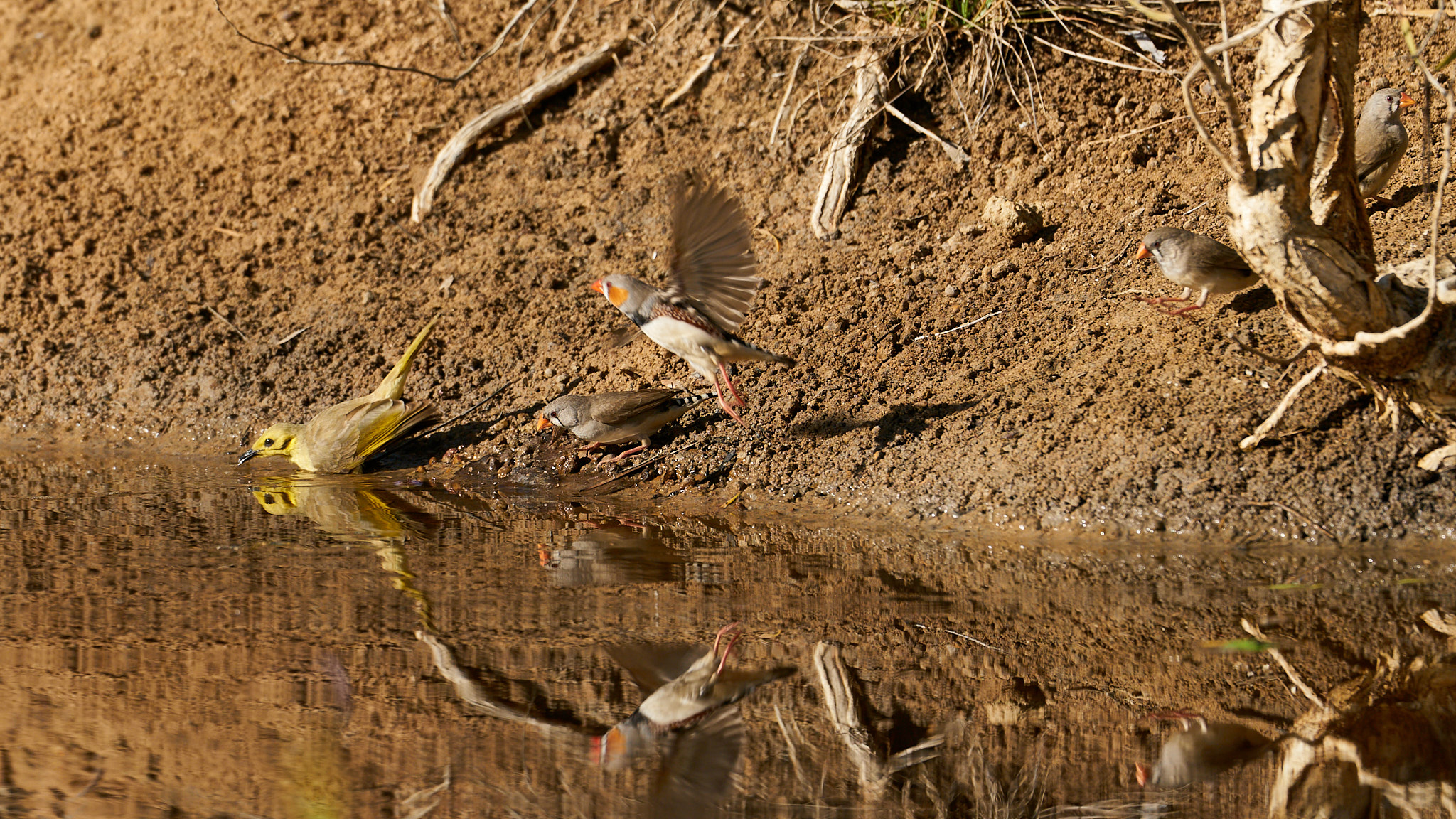
For the birdo there is a lot on offer, Melaleuca woodland around the ponds, Savanna woodland, mangroves and at low tide extensive mud flats.
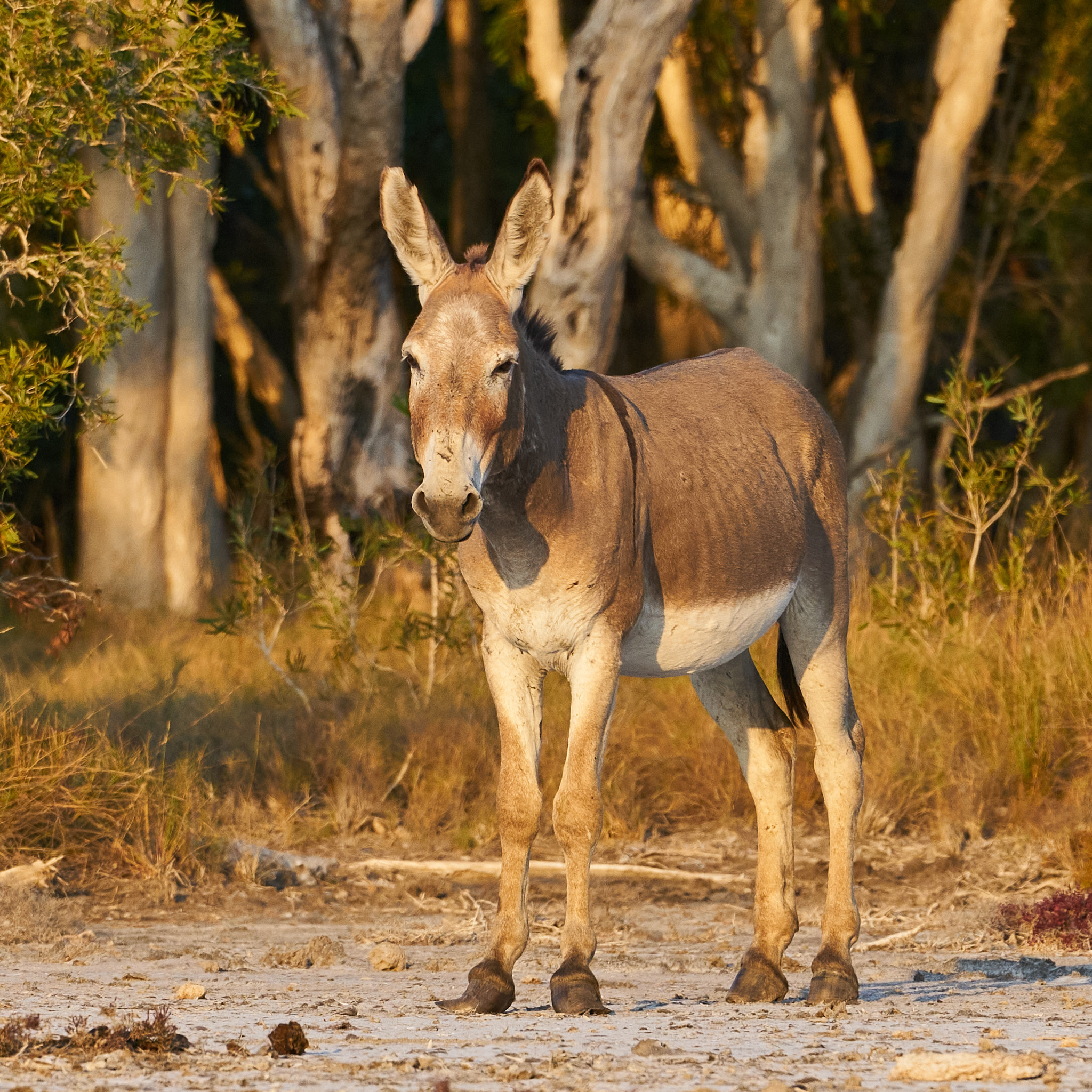
At night the sounds of feral donkeys ring through the camp ground but you rarely get to see them.
Other noises through the night included Barking Owls, Bush Stone-curlews and the crazy calls of the Brain Fever Bird, Brush Cuckoo – do they never sleep?
Here are some of the scenic shots, as always, clicking on a gallery opens it up for a better look …
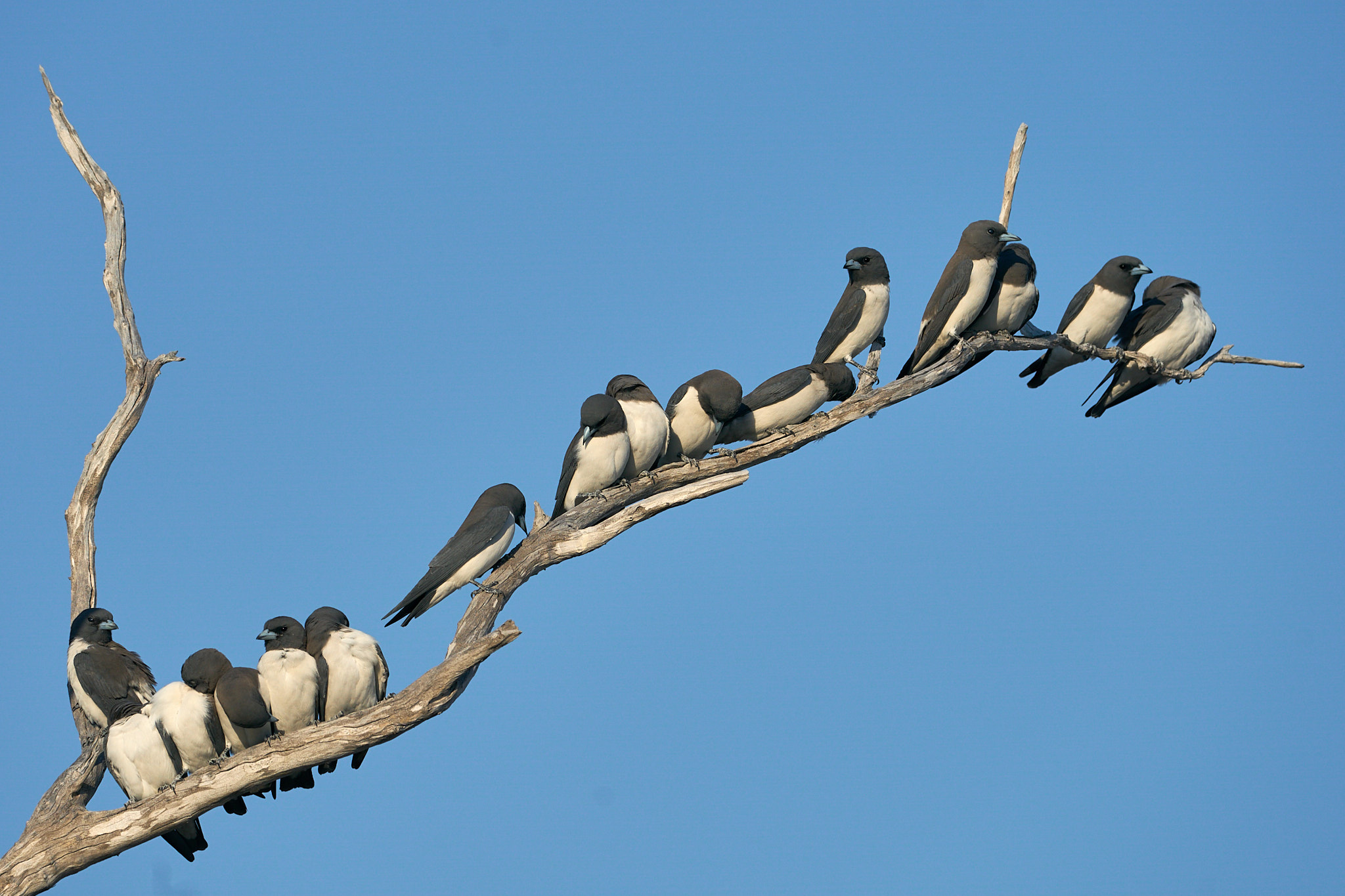
White-breasted Woodswallows
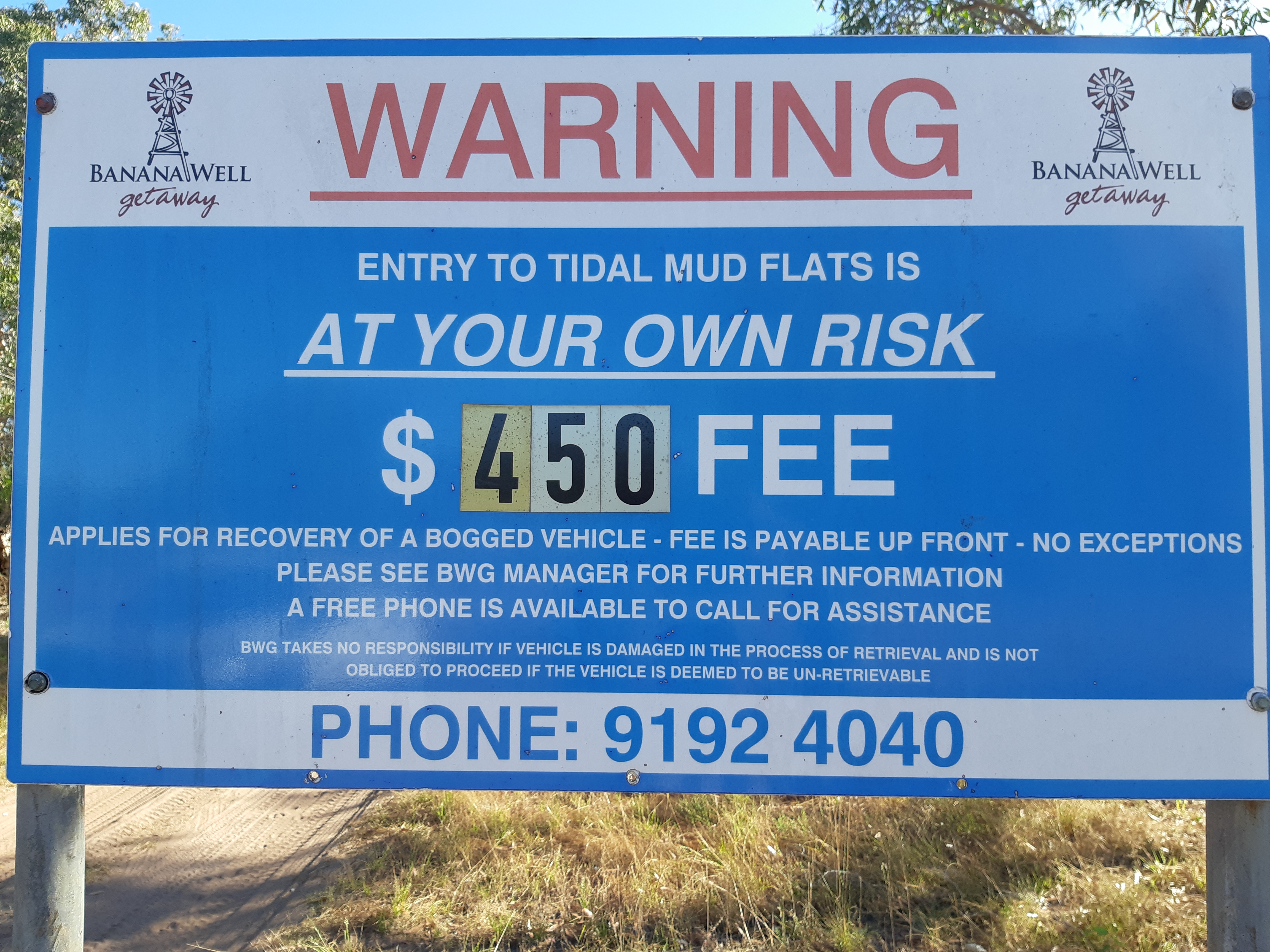
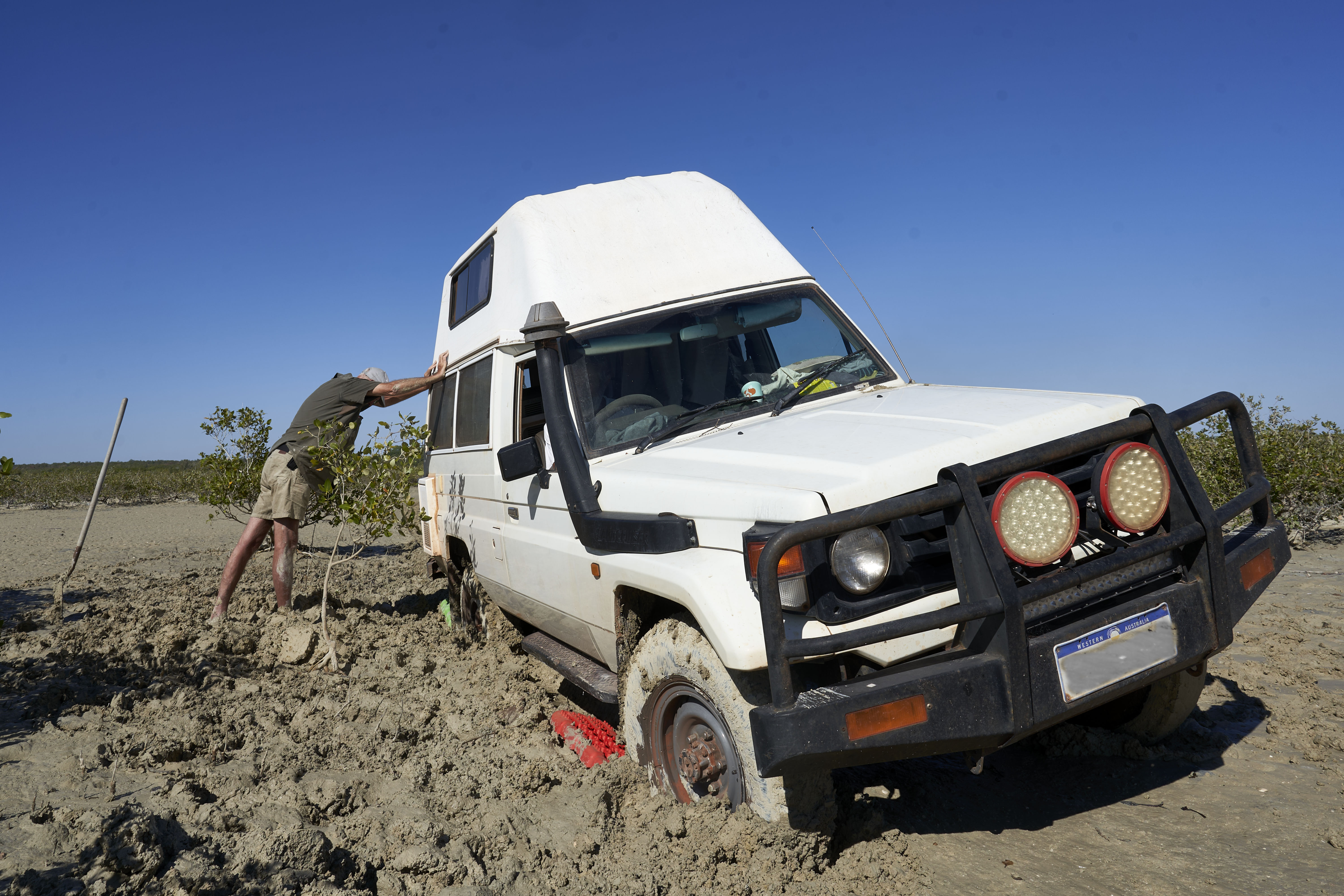
The mud flats are inundated on king tides and some areas on moderate tides. One way to get into trouble is to venture into areas covered by yesterday’s tide. This guy was heading east on our last morning. The sun was in his eyes. He made another 150m after the wheels started slipping! More than enough to ensure that no one could get near enough to tow him out.
Remember the warning sign at the top of the post? It’s out of date. We were unable to extricate the vehicle despite a lot of digging and the deployment of the rescue boards (I have only seen them work on one occasion – much over-rated bit of kit). When the futility of our efforts was eventually acknowledged a tow truck was summoned. The quote was $5,000. There was no way that it could arrive before the next high tide which will have reached above the bottom of the doors but probably not far up the engine. The poor guy was sure his wife was going to kill him.
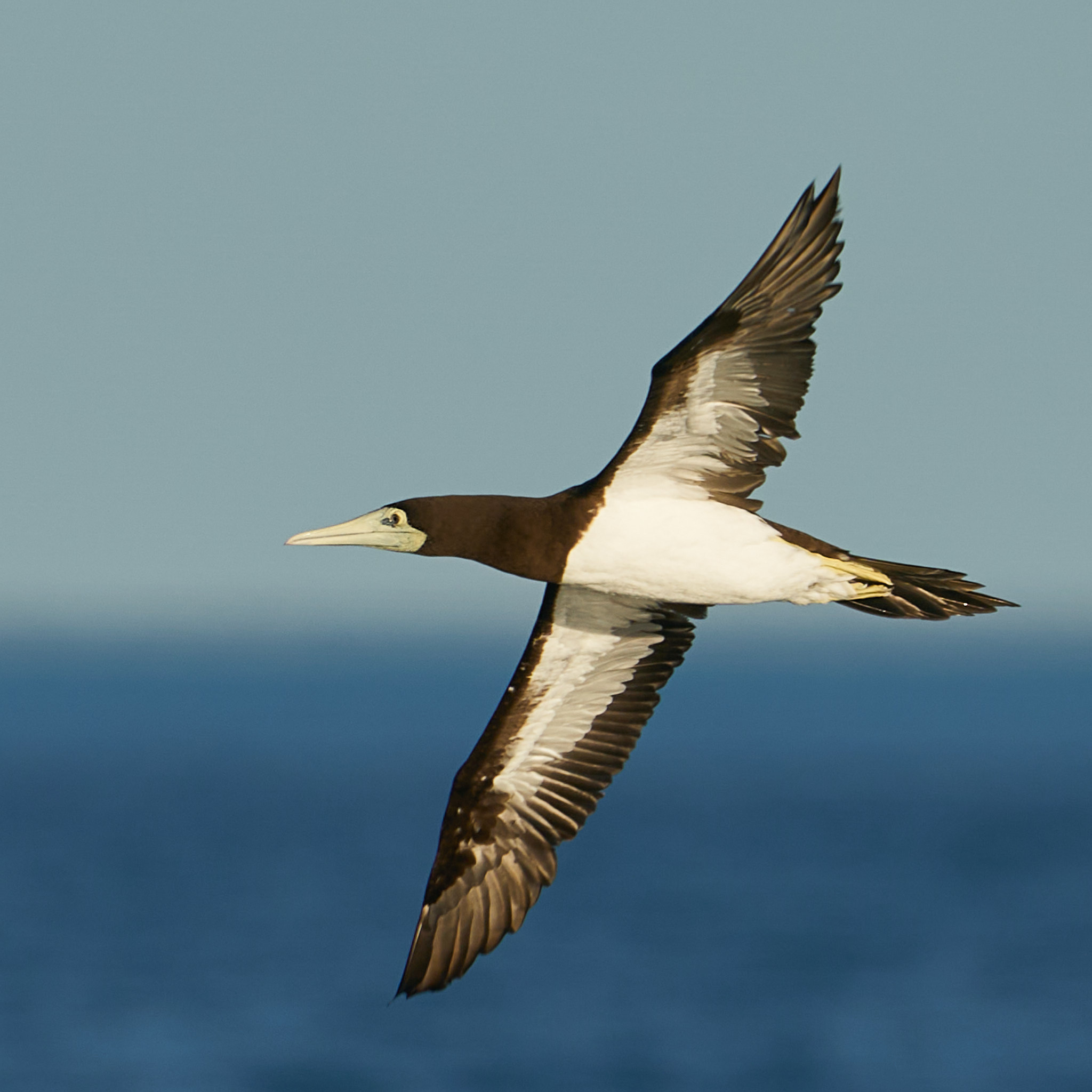
My eyes are always drawn to them and they have been much in evidence at the beach in recent days but getting a decent photo has not been easy.
There are ten species in the family Sulidae, three Gannets and seven Boobies assigned to three genera. The three species of Gannet are found over vast areas of temperate seas and are placed in the genus Morus. The Boobies are found in tropical seas. Six species are in the genus Sula and Abbott’s Booby is the odd one out in a genus all its own Papasula. The Sulids usually stay fairly close to the coast, nest on islands and feed on fish which they catch by plunge diving.
Gannets tend to gather in good numbers over schools of fish and dive vertically putting on a fantastic display for the observer. The Booby most frequently seen off Broome beaches is the Brown Booby Sula leucogaster. Over the last few days I’ve been watching them feed less spectacularly by belly flopping. They seem to be taking food from the surface or not far beneath it.
The scientific name leucogaster translates as white belly which might have been a better name than Brown because they are so dark that you need to be very close to see that they’re not black. Perhaps that was rejected because most of the other Boobies also have white underparts. The light bone-coloured bill indicates that this one is an adult female.
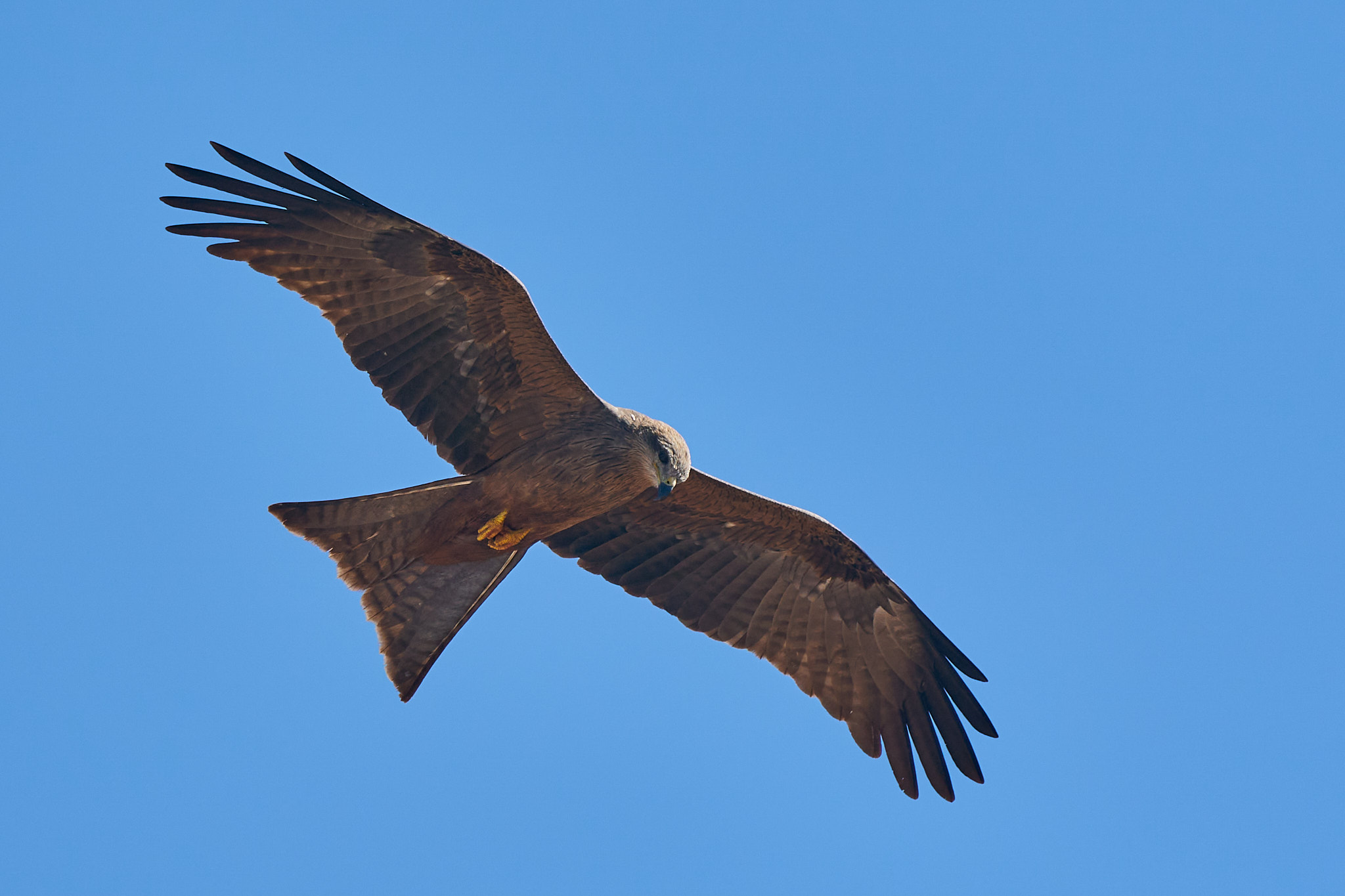
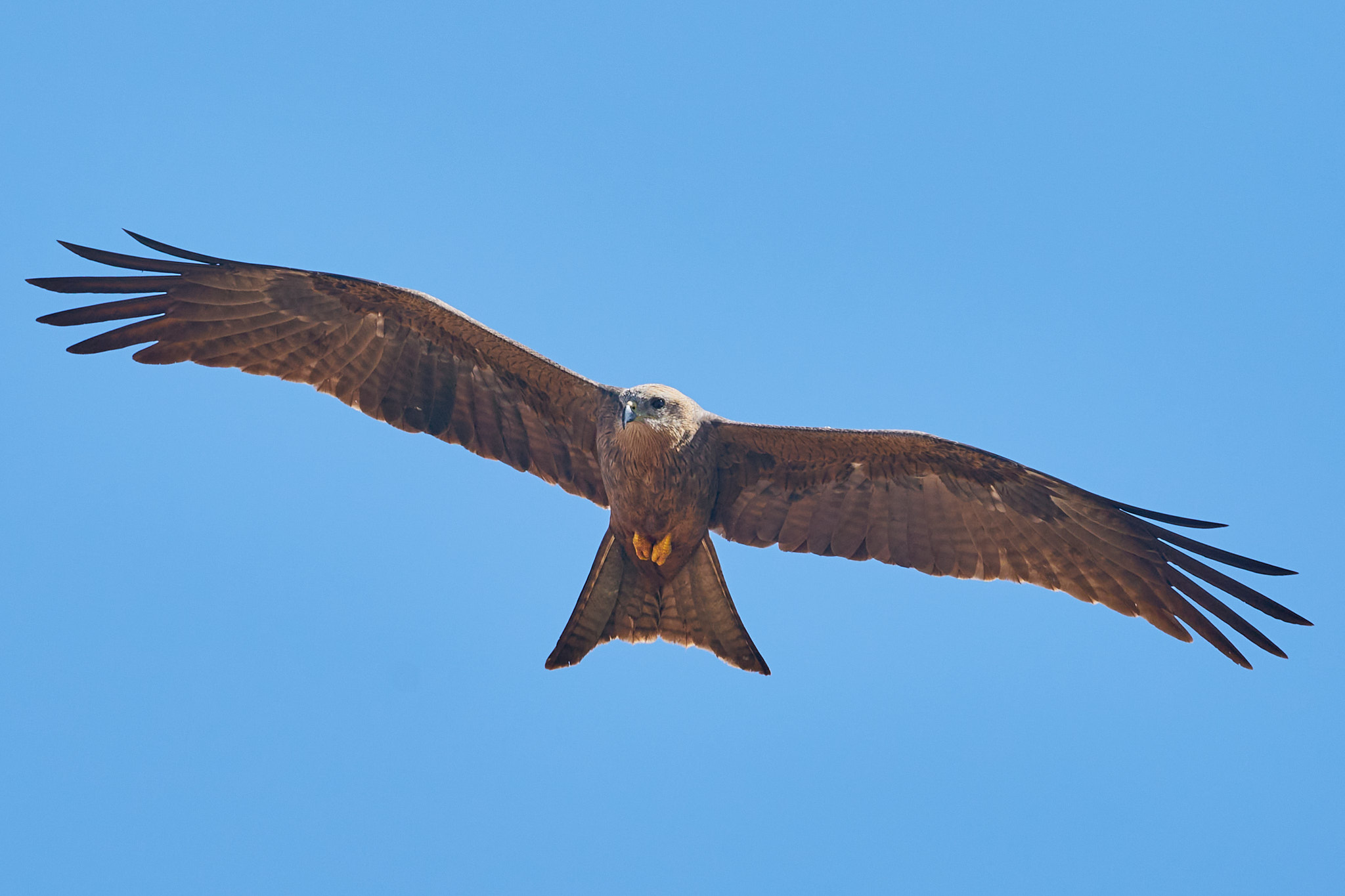
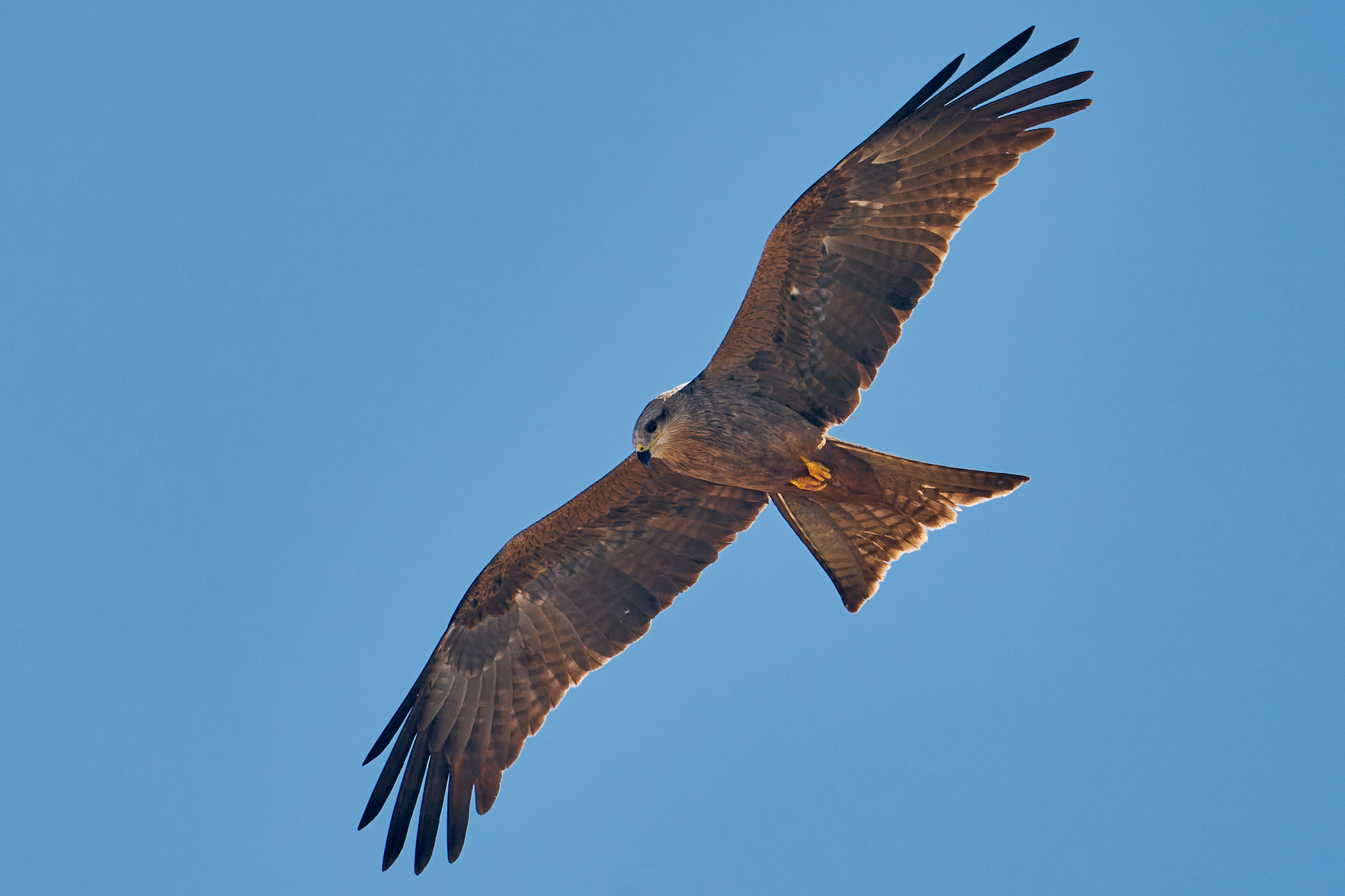
Some birds seem to fly with very little effort. Many seabirds fit the bill but still give an impression of great dynamism. Black Kites just float with a lazy nonchalance. They are common over Broome and are found throughout Australia. They are also found in Papua-New Guinea, Eurasia and Africa. Australian cricket fans will have seen them on TV when we play in India and South Africa.
Their legs are short and their talons are not especially powerful. They enjoy a bit of carrion, large insects and small mammals like mice. They congregate at rubbish tips and over bushfires. They have been known to help fires spread by carrying smouldering sticks into unburnt areas.
If you’re having a picnic watch out for your sandwich – pro tip, stay close to the trees.
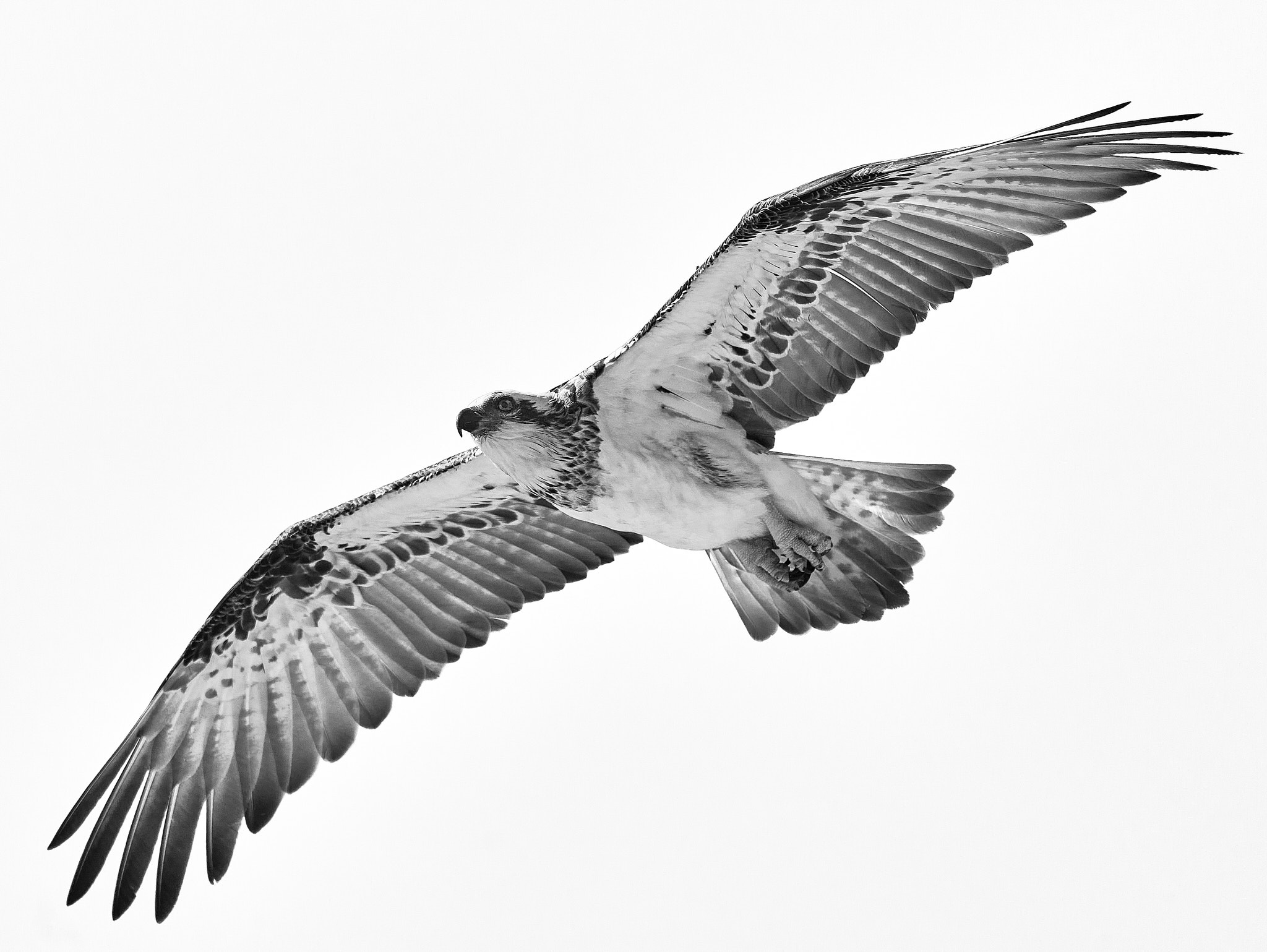
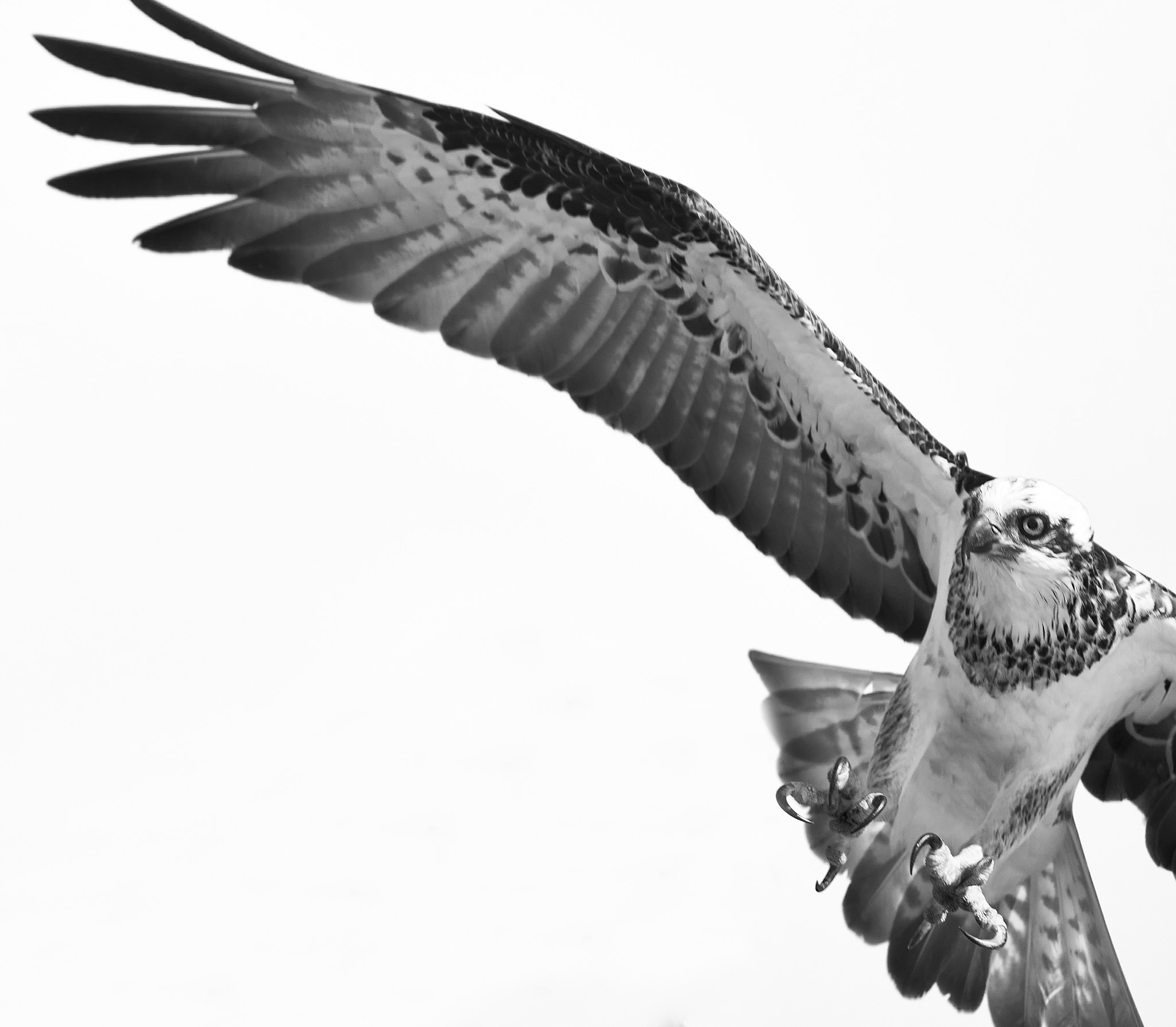
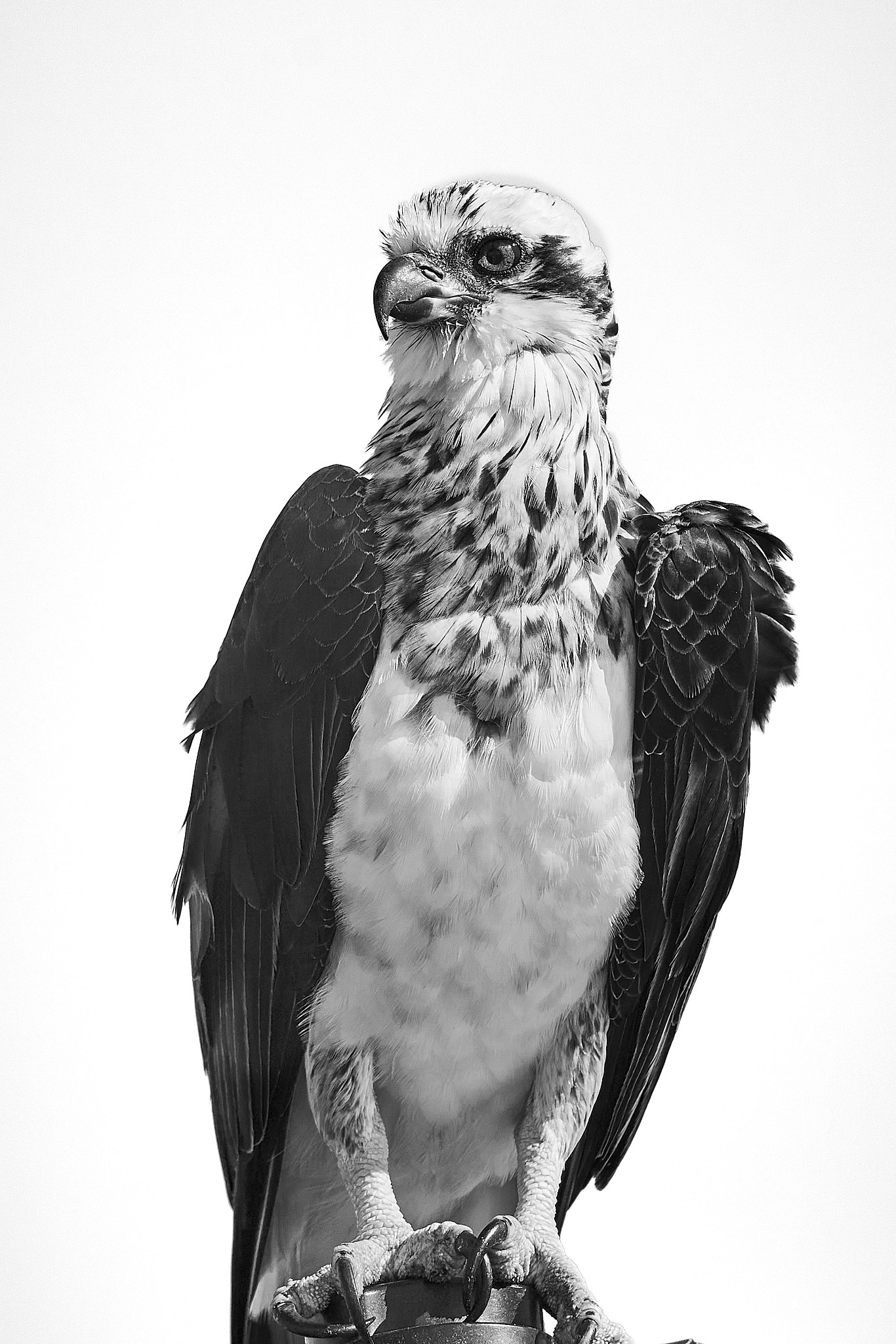
There are subjects that lend themselves to black & white and others that just don’t …
You need to click on the pictures to really appreciate them.
I haven’t been able to get close to one eating a fish and they often do that on top of lamp posts or other unattractive man made objects. When they have caught a fish they carry it head first with one talon behind the other to minimise aerodynamic drag – another photo on the wish list.
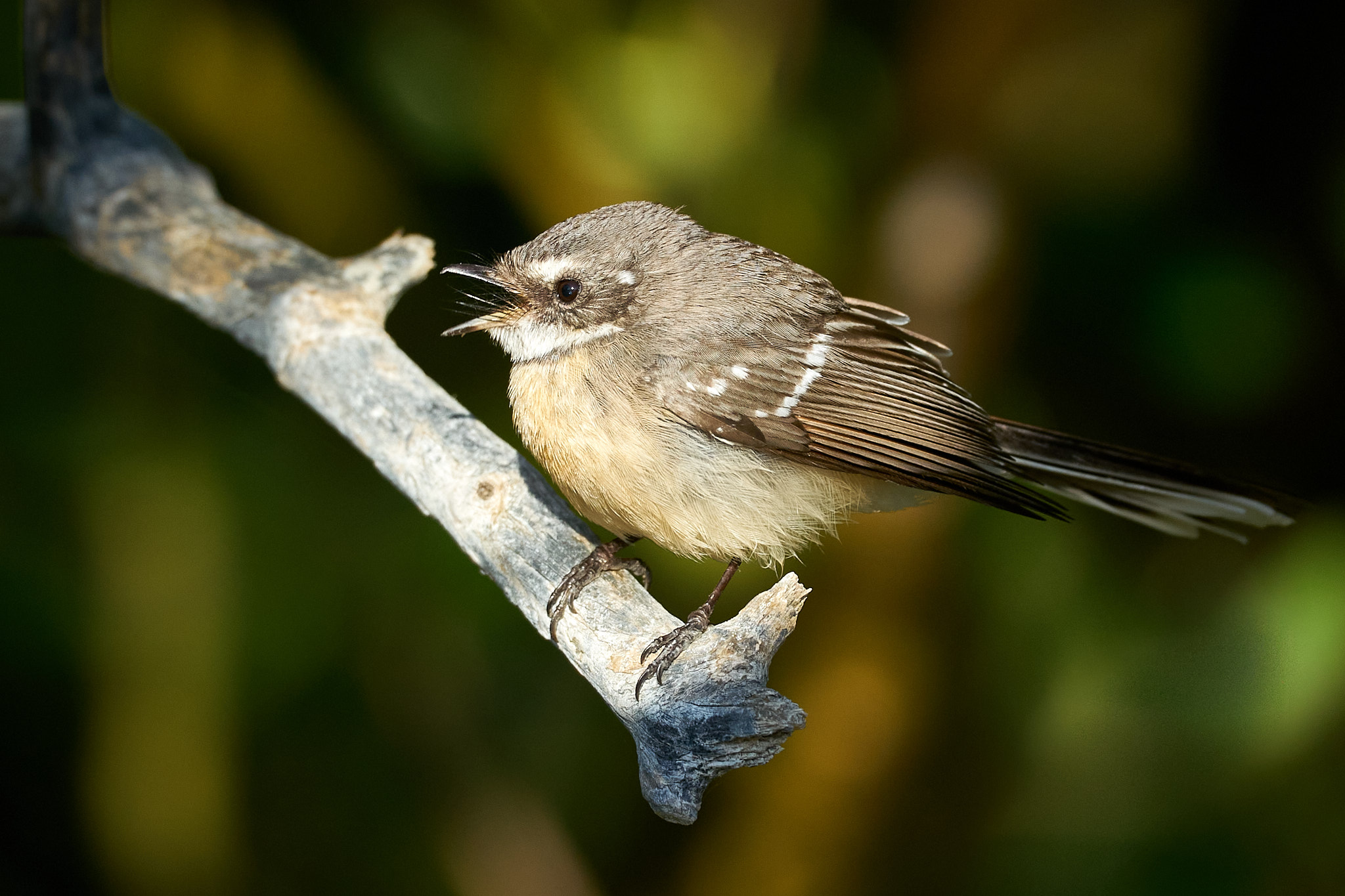
Into the mangroves once more, This time at Crab Creek out past the Broome Bird Observatory. The specific target was Dusky Gerygone which I found but it was too flighty to photograph. Other birds, though, were more accommodating like these very cute Mangrove Grey Fantails …
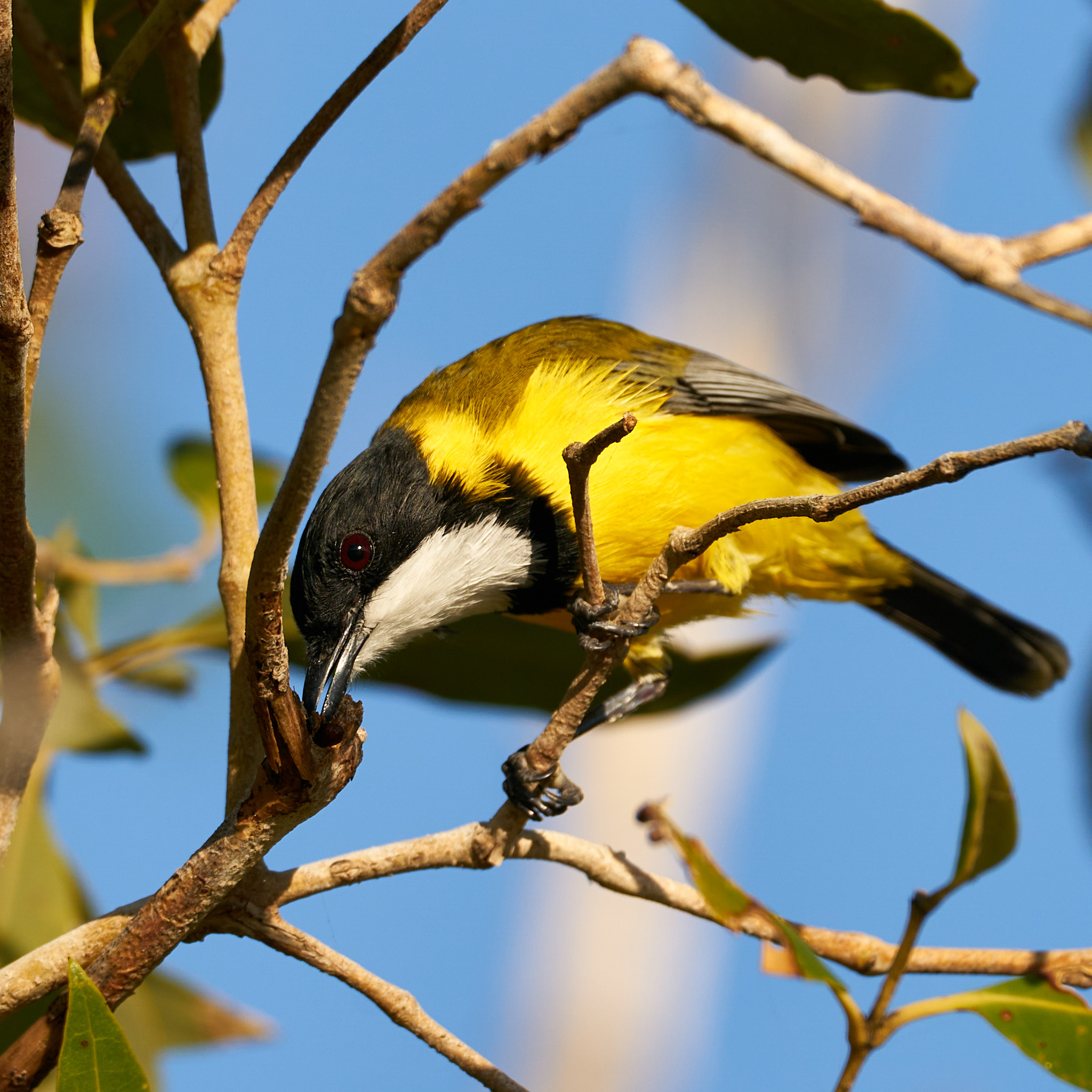
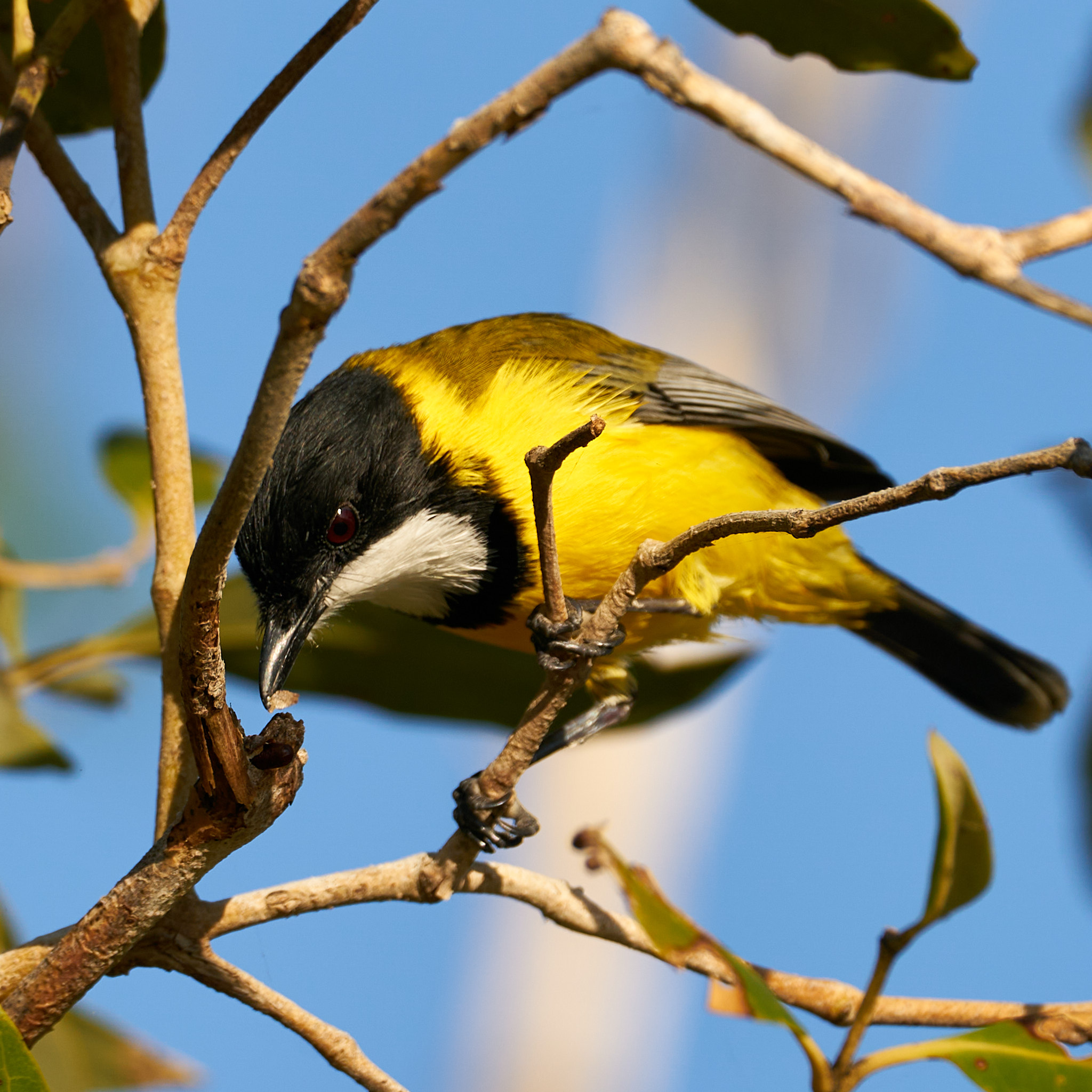
and I made progress on the Mangrove Golden Whistler. A few years ago these were almost unknown in this particular patch of mangroves. On the rare occasions they keep still there’s always a stick or two between the lens and the bird. One day …
I would found an institution where any person can find instruction in any study. – Ezra Cornell
Serious birdos need some means of recording their observations, preferably in a form that will spit out life lists, state lists, patch lists, backyard lists, birds seen out of the toilet window lists and a few more. Gazing at these lists will give them hours of pleasure especially if they are bigger than their frenemies.
Universities need data. This can be time consuming, tedious and costly to accumulate. So here’s the deal. We’ll keep your lists (on-line) for free and throw in an app that will help you get your ID’s right. You can use it on your laptop and/or your mobile device. So saith Cornell University of Ithaca, New York, USA, founded in 1865 (and at last they’ve done something useful).
But here’s the catch – you’ll have to do it our way.
The database is eBird. You access it through your web browser plus you can enter your observations on the mobile app available wherever you get your apps. The ID assistant is Merlin also downloaded to your mobile device. There is enough functionality in the mobile apps to go on working when there is no service. Essential for birding in Australia.
Off you go into the bush. Start your list. The app will track location and duration of the session. Input the species as you go. Upload the lot when you’re finished. If you have a target species looking it up in Merlin will give you pictures, a distribution map and in most instances recordings of its calls. All this information comes from those who went before you. You are standing on the shoulders of giants.
So far so good but doing it their way means taking a fine grained approach to location, counting birds – yes they want the numbers and writing notes to justify some of your observations. If you are really lucky and see something truly rare a moderator will take the fun out of it with naked skepticism – by email. Try not to be too precious – I console myself by checking where they are in the top 100. To date way behind me!
Cornell make it pretty easy to get up to speed via that other university – YouTube …
What of the data that Cornell gets in return? That’s their problem but its also a riveting topic among birdwatchers. Imagine a roomful of introverts who can barely make eye contact getting heated about the uselessness of the lists that some morons submit. Fortunately these discussions, as fiery as they may be, don’t last long, we’d all rather be home comparing our positions in the top 100.


























 bobmcgee