After saying good morning to the Kimberley form of the Grey Butcherbird, an isolated subspecies Cracticus torquatus latens, we headed for the Mt Barnet Roadhouse.
The previous day we had set up the satellite phone and taken advice from our home mechanic regarding the steering. It was suggested that we get the car towed. That’s a 1200km round trip tow. What about the trailer? Or that we pour oil into the empty reservoir and try our luck. The appropriate oil is ATF if that wasn’t available try anything light. I was considering cooking oil as a field expedient, it would have made an interesting story for the blog but Mt Barnet was well stocked with all sorts of oils including ATF. We filled the reservoir and hit the road.
At intervals we refilled the reservoir. Fortunately we had bought quite a lot of ATF because the system had a bloody great hole in it somewhere inaccessible. Driving in a straight line was easy, anything else was not.
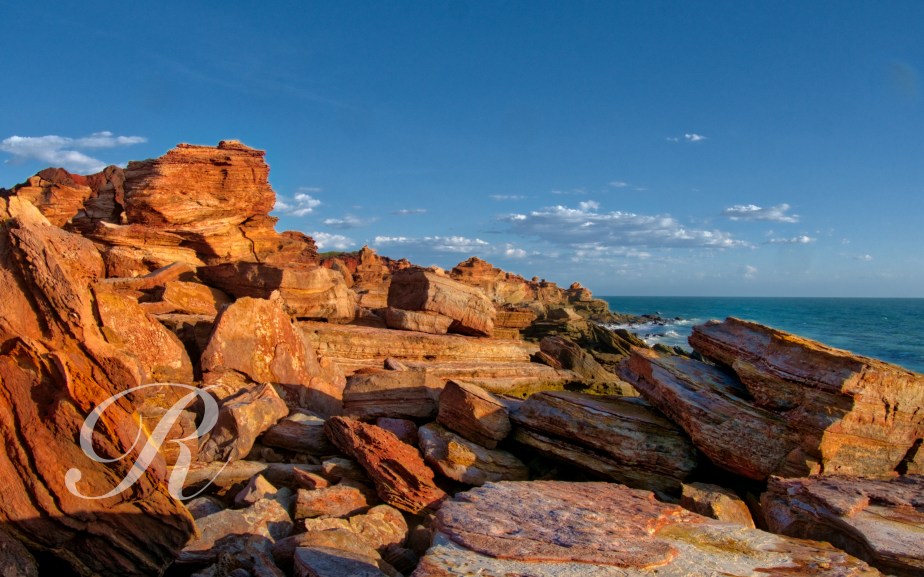
Some of the Gibb River Road’s best scenery is in that stretch.
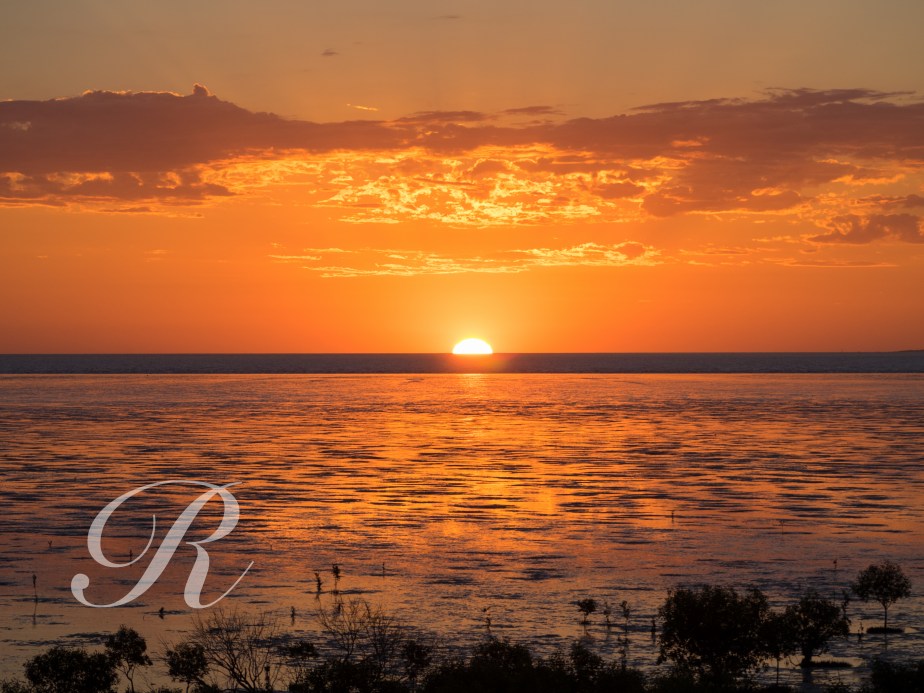
It wasn’t our intention to stay in Derby but we broke the drive to Broome into two stages. It gave me the chance to photograph a sculpture that is carefully arranged to be at its best against the setting sun.
Next morning we did the sights of Derby and headed for Broome.
I met Chris Hassell in 1996. We were in Broome, WA, to take part in an Australian Wader Studies Group expedition to catch and band migratory waders on the north-west Australian coast.
The leader of the expedition was the legendary Clive Minton, father of cannon netting in Oz, and there were some big name ornithologists along including Professor Theunis Piersma from the University of Groningen, Holland. Chris and I were just foot soldiers.
Chris, like me, is a pom. He comes from the midlands, not far from Leicester. He’d hardly settled in Oz when he set off for Broome.
The exercise we were engaged in involved setting nets just above the high tide mark in a spot where the birds would rest when the sea covered their feeding grounds. The nets were furled, camouflaged and attached to cannons that would shoot them over the unsuspecting flock when the time was right. The birds were then measured, weighed and banded with a numbered metal ring and released.
The work was hot and physically hard and the process considerably more nuanced than the summary above conveys. It ran for six weeks visiting Roebuck Bay, Ninety Mile Beach and Port Hedland. When it comes to cannon netting a good supply of willing volunteers comes in very handy.
Chris stayed on in Broome. For a while he was a warden at the Broome Bird Observatory, then he founded and ran Turnstone Nature Discovery Tours, showing visiting bird watchers and other interested visitors the delights of the region. Because of his knowledge and considerable ID skills he became sought-after for ecological research and census work.
When Birdlife and the Global Flyway Network needed a researcher on the shore of Roebuck Bay he was their man. He now has a little army of volunteers of his own. No longer a foot soldier, in my view he has surpassed the mighty Minton as a catcher of birds. Chris, very modestly, disagrees.
Do I like birds? If I tell you that last week I went to our school book parade dressed as the Field Guide to Australian Birds, with a bird bath on my hat, does that give you a big enough clue?
This was my sixth cannon netting and there’s always a story. At school they tell us a good story has to have a problem. This time we had three. Firstly, the day was windy, which makes the birds flighty. Secondly, there were two Brahminy kites circling over head. And thirdly because of the big high tide, the net had to be set below the
tide. Listening to the pre-catch talk about how to deal with this was therefore very important.
What we didn’t reckon on was the fourth problem. One of the cannons didn’t fire . There are three cannons, right? Surely, two would do the job? But most of the birds (over 300) were in one corner of the net, while the cannons that worked, beautifully captured the 14 birds that were in the other corner.
Chris was very brave. Very, very brave. Even though this is the second time this has happened this season, he didn’t swear in front of the kids, or cry in front of the adults. He did disappear for quite a bit, though.
As there weren’t so many birds in the net, Chris gave us a great demonstration in tagging, banding and measuring the birds we caught.
What’s in it for us kids? Well, firstly, if you can be quiet and still, you sometimes get to go with him to the hide, which means you
actually see the net fire. You get to race to the net to get it out the water and help get the birds out and into the boxes. This time though, as there were so few birds, all the kids got to carry one to the cages, where the birds settle before tagging. If you’re calm and steady, you get to fetch the birds to the adults for measuring, and then release them in groups afterwards. Best of all, you get to take pictures of the birds up close. I really loved seeing the Ruddy Turnstone, the Grey Plover and the Greater Sand Plovers (who love pecking you).
People say you should never work with kids and animals, but at the cannon-netting they do both, and with explosives too!
There’s a great future for that kid. And the reason this work is done is to ensure that there’s a future for the birds as well. I’m sure someone has thought of putting a marina in Roebuck Bay, maybe a five star hotel and a golf course. Research gives us an understanding of population trends, longevity and breeding success. These are essential ingredients in any argument to sway governments towards preserving the bay.
Stops along the migration route are also invaluable links in the chain that determines the survival of migratory shorebirds. When the birds take off for their breeding grounds Chris takes off from Broome bound for Bohai Bay in China where he helps monitor their passage. This year’s Bohai Bay Report can be found <HERE>.
Could be a bad summer for Chris this year, he still supports the English cricket team, no future for him in parliament.
There’s about 25 km of beach running from Gantheaume Point north to Willie Creek. This is Cable Beach, sun, surf, camels, tourists, very popular. But the further north you get the fewer people you encounter. The numbers would drop off faster if driving on the beach was forbidden, sadly it is permitted. There is some debate as to whether a full-time or part-time four-wheel drive is better on the beach. Personally, I think the best car for the purpose is somebody else’s car.
About 13 km up the beach from the Cable Beach Resort, or 25 km by road, is the suburb I know as Coconut Well, officially Waterbank. If you have a spare three or four million you can buy a nice home here. It won’t have mains electricity or town water but it will have a nice view.
At low tide there are some rocks exposed that are interesting to poke around in. Fish dart around in the tidal pools. There will be some migratory shorebirds about and perhaps a Frigatebird will fly over and if you’re really lucky you may see a Beach Stone-curlew …
Silver GullBeach Stone-curlew
The photo at the top is of an Eastern Reef Egret hunting through the pools. They often stand motionless, sometimes with their wings out to create some enticing shade. When a morsel presents itself the neck uncoils like a spring.
William Dampier made his first visit to New Holland in 1688. He explored this part of the coast on his second visit in 1699. Roebuck Bay is named after his ship. The sea is rich in invertebrate life some of which made a meal of HMS Roebuck’s planking. On the voyage home the worm-eaten ship was run ashore on Ascension Island before it could sink in open water. Dampier and his crew were marooned there for five weeks before being picked up and taken back to England.
There are two tides a day in the bay of about equal height (semidiurnal tides). The tidal range is massive exposing about 160 km2 of mudflat. The mud is rich in invertebrate life which provides food for the more than 100,000 migratory shorebirds that use the bay each year … HMS Roebuck’s revenge.
The north shore of the bay from close to Broome to Crab Creek is readily accessible. The Broome Bird Observatory is located close to the east end. The eastern and southern shore is a world of mangrove swamp and tidal creek more easily accessed from the water.
Tropical mudflats are a very different habitat than the tundra and steppes where the visiting birds breed. In summer the breeding grounds are so rich in mosquito larvae and other invertebrates that young shorebirds can feed themselves from the moment they hatch. On the other hand there’s no food available when the puddles are frozen or covered in snow so migration it is.
The migrants arrive in our southern spring and leave in autumn. They don’t all stay in the bay all summer, for some it’s just a staging post. Towards the end of their stay it is a great spot to quickly gain the weight that will be the fuel for the long flights ahead. Some birds do stay a year or two before making their first flight to the breeding grounds so there are some to be found all year.
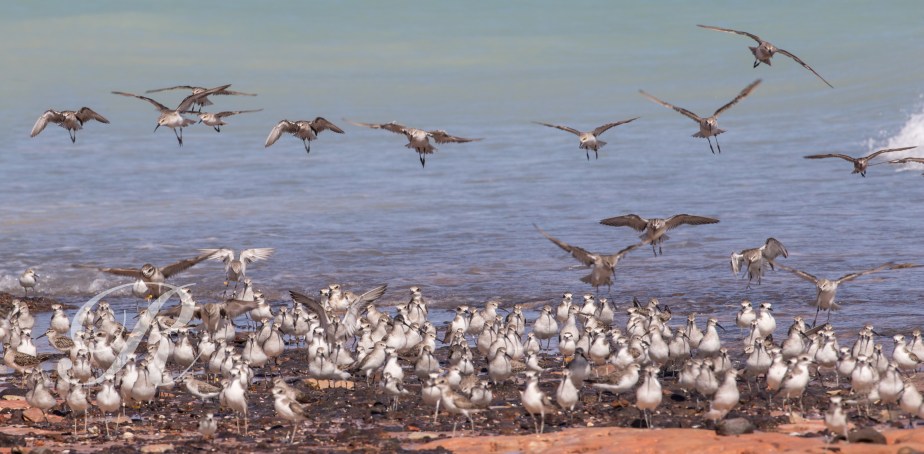
The bay is Australia’s most important site for migratory shorebirds. The bay regularly supports more than 1% of the population of at least 22 different species. On any day during the wet season there are about 120,000 shorebirds out on the mud. The smallest is the Red-necked Stint. Much of the time it weighs about 25 to 30 grams (my little Fox Terrier weighs 10 kg, equivalent to 400 Stints). They will increase their weight by as much as 50% prior to departure on their 15,000 km journey to Siberia. The largest visitor is the Eastern Curlew at about 1 kg fuelled up and ready to leave.
Migration may seem like a very risky strategy but if a bird manages to make the return trip once it is likely to do it many more times. Red-necked Stints have been known to live more than 20 years by which time they will have flown further than a return trip to the moon.
The bay is also home to the rare Australian Snubfin Dolphin.
At approximately 140 animals, the snubfin dolphin population occurring in the 100 km2 study area within Roebuck Bay is one of the largest reported in Australia to date and should be considered of regional and, indeed, national significance. Despite this relative magnitude, the population is small by conservation standards. We also provide preliminary evidence of fidelity to the study area for a majority of individuals … <Murdoch University report>
Roebuck Bay is a unique place. It’s also a place under increasing pressure as Broome grows in size. Careful management is required if the natural values are going to be preserved.
This post has been updated following discussion with my good friend Chris Hassell, a Birdlife International researcher involved in full time study of shorebirds in the bay.
Every serious Australian bird watcher will find their way to Broome. The reason above all else is Roebuck Bay and the thousands of migratory shorebirds that visit every austral summer. Whilst the Bay is the main game it’s not the only game in town. There are a few hotspots around Broome itself that are easily accessible for the visitor and you won’t need to hire a guide to reach them.
Broome is situated on a peninsula and if we start at the southern end there is …
The Port
It’s well signposted. There are two spots to check out. As you approach the end of Port Drive turn right past Toll Mermaid Logistics along Kabbarli Road and follow it to the end. The beach here is good for waders and terns. Check the navigation structures offshore for Brown Boobies. Lesser Frigatebirds are regular. The scrub behind the beach has hosted some interesting species on occasion. All manner of goodies can turn up after a cyclone. Remember Indonesia is a mere 775 km away (485 mi).
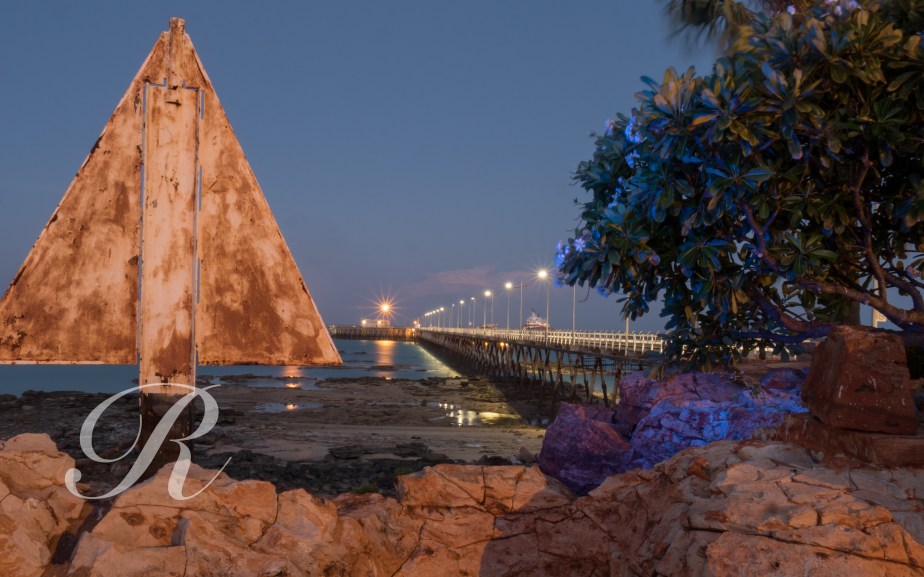
The second spot is the cafe at the base of the pier. The garden looks out over Roebuck Bay, there are some scattered mangroves fairly close. Across the road you can look out on some rocks for Reef Egrets. There is a walkway along side the pier which may be open and it is worth walking a short way. Ospreys nest on the pier.
Sewage Ponds
Taking Port Drive back towards the town centre Clementson Street is on the right. Look out for a large water tower. The Sewage Treatment Plant is tucked away behind commercial properties on the south side of Clementson St. Access is via a dirt track very close to the corner with Port Drive, or a dirt track immediately east of the commercial properties. The latter is the better option after rain. The splendid new hide is on the west side of the main ponds and works best in the afternoon. There is also a small pond on the west side of a usually dry creek that is used to provide water to the golf course that is also worth checking out. Caution is required in the wet.
Mangroves – Town Beach to Streeter’s Jetty
If you continue east on Clementson to the end it takes a right angle bend onto Dora St. 2nd on the right is Hopton Street. Right again at the end of that takes you to town beach. Next to the carpark is a groin that runs out into the sea. Looking north from here there are mangroves stretching as far as the eye can see. Access is pretty good from Town Beach to Matso’s Brewery, opposite Bedford Park for example.
Streeter’s Jetty is behind Chinatown at the end of Short Street. If you stand at the base of the jetty and look to the right you will see some pipes protruding from the wall. Birds congregate here for fresh water, an excellent spot for photography.
Red-headed Honeyeater
Various Ovals
providing they are not in use are worth checking out for Yellow Wagtail, Golden Plover and Little Curlew, including …
Father McMahon Sports Field
Behind the Aquatic Centre, 2nd on the right heading NW on Cable Beach Rd from Frederick St.
Oval on corner of Frederick & Lyons Streets near the shopping centre.
There is a gate on Lyons St opposite Miller Way.
Meet Roderick Percival Smith, all the cows out here have individual names and wear their initials in their ear …
Well no. They all have the same tag and RPS stands for Roebuck Plains Station. The point of introducing you to Roderick is simple. There’s a lot of good birding out on the plains but it is a working cattle station and private property. You will need permission to visit and it’s a huge place. Local knowledge and permission is readily available if you go with the redoubtable George Swan or with staff from Broome Bird Observatory.
George is a top bird guide and lovely guy. He can be found at <Kimberley Birding>. The link for Broome Bird Observatory is <BBO>.
What’s happening on the plains depends on the weather, it might be dust or it might be under water. Presently it’s in between, some dust and some water. It’s nice although the temperature did reach 42°C (107°F) the other day.
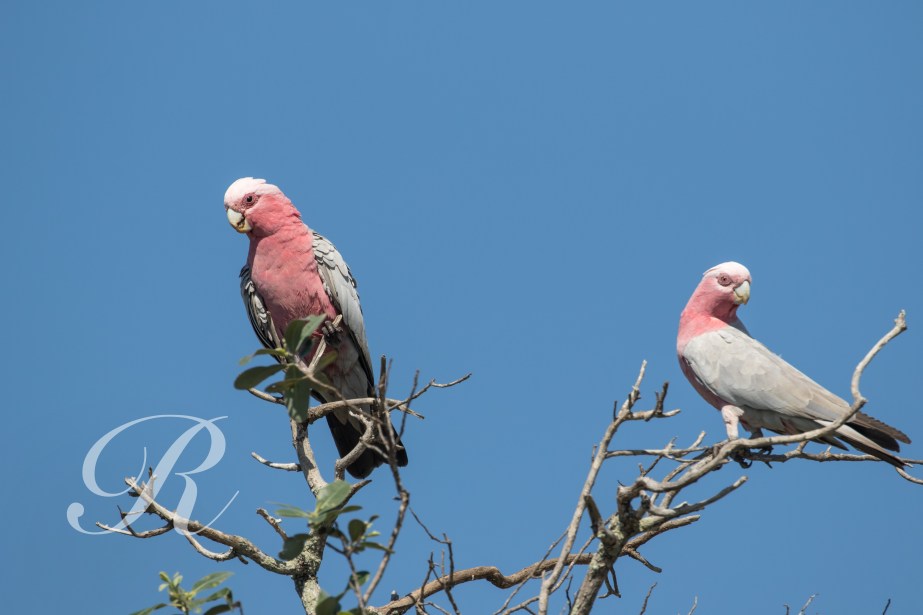
GalahOriental PloverRainbow Bee-eaters
You may be lucky enough to encounter Yellow Chat. They are not easy to find but if they’re about George Swan or the guys at the Observatory will know where they are. In breeding plumage they are a knock out. The ones I found this time were not at their finest but hey, that’s the way it goes.
Last year the rain gods were very generous to Broome. The last wet was a big wet. Even after the intervening dry season, lakes out on the Roebuck Plains still hold a good amount of water. The birds are loving it.
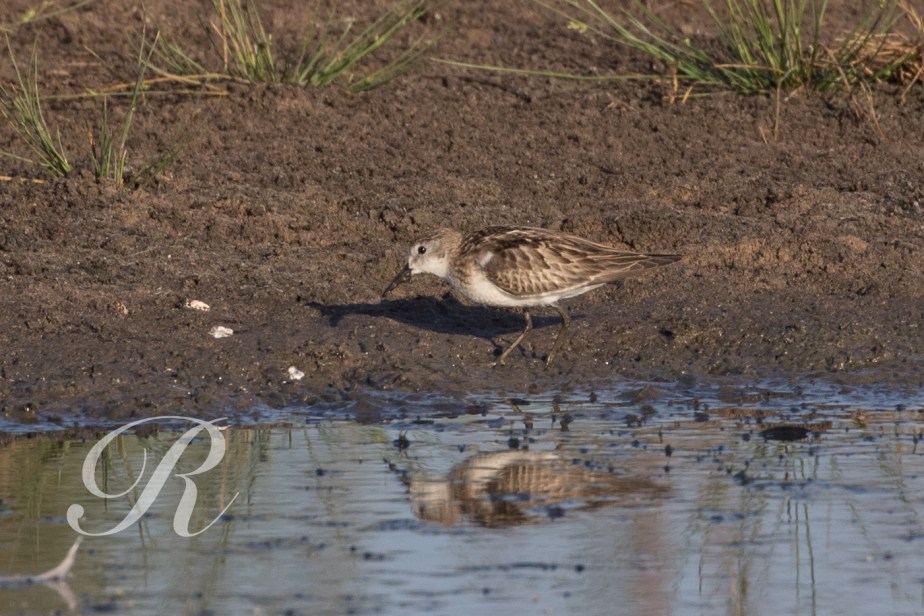
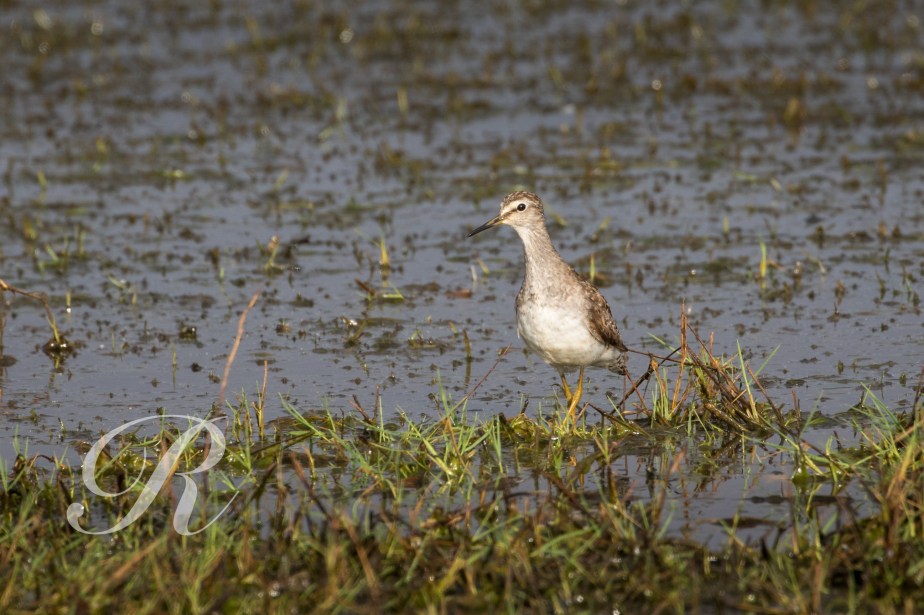
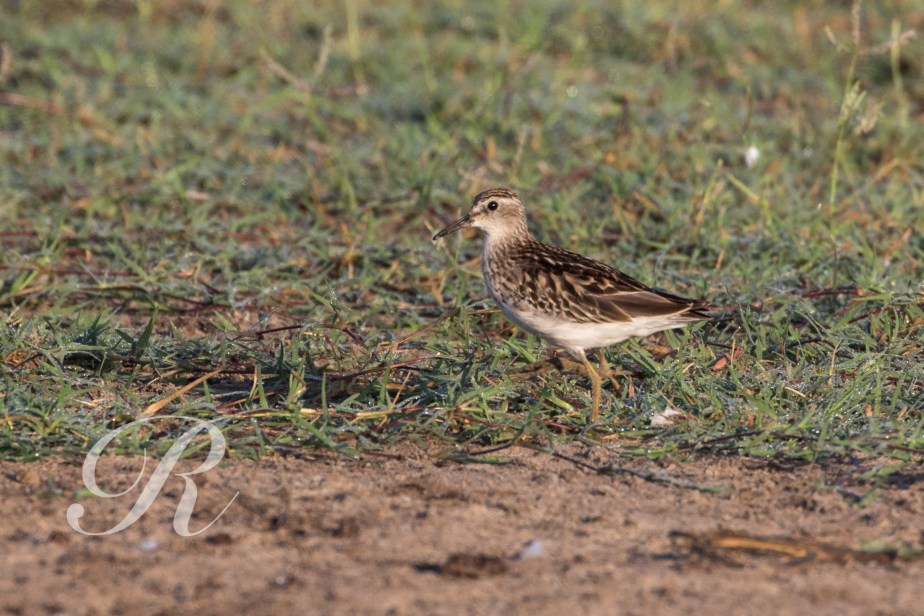
First a couple of photos for the true aficionados, answers at the bottom …
Like the two above, many of our shorebirds are very long distance migrants breeding in the far north of the northern hemisphere and coming to Australia to escape the northern winter. Dual citizens as it were …
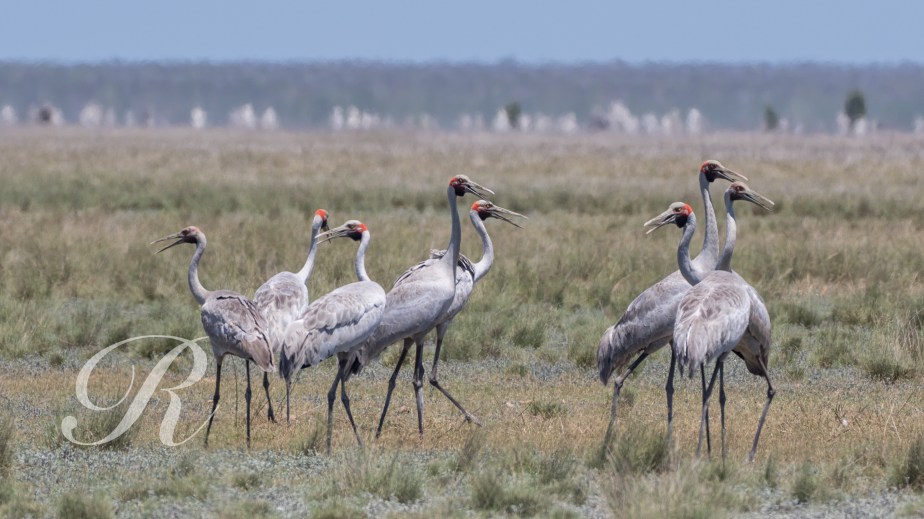
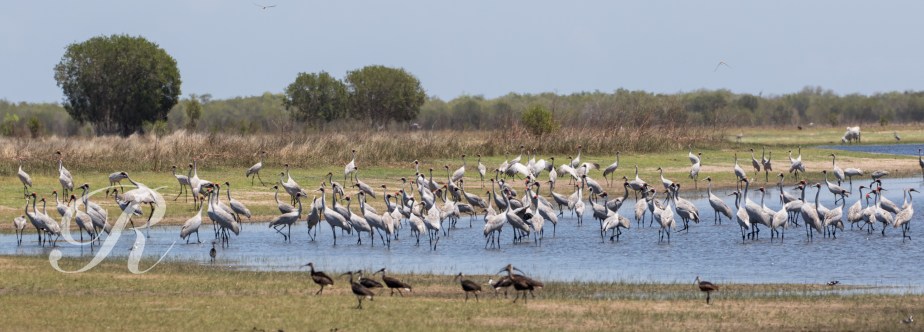
Others aren’t shorebirds at all, they just have long legs, well adapted for feeding in shallow water. This would include the Brolgas in the headline photo, herons and Ibises – waders in the American sense.
Glossy Ibis
Now the answers, these two individuals have been discovered in the last few days. The upper one is a Pectoral Sandpiper. These breed in Alaska and the Russian far east and most winter in South America. A few join the east Asian flyway and find their way to Australia or New Zealand.
The second bird is a Little Stint. Their breeding ground is in the Eurasian high arctic. Most go to Africa to escape the northern winter. A few find their way further east. It’s only a small minority that find their way to Australia.
There are mangroves aplenty around Broome and plenty of birds that use them. There are about 19 species of mangrove up here so the habitat varies from place to place and to some extent the suite of birds varies, too.
Access to mangroves is often difficult due to deep mud and the density of the vegetation. Mosquitoes can be a little tedious as well. There are a couple of spots that are reasonably easy of access and quite rewarding to visit.
The mangroves that run from Town Beach to Chinatown can be entered in various places and are really good for Red-headed Honeyeater. Streeter’s jetty is the most famous in birding circles and is excellent. Out of town at Little Crab Creek is the place to go for Dusky Gerygone. Between the two you can find just about all of the local mangrove specialists, and it’s not only the birds …
Flame-backed Fiddler Crab
Fiddler crabs and mudskippers abound. they probably make a nice meal for some of the larger denizens. And there is plenty of invertebrate life in the mud.
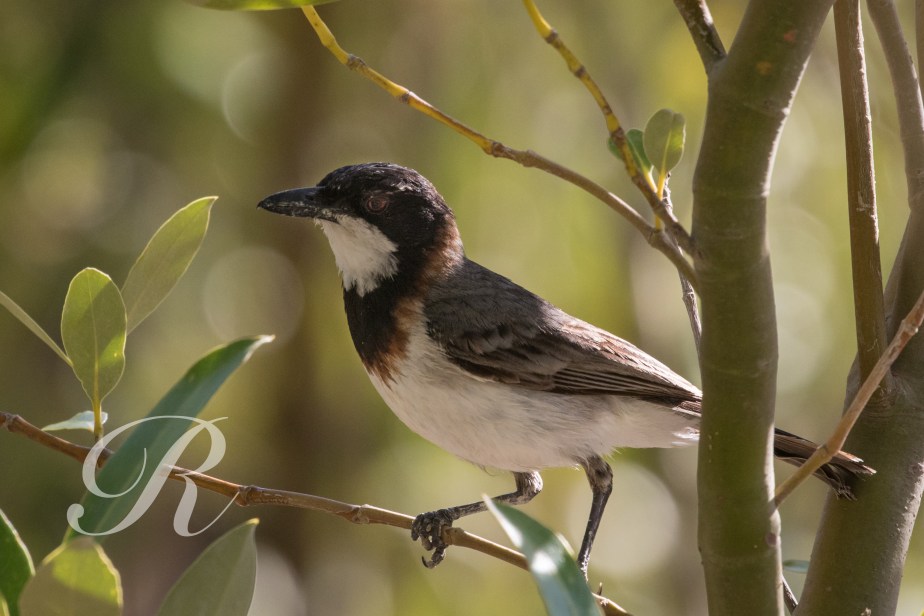
A couple of the Pachycephalidae are mangrove specialists, the Mangrove Golden Whistler and the White-breasted Whistler …
Mangrove Golden WhistlerWhite-breasted Whistler
Both very handsome birds.
The Honeyeaters are represented by these two …
Red-headed HoneyeaterBrown Honeyeater
The Red-headed is always found in or near mangroves, the Brown is found in a much wider range of habitats but is common in the mangroves.
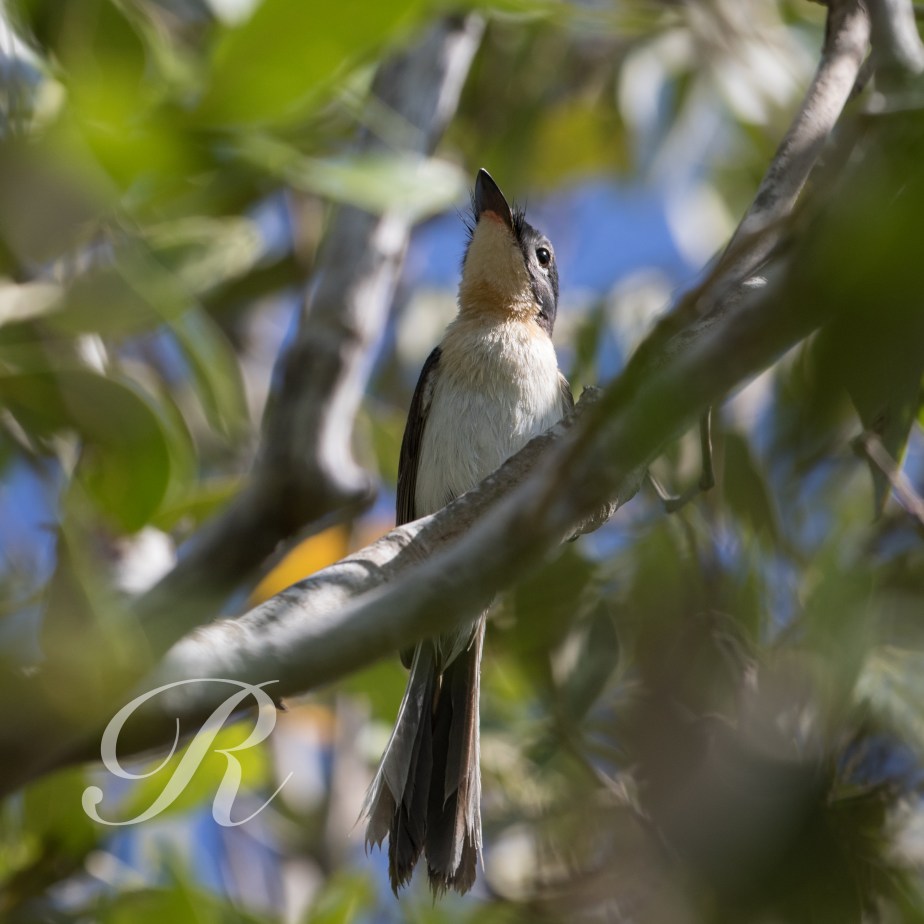
Broad-billed Flycatcher
Nicely posed to show us how it got its name, the Broad-billed Flycatcher will wander into adjacent Melaleuca woodland but is essentially a mangrove species.
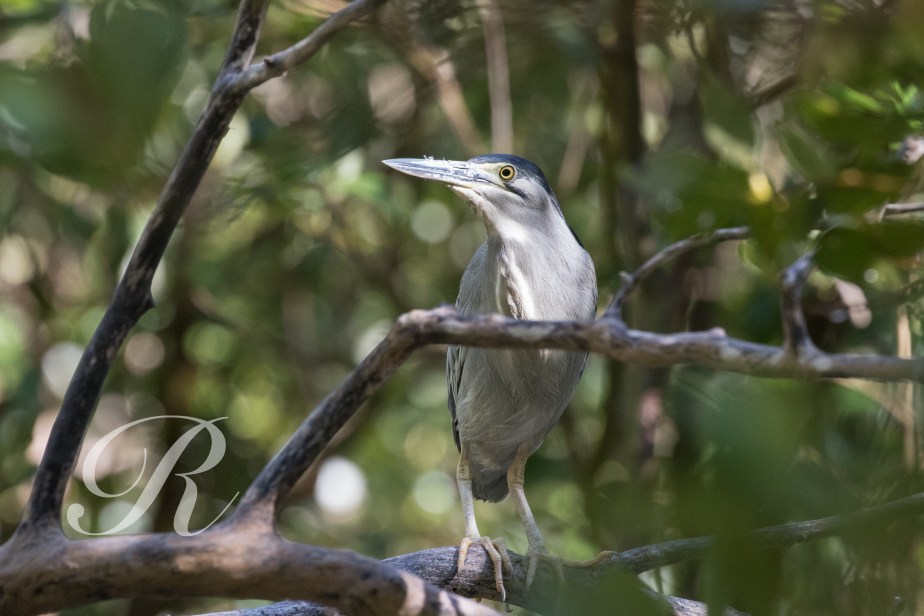
The tidal zone provides a living for the Striated Heron but it nests in the mangroves …
Striated Heron
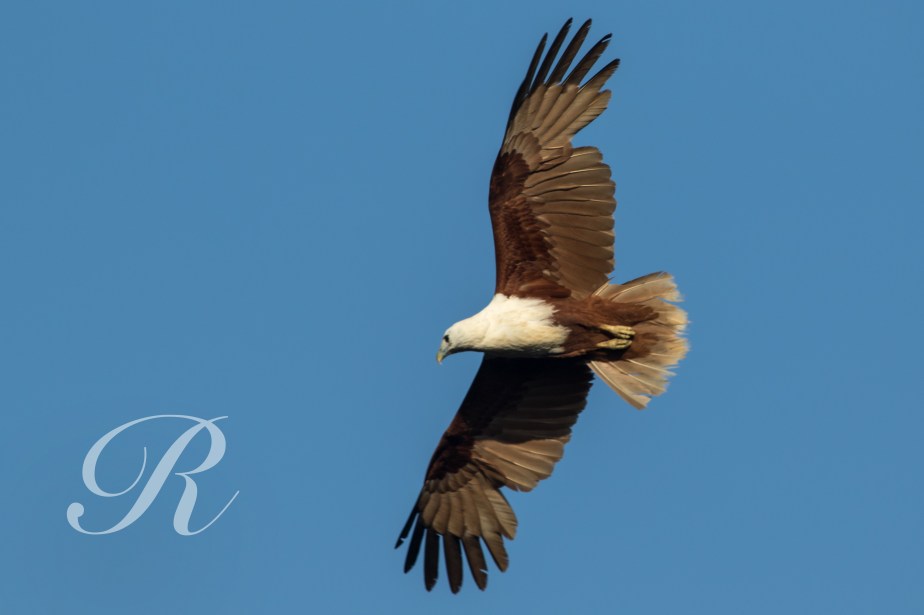
And circling above the mangroves, the Brahminy Kite.


















 bobmcgee