The most northerly town in Western Australia, population 941, slightly more than half Aborigines. Founded as a port to serve the Halls Creek goldfields in 1886, it kicked on on the back of meat processing and export until the 1960s. It’s now a pleasant sleepy hollow with some iron ore passing through the port.
The Wyndham caravan park gets a tick of approval. It doesn’t have quite the natural values of Parry’s Creek Farm but for an urban van park it is well above average. Spinifex Pigeons walking around the campsite can’t be bad! Gouldian Finch are also on the list but weren’t in evidence during our stay.
Parry’s Lagoon is one of my favourite wetlands and did not disappoint.
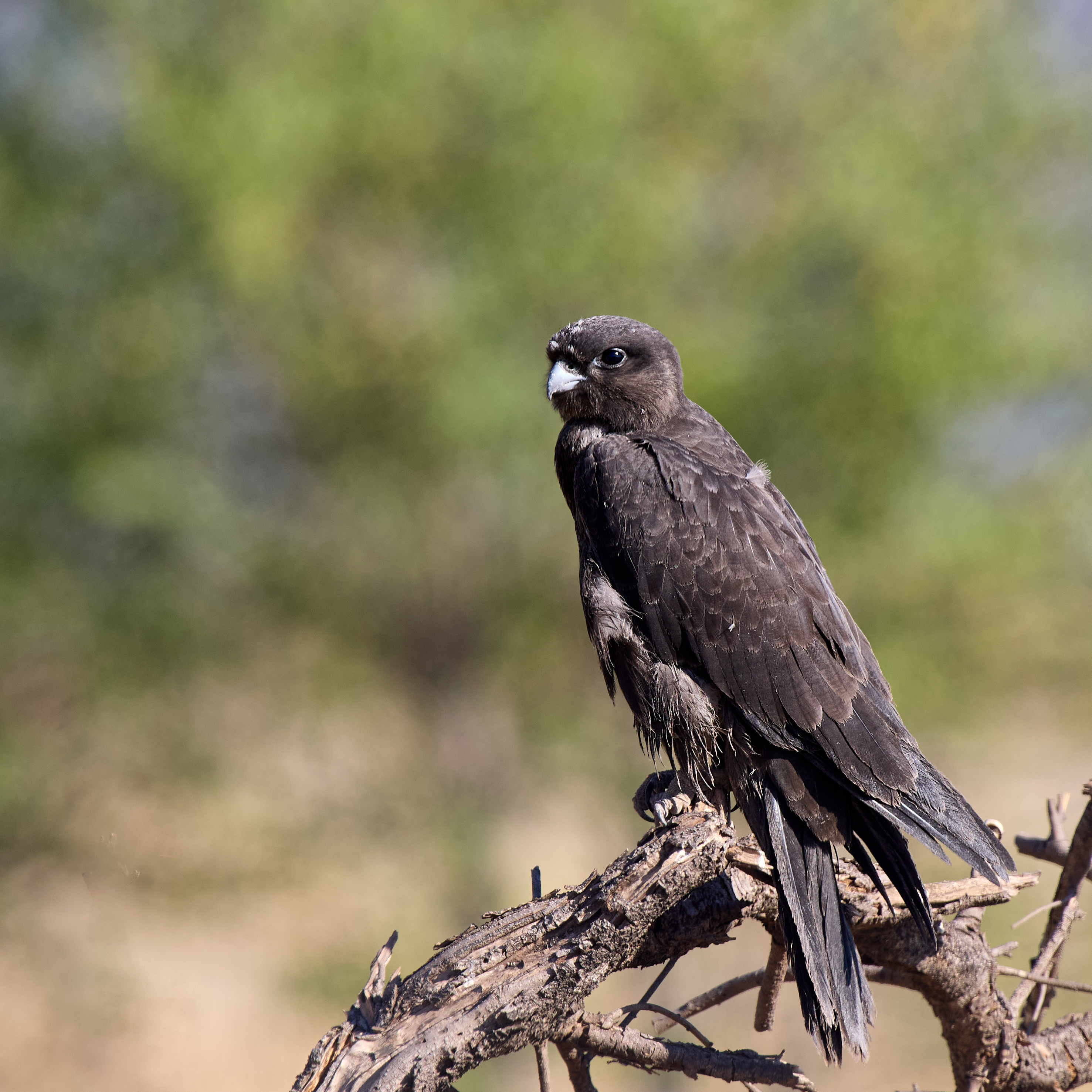
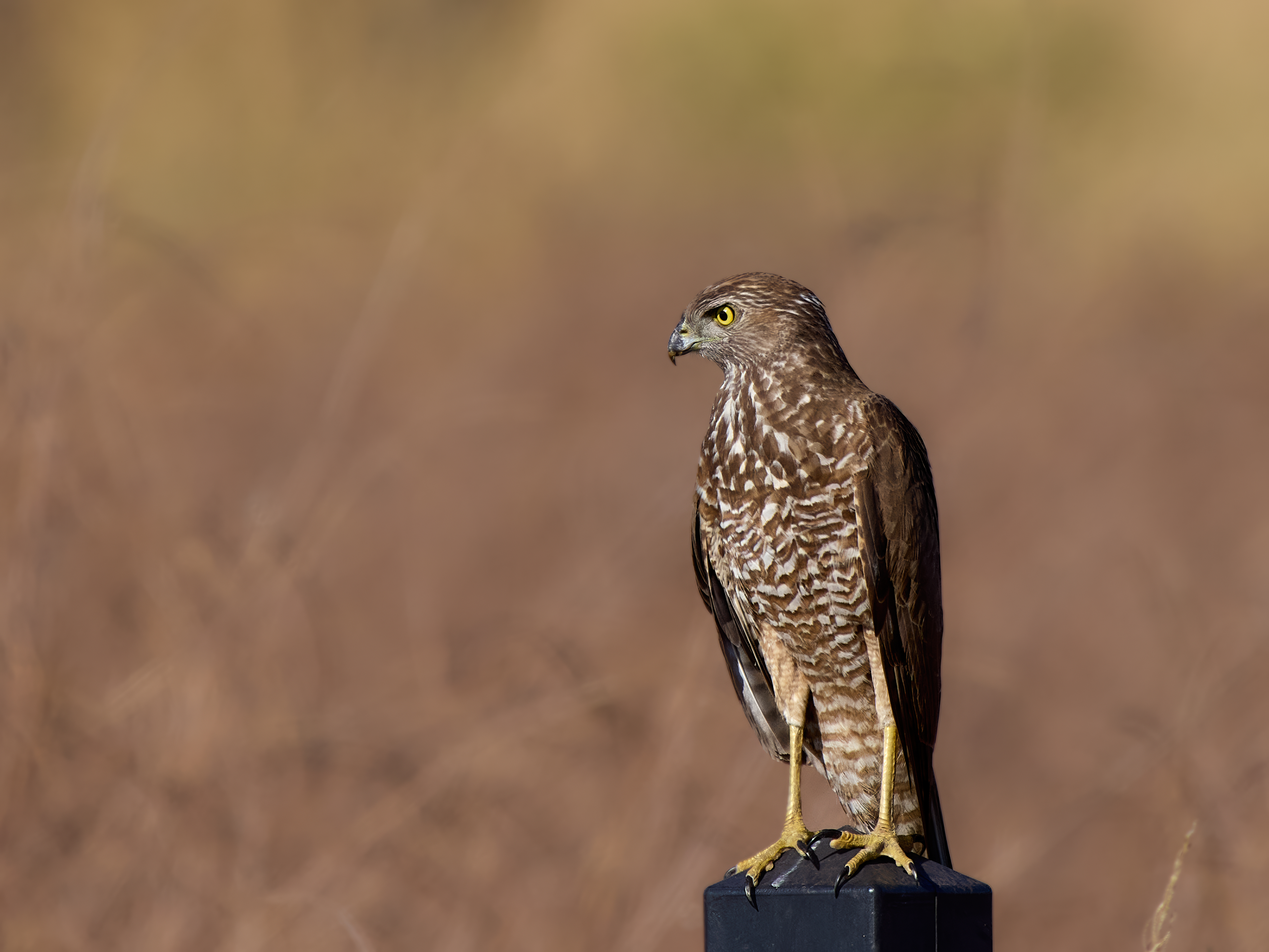
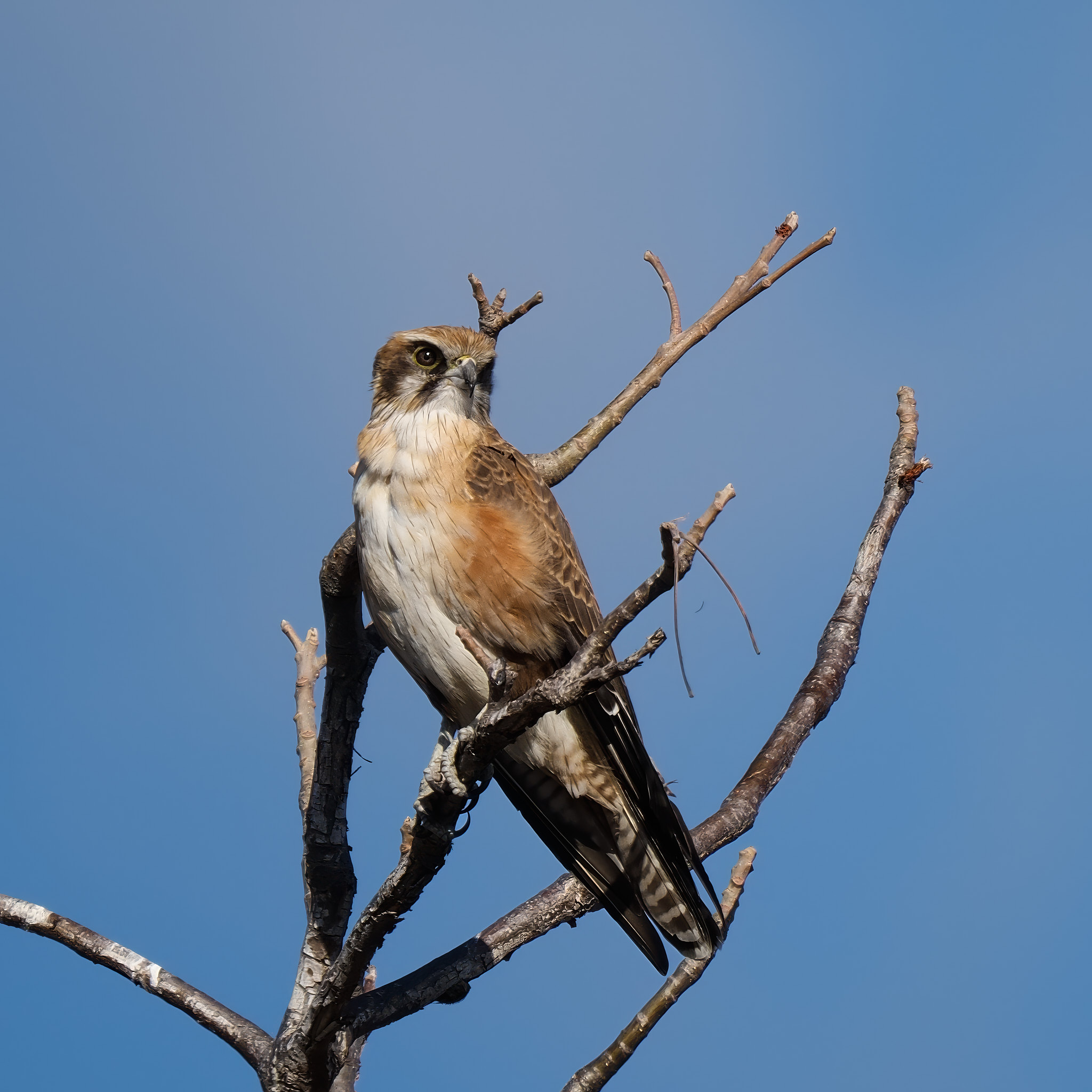
A couple of raptors gave me a chance with the camera.
Black FalconCollared Sparrowhawk
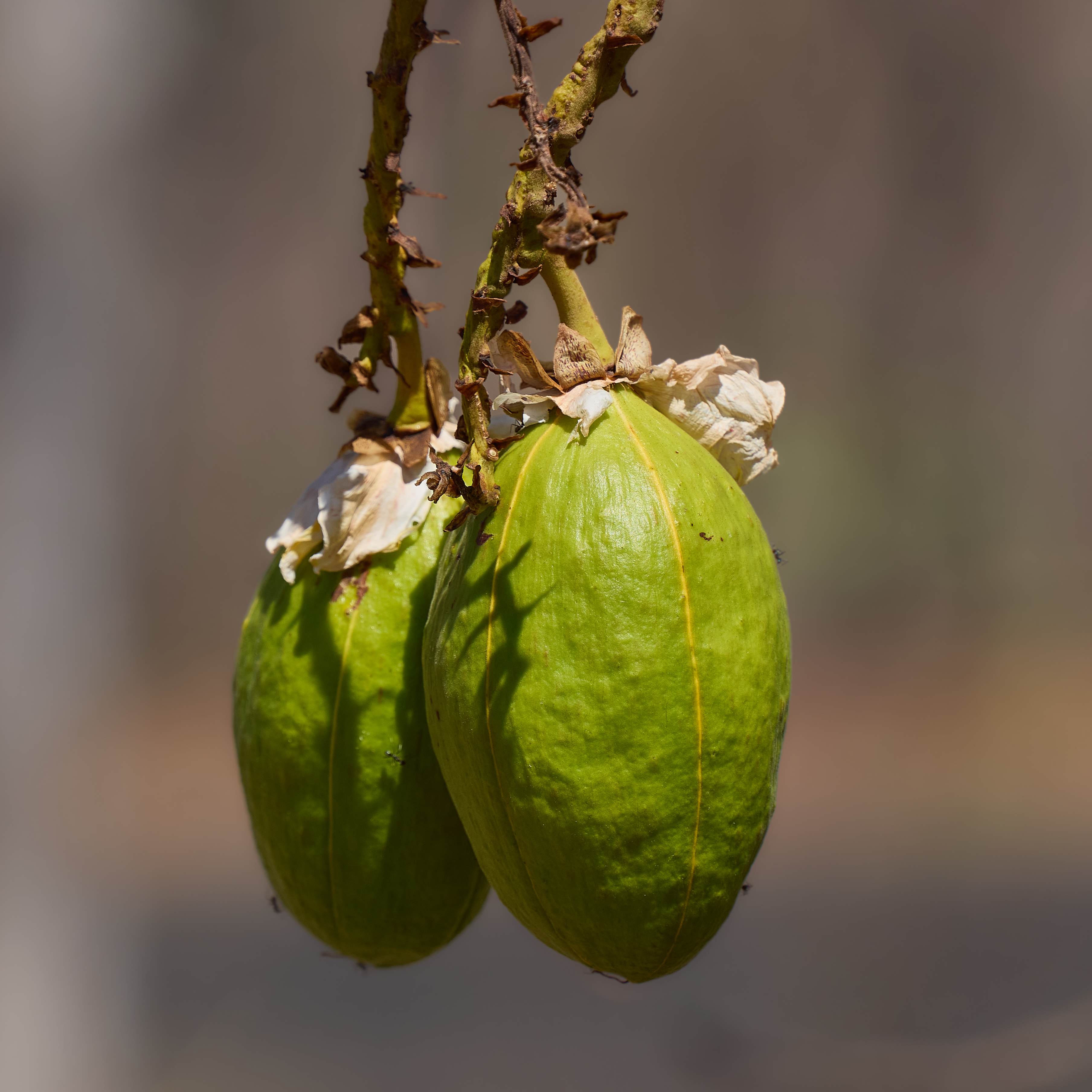
I mentioned the Kapok Trees in the last post. It’s not the real Kapok that was used to stuff pillows in the olden days. Its Cochlospermum fraseri, given the same common name because the seed pods are stuffed with similar cotton-like fibres. When the flowers are out it’s time to collect Freshwater Crocodile eggs, I don’t think the occupational health and safety officer will be impressed. It’s found in the Kimberley and Top End of NT. Large shrub to small tree.
I took the chance to spend a couple of nights at Windjana Gorge. This is accessible from Broome via the sealed section of the Gibb River Road and the shockingly bad unsealed Fairfield-Leopold Downs Road. I left the caravan at home rather than shake anything else loose from it and took the trusty AusTent.
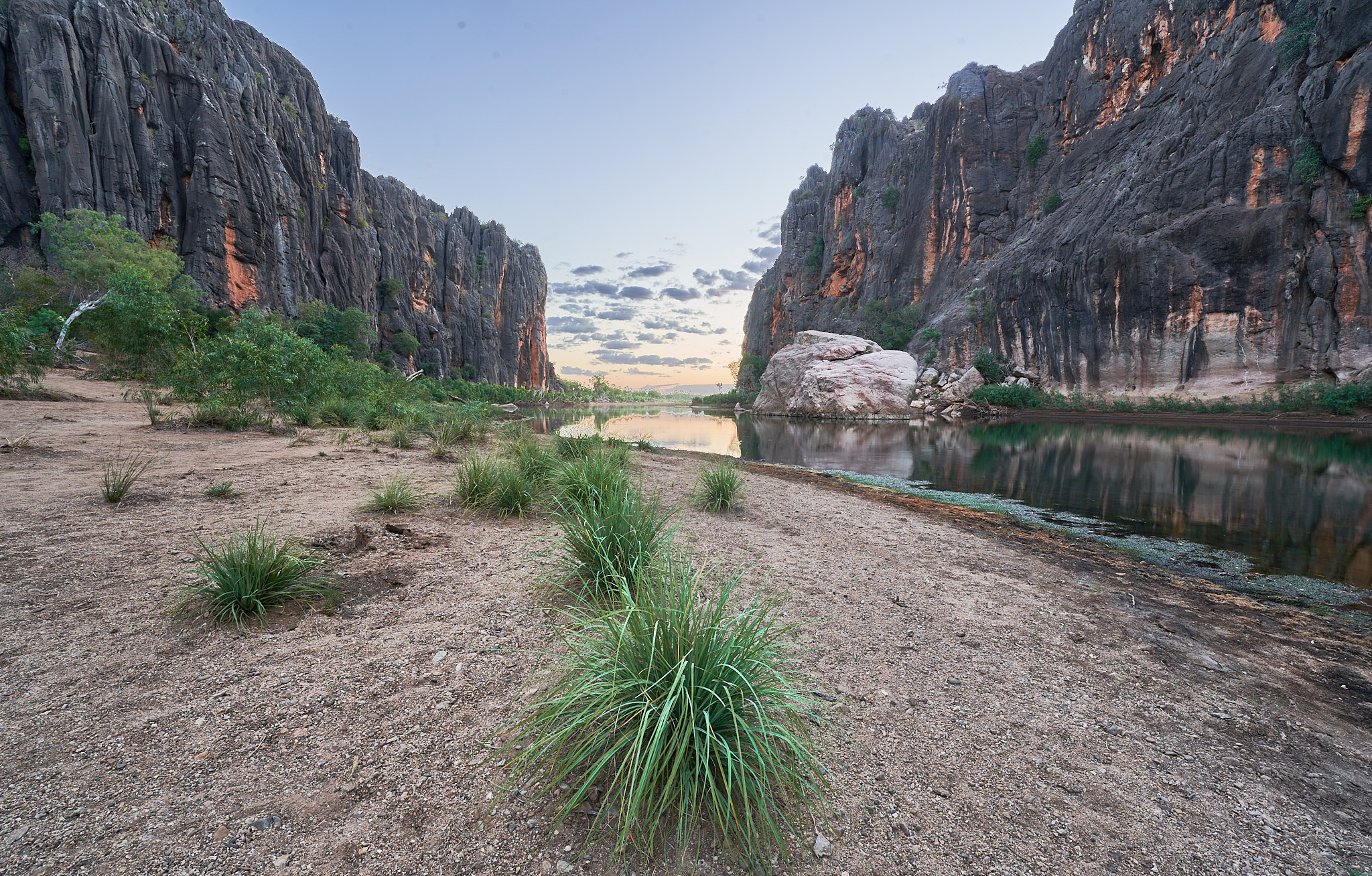
The Kimberley is famous for its many, very beautiful sandstone gorges but this one is limestone. During the Devonian, that’s 419 MYA (million years ago) to 350 MYA plus or minus a few minutes at each end, this area was beneath a shallow sea. Lime secreting organisms were busily creating a reef that we now see as the Napier Range. The Fitzroy River has cut through the range giving us Geike Gorge, Windjana is the work of the Lennard River and Barker Gorge owes its existence to the Barker River.
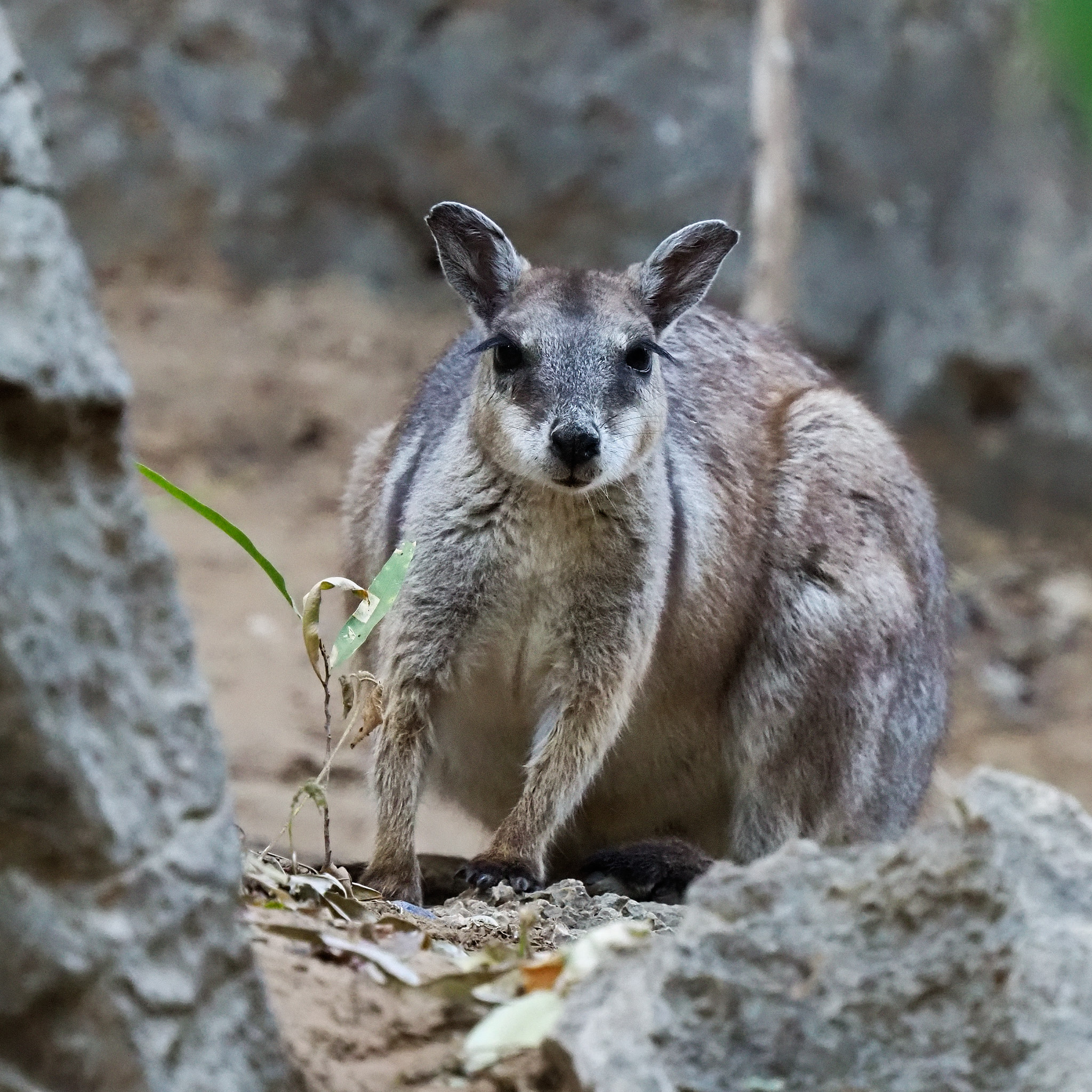
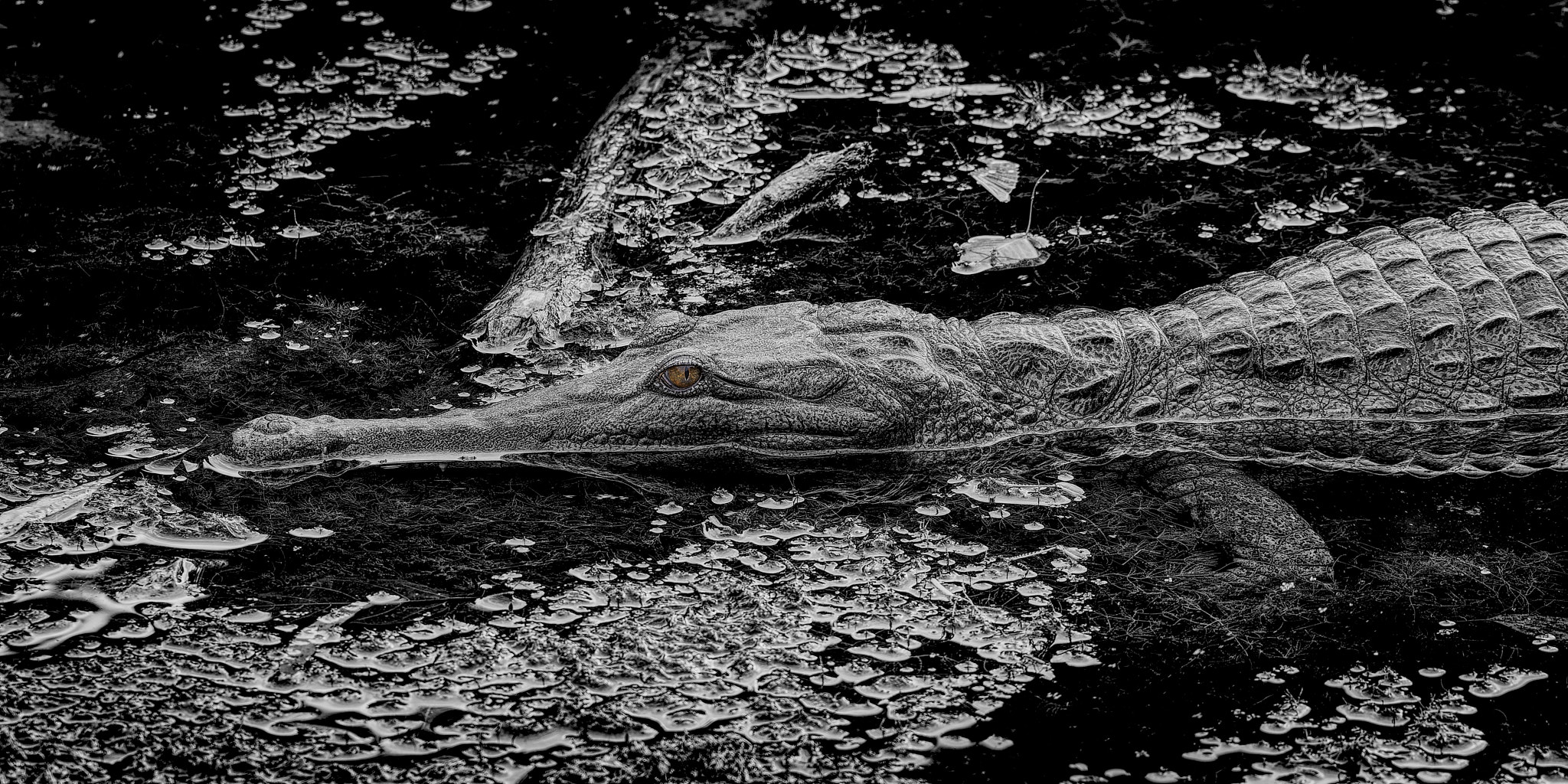
Windjana is in a National Park. There is a campground with flush toilets and showers. No drinking water is provided. It’s a top spot for Freshwater Crocodiles and Agile Wallabies. If you are really lucky you may see a Short-eared Rock-Wallaby. The scenery is spectacular. The bird watching is great.
Little CorellaSandstone ShrikethrushAgile WallabyWhite-gaped HoneyeaterShort-eared Rock-Wallaby
On previous visits the Freshies were basking out of the water. On this occasion they were harder to find. This may be a seasonal variation. Spot lighting at night soon confirmed that there were plenty there. Early in the morning I found one lying at the water’s edge.
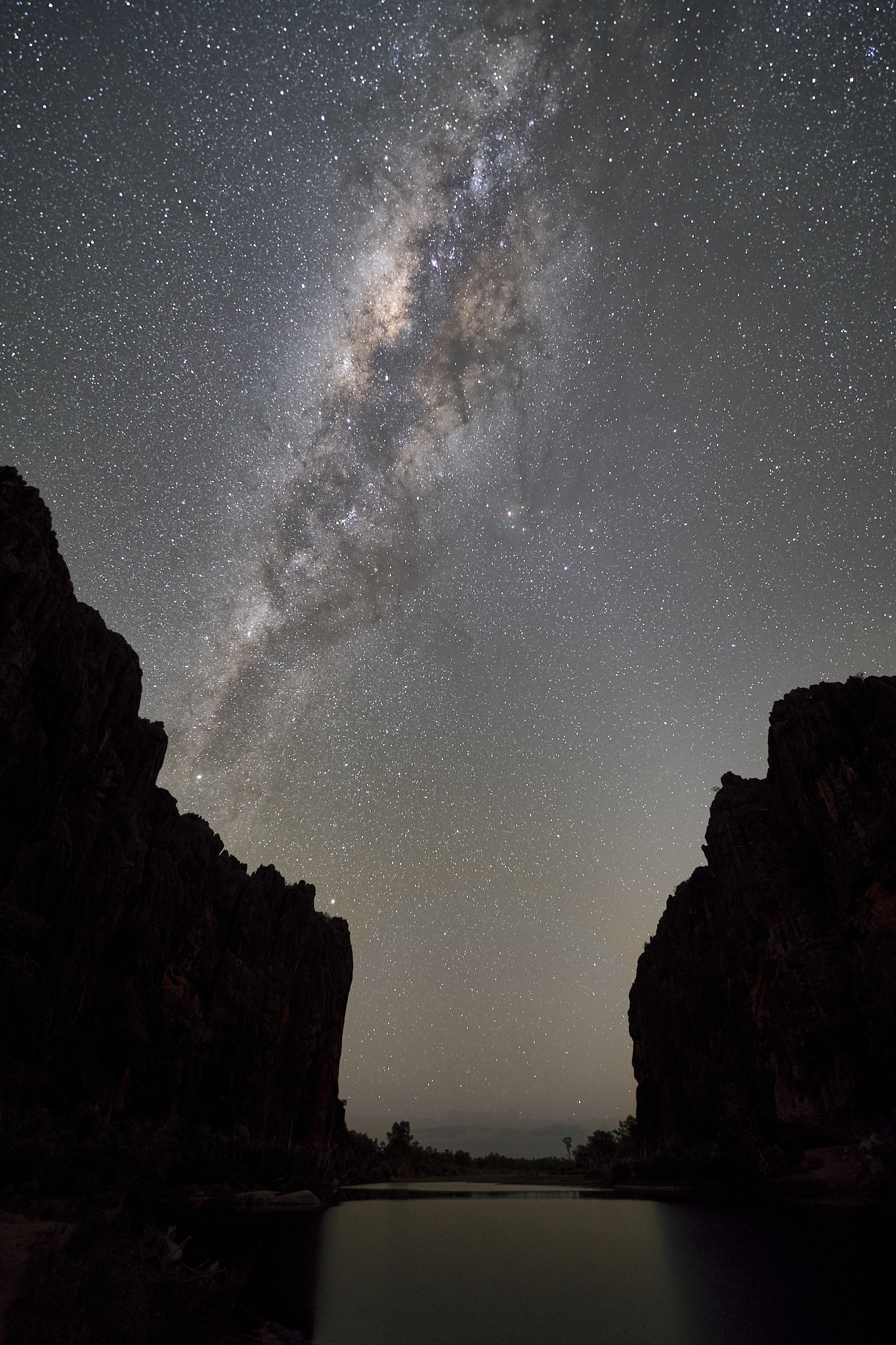
My visit was timed to be close to New Moon. There was a bit of cloud the first night but the second night was clear …
On the way home I put a rock through the sidewall of a tyre. I put on a hat, had a drink of water and set about finding the requisite apparatus. I was about to let down the spare from under the ute tray when a road train pulled up. How was I going? Clearly I had had better moments but in life’s rich tapestry this was no tragedy. The only available Australian answer to the question is Good Thanks. A second road train pulled up. The discussion group had expanded to three, but the first truck driver was now winding down the spare, the second driver asked me to make sure the hand brake was on. By the time I’d done that he was undoing the wheel nuts.
Then the third road train pulled up. The discussion group was now four men and a dog. Me and the dog were the only ones not working. Truck driver number one was jacking the vehicle up, number two had the wheel off the moment it cleared the ground, number three put the new wheel on, number two tightened the nuts, number one let the vehicle down and then wound the injured wheel up under the tray. QED.
Thank you, guys, thank you. Outback truckies are the salt of the earth.
After saying farewell to our friends at Ellenbrae it was back onto the Gibb. About 40km west of Ellenbrae the road improved but there were occasional relapses to bone jarring corrugations. A night at the Manning Gorge campground then two nights at Birdwood Station brought us close to Derby.
As well as having a poke around Derby we bought screws at the well equipped Mitre 10. We needed to replace quite a few in the van! We were home in time for lunch the following day.
This was not our first rodeo on the Gibb River Road. We could have crammed in a bit more but now that we live in fairly easy reach we think it better to spend a few days at a time in chosen areas rather than be traveling significant distances every day.
If you are reading this with a view to planning your own trip consider including Tunnel Creek, Windjana Gorge, Lennard River Gorge, Mount Elizabeth Station, Drysdale Station, Mitchell Plateau and Falls. The landscape at the Home Valley bush camp is a must for the photographer. If completing the loop then Purnululu AKA the Bungle Bungles is not to be missed on the Northern Highway leg. We took our dog which ruled out the Mitchell Plateau and Purnululu. You can’t take a caravan up to the Purnululu campground and it is probably wiser not to drag one up to Mitchell Falls. Swags or tents for a couple of nights at a time will make the adventure all the more exciting.
There are other places that we haven’t got around to visiting yet, famous among them being Mount Hart and El Questro.
Passes and permits are needed for some areas and should be purchased in advance.
Mechanical failure on the Gibb is likely to be very expensive. Tyre and mechanical assistance is available at Over the Range Tyre & Mechanical Repairs and to some limited extent at Ellenbrae. Getting hauled out would be expensive and might entail some delay. An extra spare wheel is a sound investment. There is any amount of contradictory advice on what tyre pressures to run. It may be of benefit to drop to 20 to 30% below highway pressures (eg Highway pressure 42 X 0.75 = 31psi). It is certainly smart to drive at moderate speed and avoid the obvious rocks.
We had a compressor mounted on the van when we started our journey across the Gibb. It had fallen off by the end of the first day. If you come across it we’d like it back!
Elsewhere in the world you will find Iguanas, Opossums and Baobabs. In Oz we have Goannas, Possums and Boabs. Australians have been very negligent with words borrowed from other languages. If I were you I wouldn’t lend us anything. Especially if you’re French. We absolutely murder anything French.
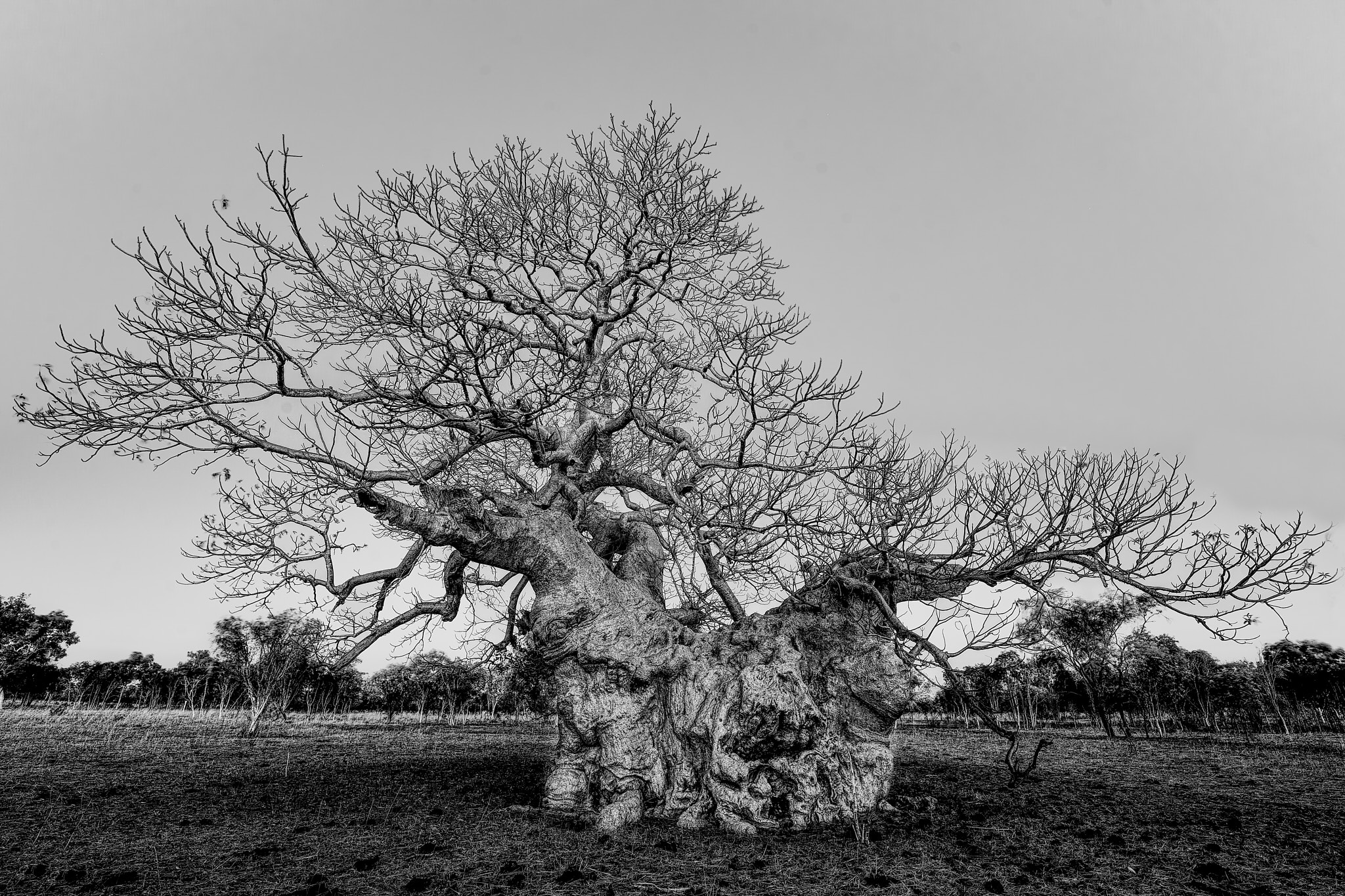
The genus is Adansonia. There are eight species. Six are endemic to Madagascar where the genus almost certainly evolved. There is another species in Africa and last but not least is Adansonia gregorii found in north-west Australia. They are very long lived deciduous trees that grow in seasonally arid parts of the world. There are Adansonias alive today that were old when Christ was born.
The seeds, leaves and pith from the fruit (tastes like sherbet not chicken) are allegedly edible and rich in vitamin C.
The Boab flowers overnight, not the greatest strategy for bird and bee pollination. So it may be down to moths and bats. Success results in a pod with many seeds. Indeed Wikipedia tells us Baobab is from the Arabic أَبُو حِبَاب (abū ḥibāb) meaning many-seeded fruit. The fruit pod floats in water and will germinate successfully even after immersion in the sea.
If they started out in Madagascar how did they get to Australia? We can rule out a Gondwanan explanation. The genus has features that suggest it is too modern to have emerged when Africa and Australia were part of one large landmass. Too young for that but too old to have been brought here by the aboriginal settlers. Genetic divergence has been happening for some millions of years rather than the roughly 70,000 years since people arrived. Which leaves a sea borne introduction as the most likely hypothesis. Aboriginal people have certainly helped its dispersal since their arrival.
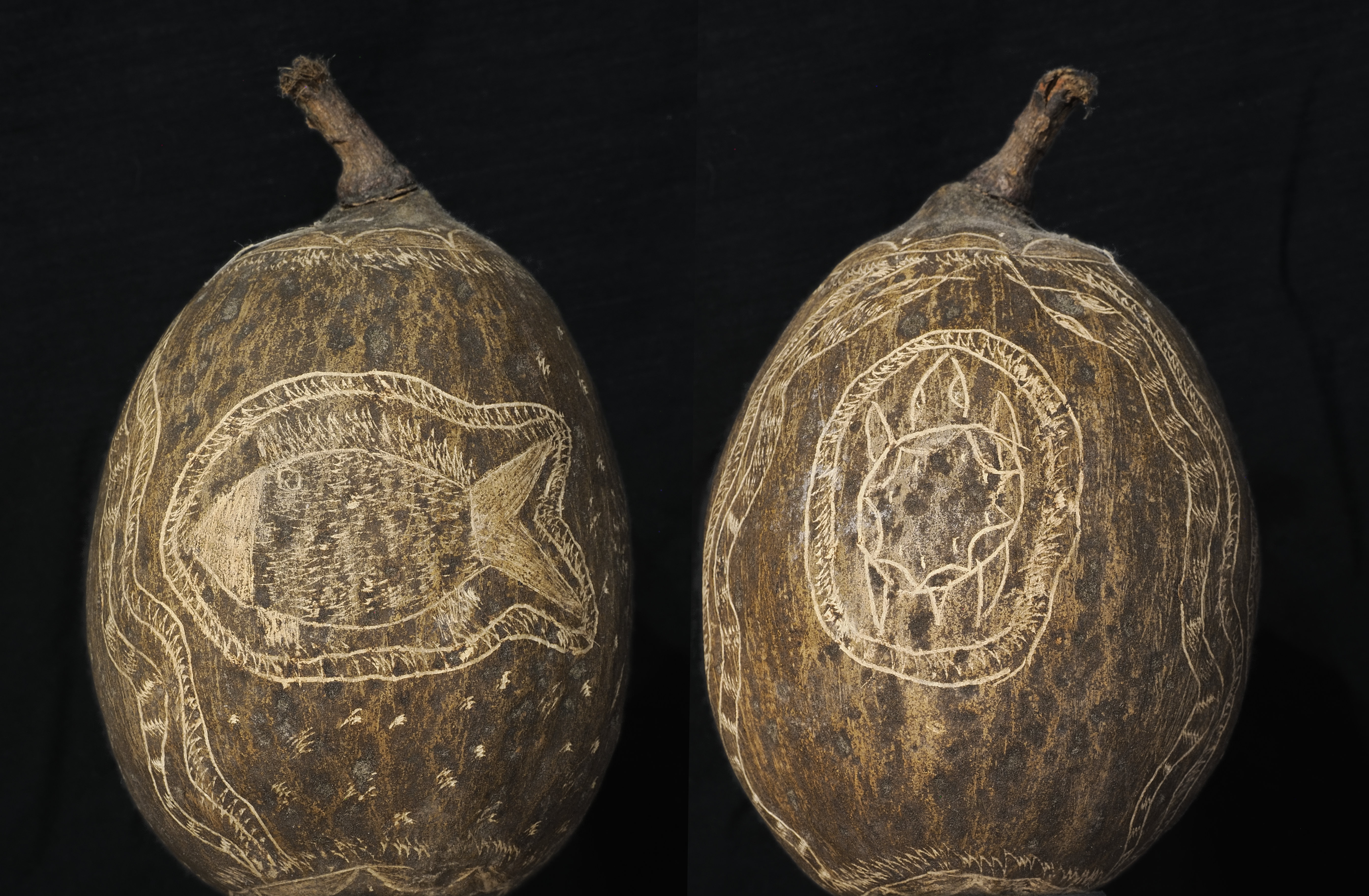
The Yawaru people of Broome have a traditional craft of carving designs in pearl shell. Some have transferred the art to carving Boab fruit. You can buy them in the market hot off the knife. I bought one 20 plus years ago. They last quite well …
You can see a fish on one side, a turtle on the reverse, traditional motifs for salt water people. The designs are encircled by a Rainbow Serpent.
Ellenbrae Station is an incredible one million acres.
It does a roaring trade in tyres, scones and jam (with cream) and mango frappés. There are two camp sites. One is close to a billabong, the other slightly further away and just a bit quieter as a consequence. You may luxuriate in a bath or take a hike to the very picturesque Sandy Beach Gorge.
We spent four nights here made all the more pleasant by catching up with friends. We did a bit of birding, ate a few scones and we also headed out to mess about in boats on the Durack River. A top spot.
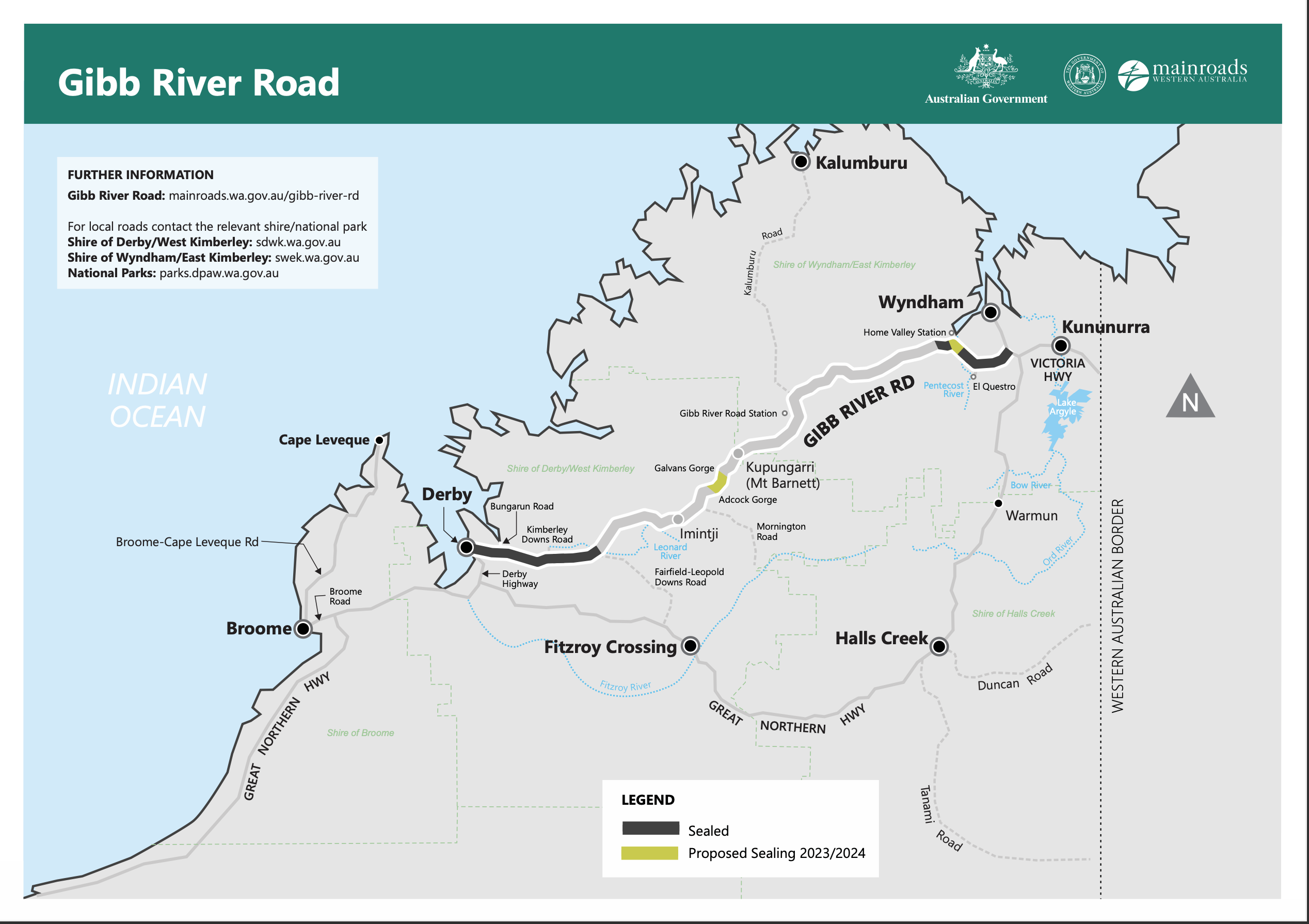
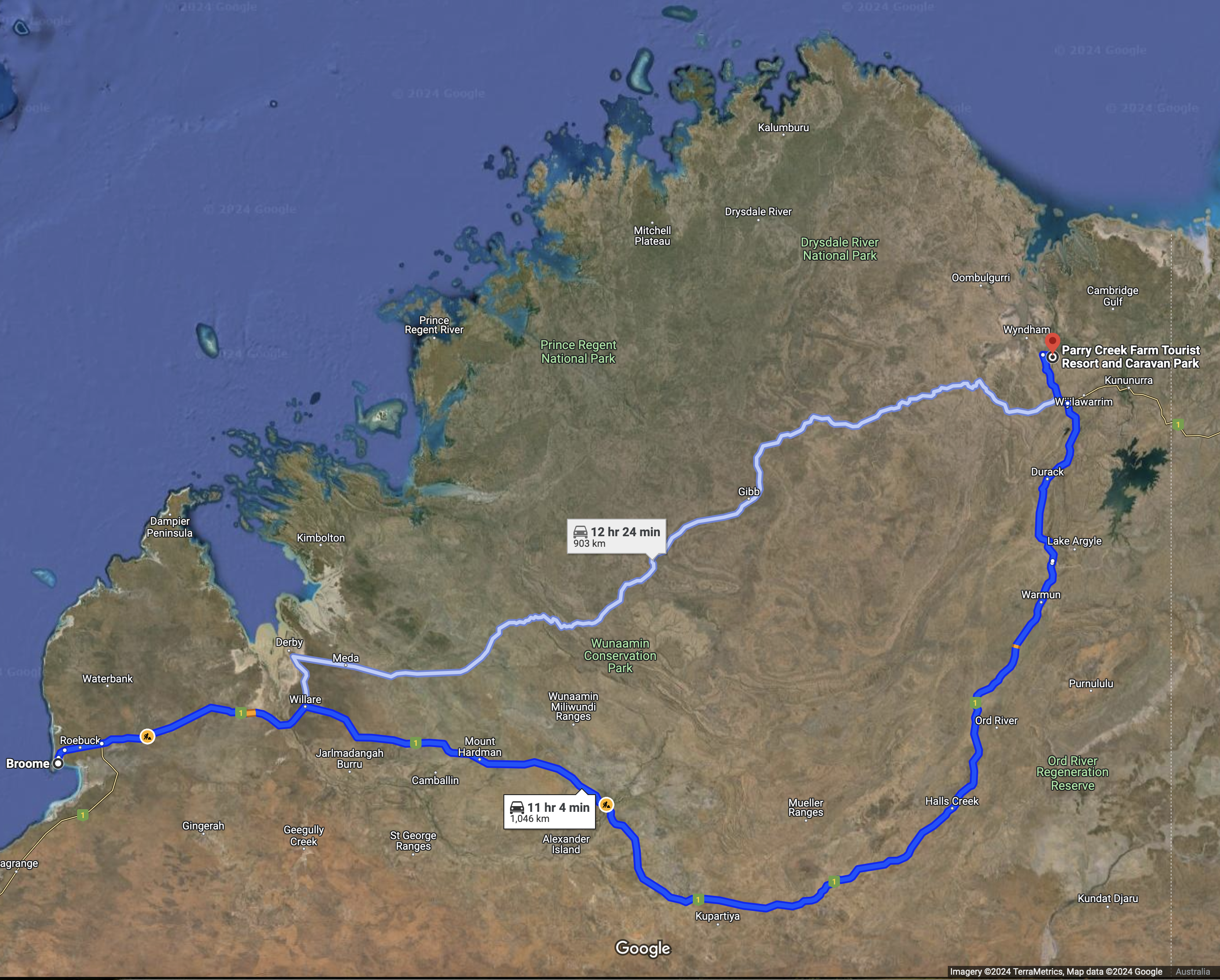
It was time to head west on the infamous Gibb River Road. It is a great adventure, 647km of mostly unsealed, corrugated track. If you are considering traveling it for the first time Main Roads WA have some good advice for you.
The best way to prepare a caravan is to take a tent. If that is not an option then you will find out just how honest the salesman was when he told you about the off-road capabilities of that shiny new van.
Heading west the fun begins at the Pentecost River. It is quite wide. There is no bridge. The “road” surface is rocky. The depth of the water varies and there may be crocodiles. Two pieces of good advice collide in this situation. Never drive through water of unknown depth – walk it first. Don’t enter the water with Estuarine Crocodiles. Be patient, someone else will give it a go before long. If they walk it have the camera ready. When they drive watch carefully.
The next sizeable river is the Durack, usually deeper but not as wide. Between the two your beer cans will rub through, eggs will shed their shells and your teeth will rattle in their sockets. It pays to wear a sports bra, yeah, boys too. You must have a screw loose. More than one. Guaranteed.
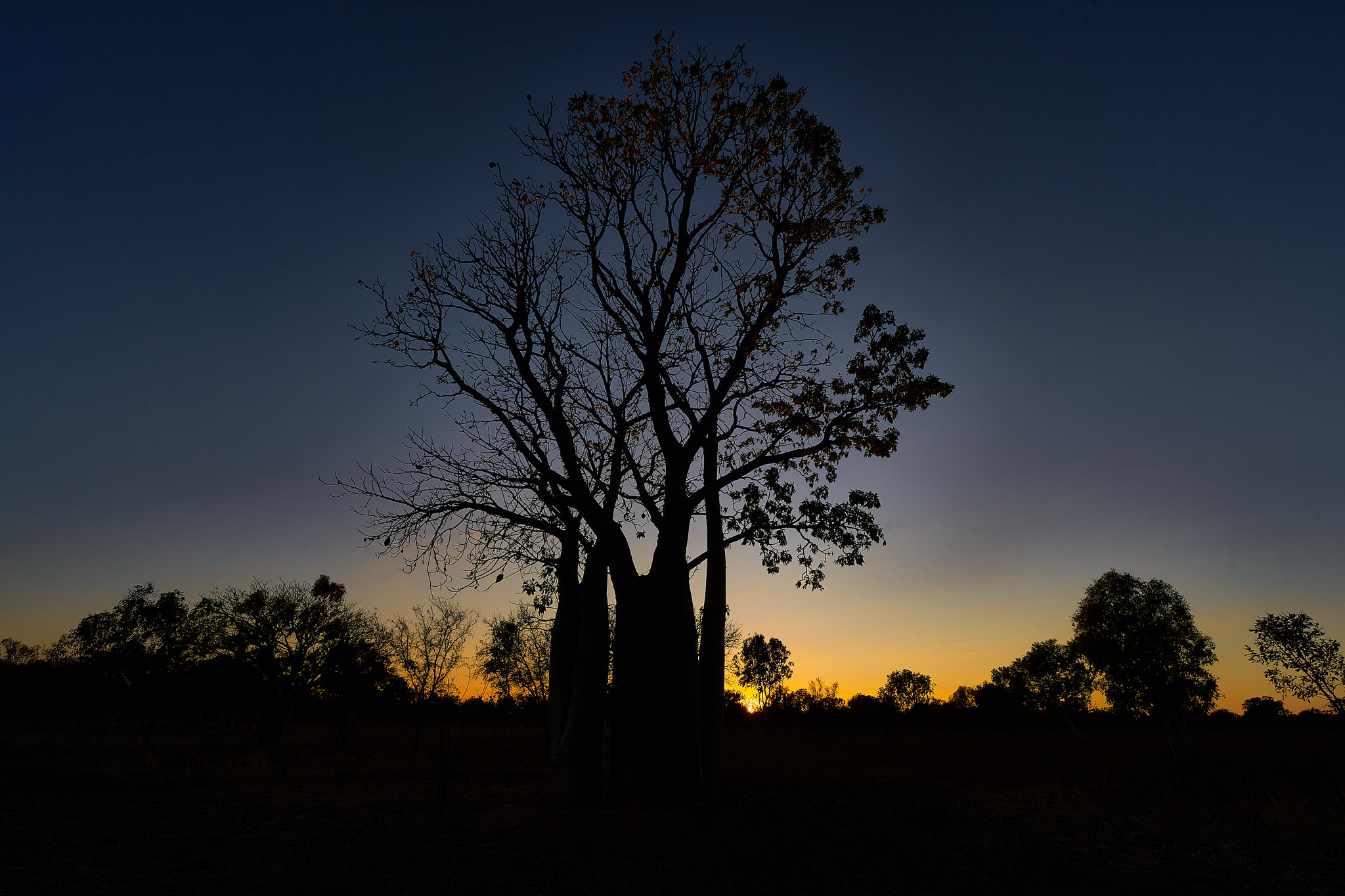
Durack RiverBoabs
Our destination was Ellenbrae where we caught up with good friends who were working there.
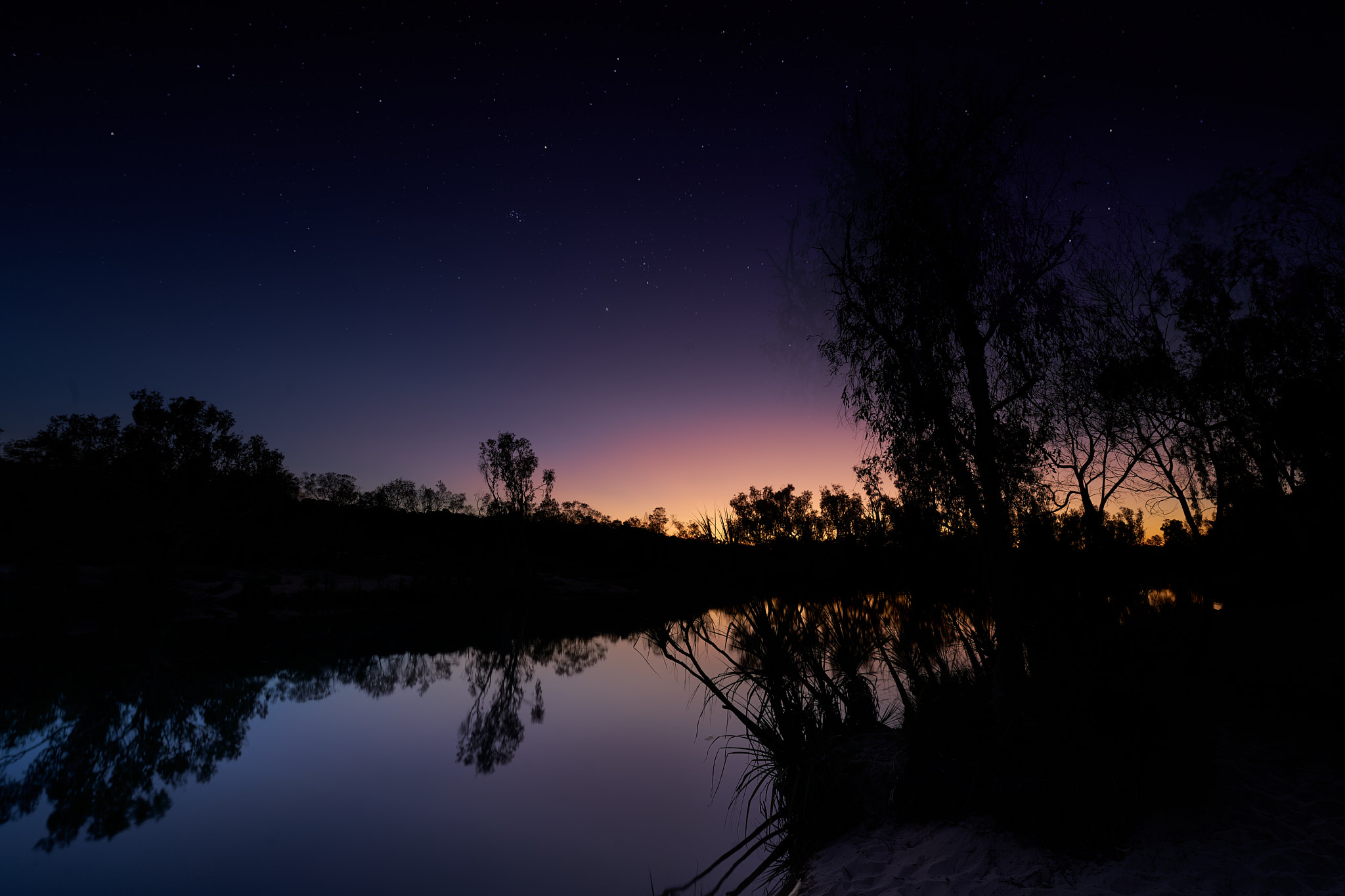
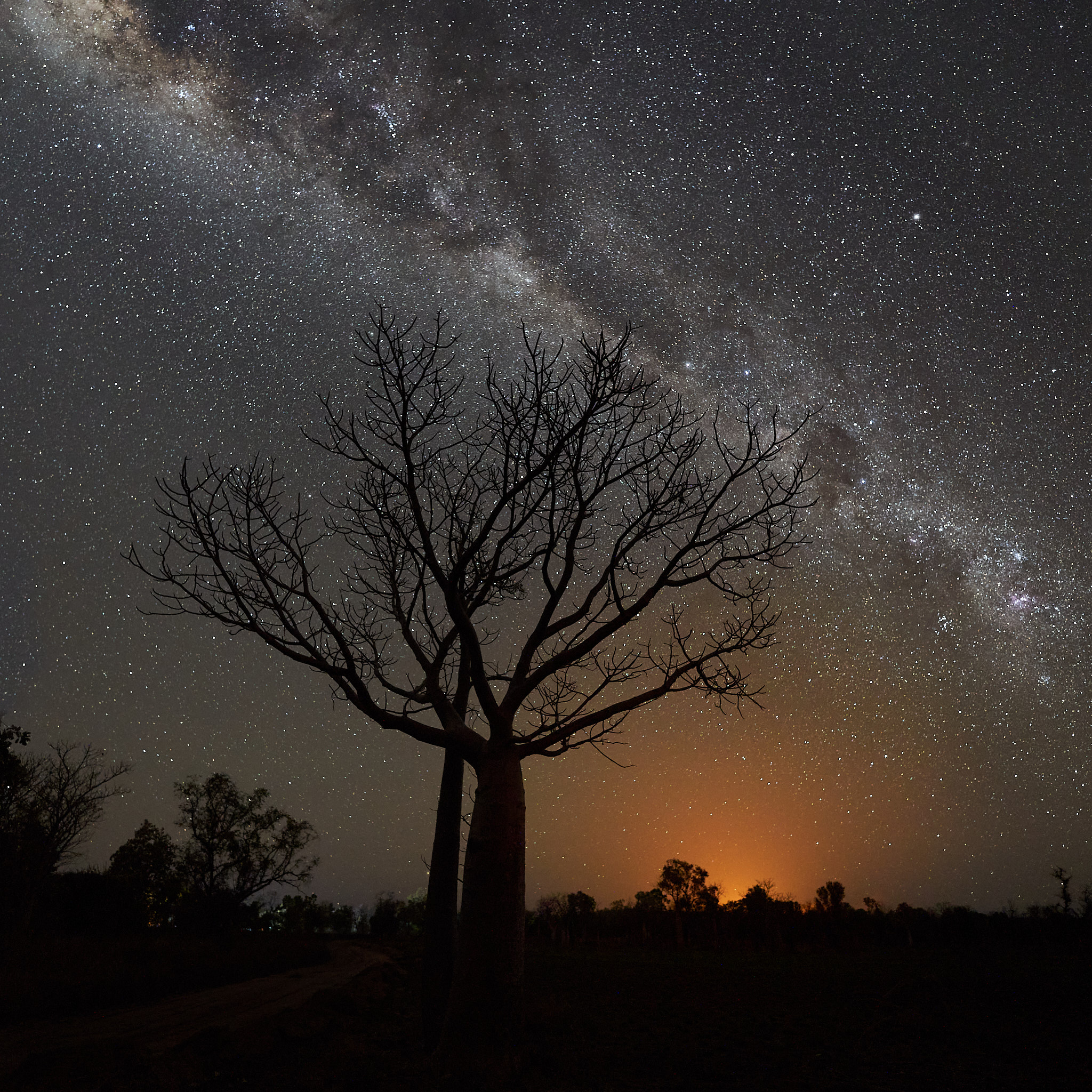
It has long been my ambition to shoot the milky way with Boab trees as the foreground. There are some beauties around Parry’s. I had chosen the timing of the trip to keep the moon out of the equation. I was not expecting the country to be on fire. Early in the dry season is a good time for managed fuel reduction fires, so called cool burns. Rumour had it that someone thought they were really cool and enthusiastically lit a whole bunch more. So I had to contend with a lot more ambient light than I expected. Somehow I coped.
The stops so far have been one night stands – way points with benefits. Parry’s is a destination.
Broome has no duck pond in the park and no sparkling brook to walk beside. Just as Eskimos have many words for snow Australians have numerous endings for the phrase that starts with “as dry as …” mostly impolite. Except when it’s flooded Broome is as dry as any of these things. Parry’s Lagoon is a different story.
Parry’s Creek Farm is near the small town of Wyndham. It’s surrounded by the Parrys Lagoon nature reserve and unlike the nature reserve is dog friendly. It is a favourite destination and the first stop where we stayed a few days. If the word resort conjures up a vision of Piña Coladas (whatever they are) from the swim up bar forget it. But there is a pool, also a restaurant which serves a good meal. The service was excellent.
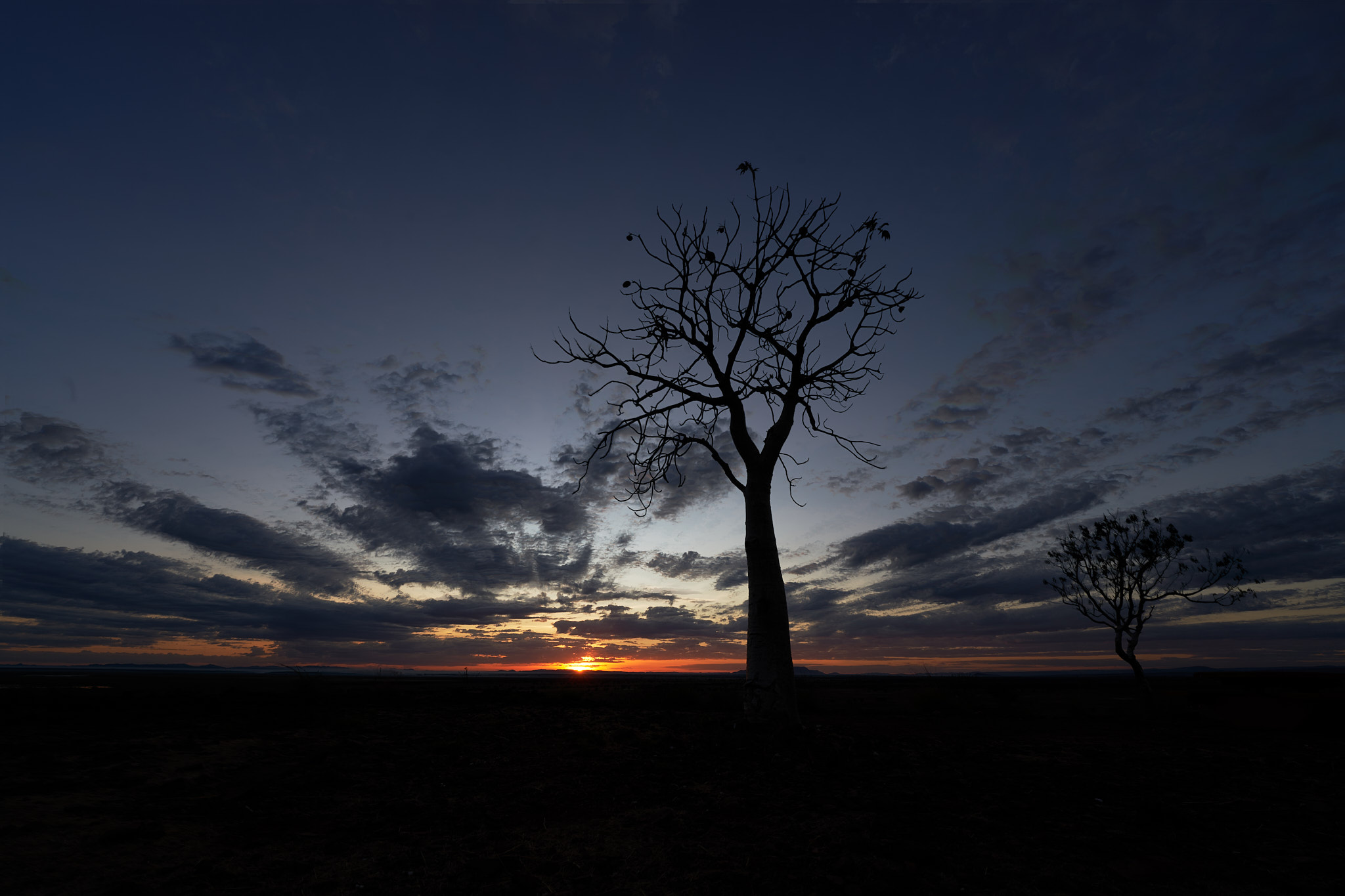
In the reserve you can visit Telegraph Hill for some WW2 history and some nice Boabs. Then continue to the bird hide at Marlgu Billabong to boost the bird list.
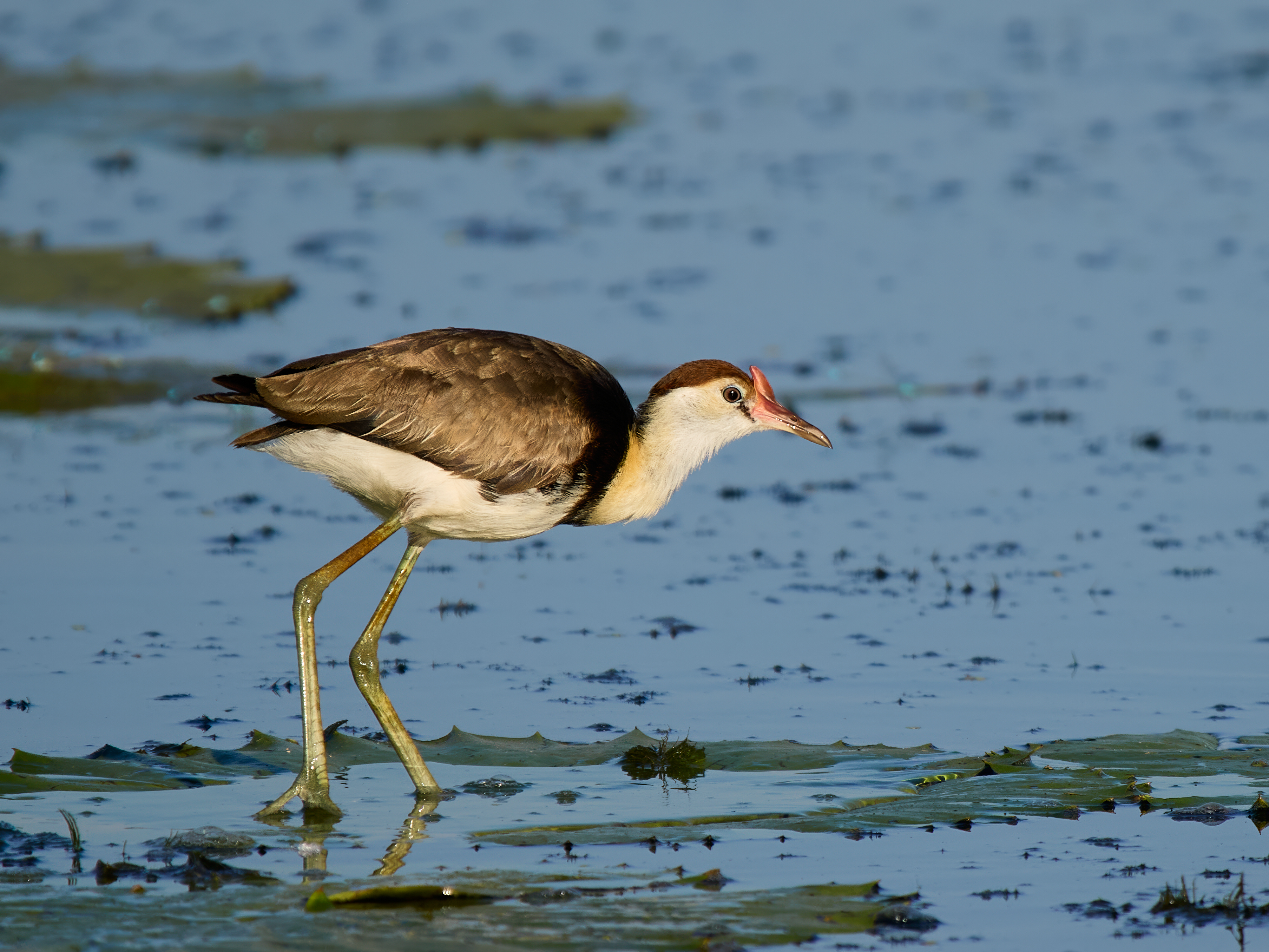
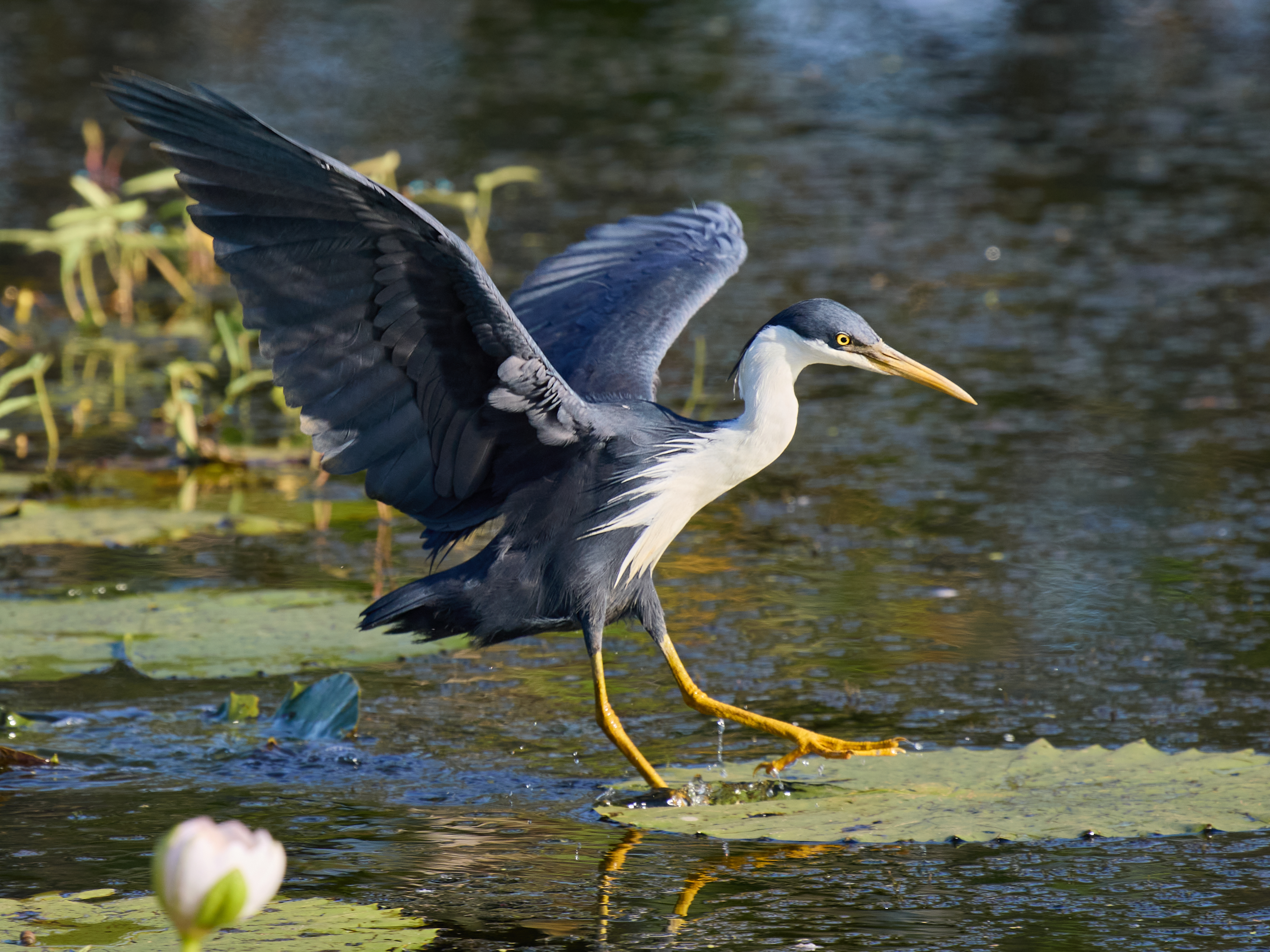
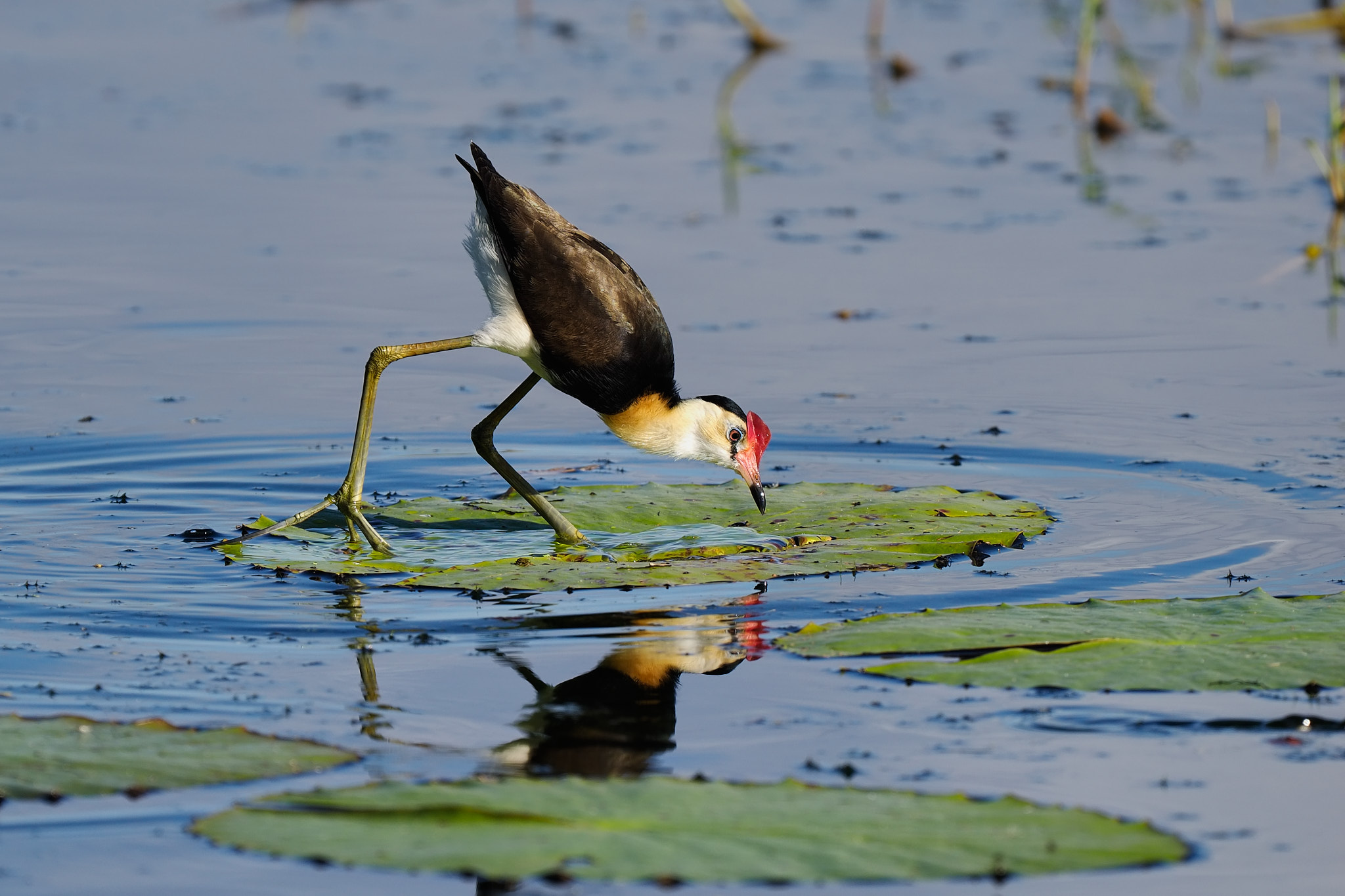
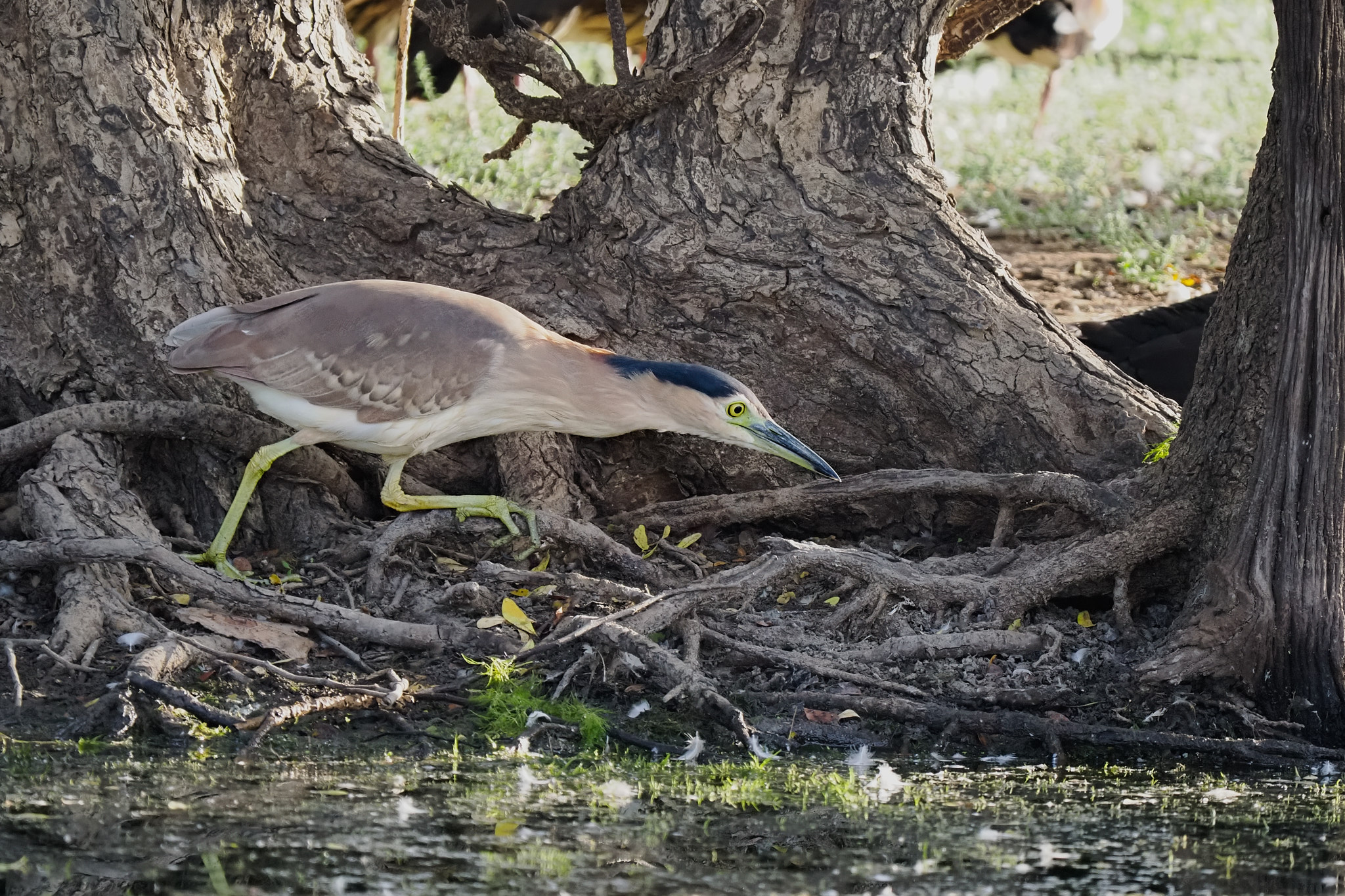
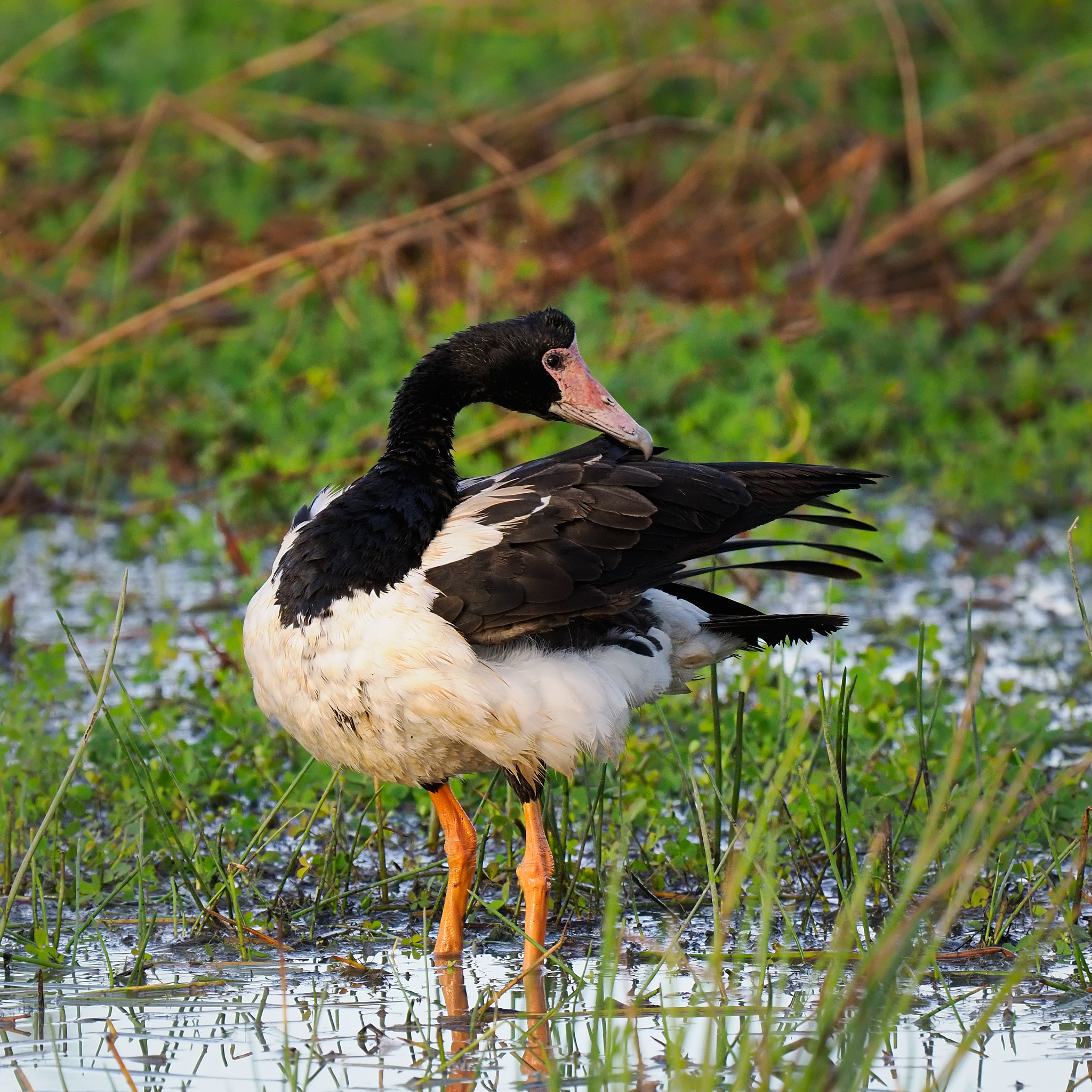
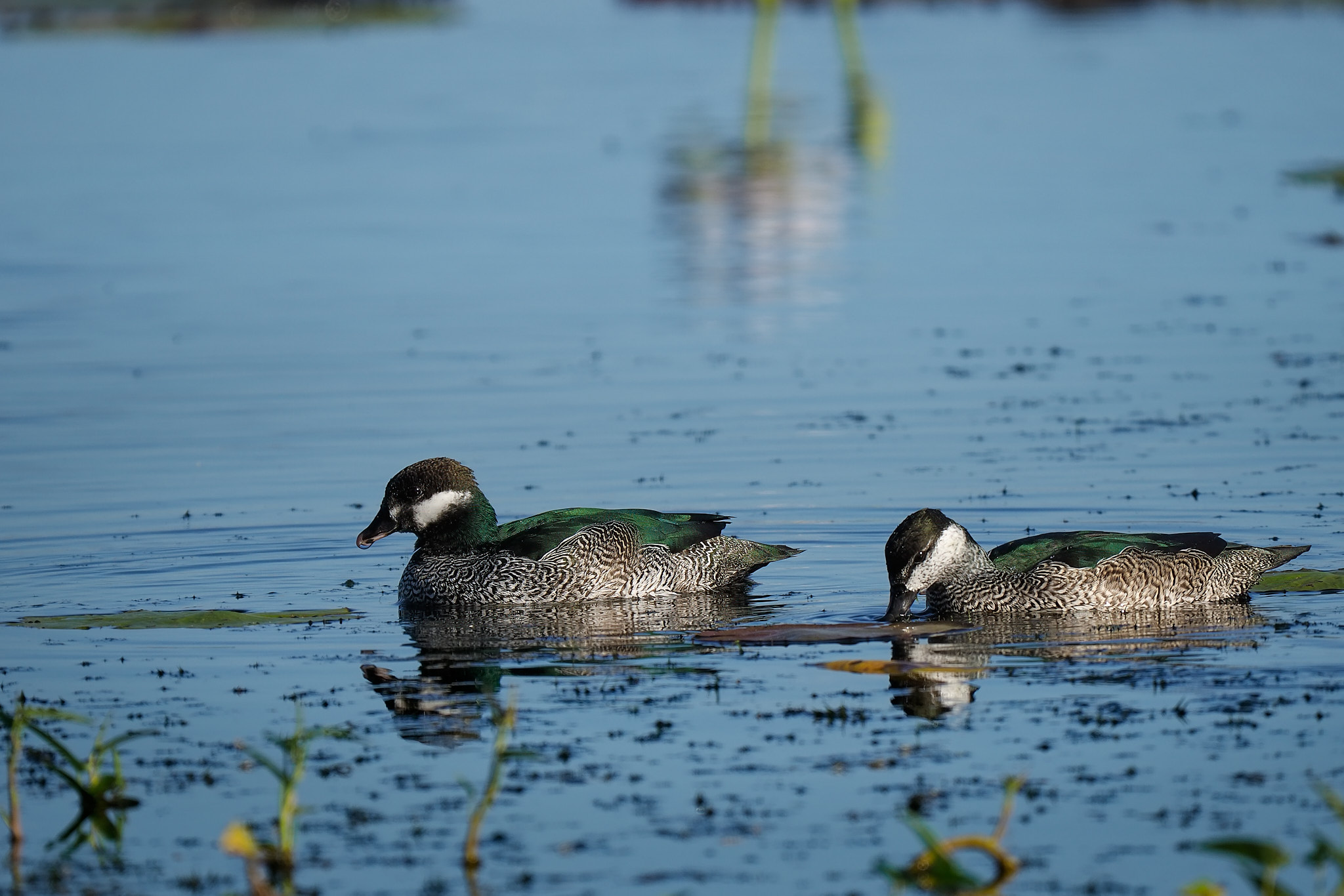
Australian SwamphenGlossy IbisComb-crested JacanaComb-crested JacanaPied HeronNankeen Night HeronNankeen Night HeronMagpie GooseRadjah ShelduckGreat EgretPlumed Whistling DuckGreen Pygmy-goosePied HeronNankeen Kestrel
There is a smaller billabong on Parry’s Creek Farm as well. It is surrounded by a small patch of rain forest. Some pleasant walks radiate from the camping area with more wildlife watching potential.
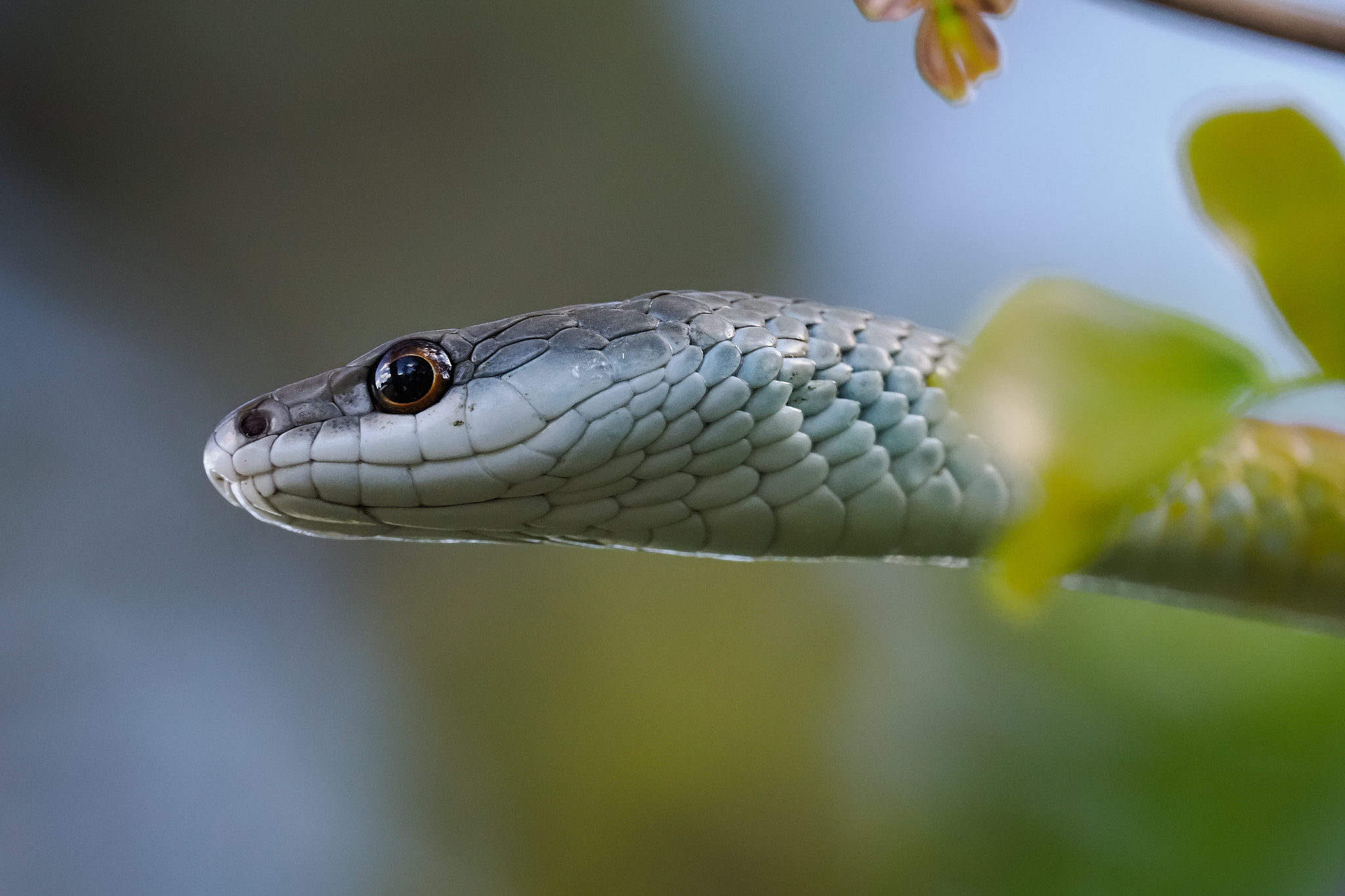
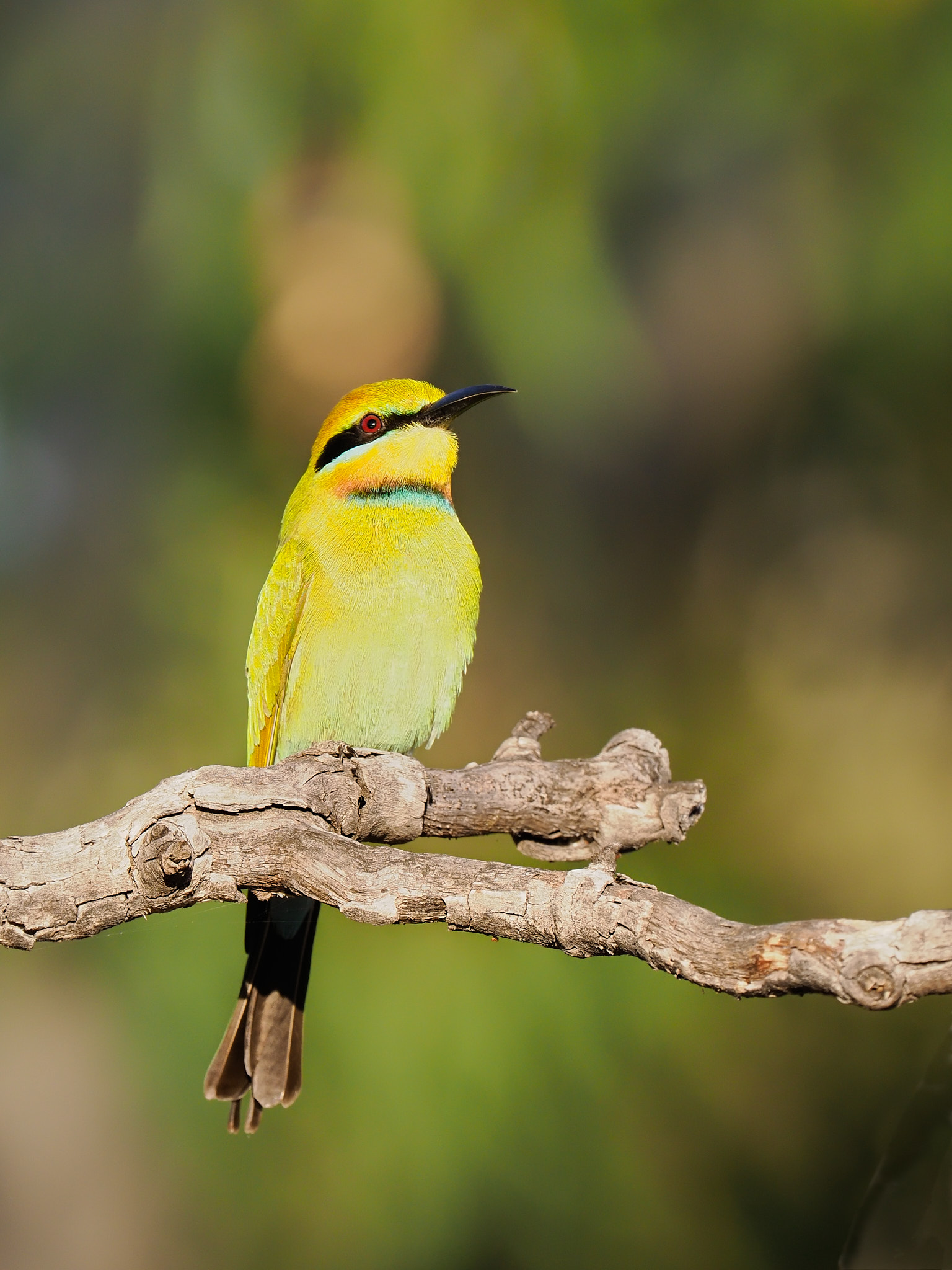
Common Tree SnakeCommon Tree SnakeRainbow Bee-eater
Up next. Nightfall brings a new suite of possibilities …
The start of our trip corresponded with the new moon. I was keen to take advantage of the dark sky. At Larrawa I found a nice spinifex foreground. The following night we stayed at the Leycester rest area and I found a few skinny young Boabs not far away. Some bonus lighting was provided by a passing car.
Leycester rest area is a 24 hour free camp with toilets, a dump point and rubbish disposal. It’s adjacent to a very beautiful spot on the Ord river and it’s only a hop skip away from the Bungle Bungles turn off. Given all of that and the time of the year it’s no surprise that it was packed. The river bank sites are the first to go.
Larrawa Station is 146km east of Fitzroy Crossing. The camp ground is 4km off the Great Northern Highway. We were there early and chose our spot. Is was pretty full by the end of the day, a basic but very pleasant site.
A walk of about one and a half kilometres brings you to Christmas Creek. Boabs and cattle are the highlights along the way. The first creek bed was dry, the second one contained a nice billabong. Both channels would be running a banker at Christmas given that our southern Christmas is a summer event and summer is the wet season up here. Come in winter.
The billabong was the place to find the birds.
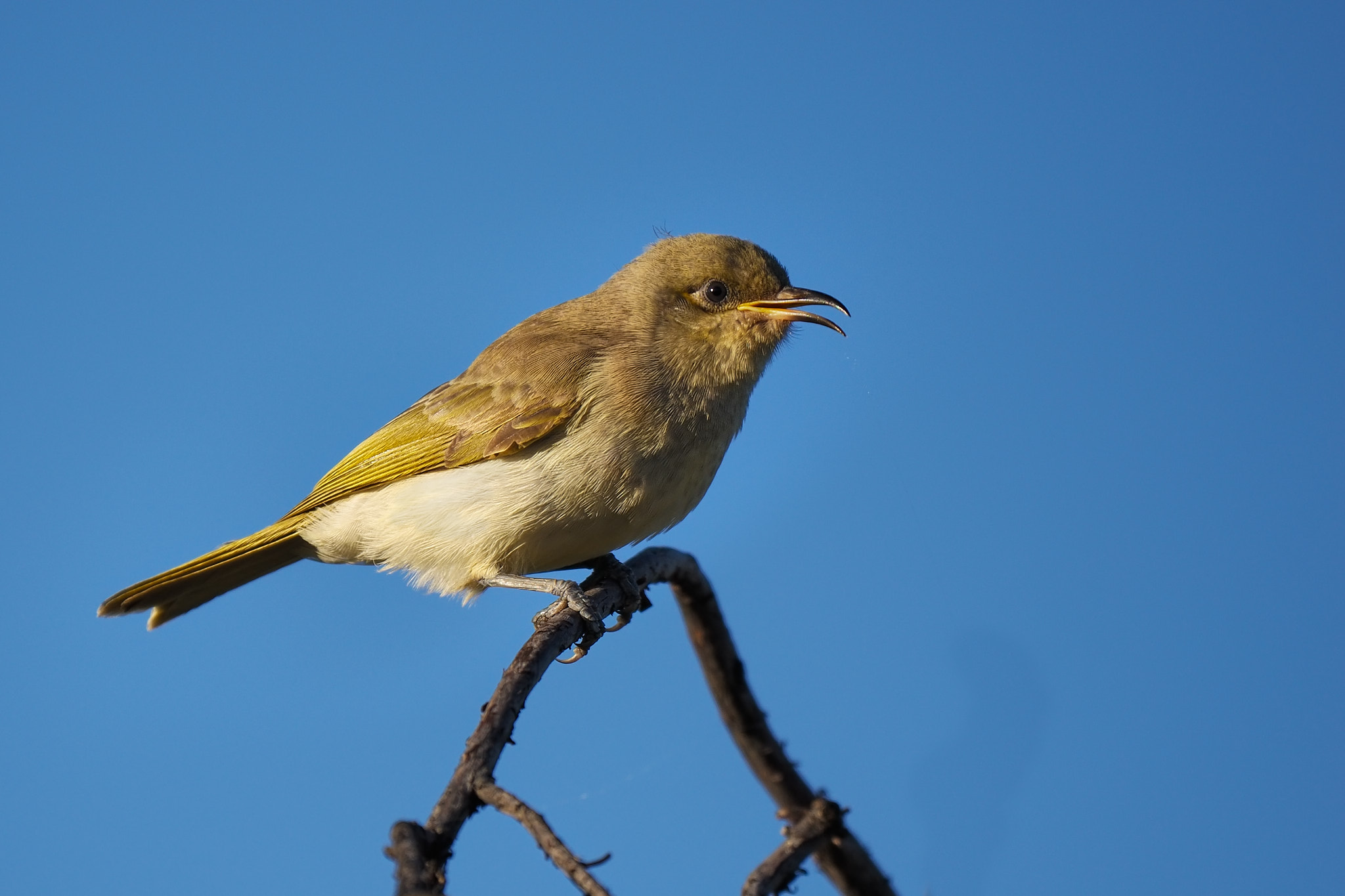
Brown HoneyeaterPainted FinchPainted FinchSacred Kingfisher































 bobmcgee