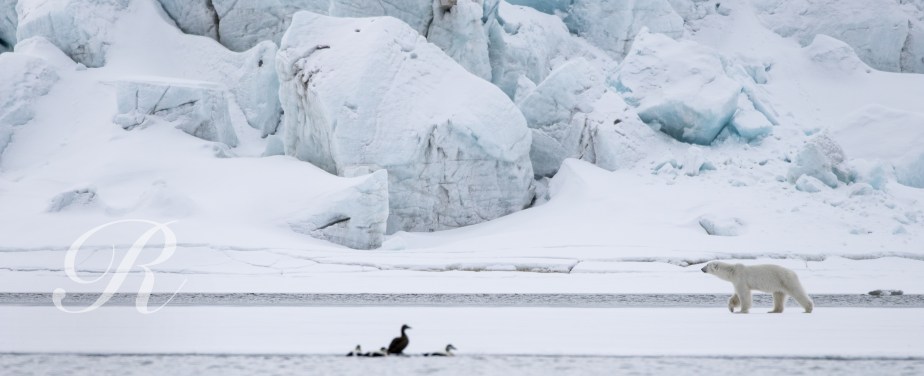


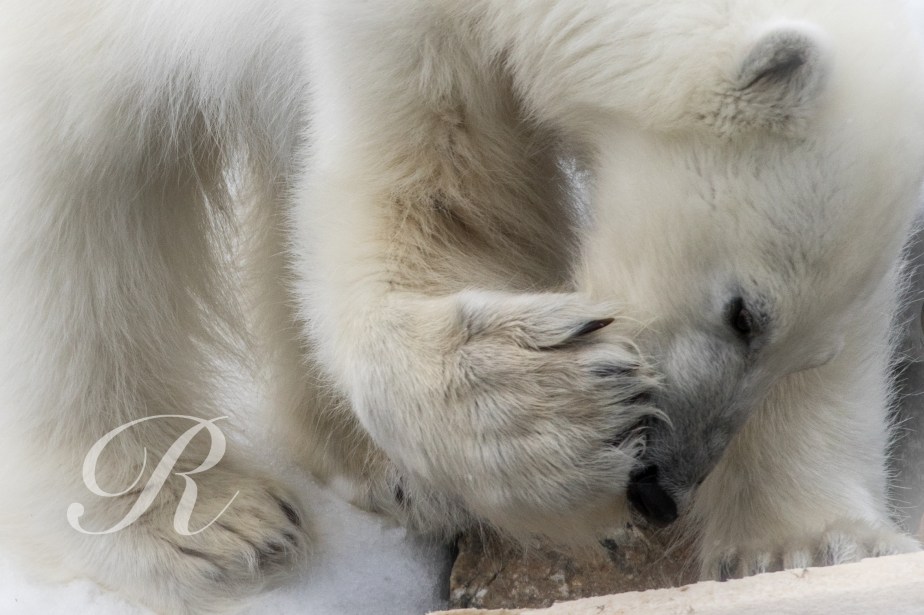
and pray that there's intelligent life somewhere out in space
You meet the first one at the airport. It is strategically located by the luggage carousel. You can’t miss it. I photographed this one in the church …
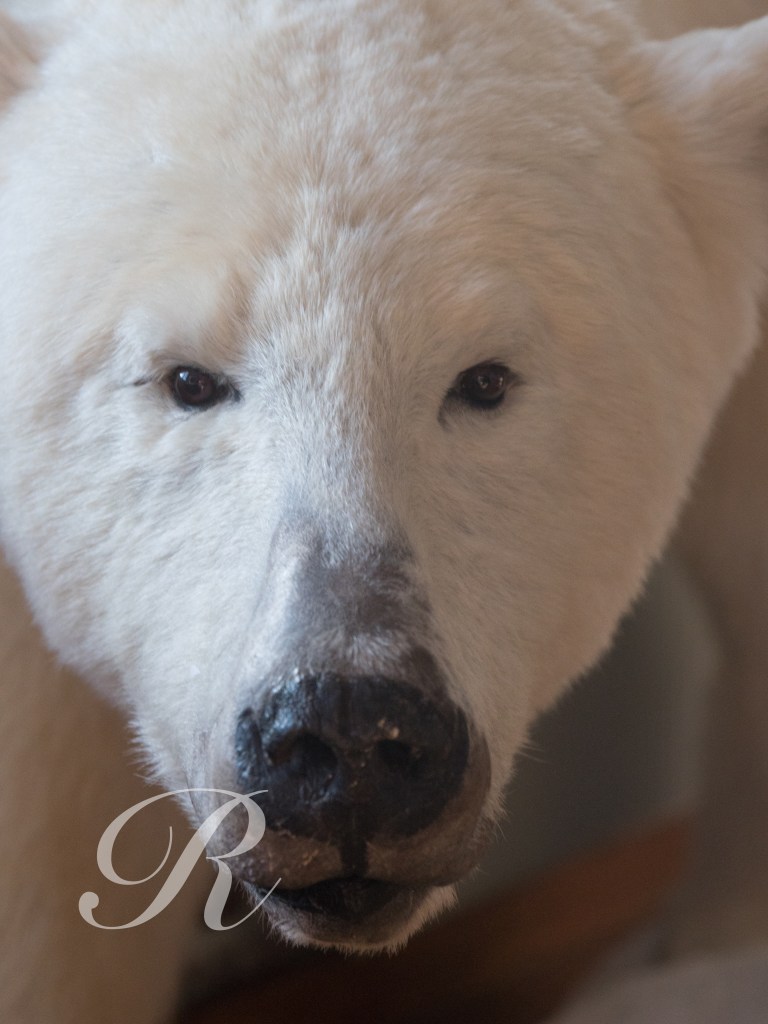
If you want one to take home you can apparently buy one here …
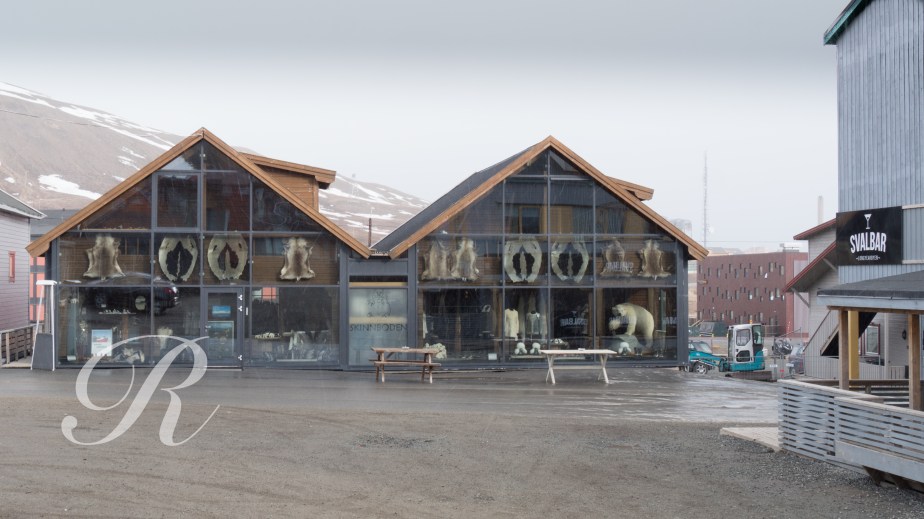
home of this notice …

Perhaps you frown on such things and prefer a more artistic representation …

At the city limits you find this …

a warning that, as the sign says, applies to all of Svalbard including behind you. Last year a mother and two cubs spent the night in Longyearbyen.
Polar Bears are extremely dangerous and especially hungry for two or three months after the ice goes out. That’s the tourist season. Until new-born seals become available you are the best source of nourishment on the menu. There have been quite a few attacks recorded and five have been fatal in the last 40 years. When you are traveling in the back country there may be a bear just over the next rise. Never leave town without your rifle or a well equipped guide.
Camping has proven to be particularly hazardous, trip wires, taking turns on watch and having firearms at hand may keep you out of trouble.
With a certificate of good behaviour from your local police you can rent a rifle. A flare pistol is also recommended. Our guide, Jens, is modelling the appropriate outfit …

But Polar Bears are what I’ve come for. Will I get a photo that conveys their majesty? Will I get a photo at all?
Icy ramparts towered above us.

Ice bergs calved from mighty glaciers.

Ice formed on the ship,

and on the surface of the water.
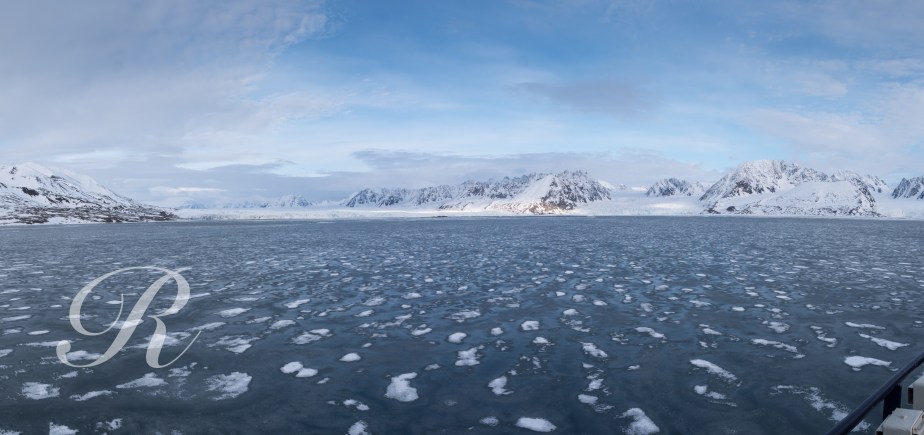
Wind and current could quickly bring the pack ice around the ship.

Freya could carve a path through thin ice …

but larger bergs required respect.
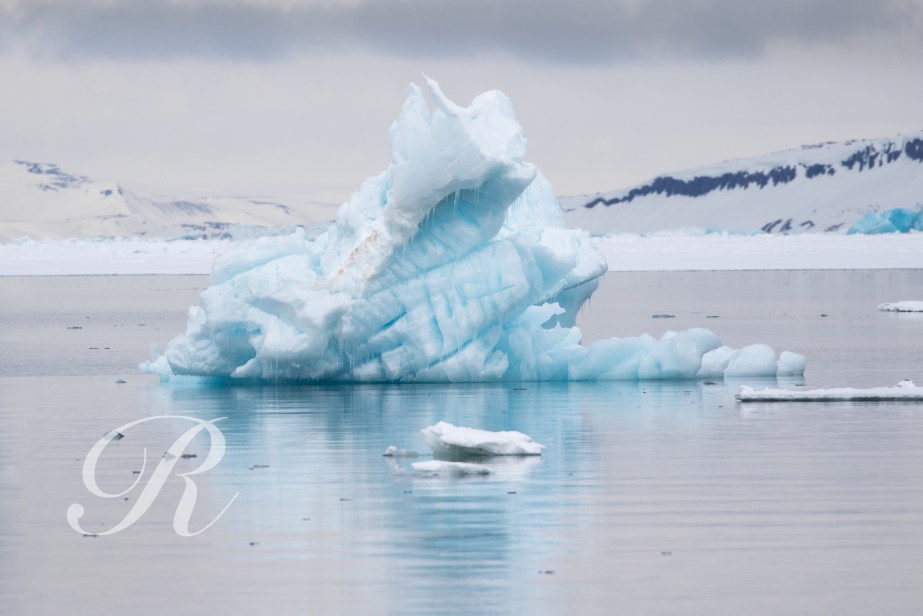
I rearranged the deck chairs and told no-one I was a musician.
Our intrepid leader, Pete Oxford, had with him an underwater camera, lighting and the most heavy-duty waders I have ever seen. No wonder his luggage was slow to arrive. His hope was that he would be able to get close to a Walrus either under water or half above and half below. Given the puncture wounds we had already seen this was to be a hazardous venture.

But you don’t make the cover of National Geographic without taking a risk.

But it was the turbidity that got him not the tusks.
The visibility under water was poor and this in the period when the sun doesn’t set. There can’t be much to see when it doesn’t rise. This is likely the reason that the Walrus has such impressive vibrissae …

Likewise the Bearded Seal

As well as assisting in finding food it has been suggested that the whiskers help to find breathing holes.
Apart from the Walrus, sole representative of the Odobenidae, the remaining seals in the Arctic are all members of the Phocidae, True Seals. There are no eared seals above the Arctic circle. The Phocids are the master divers but the waters we were in are fairly shallow. The records all go to the Elephant Seals in the southern hemisphere.
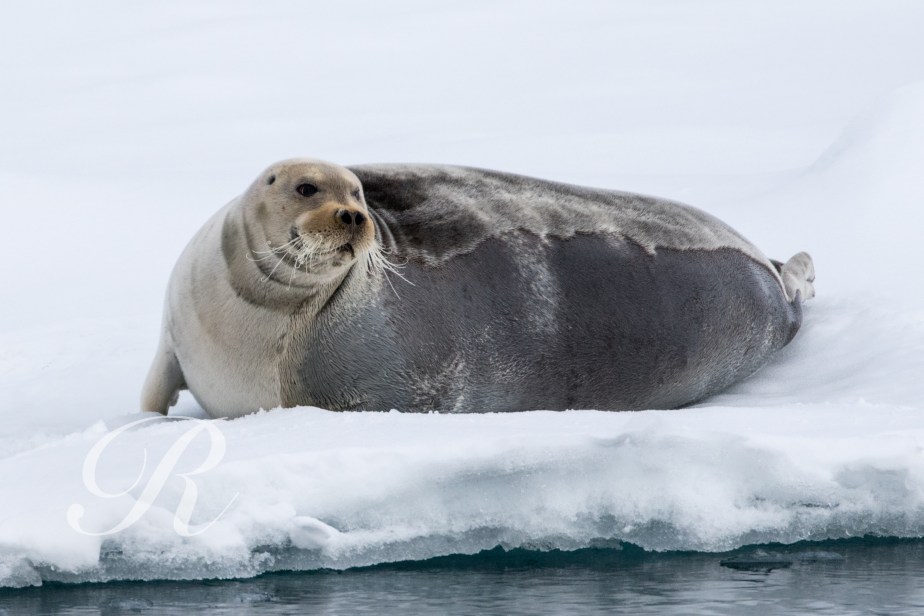
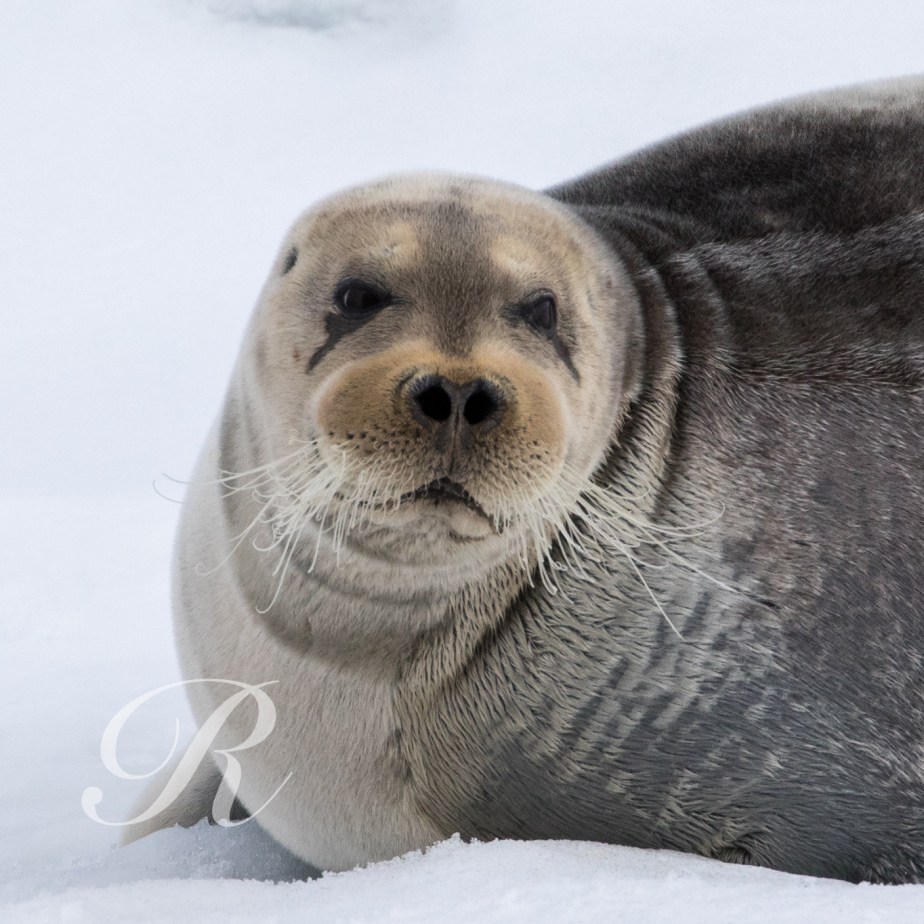
Among their adaptations for diving seals have nostrils that are closed at rest. It takes a muscular effort to open them to breathe. It may not seem much but it means that a little less oxygen is required when oxygen is scarce and energy is needed to pursue food. This can be seen well in the Harbour Seal photos below.
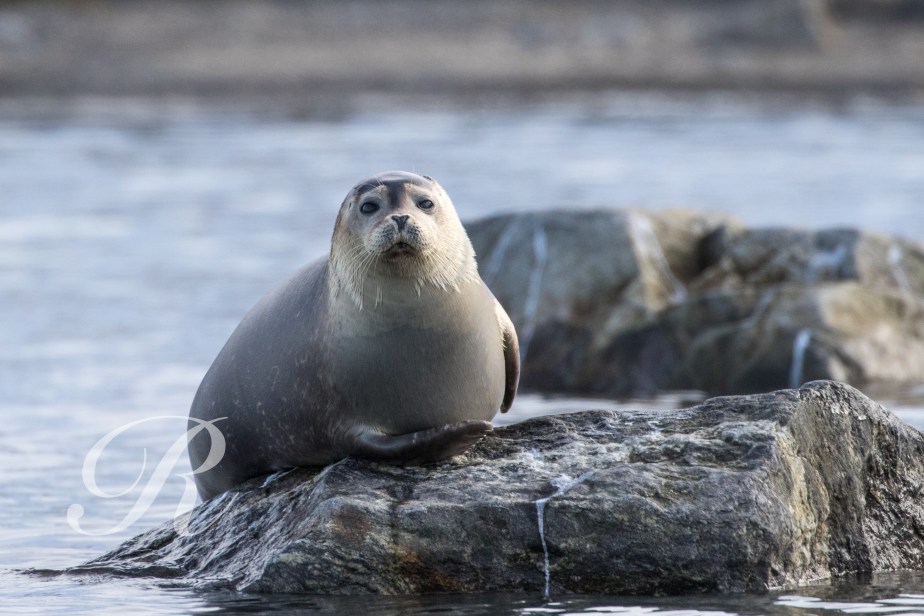
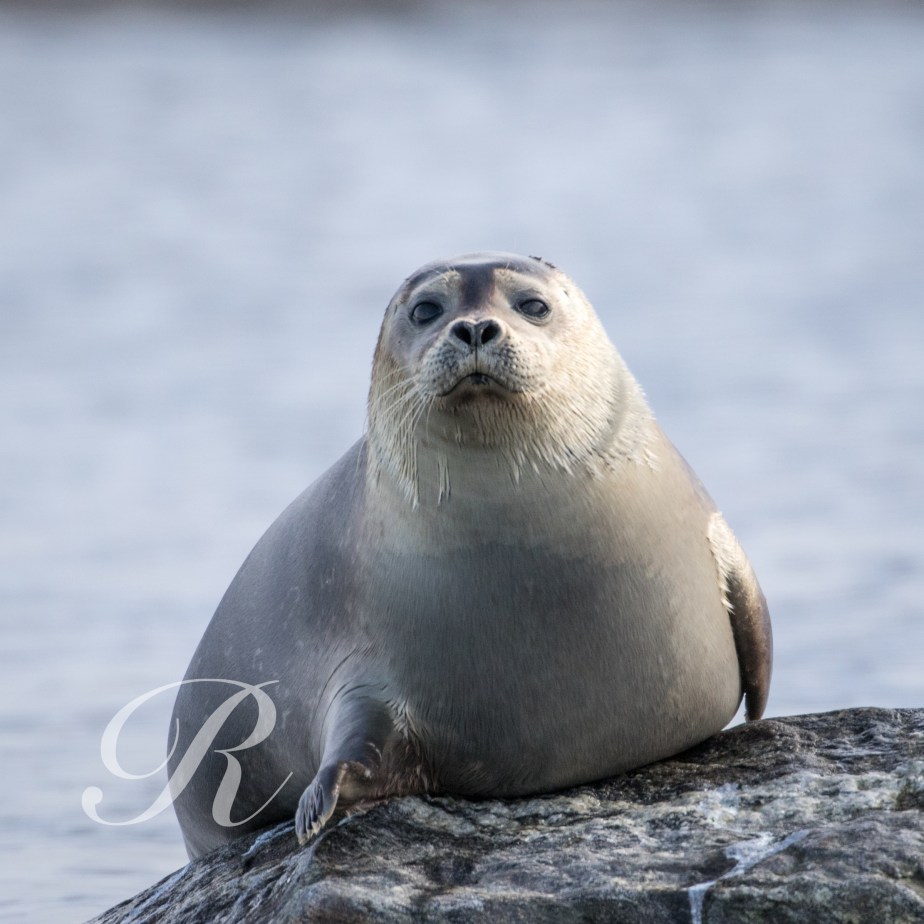
Even without a heart-shaped nose they look ineffably cute, you can understand why they have their admirers …

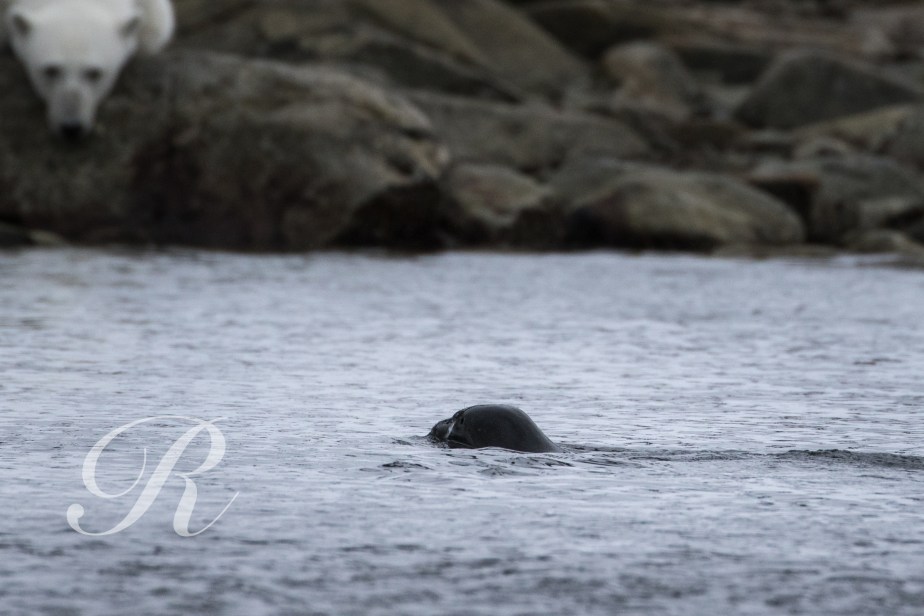
The call came at about 2am. First encounter …
The time has come,the Walrus said,
   To talk of many things:
Of shoes and ships and sealing-wax
   Of cabbages and kings
And why the sea is boiling hot
   And whether pigs have wings.

   Lewis Carroll
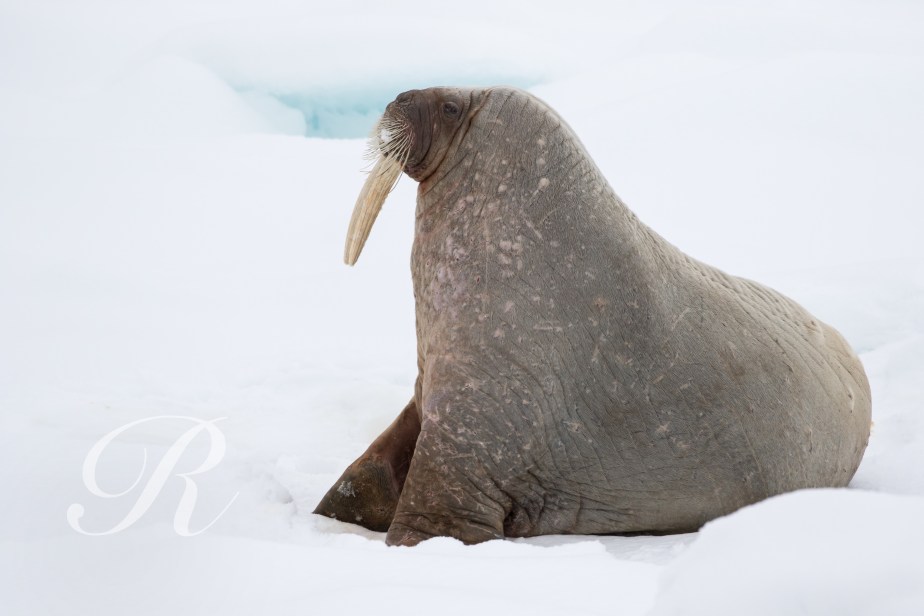
The seals and their allies are grouped as the Pinnipedia consisting of three families, the Phocidae – True or Earless Seals with about 18 species; the Otariidae – the Eared Seals, about 15 species; Odobenidae – the Walrus sole member of its family.
A newborn Walrus weighs about 55kg. Around Svalbard a fully grown male will be about 3 metres long and weigh about 900kg. Add about 10% to that for Pacific specimens.
They reach this impressive size mainly on a diet of clams which they identify with their sensitive whiskers, clear the shell of covering substrate with a jet of water from their mouth and then suck out the contents with a powerful piston-like movement of their tongue. Under no circumstances insert any part of your body into a walrus’s mouth.
They dive to a maximum depth of about 80 metres and generally do not stay submerged for more than about half an hour. As pinnipeds go this is small beer.
The Atlantic population plunged almost to extinction in the 19th century due to hunting for blubber and ivory. It is now on the way up again.
You may not find walruses particularly handsome but this one finds himself adorable. I nicknamed him Narcissus …
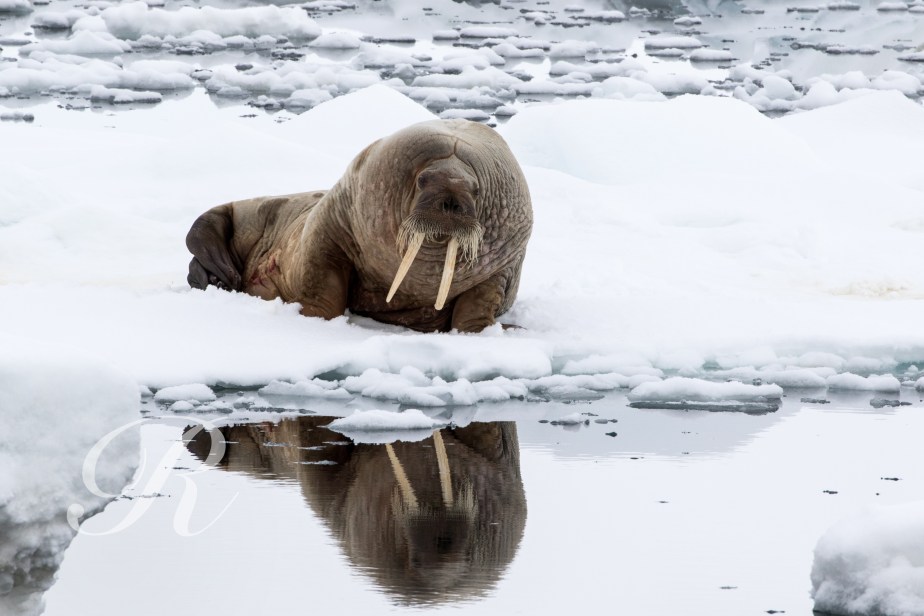
It is reported that their eyesight is poor. After watching them at a haul-out for a couple of hours I am amazed that any still have eyes at all.
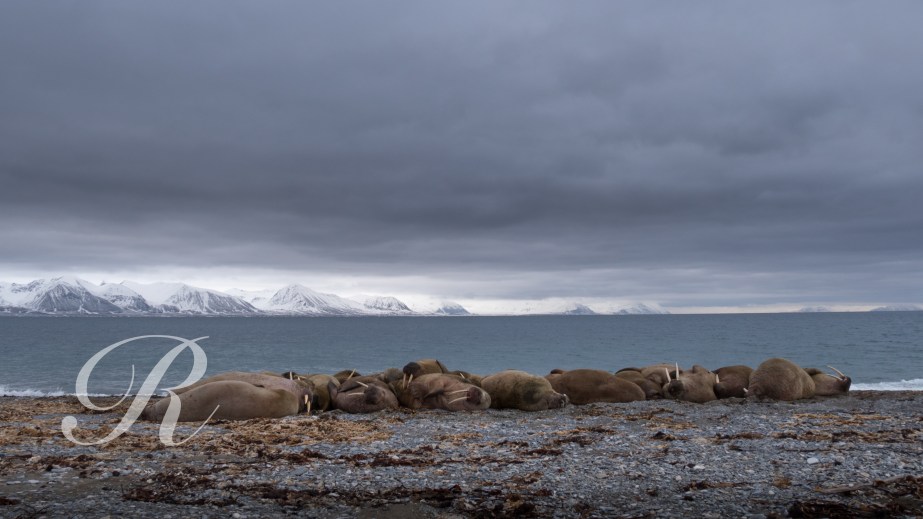
I have about 3 000 photographs of Walrus. You may see more.
The sun was shining on the sea,
   Shining with all his might:
He did his very best to make
   The billows smooth and bright--
And this was odd, because it was
   The middle of the night.
We were not about to head for the open ocean. Our interests lay on or close to land. The scenery could wait until tomorrow but wildlife encounters could not. And as Lewis Carroll had told us the sun would not be setting on this cruise. We retired to our cabins knowing that we could be called from our beds at any time.
We acquired some new avian companions as soon as we sailed …
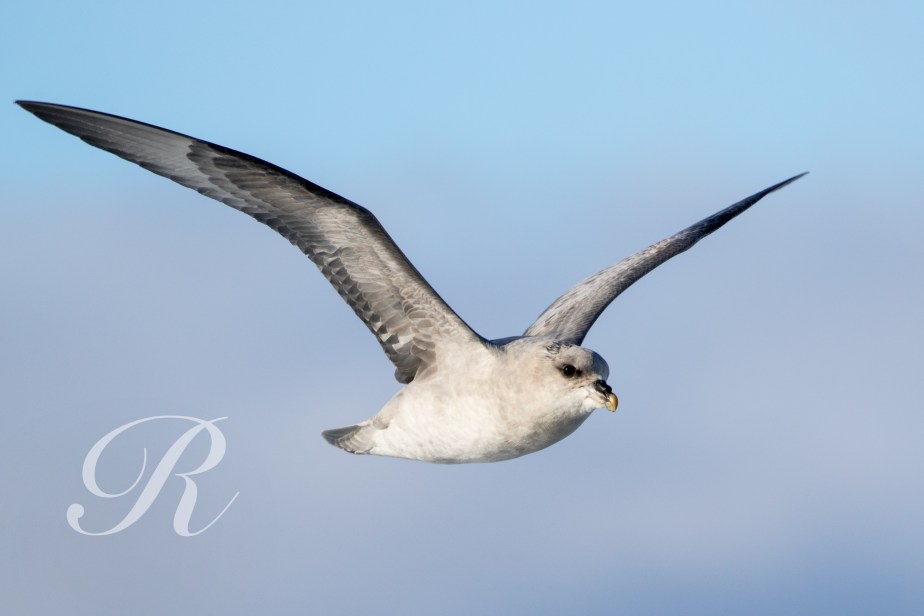
There is a great variety of tube-noses, Procellariiformes, in the southern oceans but north of the equator there are only a few species. The Northern Fulmar would be the only representative of the family we would see around Svalbard, but we would see plenty of them.
On the other hand there are no Auks down south and plenty north of the equator. We would see several species and millions of individuals.
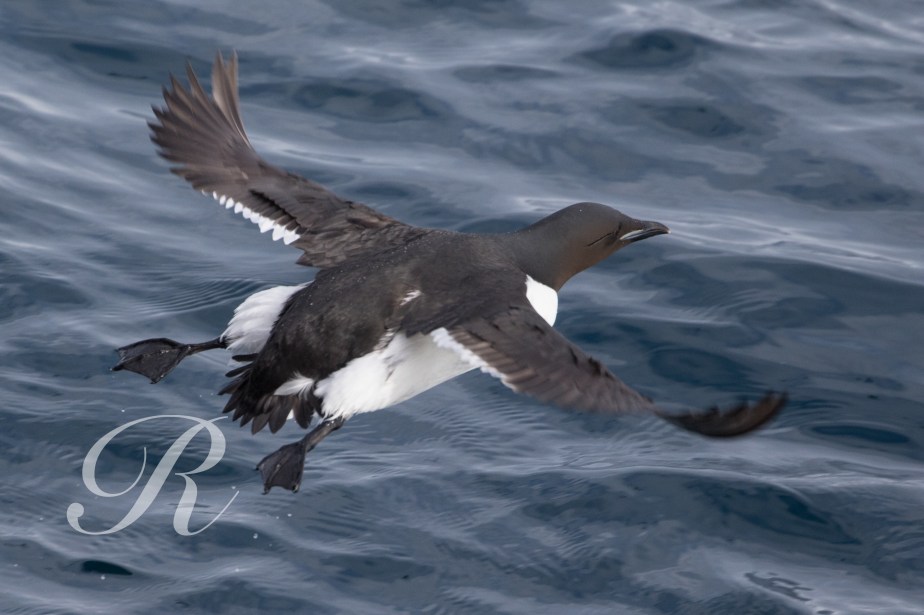
The Americans call this bird the Thick-billed Murre, the Poms prefer Brünnich’s Guillemot (even though they are an umlaut-deprived people). Morten Thrane Brünnich was a Danish zoologist, if he were alive I suspect he would also prefer the latter. Since the demise of the Great Auk this is the largest of the Alcidae.
And the scenery was magnificent …

The news in Melbourne on my return was, of course, all doom and gloom. Amongst the lesser disasters though was this …
… an ornate, custom-made whisky decanter in the shape of Thor’s hammer, Mjölnir, was allegedly stolen from Viking-referencing bar and restaurant Mjølner in Melbourne’s CBD.
Thankfully, the Norse God of Thunder will be reunited with his hammer after investigators found the decanter at Melbourne Airport this morning …
Shortly after the hammer was found a 52-year-old Western Australian man from Mindarie presented himself to Perth Police Station. The man is currently assisting police with their investigation. (Broadsheet)
It’s rumoured that he has a hell of a hangover.
Not the first time that Thor’s hammer has gone missing. In the Norse original it was stolen by the giant Prymr who demanded the beautiful Freya’s hand in marriage for its return.
Freya was not about to help out in this matter so Freya’s wedding was held in her absence. Thor dressed up as a woman and presented himself to Prymr who was delighted. Despite eating an ox at the wedding feast Thor managed to keep up the pretense until that part of the ceremony where Mjölnir was placed in his hand.
The bride was widowed moments later.
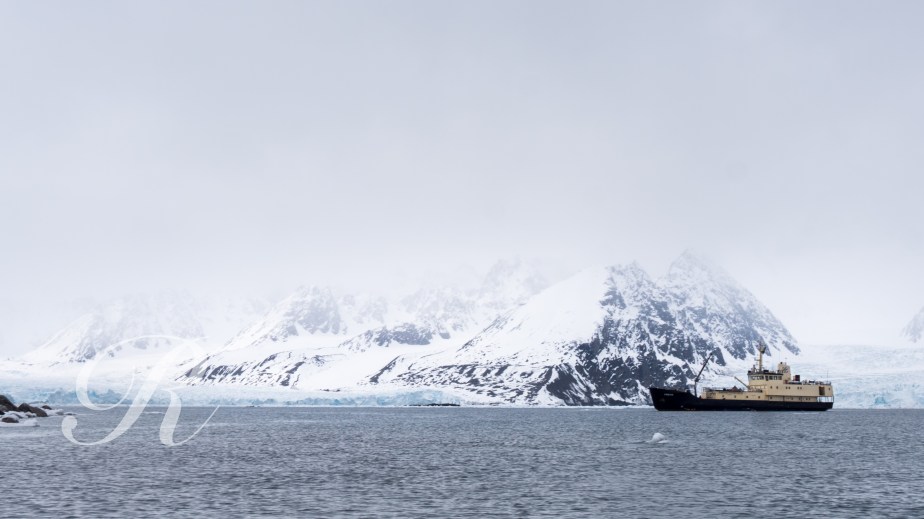
Time to join the very comfortable expedition ship Freya …
This was to be a Pete Oxford Expeditions expedition. I’ve known Pete for many years and have been looking forward to traveling with him ever since he formed his own company not too long ago. Pete is an outstanding photographer, a passionate conservationist and a very generous human being. Put him in front of a wildlife photo-op and his face lights up like a five year old.
On the other hand I doubt he could organise a trip to the supermarket without his wife Renee Bish. If Pete is all charisma then Renee is all hard work but just as gorgeous. I’d caught up with them at Oslo Airport and flown the last leg to Svalbard with them a few days earlier.
Just as well there were a few days to spare because their luggage stayed in Oslo and it took two more days for it to arrive. Pete is a foot taller than me … he looked really cute in my parka.
The remaining participants were members of Birdlife International. I was traveling with a group who collectively had done an amazing amount of good for the world’s birds. Including Renee and Pete there were thirteen of us. Two local guides were with us to make sure we found what we were after and keep us safe whilst we did it. The ship’s crew were outstanding, the food was great, the beds were comfortable. There was plenty of space.
There was one thing missing from the group which I’ll try to remember to tell you about at the end of the trip. For now though just concentrate on Pete and Renee expertly helping strangers become friends.
Let go the ropes, we’re away.
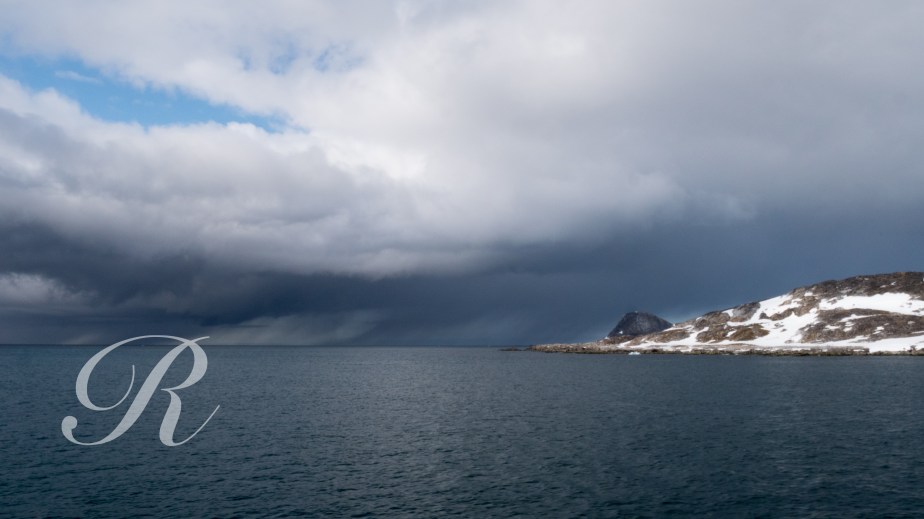
The weather and the sea will be kind to us but this is the Arctic. These photographs were taken on the first day just thirteen minutes apart …


 bobmcgee