Bush Point …

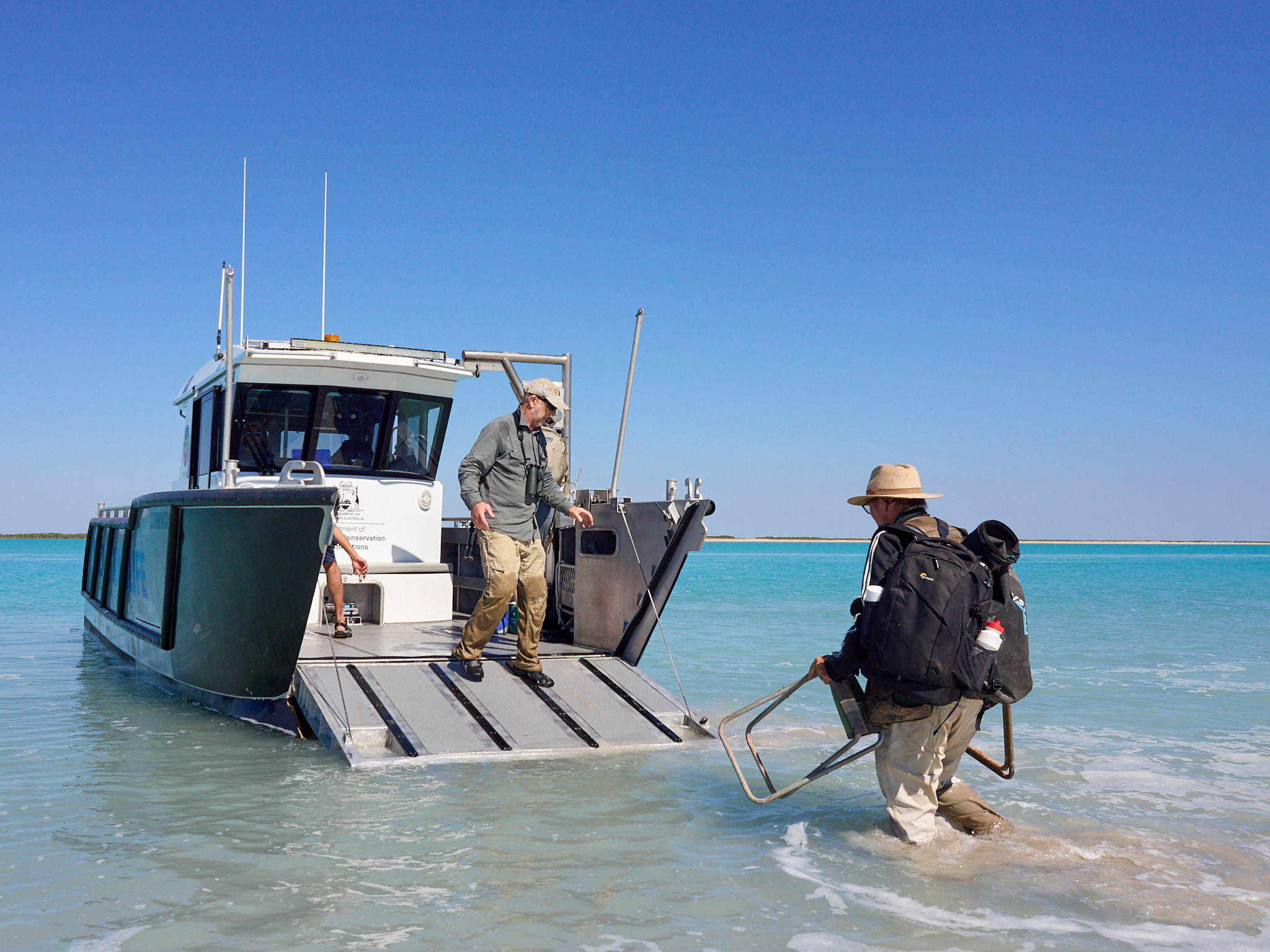
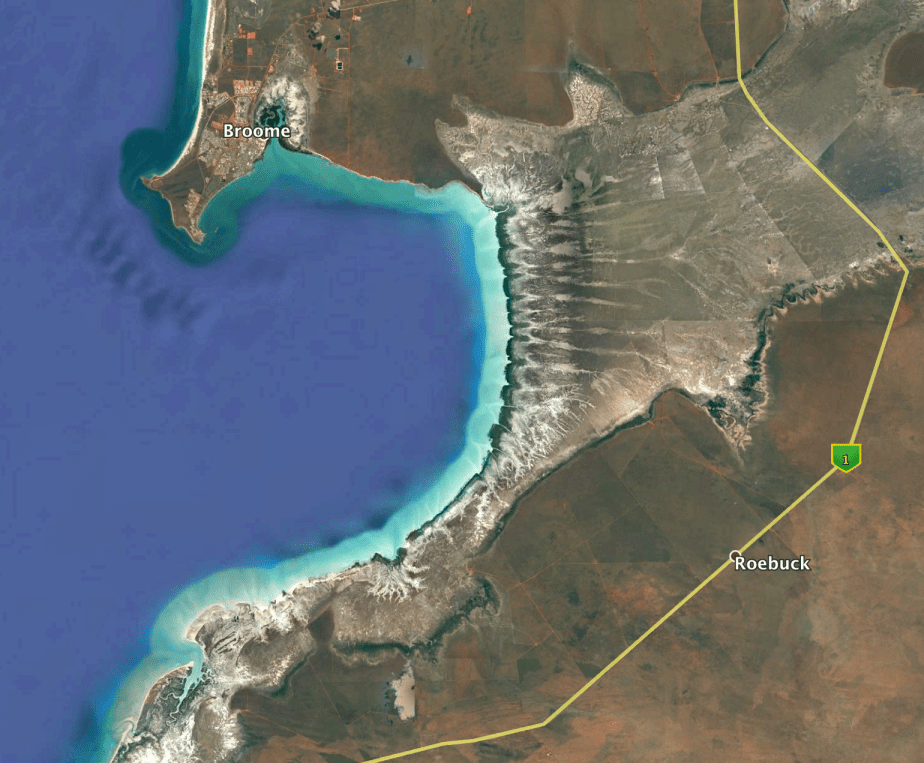
As I point out from time to time Roebuck Bay is the Shorebird Capital of Australia. The shores are in part accessible by car from Broome. Other parts are more of a challenge to reach and are therefore less well studied and less frequently disturbed. Bush Point is 22km due south of the Port of Broome and not easily accessible except by boat. That’s not to say that other means have never been employed. Over the years hovercraft and 4WD vehicles have been used but boat is the most practicable. However boat does have the drawback of limiting time ashore to about one hour on each side of high tide. It’s the 10 metre tides that expose the mud that feeds the birds that make the bay the Shorebird Capital of Australia. Deal with it.

The other day I had the enormous privilege to accompany a party of keen volunteers ably led by Chris Hassell of the Australian Wader Studies Group on the regular winter count at Bush Point. The project has been running for 24 years. Parks and Wildlife provided the boat, a landing craft style catamaran that ripped along effortlessly at 25 knots across the bay. The front was lowered and we stepped off into a few inches of water, not a crocodile in sight.

A winter count is revealing. A migratory shorebird with any intention of breeding is somewhere between here and Siberia. Birds on the beach are mostly too young to breed. The age that they reach maturity varies from species to species. Some species will return north in their first year others spend one or more years in the southern sunshine before going. As a rule the bigger birds wait longer than the smaller ones. If summer counts are available comparing the two gives some indication of breeding success over the recent past.

Our priorities were straight forward. First and foremost to count the migratory shorebirds, secondly the resident shorebirds and we were to avert our gaze from anything not a member of the Charadriformes. This is ornithology, guys, not merely bird watching. We were divided into two groups and sent forth to count. Easy …
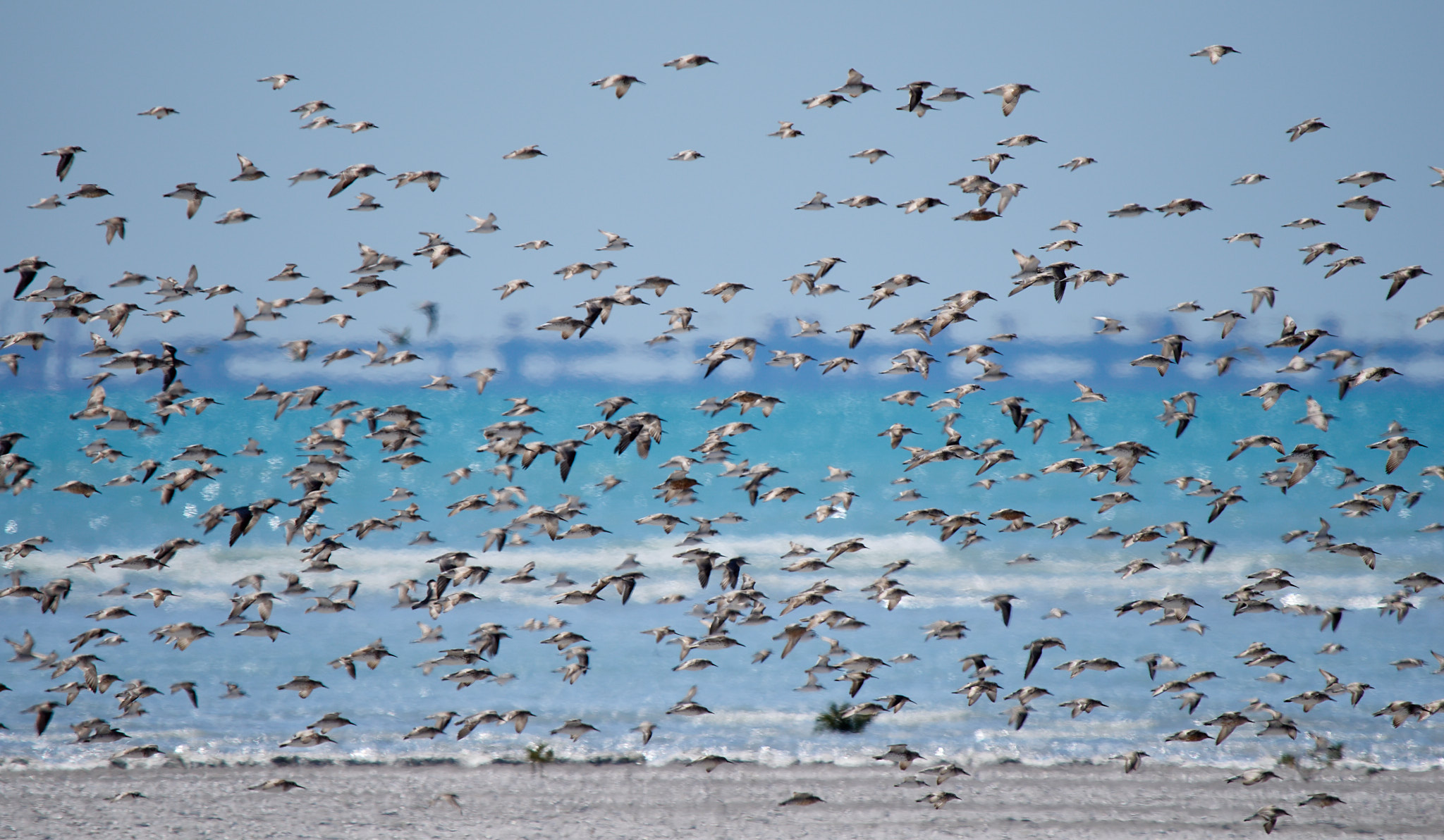
Well, easier when they’re on the ground and keeping them on the ground means a little stealth and maintaining a considerable distance. Identification and counting is done with telescopes.
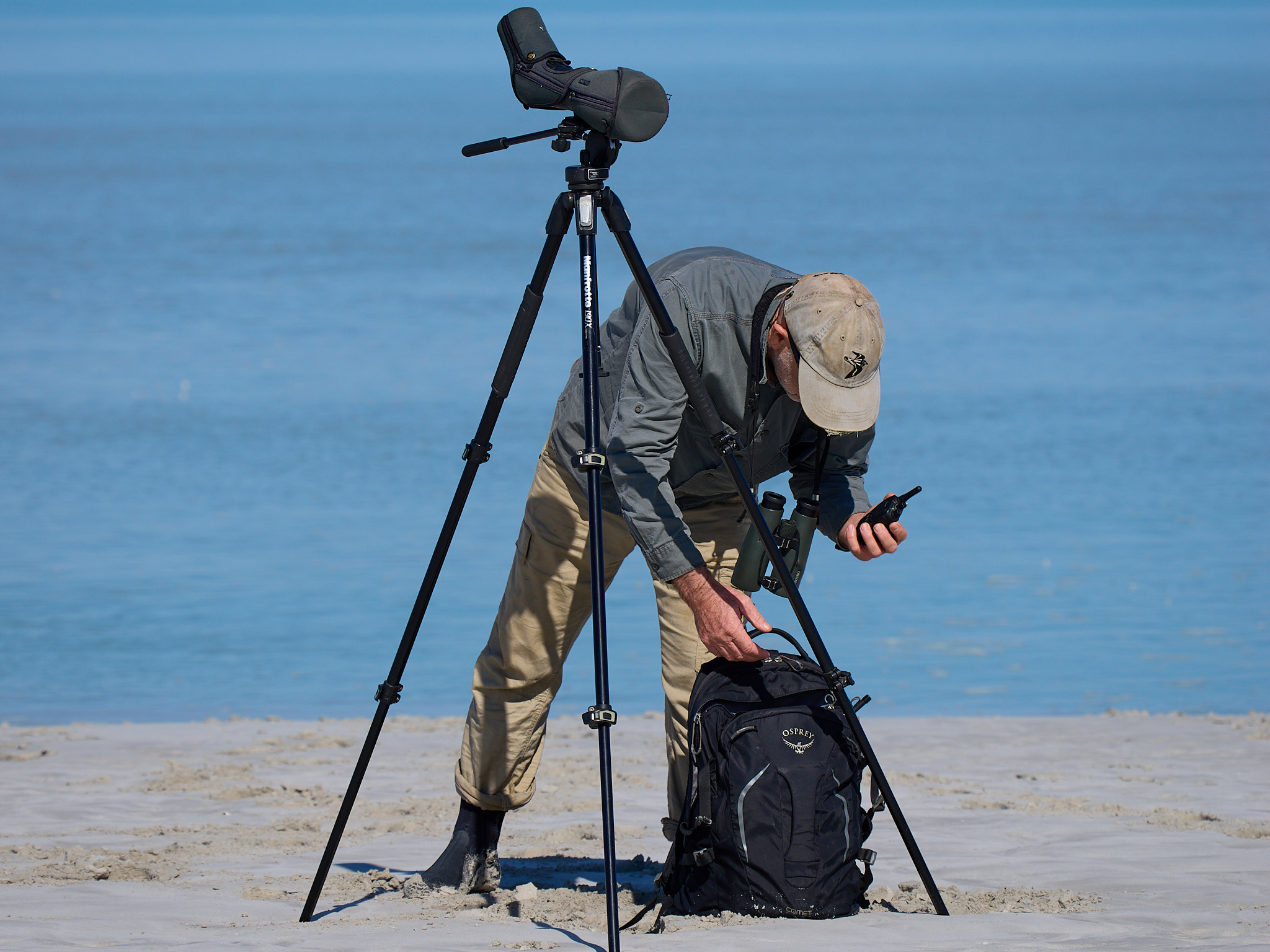
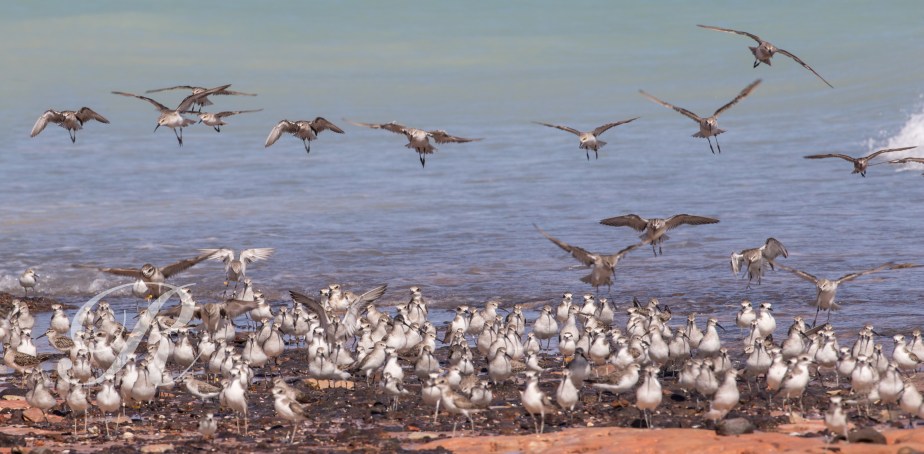
Opportunities for photography were very limited. If a group flew by you might just get a shot …

An hour after high tide the volunteers reconvened for the journey home.

So what did we find? Two parties covered about 4km of beach amassing a total of 13,400 individual migratory waders representing 20 species. Red-necked Stints were the most numerous and these would be in their first year of life. Whimbrel and Great Knot were well represented.

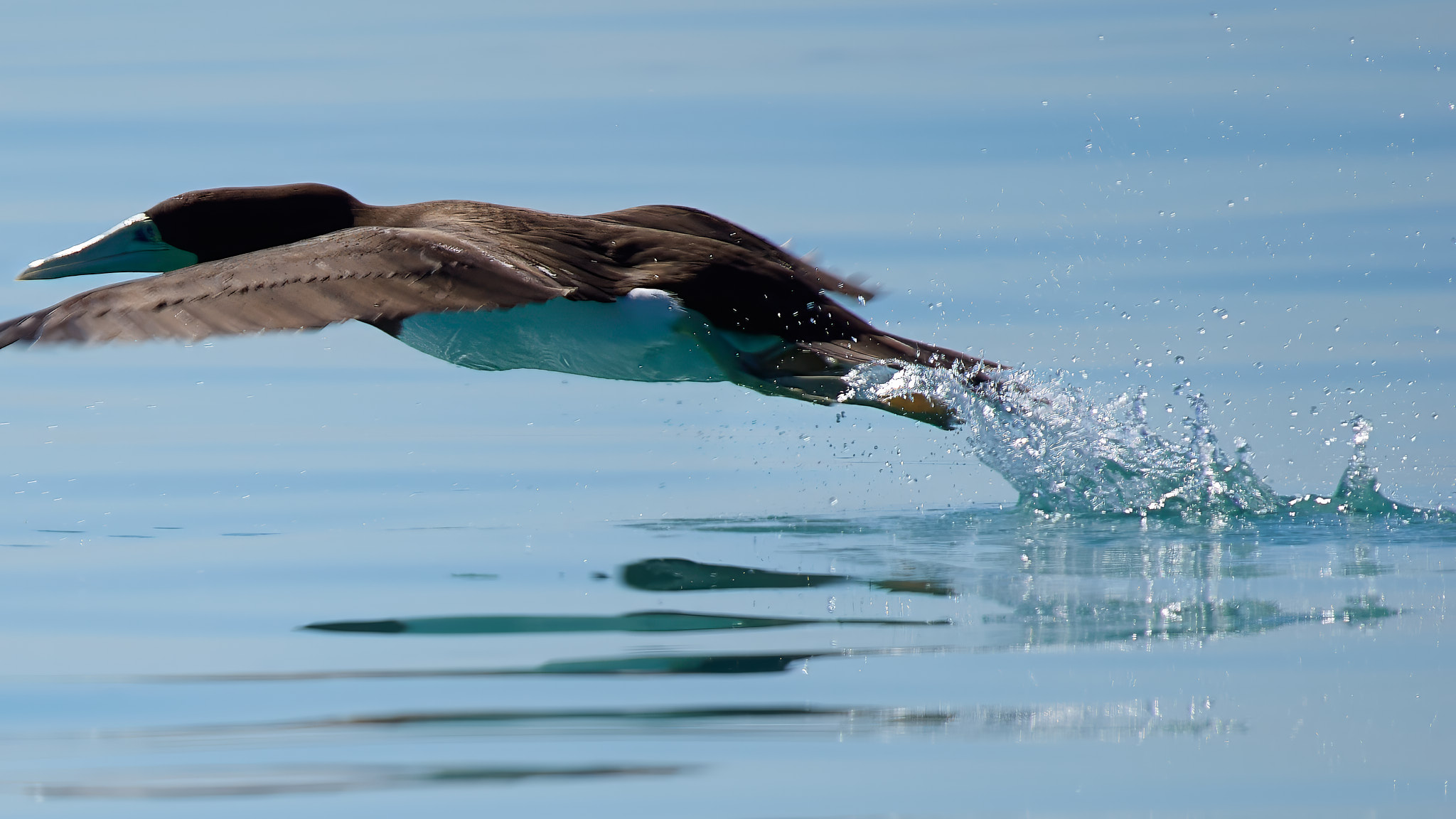
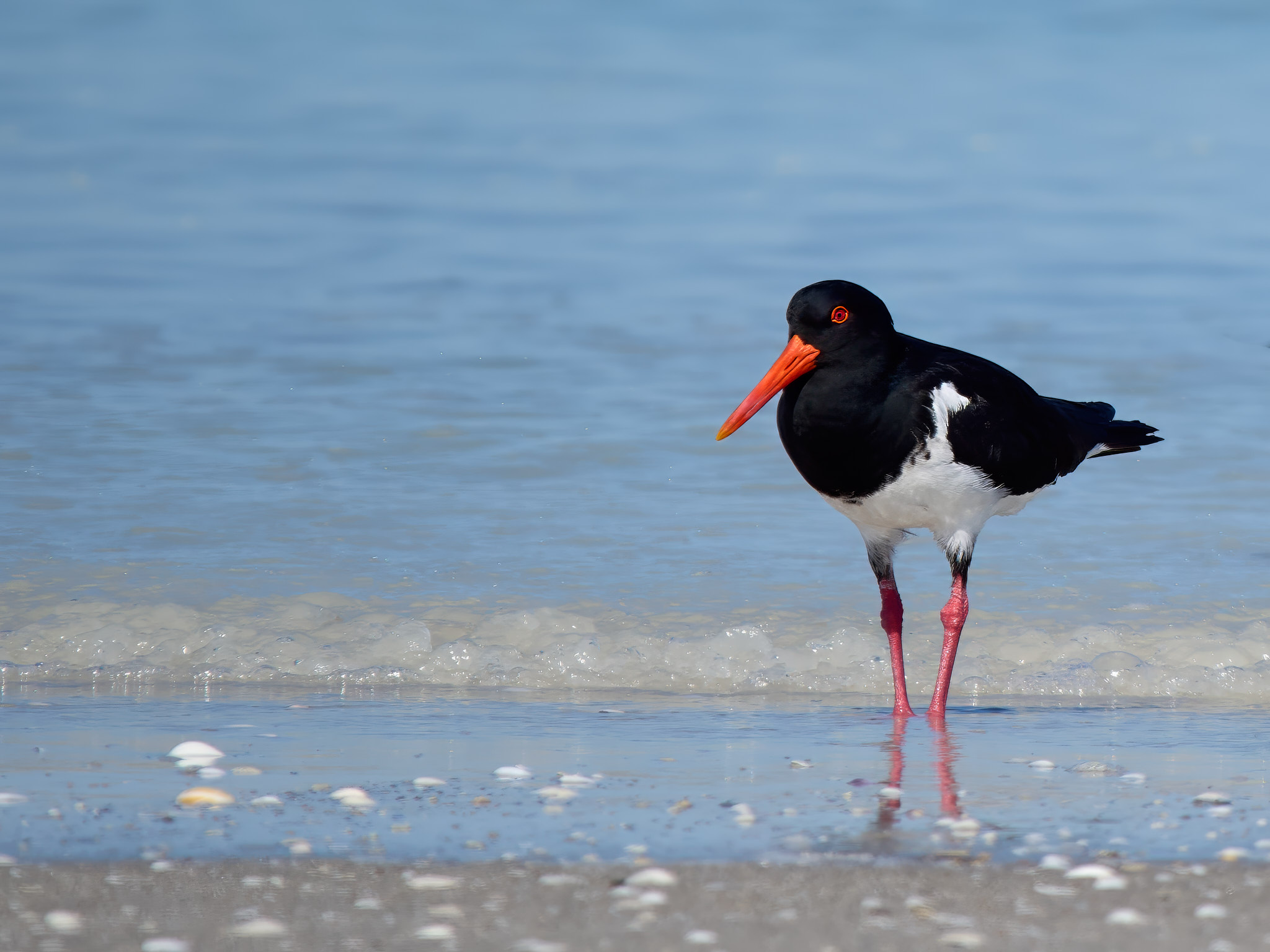
In the few minutes before being put on a short leash and obliged to trudge for miles through soft sand while being sun burnt and bitten by sand-flies (Gallipoli and Normandy were worse, I believe) I did get to point the camera at non-target or low priority species …

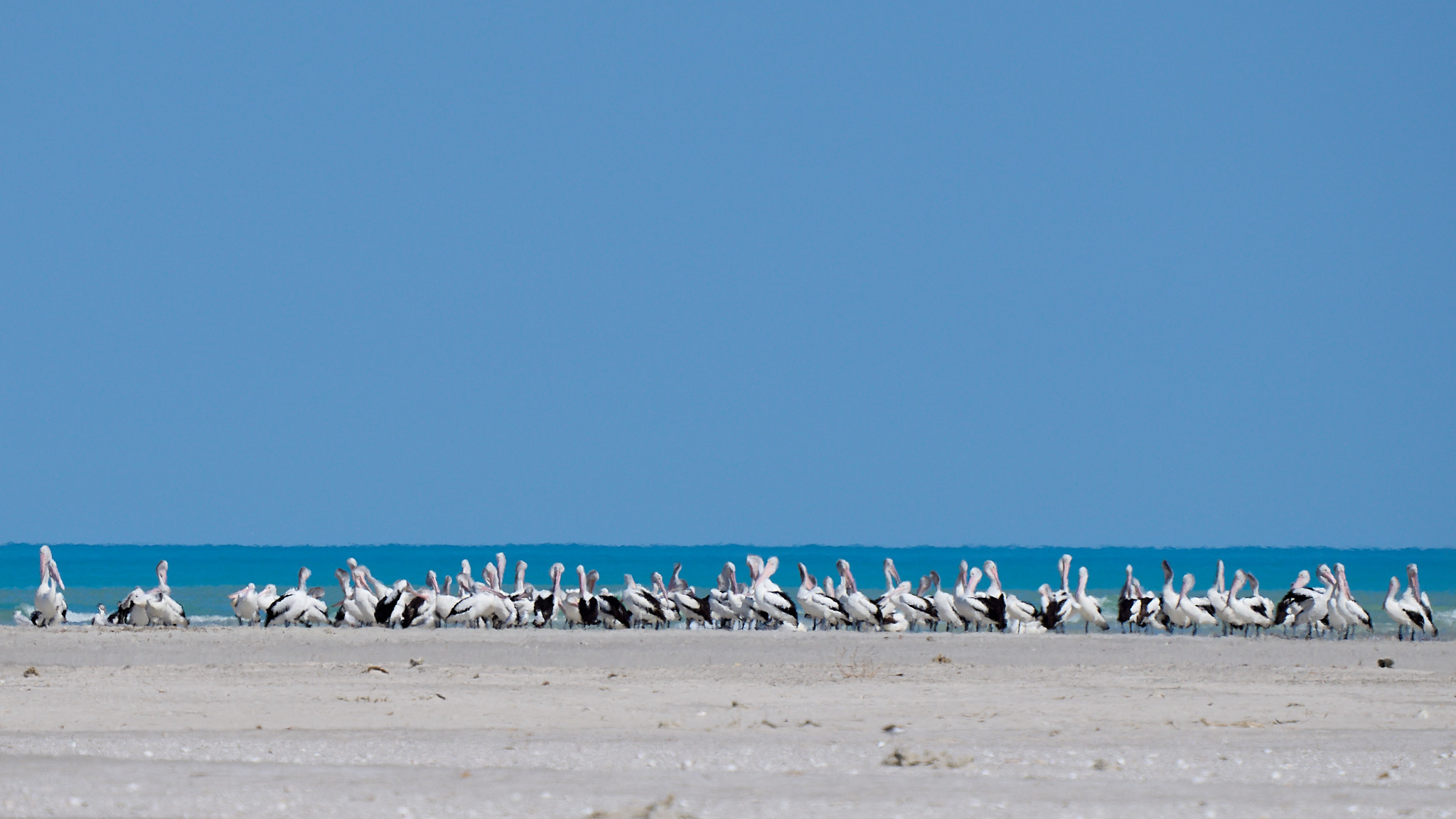
Going home …

Roebuck Bay is the premier Australian location to see waders. Mostly long legged birds in the order Charadriiformes. At low tide there is a vast area of mud flat housing huge numbers of invertebrates for them to feed on. Some of the species here are resident, living and breeding locally. Many more are long distance migrants breeding in the northern hemisphere and escaping from the snows of winter up there by flying all the way to sunny Australia. For some of these birds it means a 20,000 km round trip every year of their adult lives. For some of them the journey north starts today.

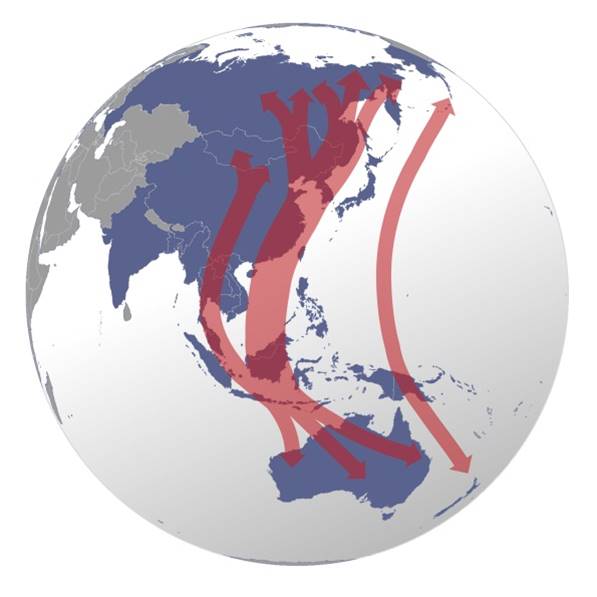
Different species typically depart at characteristic times. The early birds left from about the second week of March. Prominent among those are the Eastern Curlews and the Greater Sand Plovers. We are right in the middle of things now but most of the Red Knots and Red-necked Stints are still out in the bay putting on weight. Peak period for the stints will be next week. Most of the Red Knots will hold on until the first week of May.

I shamelessly filched the graphic from the Broome Bird Observatory website. If you click on it you may be able to read it.

The Broome Bird Observatory is a great place to watch the departures. Get there at about four in the afternoon, head to the beach and stay until about six. Observatory staff will be charting the departees and they will be happy to explain what’s going on. Just say hi.

What they and you are looking for are single species lines of birds forming up on the mud flats. There is much chattering and wing stretching. Then up they go. They may make a couple of orbits and go or a couple of orbits and land again. When they form a big boomerang shape and head north at a higher altitude than for local flights you know they mean business. Or not. Some may come back after a while, sometimes all of them come back. But if you want to make babies sooner or later you’re off.

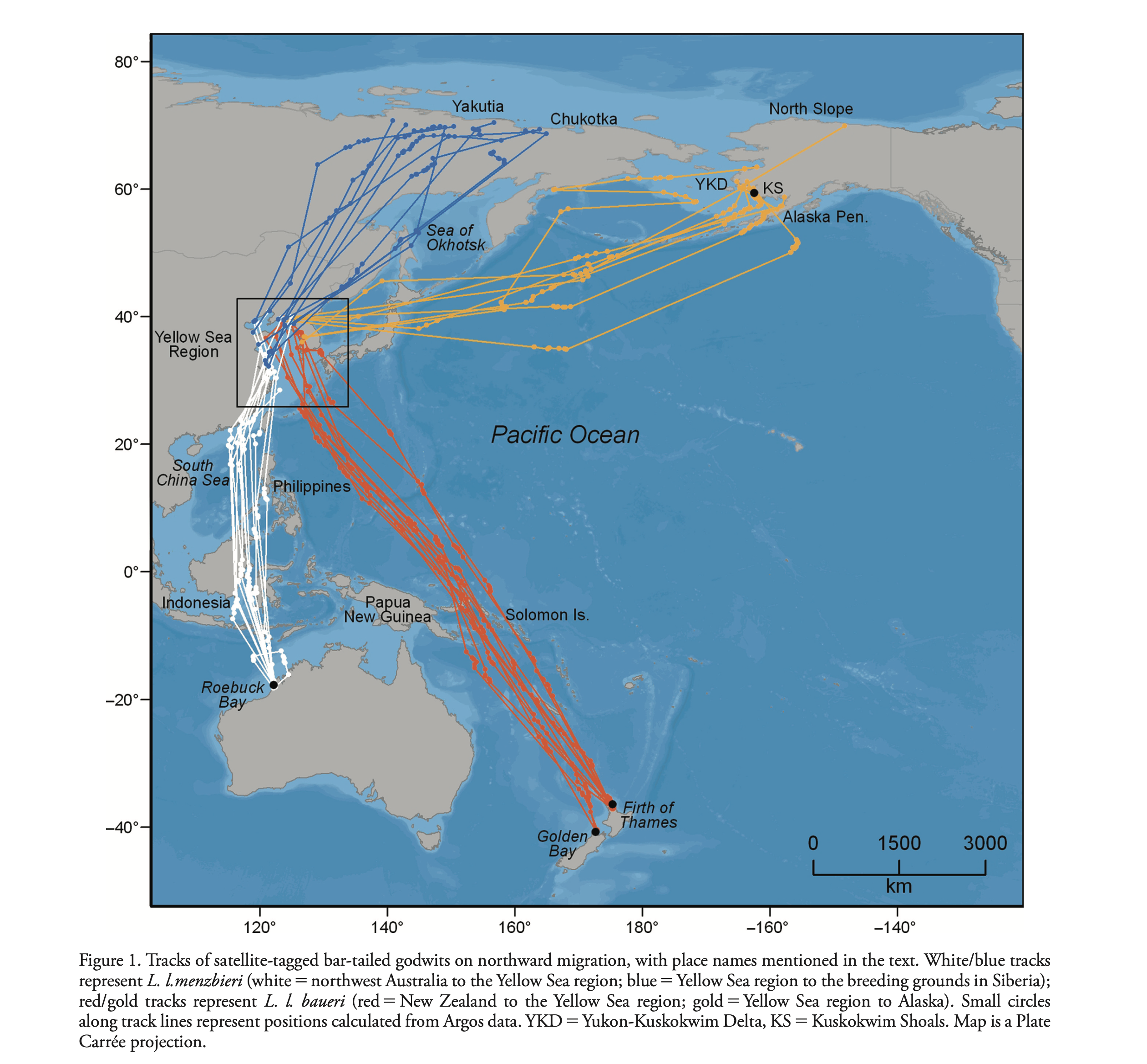
Light a candle for them when you get home. They’ll still be flying after the candle is exhausted. Some will fly non-stop to China, 6,000 km plus, 5 days, no food, no drink, no rest. Some do stop on the way on the coasts of Indonesia, Vietnam and the Philippines.

Birds can be equipped with transmitters so that their progress can be tracked. The transmitters are small but so are some of the waders so we know far more about the big ones than we do the little ones. The next map is pinched from a paper by Battley et al, Journal of Avian Biology 43: 21–32, 2012 and concerns Bar-tailed Godwits on their journey from Roebuck Bay and New Zealand.

The birds spend about a month re-fueling on the shores of the Yellow Sea before continuing to the breeding grounds. Those feeding grounds are absolutely critical to the species survival.

The pay off when they get home makes it all work. The tundra is uninhabitable in winter but in summer is so rich in insect life that the young chicks can feed themselves from almost the moment they hatch.

These are extraordinary journeys. I always feel a little emotional when I watch them go.

Back on the Boat …

Broome Whale Watching again but this time their dolphins and turtle tour in Roebuck Bay. It was a windy morning which necessitated a change of starting point but didn’t interfere too much with the trip.

Roebuck Bay is about 550 km2 in area and shallow. The tidal range is huge – as much as 10.5m and at low tide exposes as much as 160 km2 of mudflat. Seagrass meadows lie just below the low tide line, Mangroves are inundated by the high tides. The tidal flow stirs up sediment that makes the sea a beautiful turquoise which teamed with the red cliffs and red sand gives Broome its characteristic vibrant palette.

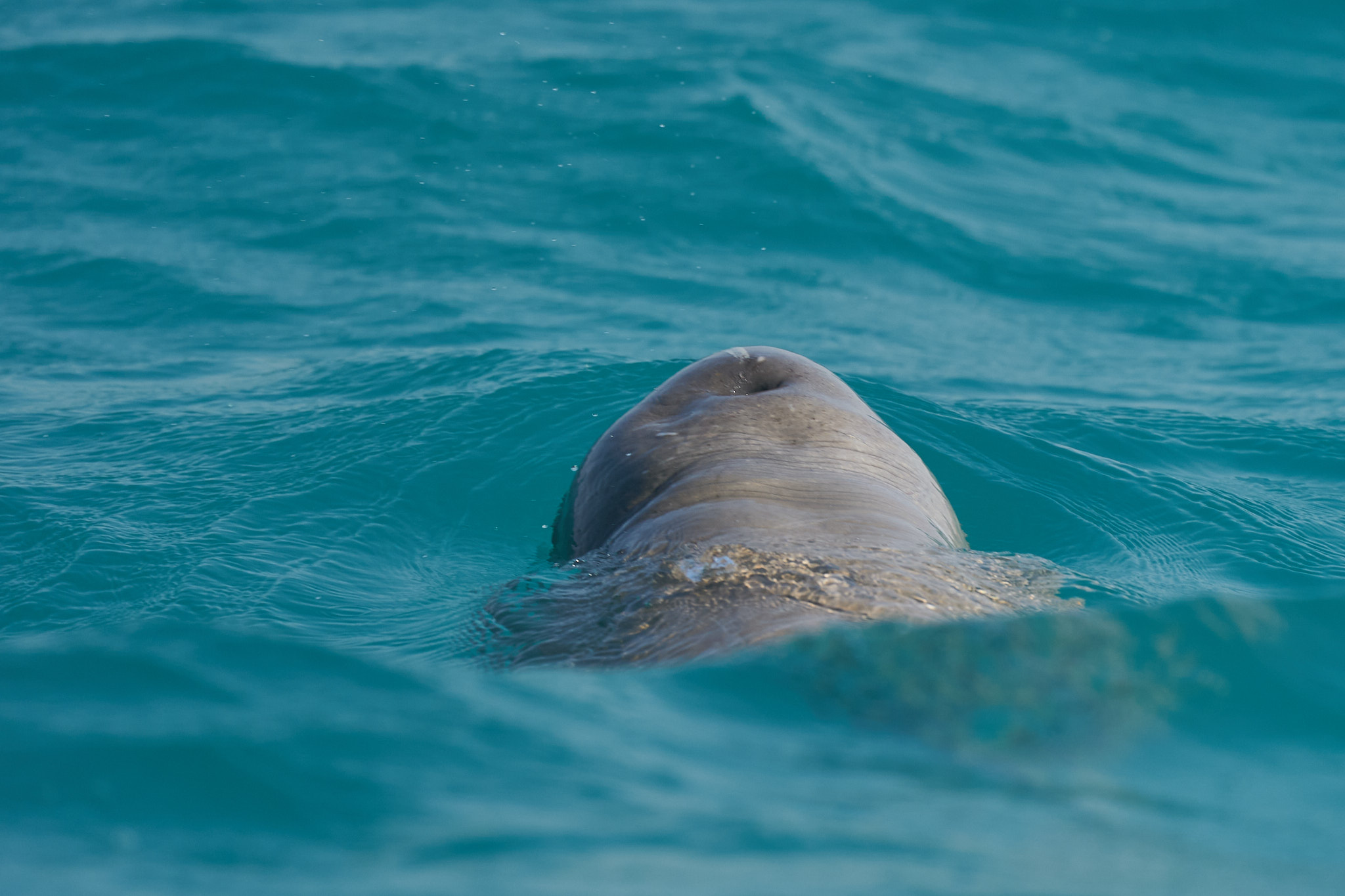
It wasn’t long before we encountered our first Snubfin Dolphins. They are rather sedate as dolphins go, no leaping out of the water or dashing to the boat for a ride on the bow wave. They have heads like a melon and tails like little Humpbacks. They move relatively slowly but tell that to the photographers … the best chance to get a head shot is when they surface. Where will they surface? Good luck with that.

They were lumped with the Irrawaddy Dolphin from the Bay of Bengal until DNA studies earned them an identity of their own in 2005. They are found around the coast of northern Australia and presumably southern New Guinea. They are reliably found in Roebuck Bay but rare elsewhere.

Snubfins grow up to 2.7m and weigh up to 133kg. Males are typically larger than females. They get around in small groups that may join another group at a feeding site. Their diet consists mainly of fish and cephalopods. They have been seen at the surface spitting water over fish to fool them into swimming towards them.

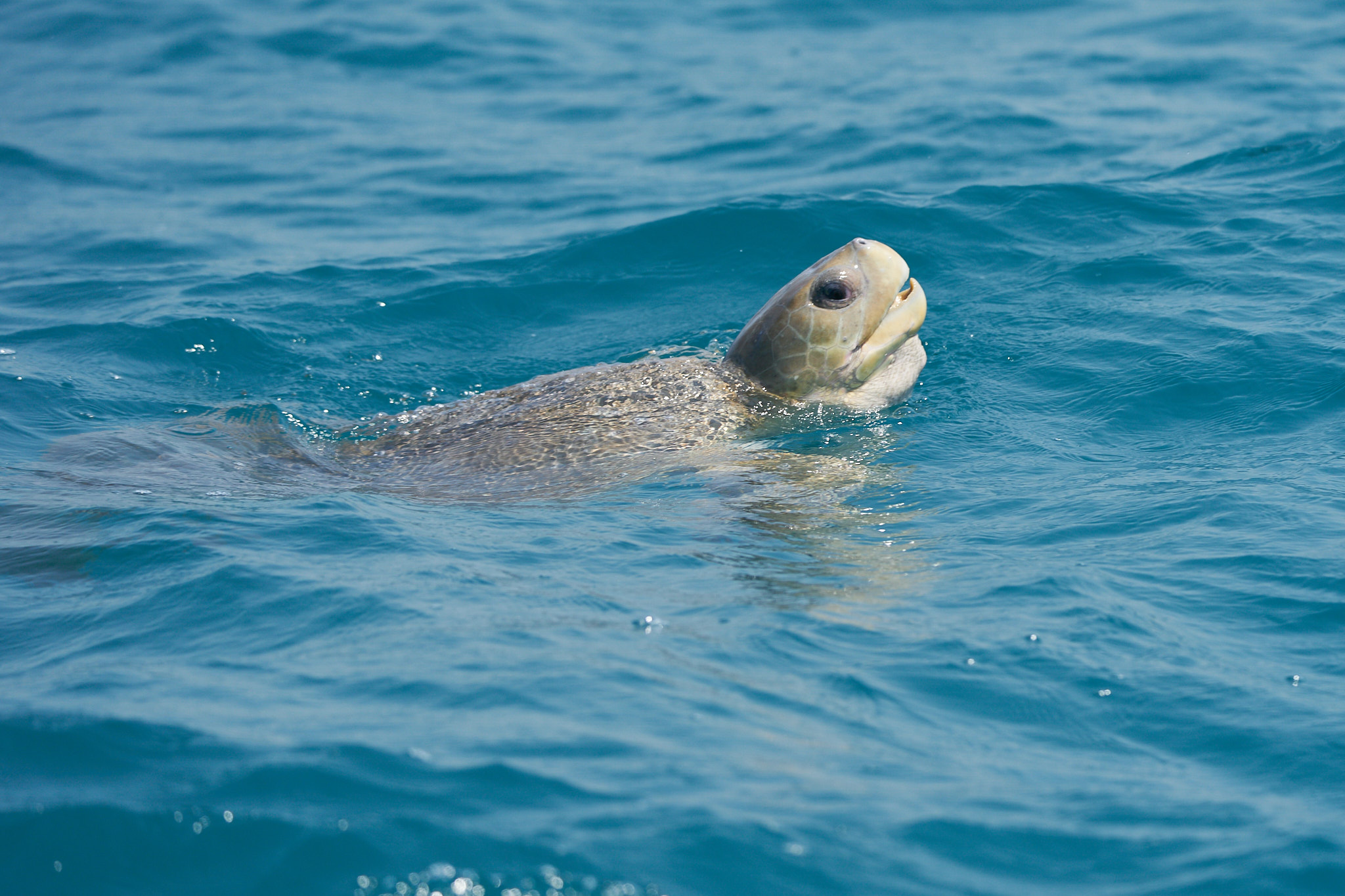
Next on the agenda was the Flatback Turtle. These are another denizen of Australia’s northern waters but wander a little further than the Snubfins. Their carapace gets to about a meter from front to back and adults weigh 60 to 90kg. Females are sexually mature from about seven years of age. Mating takes place at sea, the females come ashore to lay clutches of about 50 eggs in a nest dug in the sand. The sex of the offspring is determined by the ambient temperature – below 29 °C (84 °F), the hatchling will be a male.

Now with explosives …

I met Chris Hassell in 1996. We were in Broome, WA, to take part in an Australian Wader Studies Group expedition to catch and band migratory waders on the north-west Australian coast.

The leader of the expedition was the legendary Clive Minton, father of cannon netting in Oz, and there were some big name ornithologists along including Professor Theunis Piersma from the University of Groningen, Holland. Chris and I were just foot soldiers.

Chris, like me, is a pom. He comes from the midlands, not far from Leicester. He’d hardly settled in Oz when he set off for Broome.

The exercise we were engaged in involved setting nets just above the high tide mark in a spot where the birds would rest when the sea covered their feeding grounds. The nets were furled, camouflaged and attached to cannons that would shoot them over the unsuspecting flock when the time was right. The birds were then measured, weighed and banded with a numbered metal ring and released.

The work was hot and physically hard and the process considerably more nuanced than the summary above conveys. It ran for six weeks visiting Roebuck Bay, Ninety Mile Beach and Port Hedland. When it comes to cannon netting a good supply of willing volunteers comes in very handy.

Chris stayed on in Broome. For  a while he was a warden at the Broome Bird Observatory, then he founded and ran Turnstone Nature Discovery Tours, showing visiting bird watchers and other interested visitors the delights of the region. Because of his knowledge and considerable ID skills he became sought-after for ecological research and census work.

When Birdlife and the Global Flyway Network needed a researcher on the shore of Roebuck Bay he was their man. He now has a little army of volunteers of his own. No longer a foot soldier, in my view he has surpassed the mighty Minton as a catcher of birds. Chris, very modestly, disagrees.

Chris Hassell

One of his volunteers, a primary school lad named Daniel Aspey, wrote the catch report for September 24, 2017, and here are some excerpts …

Do I like birds? If I tell you that last week I went to our school book parade dressed as the Field Guide to Australian Birds, with a bird bath on my hat, does that give you a big enough clue?
This was my sixth cannon netting and there’s always a story. At school they tell us a good story has to have a problem. This time we had three. Firstly, the day was windy, which makes the birds flighty. Secondly, there were two Brahminy kites circling over head. And thirdly because of the big high tide, the net had to be set below the
tide. Listening to the pre-catch talk about how to deal with this was therefore very important.
What we didn’t reckon on was the fourth problem. One of the cannons didn’t fire . There are three cannons, right? Surely, two would do the job? But most of the birds (over 300) were in one corner of the net, while the cannons that worked, beautifully captured the 14 birds that were in the other corner.
Chris was very brave. Very, very brave. Even though this is the second time this has happened this season, he didn’t swear in front of the kids, or cry in front of the adults. He did disappear for quite a bit, though.
As there weren’t so many birds in the net, Chris gave us a great demonstration in tagging, banding and measuring the birds we caught.
What’s in it for us kids? Well, firstly, if you can be quiet and still, you sometimes get to go with him to the hide, which means you
actually see the net fire. You get to race to the net to get it out the water and help get the birds out and into the boxes. This time though, as there were so few birds, all the kids got to carry one to the cages, where the birds settle before tagging. If you’re calm and steady, you get to fetch the birds to the adults for measuring, and then release them in groups afterwards. Best of all, you get to take pictures of the birds up close. I really loved seeing the Ruddy Turnstone, the Grey Plover and the Greater Sand Plovers (who love pecking you).
People say you should never work with kids and animals, but at the cannon-netting they do both, and with explosives too!

There’s a great future for that kid. And the reason this work is done is to ensure that there’s a future for the birds as well. I’m sure someone has thought of putting a marina in Roebuck Bay, maybe a five star hotel and a golf course. Research gives us an understanding of population trends, longevity and breeding success. These are essential ingredients in any argument to sway governments towards preserving the bay.

Stops along the migration route are also invaluable links in the chain that determines the survival of migratory shorebirds. When the birds take off for their breeding grounds Chris takes off from Broome bound for Bohai Bay in China where he helps monitor their passage. This year’s Bohai Bay Report can be found <HERE>.

Could be a bad summer for Chris this year, he still supports the English cricket team, no future for him in parliament.

Roebuck Bay …

William Dampier made his first visit to New Holland in 1688. He explored this part of the coast on his second visit in 1699. Roebuck Bay is named after his ship. The sea is rich in invertebrate life some of which made a meal of HMS Roebuck’s planking. On the voyage home the worm-eaten ship was run ashore on Ascension Island before it could sink in open water. Dampier and his crew were marooned there for five weeks before being picked up and taken back to England.

There are two tides a day in the bay of about equal height (semidiurnal tides). The tidal range is massive exposing about 160 km2 of mudflat. The mud is rich in invertebrate life which provides food for the more than 100,000 migratory shorebirds that use the bay each year … HMS Roebuck’s revenge.

You can read just how incredibly rich <HERE>.

The north shore of the bay from close to Broome to Crab Creek is readily accessible. The Broome Bird Observatory is located close to the east end. The eastern and southern shore is a world of mangrove swamp and tidal creek more easily accessed from the water.

Tropical mudflats are a very different habitat than the tundra and steppes where the visiting birds breed. In summer the breeding grounds are so rich in mosquito larvae and other invertebrates that young shorebirds can feed themselves from the moment they hatch. On the other hand there’s no food available when the puddles are frozen or covered in snow so migration it is.

The migrants arrive in our southern spring and leave in autumn. They don’t all stay in the bay all summer, for some it’s just a staging post. Towards the end of their stay it is a great spot to quickly gain the weight that will be the fuel for the long flights ahead. Some birds do stay a year or two before making their first flight to the breeding grounds so there are some to be found all year.

The bay is Australia’s most important site for migratory shorebirds. The bay regularly supports more than 1% of the population of at least 22 different species. On any day during the wet season there are about 120,000 shorebirds out on the mud. The smallest is the Red-necked Stint. Much of the time it weighs about 25 to 30 grams (my little Fox Terrier weighs 10 kg, equivalent to 400 Stints). They will increase their weight by as much as 50% prior to departure on their 15,000 km journey to Siberia. The largest visitor is the Eastern Curlew at about 1 kg fuelled up and ready to leave.

Migration may seem like a very risky strategy but if a bird manages to make  the return trip once it is likely to do it many more times. Red-necked Stints have been known to live more than 20 years by which time they will have flown further than a return trip to the moon.

The bay is also home to the rare Australian Snubfin Dolphin.

At approximately 140 animals, the snubfin dolphin population occurring in the 100 km2 study area within Roebuck Bay is one of the largest reported in Australia to date and should be considered of regional and, indeed, national significance. Despite this relative magnitude, the population is small by conservation standards. We also provide preliminary evidence of fidelity to the study area for a majority of individuals …          <Murdoch University report>

Roebuck Bay is a unique place. It’s also a place under increasing pressure as Broome grows in size. Careful management is required if the natural values  are going to be preserved.

This post has been updated following discussion with my good friend Chris Hassell, a Birdlife International researcher involved in full time study of shorebirds in the bay.