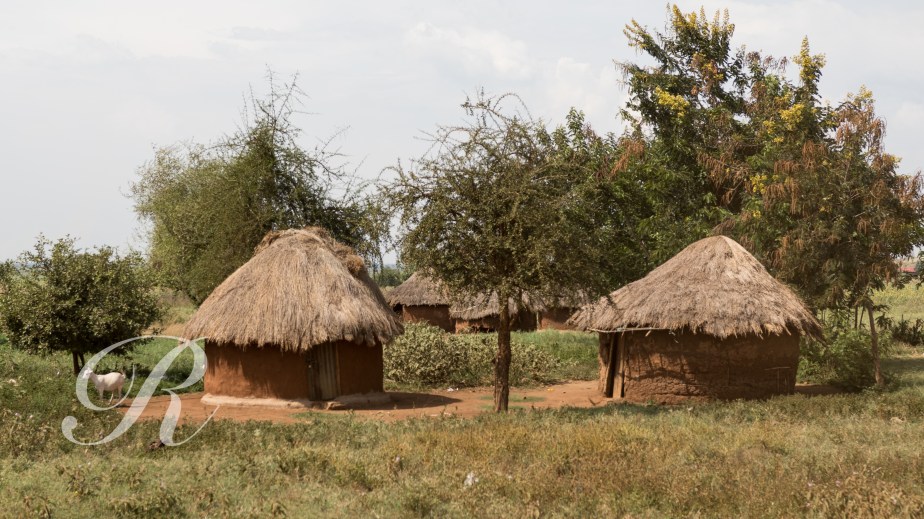
I think the future for Pian Upe is bright. Continued recovery of the wildlife, some minor upgrades to accommodation and roads could see this become a major tourist destination. The landscape is utterly beautiful. For the moment though this is not the place for close approach to hordes of large mammals.
But it certainly has its charm …
Ostrich
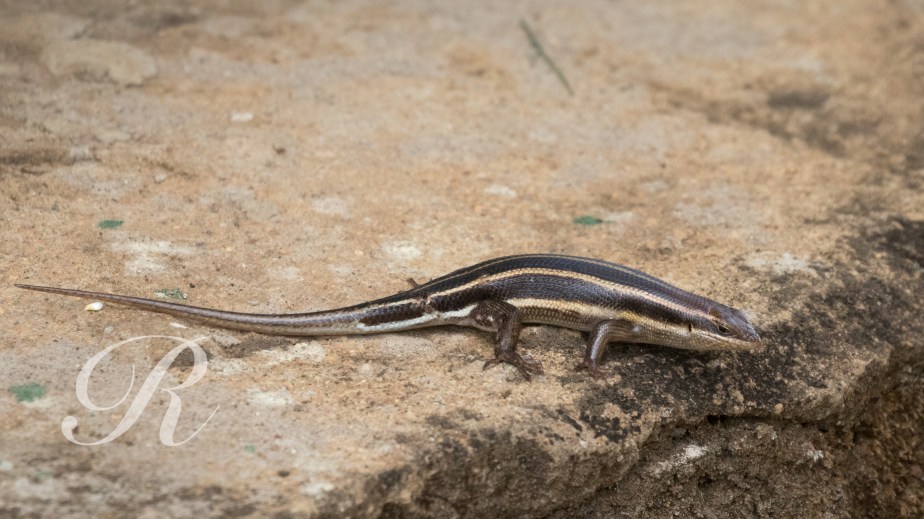
If any one can identify these skinks please drop me a comment …
Update … I am advised that both these photos are of the same species, the African Five-lined Skink aka Rainbow Skink, Trachylepis quinquetaeniata. The one with the yellow lips is the male the more drab one is the female. My thanks to Moreen Uwimbabazi for tracking them down.
This is the second largest wildlife protected area in Uganda after Murchison Falls National Park. It is a game reserve but we were told of plans to raise its status to National Park in the future.
It covers 2,788 square kilometers of savanna and includes some very impressive hills. Like all of Uganda’s parks and forests it suffered greatly during the lawless times of civil war. The Uganda Parks Travel Guide would have you believe that lions, elephants, black rhinos and giraffes are all to be found here but in truth they were locally extinguished years ago. The reintroduction of some of these may be on the cards.
On the positive side though this is the only place in Uganda where Roan Antelope have survived and it’s a great spot for the bird watcher.
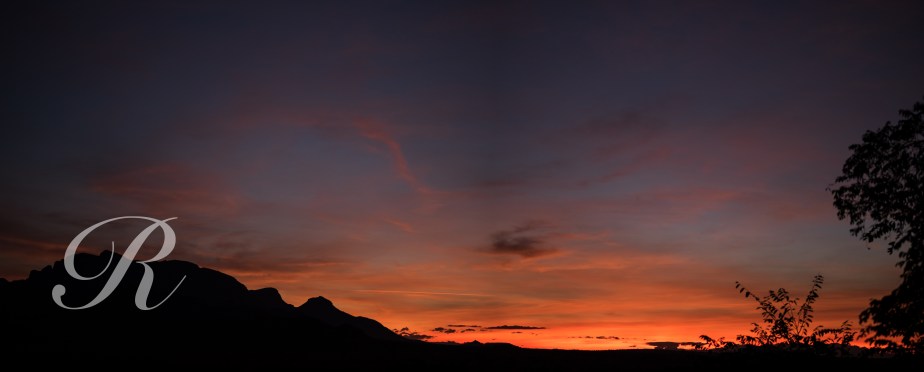
We had two nights in Pian Upe in very comfortable safari tent style accommodation and were magnificently fed by the most obliging chef in Africa. The first night brought a thunder-storm and torrential rain, the tent, I am pleased to say, was waterproof. The light before dawn was superb …
Day break at Pian Upe
Game drives were the order of the day made all the more exciting by the effect of the rain on the black soil tracks.
The birding was a great success. Our quest for game less so. Distant views of Roan were had but all the game animals were extremely shy presumably because of far lower visitor numbers when compared to Murchison Falls where the animals are habituated to vehicular traffic. Additionally, the grassland seems less vigorously managed at Pian Upe, the grass was very long and there was no evidence of any recent burning.
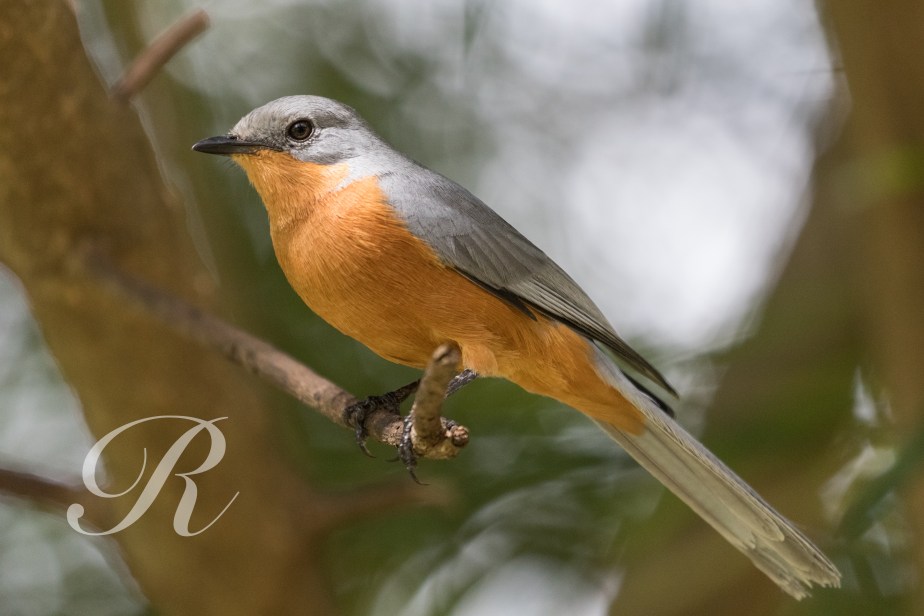
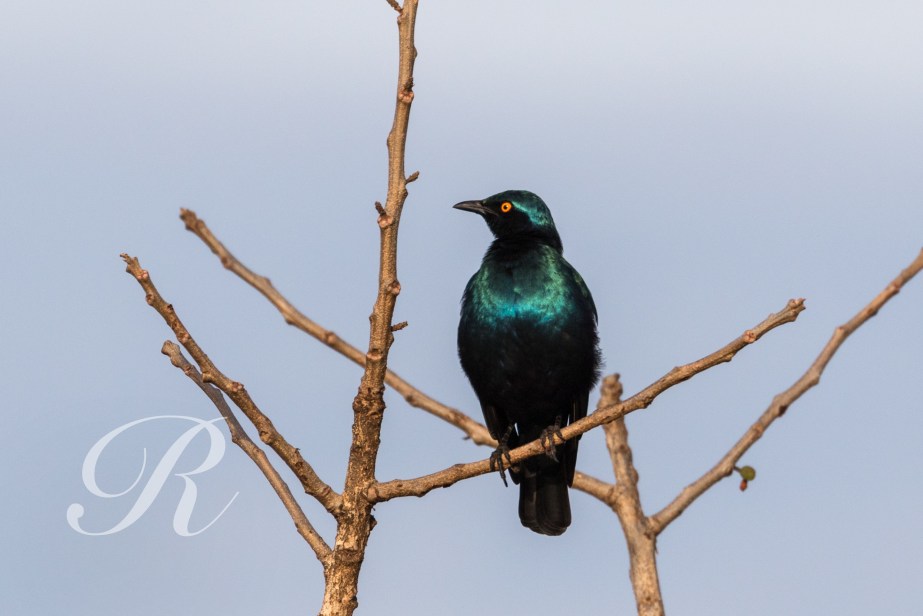
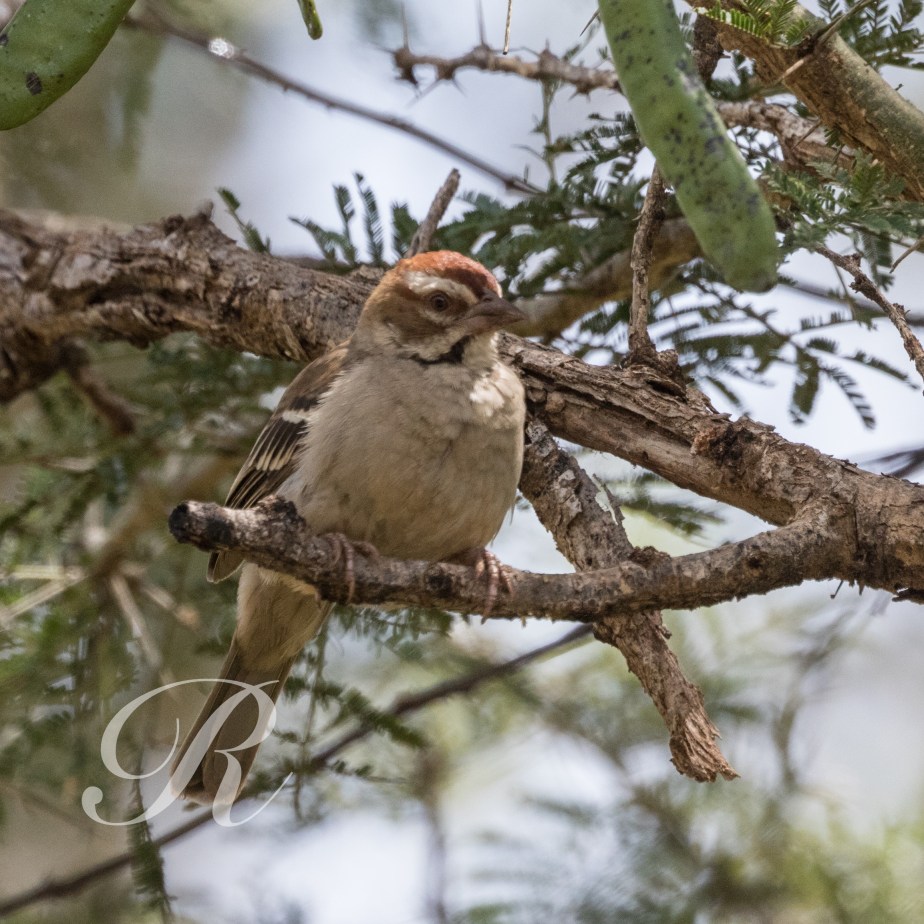
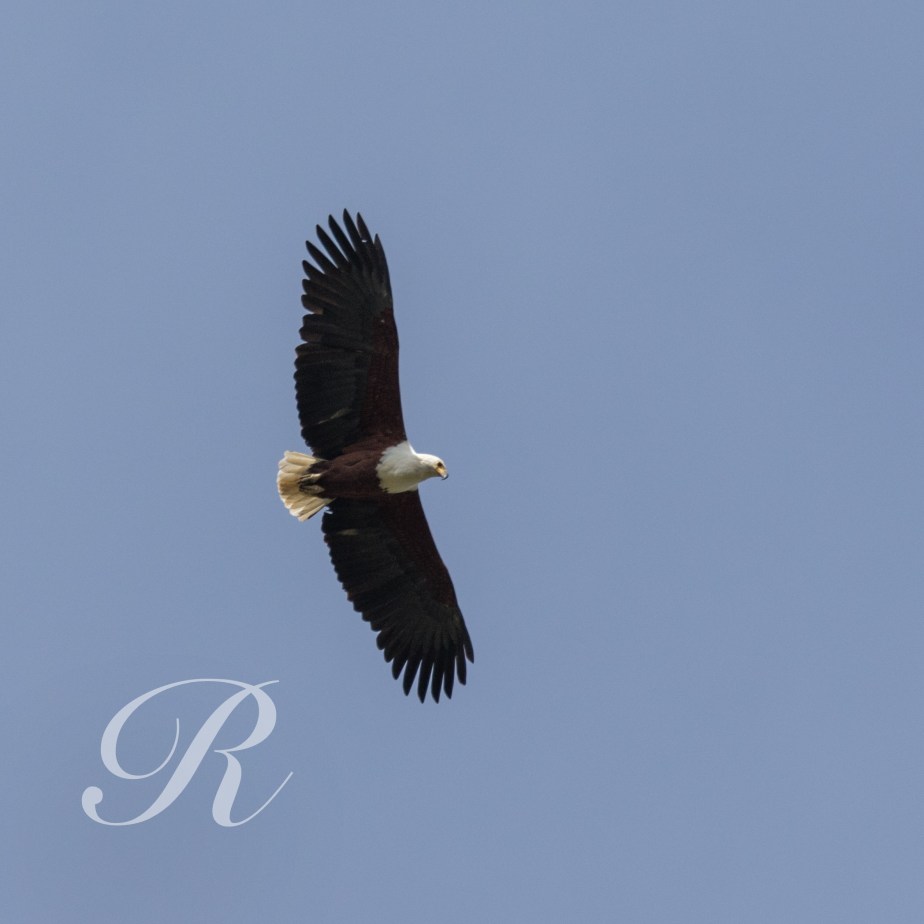
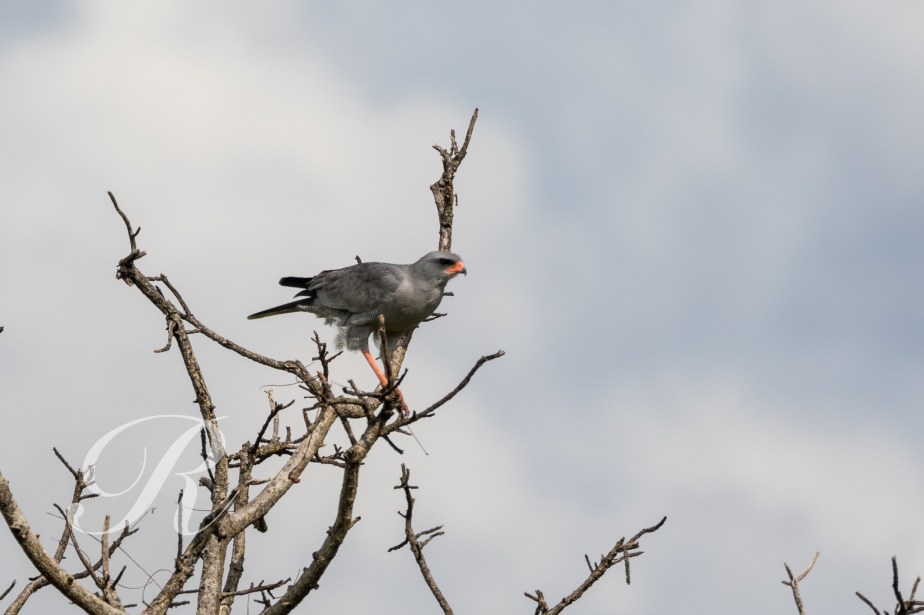
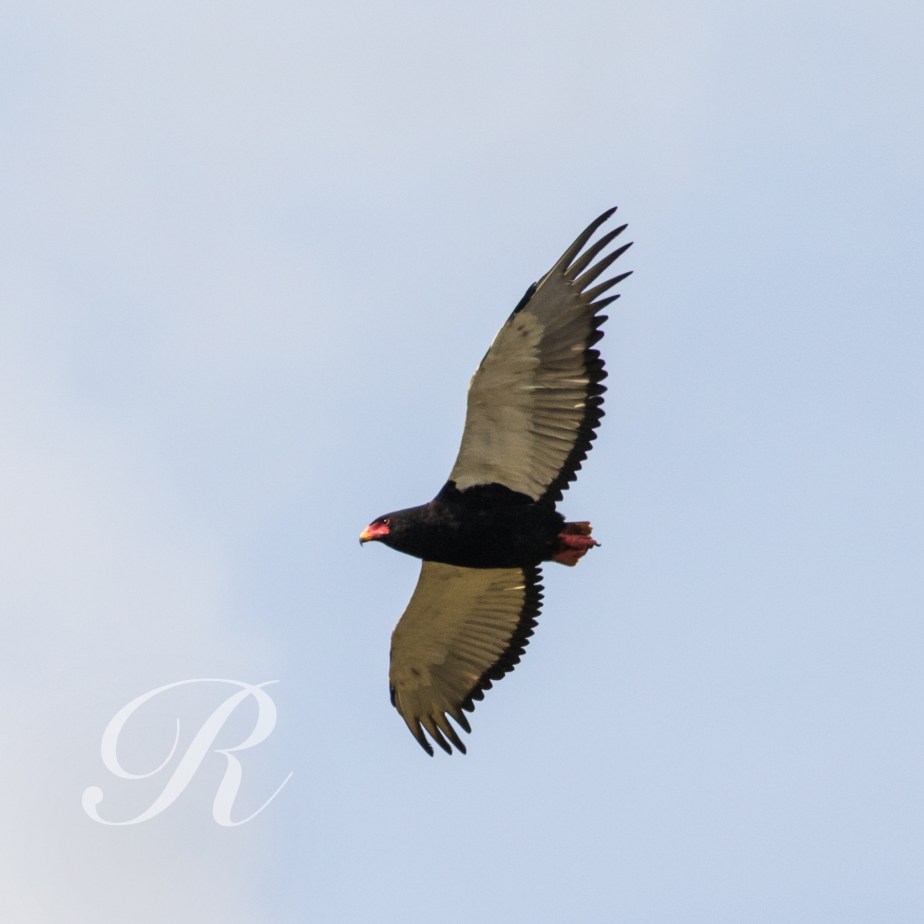
SilverbirdBronze-tailed StarlingChestnut-crowned Sparrow-WeaverAfrican Fish EagleDark Chanting-GoshawkBateleur
Wet black soil is a test for the four-wheel driver and his vehicle. Our driver Tony just happened to be a keen birder. This was a real bonus because, although Prossy the professional had to correct his diagnoses on the odd occasion, his extra pair of eyes meant that birds had little chance of going undetected.
His greatest coup was the Karamoja Apalis. This is a bird that has broken many a heart. Tony bogged the car. Just metres from a solid road next to a small Vachellia tree. It would move a little backwards, it would move a little forward, it could slowly be turned a few degrees, there was hope that it would gain sufficient traction to ride over a small mound onto the road, there was the fear that it might get inextricably bogged before that was achieved. Meanwhile his passengers had nothing better to do than watch the little bird in the little tree. We let him have a look too. It was a tick for him. Even the vehicle was inspired. It rode triumphantly onto the road.
There was more rain in store for us and proceedings for the day were curtailed …
Hartebeest
Why the long face? Because we’re soaking wet, you fool.
The red spots on my left forearm had grown bigger and painful. They were surrounded by hard red swelling and the centres showed signs of pus formation. Something would soon need to be done about these.
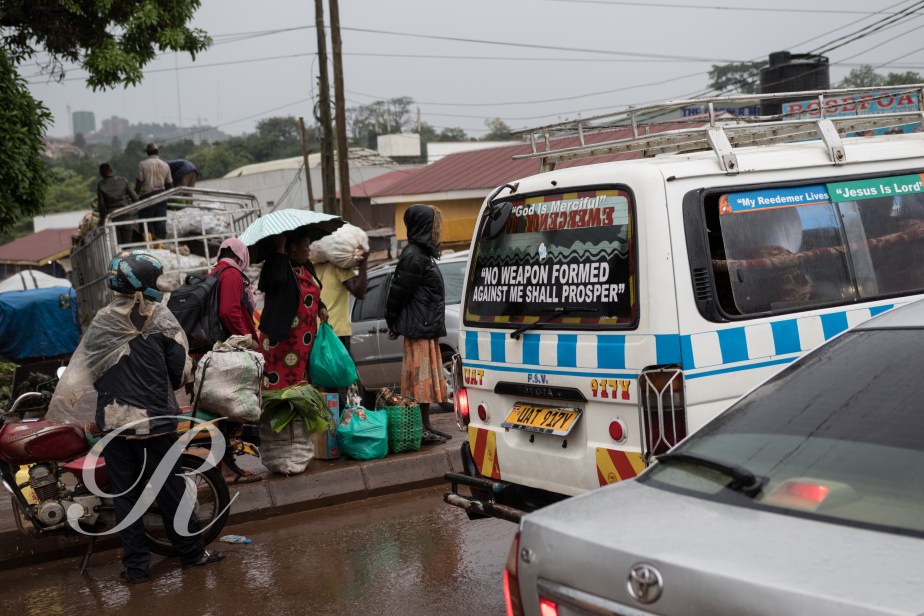
There ensued two days of road travel. So much of Ugandan life plays out beside the roads that this provides remarkable insight. The locals I’m sure are as fond of having cameras waved in their faces as I would be – the result is a contest between any sensitivity one has and the temptation to capture the rich and exotic otherness of Africa. The unease created probably explains why I don’t go in for street photography in Oz either.
Our destination on day one was Kampala and the perfectly international Metropole Hotel. No distrurbances tolerated here.
A Nile Special, some freshly roasted ground-nuts lightly flavoured with garlic and a wide choice of cuisine, very gracious service. I recommend it highly.
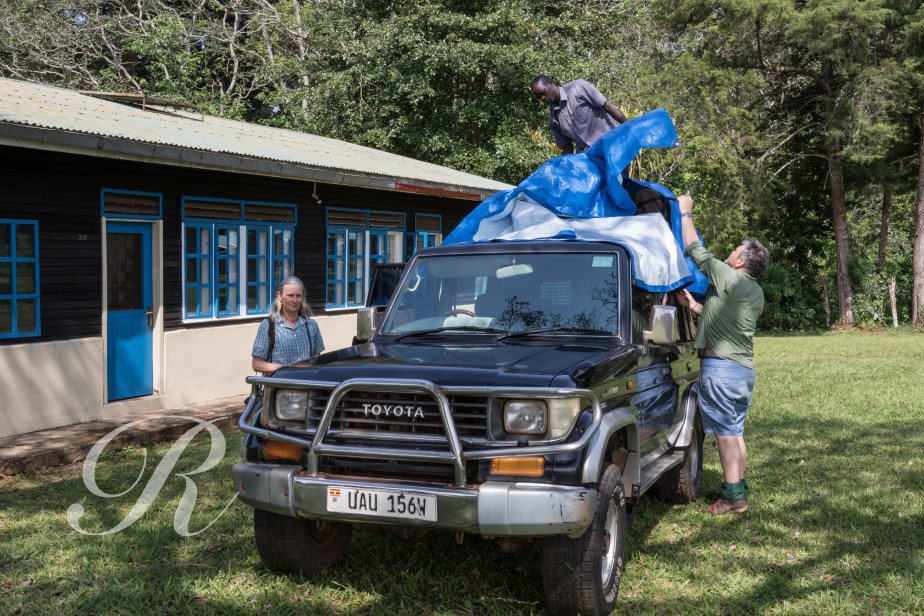
The following morning we caught up with our favorite bird guide Prossy Nanyombi. She had shown us the Shoebill and Papyrus Gonolek the previous year and left us with a lasting impression of a somewhat stern but capable professionalism. We’d contacted Prossy first when we were planning the trip and she’d put us in contact with Avian Safaris, one of several companies that she does some work for. We were soon on the road, Tony at the wheel.
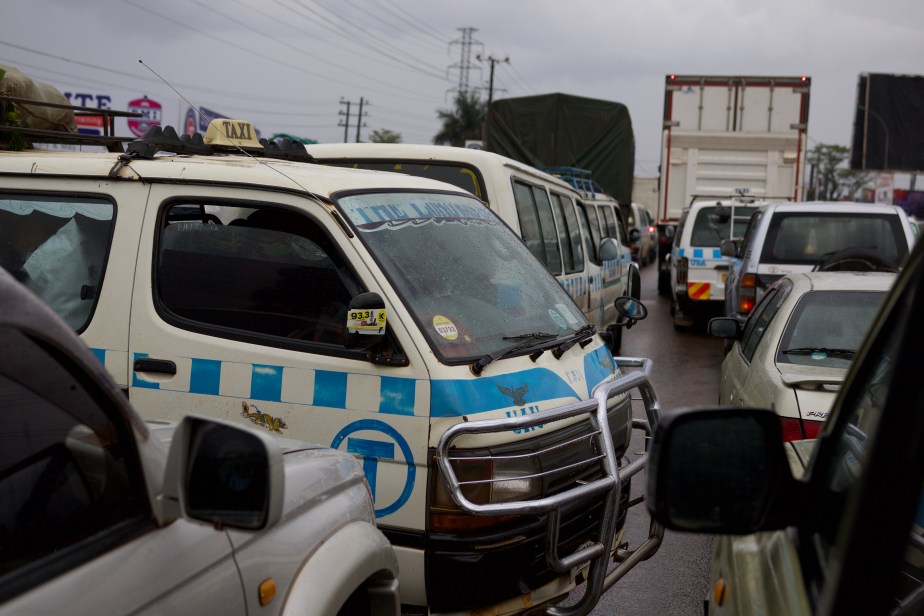
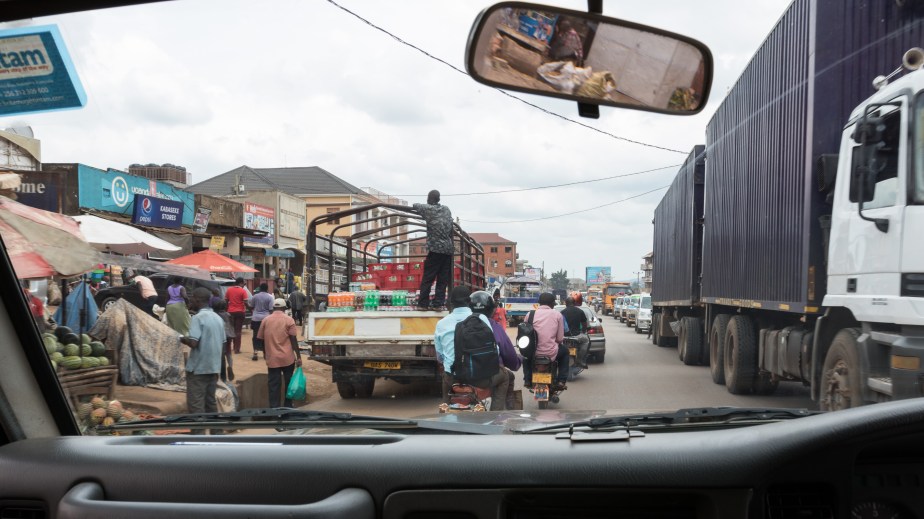
Kampala is simply krazy. And in the rain even more so. Its population is somewhere in the vicinity 2 million. The road rules are as much a puzzle to me as Australian Rules Football would be to a Boda Boda rider although the results are very similar …
Kampala has been declared the most fun, friendly, and affordable capital in East Africa. If you are going to spend any time there you should probably learn why not to wear yellow or light blue (especially at election time). Yes there are elections, it’s just not how they choose their presidents. These and other important facts can be found <HERE>.
The traffic is, and there’s nothing you can do about that. Meditate. And eventually it goes away, left behind, waiting for your return!
The city gives way to towns and then villages …
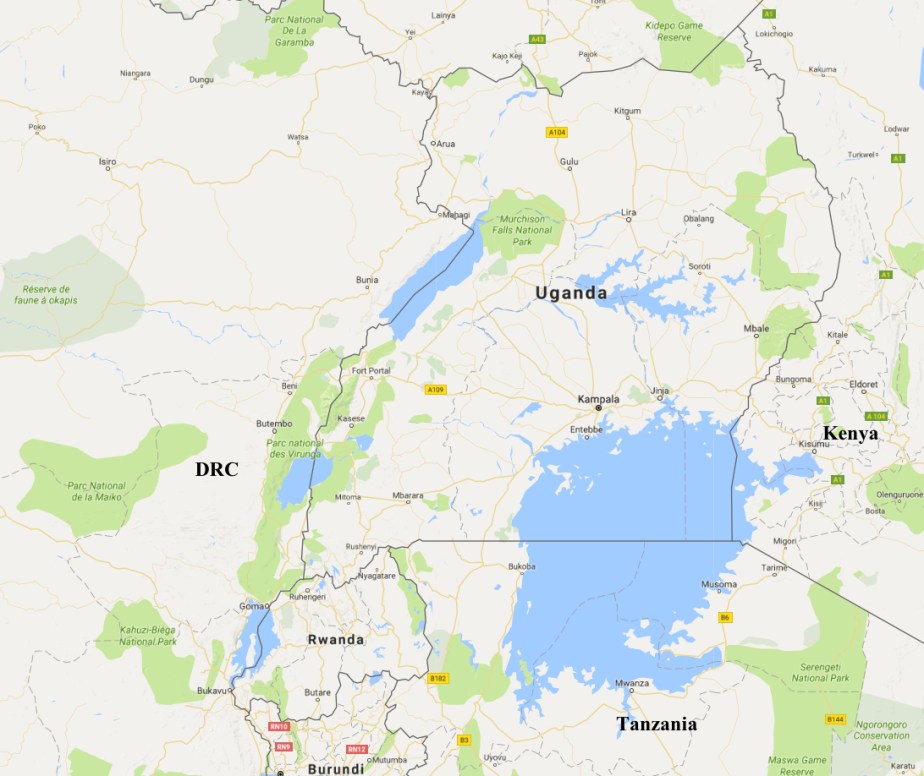
Towards sun down and under a threatening sky we arrived at Pian Upe. It’s a game reserve rather than a National Park. It’s in the north-east of Uganda not far from the Kenya Border. It’s beautiful and it’s nothing like Budongo.
As our stay at Budongo reaches its conclusion. It’s time to thank the Field Station Director Geoffrey Muhanguzi for his hospitality and, as always, his wisdom. Also to say thank you to Moreen Uwimbabazi for allowing us to assist in her bird banding project and congratulate her and her team Patrick Arua and Godfrey Andrua on their progress.
The Royal Mile, so called because it was indeed a favorite spot of Ugandan Kings, is one of Africa’s best forest birding spots. It is possible for a visiting birder to buy a permit and stroll under the majestic trees. I believe the fee has to be paid in Kampala. The best way forward is to contact Raymond in advance, he lives near the gate and knows the place backwards. The numbers I have for him are 0777 319 865 or 0752 930 065. You can rely on him to give clear instruction.
Raymond
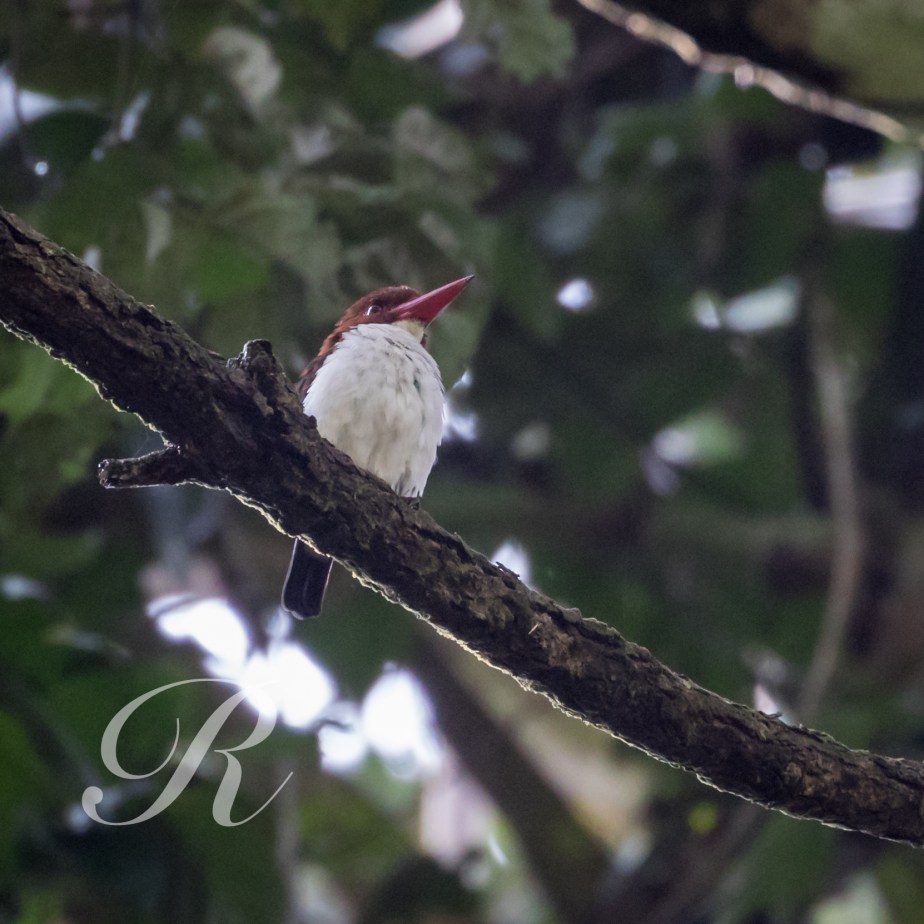
He is the man who can find you your Chocolate backed Kingfisher.
Chocolate-backed Kingfisher
But that only takes you as far as this sign …
and paradise is on the other side of it. Tourism is specifically forbidden by the project’s charter, to pass Go you must be sponsored by your university or another entity.
It was during my last day or so at Budongo that I became increasingly aware of some red and itchy spots on my left arm.
My reading of the moment is Travels in the Interior of Africa by Mungo Park, published in 1799. He was traveling in the Gambia and seems not to have been a great fan of the forest …
The country itself being an immense level, and very generally covered with wood, presents a tiresome and gloomy uniformity to the eye; but although Nature has denied the inhabitants the beauties of romantic landscapes she has bestowed on them, with a liberal hand, the more important blessings of fertility and abundance.
Perhaps now that travel is so much easier the landscapes have become more romantic.
The Budongo Forest covers an area of about 435 km² which reportedly makes it the largest forest in Uganda. It’s a mixed forest and was once important as a source of mahogany. Left to itself the mix would simplify, at climax it would be dominated by Ironwood (Cynometra alexandrii) more valuable timber species would be excluded. Mahogany is much more attractive to foresters. The efforts to encourage a rich mix to persist were successful but Celtis (hackberries or nettle trees) and Ficus (figs) species were more inclined to grow than Mahogany. These have no timber value but do provide food for primates and birds.
The forest looks natural enough but the parts that have been molested are better for birds and primates than a couple of reserved areas that have never been touched. Who’d have thought.
We were kept hard at work but a couple of hours every afternoon were ours to go for a walk down the Royal Mile or around the camp.
The team heading to Uganda this time consisted of the three Aussie bird banders that had visited in 2017 plus one.
Dr Will Steele and Dr Mark Antos are both professional biologists who find the natural world so fascinating that they go on studying it even after they’ve knocked off work. Along with the McGee we had had the pleasure of doing some training with the fledgling bird banding team at the Budongo Research Station. We would be returning to offer some more encouragement, some more training and some more equipment.
Our new recruit was the lovely Gayle McGee, also experienced in the process of catching and banding birds.
It is most of a day’s drive northward from Entebbe to Budongo. Our first call was in Kampala where we picked up Moreen Uwimbabazi who heads up the project.
Moreen Uwimbabazi
Then it was a long but fascinating drive via Masindi to the Royal Mile and Budongo.
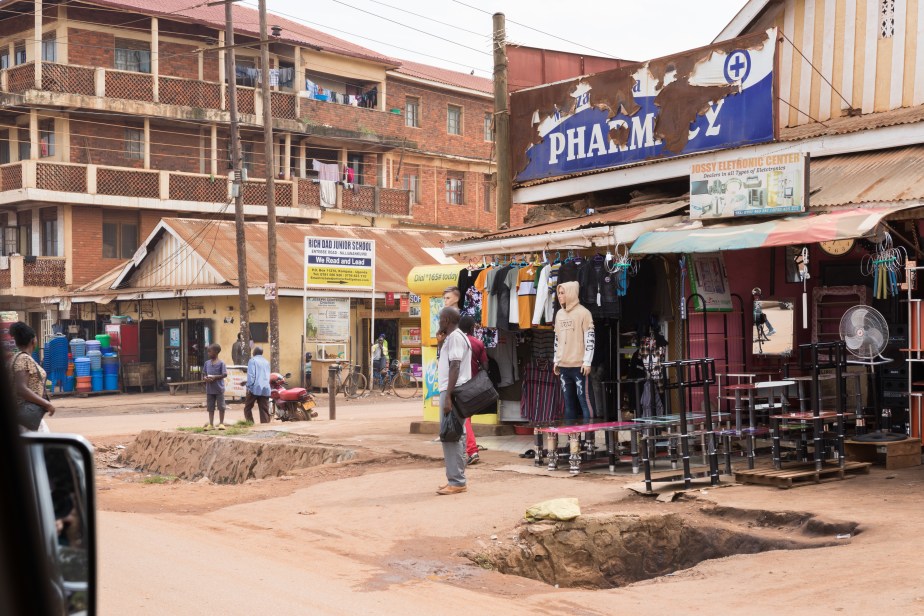
Much of life in Uganda goes on in the streets. Foodstuffs and furniture …
hustle and bustlethis way to the Rich Dad Junior School
some instruction from the Australian Government
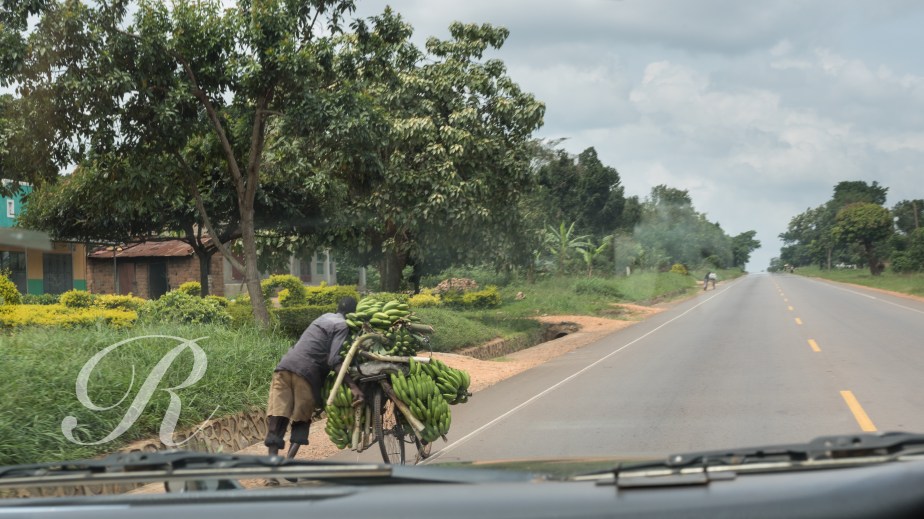
and having bought your food and furniture you load it onto a van, or a motorbike or even a bike.
chair manthree men and a sheepplantain – a staple
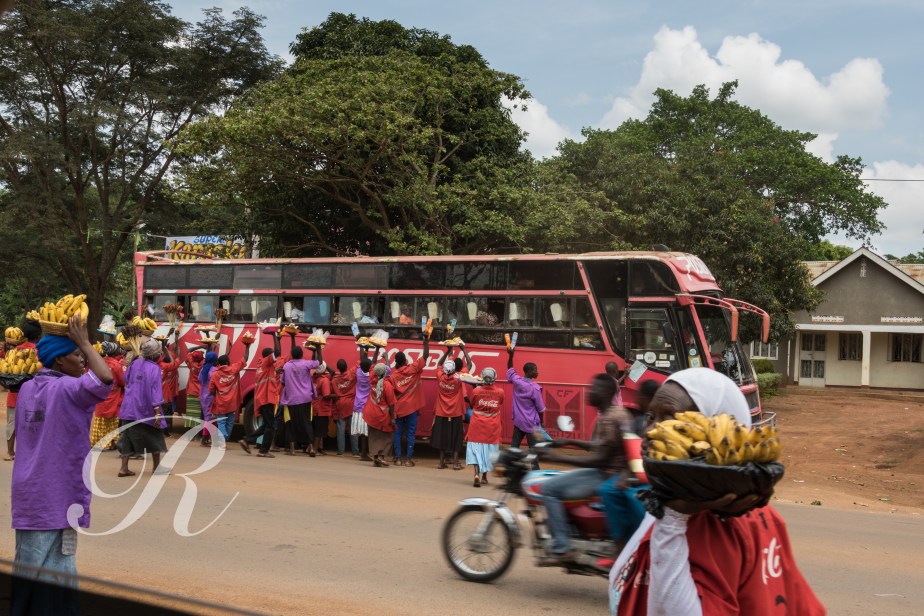
From time to time on the highway street vendors rush every vehicle that stops.
street vendors
As well as the fresh fruit and drinks you can buy chicken and goat meat on skewers … maybe not a great idea for the unpracticed intestine.
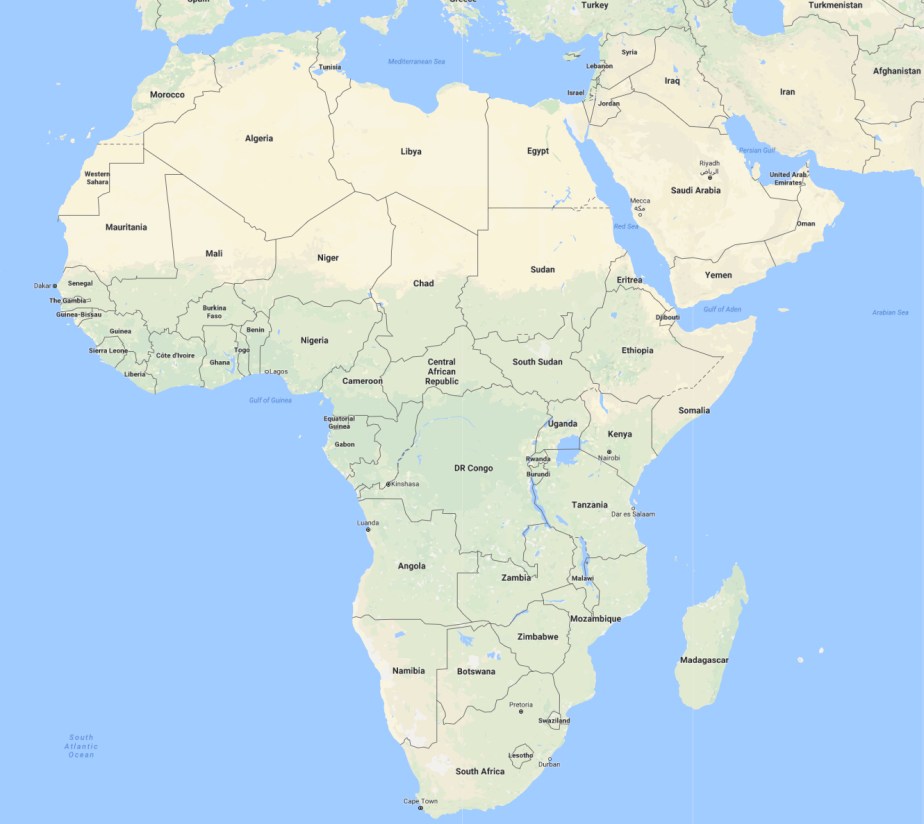
Lake Victoria is a very large expanse of fresh water about half way up the continent of Africa and somewhat east of the midline.
Uganda sits on top of the lake sharing borders with Kenya, Tanzania, Rwanda, DRC and South Sudan. The country straddles the equator.
The surface area is roughly similar to my home state of Victoria, Australia or England, Scotland and Wales. It has a population approaching 50 million people and expanding rapidly. The median age of 15 years is the lowest in the world. The birth rate of very nearly 6 children per woman is among the highest in the world.
In the colonial era Uganda was a British protectorate. It gained independence in 1962. Government since then has changed hands by military coup. The effectiveness of government has been reduced by internal armed conflict such as the civil war with the Lords Resistance Army.
The current president is Yoweri Kaguta Musaveni who gained power in 1986 after a six-year guerrilla war. Transparency International has rated the public sector as among the most corrupt in the world, an estimated $286 million US is siphoned off annually. Uganda provides one of the best cases for the suggestion that foreign aid is a process that takes money from poor people in rich countries and gives it rich people in poor countries.
The human rights situation is depressing, child labour is common, the police and armed forces are often accused of torture.
More than 40 languages are spoken, the main groups are Bantu, Nilotic and Sudanic. A couple of Kuliac languages are also spoken. English is the lingua franca in the south, Swahili and English serve the same purpose in the north.
For all the bad news it is a beautiful country. From dry savanna, through fertile agricultural land, dense forest to snow-capped mountains. The people are certainly tough but vibrant and industrious.
In Kampala at the very comfortable Metropole Hotel … with excellent wifi.
Not for long though, it’s back to the bush in a couple of hours. It has been an outstanding trip so far. I will have plenty to share once I get home. Meanwhile a teaser from Kidepo National Park.