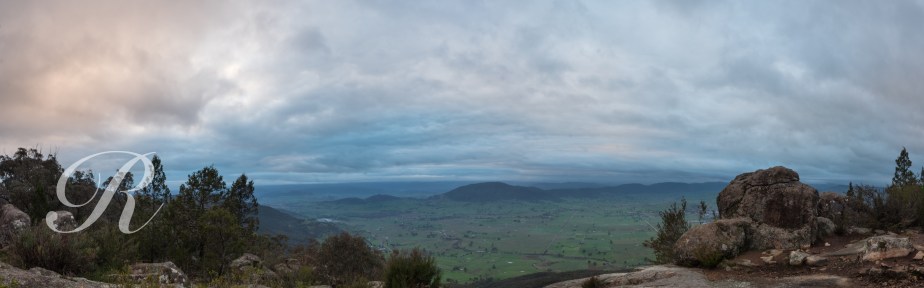
AKA Mt Mittamatite is a little over 1000 metres and has its very own web page. Dogs are welcome on a lead and fires are permitted in the fireplaces provided. Camping is possible at the summit and at Emberys Lookout. There are no bookings and no fees. There is an aircraft navigation facility on top.
The view from Emberys (above) is impressive, it is a popular launching site for the hang gliding fraternity. You have to work a bit harder for a view at the summit.
I was hoping for more mist and less cloud. I’ll have to go back.
The weather was closing in with a vengeance. Yesterday’s snow was the start of a southerly outbreak which was only going to get worse. Time to head for home.
As an aside, when we Victorians see NSW on a number plate we wonder if it stands for No Sense Whatever. In outback New South Wales they are fully aware that it stands for Newcastle, Sydney and Wollongong which is where the government expenditure goes.
The route takes us through Bega where the cheese in our lunch comes from, then Wyndham and the Robbie Burns Hotel, founded 1848 (by Robbie himself, I believe, and that’s his ute parked outside) …
On to Adaminaby and then over the hill. Given that the ski season is rapidly approaching my forward planning involved the lowest route available. As we ate our cheese sandwiches however, the navigatrix declared that a shorter route existed.
photo GHD
It was an instance when the shortest route proved to be simultaneously the road less traveled, the scenic route and the one that took the longest time. It did give us the opportunity to let the dog have her first encounter with snow. She was unimpressed … but I was. The Great Dividing Range at its greatest.
Victoria at last, we found our way to our intended campsite in the Mitta Mitta Regional Park … the Embery lookout perched high above the bright lights of Corryong.
And the first thing we did was light a nice campfire.
Heads up everyone, my good mate MalBrown2, a frequent commenter on this blog, is in England (which he cutely refers to as Great Britain) goggle-eyed and blogging (bloggle-eyed?). It is well worth a read … malbrown2.com.
I’ve pinched one of his photos, hope he doesn’t mind …
Jewel of the Sapphire Coast, or so merimbulatourism.com would have you believe. It certainly is pretty, lots of beach, a lake. It’s surrounded by national parks. It has an aquarium. It has grown apace in recent years.
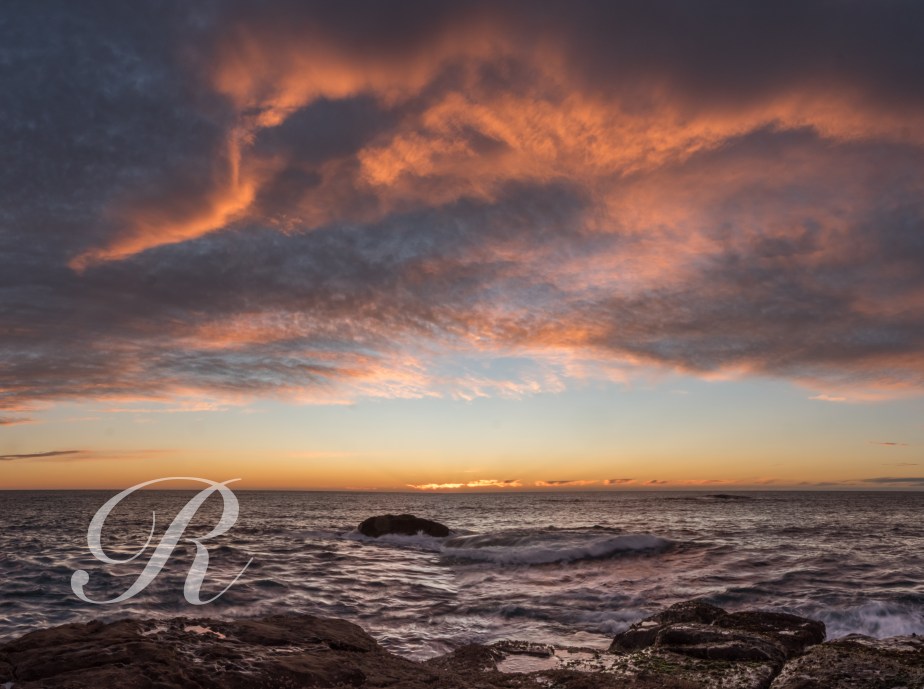
I was on the rocks at the end of Short Point as the sun prepared to rise out of the sea.
Then a long walk by the lake and around the town …
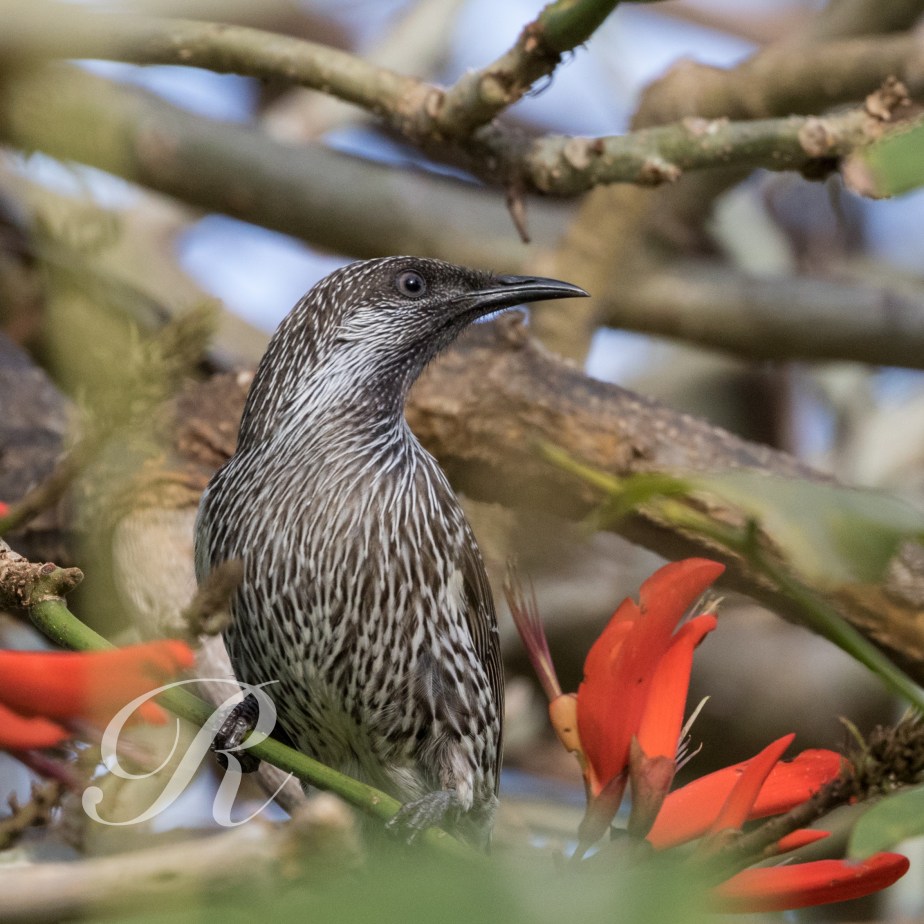
Little WattlebirdRed Wattlebird
The red flowers of this tree which I believe is Erythrina fusca, were extremely attractive to the local nectar eaters.
The subdued early light shows off the plumage of this heron to perfection.
White-faced Heron
Today we wake in the Lake Tyers Forest Park. Tonight we will be in Merimbula. The population density in the intervening country could easily be the lowest in coastal south east Australia. We will be passing some of my favorite places, the Croajingalong and Ben Boyd National Parks. These are denied to us today because we have the dog.
One spot than we can visit is the Cabbage Tree Flora Reserve. Baron Ferdinand Jakob Heinrich von Muller is credited with discovering this isolated pocket of palms in 1854. It is said to be the only patch in Victoria and it is the most southerly occurrence of any Australian native palm.
Livistona australis
They grow quite tall, 20+ metres, along the creek surrounded by the wet forest .
As well as being scenically splendid this place is usually a birding hot spot. Not this day, the only creatures flying around were the mosquitoes.
The next port of call was Eden, watch out for the snakes, the first place of note in New South Wales. There is an old joke about spending a week in Adelaide one Sunday, you can do it in a Saturday afternoon in Eden. It does, though, have a very fine harbour.
We arrived in Merimbula just in time to catch the sunset.
Living in western Victoria there is some splendid countryside in easy reach but it’s nice occasionally to have a little variety. My home is just on the inland side of the Great Dividing Range. Great it is, but in length rather than height. It sweeps off to the east and then heads north. Its highest point is in southeastern New South Wales at Mount Kosciuszko which stands 2,228 metres (7,310 ft) tall. From there it continues north to the tip of Cape York in Queensland. It’s total length exceeds 3,500 kilometres (2,175 miles).
Whereas my part of the world is pretty dry, the Great Dividing Range catches a lot of rain. East of Melbourne, especially, it supports a lot of forest and that means a very different suite of birds.
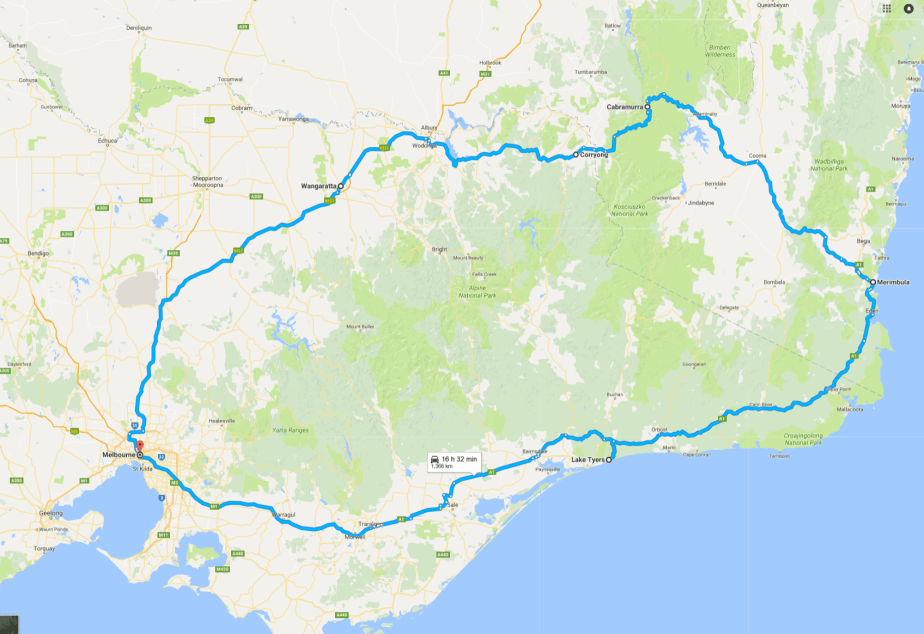
I took the wife, the dog and my trusty camper trailer and spent a few days making a circuit of South East Australia.
We spent a couple of days in Melbourne at each end of the trip, in between we covered about 1400km in five days.
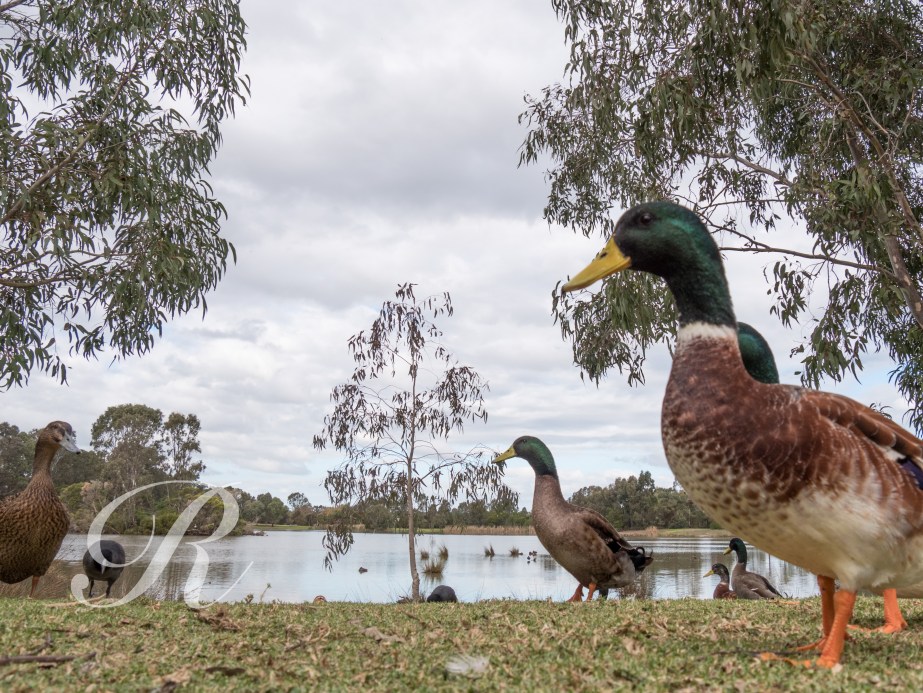
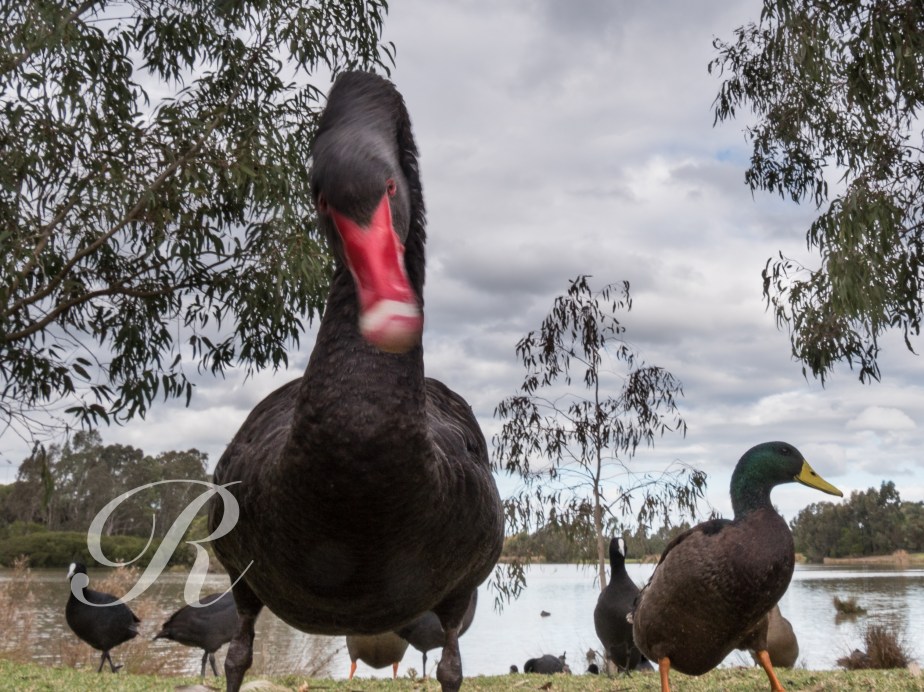
On day one we stopped for lunch in Sale. At a picnic spot by the lake the local avifauna consisted of an unruly mob of mostly rejected pets. They were quite happy to provide a close encounter so I sat down with a little bread and tried for a wide-angle close-up. It was hard getting them to pose nicely, their manners were appalling …
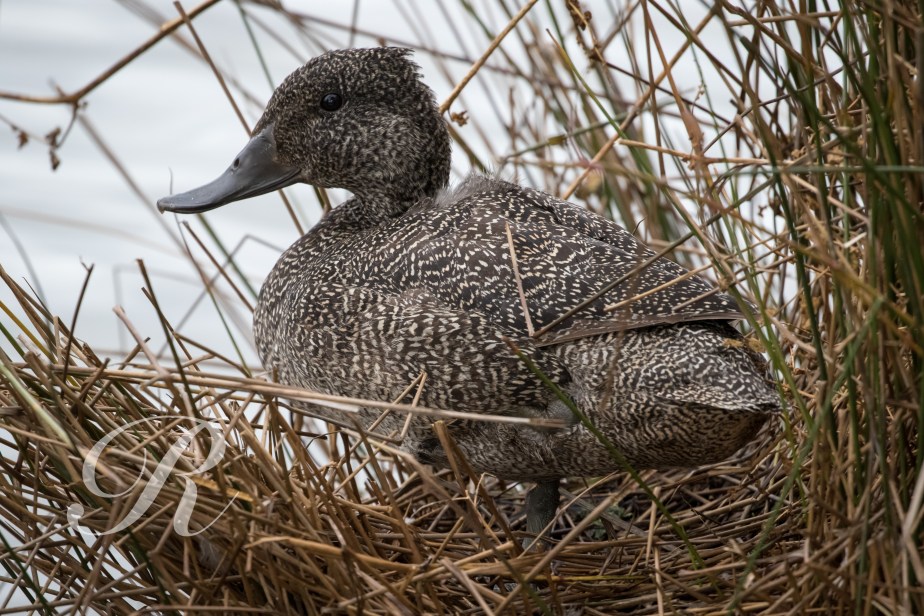
Whilst this guy was peering down at me I noticed that there were some much better behaved ducks on the water. Just a few feet away there were half a dozen Freckled Duck , not at least interested in the feeding frenzy nor all that bothered by my presence. They are Australia’s rarest waterfowl. A photo opportunity not to be missed …
Freckled Duck
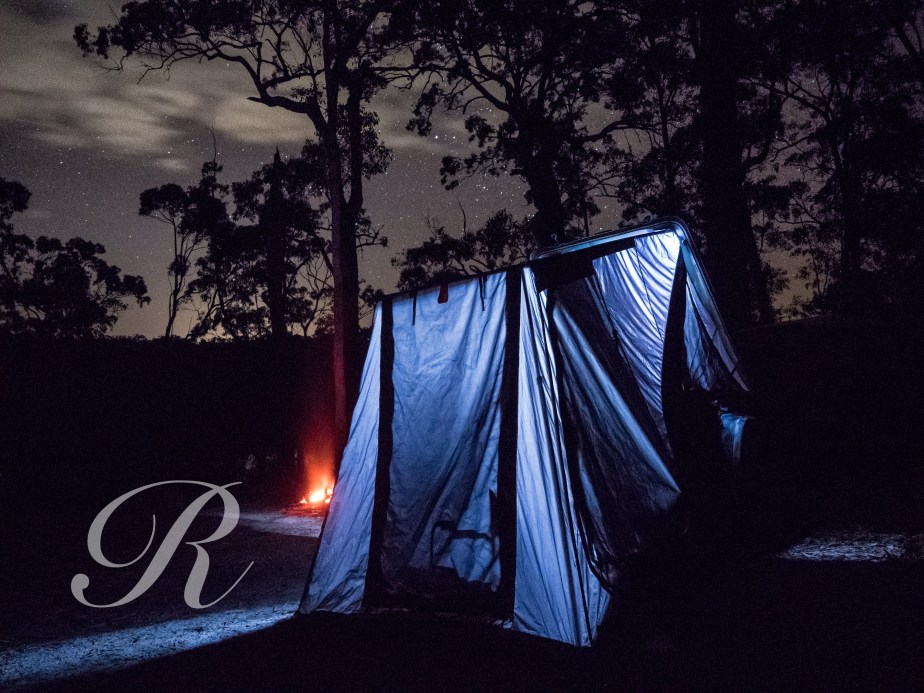
Our camp site that night would be in the Lake Tyers Forest Park. A beautiful spot where the dog is legal and so is a campfire.
There are several designated camp sites reached by Tyers House Road just east of Nowa Nowa.It was a crisp and starry night.
I’ve been having a bit of a run around western Victoria and one of the highlights has been a visit to a couple of waterfalls on the Wannon River. They’re about 9km apart 16 km west of Hamilton and they’re well signposted off the Hamilton to Mt Gambier Road (B160). You can camp in the Wannon Falls Scenic Reserve.
The Wannon arises in the Grampians beneath Mt Abrupt and flows into the Glenelg River which reaches the sea in the far west of Victoria.
The geology of the falls is quite different. The Wannon Falls tumble over a hard lava bed between 1 and 2 million years old lying on top of softer rock. It’s a single drop of 30 metres into a plunge pool.
Wannon Falls
The Nigretta Falls tumble from shelf to shelf on much older rock (~400 million years) that is hard from top to bottom making it rather more spectacular to watch.
The tour ran from February 19, 2017 until March 7. The southern extension kicked off the next day and finished on the 13th.
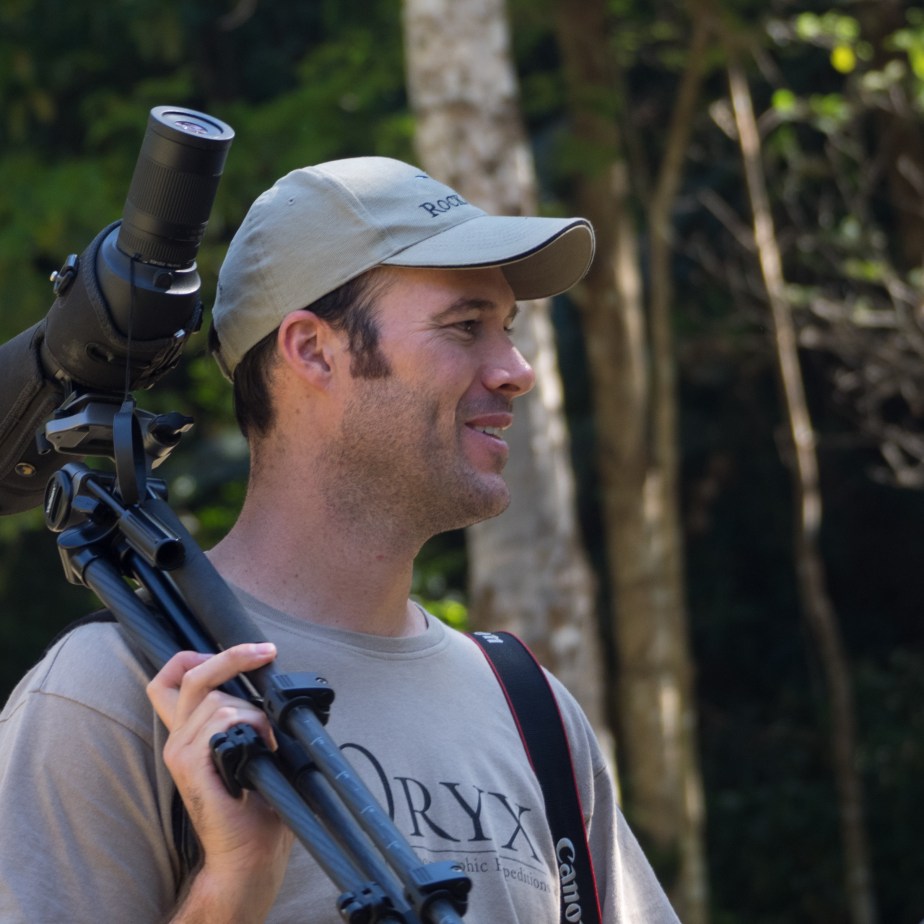
The leaders were Uthai Treesucon and Keith Valentine and they were excellent.
Uthai TreesuconKeith Valentine
The itinerary and accommodation were well chosen, transport was handled well. The food was good.
A group size of twelve could present problems but Rockjumper briefs participants on etiquette and on this occasion things ran very smoothly. How the organisation might have handled a crisis was never put to the test.
It is a hardcore birding tour, if your spouse is not a keen birder it would be tough for them. There is no associates program, days are long, the focus is intense. And for the birder very productive. The final tally for the tour was over 500 species, I saw 471 different birds and some good mammals. If you carry a camera you will bring back some very nice photos but it’s not the tour for the dedicated bird photographer the tempo is quite different from their requirements. One of the group has put a very large collection of their photos up <HERE>. If you’re preparing for a trip you could test your diagnostic skills on them.
So to mark Rockjumper’s report card … A+. I’ve already booked another tour. The next one is to Bhutan. What about the participants?
Most were repeat Rockjumper clients which says something about the company. The guys were gentlemen bird watchers, always polite, tolerant and cooperative. The girls on the other hand … I don’t know how many times I found myself examining the backs of their head through my binoculars. No, I exaggerate the group was remarkably congenial. There were tales of other trips and a lot of good humour. We were occasionally entertained by the sayings of Polly’s Mum one of which was …
If you’re looking for sympathy you’ll find it in the dictionary between shit and syphilis …
which is well worth remembering.
It is axiomatic that …
There is an arsehole in every group and
They are totally unconscious of the fact.
So it follows that if you can’t identify the arsehole it must be you.
I therefore tender my apologies to the fine men and women that I traveled with. I enjoyed it.
Krabi just before sunrise (it’s worth clicking on this photo) …
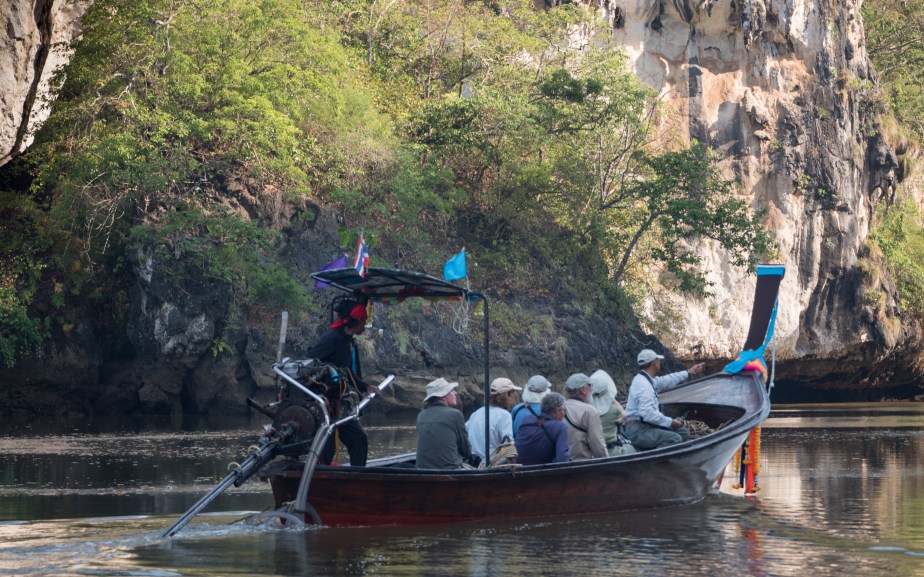
More time in the mangroves, first on foot and then by boat.
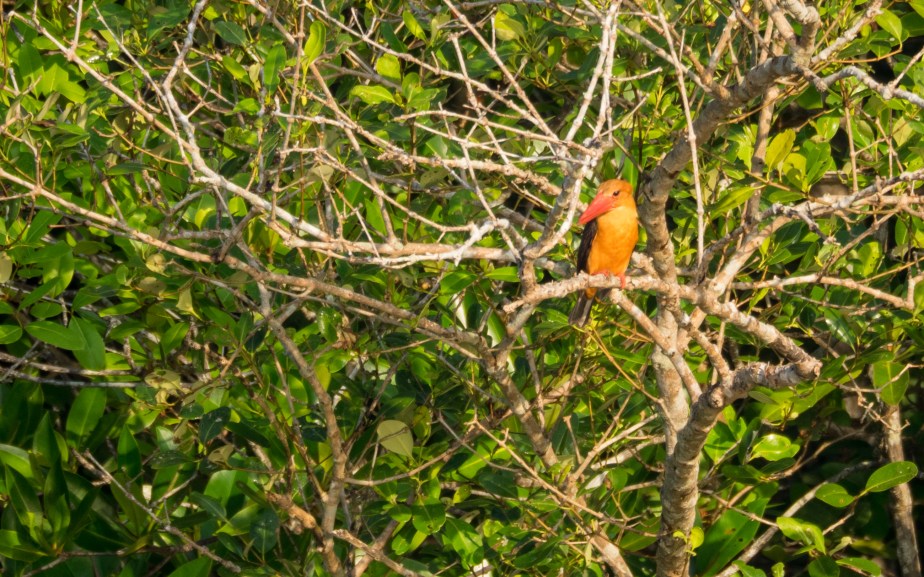
Two of the group, Polly and Paul, celebrated their 4,000th species on this little voyage, and even on this last day I was still adding lifers to my list including this one …
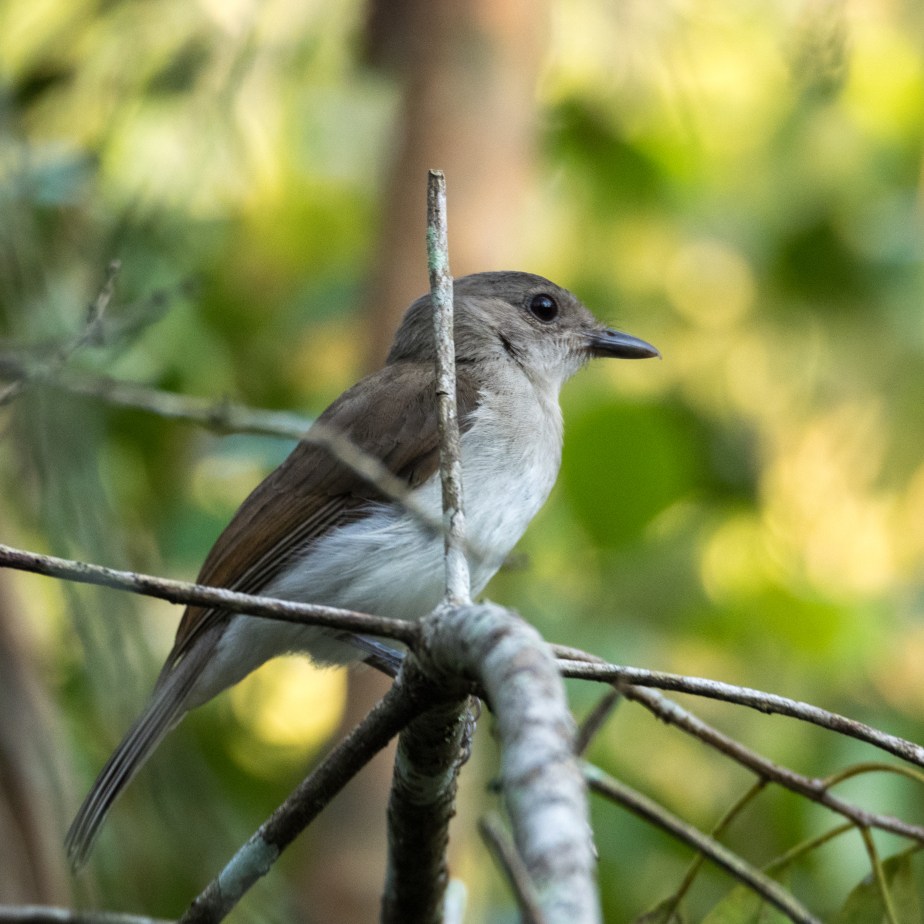
Tigers to the left, Possums to the right. The distance between Bali and Lombok is just 25 km but Asia’s woodpeckers, barbets and trogons are on one side, Australasia’s honeyeaters and cockatoos on the other. Huxley’s modification to the line tidies up a few problems, an excellent example being the genus Pachycephala, a literal translation – thick heads, more flatteringly known these days as the Whistlers. There are 32 species (following the Handbook of Birds of the World in this instance) and all of them are found to the east of Huxley’s version of Wallace’s Line.
When an Australians go birding in Asia they are confronted with not just with new species but whole new families. It can get confusing.
I’d been in Thailand for three weeks. New species were raining down the whole time. It was possible that I was missing the derisive laughter of the Kookaburra or my wife, or maybe the scent of eucalyptus. We were birding in the mangroves when I saw it, a little Aussie expat. It warmed the cockles of my heart springs …
Mangrove Whistler
I’ve seen Golden Whistler and Rufous Whistler in my own back yard and six other species in Australia. Some Whistlers have made it way out into the Pacific to the islands of New Caledonia, Tonga and Samoa but only one species straddles the mere 25 km that separate Lombok and Bali, the Mangrove Whistler. And it didn’t stop there, it can be found all the way up the Malayan Peninsula and then along the Asian coast from Vietnam to India.