Creatures of the Pixaim River …

A couple of days of river cruising turned up Marmosets, Capuchin and Howler Monkeys. Capybara were common, Marsh and Red Brocket Deer were seen occasionally. The Giant Otter chose to spend a little time watching us each day …

Yacare Caiman and Green Iguana represented the reptiles, and so did the Common Tegu. At first glance this appears to be a Varanid, a family that is well represented in Australia, in fact it’s not that closely related … another case of convergent evolution.

Snakes were mainly absent. Where was my Anaconda? This one let us have a good look, I’d be delighted if anyone can identify it for me …

Birds are plentiful along the river, they included Black-capped Donacobius, Undulated Tinamou, Bare-faced Curassow, Blue-throated and Red-throated Piping-Guan, Hyacinth and Yellow-collared Macaw and Sungrebe.

Star of the show … Sunbittern.

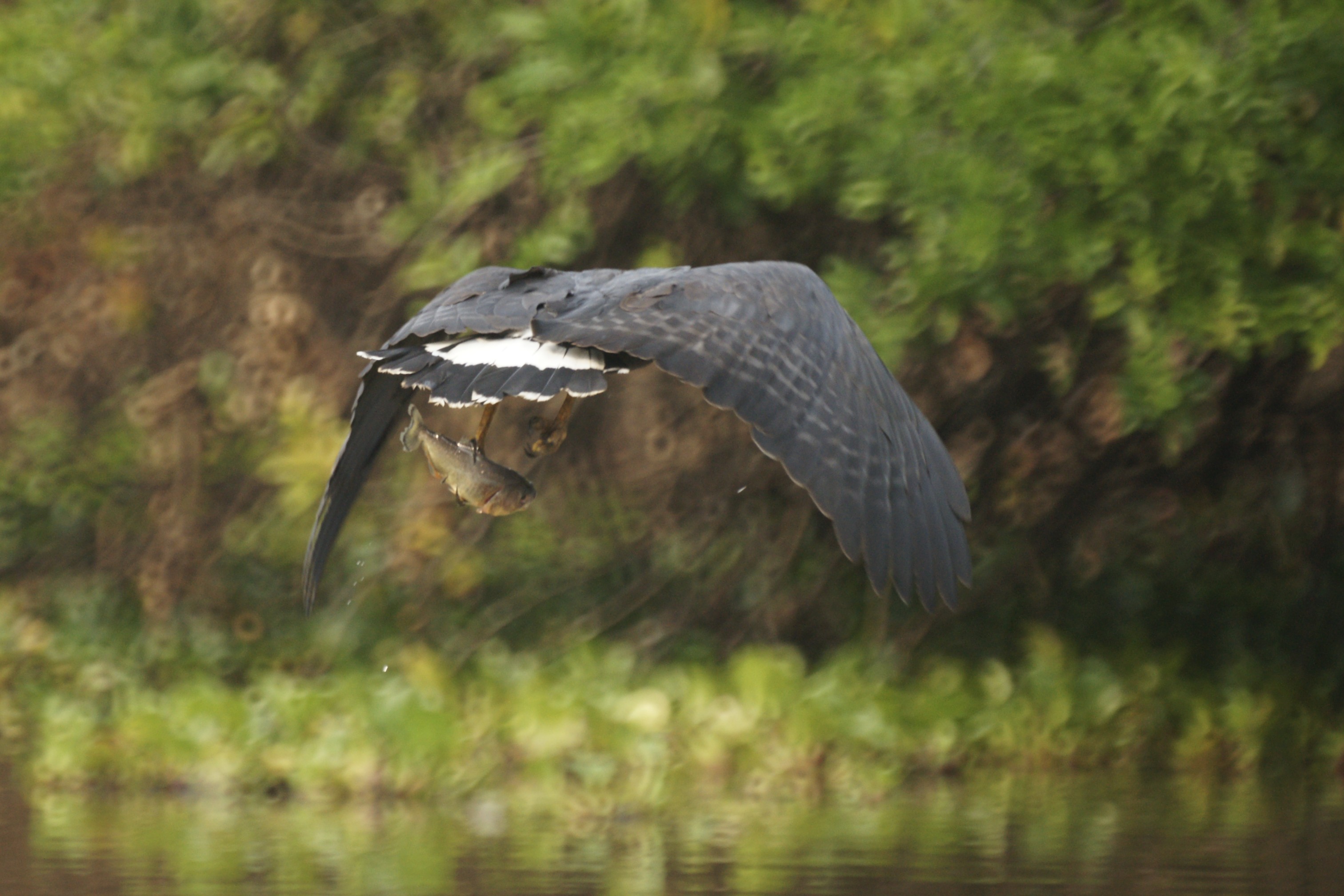
Oh, and there goes another Piranha, this time in the talons of a Great Black-Hawk …

The Pixaim River …

We spent two nights at the Pantanal Mato Grosso Hotel, right on the riverbank. A sizeable Caiman had found its way onto the verandah in front of one of the rooms. The polished concrete was too slippery for it to gain a purchase with its feet. Before the lucky guest could access their room the caiman had to be carefully assisted back onto the grass.

The days were spent on the river, after dark we went spotlighting in the back of a truck.

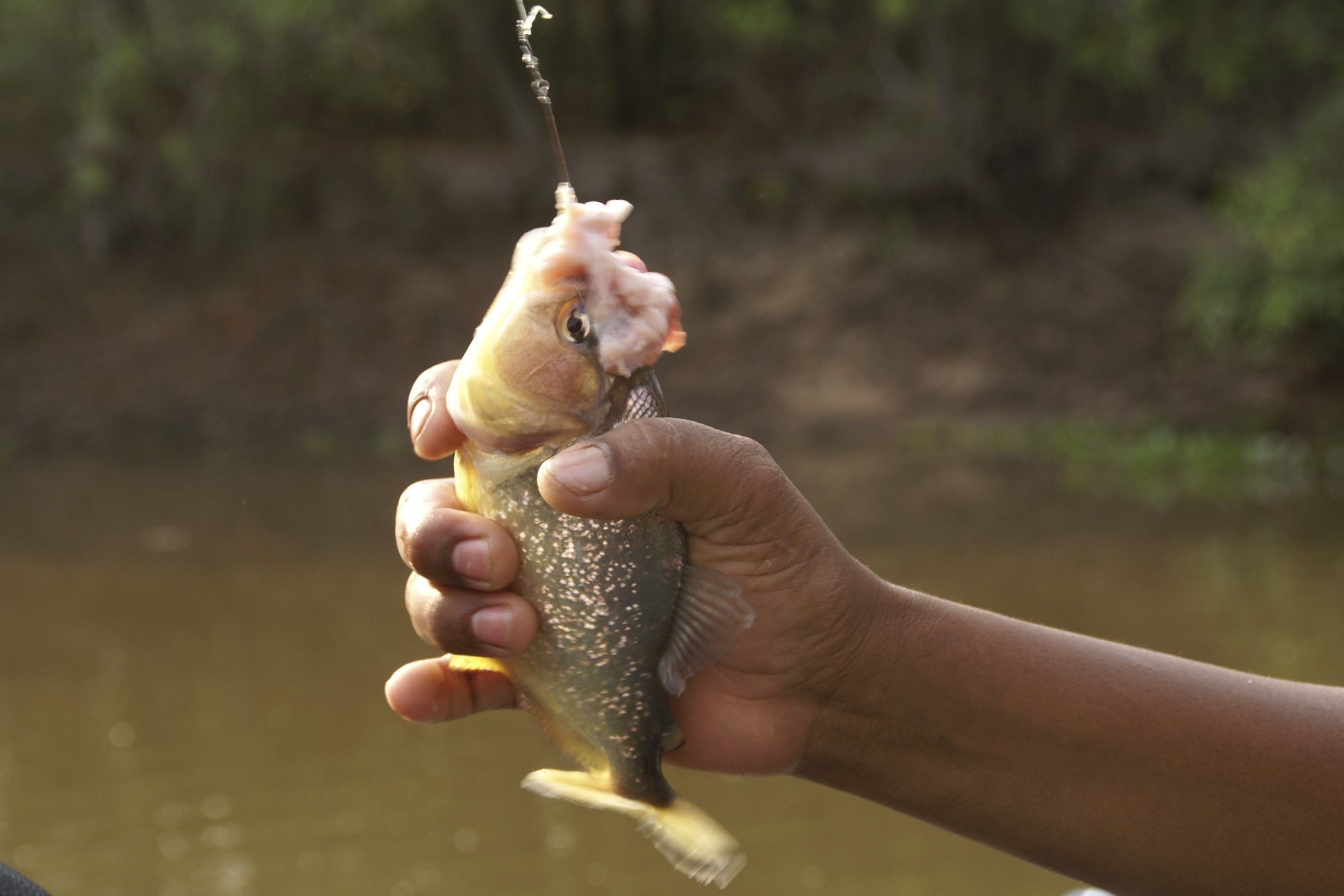
After a while the boatman dropped in a line. Within seconds he had a Yellow Piranha.

What with them and the caimans the life jackets may not have been a lot of use.

The poor fish was banged on the head and then thrown out. Well educated birds were waiting. First in was a Black-collared Hawk.

Subsequent fish were claimed by Great Black-Hawks and by Cormorants.

Jabiru …

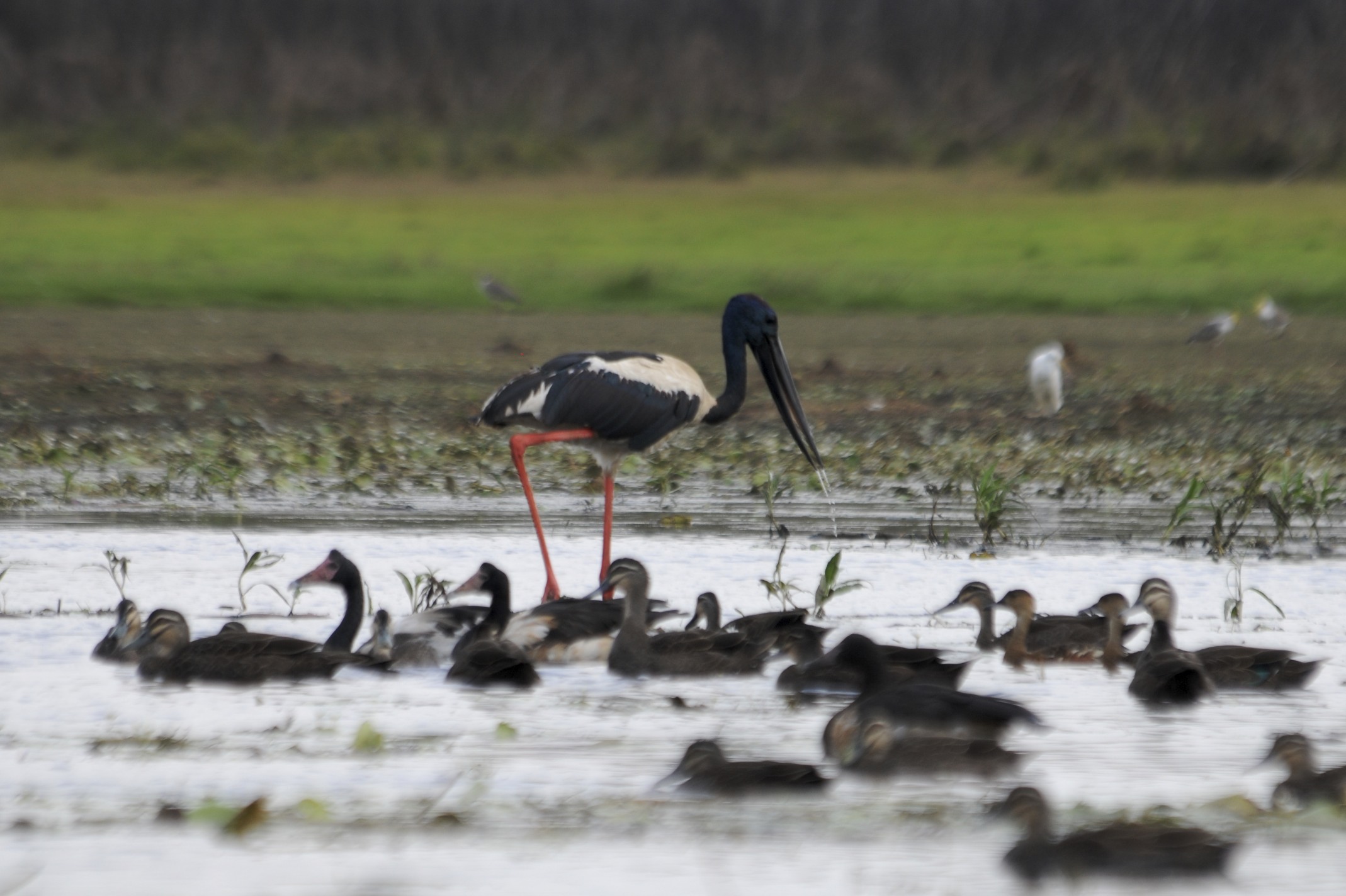
In the north of Australia we are lucky to have the beautiful Black-necked Stork …

Many Australians call this the Jabiru, indeed just outside Kakadu National Park there is a town named after this popular mistake. Kakadu, of course, is Crocodile Dundee country. Mick Dundee might well have said, “Call that a Jabiru? This is a Jabiru.”

The South American claim on the word is undeniable, Jabiru is from Tupí–Guaraní for swollen neck. Other Tupí–Guaraní words that are likely to be familiar are jaguar, tapioca, jacaranda and anhinga. Jabirus are found through a broad swathe of Central and South America east of the Andes. They are at their most abundant in the Pantanal. They look fairly gruesome on foot but are the picture of grace once airborne.

The Pantanal …

65 million years ago a huge inland sea, the Xaraés, began to dry out. As it did it became a huge lake and then the seasonally flooded basin called the Pantanal.

Touted as the largest wetland on earth it extends into two Brazilian states, Paraguay and Bolivia covering upwards of 150,000 square kilometres. One to one and a half metres of rain falls each year, mostly between November and March. The water level rises as much as three metres as a consequence. The rains stop, the level falls and by the end of the dry season the roads are dusty and the water birds and caimans are struggling for the remaining ponds. Ranching is the principal human activity but the problems that extensive flooding brings keep the human population fairly low and give the wildlife a space in which to survive.

The Transpantaneira is a highway into the northern Pantanal, in Brazil’s Mato Grosso. It is an unsealed road with numerous wooden bridges. It was the route that took me to the Pixaim river last month.

Coatis cross the Transpantaneira


Every puddle held something …

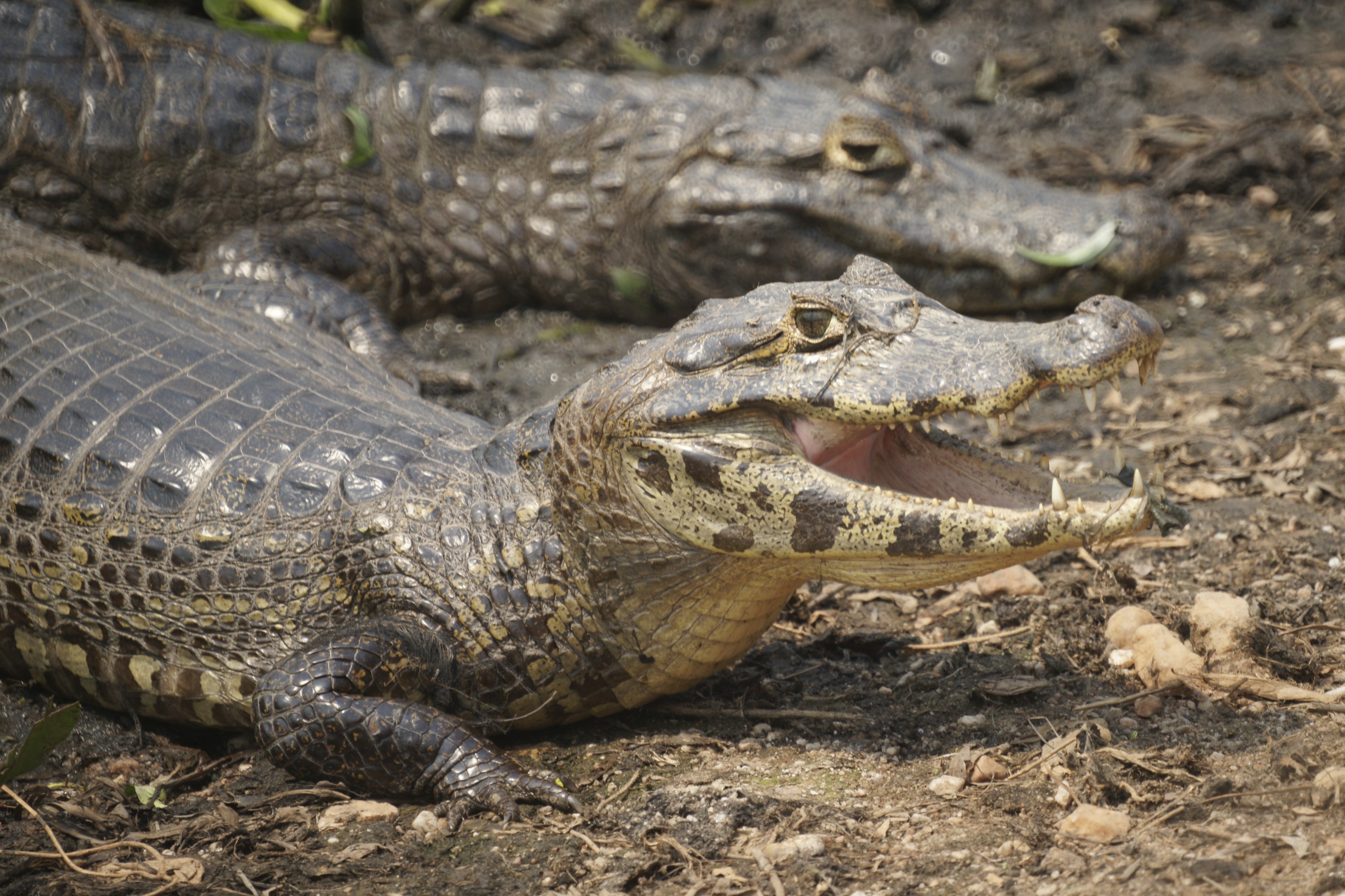
Say hi to the Yacare Caiman. Spotlighting at night reveals the density of these creatures to be astounding, and by the end of the dry some will be encountered going cross country, maybe even on the balcony outside your door! They mainly eat fish. The Capybaras don’t seem to show them a great deal of concern …

Click on the pictures to see them in better detail. More to come soon …

Santuário do Caraça …

The continuing saga of my recent trip to Brazil …

Leaving the not quite visited Serra da Canastra National Park in flames behind us it’s another six hour road trip to the Santuário do Caraça. This is a beautiful 17th century seminary set in a stunning mountain setting. The sanctuary covers a little over 11,000 hectares and is home to the Maned Wolf and Masked Titi monkey as well as birds of the Atlantic forest. It’s about two hours drive here from Belo Horizonte, capital of Minas Gerais and Brazil’s sixth largest city, getting on for 2.4 million people, weekends and holidays are best avoided.
The accommodation is simple but comfortable, meals are provided in the refectories, alcohol can be purchased. The church is fully functional and a place of pilgrimage.

Walking paths quickly get you to lush forest or up to heathy scrub. If you are a birdwatcher preparing for a visit don’t miss this post.

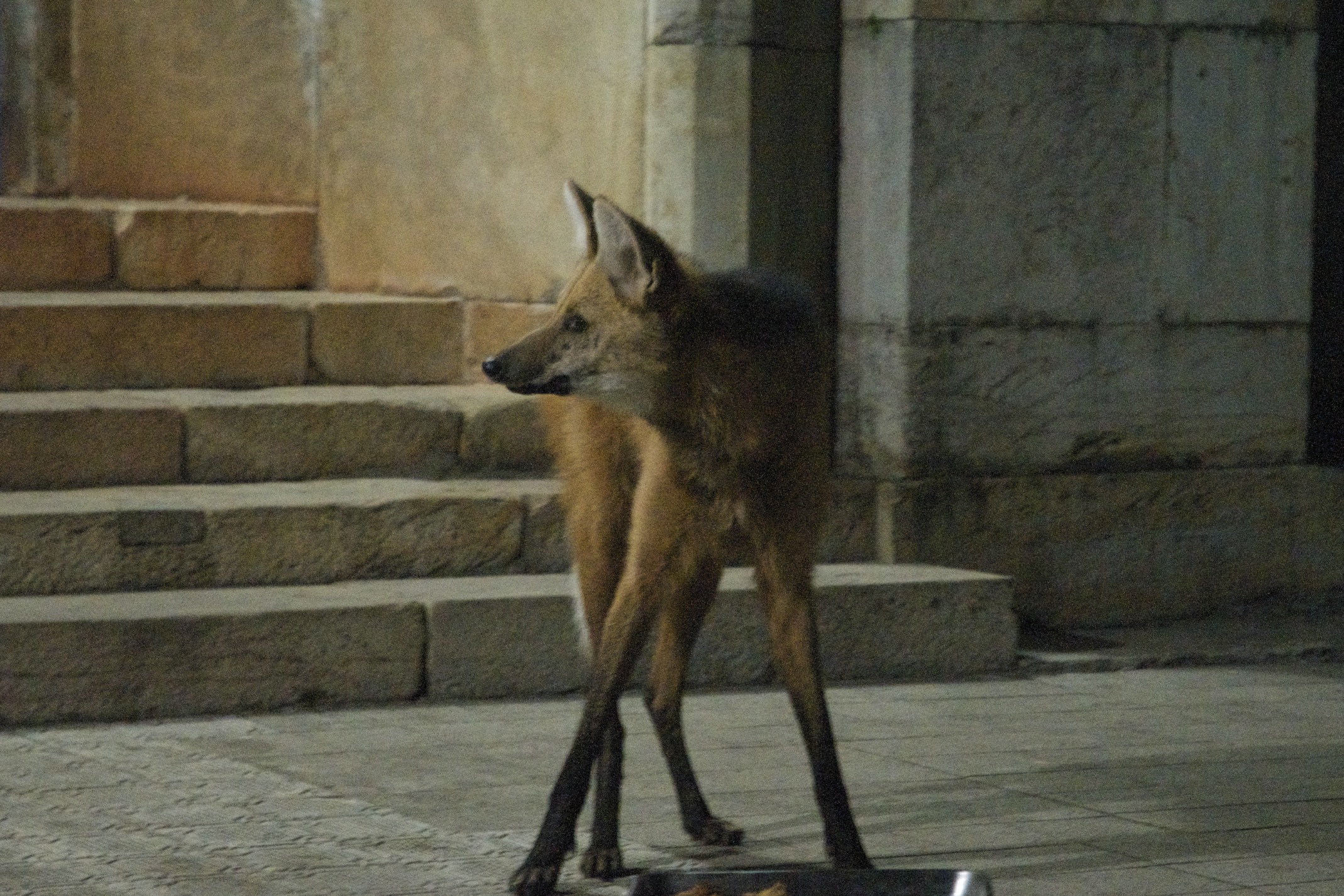
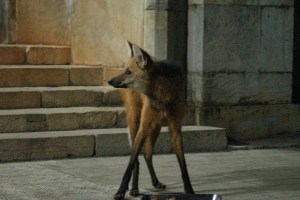
Another regular guest is the Maned Wolf, or lobo-guará because of its reddish fur. After dinner a tray of food is set out for it in front of the church doors, a priest calls “Guará” and in it comes … within an hour or three if you’re lucky. They are solitary beasts not pack animals, they come one at a time and they are quite unconcerned about the tourists and their flash photography but maintain a sharp lookout for other wolves. The food tray has fruit and meat on it. Interestingly the fruit was the first to go on the evenings I was there.
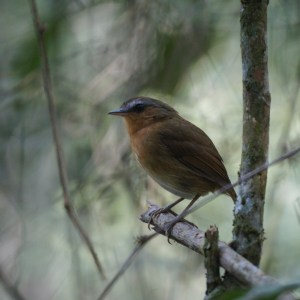
The birding was fabulous, the list included Velvety Black-Tyrant, Cliff Flycatcher, Blackish Rail, Serra Antwren, Biscutate Swift, Swallow-tailed Cotinga, Red-ruffed Fruitcrow, Hyacinth Visor-bearer and Large-tailed Antshrike. Dusky-legged Guan and the Rufous Gnatcatcher posed for their photos.

Guianan Squirrel and Masked Titi Monkey presented themselves for inclusion on the mammal list.

It’s hard to predict the highlight of a trip. This Brazil trip provided many and lived up to expectation in every respect. Caraça, though, was really special. I could go there for many reasons, I don’t believe in god but I do believe he commissioned some wonderful works, the setting is magnificent and the other creatures on hand to share it with … splendid.


Parque Nacional da Serra da Canastra …

Twelve hours on the road will get you across the state of Minas Gerais from Caratinga to São Roque de Minas, site of the closest hotel to the Canastra National Park.

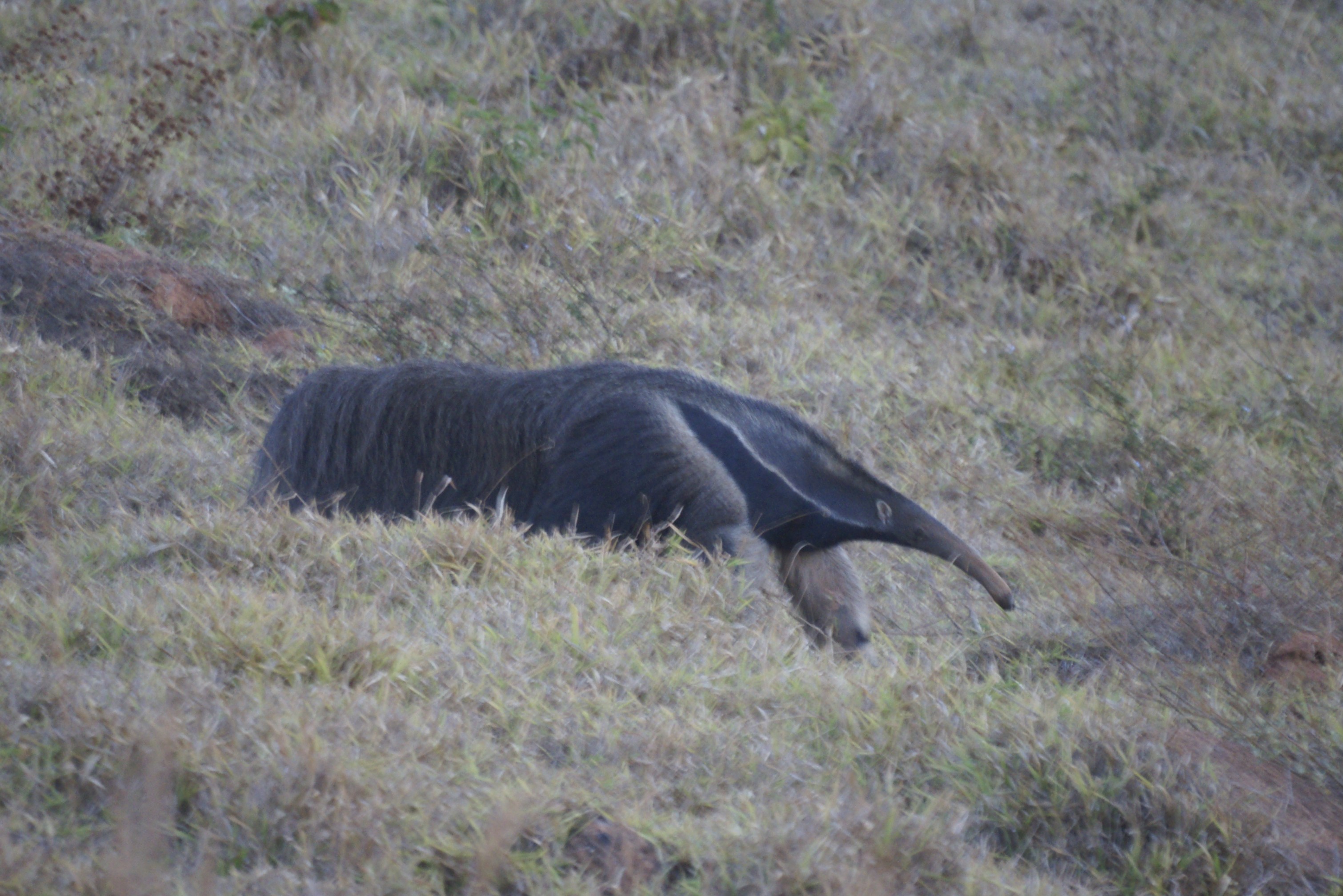
The great attraction of this part of Brazil is the Giant Anteater, not easy to find anywhere this is where your chances are best. The park opens at 8 am … unless of course it’s on fire.

A major grass fire was ripping through the park, it was closed for the two days we were in the neighbourhood. Not an unfamiliar situation for an Australian.

There is a stream at the foot of the range with some remnant forest and not too far away the private Reserva Natural da Cachoera do Cerradão. The birdlife is prolific and colourful. Another primate graced us with fair views, the Maked Titi Monkey.

The contest for the most beautiful bird in Brazil would be a very difficult one to judge but at the Reserva we saw both the Pin-tailed and Helmeted Manakins, both would be in with a chance.

And wandering across the countryside a distant Giant Anteater …


And the wildlife …

… treated me very kindly.

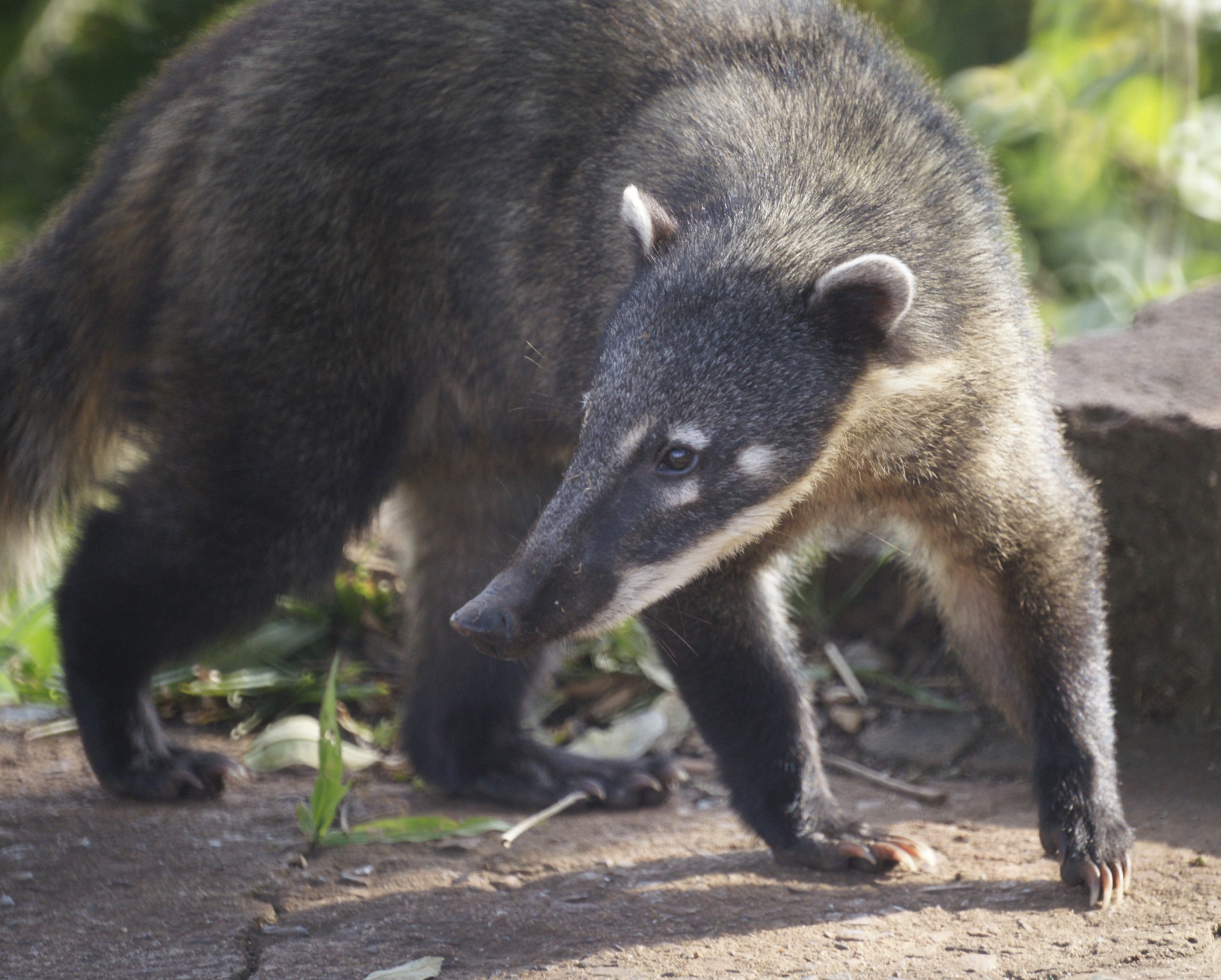
The South American Coati, Nasua nasua, is quite common at Iguaçu. It is a member of the raccoon family (Procyonidae). They are about 30 cm tall at the shoulder, and weigh between 2 and 8 kg. Males are much bigger than females and once mature live a solitary life except in the mating season. Females and young tend to travel in bands with their tails raised. They are equipped with powerful claws and sharp teeth, the long tail is not prehensile. Their snout is capable of quite a range of movement.


The Black Capuchin is less intrusive in its habits. It is a primate, of course.

One of the rarest and most spectacular birds that I saw on the trip was the Black-fronted Piping-Guan, Aburria jacutinga, crippling views …


Cataratas del Iguazú …

Argentinians speak Spanish with a marked accent. I studied Spanish with a teacher of Argentine origin. Some years ago I met some tourists from Barcelona who thought my Spanish was so awful because I was Argentinian. On my recent day trip to Argentina I met some locals who thought my Spanish was so awful because I was Brazilian. There is a consensus on my Spanish.

The trip from Iguaçu to Iguazú was relatively painless, recent changes mean that there are no formalities at the Brazilian border post but there is still a delay on the Argentinian side. The journey takes you in sight of the confluence of the Iguazu river with the Paraná. You can see Argentina on one side, Brazil on the other and Paraguay in between. Poor Paraguay, history has not been kind to her.

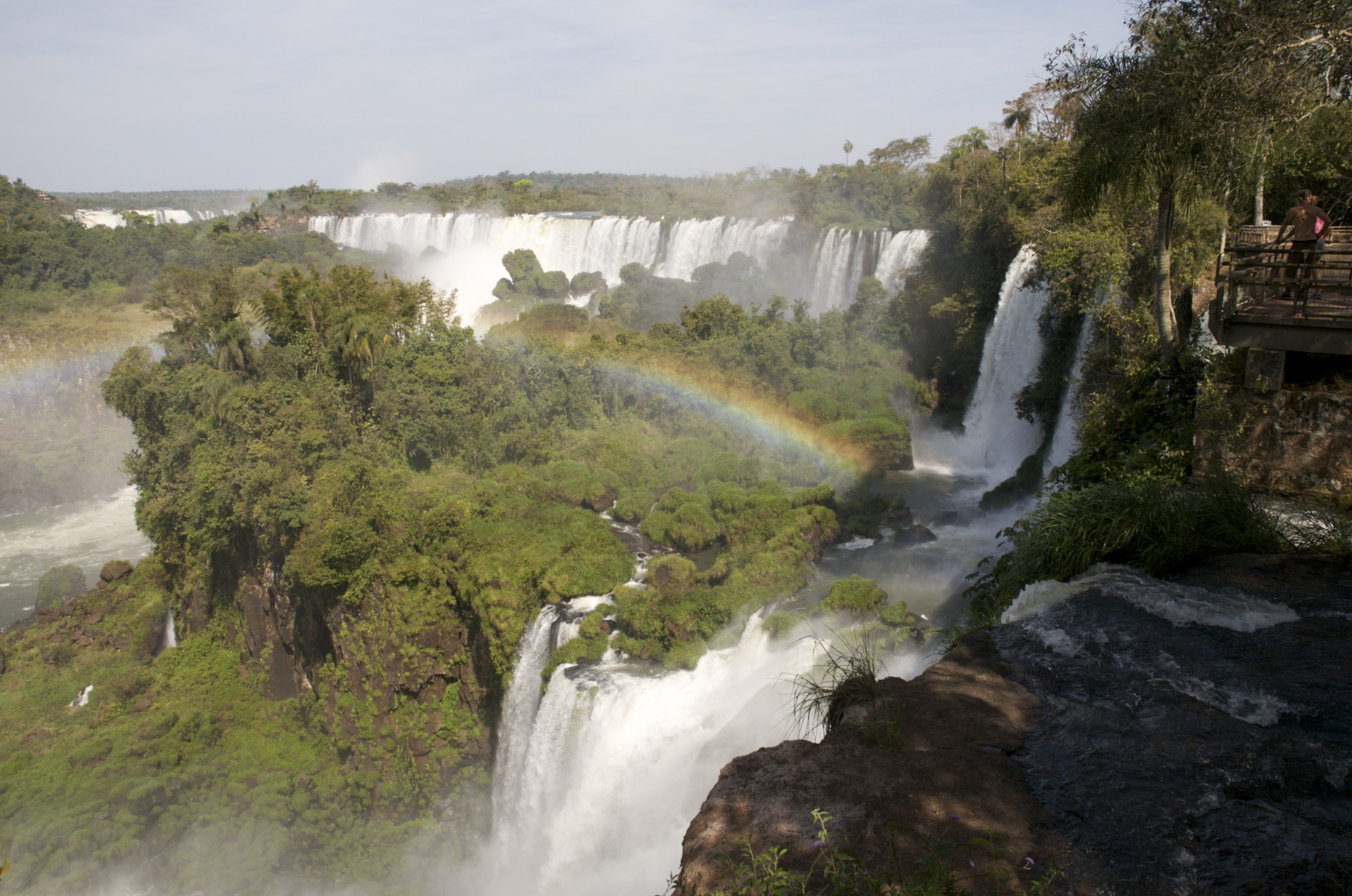
From the car park it’s a short walk and a train ride out towards the falls. From the end of the line there are a number of paths that lead to spectacular views. The most spectacular of all is to a platform on the very tonsil of the Devil’s Throat, la Garganta del Diablo. If you want a photo from here take a waterproof camera and a very wide-angle lens. Here you are conscious of the sheer power of the falls.

Other walks trade power for panorama.

It’s easy to see why Eleanor Roosevelt on seeing Iguazu  exclaimed “Poor Niagara!”

Cataratas do Iguaçu …

The Iguaçu river arises on the inland side of the Brazilian coastal range. Water that falls on the other side of the watershed doesn’t have far to travel to the sea, but the Iguaçu heads west through Paraná State, becomes the border between Brazil and Argentina and after 1,320 km it empties into the Paraná River at the point where the borders of Argentina, Brazil, and Paraguay meet, the Triple Frontier. The Paraná goes on to collect the Paraguay River and later the Uruguay River forming the Río de la Plata which empties into the Atlantic Ocean at Buenos Aires. It is the second longest river system in South America.

Not far from the Triple Frontier the Iguaçu drops with spectacular force over the edge of the Paraná Plateau.

The edge of the falls is 2.7 km long and the flow is interrupted by islands. The most spectacular point is the Devil’s Throat (since I am standing on the Brazilian side, the Garganta do Diabo).This is a long and narrow chasm 82 meters high, 150 m wide, and 700 m long. It collects about half of the river’s flow.

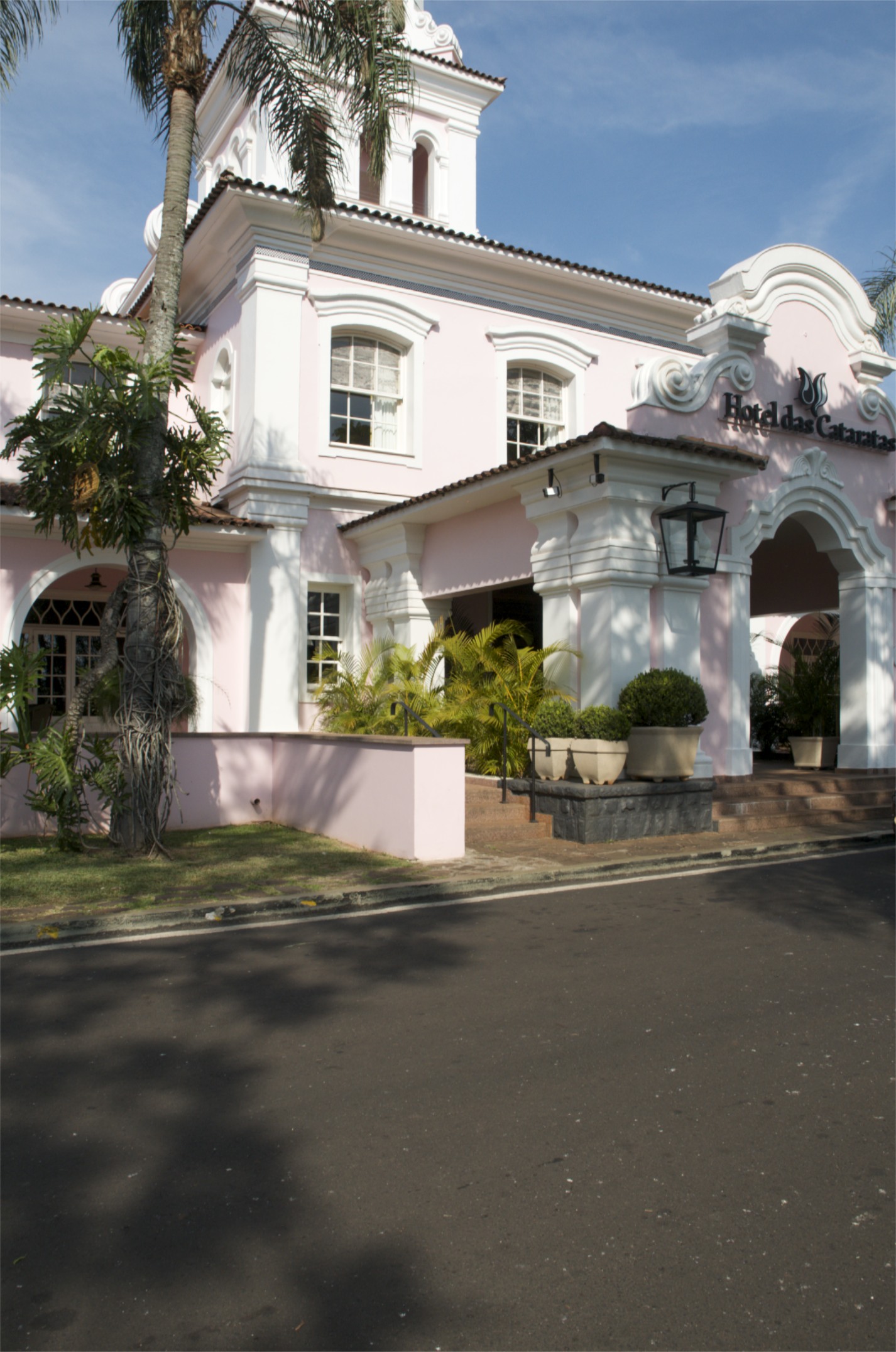
The area surrounding the falls is protected by national park on both the Brazilian and Argentine side. There is a gorgeous old hotel on the Brazilian side …

Turning right about 120 degrees gives a view of the falls …

Walkways from the hotel take you down hill slowly to the foot of the falls. An elevator! will take you up to a car park to catch a bus back if you want. For those with more vigour it’s not that arduous a walk back.

The forest around the falls is rich in wildlife. We encountered Coatis, Black Capuchin monkeys and Azara’s Agouti. Don’t feed the wildlife – remember Brazil does have rabies although Amazon bats and urban dogs are the main vectors. The bird list grew rapidly and included Red-rumped Cacique, Surucua Trogon, Toco Toucan, Plush-crested Jay and Chestnut-eared Aracari just to mention the more spectacular. And the butterflies were doing their best to rival the birds.

Great Dusky Swifts congregate in immense numbers above the falls and roost behind the curtains of water.


There is no one spot that permits a view of all the falls. The experience has to be put together in increments. To see the falls from one side only would be to sell yourself short, so tomorrow it’s off to Argentina.