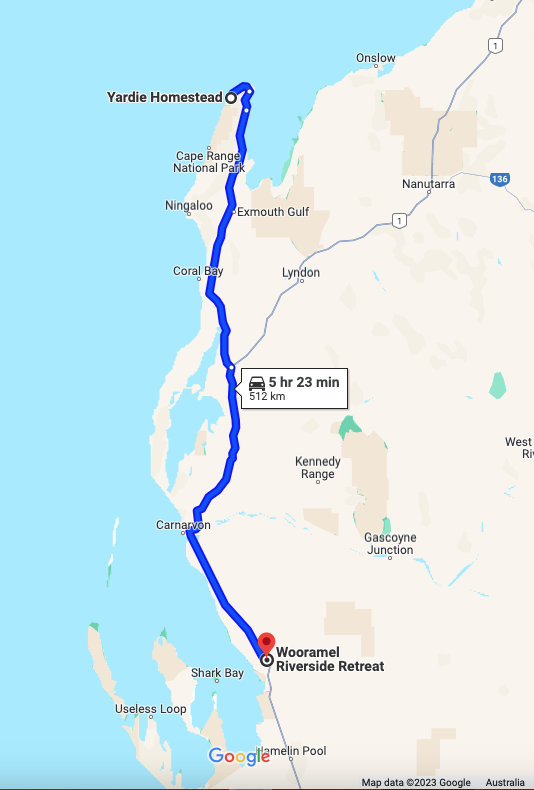
It would have been good to explore the canyons of Cape Range National Park but the dog is not welcome there. So south we go from Yardie Homestead, a fine stopover, to Wooramel Station.
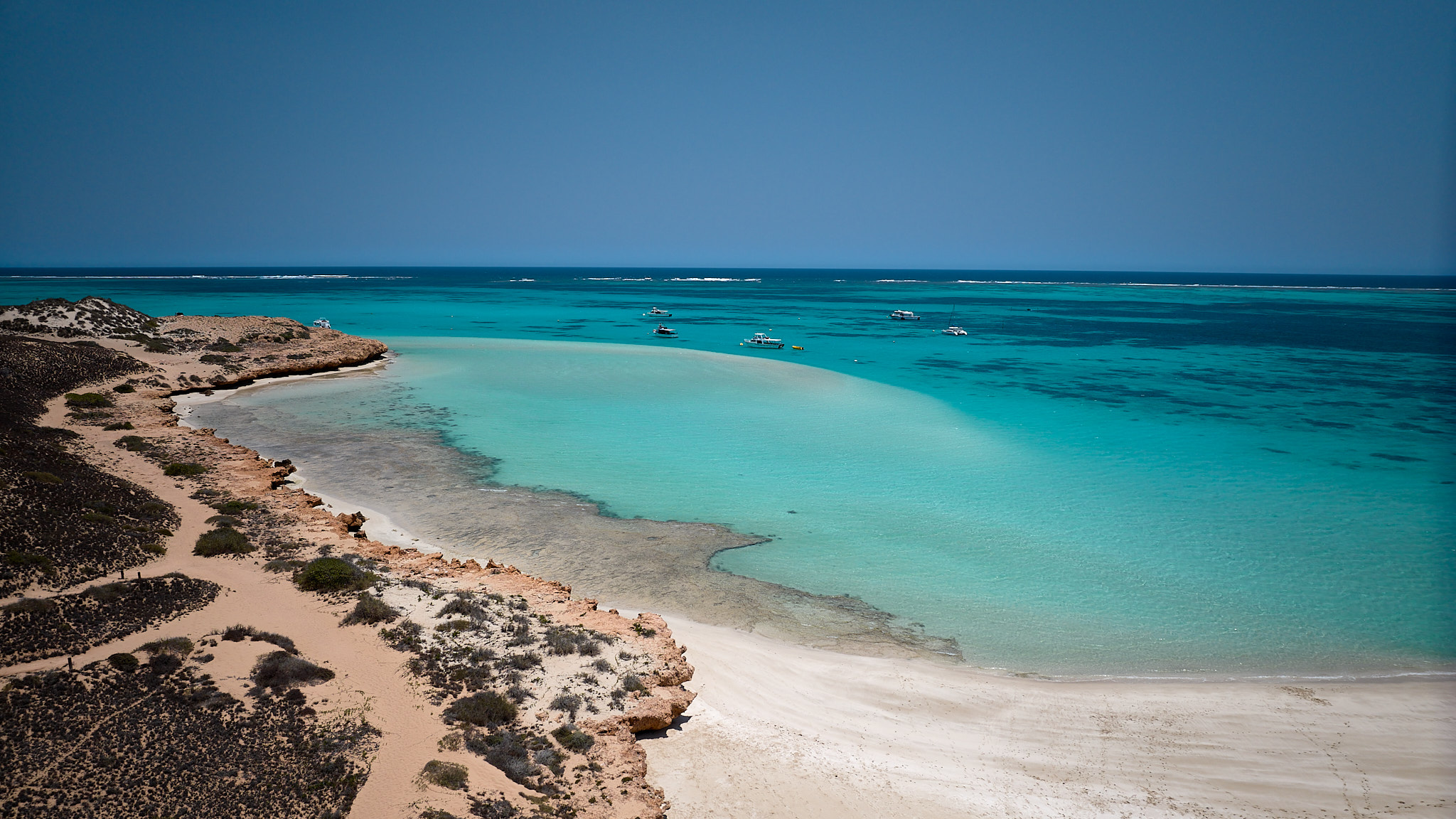
En route we stopped by Coral Bay, a huge caravan park with an arid landscape on one side and an impossibly blue sea on the other. A little too commercial for my liking but I must return in Whale-shark season (April – June).
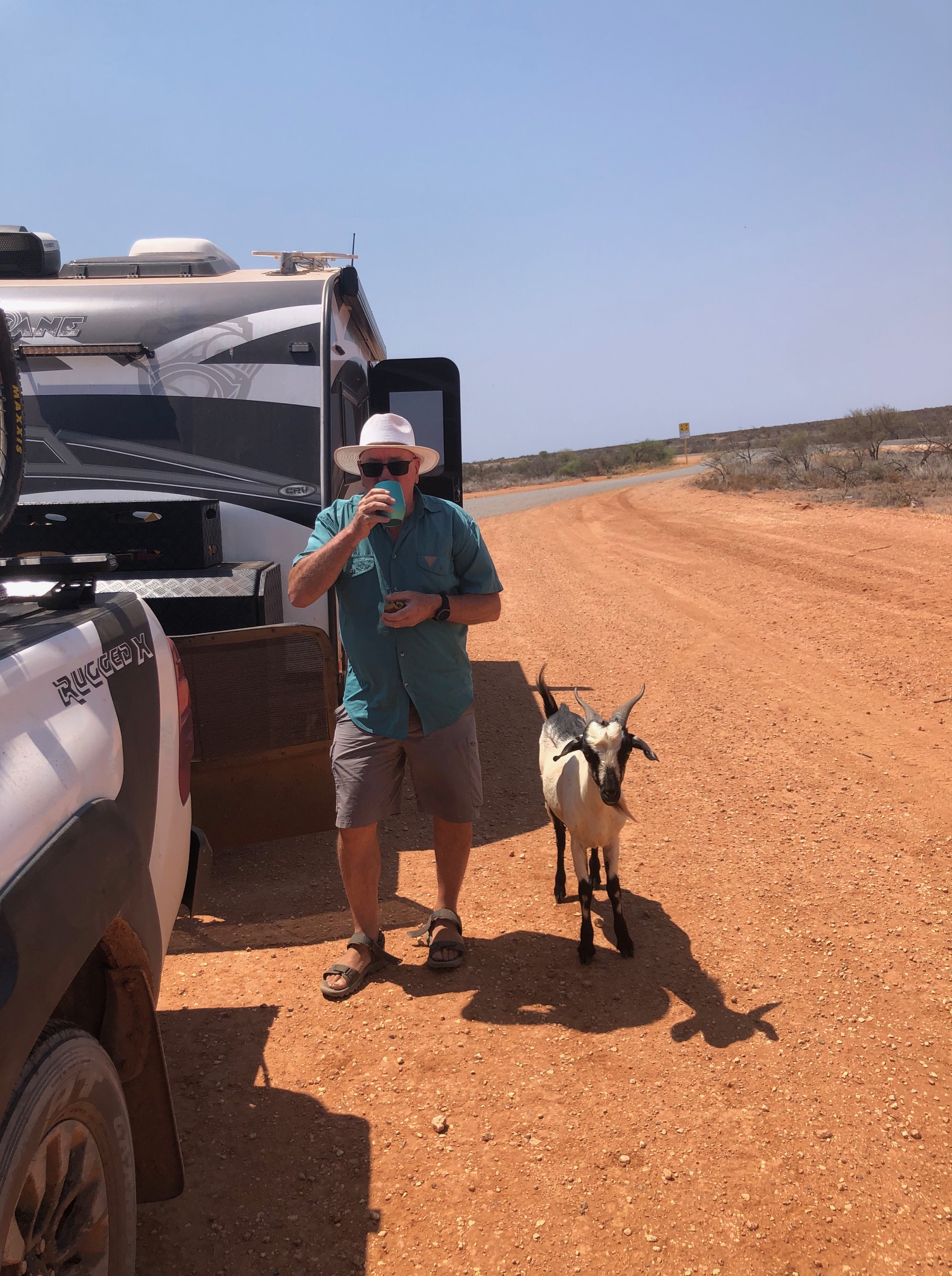
We stopped for lunch where the A1 crosses the Tropic of Capricorn. I was just standing there minding my own business, a muffin in one hand a drink in the other, when my leg was gently nudged … by a goat. How appropriate, an extremely tame goat the totem of Capricorn.


Next came Carnarvon, a town with about 5000 inhabitants. Here we found the first signs of horticulture on our journey south. The fertile soils of the Gascoyne delta with water from aquifers beneath the usually dry river enable production of a wide variety of fruit and vegetables.
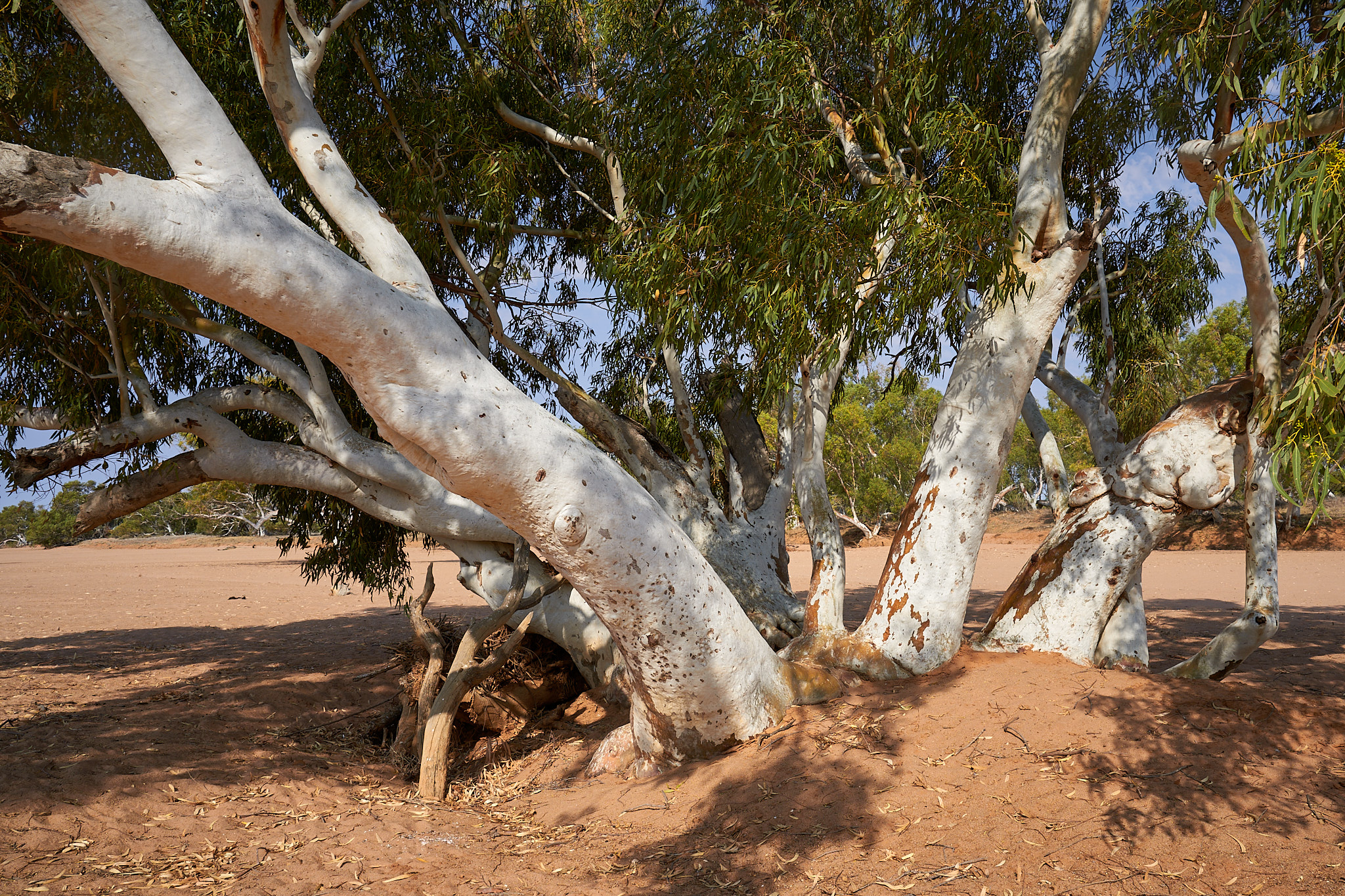
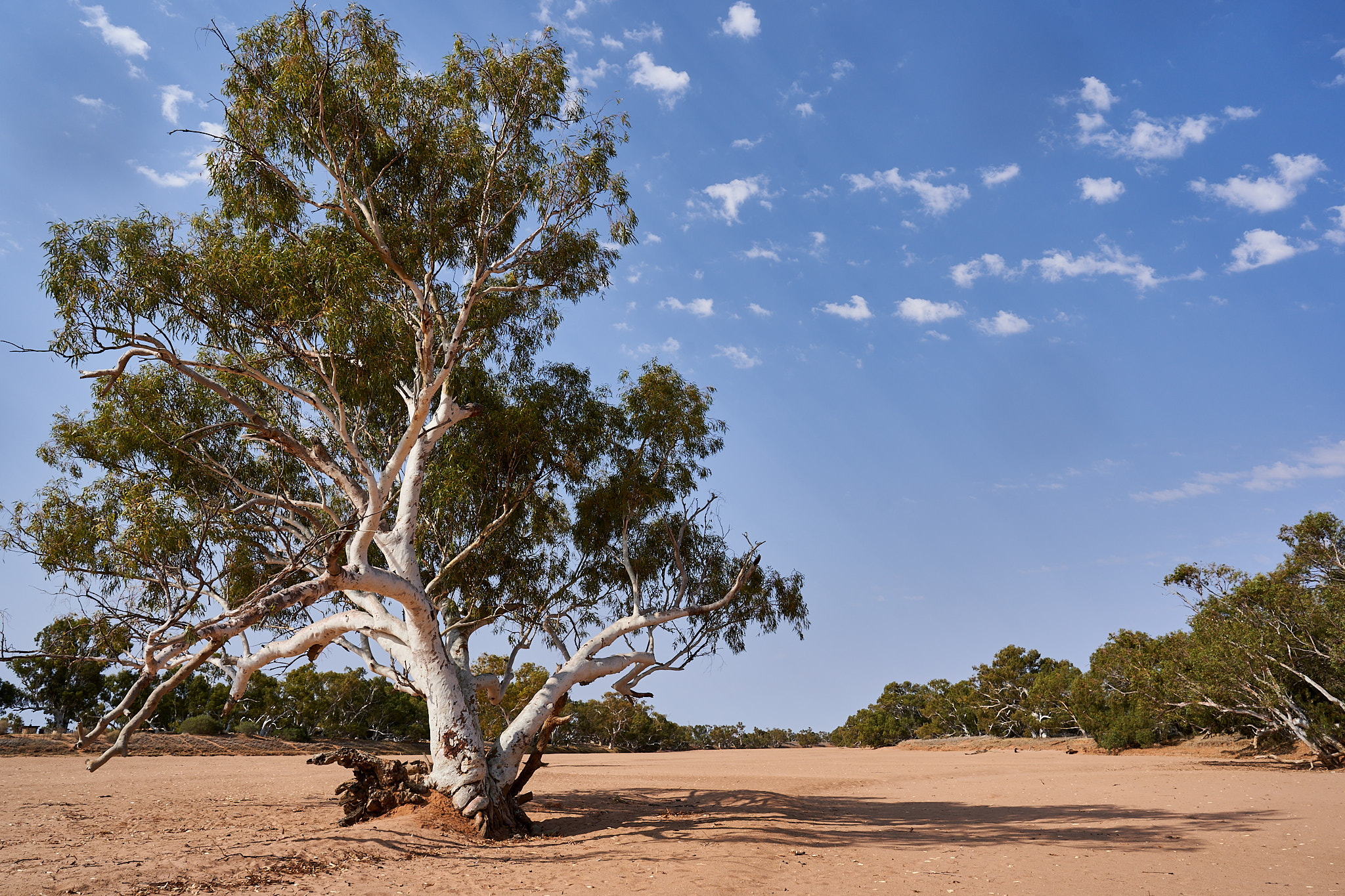
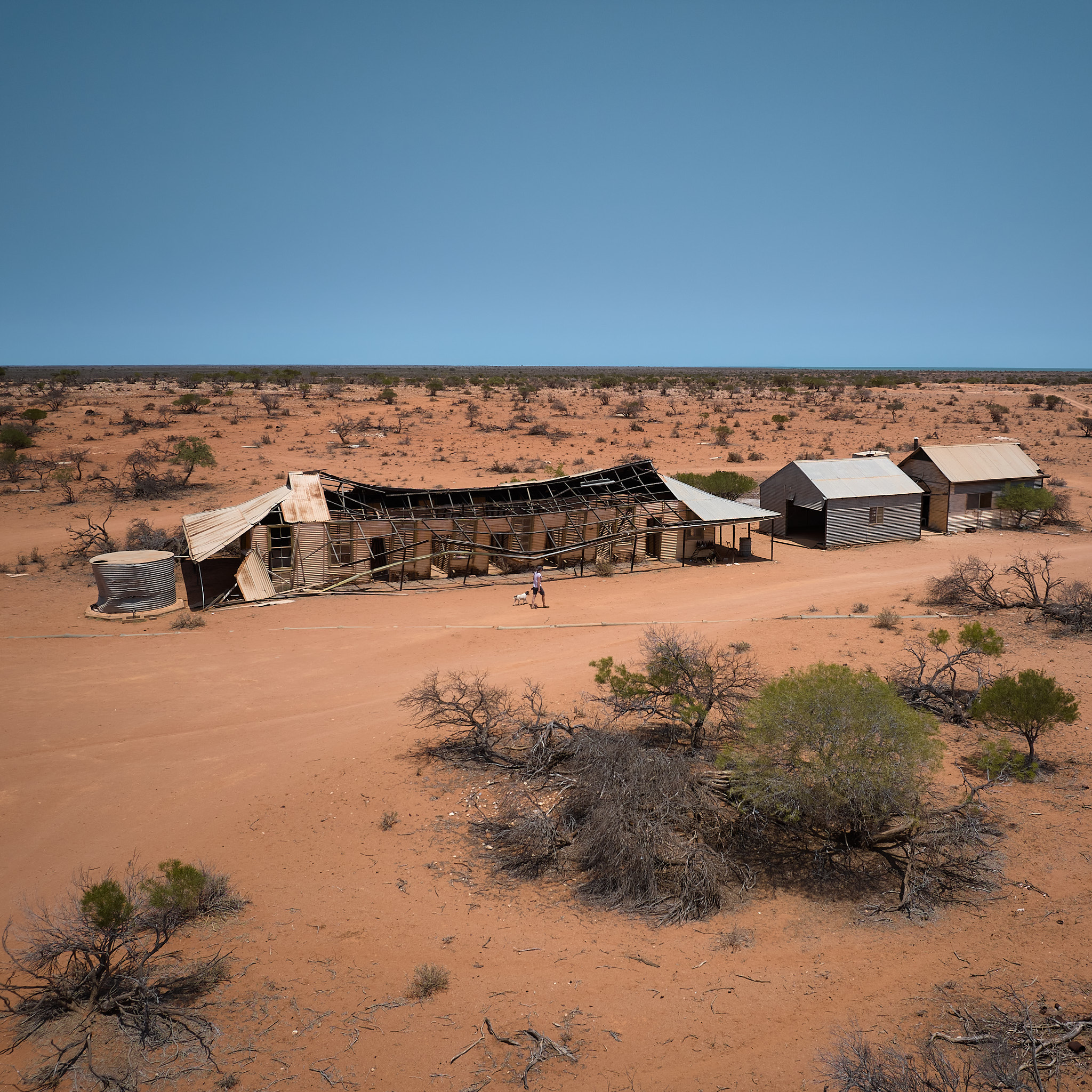
Leaving that oasis behind it was back into the arid zone and on to Wooramel Station 356,000 acres or 1,430 square kilometers in area with 60km of coastline. The camp site is on the banks of the Wooramel river, dry most of the time. There are no powered sites but to compensate for that there is an artesian hot pool open 24hrs a day. There are a couple of 4WD trails on the station and not too far away Shark Bay can be reached at Gladstone.



Arriving at Wooramel we were greeted by the calls of Australian Ravens, the first ravens since leaving Broome. Australia’s corvids are a challenging bunch because they are all much the same size, shape and colour. Fortunately their calls, geographic ranges and a few visual cues help in sorting them out. Crows have white down under their black outer feathers. On a windy day you can get a glimpse especially around the neck. Aussie Raven is the only one of the three native ravens that are present in this region and it differs fro the crows by having a beard. I took these photos today about 30km apart. Click on the gallery for the full picture – it does have a beak.


 bobmcgee