Volcano Envy …

Australian landscapes are ancient, the heady days when rift valleys tore Gondwana apart, and sea floor spreading propelled its fragments around the globe are long gone. It’s hard to imagine a Mt Nyrigongo popping up and obliterating Adelaide. And I do so miss her warmth, the twinkle in her magma and her sweet sulphurous perfume.

But the reality is that western Victoria is littered with volcanoes. It’s just the timing that’s out of kilter.

Ken Grimes, of the Hamilton Field Naturalists Club has written a very nice paper on the subject which you can find <HERE>.

In the Western District there are mainly three types of volcano, though combinations of these also occur. About half of the volcanoes are small steep-sided scoria cones built from frothy lava fragments thrown up by lava fountains. Most of the remainder are broader but flatter lava volcanoes formed from relatively gentle flows of lava welling out of a central crater. A group of about 40 maar craters
near the coast formed from shallow steam-driven explosions which produced broad craters with low rims. These now often contain lakes.
These are the New Volcanics, they started about 5 million years ago. The most recent eruptions occurred about 5000 years ago. They seem to have occurred about every 5000 years so we may be due. According to Ken they erupt for a few weeks or months and never again, the next eruption being at a new site.
Melbourne University’s Professor Joyce anticipates that the next eruption would be “the sort of thing that would be interesting for tourists”. I’m sure it would, and Dr Lin Sutherland of the Australian Museum reassures us that
… no panic is needed. It probably would be a small discharge and a temporary nuisance, rather than the large eruptions we see in the Pacific ‘Rim of Fire’.
This assumes that it isn’t a Phreatic (15 points, more if you can get it on a double or triple word square) eruption. Boil one cubic meter of water and you have 1,600 cubic meters of steam. If magma comes into contact with ground water the result is an explosion. Such
explosions crush the overlying rocks and launch them into the air along with steam, water, ash and magmatic material. The materials usually travel straight up into the air and fall back to Earth to form the tephra deposits that surround the crater.
Thus producing a maar, these are usually a few hundred to a thousand meters in diameter and less than one hundred meters deep. Nothing to panic about.
Tourists do enjoy them but not until they’ve settled down a bit! My favorite is at Tower Hill near Port Fairy, incidentally this vicinity is high on the list for the next eruption.
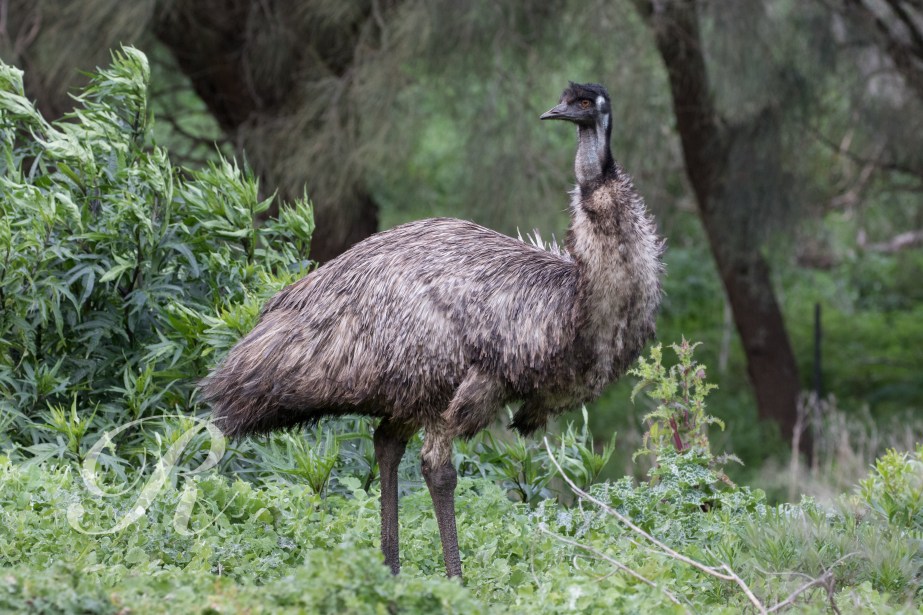
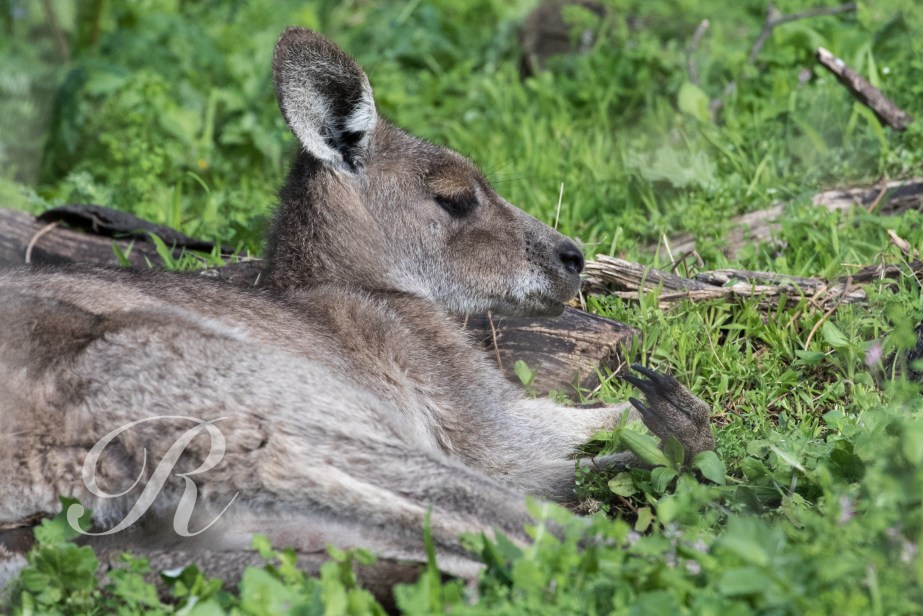
It’s probably about 25,000 years since it went bang. It is now a very attractive game reserve, home to koalas, emus and kangaroos. Interestingly, you can’t take your dog there but during duck season you can take your gun.
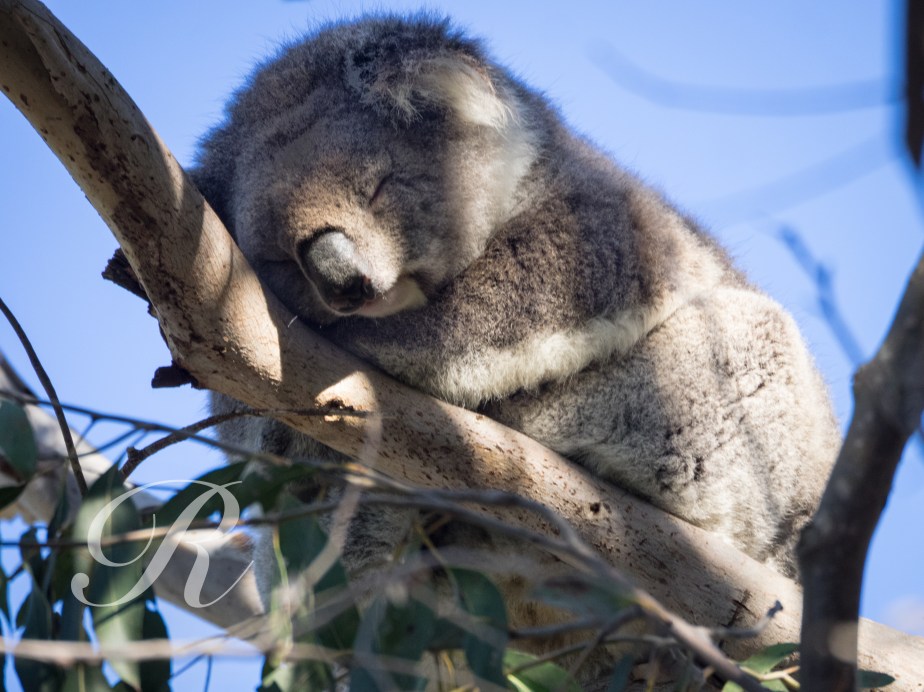
Koala – Tower Hill
Emu – Tower Hill
Eastern Grey Kangaroo – Tower Hill

So there you have it … photographic evidence of life on maars.
Rakali …

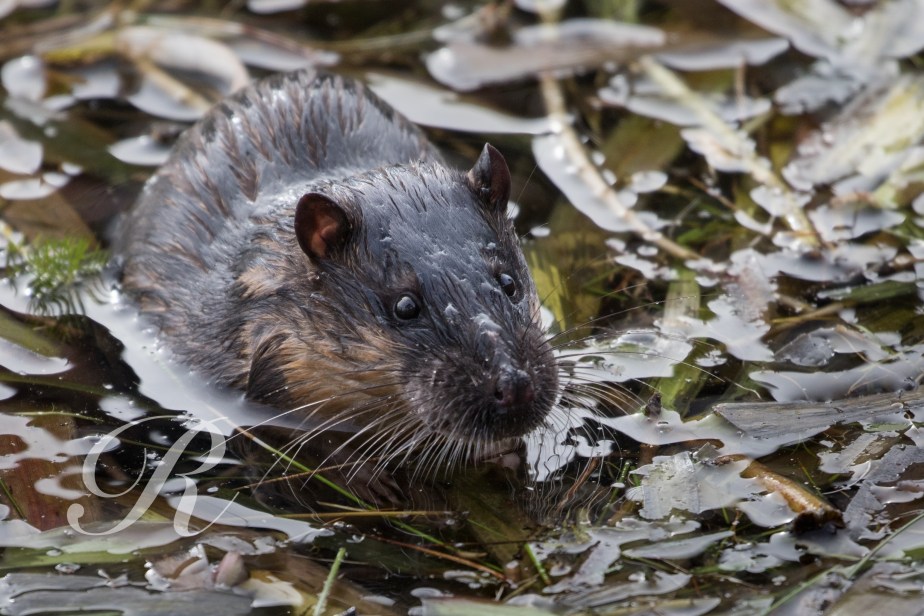
After Africa it’s harder to keep the dopamine flowing. No lions, no leopards, the only primates are wearing clothes and driving cars. But still life has its little surprises. Like this guy …

Hydromys chrysogaster

The latin name translates as water mouse with a golden belly. Lots of species are blessed with the name chrysogaster, it fits the Orange-bellied Parrot much better than this rat.

Its name was changed from Water Rat to Rakali to improve its image.

It is a rodent and it is native to Australia and New Guinea. It lives in rivers, lakes and sheltered marine bays. They’re quite omnivorous but prefer animal food when they can get it. They’re nocturnal when it’s warm enough for them but in Victoria in winter they feed during the day.

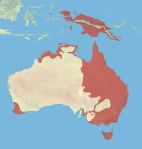
Which is how I came to find this one in Ballarat’s Lake Wendouree, yes this is the rat from Ballarat. It is quite widespread as you can see from the distribution map which I have shamelessly filched from Wikipedia …


Mount Mitta Mitta …

AKA Mt Mittamatite is a little over 1000 metres and has its very own web page. Dogs are welcome on a lead and fires are permitted in the fireplaces provided. Camping is possible at the summit and at Emberys Lookout. There are no bookings and no fees. There is an aircraft navigation facility on top.

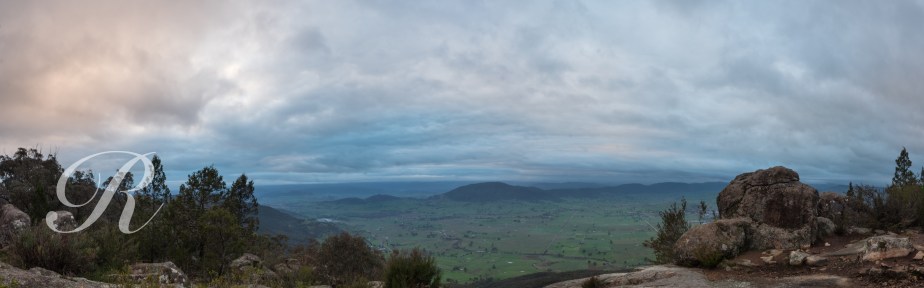
The view from Emberys (above) is impressive, it is a popular launching site for the hang gliding fraternity. You have to work a bit harder for a view at the summit.

I was hoping for more mist and less cloud. I’ll have to go back.

The weather was closing in with a vengeance. Yesterday’s snow was the start of a southerly outbreak which was only going to get worse. Time to head for home.

Cabbages …

The subdued early light shows off the plumage of this heron to perfection.

White-faced Heron

Today we wake in the Lake Tyers Forest Park. Tonight we will be in Merimbula. The population density in the intervening country could easily be the lowest in coastal south east Australia. We will be passing some of my favorite places, the Croajingalong and Ben Boyd National Parks. These are denied to us today because we have the dog.

One spot than we can visit is the Cabbage Tree Flora Reserve. Baron Ferdinand Jakob Heinrich von Muller is credited with discovering this isolated pocket of palms in 1854. It is said to be the only patch in Victoria and it is the most southerly occurrence of any Australian native palm.

Livistona australis

They grow quite tall, 20+ metres, along the creek surrounded by the wet forest .

As well as being scenically splendid this place is usually a birding hot spot. Not this day, the only creatures flying around were the mosquitoes.

The next port of call was Eden, watch out for the snakes, the first place of note in New South Wales. There is an old joke about spending a week in Adelaide one Sunday, you can do it in a Saturday afternoon in Eden. It does, though, have a very fine harbour.

We arrived in Merimbula just in time to catch the sunset.

Merimbula, NSW


A Jaunt to the East …

Living in western Victoria there is some splendid countryside in easy reach but it’s nice occasionally to have a little variety.  My home is just on the inland side of the Great Dividing Range. Great it is, but in length rather than height. It sweeps off to the east and then heads north. Its highest point is in southeastern New South Wales at Mount Kosciuszko which stands 2,228 metres (7,310 ft) tall. From there it continues north to the tip of Cape York in Queensland. It’s total length exceeds 3,500 kilometres (2,175 miles).

Whereas my part of the world is pretty dry, the Great Dividing Range catches a lot of rain.  East of Melbourne, especially, it supports a lot of forest and that means a very different suite of birds.

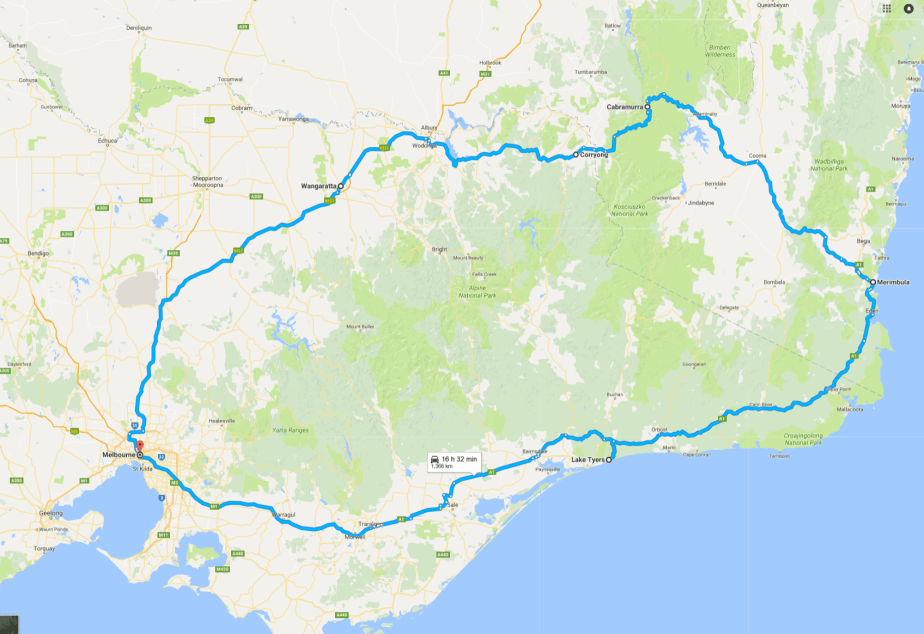
I took the wife, the dog and my trusty camper trailer and spent a few days making a circuit of South East Australia.

We spent a couple of days in Melbourne at each end of the trip, in between we covered about 1400km in five days.

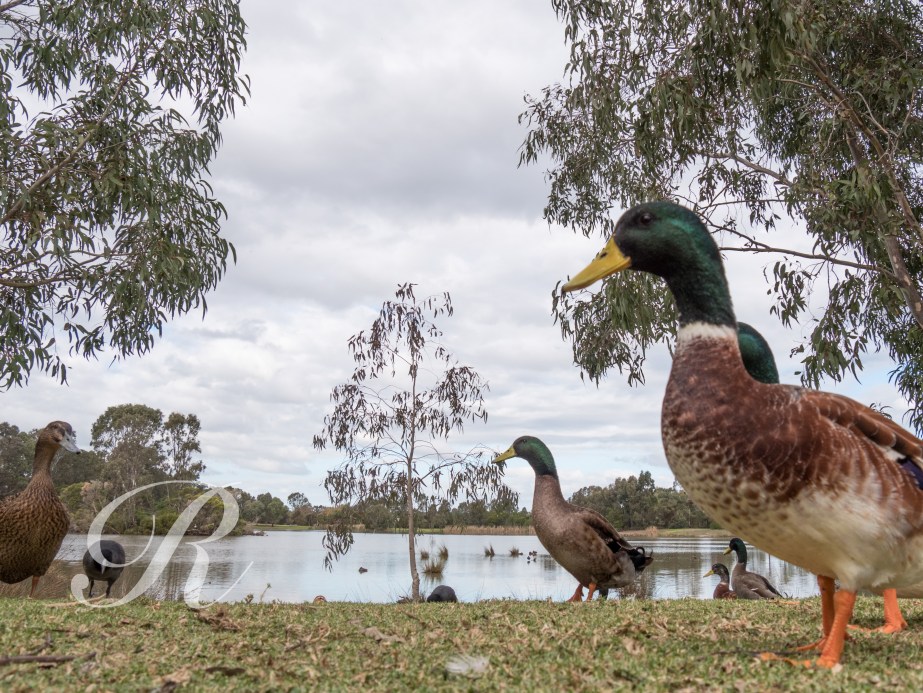
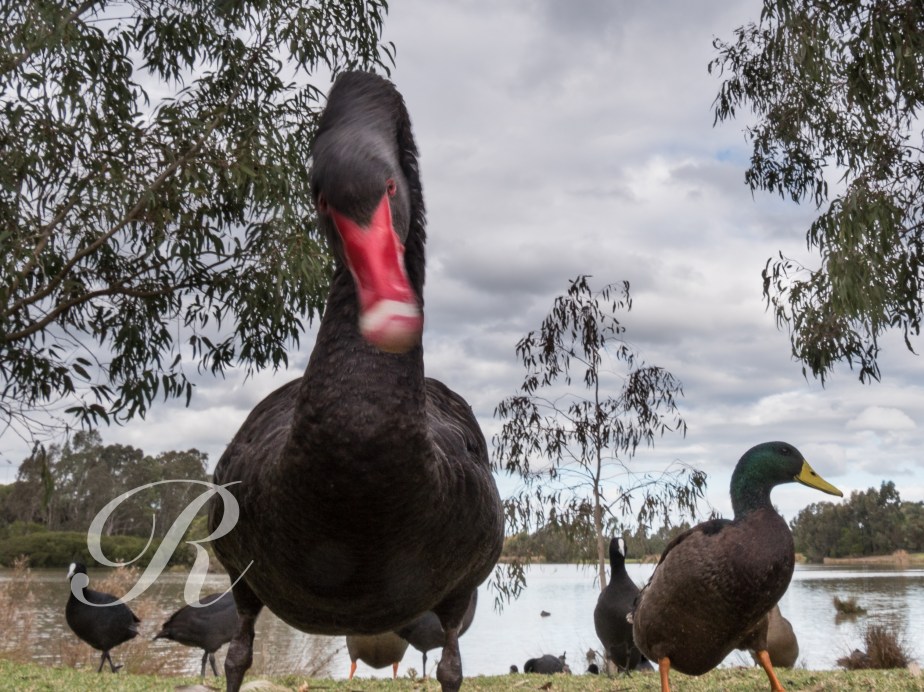
On day one we stopped for lunch in Sale. At a picnic spot by the lake the local avifauna consisted of an unruly mob of mostly rejected pets. They were quite happy to provide a close encounter so I sat down with a little bread and tried for a wide-angle close-up. It was hard getting them to pose nicely, their manners were appalling …

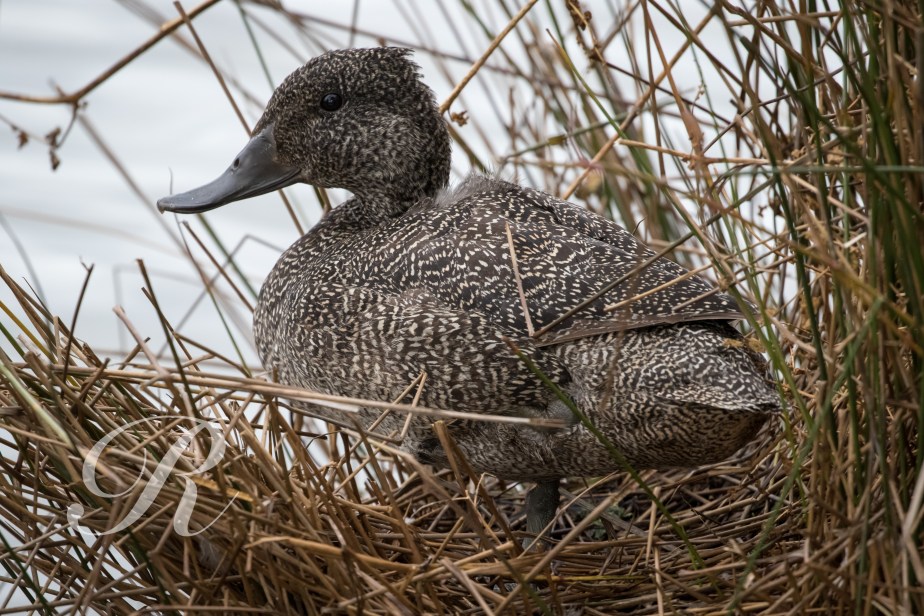
Whilst this guy was peering down at me I noticed that there were some much better behaved ducks on the water. Just a few feet away there were half a dozen Freckled Duck , not at least interested in the feeding frenzy nor all that bothered by my presence.  They are Australia’s rarest waterfowl. A photo opportunity not to be missed …

Freckled Duck

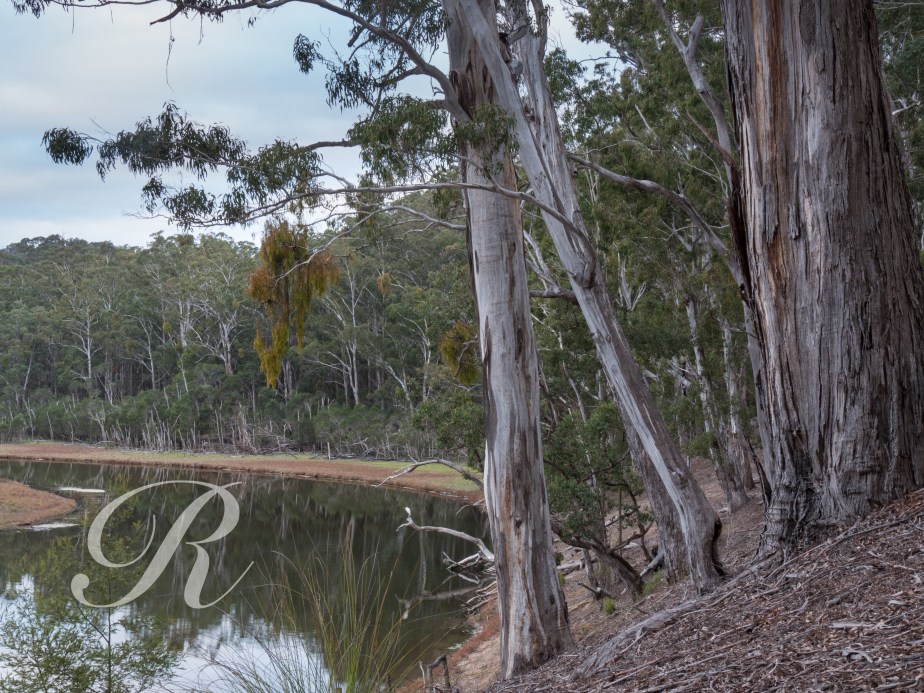
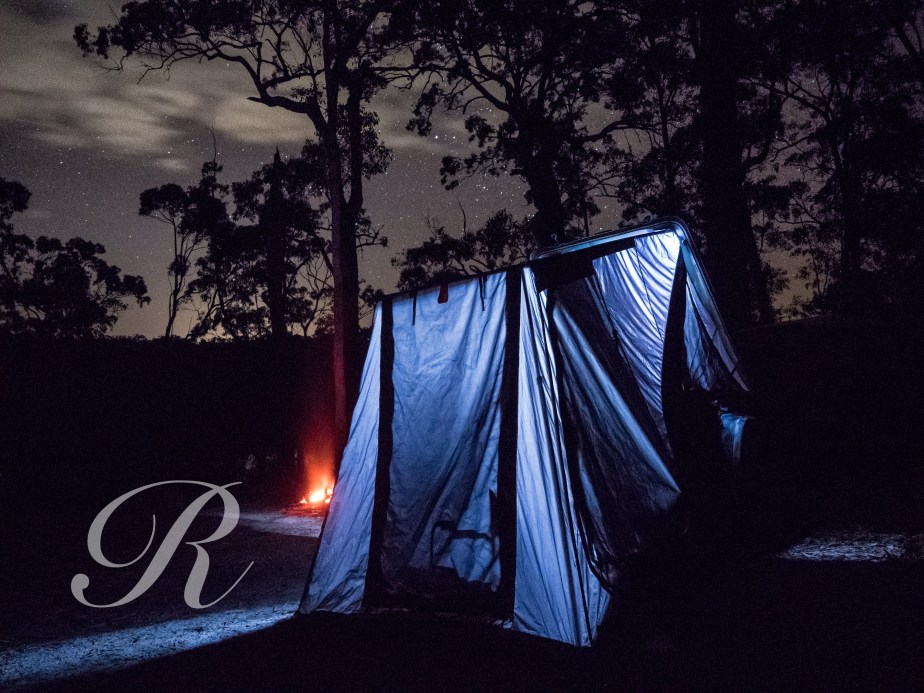
Our camp site that night would be in the Lake Tyers Forest Park. A beautiful spot where the dog is legal and so is a campfire.

There are several designated camp sites reached by Tyers House Road just east of Nowa Nowa.It was a crisp and starry night.

Kangaroo …

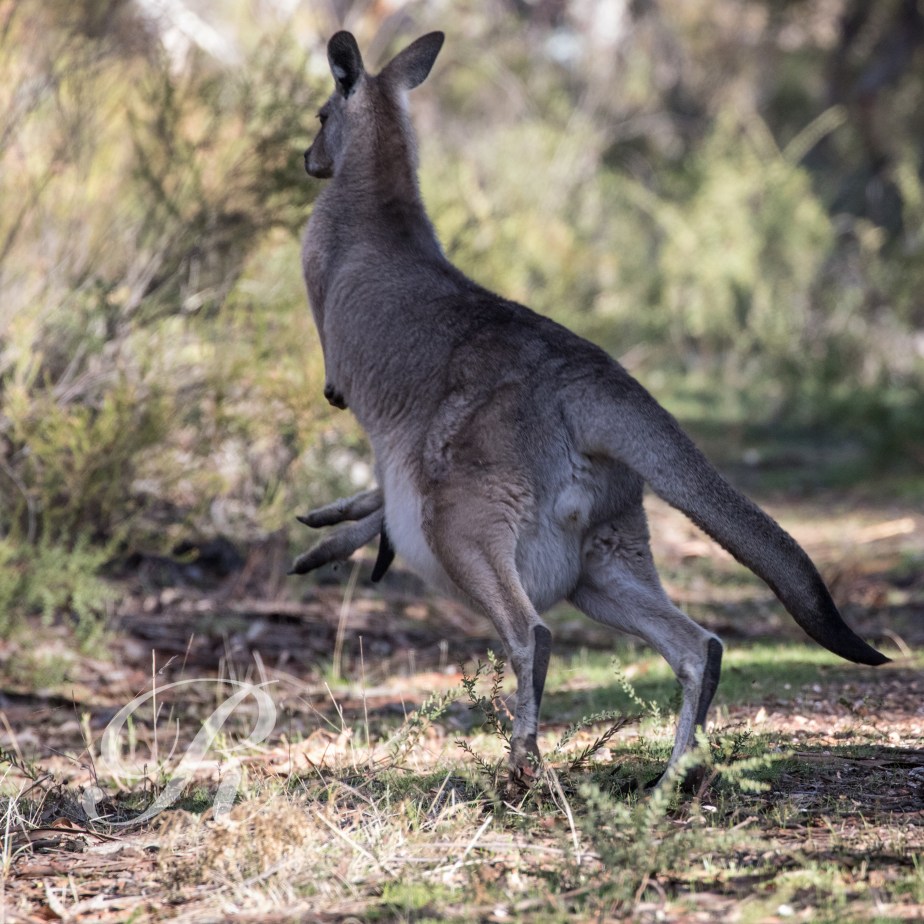
I woke up this morning to find a bunch of Eastern Grey Kangaroos at the back door. They were gone in a flash but I found this one again a little later and she was a little slower to flee …

Joey is getting a bit big for riding around in the pouch, the style is typically untidy. It is probably sharing the accommodation with a much smaller sibling fastened on a teat and there may be another sibling in utero in a state known as embryonic diapause.

Despite the heavy load, when it’s time to go it’s time to go …

Waterfalls on the Wannon …

I’ve been having a bit of a run around western Victoria and one of the highlights has been a visit to a couple of waterfalls on the Wannon River. They’re about 9km apart 16 km west of Hamilton and they’re well signposted off the Hamilton to Mt Gambier Road (B160). You can camp in the Wannon Falls Scenic Reserve.

The Wannon arises in the Grampians beneath Mt Abrupt and flows into the Glenelg River which reaches the sea in the far west of Victoria.

The geology of the falls is quite different. The Wannon Falls tumble over a hard lava bed between 1 and 2 million years old lying on top of softer rock. It’s a single drop of  30 metres into a plunge pool.

Wannon Falls

The Nigretta Falls tumble from shelf to shelf on much older rock (~400 million years) that is hard from top to bottom making it rather more spectacular to watch.

Nigretta Falls
Nigretta Falls

Summer slips over the horizon …

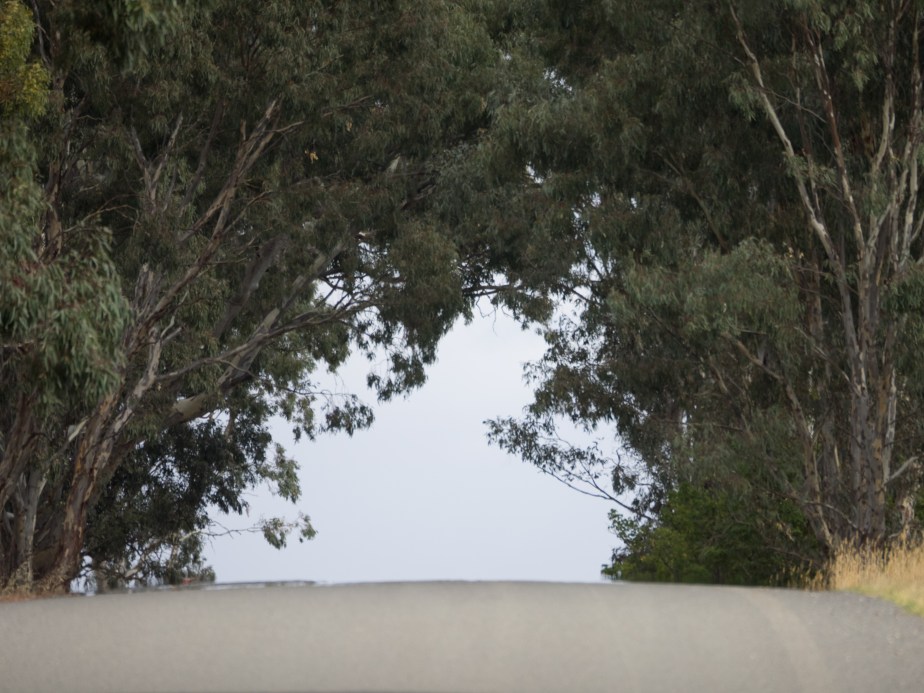
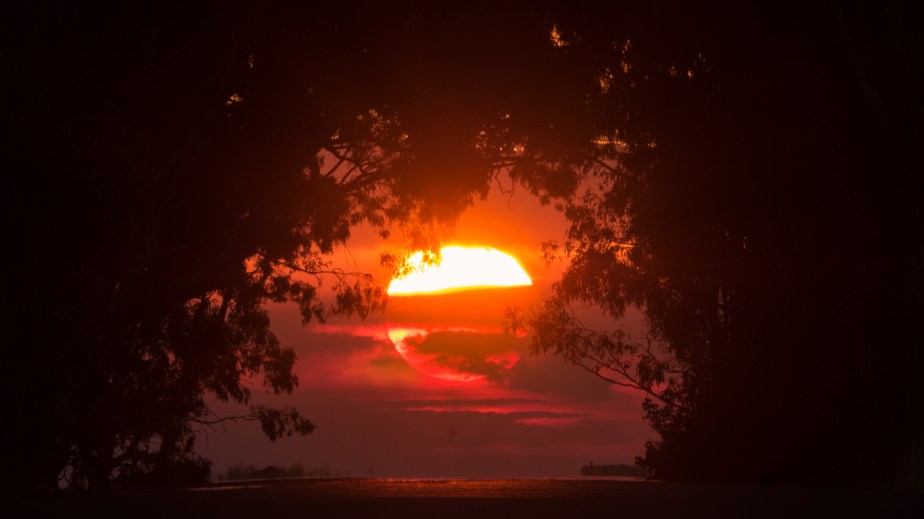
As I’ve been driving home of an evening in recent weeks I have been aware that the sun has been setting a little further north on the western horizon each day. One day, in the not too distant future, it would set right at the end of a local road framed at the end of  an avenue of trees. Imagine it right in here …

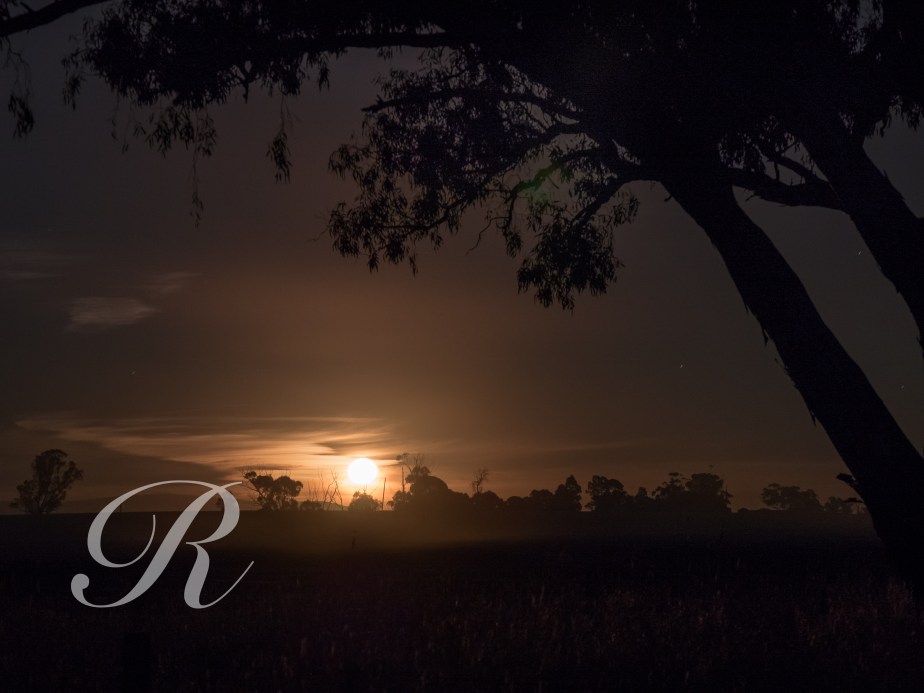
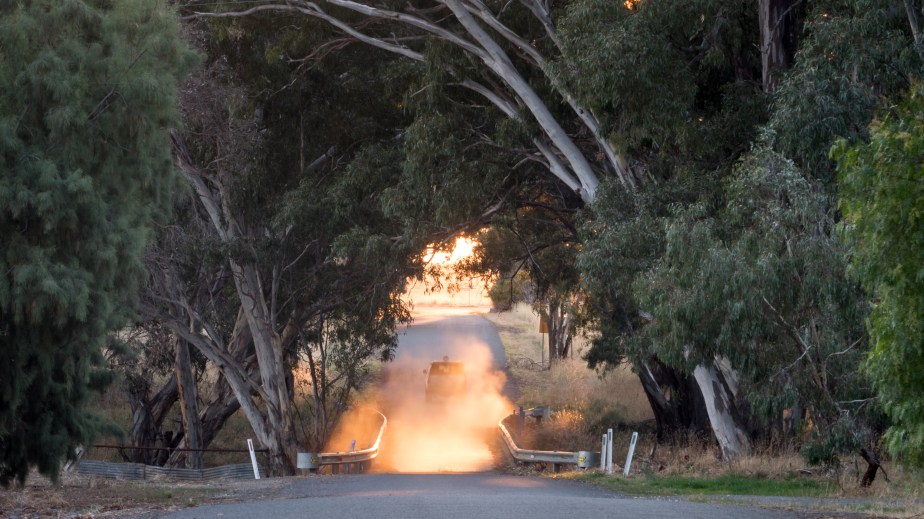
I pulled up The Photographer’s Ephemeris and wound on the clock until April 5 at 6:15 pm. I use this photographer’s aid with some trepidation. Just as certainly as the sun and moon will rise and set at a certain place and time so it is certain that clouds will obscure the event. At least it seems that way. None the less I was there. The sky was partly cloudy. I had chosen my camera position in advance but a couple of hundred metres east of that I saw that the sun was spotlighting a bridge quite beautifully and thought that, even if I got nothing else, this would be a photo. Just to put the icing on the cake a car drove past at a very convenient moment …

Having captured that it was time to see if my plan would come to fruition …