The Law of Canoes …

Many years ago I made myself a kayak. Dangerous things kayaks. Combine them with swiftly flowing water and a fallen tree and it’s very easy to drown yourself. I came close.

That experience fits in the scope of Murphy’s Law but there is another inescapable law regarding canoes. If you want a fast canoe it will be long. It will not be manouverable. If you want a manouverable canoe it will be short. It will not be fast. You must choose your canoe to suit your intended purpose. The law of canoes has general application.

To make a photograph you need a lightproof box with a hole in the front and a surface at the back that reacts to light. You point the box at the subject, open the hole for a while, store the reaction and transform it into an image. Simple.

There are, however, some technical challenges. Too much light and your image will be white, too little and it will be dark. Getting the correct exposure depends on three things. Each of those things has to obey the law of canoes. A is for Aperture, the size of the hole. S is for Shutter Speed, the length of time that the hole is open and ISO is for the Sensitivity of the reactive surface to light. Balancing these three things will lead to a satisfactory image. Under most circumstances the modern camera can do that for you. It will trip up when the subject is dark and against a bright background, or white against a dark background or at night when light is at a premium. And on that brief and very expensive trip to Antarctica.

The bigger the aperture the more light gets in. Excellent. What’s the trade off? Depth of field. F/2 is a large aperture giving shallow depth of field, half your landscape will be fuzzy. F/16 is a tiny aperture your landscape will be in focus from somewhere near the front all the way to the back.

The longer the shutter is open the more light gets in. The trade off? For a crisp image the camera and the subject must stay still.

ISO represents the sensitivity of the sensor. The higher the number the greater the reaction to the light. The higher the number the greater the noise in the resultant image.

You’d like a sharp image, in focus from front to back and with no noise in the shadows? Sir, can I interest you in this very fast and extremely manouverable canoe?

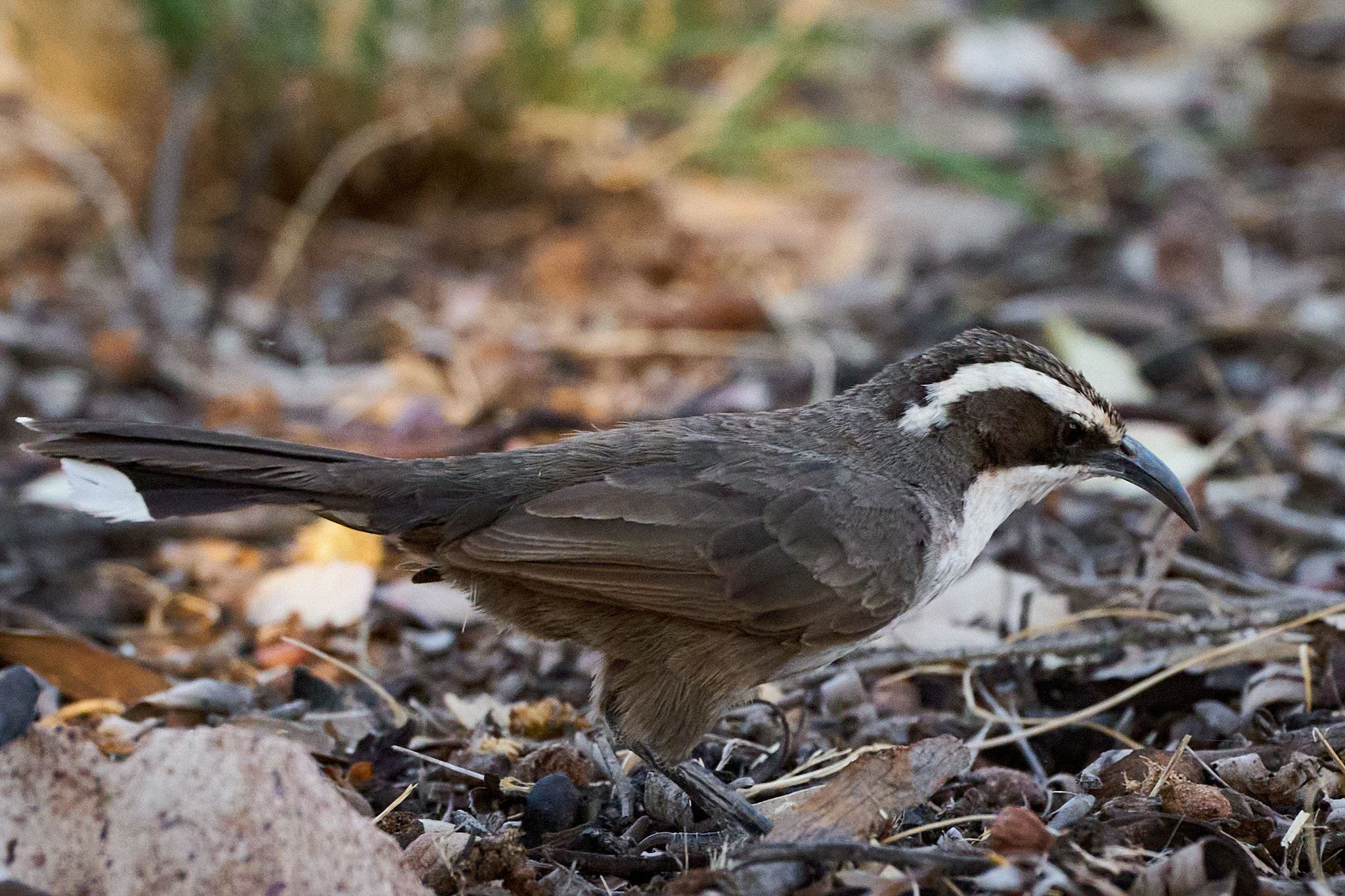
If you’re taking control of the image you will have to decide what to sacrifice. To photograph birds I choose a high shutter speed. This guards against movement of the lens or the bird. To get in the light I have to open up the aperture. This sacrifices the depth of field. On a telephoto lens you soon bump into the limit regarding aperture so ISO will also have to increase …
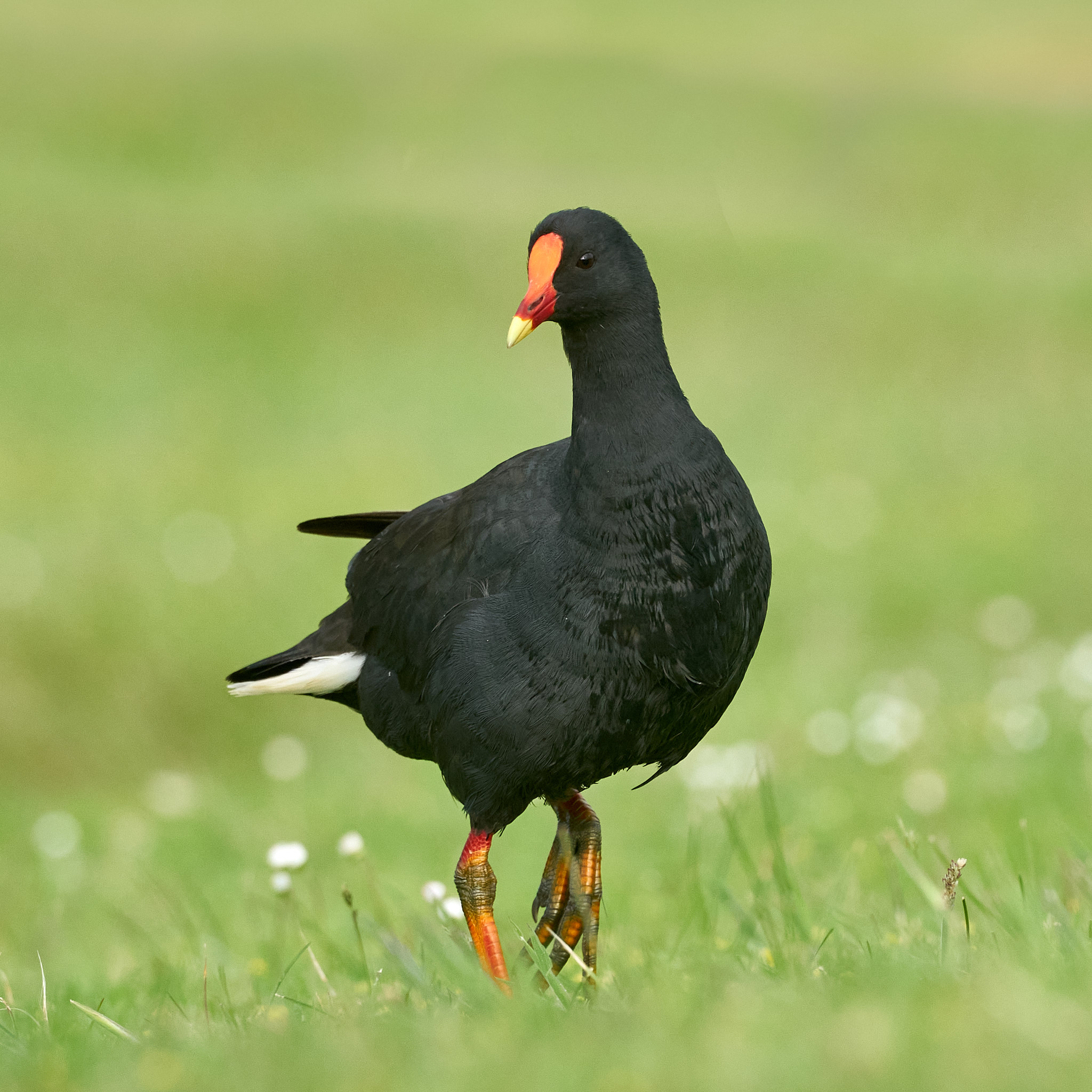
The sacrifice here is depth of field but it’s no sacrifice at all. The out of focus background helps the Dusky Moorhen to stand out. The eye and bill are sharp. A slow shutter speed would likely have resulted in a soft unusable image.

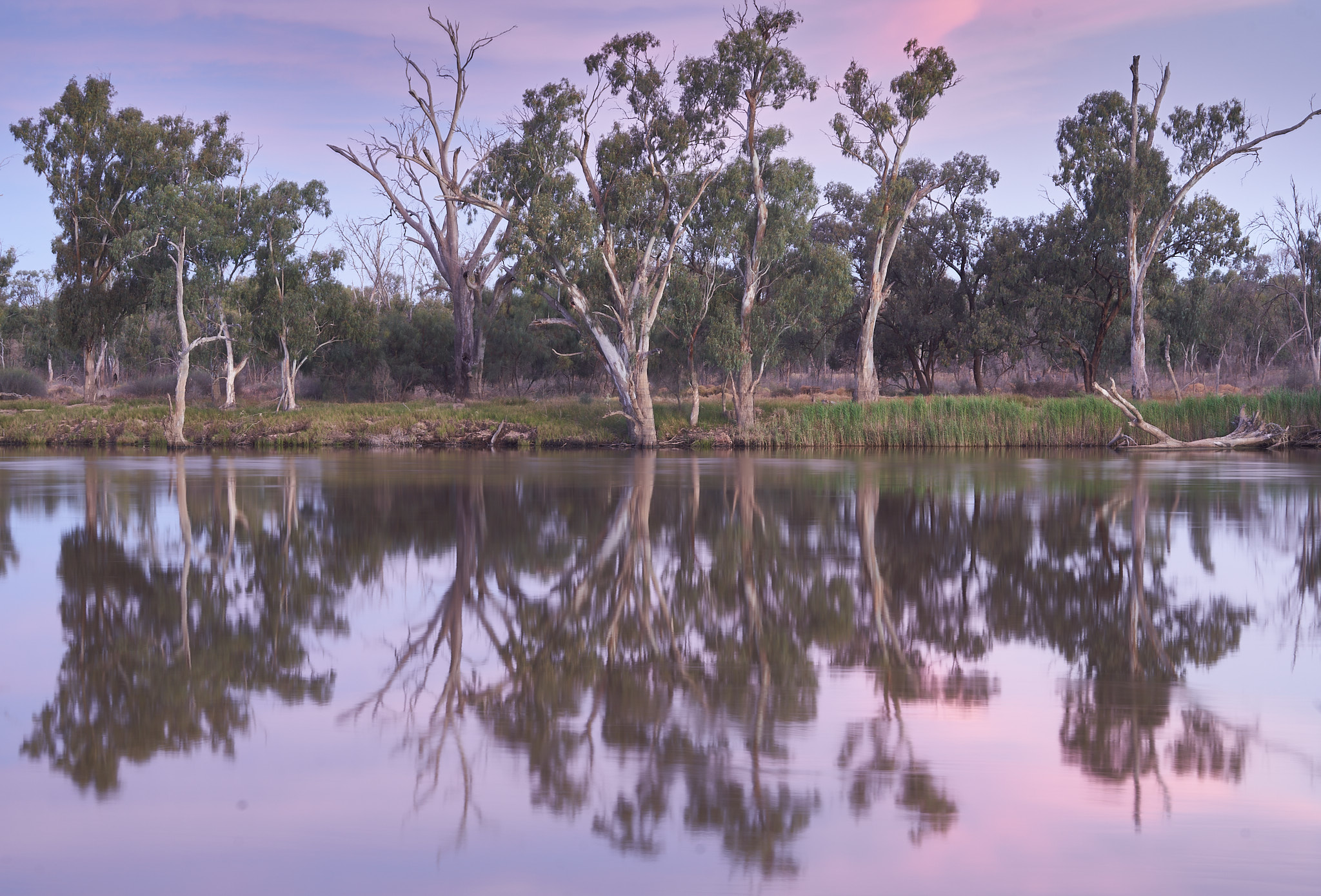
For landscapes I usually keep the ISO low, the aperture small and put the camera on a tripod. The shutter may be open for several seconds. Sharp focus from front to back and low noise are the result. On the other hand the wind in the trees may make the foliage blurry and the sheep and cows will not look too good. Long exposures are the source of dreamy seascapes and creamy waterfalls. As long as the camera and a good proportion of the picture stays still movement in the scene can be put to creative use.

The 30 second exposure flattens the sea and on a still day you can get away with the foliage. A tripod is essential.

The point of all this is about getting a handle on the compromises made for this next image …
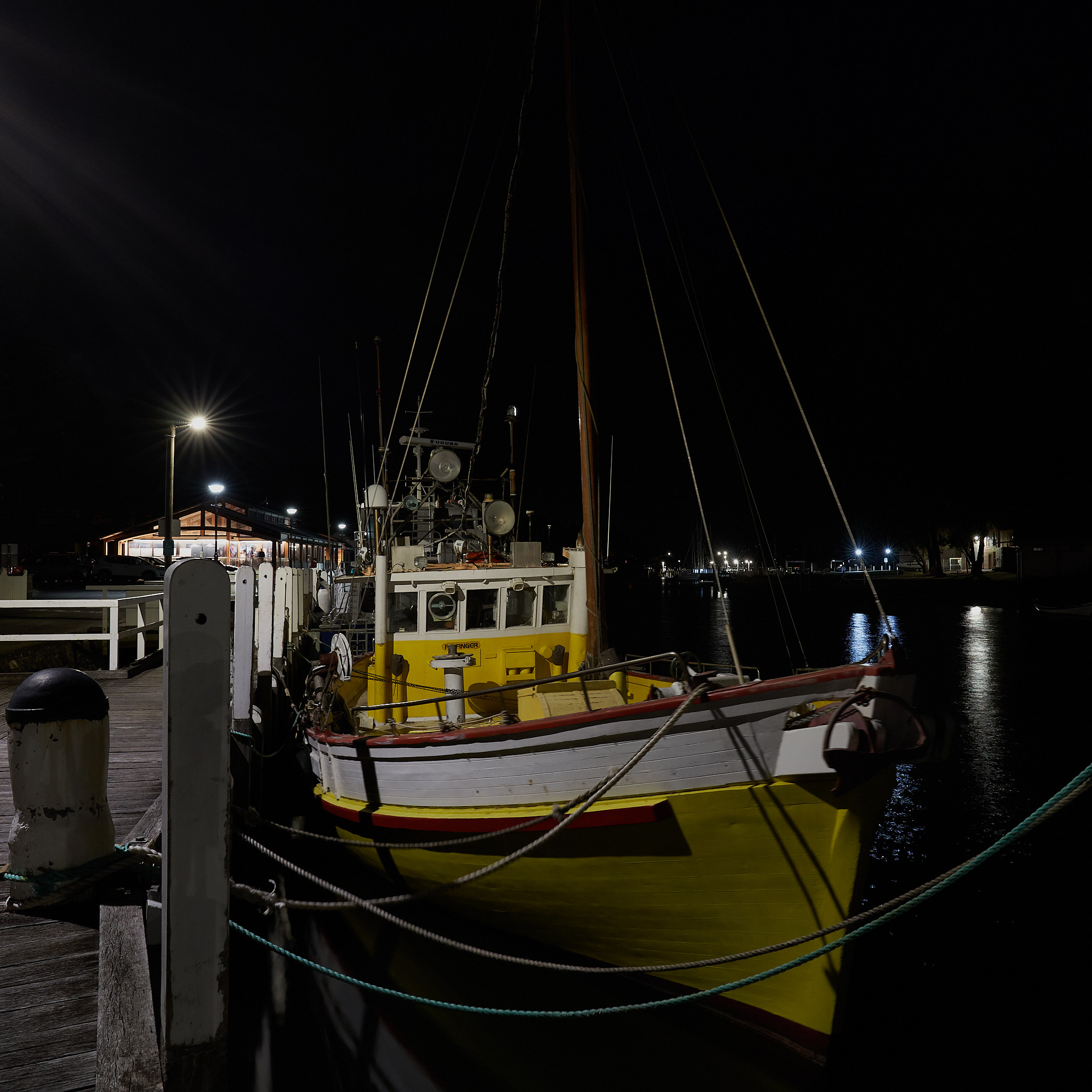
Boats are a nightmare for long exposure photography. They move. Usually just enough to ruin the image without moving enough to get an “artistic” effect. So a short shutter speed is highly desirable. We have a light source, the dockside lights. The sun flare effect from the lights only happens if the aperture is small f/16 is nice, f/11 works. I was lucky to get it at f/8. The tide wasn’t running hard, boat movement spoilt a couple of attempts but this one is sharp despite a 2 second exposure. ISO 640 doesn’t cause too much noise on the modern sensor especially if you resist the temptation to raise the shadows. I underexposed by a full stop to avoid blowing the highlights.

The subject is a beautiful wooden fishing boat called Putty’s Pride. It’s moored at Port Fairy. Keeping it in good nick must be a labour of love. Its owner has every reason to be proud.

Griffiths Island …

John Griffiths built a house on the island in 1837 as a base for his whaling activities. Port Fairy is in the background with its trademark Norfolk Island Pines. It’s connected to the island by a causeway. On the right of the picture you can see the breakwaters that have improved access to the port, a byproduct of the improvements has been the silting up of shallow waters between three islands, Griffiths, Rabbit and Goat to create the enlarged Griffiths Island we have today.

The lighthouse was built in 1859. The lighthouse keepers cottage has been removed since the light was automated. However the hardier plants in the garden hold on defiantly.

The island is home to a nesting colony of Short-tailed Shearwaters. They return to breed here every spring. They clean up their burrows, usually renew their relationship with their mate of last year and work diligently to raise a single chick. In the autumn they turn their backs on the young shearwater and head for the northern hemisphere to avoid the winter. After a few weeks the chick realises that if it wants to eat it will have to fend for itself and follows.

Along the breakwaters you can often find Ruddy Turnstones and Common Sandpipers that have the same strategy but in reverse, breed in the northern hemisphere and head south for the sunshine (quite why they choose Port Fairy is a mystery).

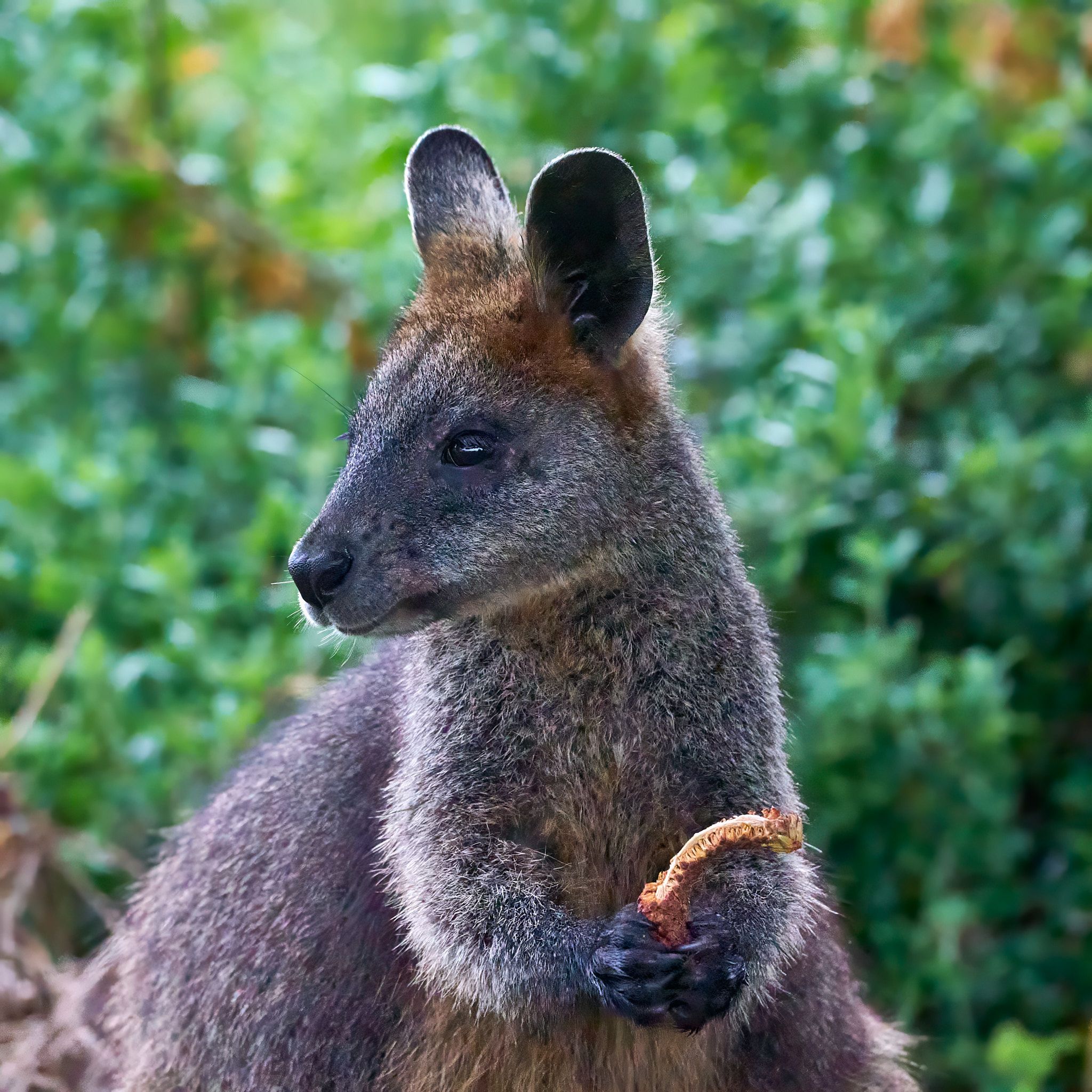
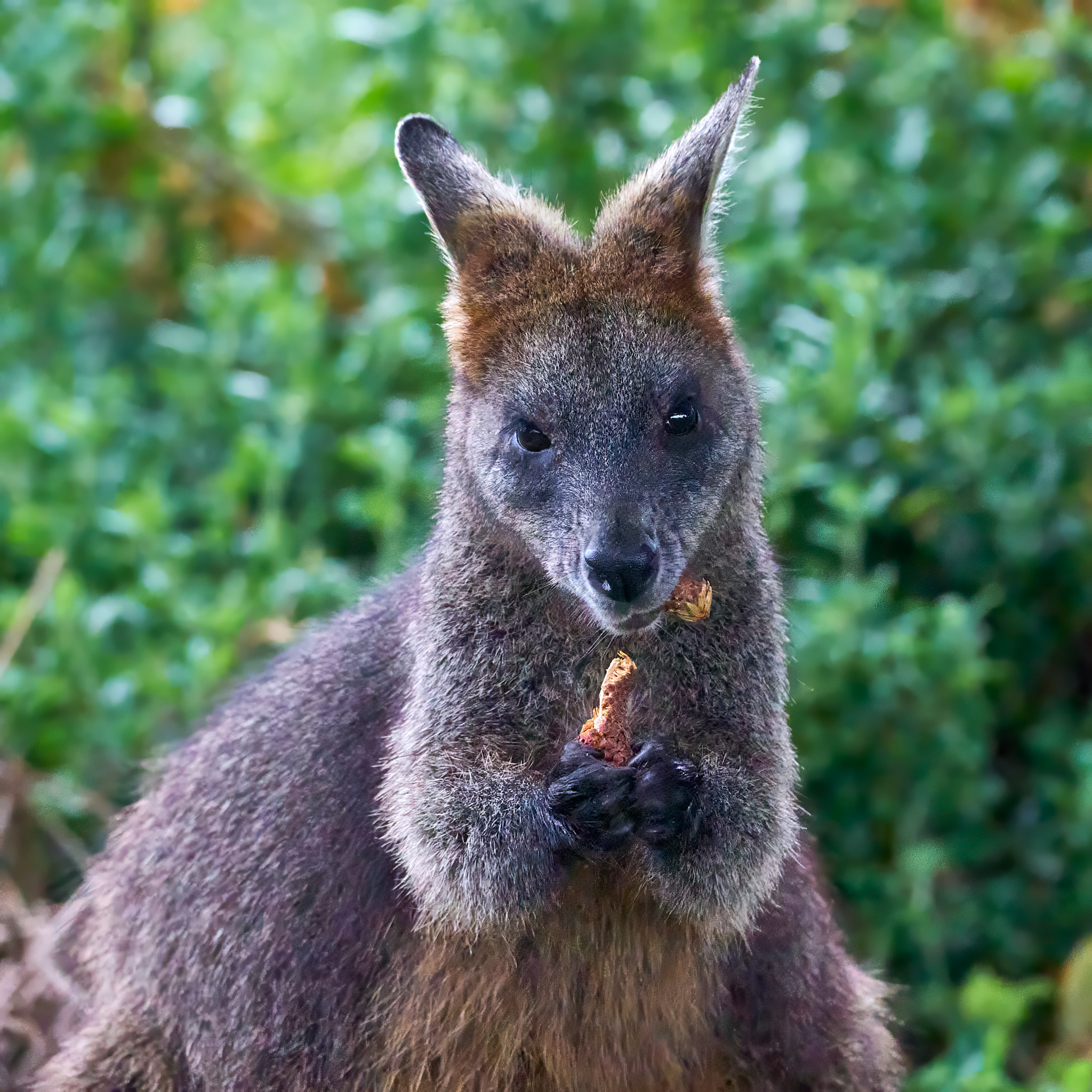
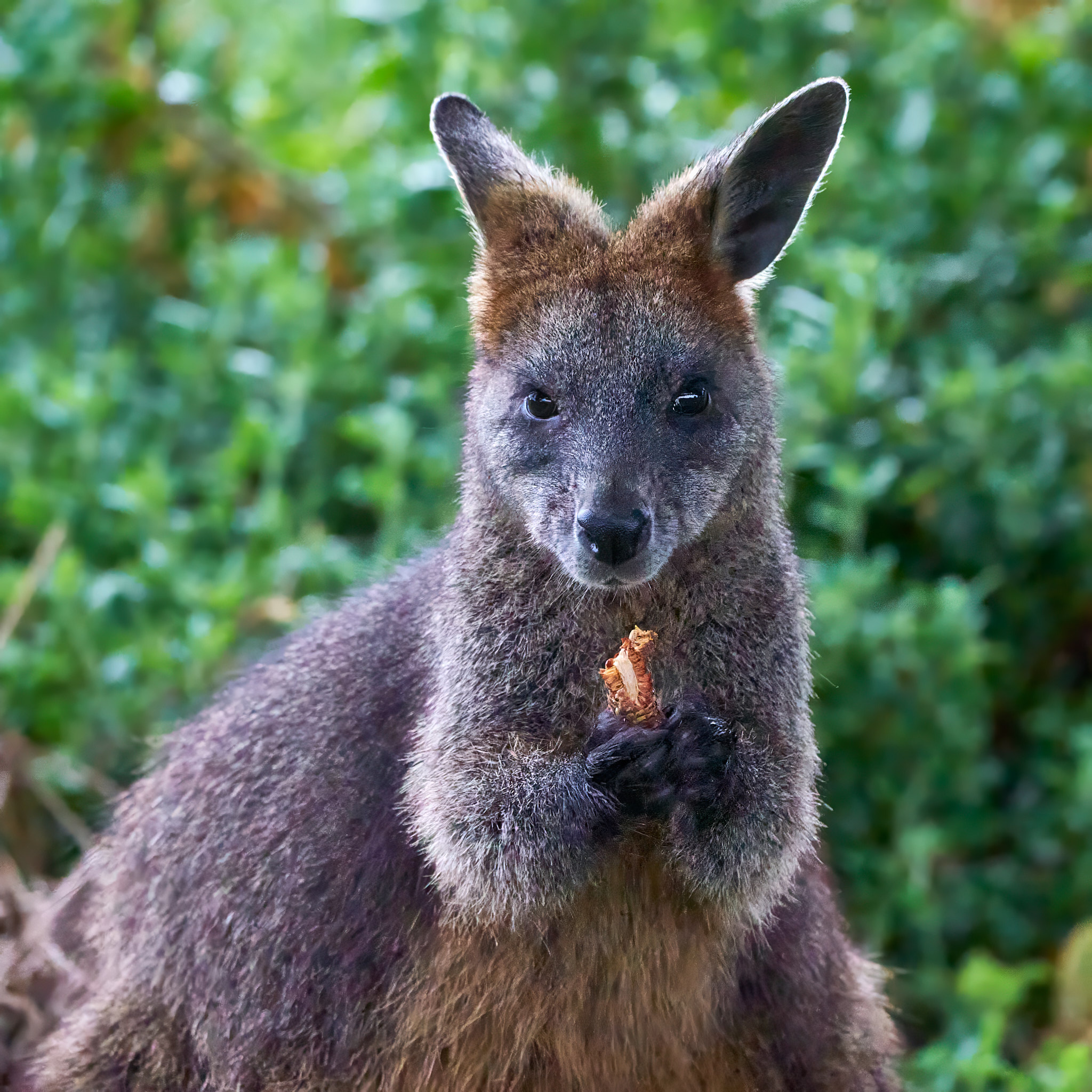
A morning walk will often bring you close to the Swamp Wallabies that live on the island. They are fairly well habituated and will pose for pictures. This one was munching on whatever it is that passes for leaves on Norfolk Island Pines.

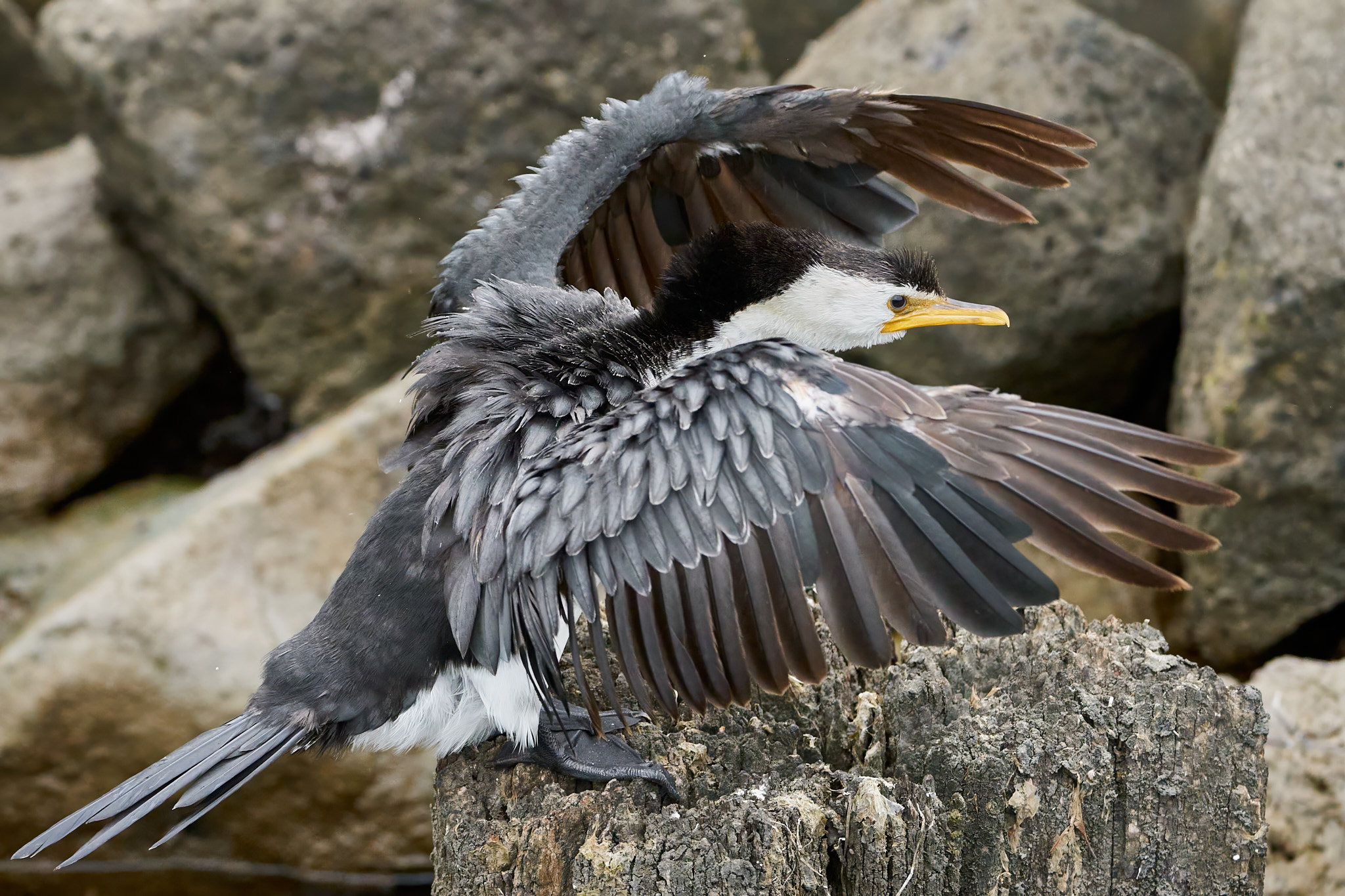
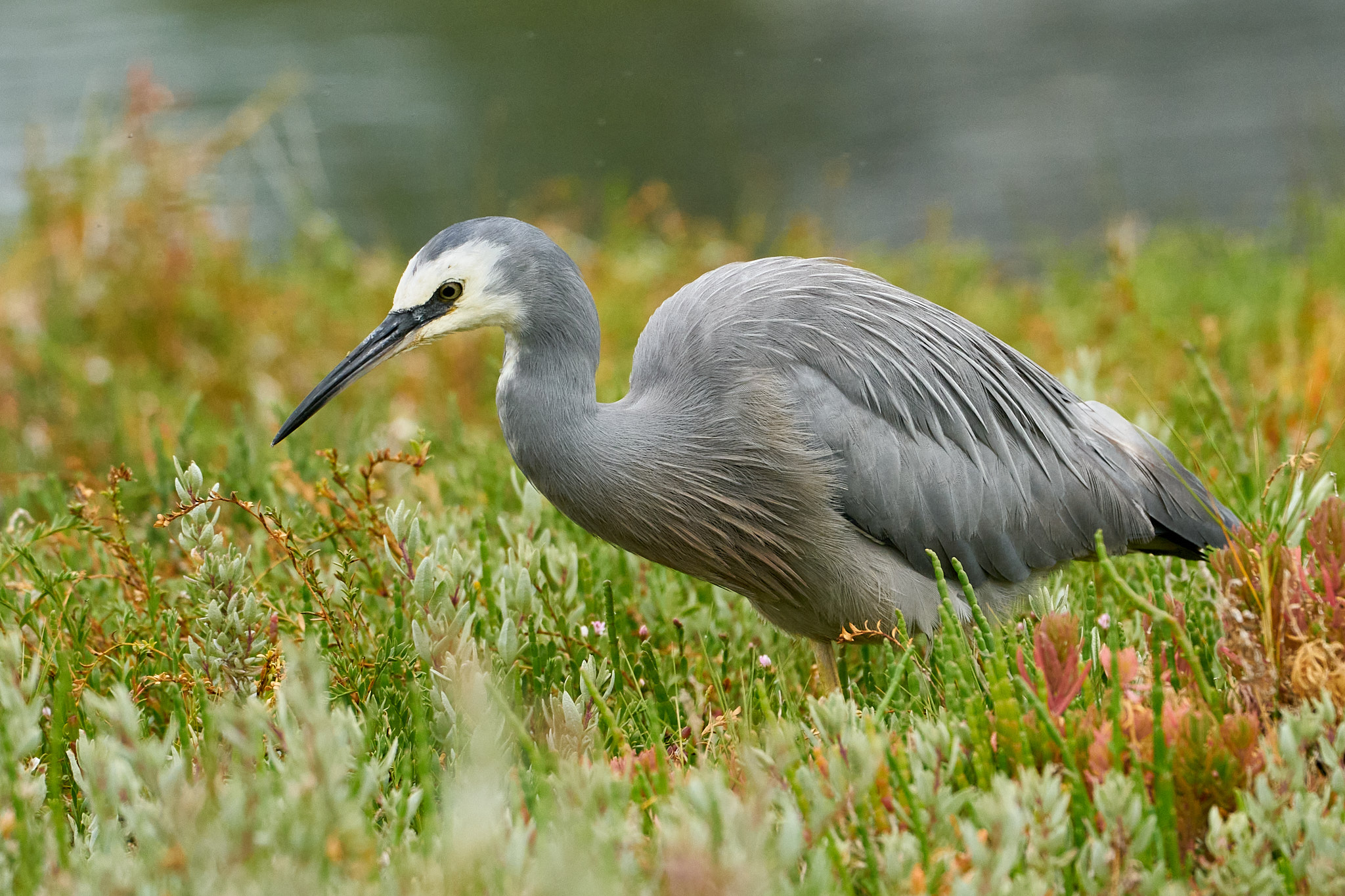
You will certainly find a bird or two.

Port Fairy …

Victoria was our home for most of our lives. Our return is mostly about catching up with family and friends. They are well worth traveling 5000km for but are not riveting material for a blog.

After two weeks here I am beginning to cope with the cold. It’s 2:30pm and just 17° (it could be worse, it could be Fahrenheit). We’re in Port Fairy. It’s raining. Of course it’s raining, we’re in Port Fairy. It is one of my most favorite places in all the world despite its weather.

I was out before the rain. An overcast sky is actually very good for the bird photographer. Colours are vivid, there are no harsh shadows. The light is kind. And processing the files is something you can do to pass the time while it’s raining. Did I mention the rain?

Do click on the gallery.

Friends back in Broome are finding the Build Up a bit oppressive. Between the Dry and the Wet seasons temperatures and humidity soar and begin to wear on you. The nights are uncomfortable. Tempers fray. The Build Up is a season of black eyes and broken jaws . Rain and the relief it brings will be more than welcome when it comes. Meanwhile they have cloudy skies and lightning shows.

Destination Victoria …

The heatwave was a one day affair. A cold change came through overnight bringing a light shower with it. The journey took us to Wirreburra with its beautiful silo art, one of my favorites.

Then on through the South Australian Riverland, irrigated farmland under fruit trees and grapevines to the northwest corner of Victoria and our campsite near Mildura. A couple of pleasant nights on the banks of the Murray then to the Goldfields to catch up with some friends.

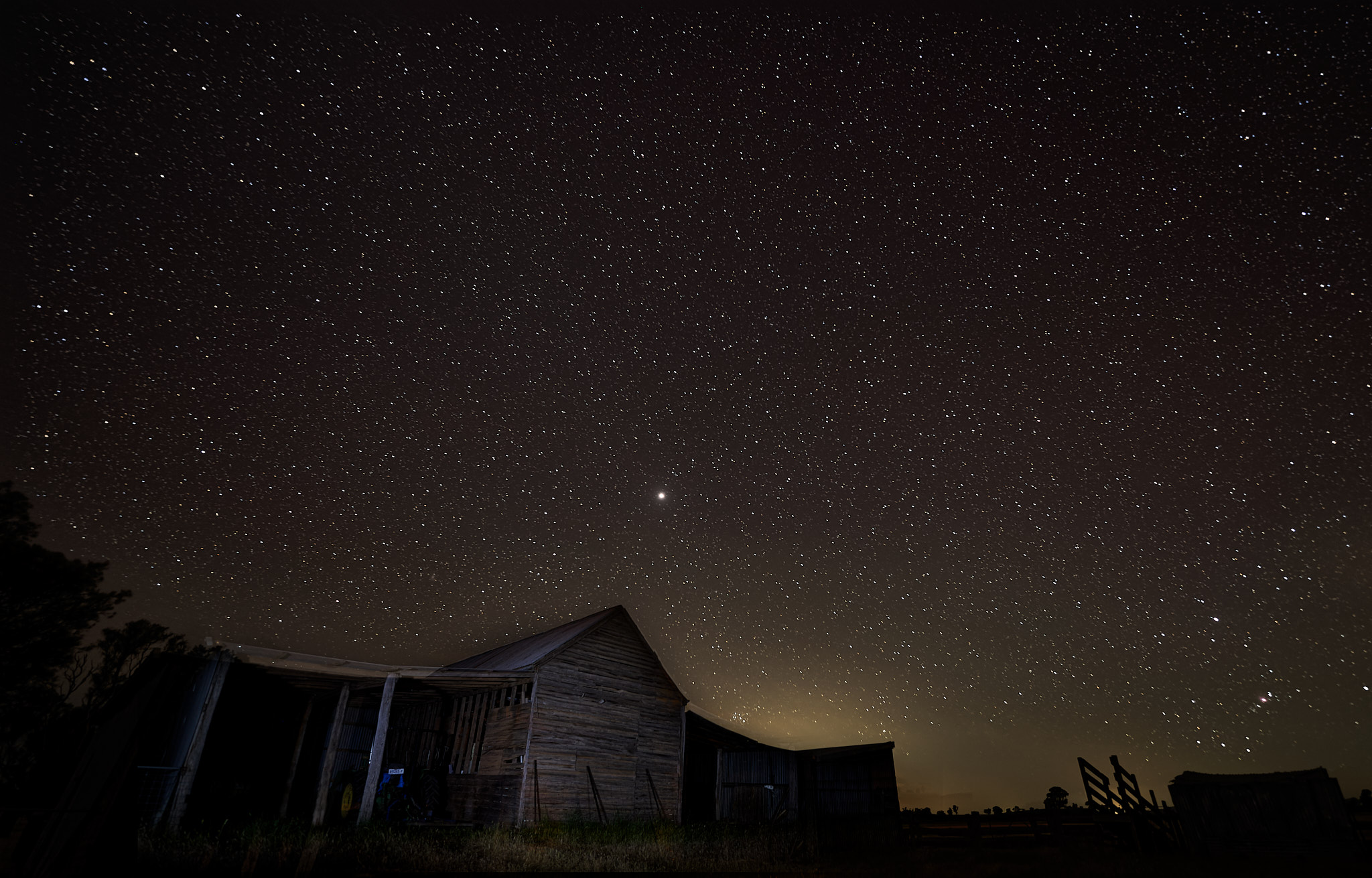
The Victorian Goldfields were as always at this time of the year, the winter crops were coming in, the grass had turned to gold and the sheep were in fine condition. And the night sky was clear.

Hopkins Falls

Over the years this blog has largely been driven along by travel and travel photography. The last couple of years has seen that shrivel because of our great pandemic. The blog has shriveled along with it. There is a limit to how many times you can spin a tale out of spending your two hours outdoor exercise riding your bike in circles. For the moment though country Victoria is off the leash – Victoria is my oyster, can’t leave the state, can’t visit Melbourne. The pearl in my little oyster is Port Fairy and that’s where I am.

I have been riding my bike in circles but at least the circle is a big one. What more could a girl ask for? I like to call the route L’Étape Charles de Gaulle …

Étape Charles de Gaulle

My accommodation here is built from bluestone which is basalt from the Newer Volcanic Province. Port Fairy’s basalt was donated by Mount Rouse 60km to the north. It seems a long way for the lava to flow. Perhaps it could have got further but sizzled to a stop in the sea. There is a closer but older volcano at Tower Hill which I have written about previously <HERE>. Rather than slowly boiling over it went off with a phreatic bang.

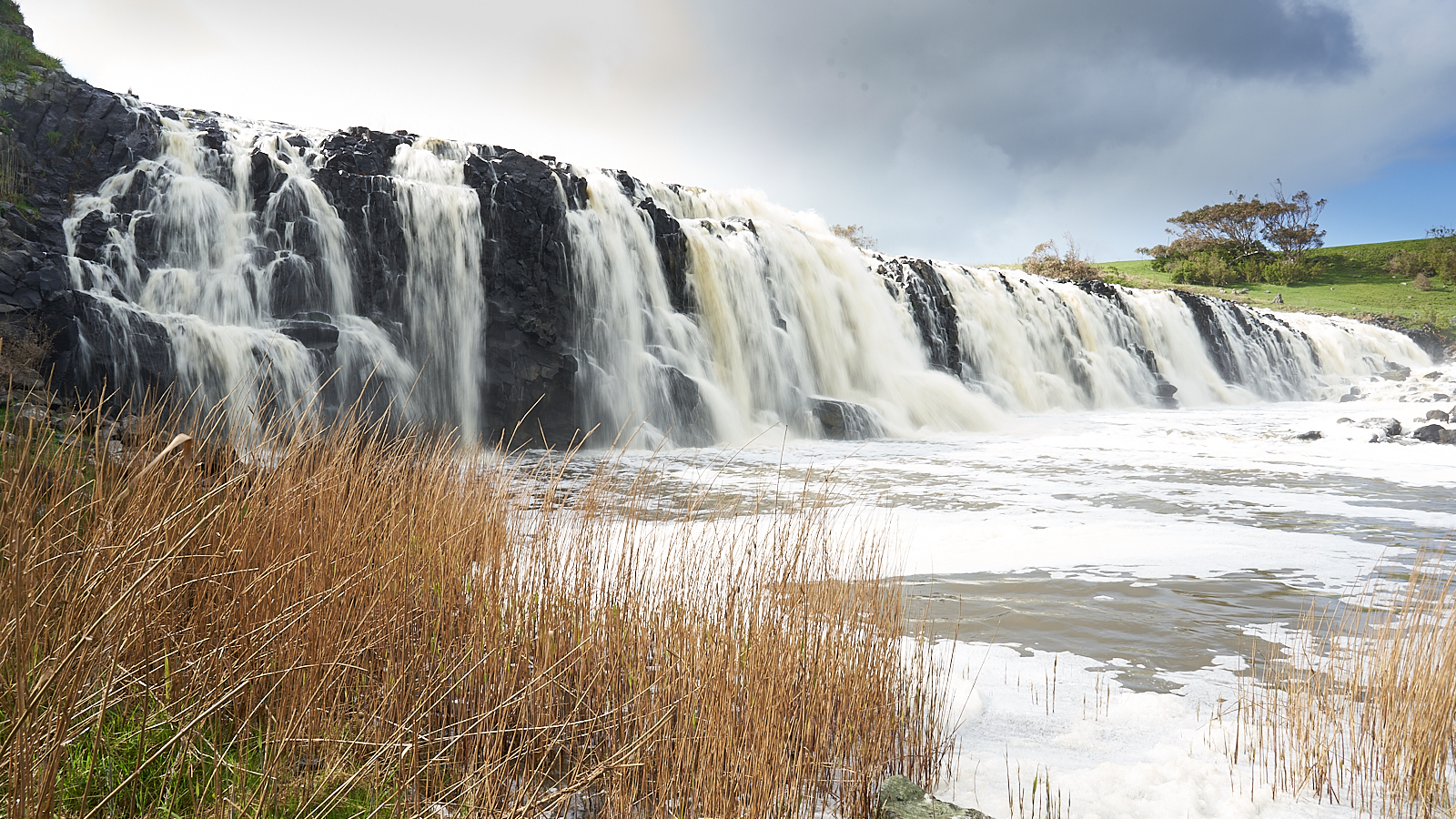
Hopkins Falls is about 40km east of Fairy and is another side effect of the newer volcanics. Said to be the widest waterfall in Australia at 90 meters in width it drops about 12 meters off a basalt shelf. It’s been a fairly wet winter. It’s quite a satisfying sight at present …

I’m Glad That’s Over …

What’s next?

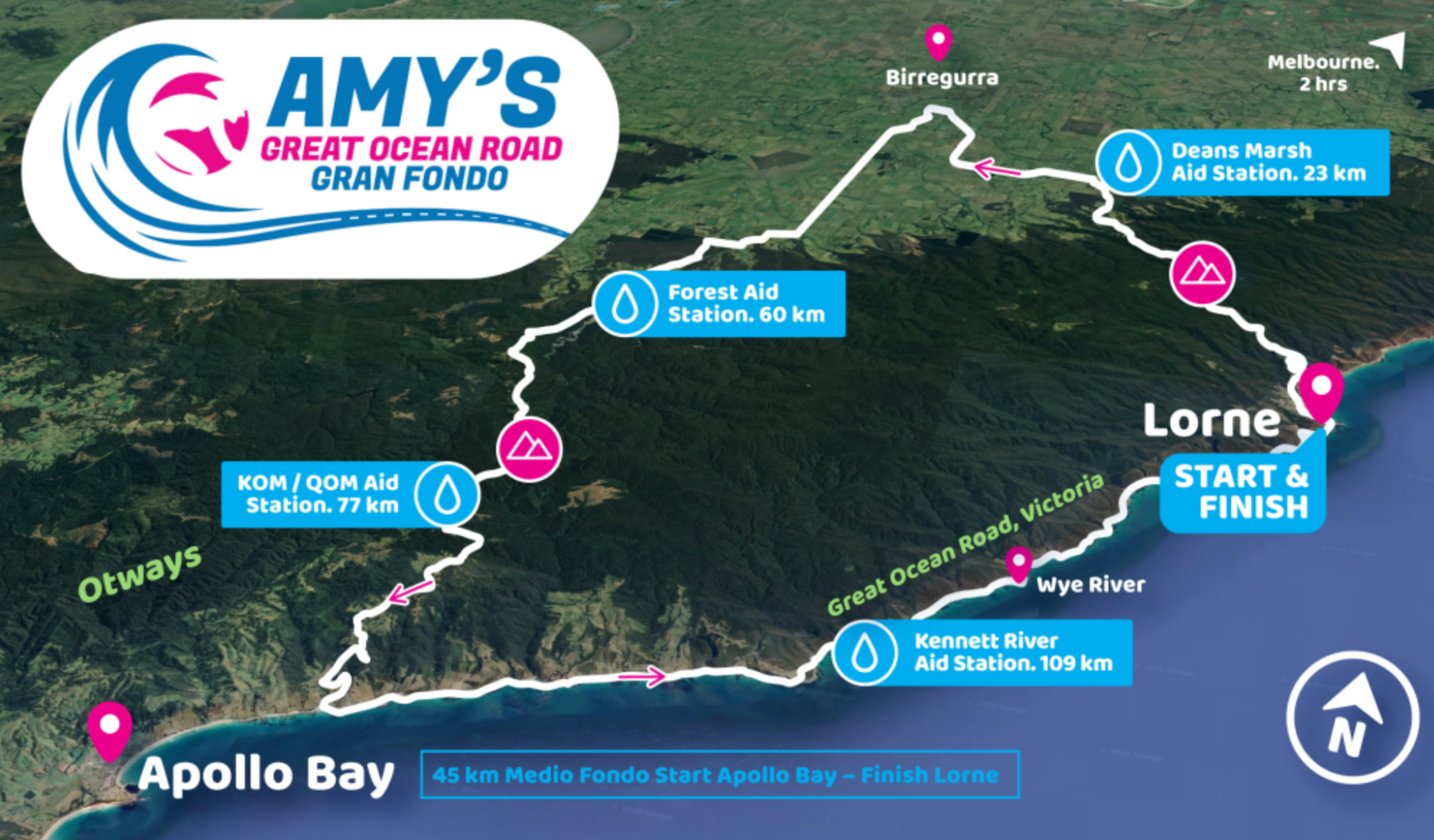
What about something very similar – Amy’s Gran Fondo on Sunday October 24 starting and finishing at Lorne. It’s a 130km course climbing over some now familiar hills and then running along the Great Ocean Road.

There’s a gravel ride the day before and a couple of shorter rides for the less obsessed. All the details can be found <HERE>

You can join me there. Sign up now.

Not a Bad Jersey Really …

… worthy of a spectacular ride. The Great Ocean Road and Otway hills – all the ingredients needed. The 204km ride got away at 6.30 in the morning …

photo G D’Alton

Most of the first 80km or so is through undulating farmland. There was a decent headwind. Fortunately I was able to pick up a strong group and slipstream all the way to Forrest. Thanks are due to the heroes that took the lead. Average speed to Forrest was 31kph – no concern regarding the cutoff.

The climbing starts in earnest just before Forrest. My group took advantage of the rest stop there, I soloed on. Either the food was good or there was a long queue for the toilets. I didn’t see them again. In fact by that time you couldn’t see much at all. A mist had rolled in bringing a gentle drizzle.

Climbing is not my strong point. I just have to accept that it will be slow, settle into a rhythm and keep an eye on the power meter. The reward is that you then get to descend. This time the road was wet and windy but it’s still fun.

The foot of the descent is Skenes Creek on the iconic Great Ocean Road. The rain ceased and the wind dropped. Groups to parasitise became rare. So head down and tail up …

In Just Seven Days …

“I can make you a maa.a.a.a.an …” Rocky Horror Show.

Or you can join me in the Peaks Challenge Falls Creek. Cycle 235km with 4,600 meters of climbing. The legs had better be loaded by now. In a week you can do very little to get fitter but you can ramp up the fatigue trying.

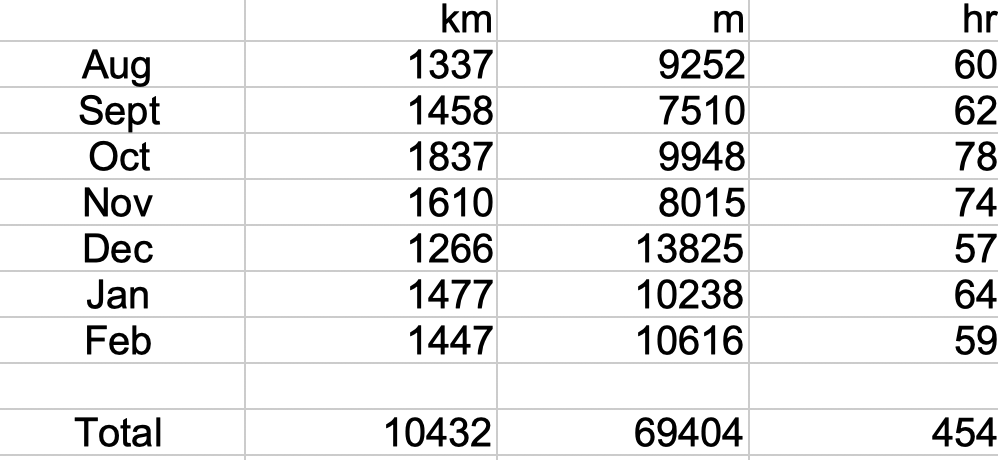
My preparation can be summarised thus …

Turning that into weekly averages gives 344km, 2,292m of climbing in 15 hours on the bike.

Volume alone is a poor measure of training. Intensity has a key role. I have endeavoured to keep up the quality by doing some interval training, hill repeats and racing. Finding a group ride has also helped to sharpen the output. The guys and girls have also been great mentors, given me heaps of encouragement and support. All of which has been most appreciated.

Has it made me fitter? Yes it has.

I bought the road bike last May six months after I started riding. I added a power meter in July and was quick to do an FTP test. That involved 20 minutes going full gas, on the rivet, going for the doctor, blood sweat and tears, pain, suffering , you get the picture. The answer was 196 Watts.

I was in no hurry to do further FTP tests but as a Strava subscriber I have access to my critical power curve which gives me another way to estimate FTP. Using the first six weeks of power data Strava estimated my FTP at 190 Watts. The last six weeks provides an estimate of 237 Watts. (A Grand Tour rider would have an FTP of 400 plus.)

Back in the jogging boom when I ran the odd marathon the gold standard of endurance fitness was VO2max. In those days you had to head into the laboratory to find what that was. These days you just have to ask … your watch. My Garmin watch estimates mine to be 51 ml/kg/min – up from the low 40’s seven months ago. (Above average for an adult male but an elite athlete will be in the range 65 to 80).

The bike was serviced just a few weeks ago. It has a new chain and fresh tyres. The cassette has been replaced with an 11 – 32 giving me a slightly lower gear than I had. That will help on the hills. It goes for a final tweak in a couple of days. I will have to put a rear reflector on it before the big day – the organisers insist that bikes be road legal (I ride in the day with two flashing red lights to the rear, one of which is also a radar. There isn’t room for a reflector and safer to boot. Ours not to reason why.)

The week past has been a big one. It included a trip to the Grampians with a couple of rides up Mount William. The last couple of kilometers to the summit have an average gradient of 12%, there are spots where I struggled to keep the front wheel on the ground. This is steeper than the worst sections of the Peaks Challenge. The bonus though is that the climb offers the prettiest views of any ride in the state of Victoria.

It’s now time for the taper. Training too hard will find you fatigued at the starting line. If you don’t train at all you start to lose condition. How best to balance freshness and fitness? The right answer probably varies from person to person and is best sorted out by trial and error. I have no recent experience to draw on so it has to be generic. Having consulted the literature my intention is to maintain the intensity but halve the volume.

And what about some carbohydrate loading? My day to day diet is low carb but come Friday I’ll be enjoying some pasta, Saturday some rice. I’m sure my body will stack away glycogen like there’s no tomorrow.

Circling the Asylum …

Lock down again. That changes the plan.

In preparation for the Peaks Challenge at Falls Creek I’ve been knocking out a 100km ride about once a week. Aside from that I’ve concentrated on intensity rather than volume with hill repeats (outdoors and on the trainer), intervals and some racing. Rest days and the odd light week are vital to the mix and the first week of February was the light week. There are now 25 days to go. My intentions were to ramp up the climbing and get in at least one 200km ride. Now I find myself limited to two hours a day and within 5km of home.

The nearest asphalt to home is a kilometer away. I could ride back and forth on 4km of black top – hill repeats without any significant hill. The alternative is to take to the gravel on my mountain bike. And it’s not such a bad alternative, increased resistance from wider tyres and the gravel plus the less aerodynamic position and greater weight put the legs to the test. The distance limit means going around and round. It could wear thin but I enjoyed it this morning.

I also slipped in an extra weights session. Tomorrow I’ll do some indoor hill work and perhaps take the mountain bike out again. I can’t see myself doing more than a couple of hours at a time on the trainer.

Indoor Mountains …

The Peaks Challenge at Falls Creek entails more than 4,000 meters (13,100 feet) of climbing. Living in the flat land makes it hard to prepare the legs. One answer is an indoor trainer that can simulate the resistance that would be experienced climbing hills. I settled on the Tacx Neo 2T and with the help of Youtube got it up and running. I’m currently enjoying, if that’s the right word, a one month free trial of the Tacx software.

Here’s a shot of the pain cave …

I’ve repurposed a superseded lap top and thunderbolt screen and added an ANT+ dongle to the computer so that it can read my heart rate monitor. In this shot I’m setting off to climb the Jaufen Pass. The video advances to match the speed that you’re making whilst the software adjusts the resistance to reflect the gradient.

Here’s a screen grab nearing the top of the pass …

On the left of screen you can see speed, power, cadence, heart rate, time elapsed, the gradient and in the tiny letters the most important information is the distance to the top.

The real Jaufen Pass is in the Alps in the far north of Italy. On the Tacx the ride to the top is a little over 15 km and climbs 1,087 meters. Average gradient is 7.2% and it maxes out at 9.4%. You can continue down the other side but I can’t for the life of me see why you would, you reach impossible speeds with no effort and round corners in a fashion that would be lethal in real life and are too dizzying to look at on screen.

How does it compare with the real thing? It certainly feels pretty realistic and I think it will substitute well for the missing mountains.

As well as a library of videos there is a workout section where you can set up an interval session with control over gradient if that’s your thing and there’s a built in ramp test and FTP test.

The trainer will work with other apps such as Zwift and RGT. They have free introductory offers that I will probably make use of before choosing which way to go in the long term.

Meanwhile there are 54 days until the big event which equals four Jaufen Passes plus a whole load of connecting asphalt.