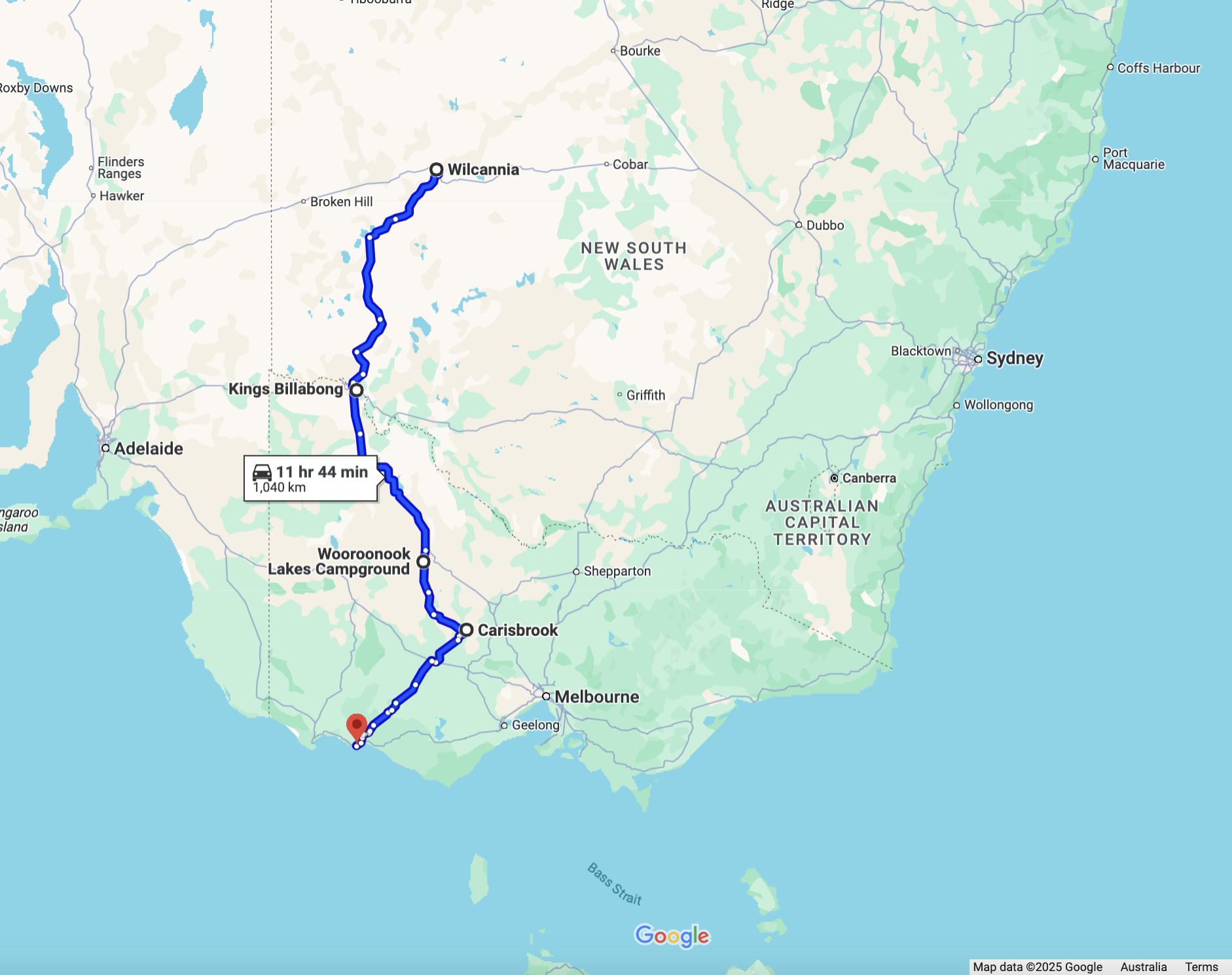
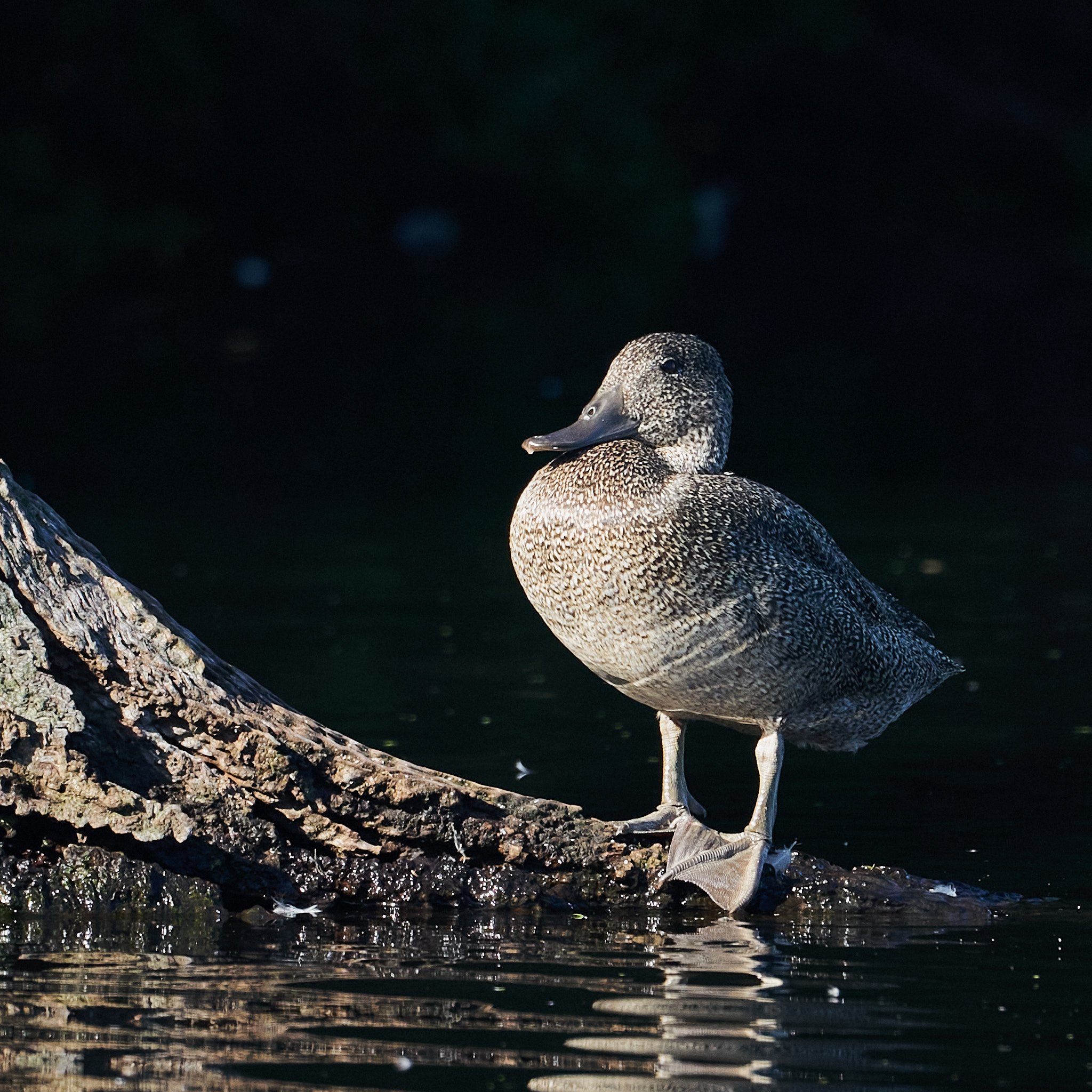
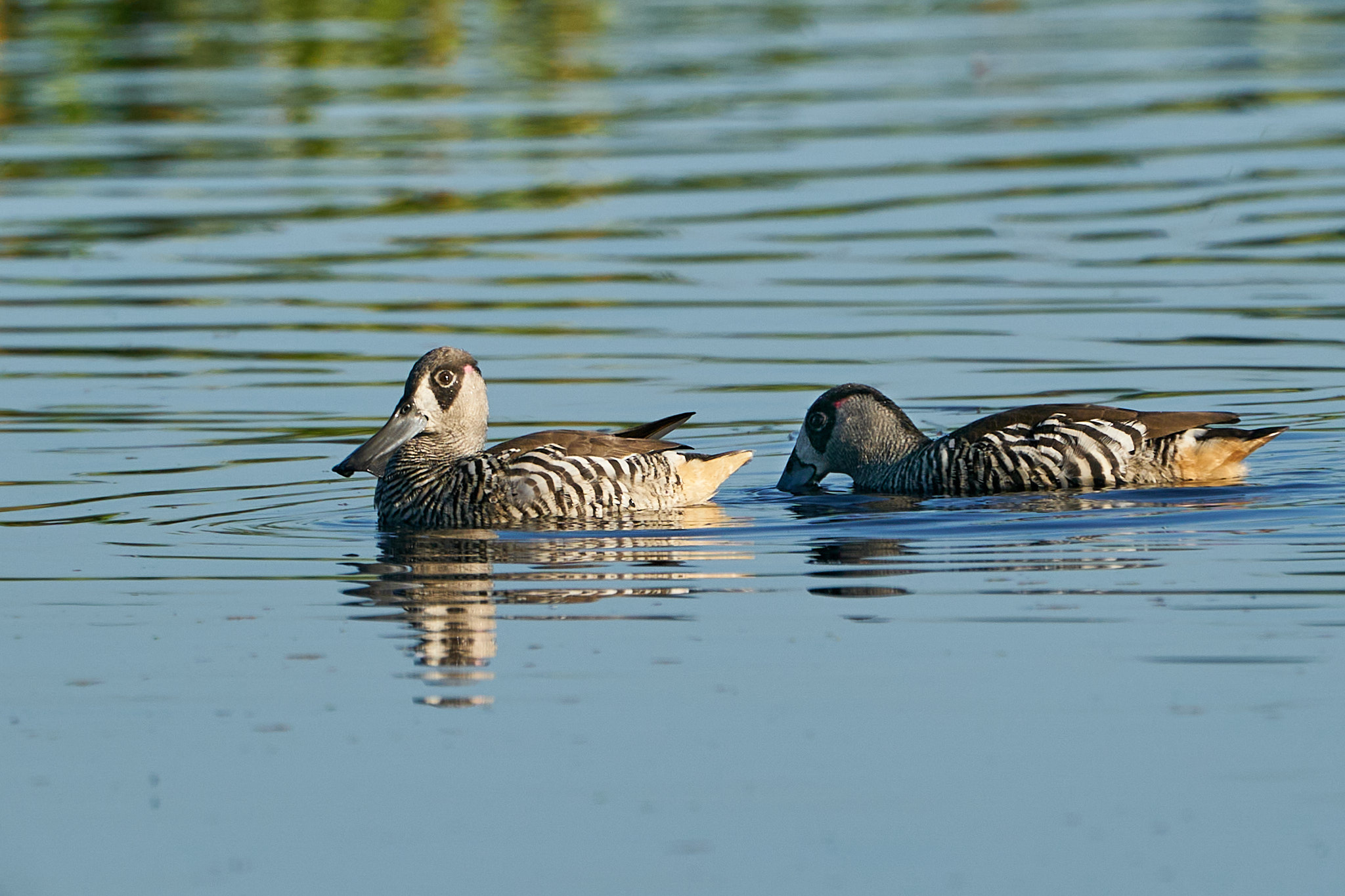
Yesterday we arrived in Port Fairy on Victoria’s south west coast and here we shall pause for a week . We will taking bracing walks in what passes for the summer heat and look for goldfinch and greenfinch to bolster our year list! Here is a simplified map of progress since Wilcannia. Simplified because since crossing the Victorian border we have been flitting about like flies on a cow pat visiting favourite places, favourite people and a caravan repair yard for a bit of plumbing work.
Rainfall in the interior of Australia and much of the west coast is unpredictable and usually sparse. For the north and east coastal fringes, north of Brisbane, summer rainfall is the norm. From Brisbane south and around the south coast and for a triangle in the south of Western Australia winter rainfall predominates. This pattern has held up on this trip, indeed it may be somewhat exaggerated this year. Since leaving Queensland the country has been as dry as a chip.
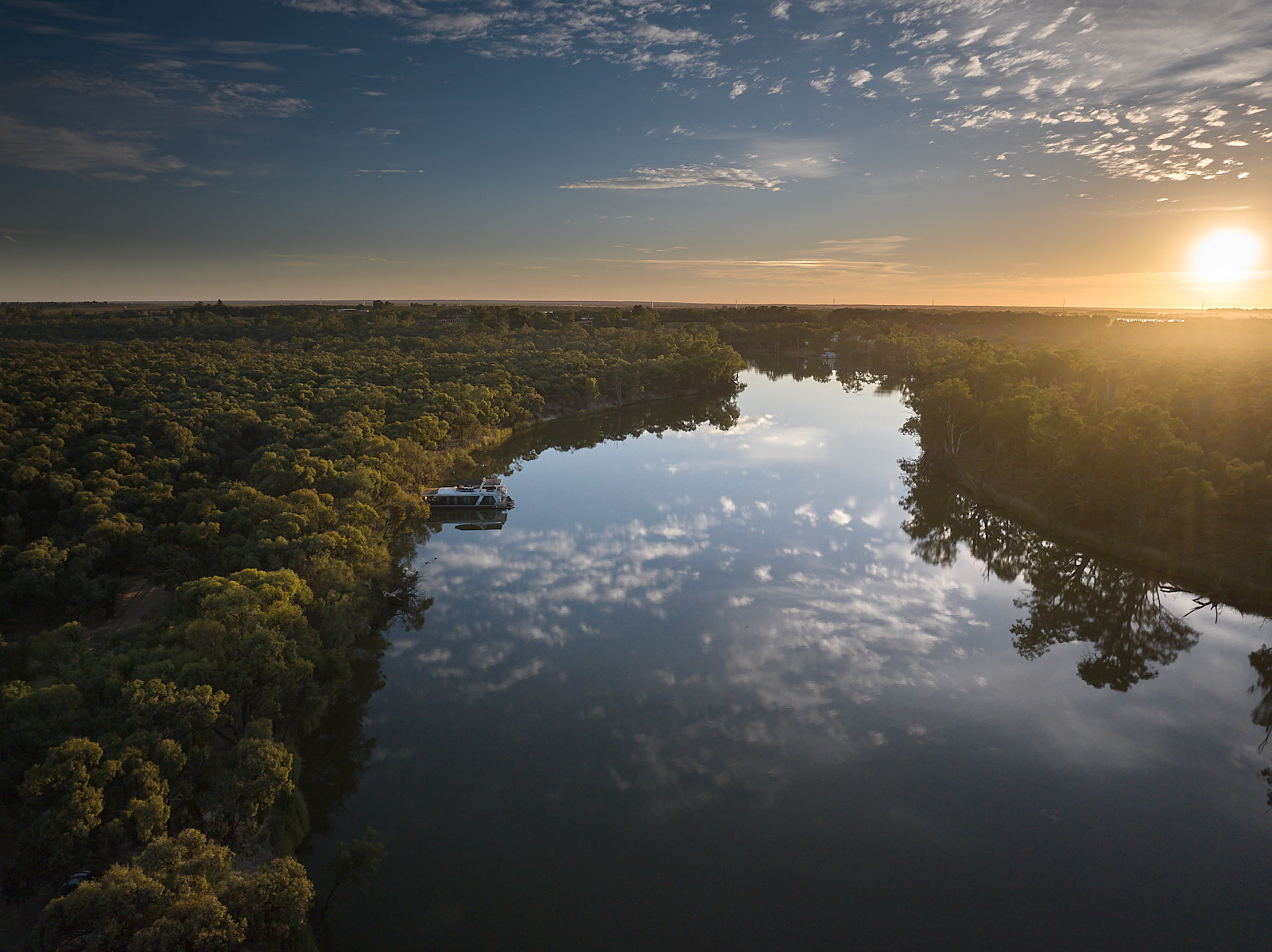
In Wilcannia the bird watcher should stay at Warrawong on the Darling. The camp ground is adjacent to a couple of billabongs. These are usually productive but on this occasion one had little water and the other was dry. The river Darling itself had plenty. There are some 4WD tracks across open plains to patches of River Red Gum woodlands along the banks and if clean toilets and warm showers are of any interest it even has those.
From there it was on to the banks of the mighty Murray not far from Mildura and then various much loved locations in the Victorian Goldfields. And now Port Fairy which is unique in Victoria in very nearly being quaint. The surrounding countryside, the Western District of Victoria, is brown and dry, drier than we have ever seen it.
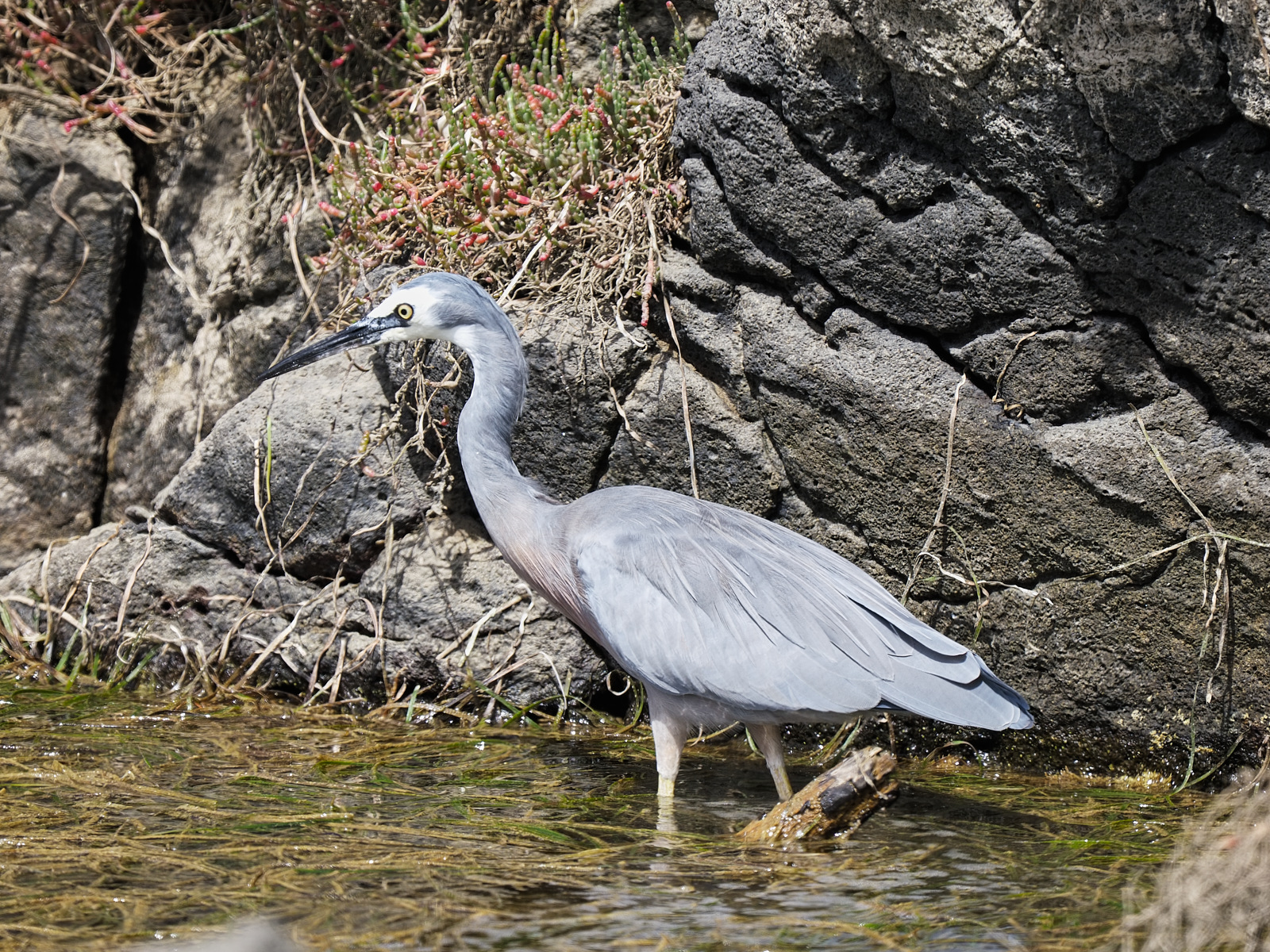
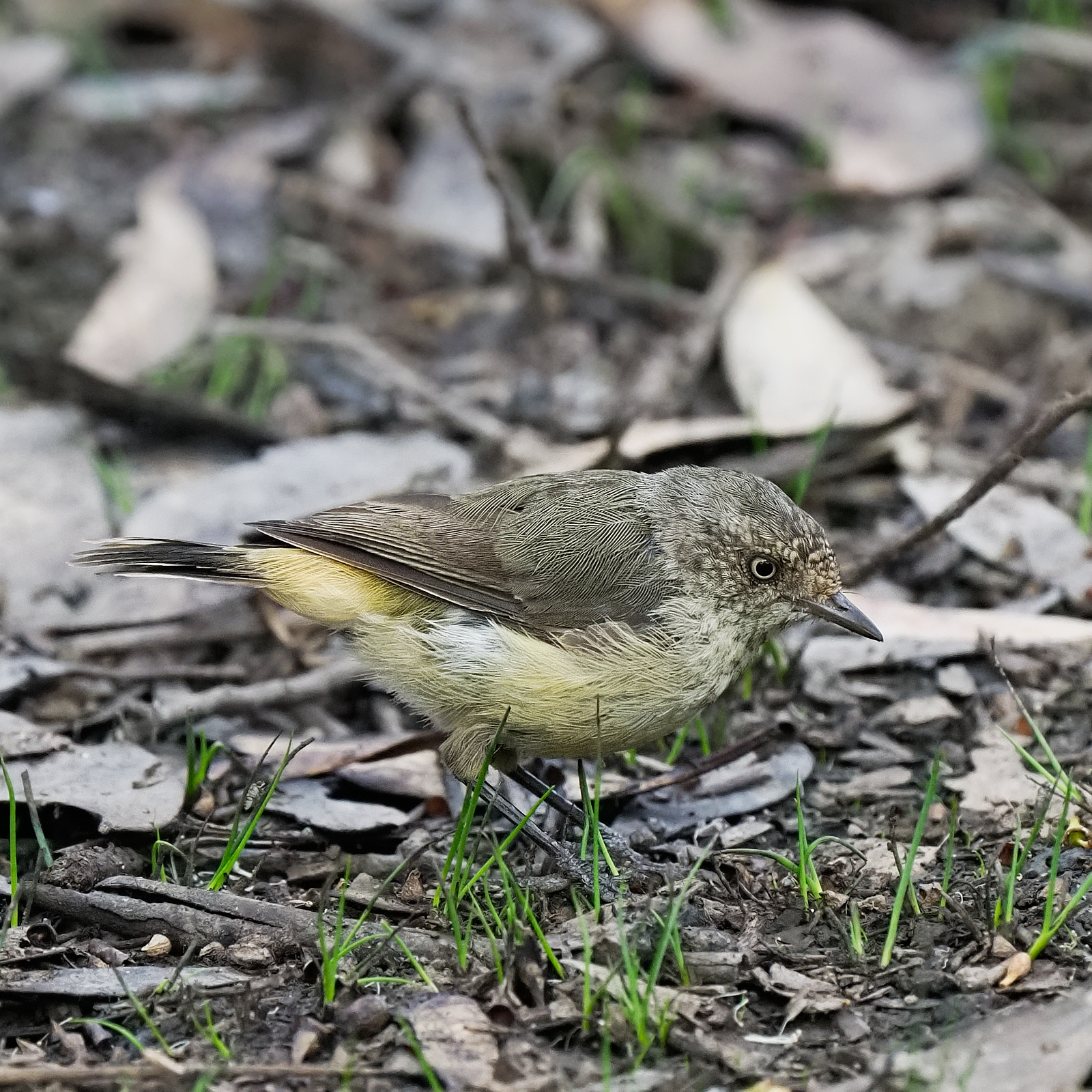
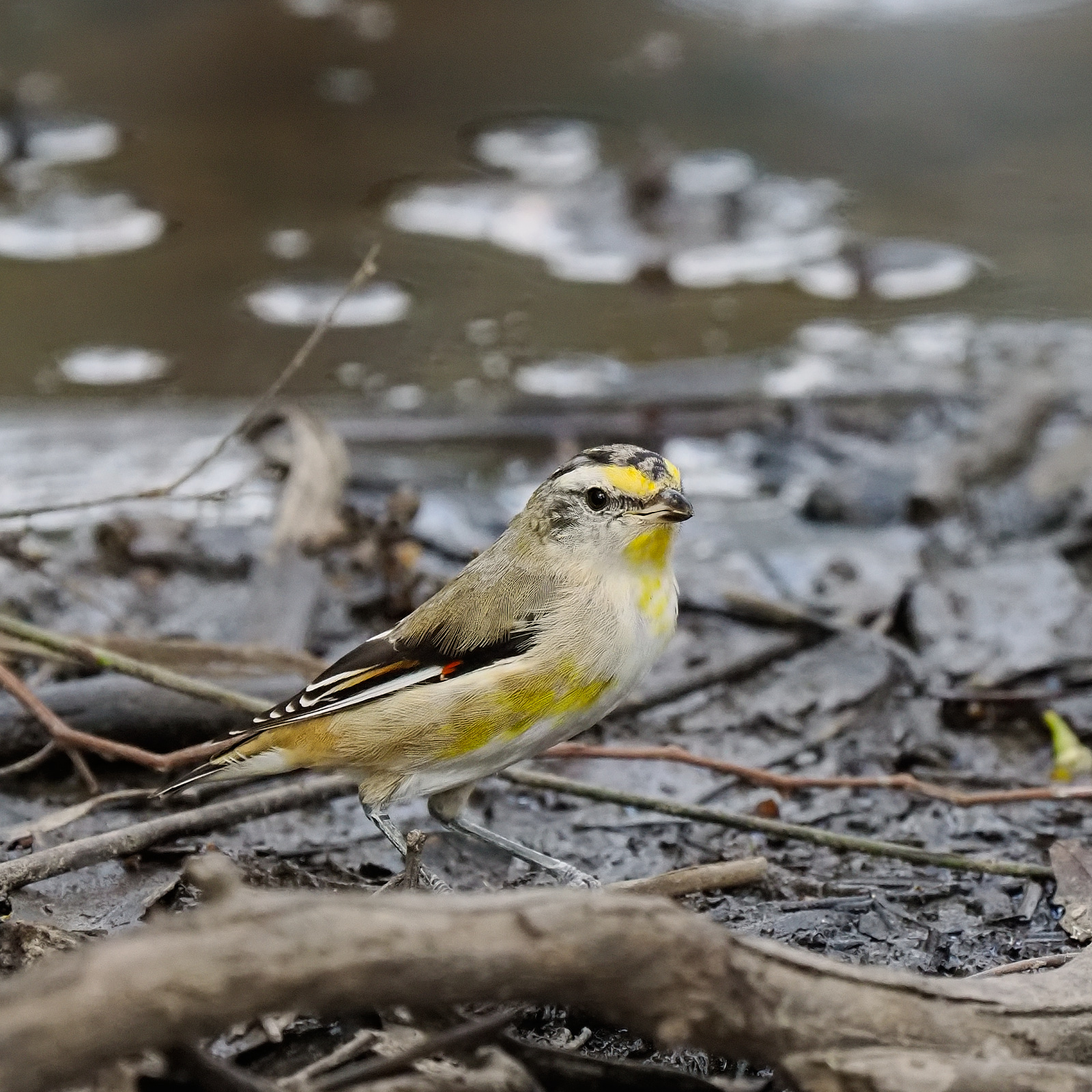
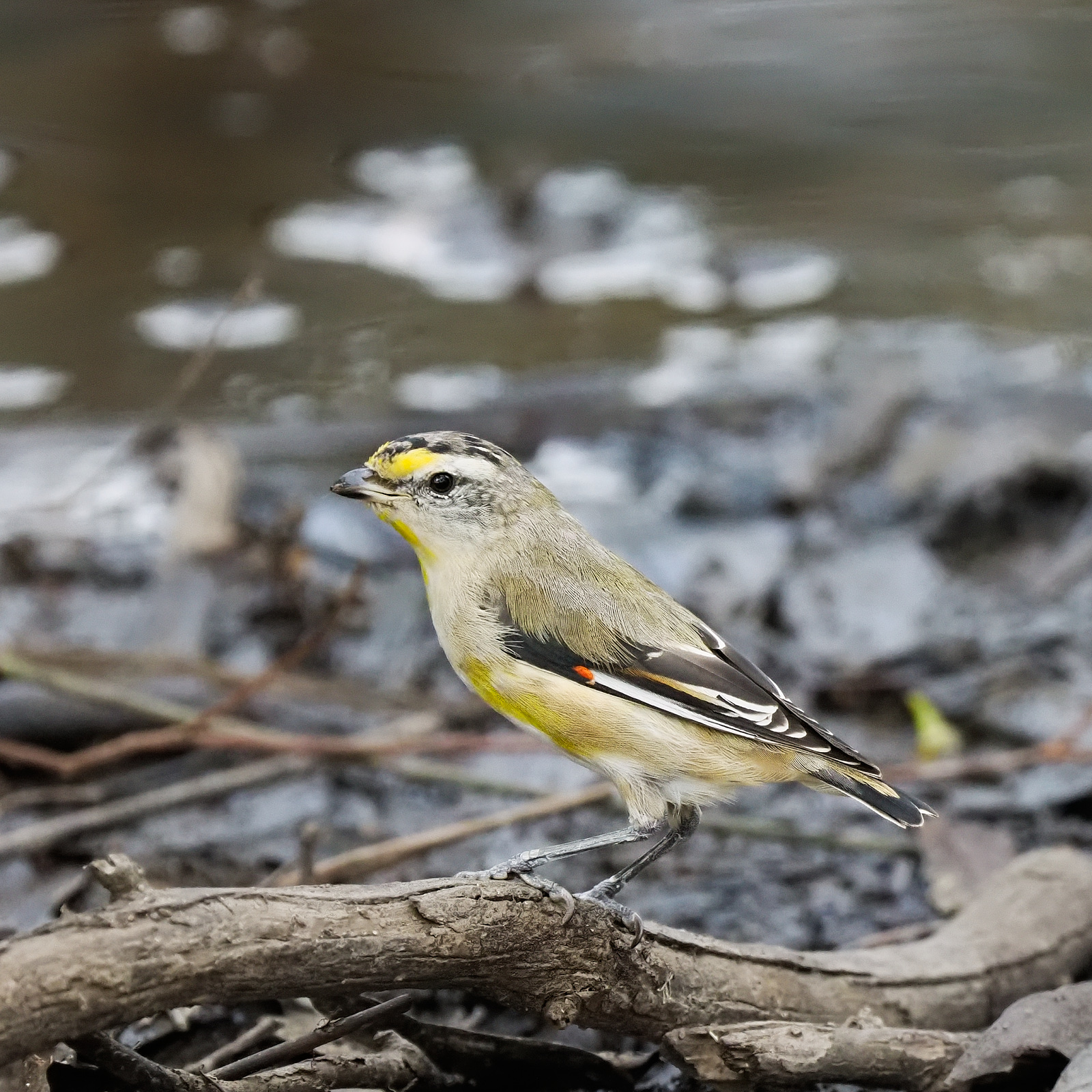
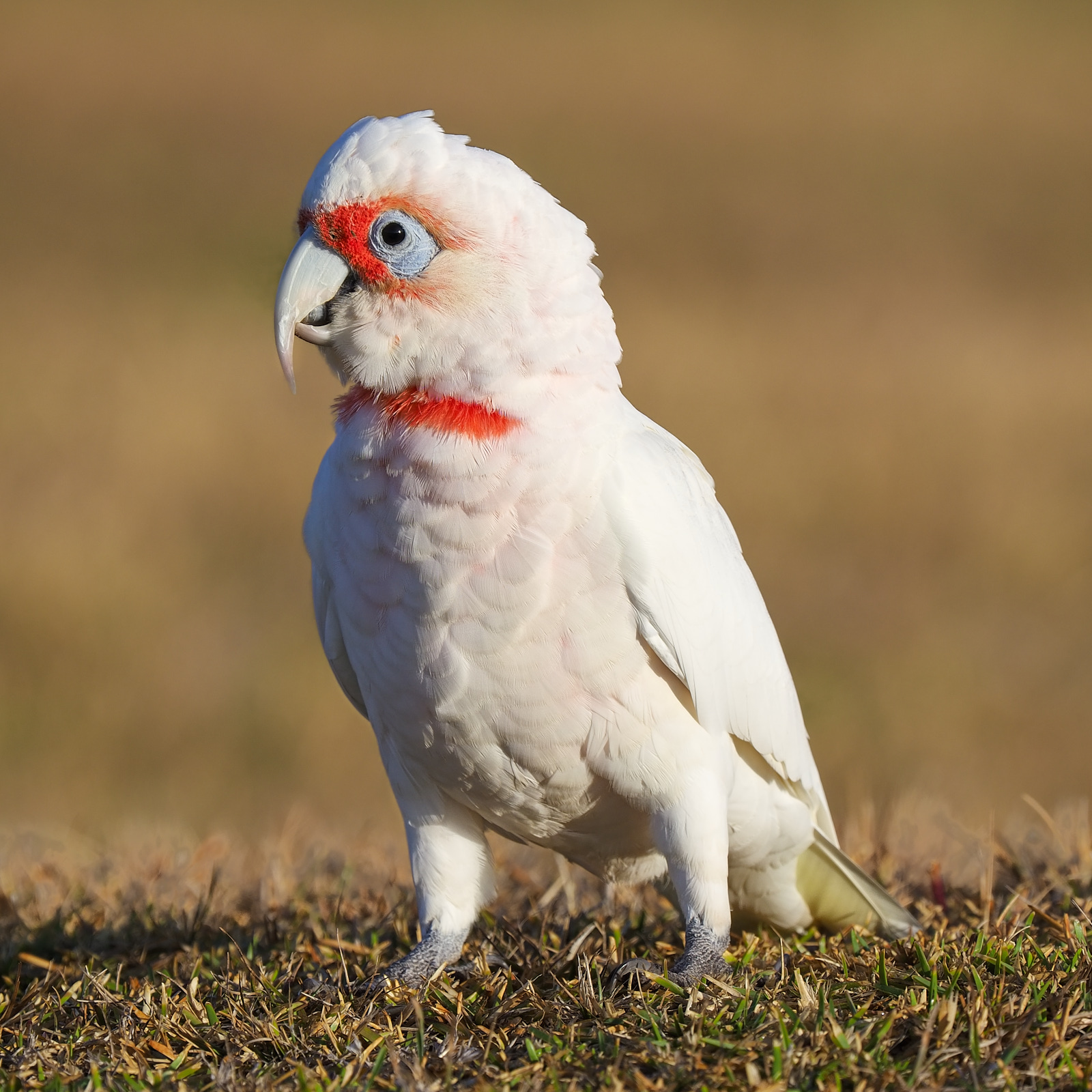
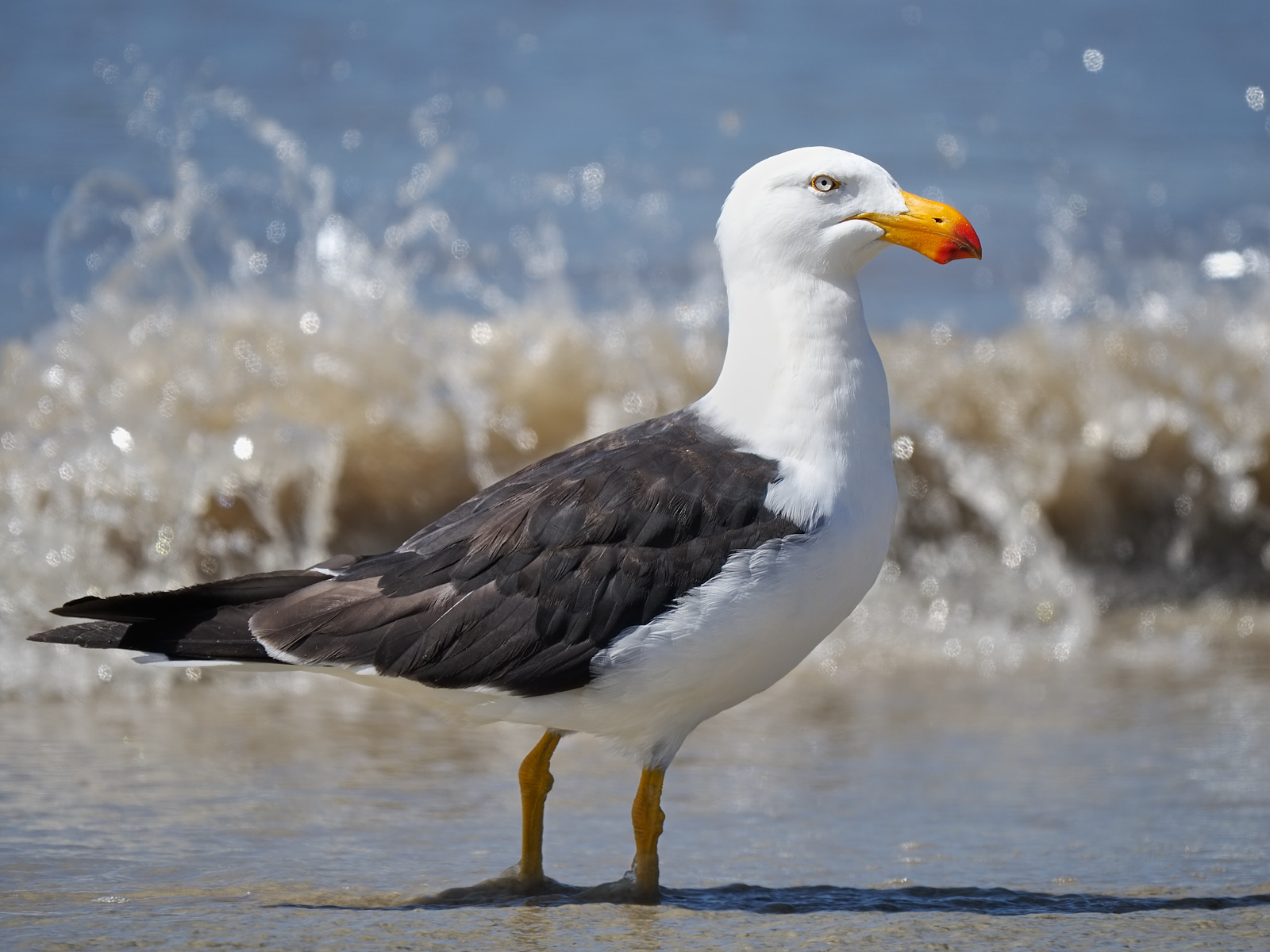
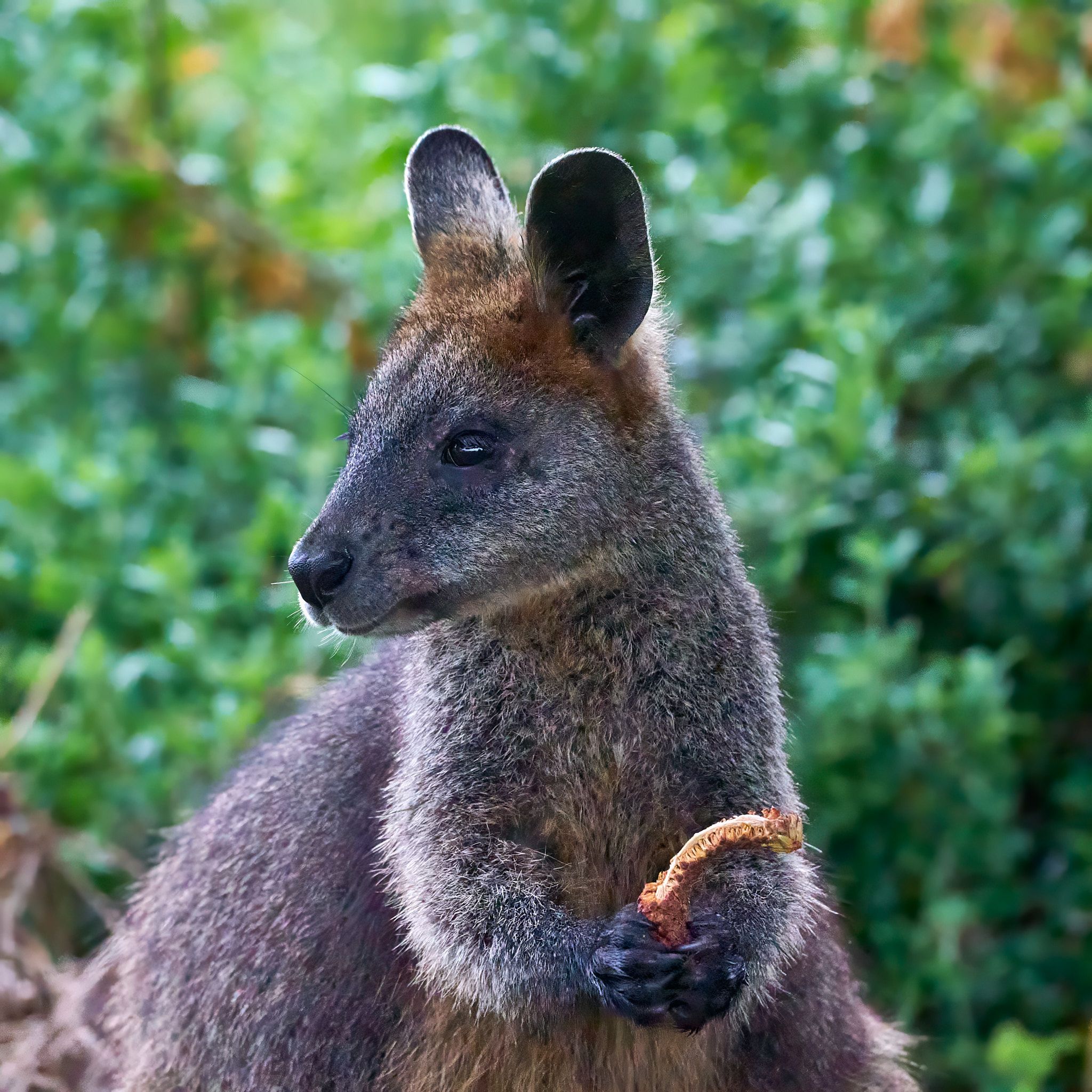
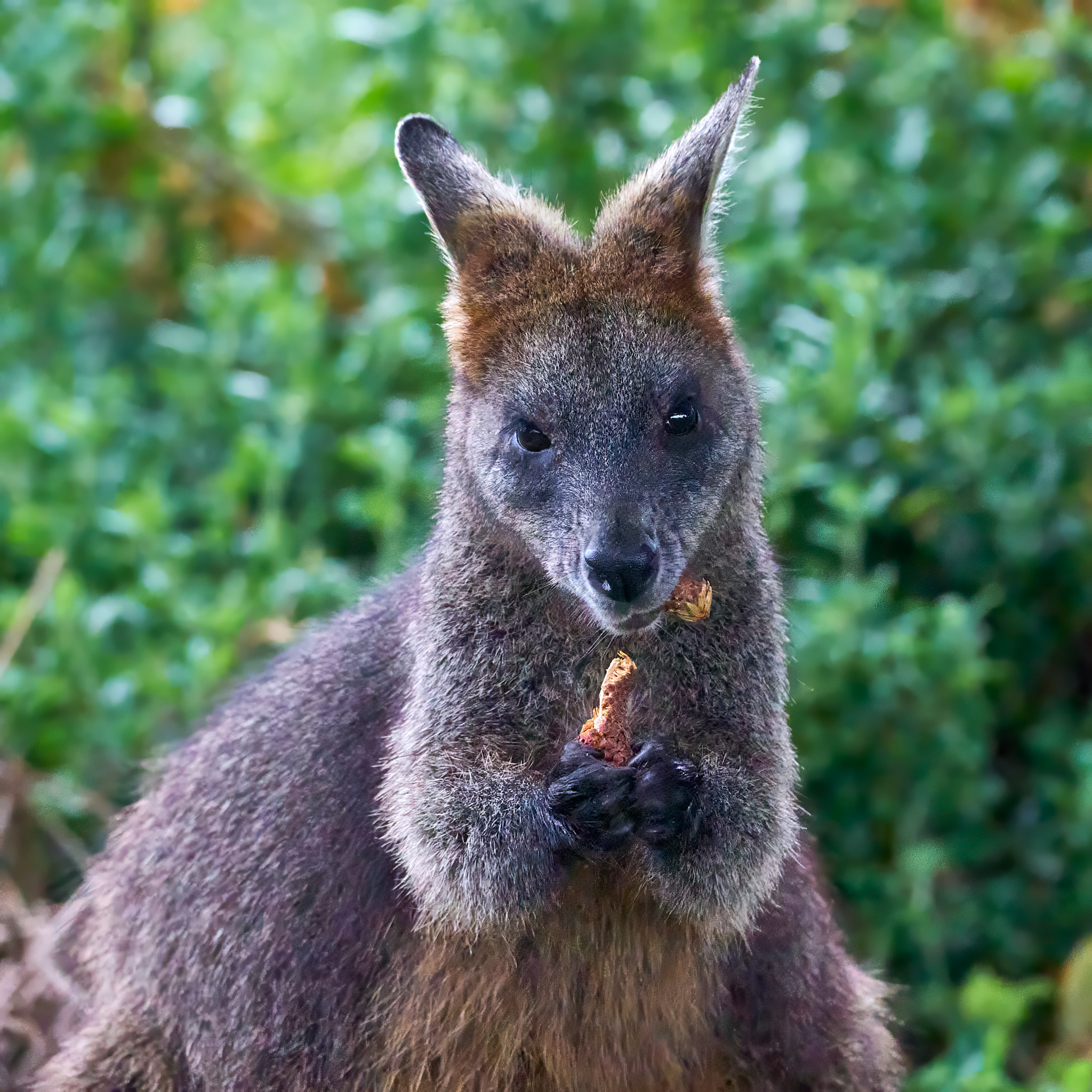
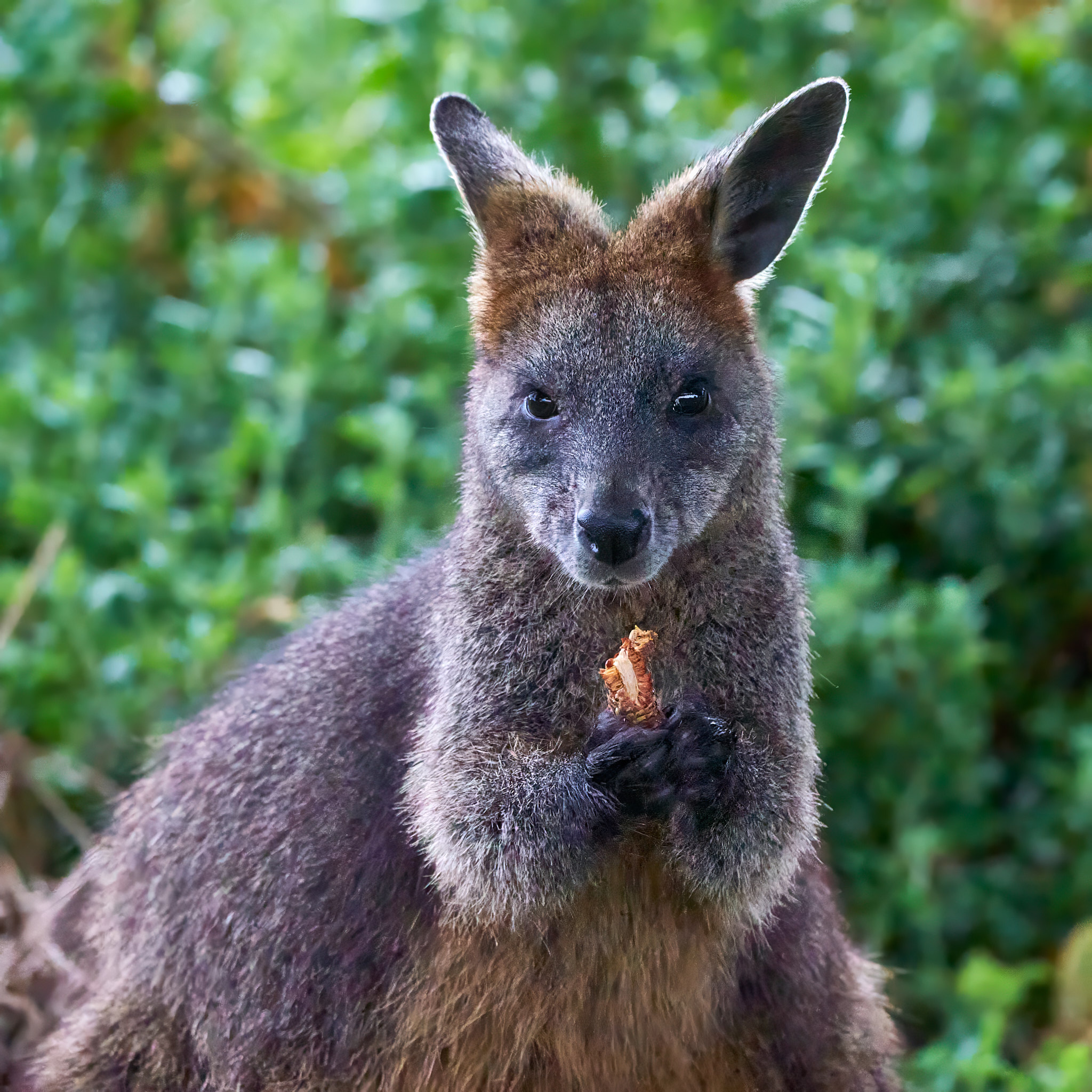
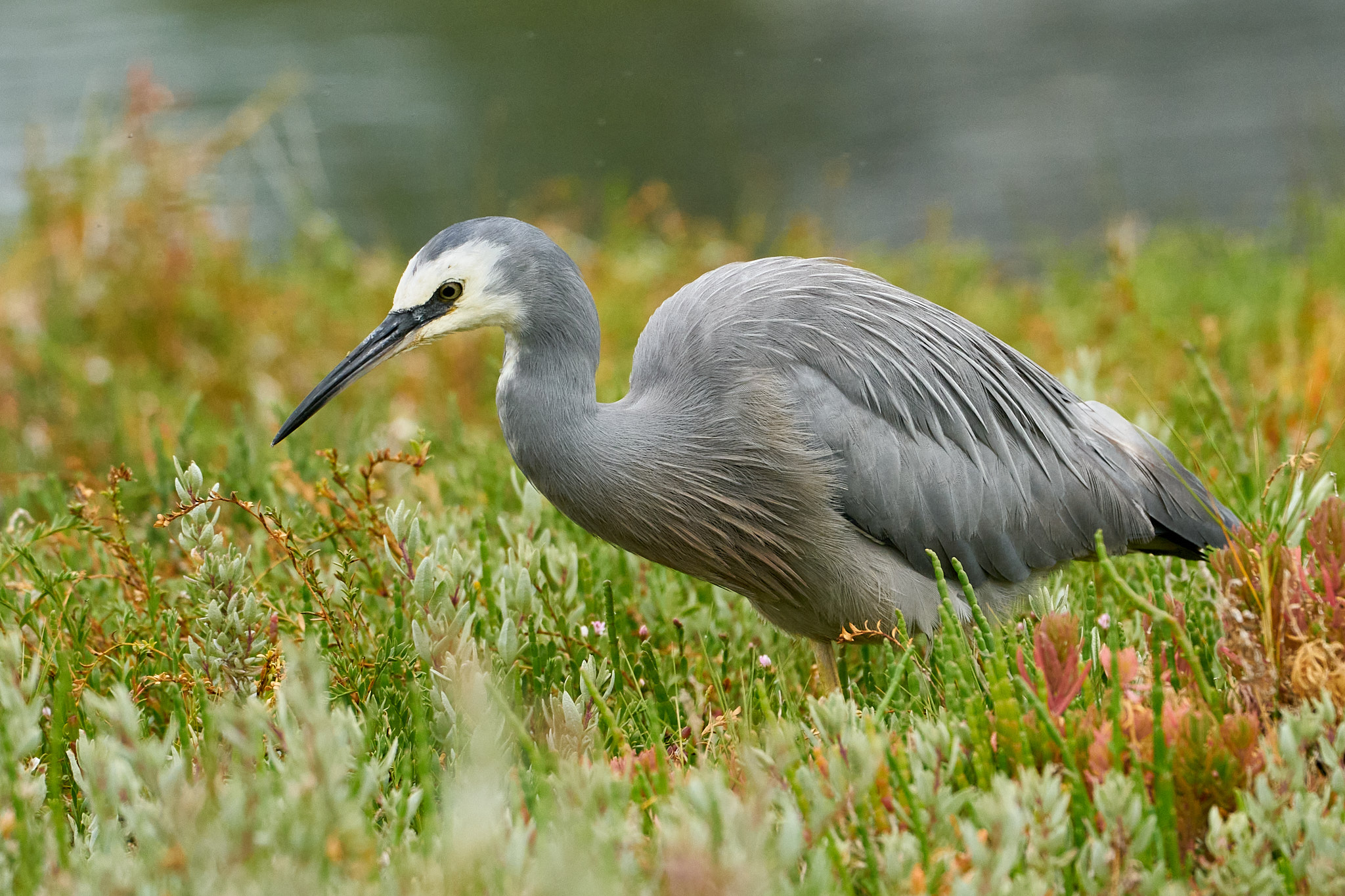
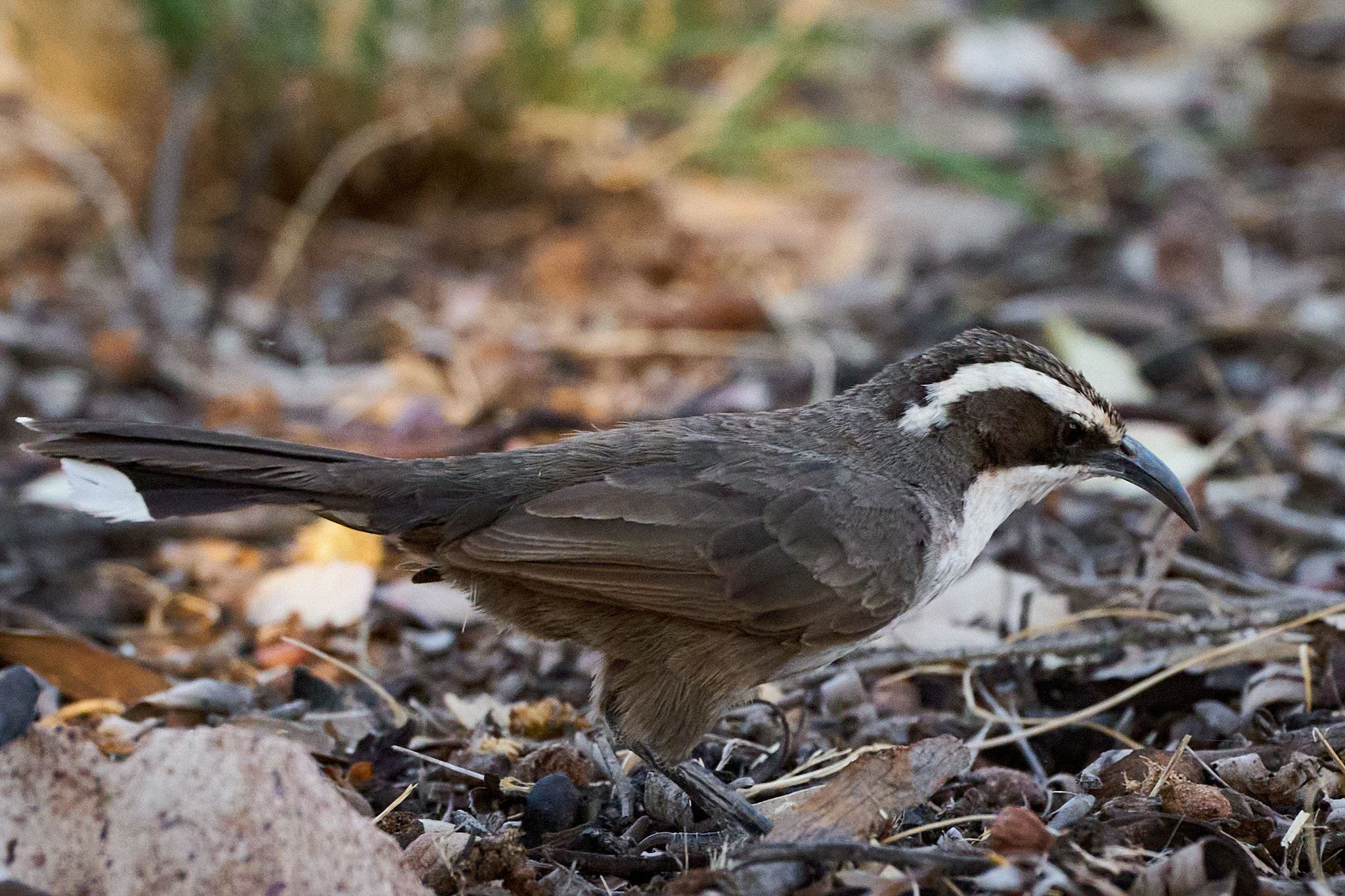
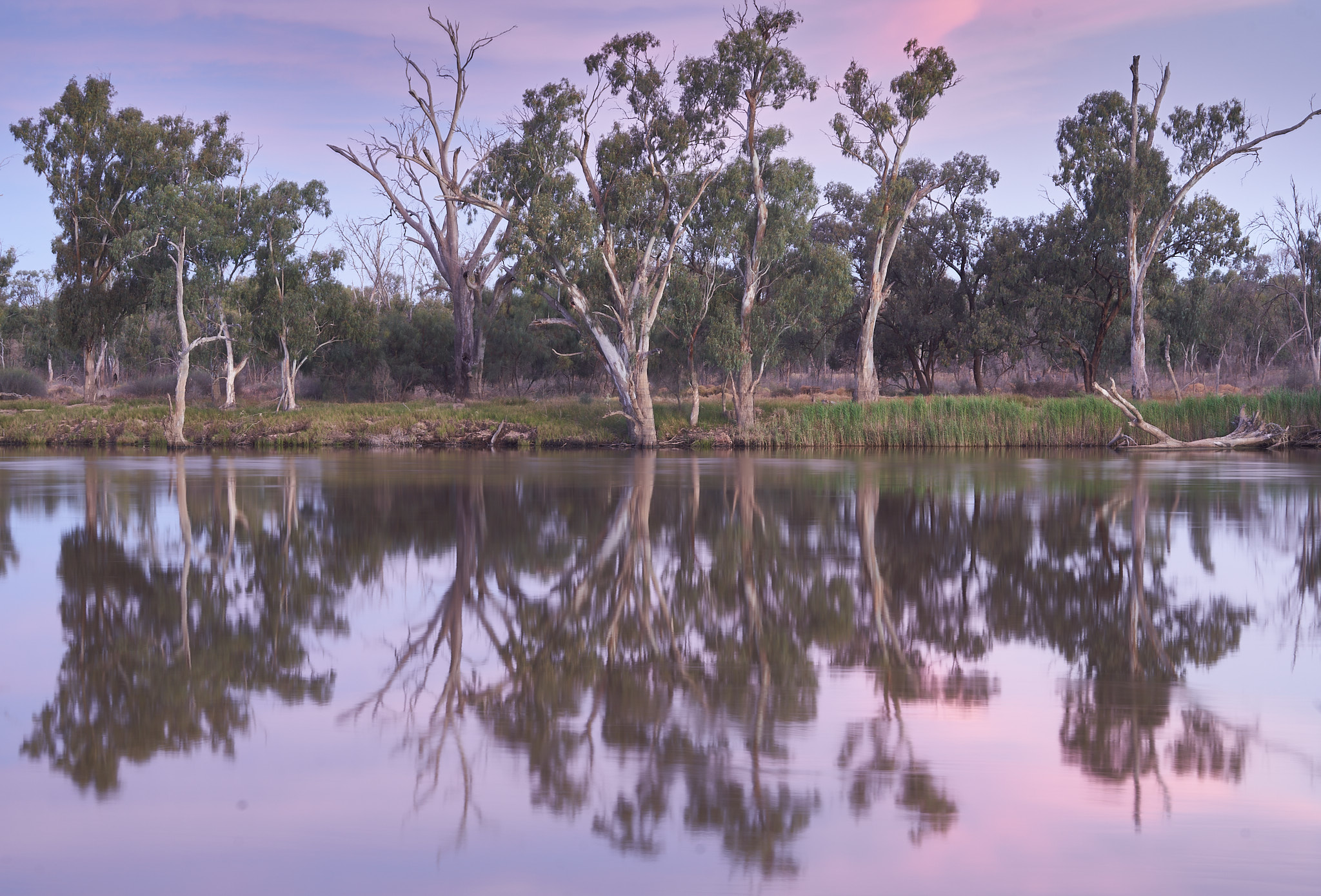
the Darling RiverMurray River at dawnfirst light on the Murrayat Wooroonookat WooroonookWhite-faced HeronSwamp WallabyBrown-headed HoneyeaterBuff-rumped ThornbillStriated PardaloteStriated PardaloteBrown-headed HoneyeaterLong-billed CorellaKelp GullPacific Gull
There is a Short-tailed Shearwater colony in Port Fairy and I’ve just got back from watching the Shearwater parents returning to feed their chicks. They come in just after dark, land near their burrows and then run to the waiting chicks. It is a wonderful experience to sit in the colony and have them flying in around you.
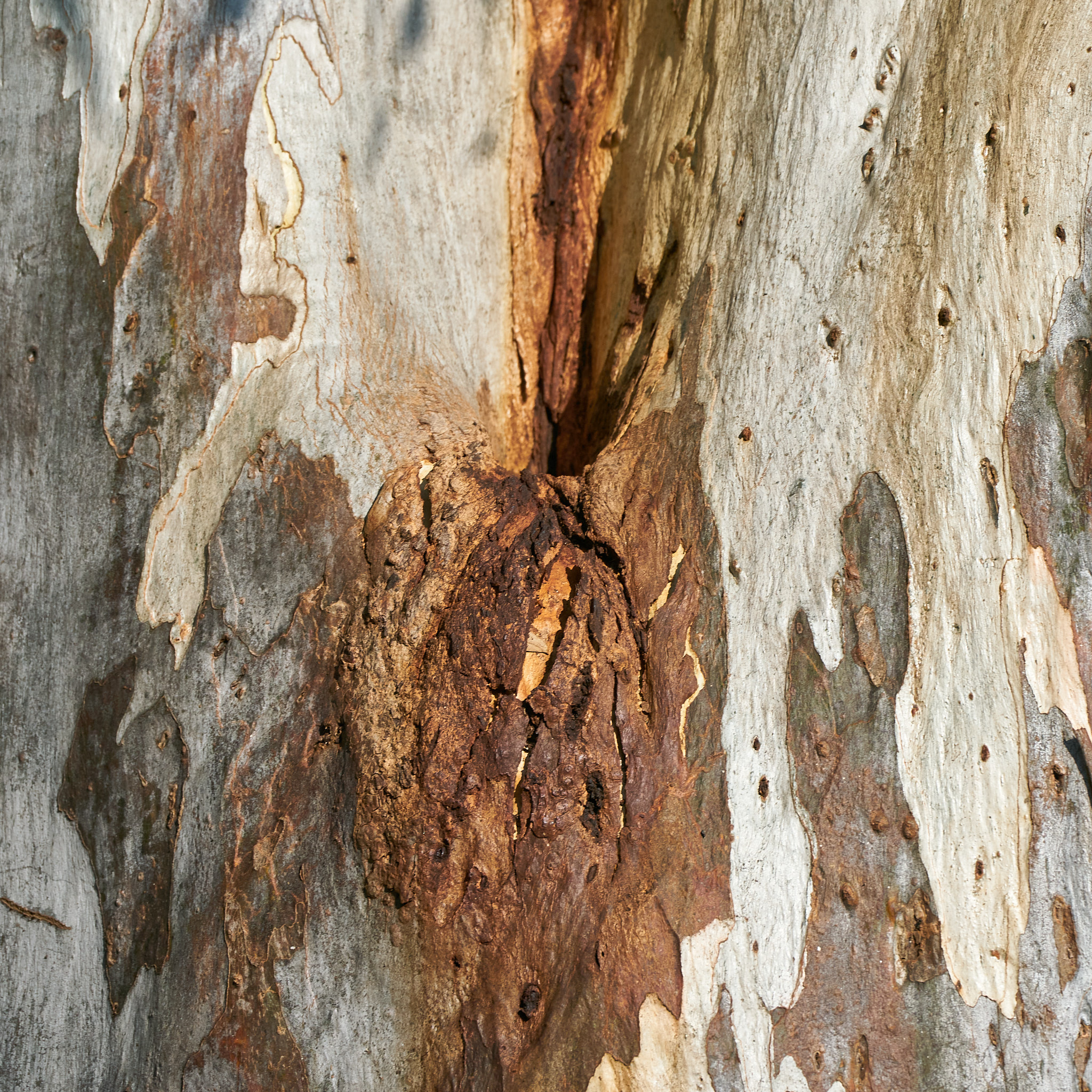
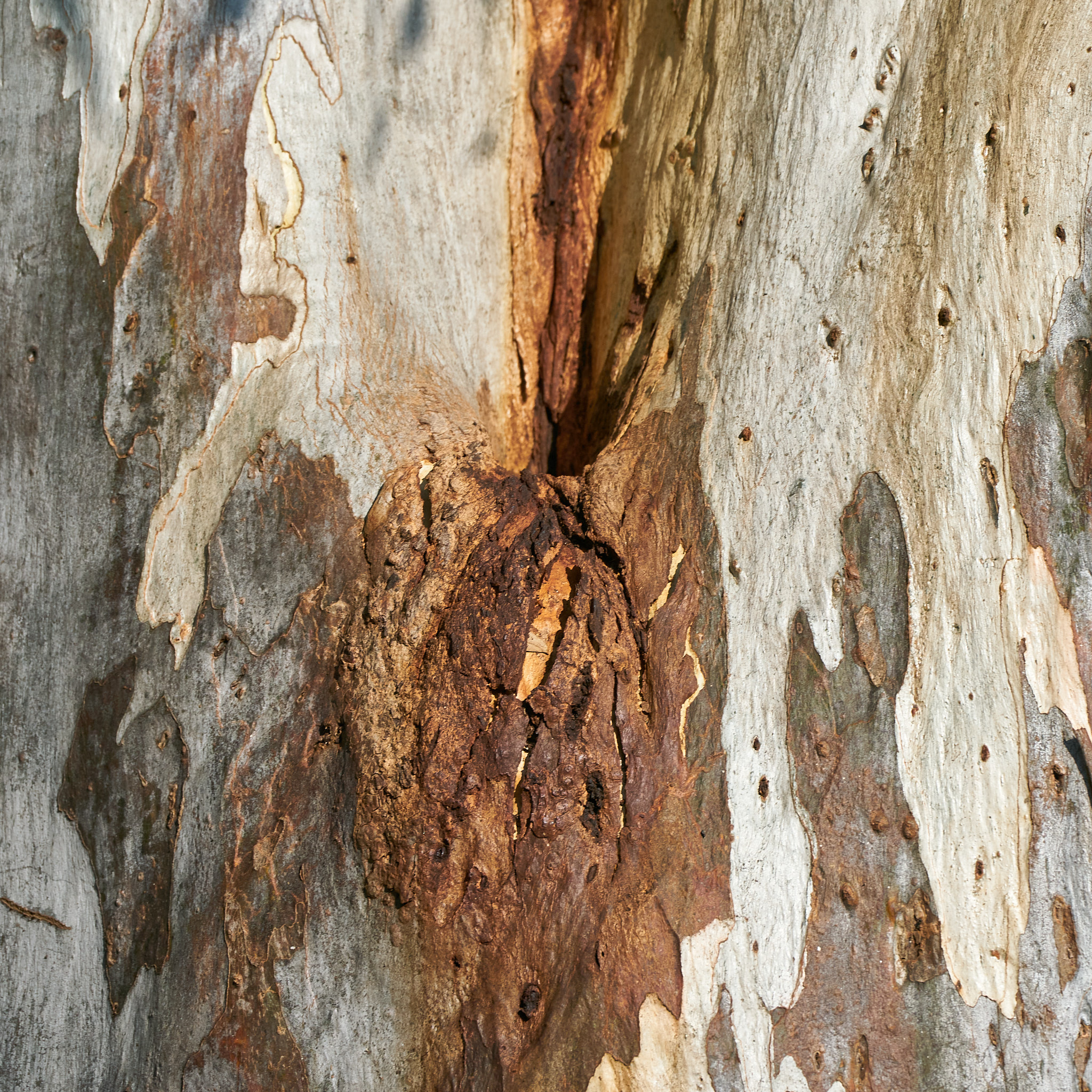
The story starts with a small and inconspicuous hole in a River Red Gum …
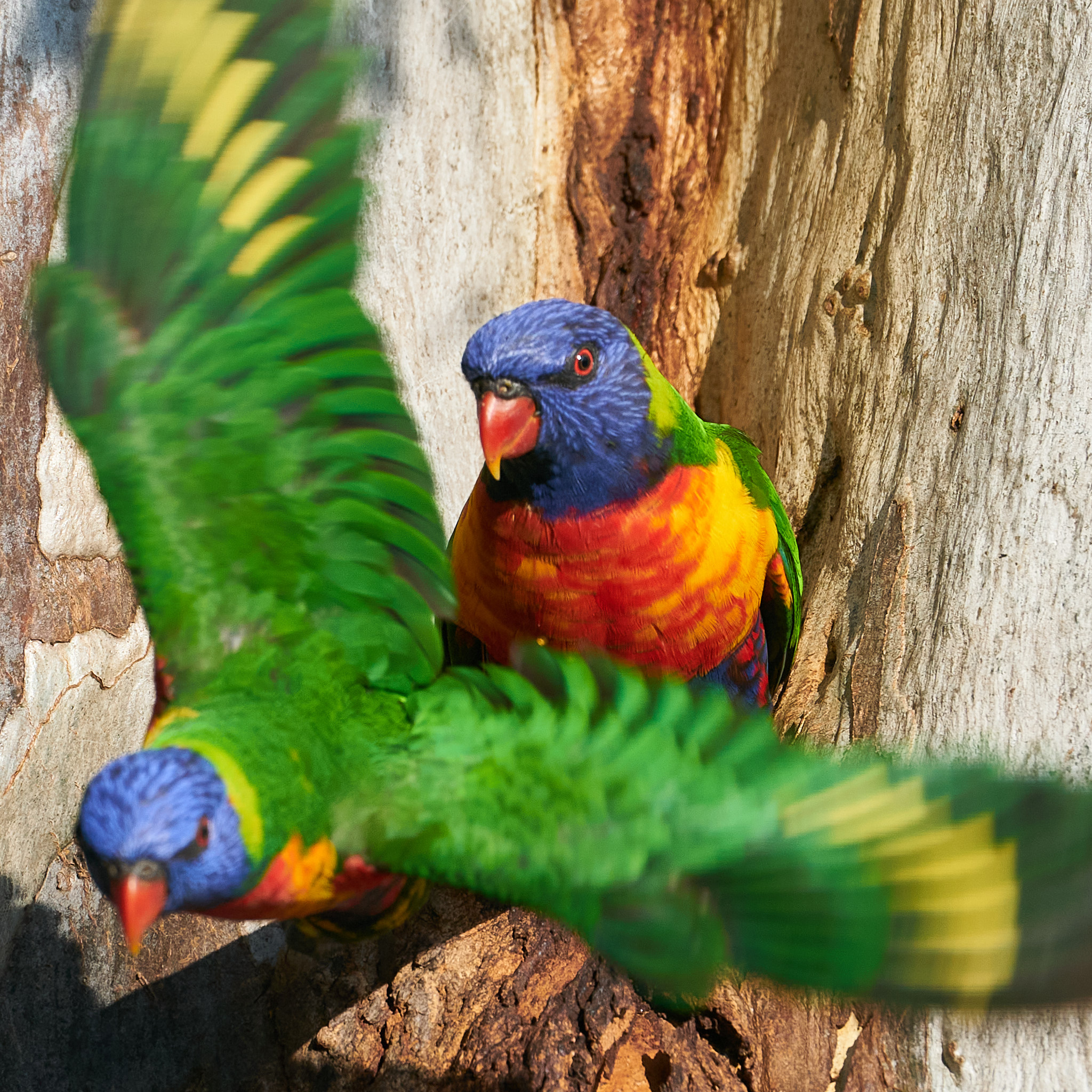
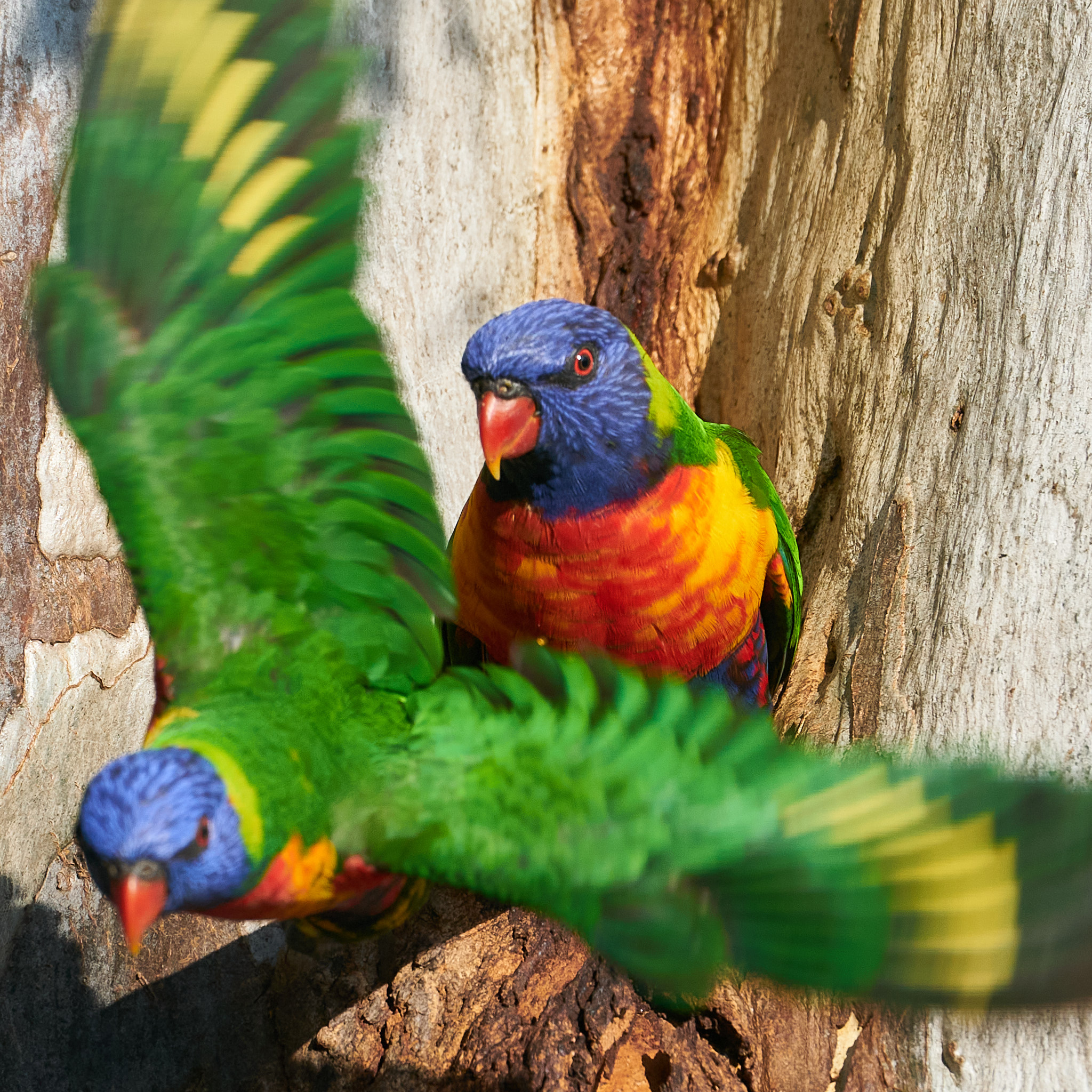
from which the colourful head of a Rainbow Lorikeet emerges …
It’s a tight squeeze …
and there’s limited space on the veranda.
Which won’t stop another one making their debut …
but one of them will have to make way.
I knew they were in there because I saw them go in. Given the size of the hole I was surprised when the first one disappeared. Even more surprised when the second one disappeared. The cavity inside must be bigger than the opening suggests. There may be a nest full of baby lorikeets in there. It was a good five minutes before the adults reemerged.
Here they are again in a gallery that you can run through at bigger scale. Enjoy.
I was born in a big city, I’ve lived most of my life in a big city but me and the big city are not a match made in heaven. I’m currently dagging about in Melbourne looking forward to the day when I can set off home to Broome.
My spell checker is objecting to dagging and some of my non-Australian readers are probably equally mystified – in this context just substitute hanging. It’s complicated. The noun dag refers to the lump of wool and feces that tends to form at the rear end of a sheep, best removed if you want to avoid fly strike. It’s also used, affectionately, believe it or not, for someone who is not smartly dressed or a little odd, your wife or husband may be a bit of a dag. If you’re working you are not dagging about, if you’re bored you probably are.
To relieve the boredom this morning I headed off bright and early to Braeside Park, one of the best places for bird watching in the eastern suburbs. I made a circuit of the main lake. The birding was good.
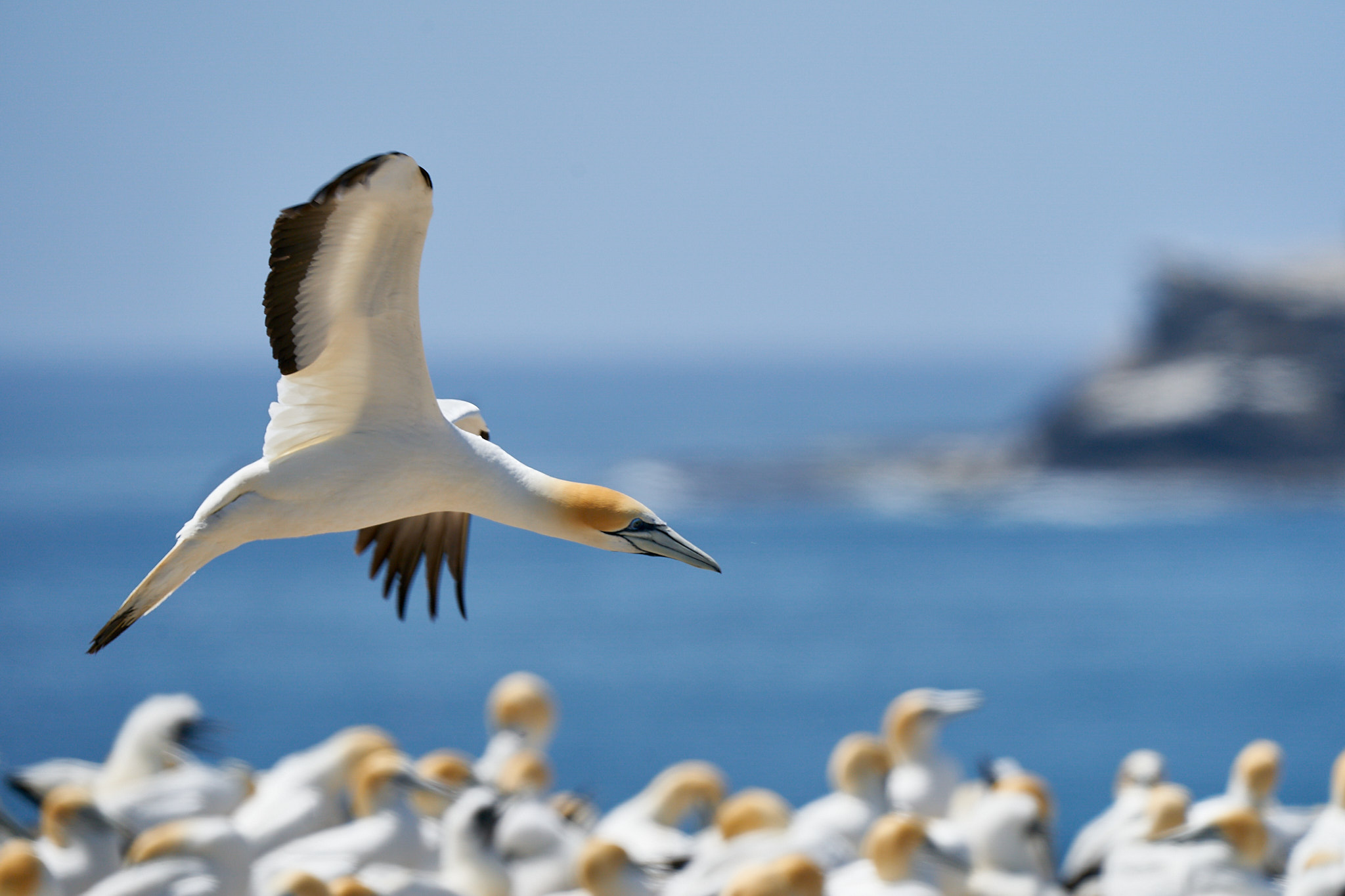
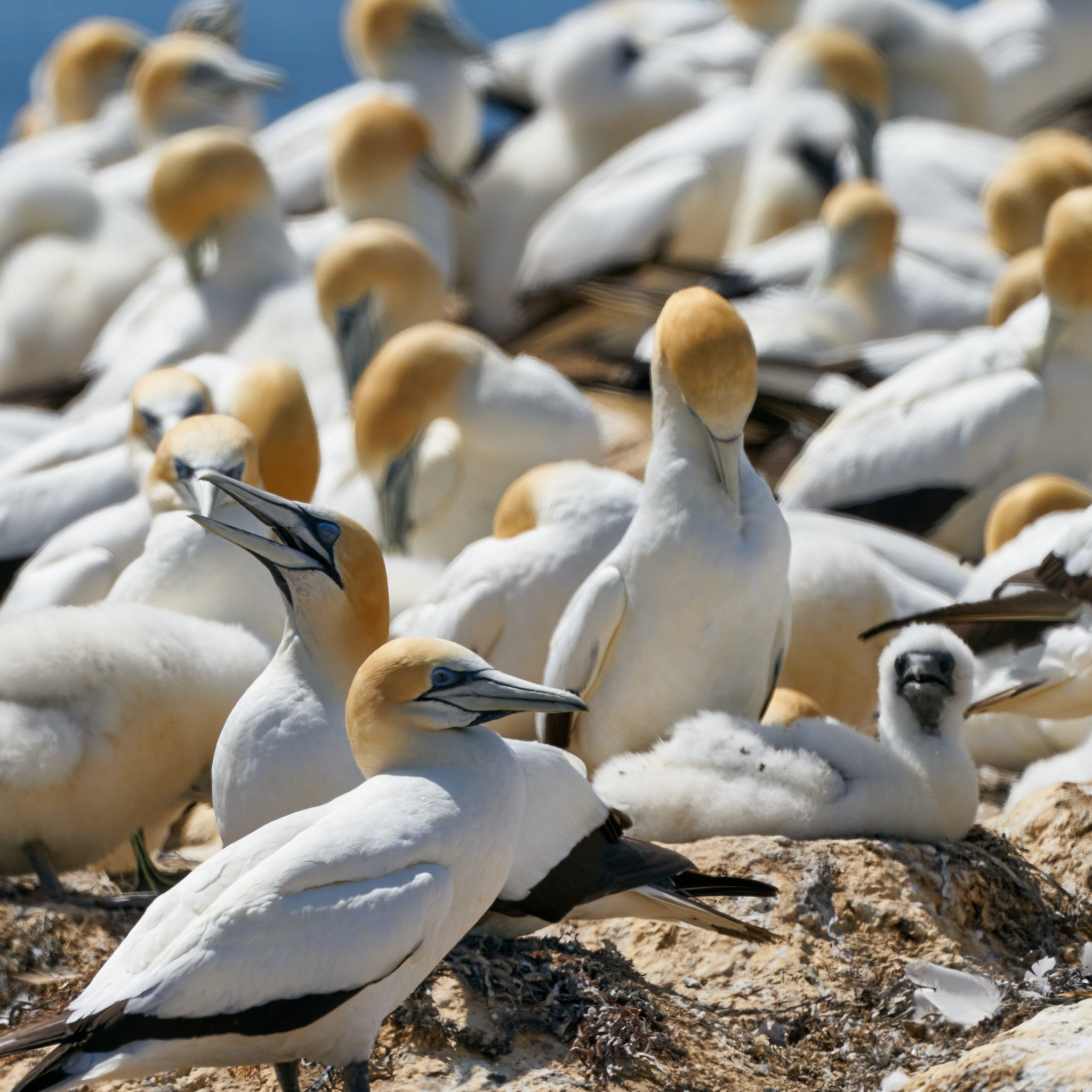
Not far from Portland, near the western end of Victoria’s coast, you can find a nesting colony of Australasian Gannets on the mainland. All the others are on offshore islands. This one began in 1996 and is the extension of a large colony on the nearby Lawrence Rocks. Seabirds tend to return to their birthplace to mate and there was simply no more room at the inn.
In its first year the colony failed to get a single chick into the adult population. Foxes, feral cats and human disturbance seemed to be the problem so the colony was fenced off. I’ve heard it said that it’s now grown to about 3000 birds and is fairly successful. I doubt the true figure is that high but here’s what it looks like from the carpark. By my count that’s 257 birds but feel free to count for yourself.
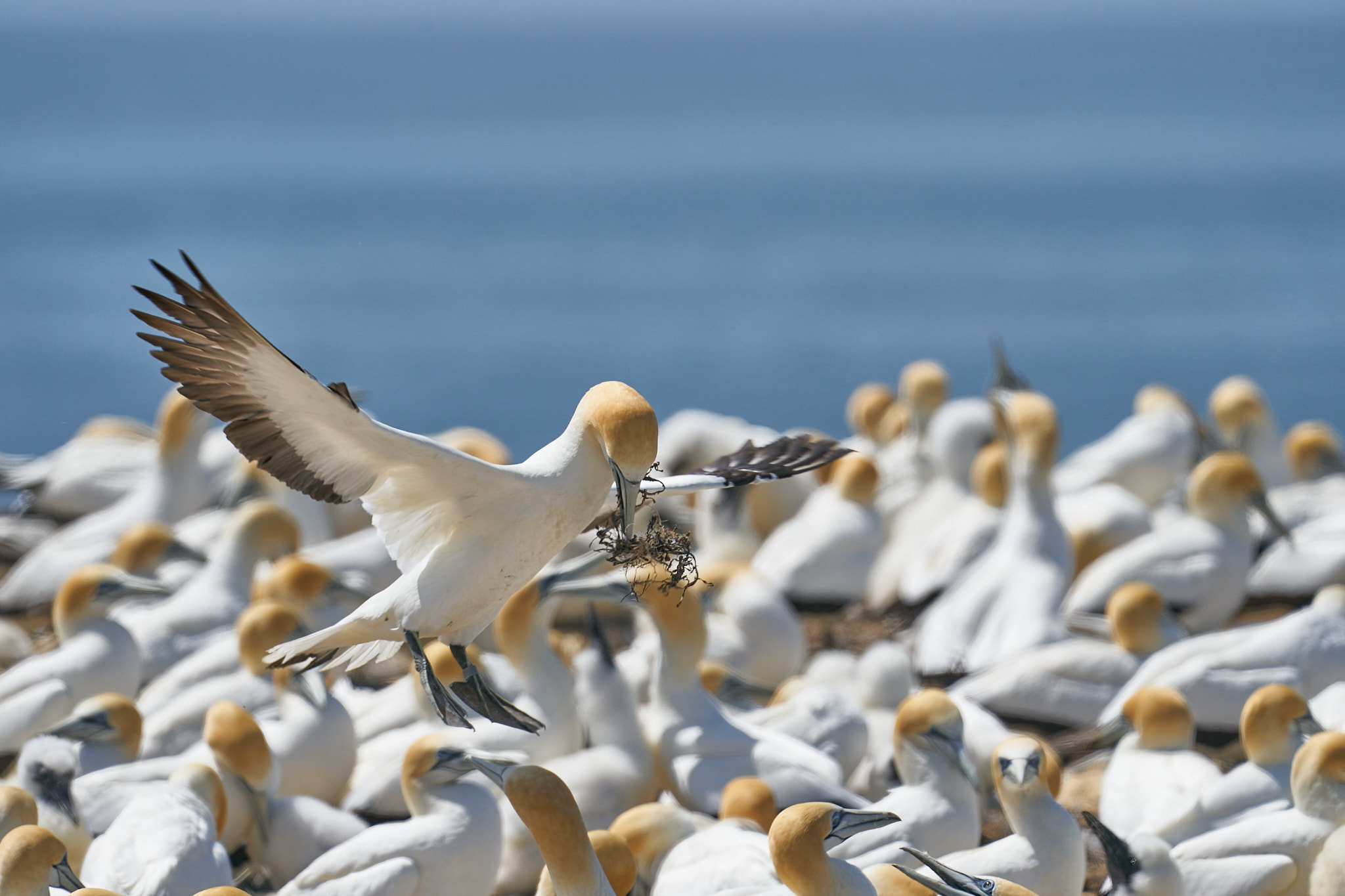
An adult drops Into that crowded space with a beak full of seaweed. Building material for the new nest.
I suspect the cement is simply guano. All going well a big fluffy chick will come into being.
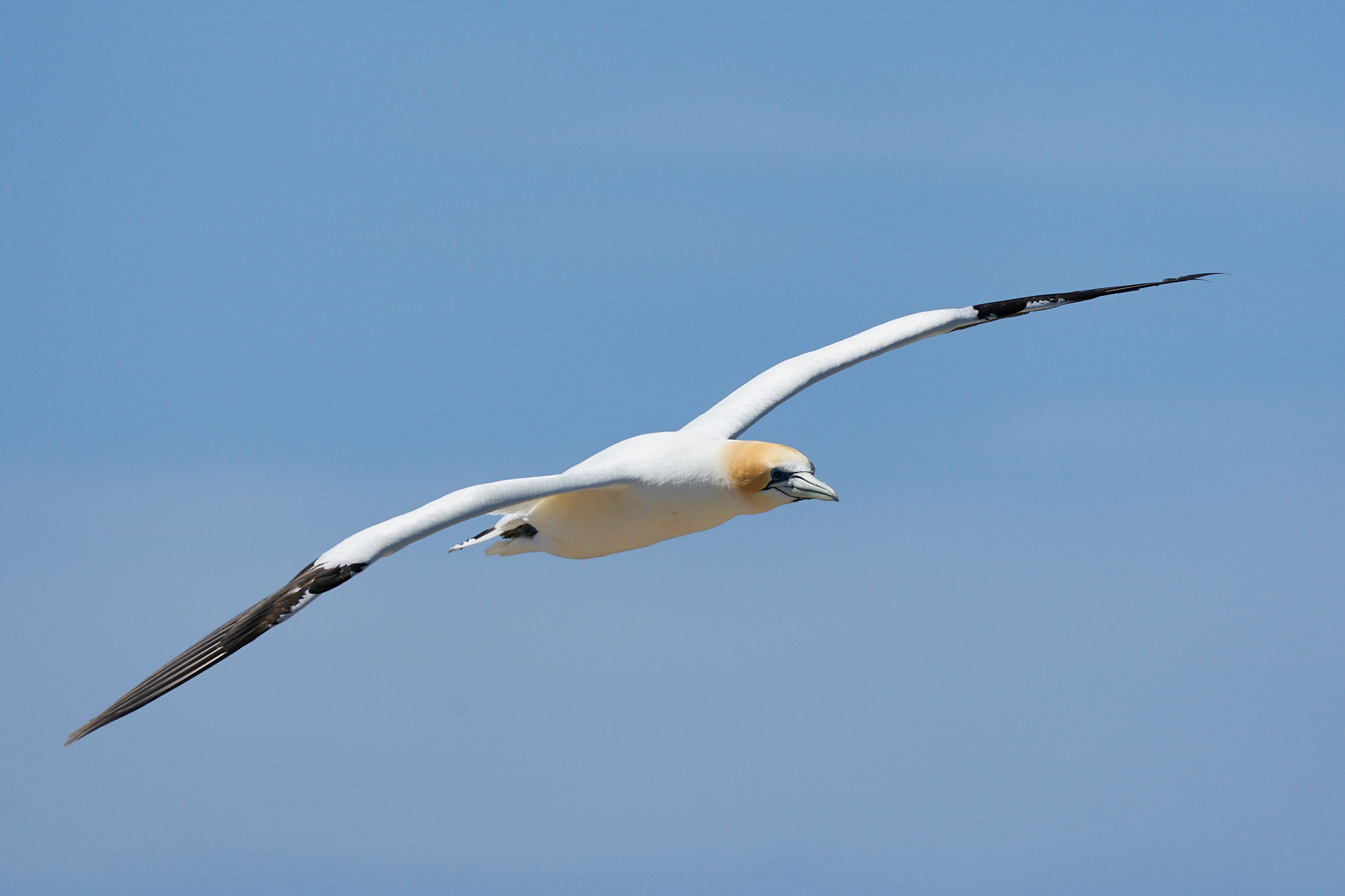
The parents will range up to 50km from the nest to bring back food for the youngster. They are spectacular plunge divers. It’s great entertainment when a squadron of gannets gets onto a school of fish.
Many years ago I made myself a kayak. Dangerous things kayaks. Combine them with swiftly flowing water and a fallen tree and it’s very easy to drown yourself. I came close.
That experience fits in the scope of Murphy’s Law but there is another inescapable law regarding canoes. If you want a fast canoe it will be long. It will not be manouverable. If you want a manouverable canoe it will be short. It will not be fast. You must choose your canoe to suit your intended purpose. The law of canoes has general application.
To make a photograph you need a lightproof box with a hole in the front and a surface at the back that reacts to light. You point the box at the subject, open the hole for a while, store the reaction and transform it into an image. Simple.
There are, however, some technical challenges. Too much light and your image will be white, too little and it will be dark. Getting the correct exposure depends on three things. Each of those things has to obey the law of canoes. A is for Aperture, the size of the hole. S is for Shutter Speed, the length of time that the hole is open and ISO is for the Sensitivity of the reactive surface to light. Balancing these three things will lead to a satisfactory image. Under most circumstances the modern camera can do that for you. It will trip up when the subject is dark and against a bright background, or white against a dark background or at night when light is at a premium. And on that brief and very expensive trip to Antarctica.
The bigger the aperture the more light gets in. Excellent. What’s the trade off? Depth of field. F/2 is a large aperture giving shallow depth of field, half your landscape will be fuzzy. F/16 is a tiny aperture your landscape will be in focus from somewhere near the front all the way to the back.
The longer the shutter is open the more light gets in. The trade off? For a crisp image the camera and the subject must stay still.
ISO represents the sensitivity of the sensor. The higher the number the greater the reaction to the light. The higher the number the greater the noise in the resultant image.
You’d like a sharp image, in focus from front to back and with no noise in the shadows? Sir, can I interest you in this very fast and extremely manouverable canoe?
If you’re taking control of the image you will have to decide what to sacrifice. To photograph birds I choose a high shutter speed. This guards against movement of the lens or the bird. To get in the light I have to open up the aperture. This sacrifices the depth of field. On a telephoto lens you soon bump into the limit regarding aperture so ISO will also have to increase …
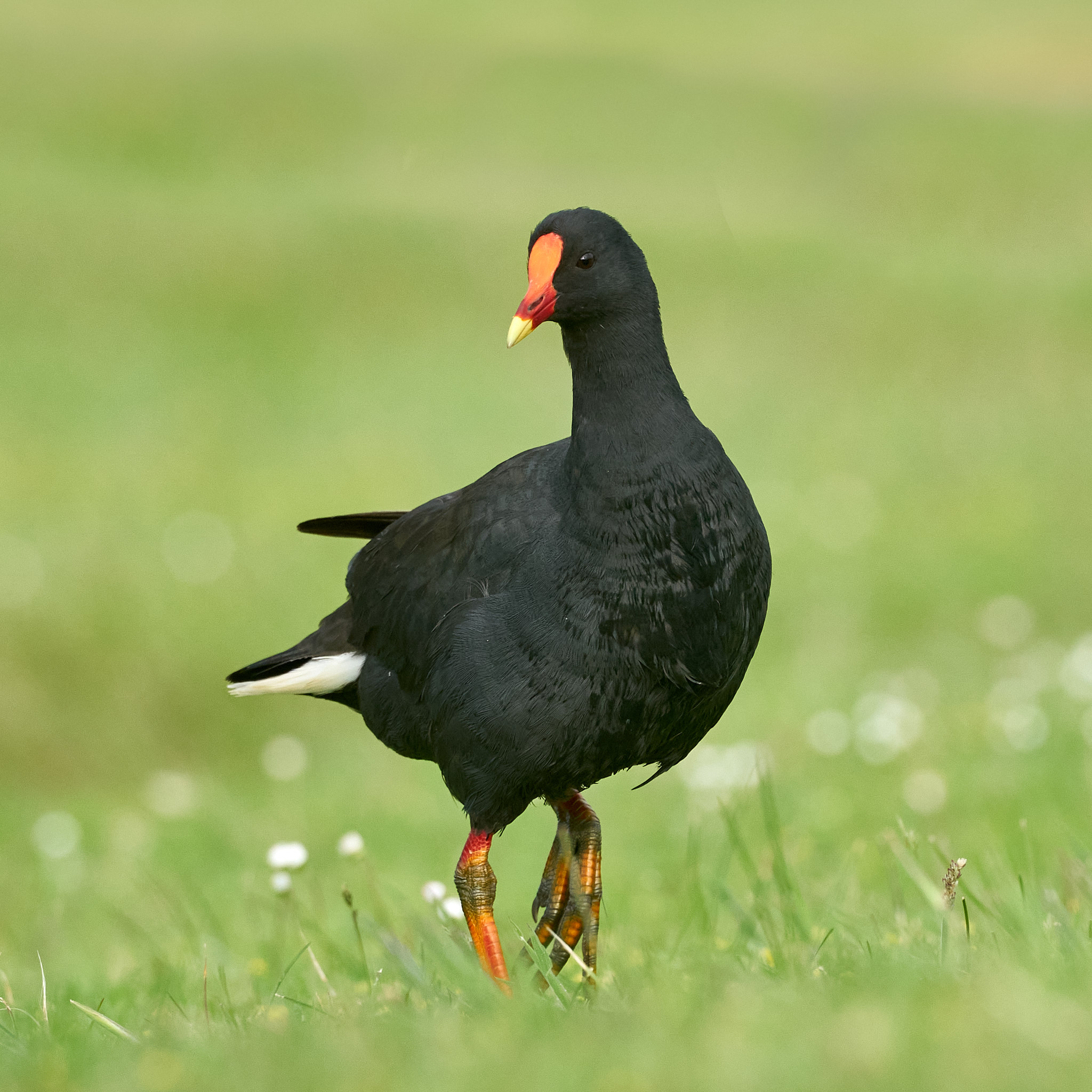
ISO 2000 1/1600s f/8 600mm
The sacrifice here is depth of field but it’s no sacrifice at all. The out of focus background helps the Dusky Moorhen to stand out. The eye and bill are sharp. A slow shutter speed would likely have resulted in a soft unusable image.
For landscapes I usually keep the ISO low, the aperture small and put the camera on a tripod. The shutter may be open for several seconds. Sharp focus from front to back and low noise are the result. On the other hand the wind in the trees may make the foliage blurry and the sheep and cows will not look too good. Long exposures are the source of dreamy seascapes and creamy waterfalls. As long as the camera and a good proportion of the picture stays still movement in the scene can be put to creative use.
ISO 100 30s f/11 70mm
The 30 second exposure flattens the sea and on a still day you can get away with the foliage. A tripod is essential.
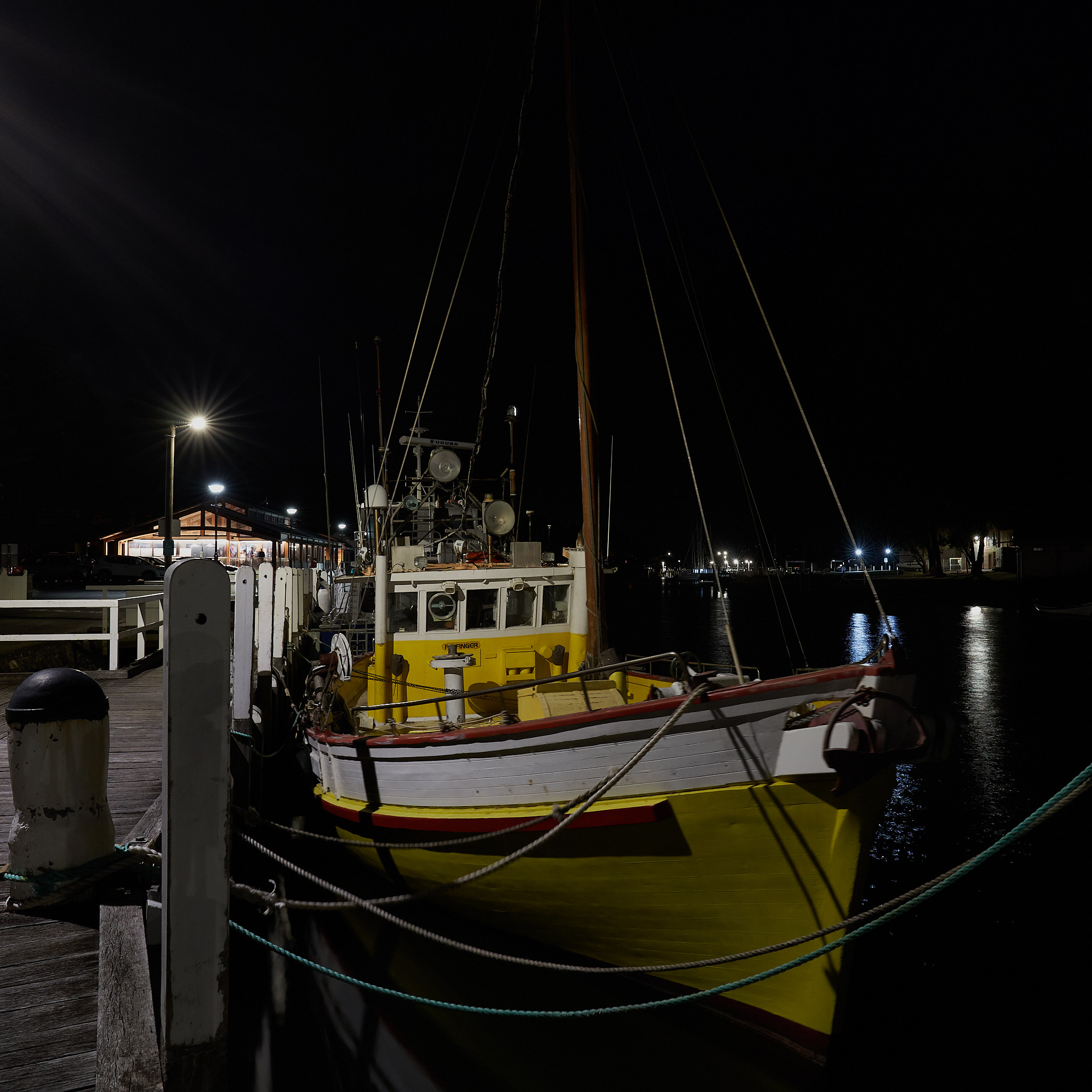
The point of all this is about getting a handle on the compromises made for this next image …
ISO 640 2s f/8 24mm
Boats are a nightmare for long exposure photography. They move. Usually just enough to ruin the image without moving enough to get an “artistic” effect. So a short shutter speed is highly desirable. We have a light source, the dockside lights. The sun flare effect from the lights only happens if the aperture is small f/16 is nice, f/11 works. I was lucky to get it at f/8. The tide wasn’t running hard, boat movement spoilt a couple of attempts but this one is sharp despite a 2 second exposure. ISO 640 doesn’t cause too much noise on the modern sensor especially if you resist the temptation to raise the shadows. I underexposed by a full stop to avoid blowing the highlights.
The subject is a beautiful wooden fishing boat called Putty’s Pride. It’s moored at Port Fairy. Keeping it in good nick must be a labour of love. Its owner has every reason to be proud.
John Griffiths built a house on the island in 1837 as a base for his whaling activities. Port Fairy is in the background with its trademark Norfolk Island Pines. It’s connected to the island by a causeway. On the right of the picture you can see the breakwaters that have improved access to the port, a byproduct of the improvements has been the silting up of shallow waters between three islands, Griffiths, Rabbit and Goat to create the enlarged Griffiths Island we have today.
The lighthouse was built in 1859. The lighthouse keepers cottage has been removed since the light was automated. However the hardier plants in the garden hold on defiantly.
The island is home to a nesting colony of Short-tailed Shearwaters. They return to breed here every spring. They clean up their burrows, usually renew their relationship with their mate of last year and work diligently to raise a single chick. In the autumn they turn their backs on the young shearwater and head for the northern hemisphere to avoid the winter. After a few weeks the chick realises that if it wants to eat it will have to fend for itself and follows.
Along the breakwaters you can often find Ruddy Turnstones and Common Sandpipers that have the same strategy but in reverse, breed in the northern hemisphere and head south for the sunshine (quite why they choose Port Fairy is a mystery).
A morning walk will often bring you close to the Swamp Wallabies that live on the island. They are fairly well habituated and will pose for pictures. This one was munching on whatever it is that passes for leaves on Norfolk Island Pines.
Victoria was our home for most of our lives. Our return is mostly about catching up with family and friends. They are well worth traveling 5000km for but are not riveting material for a blog.
After two weeks here I am beginning to cope with the cold. It’s 2:30pm and just 17° (it could be worse, it could be Fahrenheit). We’re in Port Fairy. It’s raining. Of course it’s raining, we’re in Port Fairy. It is one of my most favorite places in all the world despite its weather.
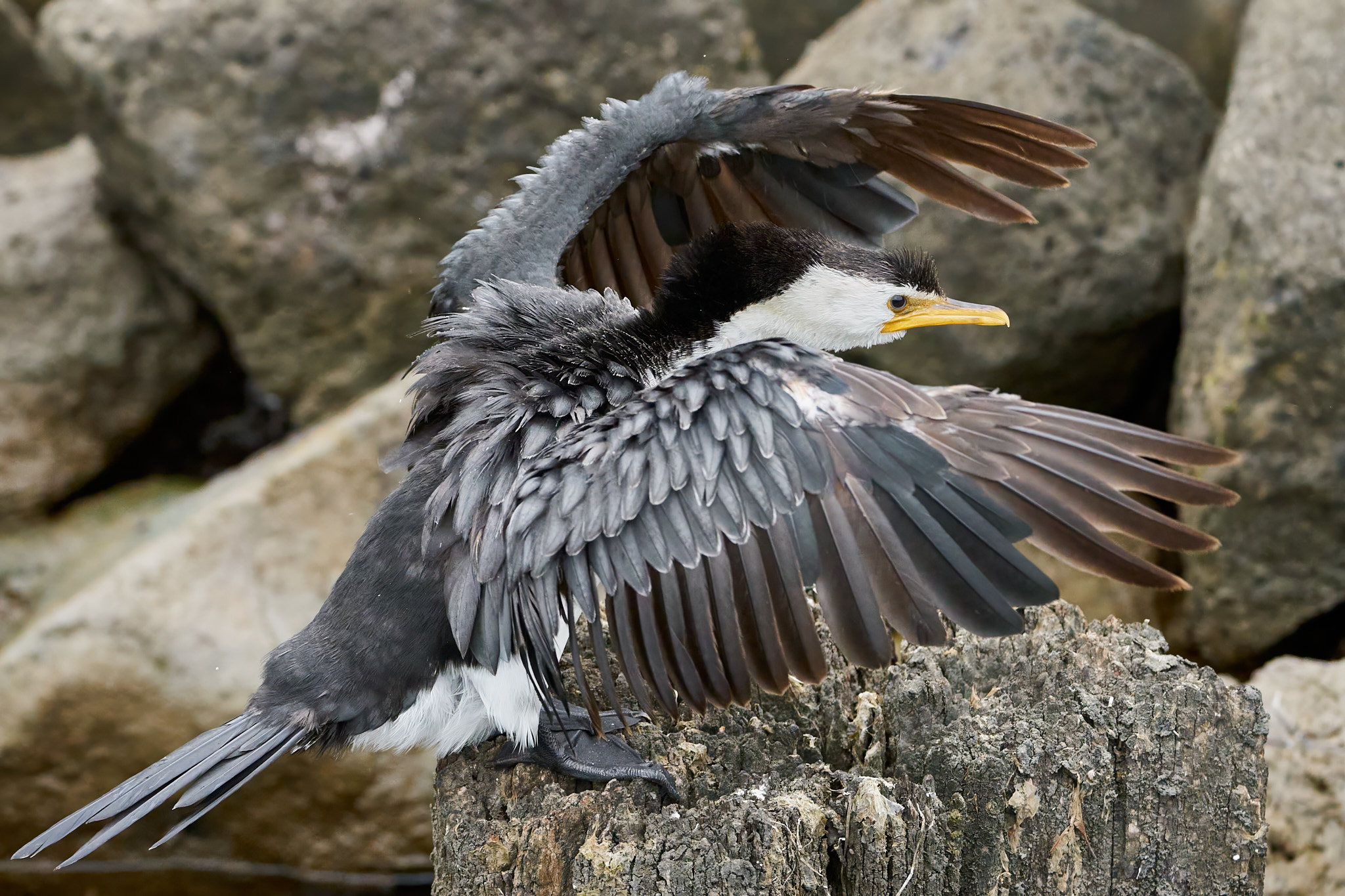
I was out before the rain. An overcast sky is actually very good for the bird photographer. Colours are vivid, there are no harsh shadows. The light is kind. And processing the files is something you can do to pass the time while it’s raining. Did I mention the rain?
Australian MagpieLittle Pied CormorantLittle Pied CormorantWhite-faced Heron
Do click on the gallery.
Friends back in Broome are finding the Build Up a bit oppressive. Between the Dry and the Wet seasons temperatures and humidity soar and begin to wear on you. The nights are uncomfortable. Tempers fray. The Build Up is a season of black eyes and broken jaws . Rain and the relief it brings will be more than welcome when it comes. Meanwhile they have cloudy skies and lightning shows.
The heatwave was a one day affair. A cold change came through overnight bringing a light shower with it. The journey took us to Wirreburra with its beautiful silo art, one of my favorites.
Then on through the South Australian Riverland, irrigated farmland under fruit trees and grapevines to the northwest corner of Victoria and our campsite near Mildura. A couple of pleasant nights on the banks of the Murray then to the Goldfields to catch up with some friends.
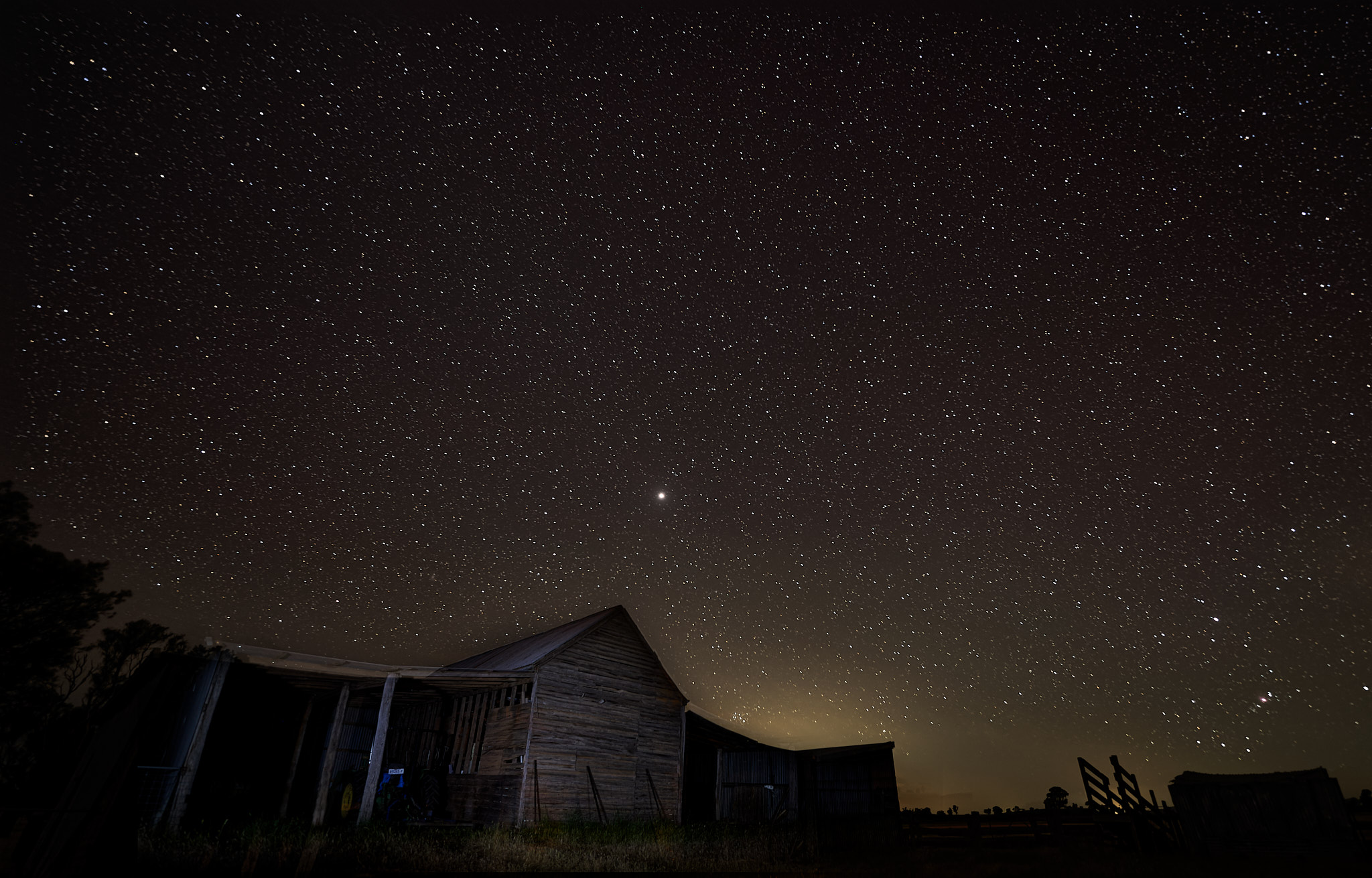
The Victorian Goldfields were as always at this time of the year, the winter crops were coming in, the grass had turned to gold and the sheep were in fine condition. And the night sky was clear.
Over the years this blog has largely been driven along by travel and travel photography. The last couple of years has seen that shrivel because of our great pandemic. The blog has shriveled along with it. There is a limit to how many times you can spin a tale out of spending your two hours outdoor exercise riding your bike in circles. For the moment though country Victoria is off the leash – Victoria is my oyster, can’t leave the state, can’t visit Melbourne. The pearl in my little oyster is Port Fairy and that’s where I am.
I have been riding my bike in circles but at least the circle is a big one. What more could a girl ask for? I like to call the route L’Étape Charles de Gaulle …
Étape Charles de Gaulle
My accommodation here is built from bluestone which is basalt from the Newer Volcanic Province. Port Fairy’s basalt was donated by Mount Rouse 60km to the north. It seems a long way for the lava to flow. Perhaps it could have got further but sizzled to a stop in the sea. There is a closer but older volcano at Tower Hill which I have written about previously <HERE>. Rather than slowly boiling over it went off with a phreatic bang.
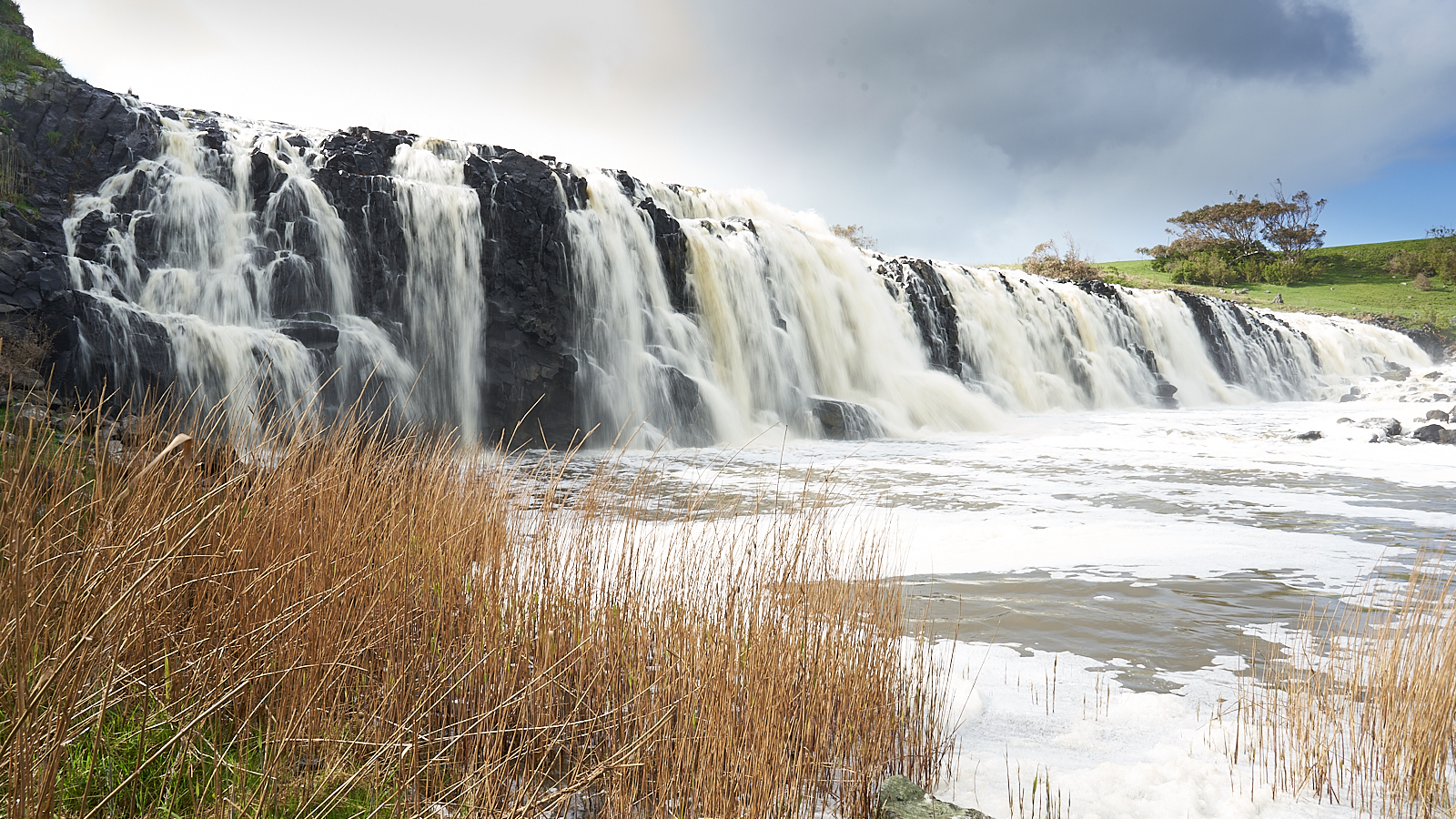
Hopkins Falls is about 40km east of Fairy and is another side effect of the newer volcanics. Said to be the widest waterfall in Australia at 90 meters in width it drops about 12 meters off a basalt shelf. It’s been a fairly wet winter. It’s quite a satisfying sight at present …
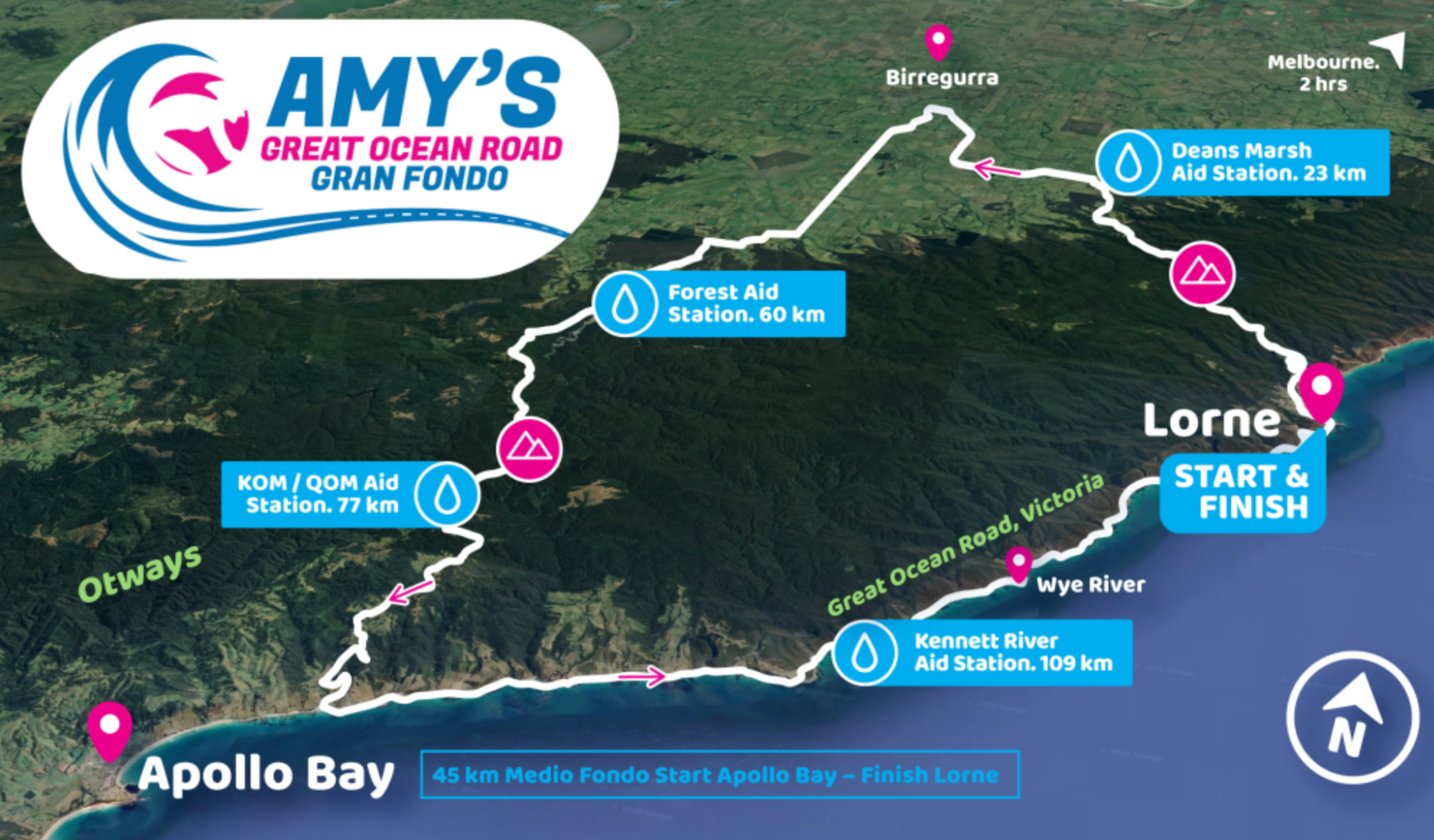
What about something very similar – Amy’s Gran Fondo on Sunday October 24 starting and finishing at Lorne. It’s a 130km course climbing over some now familiar hills and then running along the Great Ocean Road.
There’s a gravel ride the day before and a couple of shorter rides for the less obsessed. All the details can be found <HERE>