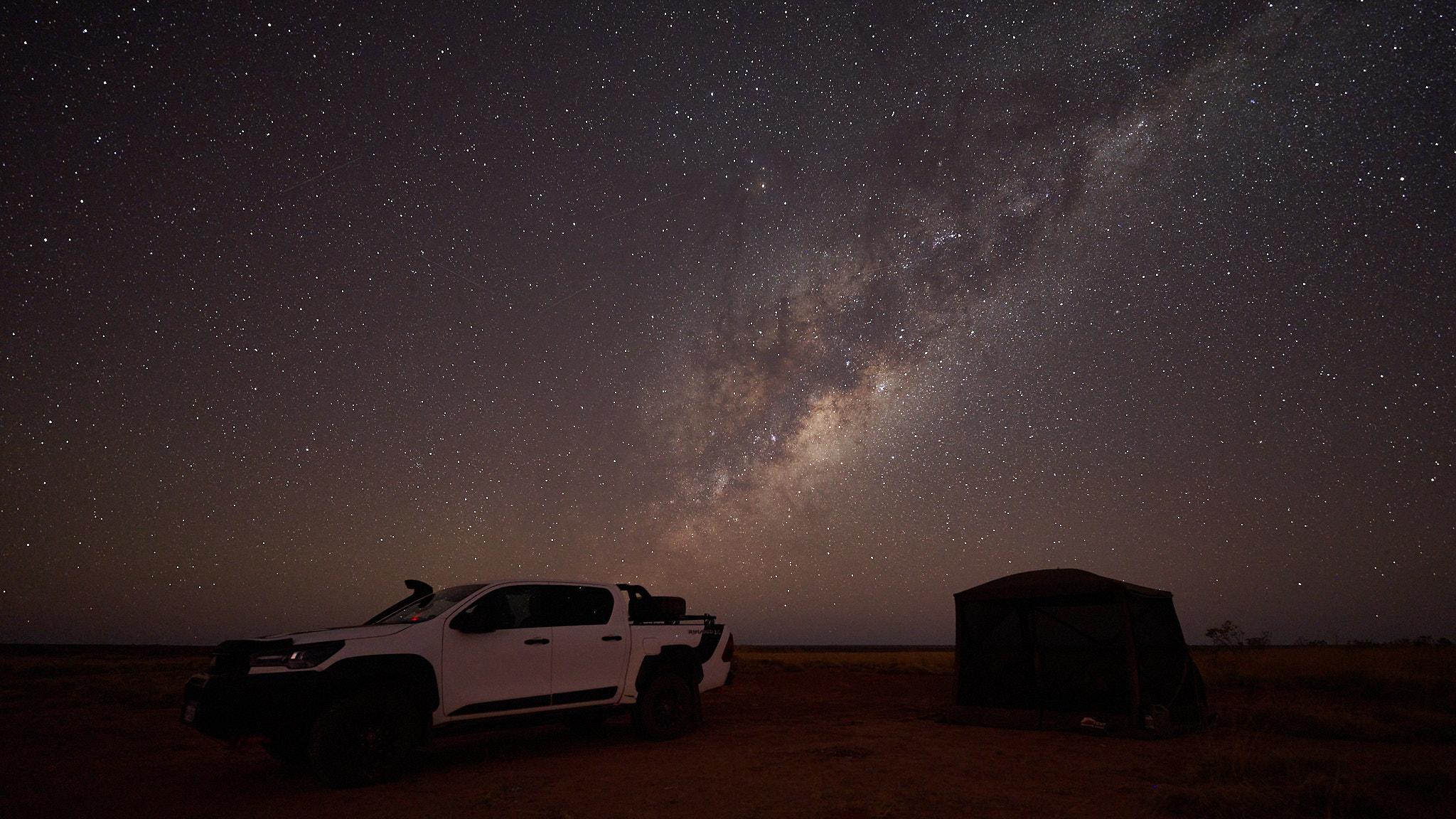
The start of our trip corresponded with the new moon. I was keen to take advantage of the dark sky. At Larrawa I found a nice spinifex foreground. The following night we stayed at the Leycester rest area and I found a few skinny young Boabs not far away. Some bonus lighting was provided by a passing car.
Leycester rest area is a 24 hour free camp with toilets, a dump point and rubbish disposal. It’s adjacent to a very beautiful spot on the Ord river and it’s only a hop skip away from the Bungle Bungles turn off. Given all of that and the time of the year it’s no surprise that it was packed. The river bank sites are the first to go.
Larrawa Station is 146km east of Fitzroy Crossing. The camp ground is 4km off the Great Northern Highway. We were there early and chose our spot. Is was pretty full by the end of the day, a basic but very pleasant site.
A walk of about one and a half kilometres brings you to Christmas Creek. Boabs and cattle are the highlights along the way. The first creek bed was dry, the second one contained a nice billabong. Both channels would be running a banker at Christmas given that our southern Christmas is a summer event and summer is the wet season up here. Come in winter.
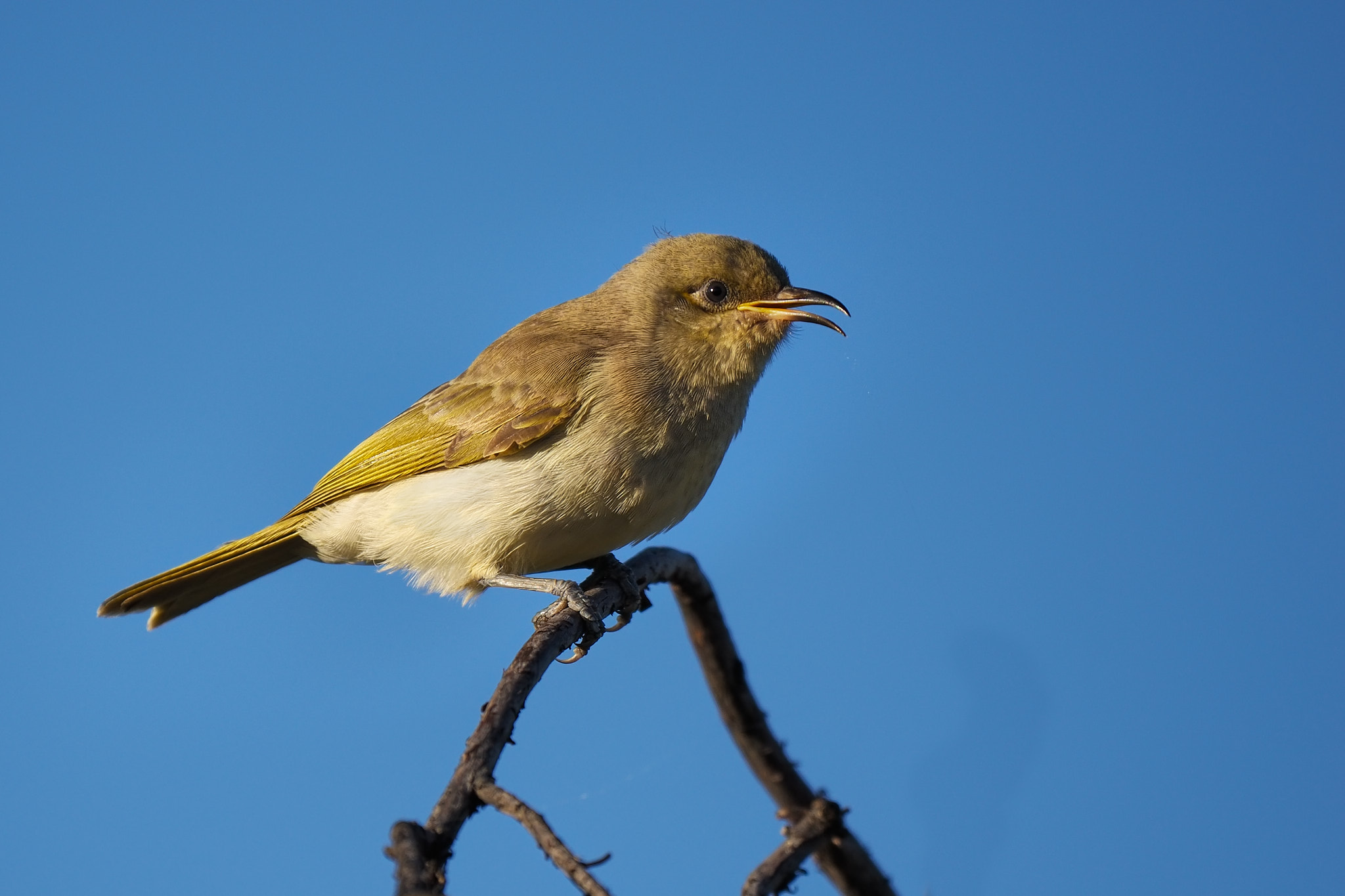
The billabong was the place to find the birds.
Brown HoneyeaterPainted FinchPainted FinchSacred Kingfisher
First night was at Fitzroy Crossing. It has a nice new bridge, speedily built after its predecessor was destroyed by flood in the big wet of 2022/23. It also has a bad reputation for hostile natives, stones thrown at vehicles and theft from vans and cars. The Fitzroy River Lodge is a very lovely caravan park on the banks of the river. We enjoyed our stay, experienced no hostility whatsoever and wouldn’t hesitate to stay there again.
Safely home in Broome after an anticlockwise circuit of the beautiful Kimberley. We caught up with good friends and our little caravan survived the notorious Gibb River Road but not entirely unscathed.
With additional running around we traveled 2400km, saw 116 species of birds and took a few thousand photographs.
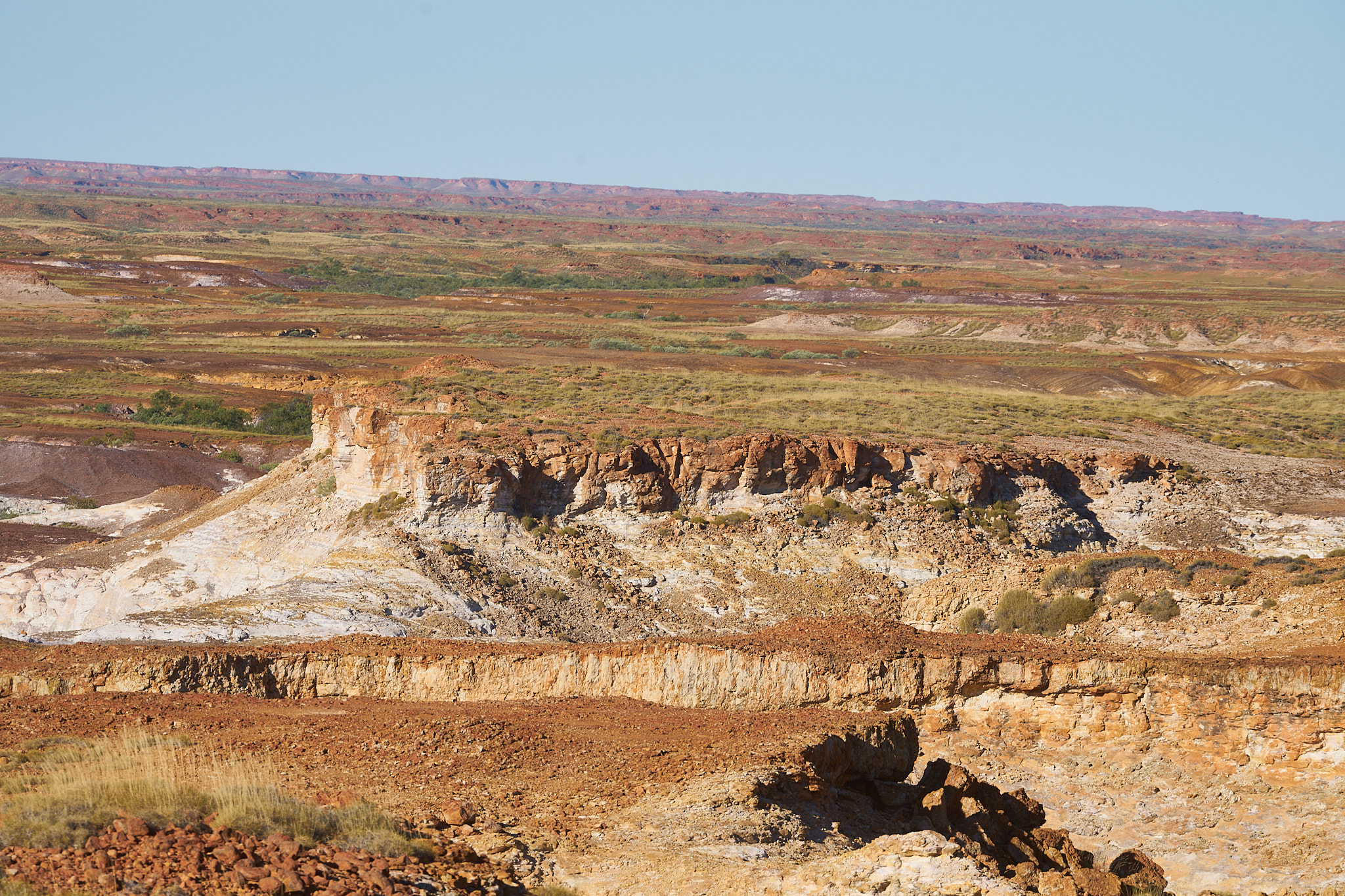
The Kimberley Craton is one of the oldest chunks of Australia. It collided (very slowly) with the Northern Australia Craton during the Paleoproterozoic era, 2.5–1.6 billion years ago. Sedimentary basin formation and time then conspired to produce the sandstone gorges and rocky ranges that make this area one of the most visually splendid in all of Oz.
And Boabs. There may be photos of Boabs (when I catch up with the editing).
When I write about interesting places and I’m diligent in getting the posts up regularly my readership grows. If you’re new to these pages welcome, to my regulars welcome back. In either case thank you for coming.
I live in Broome. Top left hand side of the map of Oz. Many non Australians think that Australia is permanently hot and sunny. Broome is exactly that. Except when it’s pouring with rain. That happens in our summer … Occasionally.
About 15,000 people live here and we get plenty of visitors in winter because the truth is that Australia’s climate in more southerly regions is not warm and sunny all year round. Our tourists have barely thawed out by the time they get off the plane. We are about 10 days past the winter solstice. Today’s forecast maximum is 31°C (88°F) tonight’s minimum 16°C (60°F). It’s not going to rain.
There is just one road from Broome to the rest of Australia. About 35 km out it branches. Turn right for Perth, straight on for Darwin. Turn right and you’re heading south, the next town is Port Hedland, similar population, 610 km! Two road houses in between, negligible population. If you go straight on i.e. north-east you won’t get to a town as large as little old Broome until you get to Darwin, 1,871 km away. In between there are a few little towns that would struggle to qualify as hamlets elsewhere.
Why so few people? Because the country up here is permanently hot and sunny. Except when it’s pouring with rain. That happens in our summer … Occasionally. It’s a desert. Annual rainfall less than 250mm. Annual evaporation would be 3 to 4 meters if there were 3 to 4 meters available!
There are apparently ten deserts in Australia although I am unsure how they decide where one ends and another starts. The local desert is the Great Sandy Desert, a testament to the imagination of our forefathers (and yes, there is a Little Sandy Desert, you’ll recognise it when you see it. It’s only half the size. Also a Stony Desert). The Great Sandy (267,250sq.km) is our second largest (to the Great Victoria at 348,750sq.km).
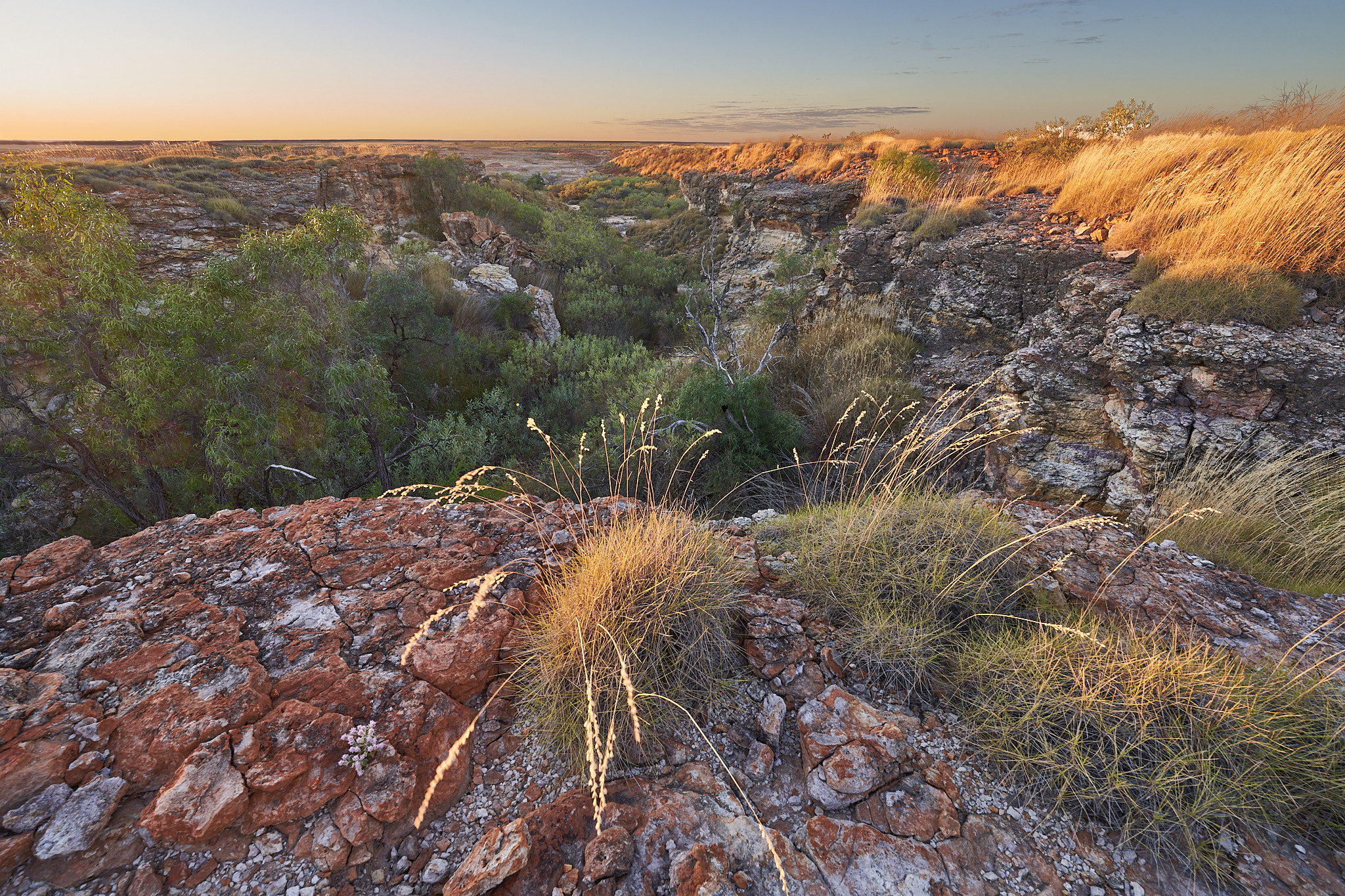
About 200 km from home via a very lonely sandy track there is a gorge that I have been meaning to visit. I went out there for a couple of nights last week, camped alone, in the spinifex, under the stars on the lip of the canyon. Very biblical, only 38 more nights to go. Can they be served cumulatively or do they have to be accrued in one go?
WallerooSpinifex Pigeon
Broome is the administrative capital of the Kimberley region (which is northeast of here before you get to Darwin). In my view it ain’t really the Kimberly until you get among the Boab trees (not just street plantings, real Boabs). Anyway, that’s where I’m going. If I get the chance to post along the way I might drop in a teaser otherwise I’ll subject you all to the photos when I get back in a couple of weeks. Ciao for now.
It doesn’t come with a guarantee of zero rain but it feels so different. The nights are cooler, the sky is clearer and the humidity is way less. The dry is upon us.
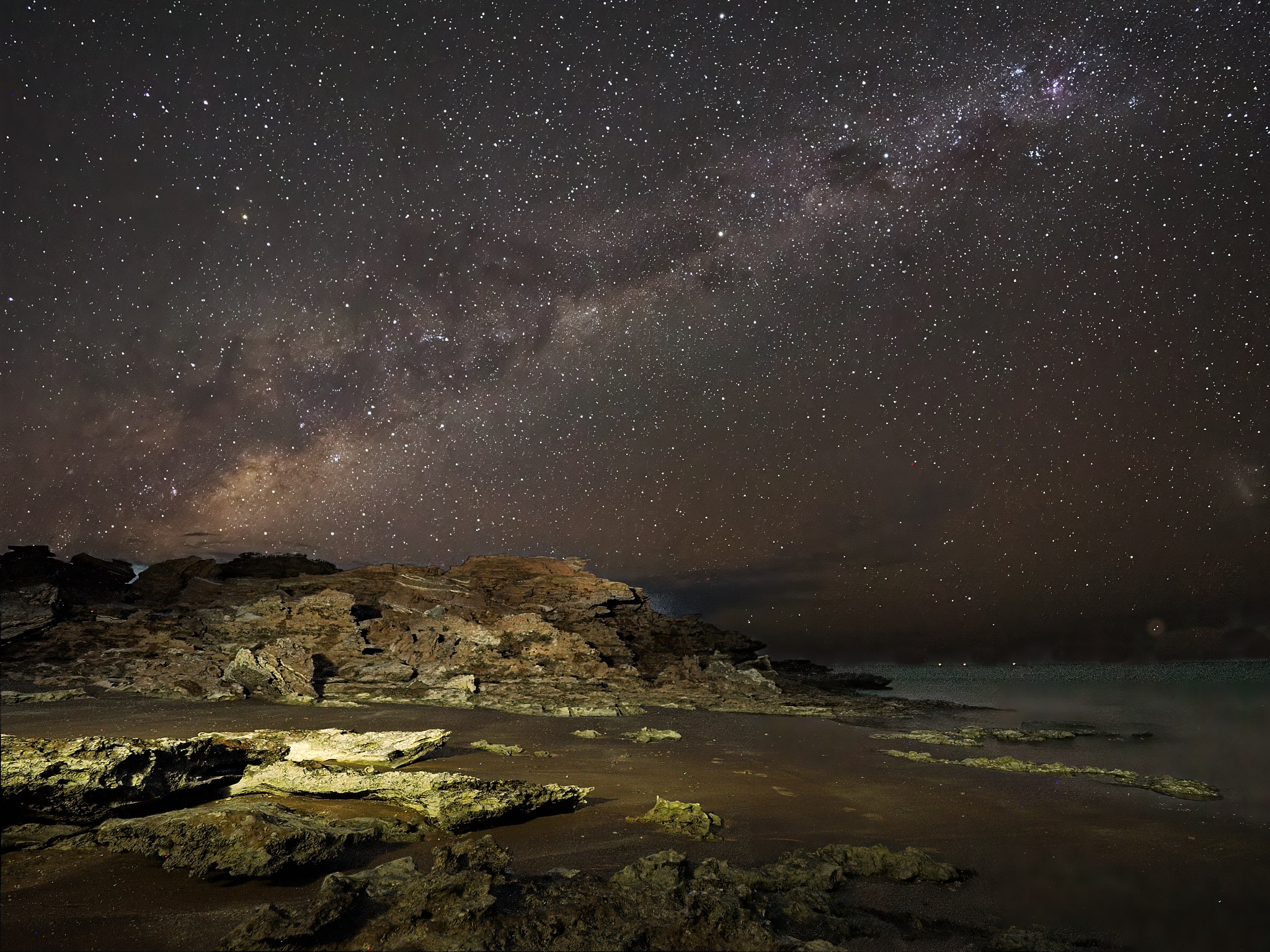
I thought I’d try out the new OM1 mark ii and the 7-14mm lens with a milky way shot. Rather than drive out into the country side I drove 10 minutes to the beach at Entrance Point and pointed the camera away from the city lights. With the camera on a tripod I used a single shot of the milky way – 15 seconds at ISO 6400 f/2.8 and combined that with a single light painted shot of the foreground at ISO 800.
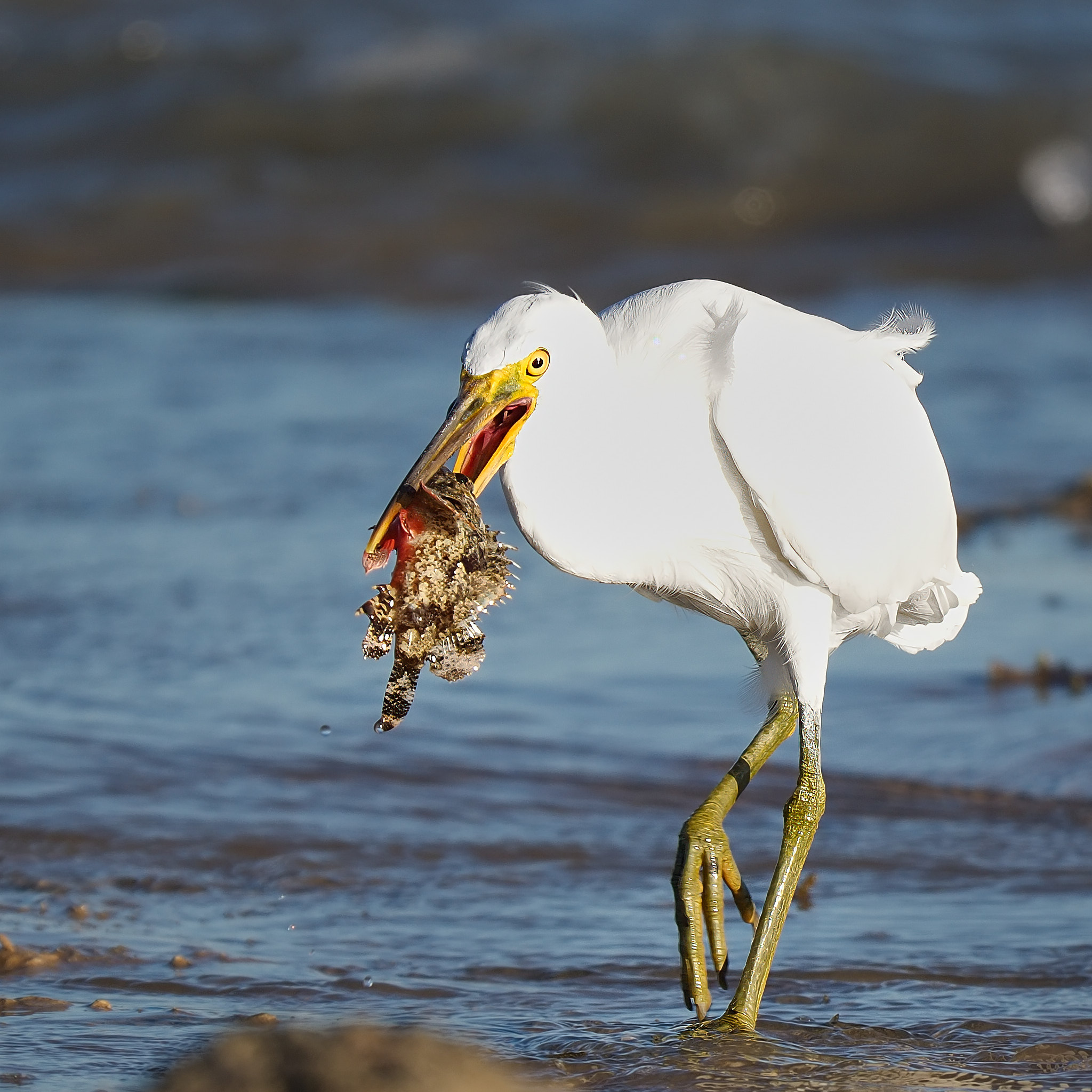
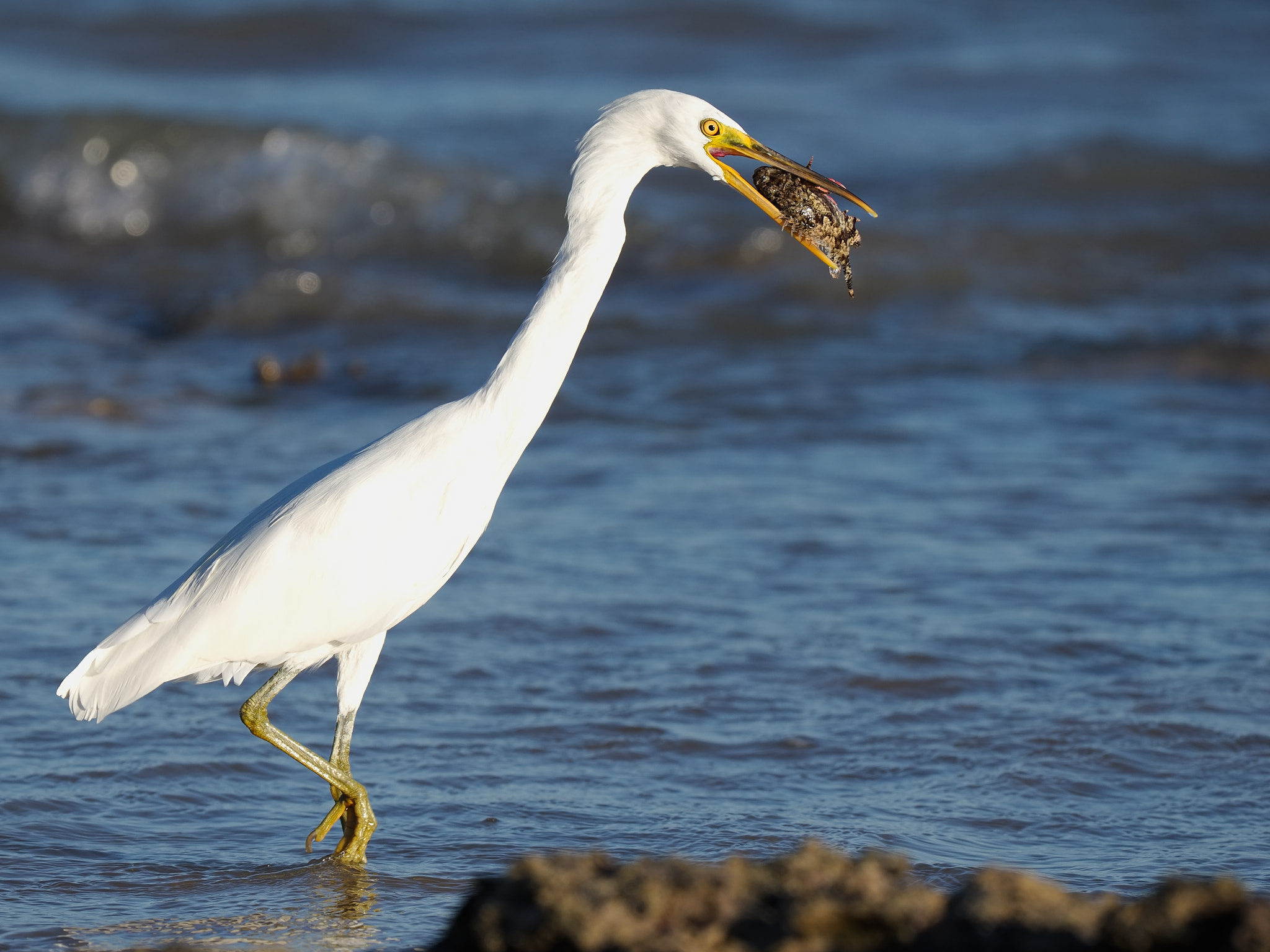
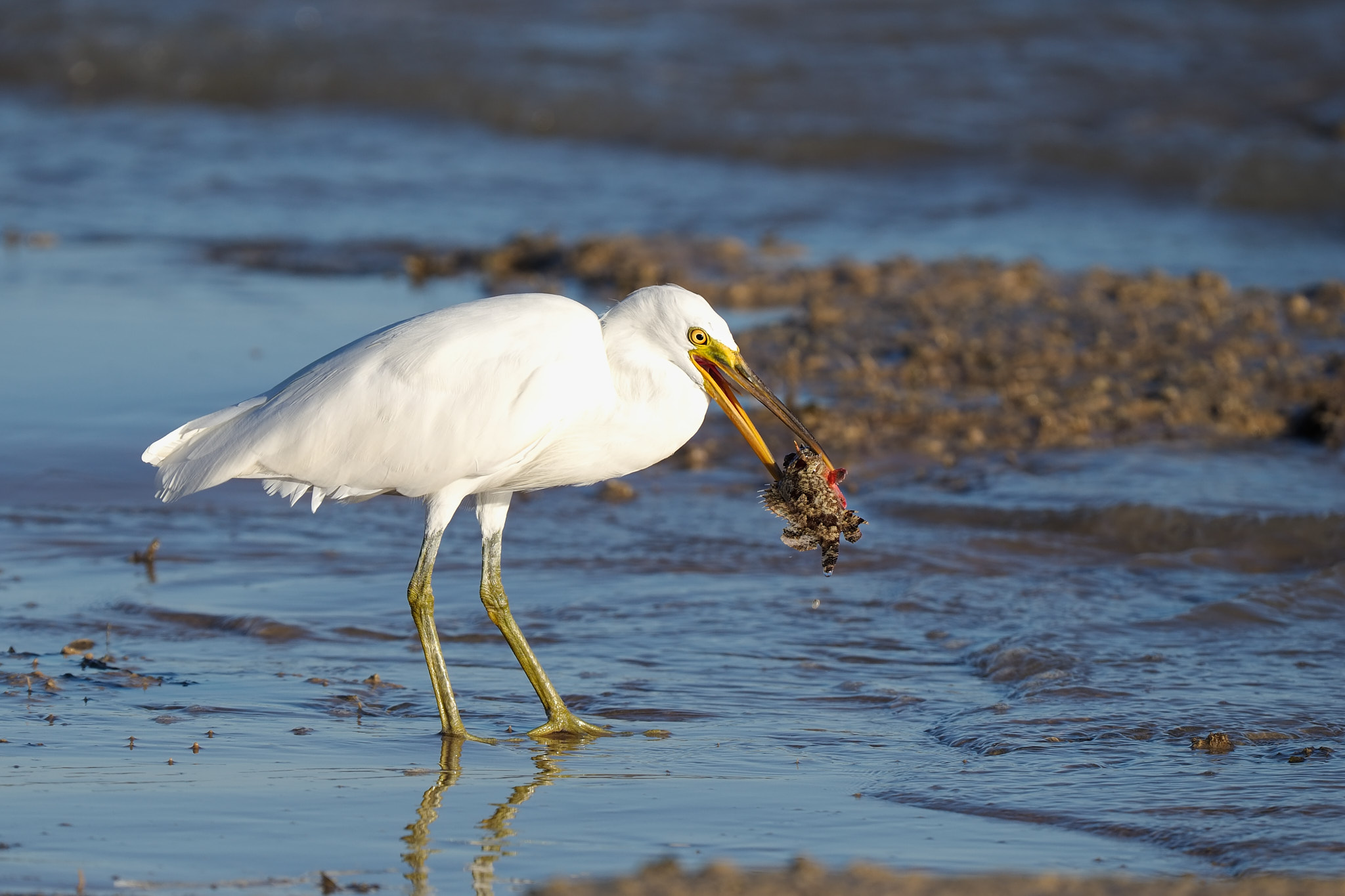
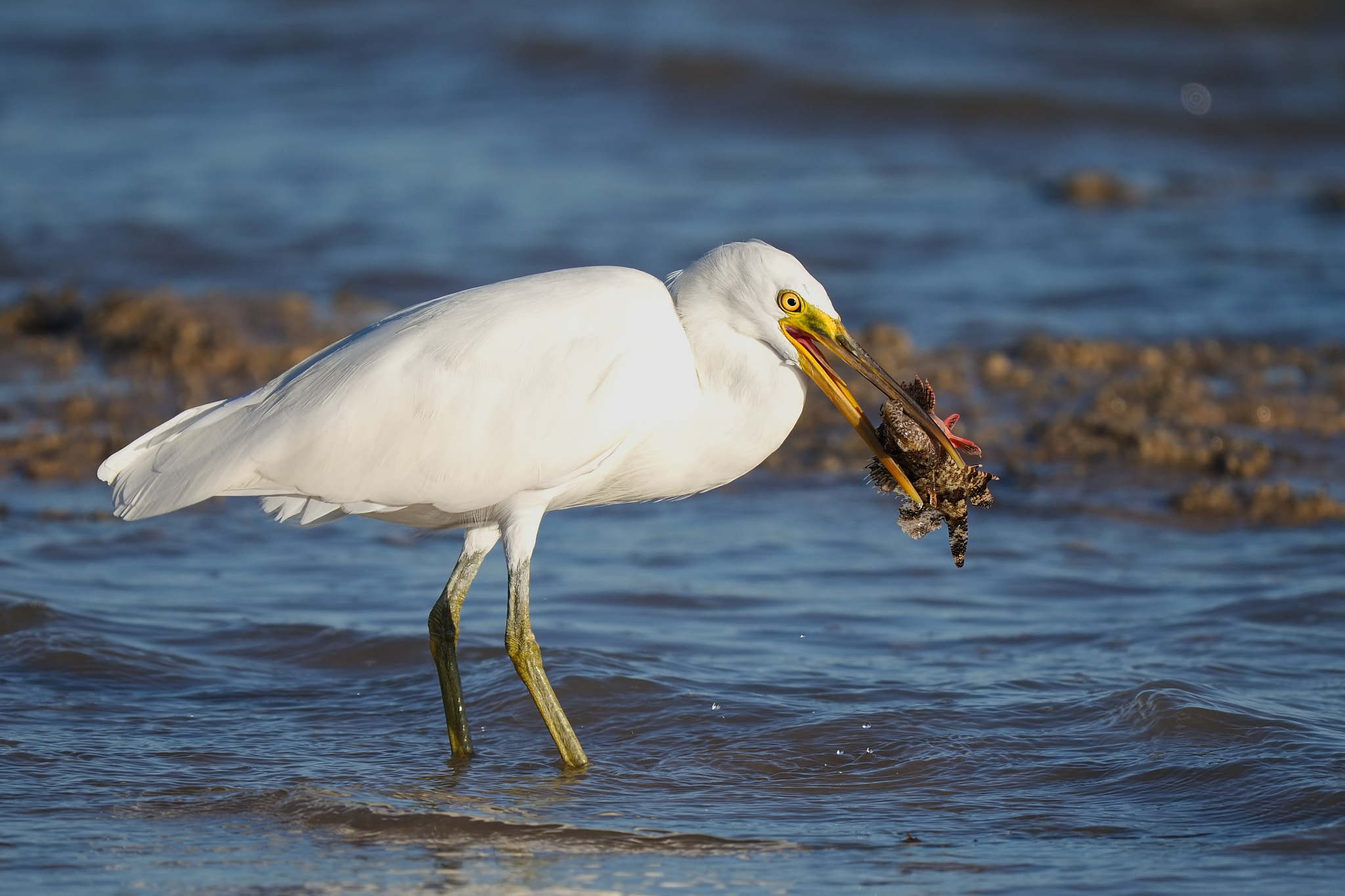
Eating a puffer fish is fraught with hazard. What about eating a Stonefish?
The bird is an Eastern Reef Egret. I’m pretty sure the fish is a Stonefish. The toxin in its spines causes extreme pain if injected into a human foot so when I’m walking on the reef at low tide I wear shoes. It has never occurred to me to put one in my mouth.
I spent about 10 minutes with the Egret during which time it carefully dropped and flopped the fish. Took it and washed it in the sea and made several trial fits in its mouth. Ultimately it abandoned it and flew off to hunt further up the beach. Maybe the risk from swallowing the spines was just too great.
Roebuck Bay is the premier Australian location to see waders. Mostly long legged birds in the order Charadriiformes. At low tide there is a vast area of mud flat housing huge numbers of invertebrates for them to feed on. Some of the species here are resident, living and breeding locally. Many more are long distance migrants breeding in the northern hemisphere and escaping from the snows of winter up there by flying all the way to sunny Australia. For some of these birds it means a 20,000 km round trip every year of their adult lives. For some of them the journey north starts today.
Different species typically depart at characteristic times. The early birds left from about the second week of March. Prominent among those are the Eastern Curlews and the Greater Sand Plovers. We are right in the middle of things now but most of the Red Knots and Red-necked Stints are still out in the bay putting on weight. Peak period for the stints will be next week. Most of the Red Knots will hold on until the first week of May.
I shamelessly filched the graphic from the Broome Bird Observatory website. If you click on it you may be able to read it.
The Broome Bird Observatory is a great place to watch the departures. Get there at about four in the afternoon, head to the beach and stay until about six. Observatory staff will be charting the departees and they will be happy to explain what’s going on. Just say hi.
What they and you are looking for are single species lines of birds forming up on the mud flats. There is much chattering and wing stretching. Then up they go. They may make a couple of orbits and go or a couple of orbits and land again. When they form a big boomerang shape and head north at a higher altitude than for local flights you know they mean business. Or not. Some may come back after a while, sometimes all of them come back. But if you want to make babies sooner or later you’re off.
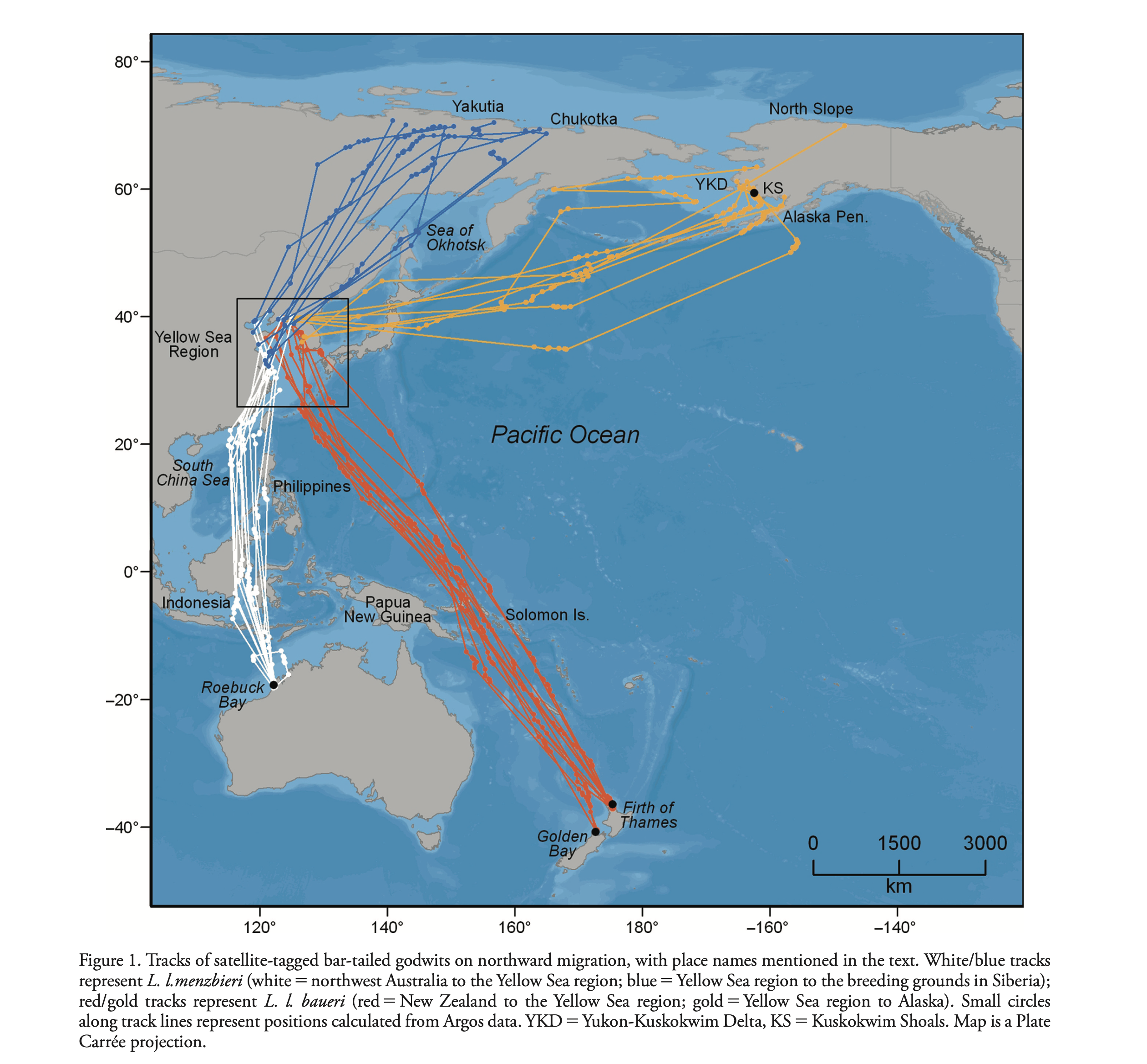
Light a candle for them when you get home. They’ll still be flying after the candle is exhausted. Some will fly non-stop to China, 6,000 km plus, 5 days, no food, no drink, no rest. Some do stop on the way on the coasts of Indonesia, Vietnam and the Philippines.
Birds can be equipped with transmitters so that their progress can be tracked. The transmitters are small but so are some of the waders so we know far more about the big ones than we do the little ones. The next map is pinched from a paper by Battley et al, Journal of Avian Biology 43: 21–32, 2012 and concerns Bar-tailed Godwits on their journey from Roebuck Bay and New Zealand.
The birds spend about a month re-fueling on the shores of the Yellow Sea before continuing to the breeding grounds. Those feeding grounds are absolutely critical to the species survival.
The pay off when they get home makes it all work. The tundra is uninhabitable in winter but in summer is so rich in insect life that the young chicks can feed themselves from almost the moment they hatch.
These are extraordinary journeys. I always feel a little emotional when I watch them go.
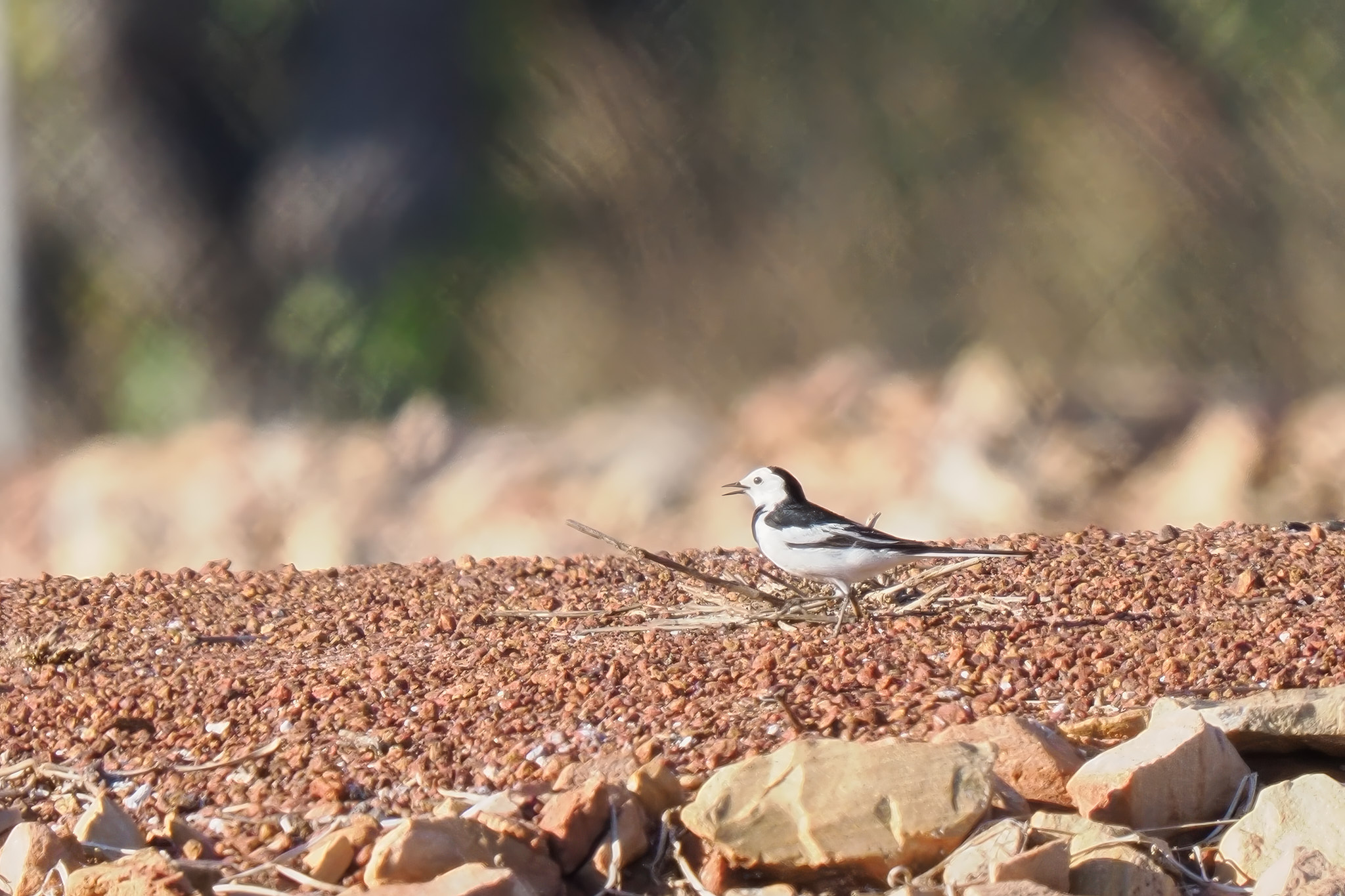
I received the message at about 10.30 am yesterday. A White Wagtail at Ardyaloon Water Treatment plant. Broome to Ardyaloon is a mere 217 km. White Wagtail was a familiar bird in my English youth. I have over 80 records of the species from Iceland, continental Europe, the Russian far east, India and Japan but it was not on my Australian list. It doesn’t routinely occur here although vagrants do turn up from time to time. By 1 pm I was looking at it.
It was a busy bird, not easy to find as it meandered among rocks at the water’s edge. Gayle found it first. It was an Oz tick for her as well. Fortunately it didn’t fly before I saw it too. It was a lifer for the dog.
I might have got a better photograph if I wasn’t restrained by a chain link fence, but hey.
A number of subspecies have been described. This guy is a male Motacilla alba leucopsis. This subspecies breeds in China.
I have always enjoyed the thrill of adding a new species to a major list but this event really qualifies as my first twitch. During my working life I could not afford the luxury of dropping everything and rushing off to see a distant rarity. I hope to do it again soon.
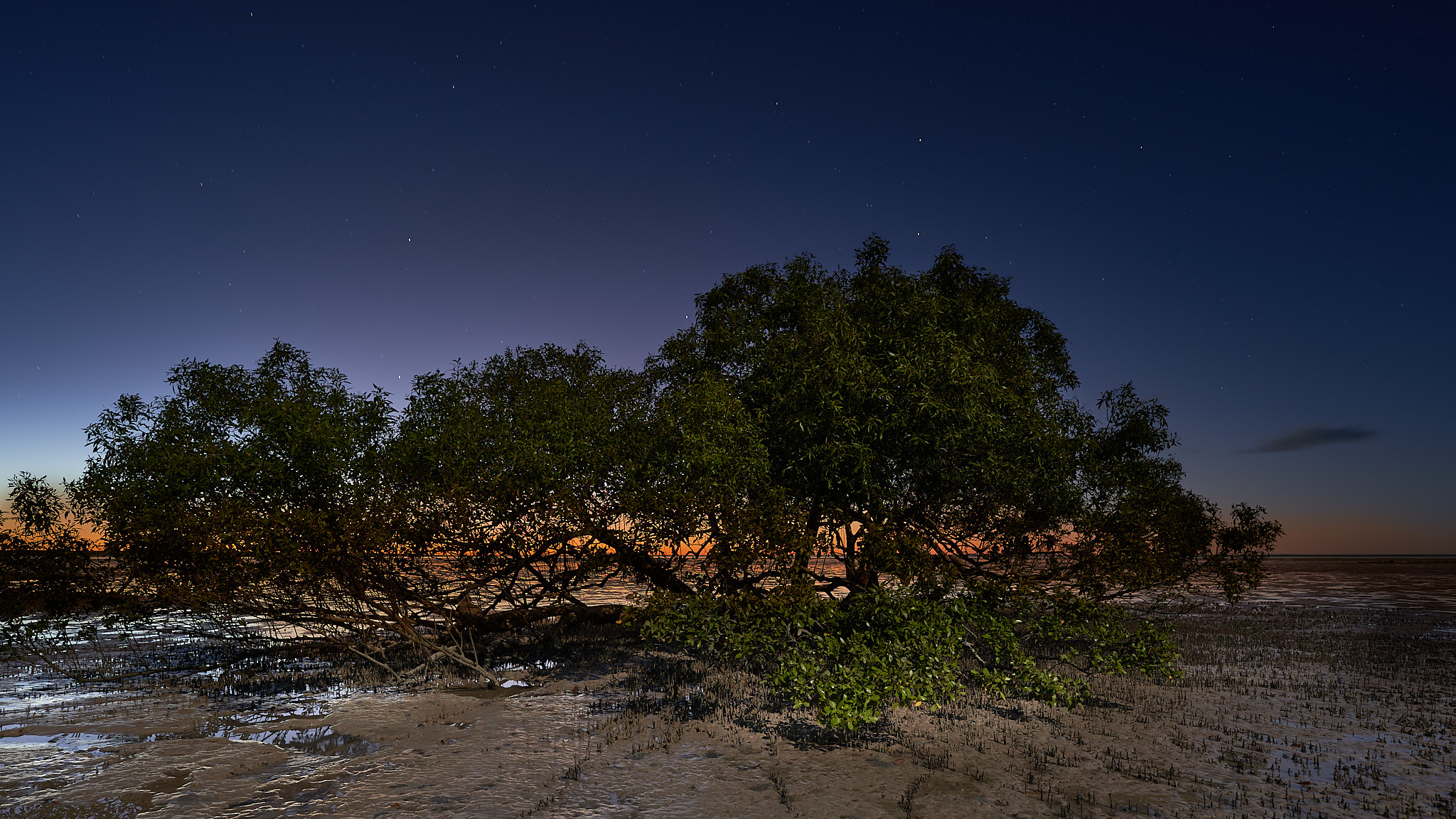
It’s an hour before dawn, the vault of the sky is cobalt blue. The foreground is lit by the almost full moon behind me. The tide is way out. I’m up to my ankles in mud and making a blood donation to a flock of mosquitoes. And I thank those lucky stars for the opportunity to be here to see and photograph this exquisite moment.
















 bobmcgee