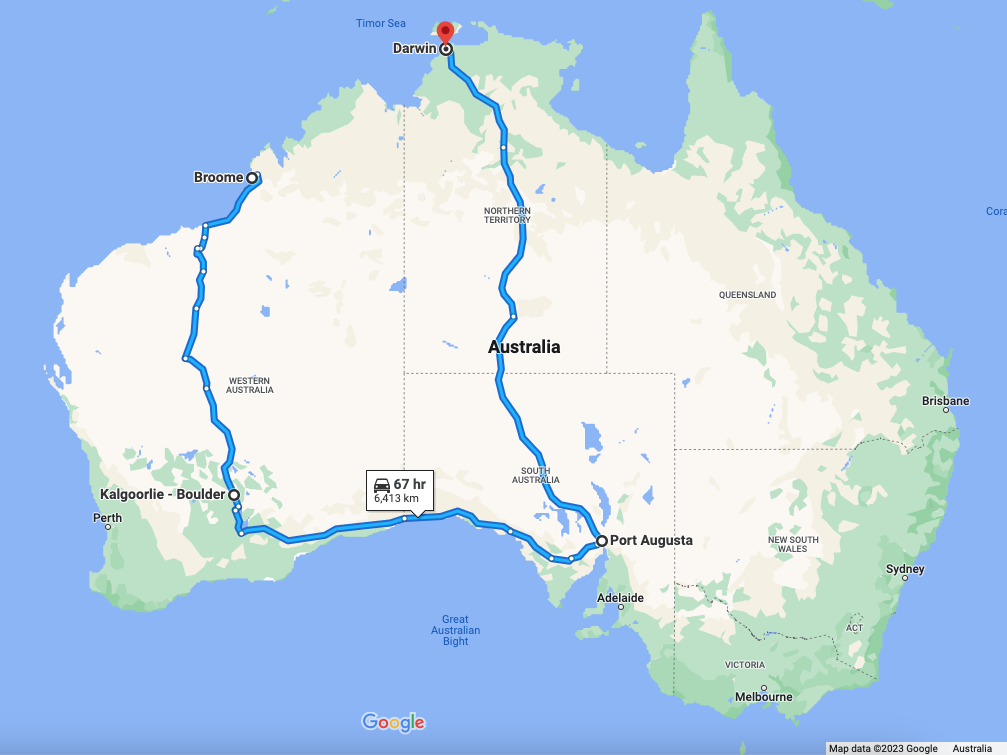
If we’d turned right at Willare we’d have come to the town of Fitzroy Crossing where the bridge was recently destroyed by flood. The next major city in that direction is Darwin. Broome to Darwin is about 1800 km. With the bridge down Broome to Darwin became a 6,400km journey for a while.
The Fitzroy River also runs through Willare where it took out the road leaving the bridges standing. Poor old Derby at that stage was a boat trip to anywhere. Roadworks are in progress but there is still a lengthy section of single lane alternating in direction.
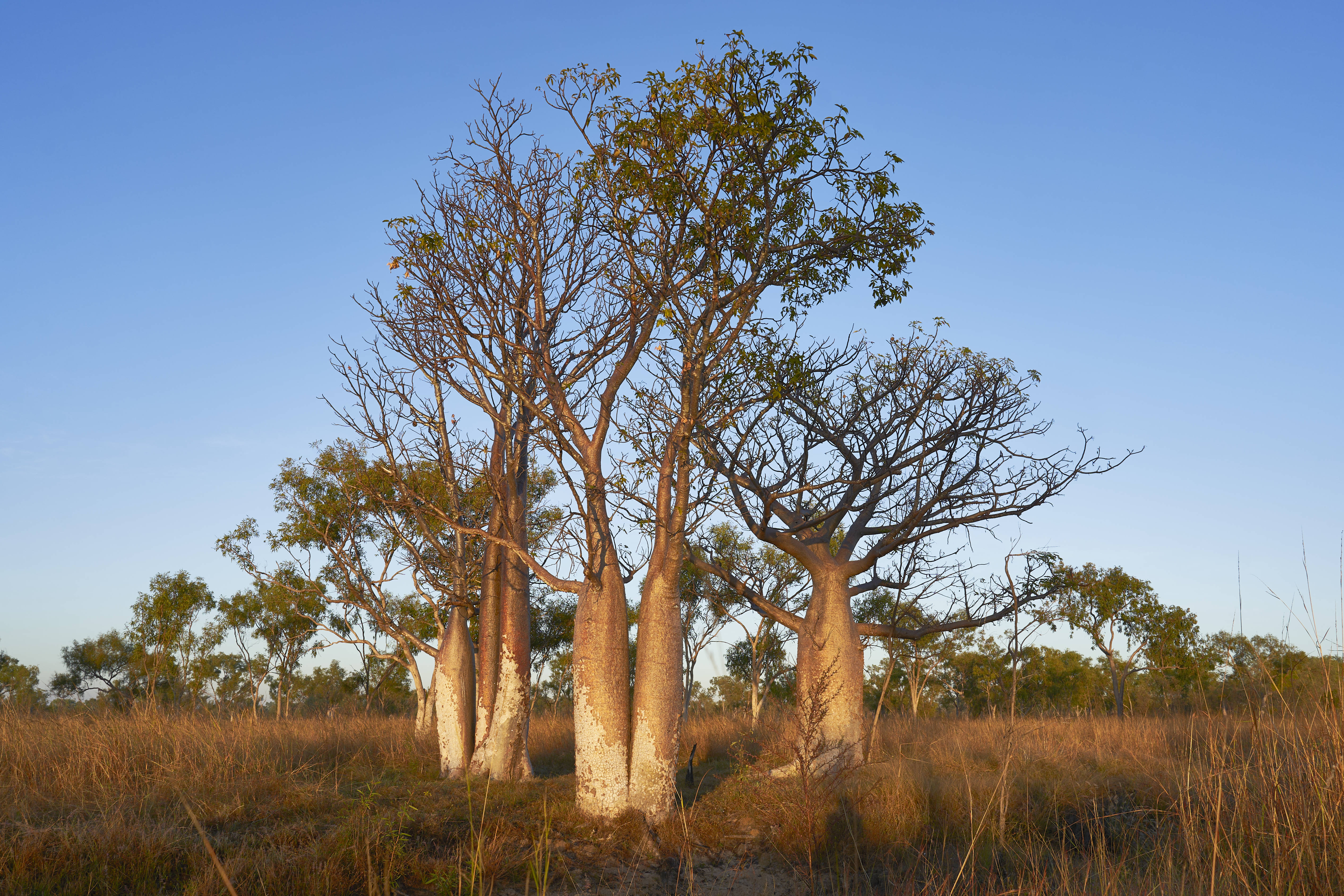
The trip was essentially a scouting trip to find suitably photogenic Boabs. There are plenty in Broome decorating our parks and gardens and some are quite old and splendid but they don’t occur naturally. The authentic ones start to appear in the landscape about 120 km up the road.
Adansonia gregorii
Baobabs belong to the genus Adansonia. The centre of their diversity is Madagascar where there are six native species, Africa has a seventh, we have the eighth. Ours is closely related to the African one. It found its way here as a floating seed.
Here its name was treated with the same respect accorded the Possum and Goanna.
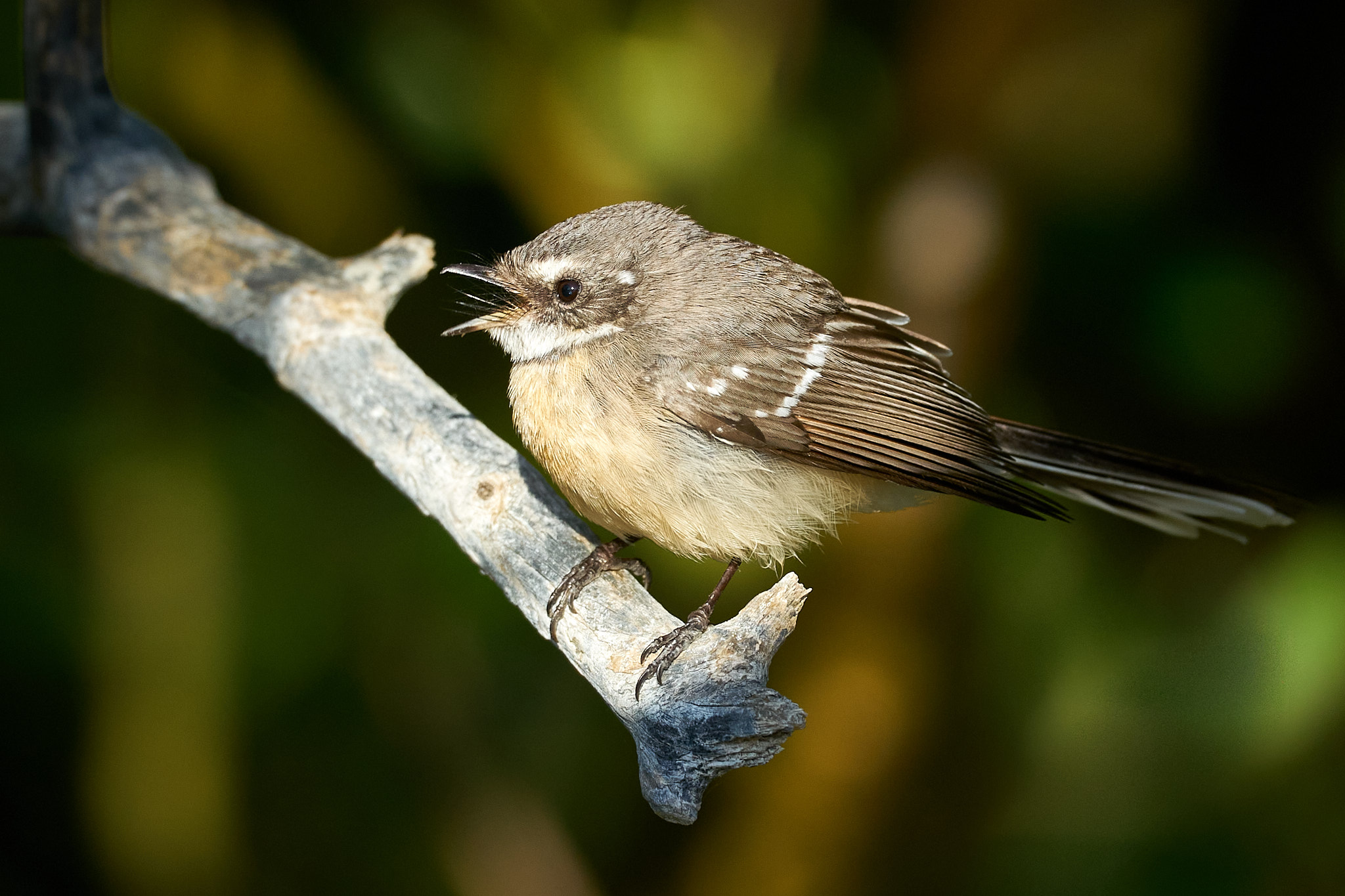
Into the mangroves once more, This time at Crab Creek out past the Broome Bird Observatory. The specific target was Dusky Gerygone which I found but it was too flighty to photograph. Other birds, though, were more accommodating like these very cute Mangrove Grey Fantails …
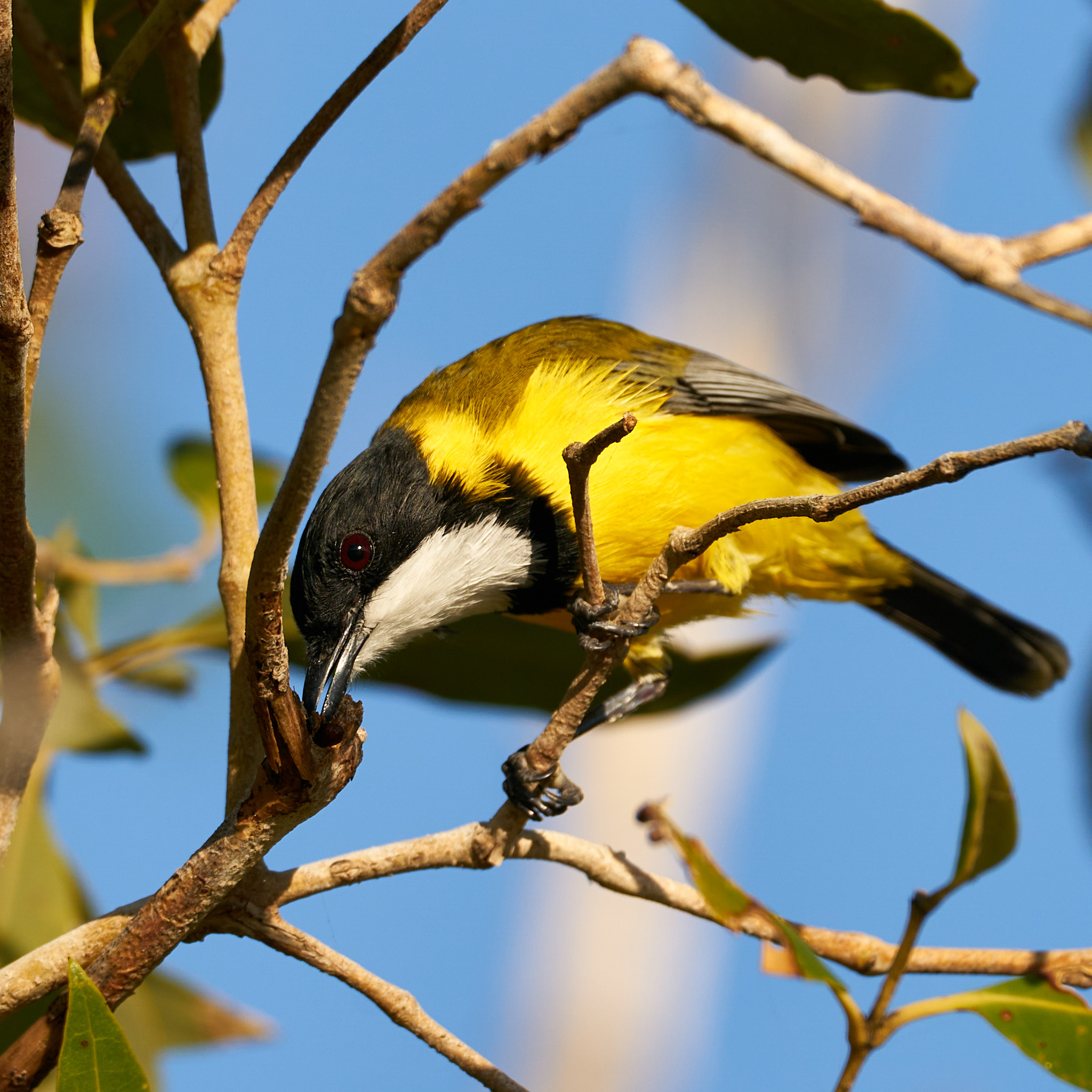
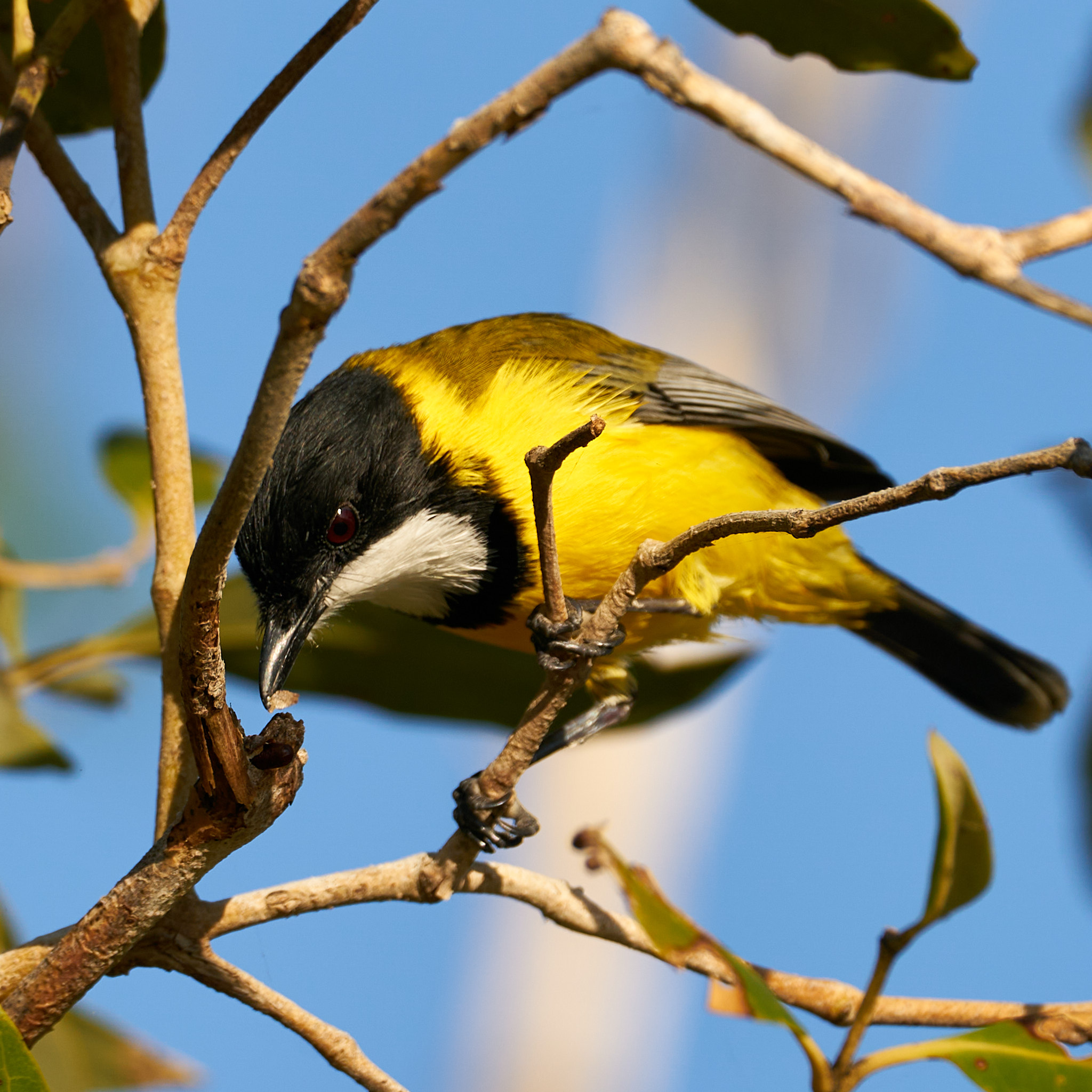
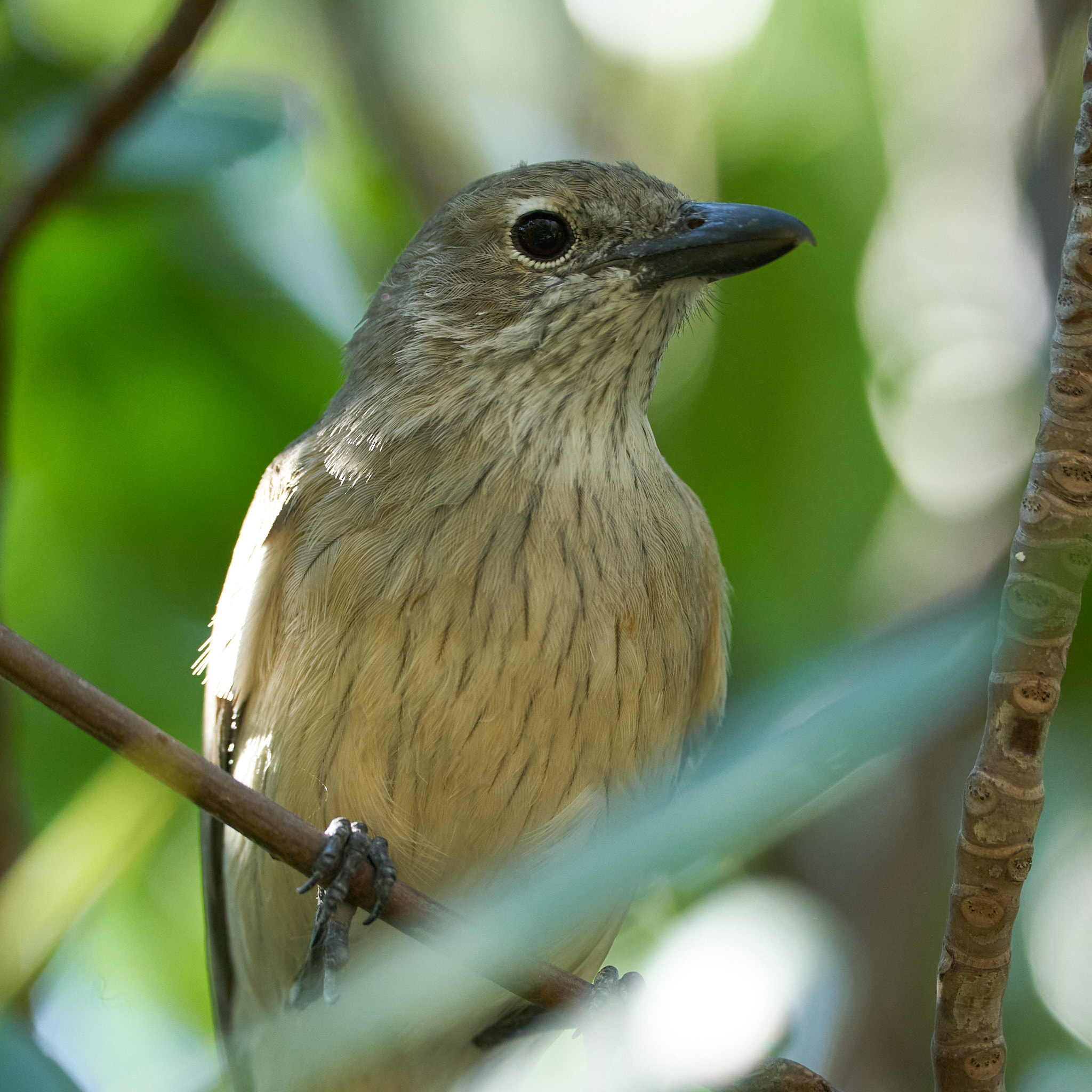
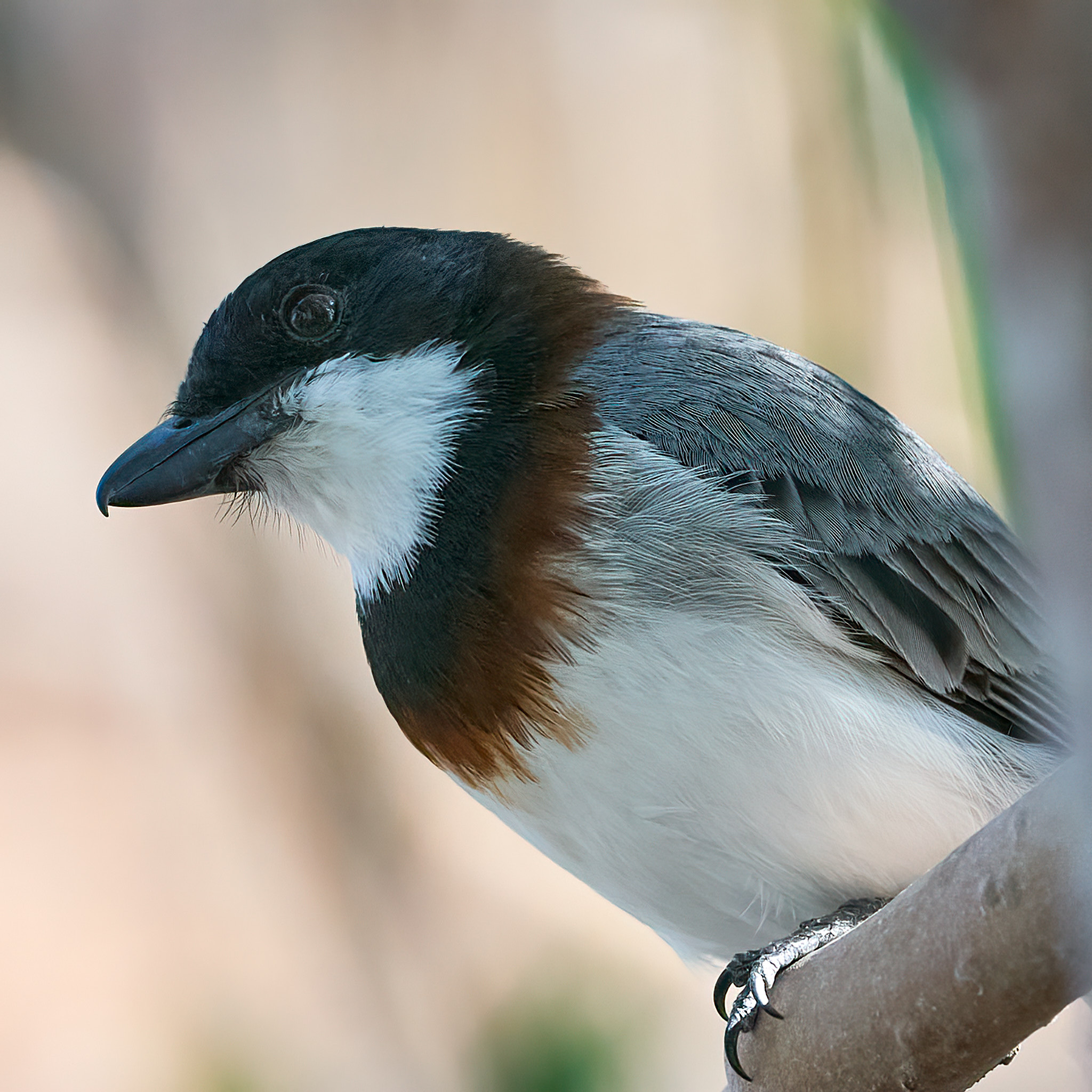
and I made progress on the Mangrove Golden Whistler. A few years ago these were almost unknown in this particular patch of mangroves. On the rare occasions they keep still there’s always a stick or two between the lens and the bird. One day …
About 35km from Broome the Great Northern Highway crosses the Roebuck Plains. This year’s big wet saw the road closed by flood. It is drying out quite quickly now but there is still standing water on both sides of the bitumen. The birds are loving it …
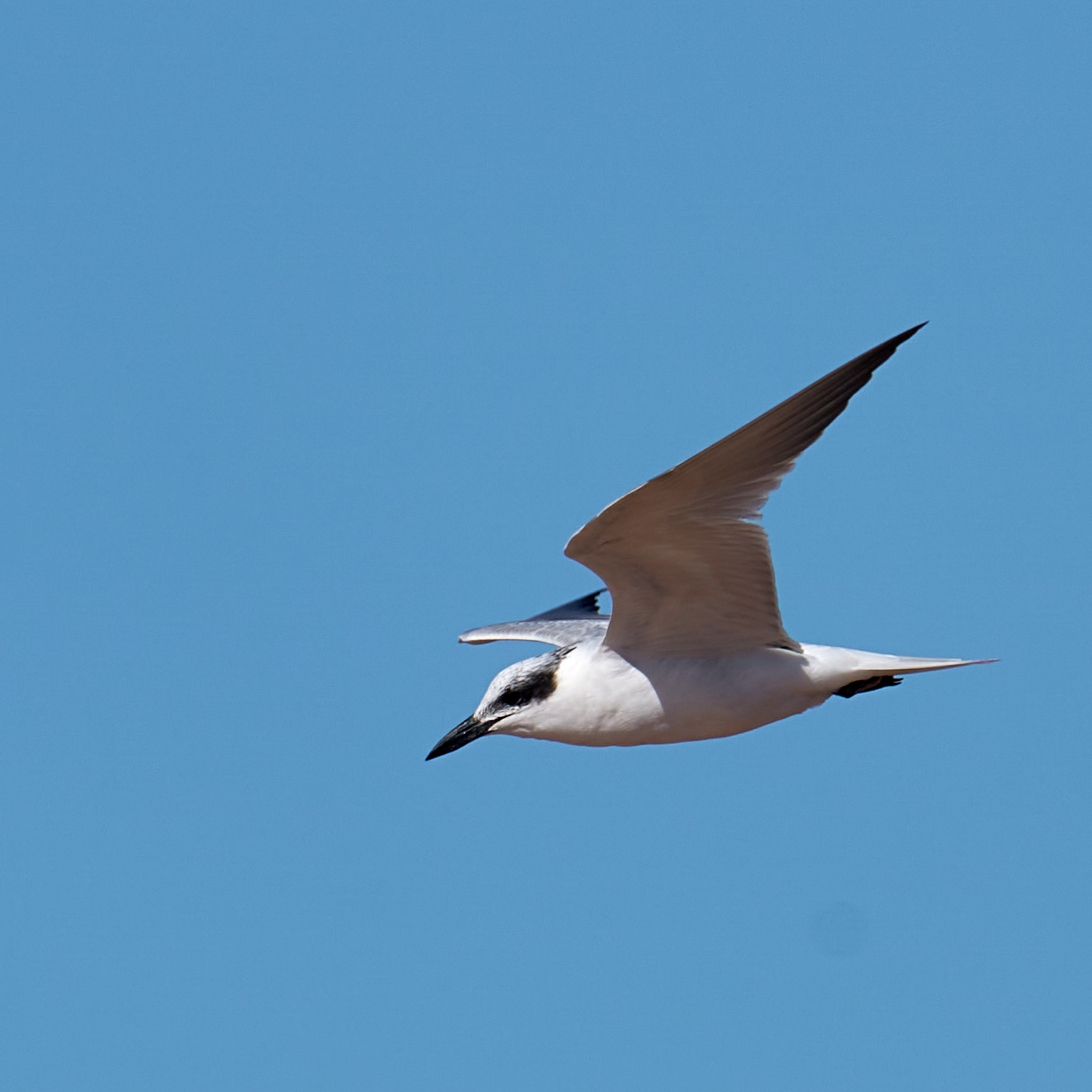
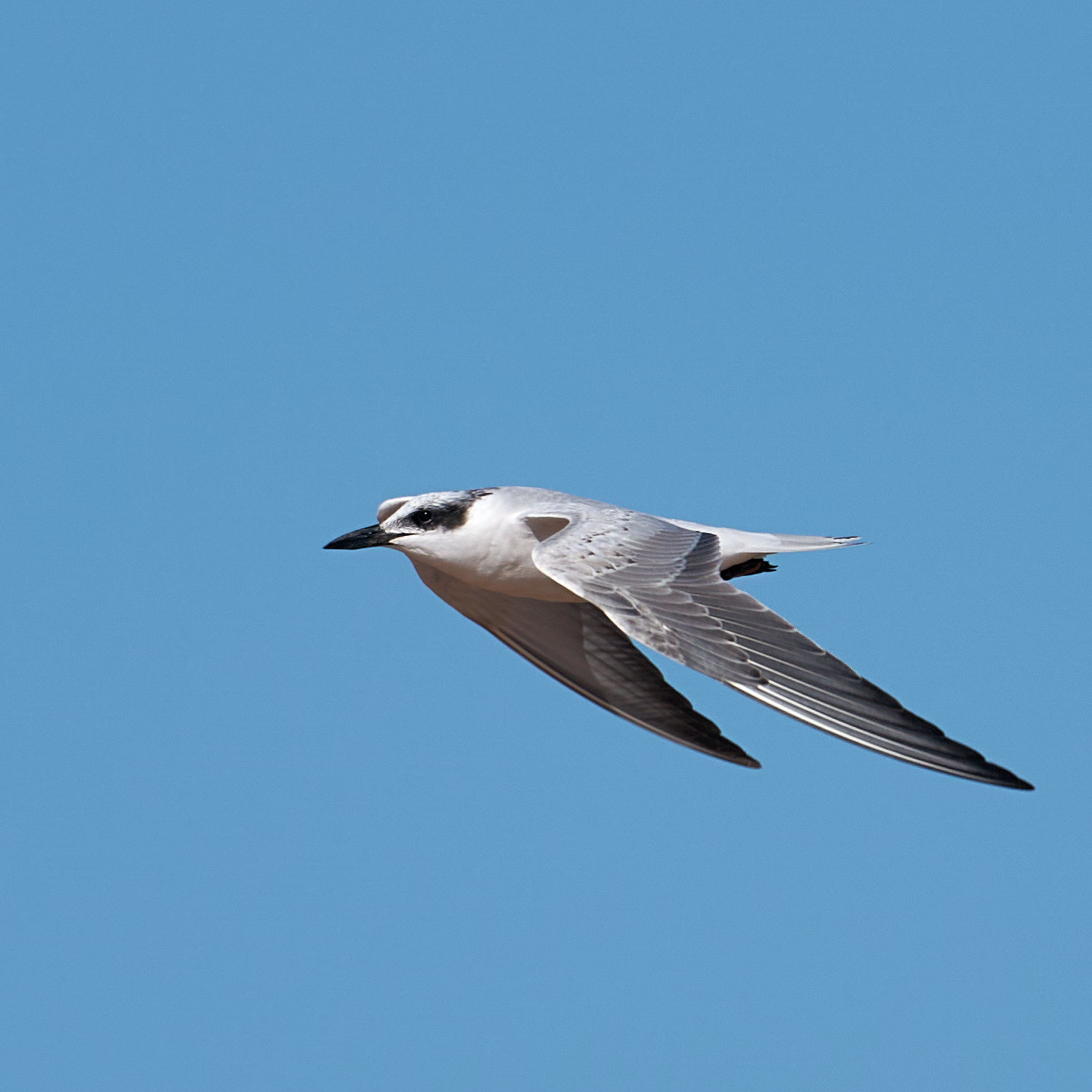
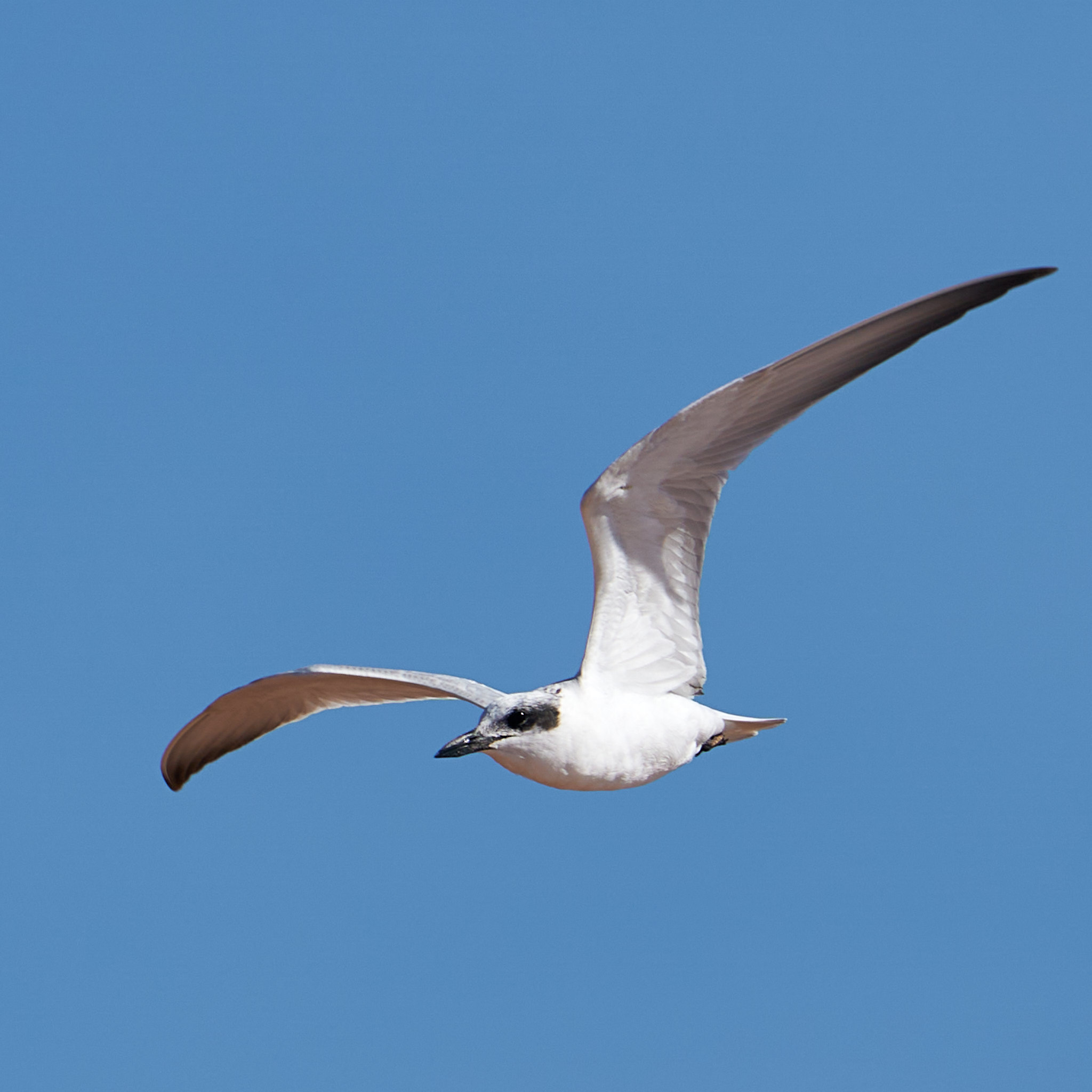
These photos of a Gull-billed Tern were taken at one two thousandth of a second so fortunately there was plenty of light. I prefer flight shots with wings up. I feel they convey a greater dynamism but they are often marred by the shadow cast by the wing. If you click on the wing down shot the feather detail on the wing makes up to some extent for the less dynamic pose.
What you really need is a well trained Tern that will expose its armpit to the sun.
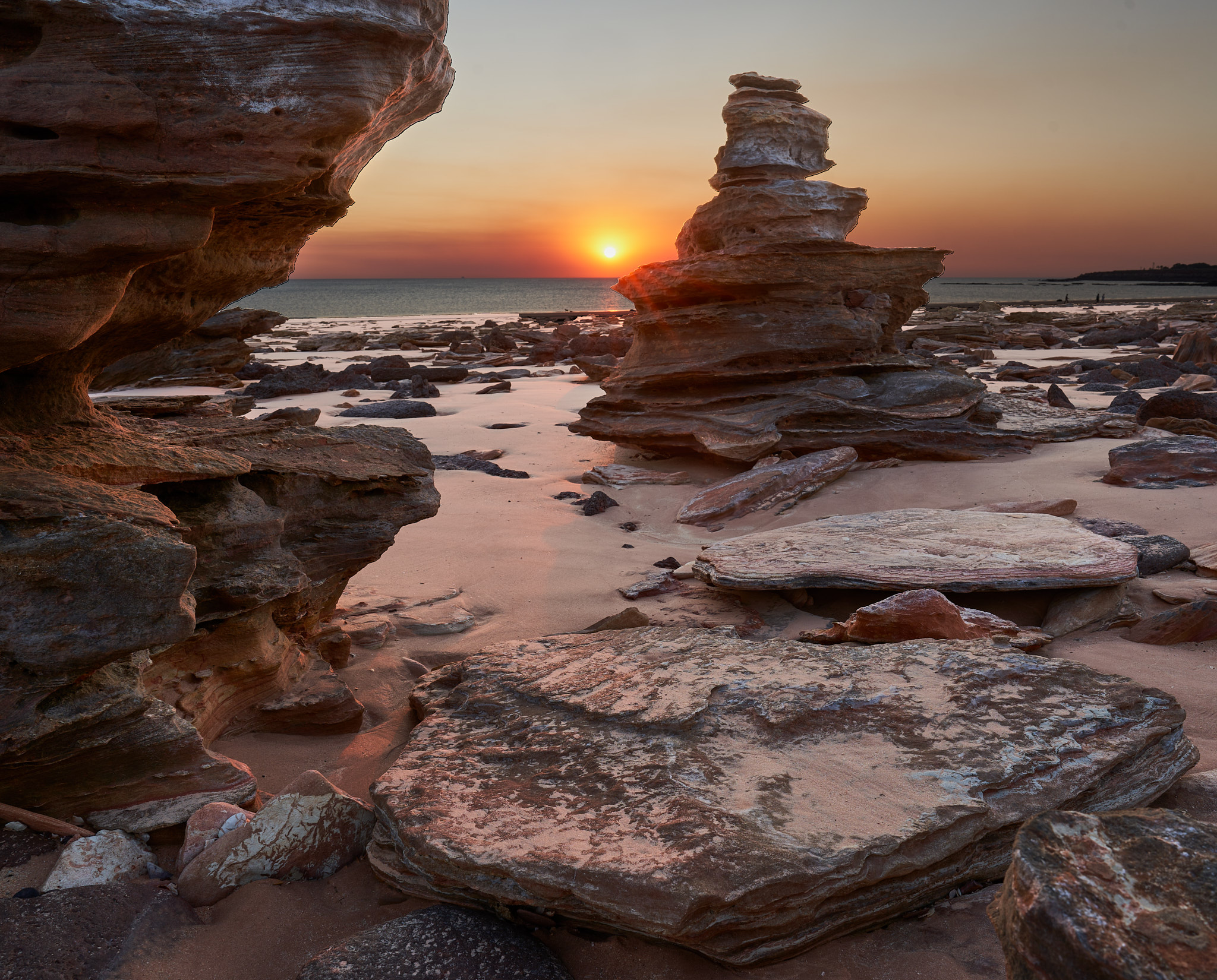
A fascinating morning on yet another beach with Dianne Bennett. Di is a dinosaurologist and local treasure who leads tours to see the famous dinosaur tracks of the Broome sandstone. It’s not a boat tour, no champagne and lobster just a walk on the rocks, a wealth of knowledge, enthusiasm and all at a very reasonable price.
The Broome Sandstone dates to 130 million years ago give or take a few million. It slowly built up in layers. Sometimes conditions were suitable for preservation of footprints, sometimes not. Tracks are found at several levels. Di showed us two very different sets of tracks belonging to Sauropods and Theropods.
Dinosaurs come in two big flavours Ornithiscians and Saurischians. The Ornithiscian pelvis resembles that of birds, the Saurischian pelvis that of lizards. The general consensus is that birds are living dinosaurs descended not from the Ornithischia but from the lizard-hipped Saurischia. Each of these main divisions are further divided. The tracks we saw were from Sauropods and Theropods which are both Saurischians.
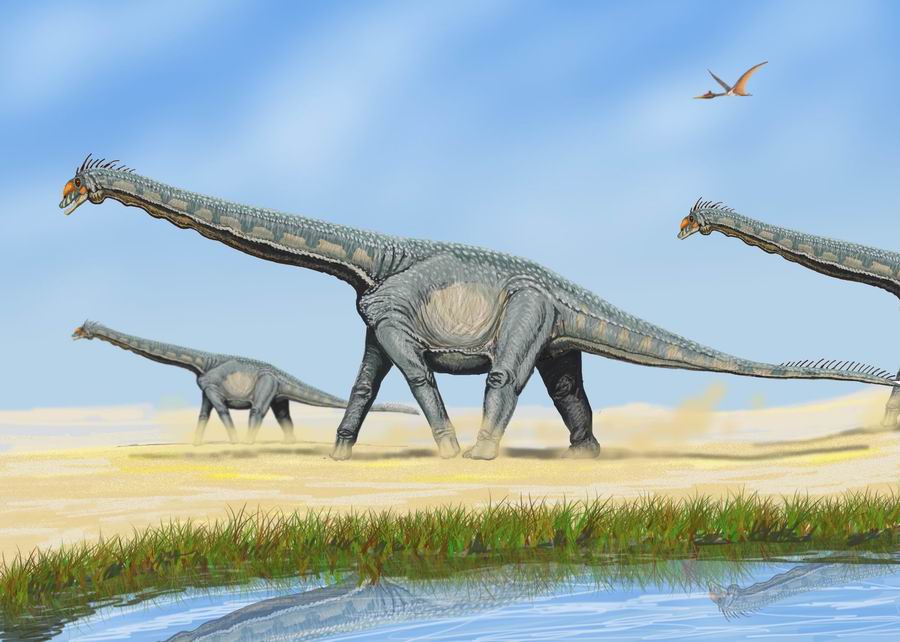
The Sauropods were long-necked, long-tailed, small headed herbivores. Not all Sauropods were immense, some were only 5 or 6 metres long but the largest animal to ever walk the earth was a Sauropod around 30 metres long and weighing something in the order of 70 tonnes..
Shamelessly filched from Wikipedia
I have no idea how accurate this depiction is except that the feet fit what we found to a tee. The back foot is bigger than the front foot and comes up close to it at every stride …
and here it is heading from right to left across what was a mud flat and it was way bigger than a modern elephant.
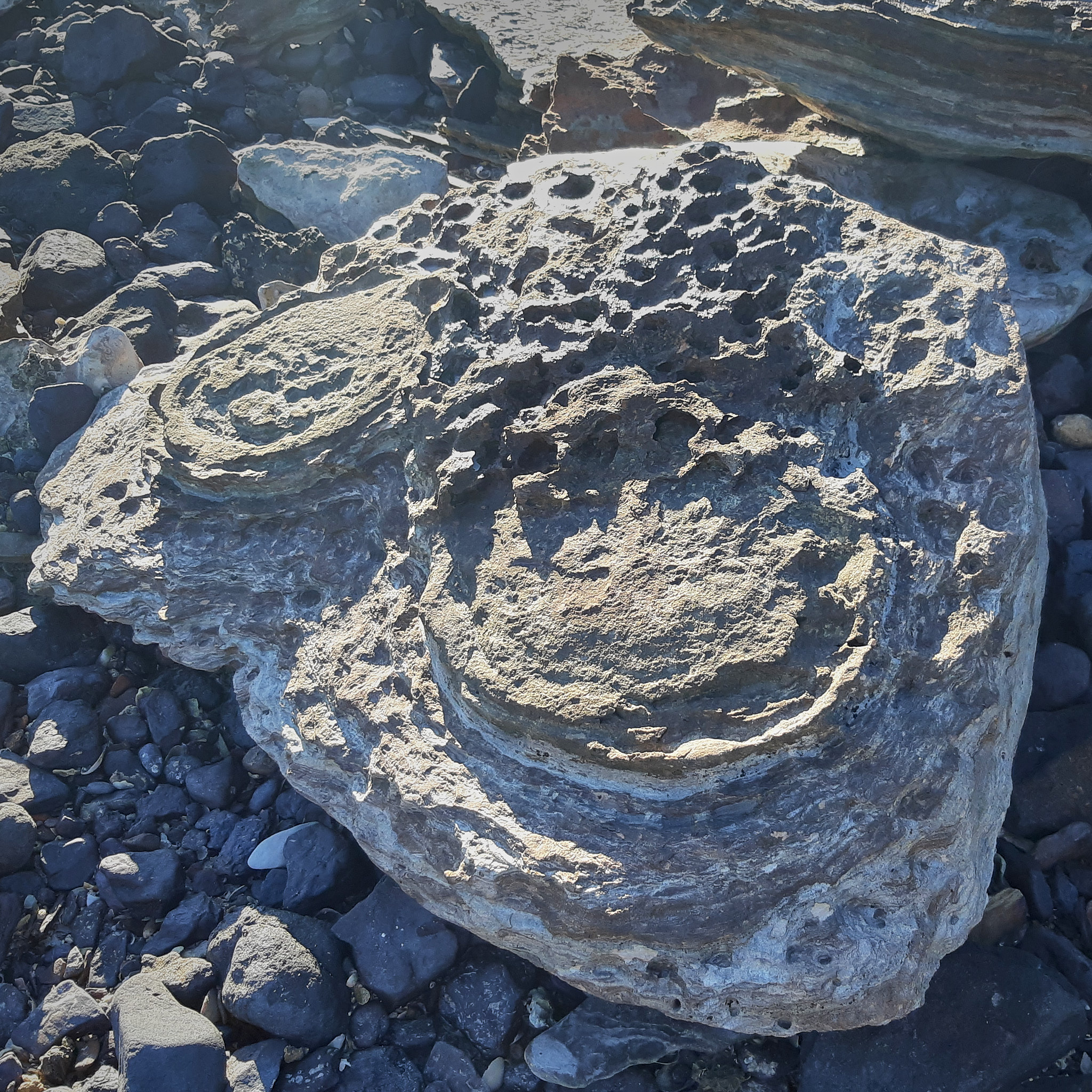
Once the search pattern was established Sauropod footprints were all around us. Theropod footprints are smaller and were not impressed so deeply in the mud. Di pointed out the first then they too became easier to find.
Theropods walked on their hind legs. Diets were varied, herbivory, insectivory and carnivory were all represented. T. rex was a carnivorous Theropod but never visited Broome. Here is a Herrerasaurus to represent the group.
Shamelessly filched from Wikipedia
Three toes facing forward, a hind claw that may not have reached the ground or make a big impression if it did …
The local aboriginal people have stories about Marala, the Emu-Man. This print is considerably bigger than an emu’s and your average emu doesn’t leave prints in solid rock. It’s easy to see why they were impressed.
Sadly the Broome sandstone doesn’t seem to have preserved any body parts. We have no dinosaur skeletons to put in the museum. But we can follow in the footsteps of immense creatures that preceded us by 130 million years and raise our gaze to the Reef Egrets, Kites and Gulls – living Theropods.
We made contact with Dianne Bennett through Broome Visitor Centre. You can also find her on Facebook or ring her on 0457 681 265.
A few of the gulls are watching for food but most of the gulls are watching the gulls watching for food. Piracy may well ensue.
In the same fashion my beady eyes detected a small gathering of people at a rock pool a hundred metres away. Unlike seagulls the group were only too happy to share their find. In fact they were interested to see if I would lift it out of the water for a better photo.
Blue-ringed Octopus
Blue-ringed Octopuses are found all around the coasts of Australia, New Zealand, Papua New Guinea, Indonesia, Fiji and Japan. They are ambush predators and possess one of the deadliest toxins you can find. Envenomation is reportedly painless. Paralysis ensues and without treatment is fatal. No antivenene is available.
“Warning: Be careful when handling dead shells, empty cans and bottles, as these are great places for the deadly blue ring octopus to hide!”
Despite their relative abundance encounters are rare, envenomation really rare and fatalities are exceedingly rare. Apparently just three instances have been recorded, two in Australia and one in Singapore. A four year old boy could have been the fourth but was quickly intubated and ventilated and survived.
Take care at the beach, the carpark is a dangerous place.
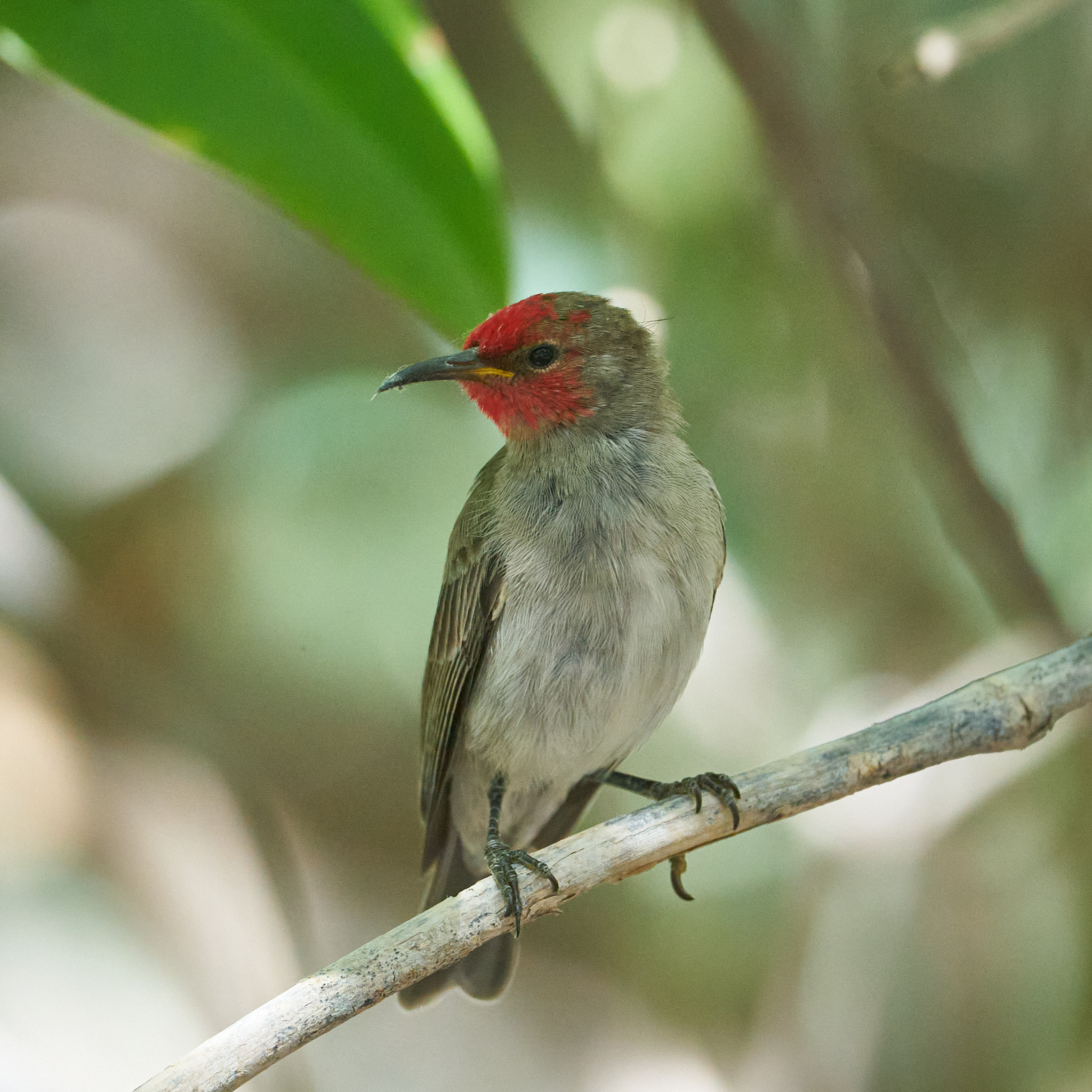
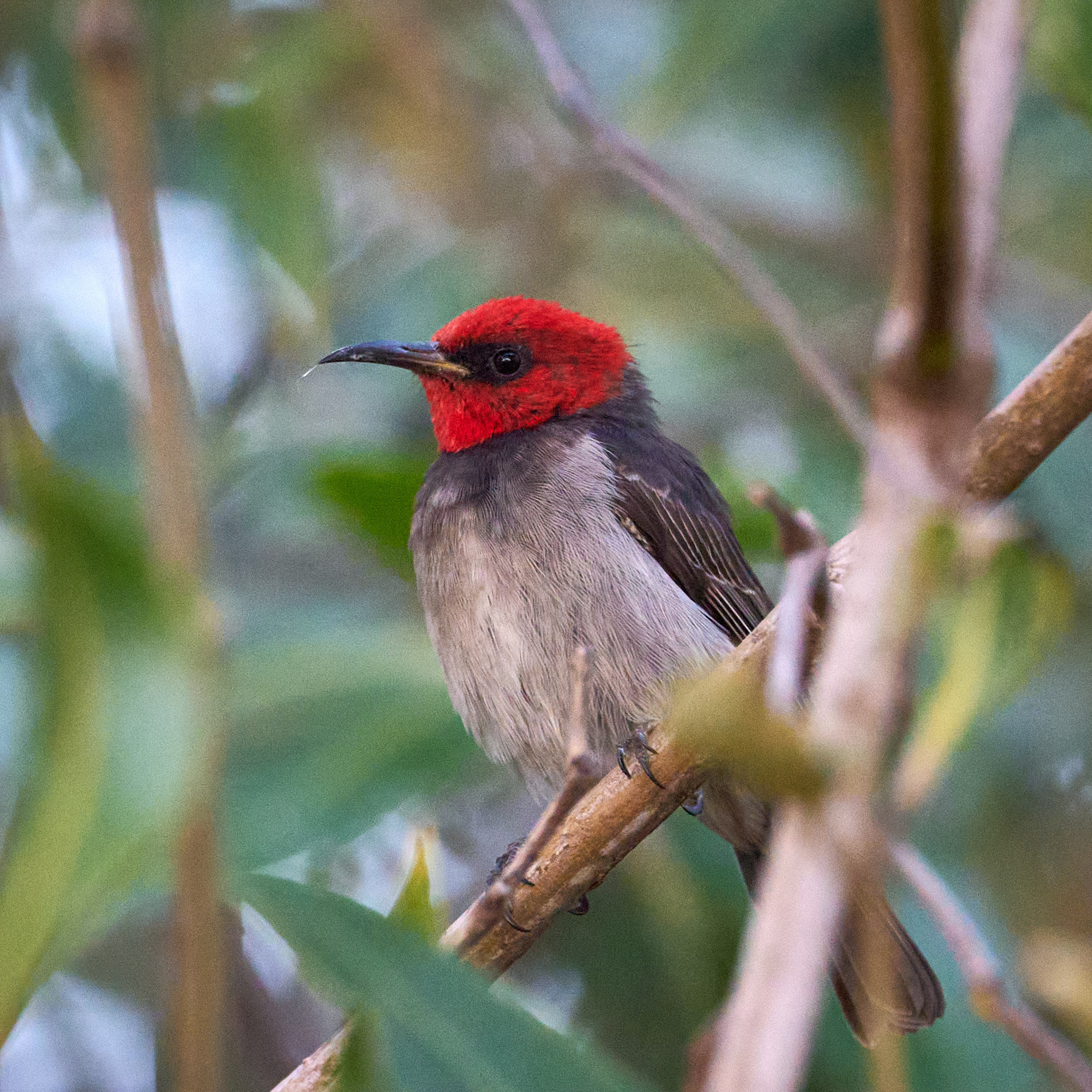
I’ll be visiting the Mangroves frequently because, like Tilly, a recent commenter from Kingaroy or some place in Queensland, I still need a male. It’s another Whistler, the Mangrove Golden. My best efforts to date are not up to scratch. Meanwhile I take whatever is offered. Like this young male Red-headed Honeyeater …
Red-headed Honeyeater
Presently he’s merely blushing but when he’s all grown up he will be positively glowing.
The rump is also scarlet so the shot of one with its back to the camera looking over the shoulder is on the wanted list.
The Broad-billed Flycatcher is another adorable denizen of the mangroves.
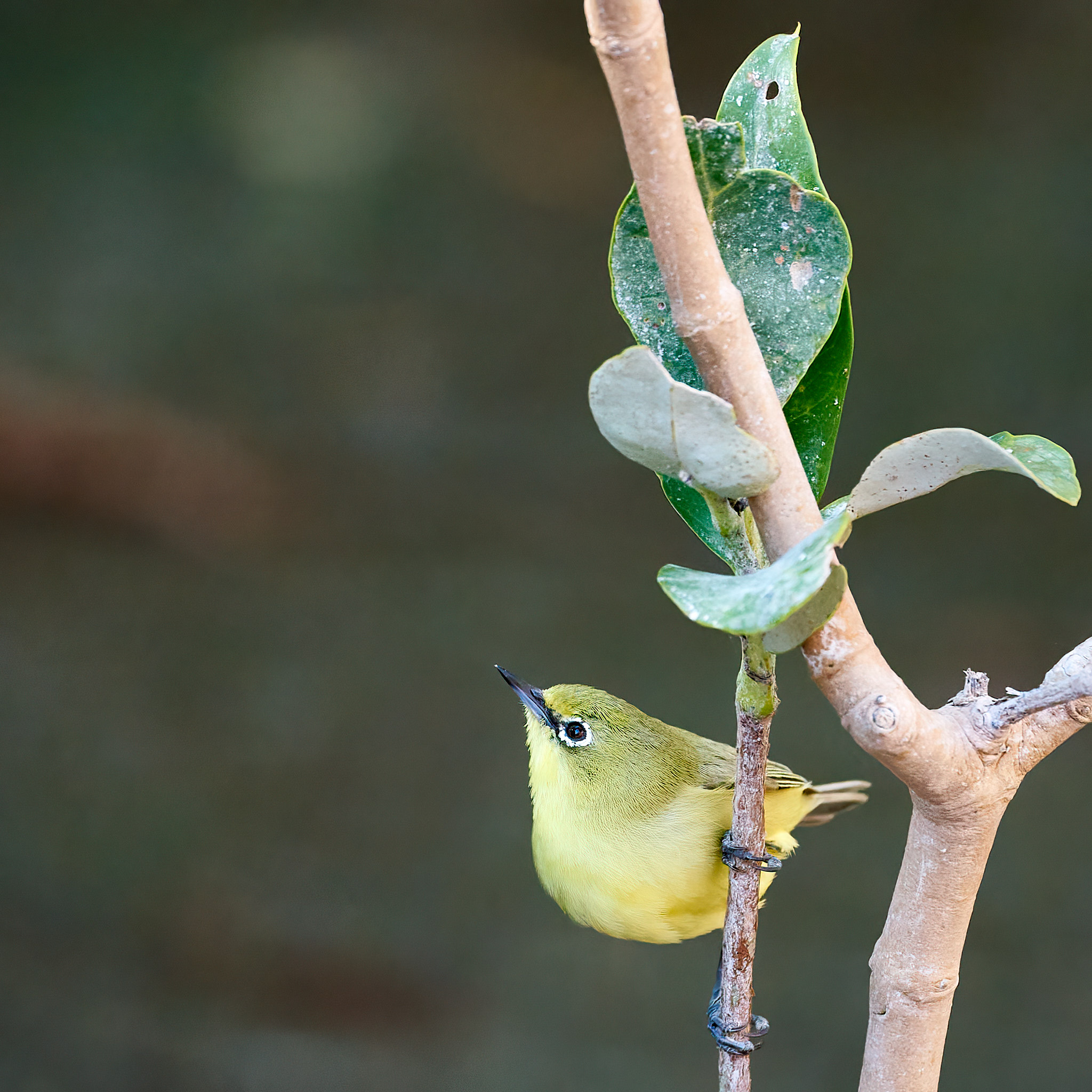
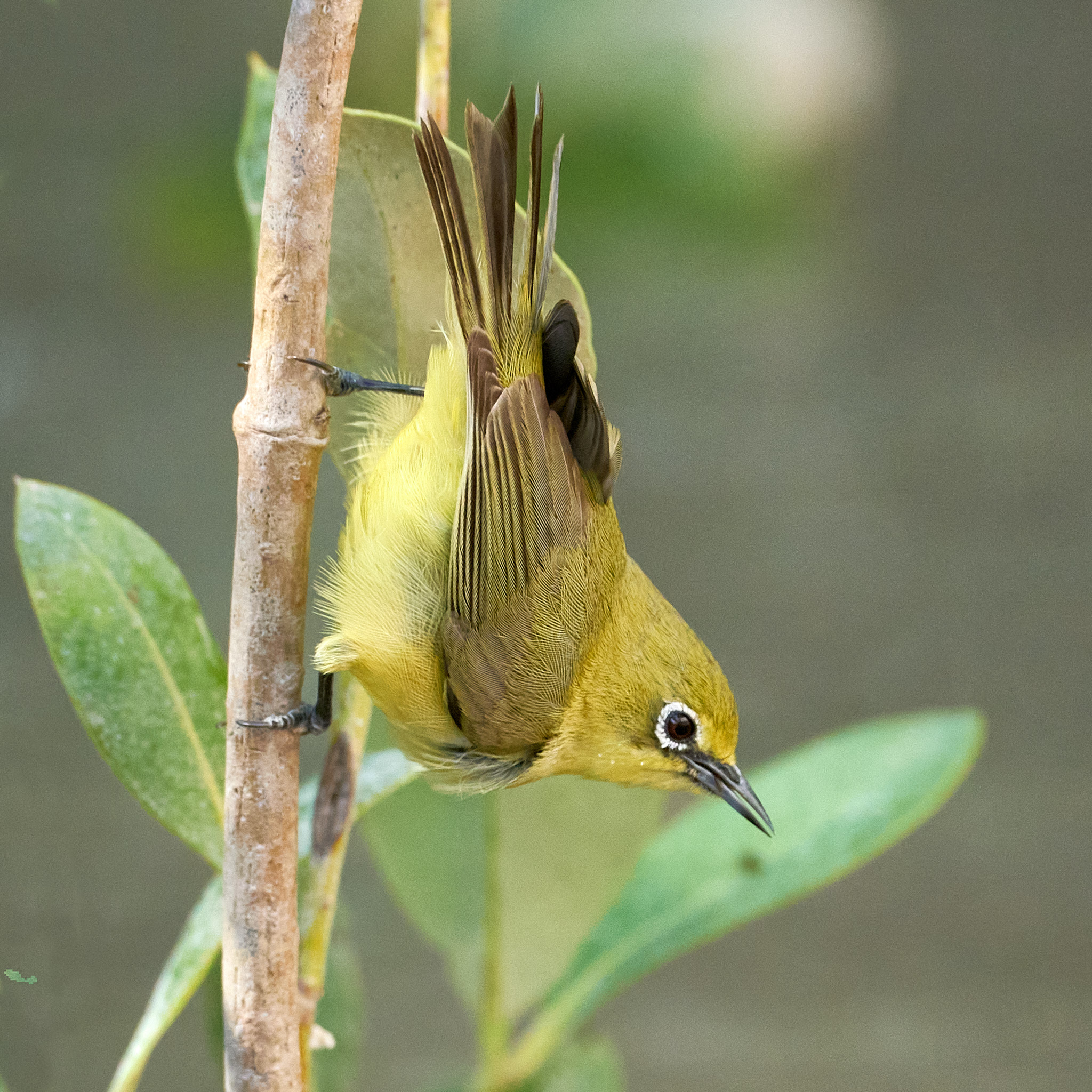
Once again the male is more striking, darker above and brighter below than the female but not all birds are sexually dimorphic. In the Yellow White-eye sexes are similar.
They may not be scenically splendid but they are the nursery for enormous numbers of sea creatures and protectors of the coast against storms. And they have birds.
Australia is home to about 45 species of mangrove in 18 families. They like the tropics, Darwin Harbour has about 36 species, Broome about a dozen. Species drop out as you head south. By the time you get to Victoria there is just one – Avicennia marina. Tasmania has none. As well as the right amount of sunshine each species needs the right amount of tidal inundation.
Birds enjoy the mangroves everywhere but the opportunities for mangrove specialists are much better in the north where there are large patches of mangrove forest.
The birdo who wants to photograph these specialists must first work out the tide and then do battle with mud and mosquitoes. The birds rarely sit still for you and the tangle of roots and branches complicates things further. One bird that has eluded me on previous visits is the male White-breasted Whistler. The females are confiding, almost brazen but drab. The males are gorgeous if you can get a clear view of them. Perhaps their skulking behaviour is to make up for their lack of camouflage. Now that I live here I can afford to sit and wait (don’t scratch those bites) …
These two are much easier to tell apart than the crested terns …
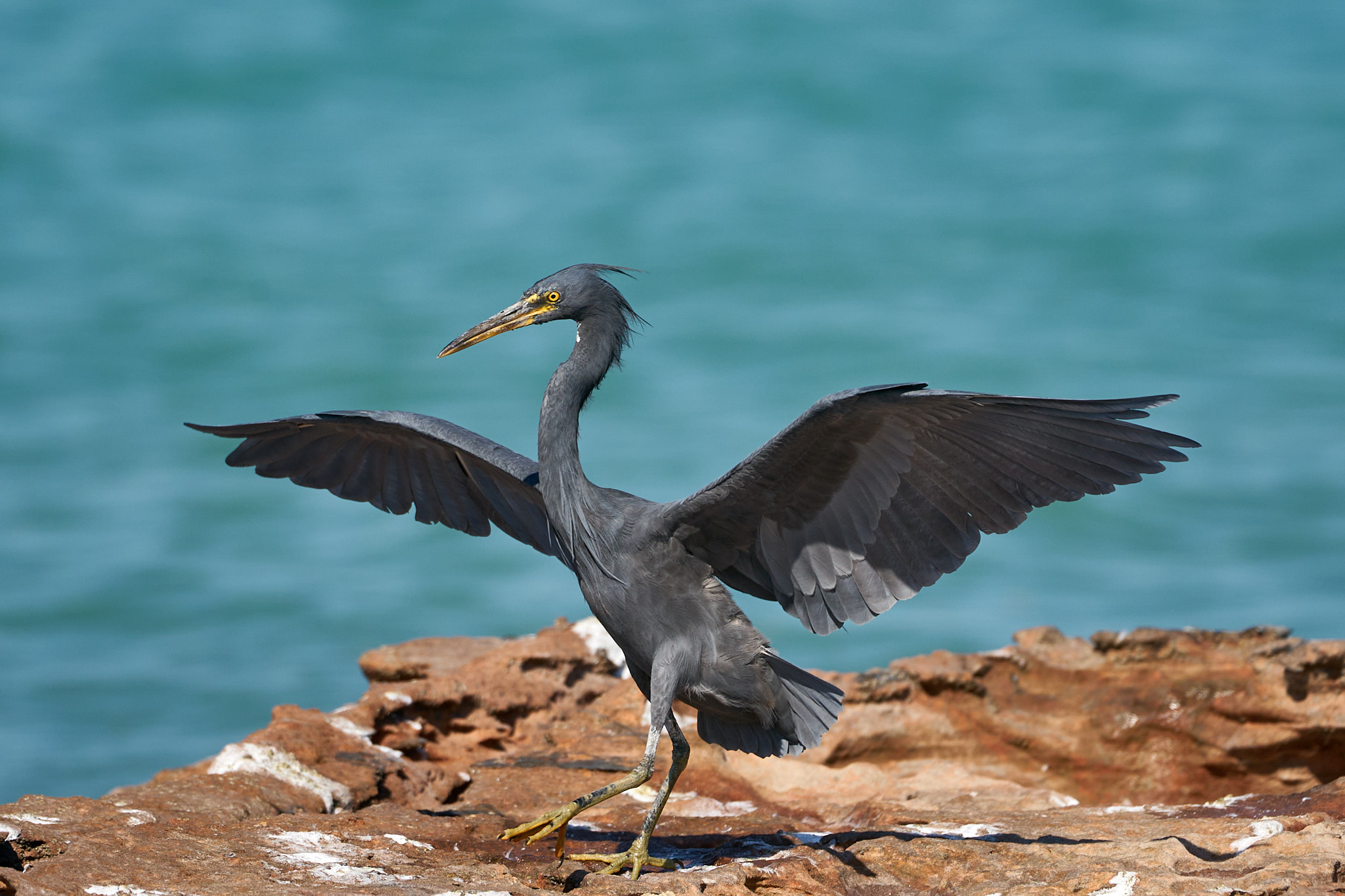
except they are both the same species, Egretta sancta (sacred egrets so named in 1789 because they were supposedly venerated by some Polynesians). They are found along rocky coasts in the Pacific ranging as far north as Japan and as far south as New Zealand. They are fairly common around the Australian coast except Victoria where they are infrequent and Tasmania where they are absent. There are plenty around Broome.
The popular name is Eastern Reef Egret but they are also called Pacific Reef Heron or any other permutation of the words. They are not the only egret or heron to occur in white and grey forms. In my experience the grey ones outnumber the white ones. The cause of the difference is unknown but stable polymorphisms like this can occur where two forms of a gene (allele) exist for a particular spot on a chromosome and having one of each (heterozygosity) confers an advantage compared to two of the same (homozygosity). The advantage may be due to body colour or it may be due to some other unsuspected effect of the gene combination.
The short greeny-yellow legs distinguish the white ones from other egrets. Distinguishing the grey ones from White-faced Herons should pose no problem if relatively sober.









 bobmcgee