Whiskers perhaps …

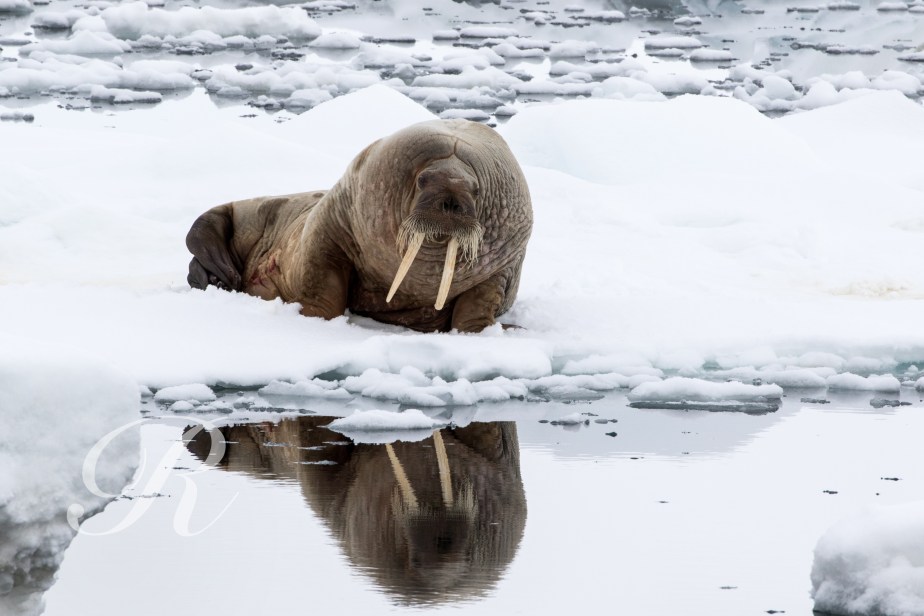
Our intrepid leader, Pete Oxford, had with him an underwater camera, lighting and the most heavy-duty waders I have ever seen. No wonder his luggage was slow to arrive. His hope was that he would be able to get close to a Walrus either under water or half above and half below. Given the puncture wounds we had already seen this was to be a hazardous venture.

But you don’t make the cover of National Geographic without taking a risk.

Pete Oxford … before.

But it was the turbidity that got him not the tusks.

The visibility under water was poor and this in the period when the sun doesn’t set. There can’t be much to see when it doesn’t rise. This is likely the reason that the Walrus has such impressive vibrissae …

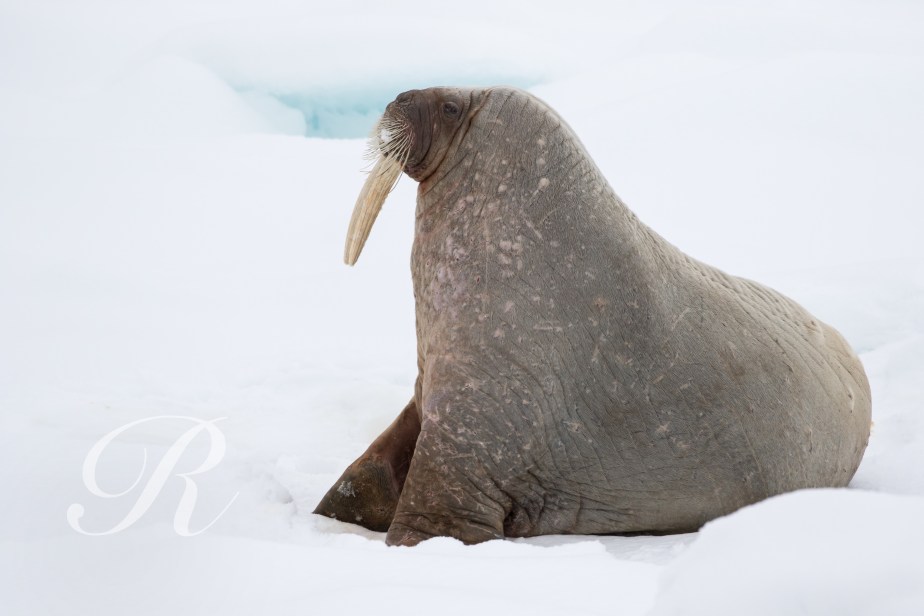
Walrus

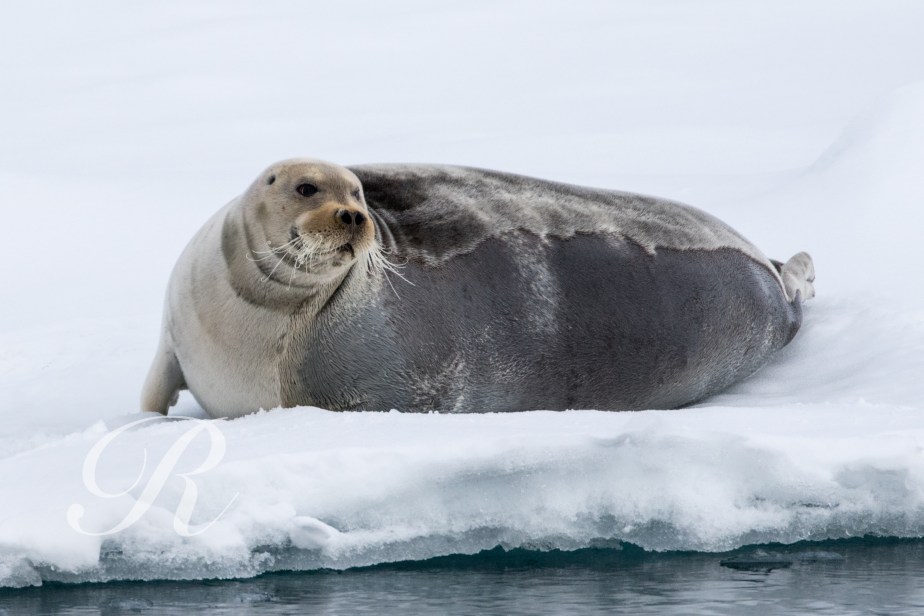
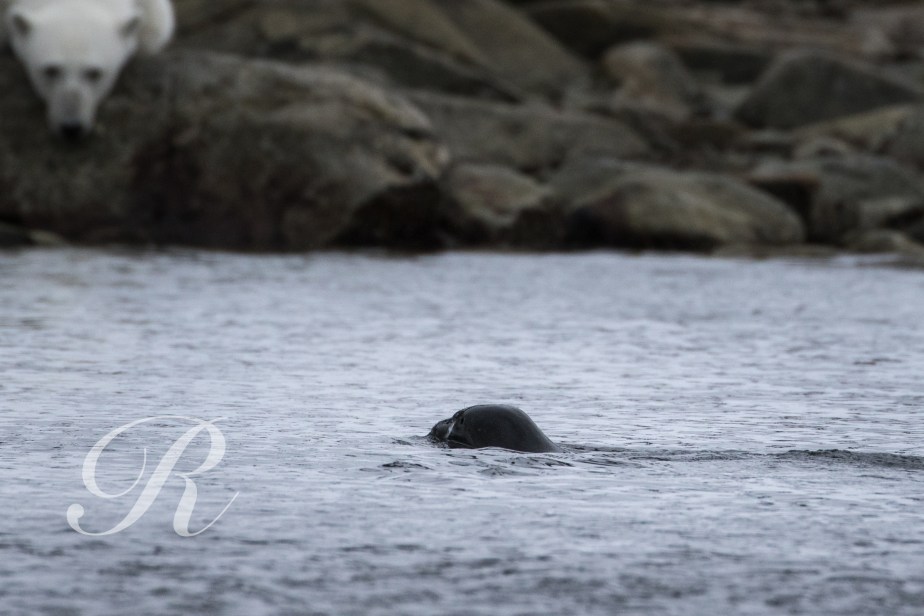
Likewise the Bearded Seal

Bearded Seal

As well as assisting in finding food it has been suggested that the whiskers help to find breathing holes.

Apart from the Walrus, sole representative of the Odobenidae, the remaining seals in the Arctic are all members of the Phocidae, True Seals. There are no eared seals above the Arctic circle. The Phocids are the master divers but the waters we were in are fairly shallow. The records all go to the Elephant Seals in the southern hemisphere.
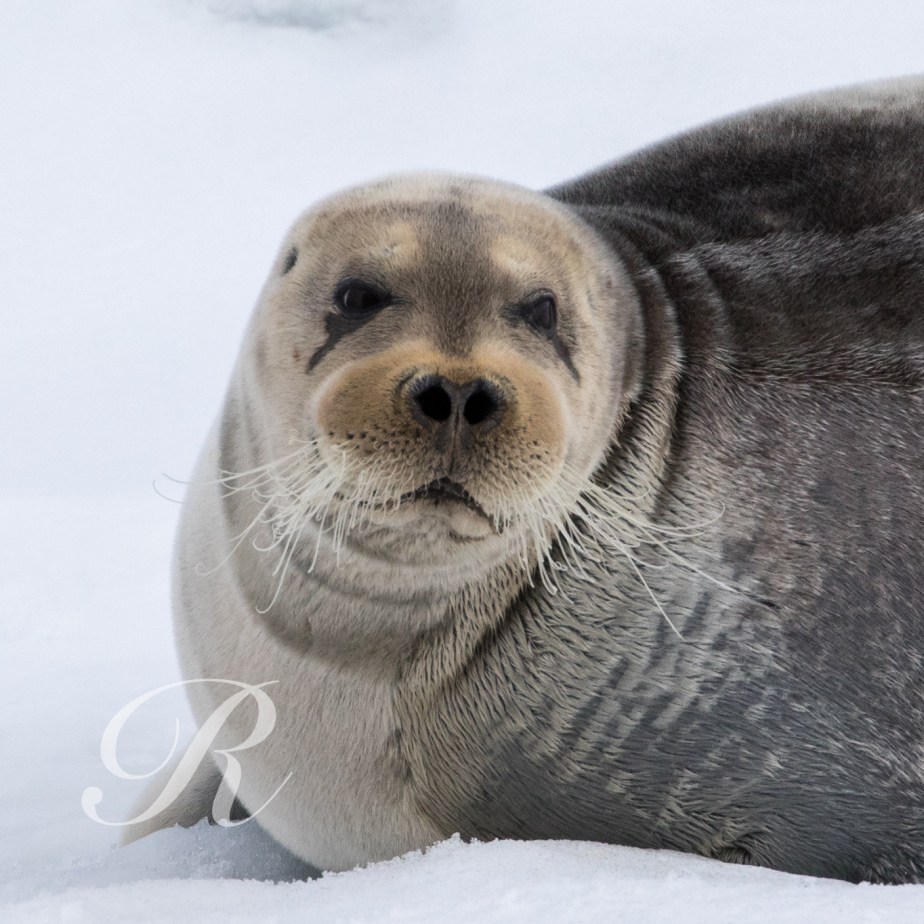
Bearded Seal
Bearded Seal

Among their adaptations for diving seals have nostrils that are closed at rest. It takes a muscular effort to open them to breathe. It may not seem much but it means that a little less oxygen is required when oxygen is scarce and energy is needed to pursue food. This can be seen well in the Harbour Seal photos below.
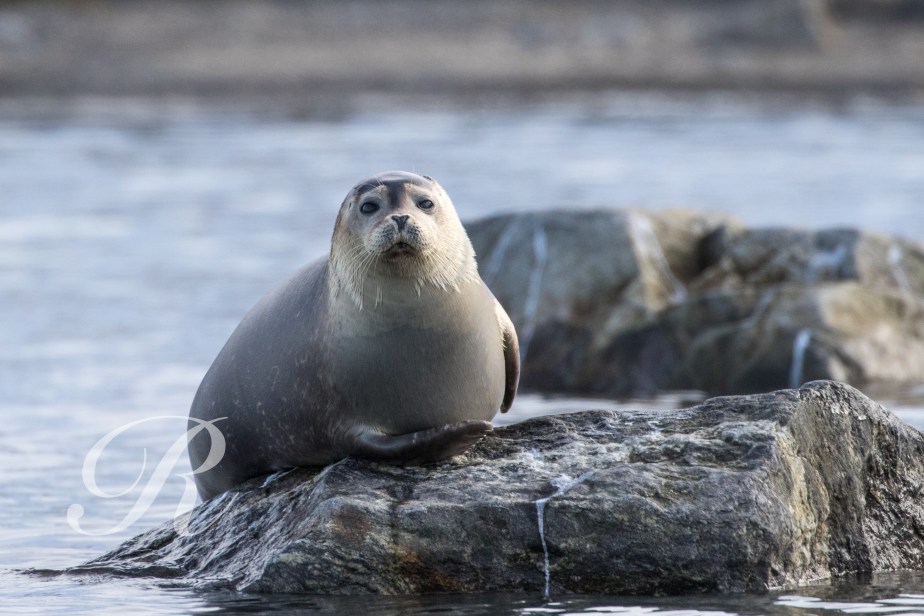
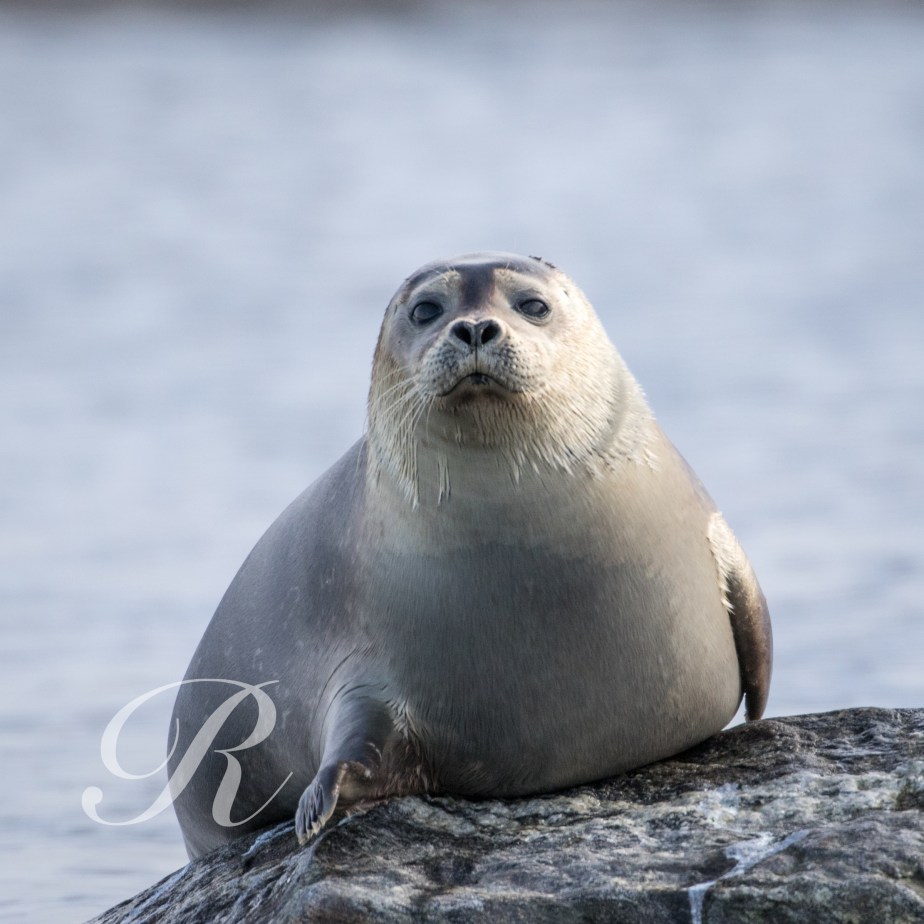
Harbour Seal – nostrils at rest
Harbour Seal

Even without a heart-shaped nose they look ineffably cute, you can understand why they have their admirers …

The Time Has Come …

The call came at about 2am. First encounter …

The time has come,the Walrus said, 
   To talk of many things:
Of shoes and ships and sealing-wax
   Of cabbages and kings
And why the sea is boiling hot 
   And whether pigs have wings.

   Lewis Carroll
Walrus

The seals and their allies are grouped as the Pinnipedia consisting of three families, the Phocidae – True or Earless Seals with about 18 species; the Otariidae – the Eared Seals, about 15 species; Odobenidae – the Walrus sole member of its family.

A newborn Walrus weighs about 55kg. Around Svalbard a fully grown male will be about 3 metres long and weigh about 900kg. Add about 10% to that for Pacific specimens.

They reach this impressive size mainly on a diet of clams which they identify with their sensitive whiskers, clear the shell of covering substrate with a jet of water from their mouth and then suck out the contents with a powerful piston-like movement of their tongue. Under no circumstances insert any part of your body into a walrus’s mouth.

They dive to a maximum depth of about 80 metres and generally do not stay submerged for more than about half an hour. As pinnipeds go this is small beer.

The Atlantic population plunged almost to extinction in the 19th century due to hunting for blubber and ivory. It is now on the way up again.

You may not find walruses particularly handsome but this one finds himself adorable. I nicknamed him Narcissus …

pining away …

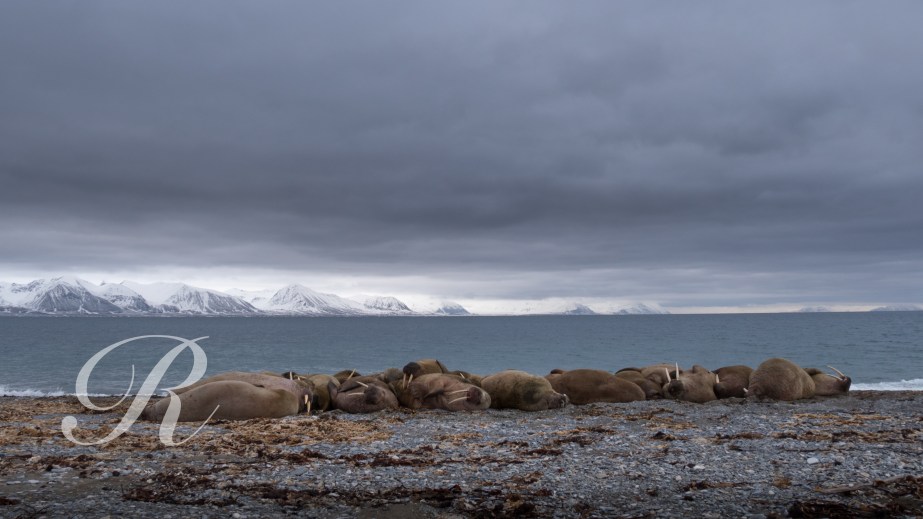
It is reported that their eyesight is poor. After watching them at a haul-out for a couple of hours I am amazed that any still have eyes at all.

I have about 3 000 photographs of Walrus. You may see more.

Arctic Wildlife …

High mountains and high latitudes are harsh places. There are not a lot of creatures that can make a living.

I have arrived in Longyearbyen a few days early for a cruise that will take me further north in the archipelago and have been wandering around the outskirts of town with my camera. It isn’t wise to go too far because one of the animals around here is quite happy to eat the adventurous.

Whilst I have seen only a small number of species I have had the time to get some photos …

Black Guillemot
Barnacle Goose
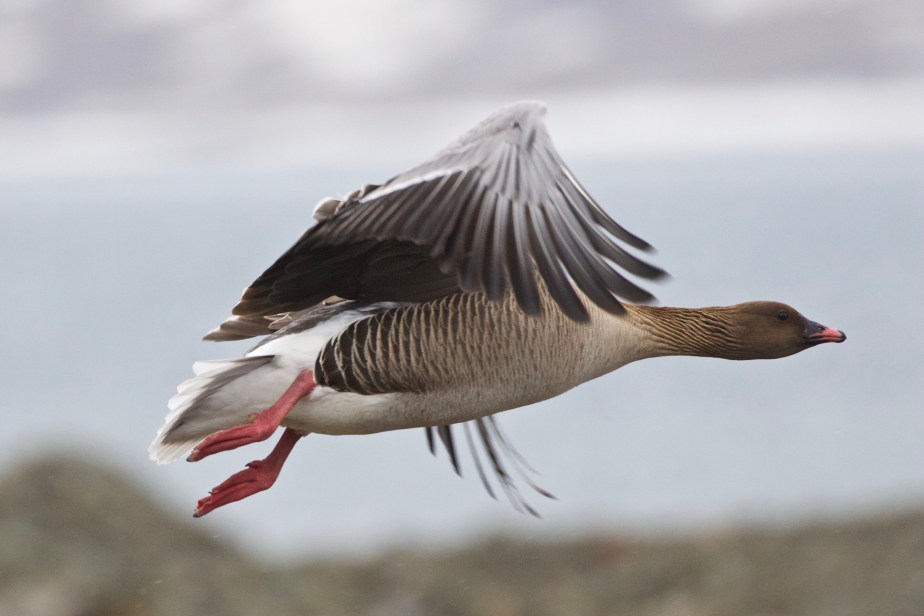
Pink-footed Goose
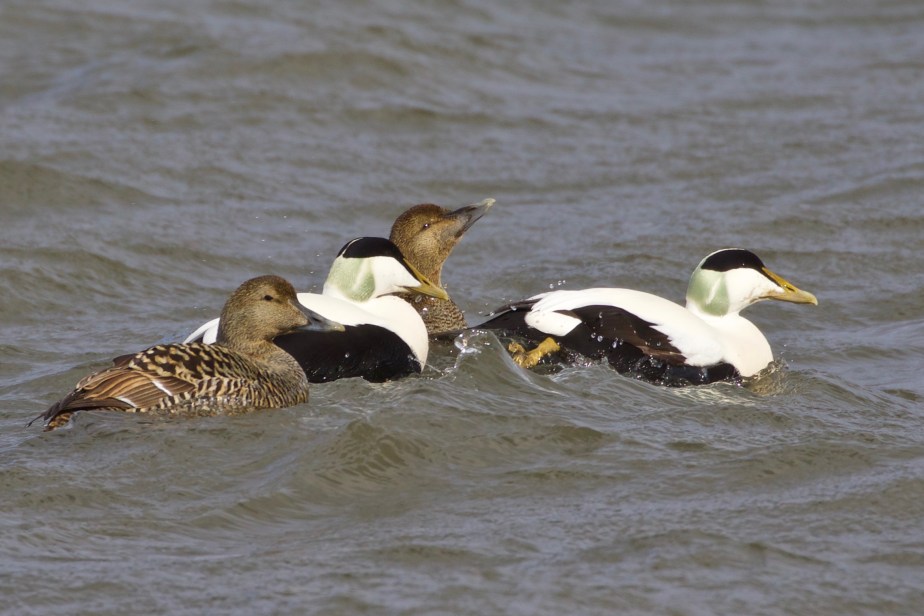
Common Eider
King Eider
Reindeer
Snow Bunting
Rock Ptarmigan

Autumn …

In this neck of the woods the leaves stay green, and for the moment the grass stays brown. Not for us the fall colors that give the American and English photographers fresh inspiration.

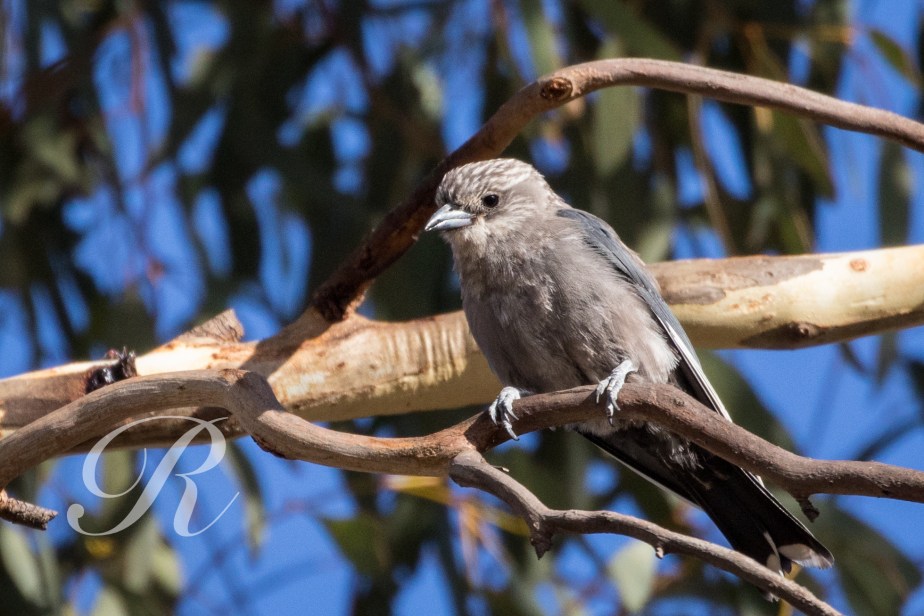
Walking in the bushland reserve just across the creek yesterday I saw dozens, perhaps hundreds of Dusky Woodswallows, many of them juveniles with their streaky heads. The reserve supports a couple of pairs that breed there most summers. The large numbers are the result of the previously dispersed population forming flocks and making their way north.

The Reedwarblers, Bushlarks and Sacred Kingfishers seem to have quietly departed already. Time to start looking for Swift Parrots and Flame Robins.

Dusky Woodswallow (juvenile)

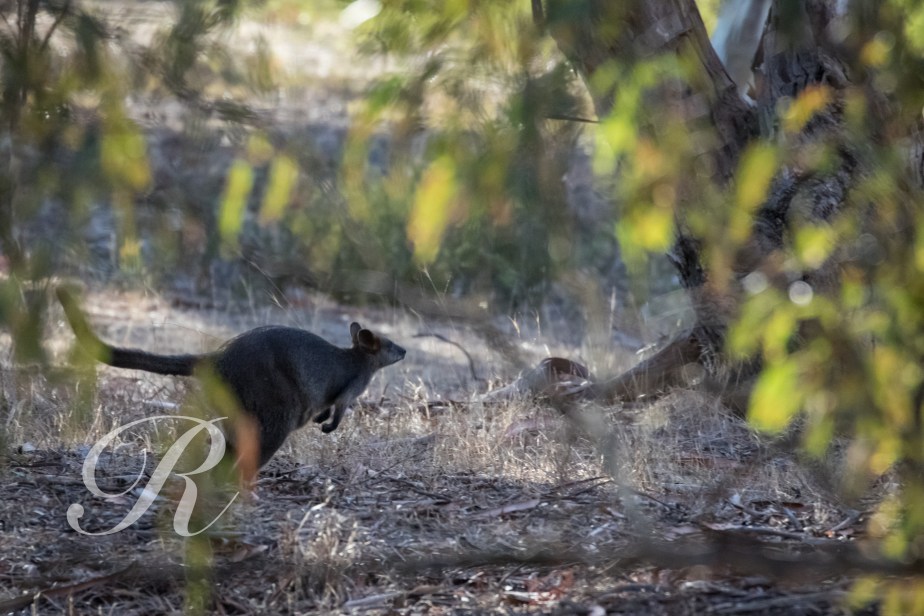
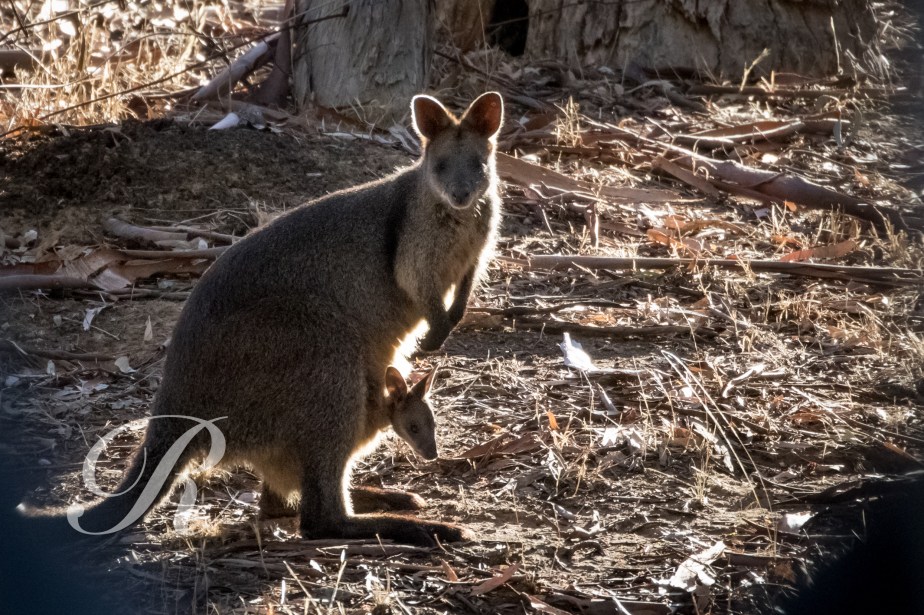
The Swamp Wallabies will be sticking around. At the moment they’re eating my grapes. I’m just about ready to pick what ever the birds and wallabies have left for me. Before the one above took off she gave me a moment of her time. Just long enough to grab this portrait of her and her joey against the early morning light.

Wallabia bicolor

Michigan …

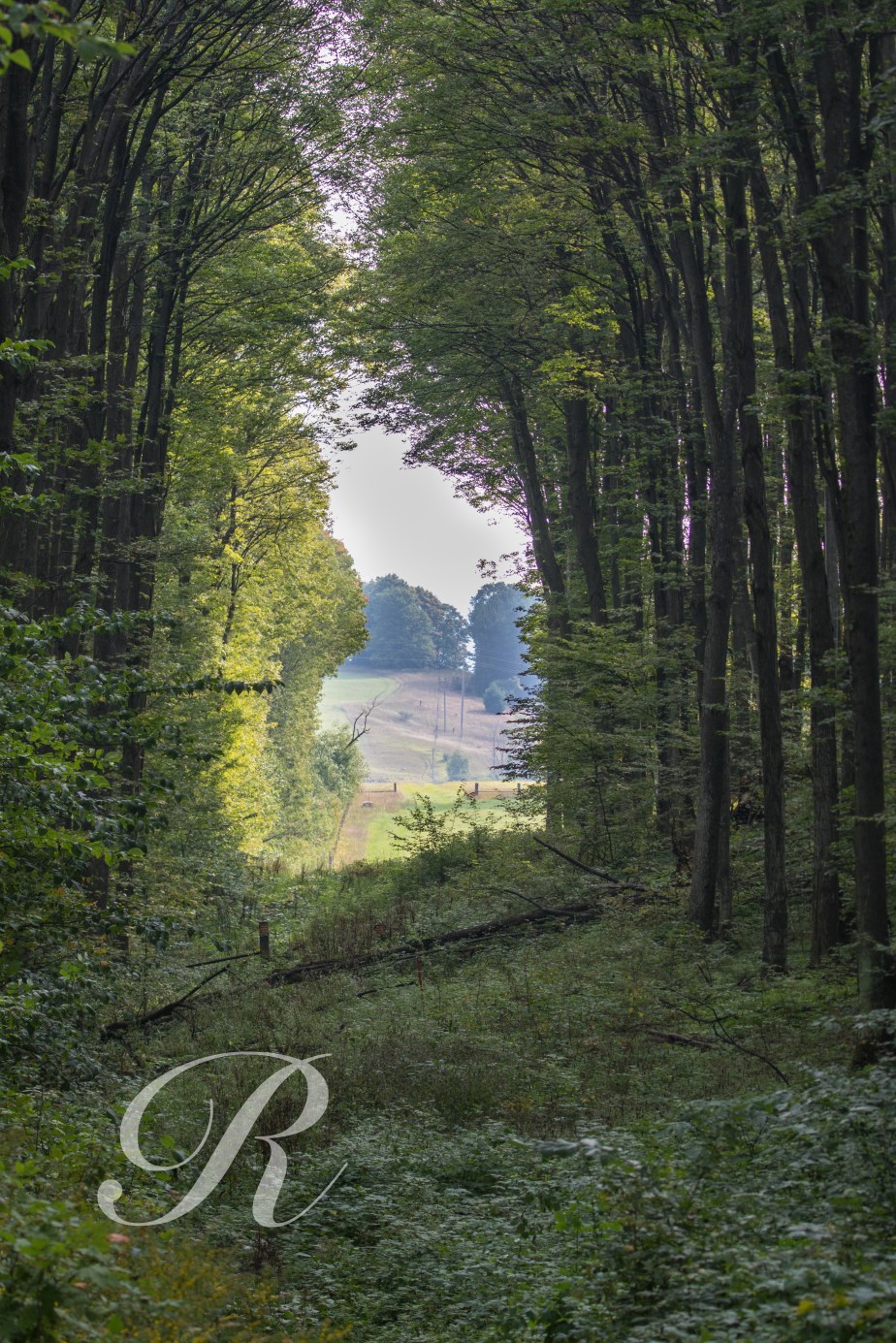
We bypassed Detroit and headed north up the peninsula. Population density fell away as we went, northern Michigan has some of the least populated areas in the eastern half of the US and some absolutely gorgeous forests.

Our destination was Boyne City where we would be staying with very generous friends for a few days. En route we stopped at Shiawassee National Wildlife Refuge. This is open to the public from June to October from an hour before sunrise until sunset. It’s a one way six and a half mile drive (10.4 km) mostly along an embankment giving good views over fields and wetlands. Views of the wildlife tend to be quite distant but it’s a good place to make the acquaintance of a few ducks, Sandhill Crane and Bald Eagle. Well worth putting on your travel plans next time you’re passing through Saginaw County.

Boyne City sits at the end of the north arm of Lake Charlevois an off shoot of Lake Michigan. We would get a cruise on both in our host’s very nice 40 footer. We also got to explore some nearby state forests and the Darnton Family Nature Preserve. Some of the highlights …

Green Heron
Common Merganser
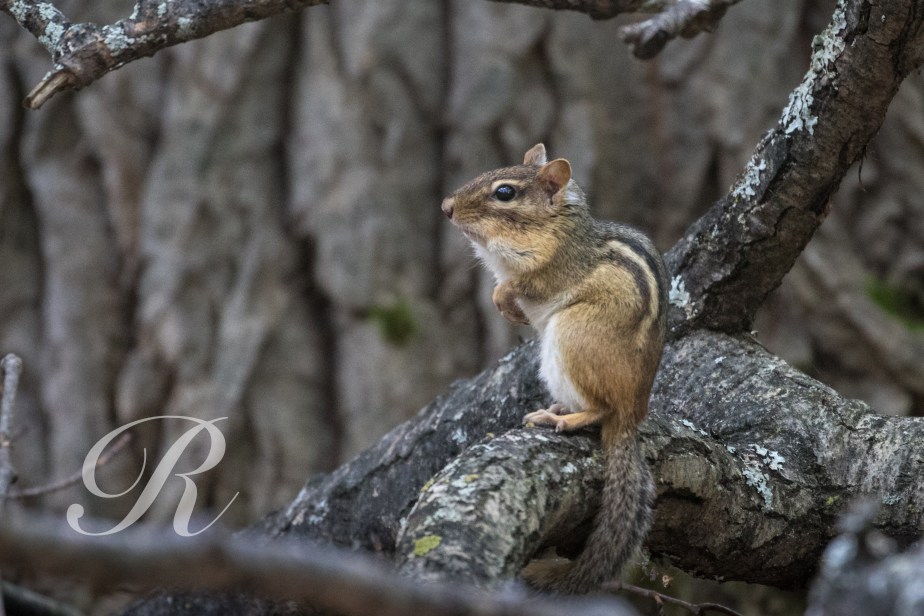
Eastern Chipmunk
Red Squirrel

Eastern Grey Squirrels were also quite common, a good proportion of them were black in colour, the melanistic form.

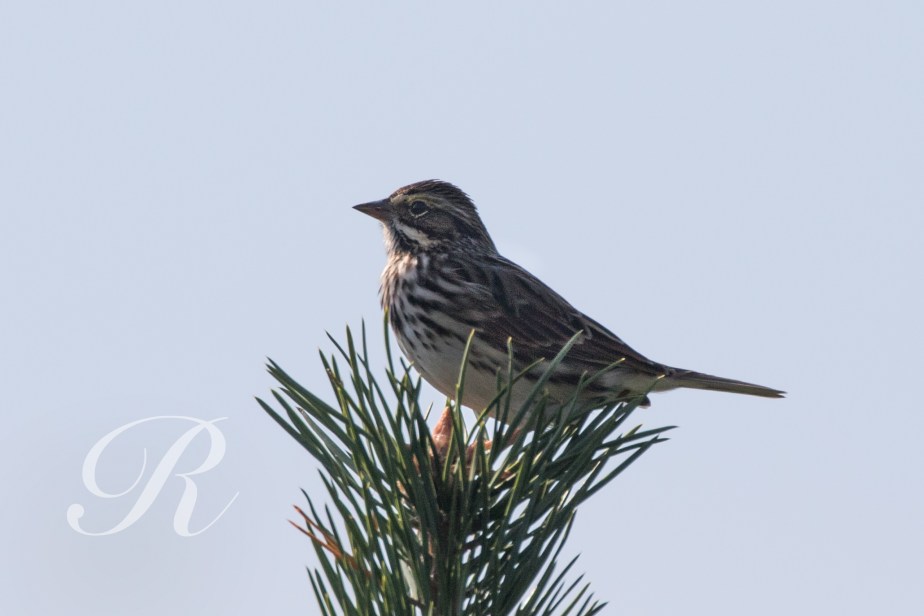
The American Sparrows are nearly as much fun as the Warblers. I might have to revisit them. One to keep you going …

Savannah Sparrow

Maumee Bay …

Australia’s national parks are actually managed by the states with grant money from the commonwealth. In Victoria a State Park has exactly the same level of protection as a National Park and is governed by the National Parks Act.

In the USA National Parks are Federal affairs while State Parks are run quite independently by the States. American State parks are quite different from Victorian State Parks. You are likely to find a golf course and tennis courts, you can take your dog, there is likely to be a full service camp ground and there may even be a nice hotel.

Maumee Bay boasts all of the above, although the dog can’t stay in the hotel (but there are dog-friendly cabins – prior notification required).

Natural values aren’t totally neglected. There is a boardwalk through marsh and woodland. It extends for a couple of miles and is an excellent way to work up an appetite for breakfast.

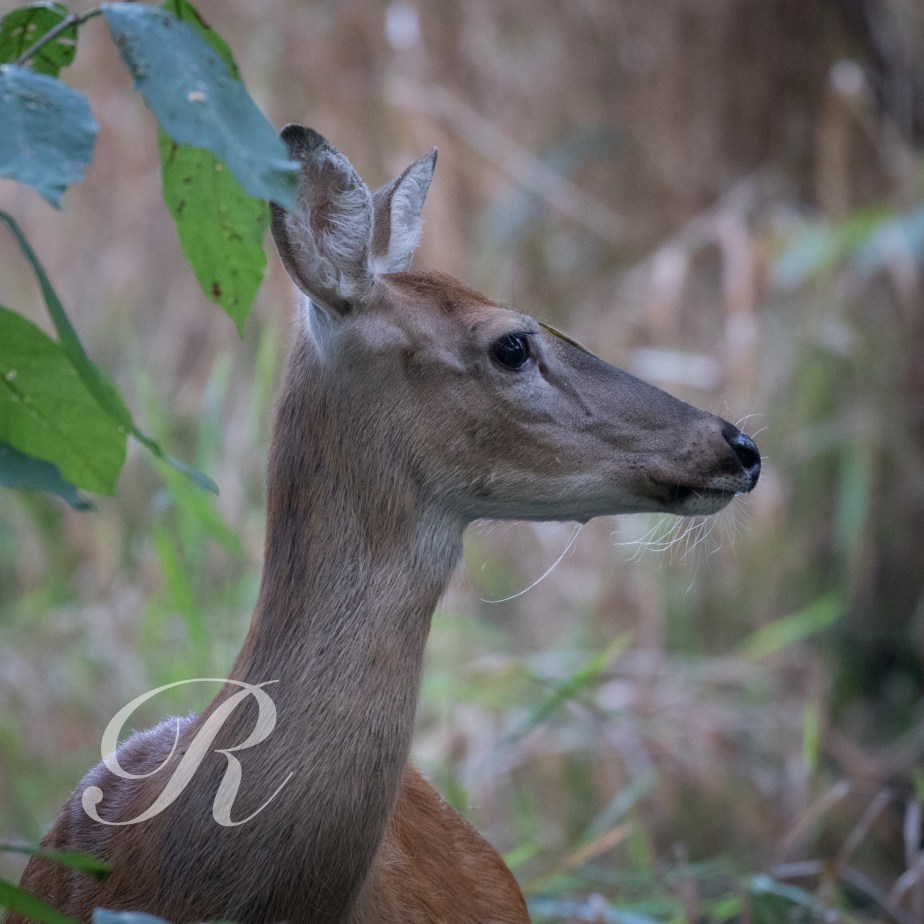
White-tailed Deer

Here’s the front end of an Eastern Fox Squirrel …

Eastern Fox Squirrel

… although it’s the rear end that earned it its name.

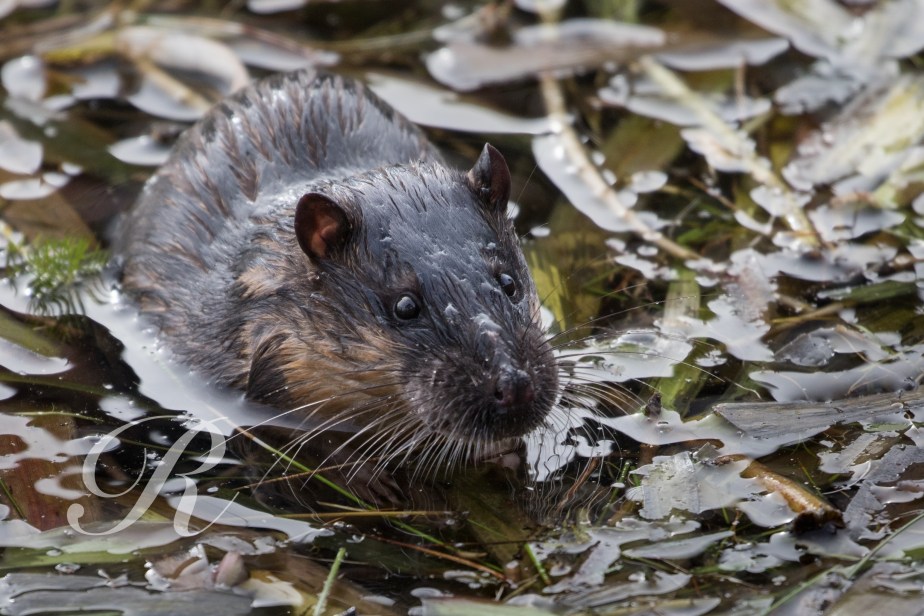
A night walk is sure to turn up a Racoon or three and there are Muskrat present as well.

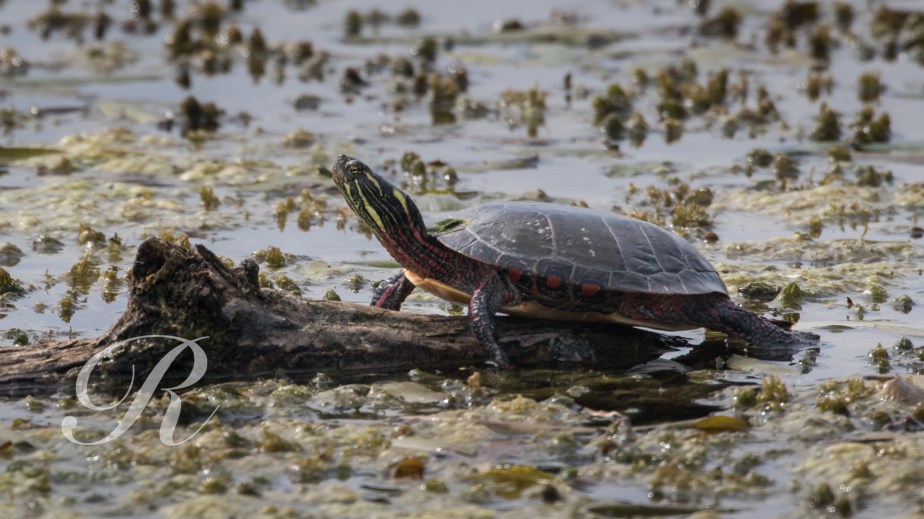
When the sun is a bit higher turtles might sit out to enjoy the warmth.

Midland Painted Turtle

There is plenty of bird activity. Red-winged Blackbirds are abundant, woodpeckers are plentiful, there is the odd sparrow. This Heron was intent on finding its breakfast and took no notice of me at all …

Great Blue Heron

Okefenokee …

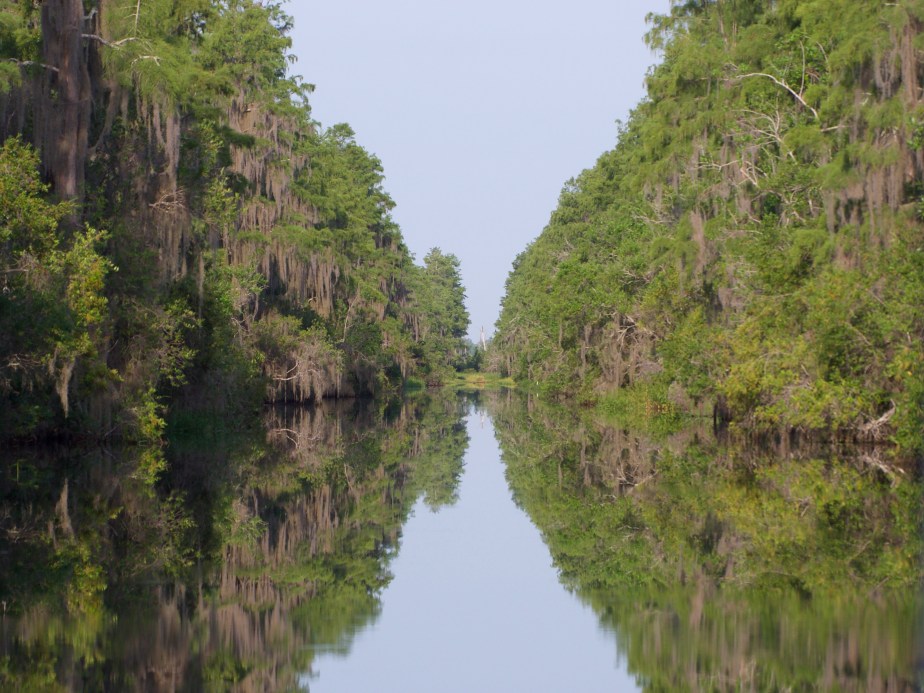
Down in the south-west corner of Georgia you can find the largest swamp in the USA, the Okefenokee. It covers about 700 square miles (1,800 square kilometres). It is the source of the Swanee River. Fifty inches (127cm) of rain a year provide the water. Shallow waterways wind through cypress trees and peat bogs, canoes are the simplest means of getting about. We settled for a motorised pontoon boat.

It’s a great place for Alligators …
… and interestingly, a great place for Black Bears who like to raid Alligator nests and plunder the eggs. Female Alligators guard their nests, large ones can fight off a bear, smaller ones are likely to come off second best. Since the swamp has been protected the bear population is recovering from past persecutions. None volunteered to be photographed.

It’s also a great place for birds, especially those with long legs …
Little Blue Heron

We got a glimpse, as well, of a pair of Sandhill Cranes.

The trees and shrubs in the swamp provide opportunities for a different suite of birds.

Barred Owl

The waters are acidic and nutrient poor, ideal for pitcher plants …
Rakali …
After Africa it’s harder to keep the dopamine flowing. No lions, no leopards, the only primates are wearing clothes and driving cars. But still life has its little surprises. Like this guy …

Hydromys chrysogaster

The latin name translates as water mouse with a golden belly. Lots of species are blessed with the name chrysogaster, it fits the Orange-bellied Parrot much better than this rat.

Its name was changed from Water Rat to Rakali to improve its image.

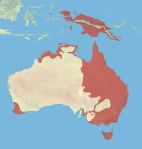
It is a rodent and it is native to Australia and New Guinea. It lives in rivers, lakes and sheltered marine bays. They’re quite omnivorous but prefer animal food when they can get it. They’re nocturnal when it’s warm enough for them but in Victoria in winter they feed during the day.

Which is how I came to find this one in Ballarat’s Lake Wendouree, yes this is the rat from Ballarat. It is quite widespread as you can see from the distribution map which I have shamelessly filched from Wikipedia …


Game Drive …

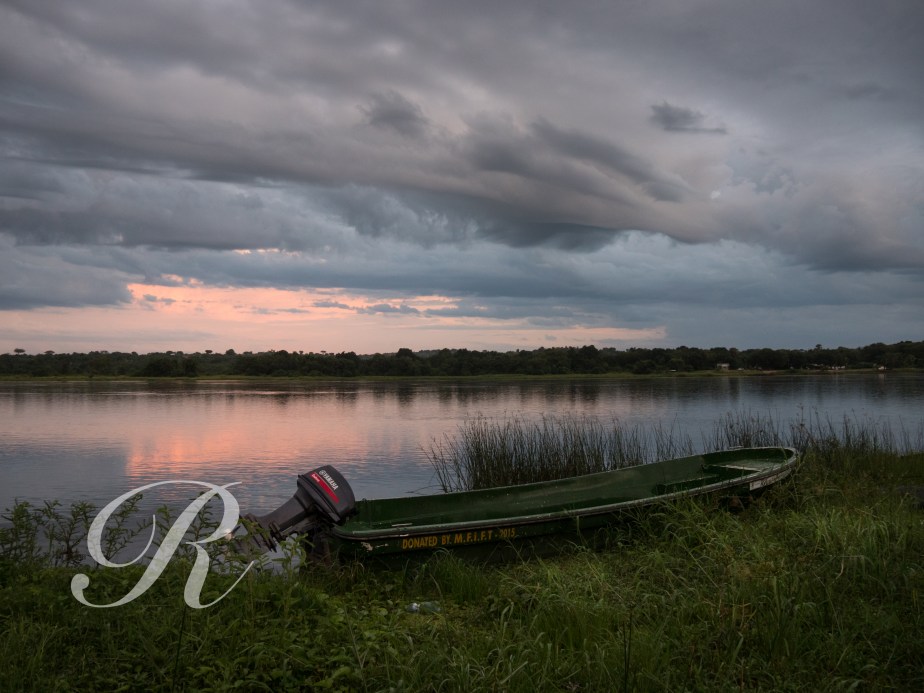
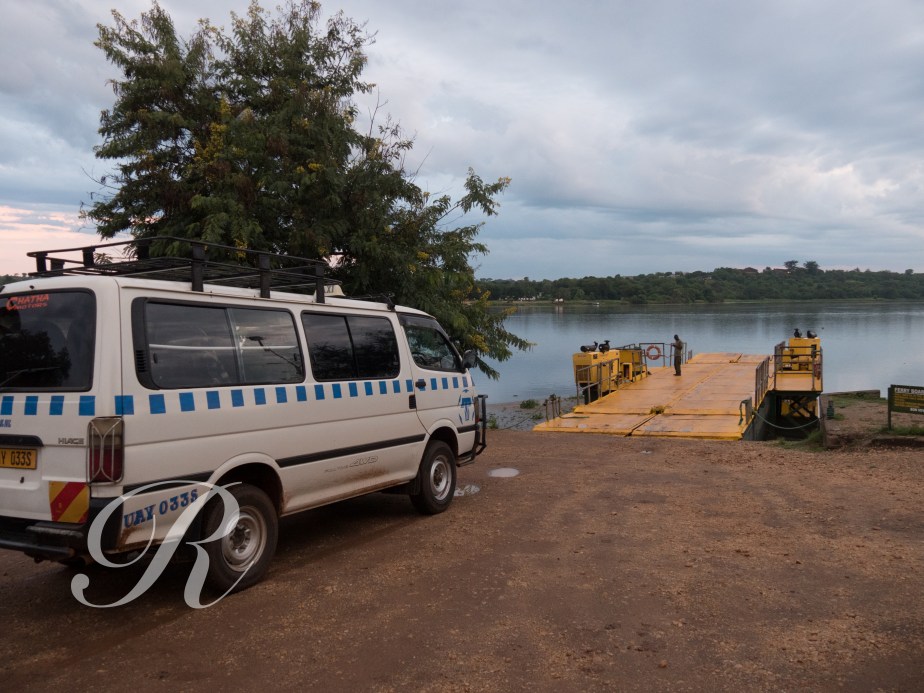
Dawn found us on the banks of the Nile, our taxi was first in line for the ferry …

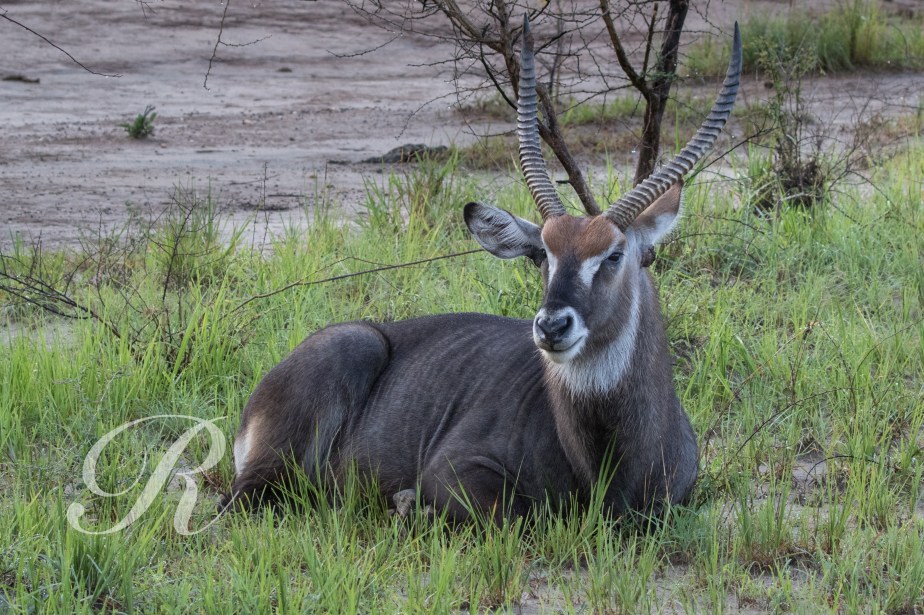
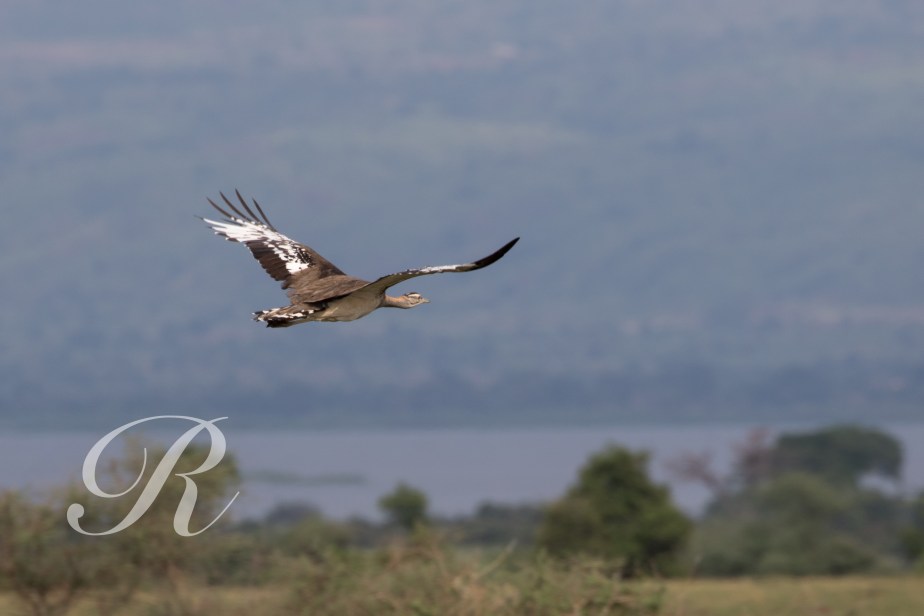
The savanna awaits on the north bank along with a severe case of pixel intoxication …

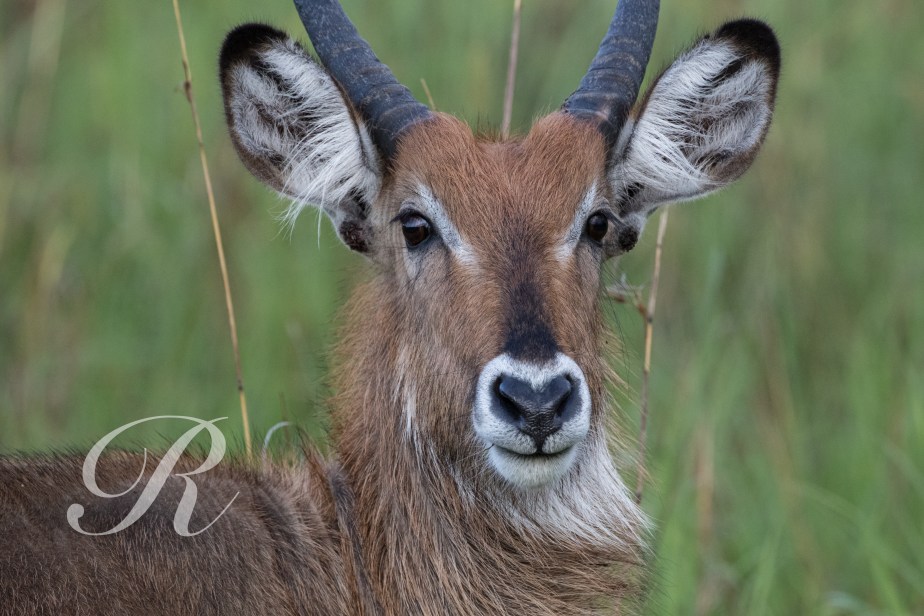
Waterbuck (m)
Waterbuck (m)
Denham’s Bustard
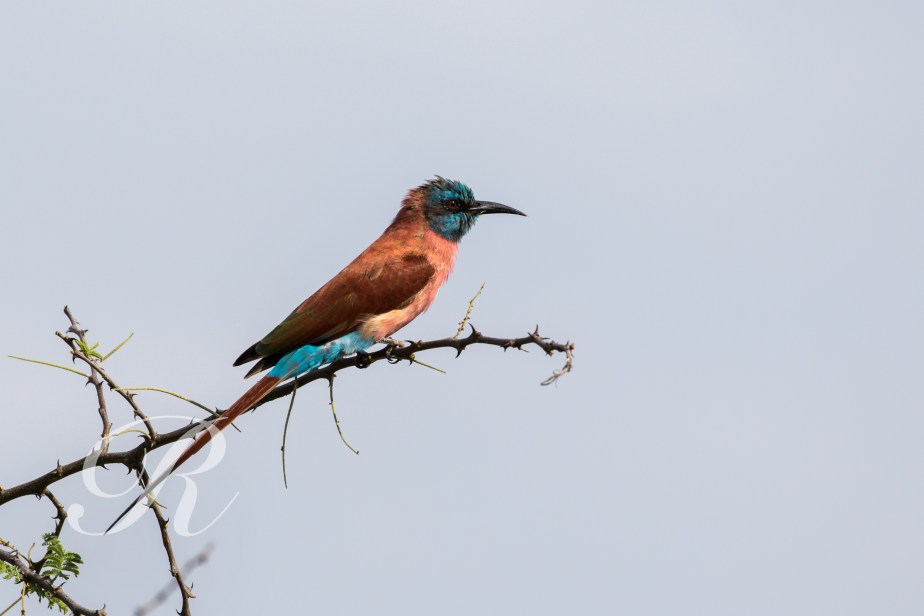
Northern Carmine Bee-eater
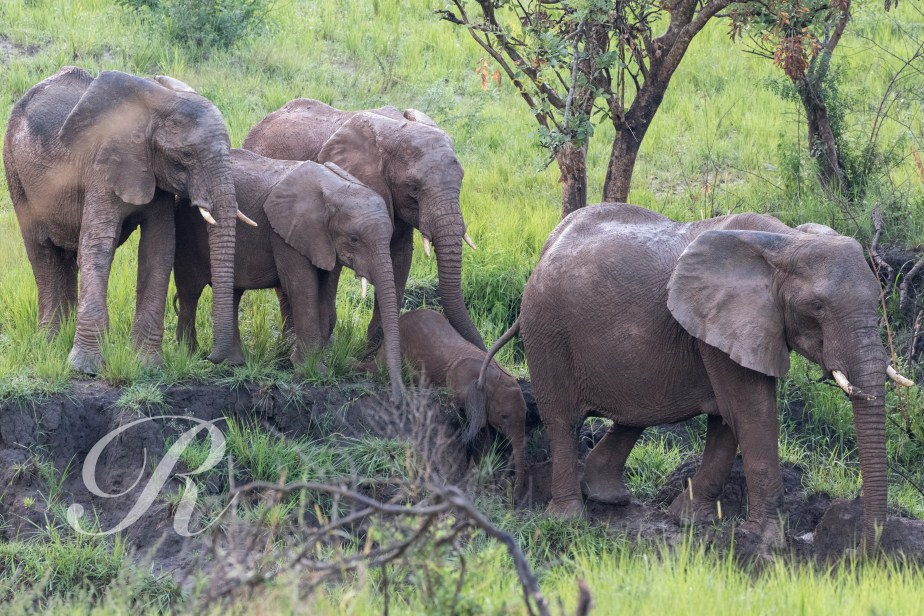
African Elephant
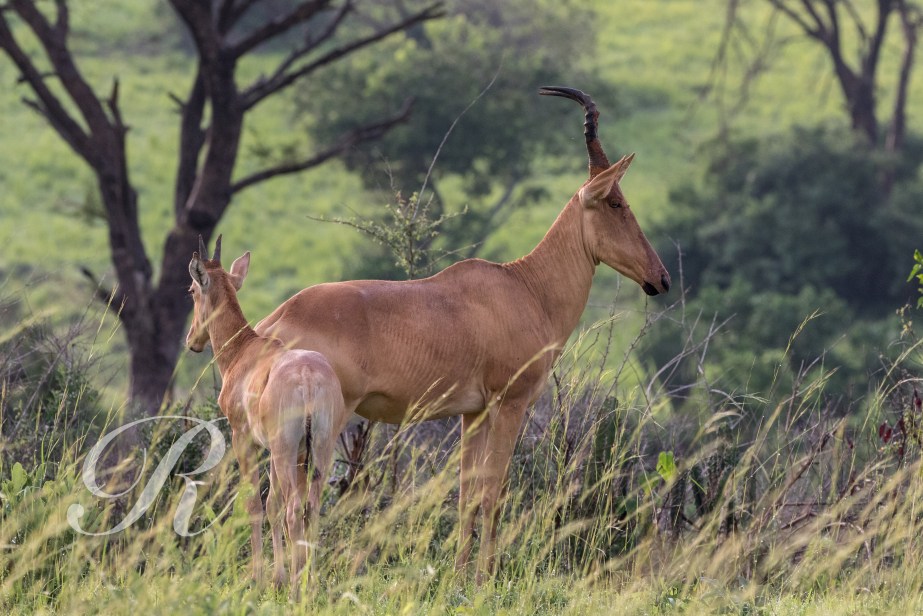
Hartebeest
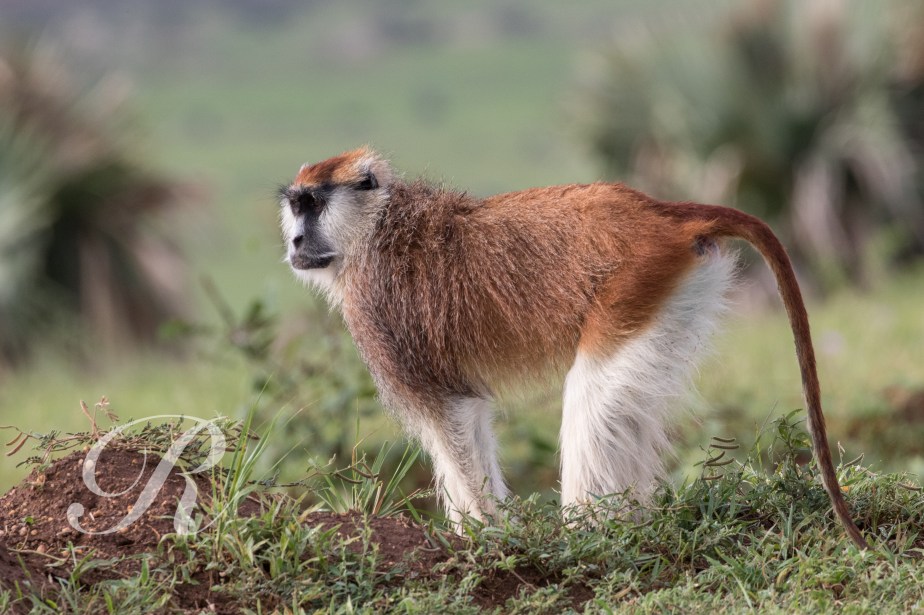
Patas Monkey
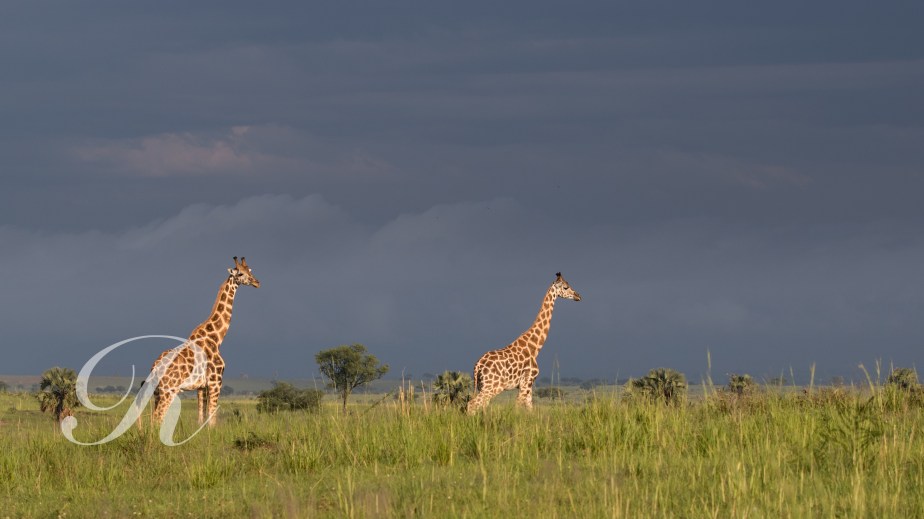
Rothschild’s Giraffe

What about that sky, the light was magical, and surprisingly not a drop of rain fell.

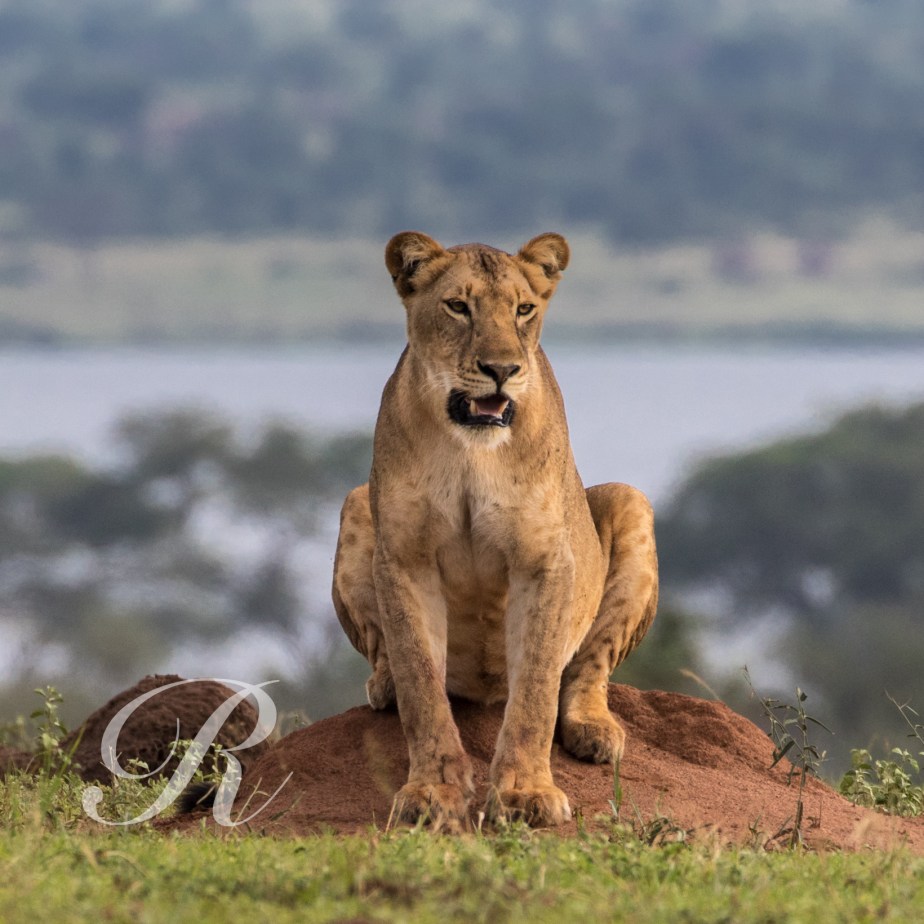
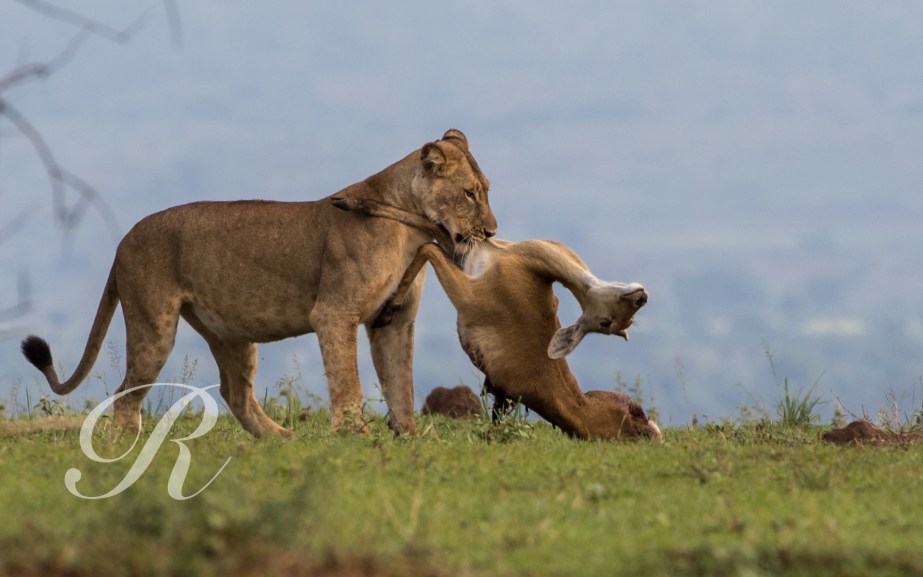
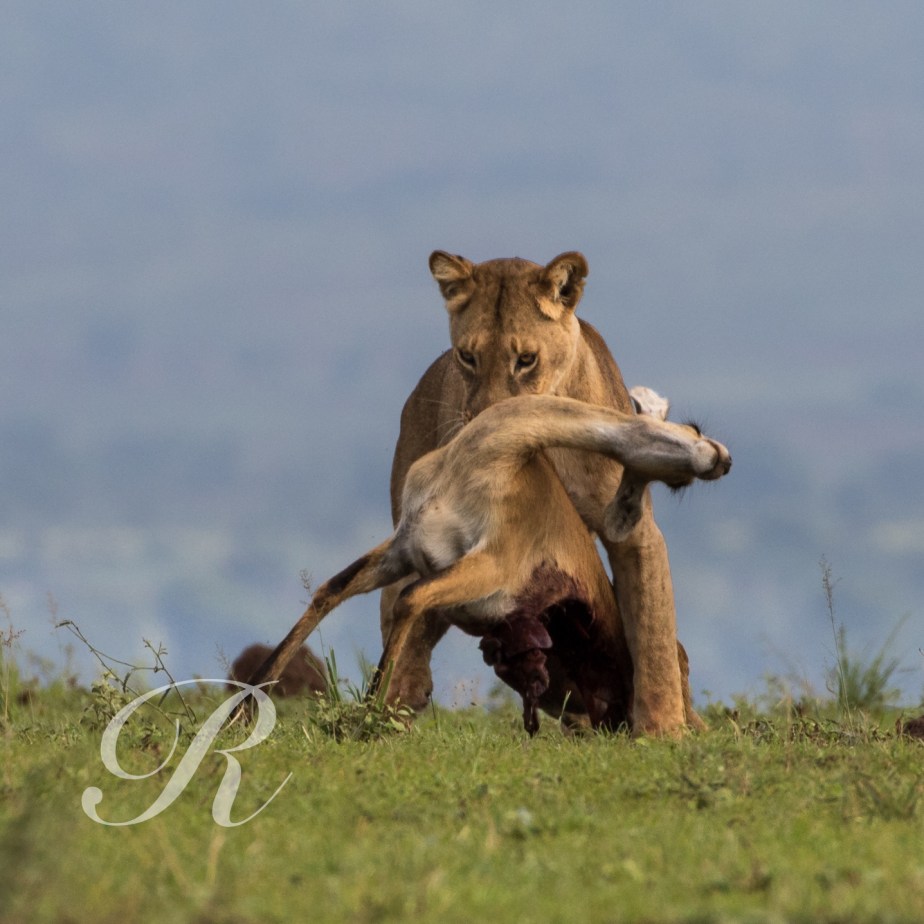
And then we encountered the lions …


The some very sharp eyes found these for us.

the Leopard is a very secretive animal. And if you delve into his secrets it could be quite dangerous for you…

Geoffrey Muhanguzi.

Leopard

This is just a fraction of what we saw, and we racked up quite a bird list to go with the mammals. Choosing which photos to include here has been very hard. If I went through the exercise again there might not be too much of an overlap.

All too soon it was over, we had to make the 11 am ferry in order to be out of the park before our 24 hours were up and we all became liable for another 50 bucks.

My advice, if you are visiting Murchison Falls National Park, stay longer and explore the possibility of staying in the northern section of the park.

Khao Yai …

Khao Yai was the first National Park created in Thailand. It covers an area of 2,168 square kilometres of forest and grassland and together with some surrounding protected areas form the Dong Phayayen-Khao Yai Forest Complex World Heritage Site which provides habitat for another impressive array of wild creatures.

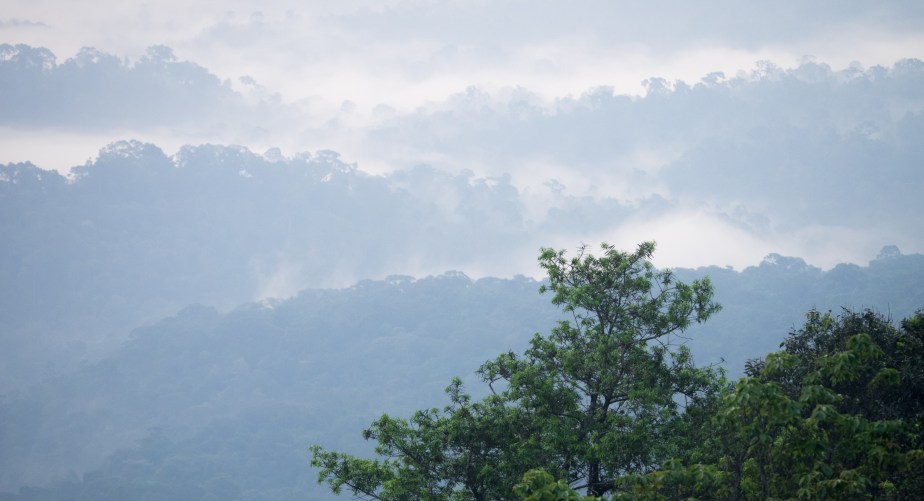
The morning mist, the splendour of the scenery, the certainty of seeing at least some of the wildlife and the fact that it’s just a three hour drive from the outskirts of Bangkok ensure that it is a well visited park. Weekends and holidays are best avoided, but if you have an interest in wildlife a visit at some stage is an absolute must. The Rockjumper birding tour I was on spent two full days in the park. Longer would be better, wouldn’t it always. If you are visiting independently here are a couple of resources that might help, thainationalparks.com and thaibirding.com.

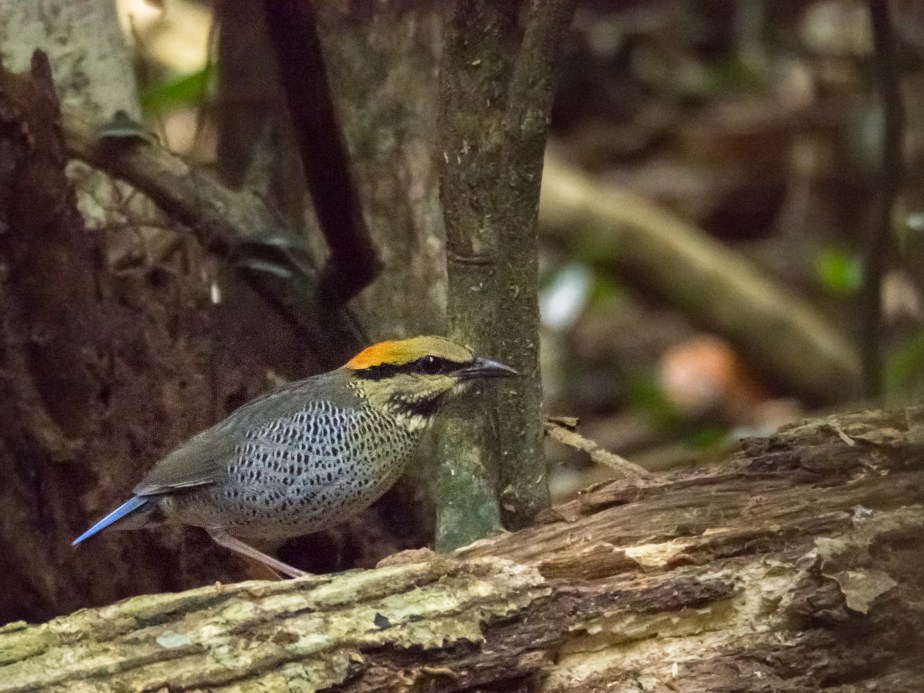
Birding highlights included Silver Pheasant, Blue and Eared Pitta, Vernal Hanging Parrot, various Barbets, Woodpeckers, nightjars and the Collared Owlet. A few birds were happy to pose …

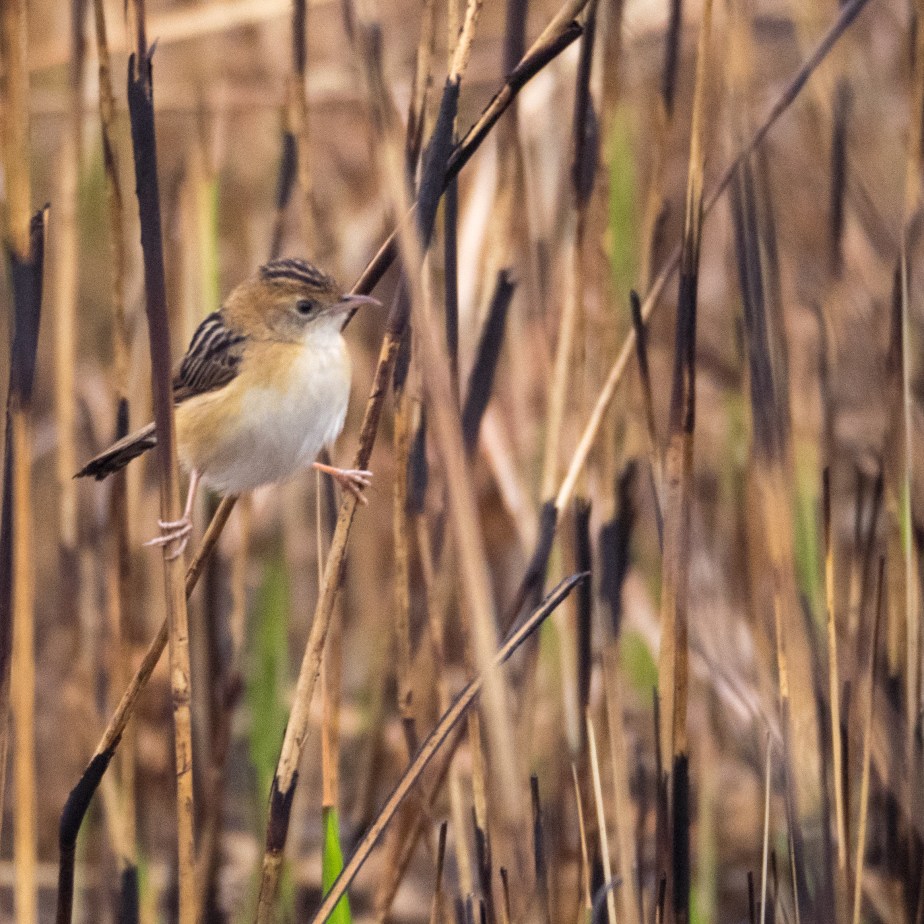
Golden-headed Cisticola
Mountain Imperial Pigeon
Moustached Barbet
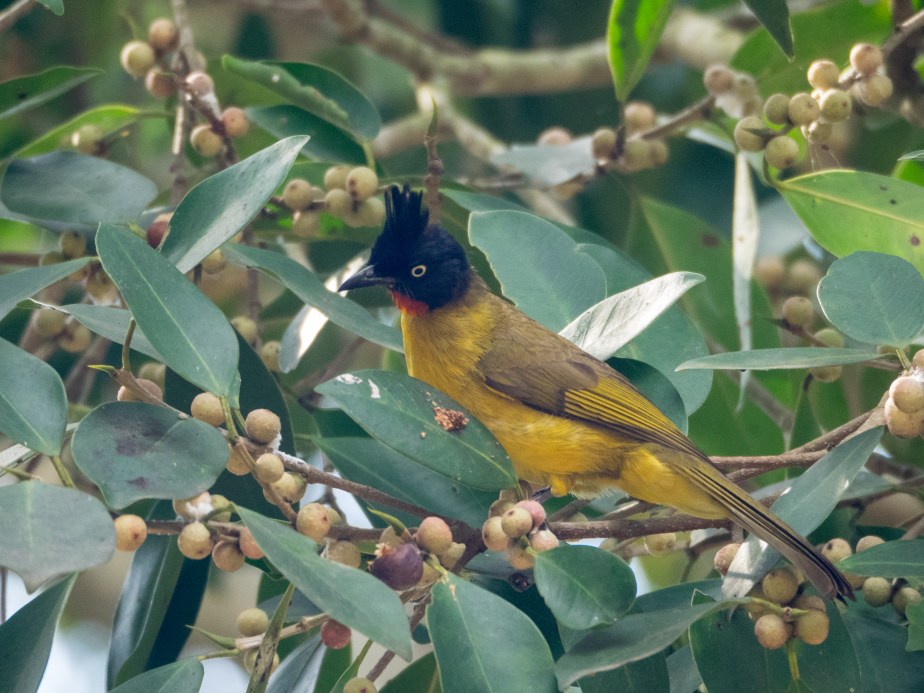
Black-crested Bulbul
Blue Pitta

Mammals that we encountered included Black Giant and Variable Squirrels, Muntjac  and Sambar Deer. The Sambar are unphased by the photographer’s close approach.

Sambar

Pig-tailed Macaques are a certainty, Gibbons much less so. There are two species present – Pileated, which we heard and White-handed which we were lucky enough to see.

White-handed Gibbon

This guy was accompanied by his wife and baby. The females are brown, the babies, of course, are adorable.

No matter how big you are a few metres into the forest and you’re virtually invisible. Last time I was on foot this close to an elephant I was running for my life (and Asian Elephants deserve the same respect that African ones do). However half a dozen people had already walked past it without it showing any sign of irritation and, in the forest, I was virtually invisible too … I hoped.

Asian Elephant