Live Fast …

… Die young. I have no particular objection to the first half of that particular motto but even as a youngster didn’t feel a great affinity with the second half. Nor has it been popular generally – not dying young is the reason we have a population that is on average getting older.

But, as I’ve said before, if I can have some extra please insert it in the middle not add it on the end. Anywhere in the healthspan will do fine just not on the lingering tail of the lifespan.

Increased life expectancy has largely been the result of public health measures, road safety legislation, improved medical services and an avoidance of widespread warfare. It’s all about keeping us from dying. Enjoying good health is quite distinct from merely surviving. This is where the user pays principle in healthcare cannot be avoided. It’s your body.  You will pay for what you do with it.

As a community we have shown a willingness to look after ourselves. Our intentions are good. We have, in the main, listened to good advice and reduced our smoking. We have also listened to dietary advice. Consumption of those things that we have been urged to reduce has gone down but nonetheless our weight has gone up. I think US data is good for Australia as well.

And the timing of the obesity pandemic is a bit suspicious …
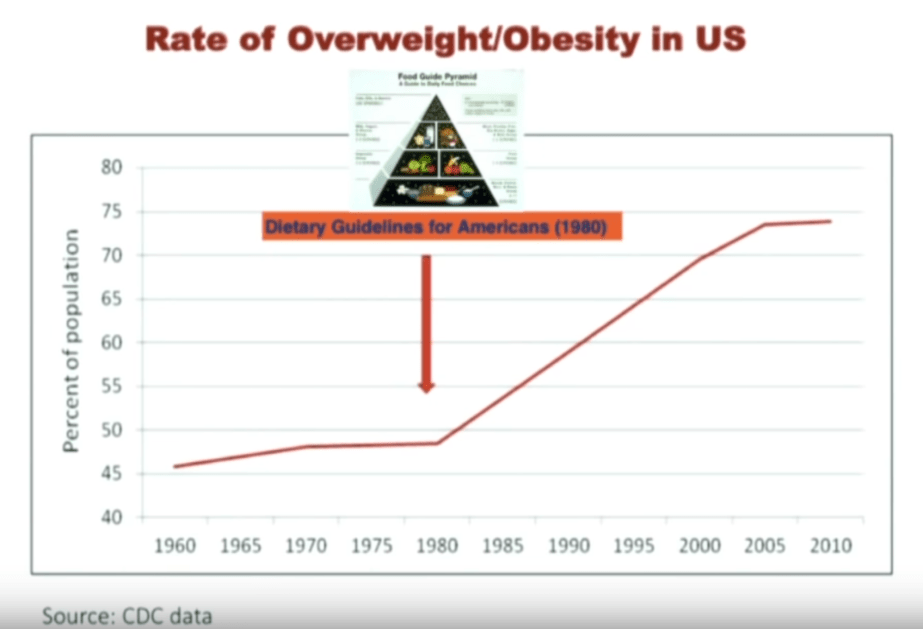
If I were defending the guidelines I’d be quick to point out that correlation is not proof of causation but hey, saturated fat was convicted on flimsier evidence than this.

So was it bad advice or simply an unequal battle against sugar – cheap, addictive and toxic? Nowhere in the guidelines did it say eat more calories but that is indeed what we’re doing.

Or is it, instead, a function of our ageing, a collective middle aged spread? If we turn our heads one morning, catch sight of our belly in profile and achieve enlightenment what should we do about it?
Too Much Exercise …

I was extolling the virtues of cycling to a cardiologist. I suspect that he wasn’t one to exercise a lot himself. His first response was to say “That’s all very well unless you rip off a plaque and pop yourself off with an infarct”. There followed a couple of digs about shaving my arms and legs before the coup de grace “It’s a J curve you know”.

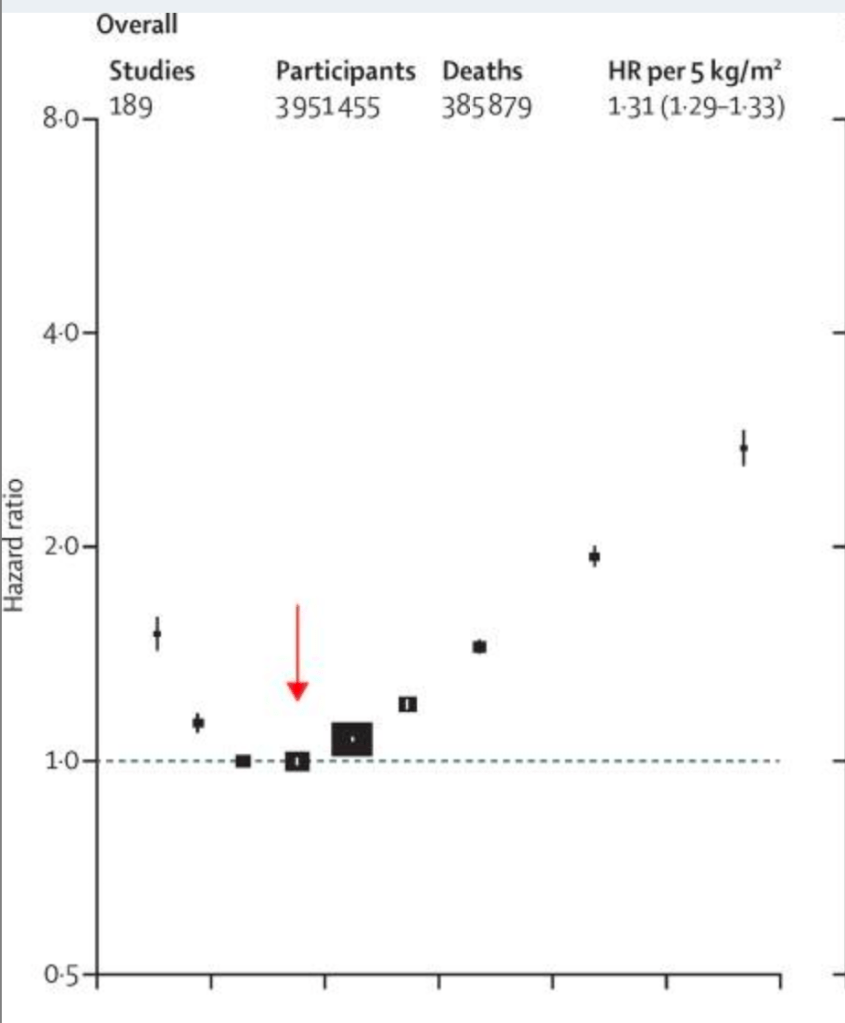
J-curves are not uncommon in medicine. Vitamin A for instance is essential, too little is bad for you, the right amount is exactly that while too much is harmful even lethal. Similar curves obtain for other variables such as weight.

From – Body-mass index and all-cause mortality: individual-participant-data meta-analysis of 239 prospective studies in four continents. Lancet. Aug 2016.

Body weight and all cause mortality are high to the right. The risk of death comes down with body weight but rises again to the left as weight reduces below the optimum.

My cardiologist friend was suggesting that  a little exercise would be good but too much would put me in an early grave. It is not hard to find evidence to support his point of view.

Lee et al evaluated the records of 23,257,723 Koreans age 20 yr or more who had undergone one biennial medical evaluation by the National Health Insurance Corporation. Their level of physical activity was assessed by questionnaire.

A reverse J-shaped risk curve was observed, with the lowest mortality risk in the participants exercising 4 to 5 days per week

A significantly increased risk of death was found in those that did not exercise and those who exercised 6 or 7 days a week.

There are problems with epidemiological studies based on questionnaires. If you ask people how much they exercise, eat, earn or if they’re unfaithful to their spouse you may not get a truthful answer. In a Norwegian study (Dyrstad et al) 1751 adults (19–84 yr) wore an accelerometer for 7 days and filled out a questionnaire regarding their physical activity. The discrepancy between the self reported and measured activity was revealing. For example men reported 47% more moderate to vigorous physical activity compared with women but there was no difference between sexes in the accelerometer data.

Their conclusion …

The present study shows large variations between self- reported and accelerometer-measured physical activity and sedentary time.

The general agreement between self-reported and accelerometer-measured  physical activity was poor

The questionnaire and the accelerometer came in the same envelope. The inaccuracy is unlikely to be due to intentional lying.

So garbage in garbage out.

A review article by Harvey B Simon, in the American Journal of Medicine 2015 entitled Exercise and Health: Dose and Response, Considering Both Ends of the Curve makes good sense of a confusing issue. It is well worth a read in its entirety. To save you the effort I will grab the key quotes but bear in mind that I am not without bias.

The benefits associated with regular exercise include substantial protection against heart attack, stroke, hypertension, peripheral artery disease, diabetes, obesity, erectile dysfunction, sarcopenia, osteoporosis, depression, dementia, and common malignancies such as breast and colon cancers. Regular exercise enhances the quality of life, slows the physiological consequences of aging, and promotes longevity.

Although these benefits have been widely publicized, only a minority of Americans exercise regularly.

It’s good for us but by and large we don’t do it. Could it be because it’s potentially fatal?

Despite the man-bites-dog publicity that announces the death of an athlete during competition, these tragic events are actually quite uncommon. Males are at higher risk than females in all age groups. Among young athletes, about two-thirds of these deaths are due to trauma and other nonmedical causes such as drug abuse and heatstroke; hypertrophic cardiomyopathy and congenital anomalies of the coronary circulation account for most of the cardiac deaths. Among National Collegiate Athletic Association athletes, the incidence of sudden cardiac death is 1:43,770 participants per year. In older athletes, unsuspected atherosclerotic coronary artery disease is the leading cause of cardiac events during exertion. Exercise can trigger events through mechanisms such as plaque rupture and ischemia-induced arrhythmias. The overall risk is low, amounting to 0.3-2.7 events per 10,000 exercise-hours in men.

If a heart attack is in your future it may well occur during exercise …

Sedentary men were 56 times more likely to have a cardiac arrest during exercise than at other times. Habitually active men had a much lower risk during exercise, but they were still 5 times more likely to have a cardiac arrest during exercise than at other times. However, men who exercise regularly had a 60% lower overall risk of cardiac arrest than did sedentary men.

It doesn’t take a lot of exercise to gain most of the health benefits

A 15-year study of 55,137 American adults reported that runners enjoyed a 30%-45% lower risk of all-cause and cardiovascular mortality and a 3-year life expectancy benefit as compared with nonrunners. Even running for 5 to 10 minutes a day at a pace over 10 minutes a mile was beneficial. Protection was maximal at about 150 minutes of running per week

But some of us are prone to obsessive behaviours, A study …

evaluated 204,542 Australians ages 45 to 75 years. Over a follow-up that averaged 6.5 years, there was an inverse relationship between the amount of moderate-to-vigorous activity per week and all-cause mortality. As compared with sedentary individuals, those who performed 10-149 minutes of exercise per week exhibited a 34% reduction in mortality; 150-299 exercise minutes per week was associated with a 47% reduction in mortality, and levels of 300 minutes or higher with a 54% lower mortality rate. In all categories, intense exercise was somewhat more beneficial than similar amounts of moderate exercise. No harm was reported even with the largest amounts of intense exercise.

No sign of a J curve in that study but Marathons are not obligatory.

And now for something lighter …

Burning Matches …

Training is of benefit because of the response it engenders. Exercise at a greater intensity than the body is used to (overload) will produce some minor muscular mayhem that will be followed by repair and restoration (adaptation) leading to a greater capacity for future exercise (increased fitness).

There is considerable science to support all this for which we are indebted to an unbelievably large number of athletes who are prepared to exercise to exhaustion while breathing through masks and surrendering muscle biopsies at intervals.

Not everyone responds to the same extent or in the same way to training and there are way too many variables to formulate a precise prescription for the best of all training plans. The gap between Sports Science and Sports Coaching is the realm of Art.

I think it’s a very reasonable assumption that more is better, until more is too much. You’ll know where the boundary is after you cross it.

Endurance events are completed (by and large) at a rate at which oxygen supply keeps pace with fuel consumption except perhaps for the last hundred meters or so. In order to improve that pace it has been the practice of many athletes to train at the very boundary of aerobic/anaerobic metabolism. A growing body of coaches believe that this is too high a risk for the rewards it brings. The same risks are there for the enthusiast but the rewards don’t include gold medals.

The currently fashionable answer is polarised training. It’s a combination of a lot of Long Slow Distance with a little very high intensity mixed in. The middle intensity around the lactate threshold is avoided.

The suggested mix is 80% LSD and 20% high intensity. The true believer measures this out with a stopwatch and a power meter. The less obsessed can simply burn a match on a hill or two or try for a personal best on the next Strava segment on their morning ride.

MAF …

I watch a bit of Youtube from time to time and among the offerings that Google thought appropriate for me was a video about MAF. I found myself watching a middle-aged Canadian waxing lyrical, well repeating himself enthusiastically at least, about his running. We had a bit in common. He had once been a fairly familiar weight, he had been in and out of an exercise regime, had run a marathon even but just couldn’t get it all to stick. I had gone through that phase in my middle age, too, although I was on the way down from a more athletic youth and I think he was on the way up but not quite getting it to fly.

No matter, now he was here to tell me that he’d just completed a thousand miles of running under the MAF method, he was certainly saved and we all could be too.

I didn’t get all the way through the video but I gave him a thumbs up, anyone who runs a thousand miles deserves at least that much encouragement, and googled the MAF method.

It’s the brainchild of one Dr Phil Maffetone. MAF is short for Maximum Aerobic Function although I suspect that its choice as a handle had much to do with it being the first three letters of his idol’s name.

There is nothing particularly original in the method. It’s a combination of Long Slow Distance, sensible diet, sleep and stress management wrapped in some slick promotion. Having said that though if I was middle-aged again and inclined to run it’s a method with much to commend it.

Before getting to the core of the process I can’t resist this little quote from Dr M …

What’s the best heart rate for aerobic training? The answer to this is individual, and key to building a great aerobic body. Many are familiar with the old heart rate formula: 220 minus your age, multiplied by 65% to 85%. But this method has no scientific or clinical basis.

So for you Dr Maf  suggests training at a heart rate no greater than 180 minus your age, plus or minus a small fudge factor based on a very crude measure of your current health and fitness! What could be more scientific or clinical than that? Should your heart beat too quickly stop running and walk until it behaves more decorously.

Dr Maffetone is also a keen proponent of regular testing in the form of timed runs once again staying within the prescribed heart rate range.

The great virtues of the method, and yes there are virtues here, are that niggling injuries and fatigue are minimised and the fuel burnt will be biased towards fat. Improvement in fitness, especially if you’re coming off the couch, will show in greater pace while running at the chosen heart rate. I’m sure that greater rates of improvement are possible if you push harder, but pushing very hard is a high risk strategy. This is not a method that will generate champions but it’s better to be a mediocre runner than a former runner.

In my experience the hardest part of running is getting changed and out the door. Once you’ve achieved that the rest is easy. So easy in fact that you may become over zealous and forget that you need to do it again tomorrow.

Will I be incorporating this approach in my cycling?

By the time I’ve deducted my 71 years from 180 there isn’t enough wriggle room to get over the nearest hill. Someone would have to follow with my wheel chair. So no,  I will continue to burn a match or two on every ride.


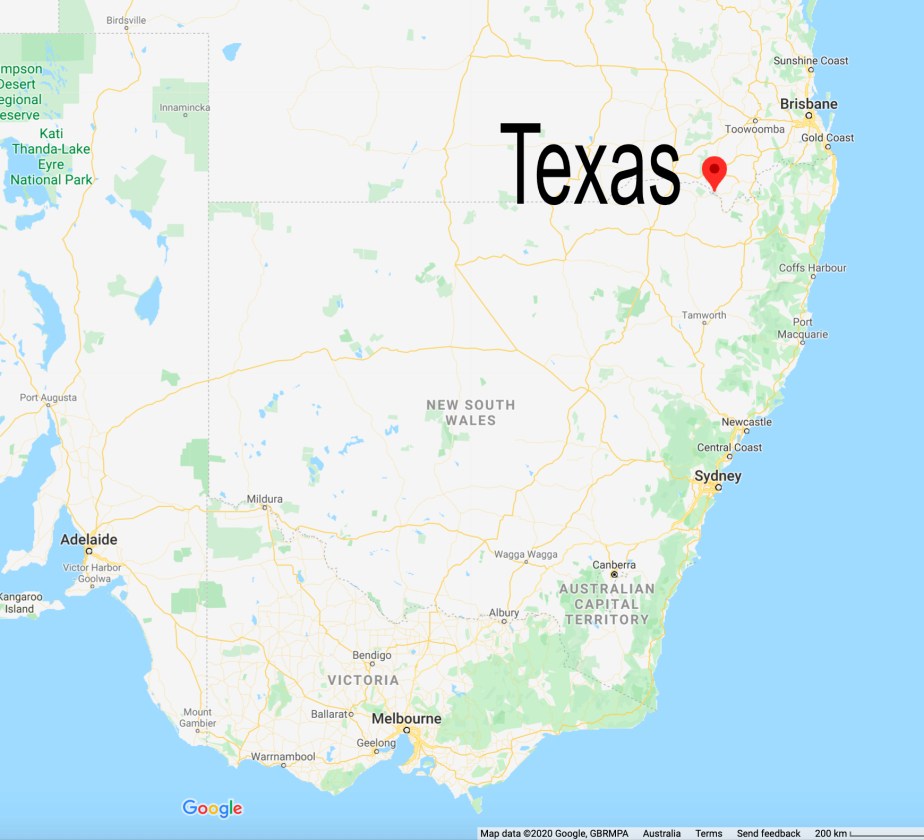
Gonna be crowded in Texas …

The morning bike ride took the McGees to the pleasant little town of Avoca. The Sunraysia Highway runs right through the main street. Three caravans passed us as we drank a takeaway coffee. Escapees from colder climes, the first we’ve seen in a while.

A lot of Victorians head north for the winter, a lot of Victorians have had to rethink their plans. That includes us. Mildura is Victoria’s warmest and sunniest town and that might well have been the destination of today’s convoy but it’s no substitute for Queensland where the border remains closed to us leprous southerners.

Texas, NSW is a little town just south of the Queensland border and just about as far north as a Victorian can presently get. They’ll need a refugee camp there before long.

The Phoney War …

COVID-19 reached Australia in late January since then according to this morning’s figures from the Federal Government there have been

7,185 people infected

103 deaths

6,606 people have recovered

By world standards we have scooted through virtually unscathed – almost 6 million cases and 367,000 deaths elsewhere. The Victorian State Government was recently declaiming loudly that at least 30,000 deaths have been avoided.

All of this achieved by a rapid and vigorous response that is now being eased.

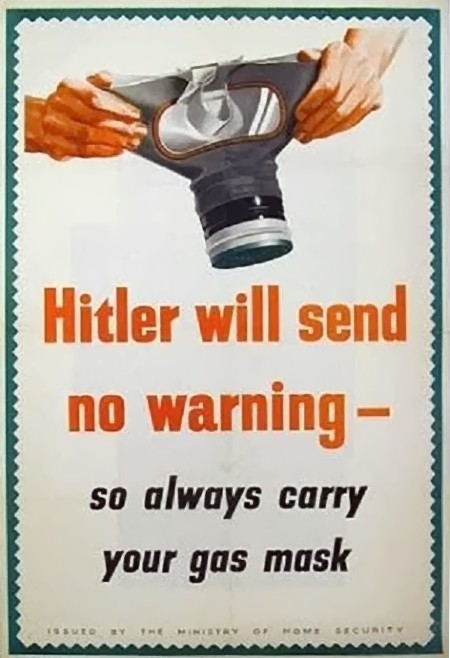
On 1st September 1939 Nazi Germany invaded Poland. Two days later Britain and France declared war. And then nothing discenible happened for eight or nine months. The period became known as the Phoney War. Many of London’s children were evacuated to safe places in the English countryside. These included my mother, her sister and their two brothers. My mother found herself reasonably comfortable on the country estate of one of England’s aristocrats. The boys were housed elsewhere in fairly primitive conditions and were being treated as unpaid farm labour. My Grandmother went for a visit, was appalled, rounded up the kids and took them back to London … just in time for the Blitz.

Australia has declared war on this virus. It has shut its borders, external and internal, shut down its economy, thrown a huge number of people out of work, sent a major proportion of its businesses to the wall and abrogated the freedoms of movement and assembly. In short it has mobilised its armies and spent its treasure. The enemy has bided its time.

Victoria has been especially zealous. The people have barricaded themselves behind a wall of toilet paper, the government has banned golf, hiking and fishing, the police have been throwing fines around like confetti, going as far as pinging a stand up paddle boarder in splendid isolation on Port Phillip Bay. In the ACT the police haven’t found it necessary to issue a fine and the police in NSW have issued far fewer. I have been wondering how long it would be before Victoria Police began shooting us for our own protection.

But we won the war, right?

Well, no. We are in exactly the same peril as when we started. We have a naive population, no herd immunity and the virus is still present in the community. The phoney war may soon be over.

For those struggling to pay the rent or fend off bankruptcy it must be sobering to know that without the lockdown most of them would have recovered from a mild illness by now and be back at work.

Everesting …

The Strava Climbing Challenge is to cycle up 7500 m (24,606 feet) of climb in a month.

It’s not especially mountainous around the Victorian Goldfields. In cycling 1266 km so far this month my climbing adds up to a mere 4998 meters. So if I cycle around randomly I’ll have to push the distance out to

7500/4998X1266 = 1899.759903961584634 km.

That degree of precision is probably unwarranted. Let’s call it 1900 km or 2000 to be safe. June only has 30 days.

Obviously it would be more efficient to find a decent hill and go repeatedly up and down it. This is not a novel idea. George Malory, inspired by his grandfather also George Mallory and quite possibly the first person to climb Mount Everest in 1924 (He died on the way down) came up with the idea of going up and down a suitable hill until the Everest equivalent of 8848 meters (29,029 feet) were in the bank. Mallory did this on Victoria’s very own Mount Donna Buang in 1994.

Winter snowfall in Victoria commonly reaches down to 1200 meters, Mt Donna Buang stands at 1250. It’s a short 89 km drive from Melbourne so it’s the place where most of Melbourne’s kids get their first feel for snow. A short drive there, heaps of fun stuffing snow down each other’s necks and a long miserable drive home – a rite of passage for parents and children alike.

Everesting now has rules and a Hall of Fame which I’m unlikely to be joining any time soon. A desirable hill is as steep as you can manage to keep the horizontal component short and as straight a route as possible so that you can descend safely even with your brain in a fog of exhaustion. A relatively short course with many repetitions may be preferable to a very long course.

That’s the lovable Dr Oliver Bridgewood PhD from Sheffield UK which is where I studied for my first degree. The accent brings back a lot of fond memories. If I was obliged to endure England’s execrable climate again Yorkshire is where I would choose to do it.

Ollie ground out his Everest in a shade under 16 hours so assuming an even pace throughout he earned his Strava Climbing merit badge in 7500/8848X16hours or just 14 hours.

That of course is not a record. In recent weeks Keegan Swenson knocked off the 8,848 meters in an impressive 7 hours, f40minutes, and 5 seconds. He’d have got his merit badge in about 6 hours and 45 minutes and I need a month!

Job Done …

It was a late lunch but gee I enjoyed it.

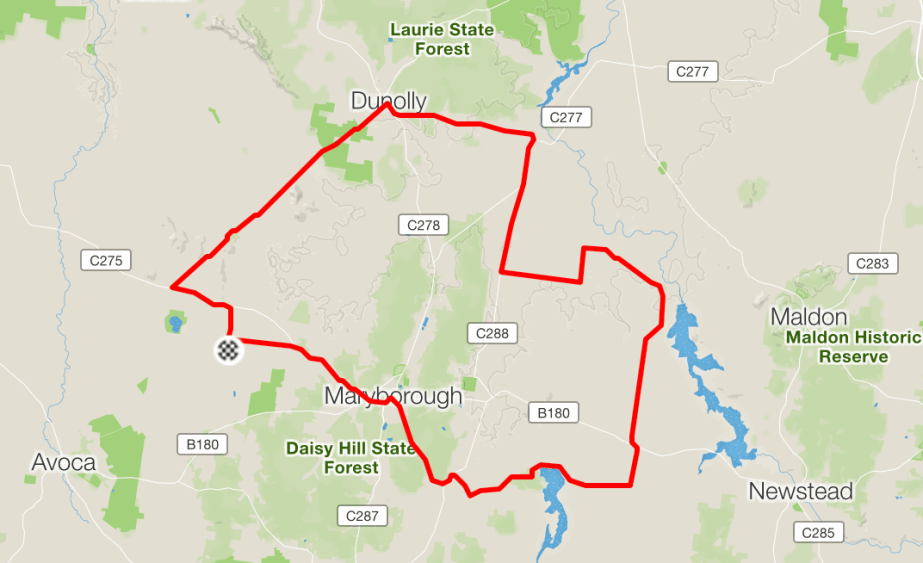
The ride took me through Maryborough, out to Majorca and around Tullaroop Reservoir. Out to the right from there I could see Mount Tarrengower at Maldon, the highest point for  miles around. A Black Kite followed me for a couple of kilometers there. Perhaps it thought I would expire.

North past Cairn Curran reservoir, north again to the little town of Eddington. I must have blinked because I didn’t see any sign of it. Into the gold rush town of Dunolly and then south over the Mount Hooghly Ranges to home. Not a lot of people know the Mount Hooghly Ranges largely because there is no such geographical entity. A passenger in a car would hardly notice the hills. On a bike they make more of an impression. I reached the highest point of the ride at kilometer 103 – I organised that well!

I did it that way around because some of the route was unfamiliar and Dunolly being reasonably large was going to be easier to find than places like Baringhup West that are really nothing more than names on the map.

115 km at 24.3 km/h, 674 meters of climb. And that nailed the Strava May Distance Challenge with four days to spare. Another merit badge for the Trophy Cabinet.

What next you ask. Well, the other non-trivial monthly challenge is the climb.

Merit Badges …

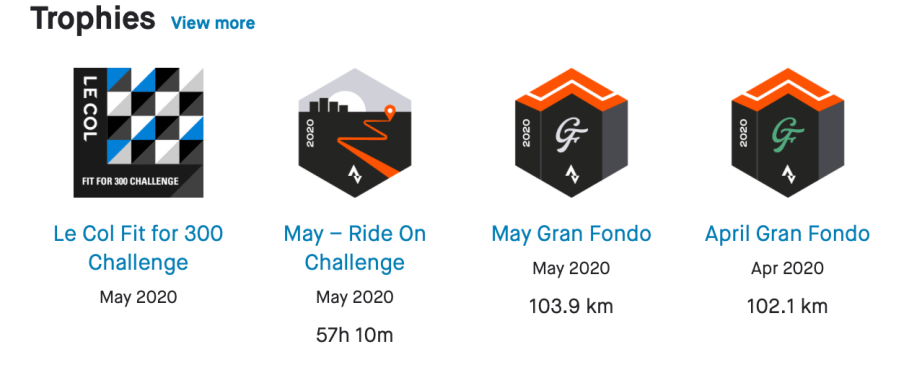
When I was researching Durability I came across the feats of Kurt Searvogel and following links I arrived at his Strava Trophy case. He has a truly impressive trophy case crammed with merit badges. As a Strava newby not only was mine empty at the time I had no clue how to get them.

Subsequent exploration led to Challenges. On that page one can choose from challenges in a variety of flavours suited to a variety of sports. The first one I accepted was the May Grand Fondo. Sometime in May I was to ride 100 km and thereby earn my merit badge.

Uncertain that I could meet such a challenge I did the ride then accepted the challenge. Let’s not put the ego on the line publicly. Child that I am I immediately craved more badges.

The sun is about to emerge above the trees behind me and at the moment my trophy case looks like this …

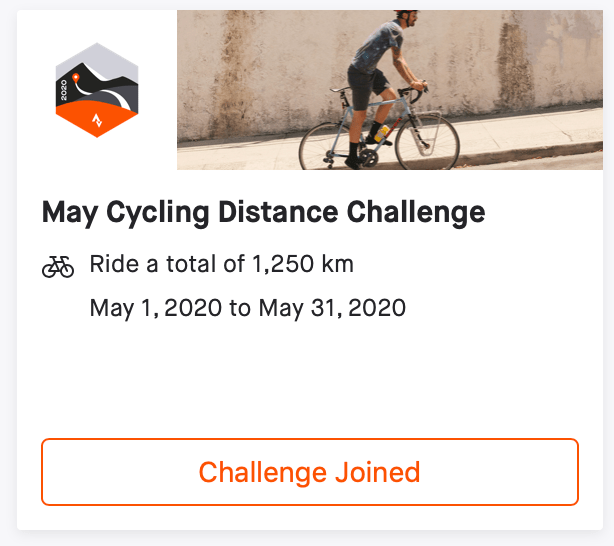
Not all challenges are created equal. Among the less trivial and therefore more desirable is the …

As you can see I was rash enough to join before I’d actually accumulated the distance but I’m now only 98 km from completion. The sky is blue. The wind is light. Once the sun has dealt with the frost I’ll be off. That badge may be in the case around lunchtime.