The Low Carb Pioneers …

Pass me some whale please, darling.

The traditional Inuit diet consists of marine mammal plus or minus fish. No bread, no potatoes not even some Brussels Sprouts. Liver, of course, has some glycogen but all the same it’s a very low carb high fat diet. For just a couple of months a year they could add some berries, grasses, tubers, roots, stems and seaweed. It was for a lifetime and it kept them very well. Heart disease and diabetes were uncommon.

Arctic explorer Vilhjalmur Stefansson was impressed with the diet and subsequently wrote …

In 1906 I went to the Arctic with the food tastes and beliefs of the average American. By 1918, after eleven years living as an Eskimo among Eskimos, I had learned things which caused me to shed most of those beliefs …

At the beginning of our northern work in 1906 it was the accepted view among doctors and dietitians that man cannot live on meat alone. They believed specifically that a group of serious diseases were either caused directly by meat or preventable only by vegetables.  Stefansson.

His views on the diet were largely dismissed, even the notion that he had actually survived on it.  The prevailing view was “… you are likelier to meet a thousand liars than one miracle.”

He proved his point when he and a colleague took up supervised residence at New York’s Bellevue hospital and resumed the diet. Subsequent medical examination pronounced him healthy.

There is another experiment going on. The standard American diet has found its way into the modern Inuit communities. There are now few eating a traditional Inuit diet but Sheehy and others have compared some that remain more traditional with others that are getting more carbs. They conclude that

Consumption of traditional foods is associated with greater diet quality and dietary adequacy.

Heart disease, diabetes and dental caries are on the rise for the Inuit.

We have so thoroughly learned that fat is bad that othodoxy still can’t believe “the miracle”.

And yet despite the fact that the high-fat Arctic diet may sound like a heart attack waiting to happen, the Inuit tend to have low rates of heart disease and diabetes.

That’s from The Salt discussing the role genetics may play in this amazing feat. It would be surprising if genetics had no role in adapting the Inuit to their environment but more importantly that little quote reveals the bias of the orthodox mindset. Instead of seeing this as yet more evidence of the benefits of a low carb high fat diet they are looking for the catch. They are warning us off the keto diet rather than warning the Inuit off the SAD diet.

Who are you gonna believe the dietary guidelines or your lying eyes?

Introducing Intervals …

The pundits all seem to agree that High Intensity Interval Training or HIIT for short will improve your fitness and speed. Some see it as the way to get the greatest training effect for the least investment of time others see it as one arm of a more rounded exercise program.

It has been my intention to introduce intervals to my cycling program once I felt ready. That then means two days where I’m pushing the boundaries, one long ride for stamina and one HIIT leg burner for speed each week.

High intensity brings with it higher risk. Careful management is needed to avoid injury, over-training and burn out. According to Joe Friel it boils down to dose and density. The dose is the number of repetitions and the length of the rest between and the density is the number of HIIT sessions per week. His advice is to start with low dose and maybe a density of once every nine days. Then slowly increase the dose.

Then it’s a matter of putting it into practice. If we aim to chart our progress the doses need to be reproducible. How do we ensure that we are consistent in our effort through each interval? For the sophisticate it’s simple – an interval timer and a power meter. I’ll save up. Sadly the heart rate monitor is a poor guide because there is a lag at the start of the interval and that accounts for most of a short interval. You could mark out a distance and cover it at a set pace. That’s one interval, time your rest then repeat in the opposite direction. It works if the terrain is flat.

Even less sophisticated is to choose a hill. The interval starts at the bottom and ends at the top. The effort is flat out. The rest in between is the time it takes to cruise down to the start. This is the method I tried out the other day.

This is a screenshot of information harvested from the Elemnt Bolt. Heart rate is a poor way to gauge effort during the interval but it’s quite revealing for post ride (post mortem?) analysis. You should have no trouble finding three intervals. Maximum heart rate is around 150 bpm which is just about my predicted maximum from the formula 220 – age. This formula is well known to be inaccurate. By the time I reached the start point it was down to about 110.

The rest of the ride went smoothly.

One of the possible downsides to interval training is that the exhausted athlete will stagger home and curl up for the rest of the day. This was investigated by Bruseghini et al with men between the ages of 65 and 75 years. Their conclusion was …

HIIT does not adversely affect the lifestyle of active older adults, since it neither reduces daily energy expenditure nor increases sedentary time.

I Love it When She’s Mad at Me …

The eBike goes a long way to equalising Gayle’s and my performance but it doesn’t make it identical. Hills arouse some combative spirit in Gayle, she attacks them with vigour. Add to that a better power to weight ratio and an electric motor and on hills I’m at a disadvantage.

We don’t live in a particularly hilly area, mere undulations really. It was early in our ride, the first undulation perhaps and I was riding right on her back wheel. A glance behind revealed a car. I called out to alert her that we would be overtaken – she hit the brakes. It earned her a sharp rebuke.

I’m sure you will agree it was well deserved. As I explained to her much later the duty of the drafter is to be consistent and predictable. If the draftee isn’t lightning quick with their reflexes putting on the breaks will result in a collision, or the draftee running off the road into the trees or swerving to the right under the wheels of the passing car. She explained to me that she was under no obligation to tow me along. How inconsiderate.

There then ensued one hell of a workout. Most of the traffic we see on the ride are local farmers moving feed for their sheep, there is precious little grass in the paddocks this time of year. They usually give us a wave as we pass. On this ride we seemed to see many more than normal and they all seemed to be laughing at the sight of me three lengths behind one fit woman and desperately trying not to be dropped.

Fartlek …

lek (v.)

of certain animals, “to engage in courtship displays,” 1871, probably from Swedish leka “to play,” cognate of English dialectal verb lake (see lark (n.2)). Related: Lekking.

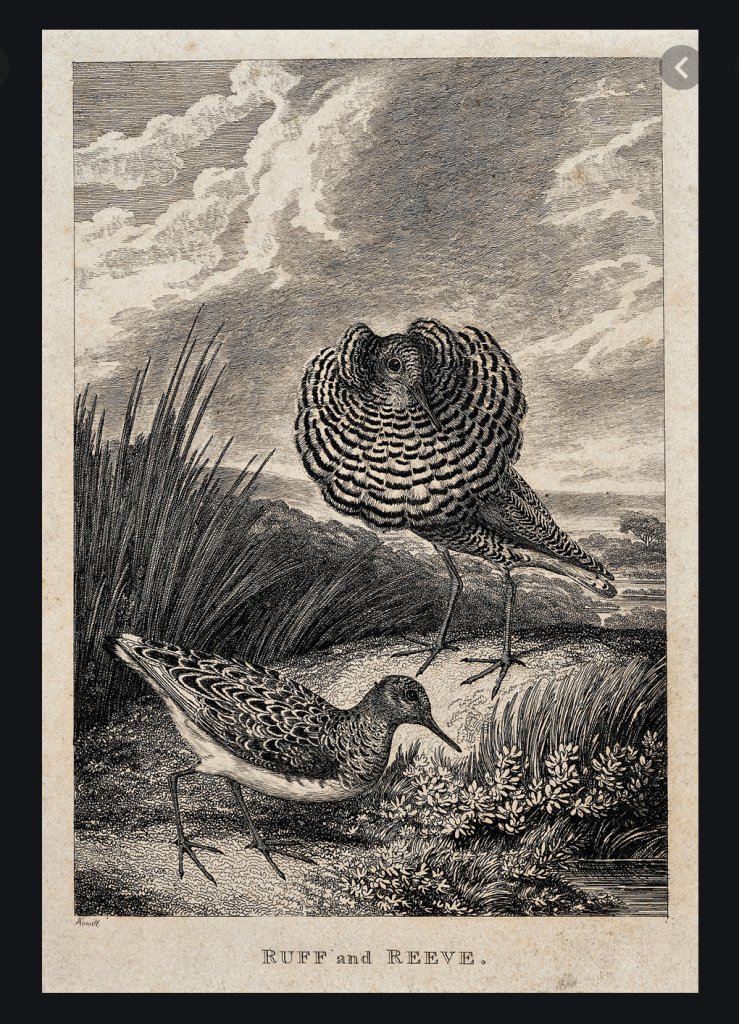
In some birds such as grouse, birds of paradise and the Ruff the males congregate in some hallowed spot and put on a display. Females visit and make their choice. The most beautiful or vigorous or otherwise appealing males get the vast majority of the copulations, most males miss out. Larks incidentally lark about in individual displays, strictly speaking they are not lekking species.

Fartlek shares some of the etymology and I hope that by introducing the topic this way I have caused a momentary image of male athletes gathered together farting loudly in order to entice female athletes to have sex with them. But no, fart is the Swedish for speed. Fartlek is speed play. It’s a form of training that introduces bursts of high intensity exercise into long slow distance sessions, an informal means of pushing the heart rate up without the regimentation of interval training.

My training objectives are to increase endurance and increase my average pace. It means that there has to be sessions when I take a bit more out of myself than is comfortable so the plan is

  • One long ride a week
  • One interval session
  • One or two rest days
  • Three or four other rides.

Riding on my own I tend to go into a meditative state and set my pace by perceived effort. I hammer away at a pace just short of my lactate threshold. a habit formed in the remote past. When riding with others the convoy moves at the speed of the slowest ship (or breaks up). Someone is getting less of a workout than they would really like. If that’s me I like to inject the occasional burst of speed, get the heart into at least the cardio zone and then slow down to let my training partner catch up. Fartlek.

Not every ride has to be flat out, indeed going too hard too often will lead to a lethargy that leaves you too tired to undertake the next planned ride or declining performance. Fartlek is a good way to break up the other rides into small periods of effort and longer periods of recovery. It provides an opportunity to take in the scenery and keep the activity fresh.

Set aside the fart for the moment lekking is fascinating behaviour and the most fascinating of all is the Ruff Calidris ( formerly Philomachus) pugnax. Lekking males develop a neck collar whilst the Reeves, the females even have a different name, remain their usual plain selves.

The video shows the boys showing off and occasionally fighting …

… but most fascinating of all are the game players, the satellite males. The females gather to watch the spectacle and among them are some males that do not don their finery and join the competition. They simply take advantage of the odd excited female. Whilst the hottest Ruffs get to father the most offspring the sneaky copulaters also get to pass on their genes sufficiently often to account for a percentage of satellite males in the subsequent generation.

Running on Fat …

Back in my marathon days (30+ years ago) I remember reading a prediction that it wouldn’t be long before women were beating the men over the magic distance of 26.2 miles. The logic was very simple, fat is an excellent fuel, fit women athletes carry more fat than fit men athletes therefore women would be better over long distances than men once they matched the men in training.

So far it hasn’t happened, fastest man – Eliud Kipchoge of Kenya 2:01:39 fastest woman Brigid Kosgei also from Kenya 2:14:04. Getting on for 10% slower.

At about 9 calories per gram fat is an excellent fuel trouble is for endurance sports the body is very happy burning glucose and glycogen even though they pack only 4 calories per gram. Stores of glycogen exist in muscle and in the liver amounting to about 600 grams. In ball park figures that’s about 2400 calories for a marathon requiring about 2600. A runner can expect to absorb 50 to 60 grams of glucose from the gut per hour which easily makes up the shortfall.

So fat burning doesn’t really get into the equation during an elite marathon. If it did even the thinnest male athlete has enough fat to go the distance.

Glycogen is king. Glycogen replenishment happens faster after a carbohydrate rich meal. What are the implications for the athlete following a keto diet? Depends who you ask. According to Harvey, Holcomb & Kolwicz the keto athlete is operating at a distinct disadvantage although it is an excellent diet for weight loss.

Dr Caryn Zinn on the other hand is more optimistic …

while Professor Asker Jeukendrup sums up what is known but leaves the question open. That article is well worth reading.

Fat oxidation rates are on average 0.5 grams per min at the optimal exercise intensity. So in order to oxidise 1kg of fat mass, more than 33 hours of exercise is required! Walking or running exercise around 50-65% of VO2max seems to be an optimal intensity to oxidise fat. The duration of exercise, however, plays a crucial role, with an increasing importance of fat oxidation with longer exercise.

There is no doubt that the reforming couch potato can successfully lose weight and burn fat at moderate rates of exercise on a keto diet. Fat around the middle is as much a handicap as lead in the saddle bags. VO2max is the upper limit of your ability to burn fuel a good measure of your fitness. More precisely it’s milliliters of oxygen consumed in one minute, per kilogram of body weight (mL/kg/min) at sustained maximum effort. In other words get the kilograms down and the VO2max goes up without any extra training.

Fast After Fifty …

If it seems that my obsessive compulsive personality is fairly obvious in my writing I am put in the shade by Joe Friel, founder of Training Peaks, elite coach and author of a number of books on training for endurance athletes. I have just read one of those books Fast After Fifty. He was 70 when he wrote it and I suspect the title should have been This is how I’m Gonna be Fast After Seventy. It’s an informative read and some of his wisdom will find its way into my training regime.

In the first chapter we learn what age does to you and it ain’t pretty  …

To go on churning out fast times in the pool your shoulders have to stand up extremely well and you need a remarkable tolerance of the view from the waterline of the inside of a pool. At least it’s weightless.

The runner on the other hand has to absorb their body weight as it hits the ground over and over. Quads and calves work to absorb momentum even as the muscles extend – eccentric contraction. In cycling muscles shorten as they contract – concentric contraction – and suffer less fatigue as a consequence.

At first glance things look pretty good for the cyclist but that graph only goes to age 64! But it seems that the niggling little injuries are fewer – just don’t come off your bike and sustain the big ones.

As well as a prescription for training Joe encourages weight lifting and discusses recovery strategies, sleep and diet.

A very worthwhile read, I recommend it.

But once again the research is into the persisting older athlete. There is little to indicate what the reforming couch potato can expect to achieve in his or her later years. No good looking backwards for answers. Before the boomers took up jogging older folk were expected to take it easy, nothing too strenuous. We are pioneers.


A Day of Rest …

Today is a rest day. I am itching to get on the bike but my will power is strong. Rest days are very important.

The temptation to ride is even greater in the midst of the Covid-19 epidemic. I have no idea when the government will lock me in my house and drive me screaming up the wall. The routes that I ride around home are deserted at the best of times, the perfect place to exercise in isolation.

One blessing of the restrictions is that  my travel budget is available for repurposing. That computer my bike was lusting after is now in reach. An alternative reading of that sentence would be – The Wahoo Elemnt Bolt was on special and I bought it. I suspect it was on special to knock down stocks prior to release of something even more desirable but hey.

So here is the written version of an unboxing video. It came in a box and I took it out.

It’s quite easy to set up using the app which you download on your phone. It talks to a variety of peripherals such as a cadence meter, heart rate monitor or power meter. Did I mention that my bike was very keen that I should get a heart rate monitor and I got the Wahoo Kickr?

I now have speed, distance, time elapsed and heart rate displayed on the front page of my very aerodynamic and light weight Ellemnt. This is a minor reorganisation from the default settings and easily achieved. The screen is tiny but these metrics are quite legible. A couple of button pushes bring you to the maps page. This is where the screen size limits functionality. Street names are not given. If I were lost I would reach for the phone  in my pocket before trying to plot a route on the Bolt. Having said that I wouldn’t want to be riding around with an iPad on my handlebars.

Turn by turn navigation can be set up prior to a ride in Strava or elsewhere and downloaded to the machine. I haven’t used that feature. I understand that the route  can’t be modified en route.

After the ride the Bolt talks to the app on your phone which will talk to Strava if you wish. It’s a bit different from dealing with Strava direct – you don’t get to name the rides or decide how private they are. Within the Wahoo app you can review your speed at any point, see where you were in a climb at that moment and check your heart rate. It gives a nice breakdown of how long you spent in the various heart rate zones and provides an approximation of the calorie expenditure. I like it.

The Kickr is easy to use. It’s a chest band monitor. You wet the two areas that pick up the signal and fasten it round your chest, just below your nipples for boys, just below the breasts for girls. Mine has stayed in place very nicely. I think the extra information this gives makes planning your training much more purposeful.

Which is much more than I would say for a cadence meter. Yes there is probably an ideal cadence but this varies from moment to moment depending on conditions. In the long run you will change gears by feel. Anyone who gets back from a ride and pores over their cadence needs to discuss the issue with a psychiatrist – in my humble opinion.

On the other hand every serious bike racer these days uses the power meter as the most accurate way to measure their effort and plan their training. It’s also the most expensive of the monitors. I have not yet succumbed.


Progress Report …

We are two weeks into the Low Carb diet. Gayle has been cooking up a storm. Some of the food is less than exciting but most is delicious. Some is quite exceptional given the inclusion of previously shunned fats.

We haven’t been able to bring ourselves to eat dead animals so have to be thoughtful about our protein, eggs and cheese are in after that it’s tofu and nuts. Ground linseeds help with the omega 3s. Vitamin B12 comes from a pill.

I was losing weight before starting the diet. Three kilograms in the three months since I bought the bike. Two more kilograms have gone in the past two weeks along with 2 inches off the belly. No cravings, hunger satisfied. Not a calorie has been counted. I’m drinking a lot and peeing a lot, sure signs of ketosis. My confidence is high.

It feels as though athletic performance has suffered a bit, perhaps more for Gayle than me. We have been able to keep up a pretty high volume (by our standards anyway) 343 km in the past 14 days. I skipped this week’s long ride in favour of a more modest distance. I think we are getting through that now as we start to burn fat as our energy source.

Every diet that I’ve tried has worked … for a while. The promise from this one is that it will go on working. We will see.

Low Carb High Fat …

Get ready to read a lot of packets and do a lot of home cooking.

What’s in?

Meat, seafood, eggs, full-fat dairy, above ground vegetables, nuts, avocados and in moderation dark chocolate, berries and dry wine.

What’s out?

The bottom layer of the food pyramid!

Starches (including bread), sweets, processed meats, low fat or sweetened dairy, high sugar fruits.

Orthodoxy would have it otherwise …

The acceptable macronutrient distribution ranges (AMDR) are 45–65% of your daily calories from carbs, 20–35% from fats and 10–35% from protein. (healthline.com).

Ancel Keys is a goliath of the orthodoxy. His rather sketchy epidemiologic research into diet and heart disease pointed the finger at saturated fat as the cause. In 1977 a US Senate Committee issued the Dietary Goals for the United States which became the Dietary Guidelines for Americans. The American Heart Association was on board but Philip Handler, President of the National Academy of Science had this to say,

What right has the federal government to propose that the American people conduct a vast nutritional experiment, with themselves as subjects, on the face of so little evidence?

Heart disease hasn’t gone away, obesity and type 2 diabetes have soared.

There is a great deal of inertia in that orthodoxy but it is slowly crumbling under the onslaught of evidence. Ain’t nothin’ wrong with getting your calories from fat. It satisfies hunger without sending insulin levels through the roof. For some of us it may be the best option, at least for a while.

The way to plan your meals is simple. First pick your protein source aiming for roughly 1.5 grams per kilogram of your reference weight (life tables previous post). Next add a couple of serves of above ground veggies. Finally some fat stuff like avacado or nuts.

So that could be a chunk of meat with the fat on and two veg. Sounds just like the meals my mother used to cook and there weren’t many fat kids around back then.

There are any number of resources online and a shelf-full of cook books at the shop. Look for keto or LCHF, checkout Low Carb Australia on Youtube.

It is powerful stuff and it will change your biochemistry. If you are on anti-hypertensives, anti-diabetic agents including insulin, pregnant or breast feeding medical supervision is needed.