Well, yes, that was the objective …

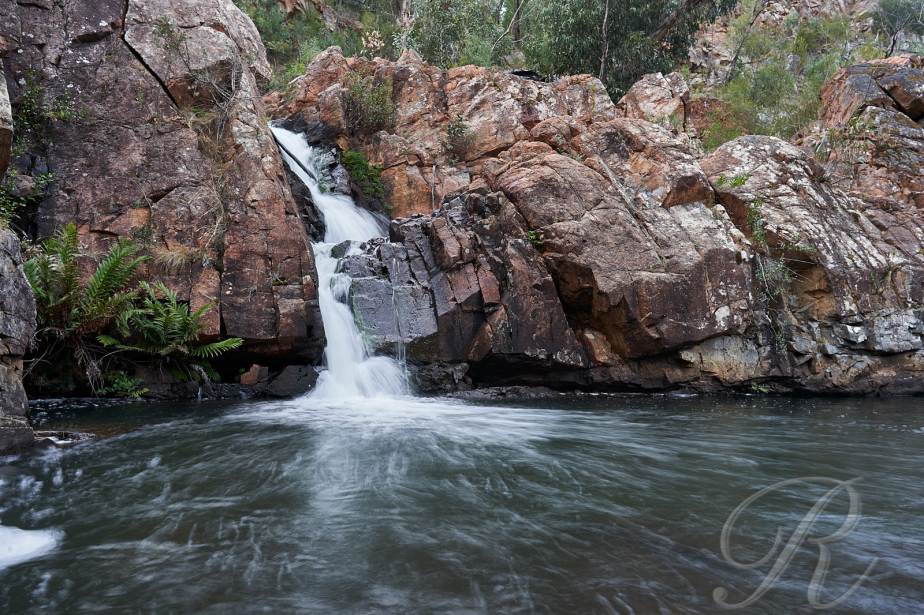
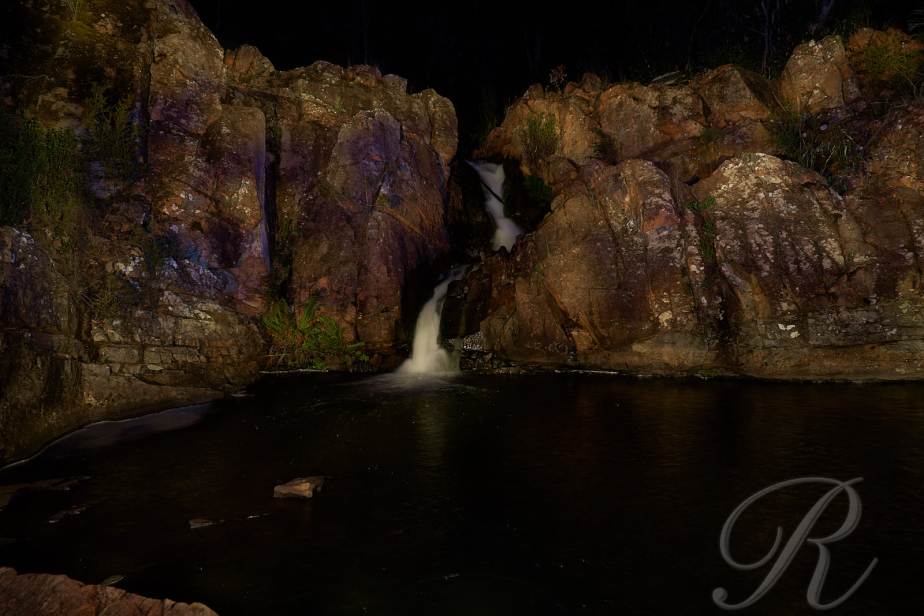
I was particularly keen to see how the falls would look when light painted. So I tucked into some sandwiches and waited for the light to fade. What do you think?

and pray that there's intelligent life somewhere out in space
Well, yes, that was the objective …
I was particularly keen to see how the falls would look when light painted. So I tucked into some sandwiches and waited for the light to fade. What do you think?
The Grampians National Park is one of Victoria’s jewels.
If you think of the Great Dividing Range as starting in north Queensland, sweeping south inland of Australia’s east coast and around the bend into Victoria the Grampians is where it makes its last desperate attempt to be mountainous. And a very scenic effort it is.
It and Wilson’s Promontory are the two Victorian parks under the greatest visitor pressure. At peak season the crowds are really bad, but don’t expect to feel lonely the rest of the year.
It has given Parks Victoria every opportunity to indulge itself in regulations, warning signs, railings and outrageous penalties. The rock climbing fraternity are the latest victims.
For a photographer who likes to use a drone as one of his cameras the frustration is immense. Drones cannot be flown without written permission on any Parks Vic property no matter how remote or lonely. Which locks away most of the great landscapes in the state.
Nonetheless it’s still worth a visit. My intention was to do some waterfall photography but I also felt the need for some exercise so I got there early with a view to climbing Mount William, the highest point. Although there was nothing on the Park’s website I found the Mount William Road closed. My 4 km hard hike had turned into a 24km hike, I wasn’t that early.
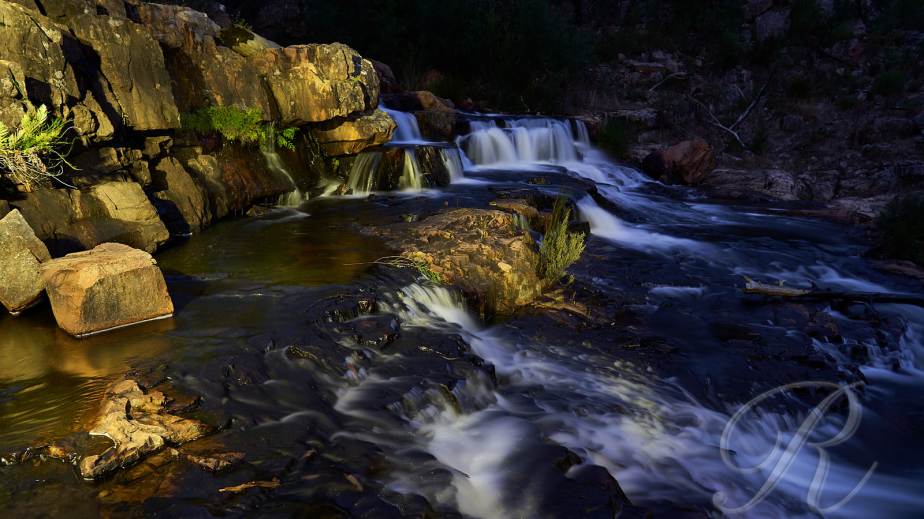
I settled instead for a ramble up to the Pinnacle via the Grand Canyon and Silent Street a 4.2km return hike from the Wonderland car park. There are plenty of excuses available to the photographer to rest along the way.
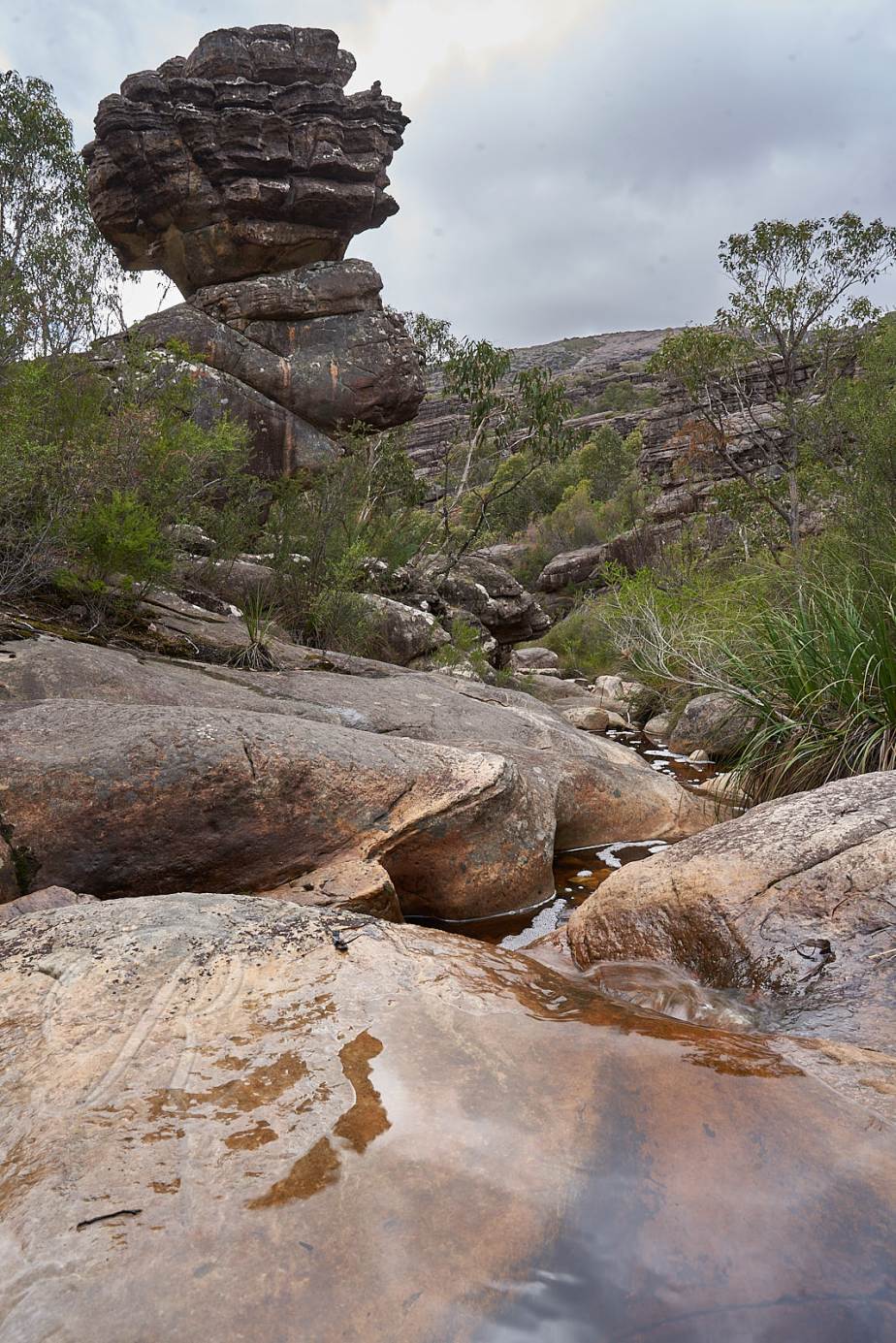


The view from the top is heavily polluted with man made constructions but with careful placement of the camera, towns, dam walls, railings, signs and tourists can all be avoided.
From there it was off to Mackenzie Falls for the late afternoon light.
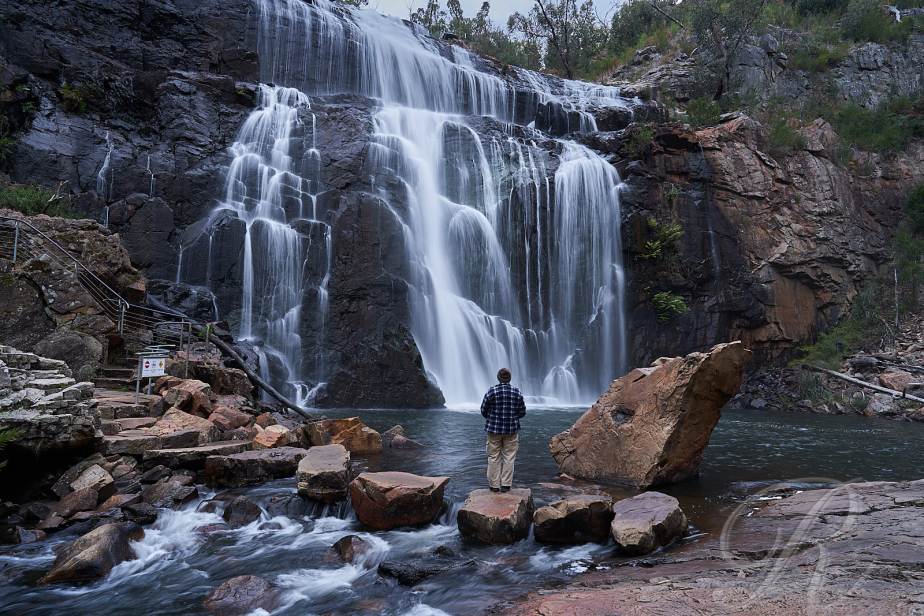
Swimming, of course, is forbidden.
A bout of rain last week brought 17mm to the farm and made my neighbours happy. Yesterday it rained a lot more. We emptied 35mm out of the rain gauge. The neighbours are now ecstatic.
The creek at the bottom of the garden has been a series of pools. It is now the handsome river in the photo above. The ford hasn’t had water flowing over it for more than a year.
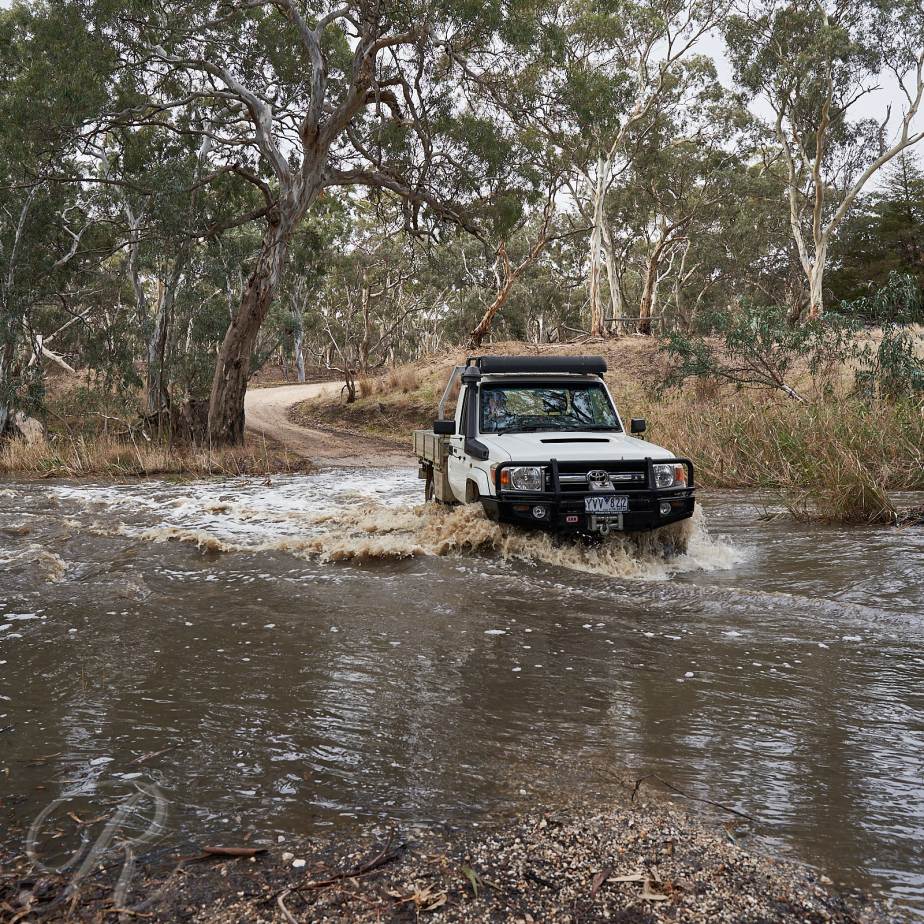
The ground is turning green as we watch. It’s beautiful.
Captain John Hart saw Cape Nelson off to starboard and set his course for Adelaide. It was March 30th 1837 he was sailing from Launceston, Van Dieman’s land (known since 1856 as Tasmania) to Adelaide in the three masted barque Isabella with a cargo of livestock and the Pearce family as passengers.
Not long after that the Isabella was wrecked. She ran into the real Cape Nelson. Captain Hart had misidentified Lady Julia Percy Island.
Twenty five passengers and crew took to the boats and made it safely to Portland which had been settled about three years earlier, the first town in what would become Victoria. I doubt the livestock fared as well.
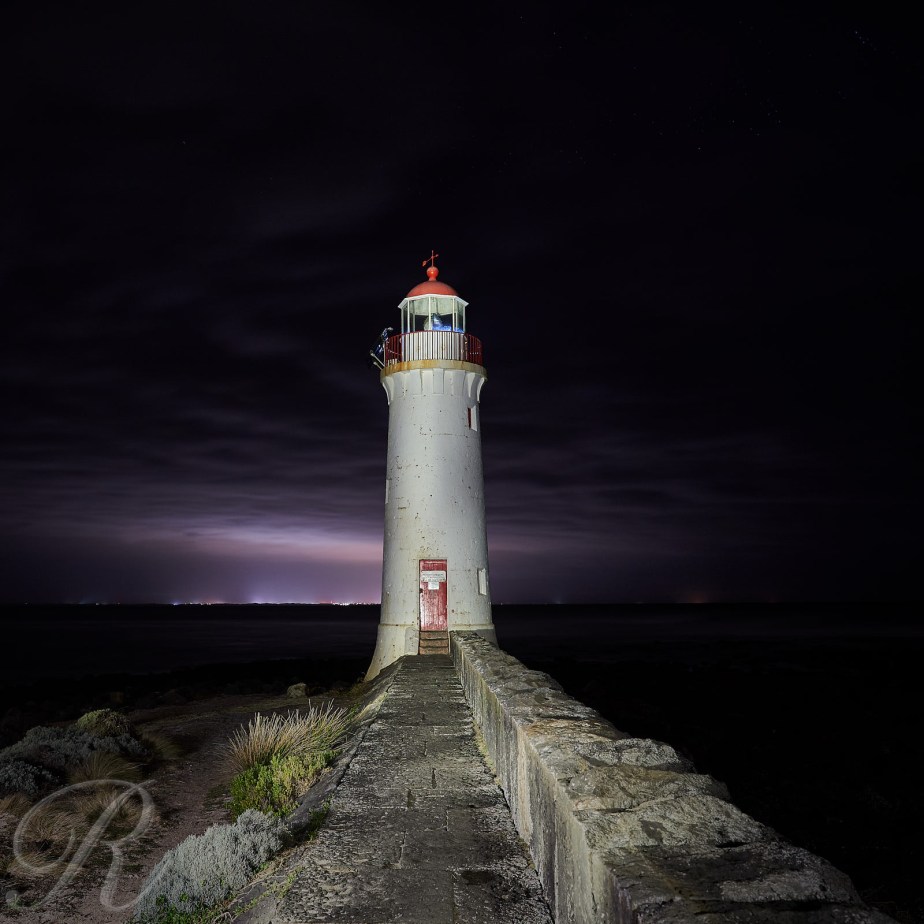
It’s a wild and woolly spot now guarded by a lighthouse.

The following afternoon the cloud cleared …
Which meant another trip to the lighthouse …

Then to bed. To sleep and dream until 3.00AM for this was the peak of the Eta Aquariid meteor storm. This is debris from Halley’s Comet. This little time lapse was shot in Victoria’s Western District from about 4am until just before dawn. The sky is at it’s most frenetic just as Venus comes up behind the gum tree.
So it’s new moon and I’m at the coast. The Night Augmented Reality module of Photopills shows the milky way emblazoned across the night sky with the lighthouse beneath. All that stands between me and a photogasm is a dense layer of cloud. The lights of Warrnambool are a poor substitute …
The recent foray in search of a good foreground for the magnificent background of the Milky Way took me to the Mallee. This word describes a habitat type and the region of Victoria where that habitat once stretched to the horizon in all directions.
Mallee trees are eucalypts usually slender and not very tall. They tend to be multi-stemmed. They are found on light soils and are extremely well adapted to fire, resprouting from underground lignotubers after a wildfire has gone through.
In the Mallee region much of the land has been cleared for agriculture and the winter crop here is mainly wheat. This summer has been as dry as a Nun’s … Australian English is rich in metaphors, most of them rude, best I just say very dry.
The word rain, though, had been mentioned in the weather forecast and farmers were out optimistically disturbing their top soil.
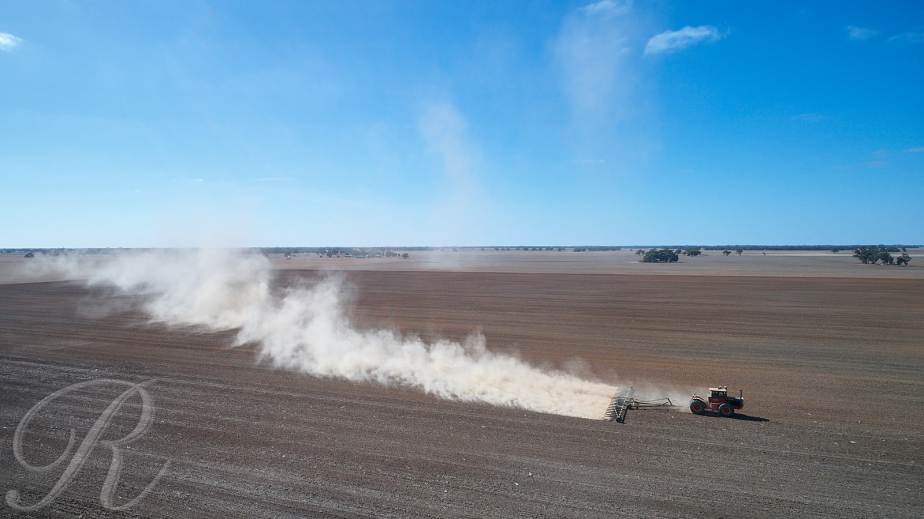
Widespread rain fell in Victoria the following day and was very very welcome.
Box Flat in the Annuello reserve is a very pleasant place to camp. No reservation is required, no fee is charged and no facilities are provided. Perfect. I was the only human occupant.
I spent the morning exploring and was well rewarded with flocks of Mulga and Regent Parrots. The tracks through the reserve were in good shape, not necessarily the case after rain but there hasn’t been a lot of that lately. Annuello covers about 36,000 hectares and is well wooded mainly with Mallee eucalypts. If it had a nice sexy lake it would certainly be a National Park instead it’s even better. Quiet and with a little less over-regulation.
Leaving the reserve I made my way north to the mighty Murray and the Hattah-Kulkyne National Park. At the river I was greeted by large noisy flocks of Little Corellas and entertained by Whistling Kites circling overhead.
The environment in the national park is a little more varied and it does have some sexy lakes. These were my destination in search of some more photographs of the night sky.
I found what I was looking for at Lake Mournpall.


Or Lake Tyrell revisited. This is Victoria’s largest salt lake. The other-worldly landscape provides excellent material for the photographer. I posted about a previous trip <HERE>. Here’s a photo from that trip.

This time I was after the Milky Way. Things have changed a little in the interim. It was my intention to pitch a tent by the lake shore and fall into bed once the photography was done but the scenery has grown a large number of prominent signs promising large fines for camping.
The track was dry, the trees in the photo above are unreachable if there has been rain and I did want to include them in my composition if I could.

The lights of Sea Lake, the nearest small town, are visible on the horizon.

My favourite shot of the night is this next one …
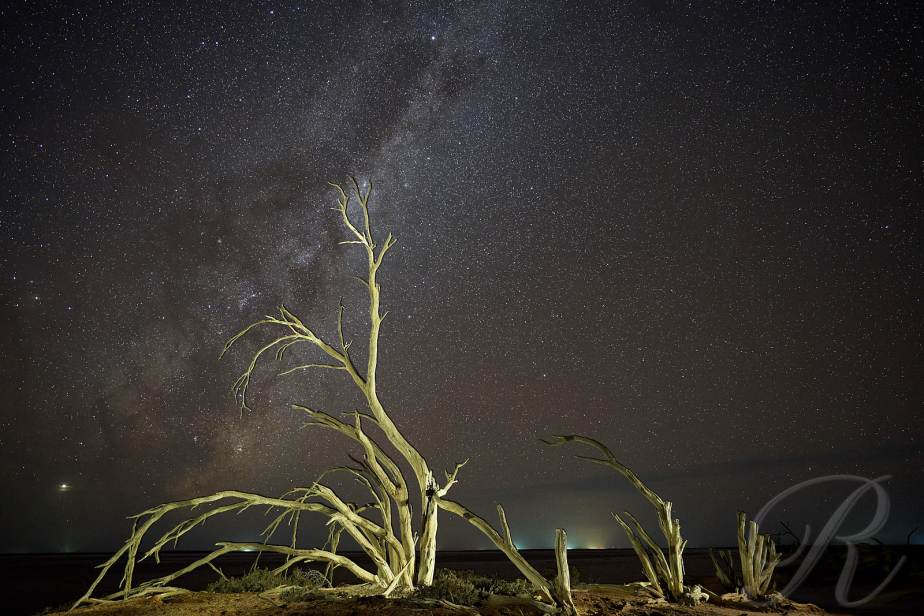
I had intended to stay two nights but that plan had to be modified. So in the wee small hours I drove north to the Annuello Flora and Fauna Reserve where I could camp without prior reservation.
Sadly is not abolished from the world but rarely have I seen it so blatantly advertised …


 bobmcgee