Mungo …

My reading of the moment is Travels in the Interior of Africa by Mungo Park, published in 1799. He was traveling in the Gambia and seems not to have been a great fan of the forest …

The country itself being an immense level, and very generally covered with wood, presents a tiresome and gloomy uniformity to the eye; but although Nature has denied the inhabitants the beauties of romantic landscapes she has bestowed on them, with a liberal hand, the more important blessings of fertility and abundance.

Perhaps now that travel is so much easier the landscapes have become more romantic.

Budongo before dawn

Monkeys …

On this visit to the Budongo forest our attentions were focused on the bird banding team which since our last visit had matured into a very efficient operation. We hadn’t set aside any time to specifically follow monkeys or the star attraction, chimpanzees. But this is Budongo, any spare half hour could be put to excellent use.

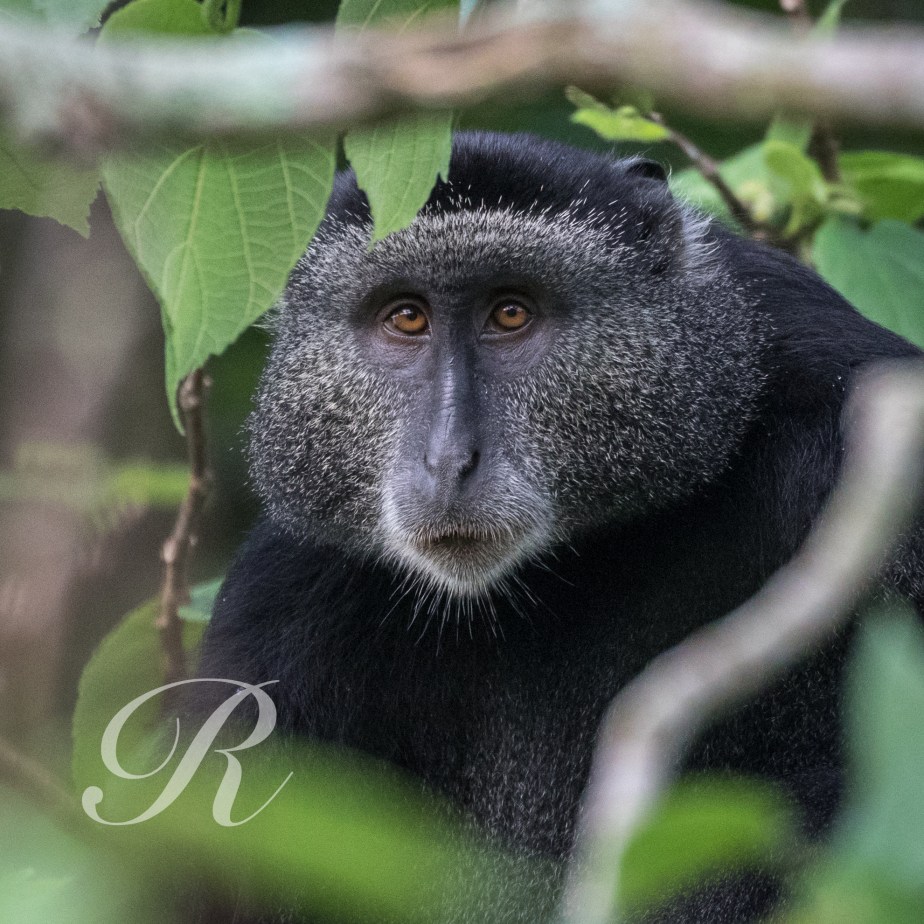
Blue Monkey

The key to photographing the monkeys is simply to take your time. Approach quietly, when they start to examine their escape route just settle. After a while they resume feeding or grooming and soon you’re just part of the background.

They may walk right by you.

Olive Baboons

In that instance I was sitting on the ground and found myself shooting up at mum and her youngster. An older youngster got left behind and came running to catch up …

Olive Baboon

The next character and I conducted a lengthy study of each other.

Olive Baboon

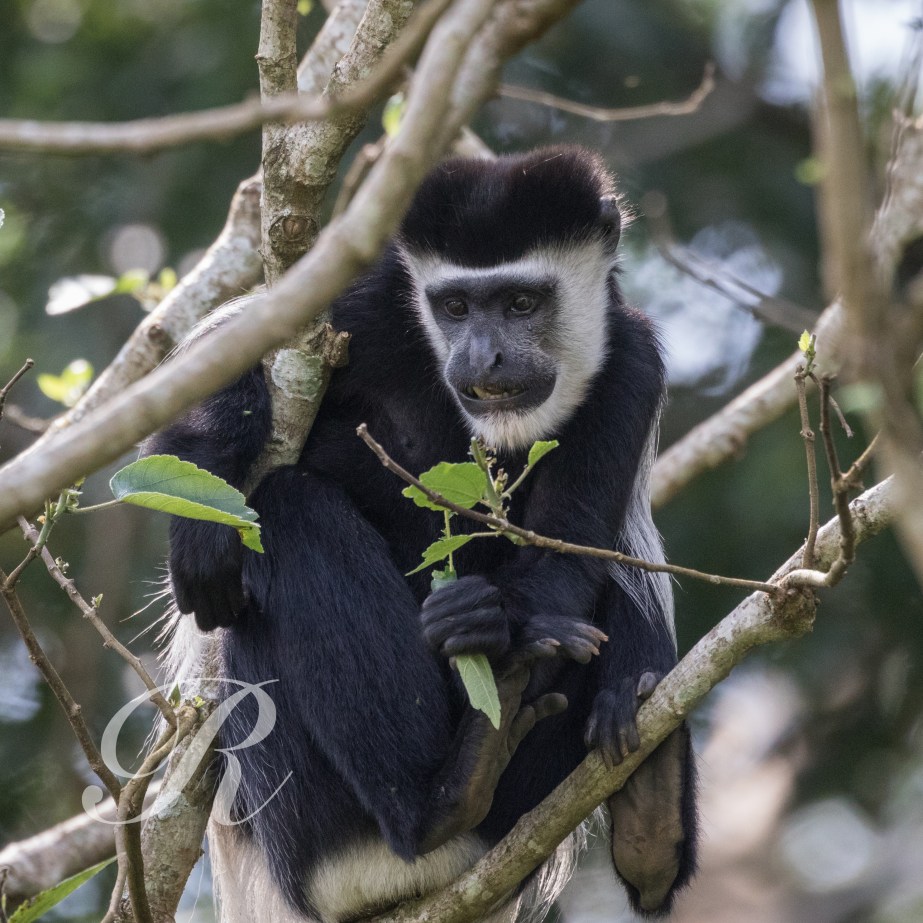
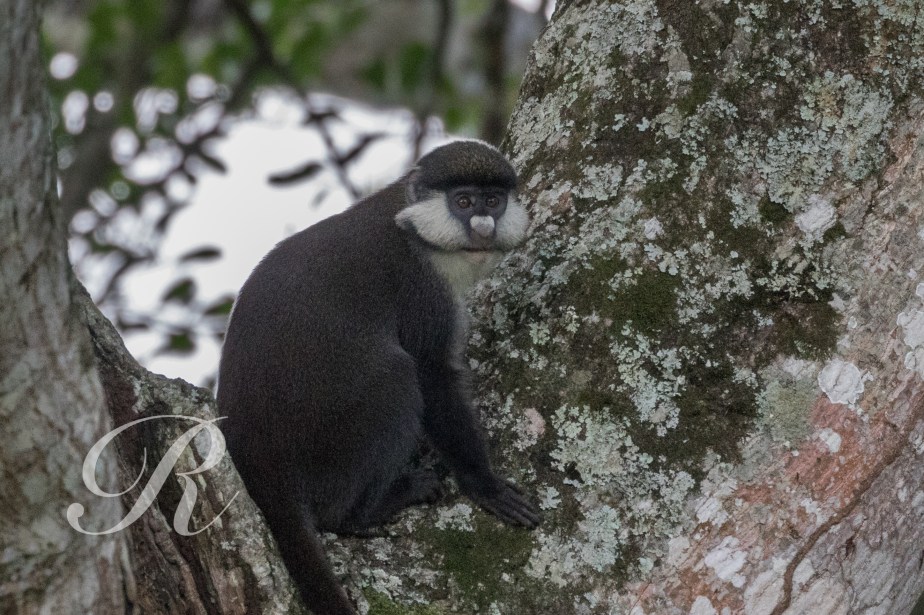
The Colobus and Red-tailed Monkeys are a tougher prospect because they spend so much of their time high in the trees.

Guereza Colobus
Guereza Colobus
Red-tailed Monkey

Spare moments …

The Budongo Forest covers an area of about 435 km² which reportedly makes it the largest forest in Uganda. It’s a mixed forest and was once important as a source of mahogany. Left to itself the mix would simplify, at climax it would be dominated by Ironwood (Cynometra alexandrii) more valuable timber species would be excluded. Mahogany is much more attractive to foresters. The efforts to encourage a rich mix to persist were successful but Celtis (hackberries or nettle trees) and Ficus (figs) species were more inclined to grow than Mahogany. These have no timber value but do provide food for primates and birds.

The forest looks natural enough but the parts that have been molested are better for birds and primates than a couple of reserved areas that have never been touched. Who’d have thought.

We were kept hard at work but a couple of hours every afternoon were ours to go for a walk down the Royal Mile or around the camp.

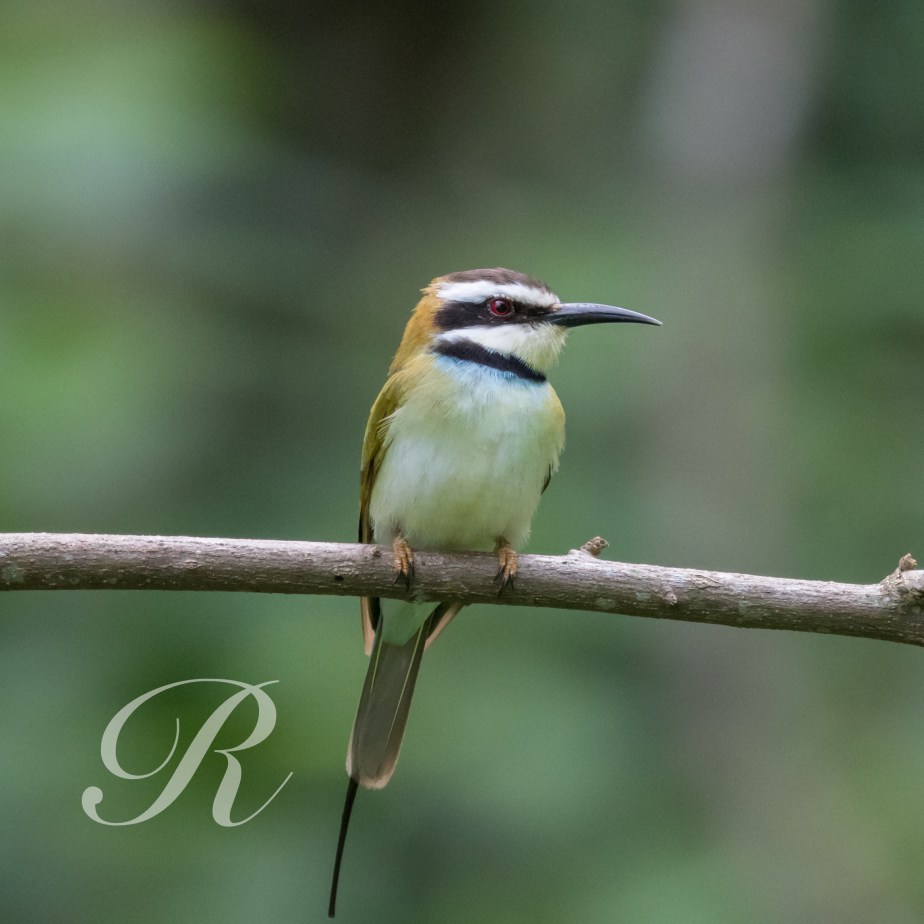
White-throated Bee-eater
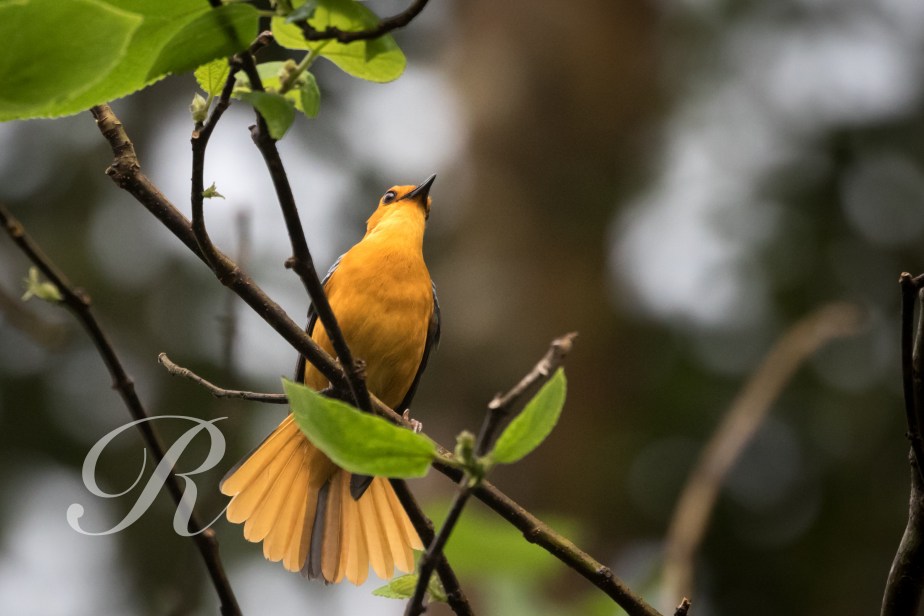
Red-capped Robin-Chat

Let’s get to work …

Moreen was keen to get as much from our visit as possible. There would be no slacking off.

Her field assistants were just back from Kenya where they had undergone some additional training provided by the Nairobi National Museum. She was keen that they put their new skills to use under supervision to really consolidate what they had learnt.

Much progress had been made. Patrick and Godfrey had been very efficient at the mechanics of catching and handling birds but had struggled a bit with measurements, partly because of poor equipment and partly because of inexperience. Experience had been gained in the last 18 months and we’d brought some first class equipment which would be theirs to keep.

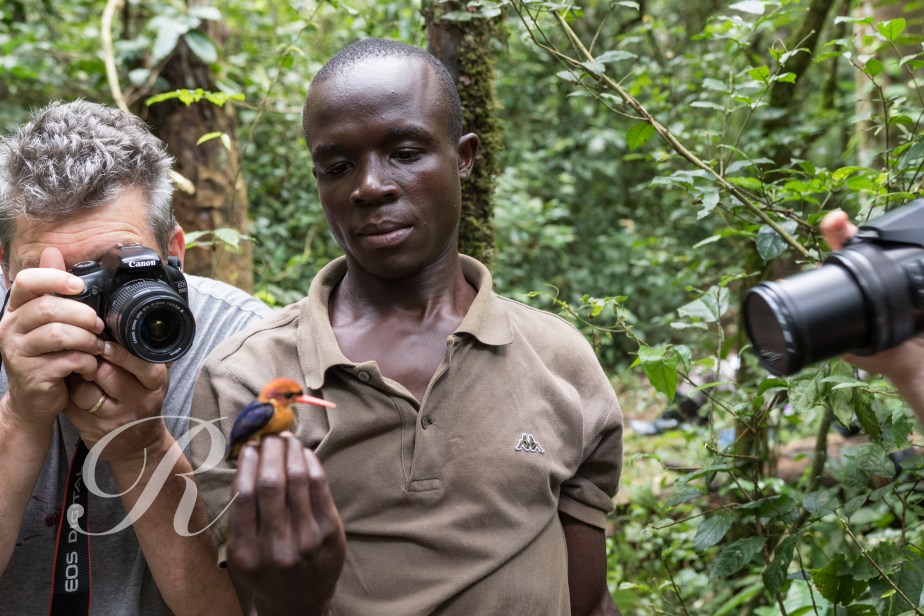
Field Assistant Patrick Arua surrounded by paparazzi
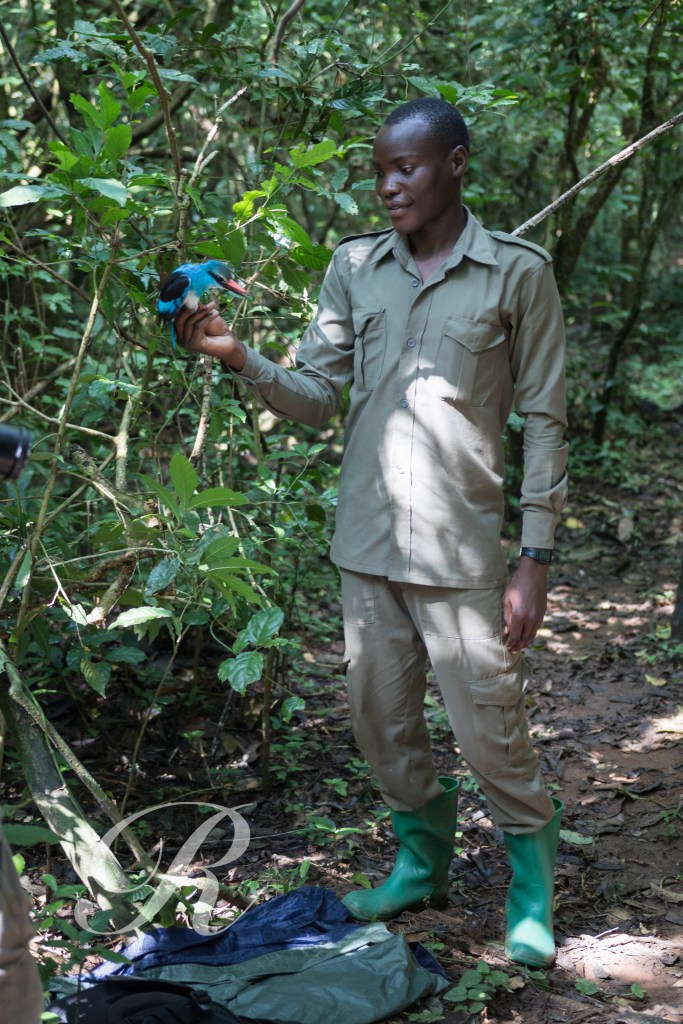
Field Assistant Godfrey Andrua with a Blue-breasted Kingfisher

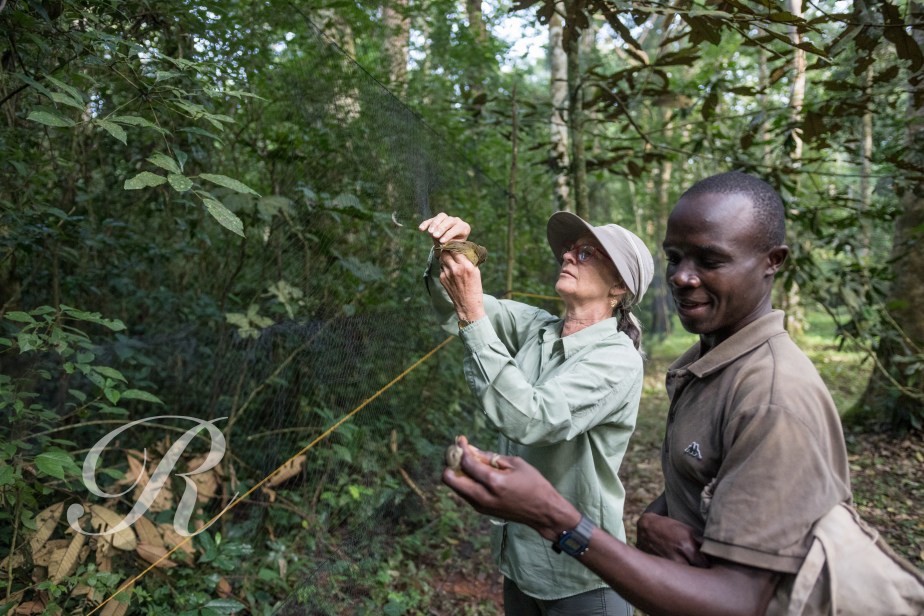
The routine was simple. Nets were set in the afternoon and closed for the night. Where possible they were set in one continuous line … 228 metres long. Which is way more net than a small team would attempt to handle in Australia, but some of the hazards we face are absent in Uganda – no Butcherbirds, Kookaburras or birds of prey to start eating your catch; the cool shade of the forest interior rather than a dessicating sun and on average larger more robust birds. Not a bird was lost.

The nets would be opened at first light, birds caught, processed and released until about 1pm when the nets would be packed up. After lunch they would be carried to the next day’s catch site.

Gayle and Patrick taking birds from the net
Mark with a Speckled Tinkerbird
Measuring tail length of a Fire-crested Alethe
Digital scales – what luxury
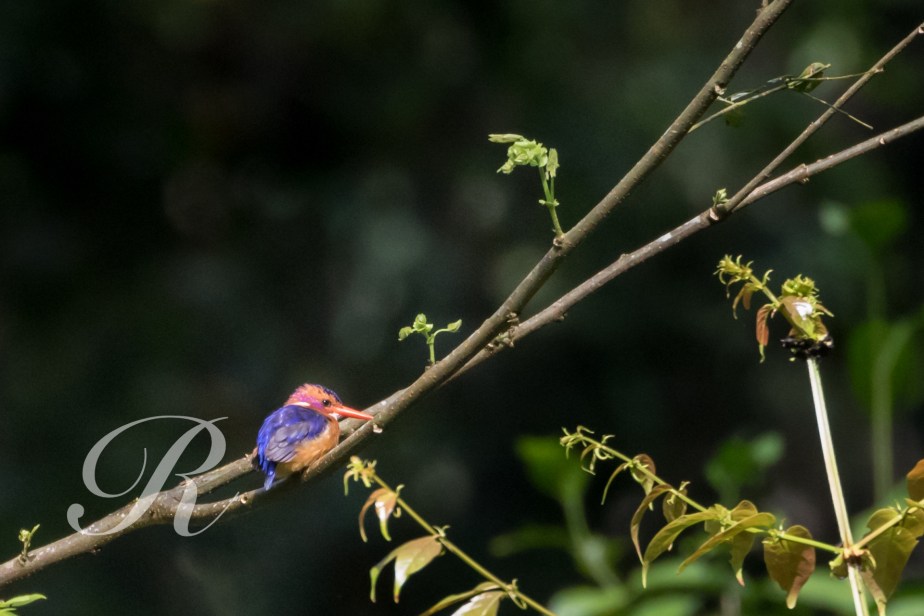
African Dwarf Kingfisher


The Road to Budongo …

The team heading to Uganda this time consisted of the three Aussie bird banders that had visited in 2017 plus one.

Dr Will Steele and Dr Mark Antos are both professional biologists who find the natural world so fascinating that they go on studying it even after they’ve knocked off work. Along with the McGee we had had the pleasure of doing some training with the fledgling bird banding team at the Budongo Research Station. We would be returning to offer some more encouragement, some more training and some more equipment.

Our new recruit was the lovely Gayle McGee, also experienced in the process of catching and banding birds.

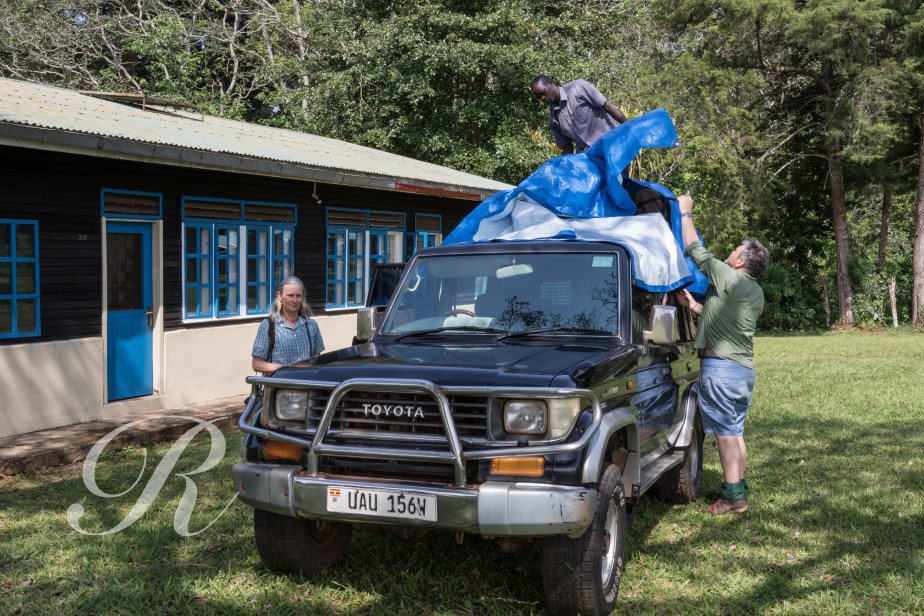
It is most of a day’s drive northward from Entebbe to Budongo. Our first call was in Kampala where we picked up Moreen Uwimbabazi who heads up the project.

Moreen Uwimbabazi

Then it was a long but fascinating drive via Masindi to the Royal Mile and Budongo.

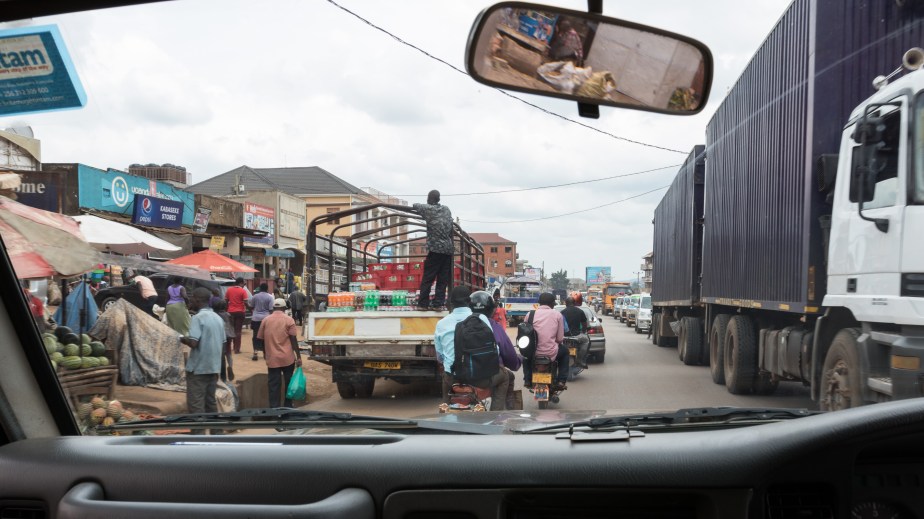
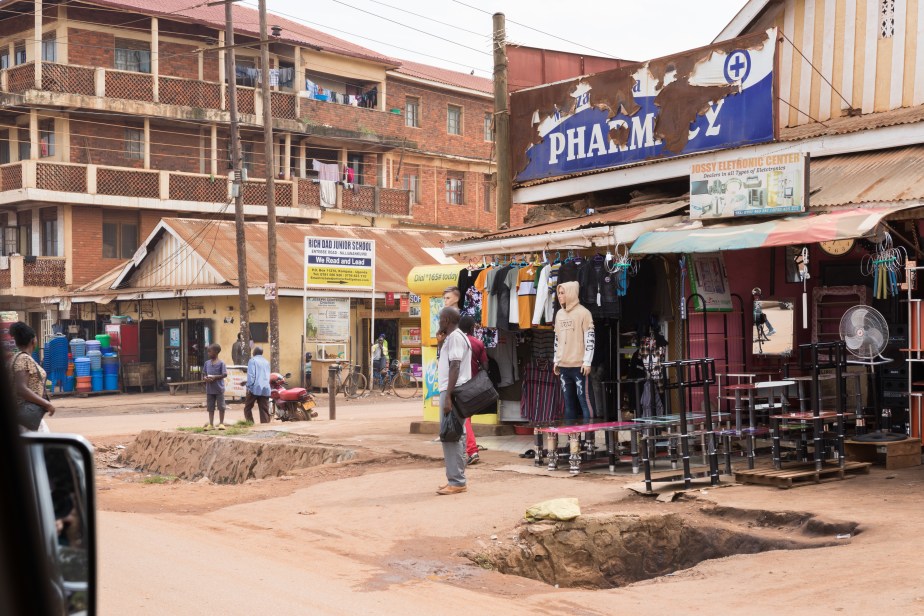
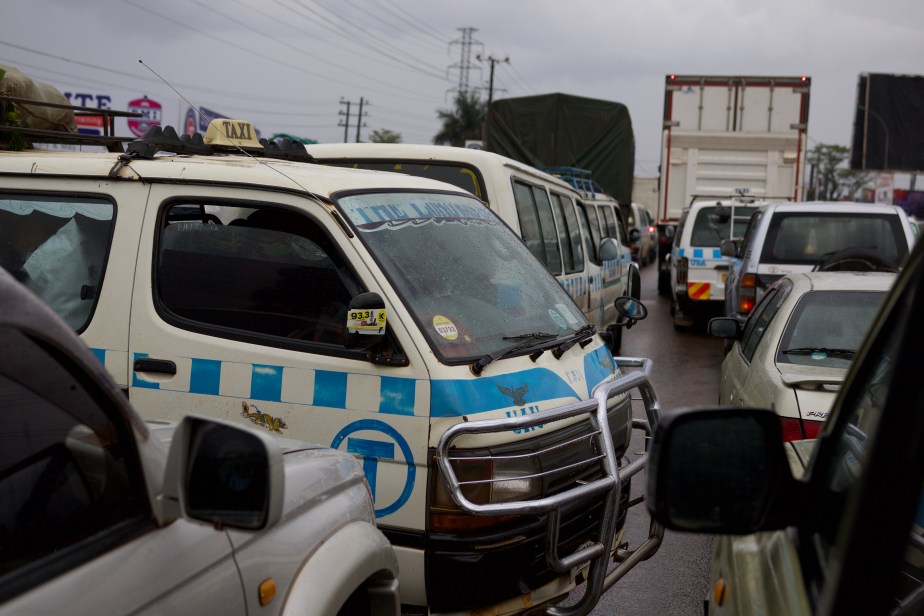
Much of life in Uganda goes on in the streets. Foodstuffs and furniture …

hustle and bustle
this way to the Rich Dad Junior School

some instruction from the Australian Government

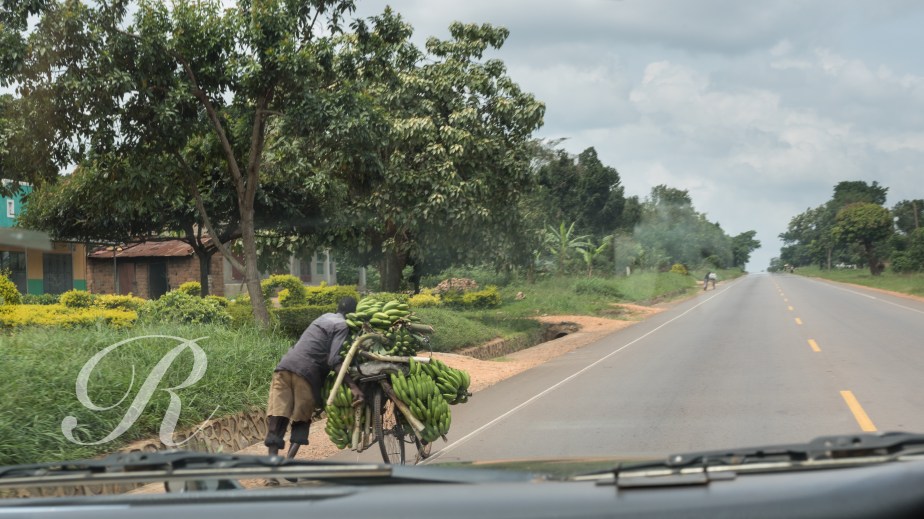
and having bought your food and furniture you load it onto a van, or a motorbike or even a bike.

chair man
three men and a sheep
plantain – a staple

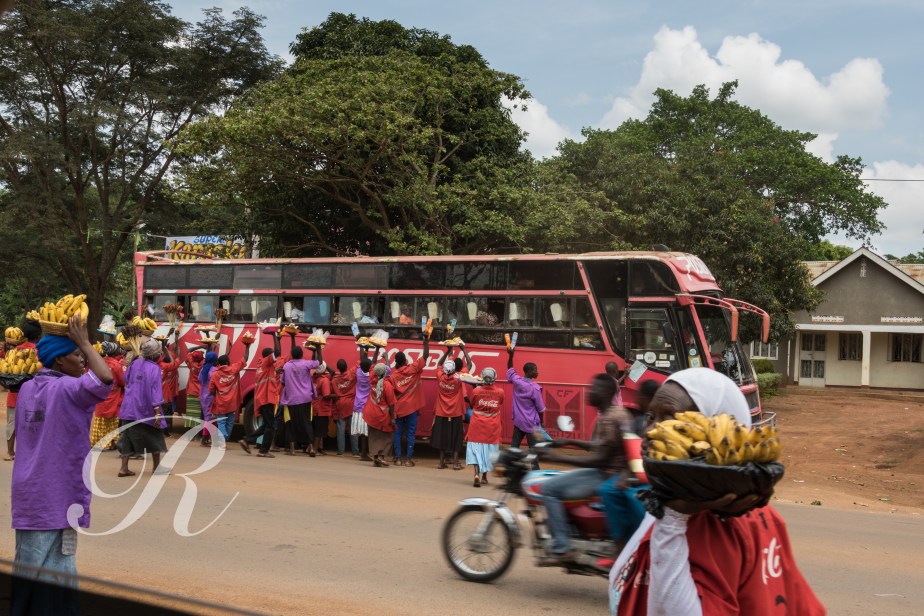
From time to time on the highway street vendors rush every vehicle that stops.

street vendors

As well as the fresh fruit and drinks you can buy chicken and goat meat on skewers … maybe not a great idea for the unpracticed intestine.

Until eventually …

home away from home

Uganda …

Lake Victoria is a very large expanse of fresh water about half way up the continent of Africa and somewhat east of the midline.
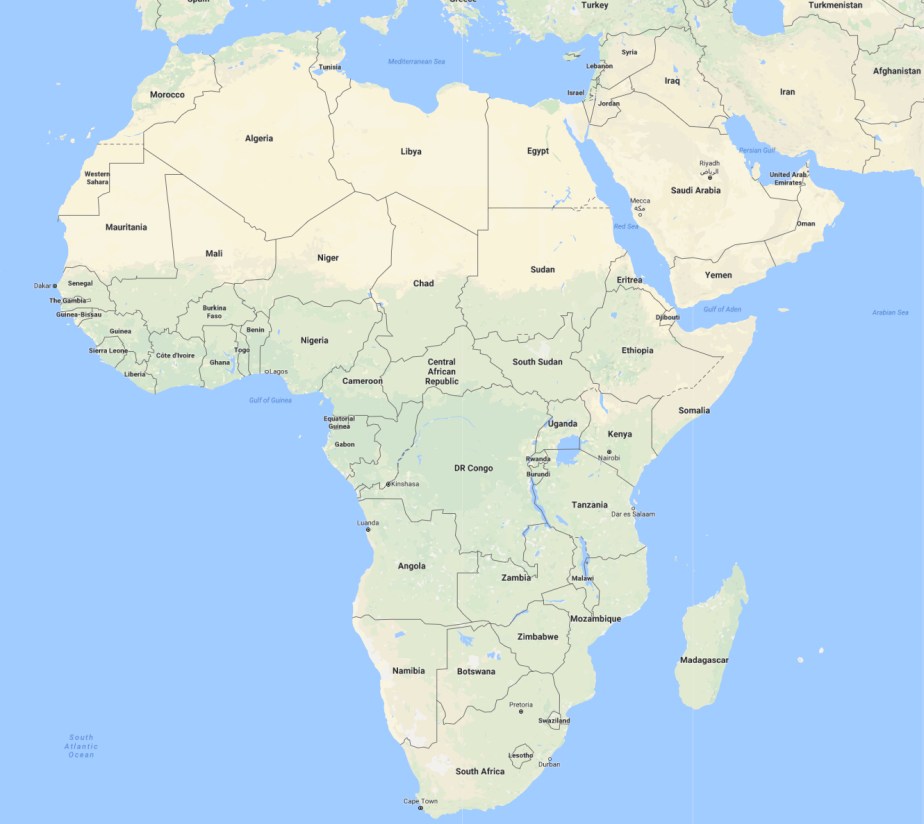
Uganda sits on top of the lake sharing borders with Kenya, Tanzania, Rwanda, DRC and South Sudan. The country straddles the equator.
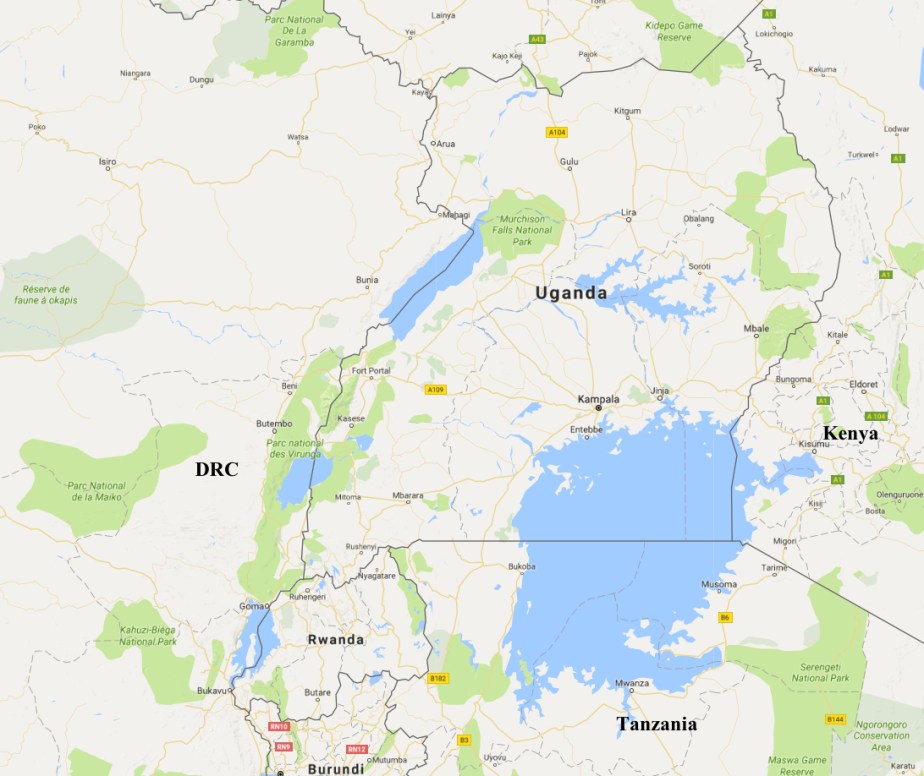
The surface area is roughly similar to my home state of Victoria, Australia or England, Scotland and Wales. It has a population approaching 50 million people and expanding rapidly. The median age of 15 years is the lowest in the world. The birth rate of very nearly 6 children per woman is among the highest in the world.

In the colonial era Uganda was a British protectorate. It gained independence in 1962. Government since then has changed hands by military coup. The effectiveness of government has been reduced by internal armed conflict such as the civil war with the Lords Resistance Army.

The current president is Yoweri Kaguta Musaveni who gained power in 1986 after a six-year guerrilla war. Transparency International has rated the public sector as among the most corrupt in the world, an estimated $286 million US is siphoned off annually. Uganda provides one of the best cases for the suggestion that foreign aid is a process that takes money from poor people in rich countries and gives it rich people in poor countries.

The human rights situation is depressing, child labour is common, the police and armed forces are often accused of torture.

More than 40 languages are spoken, the main groups are Bantu, Nilotic and Sudanic. A couple of Kuliac languages are also spoken. English is the lingua franca in the south, Swahili and English serve the same purpose in the north.

For all the bad news it is a beautiful country. From dry savanna, through fertile agricultural land, dense forest to snow-capped mountains. The people are certainly tough but vibrant and industrious.

The place gets under your skin.