Khelidonios …

Ancient Greek for like a swallow. Mr Rafinesque came up with the notion that the Marsh Terns looked somewhat like Swallows in 1822 and coined the name Chlidonias for the genus. I have no problem distinguishing Terns from Swallows but distinguishing one tern from another is more of a challenge.

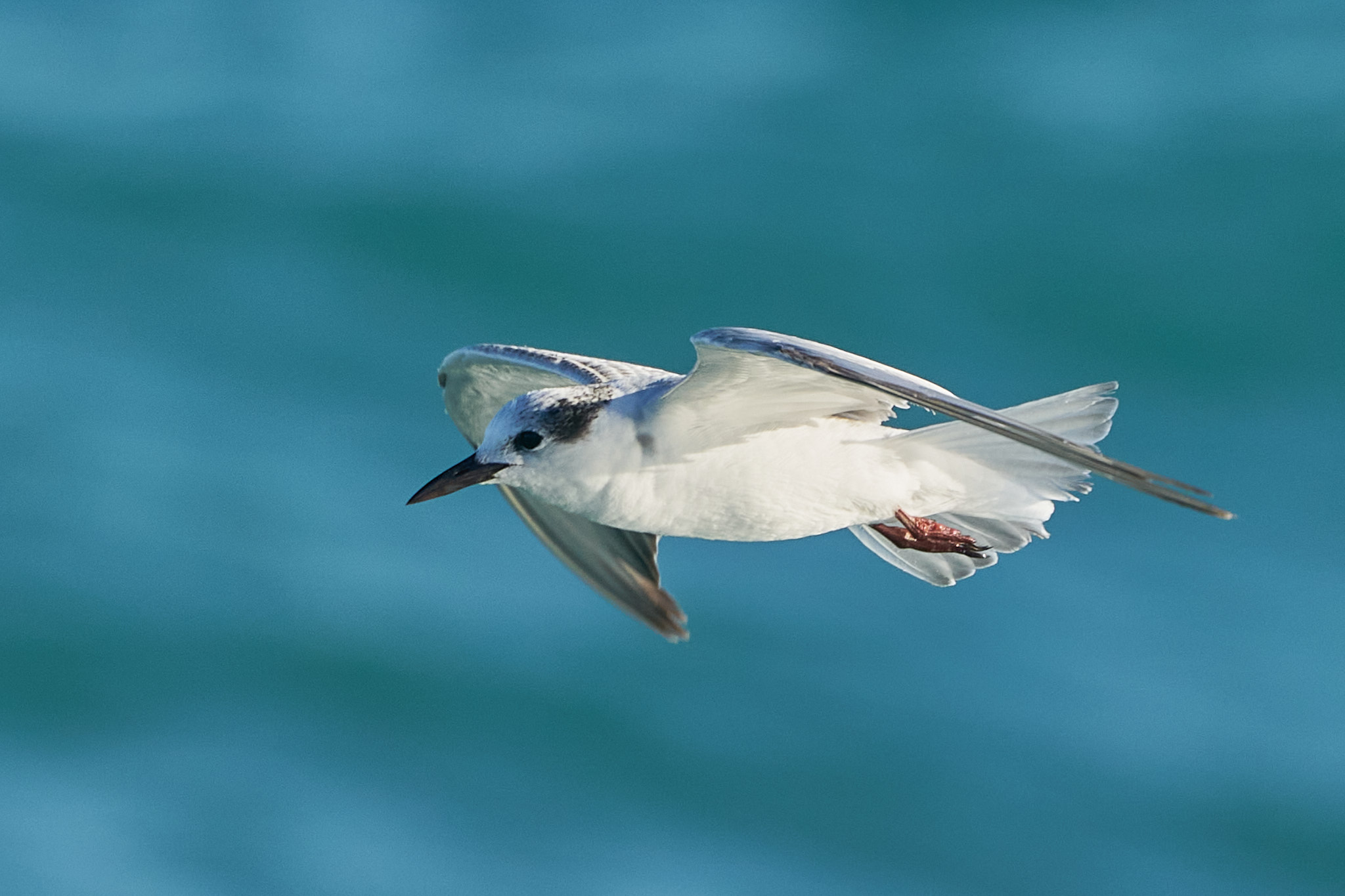
Marsh terns are relatively small as terns go and are most often seen over fresh water. Two species are fairly common in Australia, especially in the north and a third species causes considerable excitement when it shows up. The largest member of the genus is the Whiskered Tern, Chlidonias hybrida (Latin for hybrid because of the mistaken notion that it was a cross between two other species. Taxonomy has its rules, the oldest name prevails, thus the specific name bestowed by Pallas in 1811 later found itself combined with Greek – no respect for the classics).

Whiskered Terns do venture over the sea. These photographs were taken at Entrance Point adjacent to the Port of Broome. There were two present, both post-breeding adults undergoing moult.

Aficionados will observe that the inner primaries are fresh, P7 is nearing full development and the three outer primaries are old and soon to be lost. The secondaries are at much the same stage. Click on the pictures for a better look.

Rainbows …

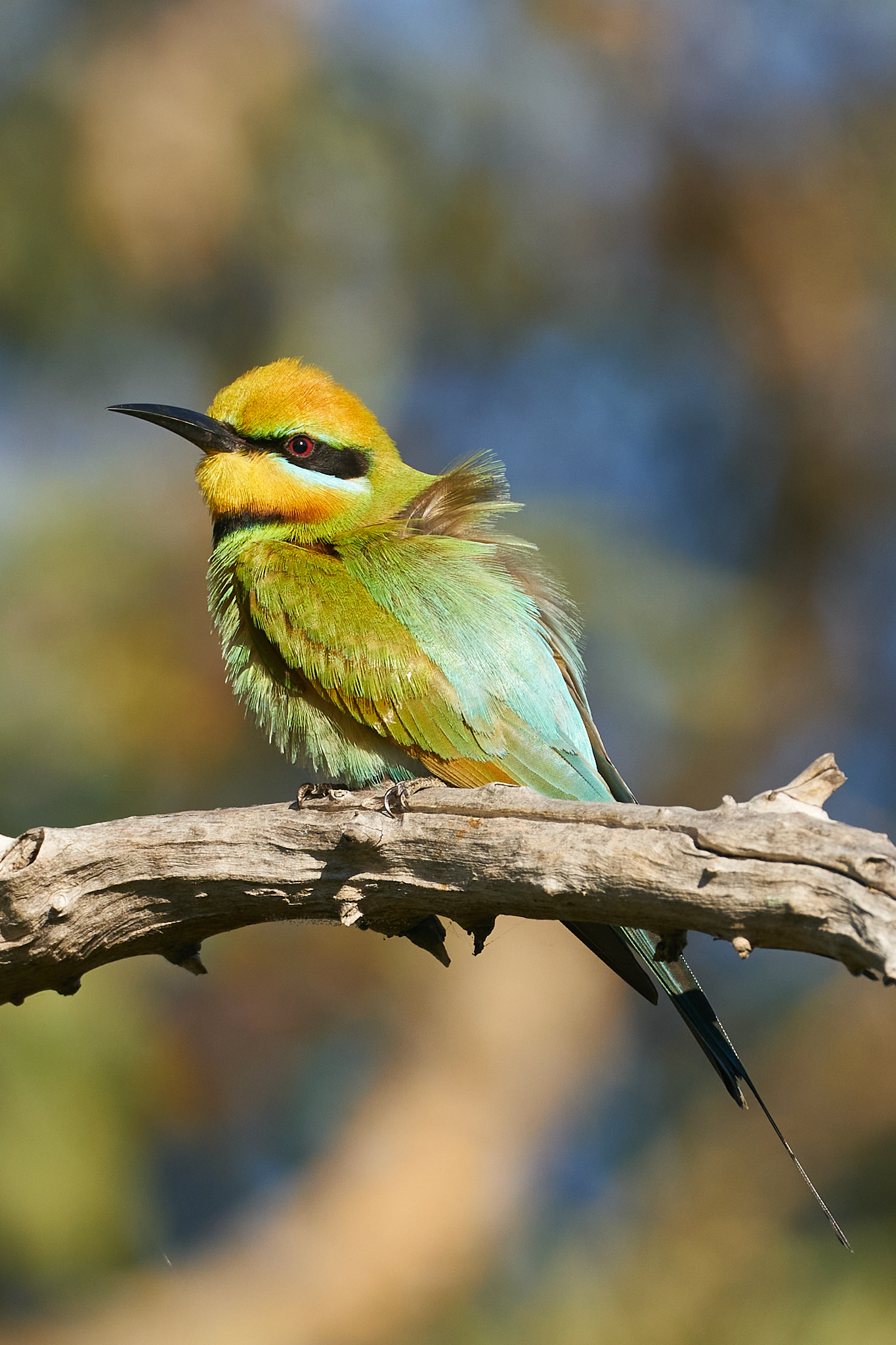
It was a windy morning, the feathers are somewhat ruffled but the plumage is otherwise in excellent nick. Rainbow Bee-eaters nest in tunnels in river banks, cliffs or any near vertical surface in soil that’s light enough to burrow into. By the end of the breeding season they look pretty battered.

The long central tail streamers indicate that this one’s a boy. Click on the photos for a better view.

Boobies …

My eyes are always drawn to them and they have been much in evidence at the beach in recent days but getting a decent photo has not been easy.

There are ten species in the family Sulidae, three Gannets and seven Boobies assigned to three genera. The three species of Gannet are found over vast areas of temperate seas and are placed in the genus Morus. The Boobies are found in tropical seas. Six species are in the genus Sula and Abbott’s Booby is the odd one out in a genus all its own Papasula. The Sulids usually stay fairly close to the coast, nest on islands and feed on fish which they catch by plunge diving.

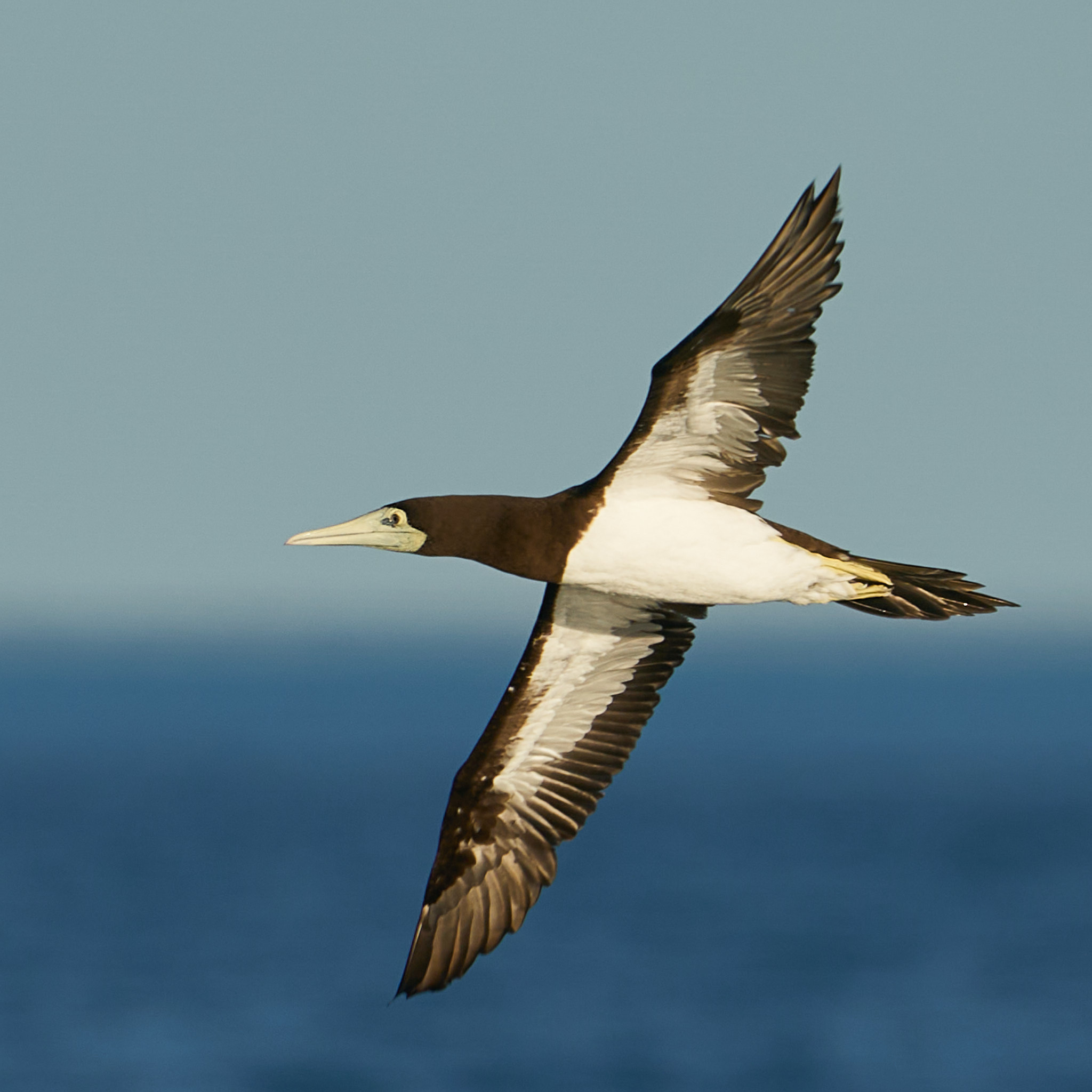
Gannets tend to gather in good numbers over schools of fish and dive vertically putting on a fantastic display for the observer. The Booby most frequently seen off Broome beaches is the Brown Booby Sula leucogaster. Over the last few days I’ve been watching them feed less spectacularly by belly flopping. They seem to be taking food from the surface or not far beneath it.

The scientific name leucogaster translates as white belly which might have been a better name than Brown because they are so dark that you need to be very close to see that they’re not black. Perhaps that was rejected because most of the other Boobies also have white underparts. The light bone-coloured bill indicates that this one is an adult female.

Tumbleweed …

Spinifex is the common name of a spiky inland grass. It occurs in low rainfall areas and often has a circular growth form likened to fairy rings. The genus name is Triodia. Among the many species are irritans and tormentosa which give you an idea of how much fun it is to walk through. Grasswrens and Emuwrens like it a lot, hunkered down among the spikes they are fairly safe from predators.

Just to confuse us there is an entirely different genus of grasses called Spinifex. These are coastal plants found in Australia,New Zealand, New Caledonia and Tonga. One of them, Spinifex sericeous, is common around Broome.

It’s a valuable pioneer which helps stabilise dunes by means of its long stolons. The flower heads are quite striking. At maturity the female flower heads break off and go tumbling. One of its popular names is Spring Rolling Grass but it is more often known simply as Coast Spinifex. The female flower heads are about 20cm across.

With the sun low behind them they are very attractive …

Stonefish …

Evolution has equipped these guys with defenses so good they have no need for a flight response.

Wikipedia describes it as “the deadliest fish in the sea, with highly effective venom which can be lethal to humans.” Australia has two species, the Reef Stonefish Synanceia verrucosa and the Estuarine Stonefish S. horrida. They can be found in shallow marine environments from the Queensland NSW border around northern Australia to a little south of Shark Bay, WA. They are two of five species found throughout the warmer waters of the Pacific and Indian Oceans extending into the Red Sea and the eastern Mediterranean (probably via the Suez Canal, oops). They are in the family Scorpaenidae along with the Lionfish and Scorpion fishes.

The fun starts if you step on them or grab them. They have about 13 spines along the top surface, each is supplied by two glands. The venom is a mixture of enzymes and other proteins. Pain begins almost immediately, is excruciating and disproportionate to the apparent size of the injury. It’s followed by swelling that may affect the entire limb.

As the effects reach the rest of the body there may be fever, delirium, muscle weakness or paralysis, pulmonary edema, respiratory difficulties, hypotension, bradycardia, arrhythmia, convulsions, heart failure and death. [Saggiomo et al 2021]

All of which could certainly put you off going to the beach. But good news, The deadliest fish in the sea has not been implicated in the death of an Australian since records began. Not something that can be said for sharks, blue-ringed octopuses, irukandji and crocodiles all of which can be found around Broome. Indeed only about 10% of hospital admissions due to stinging fish are the fault of Stonefish and that amounts to about 5 cases per year for the whole of Oz.

If you are off to the beach fastening your seat belt and remaining sober eliminate most of the risks you face. Wearing footwear with reasonably robust soles in shallow water further reduces the risk from stonefish.

For first aid immersion in hot water is recommended. This is not easily organised at the beach … I’d head for the hospital if there is one in easy reach. An antivenene is available.

Above all else don’t try this at home …

The Port …

Ten metre tides, mangroves and vast expanses of mud complicated matters for the fledgeling settlement of Broome. Coastal shipping brought supplies in and the shell and cattle out. A jetty was commissioned and began operation in 1897. Even though it was 900m long ships could only arrive or leave on high spring tides. Henceforth the good people of Broome could take advantage of the West Australian Steam Navigation Company’s fortnightly mail steamer service to travel to Perth or Darwin. SS Charon and SS Gorgon of the Blue Funnel Line traveling between Perth and Singapore called at Broome en route. At low tide they sat on the mud.

The original pier was at Mangrove Point now called Town Beach. It was connected to the commercial centre in Japtown by a tramway. The port was administered by the Department of Harbours and Lights. Names were so much more romantic in those days.

On the morning of October 11th 1935 a fire broke out. It was extinguished in about half an hour but destroyed about 50 feet (15m) of the jetty. Steele Rudd died the same day. The incidents were not related.

A new port was deemed necessary and was opened in 1986. It is situated a little less than 4km southwest of the old port at Entrance Point and offers improved freight handling and deeper water. It is managed by the Kimberley Ports Authority.

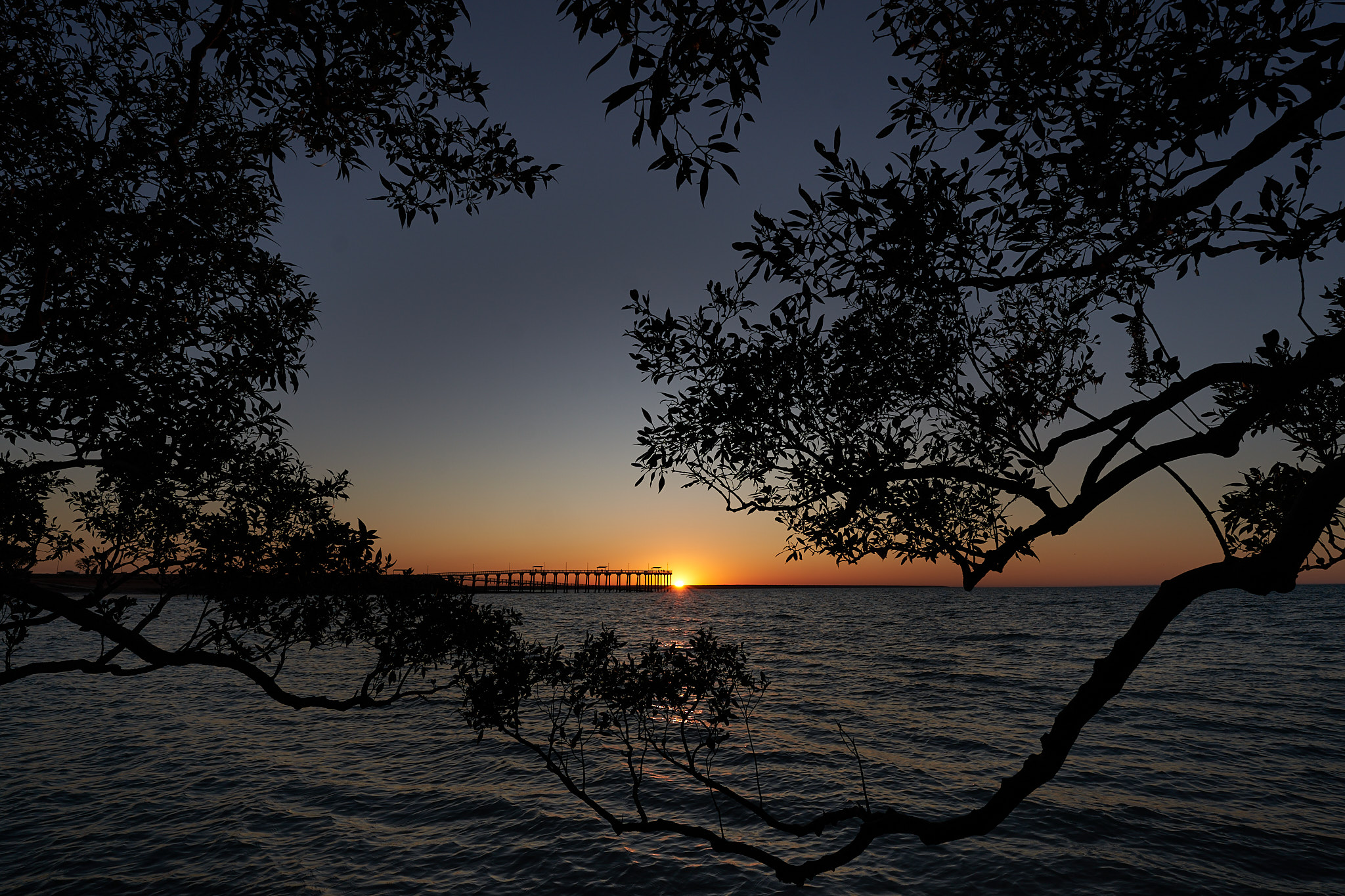
After the old port was retired the wharf was dismantled. In the last couple of years a new pier has been constructed which provides a fine promenade for tourists and somewhere for fisherpersons to reach deep water at high tide. It’s only about 200m long so high and dry at low tide. High and dry? Rather high and squishy, you can walk around it if you don’t mind muddy shoes. It makes a fine sight as the moon comes up …

Black Kite …

Some birds seem to fly with very little effort. Many seabirds fit the bill but still give an impression of great dynamism. Black Kites just float with a lazy nonchalance. They are common over Broome and are found throughout Australia. They are also found in Papua-New Guinea, Eurasia and Africa. Australian cricket fans will have seen them on TV when we play in India and South Africa.

Their legs are short and their talons are not especially powerful. They enjoy a bit of carrion, large insects and small mammals like mice. They congregate at rubbish tips and over bushfires. They have been known to help fires spread by carrying smouldering sticks into unburnt areas.

If you’re having a picnic watch out for your sandwich – pro tip, stay close to the trees.

Cultured …

According to Pliny the Elder Cleopatra was keen to impress Mark Antony …

At this moment she was wearing in her ears those choicest and most rare and unique productions of Nature; and while Antony was waiting to see what she was going to do, taking one of them from out of her ear, she threw it into the vinegar, and directly it was melted, swallowed it

In other versions it is wine. Vinegar is sufficiently acid to dissolve a pearl (eventually) wine is not, Coke would certainly have tasted better. The story is probably untrue but there are two things we can say for certain … Cleopatra was cultured, the pearls of the time were not. Nor were the pearls from prewar Australia. Indeed the WA Pearling Act of 1912 prohibited the production, sale and possession of cultured pearls. That section of the Act remained in force until 1947.

It was buttons and pearl shell inlays that sustained the industry. Pearls were a welcome bonus but a master pearler of the time could not have put together a finely matched necklace in an entire career. The war stopped the industry in its tracks. The ports and airports of Northern Australia were of stategic importance pearl shell was not. The fleet was dispersed.

The map, filched shamelessly from The National WW2 Museum New Orleans, to which I’ve added Broome, shows the maximum extent of Japanese expansion and how close the war came to Australia.

Pearling resumed in 1946. The work force was about a quarter the prewar figure. There were no Japanese represented, nor would there be until 1953. A shortage of Luggers hindered production but the fishery had been rested for four years and buttons were in short supply. The industry picked up quickly in a world that was changing rapidly.

As a kid, if I lost a button, my mother would sort through her sewing box to find a matching replacement. Would it be a pearl one or one of the new and cheaper plastic ones?

Hard hat diving gave way to hookah diving, air was still delivered by hose from the surface but to a mouthpiece giving the diver greater freedom of movement. He was now looking for small specimens of the same species of oyster to take home live for cultivated pearl production.

The end product was no longer high volumes of low value shell. Pearling was now truly about the pearl, little balls of calcium carbonate but with a lustre and size that would have so shamed Cleopatra she’d have shoved a snake down her cleavage.

War in the Pacific …

The seasonal rhythm in Broome ticked along. The population of Japtown was a few hundred in the dry when the Pearlers were at sea. At the end of the season the population would quickly swell to more than three thousand for the wet. The Japanese had a long association with the sea and with pearling. In 1940 they constituted about 27 % of Broome’s pearling workforce. They were outnumbered by the Koepangers – indentured labourers recruited in Timor. (45%). By comparison the Chinese constituted just 0.5% 0f the pearling workforce. Smaller numbers of other Asian people and aboriginals made up the balance. Then add the merchants and those not employed in pearling. All manner of businesses thrived. It was a happy little melting pot living in vibrant harmony – between riots.

At dawn on November 7th 1941 the Japanese struck Pearl Harbour. Eight U.S. battleships were in port. All were hit, 5 being sunk and 1 heavily damaged; also sunk were 3 destroyers. Nine other ships were sunk or severely damaged; 140 aircraft were destroyed and 80 more damaged. 2,330 military personnel were killed and 1,145 wounded. It was the start of the War in the Pacific. For the next 6 months the Japanese carried all before them.

In Broome Pearling came to a halt. Women, children and nonessential workers were evacuated. The Japanese were interned. Many of the luggers were commandeered by the Navy – imagine the terror of the Japanese at the prospect of a fleet of luggers bearing down on them.

On February 19th 1942 Darwin was bombed. Japanese fighters and bombers attacked the port and shipping in the harbour twice during the day, killing 252 Allied service personnel and civilians.

On March 3rd 1942 nine Zero fighter planes strafed the moorings at Mangrove Point where there were 15 Flying Boats parked for refuelling. The airport was also attacked. The Flying Boats and 9 other aircraft were destroyed. At least 89 people were killed. The Flying Boats were carrying refugees from the Dutch East Indies. Most of the dead were women and children fleeing the Japanese advance. There were three further attacks on Broome.

In succeeding months air attacks were made on Wyndham, Port Hedland and Derby in Western Australia, Darwin and Katherine in the Northern Territory, Townsville and Mossman in Queensland, and Horn Island in the Torres Strait. In all Darwin was hit 64 times.

And now we call that part of town Chinatown.