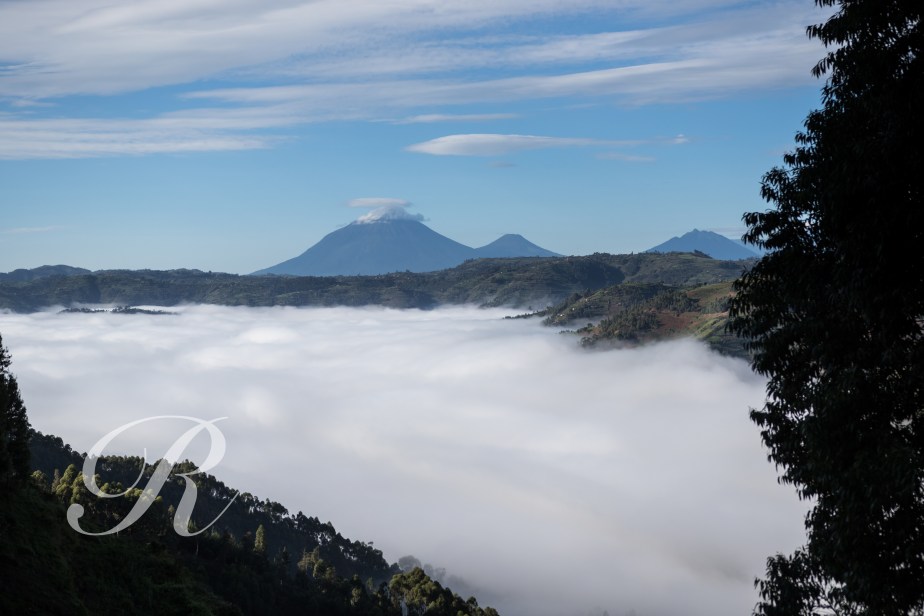
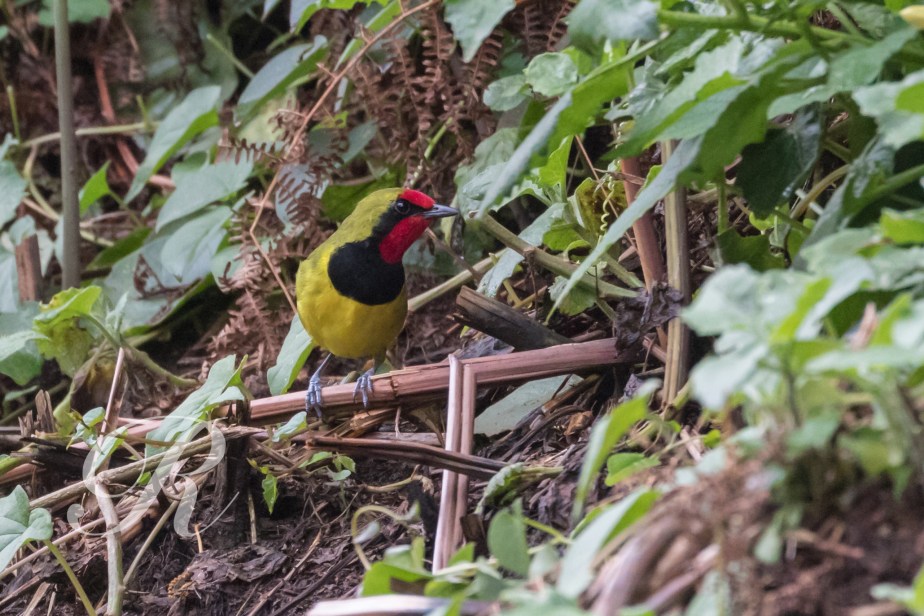
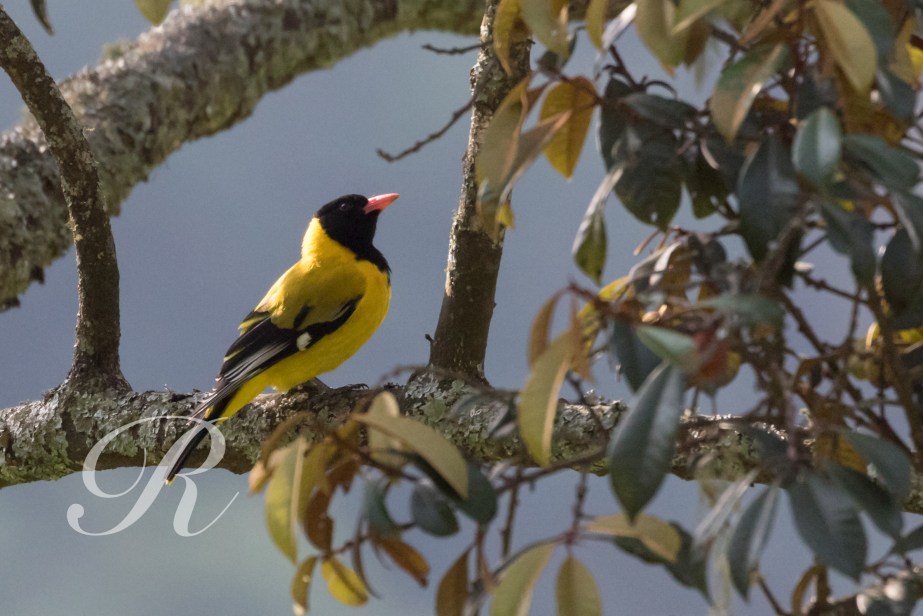
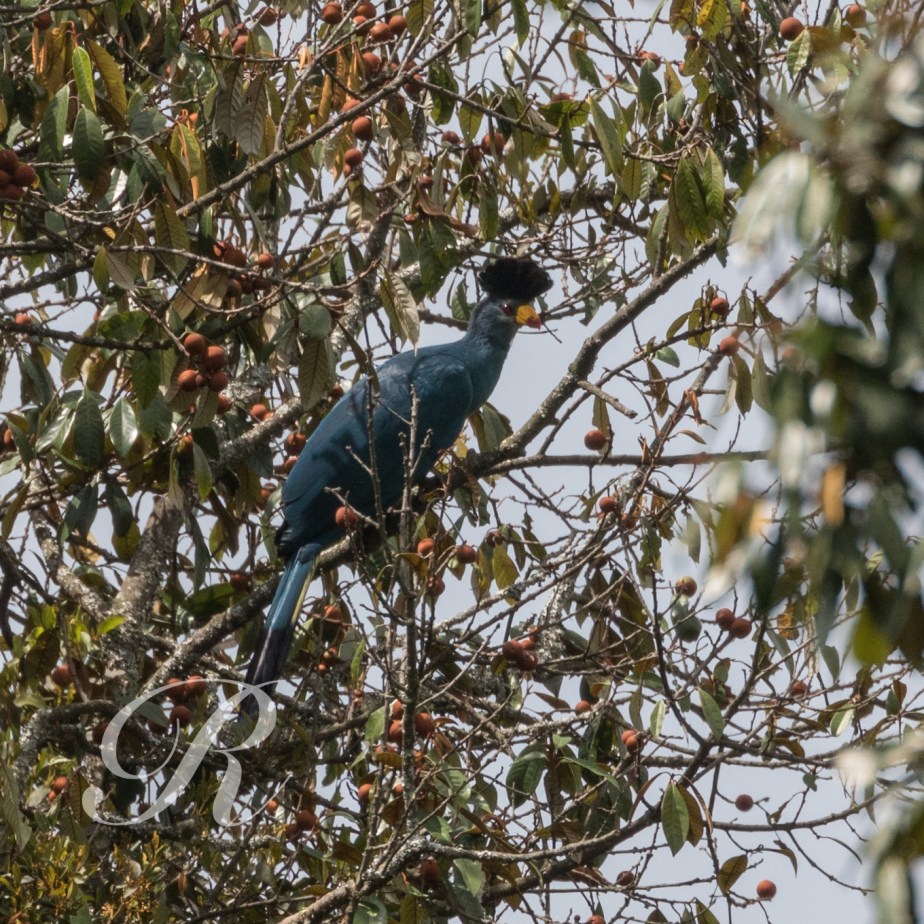
Time to say farewell to Kidepo National Park in the far north-east of Uganda and head for Bwindi in the far south-west. It was a two day drive spending another night in the Kampala Metropole.
Highlights en route included …
Shoebill
and standing with one foot in the northern hemisphere and the other in the southern. Oddly enough this was in a little town called Equator.
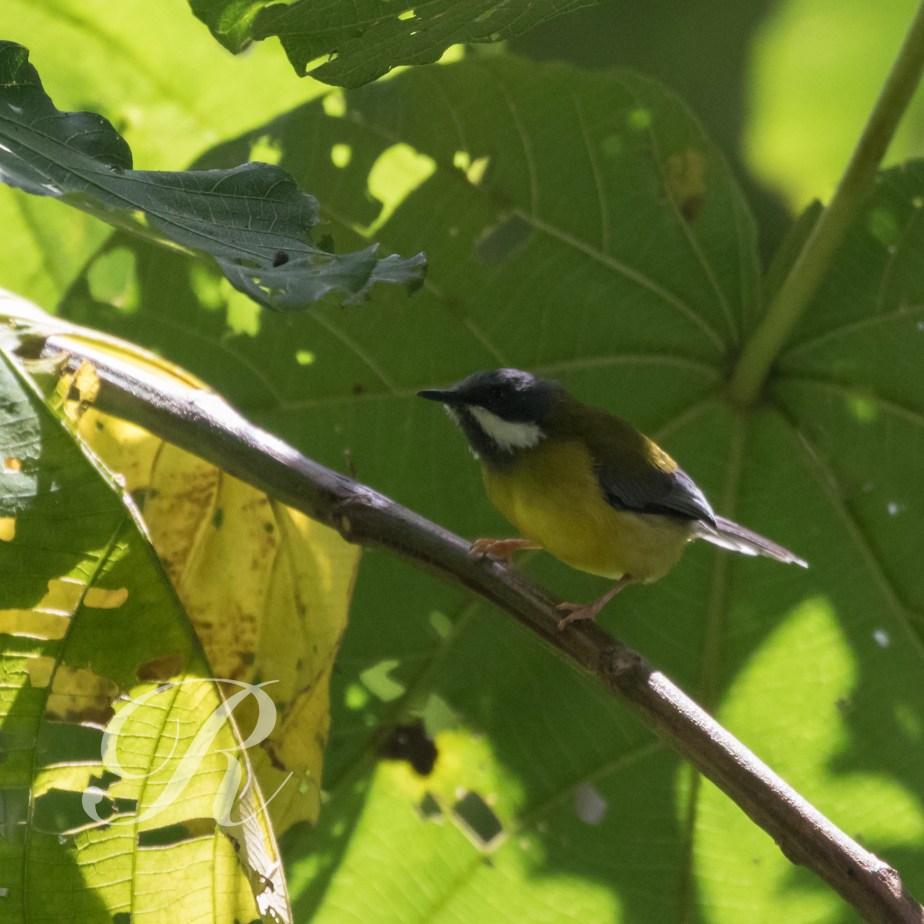
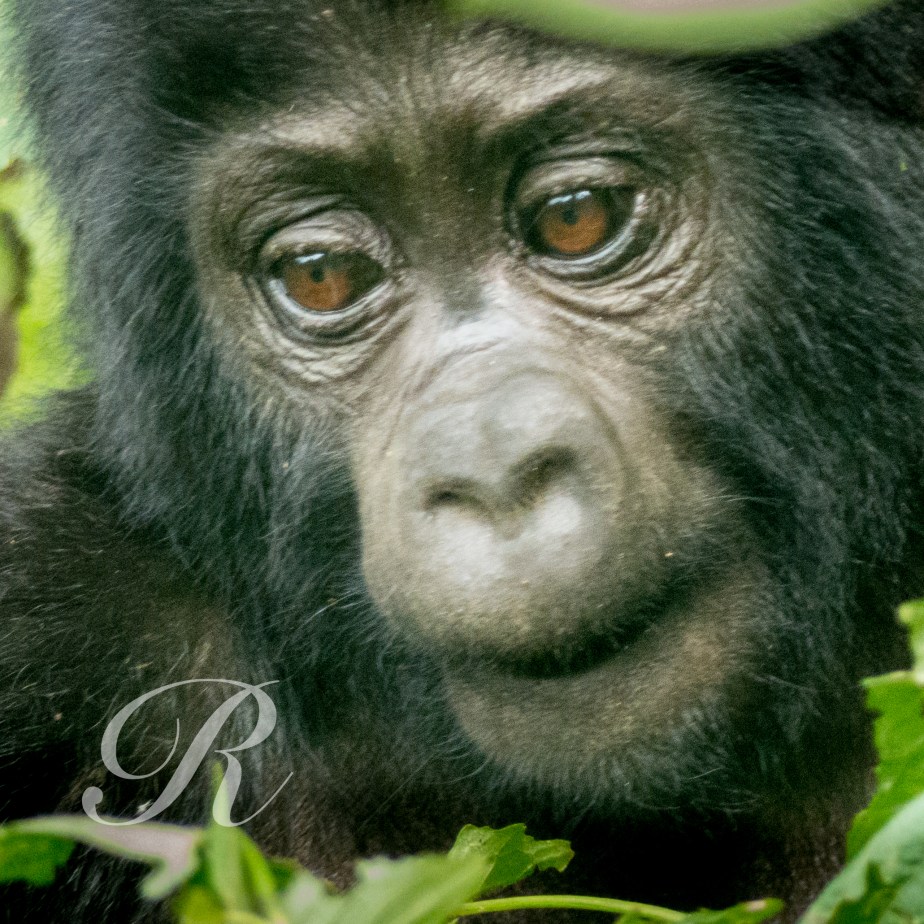
Bwindi National Park protects 331 square kilometres of the Bwindi Impenetrable Forest. For species diversity there is nowhere better in East Africa. The forest is home to more than 1,000 species of flowering plant, Mountain Gorillas, Chimpanzees, 118 other species of mammals and approximately 350 species of birds including a good proportion of the Albertine Rift Endemics.
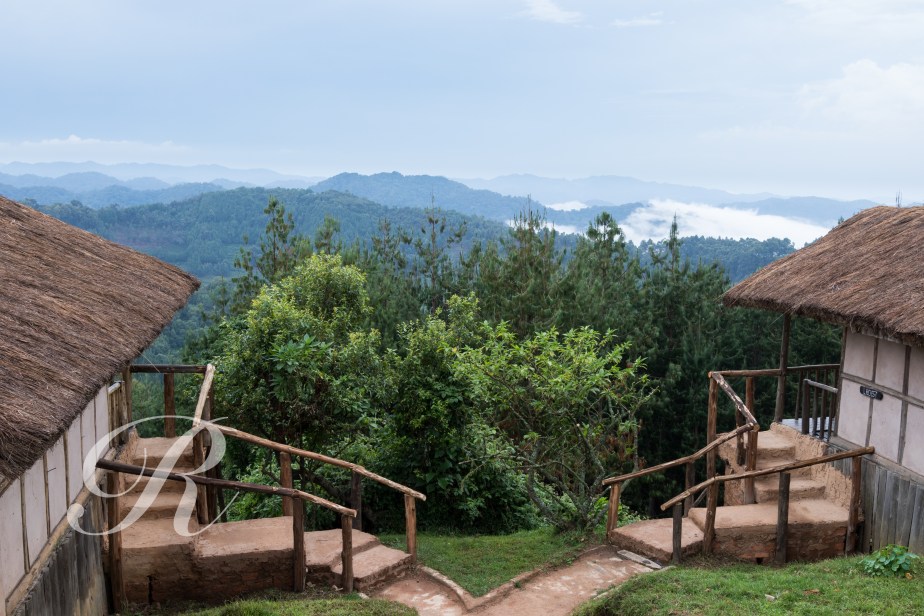
We were staying on top of the mountain at Gorilla Mist Lodge.
Both Pian-Upe and Kidepo National Park are in Karamoja. They are wonderful places and without the protection that they offer to the wildlife Uganda and the world would be the poorer.
But these places were the homeland of the Karamojong, displacing them from the parks reduces the land available for them.
The Karamojong are traditionally cattle herding folk. They speak a Nilotic language as opposed to the Bantu languages of most Ugandans. This group of people include the Masai of Kenya not far to the east. The quest for pasture and water in an unfenced country has led to clashes with their neighbours. Even now cattle raiding is not unknown. As the Amin era descended into chaos they helped themselves to rifles and Karamoja became unsafe to visit.
Think seriously about whether you need to travel here due to the high level of risk. If you do travel, do your research and take a range of extra safety precautions, including having contingency plans. Check that your travel insurer will cover you.
Kidepo would be out of the question …
Within 50 kilometres of the border with South Sudan, do not travel
Inter-communal violence happens in north-east Uganda (sometimes referred to as the Karamoja region) as well as occasional attacks on security forces. Foreigners are not usually the target of the violence but you should remain vigilant and exercise caution if travelling in the region.
It does advise extra caution near the Sudanese border.
The Karamojong have, in the main, been disarmed and tourists are accompanied by armed rangers in the parks. We were advised not to take photographs of cattle, it could happen that the owner is both suspicious and superstitious and might respond violently.
After years languishing behind the rest of Uganda economic development is bringing education, healthcare and new opportunities to the region.
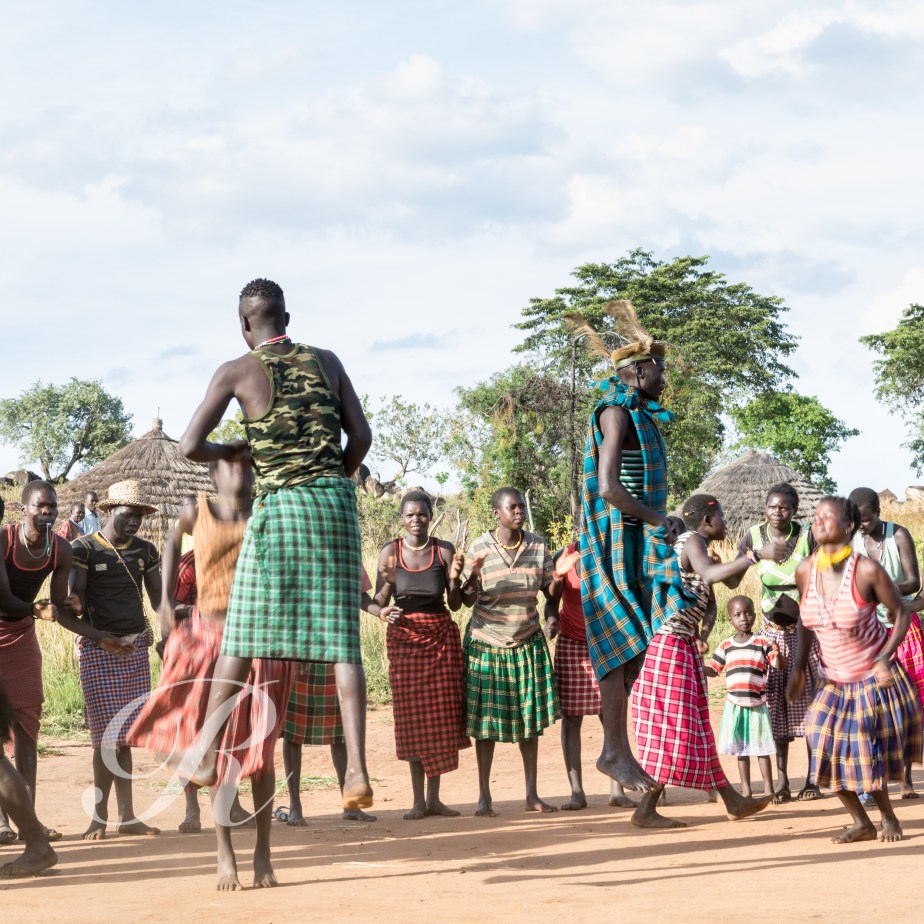
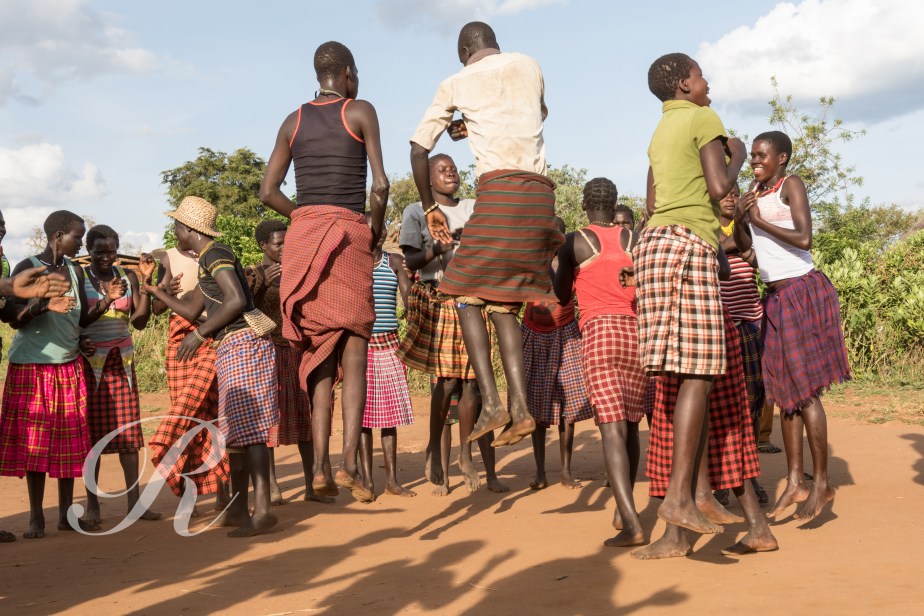
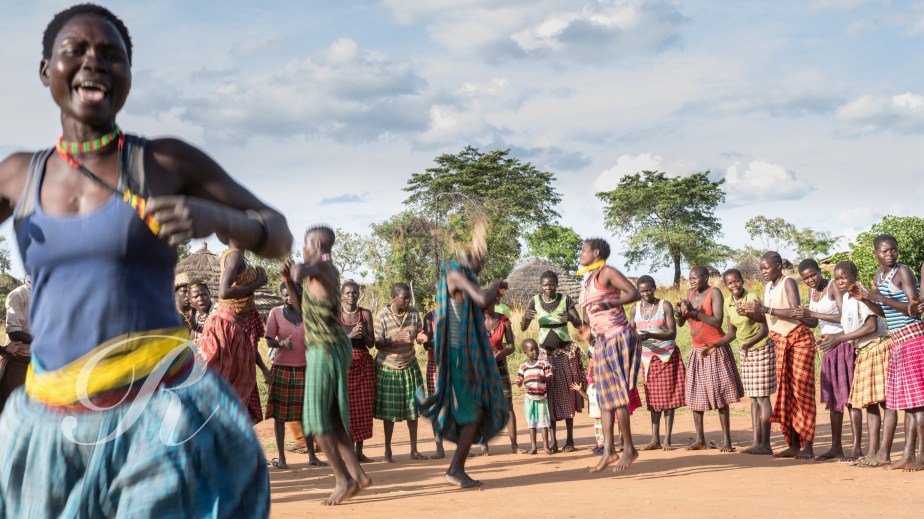
We visited a Karamojong settlement near Kidepo housing people that had been displaced from the park. We were made to feel very welcome. We were shown the interior of a traditional house, shown how sorghum is ground to make flour, treated to a dance which we were invited to join and offered handicrafts to buy.
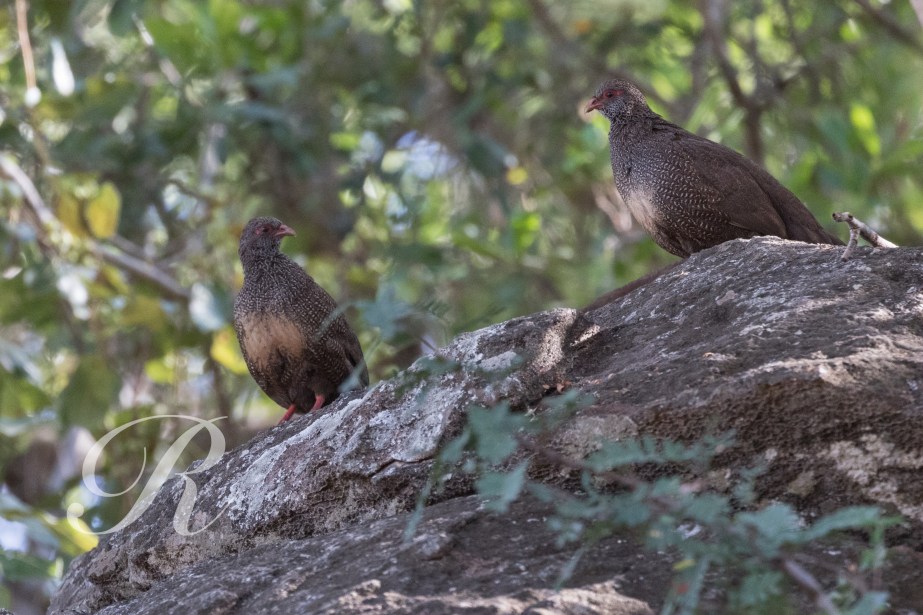
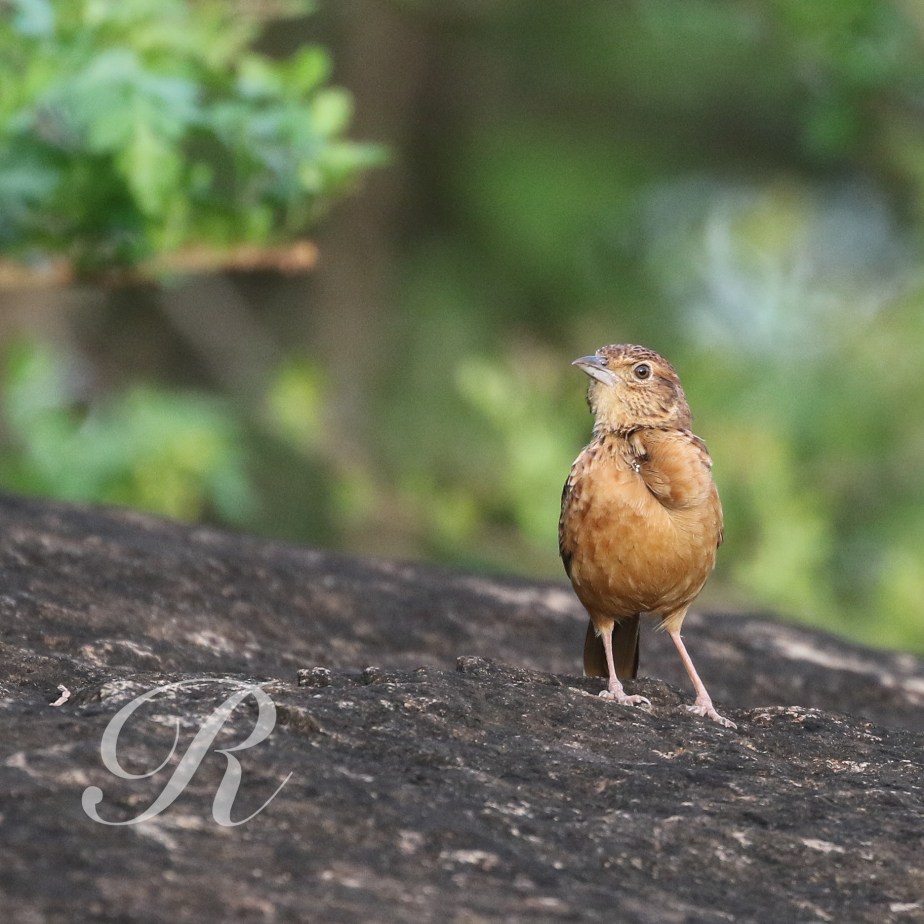
To describe the Stone Partridge as a cooperative species is quite a stretch but I was particularly lucky with this group. It would be nice to improve on this shot but it would require the investment of quite a lot of time.
We arrived at the Kidepo River at about noon. Wandered around a bit, ate our lunch. At one-o-clock we encountered a pair of monkeys jumping about in the riverside trees.
Tantalus Monkey
Dr Mark Antos, our primate specialist, was most excited. It was imperative that we get good notes and if possible good photographs. These objectives did not align with the monkeys. One fled. The other one, a male, presented itself in harsh light and always partially obscured. I selected this photo from 27 equally bad alternatives because it is possible to see the tail tip, the back of the left hand and the scrotum.
The tail tip is light grey as is the back of the hand. The scrotum is an adorable shade of blue. This distinguishes this Tantalus Monkey from the more common and widespread Vervet. It also narrows the field to the Sudanese subspecies Chlorocebus tantalus marrensis.
One-o-clock Jump was created by Count Basie and other members of his band in 1937 and they used it to close their performances for the next fifty years. Its first performance was on radio. The name was conferred in a hurry because the radio announcer though the original title unsuitable for the delicate ears of the American public. Legend has it that Basie looked up at the studio clock and said the first thing that came to mind. Until then the band had called it Blue Balls.
From the camp in the Kidepo National Park it’s a full day out to explore the Kidepo Valley and not a great day for large mammals because of the lack of water. It is, however, a great place for birds.
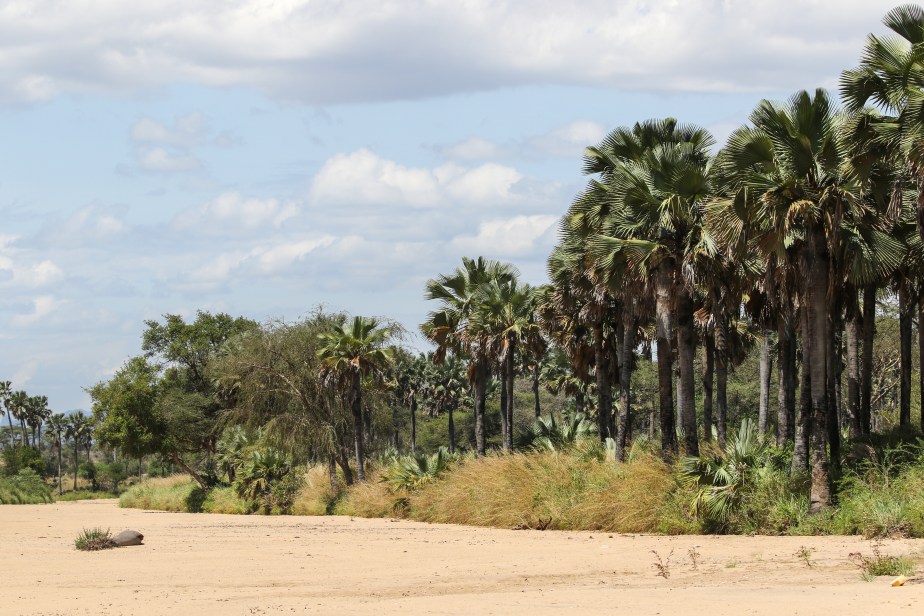
We reached the river itself at about midday. Not a drop of water to be seen.
Kidepo River
When the river does run it is fast and furious but it subsides and becomes safe to cross in just a couple of hours.
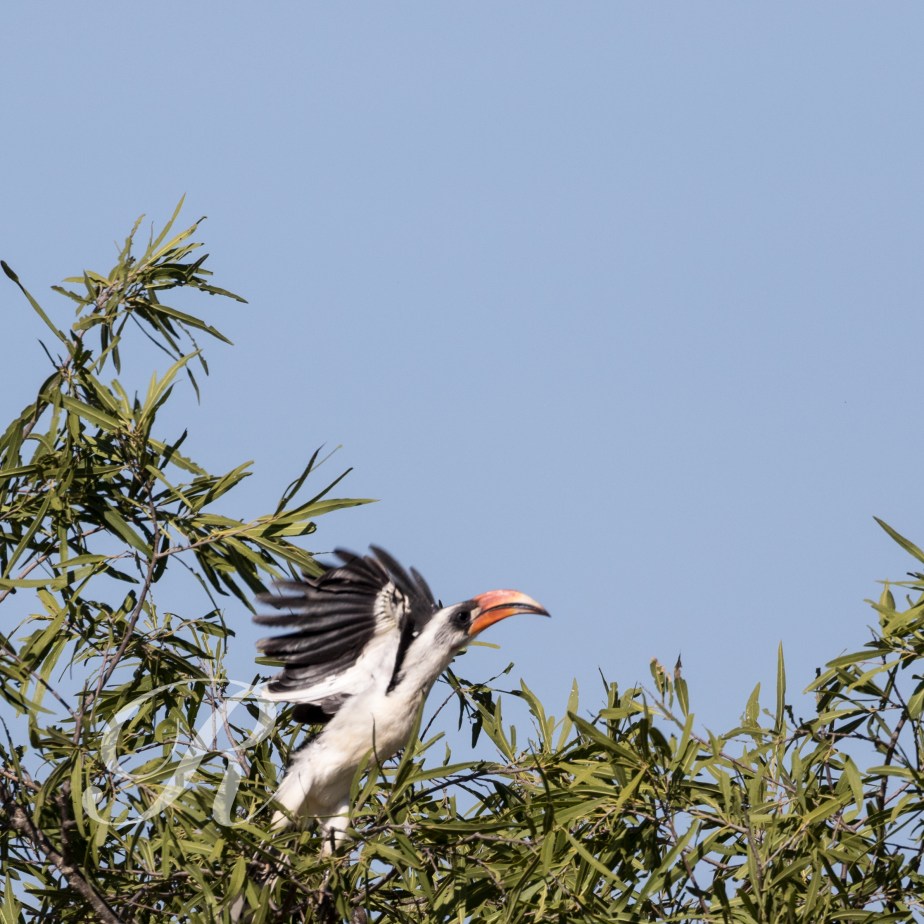
Along the way we’d seen some very nice birds including Jackson’s Hornbill which has a very restricted range. Females have a black bill. This is the male …
Jackson’s Hornbill
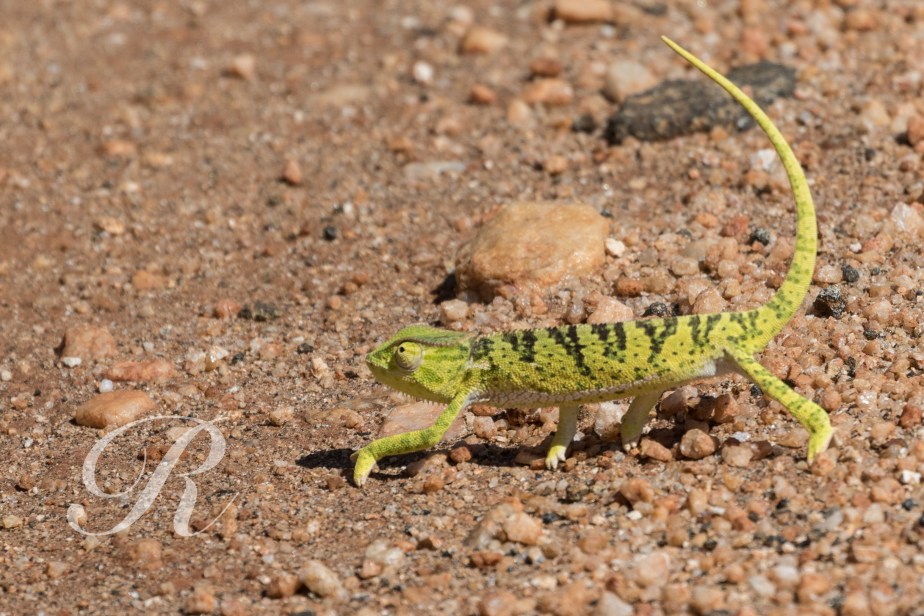
We also came across a fine chameleon
Chameleon
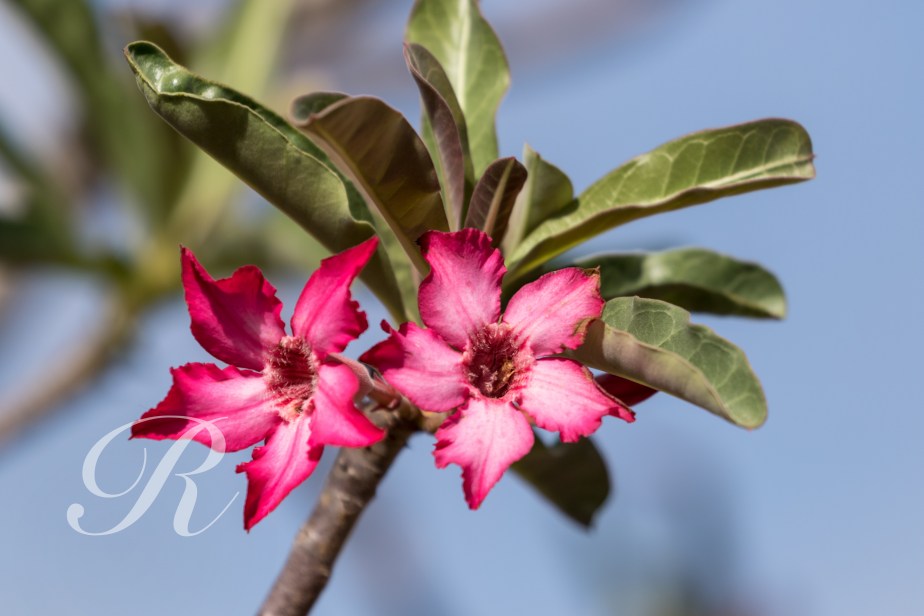
and some wild Desert Rose in flower. You can buy these as garden plants in Australia.
Desert Rose, Adenium obesum
Beyond the river the road leads into South Sudan. We saw the odd truck coming from across the border. Just to remind us of the recent troubles one was sporting bullet holes in the windscreen.
Tony, Prossy and Zachariah
Prossy was a keen birder and became a guide. Tony is a former school teacher and keen birder and became a driver. They are first and foremost birders. I think this makes an important difference to their enthusiasm in the field. We’d now been together for some days and it really was a case of birding with good friends. My prior impression of Prossy as a bit severe had completely melted, I suspect that’s just her ploy to get new clients under control! Zachariah on the right is a local ranger from the park, a man brimming with self confidence.
The road to the springs runs along the border, indeed according to my GPS this next photograph was taken about 150 metres inside South Sudan.
Abyssinian Ground Hornbill
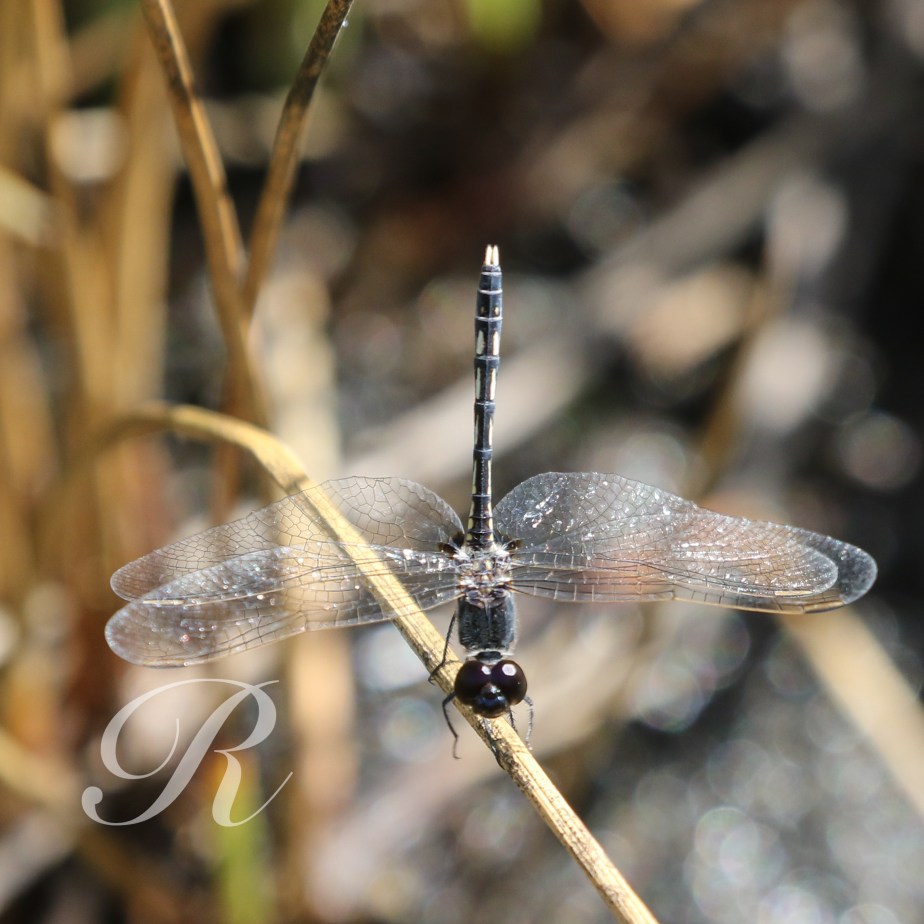
The hot springs is a small and permanent source of water just a few metres from the border post. In such an arid part of the world it seemed odd to be hearing frogs and seeing dragonflies.
dragonfly
And let me tantalise you with one more photograph which I will have more to say about in due course …
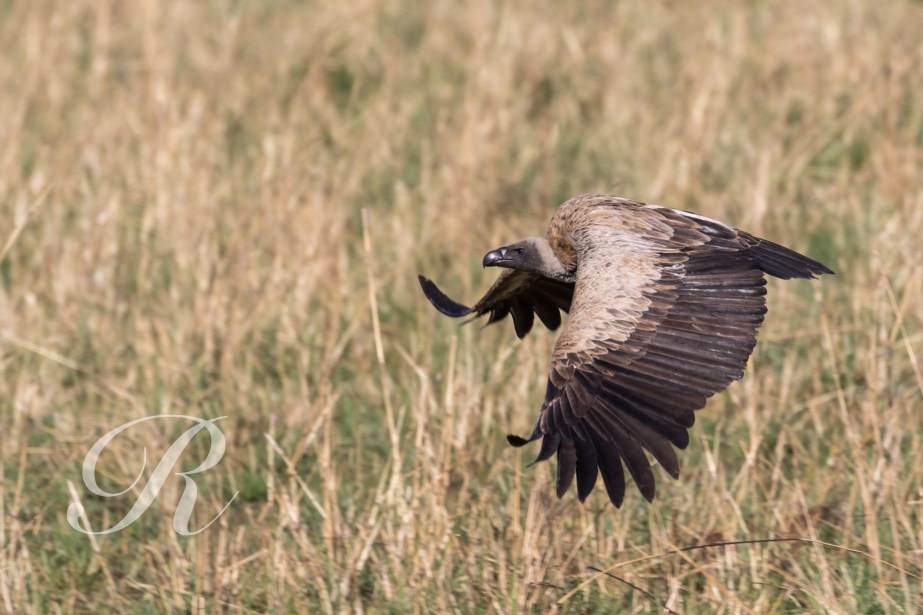
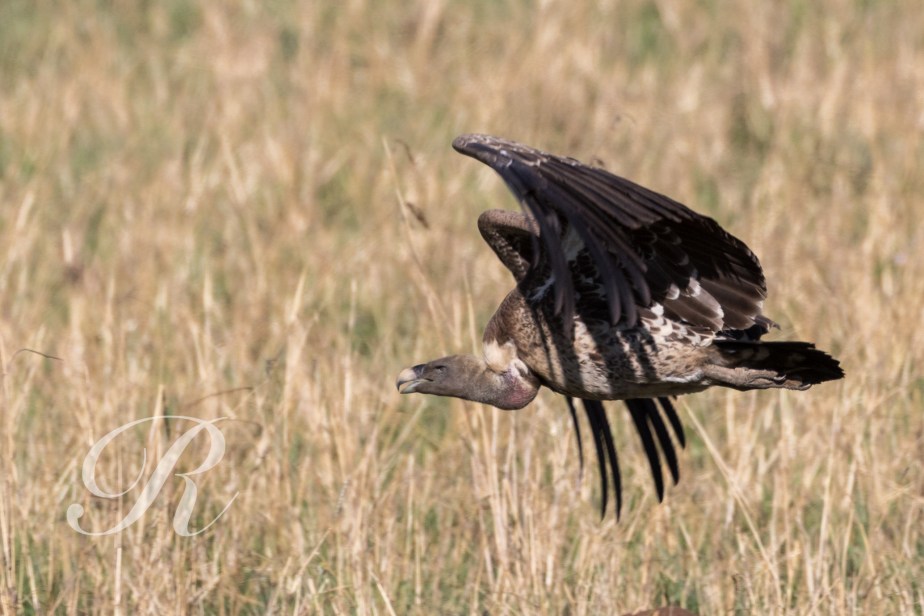
East Africa has seven species of vulture. They are members of the Accipitridae the family that includes eagles, buzzards, hawks and some of the kites. They are united by the fact that they live mainly on carrion but they are not necessarily each others closest relatives within the family. They are unrelated to the New World Vultures and Condors that evolved separately in the Americas to look quite similar.
Like a lot of heavy birds in warm climates they prefer to wait until the sun has cooked up a few thermals before they take to the wing. Then it’s time to hunt for the day’s meal which they find by sight.
Lappet-faced Vulture waiting for the thermals
It’s not difficult for a human to find dead animals in the savanna – just watch the vultures. Initially they all seem to be going the same way. As you get closer they’re converging from all points of the compass.
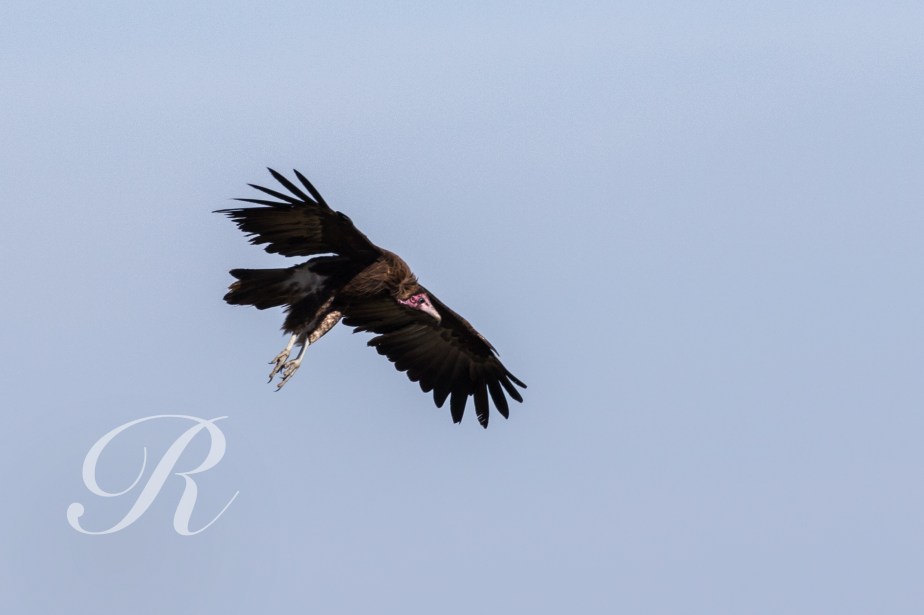
Hooded Vulture
There were more than fifty vultures of five different species in this assembly in Kidepo National Park.
Vultures – Kidepo National Park, Uganda
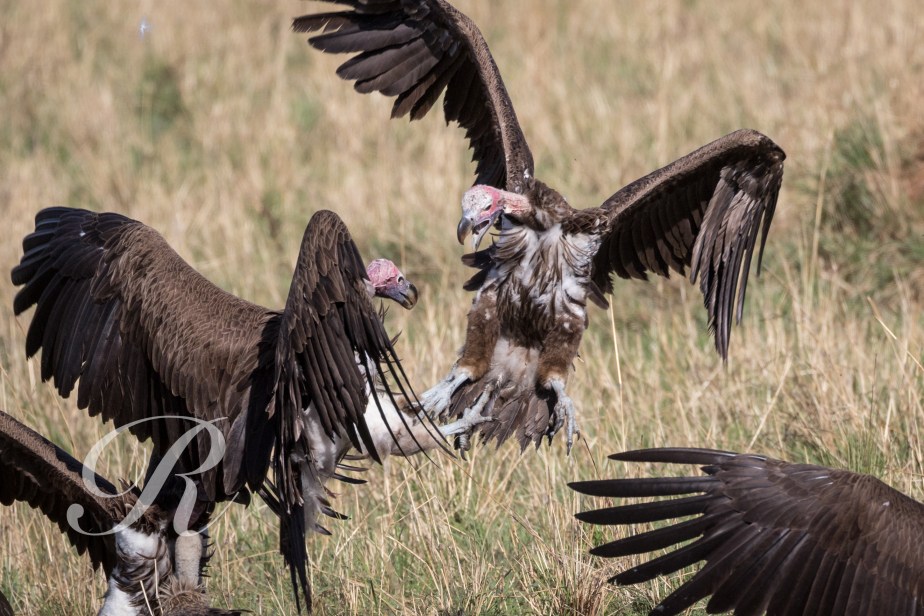
And then the squabbling begins …
Lappet-faced VulturesWhite-headed Vulture in the centre
Defassa Waterbuck are large and handsome antelopes that are quite common along the Narus River in Kidepo National Park. They require fairly open grassland and they don’t stray far from water.
Any number of subspecies have been described but they fall into two groups. The more easterly group, Common Waterbuck, was the first described and given the scientific name Kobus ellipsiprymnus. Kobus is an African name given a faux Latin ending. Ellipsiprymnus is from Greek – ellipsi meaning ring and primnos meaning hind part. It was so named because of the white target on the animal’s rump.
The more westerly group was described as a separate species, Defassa Waterbuck, but where the ranges meet they hybridise readily and the two groups are now lumped in the one species. There is no white ring on the rear end of a Defassa Waterbuck. So it now has a scientific name celebrating a feature that it doesn’t have.
Defassa Waterbuck maleDefassa Waterbuck female
Only the males have horns and these are used in competition for access to females.
Defassa Waterbuck
They are said to taste terrible which is quite an advantage when it comes to living with lions and human beings.
The camp at Kidepo National Park is remarkably relaxed. There is an armed guard at the gate on the road. He or she checks your ID then raises the boom gate … but there’s no fence. You are advised to take your torch out with you at night and to look around for wildlife before stepping away from your door.
Warthogs and jackals wander around the bandas. There are Waterbucks on the soccer pitch. One morning I was obliged to take an alternative route to breakfast because there was a buffalo between me and the restaurant. The following morning a lion could be heard roaring just outside the camp.
The warthogs and jackals are quite habituated to human presence, the jackal is the more cautious as well as the more handsome of the two species.
Warthog
The Kingdon Pocket Guide to African Mammals offers three jackals to choose from – Black-backed, Side-striped and Common. On this basis this guy is a Common Jackal because of the coloration and the black tip to the tail …
but other authorities treat the group a little differently. The name Golden Jackal is preferred to Common and the subspecies that occurs in Africa has recently be proposed as a full species with the name African Golden Wolf.
shamelessly filched from Wikipedia
It can be seen from this phylogenetic tree (other researchers have published different trees} that the Golden Jackal is not closely related to the other two jackals nor is it an immediate neighbour to the African Golden Wolf. The physical similarity between the (Eurasian) Golden Jackal and African Golden Wolf may be explained by parallel evolution.
Just to complicate matters all the wolf-like canids have similar morphology and 78 chromosomes. They can and do hybridise with other canid species in the contact zones.
Specifically, we find gene flow between the ancestors of the dhole and African hunting dog and admixture between the gray wolf, coyote (Canis latrans), golden jackal, and African golden wolf. Additionally, we report gene flow from gray and Ethiopian wolves to the African golden wolf, suggesting that the African golden wolf originated through hybridization between these species. Gopalakrishnan et al.
You’ll notice that I haven’t put a final diagnosis in the Jackal captions.
Rubor, dolor, calor, tumor and loss of function. That’s the way we all remembered it, four latin words and a short English phrase.
The Latin translates as redness, pain, heat and swelling . They are the signs of inflammation described by Aulus Cornelius Celsus in the first century AD. Loss of function was added by Rudolf Virchow in the 19th century, it can be rendered in Latin but it doesn’t rhyme and he was German.
There were four abscesses now on my arm, the loss of function was an inability to wear my wrist watch. The rubor was only a problem when you looked at it, the dolor however was becoming rather inescapable.The surrounding area was as hard as a rock, indurated is the technical term.
The first line of treatment for an abscess hasn’t changed since the time of Galen – remove the cause, drain the pus, rest the part. I carefully sterilised a needle by wiping it on my sleeve, passed it quickly through the top of each abscess and squeezed. A bead of pus began to emerge but then took the form of a maggot. The first one was actually quite easy to deliver. The subsequent ones were harder work but believe me there was no way they were staying in!
Cordylobia anthropophaga
The second of the offenders, shown here adjacent to its recent living quarters is variously known as the Putzi, Tumbu or Mango Fly Cordylobia anthropophaga. The species name translates as man-eater. They are restricted to tropical Africa.
The commonest way to fall foul of them is to hang your damp washing out to dry. The fly lays its eggs in damp places (if not your socks often sandy soil contaminated with faeces), the eggs hatch out and the resulting maggots have a few days to meet with a mammalian host. They burrow into the skin keeping a tiny hole open to the surface for their oxygen needs. When they’ve eaten their fill (8 to 12 days) they emerge, turn into a fly and go looking for some more damp socks.
The answer is to dry your clothes indoors or make sure they are well ironed. In any case no great harm befalls the host.
In my case I had not worn a long-sleeved shirt in the relevant period, I must have contacted the maggots on the ground or in damp vegetation. The relief was almost instantaneous once the maggots were evicted. Pain gave way to itchiness, the induration and redness faded quickly. Three weeks later the sites are still a little red and raised but soon there will be no sign of my heroic endurance, my cutaneous myiasis, my brush with a man-eater.