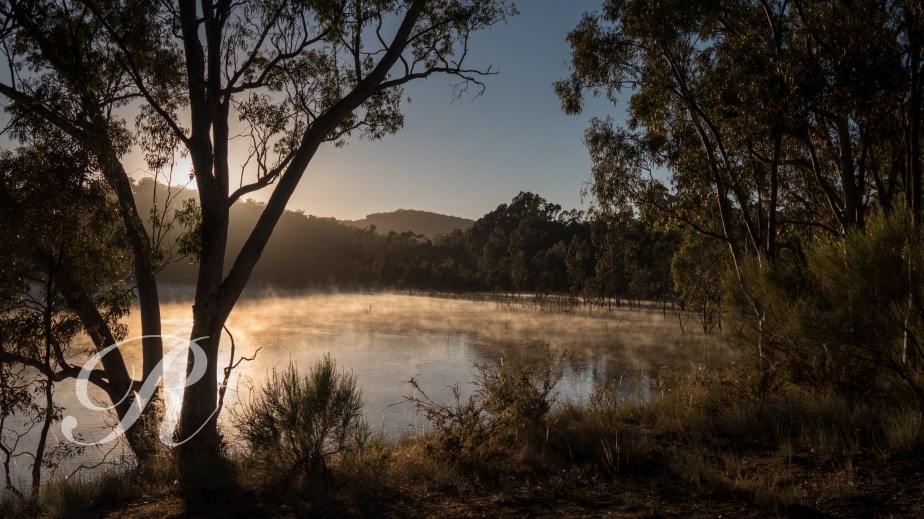
I’ve been away, enjoying the mountain air.
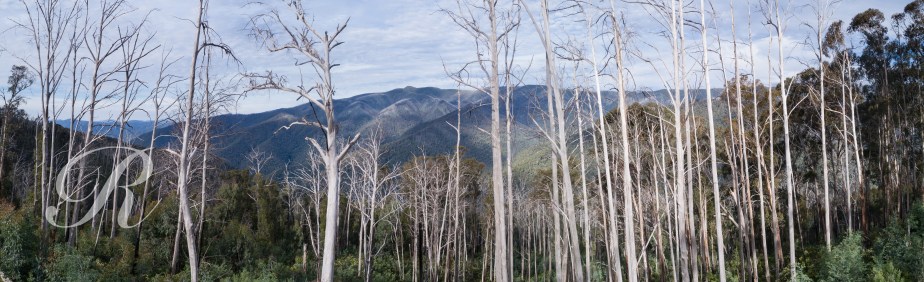
Harrietville lies at the foot of the grandly named Australian Alps in north-east Victoria. It got its start as a gold rush town and there are still a working mine or two. Gold was discovered in 1852, it was enough of a town to deserve a post office by 1865. It has a population of around 400 plus a good contingent of tourists at any season. It is a very beautiful spot.
After the alluvial gold was worked out attention turned to some reefs accessed by deep shafts. Then it was the turn of the Tronoh Dredge. This monster was 167 metres long and weighed 4,813 tonnes. It slowly chewed its way forwards to a depth of 41 metres floating in a lake of its own creation. The dredge dumped its tailings behind it. Operating from 1942 to 1954 it recovered 54,000 oz. of gold from the Ovens River flats. It has left a swimming hole for the citizenry to enjoy – it’s reputed to be somewhat chilly.
In 1883 the local Shire was awarded £1000 pounds to double the width of the existing four foot track enabling coaches to access the township. The old coach road pressed on through Harrietville and up the hill. It would have been a rugged ride. Nowadays the Great Alpine Road goes up to the Mount Hotham ski resort and on over the top to Omeo and then descends to the coast.
I was in Harrietville to take part in the 42nd Harrietville Music Camp. It’s run by the Whitehorse Orchestra and goes for an extremely busy week. Musicians enrol in a tutorial group appropriate to their instrument and have the opportunity to play in various ensembles and sing with the choir. There are performances of one sort or another every day leading up to public concerts at the end of the week.
If you visit the Whitehorse Orchestra home page you could get the impression that it is only for the classical musician but this is far from true. One of the ensembles is The Big Band run brilliantly by Geoff Earle who also takes the Saxophone tutorials. The Big Band takes the community by storm at one of Harrietville’s two pubs on the Friday night. It’s a blast.
The classical musicians get their turn at the Bright Community Hall on the Saturday where more formal standards are upheld.
It is a fabulous institution that has won not one international award, not two international awards, not three international awards … but it does deserve one.





 bobmcgee