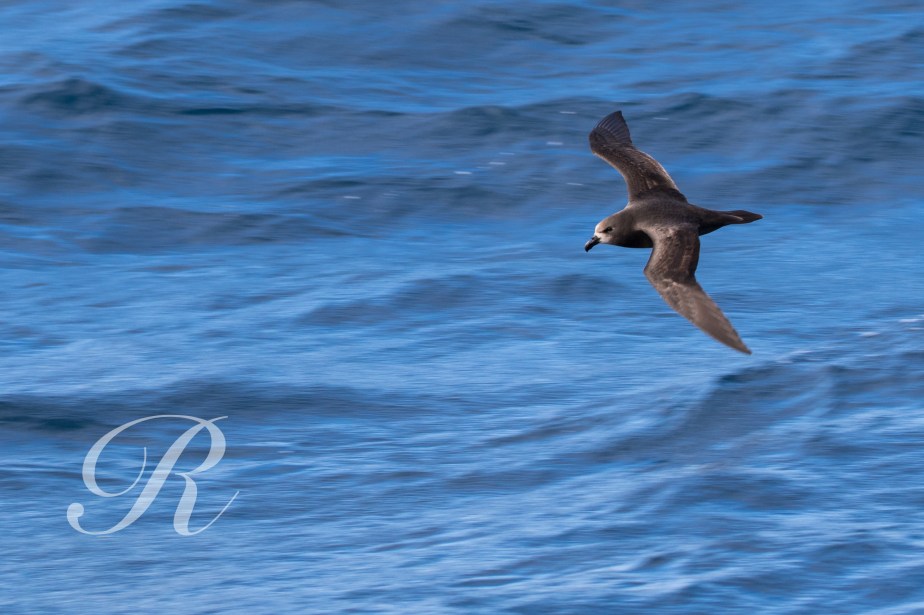
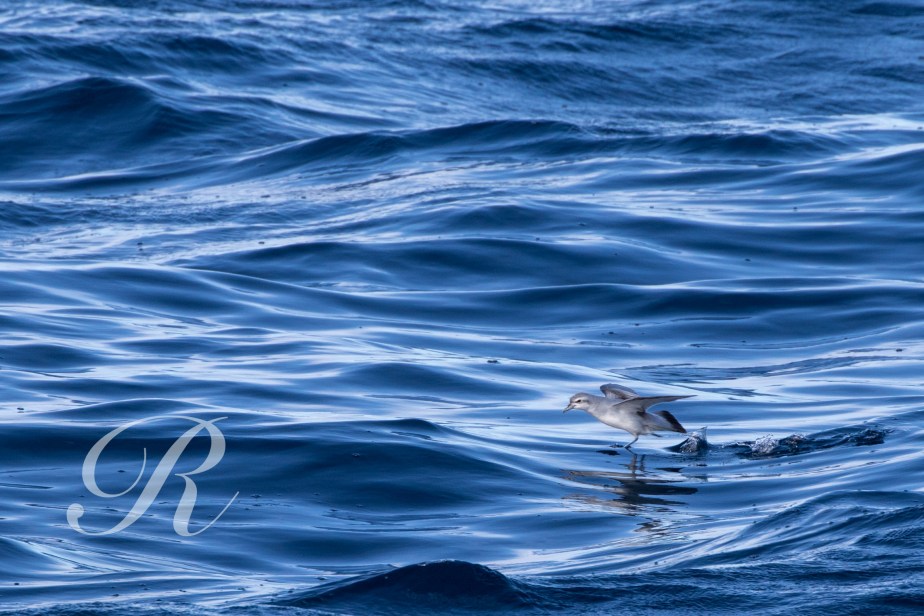
Volcano Envy …

Australian landscapes are ancient, the heady days when rift valleys tore Gondwana apart, and sea floor spreading propelled its fragments around the globe are long gone. It’s hard to imagine a Mt Nyrigongo popping up and obliterating Adelaide. And I do so miss her warmth, the twinkle in her magma and her sweet sulphurous perfume.

But the reality is that western Victoria is littered with volcanoes. It’s just the timing that’s out of kilter.

Ken Grimes, of the Hamilton Field Naturalists Club has written a very nice paper on the subject which you can find <HERE>.

In the Western District there are mainly three types of volcano, though combinations of these also occur. About half of the volcanoes are small steep-sided scoria cones built from frothy lava fragments thrown up by lava fountains. Most of the remainder are broader but flatter lava volcanoes formed from relatively gentle flows of lava welling out of a central crater. A group of about 40 maar craters
near the coast formed from shallow steam-driven explosions which produced broad craters with low rims. These now often contain lakes.
These are the New Volcanics, they started about 5 million years ago. The most recent eruptions occurred about 5000 years ago. They seem to have occurred about every 5000 years so we may be due. According to Ken they erupt for a few weeks or months and never again, the next eruption being at a new site.
Melbourne University’s Professor Joyce anticipates that the next eruption would be “the sort of thing that would be interesting for tourists”. I’m sure it would, and Dr Lin Sutherland of the Australian Museum reassures us that
… no panic is needed. It probably would be a small discharge and a temporary nuisance, rather than the large eruptions we see in the Pacific ‘Rim of Fire’.
This assumes that it isn’t a Phreatic (15 points, more if you can get it on a double or triple word square) eruption. Boil one cubic meter of water and you have 1,600 cubic meters of steam. If magma comes into contact with ground water the result is an explosion. Such
explosions crush the overlying rocks and launch them into the air along with steam, water, ash and magmatic material. The materials usually travel straight up into the air and fall back to Earth to form the tephra deposits that surround the crater.
Thus producing a maar, these are usually a few hundred to a thousand meters in diameter and less than one hundred meters deep. Nothing to panic about.
Tourists do enjoy them but not until they’ve settled down a bit! My favorite is at Tower Hill near Port Fairy, incidentally this vicinity is high on the list for the next eruption.
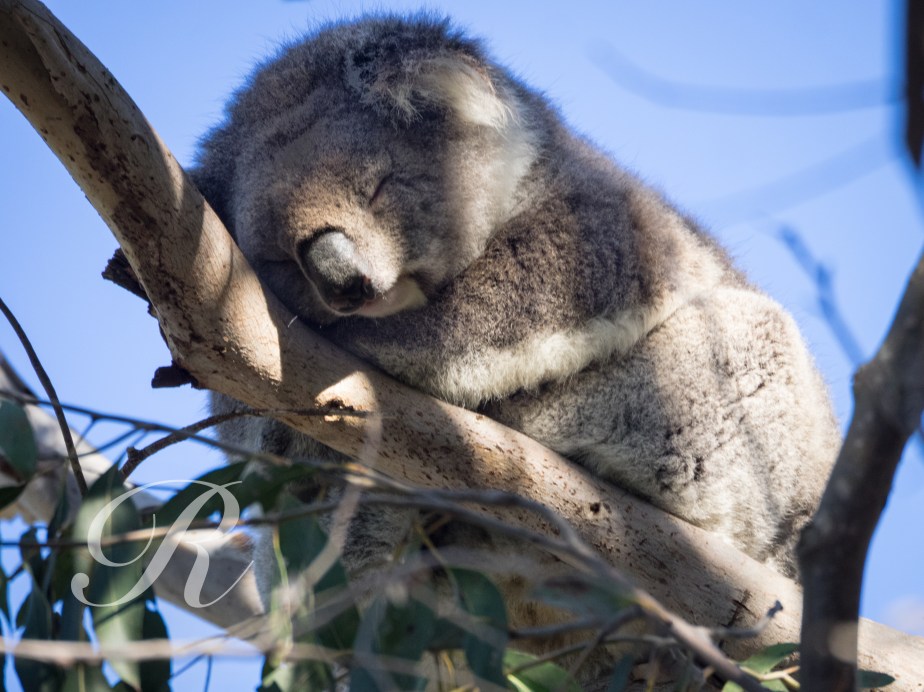
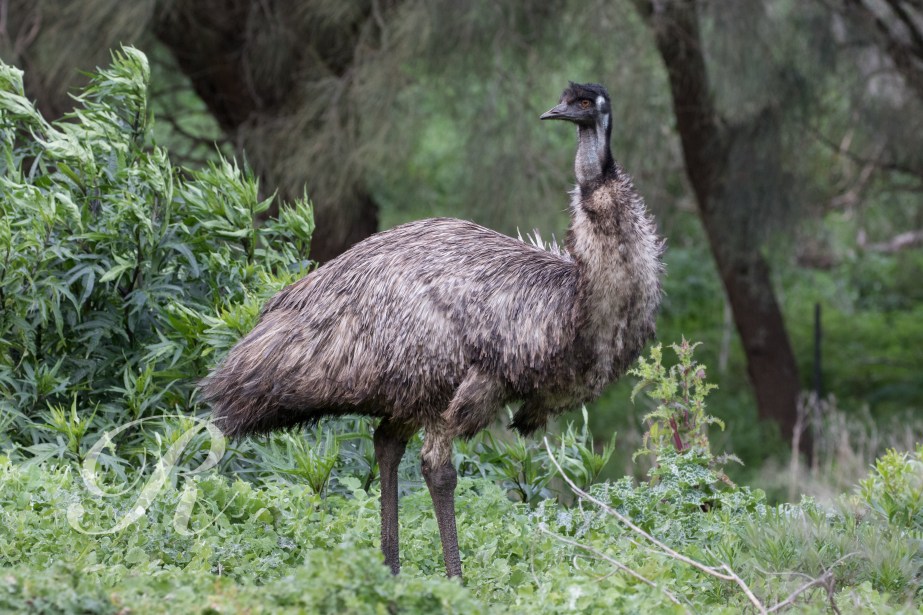
It’s probably about 25,000 years since it went bang. It is now a very attractive game reserve, home to koalas, emus and kangaroos. Interestingly, you can’t take your dog there but during duck season you can take your gun.
Koala – Tower Hill
Emu – Tower Hill
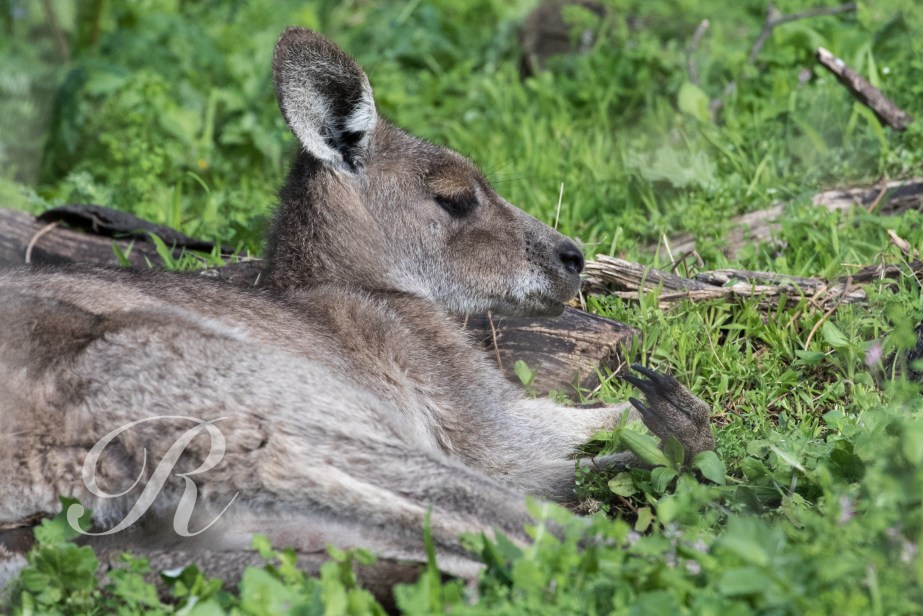
Eastern Grey Kangaroo – Tower Hill

So there you have it … photographic evidence of life on maars.

Stranded …

A story that was recently in the news is worth a review.

You can read it at PerthNow where you can also watch a film clip. To summarise, a couple travelling on the Canning Stock Route, one of Australia’s more demanding 4WD tracks in remote Western Australia got bogged and weren’t able to get their vehicle out.

So they reached for their satellite phone, well no they didn’t, no mention of a satellite phone. So they separated and set off walking. Worked well enough for the girlfriend, she walked into a campsite where she was able to raise the alarm. The search started on Friday morning, the boyfriend was found on Sunday …

The Perth man who almost perished in the WA outback has credited skills he learnt on Bear Grylls TV shows for his survival.

Anthony Collis says he ate flowers and bugs during the three days he spent lost in the Pilbara.

The press run this sort of story every chance they get, if I’m ever rescued from the bush I am going to say I survived by eating spiders. It raises the game to a whole new level. He didn’t survive by eating bugs and flowers, he survived despite eating bugs and flowers. Going without food is very uncomfortable but it would take him three or four weeks to die from starvation. He was intending to travel quite a distance up the track, there are no McDonalds on the route so surely there was food in the ute.

How long you can last without water is another issue. It could be just a few hours of heavy exercise in the hot sun, probably three days in shade rigged by the ute, a week at room temperature in comfortable surroundings. And, surely there was more water in the ute than he could carry.

It is winter and it was difficult to keep warm. So Mr Collis buried himself in the sand just like Bear Grylls did in his show. An unexpected side effect of that was to make him invisible to the heat seeking device the police, in their helicopter, were using to locate him.

As always the starting point for the search was the car. Had he been there it would have been a very short search. He wasn’t there. He was three kilometres away. What is the point of being three kilometres away?

You can bury yourself just as well at the car, we know the sand was soft, the car was bogged in it. Three days, three kilometres. It defies logical explanation.

Good preparation for a 4WD trip includes a means of communication, some self rescue equipment, water and food. Both of these people are lucky to have escaped with little damage. Caroline Grossmueller wasn’t so lucky.

It’s a pity that Bear Grylls didn’t tell them to stay with the vehicle, I guess that doesn’t make for spectacular TV.

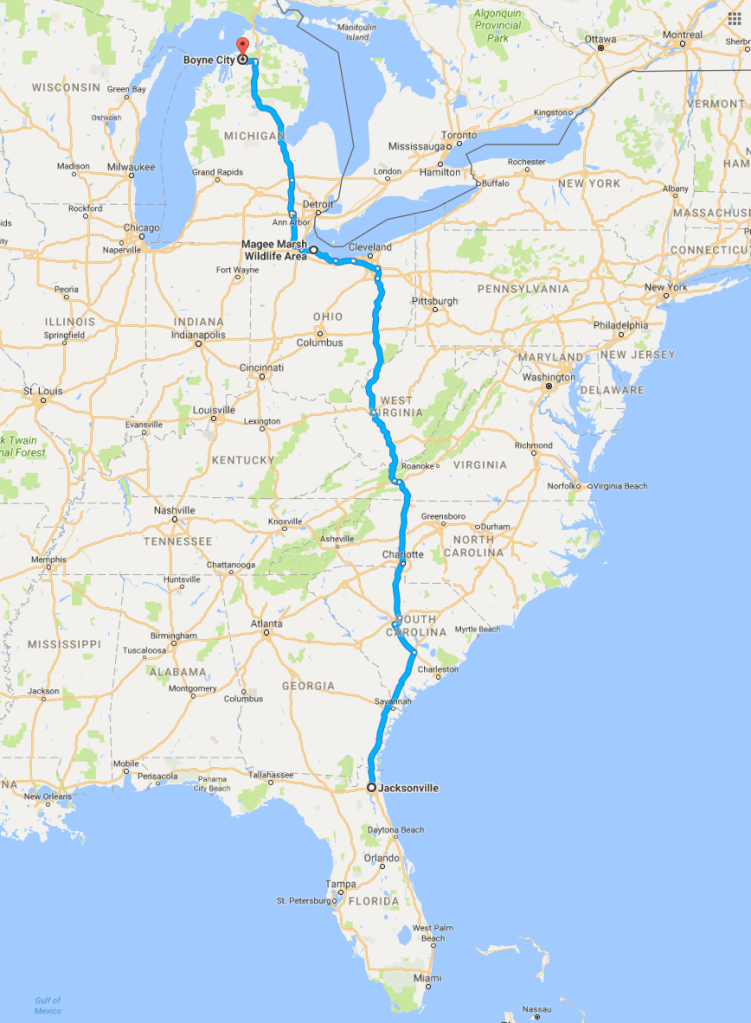
McGee  … not bogged

Rakali …

After Africa it’s harder to keep the dopamine flowing. No lions, no leopards, the only primates are wearing clothes and driving cars. But still life has its little surprises. Like this guy …

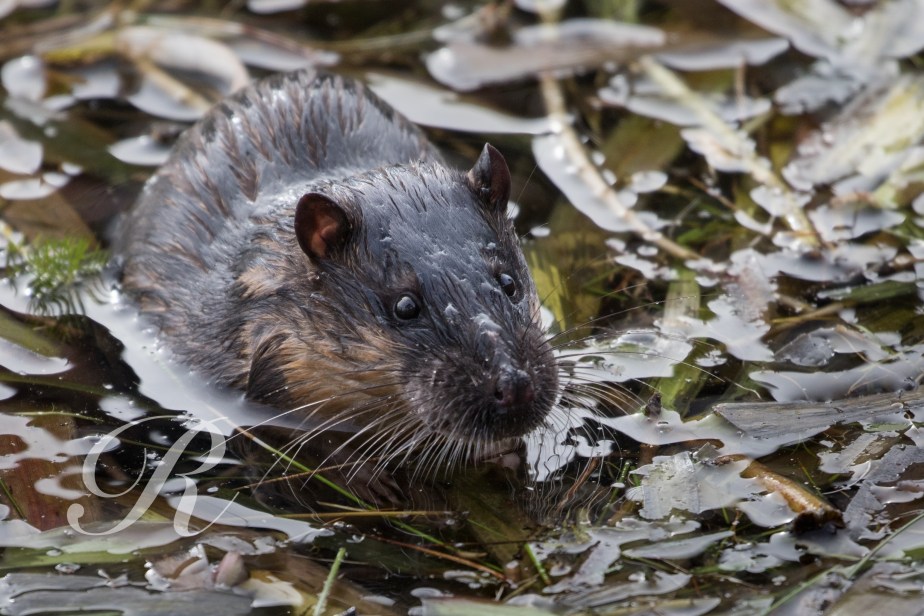
Hydromys chrysogaster

The latin name translates as water mouse with a golden belly. Lots of species are blessed with the name chrysogaster, it fits the Orange-bellied Parrot much better than this rat.

Its name was changed from Water Rat to Rakali to improve its image.

It is a rodent and it is native to Australia and New Guinea. It lives in rivers, lakes and sheltered marine bays. They’re quite omnivorous but prefer animal food when they can get it. They’re nocturnal when it’s warm enough for them but in Victoria in winter they feed during the day.

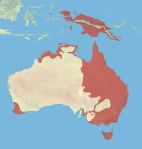
Which is how I came to find this one in Ballarat’s Lake Wendouree, yes this is the rat from Ballarat. It is quite widespread as you can see from the distribution map which I have shamelessly filched from Wikipedia …


Citizens …

The three Australians returned from Africa to find their country having a mini constitutional crisis.

Although all three of us are Australian citizens it just so happens that we were all born in another country, not all that amazing, more than a quarter of Australians are. I don’t know if the other two also retain citizenship of the countries of their birth. I do.

Some of our senators, much to their amazement, and my amusement,  had just discovered that they were citizens of another country.

Section 44 of our revered constitution has this provision …

44. Any person who –

(i.) Is under any acknowledgement of allegiance, obedience, or adherence to a foreign power, or is a subject or a citizen or entitled to the rights or privileges of a subject or citizen of a foreign power: or

… (4 more ways to disqualify yourself) …

shall be incapable of being chosen or of sitting as a senator or a member of the House of Representatives.


Occasionally some one with a good ear will pick me as a pom and since it is an old Australian custom to rubbish poms a disparaging remark often follows. If I’m in a good mood I’m likely to say that I’m a citizen by choice, they’re just a citizen by accident, if I’m in a bad mood I smack them in the mouth.

So can I stand for parliament? Yes, I can but I must first renounce my British citizenship.

But let’s return to accidents and intentions. I am British by accident of birth, in other words a subject of her majesty. How odd that to become Australian I had to swear or affirm my allegiance to the Queen. She has been discretely dropped from the pledge in the meanwhile but she is still the head of state.

That’s right you can’t be an Australian politician if you also hold citizenship of another country but the head of state is a foreign national. How crazy.

Queensland senator-elect, Heather Hill, was ruled ineligible in 1999 because she held dual citizenship and had not taken adequate steps to relinquish it. The other citizenship was of New Zealand. Head of state of New Zealand? Too right, the same head of state as Australia.

One of our politicians was born in Iran …

Senator Dastyari said he applied three times to renounce his Iranian citizenship and every attempt failed. He eventually employed two Iranians to go into the embassy with his renunciation papers and photograph themselves, just to be sure. “There’s like a selfie with these two bearded Iranian guys and my forms,” he said.

<The Australian>

Did that enable him to serve Australia better … ask the Chinese (or The Courier Mail).

The High Court will have the task of sorting out a couple more citizenship issues in the near future. Will they be taking the framers of the constitutions intentions into consideration?

Difficult to do that. The Australian Constitution was written in the 1890’s, we were all just British Subjects back then. The Nationality and Citizenship Act 1948 created the concept of Australian citizenship, which came into force on 26 January 1949. In the first parliament, 1901, there were  26 parliamentarians from England, 17 from Scotland, seven from Ireland, two from Canada, one from New Zealand and one from Chile. All British subjects then, subject to suspicion now.

I guess what the constitution requires is something akin to …

“Loyalty, absolute loyalty to your courageous and wise leadership and we pledge to continue to be faithful soldiers behind your victorious leadership.”

Except that’s from a letter written by  Senator Eideh (Victorian State legislature) to President Assad of Syria.

Gee, it’s complicated.
 

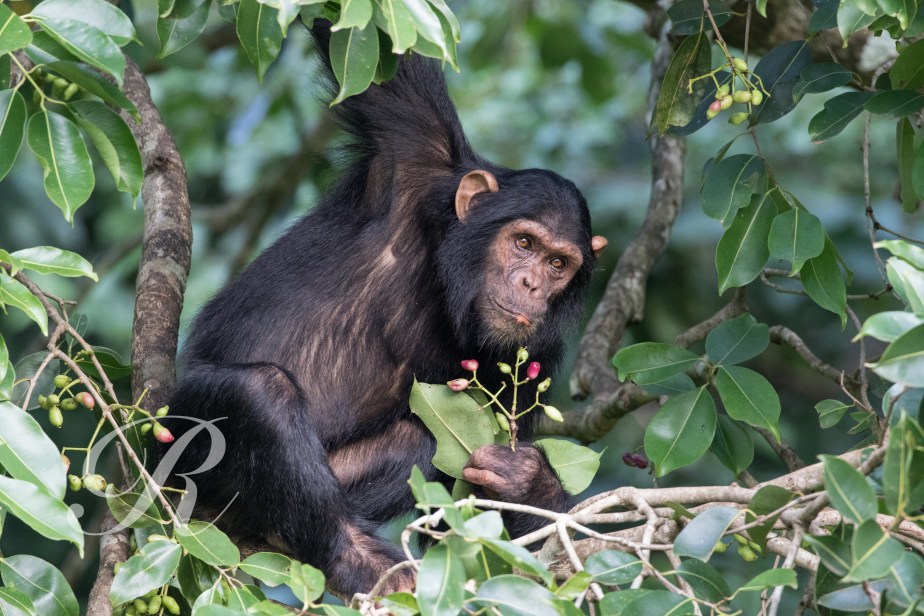
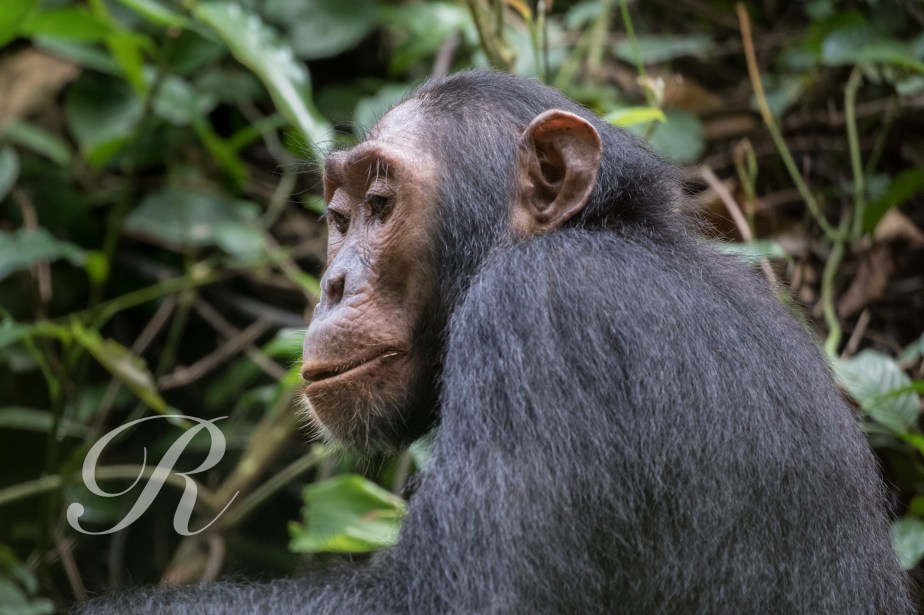
A Day in the Life of a Chimp …

… could be a day in your life that you will never forget.


Earthwatch have written to me …

If you have any friends, family, or colleagues who you think might benefit from the once-in-a-lifetime experience of living a day in the life of a chimpanzee, please let them know that we have a team in need of more volunteers running from October 7-18, 2017, as well as 6 teams scheduled throughout 2018 that need a good head start on their recruitment …

Apply now <zzimmerman@earthwatch.org>. Tell them Rob sent you.

You can be in Budongo soon. If you need a refresher on the delights that await you there skip back in this blog to July 10th. The link again … Investigating-Threats-to-Chimps-in-Uganda

Do it.

Party Politics …

I left the Genocide Memorial with many more questions than answers.

The genocide began on April 6, 1994. It had its origins long before that.

The Germans colonised Rwanda in the 1890’s. They found a monarchy with a Tutsi ruling class holding power over a Hutu and Twa underclass. Their interpretation was that there were three races, they believed that the Tutsi were of a northern origin and were higher in the racial scale although not so high, of course, as the Germans themselves. The Germans left the monarchy in place but made sure that they did as they were told.

During the First World War control shifted to the Belgians. They too, chose not to overturn the social structure that they found. One particular action of the Belgians had far-reaching implications, they issued ID cards with the ethnicity of the holder on it.

The modern myth in Rwanda is one of a rosy past, these were not racial divisions, society was fluid, intermarriage was common, the descriptors were of a class, caste or occupational nature. That is, until the Belgians forced a racial structure upon them. In the Genocide Memorial the date is given as 1932 and the dividing line as possession of 10 cows. Another version has it that the division was based on stature and facial features.

There is ample historical evidence that the division existed prior to Belgian involvement. It is generally accepted that the Twa were the first inhabitants perhaps earlier than 3000 BC. Bantu people came from about 700 BC onwards, clearing forests for agriculture. Pastoral people followed and the rate of their arrival reached a peak around 1500 AD.

There is some genetic evidence for a different origin for Hutu and Tutsi.  There are some markers that suggest the Tutsi may have come from the Horn of Africa (Somalia, Eritrea, Djibouti, and Ethiopia) and there are differences in rates of lactose tolerance and sickle cell trait. About 75% of Tutsi adults are lactose tolerant, some Bantu peoples are totally lactose intolerant as adults, about 33% of Hutu are tolerant. A particular haplotype of the sickle cell trait, which confers some protection from malaria, is found in central African people including Hutus but is almost non-existent among the Tutsi.

On the other hand there is plenty of evidence of genetic intermixing. In the spurious terms of racial purity there are no modern Hutus or Tutsi of pure pedigree. Such a degree of intermarriage would indicate that there was no general belief in a racial difference.

The Germans found a feudal structure in which Tutsi chiefs were the equivalent of Lords of the manner, the Hutu underclass  held land in return for labour. But there was a degree of social fluidity, intermarriage occurred and successful Hutu could join the ranks of the nobility. The entire community spoke the same language, Banyarwanda, a Bantu language.

So yes, the past was entirely rosy, but the nobility got the flowers, the peasants got the thorns.

After the Second World War there was a movement for independence throughout colonised Africa. By this stage the Rwandan populace had embraced Catholicism and in return were receiving an education in church schools and status as officers within the church structure. The old upper class had some competition from an emergent middle class.

The Tutsi pushed for an early independence on Tutsi terms but in 1960 the Belgians dismissed most of the Tutsi chiefs and organised communal elections. The tide had turned in favour of the Hutu majority.  The king was deposed. Independence followed in 1962.

Purges of Tutsi followed, refugees departed to neighbouring  countries from where some waged an insurgency, more irritating than effective.

In 1973, Army Chief of Staff, Juvénal Habyarimana seized power in a coup d’état. Rwanda became a one party state, his followers were required to sing and dance in adulation at his public appearances. Tutsi’s were discriminated against in employment and education.

In the 1980’s some exiles in Uganda under the command of Fred Rwigyema took up arms with Ugandan rebels in the Ugandan Bush War which led eventually to the overthrow of Milton Obote by Yoweri Museveni. The Rwandans stayed on in the Ugandan military but had plans of their own.

In October 1990, Rwigyema led the Rwandan Patriotic Front (RPF) across the border. France and Zaire came to the aid of the Rwandan Army, Rwigyema was killed in action. Paul Kagame took command, led a tactical retreat into the Virunga Mountains. With funds from the Tutsi diaspora he improved the arms and built his forces. By January 1991 he was ready to begin a guerilla war.

The presence of a rebel military force in one corner of the country galvanised the more extreme Hutus to an even more hardline and overtly racist position. The situation for Tutsis became worse.

The RPF was having sufficient success to undermine the government, the French, sympathetic to the Hutu establishment pushed for relaxation of the one party state to produce a broader coalition. The RPF called a ceasefire and peace talks began.

At this point there were four groups taking positions. The government under Habyarimana and propped up mainly by his wife’s family members and connections, a fairly orthodox and moderate Hutu opposition, the Hutu hardliners and the RPF.

The hardliners were forming militia groups and preparing for a final solution. The French were training the militias. When a peace accord and power sharing arrangement with the RPF seemed likely the hardliners unleashed the militias on the civilian Tutsis. The RPF abandoned the ceasefire and took a significant swathe of the country.

The government was forced back to the table, the Arusha Accord was signed. The UN provided a peace keeping force. The RPF would play a part in a Broad-based Transitional Government.  By March 1993 the hardliners were drawing up lists of those they intended to kill.

Sentiment in the general Hutu community, alarmed by the Tutsi rebellion, was hardened further by events in neighbouring Burundi. The first Hutu to be elected president was assassinated by Tutsi army officers.

On January 11, 1994, General Romeo Dallaire, commander of the UN peace keeping force informed the UN that Rwanda was on the brink of genocide. Kofi Annan instructed him to do nothing.

On April 6, 1994, the aeroplane carrying Rwandan President Juvénal Habyarimana and Cyprien Ntaryamira, the Hutu president of Burundi, was shot down as it prepared to land in Kigali, killing everyone on board. It is unclear who brought the plane down but the hardliners were suspiciously well prepared for such an event.

A crisis committee met that evening. The Prime Minister Mrs Agathe Uwilingiyimana should have taken the reins but the committee refused to allow her to do so. General Dallaire endeavoured to persuade them to follow the constitution. When this failed he sent 10 Belgian troops to move her to a safe location. The Presidential Guard intervened. The prime minister and her husband were murdered. The Belgian soldiers were tortured and then murdered. The genocide had begun and it was very well organised. Moderate Hutus, journalists, judges were all early victims.

The UN peace keeping force did nothing.

The killing went on for 100 days. It was brought to and end by the advance of the RPF. Kigali was encircled quite early in the campaign but control of the country was given precedence over taking the city. The genocide continued within the capital even as the rest of the country fell.

When the international community woke to the disaster it finally came to the aid … of the Hutu refugees in UN refugee camps in Zaire. Camps that were housing the perpetrators and run by the former military establishment.

Paul Kagame, leader of the RPF, became the President and is the president still. He was reelected just the other day with almost 99% of the vote. For those of us who live in a western democracy that seems an unlikely figure but from personal conversations I can tell you that he is a very popular figure.

Kigali by night


The Genocide Memorial …

This is Kigali, a city of about 750,000 people, capital of Rwanda and a city in transformation. Like Rwanda generally, it’s hilly. The photograph is taken from outside the Genocide Memorial. Inevitably a view point from which Rwanda as a whole has to be examined.

The memorial was opened in 1999. It is the final resting place of more than a quarter of a million people killed in the genocide. It is one of several memorials. The total number of victims of the genocide is imprecisely known, but is somewhere in the vicinity of a million. The total population of Rwanda now is only a little more than 11 million.

As the genocide unravelled 2 million Hutus fled to Zaire (now DRC). Any portable wealth went with them. The country was essentially in ruins.

Whatever the situation was before, whatever the reasons may have been, in just four months of 1994, just 23 years ago, this country tore itself apart on an almost unimaginable scale.

The Memorial has a souvenir shop and a cafe. These provide employment for people directly impacted by the genocide. This is a noble objective, if you visit I suggest you go to these establishments on the way in, you may have other things on your mind on the way out.

The galleries take you through time from life before the genocide, the genocide, the aftermath. There are separate spaces where you can sit and watch video accounts by survivors, there is a children’s gallery and a gallery to remind you of other genocides.

What, in my view, the Memorial does well is to present the horror that can come in the wake of social division. Women were raped, tortured, murdered in front of their families. People were forced, alive, into pit latrines, men were hacked to pieces, children were slaughtered, children were orphaned. Individual bodies, groups of bodies, mass graves were being found long after the carnage was over.

Survivors then needed to drag themselves forward without their partners, without their children. There were tens of thousands of households headed by children. No one escaped untouched by these events.

Many visitors will have considered the implications of being in the wrong place at the wrong time with the wrong ethnicity on their ID card. How many have asked themselves what they would have done if they had the opposite ethnicity on their ID card. There were heroes who risked their lives to provide shelter and there were nuns who incited the Hutu militias to greater fury.

If the visitor hasn’t already come undone, and I had, the Children’s Gallery will certainly test your composure. Innocent of everything but their supposed ethnicity, slaughtered for what?

After leaving the Memorial our next stop was a souvenir market. I hadn’t the inclination and was soon back at the car. We had grown to enjoy the company of our driver, a lovely man. He asked me if I was troubled by the Memorial and I admitted that I was. We talked for a while. He was seven at the time of the genocide. His father was murdered, his mother had raised the family on her own. At school, prior to the slaughter, Tutsis had been made to sit apart from the rest of the class and were vilified.

I asked him why such a thing could happen. His answer surprised me. It was nothing more than party politics, he said.

Wild Kigali …

Although we were now in the big city our quest for wildlife isn’t quite at an end. The city boundary is, in part, formed by the Nyabaronga River and just over that is the Bugasera Swamp. The river is home to Hippos which you can find with diligent searching, they are just around the next bend. And although the banks are intensively cultivated the birding is excellent.

Hammerkop
Black Crake

Perhaps because the farming is mostly labour intensive by hand implement the birds permit quite close approach, a chance to sort out some Weavers, generally a challenging group …

Holub’s Golden Weaver
Slender-billed Weaver
Spectacled Weaver

Other denizens of the marsh include …

Speckled Mousebird
Swamp Flycatcher

Whilst in a vegetated area we encountered two of the African Babblers …

Arrow-marked Babbler
Black-lored Babbler

and along the river some Herons …

Little Egret
Grey Heron

To keep the hippos out of their crops the locals dig a trench between the river and their field. It only needs to be about two feet deep and two feet wide to keep the hippos out.

Country Life …

Rwanda is quite a small country just south of the equator. It’s hilly, all of it is above 950 metres (~3000 feet) and in the west it’s positively mountainous. Mt Karisimbi is the highest point at 4,507 metres (14,787 ft). The Nile/Congo divide runs north south. About 80% of Rwanda is in the Nile basin, its contribution to the Mediterranean goes via Lake Victoria.

The divide crosses the Albertine Rift between Lake Kivu and Lac Edouard (shared between the DRC and Uganda). Edouard drains north to Lake Albert, collects reinforcements from Murchison Falls and gives rise to the White Nile.

Lake Kivu, on the other hand, drains to the south into Lake Tanganyika through the Ruzizi River. Lake Tanganyika then drains into the Congo River via the Lukuga River and heads for the Atlantic.

Lake Kivu

The source of the Nile fired the 19th century imagination in a big way. A rough and ready definition of  “source” is the furthest point from the mouth where a river is still recognisably a water course, which might be a spring, a marsh or a lake. Uganda would have you believe that Lake Victoria is the source of the Nile, perhaps on the grounds that it doesn’t have Nile in its name until after it leaves the lake. The DRC could mount a similar claim to Lac Edouard. However there is a lot of river running into Lake Victoria. The Kagera River is the longest feeder, so which is its longest tributary? Burundians will tell you it’s the Ruvyironza, from Bururi Province, Burundi. But my money is on the Rukarara River from the Kamiranzovu Marsh in the Nyungwe Forest in Rwanda.

We drove past the marsh (where we had been walking a couple of days before) first thing in the morning, headed over the hills in the general direction of the capital, Kigali.

The journey gave us a little chance to see some real life in the countryside …

Our starting point is Gisakura with Lake Kivu in the distance. As you can see the road is of a good standard.

Before long we were passing tea plantations. This and coffee are important exports from Rwanda, tourism is another major earner of foreign exchange.


Much of the agriculture, though is subsistence farming. There are gardens on terraced slopes at every turn. It is a densely settled country, most of the surface area has been transformed by human activity. Many of the trees in the landscape are eucalypypts, fast growing and handy for construction and cooking fuel.

Most of the people have access to safe water supplies but the majority must carry it home from communal pumps.

When you meet children in Rwanda they will almost certainly ask you for money.

Because of the altitude Rwanda isn’t oppressively hot. There are two wet seasons and two dry seasons. In mid summer the sun is overhead the Tropic of Capricorn whereas in mid summer it is overhead … the Tropic of Cancer. No, it’s true.

It’s overhead Rwanda in spring and autumn, these are the wet seasons. June to September is especially dry, December to February less so.

By evening we were in Kigali but we stopped on the way at the National Ethnographic Museum. It is a well presented collection that follows the course of human society in Rwanda from stone age through the iron age to modern times. One striking absence is any mention of ethnicity.

Our tour there finished with a performance of drumming and traditional intore dancing.


Stirring rhythms and graceful movement.

More monkeys …

Nyungwe National Park is home to at least 13 species of primate and in our short time there we were able to add four new ones to our monkey trip list.

Angolan Colobus

There was a baby in the group that we encountered, and just like little humans it was overactive and keen to get some attention …

fortunately for mum they come with built-in reins …

They are initially all white, one of the reasons that mum doesn’t want it exposing itself in the canopy is that they are easy pickings for Crowned Eagles which are monkey specialists and their main predator.

A Mona monkey was feeding on the fringe of the Colobus group.

Mona monkey
Mona monkey

Next up were l’Hoest’s monkeys that had found an abundant supply of unripe fruit.

L’Hoest’s monkey
L’Hoest’s monkey

A troop of Johnston’s Mangabey also put in an appearance but were far less cooperative when it came to photography, keeping their distance and staying well back in the foliage.

Old friends like Chimps and Olive Baboons are also present. There are a couple of nocturnal primates here as well as some other hard to find species.